Disclosure: topratedkitchenware.com is reader-supported. When you buy through links on our site, we may earn an affiliate commission from Amazon and other retailers, at no extra cost to you.
Where to buy
These six verified mixers are the picks in this guide to the best mixers for jameson whiskey. Jameson is the defining Irish whiskey: triple-distilled, blended, and famous for a smoothness that makes it the most approachable whiskey in the world — light orchard fruit, vanilla, a gentle sweetness, and almost no harsh edges. That smoothness is a gift and a mixing problem at once. A mixer for Jameson must add the structure the whiskey politely lacks — acidity for definition, or bitterness and bubbles for length — without overwhelming a spirit whose whole character is gentleness. The six picks below divide into the two families that do this honestly. Four are lime cocktail mixes, for the whiskey sour family, where Jameson has a long and legitimate history. Two are Fever-Tree tonic waters, for the Irish whiskey highball, a long serve where quinine bitterness gives the smooth whiskey a frame. Each name links to its Amazon listing, where you can check the latest price on Amazon and confirm the current format before ordering.
- Daily’s Margarita Mix, 64 oz Bottle — Check on Amazon
- Zing Zang Original Margarita Cocktail Mix
- Zing Zang Strawberry Margarita-Daiquiri Mix
- Master of Mixes Margarita Mix, 1 Litre Bottle
- Fever-Tree Tonic Water Mixer, 24 Pack Cans
- Fever-Tree Light Tonic Water Mixer, 24 Pack Cans
Read the full guide ↓ for the sour method that suits a gentle whiskey, how the two tonics differ in a highball, and the mistakes that make Jameson disappear in its own drink.
The first thing to understand about the best mixers for jameson whiskey is that Jameson will not fight for its place in a glass. A high-rye bourbon shoves back against a loud mixer; a peated Scotch shoves harder. Jameson, blended for smoothness, simply steps aside and lets the mixer have the drink, which is why so many home Jameson cocktails taste like the mixer with a rumour of whiskey. Every recommendation in this guide is built against that failure mode. In the sour family, the ratio keeps the whiskey clearly the largest measure and treats the lime mix as a seasoned citrus component, not a base. In the highball family, the tonic is chosen for a bitterness that frames rather than floods, and poured at a length that lengthens the whiskey instead of replacing it.
The lime picks span the useful range of the bottled category. Daily’s 64 oz bottle is the workhorse for households that make whiskey sours weekly. Zing Zang’s original mix, made with real fruit juice per its listing, is the fullest-flavoured sour in the set. Its strawberry sibling is the fruit twist — a strawberry whiskey sour is a real summer drink, and Jameson’s lightness is exactly the base it wants. Master of Mixes’ litre is the classic, no-story staple. Then the axis changes: Fever-Tree’s tonic in cans, built on real quinine per its listing, and its light version, with a stated calorie count and a Mexican bitter orange note, give the highball drinker two weights of the same idea.
The craft sections that follow cover ratio discipline for a gentle spirit, why Jameson sours want a shorter shake than bourbon sours, how to garnish so the glass reads as Irish whiskey rather than margarita, and how to rescue a drink in which the whiskey has gone missing. Readers working through the wider whiskey shelf will find the bourbon counterpart in Best Mixers For Jim Beam and the frequently mistyped twin of this very guide at Best Mixers For Jamewson.
Key Takeaways
- Jameson’s smoothness is the central fact: mixers must add structure — lime acidity or tonic bitterness — while the whiskey stays the largest measure.
- Four lime mixes cover the whiskey sour family from workhorse volume to a strawberry summer twist.
- Two Fever-Tree tonics cover the Irish highball: the original for a fuller quinine frame, the light version for a leaner, crisper glass.
- Measure a gentle whiskey’s drinks; free pouring is how Jameson disappears.
- Garnish with peel or a citrus wedge, never a salt rim, so the drink reads as whiskey.
In this guide
Quick Picks
| Pick | Badge | Format from listing | Best serve with Jameson | Link |
|---|---|---|---|---|
| Daily’s Margarita Mix | Best Workhorse | 64 oz bottle | The standing weekly whiskey sour | Check on Amazon |
| Zing Zang Original Margarita Cocktail Mix | Best Overall | 32 fl oz plastic bottle | The fullest, juice-led Jameson sour | Check on Amazon |
| Zing Zang Strawberry Margarita-Daiquiri Mix | Best Fruit Twist | 32 fl oz, pack of 1 | A strawberry whiskey sour for summer | Check on Amazon |
| Master of Mixes Margarita Mix | Best Classic Lime | 1 litre bottle | The plain, reliable lime sour | Check on Amazon |
| Fever-Tree Tonic Water Mixer Cans | Best Highball | 24 pack, 5.1 fl oz cans | The Irish whiskey and tonic highball | Check on Amazon |
| Fever-Tree Light Tonic Water Mixer Cans | Best Light Highball | 24 pack, 5.1 fl oz cans | A leaner, crisper whiskey tonic | Check on Amazon |
How These Picks Were Chosen
This is a research-led guide, not a claim of hands-on laboratory testing. Every pick comes from the verified beverage-mixer pool for this site, with brand, exact listing title, pack format and product image confirmed against catalogue data; only confirmed products are linked and pictured. Reviews draw only on what those listings state — volumes, pack counts, and the ingredient or positioning notes in the listing text — and where a listing says nothing about flavour detail, the review says that too, rather than filling the gap with invention.
The editorial filter was fit for a smooth blended Irish whiskey, applied as three questions. Does the mixer add structure Jameson lacks? Lime acidity and quinine bitterness both pass; another sweet, soft flavour would fail. Can the serve be described honestly? A margarita mix with whiskey is a whiskey sour — a canonical drink — and a tonic with whiskey is a whiskey tonic, a highball with a long history in Ireland and beyond; both pass in plain language. And does the format match a real household pattern, from a 64 oz workhorse bottle to single-serve tonic cans that keep every highball sparkling? The six survivors divide those jobs cleanly.
A note on the famous absentee: ginger ale, in the Jameson-and-ginger serve, is this whiskey’s best-known mixer, and lemonade is close behind. Neither is in this guide’s verified pool, so neither is linked or pictured — but the highball method in this guide is written so it transfers directly to a ginger ale if that is what your fridge holds, and the sour method needs nothing you do not already see below.
The 6 Best Mixers for Jameson Whiskey

Daily’s Margarita Mix, 64 oz Bottle
Badge: Best Workhorse
Strengths
- A 64 oz bottle is the largest format in the guide — the supply a weekly sour habit actually consumes.
- Everyday, no-ceremony positioning; the mix is a tool, and it behaves like one, consistently.
- One bottle in the fridge makes the Jameson sour a weeknight drink rather than a project.
Trade-offs
- The listing gives no ingredient story, so flavour-led shoppers have less to go on than with Zing Zang.
- A large opened bottle asks for steady use; slow households will not see its best weeks.
- Consistency is its aim, not distinction — the most interesting sour in the list is elsewhere.
Mini spec box
- Brand: Daily’s
- Format: 64 oz bottle
- Product type: margarita mix
Every repertoire needs its default, and for a Jameson household the default sour should be cheap in effort even before it is anything else. That is this bottle’s whole case. Sixty-four ounces of lime mix, a settled house ratio, ice, thirty seconds: the whiskey sour becomes the drink you make while dinner finishes, for yourself or for six people, with no opening of precious bottles and no arithmetic. Its consistency is the flavour virtue that matters at this scale — a workhorse mix tastes the same in week six as in week one, so the drink you perfected stays perfected.
Who it suits: regular sour drinkers, hosts, and households where Jameson is the standing whiskey. The honest limitation is the mirror of its strength: it will not thrill an ingredient-led shopper, and a household that makes a sour a month will watch a big bottle decline. Buy it when the habit exists, not in hope of creating one.
Best for: the standing weekly Jameson sour and easy batching / Not suited for: occasional drinkers or ingredient-story shoppers

Zing Zang Original Margarita Cocktail Mix
Badge: Best Overall
Strengths
- Made with real fruit juice and no high fructose corn syrup, per the listing — a sour with genuine fruit body.
- Made in USA, per the listing, in a practical mid-size 32 fl oz bottle.
- Its fuller weight gives a gentle whiskey a sour with presence, without needing a heavier spirit.
Trade-offs
- Full body is still a mixer with a voice; poured at label ratios it will speak over Jameson.
- A mid-size bottle sits between taster and staple — regulars will reorder, tasters may linger.
- Its lime assertiveness suits drinkers who want the citrus clearly in the drink, not behind it.
Mini spec box
- Brand: Zing Zang
- Format: 32 fl oz plastic bottle
- Listing notes: made with real fruit juice; no high fructose corn syrup; made in USA
- Flavour: lime margarita
This is the best single bottle in the guide for the drinker who wants one recommendation. A whiskey sour lives or dies on its citrus, and citrus built on real fruit juice has a weight and a freshness that a gentle whiskey needs: Jameson is too polite to generate the drink’s body by itself, so the mix lending it body — while the whiskey supplies the vanilla and fruit notes on top — is a true division of labour. Built at a measured ratio and shaken properly cold, the result is the fullest, most complete Jameson sour in this set, the one to serve a cocktail drinker who thinks Irish whiskey makes thin cocktails.
Who it suits: the one-bottle buyer, and any Jameson drinker whose sours have tasted thin. The honest limitation is that its voice requires the ratio discipline this guide repeats: the mix is a partner with opinions, and the whiskey must remain the largest measure or the partnership becomes a takeover.
Best for: the definitive full-flavoured Jameson sour / Not suited for: drinkers who want citrus barely present

Zing Zang Strawberry Margarita-Daiquiri Mix
Badge: Best Fruit Twist
Strengths
- Strawberry built on real fruit juices, per the listing — and strawberry is a natural partner for Jameson’s orchard-fruit lightness.
- Positioned in the listing as a non-alcoholic cocktail mixer, so the zero-proof twin serve comes from the same bottle.
- Made in USA, per the listing, in the same practical 32 fl oz format as the original.
Trade-offs
- A twist is a twist: this is a summer variation on the sour, not the reference drink.
- Fruit sweetness needs the strictest ratio in the sour family here.
- A single-flavour niche bottle is a deliberate seasonal purchase, not a year-round staple.
Mini spec box
- Brand: Zing Zang
- Format: 32 fl oz, pack of 1
- Listing notes: non-alcoholic cocktail mixer; made in USA; made with real fruit juices
- Flavour: strawberry margarita-daiquiri
Some pairings are arguments; this one is a recognition. Jameson’s own flavour leans toward light fruit, and strawberry — real strawberry, with its slight tartness — extends that register instead of contradicting it. A strawberry Jameson sour, built small, shaken cold and served over fresh ice, is the most purely pleasurable glass in this guide: unmistakably a whiskey drink, unmistakably summer. It is also the serve most likely to bring a whiskey-sceptical guest across, because the fruit gives them the way in and the whiskey’s smoothness does the rest.
Who it suits: summer hosts, fruit-led palates, and households that already know the classic sour and want its variation. The honest limitation is seasonality and identity: buy it for the warm months and for pleasure, not as your only mixer, and keep the ratio tight so the glass stays a whiskey sour with strawberry in it rather than a strawberry drink with whiskey in it — a distinction the same brand’s strawberry bottle also has to respect over bourbon in Best Mixers For Jim Beam.
Best for: a summer strawberry whiskey sour / Not suited for: purists or as a household’s only mixer
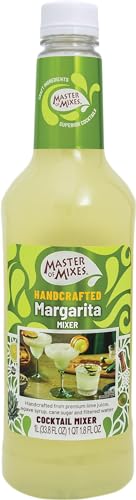
Master of Mixes Margarita Mix, 1 Litre Bottle
Badge: Best Classic Lime
Strengths
- The plain classic lime mix from a cocktail specialist, in the litre size a regular habit finishes happily.
- No competing flavour agenda — the right temperament for a whiskey that dislikes being shouted over.
- The qualitative middle tier of the list: the sensible staple between workhorse and premium.
Trade-offs
- No ingredient narrative in the listing to match Zing Zang’s juice story.
- A litre still wants refrigeration and steady use once opened.
- Deliberately unexciting; explorers should explore elsewhere first.
Mini spec box
- Brand: Master of Mixes
- Format: 1 litre bottle
- Product type: margarita mix
There is a specific pleasure in a mixer that does exactly one thing competently, and for a gentle whiskey that temperament is a feature. This litre of classic lime mix makes the reference Jameson sour — citrus, balance, whiskey audible — without adding a flavour thesis of its own, which means it is the pick against which the louder bottles can be understood. It is also the natural upgrade path from the Daily’s workhorse for a household that wants the same reliability in a slightly more considered bottle, or the natural stocking bottle after an exploration phase has ended with “just the classic, please”.
Who it suits: classicists and regular drinkers who have finished experimenting. The honest limitation is plainness, openly worn: no juice claim, no organic claim, no twist. If those stories are how you shop, Zing Zang and the tonics are your sections of this list; if reliability is how you shop, this is your bottle.
Best for: the classic lime Jameson sour as a standing serve / Not suited for: explorers or story-led shoppers

Fever-Tree Tonic Water Mixer, 24 Pack Cans
Badge: Best Highball
Strengths
- Real quinine, per the listing — genuine bitterness, the exact structure a smooth whiskey needs in a long drink.
- Subtle citrus and fruit notes balanced by quinine bitterness, per the listing, which sit naturally beside Jameson’s own fruit register.
- Single-serve 5.1 fl oz cans in a 24 pack: every highball fully carbonated, in a stock-up quantity.
Trade-offs
- The listing positions this tonic for gin and vodka serves; with whiskey it makes a whiskey tonic, a real but less famous drink — know that is what you are buying it for.
- Tonic bitterness is a taste some drinkers never take to; this is not the pick to convert them.
- Small cans mean two per tall glass if you like your highballs long.
Mini spec box
- Brand: Fever-Tree
- Format: 24 pack, 5.1 fl oz cans
- Listing notes: real quinine; subtle citrus and fruit notes balanced by quinine bitterness
The whiskey tonic is the highball for people who find other highballs too sweet, and Jameson is its ideal whiskey precisely because it is smooth: there is no harshness for the quinine to amplify, so the drink becomes a clean exchange — whiskey fruit and vanilla against tonic bitterness and citrus, over ice, at length. Fever-Tree’s version earns the pick on the honesty of its bitterness: real quinine tastes like a frame, where a sweet, soft tonic tastes like a soda that happens to be bitter-adjacent. Pour the whiskey over a full glass of ice, add a cold can gently, garnish with a lemon wedge, and you have the most refreshing whiskey drink in this guide.
Who it suits: highball drinkers, bitter-palate drinkers, and anyone whose Jameson serves have felt too soft and sweet. The honest limitation is the one stated in its own listing’s positioning: this tonic was built with gin and vodka in mind, and its whiskey use is a well-established variation rather than its headline purpose — which this guide regards as a recommendation, since the variation is genuinely excellent, but you should buy it knowing the story.
Best for: a crisp, bitter-framed Jameson highball / Not suited for: tonic sceptics or sweet-drink drinkers

Fever-Tree Light Tonic Water Mixer, 24 Pack Cans
Badge: Best Light Highball
Strengths
- The listing states 30 calories per can — the leanest long-drink option in the guide.
- A hint of Mexican bitter orange and balanced botanicals, per the listing, give it a citrus tilt that flatters Irish whiskey.
- Real quinine in a light frame, per the listing: the bitterness stays, the weight goes.
Trade-offs
- A lighter tonic makes a leaner highball; drinkers who love the original’s fullness may find it brisk to a fault.
- Same small-can arithmetic as the original: tall glasses may want two.
- Like its sibling, it is positioned for gin and vodka serves; the whiskey tonic is your variation to own.
Mini spec box
- Brand: Fever-Tree
- Format: 24 pack, 5.1 fl oz cans
- Listing notes: real quinine; 30 calories per can; hint of Mexican bitter orange; balanced botanicals
Choose this tonic when the highball is a regular habit rather than an occasion, or when your palate runs crisp. The light version keeps the quinine frame — the structural element Jameson actually needs — and trims the weight around it, and the bitter orange note in its listing is a small gift to this particular whiskey, nudging the drink toward citrus without a garnish doing the work. In practice, households split: the original is the weekend glass, the light is the Tuesday glass, and many end up stocking both in the same 24-can rhythm.
Who it suits: regular highball drinkers and lighter palates. The honest limitation is leanness itself: a light tonic under a light whiskey can produce a drink some tasters call thin, and the fix — a slightly shorter pour and a lemon wedge squeezed in — is worth learning before judging the pick. Handled that way, it is the most sessionable whiskey serve in the guide, a quality Jameson drinkers tend to value.
Best for: a lean, crisp, everyday whiskey tonic / Not suited for: drinkers who want a full, rich highball
Comparison Table
| Pick | Type | Format | Key listing note | Link |
|---|---|---|---|---|
| Daily’s Margarita Mix | Lime cocktail mix | 64 oz bottle | Largest format in the guide | Check on Amazon |
| Zing Zang Margarita Mix | Lime cocktail mix | 32 fl oz bottle | Real fruit juice; no high fructose corn syrup | Check on Amazon |
| Zing Zang Strawberry Mix | Fruit cocktail mix | 32 fl oz bottle | Real fruit juices; non-alcoholic mixer | Check on Amazon |
| Master of Mixes Margarita Mix | Lime cocktail mix | 1 litre bottle | Classic single-flavour staple | Check on Amazon |
| Fever-Tree Tonic Cans | Tonic water | 24 × 5.1 fl oz cans | Real quinine; citrus and fruit notes | Check on Amazon |
| Fever-Tree Light Tonic Cans | Tonic water | 24 × 5.1 fl oz cans | Real quinine; 30 calories per can; bitter orange | Check on Amazon |
How to Choose the Best Mixers for Jameson Whiskey
Begin with the drink’s shape. If your Jameson evenings are short-glass evenings — a cocktail before dinner, something with a beginning and an end — you are shopping the sour family, and your choice among the four lime picks is a choice of weight and story: Daily’s for volume, Zing Zang for juice-led fullness, its strawberry sibling for the summer variation, Master of Mixes for classic plainness. If your evenings are long-glass evenings — a drink that lasts a conversation — you are shopping the tonics, and your choice is between the original’s fuller frame and the light version’s leaner one. Households that do both, which is most Jameson households, should buy one from each family rather than two from one; the bottle supports both drinks equally and the variety is the pleasure.
The second lens is the whiskey’s gentleness, and it inverts the usual advice. With a bold spirit, you choose a mixer that can survive it; with Jameson, you choose a mixer that will respect it, and you enforce the respect with measurement. That is why this guide is untroubled by recommending full-flavoured mixes — a juice-led sour mix is excellent here — while insisting on ratio: the same bottle is a partner at the right measure and a replacement at the wrong one. If you take one habit from the choosing process, take the jigger. Jameson is the whiskey that most rewards measuring and most punishes guessing.
Format, as always, is logistics wearing a flavour costume. Bottled mixes open into a freshness window and want the fridge and a rhythm; canned tonics keep their sparkle indefinitely until opened and suit irregular drinking. A household that makes sours weekly and highballs monthly should buy the 64 oz bottle without hesitation and the tonic in cans without guilt. Reverse the rhythm and reverse the formats. The only true waste in this category is the big opened bottle ageing in a slow fridge, and it is entirely avoidable by buying for the drinking you actually do.
How to Mix Jameson: Sours, Highballs and Fixes
For the sour: whiskey as the largest measure, lime mix at roughly half that measure, hard shake with plenty of ice — but a touch shorter than you would shake a bourbon sour, because Jameson’s delicacy dilutes fast and its flavours are the first casualty of over-dilution — then strain over fresh ice in a short glass. Garnish with a lemon wedge or a strip of peel. Taste for the triangle of fruit, citrus and gentle warmth; if the whiskey is missing, the mix measure is the first suspect and the shake length is the second. Serve it promptly: a Jameson sour sitting in its meltwater fades faster than most.
For the highball: a tall glass filled to the rim with ice, whiskey over the ice, tonic cold and poured gently down the side to keep its carbonation, one lift with a spoon, a lemon wedge squeezed in if the glass tastes soft. The ratio most households settle on is a long one — tonic at three or more times the whiskey — because the drink’s pleasure is refreshment with a whiskey accent, but if the accent vanishes, shorten the pour rather than adding a second mixer to complicate the glass. The same method, word for word, is the method for a ginger ale highball if that is your household’s tradition; only the mixer changes. Readers comparing the bourbon highball will find the same discipline applied in Best Mixers For Jim Beam Apple to a flavoured base.
For a group, batch the sour base — whiskey and mix in the jug at the house ratio, kept cold — and shake portions to order; set the tonics out in their cans, iced, with glasses and lemon, and let the highball drinkers build their own. Troubleshoot in the pattern that covers most Jameson problems:
- Problem: the drink tastes like the mixer, with no whiskey in it → the classic Jameson failure. Fix: raise the whiskey to clearly the largest measure, shorten the shake, and check that your ice is fresh and hard rather than half-melted from the bag.
- Problem: the sour tastes sharp and raw → too much mix for a gentle spirit, or under-diluted. Fix: pull the mix back a third, shake with more ice, and let a lemon wedge rather than more mix supply the brightness.
- Problem: the highball tastes thin and bitter → too long a pour of tonic over too little whiskey, in a glass that was not full of ice. Fix: fill the glass with ice, pour the tonic colder, and shorten the ratio until the whiskey’s fruit returns.
Smoothness as a Mixing Problem: Working With a Gentle Whiskey
It is worth saying plainly why an entire guide about one whiskey keeps returning to measurement, because the lesson generalises to every gentle spirit on your shelf. Bold spirits forgive: their flavour survives ratio errors, warm ice and enthusiastic pouring, and announces itself anyway. Gentle spirits — and Jameson is the world’s most successful gentle spirit — are information-rich at low volume. Their fruit, vanilla and soft spice are all present, but they are present quietly, and every mixing decision either preserves that quiet information or drowns it. Ice quality, dilution length, mixer weight and ratio are not fussy bartender concerns with this whiskey; they are the difference between drinking Jameson and drinking its mixer.
The encouraging half of the same truth is that gentle spirits are the most versatile mixers in the house once the discipline is learned. The same bottle makes a classic sour, a fruit sour, a bitter highball and a light highball in this guide alone, and it does each of them without the edges that make bolder whiskeys fight certain partners. Drinkers who master Jameson mixing tend to become the household’s best mixers generally, because they have learned the transferable skill — proportion — on the spirit that teaches it most clearly. The flavoured and liqueur bottles elsewhere in this programme, from the honey liqueurs to Best Mixers For Kahlua, all become easier after this one.
Jameson at the Table: Food and Occasions
A Jameson sour is an aperitif by temperament: bright, moderate, and cleansing, it belongs before food or beside light food — seafood, salads, anything grilled and simple — where its citrus does the palate-refreshing work. The whiskey tonic is the long meal’s companion, the glass that can sit through a whole dinner of rich food because its bitterness keeps resetting the palate; it is also the natural serve for the drinker who wants one drink to last an evening. The strawberry sour is a garden drink and should be scheduled like one: warm afternoon, cold glass, no agenda.
For mixed tables, this whiskey is the host’s friend for the same reason it is the world’s bridge whiskey: a well-made Jameson sour or highball is the whiskey drink most likely to please the guest who claims not to like whiskey, because nothing in it burns, shouts or lingers aggressively. Offer the zero-proof parallel from the same shelf — the strawberry mix over ice with soda is positioned by its own listing as a non-alcoholic mixer serve — and the table drinks together in the same style. That social range, more than any single serve, is what the six picks in this guide are collectively for.
The Irish Whiskey Shelf: Jameson Among Its Neighbours
Placing Jameson correctly among its neighbours explains most of its mixing behaviour. Against bourbon, it is the lighter, fruitier, less oaky spirit: where a bourbon sour is a drink about warmth and weight, a Jameson sour is a drink about fruit and brightness, and it wants a mixer’s citrus to be clean rather than heavy. Against Scotch blends, it is the smoother, sweeter, less smoky spirit — there is no peat in this glass to argue with tonic bitterness or fruit, which is why both the whiskey tonic and the strawberry sour sit so comfortably here. Against its own flavoured cousins — the honey and cinnamon liqueurs elsewhere in this programme — it is the dry, unsweetened original, which is why its mixers are chosen for structure rather than for sweetness management, and why its drinks can be built at ratios that would make a liqueur drink collapse.
That placement also tells you how to grow a shelf around it. The Jameson household that wants more intensity next buys bourbon and uses this guide’s sour discipline at bolder ratios; the one that wants more gentleness buys the flavoured liqueurs and uses the same discipline in reverse, restraining the mixer to protect a sweet base. Either way, the skills are the ones in this guide — measure, chill, dilute deliberately, garnish honestly — and they transfer intact, which is not true of every bottle’s lessons. It is a further reason, beyond its price tier and its friendliness, why this whiskey is so often the first serious bottle a home bar owns: it teaches mixing while it is being mixed.
A Short Note on Ice, Again, Because Jameson Demands It
Every guide in this programme mentions ice, but Jameson’s guide must insist on it, because no common spirit is more exposed to ice quality. A bourbon can survive tired, half-melted, freezer-flavoured ice and still taste like bourbon; Jameson’s quiet fruit and vanilla are precisely the flavours that tired ice erases and stale ice flavours over. Keep a dedicated supply of fresh cubes, made in a clean tray or bag, turned over regularly, and never stored uncovered beside strong-smelling food. Shake sours with the freshest of it, serve highballs over a glass filled to the rim with it, and notice — most households notice within one drink — that the whiskey they thought was bland was often simply the whiskey they had been serving badly iced. The mixers in this list deserve that ice, and so does the bottle.
Building a Two-Drink Repertoire, Then Stopping
There is a temptation, having discovered that a gentle whiskey mixes well, to keep acquiring mixers until the shelf holds a dozen open bottles in various stages of decline. Resist it with this guide’s own structure as the argument: the repertoire that actually gets used is two drinks deep — one sour, one highball — with one seasonal variation. A household that owns the Zing Zang original for its sour, one Fever-Tree tonic for its highball, and the strawberry mix when summer argues for it, owns everything Jameson honestly offers a home bar, in formats it will finish while they are fresh. The fourth and fifth mixers are not more repertoire; they are the same repertoire, ageing. Buy depth — the workhorse bottle when the sour becomes weekly, the tonic case when the highball becomes a ritual — and let the repertoire’s narrowness be its strength. The drinkers who make the best Jameson drinks at home are, without exception, the ones who make two drinks often rather than nine drinks rarely.
Strength, Pacing and the Long Evening
One quiet virtue of this whiskey’s mixed serves deserves its own paragraph, because hosts plan around it: a Jameson highball or sour, built at the ratios in this guide, is a moderate drink that can be paced across an evening in a way that neat pours and short, strong cocktails cannot. Saying so is part of serving well — guests pace themselves better with honest information about what is in their glass — and the tonic highball in particular, long and bitter and sipped slowly, is the serve that lets a whiskey drinker stay at the table, glass in hand, from the first course to the last without the evening tilting. Choose mixers for flavour first, always; but a repertoire whose long drink is genuinely long is a social asset, and this bottle’s is the best in this programme.
A Final Word on Fresh Citrus, When You Have It
The mixes in this guide are the reliable, shelf-ready way to this whiskey’s citrus drinks, and for most households, most of the year, they are the right way. But a Jameson drinker who occasionally has fresh lemons in the house should know that a squeezed lemon wedge over any serve in this guide — the sour or the highball — is a legitimate finishing step rather than a betrayal of the bottled method: it adds the top-note aroma that no bottled mix, however juice-led, fully carries. Use it as a garnish with a function, not as a replacement for the mix, and the two methods stop being rivals and become what they always were — the same drink, at two levels of effort, for two kinds of evening.
One Last Calibration: The Two-Glass Test
When in doubt between the sour and the highball as your household’s centre, settle it the way this programme always settles things: two glasses, one evening, the same whiskey. Make the Zing Zang sour at the guide’s ratio and the Fever-Tree tonic at its ratio, taste them in that order, and notice which glass you finish thinking about. The answer is your centre, and every purchase after it is a supporting purchase. Two glasses is a small price for a repertoire that fits.
Common Buying Mistakes
The first mistake is buying a mixer to “bring out” Jameson and then pouring it like the main ingredient; with this whiskey the mixer is always the supporting act, and the ratio is the contract. The second is shaking sours into oblivion — over-dilution is the quiet killer of gentle spirits — or, at the other extreme, building them unstirred and warm and calling the rawness character. The third is buying tonic by the case before learning whether your palate takes to quinine at all; start with the sour family or a single pack rhythm and let the taste declare itself.
Fourth, the freshness errors: a 64 oz mix ageing open in a slow fridge, tonic cans served warm, ice that has lived uncovered for a month. Fifth, garnish confusion — the salt rim that turns a whiskey sour into a margarita in the drinker’s mind before the first sip. Sixth, expecting one pick to cover both families: a household that drinks sours and highballs needs one bottle from each, and the modest cost of the second family is the price of the bottle’s full repertoire.
Final Recommendation
If you buy one pick, buy the Zing Zang Original Margarita Mix and learn the Jameson sour properly — measured, cold, whiskey-forward — because that drink is the centre of this bottle’s repertoire. Add the Fever-Tree Tonic cans when you want the second centre, the highball, and let the light tonic succeed it if your palate runs lean. Let Daily’s take over the sour supply when the habit is weekly, Master of Mixes when you want the classic without a story, and the strawberry Zing Zang when summer arrives. That sequence turns the world’s smoothest whiskey into a small, complete home repertoire.
Related guides
Frequently Asked Questions
What is the best all-round mixer for Jameson?
For a cocktail, a good lime sour mix used at a whiskey-forward ratio — in this guide, the juice-led Zing Zang original makes the fullest Jameson sour. For a long drink, a real-quinine tonic makes the crispest highball. Ginger ale is the famous third answer; it is not in this guide’s verified pool, but the highball method here transfers to it directly.
Why does Jameson disappear in my cocktails?
Because it is blended for smoothness and will not fight a mixer for the glass. The fixes are measurement and dilution control: whiskey clearly the largest measure, a firm but not endless shake, fresh hard ice, and serving the drink promptly over fresh ice rather than its own meltwater.
Does tonic water really go with Irish whiskey?
Yes — the whiskey tonic is a long-established highball, and Jameson’s smoothness suits it especially well because there is no harshness for the quinine to amplify. The result is a dry, bitter-framed, refreshing drink; garnish with lemon and pour the tonic cold over plenty of ice.
How is a Jameson sour different from a bourbon sour?
Mostly in handling. The build is the same family — whiskey, citrus, cold, dilution — but Jameson wants a slightly shorter shake and a slightly more careful ratio, because its flavours are quieter and dilute faster. The drink that results is lighter and fruitier than a bourbon sour, not lesser.
Which pick should a party host buy?
The Daily’s 64 oz bottle for a settled sour serve in volume, plus tonic cans for the highball drinkers — cans keep every serve sparkling without bottle management. Batch the sour base in a jug and shake portions to order rather than pre-diluting the batch.
What can I serve a guest who is not drinking?
The strawberry Zing Zang is positioned in its listing as a non-alcoholic cocktail mixer: over ice, lengthened with soda and garnished like the whiskey version, it gives the guest the same style of glass. The tonics over ice with lemon also stand alone respectably.


