Disclosure: topratedkitchenware.com is reader-supported. When you buy through links on our site, we may earn an affiliate commission from Amazon and other retailers, at no extra cost to you.
Where to buy
Four batteries in this roundup are genuine native 24 volt LiFePO4 batteries, and they are the linked picks in this guide to the best 24 volt lifepo4 battery. The other two products are 24 volt lithium-ion project packs: their voltage is real, but their chemistry is not lithium iron phosphate, so they are documented in full as prose-only entries with no link and no image. Chemistry is not a footnote in this category; it is the reason buyers search this exact term, and this guide treats it as a hard eligibility line.
- dumfume 24V 100Ah LiFePO4 Lithium Battery — check the latest price on Amazon
- Qwenoer 22.2V-24V 10Ah Lithium Battery Pack — lithium-ion, not LiFePO4; covered prose-only below
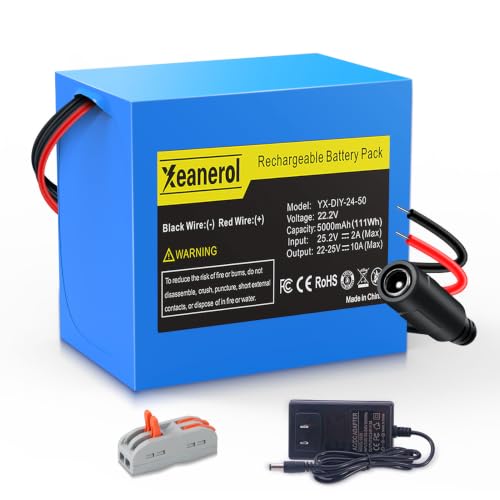
- Xeanerol 24V 5Ah Lithium Battery Pack — lithium-ion, not LiFePO4; covered prose-only below
- yeagulch 24V 100Ah LiFePO4 Lithium Battery — check the latest price on Amazon
- Dyness 24V 100Ah LiFePO4 Lithium Battery — check the latest price on Amazon
- yeagulch 24V 314Ah LiFePO4 Lithium Battery — check the latest price on Amazon
Read the full guide ↓
Shoppers hunting for the best 24 volt lifepo4 battery are usually making a deliberate chemistry decision, not just a voltage decision. Lithium iron phosphate has become the default chemistry for serious deep-cycle work because it trades a little of the energy density of other lithium designs for a great deal of cycle life, thermal stability, and tolerance of the partial charging and deep discharging that solar banks, trolling motors, RV house systems, and off-grid installations dish out every day. At 24 volts the category has matured quickly: the verified pool behind this guide contains four native 24 volt LiFePO4 batteries ranging from a waterproof 100Ah marine-ready unit to a 314Ah storage giant holding more than eight kilowatt-hours. This guide compares those four honestly, explains where each one fits, and shows why the two lithium-ion project packs that share the shelf do not belong in the same sentence, however convenient their voltage labels look. Readers who want the wider lithium picture can continue in Best 24 Volt Lithium Batteries, while this page stays strict about the phosphate chemistry.
The four linked batteries divide into two natural classes. Three of them are 100Ah units storing 2560Wh each, differentiated by protection details, expansion design, and stated cycle class. The fourth is a different animal entirely: a 314Ah battery with 8038.4Wh of storage and a 200A BMS, aimed at buyers whose 24 volt system is closer to a small power station than a boat accessory. Choosing well means knowing which class your loads live in before comparing the details inside it, and the buying-guide section below walks through that sizing logic step by step.
Key Takeaways
- All four linked picks are native 24 volt LiFePO4: no series pairing, no second chemistry hiding behind a lithium headline.
- The three 100Ah batteries each store 2560Wh; they differ in waterproofing, expansion design, and stated cycle class, not in basic energy.
- The yeagulch 314Ah battery stores 8038.4Wh behind a 200A BMS and belongs to stationary and large-system duty rather than portable use.
- Stated cycle classes in this pool range from 4000+ cycles on the Dyness to 15000+ on the two yeagulch units and the dumfume’s 15000; read them as design classes, and weigh protection and expansion alongside them.
- The two prose-only packs are lithium-ion, not LiFePO4, and are project batteries for ride-on cars and RC work; chemistry and scale both disqualify them here.
- Low-temperature charge protection appears across the linked picks and is the single most valuable protection feature for outdoor and marine installations.
- Certifications named in the verified data, UN38.3 for transport testing and UL1973 for battery safety, are baseline credibility signals worth checking on any battery in this class.
- A shunt-based monitor and a true lithium-profile charger are part of the real purchase; flat lithium discharge curves make voltage-only gauges unreliable.
In this guide
Quick Picks
- dumfume 24V 100Ah LiFePO4 — Badge: Best Overall. Native 24 volt, 2560Wh, built-in 100A BMS, low-temperature cutoff, and an IP65 waterproof rating for marine and outdoor duty. Check on Amazon
- Qwenoer 22.2V-24V 10Ah Lithium Battery Pack — Badge: Not LiFePO4. A 24 volt-class lithium-ion pack with its own charger and bare leads, listed for kids ride-on cars and DIY projects. Prose-only: wrong chemistry and project scale for this category.
- Xeanerol 24V 5Ah Lithium Battery Pack — Badge: Not LiFePO4. A small 24 volt lithium-ion pack with a fast charger, listed for RC cars, LED strips, and CCTV cameras. Prose-only: wrong chemistry and far below deep-cycle scale.
- yeagulch 24V 100Ah LiFePO4 — Badge: Best for Trolling and Marine. Native 24 volt, 2560Wh, built-in 100A BMS, low-temperature cutoff, and a listing that names trolling motors first. Check on Amazon
- Dyness 24V 100Ah LiFePO4 — Badge: Best for Expandable Banks. Native 24 volt, 2560Wh, smart 100A BMS, and stated 4P2S connection support up to 20.48kWh for growing systems. Check on Amazon
- yeagulch 24V 314Ah LiFePO4 — Badge: Best Maximum Capacity. Native 24 volt with 8038.4Wh of storage, a 200A BMS, and low-temperature protection for large off-grid, RV, and backup systems. Check on Amazon
How These Picks Were Chosen
Every product here comes from a verified pool checked against Amazon’s catalog data on 2026-11-20. All specifications in the reviews, including capacities, energy figures, BMS ratings, cycle classes, and protection features, are taken only from each product’s verified listing title. Nothing is imported from a manufacturer’s other models, and where the verified data is silent, for example on exact dimensions, this guide is silent too. In a category where buyers routinely cross-shop near-identical model names, that discipline is the difference between a guide and a guess. It also explains this guide’s silences: features that competing roundups describe in confident detail are omitted here whenever the verified listing data does not state them, because a battery purchase made on an invented specification can fail in expensive and occasionally unsafe ways.
Eligibility for a link required three passes. First, native 24 volt output from a single unit; all four linked batteries pass, and notably this rotation contained no 12 volt components at all. Second, the chemistry named in the keyword: lithium iron phosphate. The two project packs fail here, because their verified listings describe them as lithium-ion batteries without the iron phosphate designation, and in battery terminology that distinction is a different cathode chemistry with different cycle life and stability characteristics. Third, deep-cycle credibility at useful scale, which the same two packs also fail at 5Ah and 10Ah. They are reviewed in full because buyers will meet them in search results, and a clear explanation of the chemistry line is worth more than silence.
This is research-led guidance; no hands-on testing is claimed. Comparisons rest on the verified specifications and on established LiFePO4 practice: how BMS ceilings interact with inverter and motor loads, why low-temperature charge cutoff protects cells, and how expansion architectures change a bank’s future. Readers planning a solar-first system will find the storage angle developed in Best 24 Volt Lithium Ion Batteries For Solar Storage, and the deep-cycle angle in Best 24 Volt Lithium Batteries Deep Cycle.
The 6 Best 24 Volt LiFePO4 Battery Candidates, With the Line Drawn Clearly
Four of these six products are the category. Two are a cautionary tale about reading only the voltage and the word lithium. Each review states its status plainly, and the linked four can be compared directly against each other on the verified numbers that follow.

dumfume 24V 100Ah LiFePO4 Lithium Battery
Badge: Best Overall
Strengths
- Native 24 volt LiFePO4 with 2560Wh, a built-in 100A BMS, and a stated 15000-cycle deep-cycle class.
- IP65 waterproof rating, rare at this level and directly relevant to marine and outdoor installations.
- Low-temperature cutoff protection, with UN38.3 and UL1973 certifications named in the verified listing.
Trade-offs
- The 100A BMS ceiling suits most 24 volt loads but must be planned around for the largest inverters.
- No structured multi-unit expansion figure is stated in its verified data, unlike the Dyness below.
- A single-unit bank is a single point of failure; redundancy requires paralleling a second battery.
Spec box (from verified listing data): Nominal voltage 24V; capacity 100Ah; energy 2560Wh; chemistry LiFePO4; BMS built-in 100A; stated cycle class 15000 deep cycles; protection low-temperature cutoff; ingress rating IP65 waterproof; certifications named UN38.3, UL1973; named uses RV, marine, solar, off-grid.
The dumfume is the most complete single answer in this group. Its specification reads like a checklist written by the category itself: the right chemistry, the right native voltage, a full 2560Wh, a protection set that includes the cold-weather cutoff, and an ingress rating that lets it live where batteries actually live on boats and in outdoor enclosures. For a trolling motor it offers the one-BMS simplicity that makes native batteries so easy to own. For a solar or RV bank it offers a clean building block that parallels as whole units. Nothing in its verified data reaches for a headline it cannot support, and that restraint, combined with the waterproofing, is why it leads this guide. Buyers whose first priority is propulsion should compare it directly with the yeagulch 100Ah below; the difference is emphasis, not class.
Best for: marine, RV, solar, and off-grid buyers who want the most complete single 100Ah unit / Not suited for: systems designed around a stated multi-unit expansion architecture from day one
Qwenoer 22.2V-24V 10Ah Lithium Battery Pack
Badge: Not LiFePO4
Strengths
- Genuine 24 volt-class output with a matched 25.2V 2A charger included.
- Bare leads and a cable connector make project integration straightforward.
- Verified listing is candid about its roles: kids ride-on cars, DIY projects, LED strips, CCTV cameras, small solar panels.
Trade-offs
- Lithium-ion chemistry, not lithium iron phosphate; it fails the keyword’s defining attribute.
- At 10Ah it is an order of magnitude below the deep-cycle batteries in this guide.
- Project-pack construction carries none of the protection or casing expectations of a storage or marine battery.
Spec box (from verified listing data): Nominal voltage 22.2V-24V; capacity 10Ah; chemistry lithium-ion; charger included, 25.2V 2A; connection bare leads wire with cable connector; named uses kids ride-on cars, DIY projects, solar panels, LED light strips, CCTV cameras.
The Qwenoer is a perfectly reasonable product standing in the wrong category, and the reason is one word: phosphate. Lithium-ion is a family name covering several chemistries, and the iron phosphate branch is the one prized for deep-cycle longevity and stability. A pack that does not claim that branch should not be bought as if it did, particularly for a battery that will be cycled hard for years in a boat or a solar bank. Add the scale mismatch, a tenth of the capacity of the linked picks, and the conclusion is not close. Keep this pack for the ride-on car and the lighting projects its own listing describes, where its included charger and simple leads are genuine conveniences.
Best for: ride-on cars and small 24 volt DIY projects / Not suited for: any LiFePO4 application, deep-cycle duty, or energy storage
Xeanerol 24V 5Ah Lithium Battery with 2A Fast Charger
Badge: Not LiFePO4
Strengths
- True 24 volt output in a compact pack with a matched 2A fast charger and cable connector.
- Light and simple for RC cars, LED strips, and camera power, exactly as listed.
- A complete kit for its intended project roles, with nothing extra to source.
Trade-offs
- Lithium-ion chemistry rather than LiFePO4, so it sits outside this category’s definition.
- At 5Ah it holds roughly a twentieth of the energy of the 100Ah batteries here.
- No deep-cycle design, protection architecture, or storage role is claimed in its verified data.
Spec box (from verified listing data): Nominal voltage 24V; capacity 5Ah; chemistry lithium-ion; charger 2A fast charger included; connection cable connector; named uses 24 volt DIY projects, RC cars, LED light strips, CCTV cameras.
Everything said about the Qwenoer applies here at half the capacity. The Xeanerol is an RC and project pack, honestly listed for those jobs, and it earns a short, clear review rather than a long one: wrong chemistry for this keyword, wrong scale for deep-cycle work, right product for the hobby bench. Buyers who arrived here from a search that mixed these packs into storage results now know the two questions that separate the categories: is it iron phosphate, and is it sized in the hundreds of amp-hours or the single digits? The linked four answer both correctly.
Best for: RC cars, LED strips, CCTV and hobby projects / Not suited for: LiFePO4 storage, trolling, solar, or any deep-cycle role
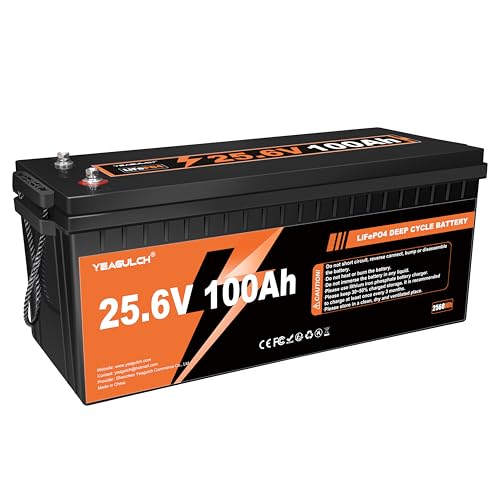
yeagulch 24V 100Ah LiFePO4 Lithium Battery
Badge: Best for Trolling and Marine
Strengths
- Native 24 volt, 2560Wh, built-in 100A BMS, and a stated 15000+ deep-cycle class.
- Verified listing names trolling motors first, then off-grid, solar, RV, and marine use.
- Low-temperature cutoff protection with UN38.3 and UL1973 certifications named.
Trade-offs
- No ingress rating is stated in its verified data, where the dumfume claims IP65.
- No structured expansion ceiling is stated, so growing systems should plan paralleling carefully.
- Shares the 100A BMS ceiling of its class; the largest loads still need a paralleled second unit.
Spec box (from verified listing data): Nominal voltage 24V; capacity 100Ah; energy 2560Wh; chemistry LiFePO4; BMS built-in 100A; stated cycle class 15000+ deep cycles; protection low-temperature cutoff; certifications named UN38.3, UL1973; named uses trolling motors, off-grid, solar, RV, marine.
If the dumfume is the generalist, the yeagulch 100Ah is the angler’s version of the same battery class. Its listing leads with trolling motors, and its fundamentals support the claim: full capacity, a BMS ceiling with real headroom over cruising draw, cold-morning charge protection, and the single-unit simplicity that removes pair-balancing from a fisherman’s maintenance list forever. In a dry or sheltered locker there is little to separate it from the dumfume, and buyers may reasonably let tray fit and cable routing decide. In a wet bow locker, the dumfume’s stated waterproofing is the rational tiebreaker. Either purchase lands in the same place: a native, phosphate, deep-cycle battery doing the job its label describes. The motor-first comparison continues in Best 24 Volt Lithium Trolling Motor Battery.
Best for: trolling motors and marine installs in sheltered lockers, plus general 24 volt duty / Not suited for: buyers who need a stated waterproof rating from the battery itself

Dyness 24V 100Ah LiFePO4 Lithium Battery
Badge: Best for Expandable Banks
Strengths
- Native 24 volt, 2560Wh, with a smart 100A BMS.
- Stated 4P2S connection support up to 20.48kWh, the clearest expansion architecture in this group.
- Verified listing states a 10-year lifetime design intent alongside its 4000+ deep-cycle class.
Trade-offs
- Its stated cycle class, 4000+ cycles, is lower than the 15000-class figures claimed by the dumfume and yeagulch units.
- No low-temperature cutoff or ingress rating is stated in its verified title data, where rivals name the cutoff explicitly.
- Expansion to the stated ceiling is a system design exercise, not a casual add-on.
Spec box (from verified listing data): Nominal voltage 24V; capacity 100Ah; energy 2560Wh; chemistry LiFePO4; BMS smart 100A; stated cycle class 4000+ deep cycles; stated lifetime 10-year; stated connection support 4P2S, up to 20.48kWh; named uses marine, RV, solar.
The Dyness makes a different argument from its 100Ah siblings: not waterproofing, not trolling intent, but architecture. A stated parallel and series connection scheme reaching up to 20.48kWh tells a system builder exactly how this battery expects to grow, and for cabins, larger RVs, and solar installations that will expand over years, that published path is worth real money in avoided redesign. The honest counterweight is its stated cycle class. Four thousand-plus deep cycles is still many years of daily use, but it is a lower figure than the 15000-class claims elsewhere in this guide, and buyers should weigh the two specifications against their own horizon: a system that will grow favors the Dyness; a single battery expected to cycle for a very long time favors the higher-class units. That is a genuine trade, presented here without a thumb on the scale.
Best for: solar, RV, and marine systems planned to expand in structured steps / Not suited for: buyers prioritizing the highest stated cycle class in a single fixed battery

yeagulch 24V 314Ah LiFePO4 Lithium Battery
Badge: Best Maximum Capacity
Strengths
- 8038.4Wh of native 24 volt storage in one unit, more than three of the 100Ah batteries combined.
- A 200A BMS doubles the discharge ceiling of the 100Ah class, supporting roughly 4800 watts of load.
- Stated 15000+ deep-cycle class with low-temperature protection and UL 1973 and UN38.3 certifications named.
Trade-offs
- This is a large, stationary-class battery; portable and small-boat uses should look at the 100Ah picks.
- One very large unit concentrates risk: a failure idles the whole bank rather than one module of it.
- Charging 8kWh back to full takes a serious charger or a substantial solar array and time.
Spec box (from verified listing data): Nominal voltage 24V; capacity 314Ah; energy 8038.4Wh; chemistry LiFePO4; BMS 200A; stated cycle class 15000+ deep cycles; protection low-temperature protection; certifications named UL 1973, UN38.3; named uses trolling motors, RV, marine, solar, backup power, off-grid.
The 314Ah yeagulch answers a question the 100Ah batteries cannot: what if the 24 volt system is the house? Eight kilowatt-hours behind a 200A BMS runs a serious off-grid cabin load through the night, carries an RV through days of boondocking, or gives a solar installation the autonomy buffer that separates a system from a demonstration. Its listing still names trolling motors, and on a large boat with the space and the need it would serve, but its natural home is stationary and large-vehicle duty where its scale is the point. Buyers in this class should plan the whole chain with equal seriousness: charger capacity, cable gauge for 200A-class work, and monitoring worthy of an 8kWh asset. Treated as infrastructure rather than an accessory, it is the most capable battery in this guide by a wide margin. Solar-first readers can extend the comparison in Best 24 Volt Lithium Batteries For Solar.
Best for: off-grid cabins, large RVs, backup power, and solar systems needing multi-day autonomy / Not suited for: small boats, portable use, or buyers whose loads fit the 100Ah class
Comparison Table
| Pick | Voltage | Capacity | Energy | BMS | Stated cycle class | Status | Link |
|---|---|---|---|---|---|---|---|
| dumfume 24V 100Ah | 24V native | 100Ah | 2560Wh | 100A | 15000 | Linked | Check on Amazon |
| Qwenoer 24V 10Ah Pack | 22.2V-24V | 10Ah | Small pack class | Project pack | Not stated as deep-cycle | Prose-only — not LiFePO4 | — |
| Xeanerol 24V 5Ah Pack | 24V | 5Ah | Small pack class | Project pack | Not stated as deep-cycle | Prose-only — not LiFePO4 | — |
| yeagulch 24V 100Ah | 24V native | 100Ah | 2560Wh | 100A | 15000+ | Linked | Check on Amazon |
| Dyness 24V 100Ah | 24V native | 100Ah | 2560Wh | 100A smart | 4000+ | Linked | Check on Amazon |
| yeagulch 24V 314Ah | 24V native | 314Ah | 8038.4Wh | 200A | 15000+ | Linked | Check on Amazon |
How to Choose a 24 Volt LiFePO4 Battery
Start by deciding which of the two classes in this guide your system belongs to. If the load is a trolling motor, a modest RV house system, or a small solar bank, the 100Ah class with its 2560Wh is the natural unit, and the decision narrows to protection and expansion details. If the load is a cabin, a large RV, or a backup system expected to carry real appliances through real outages, the 314Ah class exists precisely for you, and forcing a 100Ah battery to do that work through constant deep cycling and paralleled improvisation is false economy.
Within the 100Ah class, choose on three axes. Protection: the dumfume’s stated IP65 rating and the low-temperature cutoffs named by dumfume and yeagulch matter in proportion to how wet and how cold the installation is. Expansion: the Dyness publishes the clearest growth architecture, up to 20.48kWh in a stated 4P2S scheme, which suits systems designed to grow. Cycle class: the stated figures range from 4000+ to 15000+, and while such numbers are manufacturer classes rather than guarantees, a buyer planning a decade of daily cycling should weigh them seriously alongside the other axes. Then verify the current ceiling: 100A at 24 volts supports roughly 2400 watts, and any inverter or motor combination that lives near that figure needs a paralleled second unit or the 200A headroom of the big yeagulch.
Finally, hold the chemistry line when shopping beyond this guide. The word lithium on a listing is a family name, not a specification. Confirm the iron phosphate designation, confirm native voltage rather than a series suggestion, and confirm that cycle and protection claims appear in the product’s own data rather than in a review’s enthusiasm. The two prose-only packs in this guide fail the first test while passing a casual glance, which is exactly the failure mode the checklist exists to catch. Buyers comparing against the broader lithium field can sanity-check their shortlist against Best 24 Volt Lithium Ion Battery as well.
How to Install, Charge, and Maintain a LiFePO4 Bank
Install the battery secured against movement, with cable sized for the maximum current the BMS allows, a fuse close to the positive terminal sized to protect the cable, and terminals covered against accidental contact. Keep the installation as dry as the space permits; an IP65-rated unit forgives more, but no battery enjoys standing water. For multi-unit banks, follow the manufacturer’s stated connection scheme, keep interconnects short and equal, and charge every unit to the same state before joining them.
Charge with a charger or solar controller set to a 24 volt lithium profile for LiFePO4. This single setting decides more outcomes than any other in the system’s life: a lead-acid profile will undercharge the bank and slowly convince its owner that lithium was oversold. Let the low-temperature protection do its job in cold weather rather than defeating it; the cutoff exists because charging cold lithium cells causes permanent damage, and a delayed charge is always cheaper than a damaged bank. For storage, leave the bank partially charged, disconnect parasitic loads, and keep it cool and dry.
Maintenance is mostly a short seasonal list: check terminal tightness, inspect cables for chafe or corrosion, confirm the monitor’s capacity setting still matches the bank, and watch resting behavior for anything that changes suddenly. Three problems cover most of what owners actually meet. Problem: the bank seems to lose capacity over a season → first verify the charger is truly delivering a lithium profile and completing its charge; chronic undercharging mimics aging almost perfectly. Problem: the system shuts down under a heavy load it handled before → check for a loose or corroded connection heating under current, and confirm the load has not quietly grown past the BMS ceiling. Problem: charging refuses to start on a cold morning → the low-temperature cutoff is protecting the battery; warm the space or wait for the day to warm, and never bypass the protection to force a charge.
Monitoring is the last piece of the choosing puzzle, and it is chronically under-bought. LiFePO4’s discharge curve is flat by design, which means a simple voltage reading stays nearly constant across most of the usable range and then falls quickly near empty. Owners who judge state of charge by voltage alone will feel surprised by shutdowns that a proper monitor would have predicted hours earlier. A shunt-based monitor, programmed with the bank’s true amp-hour capacity, counts current in and out and reports a percentage worth trusting. On the 314Ah battery especially, where the asset is large and the loads vary, monitoring is not an accessory; it is how the owner knows whether the solar array, the charger, and the consumption are in balance before the imbalance becomes an outage. Budget for it at purchase time, alongside the correct charger, and the bank’s stated specifications become the system’s lived experience rather than its brochure.
Why Cycle Class Deserves a Second Look
Cycle figures are the most quoted and least examined numbers in this category, so they deserve one honest paragraph. A cycle class states the deep-discharge repetitions a design is built to survive under its maker’s test conditions; it is a class, not a promise about your installation, and real life is decided by depth of discharge, temperature, charge discipline, and current stress. The practical reading of this guide’s spread, from the Dyness at 4000+ to the 15000-class units, is not that one battery lasts exactly some multiple of another. It is that buyers with a long horizon and daily cycling should weight the higher classes, buyers with seasonal or expanding systems may rationally trade some cycle class for architecture, and every buyer should treat installation and charging discipline as worth more cycles than any headline. A well-kept 4000-class battery will outlive a neglected 15000-class one, which is the least convenient and most useful sentence in this section.
Four Real Systems, Four Different Right Answers
Abstract specifications become clearer when they are walked through real installations. Consider first a bass boat with a 24 volt trolling motor, a wet bow locker, and an owner who fishes year-round including cold spring mornings. The deciding specifications are the ingress rating and the low-temperature cutoff, and the dumfume’s stated IP65 protection makes it the natural fit; the yeagulch 100Ah would serve the same motor in a drier locker, but this boat’s locker is not dry, and pretending otherwise is how batteries die young. The owner’s charging is a single 24 volt lithium-profile charger in the garage, the monitor is shunt-based, and the bank’s whole maintenance routine is a terminal check each spring.
Second, a travel trailer whose owners boondock for long weekends and plan, eventually, to stay out for weeks. Their loads are lights, a fridge, device charging, and an inverter for small appliances, and their honest expectation is growth. Here the Dyness earns its place: a single 100Ah unit covers the weekends now, and its stated 4P2S path to 20.48kWh means the week-long version of the system is an addition, not a replacement. The trade they accept is the lower stated cycle class, and they accept it knowingly because their cycling is seasonal rather than daily, so the architecture is worth more to them than the headline cycle figure.
Third, an off-grid cabin with a fridge, lighting, a water pump, device charging, and a small workshop load, visited in all seasons and expected to ride through stretches of poor solar weather. This is the 314Ah yeagulch’s home ground. Its 8038.4Wh provides the autonomy buffer the cabin’s owners actually mean when they say reliable, and its 200A BMS gives the workshop and pump loads their headroom without paralleling gymnastics. The installation is treated as infrastructure: heavy cable, a serious charger, a proper monitor, and a battery space that stays dry and temperate. The owners charge on a correctly set solar controller, respect the low-temperature protection through the winter, and think about the battery the way they think about the roof: rarely, because it was specified properly once.
Fourth, a small solar installation for a shed and garden office, where the loads are modest but daily: lights, a laptop, a router, and tool charging. A single 100Ah unit from any of the three linked 100Ah picks covers this easily, and the decision collapses to preference among near-equals, which is a pleasant place for a buyer to be. The lesson across all four systems is the same: the right battery is the one whose stated strengths match the installation’s actual stresses, and the specifications that decide real purchases are usually the second-order ones, waterproofing, expansion, cold protection, current ceiling, rather than the capacity figure everyone compares first.
Safety, Certifications, and Transport
The linked picks name UN38.3 and UL1973 certifications in their verified data, and buyers should know what those marks are doing there. UN38.3 is the transport testing standard that lithium batteries must pass to be shipped legally by air and ground carriers; its presence signals that the design has survived a defined battery of altitude, thermal, vibration, shock, and short-circuit tests. UL1973 is a safety standard for batteries used in stationary and motive auxiliary applications, addressing electrical, mechanical, and fire-related hazards in the battery’s construction and protection systems. Neither mark is a performance promise, and this guide does not treat them as one. They are baseline credibility signals, the difference between a battery whose maker submitted the design to recognized testing and one whose listing offers only adjectives.
Household safety practice around a bank of this size is simple and worth stating plainly. Install the battery where it cannot be punctured, crushed, or left in standing water. Keep terminals covered and tools off the battery top. Fuse the main positive lead near the battery so a short in the cabling is interrupted at the source. Never defeat the BMS or the low-temperature protection to make a symptom go away; a protection trip is information, and the correct response is to find the load, connection, or temperature condition that caused it. If a battery is ever damaged, swollen, or involved in a thermal event, isolate it outdoors away from structures and follow local hazardous-waste guidance rather than household trash disposal. These are not exotic precautions; they are the ordinary respect owed to any device that stores several kilowatt-hours in a box.
Common Buying Mistakes
- Buying any battery labeled lithium and assuming it is LiFePO4. Confirm the iron phosphate chemistry in the product’s own data.
- Comparing batteries on amp-hours across different voltages. Convert to watt-hours; energy is the honest common currency.
- Ignoring the BMS ceiling while planning inverter loads. Capacity decides runtime; the BMS decides permission.
- Charging on a lead-acid profile and blaming the battery for the resulting short runtime.
- Defeating or resenting low-temperature charge protection. It is the feature standing between a cold morning and permanent cell damage.
- Mixing models or ages when expanding a bank. Growth should follow one stated architecture with matched units.
What Ownership Feels Like After the First Year
Buyers new to LiFePO4 often ask what changes after the switch from older battery habits, and the honest answer is that the battery mostly disappears. There is no watering, no corrosion blooming on terminals each season, no ritual of keeping the bank brim-full to keep it healthy, and no dramatic voltage sag when a real load starts. The routines that replace the old ones are lighter: recharge promptly after use, leave the bank partially charged for long storage, glance at the monitor rather than guessing, and let the protection systems do the worrying about cold mornings. Owners of the larger systems in this guide describe the same arc at bigger scale: a first season of checking the monitor constantly, followed by the calm of a system that behaves as specified. That calm is the actual product, and it is earned jointly by the battery’s design and the owner’s few simple habits, which is why this guide spends as much of its length on choosing, charging, and monitoring as it does on the products themselves. The four linked batteries differ in waterproofing, expansion design, cycle class, and scale, but they share the chemistry and the native voltage that produce it, and that is why the chemistry line drawn at the start of this guide is worth defending so firmly.
Final Recommendation
For most buyers, the dumfume 24V 100Ah is the first choice: the complete package of native voltage, phosphate chemistry, full capacity, cold protection, and waterproofing in one unit. Choose the yeagulch 100Ah when trolling is the primary mission and the locker is sheltered, the Dyness when the system is explicitly designed to expand toward its stated ceiling, and the 314Ah yeagulch when the installation is infrastructure rather than accessory. Skip the project packs for anything in this category; their own listings already told you what they are for. Whichever linked battery you choose, complete the purchase properly: a charger with a true 24 volt lithium profile, cable and fusing sized for the BMS ceiling, and a shunt-based monitor if the system will be relied on daily. The battery is the heart of the system, but those three companions are what let it live up to its specification sheet, season after season, in the boat, the trailer, the cabin, or the solar shed it was bought to serve, without drama or disappointment.
Frequently Asked Questions
What makes LiFePO4 different from other lithium batteries?
LiFePO4, lithium iron phosphate, is a specific lithium chemistry valued for deep-cycle work: it tolerates repeated deep discharge, partial charging, and high cycle counts, and it is thermally stable. Generic lithium-ion packs, like the two prose-only entries in this guide, use different cathode chemistries optimized for compact project power, not for thousands of deep cycles in a storage or propulsion bank.
How much energy does a 24V 100Ah LiFePO4 battery hold?
2560Wh, found by multiplying 24 volts by 100 amp-hours. That is the figure to compare across batteries of any voltage. The largest pick in this guide, at 24V and 314Ah, holds 8038.4Wh, a little over three times as much, which is why it belongs to stationary and large-system duty.
Can I expand a 24 volt LiFePO4 bank later?
Yes, by paralleling additional matched units of the same voltage, and in some designs through stated series-parallel schemes. The Dyness in this guide publishes a 4P2S path up to 20.48kWh. Whatever the brand, keep models and ages consistent, charge all units to the same state before connecting, and re-check charger and fuse sizing for the enlarged bank.
What charger should I use with a 24V LiFePO4 battery?
A charger or solar charge controller with a true 24 volt lithium profile for LiFePO4 chemistry. A lead-acid profile will undercharge the bank, and a 12 volt charger cannot charge a 24 volt bank correctly in any arrangement. Verify the profile in the charger’s own documentation rather than trusting a label.
Is the stated cycle class a guarantee?
No. It is the manufacturer’s design class under its own test conditions. Real service life depends on depth of discharge, temperature, charging discipline, and load stress. Read the class comparatively, as this guide does, and treat good installation and charging habits as the part of longevity you actually control.
Why does low-temperature protection matter so much?
Charging lithium cells below freezing can cause permanent internal damage. A low-temperature cutoff blocks charging until the battery warms to a safe range, converting a potential bank-ending mistake into a short delay. For boats, cabins, and outdoor solar installations in cold climates, it is one of the most valuable lines in a specification.
How should a LiFePO4 bank be sized for a solar installation?
Work in watt-hours on both sides of the ledger. Add up a day’s loads, decide how many days of autonomy the system must carry through poor weather, and choose a bank whose total energy covers that figure with reserve. Then confirm the array and controller can refill the bank in a reasonable sunny day, and that the BMS ceiling covers the largest simultaneous load. The 100Ah class suits modest daily loads; the 314Ah pick exists for installations whose autonomy requirement is measured in days rather than hours.
What happens if a LiFePO4 battery’s BMS disconnects?
The battery has detected a condition outside its safe envelope, such as excessive current, a cell voltage beyond its limits, or a temperature problem, and has opened the circuit to protect the cells. Remove or reduce the load, inspect connections, let temperatures normalize, and the battery typically recovers on its own or after a brief charge. Treat repeated trips as a diagnosis to make, about load size, wiring, or balance, rather than a defect to work around.
Can a 24V LiFePO4 battery replace two 12 volt batteries in series?
Yes, and that is one of its main attractions: the same total energy with one BMS, one charge profile, and no pair-balancing maintenance. Confirm that your charger supports a 24 volt lithium profile, re-check fuse and cable sizing, and fit a shunt-based monitor if your old gauge relied on lead-acid voltage behavior.