Disclosure: topratedkitchenware.com is reader-supported. When you buy through links on our site, we may earn an affiliate commission from Amazon and other retailers, at no extra cost to you.
Where to buy
This guide to the best custom bread machines draws a line that most roundups blur: a machine earns a link here only if its verified listing states genuine custom control — a programmable design with selectable loaf and crust settings, or dedicated home made menus where you build the cycle yourself. Two machines pass that test and are linked below. The other four are preset-driven machines, however many programs they carry, and they are reviewed in full as prose-only entries.
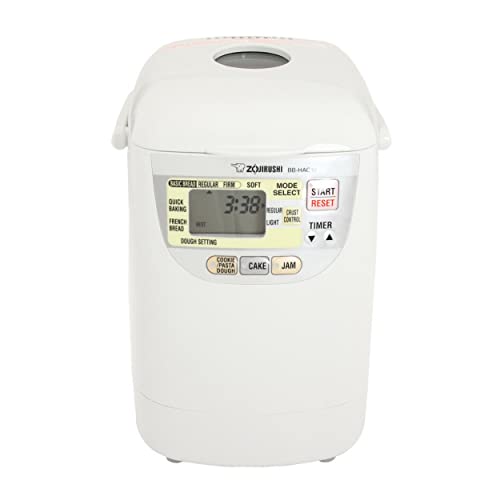
- Zojirushi Home Bakery Supreme — preset classic with cake, jam, and dough settings, covered prose-only below
- Zojirushi Home Bakery Mini, 1 Lb — small preset machine, covered prose-only below
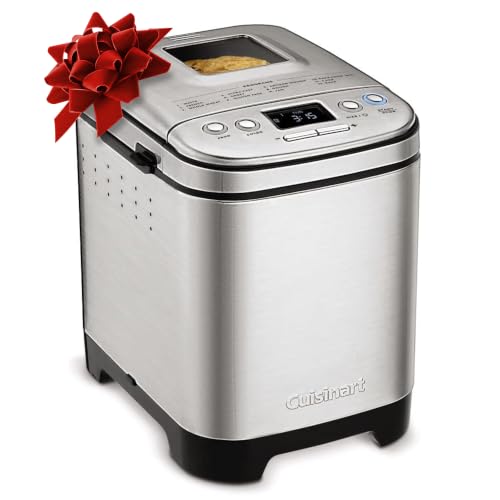
- Cuisinart Compact Automatic Bread Maker, CBK-110 — programmable, with 12 programs, 3 loaf sizes, and 3 crust shades; check the latest price on Amazon
- Zojirushi Home Bakery Maestro BB-SSC10WZ — premium machine with no custom control stated, covered prose-only below
- Zojirushi Home Bakery Supreme Bundle, BB-CEC20 — Home Made menus for building your own cycles; check the latest price on Amazon
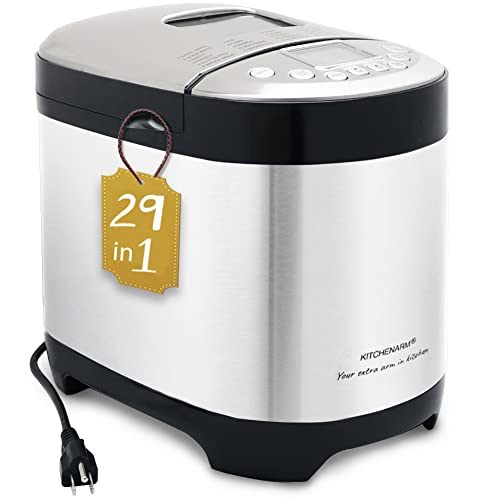
- Neretva 15-in-1 Bread Maker — feature-rich preset machine with an automatic nut dispenser, covered prose-only below
Read the full guide ↓
Anyone searching for the best custom bread machines has usually had the same experience: a preset program that almost fits. The whole-wheat cycle kneads beautifully but bakes ten minutes too long for your flour. The basic cycle gets the crust right but rushes the rise on a cold morning. Presets are somebody else’s recipe frozen into a button, and the moment your baking outgrows them, you start wanting what custom machines offer — the ability to choose the loaf size and crust yourself, or to go further and program the knead, rise, and bake phases to your own numbers. This guide separates those two levels of control honestly, using only what the verified listings state. If you are still mapping the wider category, Best Features Of Bread Making Machines explains the full feature landscape, while this page stays focused on control.
It is worth defining terms before any model names, because the word custom is used loosely in listings. Level one is selectable settings: the machine runs its programs, but you choose the loaf size and the crust shade, bending each bake toward your household. Level two is a true custom or home made cycle: you set the timing of the phases themselves, building a program for a dough no preset anticipated — a slow-fermented loaf, a delicate enriched dough, a flour blend with its own opinions. Both levels are real customisation; they serve different bakers. The two linked picks in this guide represent one level each, and the prose-only reviews show what preset-only machines offer instead.
There is a third, quieter form of customisation that this guide counts as supporting evidence rather than a qualification on its own: automation that adapts the bake to you, such as an automatic dispenser that adds nuts and fruit at the moment the dough can hold them, or an alert that tells you when to remove the paddle. These features personalise the outcome without giving you the schedule, and they appear in the reviews where listings state them. But the link test stays strict — selectable settings or a buildable cycle, stated in the title — because the reader who typed this keyword wants authorship, not ambience, and a guide that blurred that line for convenience would fail them precisely where they trusted it.
Key Takeaways
- Two verified listings state genuine custom control: the Cuisinart CBK-110 (programmable, with selectable loaf sizes and crust shades) and the Zojirushi BB-CEC20 bundle (Home Made menus for building your own cycles).
- A long preset list is not custom control: the Neretva’s 15-in-1 programs are still presets, so it is prose-only in this guide.
- Selectable crust and loaf settings are the custom features most bakers use weekly; full cycle-building matters to experimenters and special-dough bakers.
- Dual kneading blades, stated on the BB-CEC20, support the heavier, customised doughs that custom bakers tend to run.
- Custom control rewards note-keeping: change one variable per bake, write it down, and your personal programs improve fast.
- If you bake one standard loaf happily on a preset, custom control is a luxury — the prose-only classics here may suit you better.
- Judge a listing by what it states: the word programmable, named loaf sizes and crust shades, or a home made menu are evidence; a long program count alone is not.
- Start customising from the nearest preset and change one timing at a time; small, recorded steps beat bold guesses within three bakes.
In this guide
Quick Picks
| Pick | Badge | Custom evidence in listing | Best for |
|---|---|---|---|
| Zojirushi Home Bakery Supreme | Best Preset Classic | None stated; cake, jam, dough presets | Bakers content with proven presets |
| Zojirushi Home Bakery Mini | Best Small Preset Machine | None stated; preset settings in a 1 Lb format | Small households on standard loaves |
| Cuisinart Compact CBK-110 | Best Programmable All-Rounder | Programmable; 3 loaf sizes; 3 crust shades | Bakers who tune size and crust per bake |
| Zojirushi Home Bakery Maestro | Best Premium Preset Wildcard | None stated in listing | Brand loyalists who verify features first |
| Zojirushi BB-CEC20 Supreme Bundle | Best for Home Made Custom Cycles | Home Made menus stated | Experimenters building their own programs |
| Neretva 15-in-1 Bread Maker | Best Preset Variety | None stated; 15 preset programs | Variety seekers who love presets and automation |
How These Picks Were Chosen
Every machine in this guide comes from a verified pool checked against Amazon listing data on 2026-11-20. The link test for a custom keyword was applied to the listing titles strictly: a machine qualified if its title states programmable design with user-selectable settings, or a named custom/home made menu system. The Cuisinart qualifies on the first ground — its title says programmable and enumerates three loaf sizes and three crust shades for its twelve programs. The Zojirushi BB-CEC20 qualifies on the second — its title states Home Made menus, the maker’s name for cycles the baker builds personally. The Supreme and the Mini list named preset settings only. The Maestro states nothing about control at all. The Neretva lists fifteen programs and an automatic dispenser, all preset automation rather than user-built control. Those four are prose-only, reviewed in full, because a custom guide that counts presets as custom would mislead exactly the reader it exists to serve.
Within that rule we compared what the listings state: loaf capacities, kneading configuration, timers, special programs such as sourdough, jam, and quick bake, dispensers, and pan materials. Nothing is invented; a specification absent from a title is absent from its review. This is research-led guidance rather than a hands-on test report, and no prices are printed — linked picks say check the latest price on Amazon, and prose-only picks are positioned by tier in words. Readers who want the general home-baking view alongside this control-focused one will find it in Best Home Bread Machines.
The 6 Best Custom Bread Machines and the Preset Alternatives
Two of these six machines offer verified custom control; four offer preset baking in different sizes and styles. Each review states its evidence plainly, so you can see exactly where the line falls and why.
Zojirushi Home Bakery Supreme
Badge: Best Preset Classic
Strengths
- Cake, jam, and dough settings are stated — a wide, proven preset repertoire.
- A 13-hour timer and quick-bake mode give real scheduling range.
- A long-running model with a deep library of community recipes tuned to it.
Trade-offs
- No programmable or home made custom cycle is stated; prose-only in this guide.
- Preset timing cannot be bent when your flour or kitchen disagrees with it.
- Bakers who experiment will feel its ceiling within a season.
Mini spec box: Line: Home Bakery Supreme; settings stated: cake, jam, dough; 13-hour timer; quick-bake mode; custom cycle not stated.
The Supreme represents the preset philosophy at its best: a set of cycles refined over years, covering bread, dough, jam, and cake, with a timer that turns the machine into an overnight employee. For the large majority of home bakers — who want a reliable white or wholemeal loaf, pizza dough on Fridays, and jam when the fruit is cheap — this is not a limitation at all. It is the correct tool, honestly specified.
Its ceiling appears only when a baker starts asking questions presets cannot answer. Why did the whole-wheat loaf over-brown? Because the preset’s bake phase is fixed. Why did the enriched dough under-rise on a cold morning? Because the preset’s rise phase is fixed. If those questions have never occurred to you, the Supreme’s answers are already good enough, and you should buy proven presets without a flicker of doubt. If they occur weekly, read on to the two linked machines — they exist for you.
Best for: bakers who want proven presets across bread, dough, jam, and cake / Not suited for: experimenters who need to set their own phase timings
Zojirushi Home Bakery Mini, 1 Lb
Badge: Best Small Preset Machine
Strengths
- A true 1-pound mini format for one or two people, stated in the listing.
- Quick-bake under two hours and a 13-hour delay timer are both stated.
- Dough, jam, and cake settings give a small machine a wide repertoire.
Trade-offs
- No custom cycle or programmable settings are stated; prose-only here.
- One-pound loaves cannot serve a family, however good the presets are.
- Small batches punish imprecise measuring more than large ones.
Mini spec box: Model BB-HAC10; loaf size 1 Lb; 13-hour delay timer; quick-bake under 2 hours; settings stated: dough, jam, cake; nonstick pan and kneader; custom cycle not stated.
The Mini earns its place in this guide as the small preset benchmark. Its stated settings cover the same bread-dough-jam-cake territory as its bigger sibling, compressed into a 1-pound machine that suits a single person or a couple and a small counter. Its quick-bake and delay timer make it genuinely flexible in time, if not in program structure.
The custom question, though, gets a clear answer: no. Nothing in its listing offers selectable crust architecture beyond its presets or a cycle you can build. For most mini owners that is fine — small households baking standard loaves rarely bump into a preset’s ceiling, because standard loaves are what presets were tuned on. The Mini is prose-only here not as a criticism but as a classification, and readers whose priority is size rather than control will find it celebrated properly in Best Compact Bread Machines.
Best for: singles and couples who bake standard loaves in a small space / Not suited for: custom-cycle seekers, or families

Cuisinart Compact Automatic Bread Maker, CBK-110
Badge: Best Programmable All-Rounder
Strengths
- The listing states a programmable design with 12 programs to build on.
- Three loaf sizes and three crust shades are selectable — the weekly-use custom controls.
- A paddle-removal alert is stated, protecting the finished loaf’s base.
Trade-offs
- Its customisation is selectable settings, not fully user-built phase timings.
- A compact body still needs honest counter and lid-clearance measuring.
- Twelve programs invite option fatigue in the first weeks.
Mini spec box: Model CBK-110NAS; programmable; 12 programs; loaf sizes 1, 1.5, and 2 Lb; 3 crust shades; 13-hour delay start; paddle-removal alert.
Most custom baking, in real kitchens, is not exotic. It is choosing a darker crust for the seeded loaf and a lighter one for the children’s white. It is dropping to a 1-pound loaf when only two people are home and rising to 2 pounds when they are not. It is picking the program that fits the flour and then adjusting its edges. The Cuisinart’s stated design — programmable, with three loaf sizes and three crust shades across twelve programs — is built exactly for that reality, and it is why this machine is linked in a custom guide: its title promises user control, and enumerates it.
The paddle-removal alert deserves its sentence, because it shows the same philosophy applied to hardware: the machine tells you when to remove the paddle so the bake finishes without the classic torn hole. Its honest limitation is the boundary of level-one customisation. You are tuning the machine’s programs, not authoring your own from raw phase timings; the baker who wants to design a nine-hour slow ferment inside the machine should look at the next linked pick. For everyone whose custom ambitions are size, crust, and program choice — which is most custom bakers — this is the sweet spot, and you can Check on Amazon for the current listing.
Best for: bakers who tune loaf size and crust shade bake by bake / Not suited for: cycle-builders who want to program every phase from scratch
Zojirushi Home Bakery Maestro BB-SSC10WZ
Badge: Best Premium Preset Wildcard
Strengths
- A premium-tier Zojirushi Home Bakery model in a premium white finish.
- The brand’s baking quality is the benchmark the rest of this pool is judged by.
- A calmer proposition than the flagship models for a quality-first buyer.
Trade-offs
- Its verified title states no custom, programmable, or home made feature; prose-only here.
- It also states no loaf size or program list, leaving homework to the buyer.
- Premium tier positioning demands verified features to justify it.
Mini spec box: Model BB-SSC10WZ; line: Home Bakery Maestro; colour: premium white; programs, loaf size, and custom features not stated in the verified title.
The Maestro is the guide’s recurring lesson in evidence. It is a premium machine from the most respected name in this pool, and it may contain multitudes — but its verified title states none of them. No custom cycle, no programmable claim, no loaf size. A custom guide cannot link what it cannot verify, so the Maestro sits prose-only.
If it draws you, treat its listing page as the real review: confirm its programs, its loaf capacity, and whether it offers any user-built cycle before comparing it with the two linked picks, whose control features are stated in their titles outright. Brand reputation is a fine tiebreaker between verified equals; it is a poor substitute for verification itself. That discipline — stated beats reputed — is the same one applied across this whole series of guides, including Best Hamilton Beach Bread Machines for brand-focused shoppers.
Best for: brand loyalists who will verify the full feature list before buying / Not suited for: anyone who wants custom control confirmed up front

Zojirushi Home Bakery Supreme Bundle, BB-CEC20
Badge: Best for Home Made Custom Cycles
Strengths
- Home Made menus are stated — cycles you build yourself, phase by phase.
- Dual kneading blades are stated, giving heavy and enriched doughs a thorough knead.
- Sourdough, jam, and quick bake menus are stated alongside the custom system.
Trade-offs
- Custom menus reward patience; your first self-built cycles will be experiments.
- A 2-pound flagship-format machine needs real counter space.
- Bakers who never leave presets will pay for capability they never open.
Mini spec box: Model BB-CEC20; loaf size 2 Lb; dual kneading blades; 13-hour delay; menus stated: sourdough, jam, quick bake, Home Made; bundle format.
Home Made menus are the real article: the machine lets you set the timings of the cycle’s phases — knead, rise, bake — and save your own programs. That is the tool for the doughs presets mishandle. A slow, gentle rise for a lean loaf in a warm kitchen. An extended knead for a stubborn whole-grain blend. A shortened bake for a small enriched loaf that browns fast. Each is a small act of authorship, and together they turn the machine from an appliance that bakes at you into an instrument you play.
The supporting specification suits the ambition. Dual kneading blades work the full width of a 2-pound pan, which matters when your custom dough is heavy with seeds or butter. The stated sourdough menu gives starter bakers a designed starting point before they start customising, and the 13-hour delay keeps scheduling in hand. Its honest limitation is the learning curve: a custom menu with the wrong rise time produces a worse loaf than a good preset, and the first month is a notebook of adjustments. Bakers who enjoy that process will find this the most capable machine in the guide; you can Check on Amazon for the bundle’s current contents and listing details.
Best for: experimenters, sourdough bakers, and special-dough bakers who keep notes / Not suited for: set-and-forget bakers, or small counters
Neretva 15-in-1 Bread Maker with Auto Nut Dispenser
Badge: Best Preset Variety
Strengths
- Fifteen programs and dual heaters are stated — the widest preset spread here.
- An automatic nut and fruit dispenser is stated, adding ingredients at the right moment for you.
- A large 3.3-pound capacity and a full touch panel are stated.
Trade-offs
- Fifteen presets are still presets; no custom or home made cycle is stated, so prose-only here.
- The largest capacity in this guide is the opposite of a small-batch machine.
- Feature abundance can mask the absence of the one feature you actually wanted.
Mini spec box: Capacity 3.3 Lb; 15-in-1 programs; dual heaters; automatic nut dispenser; stainless steel body with nonstick ceramic pan; full touch panel; 15-hour timer; 1-hour keep warm; custom cycle not stated.
The Neretva is the preset philosophy’s maximalist answer: if the problem is that presets do not fit your baking, add more presets — fifteen of them — plus an automatic dispenser that drops nuts and fruit in mid-cycle so you do not have to hover, plus dual heaters and a big 3.3-pound pan. For variety baking at family scale, this is a genuinely attractive package, and its stated specification is the richest in this guide.
But read its title the way this guide reads every title: nowhere does it offer a cycle you design. Fifteen somebody-else’s programs, however good, remain somebody else’s. That is not a flaw in the machine; it is a flaw in calling it custom. It closes the reviews as the strongest prose-only alternative — the machine to choose when your honest self-assessment says variety and automation, not authorship, are what you want. Shoppers weighing that exact fork may also enjoy Best Inexpensive Bread Machines, where value per feature gets its own hearing.
Best for: families wanting maximum preset variety and hands-off add-ins / Not suited for: bakers who want to build their own cycles
Comparison Table
| Pick | Control type | Loaf size stated | Timer stated | Standout trait | Listing |
|---|---|---|---|---|---|
| Zojirushi Home Bakery Supreme | Preset | Not stated | 13-hour | Cake, jam, dough settings | Prose-only in this guide |
| Zojirushi Home Bakery Mini | Preset | 1 Lb | 13-hour delay | Quick-bake under 2 hours | Prose-only in this guide |
| Cuisinart Compact CBK-110 | Programmable, selectable size and crust | 1, 1.5, 2 Lb | 13-hour delay | 12 programs, paddle-removal alert | Check on Amazon |
| Zojirushi Home Bakery Maestro | Not stated | Not stated | Not stated | Premium white finish | Prose-only in this guide |
| Zojirushi BB-CEC20 Bundle | Home Made custom menus | 2 Lb | 13-hour delay | Dual kneading blades, sourdough menu | Check on Amazon |
| Neretva 15-in-1 | Preset, 15 programs | 3.3 Lb | 15-hour | Automatic nut dispenser, dual heaters | Prose-only in this guide |
How to Choose a Custom Bread Machine
Choose your level of control first, because it decides everything else. If your customising instinct is practical — darker crust for this loaf, smaller loaf this week — level one is your home: a programmable machine with selectable loaf sizes and crust shades, like the linked Cuisinart. If your instinct is experimental — you read recipes and immediately wonder what a longer rise would do — you need level two: home made menus that let you set phase timings, like the linked Zojirushi bundle. Buying level two for level-one needs wastes money and invites complexity; buying level one for level-two needs guarantees frustration by spring.
Second, audit your doughs. Custom control pays rent on difficult doughs: whole-grain blends that rise slowly, enriched doughs that brown quickly, sourdoughs that refuse schedules, gluten-free batters with their own rules. If your baking is a standard white and a standard wholemeal, presets already encode decades of tuning for exactly those loaves, and the prose-only classics in this guide will serve you beautifully. Third, consider kneading hardware: heavier custom doughs justify the dual kneading blades stated on the BB-CEC20, while lighter baking never notices their absence. Fourth, keep the timer in view — custom programs plus a delay start is a powerful combination, but rich doughs with fresh dairy should not sit delayed for many warm hours, custom or not.
Fifth, think about capacity as a custom variable in its own right. A custom cycle in a 1-pound pan and the same cycle in a 2-pound pan are cousins, not twins: the larger loaf’s centre lags further behind its crust, so bake timings that sing at one size sulk at the other. Machines that state several loaf sizes, like the Cuisinart’s three, let you keep the household’s favourite program and scale it, re-tuning only the bake phase as you go. Single-size machines make the decision for you, which is simpler and sometimes better. Sixth, consider who else will use the machine. A custom system hidden behind menus is invisible to a partner who just wants toast bread on a Sunday; a machine that pairs obvious presets on the surface with custom depth beneath them serves a mixed household best. The linked picks split this difference in opposite directions — one leads with selectable simplicity, the other with buildable depth — and your household’s mix of bakers should arbitrate between them.
How to Use, Clean, and Troubleshoot a Custom Bread Machine
Using custom control well is a method, not a talent. Start from the nearest preset and change one variable: the same recipe, the same flour, but a rise extended by fifteen minutes, or a bake shortened by five. Bake, taste, and write down what changed and what it did. A small notebook — paper or phone — is the custom baker’s real accessory, because memory edits itself and notes do not. Within a month you will own two or three personal programs that fit your flour, your kitchen’s temperature, and your household’s taste better than any factory cycle, and that ownership is the entire point of the category.
For selectable-settings machines, the method is lighter but similar: fix the recipe, then walk the crust shades across three bakes and pick your household’s favourite per loaf type. Note the winning combinations on the recipe itself. For both levels, the basics still rule: liquids first, flour as a blanket, yeast dry on top and away from salt; a peek during the first knead to correct a too-wet or too-dry ball with a spoonful either way; and prompt removal and rack-cooling when the bake ends. Cleaning is standard bread-machine care — the pan and paddles want soaking and a soft cloth rather than abrasion, crumbs brushed from the chamber, and the lid vents kept clear — with one addition for custom bakers: wipe the control panel after floury sessions, because you will be touching it more than a preset baker does.
Troubleshooting, in the pattern that covers most custom-baking problems. Problem: your custom cycle under-rises a whole-grain loaf → the rise phase suits white flour, not bran-heavy dough; extend the rise in your saved program and warm the liquid slightly next bake. Problem: an enriched loaf over-browns → its sugars caramelise faster than a lean loaf; shorten the bake phase or choose a lighter crust setting where one exists. Problem: a saved custom program gives inconsistent results across seasons → kitchen temperature is an ingredient; in winter, lengthen rises or use the delay timer so the bake happens in a warmed morning kitchen, and note the season beside the program.
Building Your First Custom Cycle, Step by Step
Here is the concrete process, using a stubborn whole-wheat loaf as the example. Bake one: run the machine’s whole-wheat preset exactly as written and judge the result honestly — say the loaf is well-flavoured but tight, with a crust darker than you like. Bake two: on a home made menu, copy the preset’s structure but extend the main rise and shorten the bake slightly; change nothing else. If the crumb opens and the crust lightens, you have found your direction. Bake three: refine by half-steps — a touch more rise, a touch less bake — and stop when the loaf matches the picture in your head. Save the program with a name that includes the flour and the season, because a winter program and a summer program for the same bread are legitimately different programs.
The same process serves enriched and sourdough doughs. For a brioche-style loaf, the custom levers are a thorough knead for the butter-rich dough, a generous rise, and a guarded bake. For sourdough, the levers are time above all: long, gentle rises that let flavour develop, which is why a stated sourdough menu plus home made menus, as on the BB-CEC20, is such a coherent pairing. The discipline throughout is one variable at a time — the moment you change three things, you have baked a mystery instead of an experiment. Readers who want the preset-variety counterargument in full will find it in Best Kick Ass Bread Machines, where maximum capability is the theme.
Four Classic Loaves, and the Custom Lever That Fixes Each
Abstract control becomes concrete loaf by loaf. Consider the seeded wholemeal that comes out of a preset cycle pale on top and tight in the middle. The diagnosis is twofold: bran cuts gluten strands, so the dough needs a thorough knead and a patient rise, and the loaf’s size means its centre sets slowly while its crust races ahead. The custom levers answer in kind — extend the rise so the crumb can open, and trim the bake so the crust stops at deep gold instead of pushing toward bitter. On a selectable-settings machine you approximate the same fix with a lighter crust shade and the whole-wheat style program; on a home made menu you set the numbers themselves. Either way, the loaf improves for a reason you can name, and naming it is what makes the next loaf better still.
The enriched loaf — brioche-style, milk bread, a butter-rich holiday dough — fails presets in the opposite direction. Its sugars and fats brown eagerly, so a standard bake overshoots the crust while the centre is still setting. The custom answer is a guarded bake and a confident rise: give the dough all the time it needs to lift its rich weight, then bake it shorter or lighter than instinct suggests. The soft white sandwich loaf teaches a third lesson, about restraint: its preset is already nearly perfect, and the only custom touch most households need is crust shade — lighter for children’s sandwiches, a shade deeper for toast that must stand up to beans and eggs. And the sourdough loaf teaches the fourth: time is flavour, and any control that lets you stretch fermentation gently — a long rise in a custom menu, or a stated sourdough program as a starting point — is worth more than any other single feature. Four loaves, four different levers. That is what custom control actually buys: not complexity, but the right adjustment for the loaf in front of you.
Preset vs Custom: An Honest Decision Framework
If you are still torn, run this short audit on your last month of baking. How many loaves did you bake? Of those, how many were the same one or two recipes? And of those, how many came out exactly as you hoped? A baker who baked eight loaves, all the household white, all happily eaten, is a preset baker with a working system, and the best machine for them is the most reliable preset machine their budget tier allows — several prose-only picks in this guide qualify, and choosing one is wisdom, not surrender. A baker whose loaves varied — a seeded loaf here, a sourdough experiment there, a holiday brioche — and whose notebook, literal or mental, holds complaints about timing, is a custom baker already, merely waiting for a machine that listens.
There is also a household dimension. A machine used by several people of different confidence levels lives more peacefully with strong presets for the less confident and custom depth for the enthusiast; the selectable-settings middle ground serves exactly that mixed house, which is one reason the linked Cuisinart’s level of control is so broadly recommendable. And there is a time dimension: custom baking asks for attention in the first month and repays it for years, while preset baking asks for nothing and gives its best immediately. Neither is the grown-up choice. Both are choices, and this guide’s only insistence is that you make yours with the titles’ own evidence in front of you — control that is stated, or control that is not there.
Timers, Delay Starts, and the Scheduling Side of Custom
Custom control is usually discussed as a baking question, but for many households it is a scheduling question wearing a baking costume. A 13-hour delay start, stated on both linked picks in this guide, lets you load a machine in the evening and wake to a finished loaf — and when the program being delayed is one you tuned yourself, the morning loaf is not merely fresh but yours: your crust shade, your loaf size, your rise. That combination is the closest home baking gets to a bakery’s overnight shift, and it changes the economics of ownership, because a machine that produces breakfast while you sleep is a machine that earns its counter space daily.
Scheduling has its own craft. Plain flour, water, salt, and yeast wait patiently for hours; doughs built on fresh milk, eggs, or soft cheese should not, and custom bakers learn to split their repertoire into delay-safe loaves and bake-now loaves. Ingredient order matters more on a delay: the yeast must stay dry above the flour blanket, away from the liquid and the salt, until the cycle starts, or the timer quietly becomes a very slow, uncontrolled ferment. Temperature matters too — a delay that ends in a cold winter kitchen produces a different rise from the same delay in August, and the custom baker’s notebook, noting season beside program, absorbs that difference within a bake or two. Treat the timer as part of the custom system rather than a separate convenience, and the two features multiply each other.
Common Buying Mistakes
The first mistake is counting programs and calling the count customisation. Fifteen presets are fifteen fixed opinions; one home made menu is a blank page. Decide which you want before the numbers seduce you. The second is buying cycle-building hardware for a baking life that consists of one beloved standard loaf — the presets already bake that loaf superbly, and the custom menus will gather dust. The third is the mirror error: buying a preset-only machine while knowing you tinker with every recipe you touch. You will be annoyed by autumn.
Fourth, ignoring kneading hardware when your doughs are heavy; a single small paddle can leave unmixed corners in a dense, seeded batch. Fifth, treating the delay timer as safe for every dough — custard-rich and fresh-dairy doughs should not wait many hours warm. Sixth, failing to keep notes: custom control without a notebook is just random variation with extra steps. Seventh, assuming a premium badge implies custom features — as the Maestro’s silent title shows, price tier and control are separate questions, and only the stated specification answers either.
Final Recommendation
Match the machine to your kind of control. If you customise the way most bakers do — loaf size for the household in front of you, crust shade for the loaf in the pan — the Cuisinart Compact CBK-110 is the first choice: programmable, flexible across three loaf sizes and three crust shades, and compact enough for ordinary kitchens. If you customise the way experimenters do — building cycles phase by phase for doughs no preset anticipated — the Zojirushi BB-CEC20 bundle with its Home Made menus and dual kneading blades is the deepest tool in this guide. And if the honest answer is that you do not customise at all, buy the preset classics without guilt: the Supreme for repertoire, the Mini for small households, the Neretva for variety at scale. Custom is a means to your loaf, not a virtue in itself.
One last encouragement for the undecided: custom control is learnable in a way that suits ordinary life. You do not need a course or a chemistry set — you need one loaf you care about, one variable changed at a time, and a notebook. The bakers who get the most from machines like the two linked picks are not the most technical people; they are the most observant ones, and observation is a habit anyone can start with tonight’s bake.
Frequently Asked Questions
What makes a bread machine “custom”?
Two things, at two levels. Selectable settings — choosing loaf size and crust shade per bake on a programmable machine — are the everyday level. A custom or home made cycle, where you set the knead, rise, and bake timings yourself and save the result, is the full level. This guide links one verified machine of each kind and classifies preset-only machines as prose-only.
Is a 15-program machine more custom than a 12-program one?
No. Program count measures preset variety, not user control. A machine with fewer programs but selectable sizes, crust shades, or a home made menu gives you more authorship than a machine with many fixed cycles. Judge custom by what you can change, not by how many buttons there are.
Who actually needs a home made custom cycle?
Bakers whose doughs defeat presets: slow whole-grain blends, enriched doughs that brown fast, sourdoughs on their own schedule, and flour experiments. If your weekly loaves are standard, a good preset will match or beat your early custom attempts; the custom cycle earns its keep when your baking gets specific.
Can custom settings fix a bad recipe?
They can fix a good recipe baked on the wrong schedule — a rise too short for the flour, a bake too long for the sugars. They cannot fix wrong proportions or dead yeast. Custom control adjusts time and temperature around a sound recipe; it is a steering wheel, not an engine.
Are dual kneading blades worth it for custom baking?
For heavy, seeded, or butter-rich doughs in a full-size pan, yes: two blades work the whole pan and reduce unmixed corners, which matters most exactly in the dense doughs custom bakers favour. For light standard loaves, a single paddle is entirely adequate.
Can I use the delay timer with a custom program?
Generally yes, and it is a powerful combination — your own cycle, finished as you wake. Keep the usual caution: doughs with fresh milk, eggs, or other perishables should not sit at warm room temperature for many hours, whatever program they are on.
How do I store my own custom programs so I do not lose them?
Save them in the machine where it offers saved menus, and back them up in your baking notebook with the flour, the loaf size, and the season written beside the timings. Machines get replaced; a notebook of proven personal programs is portable to whatever you buy next, and it is the real accumulated value of custom baking.
Why are some machines here not linked?
Because their verified listings do not state custom control — no programmable claim with selectable settings, and no custom or home made menu. They are reviewed fully as prose-only alternatives, so you can choose a preset machine with open eyes rather than discover its limits after purchase.