Disclosure: topratedkitchenware.com is reader-supported. When you buy through links on our site, we may earn an affiliate commission from Amazon and other retailers, at no extra cost to you.
Where to buy
For best training chopsticks, start here. This guide keeps the same promise as its trainer twin: the six verified sets below contain no training aid — no hinge, connector or finger guide — so all are reviewed in full but prose-only, with no sales links. They are ranked as the durable practice sets learners train on daily once alignment is handled, and the training brief itself is specified in full.
- LIXTONGR Dragon and Phoenix Black Stainless Chopsticks, 2 Pairs — Best Premium Practice Pair (Prose-Only) (prose-only in this guide: covered in full below, with no sales link)
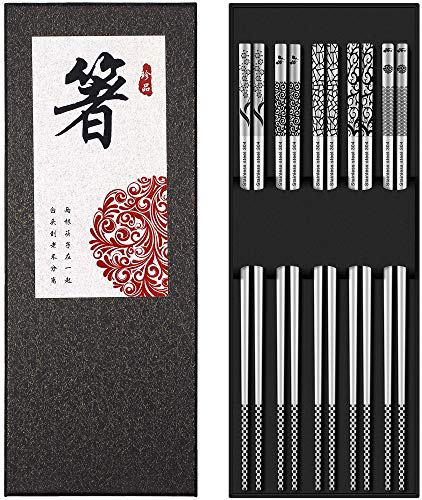
- MUYOS Stainless Steel Chopsticks, 5 Pairs — Best for Long Practice Meals (Prose-Only) (prose-only in this guide: covered in full below, with no sales link)
- Greatamzor Multicolor Stainless Chopsticks, 5 Pairs Gift Set — Best for Household Training (Prose-Only) (prose-only in this guide: covered in full below, with no sales link)
- Greatamzor Titanium-Plated Stainless Chopsticks, 2 Pairs — Best Two-Learner Set (Prose-Only) (prose-only in this guide: covered in full below, with no sales link)
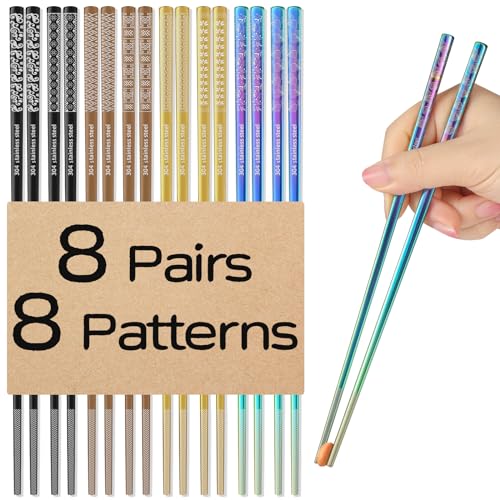
- NEWDRIP Multicolor Stainless Chopsticks, 8 Pairs — Best Volume for Daily Training (Prose-Only) (prose-only in this guide: covered in full below, with no sales link)
- Lazycorner 304 Stainless Steel Chopsticks, 10 Pairs — Best Stock-Up for Trainees (Prose-Only) (prose-only in this guide: covered in full below, with no sales link)
No pick in this guide carries a sales link, for the reasons explained in How These Picks Were Chosen. Read the full guide ↓ before you shop anywhere.
Training chopsticks should train something. The designs that earn the name carry a mechanism — a hinge, a spring connector, finger rings — that holds alignment or placement while a learner’s hand builds the pattern. The six verified sets in this pool carry no such mechanism; they are standard adult stainless steel sets, and this guide says so in its first breath, reviews them prose-only with no sales links, and ranks them for the job they genuinely perform: daily practice. Training, in real kitchens, is mostly repetition — and repetition is exactly what durable, textured, dishwasher-safe sets are for.
Consider what a learner actually does for the first hundred meals. They eat slowly, drop things, wash the sticks constantly, and slowly stop thinking about their hands. The tool for that season needs grip texture to forgive, weight that does not punish, and construction that survives the dishwasher a few hundred times. Judged on that brief — the training brief in its honest, daily sense — several sets in this pool are genuinely strong, and the ranking below is a serious one. It simply refuses to call a standard set a training aid, because the aid is a thing, and the thing is absent.
New learners should pair this guide with the technique curriculum in Best Tips For Using Chopsticks and, if alignment is their core problem, with a true trainer bought by the checklist in the buying sections below. Readers arriving from the adult phrasing of this keyword will find the age-specific treatment in Best Training Chopsticks For Adults — same discipline, same pool honesty, aimed at grown hands retraining old habits.
Key Takeaways
- No set here includes a training mechanism; all six are standard sets covered prose-only, ranked for daily practice.
- Training is mostly repetition, and repetition rewards grip texture, relaxed weight and dishwasher-proof construction.
- Alignment problems need a mechanism; practice problems need texture and consistency. Buy for the problem you have.
- The 18/10 LIXTONGR and hollow-core MUYOS bookend the pool: premium weight and featherweight, both honestly standard.
- Uniform sets are a training tool in themselves — one calibration, practised at every meal.
- A listing that cannot show you its training aid does not have one.
In this guide
Quick Picks
Ranked for the training season: the months of daily meals where a learner’s skill is actually built. Badges describe practice virtues, never a training aid.
| Pick | Badge | Why it is here |
|---|---|---|
| LIXTONGR Dragon and Phoenix Black Stainless Chopsticks, 2 Pairs | Best Premium Practice Pair (Prose-Only) | 18/10 stainless, 2 pairs, non-slip grip, gift presentation. |
| MUYOS Stainless Steel Chopsticks, 5 Pairs | Best for Long Practice Meals (Prose-Only) | Hollow-core stainless, 5 pairs, non-slip, light in the hand. |
| Greatamzor Multicolor Stainless Chopsticks, 5 Pairs Gift Set | Best for Household Training (Prose-Only) | Multicolor stainless, 5 pairs, square profile, engraved grip. |
| Greatamzor Titanium-Plated Stainless Chopsticks, 2 Pairs | Best Two-Learner Set (Prose-Only) | Titanium-plated stainless, 2 pairs in black and silver, engraved tips. |
| NEWDRIP Multicolor Stainless Chopsticks, 8 Pairs | Best Volume for Daily Training (Prose-Only) | Stainless, 8 pairs, engraved; spares for every day of practice. |
| Lazycorner 304 Stainless Steel Chopsticks, 10 Pairs | Best Stock-Up for Trainees (Prose-Only) | 304 stainless, 10 pairs, food-grade, lightweight build. |
How These Picks Were Chosen
Every pooled listing was screened for a training mechanism and every one was found standard — stainless sets in various grades, counts and finishes, none hinged, connected or guided. That result assigns prose-only coverage under this programme’s rules, and the sources file documents the screen. The article’s link count is zero, deliberately, and the fact is announced rather than buried.
Ranking for practice weighed four things in order: tip texture, because dropped food is the daily texture of training; hand fatigue, because tired hands squeeze and squeezing is the enemy of progress; uniformity and count, because a learner’s household should never practise on substitutes; and stated alloy, because a guide about honest labels rewards listings that make honest claims of their own. The result is a ranking a learner can actually train through, from first free-stick meals to fluent ones.
The mechanism brief is not neglected — it is specified in the How to Choose section as a purchasable checklist, so a reader whose diagnosis is alignment can buy a true trainer elsewhere in one confident step. That division of labour mirrors Best Training Chopsticks Adult, this keyword’s close relative, where the same pool discipline applies the same test.
The 6 Best Training Chopsticks — Practice Sets, Honestly Labelled
LIXTONGR Dragon and Phoenix Black Stainless Chopsticks, 2 Pairs
Badge: Best Premium Practice Pair (Prose-Only) — prose-only pick (no Amazon link, no image)
Strengths
- 18/10 stainless is the premium cutlery alloy in this line-up
- Dragon and Phoenix motif makes it a deliberate gift piece
- Two-pair gift-box format suits couples and weddings
Trade-offs
- Only two pairs, so it is not a family-table solution
- Black finish shows scratches more visibly over time
- 9 inch length is the shortest adult size compared here
Key specs from the listing: Material: 18/10 stainless steel; Set: 2 pairs; Length: 9 inches; Grip: non-slip; Packaging: gift box; Care: dishwasher safe.
The LIXTONGR set tops this practice ranking on a motivational truth: tools you are proud of get used, and training is use. Premium 18/10 steel, a non-slip grip, a sensible nine-inch length and gift-box presentation make it the pair a learner reaches for daily — and daily is the whole method. It trains by being practised with, which is the only training any standard set offers, stated here without embroidery.
Durability is the long argument for every metal set here, and this one is no exception. It will not splinter, warp in the dishwasher or hold yesterday’s garlic. The ownership questions are smaller and more practical: how the finish ages, how the tips treat your pans, and whether the length matches the meals your household actually eats. Answer those three and you know whether this is your set.
Value in this category is a slow calculation. A set bought once and used for a decade costs less per meal than any disposable alternative, and stainless designs like this one are built for exactly that arithmetic. The honest variables are whether the finish ages gracefully, whether the tips stay true, and whether the household actually reaches for them — which returns, as every section of this guide does, to grip, weight and length suiting the hands that own them.
Best for: adult learners who practise more with beautiful tools / Not suited for: beginners who need alignment supplied by a mechanism
MUYOS Stainless Steel Chopsticks, 5 Pairs
Badge: Best for Long Practice Meals (Prose-Only) — prose-only pick (no Amazon link, no image)
Strengths
- Hollow core keeps metal durability without metal heaviness
- Non-slip tips help new users keep hold of noodles
- Five silver pairs match most existing cutlery
Trade-offs
- Hollow sticks feel less substantial to traditionalists
- Light weight gives less feedback when learning pressure
- Silver-only finish, no colour coding per person
Key specs from the listing: Material: stainless steel; Set: 5 pairs; Design: hollow-core lightweight build; Tips: non-slip; Colour: silver; Care: dishwasher safe.
The MUYOS set is the endurance pick: hollow-core construction strips the weight that makes metal tiring, so practice can last a whole family meal instead of half of one. Five pairs cover the household, non-slip tips cover the noodles, and the dishwasher covers the aftermath. For learners whose plateau is fatigue — the hand that aches at minute ten and squeezes at minute eleven — this is the pool’s most direct answer.
At the table, what decides whether a set like this gets reached for is feel: the section shape in the fingers, the way the tips meet, and whether food stays put without a squeeze that tires the hand. Those qualities do not photograph, which is why they are worth describing plainly. A set that feels secure at a relaxed grip will be used daily; a set that demands constant correction will drift to the back of the drawer no matter how handsome it looks.
Think about the second month of ownership. By then the set has been washed a hundred times, borrowed by guests, and used for everything from instant noodles to a careful anniversary dinner. The qualities that survive that month are not the ones in the listing photograph; they are alloy honesty, tips that still grip after a hundred dishwashers, and a weight that nobody at the table has quietly started avoiding. Judge this set against that month and its ranking explains itself.
Best for: learners whose hands tire before their skill does / Not suited for: learners needing a connector to begin
Greatamzor Multicolor Stainless Chopsticks, 5 Pairs Gift Set
Badge: Best for Household Training (Prose-Only) — prose-only pick (no Amazon link, no image)
Strengths
- Different colours per pair end the whose-are-whose argument
- Square profile rolls less on the table than round sticks
- Copper coin engraving adds grip texture along the shaft
Trade-offs
- Colour finishes need gentler washing to stay bright
- Square edges feel unfamiliar if you learned on round sticks
- Metal tips still slip on very oily foods for beginners
Key specs from the listing: Material: stainless steel; Set: 5 pairs, gift set; Length: 9 1/4 inches; Design: laser-engraved copper coin pattern, square profile; Grip: non-slip; Care: dishwasher safe.
Training a household runs on logistics, and the multicolor Greatamzor set is the logistics pick: a colour per learner, a square profile that will not roll away mid-lesson, engraving that grips at both ends of the stick. When everyone practises on their own identifiable pair, sessions start faster and arguments end sooner. Standard sticks throughout — the training supplied is organisational, and for a family that is frequently the training that matters.
For learning and re-learning alike, feedback matters. Sticks that communicate — through texture, through a section that indexes naturally between the fingers — shorten the clumsy phase, because the hand can feel where the sticks are without looking. That is the lens to judge this set through if a learner will use it: not whether it is labelled for beginners, but whether its grip, weight and tips quietly help the hand do the right thing.
There is a social dimension to a set like this that spec sheets ignore. Chopsticks are handed to guests, lent to learners and read — fairly or not — as a statement about the household’s seriousness at the table. A set that looks intentional and behaves predictably flatters the host and reassures the guest, and in families where several generations eat together, that quiet confidence is worth as much as any engraving. It is part of why this set holds its position here.
Best for: families training together with a colour each / Not suited for: solo learners indifferent to colour systems
Greatamzor Titanium-Plated Stainless Chopsticks, 2 Pairs
Badge: Best Two-Learner Set (Prose-Only) — prose-only pick (no Amazon link, no image)
Strengths
- Titanium plating gives the two-tone black-silver look
- Engraved non-slip tips help with noodles and dumplings
- Two pairs in contrasting colours suit a two-person table
Trade-offs
- Plating is a surface finish, not solid titanium construction
- Only two pairs in the box
- Plated finishes prefer hand washing to stay even
Key specs from the listing: Material: stainless steel with titanium plating; Set: 2 pairs, gift set; Colours: black and silver; Design: laser-engraved, non-slip; Care: dishwasher safe.
Black for one learner, silver for the other: the plated Greatamzor set is built for two people training side by side, with engraved non-slip tips keeping the practice honest. The titanium in its name is a plating over steel — this guide notes it because this guide notes every material claim — and the finish prefers gentle washing. As a shared-practice purchase for a couple, it is coherent, attractive and correctly labelled here as a standard set.
Durability is the long argument for every metal set here, and this one is no exception. It will not splinter, warp in the dishwasher or hold yesterday’s garlic. The ownership questions are smaller and more practical: how the finish ages, how the tips treat your pans, and whether the length matches the meals your household actually eats. Answer those three and you know whether this is your set.
Value in this category is a slow calculation. A set bought once and used for a decade costs less per meal than any disposable alternative, and stainless designs like this one are built for exactly that arithmetic. The honest variables are whether the finish ages gracefully, whether the tips stay true, and whether the household actually reaches for them — which returns, as every section of this guide does, to grip, weight and length suiting the hands that own them.
Best for: couples training together who want a tone each / Not suited for: anyone seeking solid titanium or a training mechanism
NEWDRIP Multicolor Stainless Chopsticks, 8 Pairs
Badge: Best Volume for Daily Training (Prose-Only) — prose-only pick (no Amazon link, no image)
Strengths
- Eight pairs with colour variety suits big households
- Engraving adds the grip that plain metal lacks
- One purchase sets the whole table in a matching style
Trade-offs
- Eight pairs is a lot of drawer space for small kitchens
- Colour finishes age differently from plain steel
- 9.25 inch length is adult sizing throughout
Key specs from the listing: Material: stainless steel; Set: 8 pairs; Length: 9.25 inches; Design: laser-engraved, non-slip; Care: dishwasher safe.
Eight pairs is a training schedule made physical: a fresh pair always ready, none ever missed to the dishwasher, guests absorbed without breaking the learner’s uniformity. The NEWDRIP set’s engraved, non-slip design keeps the practice quality up while the count keeps the practice possible. In a keyword about training, availability is an underrated virtue, and this set is its clearest expression in the pool.
At the table, what decides whether a set like this gets reached for is feel: the section shape in the fingers, the way the tips meet, and whether food stays put without a squeeze that tires the hand. Those qualities do not photograph, which is why they are worth describing plainly. A set that feels secure at a relaxed grip will be used daily; a set that demands constant correction will drift to the back of the drawer no matter how handsome it looks.
Think about the second month of ownership. By then the set has been washed a hundred times, borrowed by guests, and used for everything from instant noodles to a careful anniversary dinner. The qualities that survive that month are not the ones in the listing photograph; they are alloy honesty, tips that still grip after a hundred dishwashers, and a weight that nobody at the table has quietly started avoiding. Judge this set against that month and its ranking explains itself.
Best for: daily trainers who never want a session blocked by washing-up / Not suited for: minimalists who own exactly one pair of anything
Lazycorner 304 Stainless Steel Chopsticks, 10 Pairs
Badge: Best Stock-Up for Trainees (Prose-Only) — prose-only pick (no Amazon link, no image)
Strengths
- Ten pairs is the largest count compared here
- 304 food-grade stainless is rust-resistant and neutral tasting
- Lightweight build is easier on smaller hands at the table
Trade-offs
- Ten matching pairs means ten to wash after parties
- Light sticks give less presence for cooking tasks
- Plain silver styling, no per-person colour coding
Key specs from the listing: Material: 304 stainless steel, food grade; Set: 10 pairs; Grip: non-slip; Build: lightweight; Care: dishwasher safe.
The Lazycorner set closes the ranking with the largest count and a stated food-grade alloy: ten lightweight pairs that let a training household equip every seat, every bag and every spare slot at once. Losses during the training season are inevitable; at this count they are also irrelevant. Standard sticks, honestly counted — and for a learner measuring progress in months of meals, irrelevant losses and constant availability are worth real skill.
For learning and re-learning alike, feedback matters. Sticks that communicate — through texture, through a section that indexes naturally between the fingers — shorten the clumsy phase, because the hand can feel where the sticks are without looking. That is the lens to judge this set through if a learner will use it: not whether it is labelled for beginners, but whether its grip, weight and tips quietly help the hand do the right thing.
There is a social dimension to a set like this that spec sheets ignore. Chopsticks are handed to guests, lent to learners and read — fairly or not — as a statement about the household’s seriousness at the table. A set that looks intentional and behaves predictably flatters the host and reassures the guest, and in families where several generations eat together, that quiet confidence is worth as much as any engraving. It is part of why this set holds its position here.
Best for: training households equipping every location / Not suited for: learners who want one special pair only
Comparison Table
Compare texture, weight design and count — the three variables that decide how the training season feels day to day.
| Pick | Key facts from the listing | Badge | Check |
|---|---|---|---|
| LIXTONGR Dragon and Phoenix Black Stainless Chopsticks, 2 Pairs | Material: 18/10 stainless steel; Set: 2 pairs | Best Premium Practice Pair (Prose-Only) | Prose-only — no link |
| MUYOS Stainless Steel Chopsticks, 5 Pairs | Material: stainless steel; Set: 5 pairs | Best for Long Practice Meals (Prose-Only) | Prose-only — no link |
| Greatamzor Multicolor Stainless Chopsticks, 5 Pairs Gift Set | Material: stainless steel; Set: 5 pairs, gift set | Best for Household Training (Prose-Only) | Prose-only — no link |
| Greatamzor Titanium-Plated Stainless Chopsticks, 2 Pairs | Material: stainless steel with titanium plating; Set: 2 pairs, gift set | Best Two-Learner Set (Prose-Only) | Prose-only — no link |
| NEWDRIP Multicolor Stainless Chopsticks, 8 Pairs | Material: stainless steel; Set: 8 pairs | Best Volume for Daily Training (Prose-Only) | Prose-only — no link |
| Lazycorner 304 Stainless Steel Chopsticks, 10 Pairs | Material: 304 stainless steel, food grade; Set: 10 pairs | Best Stock-Up for Trainees (Prose-Only) | Prose-only — no link |
How to Choose Training Chopsticks
Begin with the mechanism question, and answer it with your eyes. If you need alignment or finger placement supplied for you, you need a trainer with a hinge, connector or guides, shown in the listing and stated in its contents. Nothing in this pool qualifies, and this guide’s prose-only labels are the receipt for that check. Buy the mechanism from a seller who displays it proudly; the good ones always do, because the mechanism is the product.
If your alignment is serviceable and your need is the long practice season, choose like a trainer, not like a collector. Texture first — engraved or otherwise grippy tips; weight second — light enough to stay relaxed through a full meal; count third — enough matching pairs that practice never waits on washing-up. That ordering produces exactly the ranking above, and it generalises to any standard set you meet elsewhere, including the adult-focused discussion in Best Training Chopsticks Adult Learn.
Match length to the learner last. Standard adult lengths near nine to nine and a quarter inches suit most grown hands; children need the junior and toddler briefs, which this programme treats as separate keywords with separate, stricter standards for good reason. A training purchase sized wrong teaches compensation instead of skill, and no mechanism at the top of the sticks can rescue a length error at the tips.
How to Train With Chopsticks: A Four-Week Practice Rhythm
For learners training on free sticks — the sets above or any textured standard pair — with a trainer added if alignment demands it.
- Week one, grip only: rebuild the rest-and-pencil hold at the start of every session, and practise picking up large soft foods for ten calm minutes a day.
- Week two, real meals: use your practice set at one meal daily, choosing the most forgiving dish on the table and keeping a fork nearby without shame or ceremony.
- Week three, texture ladder: noodles, then dumplings, then glossy vegetables — one new challenge every few days, retreating a rung whenever frustration appears.
- Week four, the world: eat a full meal on your practice set without monitoring your hands, then try restaurant sticks and notice how little the tool matters now.
- Throughout, keep the bottom stick still. Every drill, every week, that single discipline is the curriculum in miniature.
- Keep sessions and meals on the same set. Uniformity is the silent coach; variety is for the fluent.
- Wash the set after every use and store it in its one place. Rituals around the tool become rituals of the skill.
- At the month’s end, test with the honest final exam — peas, one at a time, no timer — and let the result, good or comic, mark how far the training has come.
Problem: The tips cross instead of meeting → what to do: an alignment fault, not a practice shortage. Add a true trainer for stage-one sessions, or rebuild the grip from the rest position before every drill until the tips agree.
Problem: Progress feels invisible → what to do: measure it properly: count successful noodle lifts in week one and week four. Skill built at the table hides inside ordinary meals; a small count makes it visible and keeps motivation honest.
Problem: The hand aches by mid-meal → what to do: grip lower-pressure and lighter: slide the hand back, relax between bites, and consider the hollow-core end of the pool for longer sessions.
Training Aids vs Training: A Necessary Distinction
An aid is an object; training is a process. The category’s confusion — and this keyword’s entire commercial fog — comes from selling the process word for objects that contain no aid. A standard set can be a superb training tool in the process sense: it is what the repetitions are performed on. It cannot be a training aid, because it aids nothing mechanically. This guide uses the words with that precision throughout, and it is why six good products can be simultaneously recommended for training and denied the trainer label.
Hold the distinction and every listing in the category becomes legible. Ask of any product: what does it do for my hand that a plain stick does not? If the answer is a mechanism, it is an aid. If the answer is texture, weight and durability, it is a practice tool. If the answer is adjectives, it is neither. The same three-way sort, applied in Best Training Chopsticks For Toddlers, protects the buyers least able to sort for themselves.
Why Repetition Beats Equipment, Eventually
There is a week in every learner’s life when the sticks stop being the story. The grip runs itself, the food behaves, and attention returns to the meal and the company — which was the point all along. Equipment matters enormously before that week, because bad tools can prevent it arriving; after it, equipment is preference. This is why this guide can be strict about labels and relaxed about purchases at the same time: buy honest tools, practise calmly, and the category’s entire drama dissolves into dinner.
It is also why the volume sets in this pool deserve their ranking. The road to that week is paved with ordinary meals, and ordinary meals need available, washable, unprecious sticks in numbers. A single exquisite pair teaches care; eight honest pairs teach chopsticks. Choose according to which lesson you are currently short of, and revisit the choice when the week arrives.
The Practice Variables: Texture, Weight and Count
Weight and balance shape how tiring a meal feels. Solid metal sticks carry real heft, which some experienced users like for the sense of control, while hollow-core designs cut that weight dramatically and are noticeably kinder during long meals or for smaller hands. Learners often do better starting light, because a tired hand squeezes harder, and a harder squeeze is exactly what makes food squirt out from between the tips. If you are buying for a household with mixed experience, a mid-weight set with textured tips is the compromise that nobody at the table will complain about, and it is why so many of the sets compared here cluster around the same design choices.
A set count is a household decision, not a bargain hunt. Two pairs suit a couple or a deliberate gift; five pairs cover the standard family table; eight and ten pair sets exist for households that host often or run a full table nightly. Buying bigger than your table means more pairs ageing in the drawer, which is harmless with stainless but pointless. Buying smaller than your table means mixing in odd pairs that feel different in the hand, which learners notice far more than experienced users do. Count your regular seats, add two for guests, and buy exactly that.
Metal chopsticks behave differently around heat and coatings, and both points deserve honesty. Stainless steel conducts heat, so a pair left resting in a hot pot will warm along its length in a way bamboo never does; for table eating this is irrelevant, but for cooking it argues for longer sticks and for not leaving them sitting in the pan. At the other end, metal tips are hard on delicate non-stick surfaces, so the same pair that is perfect for the table should stay out of your best coated wok. Used with those two limits in mind, stainless sets repay you with decades of service, no splinters, no warping and no flavour retention between meals.
Materials, Care and Everyday Use
Length is the specification that quietly decides who a pair of chopsticks suits. Shorter Japanese-style sticks, around nine inches, put the tips close to the hand and reward the precise picking used for fish and small bites. Korean metal sticks sit in a similar range but are often flatter or square in section, a shape developed for slippery noodles and kimchi. Longer Chinese styles give reach into hot pots and serving bowls and keep fingers further from steam. None of this is etiquette trivia: a learner fighting sticks that are too long for their hand will blame their grip when the real problem is geometry, and a cook reaching into a wok with short sticks will feel the heat long before the food is turned.
Tip texture matters more with metal than with any other material. Polished stainless is nearly frictionless, which is why plain metal sticks have a reputation for dropping noodles. The fixes used across these sets are laser-engraved patterns, sandblasted or textured tip sections, and square profiles that resist rolling and add edges for food to catch on. For a learner, tip grip is worth more than any other feature, because early success is mostly about food staying put long enough to build confidence. For an experienced user the same texture is a minor preference. Match the texture to the stage of the user, not to the look of the set.
Care is where metal quietly wins the long game. Stainless sets go in the dishwasher, shrug off soy, turmeric and chilli oil without staining the way pale wood does, and never need oiling or special drying. The small print is about finishes: coloured and plated coatings stay brightest with gentler washing, and engraved patterns deserve a rinse before dried starch sets into the grooves. Beyond that, the routine is wash, dry, store. For anyone who has thrown away a warped, split or mould-smelling wooden pair, that simplicity is the entire argument for metal, and it is a strong one.
Regional Styles: Japanese, Korean and Chinese Sticks at One Table
The three great chopstick traditions differ for reasons rooted in the food. Japanese sticks are shortest, shaped for lifting delicate fish and eating from small, close bowls. Korean sticks are similarly compact but famously metal, with flattened or textured forms developed for slippery noodles and ferrous tableware that shares the dishwasher without complaint. Chinese sticks run longest, built for shared dishes, hot pots and the reach across a lazy Susan. None is the correct style; each is the correct answer to a cuisine.
A mixed household does not need three sets. It needs one set whose length and grip serve its most common meals, bought with open eyes about the compromise. The sets in this guide cluster in the Japanese-Korean length range in metal — the modern, dishwasher-friendly middle of the tradition — which is precisely why they suit the mixed tables most readers actually set.
The Restaurant Test: Skills That Travel
Home practice happens with your own sticks, at your own table, at your own pace. Restaurants remove all three comforts: house sticks of unfamiliar length and material, shared dishes arriving at kitchen pace, and the mild social pressure of a table that is not waiting for your grip to assemble itself. Learners who have trained on one uniform set at home often find the transfer surprisingly easy — the skill lives in the hand, not in the tool — provided the home training was on free sticks with honest texture.
Two habits make the transfer smoother. First, rebuild the grip consciously for the first few pickups in any new setting; ten seconds of attention at the start saves a meal of compensation. Second, choose forgiving dishes early in the meal while your hands calibrate to the house sticks. Veterans do both without thinking, which is why they look effortless; the effort is front-loaded, not absent.
This is also the kindest frame for judging your own progress. Fluency is not never dropping food — everyone drops food — it is recovering without ceremony and keeping the conversation. Train toward that standard, on whatever honest sticks are in your drawer, and the restaurant test takes care of itself.
Care for metal sticks is mostly a promise you keep without thinking: wash them like cutlery, dry them like cutlery, store them like cutlery. The refinements are few. Coloured and plated finishes stay brightest with gentler cycles; engraved patterns appreciate a rinse before starch dries into the grooves; and any pair that has been travelling deserves a proper wash before it rejoins the home drawer. That is the whole liturgy, and its simplicity is the material’s argument.
Storage deserves one sentence of its own: keep pairs together, tips protected from the cutlery scrum, in a tray or a case rather than loose in a drawer’s geology. A pair that can be found together, undamaged, in the dark, is a pair that gets used — and use, as every section of this guide insists, is where skill and value both come from.
One more consideration belongs in every chopstick decision, and it is the household’s future rather than its present. Learners become fluent, children grow into longer sticks, a partner arrives with their own preferences, and the set bought for this year’s table meets next year’s without asking permission. Stainless sets absorb that future gracefully — they do not wear out while the household changes around them — which is why the rankings here weight stated alloy and honest construction so heavily: the set is a small piece of household infrastructure, and it should be bought like one.
Noise and table manners deserve their honest sentence too. Metal sticks click against ceramic in a way wood never does, and in quiet, formal settings that sound is part of the set’s character — some diners love the precision of it, others find it restless. At an ordinary family table it vanishes into the meal’s ordinary music within a week. If your table is a hushed one, handle a metal set before committing the household to it; if it is a lively one, file the whole question under things that will never matter.
Finally, a word about the humble spare pair. Every household that eats with chopsticks regularly should own one unglamorous extra set — for the guest who arrives unexpected, the pair that vanishes into a lunch bag, the evening the dishwasher is full. The volume sets in this guide build that spare in by design; the two-pair gift sets argue for buying the spare separately and cheaply. Either way, the household that plans for the spare never has the small, silly argument that otherwise ends, reliably, with someone eating noodles with a fork.
Common Buying Mistakes
Training purchases and practice routines share these five failure modes.
- Paying for the word training on a standard set, then blaming yourself when no aid materialises.
- Training on polished tips, where every repetition rehearses a dropped noodle.
- Rotating through mismatched household sticks, so no calibration ever sets.
- Skipping the forgiving-food ladder and opening your training career with peas.
- Treating the fork’s presence as defeat, instead of as the pressure valve that keeps practice calm.
Final Recommendation
For a training aid, the recommendation is the checklist: hinge, connector or guides, shown and stated, sized for the learner. Buy it where it is sold honestly, and let it do the first stage’s work. Nothing in this pool is that product, and the absence of links in this article is the guarantee that the recommendation means it.
For training itself — the season of meals where skill is actually built — take the LIXTONGR if beautiful tools keep you practising, the MUYOS if fatigue is your ceiling, the multicolor Greatamzor if a household is training together, and the NEWDRIP or Lazycorner if availability is the constraint. Train calmly, train daily, and let honest labels and honest practice do together what neither does alone.
Frequently Asked Questions
Are training chopsticks and trainer chopsticks the same thing?
They should be: both terms ought to mean sticks with an alignment or placement aid. In practice both are used loosely for standard sticks, so classify by the visible mechanism, never by the wording.
Do any sets in this guide include a training aid?
No. All six are standard stainless sets with no hinge, connector or guides, which is why they are covered prose-only and ranked as practice sets instead.
What makes a standard set good for training?
Textured or engraved tips for forgiveness, a weight the hand can hold relaxed through a meal, matching multiples so practice is uniform, and construction that survives daily dishwashing.
How long does training take on free sticks?
Most adult learners eat confidently within five to ten meals and feel fluent within a month of regular use, faster with short daily practice on forgiving foods.
Should I buy a trainer as well as a practice set?
If alignment is your problem, yes — trainer for the first stage, practice set for the season. If your sticks already align and only food escapes, the practice set alone is the whole purchase.
Can children train on these sets?
Older children with adult-sized hands and formed alignment can practise on standard sets under adult judgement. Younger children need sized trainers with aids; see the toddler and trainer guides linked in this article.