Disclosure: topratedkitchenware.com is reader-supported. When you buy through links on our site, we may earn an affiliate commission from Amazon and other retailers, at no extra cost to you.
Where to buy
Training, as an adult, is mostly a search for forgiveness: you want a pair that forgives a wobbly grip while your hands learn. Judged that way, the search for the best training chopsticks adult learners can actually stick with produced six verified stainless steel sets — and one honest disclosure up front. None of the six is a hinged helper trainer with a bridge or loops; the verified pool for this guide contains standard adult pairs. What makes them learner-suitable is the detailing: laser-engraved and textured non-slip tips, square profiles that do not roll, and in one case a hollow-core build that cuts the weight that tires a new grip. All six are linked below, and the reviews explain exactly where each one helps a learner — and where a true beginner who needs a physical helper should look at hinged trainers instead.
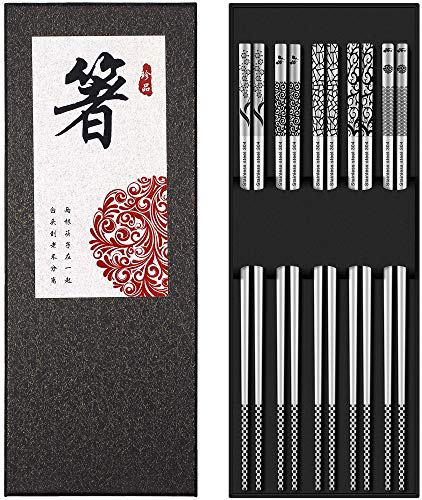
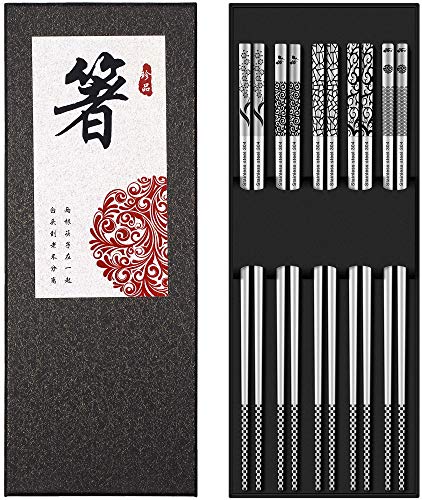
- Greatamzor 18/8 Stainless Steel Chopsticks, 5 Pairs — engraved non-slip tips and a forgiving 9 1/4 inch length for daily practice
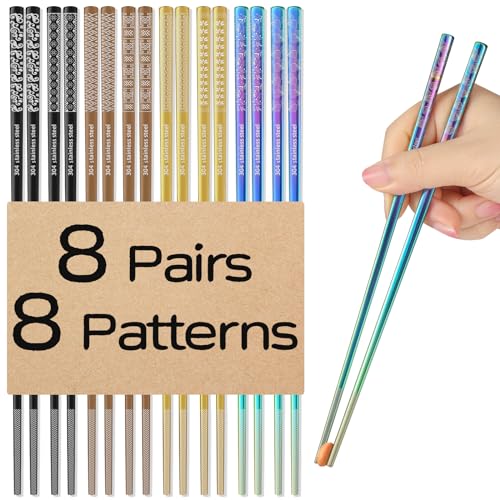
- NEWDRIP 18/8 Stainless Steel Chopsticks, 8 Pairs — eight pairs, so practice meals with friends never run short
- Zliutob Stainless Steel Chopsticks, 5 Pairs — square grip and textured tips: the steadiest geometry here for new fingers
- LIXTONGR Dragon & Phoenix Black Stainless Steel Chopsticks, 2 Pairs — gift-boxed 18/10 pair for the learner who wants one kept set
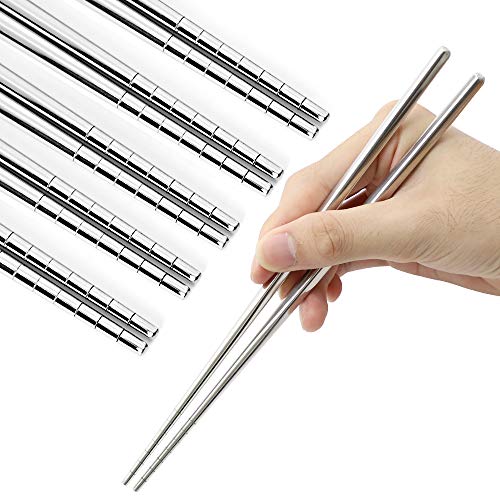
- MUYOS Stainless Steel Chopsticks, 5 Pairs, Silver — hollow-core lightweight build for hands that cramp on solid steel
- Greatamzor Multicolor Stainless Steel Chopsticks, 5 Pairs — square profile with colour coding, so your practice pair is always yours
Read the full guide ↓ for the detailed reviews, the comparison table, and the technique and care guidance that decides which of these sets actually fits your hands and your table.
Learning chopsticks as an adult is a peculiar project: the skill is simple, the embarrassment is real, and the difference between the best training chopsticks adult beginners persist with and the ones abandoned in a drawer is rarely talent. It is friction. A pair that rolls off the plate, slips on noodles and weighs enough to cramp an untrained grip manufactures failure at exactly the moment a learner needs small wins. A pair with textured tips, a steady profile and a manageable weight does the opposite — it quietly removes excuses while the hand learns the one motion that matters.
This guide takes an honest route through the category. True training chopsticks — hinged pairs with a connecting bridge, finger loops or a spring — exist and genuinely help in week one, but the verified product pool behind this guide contains none of them, and we will not pretend otherwise. What the pool does contain is six adult-length stainless steel sets whose design details map directly onto the problems adult learners report: slipping food, rolling sticks, hand fatigue and the hygiene question of whose pair is whose. For many adults, that is actually the better long-term buy, because a hinged trainer is a tool you outgrow, while a good standard pair is the destination itself.
So read the six reviews below as a learner would. Each one is judged on how its geometry, weight and tip texture behave in untrained hands, what it forgives and what it does not, and how quickly it lets you graduate from practice foods to the meals you actually want to eat. The technique sections that follow the reviews matter as much as the products: the right pair plus twenty honest minutes of structured practice will beat the wrong pair plus a month of frustrated dinners, every single time.
Key Takeaways
- No hinged helper trainers appear in this verified pool; all six picks are standard adult pairs chosen for learner-friendly details.
- Textured, engraved or square tips are the features that actually help beginners — they grip food and fingers better than polished round steel.
- Adult length here means 9 to 9.25 inches where stated; match that to the pair you may already own before switching.
- Lightweight hollow-core construction (MUYOS) is the pick for learners whose hands cramp on solid steel.
- Practice progression matters more than product: thick noodles and chunky pieces first, slippery foods last.
In this guide
Quick Picks
| Pick | Badge | Why it stands out |
|---|---|---|
| Greatamzor 18/8 Stainless Steel Chopsticks, 5 Pairs | Best Overall for Adult Learners | Engraved tips, full adult length and five pairs: the default learner recommendation |
| NEWDRIP 18/8 Stainless Steel Chopsticks, 8 Pairs | Best for Hosting Practice Meals | Eight pairs turn practice into a social habit — friends learn with you |
| Zliutob Stainless Steel Chopsticks, 5 Pairs | Best Grip Design | Square profile and textured tips steady both the grip and the food |
| LIXTONGR Dragon & Phoenix Black Stainless Steel Chopsticks, 2 Pairs | Best Gift for a Learner | 18/10 steel in a gift box: the one kept pair a learner grows into |
| MUYOS Stainless Steel Chopsticks, 5 Pairs, Silver | Easiest on Tired Hands | Hollow-core lightness for learners who fatigue on heavier steel |
| Greatamzor Multicolor Stainless Steel Chopsticks, 5 Pairs | Best Style Pick | Square, engraved and colour-coded: your practice pair is unmistakable |
How These Picks Were Chosen
We built this shortlist from the verified stainless steel chopstick pool supplied for this category and then re-read every listing through a learner’s eyes. The questions were specific. Do the tips carry texture — engraving, scoring, a square face — that grips food a beginner would otherwise chase around the plate? Does the profile sit still in an untrained hand and on the table? Is the weight plausible for a twenty-minute practice meal? Is the length stated, so a learner can match it to advice they have been given? Picks that answered those questions stayed; the reviews are blunt about the one question none of them answers, which is a physical training aid.
A note on method, because honesty matters more than polish here: this is research-led guidance, not a hands-on test report. We compared manufacturer specifications, construction details and the documented behaviour of these designs — engraved versus polished tips, square versus round profiles, hollow versus solid cores — and weighted them for the adult-learning use case. We did not invent performance numbers, and where a listing omits a fact such as length or steel grade, the review says so instead of filling the gap. Adult learners are spending real money on a skill they are not sure they will keep; the least a guide owes them is a clear map of what each set can and cannot teach.
The 6 Best Training Chopsticks Adult
Greatamzor 18/8 Stainless Steel Chopsticks, 5 Pairs
Badge: Best Overall for Adult Learners Readers comparing nearby options often also look at Best Training Chopsticks Adult Learn.
The Greatamzor five-pair set is the reference point for this whole cluster: 18/8 stainless steel, a 9 1/4 inch length in the Japanese-Korean tradition, and laser-engraved patterning that does two jobs at once — it decorates the upper shaft and gives the fingertips something to register, while the engraved tip section adds bite on smooth foods. As a multipack it suits a household drawer: five matching pairs means guests, family dinners and a spare pair in the wash never leave you short. The engraving is cut into the metal rather than printed on it, so it does not wear smooth the way surface coatings can.
For a learner, this set’s engraving is the lesson plan. The patterned tip section bites into noodle strands and vegetable pieces that slide off polished steel, which means early practice sessions produce successful bites instead of a highlight reel of drops. Use it as your daily driver: five pairs mean a clean set is always ready, and consistency — same weight, same length, every meal — is how a motor skill consolidates. The honest limit is that nothing here corrects a wrong grip; it forgives one while you correct it yourself with the technique drills later in this guide.
Strengths
- Engraved tips grip noodles and glossy vegetables better than polished steel
- Five matching pairs cover family meals and guests from one purchase
- 18/8 steel and dishwasher-safe care keep long-term upkeep simple
Trade-offs
- Engraved grooves need a proper wash to stay free of sauce residue
- Full metal weight feels unfamiliar if you learned on bamboo
- No case or rest: carry and storage extras are on you
At a glance:
- Material: 18/8 stainless steel
- Length: 9 1/4 inches
- Set size: 5 pairs
- Tips: laser-engraved, non-slip
- Care: dishwasher safe
- Style: Japanese / Korean
Best for: adult learners wanting one forgiving daily pair / Not suited for: absolute beginners who need a hinged helper

NEWDRIP 18/8 Stainless Steel Chopsticks, 8 Pairs
Badge: Best for Hosting Practice Meals
Eight pairs is the headline here. The NEWDRIP set stretches one purchase across a full table — a dinner party, a hot-pot night, a family that eats with chopsticks daily — in 18/8 stainless steel at 9.25 inches, with laser-engraved non-slip detailing. For households that host, the maths of multipacks matters more than any single-pair refinement: matching pairs look intentional on a set table, and a deep bench of spares means the dishwasher cycle never dictates the menu. The engraved patterning keeps the look playful rather than institutional, which is not always true of bulk steel sets. Readers comparing nearby options often also look at Best Training Chopsticks.
Eight pairs change the social maths of learning. Adults quit chopstick practice when it becomes a solitary embarrassment; they persist when it becomes a group activity with dumplings involved. Put a pair at every place setting, order the forgiving foods, and let the table learn together — the engraved tips give your guests the same head start they give you. As a training purchase it is really a commitment device: nobody buys eight pairs for a hobby they intend to drop, and the drawer full of matching steel quietly argues for one more practice meal.
Strengths
- Eight pairs: the deepest bench in this line-up for hosting
- Engraved non-slip sections help both grip and food control
- One consistent length and style across the whole table
Trade-offs
- Eight pairs is more than a solo cook will ever rotate through
- Storage for eight pairs needs a drawer organiser or crock
- Engraving style is decorative; minimalists may prefer plain steel
At a glance:
- Material: 18/8 stainless steel
- Length: 9.25 inches
- Set size: 8 pairs
- Tips: laser-engraved, non-slip
- Care: dishwasher safe
- Style: Japanese / Korean / Chinese
Best for: hosts turning practice into group meals / Not suited for: solo diners who will never use eight pairs

Zliutob Stainless Steel Chopsticks, 5 Pairs
Badge: Best Grip Design
The Zliutob set makes its case through shape. A square grip profile does not roll on the table, sits steadier between the fingers, and gives a learner’s hand four flat reference faces instead of a slippery cylinder; textured tips then do the food-side work on ramen noodles and sushi pieces, the two jobs the listing itself names. Five pairs keep it a household set rather than a hosting arsenal. The listing does not state a length or a steel grade, so this is a pick you choose for geometry and texture, not for published dimensions — measure your current favourite pair first if length matters to you.
If one design detail in this line-up deserves the word training, it is this square profile. Round sticks rotate in a beginner’s fingers, which twists the tips apart mid-pickup; flat faces resist that rotation and give the index and middle fingers a stable reference. Pair that with textured tips and you have the closest thing here to a designed learning tool, short of a hinge. The trade-off is feel: square edges are more noticeable in the hand, and some learners will prefer to graduate to round bamboo once the basics hold. As a first steel pair for structured practice, though, this geometry earns its place. Readers comparing nearby options often also look at Best Training Chopsticks For Adults.
Strengths
- Square profile resists rolling and steadies finger placement
- Textured tips are aimed squarely at noodles and sushi
- Five pairs is a sensible household quantity
Trade-offs
- Length and steel grade are not stated in the verified listing
- Square edges feel angular to diners raised on round bamboo
- Texture holds onto oily sauces until washed
At a glance:
- Set size: 5 pairs
- Grip: square profile
- Tips: textured, non-slip
- Care: dishwasher safe
- Listing uses: sushi, ramen, daily meals
Best for: learners whose sticks rotate in the hand / Not suited for: diners who dislike angular profiles

LIXTONGR Dragon & Phoenix Black Stainless Steel Chopsticks, 2 Pairs
Badge: Best Gift for a Learner
Two pairs, a gift box, and the richest steel grade in this cluster: the LIXTONGR Dragon & Phoenix set is the presentation pick. 18/10 stainless steel is the grade restaurants associate with their best flatware, the black finish and dragon-and-phoenix motif make it a deliberate object rather than a utensil-drawer afterthought, and at 9 inches it runs slightly shorter than the 9.25 inch sets around it — a small difference that some hands prefer for control. The listing itself names dining, travel, housewarming and wedding use, which is exactly the life this set is built for: given, kept, and used on occasions.
This is the aspirational end of learning: a gift-boxed 18/10 pair at a slightly shorter 9 inches, the set you buy when practice stops being an experiment and becomes a habit worth honouring. The shorter length genuinely helps some learners — less tail swinging behind the hand, tighter control on small pieces — and the non-slip grip keeps the food story honest. It will not teach you anything the cheaper sets cannot; what it does is reward the version of you who stuck with it. Buy it as a milestone or give it to the learner in your life as a vote of confidence.
Strengths Readers comparing nearby options often also look at Best Training Chopsticks For Toddlers.
- 18/10 steel: the premium grade in this line-up
- Gift box presentation suits weddings and housewarmings
- Slightly shorter 9 inch length can feel more controllable
Trade-offs
- Only two pairs: not a family-drawer solution
- Black decorative finish asks for gentler handling to stay pristine
- Motif styling is a matter of taste and will not suit minimal tables
At a glance:
- Material: 18/10 stainless steel
- Length: 9 inches
- Set size: 2 pairs
- Grip: non-slip
- Care: dishwasher safe
- Presentation: gift box
- Listing uses: dining, travel, housewarming, wedding
Best for: learners marking a milestone, or gift-givers / Not suited for: families needing a full drawer set
MUYOS Stainless Steel Chopsticks, 5 Pairs, Silver
Badge: Easiest on Tired Hands
Weight is the MUYOS argument. A hollow-core build trims the heft that makes solid steel chopsticks tiring over a long meal, which matters more than most first-time metal buyers expect: chopstick fatigue is real, and it shows up as a cramping grip and sloppy pickups halfway through a bowl of noodles. Five silver pairs with non-slip tips keep the format familiar — daily meals, per the listing — while the lighter hand feel narrows the gap between metal durability and bamboo lightness. If you have bounced off steel chopsticks before because they felt like knitting needles, this is the design that answers that complaint.
Hand fatigue is the silent killer of adult practice, and it is why this hollow-core set matters. New grips squeeze too hard, and solid steel turns that squeeze into an ache within minutes; a lighter pair extends the session, and longer sessions are where learning lives. The non-slip tips compensate for the gentler touch a light pair encourages. If you have tried metal chopsticks before and concluded that metal is not for you, weigh that conclusion against this design before giving up — the problem may have been grams, not material.
Strengths
- Hollow-core build is noticeably lighter over long meals
- Non-slip tips compensate for the lighter touch
- Plain silver finish matches any existing flatware
Trade-offs Readers comparing nearby options often also look at Best Tips For Using Chopsticks.
- Featherweight feel can read as insubstantial to some diners
- Length is not stated in the verified listing
- Hollow construction rewards avoiding use as a kitchen pry tool
At a glance:
- Set size: 5 pairs
- Build: hollow-core, lightweight
- Tips: non-slip
- Care: dishwasher safe
- Finish: silver
- Listing use: daily meals
Best for: learners with grip fatigue or smaller hands / Not suited for: diners who equate weight with quality

Greatamzor Multicolor Stainless Steel Chopsticks, 5 Pairs
Badge: Best Style Pick
The second Greatamzor entry pairs a square profile with a laser-engraved copper coin pattern and a multicolor finish across five pairs at 9 1/4 inches. Square sides keep the pair from rolling off a plate rim, the engraving gives fingers and food something to hold onto, and the colour spread lets a household assign pairs by colour — a small system that quietly ends the shared-drawer mix-ups. It reads as the personality pick of the steel sets: all the practical engineering of its plainer sibling, with a finish that makes the table setting part of the point.
Colour-coding sounds trivial until you share a home. A learner who always practises with the same identifiable pair builds a consistent feel, and this multicolor square-profile set makes that effortless: your colour, your pair, every meal. The engraved copper coin pattern adds tip grip for the food side of the equation. As a training system it is really an organisational one — remove the daily friction of finding, washing and recognising your pair, and practice becomes the default rather than a project. The styling will not suit every table, but a practice tool’s first job is to be used, and bright colours get used.
Strengths
- Square profile plus engraving: grip help at both ends
- Colour variety supports a pair-per-person household system
- Five pairs at full 9 1/4 inch adult length
Trade-offs
- Copper coin motif will not match every table style
- Engraved grooves need deliberate washing after oily meals
- Multicolor sets can clash with formal flatware
At a glance: Readers comparing nearby options often also look at Best Titanium Chopsticks.
- Length: 9 1/4 inches
- Set size: 5 pairs
- Profile: square, non-slip
- Pattern: laser-engraved copper coin
- Care: dishwasher safe
- Finish: multicolor
Best for: shared households needing identifiable pairs / Not suited for: formal tables and minimalists
Comparison Table
| Pick | Set size | Length (as listed) | Standout trait | Link |
|---|---|---|---|---|
| Greatamzor 18/8 Stainless Steel Chopsticks, 5 Pairs | 5 pairs | 9 1/4 inches | Engraved tips, full adult length and five pairs: the default learner recommendation | Check on Amazon |
| NEWDRIP 18/8 Stainless Steel Chopsticks, 8 Pairs | 8 pairs | 9.25 inches | Eight pairs turn practice into a social habit — friends learn with you | Check on Amazon |
| Zliutob Stainless Steel Chopsticks, 5 Pairs | 5 pairs | Not stated in listing | Square profile and textured tips steady both the grip and the food | Check on Amazon |
| LIXTONGR Dragon & Phoenix Black Stainless Steel Chopsticks, 2 Pairs | 2 pairs | 9 inches | 18/10 steel in a gift box: the one kept pair a learner grows into | Check on Amazon |
| MUYOS Stainless Steel Chopsticks, 5 Pairs, Silver | 5 pairs | Not stated in listing | Hollow-core lightness for learners who fatigue on heavier steel | Check on Amazon |
| Greatamzor Multicolor Stainless Steel Chopsticks, 5 Pairs | 5 pairs | 9 1/4 inches | Square, engraved and colour-coded: your practice pair is unmistakable | Check on Amazon |
Read the length column with a learner’s eye: where a listing states no length, we say so rather than guess, because matching length to your hand and your teacher’s advice is a real variable in the first month. Every set here is dishwasher safe, which matters more for learners than anyone — practice pairs get used daily, and daily hand-washing is one more excuse to skip a session.
How to Choose Training Chopsticks for Adults
Start by deciding which kind of help you actually need. A hinged or bridged trainer physically holds the sticks in alignment; it is the right tool for the first week if your coordination is starting from zero, and the wrong tool to still be using in month three. The sets in this guide represent the second stage: standard pairs engineered to be forgiving — texture where food slips, flat faces where fingers slip, lighter builds where hands tire. Many adults can skip stage one entirely, especially if they eat noodle soups and rice bowls regularly and are willing to practise deliberately for a fortnight.
Tip texture is the highest-value feature in this category. Polished steel on a glossy noodle is a physics problem no amount of enthusiasm solves; engraved, scored or squared tips change the friction equation and produce the early successes that keep a learner going. Profile is second: square sticks resist rotation and rolling, round sticks feel more traditional and are easier to adjust subtly once skilled. Weight is third and the most personal — try to practise with a pair for a full meal before judging, because five minutes tells you nothing about fatigue.
Length and set size round out the decision. Nine to nine and a quarter inches is the adult standard across these listings for a reason: reach into shared dishes, clearance over hot broth, and balance in an average adult hand. Shorter can suit smaller hands and sushi-focused eating. For set size, count your practice reality — a pair a day plus hosting ambitions — rather than an idealised minimalism. And keep one organisational trick in mind: a pair that is recognisably yours, by colour or pattern, gets practised with more, because it is always the one you reach for.
How to Learn Chopsticks as an Adult: A Two-Week Practice Plan
Technique first, because no product in this guide — or any guide — substitutes for it. Rest the lower stick on the base of your thumb and the side of your ring finger; it does not move. Lay the upper stick across your middle fingertip, pinched by thumb and index, and move only that stick. Open and close the tips like tweezers. If both sticks are moving, your grip has collapsed into a fist, which is the single most common adult beginner error and the easiest to fix once named.
Then practise in the right order. The plan below runs about ten minutes a day alongside real meals, and it is sequenced by food difficulty rather than enthusiasm, which is where most self-taught adults go wrong:
- Days 1–3: move large, textured pieces — roasted vegetables, meat chunks, thick noodles — from bowl to bowl. Success rate should feel almost boring.
- Days 4–6: eat full meals with the chopsticks, fork within reach but untouched unless genuinely needed. Normality is the goal.
- Days 7–9: add slippery foods — dumplings, glossy mushrooms, sauced noodles — at half the meal, keeping one forgiving dish as backup.
- Days 10–12: practise the fine work: separating noodle strands, picking single beans, breaking apart a fish fillet without crushing it.
- Days 13–14: eat a meal you did not choose for its convenience — a shared hot pot or a sushi plate — and notice what still fails. That list is your next fortnight.
Two habits protect the investment. First, wash practice pairs properly after oily sessions; engraved tips that carry yesterday’s sauce teach your fingers a slipperiness that is not the food’s fault. Second, stop a session when your hand cramps rather than pushing through with a death grip — fatigue rehearses bad mechanics. Short, clean repetitions beat long, sloppy ones in every motor skill, and chopsticks are no exception.
Troubleshooting:
- Problem: food rotates or slides off the tips → slow down and choose texture: switch to an engraved or square-tip pair and start the pickup closer to the food’s centre of balance.
- Problem: hand cramps within minutes → your lower stick is moving. Re-set the rest position, loosen the thumb, and consider a lighter hollow-core pair while strength builds.
- Problem: sticks cross into an X when closing → the upper stick is gripped too far back. Slide your hold a little toward the tips and practise opening and closing empty, slowly, twenty times.
Hinged Trainers vs Forgiving Standard Pairs: An Honest Comparison
The obvious question deserves a direct answer: if hinged training chopsticks exist, why does this guide recommend standard pairs at all? Because the two tools solve different problems. A hinge solves alignment — the sticks cannot cross or drift — and for a user with limited dexterity, an injury, or a child-sized hand, that physical guarantee is the whole point. What a hinge cannot do is teach the finger choreography itself, because the hinge is doing the choreography. Adults learning for travel, for pleasure or for a partner’s family table usually want the skill, not the workaround, and skills transfer only from tools that demand them.
The pragmatic path most adult learners end up on is a short hinge phase — sometimes just a few meals — followed by a forgiving standard pair for the long consolidation phase, which is exactly the phase these six sets serve. If you know you will abandon practice the moment it gets embarrassing, buy the hinge first without shame and one of these sets as the graduation present. If you are the stubborn type who would rather fail at dumplings for a week, start here. Either way, judge the decision by meals eaten in month two, not by pride in week one.
What Adult Learners Actually Struggle With (It Is Not the Noodles)
Ask adults who quit chopsticks what defeated them and few will say the food. They cite the audience: a business dinner, a partner’s parents, a ramen bar full of fluent strangers. The skill gap is small; the self-consciousness is enormous, and it tightens the hand, which wrecks the grip, which drops the food, which confirms the fear. This is why the practice plan in this guide is built around private, low-stakes repetition — motor skills learned calmly at home perform under social pressure, while skills only ever attempted in public tend to stay there, unlearned.
It also explains several otherwise puzzling buying patterns. Learners persist longer with a pair that feels like theirs — a colour, a pattern, a gift-boxed set with a story — because identity is a stronger motivator than optimisation. They persist longer when practice is social rather than solitary, which is the hidden argument for the eight-pair set in this line-up. And they persist when the tools remove the cheap failures — rolling, slipping, cramping — that feel like personal inadequacy but are actually equipment friction. Choose the pair that removes your specific cheap failure, and the dignified meals take care of themselves.
Grip is a trainable skill, and the timeline is kinder than most new users expect. The first week with any new pair is mostly about the rest position: the lower stick stays still, braced against the ring finger and the base of the thumb, while the upper stick does all the travelling, pivoted by the index and middle fingers. Once that division of labour clicks, the hand stops squeezing, and squeezing was the real source of most early failures — dropped noodles, aching fingers, food launched across the table. Practice with forgiving foods first: thick noodles, chunky stir-fry pieces, anything with texture. Save peas, beans and glossy dumplings for when the motion is boring, because boring is what mastery feels like from the inside.
Length deserves more respect than it gets in most product listings. The standard adult eating length across these sets sits around nine to nine and a quarter inches, and that is not arbitrary: it keeps fingertips clear of hot broth, spans a dinner plate comfortably, and balances in the hand without the tail end catching on sleeves. Shorter pairs feel nimble for sushi and small plates; longer pairs earn their keep at a hot pot or a shared serving bowl. If you already own a pair you like, measure it before ordering anything new — matching a known-good length removes the single biggest source of first-week disappointment with an otherwise good set.
Care is where stainless steel quietly wins the long game. There are no lacquers to chip, no fibres to swell, no finishes that object to the dishwasher, and no seasoning ritual. What steel does ask for is basic thoroughness: engraved and textured sections hold onto oils and sauces, so a proper wash — not a rinse — keeps them tasting like nothing, which is exactly what a utensil should taste like. Dry storage matters too. A pair put away wet in a closed case or a sealed drawer compartment will eventually show it, whatever the grade stamped on the listing.
The honest way to think about set size is to count eaters, then add friction. A household of two that hosts monthly needs a different bench than a family of five eating with chopsticks nightly, and the dishwasher cycle is a real constraint: pairs in the wash are pairs you cannot use. Multipacks look excessive on a product page and feel inadequate on a Friday night with six guests and a hot pot. Buy for the table you actually set most months of the year, not the table you set once at a holiday, and let the big-occasion problem be solved by a second, cheaper backup set if it ever becomes real.
Etiquette travels with the tool. Resting a pair across the bowl is fine on a rest and contentious without one; sticking chopsticks upright in rice is widely read as a funerary image and worth avoiding at any table where it might land badly; passing food directly from one pair to another carries similar associations in Japanese settings. None of this affects which set you should buy, but a buyer learning chopsticks as an adult is usually also learning the table culture around them, and the two educations are cheaper together. A simple rest, incidentally, also keeps engraved tips off tablecloths and stops round pairs rolling onto the floor.
Finally, judge any pair by its third month, not its first meal. New steel can feel slick until your grip adjusts; new textures can feel aggressive until your fingers learn how little pressure they need. The sets that last are the ones whose compromises you stop noticing: the weight that becomes normal, the length that becomes instinct, the finish that survives your actual dishwasher rather than an idealised one. That is why this guide weights durability signals — steel grade where stated, construction, dishwasher care — as heavily as first-impression features. A chopstick is a ten-year object bought in a ten-minute decision; the least a guide can do is slow the decision down.
Storage sounds like the least important decision in this category and quietly determines how long any set stays pleasant. Pairs kept loose in a cutlery drawer collide with heavier utensils thousands of times a year; pairs kept in a crock, a divided insert or their own case meet almost nothing but air and meals. Tips deserve the gentlest berth, since they do the finest work and show damage first. None of this requires equipment more elaborate than a jam jar — it requires only the decision that the pairs have a home, made once and then simply kept.
A note on rests, the smallest accessory in this world: a rest keeps tips off the table, keeps round pairs from emigrating to the floor, and gives a meal a small, civilised pause button. Households that adopt rests find their pairs last longer in finish and in dignity, and guests read the table as considered. Rests are not bundled with the sets in this guide — the listings do not claim them — so treat them as a separate, inexpensive completion of any set you buy, chosen in a material that shares your pairs’ care routine.
Common Buying Mistakes
Most adult learners buy their first pair the way they buy pens — by looks, in a hurry, once. The errors below are the ones that convert a two-week learning project into a drawer of good intentions.
- Buying polished round steel as a first pair. It is the hardest common configuration to learn on. Texture and flat faces exist precisely because beginners need them.
- Judging a pair in five minutes. Weight and grip only reveal themselves across a full meal. Practise patience before purchases where you can, and prioritise return-friendly choices.
- Starting practice with the hardest foods. Peas and glossy dumplings are graduation exams, not lesson one. Sequence your foods and the skill builds itself.
- Buying one pair for a learning household. If two people are learning, colour-coded or multipack sets end the whose-pair arguments and double the practice occasions.
- Skipping the technique reset. A new pair cannot fix a fist grip. Ten minutes spent rebuilding the rest position is worth more than any upgrade in this guide.
Final Recommendation
For most adult learners, start with the Greatamzor 18/8 five-pair set: engraved tips, standard length, enough pairs for daily practice, and nothing about it that you will outgrow. If your sticks rotate in your fingers, the Zliutob square profile is the more targeted teacher; if your hands cramp, go straight to the lightweight MUYOS and protect your practice time. The NEWDRIP eight-pair set is the social learner’s commitment device, and the LIXTONGR gift set is the pair you graduate to — or give to someone whose learning you want to honour.
And keep the honest caveat in view: if your first week tells you that alignment itself is the barrier, buy a hinged trainer for the short term without treating it as a defeat. The goal was never to suffer correctly. It was to eat, fluently, at any table — and every pick in this guide is a legitimate road to that table once the basics are underway.
Start here: Greatamzor 18/8 Stainless Steel Chopsticks, 5 Pairs (Best Overall for Adult Learners); NEWDRIP 18/8 Stainless Steel Chopsticks, 8 Pairs (Best for Hosting Practice Meals); Zliutob Stainless Steel Chopsticks, 5 Pairs (Best Grip Design).
Frequently Asked Questions
Are these actually training chopsticks?
Not in the hinged sense, and this guide says so openly. True training chopsticks have a bridge, hinge or finger loops that hold the sticks in alignment. The six sets reviewed here are standard adult pairs selected for learner-friendly features — engraved or textured non-slip tips, square profiles that resist rotation, and one lightweight hollow-core design. Many adult learners use exactly this kind of forgiving standard pair as their training tool, because it teaches the real grip from day one; learners who need physical alignment help should start with a hinged trainer and graduate to a set like these.
How long does it take an adult to learn chopsticks?
Most adults reach comfortable, unselfconscious eating within two to three weeks of daily use, following a progression from textured, chunky foods to slippery ones. The first few days feel clumsy for everyone; the motion typically clicks once the lower stick is kept still and only the upper stick moves. Short daily practice at real meals beats occasional long drills, and a forgiving pair — textured tips, manageable weight — shortens the clumsy phase by removing failures that are the equipment’s fault rather than yours.
Why do my chopsticks keep crossing or scissoring?
Scissoring happens when both sticks move, or when the upper stick is held too far back and pivots past the lower one. Rebuild the rest position: lower stick braced on the ring finger and thumb base, completely still; upper stick moved only by index and middle fingers. Square-profile pairs, like the Zliutob and the multicolor Greatamzor in this guide, also help because their flat faces resist the rotation that starts a scissor. Practise the open-close motion empty, slowly, before meals for a few days.
Is stainless steel harder to learn on than wood or bamboo?
Polished steel is, because it is smoother against both fingers and food. Textured steel largely closes the gap: laser-engraved tips grip food comparably to bamboo in everyday eating, and engraved shafts give fingers purchase. Steel also brings advantages a learner keeps for life — it is dishwasher safe, does not splinter or stain, and keeps the same weight and feel for years, which helps a new motor skill consolidate. If steel still feels slippery after a fair trial, learn on bamboo and keep a steel set as your durable second pair.
What length should an adult beginner choose?
The adult standard in this line-up is 9 to 9.25 inches where a length is stated, and it suits most hands and most meals — enough reach for shared dishes and hot broth, without excess tail behind the hand. Smaller hands, or learners focused on sushi and small plates, often prefer the shorter end of that range, which is why the 9 inch LIXTONGR set can feel more controllable. If you already own a pair you like, measure it and match it; consistency of length is a real aid while the grip is new.
How should I practise without making meals miserable?
Keep a fork in the kitchen, not on the table, and practise in a difficulty order: chunky textured foods first, full normal meals next, slippery foods last. Ten focused minutes a day outperforms a weekly marathon, and stopping when your hand cramps protects your mechanics — a tired grip rehearses squeezing, which is the habit you are trying to unlearn. Making practice social helps more than any drill: a shared hot pot or dumpling night turns repetition into dinner, which is why multipack sets appear in this guide as training tools in their own right.