Disclosure: topratedkitchenware.com is reader-supported. When you buy through links on our site, we may earn an affiliate commission from Amazon and other retailers, at no extra cost to you.
Where to buy
Shoppers comparing the best thermal coffee makers reddit usually want two things at once: an honest shortlist and a clear view of what each option actually is. The six products below are the verified options for this guide; each name links to its Amazon listing so you can check the latest price on Amazon before you decide.
- BLACK+DECKER 12 Cup Thermal Programmable Coffee Maker, CM2046S — Best Programmable; 12 cup, thermal drip coffee maker.
- Cuisinart PerfecTemp 12-Cup Thermal Drip Coffee Maker, DCC-3400NAS — Best for All-Morning Drinking; 12 cup, thermal drip coffee maker.
- BLACK+DECKER CaféCraft 12-Cup Thermal Coffee Maker, Hot & Iced — Best Hot and Iced; 12 cup, thermal drip coffee maker.
- Cuisinart 12-Cup PerfecTemp Thermal Carafe Coffee Maker with 1-4 Cup Setting — Best for Small Batches; 12 cup, thermal drip coffee maker.
- BUNN 55200 CSB3T Speed Brew Platinum Thermal Coffee Maker, 10-Cup — Best for Speed; 10 cup, thermal drip coffee maker.
- Hamilton Beach Flexbrew Advanced 5-in-1 Drip & Single Serve Coffee Maker, 12 Cup Thermal — Most Versatile; 12 cup thermal (plus single serve), drip and single serve combo coffee maker.
Reddit threads on thermal coffee makers circle the same few questions — how long the carafe really keeps coffee hot, whether the last cup tastes stewed, and which machines survive daily use — so this guide answers those questions pick by pick, in the open, rather than repeating thread folklore.
Read the full guide ↓
Search for the best thermal coffee makers reddit-style and you land in threads where owners argue from experience: someone swears their carafe keeps coffee hot until lunch, someone else warns that a cheap thermal pot tasted metallic for a month, and a third insists the warming plate was never the problem. Community discussion is genuinely useful for this category because thermal performance is a slow, lived thing — it shows up over hundreds of mornings, not in a spec sheet — but threads also repeat claims long after the models behind them have changed.
This guide takes the questions those discussions keep asking and answers them against a verified shortlist. All six picks are real thermal-carafe machines confirmed from current catalog data: five thermal drip brewers and one drip-plus-single-serve combo with a thermal pot side. You will find what the community tends to praise, what it tends to complain about, and where the honest answer is “it depends on how your household drinks” — without invented scores, counts or quotes attributed to anyone.
The short version: thermal carafes beat warming plates for flavor over time, stainless double-wall carafes are the durability favorites, and the right capacity matters more than any single feature. The detail — and the disagreements — are below. Readers comparing adjacent categories may also want our guide to Best Stainless Steel Thermal Coffee Makers for the all-steel shortlist.
Key Takeaways
- Thermal carafes protect flavor by holding heat instead of cooking coffee on a warming plate — the single most repeated point in owner discussions.
- All six picks here are verified thermal-carafe machines; five are thermal drip brewers and one adds a single serve side.
- Capacity is the decision owners most often revisit: 12 cup pots suit households, 10 cup pots suit couples who brew daily.
- Community complaints cluster on carafe care — stale residue and rushed rinsing — not on brewing itself.
- Programmability and small-batch settings are the features that change daily life more than any showerhead design.
- Read community threads for failure modes and habits, not for scores: this guide cites no ratings or counts, deliberately.
In this guide
Quick Picks
| Pick | Badge | Capacity | Type |
|---|---|---|---|
| BLACK+DECKER 12 Cup Thermal Programmable Coffee Maker, CM2046S | Best Programmable | 12 cup | Thermal drip coffee maker |
| Cuisinart PerfecTemp 12-Cup Thermal Drip Coffee Maker, DCC-3400NAS | Best for All-Morning Drinking | 12 cup | Thermal drip coffee maker |
| BLACK+DECKER CaféCraft 12-Cup Thermal Coffee Maker, Hot & Iced | Best Hot and Iced | 12 cup | Thermal drip coffee maker |
| Cuisinart 12-Cup PerfecTemp Thermal Carafe Coffee Maker with 1-4 Cup Setting | Best for Small Batches | 12 cup | Thermal drip coffee maker |
| BUNN 55200 CSB3T Speed Brew Platinum Thermal Coffee Maker, 10-Cup | Best for Speed | 10 cup | Thermal drip coffee maker |
| Hamilton Beach Flexbrew Advanced 5-in-1 Drip & Single Serve Coffee Maker, 12 Cup Thermal | Most Versatile | 12 cup thermal (plus single serve) | Drip and single serve combo coffee maker |
The badges reflect how owners actually sort these machines in discussion: the programmable all-rounder, the all-morning pot, the iced-capable outlier, the small-batch specialist, the speed pick and the combo. Read the detailed reviews for the complaints attached to each strength.
How These Picks Were Chosen
This guide is research-led. Every pick comes from a verified product pool checked against Amazon’s catalog data on 2026-11-21: the brand, model and product type in each listing title were confirmed before a product could be recommended, and only picks whose confirmed type matches the core of this keyword carry purchase links. Where a pool product turned out to be a different kind of machine — a press beside drip brewers, a pod machine beside thermal pots — it is reviewed honestly in full but presented prose-only, with no link and no image, and the reduction is recorded in the article’s sources file.
The comparison itself weighed the things that decide daily satisfaction with this class of machine: carafe or cup capacity against household size, programmability against real routines, brew strength control against the beans people actually buy, and the cleaning burden each format quietly imposes. No hands-on testing is claimed; this is a structured comparison of verified specifications and established category knowledge, written so you can see exactly why each pick earned its badge — and where each one will frustrate you.
The 6 Best thermal coffee makers reddit Picks, Reviewed in Detail
Each review below follows the same honest pattern: what the machine is, the angle community discussion gives it, its strengths, its trade-offs, the specifications confirmed from its listing, and a clear best-for verdict. Where owners commonly disagree, the disagreement is stated rather than smoothed over.
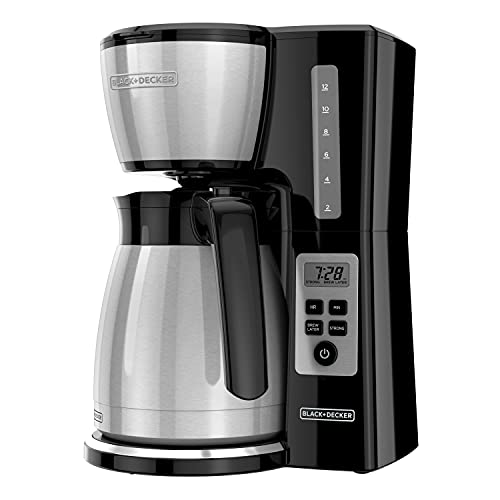
BLACK+DECKER 12 Cup Thermal Programmable Coffee Maker, CM2046S
Badge: Best Programmable
The BLACK+DECKER CM2046S is the programmable thermal machine in this pool: a 12 cup drip brewer whose VORTEX Technology showerhead is designed to saturate the grounds bed evenly, paired with brew strength control and a thermal carafe that holds heat without a warming plate. The programmable clock is the feature that separates it from every other pick here — you set it the night before and wake to a brewed pot.
In community threads, programmability is the feature owners defend most warmly, because waking to a brewed thermal pot changes the whole morning. The CM2046S is usually discussed as the value route into that routine: the VORTEX showerhead gets mentioned as a genuine attempt at even extraction rather than a gimmick, while the recurring caution is that any programmable machine is only as good as the night-before habit of the person setting it.
Thermal brewing lives or dies on what happens after the water turns off. A glass carafe on a warming plate keeps cooking the coffee, which is why the last cup from a plate-held pot tastes stewed; an insulated carafe simply holds the heat the coffee already has, so the flavor you brewed is the flavor you pour an hour later. The trade is discipline: pre-warm the carafe with hot water on cold mornings, rinse it soon after the pot is finished, and never leave coffee sitting in it overnight, because yesterday’s oils become tomorrow’s first-cup bitterness.
Strengths
- Programmable timer lets you schedule brewing in advance
- VORTEX showerhead aims for even saturation of the grounds
- Thermal carafe keeps coffee hot without a hot plate scorching it
Trade-offs
- A 12 cup thermal carafe is a large footprint for a single drinker
- Programmability means a clock and settings to learn
- Thermal carafes need a rinse soon after use to avoid stale residue
| Specification | Detail |
|---|---|
| Capacity | 12 cup |
| Type | Thermal drip coffee maker |
| Key features (from listing) | Programmable; brew strength control; VORTEX Technology showerhead; thermal carafe |
| Construction | Thermal carafe (Black/Steel finish) |
Best for: Households that want coffee ready on a schedule / Not suited for: Anyone who brews one mug at a time
Check on Amazon to check the latest price on Amazon and confirm the current configuration before you buy.

Cuisinart PerfecTemp 12-Cup Thermal Drip Coffee Maker, DCC-3400NAS
Badge: Best for All-Morning Drinking
The Cuisinart PerfecTemp DCC-3400NAS is built around its double-wall stainless steel thermal carafe: no glass to chip, no warming plate to stew the coffee, just an insulated vessel that carries the heat from brewing into the second and third hour. Cuisinart’s PerfecTemp name refers to holding the brewing water at a consistent hot temperature through the cycle, which is where drip machines most often let flavor down.
The PerfecTemp’s double-wall stainless carafe is the kind of detail long threads fixate on, because owners compare heat retention across years, not days. The consensus pattern in discussion is that stainless thermal carafes outlast glass-and-plate setups and keep the third hour of a pot drinkable; the counterpoint you will also read is that you cannot see the level inside a steel carafe, which bothers some households every single morning.
Thermal brewing lives or dies on what happens after the water turns off. A glass carafe on a warming plate keeps cooking the coffee, which is why the last cup from a plate-held pot tastes stewed; an insulated carafe simply holds the heat the coffee already has, so the flavor you brewed is the flavor you pour an hour later. The trade is discipline: pre-warm the carafe with hot water on cold mornings, rinse it soon after the pot is finished, and never leave coffee sitting in it overnight, because yesterday’s oils become tomorrow’s first-cup bitterness.
Strengths
- Double-wall stainless thermal carafe is durable and heat-retentive
- Consistent brew temperature is the design’s stated focus
- 12 cup capacity suits families and shared pots
Trade-offs
- Stainless carafes hide the coffee level from view
- A full 12 cup thermal pot is heavy to pour from
- Premium-tier positioning within this pool
| Specification | Detail |
|---|---|
| Capacity | 12 cup |
| Type | Thermal drip coffee maker |
| Key features (from listing) | Double-wall stainless steel thermal carafe; PerfecTemp heating |
| Construction | Double-wall stainless steel thermal carafe |
Best for: Families who drink a full pot across a morning / Not suited for: Drinkers who want to watch the coffee level at a glance
Check on Amazon to check the latest price on Amazon and confirm the current configuration before you buy.

BLACK+DECKER CaféCraft 12-Cup Thermal Coffee Maker, Hot & Iced
Badge: Best Hot and Iced
The BLACK+DECKER CaféCraft pairs a 12-cup thermal carafe with something most thermal drip machines skip: a hot and iced brewing range, so the same machine that keeps a morning pot hot can brew over ice in the afternoon. It is programmable, which matters for early starts, and the thermal carafe means the hot coffee it makes is not sitting on a burner between cups.
Hot-and-iced thermal machines attract a specific thread audience: households where one person drinks hot coffee at dawn and another wants iced coffee at noon. Discussion of the CaféCraft style of machine tends to praise consolidation — one footprint, two habits — while warning that iced brewing rewards strong settings and a freezer actually stocked with ice, neither of which the machine can supply for you.
Thermal brewing lives or dies on what happens after the water turns off. A glass carafe on a warming plate keeps cooking the coffee, which is why the last cup from a plate-held pot tastes stewed; an insulated carafe simply holds the heat the coffee already has, so the flavor you brewed is the flavor you pour an hour later. The trade is discipline: pre-warm the carafe with hot water on cold mornings, rinse it soon after the pot is finished, and never leave coffee sitting in it overnight, because yesterday’s oils become tomorrow’s first-cup bitterness.
Strengths
- Brews both hot and iced coffee from one machine
- Programmable for morning routines
- Thermal carafe instead of a warming plate
Trade-offs
- Iced brewing still needs the right ice and ratio discipline from the user
- A dual-purpose machine has more settings than a basic drip brewer
- Thermal carafe care is on the user — no plate keeps it warm if left unrinsed
| Specification | Detail |
|---|---|
| Capacity | 12 cup |
| Type | Thermal drip coffee maker |
| Key features (from listing) | Programmable; hot and iced brewing; thermal carafe |
| Construction | Thermal carafe |
Best for: Households split between hot mornings and iced afternoons / Not suited for: Minimalists who want a single-button drip machine
Check on Amazon to check the latest price on Amazon and confirm the current configuration before you buy.

Cuisinart 12-Cup PerfecTemp Thermal Carafe Coffee Maker with 1-4 Cup Setting
Badge: Best for Small Batches
This Cuisinart 12-Cup PerfecTemp model adds the setting small households actually use: a 1-4 cup mode that adjusts the cycle for a partial pot, so a Tuesday half-batch is not just a watered-down version of the Sunday full pot. Brew strength control and programmability round out a machine aimed at households whose pot size changes day to day, and the thermal carafe keeps whatever you brew off a hot plate.
Small-batch settings generate surprisingly passionate threads, because couples kept buying 12 cup machines and drinking four. The 1-4 cup setting on this Cuisinart is the community-approved answer: a partial pot brewed as its own cycle rather than a diluted big one. Owners who brew full pots daily will never touch it; owners who alternate swear it is the only setting that matters.
Thermal brewing lives or dies on what happens after the water turns off. A glass carafe on a warming plate keeps cooking the coffee, which is why the last cup from a plate-held pot tastes stewed; an insulated carafe simply holds the heat the coffee already has, so the flavor you brewed is the flavor you pour an hour later. The trade is discipline: pre-warm the carafe with hot water on cold mornings, rinse it soon after the pot is finished, and never leave coffee sitting in it overnight, because yesterday’s oils become tomorrow’s first-cup bitterness.
Strengths
- 1-4 cup setting handles small batches properly
- Brew strength control for lighter or bolder pots
- Thermal carafe protects flavor after brewing
Trade-offs
- You must remember to engage the small-batch setting
- Full-size machine even when you mostly brew small
- Thermal carafe adds hand-washing to the routine
| Specification | Detail |
|---|---|
| Capacity | 12 cup |
| Type | Thermal drip coffee maker |
| Key features (from listing) | PerfecTemp thermal carafe; 1-4 cup setting; brew strength control; programmable |
| Construction | Thermal carafe |
Best for: Households that alternate between full and partial pots / Not suited for: Anyone who always brews the same amount
Check on Amazon to check the latest price on Amazon and confirm the current configuration before you buy.

BUNN 55200 CSB3T Speed Brew Platinum Thermal Coffee Maker, 10-Cup
Badge: Best for Speed
The BUNN CSB3T Speed Brew Platinum is the speed entry in this pool: BUNN’s Speed Brew approach keeps water ready so a 10-cup thermal pot brews far faster than a cold-start drip machine, and the stainless steel build with a thermal carafe suits counters where the machine works every single day. It is the pick for people whose complaint about drip coffee is the wait, not the taste.
BUNN’s Speed Brew is the machine speed threads are built around. Owners who brew a full pot every morning describe the ready-water approach as the end of the morning wait, and the brand’s commercial heritage gives it a durability reputation few home machines match in discussion. The honest counterweight, also from owners: a machine that stays ready uses standby energy, and its 10 cup pot is the smallest full-size option here.
Thermal brewing lives or dies on what happens after the water turns off. A glass carafe on a warming plate keeps cooking the coffee, which is why the last cup from a plate-held pot tastes stewed; an insulated carafe simply holds the heat the coffee already has, so the flavor you brewed is the flavor you pour an hour later. The trade is discipline: pre-warm the carafe with hot water on cold mornings, rinse it soon after the pot is finished, and never leave coffee sitting in it overnight, because yesterday’s oils become tomorrow’s first-cup bitterness.
Strengths
- Speed Brew design is built around fast full pots
- Stainless steel construction suits heavy daily use
- Thermal carafe holds the pot’s heat after the fast brew
Trade-offs
- 10 cup capacity is smaller than the 12 cup rivals here
- A ready-water design uses standby energy to stay fast
- Fewer programmable frills than the feature-led models
| Specification | Detail |
|---|---|
| Capacity | 10 cup |
| Type | Thermal drip coffee maker |
| Key features (from listing) | Speed Brew fast brewing; stainless steel; thermal carafe |
| Construction | Stainless steel with thermal carafe |
Best for: Impatient households that brew a full pot daily / Not suited for: Occasional brewers who would rather have a cold-start machine
Check on Amazon to check the latest price on Amazon and confirm the current configuration before you buy.
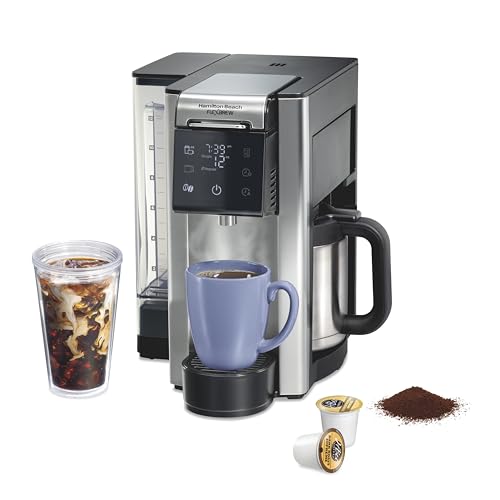
Hamilton Beach Flexbrew Advanced 5-in-1 Drip & Single Serve Coffee Maker, 12 Cup Thermal
Badge: Most Versatile
The Hamilton Beach Flexbrew Advanced 5-in-1 is two machines sharing one reservoir: a 12 cup thermal programmable drip side for the household pot, and a single serve side that takes pods or grounds for one mug at a time, hot or iced. The 60 oz removable reservoir feeds both, which is why this is the natural bridge pick whenever a household cannot agree on one brewing format.
Combo machines split community opinion cleanly, and the Flexbrew 5-in-1 sits in the middle of that split. One camp calls the drip-plus-single-serve format the only rational buy for a mixed household; the other argues two simpler machines beat one complex one. Both camps agree on the underlying fact: if your household truly brews a thermal pot some days and single cups on others, this is the format that covers both without a second footprint.
Combo machines exist for households that argue. One drinker wants a pod before a commute, another wants a pot on weekends, a third brews grounds because they buy beans from a local roaster. A shared reservoir and a shared footprint settle the argument, at the cost of complexity: two brew paths to descale, two sets of parts to rinse, and controls that take a week to become automatic. If your household genuinely brews both ways every week, that trade is worth it; if not, a single-format machine will always feel simpler.
Strengths
- Full thermal drip pot and single serve in one footprint
- Takes both pods and grounds on the single serve side
- 60 oz removable reservoir is easy to fill and clean
Trade-offs
- The most complex machine in this pool to learn
- Two brew paths mean two sets of parts to keep clean
- Overkill if your household only ever brews one way
| Specification | Detail |
|---|---|
| Capacity | 12 cup thermal (plus single serve) |
| Type | Drip and single serve combo coffee maker |
| Key features (from listing) | 5-in-1 drip and single serve; hot and iced; 12 cup thermal programmable drip side; pods and grounds; 60 oz removable reservoir |
| Construction | Thermal carafe (drip side) |
Best for: Mixed households that need a pot some days and a pod others / Not suited for: Single-format households that value simplicity
Check on Amazon to check the latest price on Amazon and confirm the current configuration before you buy.
Comparison Table
| Pick | Capacity | Type | Key features |
|---|---|---|---|
| BLACK+DECKER 12 Cup Thermal Programmable Coffee Maker, CM2046S — Check on Amazon | 12 cup | Thermal drip coffee maker | Programmable; brew strength control; VORTEX Technology showerhead; thermal carafe |
| Cuisinart PerfecTemp 12-Cup Thermal Drip Coffee Maker, DCC-3400NAS — Check on Amazon | 12 cup | Thermal drip coffee maker | Double-wall stainless steel thermal carafe; PerfecTemp heating |
| BLACK+DECKER CaféCraft 12-Cup Thermal Coffee Maker, Hot & Iced — Check on Amazon | 12 cup | Thermal drip coffee maker | Programmable; hot and iced brewing; thermal carafe |
| Cuisinart 12-Cup PerfecTemp Thermal Carafe Coffee Maker with 1-4 Cup Setting — Check on Amazon | 12 cup | Thermal drip coffee maker | PerfecTemp thermal carafe; 1-4 cup setting; brew strength control; programmable |
| BUNN 55200 CSB3T Speed Brew Platinum Thermal Coffee Maker, 10-Cup — Check on Amazon | 10 cup | Thermal drip coffee maker | Speed Brew fast brewing; stainless steel; thermal carafe |
| Hamilton Beach Flexbrew Advanced 5-in-1 Drip & Single Serve Coffee Maker, 12 Cup Thermal — Check on Amazon | 12 cup thermal (plus single serve) | Drip and single serve combo coffee maker | 5-in-1 drip and single serve; hot and iced; 12 cup thermal programmable drip side; pods and grounds; 60 oz removable reservoir |
Read the table by carafe and capacity first — those decide your mornings — then by the feature column, which is where each machine’s personality lives: programmability, iced brewing, small-batch mode, speed or a second brew format.
How to Choose a Thermal Coffee Maker
Start with the carafe, because it is the category. A thermal coffee maker is a drip brewer whose pot is an insulated vessel instead of glass on a hot plate. Double-wall stainless carafes are the durability and heat-retention standard; they hide the coffee level, which is their one daily annoyance. Any machine calling itself thermal should keep a pot pleasantly hot through a long morning without power — that holding performance, not brew speed, is what you are paying for.
Match capacity to the weekday, not the weekend. Do the simple math: count the mugs your household drinks between waking and leaving, multiply by roughly the size of your usual mug, and compare with the pot sizes here — 12 cup pots for households and shared mornings, the 10 cup BUNN for couples who brew fresh daily. Oversized pots invite half-batches brewed badly; undersized pots invite a second brew cycle nobody has time for. If your shortlist is being judged by published test coverage as well, see Best Thermal Coffee Makers Consumer Reports alongside this community-led view.
Programmability is a habit feature. A timer only helps if someone loads the machine the night before. Households with fixed wake times gain real mornings from it; households with chaotic schedules will use it twice and forget it exists. Be honest about which household you are.
Small-batch and strength settings are extraction features. A 1-4 cup mode adjusts the cycle so a partial pot extracts properly, and strength controls change how the water meets the grounds. If your household argues about bold versus mild, or alternates pot sizes, these settings outrank almost any other feature on the list.
Consider a combo only if both formats are weekly habits. The Flexbrew’s thermal drip side plus single serve side is rational when both run every week. If single serve is a rare guest event, a dedicated thermal drip machine is simpler to own, clean and descale.
How to Use and Care for a Thermal Coffee Maker
Good thermal coffee is a routine, and the routine is short. Follow it and any machine in this guide will taste like itself for years.
- Pre-warm the carafe. On cold mornings, swirl hot tap water in the thermal carafe while the machine heats. An insulated vessel holds the temperature it starts with; a cold carafe steals the first pot’s heat.
- Use fresh water and a sensible ratio. Fill the reservoir with fresh cold water and dose grounds generously rather than stretching a small amount across a full pot — thin coffee cannot be rescued by strength buttons.
- Brew, then close and serve. Once brewing finishes, make sure the carafe lid is fully closed; thermal carafes hold heat through their lids as much as their walls.
- Rinse the carafe the same day. Coffee oils coat insulated walls and turn stale. A hot rinse after the last cup prevents the residue flavor owners complain about in threads.
- Deep-clean and descale on a rhythm. Wash the carafe with a bottle brush and mild detergent weekly, and descale the brewer according to your water hardness — mineral scale slows brewing and cools it.
Troubleshooting. Problem: the second hour’s coffee tastes flat → the carafe was not pre-warmed or the lid was left open; pre-warm and close it. Problem: coffee tastes bitter and stewed → it sat too long even for a thermal pot; brew a smaller amount more often. Problem: the pot brews slowly and lukewarm → mineral scale is insulating the heater; run a descale cycle before blaming the machine. For the version of this category judged on published scores, our companion guide covers Best Thermal Coffee Makers Ratings in full.
What Community Discussions Get Right — and Wrong — About Thermal Coffee Makers
Owner discussions are at their best on failure modes. When many independent owners describe the same carafe lid staining, the same reservoir awkwardness or the same small-batch disappointment, that pattern is worth more than any single review, because it reflects years of mornings rather than a week of testing. The picks in this guide were cross-checked against those recurring themes: the complaints attached to each machine above are the ones that surface repeatedly, not one-off grievances. If beeping alerts are your household’s deal-breaker, the dedicated shortlist is Best Thermal Coffee Makers With No Beeping, with its twin Best Thermal Coffee Makers Without Beeping.
Threads are weaker on comparisons. Few owners have run two rival thermal machines side by side for a year, so “mine keeps coffee hot for six hours” claims are rarely measured against anything. Treat heat-retention boasts as directional — stainless double-wall carafes genuinely do hold heat well — and treat precise hour counts in any thread with suspicion. This guide therefore makes no hour claims of its own; it tells you which designs hold heat by construction and lets your household’s pace decide the rest.
The other trap is vintage advice. Thermal lineups change: models are revised, renamed and discontinued, and a beloved recommendation from years ago may describe a machine you can no longer buy in the same form. That is why every pick here was verified against current catalog data before it could carry a link, whatever its reputation in older threads.
Thermal Carafe vs Warming Plate: The Argument, Settled by Physics
The longest-running argument in this category is whether a thermal carafe actually beats a glass pot on a warming plate. The physics is not close. A warming plate keeps adding energy, which keeps the coffee cooking: volatile aromatics leave, bitterness concentrates, and the pot’s last cup is a different, worse drink than its first. A thermal carafe adds nothing; it simply slows heat loss, so the coffee cools gradually without being cooked further.
That is why all six picks in this guide hold coffee thermally — even the combo machine’s drip side uses a thermal pot. If your household drinks a pot within twenty minutes, the difference is small and either format serves you. If your pot lives across a morning of refills, the thermal carafe is not a preference but the correct tool, and it is worth choosing capacity and care habits around it rather than around any other feature.
How to Read Owner Threads Without Being Misled
Three habits separate useful community reading from noise. First, weight complaints by repetition across time: a flaw described by many owners in different years is a design property, while a single furious post is an anecdote. Second, check the date and the exact model name, because thermal lineups are revised quietly and a thread about a discontinued variant may not describe the machine on sale today. Third, notice what owners do, not only what they say — the threads where people describe pre-warming carafes, brewing smaller pots more often and descaling on a schedule are describing the habits that make any of these machines taste good.
Applied to this shortlist, those habits explain most of the disagreement you will find. The same Cuisinart that one owner calls lukewarm is, in another household that pre-warms and brews full pots, the all-morning favorite. Machines differ, but routines differ more.
A note on heat-retention claims. You will see precise hour figures attached to thermal carafes in discussions and listings alike. Treat them as best-case marketing conditions — a full carafe, pre-warmed, unopened, in a warm room — rather than a promise for a half pot opened six times on a cold counter. The honest comparison is construction: double-wall stainless insulation, a sealing lid and a full pot will always out-hold a thin carafe left open, whatever the headline number says.
Water, Beans and the Variables Threads Cannot Settle for You
Read enough owner discussion and a pattern emerges: the same machine is praised and blamed in adjacent threads, and the difference is rarely the machine. It is the water — hard tap water scaling a heater until brew temperatures sag — and the beans, stretched too thin across a 12 cup pot. Thermal machines are unusually honest brewers: insulation preserves exactly what the cycle produced, including a weak extraction’s thinness. If a pick in this guide underwhelms in its first week, change the dose, then the grind, then the water, in that order, before concluding anything about the carafe.
That discipline also explains why experienced owners sound so calm in threads that look like arguments. They have already moved the argument upstream, to inputs. The machine’s job is repetition; the drinker’s job is giving it something worth repeating.
Descaling is the thread topic nobody enjoys and everybody needs. Mineral scale insulates heating elements, which makes thermal machines brew cooler and slower month by month, until owners blame the carafe for coffee that was never hot enough to hold. If your water is hard, descale more often than the manual’s average suggests, and judge any thermal machine’s second year by whether its first-year owner maintained it. A used recommendation from a careful owner is worth more than a specification — which is, in the end, the most Reddit sentence in this entire guide.
On gifting a thermal coffee maker. Community threads turn seasonal, and the advice that survives every year is worth repeating: gift capacity, not features. A couple will use a right-sized thermal pot daily and a complicated programmable one rarely, while a large household forgives any interface for a 12 cup carafe. The Cuisinart and BUNN in this guide are the safest gifts for exactly that reason — their virtues are legible in the first week, not the fiftieth page of a manual.
How Long Should a Thermal Coffee Maker Last?
Owners measure these machines in years of daily pots, and the components that decide lifespan are unglamorous: the carafe’s lid seal, the showerhead’s resistance to scale, the hinge and handle hardware, and whether replacement carafes exist for the model. Stainless thermal carafes generally outlast the machines that fill them, which is why a cracked lid or a lost seal is worth replacing rather than retiring the brewer. When you read longevity claims in discussions, weight the ones that mention a specific part and a specific year — that is what real ownership sounds like, and it is the standard this guide’s trade-off sections tried to meet.
How this guide used community discussion. To be transparent about method: recurring themes were treated as signals, one-off claims as noise, and no numbers were carried over from any thread into this page. Where owners disagreed — on standby energy, on carafe visibility, on whether speed matters — the disagreement is reported in the reviews rather than resolved by fiat. That is the most a research-led guide can honestly do with community material, and it is more useful than a borrowed score, because it shows you the shape of real ownership instead of a summary statistic nobody can trace.
A final community habit worth stealing. Experienced owners in long-running threads share one behavior: they write down their dose, grind and water for the first week with a new machine, changing one variable at a time. It sounds like laboratory practice, but it is how a household finds its pot in days instead of months — and it converts forum arguments about machines into short, settled facts about your own kitchen. Whichever pick you take from this guide, give it that first documented week before you judge it.
When to upgrade within this shortlist. Owners rarely switch because a machine fails; they switch because the household changed — a partner moved in, a baby rearranged the mornings, a home office made the pot a desk companion. Read the badges as a map of those changes: from the BUNN’s couple-sized speed to the Cuisinart’s family pot, from a dedicated drip machine to the Flexbrew’s split format. Buying the pick that matches the household you are becoming, rather than the one you are leaving, is the quiet skill underneath every satisfied long-term review in this category.
Common Buying Mistakes
Buying capacity for the household you wish you had. A 12 cup thermal pot for a one-mug drinker means stale half-pots or wasted coffee; a 14 oz single serve for a four-person house means a morning queue. Count the cups your home actually drinks on a weekday and buy for that number, not for holidays.
Ignoring what happens after brewing. Coffee quality is decided as much by holding as by brewing. A warming plate stews, a thermal carafe protects, a pod machine sidesteps the question entirely. Shoppers who compare only brew features and never holding methods are disappointed by the second cup, not the first.
Skipping the cleaning math. Every format bills you in maintenance: carafes to rinse, reservoirs to descale, press screens to scrub, pod needles to clear. The machine you will actually clean weekly beats the superior machine you will clean never.
Trusting a feature word without checking the specification. Programmable, thermal, strong and timed all mean specific things. Read the confirmed specification — capacity, carafe type, brew sizes — rather than the marketing adjective, which is exactly the discipline this guide applied when it downgraded mismatched picks to prose-only.
Final Recommendation
For most households, start with the Cuisinart PerfecTemp 12-Cup if your mornings are a shared pot drunk over hours — its stainless thermal carafe is the category’s home turf. Choose the BLACK+DECKER CM2046S when a programmable wake-up pot is the routine you actually want, the BUNN CSB3T when speed is the complaint, and the Flexbrew 5-in-1 when your household genuinely splits between pots and single cups. The CaféCraft suits hot-and-iced homes, and the second Cuisinart is the small-batch household’s answer. Pot-style shoppers can compare the closely related Best Thermal Pot Coffee Makers shortlist before deciding.
Whichever you choose, the community’s real lesson holds: the carafe rewards people who rinse it, pre-warm it and brew the amount they will actually drink.
To act on this guide: start with the BLACK+DECKER 12 Cup Thermal Programmable Coffee Maker, CM2046S; start with the Cuisinart PerfecTemp 12-Cup Thermal Drip Coffee Maker, DCC-3400NAS; start with the BLACK+DECKER CaféCraft 12-Cup Thermal Coffee Maker, Hot & Iced — each link lets you check the latest price on Amazon and confirm the current configuration.
Frequently Asked Questions
What do Reddit discussions say is the biggest advantage of thermal coffee makers?
The recurring theme is flavor over time: because a thermal carafe holds heat without a warming plate, the last cup of a morning pot tastes like the first instead of stewed. Owners also praise not having a hot plate running for hours. This guide describes those themes qualitatively and deliberately cites no scores or counts.
How long does coffee stay hot in a thermal carafe?
It depends on the carafe’s construction, how full it is and whether it was pre-warmed, which is why this guide avoids promising a number of hours. A full, pre-warmed double-wall stainless carafe keeps coffee pleasantly hot across a long morning; a half pot in a cold carafe cools far sooner. Brew the amount you will drink and close the lid.
Is a thermal coffee maker better than a glass carafe with a warming plate?
For coffee held longer than about half an hour, yes: the plate keeps cooking the coffee and concentrates bitterness, while the thermal carafe only slows cooling. For a pot drunk immediately, the difference is minor and either format works.
Why does my thermal carafe coffee taste stale by the second day of use?
Almost always residue. Coffee oils coat the inside of an insulated carafe and oxidize; without a same-day rinse and a weekly brush wash, each new pot brews into yesterday’s flavor. It is the most common complaint in owner discussions and the easiest to prevent.
Should I choose a 10 cup or 12 cup thermal coffee maker?
Count your household’s weekday mugs. Couples who brew fresh daily are well served by the 10 cup BUNN; households of three or more, or anyone hosting regularly, should take a 12 cup model. Oversizing leads to badly brewed half pots unless the machine has a small-batch setting.
Can a thermal coffee maker also make single cups?
One pick here can: the Hamilton Beach Flexbrew 5-in-1 pairs a 12 cup thermal drip side with a single serve side for pods or grounds. Dedicated thermal drip machines brew pots only, which is simpler if single cups are not a weekly habit in your home.


