Disclosure: topratedkitchenware.com is reader-supported. When you buy through links on our site, we may earn an affiliate commission from Amazon and other retailers, at no extra cost to you.
Where to buy
Ask a forum full of hunters, meal preppers and sous vide obsessives what to buy and you do not get a spec sheet — you get war stories, confessions and the occasional eulogy for a gasket. The six machines below are the verified picks that best match what the best vacuum sealers reddit discussions consistently reward: seals that hold for months, controls that handle wet food without drama, and designs that survive years of weekly use in real kitchens rather than in showroom demonstrations. Every pick is linked so you can check the latest price on Amazon.
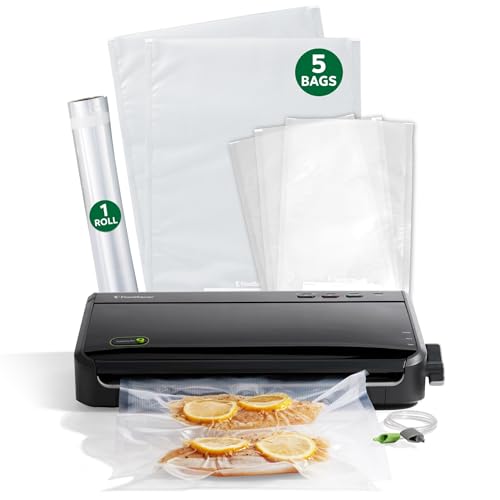
- FoodSaver FM2100 Vacuum Sealer Machine — Best Established Favourite. The benchmark design forums measure others against: roll storage, cutter, accessory hose and one-touch sealing.
- UPRUBE Vacuum Sealer 95kPa — Best Specification Value. The challenger spec sheet forums love to cite: 95kPa stated vacuum, fast draw, pulse mode and a timer.
- VACLER Vacuum Sealer Machine — Best for Wet and Dry Modes. Smart rice, wet and dry modes with twenty bags and a hose in the box.
- Bonsenkitchen Vacuum Sealer Machine — Best Simple Compact. The no-drama compact: multiple modes, standard external system, small footprint.
- FoodSaver Mini Handheld Vacuum Sealer — Best Handheld. A cordless handheld with a marinate setting and its own charging dock.
- Chef Preserve Compact Vacuum Sealer — Best Reusable-Bag System. Thirty reusable bags in the box — the consumable economics forums argue about, answered.
Read the full guide ↓ for badges, strengths and trade-offs, a side-by-side comparison table, a full buying guide and step-by-step technique sections.
There is a particular honesty to the best vacuum sealers reddit threads that polished review roundups rarely match. Nobody on a forum is trying to sell you the machine; they are trying to explain why theirs annoyed them at 11 p.m. during a bulk portioning session, or why a modest model they bought years ago is still sealing perfectly. Read enough of those threads and clear patterns emerge — the same praises, the same complaints and the same hard-won advice surfacing again and again, from people whose only agenda is a freezer that works.
This guide is built on those patterns. The community consensus, distilled, is that seal reliability beats headline vacuum numbers, that wet-food control is where cheap machines are found out, that bag costs are the real price of ownership, and that a machine’s second year matters more than its first week. The picks below were chosen and badged against those community-tested criteria rather than against marketing claims: an established benchmark model, a high-specification value challenger, a mode-rich wet-and-dry machine, a simple compact, and two handhelds for the small jobs forums insist are half of real sealing life. Readers who want the pure specification view alongside the community view will find it in our companion guide to Best Vacuum Sealers Performance, and the two perspectives agree more often than they differ.
One ground rule, in the forum spirit: this guide invents no ratings, repeats no scores and quotes no numbers it cannot stand behind. Community wisdom is reported as themes — the complaints and endorsements that recur — not as fabricated statistics. Where a listing publishes a specification, we use it; where it does not, we say so, exactly as a good forum answer would.
It is also worth saying who this lens serves best. If you shop by laboratory measurement, the community view will feel soft; if you shop by lived experience — how a machine behaves with your food, your kitchen and your patience, across years rather than unboxings — it is the sharpest lens available. Most buyers are really shopping for the absence of regret, and regret is precisely what thousands of forum posts document in granular, unpaid detail. This guide simply organises that documentation into a decision.
Key Takeaways
- Community consensus prizes seal reliability over headline vacuum figures — a seal that holds for months beats a deeper draw that creeps open.
- Wet food is the great separator in forum threads: pulse control, moist modes and drip management are the features owners praise after purchase.
- Bag and roll costs dominate long-term ownership cost; machines using standard textured bags and rolls win the value argument.
- Longevity talk rewards simple, established designs with available parts and gaskets over novelty features.
- Handhelds earn genuine forum respect for daily small jobs, provided nobody asks them to do bulk work.
- Technique threads converge on the same advice: dry seal channels, generous headroom, double seals for the freezer, and unlatched storage to protect gaskets from flattening between sessions.
In this guide
Quick Picks
| Pick | Badge | Format | Standout trait | Link |
|---|---|---|---|---|
| FoodSaver FM2100 Vacuum Sealer Machine | Best Established Favourite | Countertop external | Roll storage and cutter; accessory port and hose included | Check on Amazon |
| UPRUBE Vacuum Sealer 95kPa | Best Specification Value | Countertop external | 95kPa stated vacuum; 12L/min stated draw; pulse and timer | Check on Amazon |
| VACLER Vacuum Sealer Machine | Best for Wet and Dry Modes | Compact external | 6-in-1 smart modes including wet; 20 bags and hose included | Check on Amazon |
| Bonsenkitchen Vacuum Sealer Machine | Best Simple Compact | Compact external | Multiple meal-prep modes; compact silver external system | Check on Amazon |
| FoodSaver Mini Handheld Vacuum Sealer | Best Handheld | Cordless handheld | Cordless with charging dock; marinate setting included | Check on Amazon |
| Chef Preserve Compact Vacuum Sealer | Best Reusable-Bag System | Handheld, reusable bags | 30 reusable bags included; portable handheld format | Check on Amazon |
How These Picks Were Chosen
The method here mirrors how a careful forum reader actually shops. We started from the recurring themes in community discussion — the failure modes people report, the features they defend, the ownership costs they warn about — and turned them into selection criteria. Then we matched the verified product pool against those criteria: documented modes for wet and dry food, pulse control where stated, roll storage and cutters for session work, accessory hoses for canister users, included consumables, and the depth of each brand’s bag ecosystem. Picks earned their places by satisfying community criteria with documented features, not by reputation alone.
A note on what we deliberately did not do: we did not count upvotes, tally thread mentions or print any community statistic, because such numbers would be invented the moment we wrote them down. The themes reported here are qualitative and honestly framed. Forum readers will recognise the approach — it is how the best answers in those threads are written too, experience first and numbers only where numbers exist. The result is a list a forum regular would find unsurprising, which is precisely the point: consensus picks are consensus because they work for most people, most of the time.
Format balance follows community logic as well. Threads aimed at bulk buyers and threads aimed at apartment cooks recommend different machines, and both are right — so this list carries countertop machines for session work and handhelds for daily small jobs, each badged for its constituency, with the trade-offs stated as plainly as any forum post would state them.
There is one more community habit worth importing into the selection itself: suspicion of the first week. Forum veterans discount early enthusiasm, because every new sealer seals beautifully in week one; the informative reports come from owners describing month six and year two. Our weighting followed that discipline — documented design traits that predict endurance (gasket-friendly storage, cleanable channels, standard consumables, established service ecosystems) counted for more than launch-day novelty. A pick that looks slightly conservative on paper but is built from endurant traits is, by community standards, the aggressive choice: it is the one still being recommended when the thread is old.
The 6 Best Vacuum Sealers Reddit Threads Keep Circling Back To

FoodSaver FM2100 Vacuum Sealer Machine
Badge: Best Established Favourite
Strengths
- Complete classic feature set: roll storage, cutter, one-touch sealing, dry and moist modes
- Accessory port and hose included, extending it to canisters and jars
- Deep FoodSaver bag ecosystem — rolls and bags available everywhere, in every width
Trade-offs
- An established design rather than the newest specification sheet
- No vacuum-pressure figure is published in the listing
- Full-size countertop footprint, unlike the compacts below
| Spec | Detail |
|---|---|
| Operation | One-touch sealing |
| Storage | Roll storage with cutter |
| Modes | Dry and moist food |
| Accessory | Port and hose included |
| Included | Starter bags and roll |
| Positioning | Sous vide cooking and storage |
Every community has its benchmark — the product that appears in thread after thread as the measuring stick, the safe answer given to newcomers who ask what to buy first. In vacuum sealing, that role belongs to established FoodSaver countertop machines of exactly this type, and the FM2100 shows why the design endures. It is not one feature but the completeness of the set: roll storage and a cutter built in, one-touch sealing, distinct dry and moist food handling, an accessory port with the hose actually included, and starter bags and a roll in the box so the machine works the day it arrives.
Forum praise for this class of machine tends to be unglamorous and therefore believable: it seals, it keeps sealing, bags for it are sold everywhere, and when a gasket eventually tires, the ecosystem around the brand makes consumables and replacements a non-event. The moist mode matters to the community’s central complaint — wet seals failing in the freezer — because adjusting the cycle for moist food, combined with sane technique, addresses the failure at its source. The accessory hose quietly expands the machine’s parish to canisters, jars and marinating containers, the side jobs that make a sealer earn its counter space between bulk sessions.
The criticisms a forum would raise are equally predictable, and fair. The listing publishes no vacuum-pressure figure, so specification hunters comparing published numbers will gravitate to the UPRUBE below; and the design is an established one, which means no digital timer or novelty modes. It also takes full countertop room, unlike the vertical-storage compacts elsewhere in our guides. None of that dents the core case: this is the machine for the buyer who wants the community’s default answer — proven layout, total ecosystem, no surprises — and in thread after thread, that buyer reports being satisfied years later.
Best for: first-time buyers who want the proven, everything-included benchmark / Not suited for: spec-sheet shoppers chasing the highest published vacuum figure

UPRUBE Vacuum Sealer 95kPa
Badge: Best Specification Value
Strengths
- Strongest published specification set here: 95kPa stated vacuum and 12L/min stated draw
- Pulse mode included — the feature community threads defend most fiercely
- Digital timer supports repeatable seals across long batches
Trade-offs
- A newer name carries a shorter community track record than the benchmark brands
- Nine-in-one labelling includes minor functions few owners will use weekly
- 135W motor rating is modest on paper beside heavier-rated rivals
| Spec | Detail |
|---|---|
| Stated vacuum | 95kPa |
| Stated draw speed | 12L/min |
| Motor power | 135W |
| Modes | Dry / moist / pulse, 9-in-1 functions |
| Display | Digital timer |
| Included | 10 ft bag roll, cutter and bag storage |
If the FM2100 is the forum’s benchmark, the UPRUBE is the machine forum bargain-hunters post about: a specification sheet that reads like it was assembled from the community’s own wish list. A stated 95kPa vacuum and a stated 12 litres per minute draw put it at the top of this pool on published numbers. Pulse mode is present — the feature experienced owners insist on for wet and delicate foods. A digital timer supports the batch worker’s creed of identical seals from first bag to last. Roll storage, a cutter and a 10 ft roll in the box complete a package that leaves little to buy separately.
The community conversation around such challengers follows a familiar arc, and this guide reports it honestly rather than resolving it by fiat. The optimistic reading: manufacturing has matured, specifications that once cost flagship money are now widely available, and owners of such machines post perfectly satisfied session reports. The cautious reading: a specification is a claim about day one, while forums ultimately judge year three — gasket durability, seal-bar consistency over thousands of cycles, and whether the brand still exists when you need a part. Both readings are rational; which one governs depends on how you weigh a stronger stated specification against a longer track record.
What can be said on evidence is that nothing in the documented feature set is missing for serious home work. Dry, moist and pulse modes cover the food spectrum; the fast stated draw suits the portioning sessions that dominate community use; and standard roll compatibility keeps consumable costs in the sane territory forums demand. Buyers comfortable being early adopters in exchange for the strongest paper performance in this list will find this the natural pick — the machine a specification-first forum answer would name. Shoppers who also cook sous vide heavily should cross-check the bath-specific advice in Best Vacuum Sealers Sous Vide, where seal stamina over long cooks gets its own treatment.
Best for: specification-driven buyers who want pulse, speed and a timer in one package / Not suited for: buyers who rank a long brand track record above published numbers

VACLER Vacuum Sealer Machine
Badge: Best for Wet and Dry Modes
Strengths
- Dedicated wet mode among its 6-in-1 smart modes — aimed at the community’s biggest complaint
- Twenty bags and a vacuum hose included, the richest countertop bundle in this list
- Compact automatic design with a built-in bag cutter
Trade-offs
- No vacuum-pressure figure is published in the listing
- Smart-mode labels vary by brand; expect a short learning curve mapping modes to foods
- Compact format suits household sessions, not the longest bulk runs
| Spec | Detail |
|---|---|
| Modes | 6-in-1 smart modes: rice, wet, dry and more |
| Design | Automatic compact with bag cutter |
| Included | 20 bags and vacuum hose |
Read the complaint threads and one failure towers over the rest: the seal that looked fine and failed in the freezer because the food was wet. The VACLER is badged for that battlefield. Its 6-in-1 smart modes explicitly include a wet mode alongside dry and a rice mode — an acknowledgement, built into the control scheme, that foods differ in the one way that actually breaks seals. A machine that invites you to choose the wet cycle is a machine whose maker has read the same complaint threads you have.
The bundle reinforces the impression of a thoughtfully assembled package: twenty bags is a real starter supply rather than a token, and the included vacuum hose extends the machine to canisters and containers from day one — the marinade and dry-goods jobs that fill the gaps between freezer sessions. The compact automatic format with a built-in cutter keeps the whole proposition tidy for ordinary kitchens, and automatic operation lowers the technique barrier for newcomers whom forums are forever coaching through their first failed seals.
Balance, forum-style: the listing publishes no vacuum-pressure figure, so this is a features-and-modes purchase, not a numbers purchase, and buyers who need a published maximum should look at the UPRUBE. Smart-mode naming is also brand dialect — rice, wet, dry — and owners should expect a few experimental bags while learning which mode suits their regular foods, a rite of passage every forum regular describes. For the household whose sealing skews moist — marinated proteins, sauced leftovers, fresh fish — the mode set speaks directly to the work, and our specialist roundup of Best Wet Food Vacuum Sealers makes a useful companion read.
Best for: households sealing lots of moist food who want modes that admit it / Not suited for: buyers who require a published vacuum-pressure specification
Bonsenkitchen Vacuum Sealer Machine
Badge: Best Simple Compact
Strengths
- Straightforward multiple modes matched to meal-prep routines
- Standard external system works with widely available textured bags and rolls
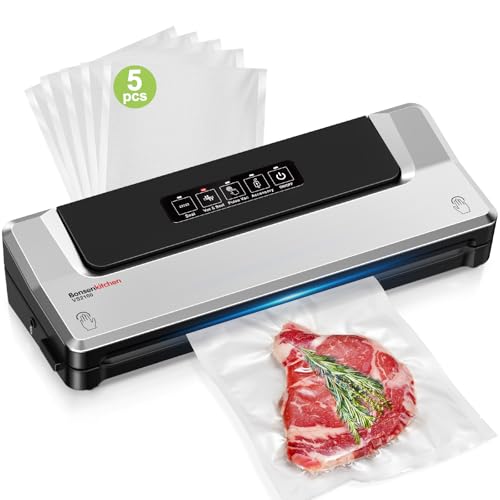
- Compact silver design is easy to store, move and wipe down
Trade-offs
- Only five bags included — plan a roll purchase immediately
- No published vacuum figure and no stated pulse mode or timer
- Feature set is deliberately basic next to the mode-rich picks
| Spec | Detail |
|---|---|
| Design | Compact, silver |
| System | External vacuum system |
| Modes | Multiple modes for meal prep |
| Included | 5 vacuum bags |
| Positioning | Kitchen food storage and sous-vide |
Forums reserve a particular respect for the appliance that does its job without theatre, and the Bonsenkitchen is this list’s candidate. It is a compact external vacuum system with multiple modes aimed at meal prep, finished in silver, arriving with five bags. Nothing in that description reaches for superlatives, and that is the point: the community’s long-term satisfaction data — the owners still posting contentedly years in — clusters around machines whose controls they fully understand and whose consumables they can buy anywhere.
The meal-prep positioning deserves respect because meal prep is the statistical centre of home sealing: a weekly session of portioned proteins, chopped vegetables, grains and snacks. For that workload, the performance questions are modest — consistent seals, sane cycle times, bags that behave — and a simple machine answers all three without asking its owner to study a mode matrix. Its listing also positions it for sous-vide, which covers the second mainstream job. Standard external-system compatibility keeps the ownership economics in the territory forums approve of: no proprietary bag lock-in, no exotic consumables.
The caveats are the mirror of the virtues. Five included bags is a demonstration, not a supply. No vacuum figure is published and no pulse mode or timer is stated, so wet-food artists and specification shoppers are better served elsewhere in this list. And a basic feature set means the machine will not grow with you if your sealing ambitions expand into marathon bulk days. Community wisdom has a phrase for this trade: buy the machine for the cook you are, not the cook you imagine. For the regular, moderate, meal-prep cook, this is that machine — and threads about accessible tiers, such as those gathered in Best Vacuum Sealers Under $200, return to this class of simple compact again and again.
Best for: meal preppers wanting a simple, standard-bag compact / Not suited for: wet-food specialists or buyers wanting pulse control and timers
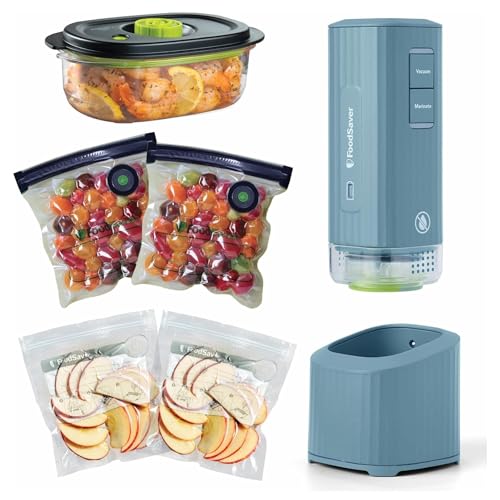
FoodSaver Mini Handheld Vacuum Sealer
Badge: Best Handheld
Strengths
- Cordless design with a charging dock — always ready, no counter commitment
- Marinate setting brings a genuine second job to the handheld format
- FoodSaver branding ties it to the category’s deepest accessory ecosystem
Trade-offs
- Handheld draw is shallower and slower than any countertop machine here
- Works within its compatible bag system rather than cut-to-size rolls
- Battery care becomes part of ownership, unlike a plug-in machine
| Spec | Detail |
|---|---|
| Format | Handheld, cordless |
| Base | Charging dock included |
| Special mode | Marinate setting |
| Colour | Blue |
| Positioning | Freezer, storage, sous vide and meal prep support |
Forum threads about handhelds split into two camps that are both right. The sceptics note, correctly, that no handheld pulls a countertop-class vacuum. The defenders answer, also correctly, that the countertop machine sitting in a cupboard pulls no vacuum at all on the Tuesday-night bag of leftover herbs. The FoodSaver Mini is the defenders’ exhibit: a cordless handheld that lives on its charging dock, ready in seconds, sized for the small and constant resealing that constitutes most of a kitchen’s actual vacuum work.
Its distinguishing feature is the marinate setting — a rapid-cycle function that uses vacuum to hurry marinade into food, turning the handheld from a storage tool into a cooking tool. That second job matters to its community reputation, because devices that do two jobs earn their drawer space in a way single-purpose gadgets do not. The listing also positions it across freezer, storage, sous vide support and meal prep, which should be read sensibly: it supports those routines at portion scale, in its compatible bags, rather than replacing a countertop machine for a bulk session. The dock deserves a final mention — a handheld with a home is a handheld that is charged when needed, and dead batteries are the format’s most-posted complaint.
The limits are the format’s limits, stated plainly as any good thread would state them: shallower draw, valve-bag ecosystem instead of rolls, and battery stewardship as a new chore. Buyers whose sealing is bulk-first should start at the top of this list. But as the second sealer in a serious kitchen — or the only sealer in a small one whose jobs are genuinely small — the Mini represents the handheld idea executed by the category’s biggest ecosystem, and community threads treat that combination kindly. It also appears in the most-researched roundups collected under Best Views Top 10 Vacuum Sealers, where convenience formats reliably draw attention.
Best for: daily small reseals, marinating, and kitchens without counter space / Not suited for: bulk sessions or shoppers wanting roll-based custom bags

Chef Preserve Compact Vacuum Sealer
Badge: Best Reusable-Bag System
Strengths
- Thirty reusable bags included — by far the richest consumable bundle in this list
- Reusable system answers the community’s bag-cost and waste objections directly
- Portable handheld format suits small kitchens, dorms and travel use
Trade-offs
- Reusable valve bags are a closed system — no cut-to-size rolls for odd shapes
- Handheld vacuum depth cannot match countertop machines for long freezer archives
- Bags need washing and drying care to stay hygienic and seal well
| Spec | Detail |
|---|---|
| Format | Handheld, portable |
| Included | 30 reusable vacuum bags |
| System | Reusable valve bags |
| Positioning | Meal saving and everyday storage |
Two objections recur in community threads about vacuum sealing, and both are about bags: the ongoing cost of single-use textured bags, and the waste guilt of throwing one away for two slices of cheese. The Chef Preserve is built as the answer to both. It is a portable handheld supplied with thirty reusable vacuum bags — a closed, washable, resealable system in which the marginal cost of sealing the leftovers is effectively zero, and the bag you use in January is still in service in June.
That economics changes behaviour, which is the real performance story. Owners reseal casually and often — after every use of the cheese, the cold cuts, the coffee — because there is no per-bag penalty for doing so, and food protected constantly outlasts food protected occasionally in expensive bags. The maker describes the unit as a powerful handheld, and within the format that is the fair expectation: a firm draw on portion-sized bags for the rhythm of everyday ingredients. Meal savers, small households, students and caravan kitchens are the natural audience, and forum threads from exactly those users are where reusable systems get their warmest hearing.
The trade-offs are structural and should be accepted with open eyes. A closed bag system means fixed sizes: the awkward, oversized or irregular item that a roll would swallow has no home here. Reusable bags also ask for care — washing, thorough drying, valve cleanliness — and a neglected valve is a slow leak. Finally, handheld depth is handheld depth; the multi-month freezer archive remains countertop territory. None of this diminishes the pick for its stated job. Community wisdom ultimately rewards the system people actually use daily, and a zero-marginal-cost reseal is a system designed to be used daily. Grill and barbecue readers will find a kindred discussion in the threads around Best Vacuum Sealers Steven Raichlen, where marinating and leftover management are weekly topics.
Best for: daily resealers who hate single-use bag costs and waste / Not suited for: bulk freezers or anyone needing custom bag sizes from rolls
Comparison Table
| Pick | Badge | Format | Key trait | Link |
|---|---|---|---|---|
| FoodSaver FM2100 | Best Established Favourite | Countertop external | Most complete classic feature set in the list | Check on Amazon |
| UPRUBE 95kPa | Best Specification Value | Countertop external | Strongest published specifications in this list | Check on Amazon |
| VACLER | Best for Wet and Dry Modes | Compact external | Most generous countertop bundle here: 20 bags plus hose | Check on Amazon |
| Bonsenkitchen | Best Simple Compact | Compact external | Simplest ownership proposition among the countertop picks | Check on Amazon |
| FoodSaver Mini | Best Handheld | Cordless handheld | Only cordless pick; marinate setting is unique here | Check on Amazon |
| Chef Preserve | Best Reusable-Bag System | Handheld, reusable bags | Only reusable-bag system here; lowest consumable waste | Check on Amazon |
The table sorts the community’s worldview into rows. At one pole sits the FM2100: completeness and ecosystem, the benchmark answer. The UPRUBE counters with the strongest published numbers and the features specification threads demand. The VACLER aims its modes at the wet-food complaint that dominates failure threads, the Bonsenkitchen strips the proposition back to simple adequacy, and the two handhelds divide the small-job territory between an ecosystem-backed cordless with a marinating trick and a reusable-bag system built to end the consumable argument. No row is the forum’s answer for every kitchen — which is, itself, the most forum conclusion possible. Read your own sealing rhythm down the format column first; the right row usually announces itself before the specifications are even compared.
How to Choose a Vacuum Sealer the Community Way
Start from failure modes, not feature lists
Community shopping wisdom inverts the usual process: instead of asking what a machine does, ask how machines disappoint. The recurring disappointments are seals that creep open on wet food, gaskets that tire, bags that cost too much, and machines too bulky to reach for. Each disappointment maps to a defence — moist or pulse modes and drip management; simple designs with healthy ecosystems; standard-bag compatibility or reusable systems; compact or handheld formats. Choose by the failure you most want to avoid and the defence becomes your shortlist.
Weigh track record against specification
Forums argue this trade endlessly because both sides hold part of the truth. Established designs offer known longevity and bottomless consumable supply; challenger machines offer stronger published specifications and richer mode sets for the money. Decide which risk you prefer: the risk that a newer machine ages less gracefully, or the risk that an established machine’s specification is merely adequate. There is no community consensus on the answer — only on the question being the right one.
Cost the bags before the machine
Ownership arithmetic is the thread topic that most surprises newcomers. A household sealing daily can spend more on bags in a couple of years than on the machine; a bulk-only household may spend almost nothing. Price your own rhythm honestly: roll-based countertop machines minimise cost per large bag, reusable handheld systems minimise cost per small reseal, and proprietary formats should be entered with eyes open. The machine is the subscription’s first payment; the bags are the subscription.
How to Seal Like the Forum Veterans: Technique and Upkeep
Portion and present. Fill bags with the seal zone kept clean — fold the opening back like a cuff while filling so drips never touch the area that must melt shut. Leave generous headroom between food and seal. This single habit, repeated in technique threads more than any other, prevents more failures than any machine upgrade.
Choose the cycle the food demands. Dry goods take the standard cycle. Moist foods take the moist or wet mode where fitted, or a manual pulse where offered: draw until liquid begins to move, stop, seal. Very wet foods reward a brief pre-freeze until surfaces firm. Delicate foods reward pulsing too — stop before the draw crushes what it should only hug.
Double-seal the archives. Anything bound for months in the freezer, or for a water bath, deserves a second seal line beyond the first. It costs seconds and a centimetre of bag, and forum veterans treat it as insurance priced at nearly zero.
Store the machine kindly. Wipe the channel and gasket after wet work. Store the lid unlatched where the maker allows, so the gasket rests uncompressed and keeps its spring — the cheapest longevity measure in the category, and the one most often learned from a forum after a gasket has already flattened.
Problem: seals open in the freezer → what to do. Suspect moisture or wrinkles in the seal zone first. Dry the area, smooth the bag, reseal with a double line, and review whether the food should have had a moist cycle or a pre-freeze.
Problem: the bag will not evacuate → what to do. Check that the open end lies flat and fully inside the channel, that the bag is a textured type the machine can draw through, and that the gasket is clean and seated. Presentation faults outnumber pump faults by a wide margin.
Problem: liquid in the pump area → what to do. Stop, clean and dry the channel and any removable tray, and change strategy for that food — pulse, headroom, pre-freeze — rather than repeating the cycle that flooded it.
The Complaints That Matter — and the Ones That Do Not
Not all forum complaints carry equal weight. The complaints that predict your experience are the mechanical ones: seals failing on wet food, gaskets flattening, lids that must be leaned on to latch, bags that pinhole on bones. These describe physics and design, and they recur across owners. The complaints to discount are the circumstantial ones: a machine condemned for failing at a job its format never claimed — a handheld asked to archive a side of beef, a compact drowning in a marinade — tells you about the match, not the machine. Reading threads well means sorting the two, and this guide’s badges exist to pre-sort them: every pick is praised and bounded within its proper job.
A related reading skill is noticing what long threads stop complaining about. Features that vanish from discussion after the first month — novelty modes, decorative displays — were never load-bearing. Features still being praised in year-two posts — a cutter that still glides, a gasket still springy, bags still cheap and everywhere — are the ones to pay for. The picks above were weighted by that survivorship logic: what endures in discussion is what endures in kitchens.
Why Handhelds Keep Winning Their Corner of the Argument
A few years of threads show handhelds moving from punchline to fixture, and the reason is behavioural rather than technical. Most food waste is not a failed bulk session; it is the slow spoilage of opened ingredients nobody resealed. A device that reduces resealing to a ten-second, zero-cost act — docked, charged, or paired with reusable bags — attacks that waste directly. The community’s mature position is complementarity: a countertop machine for sessions, a handheld for the week, each making the other more useful. Kitchens with both rarely post regrets; kitchens that forced one format to do both jobs wrote most of the complaint threads this guide learned from.
The two handheld picks here embody the two branches of that philosophy. The FoodSaver Mini bets on ecosystem and readiness — a dock, a charge, a marinate trick. The Chef Preserve bets on economics — reusable bags that make the hundredth reseal as free as the first. Which bet suits you depends on whether your barrier to sealing is effort or consumable cost, a distinction forum threads draw sharply and shoppers should too.
There is also a sustainability thread running through the handheld discussion that deserves honest treatment. Single-use textured bags are plastic spent on every seal, and owners who seal daily feel that accumulation in a way bulk-only owners do not. Reusable valve bags, canister systems used through an accessory hose, and simply choosing the right bag size instead of the largest one are the community’s practical answers — partial, imperfect, but real reductions that come from system choice rather than from guilt. A shopper who cares about this dimension should weight the reusable pick and the hose-equipped countertop machines more heavily than raw specifications suggest.
Common Buying Mistakes
Shopping by a single thread. One owner’s disaster or delight is an anecdote. The value of community research is in patterns across many threads — buy the pattern, not the post.
Ignoring bag economics. The machine is the smaller cost for frequent sealers. Check what your chosen format eats before you commit to feeding it for years.
Asking a format to do another format’s job. Handhelds drown in bulk work; countertop machines gather dust when every job is tiny. Most disappointment is mismatch, not malfunction.
Skipping the pulse or moist mode learning curve. Wet-food failure is usually a settings-and-technique failure. The first five bags on any new machine are tuition; pay it with cheap contents.
Storing the machine latched and dirty. A compressed, residue-coated gasket is next season’s weak vacuum, self-inflicted. Wipe it, rest it, and it will repay you.
Judging a machine in its first week. Every sealer is wonderful in week one; the forum discipline is to weight month-six reports. When researching, sort for the oldest ownership comments you can find, and when you own the machine, reserve your own verdict until it has survived a genuinely wet, genuinely long session — the two examinations that separate the durable from the decorative.
Final Recommendation
If you want one answer in the community’s own spirit, take the FoodSaver FM2100: the complete, established, everything-included benchmark that long threads keep validating — roll storage, moist mode, accessory hose and the deepest bag ecosystem in the category. Check on Amazon
Take the UPRUBE instead if you read specifications the way forums argue them and want the strongest published numbers with pulse control and a timer. Check on Amazon And take the VACLER if your food is wet more often than it is dry, because its mode set was quite visibly designed around the category’s most common failure. Check on Amazon
The Bonsenkitchen serves the meal-prep majority with simplicity, and the two handhelds — FoodSaver Mini for docked readiness and marinating, Chef Preserve for reusable-bag economics — cover the daily small jobs that decide how much food a kitchen actually saves. Consensus is not excitement; it is the accumulated absence of regret, and every pick here was chosen to minimise exactly that.
Frequently Asked Questions
What do forum users say matters most in a vacuum sealer?
Seal reliability, consistently. Threads reward machines whose seals hold for months in the freezer and forgive machines with modest specifications that never drop a seal. Wet-food handling and bag costs follow close behind; headline vacuum numbers are discussed but rarely decide satisfaction.
Are expensive machines the consensus pick?
No — community satisfaction clusters around value and fitness for the owner’s actual workload. Accessible machines with the right modes routinely earn warmer long-term reports than premium machines bought for jobs their owners never do. Fitness beats flagship, in thread after thread.
Why do so many threads mention pulse mode?
Because it solves the two failures owners meet most: liquid drawn into the seal on wet foods, and delicate foods crushed by a full automatic draw. Manual control of the draw converts both from failures into routine bags, so experienced owners treat pulse as near-essential.
Do handheld sealers get taken seriously?
Yes, within their job. Threads mock handhelds asked to do bulk archiving and praise them for daily resealing, where their speed and zero setup beat a countertop machine that stays in the cupboard. The mature view is that formats are complements.
What is the most common beginner mistake reported?
Contaminating the seal zone — filling bags so food or liquid touches the area that must seal, then blaming the machine for the failed seal. Folding the bag opening back while filling and leaving headroom cures most early failures.
How long should a sealer last?
Owners report wide ranges, and the pattern in discussion is that care explains more variance than brand: machines kept clean, stored unlatched and protected from liquid ingestion serve for years, while neglected machines of any badge fade early. Buy the ecosystem and keep the gasket happy.
Should I trust a single glowing or furious thread?
No. Read for patterns across many owners and long time spans, weight mechanical complaints over circumstantial ones, and notice which features are still being praised in year-two posts. That method — not any single post — is what this guide used.