Disclosure: topratedkitchenware.com is reader-supported. When you buy through links on our site, we may earn an affiliate commission from Amazon and other retailers, at no extra cost to you.
Where to buy
Some products accumulate attention for a reason. The machines below are the verified contenders that dominate the best views top 10 vacuum sealers conversation — the models shoppers watch, compare and research more than any others, because each represents a distinct answer to the sealing question: the automated flagship, the ready-to-run compact, the vertical-storage space-saver, the bundle-rich mode machine, the simple workhorse and the reusable-bag handheld. This guide will not invent view counts or pad the list to a round number; it reviews the six genuine contenders in depth and explains what each one’s attention is actually about. Every pick is linked so you can check the latest price on Amazon.
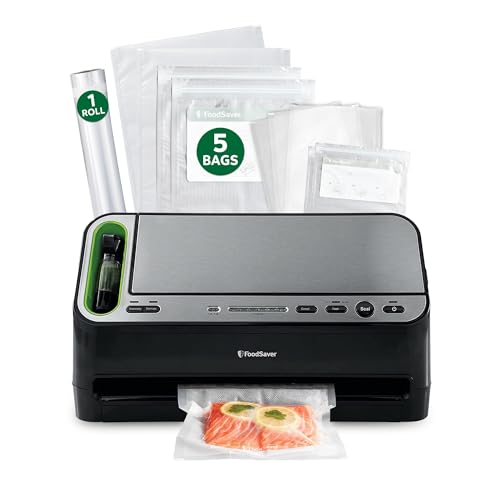
- FoodSaver V4400 2-in-1 Vacuum Sealer Machine — Most Watched Overall. The flagship archetype: automatic bag detection and a starter kit, from the category’s biggest name.
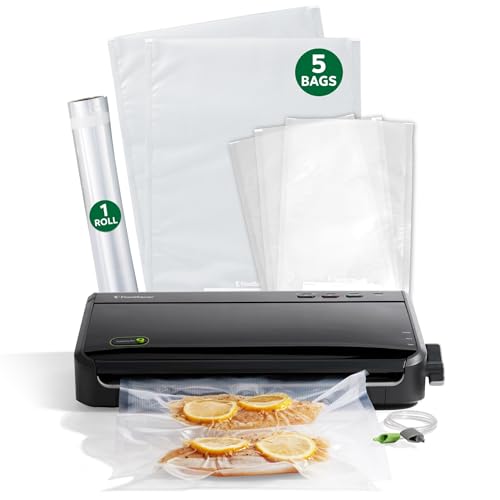
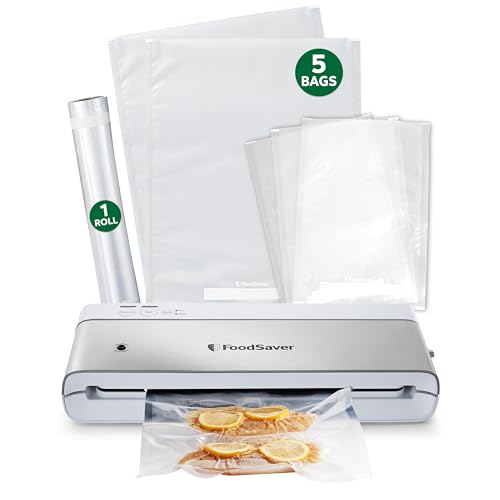
- FoodSaver Compact Vacuum Sealer — Most Watched Compact. The ready-to-run compact: bags and a roll in the box, positioned for sous vide and storage.
- FoodSaver PowerVac Compact VS0150 — Most Watched for Small Kitchens. The space archetype: a real countertop sealer that stores standing up.
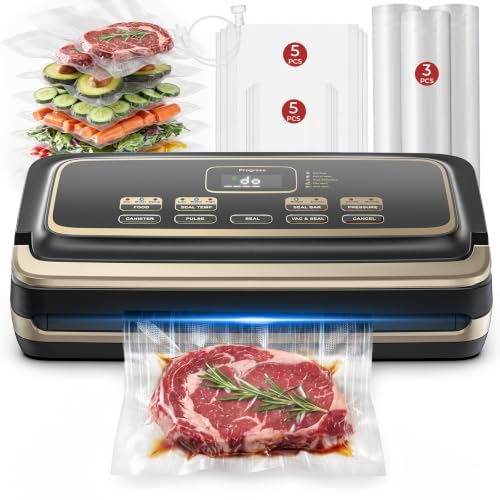
- VACLER Vacuum Sealer Machine — Most Watched Bundle. The bundle archetype: twenty bags, a hose and a dedicated wet mode in one box.
- Bonsenkitchen Vacuum Sealer Machine — Most Watched for Simplicity. The simplicity archetype: multiple modes, standard bags, nothing to overthink.
- Chef Preserve Compact Vacuum Sealer — Most Watched Handheld. The reusable archetype: thirty reusable bags and a handheld that ends the consumable debate.
Read the full guide ↓ for badges, strengths and trade-offs, a side-by-side comparison table, a full buying guide and step-by-step technique sections.
Attention is a form of evidence, if you read it correctly. When thousands of shoppers independently converge on the same handful of machines — watching the same demonstrations, reading the same comparisons, asking the same questions — they are voting with their research time for the designs that solve real problems at sane prices. The best views top 10 vacuum sealers landscape is therefore worth mapping carefully: not because popularity is proof of quality, but because the reasons behind the popularity are informative. Each heavily viewed machine is heavily viewed for a specific reason, and those reasons, laid side by side, amount to a map of what the whole category is for.
This guide reads the map honestly. It covers six contenders rather than padding to ten, because the verified pool for this roundup contains six machines worth your research time and inventing four more would corrupt the exercise. It prints no view counts, no ratings and no prices — figures that would be fabricated or obsolete on arrival — and instead does the useful work: for each contender, what it is, why it draws the attention it does, where its documented strengths lie, and where its honest limits run. A flagship with automatic bag detection and a handheld with reusable bags both belong in the most-watched tier, but for opposite reasons, and the reviews below keep those reasons distinct.
Read the list as a set of archetypes. Most shoppers will find that one archetype matches their kitchen with unusual precision — the session sealer, the space-poor cook, the bundle hunter, the simplicity seeker, the daily resealer — and that recognition is worth more than any ranking. The buying-guide and technique sections then convert the recognition into a decision and a good first month of ownership. Shoppers who want the capability-first view of the same field will find it in our analysis of Best Vacuum Sealers Performance, and the community’s long-term verdicts are gathered under Best Vacuum Sealers Reddit.
A note on what attention cannot tell you: it cannot tell you how a machine behaves in year three, how its maker handles a warranty claim, or whether its bags will suit your particular proteins. Those questions belong to the long-term owner discussions and to the detailed specification checks that this guide points toward at every stage. Treat the most-watched field as the shortlist the crowd has built for you — a genuine service, since the crowd has collectively examined more machines than any individual shopper can — and then do the final, personal work of matching one archetype to one kitchen. That is the division of labour this entire guide is organised around.
Key Takeaways
- Popularity is a clue, not a verdict: each most-watched machine is watched for a specific, explicable reason.
- This roundup reviews six genuine contenders in depth rather than padding the list to a round number with filler picks.
- The archetypes matter more than the order: flagship automation, compact readiness, vertical storage, bundle value, simplicity and reusable handhelds each serve a different kitchen.
- No view counts, ratings or prices are printed — attention is reported qualitatively and prices are left to the live links.
- The most-watched machines share one trait: they solve a named problem (space, wet food, bag costs, session friction) rather than merely sealing adequately.
- Choose the archetype that matches your sealing rhythm, then verify the details in the full reviews before buying — attention opens the research; it should never close it on its own authority alone.
In this guide
Quick Picks
| Pick | Badge | Format | Standout trait | Link |
|---|---|---|---|---|
| FoodSaver V4400 2-in-1 Vacuum Sealer Machine | Most Watched Overall | Countertop 2-in-1 external | Automatic bag detection; 2-in-1 design; starter kit included | Check on Amazon |
| FoodSaver Compact Vacuum Sealer | Most Watched Compact | Compact external | Bags and roll included; maker positions it for sous vide | Check on Amazon |
| FoodSaver PowerVac Compact VS0150 | Most Watched for Small Kitchens | Compact external, vertical storage | Vertical storage design; dry and wet food capability | Check on Amazon |
| VACLER Vacuum Sealer Machine | Most Watched Bundle | Compact external | 6-in-1 smart modes including wet; 20 bags and hose included | Check on Amazon |
| Bonsenkitchen Vacuum Sealer Machine | Most Watched for Simplicity | Compact external | Multiple meal-prep modes; standard external system | Check on Amazon |
| Chef Preserve Compact Vacuum Sealer | Most Watched Handheld | Handheld, reusable bags | Handheld format; 30 reusable bags included | Check on Amazon |
How These Picks Were Chosen
The contenders were selected from the verified pool by a simple discipline: each had to represent a distinct, heavily researched approach to home vacuum sealing, documented by its own listing — an automatic flagship, two distinct compact philosophies, a mode-and-bundle machine, a simplicity-first workhorse and a reusable-bag handheld. Machines that duplicated an archetype without adding a documented distinction were left out, because a most-watched list earns its keep by mapping the field’s real choices, not by repeating one choice six times in different colours.
Within that frame, each review was built from the listing’s documented facts — modes, included items, design, positioning — and from the durable logic of why shoppers research the model: the problem it is famous for solving. Where a listing publishes no specification, none is claimed. Where a format carries a known structural limit, the limit is stated in the review rather than discovered by the reader in month two. The result is a popularity map with the honesty left in: attention explained, never merely counted.
One further note on method, because this keyword invites its abuse: view and attention figures for products are not stable, public or verifiable in any form this guide could responsibly print, so none appear. If a rival roundup quotes you a precise view count for a vacuum sealer, it is inventing it. What can be reported truthfully is the shape of attention — which archetypes dominate research, and why — and that is what the following pages do.
Finally, the ordering within the list deserves a word of explanation, because readers will inevitably read it as a ranking. The contenders are ordered by the breadth of their research constituency — the flagship archetype speaks to the widest audience, the reusable handheld to the most specialised — and not by a quality score, which no honest popularity guide could compute. A reader whose archetype sits fifth should feel no hesitation whatsoever: within its constituency, that machine is the first choice, and the constituencies were the entire point of the exercise.
The Best Views Top 10 Vacuum Sealers Contenders, Reviewed
FoodSaver V4400 2-in-1 Vacuum Sealer Machine
Badge: Most Watched Overall
Strengths
- Automatic bag detection removes steps from every cycle — the demonstration that made it famous
- 2-in-1 design broadens it beyond a single sealing format
- Starter kit and the deepest consumables ecosystem in the category
Trade-offs
- No vacuum-pressure figure is published in the listing
- Flagship footprint and presence on the counter
- Automation gives less manual authority over very wet bags than pulse machines
| Spec | Detail |
|---|---|
| Design | 2-in-1 countertop |
| Operation | Automatic bag detection |
| Included | Starter kit |
Every category has a machine that functions as its public face — the one in the demonstrations, the one newcomers are shown first — and in vacuum sealing that role belongs to automated FoodSaver flagships of this type. The V4400 draws its attention honestly: automatic bag detection is a genuinely demonstrable feature, the kind that makes a viewer understand in five seconds what the machine does differently. Insert the bag; the machine senses it and runs the cycle. Across the repetitive reality of home sealing — portioning sessions, freezer days — that removed step is removed hundreds of times a year, and the research crowd has correctly identified it as the flagship trait worth watching.
Beneath the headline, the package is complete in the ways that sustain attention after the demonstration ends. The 2-in-1 design widens the machine’s usefulness across the household’s sealing, the starter kit makes it functional on arrival, and the brand’s consumables ecosystem — bags and rolls in every width, stocked everywhere — quietly guarantees that owning it never involves a scavenger hunt. Machines become most-watched through a feature and stay most-watched through logistics; the V4400 has both halves of that story, which is rarer than the view counts of lesser rivals suggest.
The scrutiny that popularity invites also has its standard findings, and they are recorded here: no published vacuum figure in the listing, so the specification-first shopper cannot rank its draw on paper; a flagship footprint that small kitchens must genuinely have room for; and an automatic cycle that, for the very wettest bags, offers less manual control than a pulse-equipped machine. None of this displaces it. It is the archetype of the modern automatic sealer, and shoppers researching the field should understand it first — even if they ultimately buy a different archetype, they will buy it with the flagship as their reference point.
Best for: shoppers wanting the automatic flagship archetype with full ecosystem support / Not suited for: tiny kitchens or buyers who need a published vacuum specification
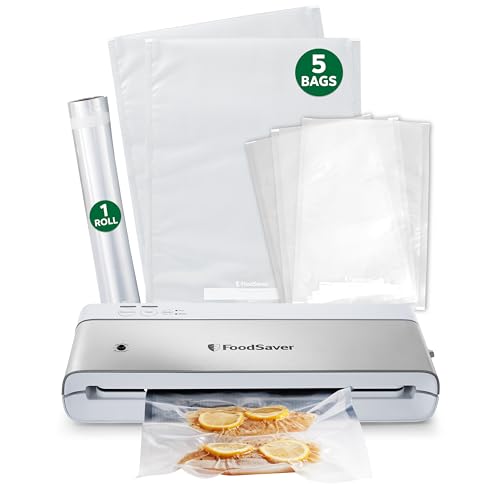
FoodSaver Compact Vacuum Sealer
Badge: Most Watched Compact
Strengths
- Includes airtight bags and a roll, so the first seals happen the day it arrives
- Compact white design suits the smaller kitchens that dominate its audience
- Maker positions it for sous vide as well as storage — two research crowds meet here
Trade-offs
- No vacuum-pressure or speed figure is published in the listing
- Compact session stamina is household-scale
- No stated pulse mode for the wettest work
| Spec | Detail |
|---|---|
| Design | Compact |
| Colour | White |
| Included | Airtight bags and roll |
| Positioning | Sous vide and airtight food storage |
The compact archetype draws its research crowd from a simple demographic fact: most kitchens are small, and most sealing is modest. This FoodSaver Compact is the most-watched expression of that archetype because it understands its audience completely — a compact white machine that arrives with airtight bags and a roll in the box, positioned by its maker for the two jobs its buyers actually have, sous vide and airtight food storage. There is no accessory order between the shopper and the first successful seal, and in the research phase that completeness reads as respect for the buyer’s time.
The sous vide positioning deserves a moment’s attention, because it explains the crossover in this model’s audience. Water-bath cooking has carried vacuum sealing into kitchens that never portion bulk meat, and those cooks research sealers through a cooking lens: will the bags hold in the bath, is the machine ready to run, does it fit beside the tub? A compact that answers yes at household scale collects both the storage crowd and the bath crowd, and its view profile reflects the merger. Our specialist guide to Best Vacuum Sealers Sous Vide covers the bath-specific technique this machine’s owners will want next.
Its limits are the compact class’s standing ones, stated as plainly here as in any honest review: no published vacuum figure, session stamina for households rather than events, and no stated pulse mode, which makes wet work a technique exercise. Popularity does not repeal physics. But within the compact brief, this is the complete, ready, ecosystem-backed answer, and the research crowd’s sustained attention to it is one of the more rational phenomena in the category.
Best for: small kitchens wanting a ready-to-run compact for storage and sous vide / Not suited for: bulk session sealers or specification-first shoppers
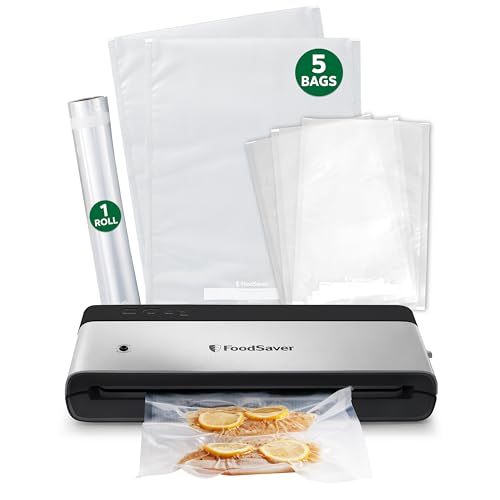
FoodSaver PowerVac Compact VS0150
Badge: Most Watched for Small Kitchens
Strengths
- Vertical storage solves the category’s most common objection — where does it live?
- Documented for both dry and wet food, covering the realistic home workload
- FoodSaver ecosystem keeps bags and rolls universally available
Trade-offs
- No vacuum-pressure figure is published in the listing
- Compact stamina suits moderate rather than marathon sessions
- No pulse mode is stated
| Spec | Detail |
|---|---|
| Design | Compact, vertical storage |
| Finish | Stainless steel and black |
| Food types | Dry and wet food |
| Model | VS0150 PowerVac Compact |
Ask non-owners why they have not bought a vacuum sealer and the leading answer is not price or need — it is storage. The PowerVac Compact is the most-watched answer to that objection: a genuine countertop heat sealer engineered to store vertically, standing in the footprint of a cookbook on the counter or in a slim cupboard gap. Its research popularity is the sound of thousands of small-kitchen shoppers recognising their own constraint being designed for, possibly for the first time in the category. That recognition, repeated across the internet’s kitchens, is what an archetype looks like from the inside.
The machine behind the storage trick is properly capable for its class: the listing documents it for both dry and wet food, which spans the home workload from grains and coffee to marinated proteins, and the FoodSaver ecosystem ensures its bags and rolls are the easiest in the category to replace at short notice. Stainless steel and black finishing supports the intended lifestyle — this is a machine designed to be seen, because a machine designed to be hidden will be, and hidden machines do not get used for the Tuesday-night leftovers that constitute most of sealing’s real value.
The familiar compact caveats apply and are not softened here: no published vacuum figure, household-scale session stamina, no stated pulse mode. A bulk buyer researching this model should keep scrolling to the flagship archetype. But the PowerVac’s attention is not a misunderstanding to be corrected; it is a correct collective judgement that for space-constrained households, presence is the first performance specification, and this machine is its clearest expression in the field.
Best for: space-constrained kitchens that will only use a machine that stays in reach / Not suited for: bulk portioners or buyers wanting published maximum specs

VACLER Vacuum Sealer Machine
Badge: Most Watched Bundle
Strengths
- Twenty bags and a vacuum hose included — the richest countertop bundle in this roundup
- Dedicated wet mode among its 6-in-1 smart modes targets the classic seal failure
- Compact automatic format with built-in cutter
Trade-offs
- No vacuum-pressure figure is published in the listing
- Smart-mode naming requires a short learning curve
- Compact class: household sessions, not bulk marathons
| Spec | Detail |
|---|---|
| Modes | 6-in-1 smart modes: rice, wet, dry and more |
| Design | Automatic compact with bag cutter |
| Included | 20 bags and vacuum hose |
Some machines are watched because of what they are; the VACLER is watched because of what it includes. Twenty bags and a vacuum hose in the box is the richest countertop bundle in this roundup, and research shoppers — who read listings the way accountants read invoices — have noticed. The bundle is not a gimmick: it defers the first consumable purchase by months, and the hose immediately extends the machine to canisters and containers, work that rival listings charge extra to unlock. In a field where the second bill usually arrives within the fortnight, a machine that postpones it earns its audience.
The machine itself is aimed at the category’s sorest point. Its 6-in-1 smart modes include a dedicated wet mode beside dry and rice settings — an explicit cycle for the moist foods whose seals fail most — inside a compact automatic body with a built-in cutter. Automatic cycling suits the newcomers who form much of its research crowd, lowering the technique barrier while the mode set handles the food spectrum. Households whose sealing skews moist will find the deeper comparison in Best Wet Food Vacuum Sealers, where this model’s mode philosophy is the entire subject.
Balance, as always in this guide: no published vacuum figure, a brand vocabulary of modes that takes a few practice bags to internalise, and compact stamina. The VACLER’s popularity is nonetheless one of the field’s more legible stories — bundle generosity plus a mode for the failure everyone fears — and shoppers whose priorities match that story will understand exactly why the crowd gathered here.
Best for: bundle-conscious shoppers whose food often runs moist / Not suited for: specification-first buyers or marathon session sealers
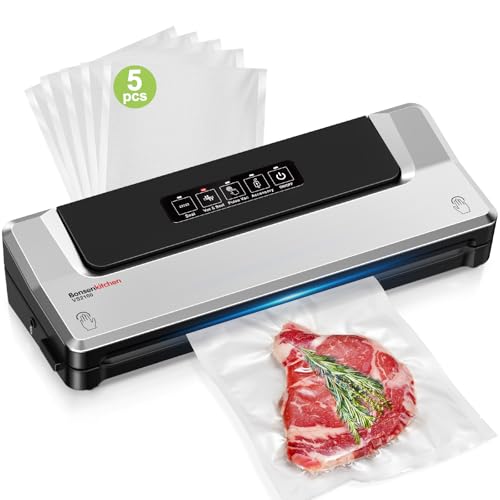
Bonsenkitchen Vacuum Sealer Machine
Badge: Most Watched for Simplicity
Strengths
- Straightforward multiple modes matched to meal-prep reality
- Standard external system — the cheapest, most available consumables in the category
- Compact silver body stores anywhere and wipes clean fast
Trade-offs
- Only five bags included — the roundup’s smallest starter supply
- No published vacuum figure and no stated pulse mode or timer
- Deliberately basic feature set
| Spec | Detail |
|---|---|
| Design | Compact, silver |
| System | External vacuum system |
| Modes | Multiple modes for meal prep |
| Included | 5 vacuum bags |
| Positioning | Kitchen food storage and sous-vide |
There is a large, quiet research crowd that wants exactly one thing from a vacuum sealer: for it to work, obviously, without a manual-reading project attached. The Bonsenkitchen is their archetype — a compact external system in silver with multiple modes aimed at meal prep, positioned for kitchen storage and sous-vide, claiming the category’s standard promise of freshness multiplied over ordinary storage. Its attention profile is the least mysterious in this roundup: it is watched by people who have looked at flagship feature lists, felt tired, and gone looking for the machine that simply seals.
The simplicity is substantive rather than cosmetic. A standard external system means standard textured bags and rolls from any maker, at the market’s floor prices, forever — an ownership trait that compounds quietly for years. Controls an owner fully understands produce correct settings on every bag, which in practice seals better than a sophisticated machine mis-set. And the compact body stores in a drawer and wipes clean after the session, respecting the two resources its audience actually budgets: space and effort. Shoppers cross-referencing the accessible tier will find this archetype anchoring much of Best Vacuum Sealers Under $200, where simplicity is a deliberate strategy rather than a compromise.
The honesty section is short because the machine’s proposition is: five included bags is a sample, so a roll should be ordered with it; no vacuum figure is published and no pulse mode or timer is stated; and growing ambitions will outgrow it. Popularity has not inflated this machine’s claims, and neither will this guide. It is the most-watched simple sealer because simple sealing, competently done, is what most kitchens most need — a verdict the research crowd reached before the reviewers did.
Best for: shoppers who want competent sealing with zero learning curve / Not suited for: wet-food specialists or buyers wanting timers and pulse control

Chef Preserve Compact Vacuum Sealer
Badge: Most Watched Handheld
Strengths
- Thirty reusable bags — the largest consumable bundle in this roundup, and it renews itself
- Reusable system answers the cost and waste objections that dog the whole category
- Portable handheld format reaches kitchens no countertop machine can serve
Trade-offs
- Closed bag system with fixed sizes — no cut-to-length rolls
- Handheld draw is shallower than countertop machines
- Bags require washing and thorough drying to perform their best
| Spec | Detail |
|---|---|
| Format | Handheld, portable |
| Included | 30 reusable vacuum bags |
| System | Reusable valve bags |
| Positioning | Meal saving and everyday storage |
The handheld archetype’s research surge has a specific cause: it is the only corner of the category arguing about something other than the machine. The Chef Preserve is watched because its system — a portable handheld plus thirty reusable vacuum bags — reopens the two questions every other listing leaves closed: what does each seal cost, and where does each bag go afterwards? For a growing audience of daily sealers, those questions outrank vacuum depth, and a product built as their answer collects attention the way a lightning rod collects weather.
The system’s virtues compound with use. Reusable bags erase the marginal cost of sealing, so owners reseal constantly — the opened cheese after every use, the coffee after every scoop — and food protected constantly outlasts food protected occasionally in costlier film. The maker describes the unit as a powerful handheld, the correct calibration for portion-scale bags, and the thirty-bag fleet is sized for real rotation: bags in use, bags washing, bags waiting. Meal savers, students, small flats and caravan kitchens form its core audience, joined by countertop owners adding a zero-friction second station — the two-format pattern that experienced kitchens keep converging on, as the discussions in Best Vacuum Sealers Steven Raichlen illustrate from the grilling side.
The structural limits are stated wherever this guide mentions the format, and they apply here undiluted: fixed bag sizes, a closed system, handheld draw depth that does not rival countertop machines for long freezer archives, and a washing discipline the bags require. The Chef Preserve is not the most-watched handheld because it out-seals countertop machines; it is watched because it reframes what sealing costs. Shoppers who feel that reframing in their own kitchen economics have found their archetype.
Best for: daily resealers motivated by consumable cost and waste / Not suited for: bulk freezers or shoppers needing custom bag sizes
Comparison Table
| Pick | Badge | Format | Key trait | Link |
|---|---|---|---|---|
| FoodSaver V4400 | Most Watched Overall | Countertop 2-in-1 external | The automation archetype of the most-watched field | Check on Amazon |
| FoodSaver Compact | Most Watched Compact | Compact external | The readiness archetype — working out of the box | Check on Amazon |
| FoodSaver PowerVac | Most Watched for Small Kitchens | Compact external, vertical storage | The space-saving archetype of the field | Check on Amazon |
| VACLER | Most Watched Bundle | Compact external | The bundle-value archetype of the field | Check on Amazon |
| Bonsenkitchen | Most Watched for Simplicity | Compact external | The simplicity archetype of the field | Check on Amazon |
| Chef Preserve | Most Watched Handheld | Handheld, reusable bags | The reusable-system archetype of the field | Check on Amazon |
The table is best read as a map of archetypes rather than a league table. The V4400 represents automation, the FoodSaver Compact readiness, the PowerVac space, the VACLER the bundle, the Bonsenkitchen simplicity and the Chef Preserve the reusable system. Each archetype leads the research conversation for its constituency, and the constituencies barely overlap — which is why attempts to crown a single most-watched winner always mislead. Find your archetype in the format and trait columns; the right row will feel less like a ranking and more like a description of your kitchen.
How to Choose Among the Most-Watched Vacuum Sealers
Choose the archetype before the model
Most-watched lists mislead when read as rankings and illuminate when read as archetypes. Begin by naming your constraint in one word — space, sessions, wet food, budget discipline, simplicity, consumables — and the field collapses to one or two contenders built around exactly that constraint. Then compare within the archetype on documented details. Shoppers who reverse the order, comparing everything against everything, reliably end with a machine that is excellent at a job they do not have.
Interrogate popularity before trusting it
Attention has causes, and some are better than others. A machine watched for a demonstrable feature, a solved constraint or a generous bundle is giving you information; a machine watched for spectacle is giving you weather. For each contender, ask what specific problem its audience believes it solves — this guide answers that question in every review — and check whether that problem is yours. Popularity borrowed without the question is just fashion with a plug.
Verify the unglamorous logistics
Before buying any archetype, confirm the consumables: which bags and rolls it uses, whether they are standard or proprietary, what is included, and what a year of your sealing rhythm would consume. Check storage reality against your actual kitchen, and session stamina against your actual biggest day. The most-watched machines earned their audiences partly on these logistics; honour the lesson by checking them rather than assuming them.
Plan the second month, not just the first day
Research attention concentrates on arrival — unboxings, first seals, first impressions — but ownership is decided in the second month, when the starter bags run out, the novelty fades and the machine either has a home, a rhythm and a resupply or begins its migration to the cupboard. Before buying, answer the second-month questions concretely: where exactly will it live, which bags will you reorder and from where, and which weekly job will it own? A contender that survives those three questions is a purchase; one that does not is a view well spent and a bullet dodged.
How to Use the Machine You Choose: A Starter Technique Guide
Start with presentation. Whatever archetype you chose, results begin the same way: bag openings folded back while filling so the seal zone stays clean, generous headroom between food and seal, wrinkles smoothed flat, and the open end laid fully and evenly in the channel. Most failed seals in every format are presentation failures wearing a machine’s name.
Match the cycle to the food. Dry goods take the standard cycle. Moist foods take a moist or wet mode where fitted, or a manually pulsed draw where offered; very wet items reward a brief pre-freeze until surfaces firm. Delicate foods reward gentleness — stop the draw before the food deforms.
Double-seal the keepers. Anything bound for months in the freezer or hours in a water bath deserves a second seal line beyond the first. The cost is seconds; the protection is the difference between an archive and a gamble.
Label like you mean it. Contents, date and portion on every bag, in marker that survives the freezer. The most-watched machines all end up feeding freezers, and a freezer of anonymous bags is a system failure no machine can fix.
Care for the machine. Wipe channels and gaskets after wet work; wash removable trays and reusable bags thoroughly and dry them completely; store lids unlatched where the maker allows. Longevity is a habit, and it is the trait that separates owners who recommend their machine for years from owners who replace it annually.
Problem: a seal fails in the freezer → what to do. Inspect for moisture, wrinkles or pinholes; reseal with a dry channel and a double line; pad sharp edges next time.
Problem: the draw seems weak → what to do. Check bag presentation, gasket cleanliness and seating, and that the bag type suits the machine — textured film for external machines, the correct valve bags for handhelds.
Problem: liquid reaches the seal → what to do. Stop, dry, and change tactics — pulse, headroom or pre-freeze — rather than repeating the cycle that flooded it.
Why These Six Archetypes Dominate the Research
Look across the contenders and a pattern emerges that no single manufacturer designed: the most-watched machines are each the clearest expression of one idea. Automation, readiness, space, bundle, simplicity, reusability — a shopper can grasp each in a sentence, and that graspability is precisely what research attention rewards. Machines with diffuse propositions — adequate at everything, distinctive at nothing — may sell steadily, but they do not gather audiences, because there is nothing specific to gather around. The lesson for shoppers is double-edged: clarity of proposition is a real virtue in a product you must live with, and it is also a marketing property, so verify that the idea you fell for is the idea your kitchen needs.
It is also worth noticing what the archetype map lacks: there is no most-watched chamber machine, no most-watched novelty gadget, no most-watched luxury object. The research crowd, in aggregate, is strikingly practical — it watches machines that solve household problems at household prices, and it ignores theatre. A shopper could do worse than to trust that collective practicality as a first filter, then apply their own constraints as the second.
How to Read Any Most-Watched List Without Being Played
Popularity lists invite three specific abuses, and this guide has tried to refuse all of them so readers can recognise them elsewhere. The first is invented precision: exact view counts, percentages and rankings presented without any possible source. The second is padding: filler products inserted to reach a round number, diluting the list’s usefulness to protect its headline. The third is motive concealment: attention attributed to quality when it was bought, bundled or merely early. The defences are simple — demand sources for numbers, prefer lists that explain attention over lists that merely count it, and check whether each entry’s praise survives contact with its stated trade-offs, as every review here has tried to ensure.
Read that way, a most-watched list becomes what it should be: a map of where the crowd’s questions are, drawn so you can ask your own more efficiently. The crowd cannot choose for you — it does not know your kitchen, your menu or your patience — but it can tell you which six machines the questions are about, and that is a genuinely valuable head start.
What the Research Crowd Asks About Each Archetype
The questions shoppers bring to each archetype are as distinctive as the archetypes themselves, and they preview the ownership experience with unusual honesty. Flagship researchers ask about stamina and ecosystem — will it survive portioning day, and will bags always be findable? Compact researchers ask about presence and sufficiency — will it live in reach, and is household-scale enough? Bundle researchers ask about the second bill — what arrives, and when does spending resume? Simplicity researchers ask about failure — what can go wrong, and how much of it is the operator? Handheld researchers ask about economics and hygiene — what does the hundredth seal cost, and how do the bags wash? A shopper who recognises their own first question in that list has located their archetype more reliably than any ranking could locate it for them.
Notice, too, what none of the crowds ask first: nobody’s opening question is about the deepest theoretical vacuum. Draw strength matters — it appears in this guide’s reviews wherever a listing publishes it — but the research public, in aggregate, has decided that the lived questions are about fit, stamina, consumables and failure modes. That ordering is the accumulated wisdom of everyone who bought wrong before buying right, and a first-time buyer who adopts it skips the most expensive semester of the category’s education.
Common Buying Mistakes
Treating attention as a quality certificate. Popularity tells you a machine is worth researching; the research itself — features, formats, trade-offs — is still yours to do.
Demanding a round number. A list padded to ten with filler teaches less than six honest contenders reviewed deeply. Count the substance, not the entries.
Believing precise view statistics. No public, stable source exists for such figures. Any roundup quoting them exactly is inventing them — a fact worth remembering far beyond this category.
Buying the archetype that impresses rather than the one that fits. The flagship’s automation does a tiny kitchen no good if it lives in a cupboard; the handheld’s convenience does a bulk buyer no good at portioning day. Fit first, admiration second.
Skipping the consumables check because the machine is famous. Famous machines still eat bags. Verify what yours consumes and what it costs before the first roll runs out.
Confusing the most-watched with the most-suitable. The crowd’s favourite archetype answers the crowd’s most common constraint. If your constraint is rarer — marathon sessions, extreme wet work, competition prep — the correct machine may sit quietly outside the spotlight, and the detailed capability guides, not the attention map, are where you will find it justified.
Final Recommendation
If one contender deserves the first look, it is the V4400: the automation archetype in its most complete form, backed by the category’s deepest ecosystem and a starter kit that makes it whole on arrival. Check on Amazon
But the honest recommendation of a most-watched guide is archetype-first. Take the FoodSaver Compact if readiness in a small footprint is your story, Check on Amazon and the VACLER if bundle value and wet-food modes match your menu. Check on Amazon
Take the PowerVac if space is the whole question, the Bonsenkitchen if simplicity is, and the Chef Preserve if consumable costs are. The crowd’s attention identified the right six machines; your kitchen’s constraints identify the right one — and that division of labour is exactly how popularity should truly be used, every single time.
Frequently Asked Questions
Why does this top list contain six machines rather than ten?
Because six genuine, distinct contenders emerged from the verified pool for this roundup, and padding the list with filler picks to reach a round number would mislead readers. Depth on the real archetypes serves shoppers better than breadth across invented ones.
Are view counts or rankings published for these machines?
No — and shoppers should be sceptical of any list that prints precise view statistics, since no stable public source for them exists. This guide reports the shape of attention qualitatively: which archetypes dominate research, and the documented reasons why.
Does being most-watched mean a machine is the best?
It means the machine is worth researching first. Popularity reflects a clear proposition solving a common problem; whether that problem is yours decides whether the machine is best for you. Each review here states the archetype’s limits as plainly as its strengths for exactly that reason.
Which archetype suits a first-time buyer?
Most first-time buyers are best served by readiness or completeness: the FoodSaver Compact for a small, ready-to-run start, or the V4400 for the full flagship archetype. Simplicity seekers should look at the Bonsenkitchen; space-poor buyers at the PowerVac.
Why is a handheld on a most-watched list with countertop machines?
Because research attention follows problems, not formats. The reusable-bag handheld answers the consumable cost and waste questions that countertop machines leave open, and a large audience researches it for exactly that reason. Its review states its format limits plainly.
How should I use this list alongside other guides?
Use this list to identify your archetype, then use capability and community guides to verify the choice: specification comparisons for the numbers, owner-discussion roundups for the long-term picture, and the live links to check the latest price on Amazon before you commit.
Why do the same brands appear several times in the most-watched field?
Because archetypes are about propositions, not badges: one maker can field the flagship, the ready compact and the space-saver simultaneously, and the research crowd follows each proposition separately. Judge each entry on its own documented design and fit rather than treating brand repetition as either a recommendation or a warning.