Disclosure: topratedkitchenware.com is reader-supported. When you buy through links on our site, we may earn an affiliate commission from Amazon and other retailers, at no extra cost to you.
Where to buy
Wet food is where vacuum sealers earn or lose their reputations. The draw that evacuates a bag also pulls liquid toward the seal, and a seal closed over moisture is a failure scheduled for later — in the freezer, in the fridge, in the water bath. The six verified picks below are ranked for the best wet food vacuum sealers work specifically: pulse control and drip trays at the top, dedicated wet and moist modes in the middle, and simpler machines honestly scoped to the milder end of wet work, with the technique that makes them succeed. Every pick is linked so you can check the latest price on Amazon.
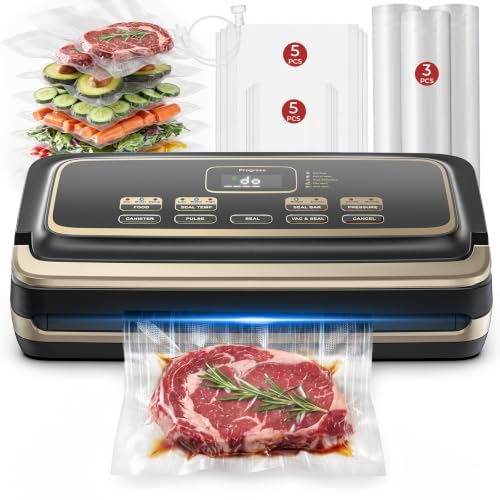
- ROUUO Vacuum Sealer 95kPa — Best Overall for Wet Food. Pulse control, a removable drip tray and the strongest stated vacuum — the complete wet defence.
- VACLER Vacuum Sealer Machine — Best Dedicated Wet Mode. A wet mode named on the control panel, with twenty bags and a hose included.
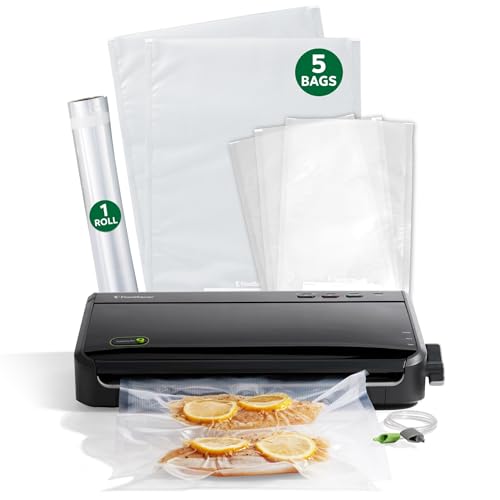
- FoodSaver FM2100 Vacuum Sealer Machine — Best Established for Wet Food. A documented moist-food mode, one-touch sealing and an accessory hose, in the benchmark design.
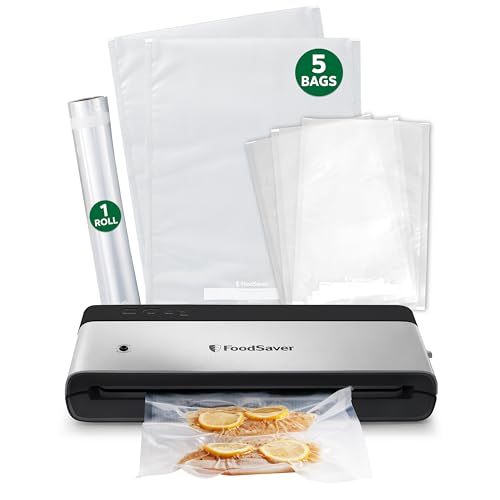
- FoodSaver PowerVac Compact VS0150 — Best Compact for Wet Food. Documented for dry and wet food, in the vertical-storage compact body.
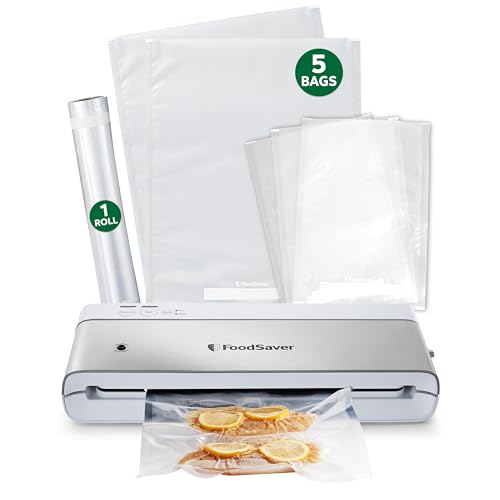
- FoodSaver Compact Vacuum Sealer — Best for Light Wet Work and Bath Prep. Bags and a roll included; positioned for sous vide, where bags meet warm water.
- Bonsenkitchen Vacuum Sealer Machine — Best Simple Pick for Mildly Moist Food. Multiple modes and standard bags — for the damp end of the spectrum, with technique.
Read the full guide ↓ for badges, strengths and trade-offs, a side-by-side comparison table, a full buying guide and step-by-step technique sections.
Every vacuum sealer seals dry food competently; the category’s true dividing line is liquid. The best wet food vacuum sealers are the machines designed around a stubborn piece of physics: a vacuum pump cannot distinguish between the air you want removed and the juice, marinade, sauce or meltwater that shares the bag. It pulls both toward the opening with perfect impartiality, and if liquid reaches the seal channel at the moment the bar closes, the result is a seal that looks sealed and is not — a channel of moisture through which air will creep back over days, undoing the vacuum and everything it was protecting.
That single failure mode organises this entire guide. The top picks attack it with hardware: pulse mode, which hands the draw to the operator’s judgement so it can be stopped the instant liquid begins to move; dedicated wet and moist cycles, which adjust the machine’s behaviour for liquid-bearing foods; and drip trays, which catch what escapes before it fouls the channel. The middle picks carry the moist-mode banner in compact and established forms. The closing picks are simpler machines, included with their limits stated in plain language: they handle mildly moist food well when the cook uses the techniques in this guide — patting dry, headroom, pre-freezing — and they should not be asked to seal a bag of soup on an automatic cycle and blamed for the flood.
Technique, in wet sealing, is not a garnish on the machine choice; it is half the system, and this guide treats it that way. The how-to section is the longest of its kind in this series for a reason, covering liquid management food by food. Readers whose wet work is specifically marinade-driven will find the grilling application in Best Vacuum Sealers Steven Raichlen, and those sealing for the water bath should pair this guide with Best Vacuum Sealers Sous Vide, where wet bags meet their sternest test.
Key Takeaways
- Wet sealing fails one way: liquid reaches the seal channel and the closure creeps open later. Every defence in this guide targets that moment.
- Pulse mode is the strongest single defence — it lets you stop the draw the instant liquid begins to travel.
- Dedicated wet and moist modes are the automatic defence: cycles adjusted for liquid-bearing foods.
- A removable drip tray keeps escaped liquid out of the channel and the pump, and makes cleanup a washing task rather than a excavation.
- Technique multiplies hardware: pat dry, leave deep headroom, pre-freeze the wettest items, and double-seal anything precious.
- Simpler machines can seal mildly moist food successfully with technique — but very wet foods belong to pulse and wet-mode machines.
In this guide
Quick Picks
| Pick | Badge | Format | Standout trait | Link |
|---|---|---|---|---|
| ROUUO Vacuum Sealer 95kPa | Best Overall for Wet Food | Countertop external | 95kPa stated vacuum; pulse mode; removable drip tray | Check on Amazon |
| VACLER Vacuum Sealer Machine | Best Dedicated Wet Mode | Compact external | 6-in-1 smart modes including wet; 20 bags and hose included | Check on Amazon |
| FoodSaver FM2100 Vacuum Sealer Machine | Best Established for Wet Food | Countertop external | Dry and moist modes; accessory port and hose included | Check on Amazon |
| FoodSaver PowerVac Compact VS0150 | Best Compact for Wet Food | Compact external, vertical storage | Vertical storage; documented wet food capability | Check on Amazon |
| FoodSaver Compact Vacuum Sealer | Best for Light Wet Work and Bath Prep | Compact external | Bags and roll included; sous vide positioning | Check on Amazon |
| Bonsenkitchen Vacuum Sealer Machine | Best Simple Pick for Mildly Moist Food | Compact external | Multiple meal-prep modes; standard external system | Check on Amazon |
How These Picks Were Chosen
Selection for this guide began with the failure mode and worked backwards. We listed the defences a machine can document against liquid — pulse control, wet or moist cycles, drip management, accessory support, seal repeatability — and matched the verified pool against them using listing evidence only. Machines with multiple documented defences lead the list; machines with one defence follow; machines whose wet capability rests on positioning and technique close the list, badged and reviewed with that basis stated openly rather than implied.
This is a research-led guide: no hands-on testing is claimed, no ratings or prices are printed, and specifications appear only where the manufacturer’s listing states them. That restraint matters acutely for wet food, where marketing language is at its most elastic — nearly every sealer claims some relationship with moist food, and the useful work is distinguishing the machines that document a mechanism (a mode, a tray, a pulse control) from those that document only an adjective. The reviews below make that distinction pick by pick.
The ranking also weighs what happens after the seal. Wet work fouls machines: channels collect residue, trays fill, gaskets meet marinade. Designs that anticipate the cleanup — removable trays, accessible channels, wipe-clean bodies — sustain their wet performance across months, while designs that hide the mess degrade quietly until their seals begin failing for reasons their owners cannot see. Long-term wet capability is a maintenance design question as much as a pump question, and it is scored here accordingly.
The 6 Best Wet Food Vacuum Sealers for Juicy, Saucy and Marinated Foods

ROUUO Vacuum Sealer 95kPa
Badge: Best Overall for Wet Food
Strengths
- Pulse mode gives manual command of the draw — stop the instant liquid moves
- Removable drip tray catches escaped liquid and lifts out for washing
- Strongest stated vacuum in the pool at 95kPa, with dry/moist modes and roll storage
Trade-offs
- Largest footprint in this list
- Its power exceeds what mildly-moist-only households need
- Included rolls and bags are a start; wet sessions consume film steadily
| Spec | Detail |
|---|---|
| Stated vacuum | 95kPa |
| Motor power | 230W |
| Modes | Dry / moist, pulse |
| Storage | Built-in bag storage and cutter |
| Included | 3 bag rolls and 10 bags |
| Tray | Removable drip tray |
The ROUUO takes the top badge because it is the only machine in this pool that fields the complete wet defence at once. Start with pulse mode: on a bag of marinated chicken, you advance the draw in short, watched bursts, and the moment the marinade’s leading edge begins to creep toward the seal, you stop and close the bag with a dry channel. That single control converts the category’s most common failure into a non-event, and no automatic cycle, however clever, fully substitutes for a human watching liquid move. Add the moist mode for the merely damp majority, and the automatic case is covered too.
Then consider the drip tray, the feature whose value is clearest in month three. Wet sessions leak despite perfect technique — a bag weeps, a tray of portions drips, a channel gets splashed. On the ROUUO the escaped liquid lands in a removable tray that lifts out and washes, instead of baking into a fixed channel where it would corrupt subsequent seals and eventually perfume the machine. The stated 95kPa vacuum, the strongest published figure here, completes the picture by evacuating thoroughly around irregular wet shapes, and built-in roll storage with a cutter keeps the wet session — always the messiest session — moving without side trips. Three rolls and ten bags in the box start the habit properly.
The costs are footprint and surplus: this is the biggest machine on the list, and a household whose wettest work is a damp cheese will never tax it. But wet-food shoppers are not that household. They are the marinade makers, the sauce freezers, the bulk buyers portioning juicy primals — and for them, this combination of control, containment and draw is the most complete answer the verified pool offers, by a clear margin. Its all-round capability is examined from the specification side in Best Vacuum Sealers Performance, where it also leads.
Best for: marinades, sauces and juicy bulk portioning — serious wet work / Not suited for: households whose food is only ever mildly moist

VACLER Vacuum Sealer Machine
Badge: Best Dedicated Wet Mode
Strengths
- Dedicated wet mode among 6-in-1 smart modes — the cycle is chosen for liquid, not adapted to it
- Twenty bags and a vacuum hose included; the hose extends it to canisters for sauces and marinades held separately
- Compact automatic design lowers the technique barrier for wet-food newcomers
Trade-offs
- No vacuum-pressure figure is published in the listing
- Automatic wet cycles still reward headroom and patting dry — the mode helps, technique finishes
- Compact stamina is household-scale
| Spec | Detail |
|---|---|
| Modes | 6-in-1 smart modes: rice, wet, dry and more |
| Design | Automatic compact with bag cutter |
| Included | 20 bags and vacuum hose |
There is a clarity to a machine that prints the word “wet” on its control panel. The VACLER’s 6-in-1 smart modes include a dedicated wet cycle alongside dry and rice settings, which means the machine’s maker has designed a cycle for liquid-bearing food and labelled it for the moment you need it — no manual translation, no guessing which generic setting tolerates moisture best. For the large class of wet-food shoppers who want the machine to handle the judgement automatically, that named mode is the product, and it earns this pick its badge in a field where rivals offer pulse control (superior in expert hands) or moist cycles (a close cousin).
The supporting package suits wet households unusually well. Twenty included bags is a genuine starter stock for a food style that consumes bags steadily, and the included vacuum hose opens the canister route — the underrated wet-food strategy of keeping sauces, marinades and soups in rigid containers under vacuum rather than in bags at all, sidestepping the liquid-versus-seal battle entirely for the foods that fight hardest. The compact automatic format with a built-in cutter keeps all of this in a small footprint, and automatic operation means the wet mode’s benefits reach cooks who are still learning seal presentation.
The honest limits: no published vacuum figure, so the draw cannot be ranked on paper against the ROUUO; a mode vocabulary that takes a few practice bags to map onto your regular foods; and the standing truth that a wet mode adjusts the cycle but cannot repeal physics — a bag filled to the brim with sauce will still flood any channel, which is why the technique section of this guide is compulsory reading for its owners too. For automatic wet competence in a compact, bundle-rich package, this is the pool’s clearest offer.
Best for: wet-food households wanting an automatic wet cycle in a compact body / Not suited for: expert sealers who prefer manual pulse control above automation

FoodSaver FM2100 Vacuum Sealer Machine
Badge: Best Established for Wet Food
Strengths
- Documented moist food mode in an established, complete design
- Accessory port and hose included — canister route for the wettest foods
- Roll storage, cutter and one-touch sealing keep messy sessions orderly
Trade-offs
- Moist mode is an adjusted cycle, not manual pulse control
- No vacuum-pressure figure is published in the listing
- Full-size countertop footprint
| Spec | Detail |
|---|---|
| Operation | One-touch sealing |
| Storage | Roll storage with cutter |
| Modes | Dry and moist food |
| Accessory | Port and hose included |
| Included | Starter bags and roll |
| Positioning | Sous vide cooking and storage |
The FM2100 represents the established answer to wet food: a moist mode, documented in the listing, inside the category’s most complete classic design. Moist cycles adjust the machine’s behaviour for liquid-bearing foods — the automatic defence, executed by the brand whose name is practically the category’s generic term. For the wet-food shopper who values a proven platform over a novel one, that combination carries a particular weight: the mode handles the damp majority — marinated portions, sauced leftovers, fresh fish — while the surrounding design handles the session, with roll storage and a cutter for bag sizing and one-touch operation for hands that are, mid-session, rarely clean.
Its wet arsenal has a second, quieter weapon: the accessory port and hose, included in the box. The hose unlocks vacuum canisters, and canisters are the correct answer for the wettest category of all — soups, stews, sauces and marinating liquids — because a rigid container under vacuum has no seal channel for liquid to corrupt. A machine that offers both a moist bag cycle and a canister route covers the wet spectrum more completely than its mode list alone suggests, and the FoodSaver ecosystem keeps both bags and compatible containers easy to source for the machine’s whole life. Community experience with this class of machine, gathered in Best Vacuum Sealers Reddit, consistently validates exactly that completeness.
The boundaries are the automatic defence’s own: a moist cycle is not pulse control, and on the very wettest bags the manual authority of the ROUUO remains the stronger tool; the listing also publishes no vacuum figure. But as the established, everything-included wet-food platform — the machine a cautious shopper can buy once, equip fully and feed cheaply for years — the FM2100 holds a position in this ranking that newer designs must argue against, rather than assume.
Best for: wet-food households wanting a proven, complete, ecosystem-backed machine / Not suited for: expert users who want manual pulse control for extreme wet work
FoodSaver PowerVac Compact VS0150
Badge: Best Compact for Wet Food
Strengths
- Listing explicitly covers both dry and wet food — the compact that does not dodge the wet question
- Vertical storage keeps it in reach, which is where wet leftovers need it
- FoodSaver bags and rolls available everywhere
Trade-offs
- No vacuum-pressure figure is published in the listing
- No pulse mode or dedicated wet cycle is stated — wet success leans on technique
- Compact stamina suits household rather than marathon sessions
| Spec | Detail |
|---|---|
| Design | Compact, vertical storage |
| Finish | Stainless steel and black |
| Food types | Dry and wet food |
| Model | VS0150 PowerVac Compact |
Wet food is disproportionately a small-kitchen problem: the sauced leftovers from a weeknight pan, the half tin of tomatoes, the marinated portion for tomorrow — generated in kitchens where a flagship machine would live in a cupboard and therefore arrive too late to help. The PowerVac Compact is badged for that reality. Its listing documents it for both dry and wet food — the compact does not dodge the wet question — and its vertical storage design keeps it standing in a sliver of counter or cupboard, in reach at the exact moment wet food needs sealing, which is immediately, while it is still in the cook’s hands.
Capability should be calibrated honestly. The listing states wet-food suitability without naming a dedicated wet cycle or pulse mode, so this machine’s wet defence is its general sealing competence plus the cook’s technique: pat surfaces, leave headroom, pre-freeze the juiciest items briefly, and double-seal the keepers. Executed with that discipline — all of it detailed in this guide’s how-to section — a compact of this class handles the realistic wet workload of a small household: leftovers, marinated portions at modest scale, fresh proteins for the week. The FoodSaver ecosystem supports it with the category’s most available bags and rolls.
What it should not be asked to do is equally clear: marathon wet sessions, very liquid foods in bags rather than containers, or expert-level marinade work where pulse control earns its price. Those belong to the machines above it in this list. Within its honest brief — documented wet capability, present in a small kitchen, backed by a bottomless consumables supply — the PowerVac is the compact wet-food pick, and its presence-first logic is why so many small households seal more wet food with it than they ever did with larger machines stored out of reach. The tier context appears in Best Vacuum Sealers Under $200, where this compact class anchors the accessible bracket.
Best for: small kitchens sealing wet leftovers and portions regularly / Not suited for: very wet bulk work or cooks wanting a dedicated wet cycle
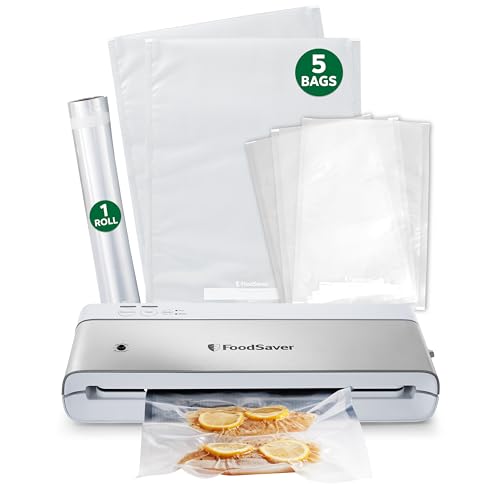
FoodSaver Compact Vacuum Sealer
Badge: Best for Light Wet Work and Bath Prep
Strengths
- Includes airtight bags and a roll — wet-capable work from day one
- Maker positions it for sous vide, the discipline where seal integrity meets water directly
- Compact format suits the modest wet workloads of smaller households
Trade-offs
- No dedicated wet or moist mode is stated in the listing
- No vacuum-pressure figure is published
- Very wet foods require the full technique repertoire — pre-freeze, headroom, double seal
| Spec | Detail |
|---|---|
| Design | Compact |
| Colour | White |
| Included | Airtight bags and roll |
| Positioning | Sous vide and airtight food storage |
This FoodSaver Compact enters a wet-food list by a specific and legitimate door: its maker positions it for sous vide, and sous vide is wet sealing’s examination hall — bags whose seals must hold not merely against air but submerged, for hours, in warm water. A compact positioned for that discipline, arriving with airtight bags and a roll in the box, is a reasonable tool for the lighter end of wet work: the seasoned, patted-dry proteins, the vegetables with their glazes, the portions whose moisture is a film rather than a flood. Its badge is scoped accordingly, and this review will not inflate it beyond that scope.
Within the scope, the virtues are the compact class’s familiar ones, genuinely delivered: readiness out of the box, a small footprint that keeps the machine present, and the FoodSaver consumables ecosystem behind it. For households whose wet sealing is mostly bath prep and modest leftovers, the combination suffices — provided the cook supplies the technique the machine does not automate. That proviso is the heart of this pick’s honest positioning: no dedicated wet or moist mode is stated in the listing, so the defences are the cook’s — dry channels, deep headroom, brief pre-freezes for the juicy items, double seals for the bath-bound.
Shoppers should therefore choose this machine with clear eyes. If your wet work is frequent, heavy or marinade-led, the pulse and wet-mode machines at the top of this list are the correct spend, and choosing the compact instead would be a false economy measured in failed seals. If your wet work is light, occasional and technique-friendly — and your kitchen is small — this ready-to-run compact covers it credibly, with the bath as its proving ground. It is the honest end of the wet spectrum, included because many households genuinely live there. The most-researched context for such compacts appears in Best Views Top 10 Vacuum Sealers.
Best for: light wet work, bath prep and small households using good technique / Not suited for: frequent heavy wet sealing or marinade-led cooking
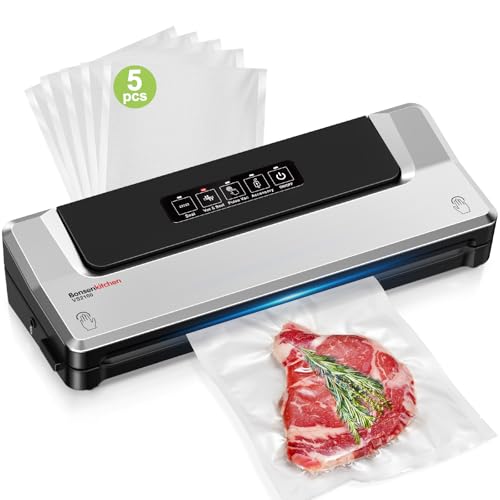
Bonsenkitchen Vacuum Sealer Machine
Badge: Best Simple Pick for Mildly Moist Food
Strengths
- Multiple modes cover the standard meal-prep sealing jobs without complexity
- Standard external system — textured bags and rolls from any maker, at floor prices
- Compact silver body wipes clean quickly after messy work
Trade-offs
- No wet or moist mode is stated in the listing — mildly moist is its honest ceiling
- Only five bags included; order a roll alongside
- No published vacuum figure, pulse mode or timer
| Spec | Detail |
|---|---|
| Design | Compact, silver |
| System | External vacuum system |
| Modes | Multiple modes for meal prep |
| Included | 5 vacuum bags |
| Positioning | Kitchen food storage and sous-vide |
The Bonsenkitchen closes this list with its scope stated in its badge: mildly moist food, handled simply. Its listing documents multiple modes for meal prep, a standard external system, and positioning for kitchen storage and sous-vide — but no wet or moist mode, no pulse control and no drip tray, and this guide will not pretend otherwise. What it offers the wet-food shopper is the entry point: a compact, comprehensible machine that seals the damp majority of everyday foods — the patted-dry chicken, the drained vegetables, the leftovers with a spoonful of sauce — successfully, provided the cook practises the basic wet technique this guide teaches.
That proviso is less limiting than it sounds, because a large share of what households call wet food is, in sealing terms, only mildly moist once it has been drained, patted and given headroom. For that majority, the Bonsenkitchen’s simplicity is a working virtue: settings an owner fully understands, standard bags at floor prices from any source, and a silver body that wipes clean in seconds after the session — no small thing when the session involved sauce. Its freshness claim is the category’s standard promise, and at this end of the wet spectrum, competently kept.
The boundaries must be respected for the pick to succeed. Genuinely wet work — marinades in volume, saucy bulk portions, anything that pools — belongs to the pulse and wet-mode machines above, and asking this compact to do it on an automatic cycle will produce the flooded seals this guide exists to prevent. Five included bags is also only a sample; a roll should accompany the purchase. Chosen for the damp end of the spectrum with eyes open, the Bonsenkitchen is a sound, economical instrument. Chosen as a wet-food machine without reading this paragraph, it would be a misunderstanding — which is why the paragraph exists.
Best for: mildly moist everyday sealing on a simple, economical machine / Not suited for: marinades, sauces in volume or any genuinely wet bulk work
Comparison Table
| Pick | Badge | Format | Key trait | Link |
|---|---|---|---|---|
| ROUUO 95kPa | Best Overall for Wet Food | Countertop external | Only pick with pulse, drip tray and top stated vacuum together | Check on Amazon |
| VACLER | Best Dedicated Wet Mode | Compact external | Only pick with an explicitly named wet mode | Check on Amazon |
| FoodSaver FM2100 | Best Established for Wet Food | Countertop external | Most proven moist-mode package in the list | Check on Amazon |
| FoodSaver PowerVac | Best Compact for Wet Food | Compact external, vertical storage | Smallest footprint with documented wet capability | Check on Amazon |
| FoodSaver Compact | Best for Light Wet Work and Bath Prep | Compact external | Ready-to-run compact for mildly moist foods | Check on Amazon |
| Bonsenkitchen | Best Simple Pick for Mildly Moist Food | Compact external | Simplest route to mildly moist sealing | Check on Amazon |
The table is organised by defence. The ROUUO fields all of them — pulse control, moist mode, drip tray, top stated vacuum. The VACLER and FM2100 field the automatic defences, a named wet cycle and a moist mode with a canister route respectively. The PowerVac documents wet capability in a presence-first compact, while the FoodSaver Compact and Bonsenkitchen rely on positioning and technique at the spectrum’s lighter end — a reliance this guide states in their rows rather than discovering in your freezer. Choose by how wet your food honestly is, and the table becomes a short walk to the right row.
How to Choose a Vacuum Sealer for Wet Food
Grade your wetness honestly
Wet food is a spectrum, and the machine must match your position on it. Grade your regular work: damp (patted proteins, drained vegetables), moist (sauced leftovers, fresh fish, marinated portions), or wet (marinades in volume, soups, juicy bulk cuts). Damp work forgives almost any competent machine with technique. Moist work wants a moist or wet mode. Wet work wants pulse control and drip management, or a canister strategy. Most disappointment in this category is a grading error at purchase, not a machine failure in the kitchen.
Prefer mechanisms over adjectives
Every listing claims some friendliness toward moist food; only some document a mechanism. A named wet or moist mode is a mechanism. Pulse control is a mechanism. A removable drip tray is a mechanism. An accessory hose that opens the canister route is a mechanism. When comparing machines, list the mechanisms each one documents — as this guide’s reviews do — and let adjectives argue among themselves. The mechanisms are what will be standing between your marinade and your seal at the critical second.
Budget for the cleanup design
Wet machines live wet lives. Removable trays, accessible channels and wipe-clean bodies determine whether a machine’s wet performance in month six resembles its performance in week one, because residue in a channel is a seal defect waiting for its moment. When two machines offer similar modes, choose the one whose mess you can actually clean — and then clean it, every session, as the how-to section prescribes.
How to Seal Wet Food Without Ruining the Seal
Prepare the food, not just the bag. Pat proteins dry with paper towel — surface moisture is the enemy you can remove for free. Drain sauced foods of their loosest liquid, or reserve the sauce separately. For the wettest items, pre-freeze in the bag or on a tray until surfaces firm and liquids still; a short freeze converts an impossible seal into a routine one, and the food thaws none the worse.
Build the bag defensively. Use a bag longer than the food seems to need: deep headroom is the distance liquid must travel to hurt you, and distance is time to react. Fold the opening back like a cuff while filling so drips never touch the seal zone. Keep food in a single layer, clear of the channel.
Choose the cycle like you mean it. Damp food: standard cycle. Moist food: the moist or wet mode where fitted. Genuinely wet food on a pulse machine: advance in short bursts, watch the liquid’s leading edge, and stop the draw while it is still well short of the seal — then seal immediately. On machines without pulse or a wet mode, the pre-freeze is your control; use it rather than hoping.
Seal, inspect, seal again. Examine the finished seal against the light: it should be uniform, with no channels, wrinkles or milky moisture lines. For freezer archives and bath-bound bags, add a second seal line beyond the first. A failed inspection costs a centimetre of bag; a failed freezer seal costs the food.
Clean like it matters, because it does. Wipe the channel and gasket after every wet session; remove and wash drip trays; dry everything before storage. Residue left in a channel is tomorrow’s failed seal, pre-installed.
Problem: liquid floods the seal mid-cycle → what to do. Stop the machine, dry the channel thoroughly, and change strategy — more headroom, pulse control, or a pre-freeze. Repeating the same cycle reproduces the same flood with scientific reliability.
Problem: the seal looks fine but the bag puffs within days → what to do. A moisture channel almost certainly crossed the seal. Reseal a fresh bag with a drier channel and a double line, and review whether the food needed a wetter strategy — mode, pulse or freeze — than it received.
Problem: the pump area smells or the channel is sticky → what to do. Liquid has been drawn where it should not go. Clean and dry the channel, tray and accessible areas as the maker directs, and tighten technique before the next wet session; persistent ingestion shortens a machine’s life at any price.
Soups, Sauces and Stews: The Honest Strategies
The wettest foods deserve their own doctrine, because bags are simply the wrong first answer for liquids. Strategy one is the canister: rigid vacuum containers, used through an accessory hose where a machine offers one, hold soups and sauces under vacuum with no seal channel to corrupt — the clean solution, and a reason hose-equipped machines score well in this guide. Strategy two is freeze-then-seal: freeze the liquid in a container or tray until solid, then seal the solid in a bag, where it behaves like any dry block until it thaws in the fridge, safely inside the bag. Strategy three is the portion bag with discipline: modest volumes, deep headroom, pulse control, double seal — workable for sauces with body, reckless for broths.
What not to do is the standardised disaster: fill a bag generously with hot or room-temperature liquid, run a full automatic cycle, and trust the result. The draw will pull liquid into the seal with complete reliability, and the bag will fail on a schedule measured in days. The wet-food literature of owner forums is substantially a archive of this single experiment, repeated with every cuisine on earth. Read this section as the distilled alternative: liquids are a solved problem, but the solution is a strategy, not a button.
Marinades: The Wettest Mainstream Job
Marinating is where wet sealing meets ambition, because vacuum does not merely store a marinade — it accelerates it, pressing liquid against every surface of the meat. That acceleration is the reason marinade-led cooks shop this category at all, and it concentrates every wet risk into one bag: maximum liquid, maximum value, maximum regret if the seal is corrupt. The machines at the top of this list earned their positions here — pulse control to stop the draw at the liquid’s edge, drip trays for the escapes, moist modes for the milder cases — and the technique is the one this guide repeats deliberately: deep headroom, a cuffed opening, a watched draw, a dry channel, a double seal for anything bound for the freezer afterwards.
A final marinade discipline concerns time rather than sealing: vacuum intensifies contact, so acidic and salty marinades act faster in the bag than in a dish, and timings borrowed from dish recipes can overshoot. Shorten, taste and adjust — and record what worked on the bag’s label, because a marinade pipeline without notes repeats its experiments forever. The grill kitchen’s version of this entire doctrine is developed in our barbecue-focused coverage, where marinades are not a side case but the main event.
Wet Sealing and Food Safety: The Boundaries
Vacuum sealing wet food carries a responsibility the dry case does not: a sealed, low-oxygen, moist environment is precisely the setting in which food-safety discipline matters most. Sealing does not sterilise anything. Wet perishables still require prompt refrigeration or freezing, sensible storage durations, and honest use-by judgement; cooked wet foods should be cooled promptly before sealing, and thawing should happen in the fridge, not on the counter. Cooks should consult authoritative food-safety guidance for storage times rather than treating the vacuum as an extension of them.
The seal’s role in safety is integrity: a bag that quietly admits air delivers neither the quality nor the storage life its owner assumes, and wet foods are the least forgiving of that quiet failure. This is the deeper reason this guide is severe about channels, headroom and double seals — on wet food, seal quality is not a cosmetic preference but the difference between a system working as its owner believes and one silently not working. Buy the defences, practise the technique, and respect the calendar, and wet sealing is as safe as it is useful.
Common Buying Mistakes
Running wet food on a dry automatic cycle. The pump will deliver liquid to the seal with perfect reliability. Use the mode, the pulse or the pre-freeze — that is what they exist for.
Filling bags to the seal. Headroom is the cheapest wet defence ever sold, and it is free. Crowded bags fail; generous bags seal.
Trusting a seal you have not inspected. Hold it to the light. Channels and moisture lines are visible at sealing time and invisible in the freezer, where they do their damage.
Sealing liquids in bags as a first strategy. Canisters and freeze-then-seal exist precisely for soups and sauces. The bag is the third option, not the first.
Skipping the cleanup. A channel left wet and sticky after a session is the next session’s failed seal, installed in advance. Wipe, wash, dry — every time.
Final Recommendation
For serious wet work, the ROUUO is the clear first choice: pulse control for the moment liquid moves, a drip tray for the moments it escapes anyway, the strongest stated vacuum in the pool and moist modes for the damp majority — the complete defence in one machine. Check on Amazon
Choose the VACLER if you want that defence automated in a compact body, with a named wet mode and a bundle that includes the hose for canister work. Check on Amazon Choose the FM2100 if you want the established version — a documented moist mode and the same canister route, inside the category’s most complete classic design. Check on Amazon
Smaller and lighter wet lives are honestly served below them: the PowerVac for documented wet capability in reach of a small kitchen, the FoodSaver Compact for bath prep and light wet work, and the Bonsenkitchen for the mildly moist majority on a simple machine. Grade your wetness truthfully, buy the defences it requires, and practise the technique — wet food will stop being the category’s gamble and become its routine.
Frequently Asked Questions
Can any vacuum sealer handle wet food?
Any sealer can attempt it; they differ in defences. Machines with pulse control, wet or moist modes and drip management handle wet food by design. Simpler machines handle mildly moist food with technique — patting dry, headroom, pre-freezing, double seals — and should not be asked to seal very wet foods on an automatic cycle.
What is the difference between a moist mode and pulse mode?
A moist or wet mode is an automatic cycle adjusted for liquid-bearing food — the machine makes the judgement. Pulse mode hands the draw to you in manual bursts, so you stop it at the exact moment liquid approaches the seal. Pulse offers more control; modes offer more convenience.
How do I seal soup or stew?
Prefer a vacuum canister through an accessory hose where available, or freeze the liquid solid first and then seal it as a block. Sealing room-temperature liquid directly in a bag on a full cycle reliably floods the seal and fails.
Why did my wet-food bag lose its vacuum after a few days?
Almost certainly a moisture channel crossed the seal: liquid reached the seal zone during the draw, leaving a microscopic path for air. Reseal with a dry channel, deeper headroom and a double line, and use a wetter strategy — mode, pulse or pre-freeze — next time.
Does pre-freezing really help?
Yes — it is the universal wet-food adapter. A brief freeze firms surfaces and stills liquids, so the draw evacuates air without moving juice. It works on every machine in this list, including those without any wet features, and it costs nothing but a little planning.
Should I double-seal wet food bags?
For anything bound for the freezer or a water bath, yes. The second line insures against the single wrinkle or speck of moisture that compromises the first, and on wet food — where the cost of failure is the highest — the insurance is priced at seconds.
Is vacuum-sealed wet food safe to store longer?
Vacuum sealing improves quality retention; it does not sterilise food or suspend food-safety rules. Keep wet perishables refrigerated or frozen, respect sensible storage durations from authoritative guidance, and thaw in the fridge. A sound seal protects quality — the calendar still governs safety.