Disclosure: topratedkitchenware.com is reader-supported. When you buy through links on our site, we may earn an affiliate commission from Amazon and other retailers, at no extra cost to you.
Where to buy
These are the verified picks for best no carafe coffee makers. All six picks are linked below. Prices and availability move, so check the latest price on Amazon for each linked model before you decide. Readers comparing nearby formats can also browse Best Eco Friendly Coffee Makers. Read the full guide ↓
- Keurig K-Express Single Serve Coffee Maker, Black — Single serve K-Cup pod brewer. Check on Amazon for the current listing.
- Keurig K-Express Single Serve Coffee Maker, Warm Stone — Single serve K-Cup pod brewer. Check on Amazon for the current listing.
- Elite Gourmet Single-Serve Coffee Maker EHC111A — 14 oz single serve capacity. Check on Amazon for the current listing.
- Keurig K-Mini Mate Single Serve Coffee Maker — Brews up to a 12 oz cup. Check on Amazon for the current listing.
- Tastyle Mini Single Serve Hot and Iced Coffee Maker K310IC — Hot and iced single serve brewing. Check on Amazon for the current listing.
- Keurig K-Express Single Serve Coffee Maker, Evergreen — Single serve K-Cup pod brewer. Check on Amazon for the current listing.
Introduction: Finding the Best no carafe coffee makers
Finding the best no carafe coffee makers is the job of this guide, and it starts with the verified facts rather than the marketing. A carafe is a compromise that made sense when coffee was brewed by the pot: it holds the batch, it sits on a hot plate, and it slowly cooks whatever you do not drink. The best no carafe coffee makers delete that compromise entirely. Every pick in this verified pool brews straight into your mug or travel cup — one fresh cup at a time, nothing stored, nothing stewing. The pool spans pod machines with reservoirs, a grounds-only one-touch brewer, a per-cup mini, and a hot-and-iced model, which means the no-carafe idea is not one machine but a whole design philosophy with a version for every kitchen size and coffee habit.
Every pick below was checked against the pool for this keyword, and every specification quoted comes from that verified listing data. If your research is ranging wider, Best Economy Coffee Makers covers a neighboring slice of the category; this guide stays on its own brief and does it properly.
Key Takeaways
- Which no-carafe format — reservoir pod brewer, grounds-only, per-cup mini, or hot-and-iced — matches your household’s cup count and counter — that is the decision this guide keeps returning to.
- Best Overall: the Keurig K-Express Single Serve Coffee Maker, Black — single serve k-cup pod brewer.
- Best Finish for Warm Kitchens: the Keurig K-Express Single Serve Coffee Maker, Warm Stone — single serve k-cup pod brewer.
- Best Grounds-Only Pick: the Elite Gourmet Single-Serve Coffee Maker EHC111A — 14 oz single serve capacity.
- No static prices and no fixed ratings appear anywhere in this guide — check the latest price on Amazon when you are ready to buy.
In this guide
Quick Picks
| Badge | Pick | Headline spec |
|---|---|---|
| Best Overall | Keurig K-Express Single Serve Coffee Maker, Black | Single serve K-Cup pod brewer; 3 brew sizes |
| Best Finish for Warm Kitchens | Keurig K-Express Single Serve Coffee Maker, Warm Stone | Single serve K-Cup pod brewer; 3 brew sizes |
| Best Grounds-Only Pick | Elite Gourmet Single-Serve Coffee Maker EHC111A | 14 oz single serve capacity; 600 watts; one-touch operation |
| Best for Small Spaces | Keurig K-Mini Mate Single Serve Coffee Maker | Brews up to a 12 oz cup; Compact, portable single serve design |
| Best for Iced Coffee | Tastyle Mini Single Serve Hot and Iced Coffee Maker K310IC | Hot and iced single serve brewing; Works with K-Cup pods and ground coffee |
| Best Evergreen Finish | Keurig K-Express Single Serve Coffee Maker, Evergreen | Single serve K-Cup pod brewer; 3 brew sizes |
Badges reflect the angle of this guide — which no-carafe format — reservoir pod brewer, grounds-only, per-cup mini, or hot-and-iced — matches your household’s cup count and counter — and the same badges appear in the detailed reviews below so you can track each pick through the guide.
How These Picks Were Chosen
This guide is research-led, and it says so plainly: the picks come from a verified pool checked against the makers’ own listings, not from a test kitchen claiming hands-on scores it cannot show. Each model’s identity and headline specifications were confirmed from its listing data, and only products matching the keyword’s core were linked. That verification step matters here, because similar names, finishes and formats make it easy to review the wrong product by accident — and, in this pool, to link a product that does not actually answer the search.
Within the pool, picks were ordered genuine-matches-first and judged on one question: which no-carafe format — reservoir pod brewer, grounds-only, per-cup mini, or hot-and-iced — matches your household’s cup count and counter. Where a product did not match the keyword’s core — a different brand, a different jar material, a different brief — it was not quietly dropped; it is reviewed prose-only below with the mismatch stated in plain language, so you can judge whether the difference matters for your kitchen. Specifications quoted below come only from the verified pool data; nothing has been filled in from guesswork. Readers who want the wider category picture can compare Best Electric Coffee Makers alongside this guide.
Finally, honesty about limits: no static prices appear anywhere in this guide, because prices change and a printed number would mislead within weeks. Tier language is used instead, and every linked pick invites you to check the latest price on Amazon at the moment you are actually shopping.
The 6 Best Options for Best no carafe coffee makers

Keurig K-Express Single Serve Coffee Maker, Black
Badge: Best Overall
The Keurig K-Express Single Serve Coffee Maker, Black is built for pod-only drinkers who want a reservoir and a strength option. In the context of best no carafe coffee makers, its confirmed specification supports that job directly: single serve k-cup pod brewer, with 3 brew sizes.
Strengths
- 42 oz reservoir covers several cups between refills
- Strong Brew button for a bolder cup
- Travel mug friendly for commuter mornings
Trade-offs
- K-Cup pods only — no grounds mode in this listing
- Not a Ninja machine, so it sits outside this guide’s brand core
- One machine in several finishes across the pool, so compare carefully
Key specs (from verified listing data)
- Single serve K-Cup pod brewer
- 3 brew sizes
- 42 oz removable reservoir
- Strong Brew button
- Travel mug friendly; works with all K-Cup pods
Day to day, what separates this pick within the pool is fit, not magic — the honest limitation is that it cannot brew loose grounds, so households that split between pods and bags of coffee need a second path. Judge it against your counter, your household and your habits, and it either slots into your routine cleanly or it does not; no amount of marketing changes that fit test. If it passes that fit test, Check on Amazon to see the current listing for this exact model.
Best for: pod-only drinkers who want a reservoir and a strength option / Not suited for: anyone whose needs flatly contradict that profile — for them, another pick in this guide fits better.
Keurig K-Express Single Serve Coffee Maker, Warm Stone
Badge: Best Finish for Warm Kitchens
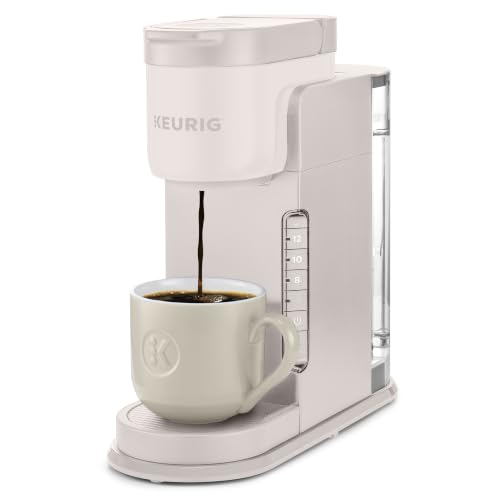
The Keurig K-Express Single Serve Coffee Maker, Warm Stone is built for pod drinkers who want the K-Express hardware in a softer finish. In the context of best no carafe coffee makers, its confirmed specification supports that job directly: single serve k-cup pod brewer, with 3 brew sizes.
Strengths
- Same 42 oz reservoir and three brew sizes as the black version
- Strong Brew button for bolder cups
- Warm Stone finish suits lighter, warmer-toned kitchens
Trade-offs
- K-Cup pods only — no grounds mode in this listing
- Not a Ninja machine, so it sits outside this guide’s brand core
- Finish is the only difference from the black K-Express
Key specs (from verified listing data)
- Single serve K-Cup pod brewer
- 3 brew sizes
- 42 oz removable reservoir
- Strong Brew button
- Travel mug friendly; works with all K-Cup pods
- Finish: Warm Stone
Day to day, what separates this pick within the pool is fit, not magic — the honest limitation is that the finish changes nothing in the cup, so it only earns its place if the color genuinely fits your kitchen. Judge it against your counter, your household and your habits, and it either slots into your routine cleanly or it does not; no amount of marketing changes that fit test. If it passes that fit test, Check on Amazon to see the current listing for this exact model.
Best for: pod drinkers who want the K-Express hardware in a softer finish / Not suited for: anyone whose needs flatly contradict that profile — for them, another pick in this guide fits better.

Elite Gourmet Single-Serve Coffee Maker EHC111A
Badge: Best Grounds-Only Pick
The Elite Gourmet Single-Serve Coffee Maker EHC111A is built for single drinkers who prefer grounds and a reusable filter over pods. In the context of best no carafe coffee makers, its confirmed specification supports that job directly: 14 oz single serve capacity, with 600 watts; one-touch operation.
Strengths
- Reusable filter brews grounds or loose-leaf tea with no pods at all
- One-touch operation is as simple as single serve gets
- Compact footprint and auto shut-off suit desks and dorms
Trade-offs
- 14 oz ceiling is one modest mug, not a travel tumbler marathon
- 600 watts is gentle power, so brew cycles are unhurried
- Not a Ninja machine, so it sits outside this guide’s brand core
Key specs (from verified listing data)
- 14 oz single serve capacity
- 600 watts; one-touch operation
- Reusable filter for grounds and loose-leaf tea
- Auto shut-off; dishwasher-safe parts
- Compact design; travel mug format; model EHC111A
Day to day, what separates this pick within the pool is fit, not magic — the honest limitation is that its one small cup at a time rhythm frustrates anyone brewing for two people in a hurry. Judge it against your counter, your household and your habits, and it either slots into your routine cleanly or it does not; no amount of marketing changes that fit test. If it passes that fit test, Check on Amazon to see the current listing for this exact model.
Best for: single drinkers who prefer grounds and a reusable filter over pods / Not suited for: anyone whose needs flatly contradict that profile — for them, another pick in this guide fits better.
Keurig K-Mini Mate Single Serve Coffee Maker
Badge: Best for Small Spaces
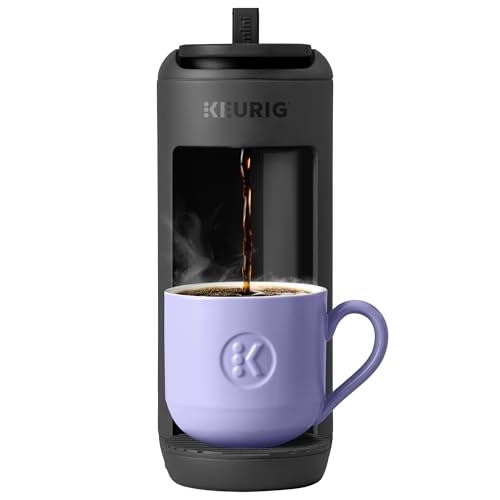
The Keurig K-Mini Mate Single Serve Coffee Maker is built for dorm, office and small-apartment drinkers brewing one cup at a time. In the context of best no carafe coffee makers, its confirmed specification supports that job directly: brews up to a 12 oz cup, with compact, portable single serve design.
Strengths
- Smallest footprint in this pool — genuinely portable
- Water added per cup, so nothing sits stagnant in a tank
- Simple routine suits occasional coffee drinkers
Trade-offs
- No reservoir: every cup starts with measuring water
- 12 oz maximum cup size
- Not a Ninja machine, so it sits outside this guide’s brand core
Key specs (from verified listing data)
- Brews up to a 12 oz cup
- Compact, portable single serve design
- Made for small spaces, dorms and offices
- Color: Black
Day to day, what separates this pick within the pool is fit, not magic — the honest limitation is that per-cup water filling turns tedious fast in a household brewing back-to-back cups. Judge it against your counter, your household and your habits, and it either slots into your routine cleanly or it does not; no amount of marketing changes that fit test. If it passes that fit test, Check on Amazon to see the current listing for this exact model.
Best for: dorm, office and small-apartment drinkers brewing one cup at a time / Not suited for: anyone whose needs flatly contradict that profile — for them, another pick in this guide fits better.
Tastyle Mini Single Serve Hot and Iced Coffee Maker K310IC
Badge: Best for Iced Coffee
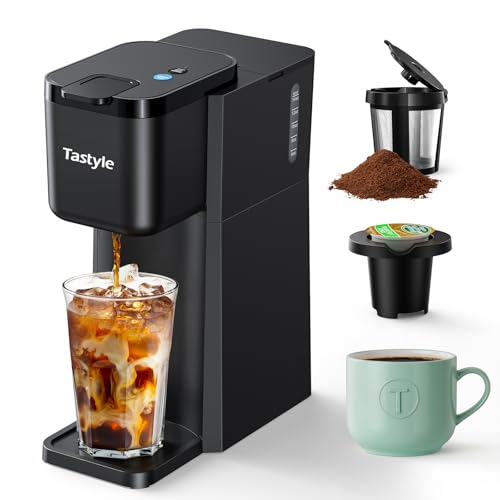
The Tastyle Mini Single Serve Hot and Iced Coffee Maker K310IC is built for iced coffee fans in small spaces who split between pods and grounds. In the context of best no carafe coffee makers, its confirmed specification supports that job directly: hot and iced single serve brewing, with works with k-cup pods and ground coffee.
Strengths
- Brews both pods and grounds in a mini format
- Dedicated iced coffee function, unusual at this size
- Wide 6 to 14 oz size range for a compact machine
Trade-offs
- Compact class machine, so reservoir convenience is limited
- A less established brand than the big names in this pool
- Not a Ninja machine, so it sits outside this guide’s brand core
Key specs (from verified listing data)
- Hot and iced single serve brewing
- Works with K-Cup pods and ground coffee
- Brew sizes from 6 to 14 oz
- Includes a recipe book
- 120V; model K310IC, version 2.0; Classic Black
Day to day, what separates this pick within the pool is fit, not magic — the honest limitation is that its mini format means small water capacity, so serving a group is a slow, cup-by-cup affair. Judge it against your counter, your household and your habits, and it either slots into your routine cleanly or it does not; no amount of marketing changes that fit test. If it passes that fit test, Check on Amazon to see the current listing for this exact model.
Best for: iced coffee fans in small spaces who split between pods and grounds / Not suited for: anyone whose needs flatly contradict that profile — for them, another pick in this guide fits better.

Keurig K-Express Single Serve Coffee Maker, Evergreen
Badge: Best Evergreen Finish
The Keurig K-Express Single Serve Coffee Maker, Evergreen is built for pod drinkers who want proven reservoir hardware in a green finish. In the context of best no carafe coffee makers, its confirmed specification supports that job directly: single serve k-cup pod brewer, with 3 brew sizes.
Strengths
- 42 oz reservoir covers several cups between refills
- Strong Brew button for a bolder cup
- Evergreen finish adds color without changing the hardware
Trade-offs
- K-Cup pods only — no grounds mode in this listing
- Identical hardware to the other K-Express finishes
- Color availability can vary by listing
Key specs (from verified listing data)
- Single serve K-Cup pod brewer
- 3 brew sizes
- 42 oz removable reservoir
- Strong Brew button
- Travel mug friendly; works with all K-Cup pods
- Finish: Evergreen
Day to day, what separates this pick within the pool is fit, not magic — the honest limitation is that it cannot brew loose grounds, so it is a pod-only commitment. Judge it against your counter, your household and your habits, and it either slots into your routine cleanly or it does not; no amount of marketing changes that fit test. If it passes that fit test, Check on Amazon to see the current listing for this exact model.
Best for: pod drinkers who want proven reservoir hardware in a green finish / Not suited for: anyone whose needs flatly contradict that profile — for them, another pick in this guide fits better.
Comparison Table
| Pick | Badge | Headline | Also confirmed |
|---|---|---|---|
| Keurig K-Express Single Serve Coffee Maker, Black | Best Overall | Single serve K-Cup pod brewer | 3 brew sizes |
| Keurig K-Express Single Serve Coffee Maker, Warm Stone | Best Finish for Warm Kitchens | Single serve K-Cup pod brewer | 3 brew sizes |
| Elite Gourmet Single-Serve Coffee Maker EHC111A | Best Grounds-Only Pick | 14 oz single serve capacity | 600 watts; one-touch operation |
| Keurig K-Mini Mate Single Serve Coffee Maker | Best for Small Spaces | Brews up to a 12 oz cup | Compact, portable single serve design |
| Tastyle Mini Single Serve Hot and Iced Coffee Maker K310IC | Best for Iced Coffee | Hot and iced single serve brewing | Works with K-Cup pods and ground coffee |
| Keurig K-Express Single Serve Coffee Maker, Evergreen | Best Evergreen Finish | Single serve K-Cup pod brewer | 3 brew sizes |
Read the table alongside the reviews: the badges carry the verdicts, the specs carry the evidence. Shoppers cross-shopping the neighboring category can set this beside Best Electronic Coffee Makers to see how the briefs divide the work.
How to Choose: Best no carafe coffee makers Decided Properly
Count your household’s cups, honestly and by time of day. A reservoir pod brewer like the K-Express serves staggered households beautifully: water waiting, three sizes waiting, each person brewing a fresh cup when they actually want it. A per-cup mini serves one person beautifully and a queue of four terribly. The no-carafe category rewards households whose drinking is spread out, and punishes the Sunday brunch where six people want coffee at once — that scenario still belongs to a pot.
Decide your format allegiance next. Pod models offer the widest drink library and the least cleanup; the Elite Gourmet’s reusable filter offers grounds and even loose-leaf tea with zero pod waste; the Tastyle splits the difference with pods, grounds and an iced mode. There is no wrong answer, only an honest one: buy for the coffee you actually drink weekly, not the coffee you admire in principle. A drawer of unused pods and an unused filter basket are the same mistake in different costumes.
Finally, measure the mug reality. No-carafe machines brew into whatever fits under the spout, and travel mug clearance is the detail that decides commuter happiness. The K-Express is confirmed travel mug friendly; with the compact models, check your tallest mug against the drip tray, and remember that removing the tray often buys the extra height you need. The carafe you are eliminating held a standard volume; your mug collection is now the volume standard, so let it vote.
One last filter before you buy: shoppers comparing adjacent briefs will find Best Environmentally Friendly Coffee Makers useful context, but let this guide’s core question — which no-carafe format — reservoir pod brewer, grounds-only, per-cup mini, or hot-and-iced — matches your household’s cup count and counter — make the final call.
How to Brew Carafe-Free, Cup by Cup, Without Missing the Pot
- Stage mugs where the machine can reach them — without a carafe, the mug is the vessel, so keep everyday cups on the same counter run.
- Fill the reservoir before it runs dry; a no-carafe routine has no pot to fall back on, so treat the tank like a fuel gauge.
- Brew each cup at the size you will actually drink — the category’s whole point is freshness, and an oversized cup left to cool wastes it.
- For travel mornings, brew directly into the travel mug with the drip tray removed if extra height is needed.
- Run a water-only cycle between strongly flavored drinks; with no carafe to rinse, the brew path itself is the only place flavors linger.
- Wipe the drip tray and descale on schedule — small machines hide neglect until the morning the needle clogs.
Troubleshooting. Problem: guests all want coffee at once → stagger honestly, brewing largest cups first and keeping a kettle of hot water ready for tea drinkers. Problem: a cup overflows → your mug was smaller than the selected brew size; match size to mug before pressing the button. Problem: coffee tastes progressively weaker → descale and check the exit needle; carafe-free machines show mineral buildup as weak, slow cups.
For a deeper look at adjacent routines, Best Every Day Coffee Makers is a useful companion read once your own setup is dialed in.
What You Actually Lose When the Carafe Goes
Honesty requires listing the losses. You lose the table-ready pot — the satisfying object that sits at a brunch and refills cups without a trip to the counter. You lose true batch brewing for a crowd. And you lose the ability to brew now and pour later, because a mug is a serving, not a storage vessel. For households whose coffee life centers on shared pots and long table mornings, those losses are real, and a thermal carafe machine remains the right answer despite everything this guide celebrates.
But most modern coffee drinking is not that. It is staggered, individual and time-shifted: one person at six, another at seven-thirty, a third cup at ten that a pot would have ruined by nine. For that reality the carafe is not a vessel but a liability — a batch brewed for nobody in particular, degrading from the moment it lands. No-carafe brewing simply aligns the machine with how the drinking actually happens, one fresh cup at the moment of wanting it. The category wins not by being newer but by being honest about the routine.
No Carafe, No Hot Plate: The Flavor Argument
The hot plate is the carafe’s accomplice, and eliminating both is where the flavor case gets strong. Coffee held on a plate keeps cooking: volatile aromatics leave, bitterness compounds, and the last cup from a pot is chemically a different, worse drink than the first. A no-carafe machine never holds coffee at all, so the tenth cup of the day is brewed as fresh as the first. That consistency across the day is the category’s quiet superpower, and it is why offices and staggered households convert so completely once they switch.
There is an energy footnote too: no plate idling warm for hours, no pot reheated in a microwave — an indignity that ruins texture as surely as the plate ruined flavor. Brewed fresh, drunk fresh, the cup needs no rescue. If your household’s pattern is one or two cups at a time across many hours, the flavor math of this category is not close.
Dialing In Strength Without Buying Anything
Before concluding that your coffee is too weak or too strong, exhaust the free adjustments. Brew size is the biggest lever: the same coffee brewed smaller is noticeably bolder, because less water passes through the same grounds. A dedicated Strong Brew control, where a machine offers one, is the second lever, extending contact for a deeper extraction. Mug choice is the third, underrated lever: a smaller, preheated mug concentrates both heat and the perception of flavor. Only after those three should you shop for a different roast or a different machine — many households discover their usual coffee was right all along, just brewed too large or served too cool.
A Cleaning Rhythm That Actually Sticks
Brewing machines rarely fail from one missed cleaning; they decline through a hundred small neglects. A workable rhythm is simple: remove used coffee promptly, empty the drip tray when you see liquid in it, wipe the brew chamber weekly, and descale on the schedule your water hardness demands. The exit needle on pod machines deserves respect — a clogged needle produces weak, sputtering cups that owners often blame on the coffee. Most manufacturers publish a needle-cleaning method using a straightened paper clip with the machine unplugged; follow your manual’s version of that guidance and never force anything. Five minutes a week protects both flavor and the machine’s working life.
Counter Placement and Morning Ergonomics
Where a brewer lives shapes how much you enjoy it. Leave clearance to open lids fully and to remove a reservoir without a wrestling match, and think about the path from coffee storage to machine to mug. Right-handed and left-handed users approach handles and tanks from different angles, so test the spot with the actual people who will use it. Keep the machine off the very edge of the counter, away from the sink’s splash zone, and on a surface that tolerates the occasional drip. A machine that is pleasant to stand in front of at dawn gets used and maintained; one wedged into an awkward corner slowly becomes furniture.
When a Second, Smaller Brewer Makes Sense
A second, smaller brewer sounds extravagant until you map the household’s geography. A compact machine in a home office ends the mid-afternoon kitchen trip; one in a guest room turns hosting into a small luxury; one in a dorm or a workshop keeps the main kitchen machine free for the morning queue. The compact model’s per-cup water routine, a limitation in a busy kitchen, becomes a virtue in low-volume spots, since no reservoir sits stagnant between occasional uses. The real cost of a second machine is not the purchase — it is a second descaling schedule, so only add one where it will genuinely be used weekly.
Travel Mugs, Cup Heights and Other Small Frictions
More morning frustration comes from cup geometry than from brewing technology. Measure your favorite travel mug against the machine’s clearance before you buy, not after: a mug that almost fits teaches you to brew into a small cup and decant, forever. Drip trays that remove to buy extra height are a genuinely useful design detail. The same applies to oversized latte mugs under compact brewers. None of these frictions appears on a spec sheet headline, yet they decide whether a machine feels effortless or annoying by the second week, so treat cup fit as a first-order buying criterion, not an afterthought.
The Honest Running Costs of Convenience
Single serve convenience has a running cost structure worth facing squarely. Pods cost more per cup than grounds; grounds cost more time per cup than pods. A hybrid machine lets a household arbitrage that trade day by day — pods on rushed weekdays, grounds on slow weekends — which is why dual-format machines keep winning converts. Reusable filters cut pod waste and cost but add a rinse to every cup. None of these is the right answer for everyone; the right answer is the one whose costs, in money and in minutes, your household will still be happy paying a year from now.
Hosting With a Single Serve Machine
Single serve machines host differently than pot brewers, and the households that thrive with them lean into the difference. Set the coffee out like a bar: the machine, a visible selection of pods or a bowl of grounds with a scoop, mugs in more than one size, and milk and sweeteners beside rather than in the kitchen’s traffic path. Guests genuinely enjoy choosing their own drink — it feels like a café ritual rather than a queue — and the host’s only job is keeping the reservoir full. Brew the first cup for the first guest to start the rhythm, then let the machine do the entertaining while you return to the table.
The First Two Weeks: A Realistic Adjustment Curve
Every brewing format change has a two-week valley. Pot drinkers miss the batch ritual for the first few mornings; pod converts fumble the new machine’s lid; grounds newcomers spill exactly once in a memorable place. None of this is the machine’s fault, and judging any brewer inside that window is how good machines get returned. What predicts long-term happiness is the trend across the second week: the routine getting faster, the settings becoming reflexes, the one annoyance either shrinking into a habit or proving itself structural. Give a new machine fourteen mornings before the verdict, and measure it by the last three.
Stocking the Drawer: A Working System for Pods and Grounds
A single serve household runs on its drawer. The system that works is boring on purpose: a working supply near the machine organized by type — regular, decaf, flavored, tea — and a reserve in the pantry that refills it. Rotate so the oldest stock is used first, and write the one rule on the inside of the cupboard if you must: nobody opens a new variety while two are open. For grounds, the same logic applies at bag scale, with the open bag sealed tight and the reserve unopened. The drawer is a small thing, but it is where the daily experience of the machine is actually decided.
Why Brew Temperature Hides Behind Every Other Spec
Shoppers compare reservoirs, sizes and styles, but the variable silently steering flavor is the temperature of the water as it meets the coffee. Too cool and the cup leans sour and thin; properly hot and the same coffee tastes round and sweet. You cannot adjust a sealed machine’s thermostat, which is why the free habits matter: start with fresh cold water, let the machine fully heat before the first cup rather than rushing its warm-up, and preheat the mug so the brewed coffee is not shocked down by cold ceramic. None of these appears on a spec sheet, and together they are worth more than a model tier.
One Machine, Two Generations of Drinkers
Households increasingly span drinkers who want opposite things: one generation loyal to a strong mug of filter-style coffee, another raised on café drinks and variety. Single serve formats absorb that spread better than any pot, because the unit of brewing is the person. The practical tip is to stop looking for the household’s coffee and start stocking a small portfolio: a house regular, a decaf that is actually good, and one rotating novelty. Machines with a grounds option widen the portfolio to any bag in the shop; pod-only machines widen it to any pod on the shelf. Either way, variety stops being an argument and becomes a drawer.
End-of-Life Thinking: What Happens in Year Five
A brewer’s fifth year is decided by boring engineering: whether its seals are standard, its needle and basket are cleanable, its reservoir detaches for a real wash, and its maker still exists to answer an email. Brand-name machines in this pool carry that advantage quietly. The other year-five factor is you: a machine descaled on schedule and wiped weekly is a different appliance at year five than the same machine neglected. When you compare picks, you are not really choosing between features; you are choosing which maintenance story you are willing to live inside for half a decade.
The Quiet Test: Sound, Steam and Early Mornings
Spec sheets never list the quality-of-life variables that dominate at 6 a.m.: how loud the pump is, where the steam vents, whether the machine’s ready light could double as a nightlight. You cannot measure these from a listing, but you can plan around them — place the machine away from the bedroom wall, keep the mug staged so there is no cupboard clatter, and let the first cup be the quiet, simple format rather than the full production. A machine that respects a sleeping household gets used more, maintained better and replaced later, which makes acoustics a strangely practical buying criterion.
Gift-Giving a Brewer Without Guessing Wrong
A coffee machine is a risky gift because it is really a routine you are handing someone. The safe way to give one is to gift the format, not the fantasy: watch how the person actually makes coffee for a month — pods on weekdays, a beloved bag of beans on Sundays, iced drinks all summer — and match the machine to the observed habit rather than the aspirational one. Include the first supply of their format with the machine, because a brewer without its first pods or grounds is a chore wearing a bow. And keep the receipt conversation cheerful and explicit: a machine exchanged for the right format is a better gift than a wrong one defended out of politeness.
What Changes When a Household Goes Carafe-Free for Good
The second month without a carafe is when the small transformations surface. The counter gains a clear zone where the pot used to live. The dishwasher loses its bulkiest regular. Coffee buying shifts from the big bag bought for the pot to a small portfolio bought for people. Guests stop drinking the house coffee and start choosing their own, which quietly upgrades every visit. And the morning’s first cup gets faster, because there is no pot to rinse before there is coffee to drink. None of these appears in a product listing; together they are the actual product, and they explain why households that switch rarely switch back.
Reading a Single Serve Listing Like a Skeptic
Listings in this category compress hard truths into friendly phrases, and a skeptical read pays. ‘Brews up to X ounces’ describes the largest setting, not the best-tasting one — most coffees shine a size down. ‘Works with all pods’ is worth confirming against the exact pod family you buy, because lookalike formats exist. Reservoir figures are honest but incomplete: the usable water is a little less than the tank’s headline, since no machine drinks its own dregs. None of this makes listings dishonest; it makes them headlines. The reviews in this guide quote the same listing data you can check, which is the standard every buying guide should be held to.
The Mug Collection Is Now Part of the Machine
Deleting the carafe promotes your mugs from containers to components. Their heights decide what fits under the spout, their volumes decide which brew sizes make sense, and their thermal mass decides how hot the last sip stays. Households that thrive carafe-free usually converge on two or three favorite vessels — a home mug, a travel mug that fits, a big weekend mug — and the machine’s settings get learned in terms of those vessels rather than ounces. If you are switching formats, audit the cupboard before the machine arrives; the right mug already in the house is worth more than a feature you will use twice.
Weekend Coffee Versus Weekday Coffee
Most households run two coffee programs and pretend they run one. The weekday program values speed, silence and zero decisions. The weekend program values ritual, range and a second cup that is an event rather than a refill. Single serve formats serve the weekday program almost perfectly and the weekend program better than they are credited with — a slow grounds brew through a combo machine, a flight of different pods for a lazy table. Judge any machine in this guide against both programs honestly: the one that serves your weekdays flawlessly and your weekends adequately beats the romantic reverse, fifty-two weeks a year.
When to Replace Rather Than Repair
Small brewers eventually present the replace-or-repair question, usually as a slow decline: longer brews, weaker cups, a pump sound that changed its note. Descaling answers most of it, and a needle cleaning answers most of the rest — exhaust both before shopping. Replacement earns its case when the decline survives cleaning, when seals or reservoirs crack, or when the household’s format has genuinely changed since the purchase. What should not drive replacement is novelty: a healthy machine making coffee you like is not obsolete because a newer finish exists, and the most sustainable brewer is usually the one already on your counter.
Water Quality and the Single Serve Cup
Water is nearly all of what ends up in the mug, so its quality quietly decides whether a good coffee tastes good. Heavily chlorinated tap water can flatten delicate roasts, while very hard water leaves mineral scale that slows any brewer and dulls flavor over time. Filtered water from a simple pitcher is the sweet spot for most homes: it strips the chlorine note without removing every mineral, and coffee generally tastes better with some mineral content than with fully distilled water, which can brew up strangely flat. Whatever water you choose, consistency helps you judge your coffee fairly, because changing water and changing coffee at the same time makes it impossible to know which change you are actually tasting in the cup.
Common Buying Mistakes
- Buying the brand or format on autopilot. Decide pods, grounds or both from your actual week, not from the box art.
- Ignoring cup clearance. Measure your tallest mug, tray in and tray out, before the machine arrives.
- Judging coffee at the largest brew size. A thin first cup usually means over-dilution, not a bad machine.
- Letting reservoir water age. Stale tank water flattens fresh coffee; refresh it on a rhythm.
- Skipping descaling until it sputters. Minerals clog small passages gradually, then all at once on a work morning.
Final Recommendation
For most shoppers, the answer to best no carafe coffee makers starts with the Keurig K-Express Single Serve Coffee Maker, Black, Keurig K-Express Single Serve Coffee Maker, Warm Stone, and the Elite Gourmet Single-Serve Coffee Maker EHC111A: the linked picks that genuinely match this brief, ordered by how completely they serve it. Work through the detailed reviews, let the fit test — your counter, your household, your habits — arbitrate between them, and check the latest price on Amazon only once the choice itself is made. Readers still weighing the wider category can glance at Best Expensive Automatic Drip Coffee Makers and Best Expensive Coffee Makers before committing. A well-matched pick in this category disappears into your routine within a week, and that disappearance — not the unboxing — is what you are actually buying.
Frequently Asked Questions
What does ‘no carafe’ actually mean here?
Every pick brews directly into a mug or travel cup, one serving at a time. There is no glass pot, no thermal jug and no hot plate — the cup is the vessel, so coffee is never stored or kept warm by the machine.
Can these machines handle a household of four?
A reservoir model like the K-Express can, provided your mornings are staggered — each person brews a fresh cup in about a minute. If four people need coffee in the same five minutes every day, a pot brewer still wins that specific battle.
Do any of these brew ground coffee instead of pods?
Yes. The Elite Gourmet uses a reusable filter for grounds and loose-leaf tea, and the Tastyle accepts both K-Cup pods and grounds. The Keurig models in this pool are pod-only.
Will my travel mug fit?
The K-Express models are listed as travel mug friendly. For the compact picks, measure your mug and remember the drip tray usually removes to add clearance. Cup sizes here run from 12 oz on the mini to 14 oz on the Elite Gourmet and Tastyle.
How do I serve coffee to guests without a carafe?
Brew cup by cup and embrace it: guests choose their own coffee, size and strength, which many hosts find easier than one compromise pot. Keep the reservoir full and the pod or grounds selection visible, and the queue moves quickly.
Is no-carafe coffee more expensive to run?
Pods cost more per cup than grounds; that is the honest trade. The grounds-capable picks erase most of that premium, and every format here saves the hidden cost of poured-away pot coffee that nobody drank.


