Disclosure: topratedkitchenware.com is reader-supported. When you buy through links on our site, we may earn an affiliate commission from Amazon and other retailers, at no extra cost to you.
Where to buy
The verified picks for best reviewed small vacuum sealers with reusable bags are listed below. This guide prints no prices, because prices change constantly and a printed figure would mislead within weeks; for every linked pick, check the latest price on Amazon when you are ready to decide. Readers comparing adjacent options can also browse Best Vacuum Sealers For Clothes alongside this guide. Read the full guide ↓
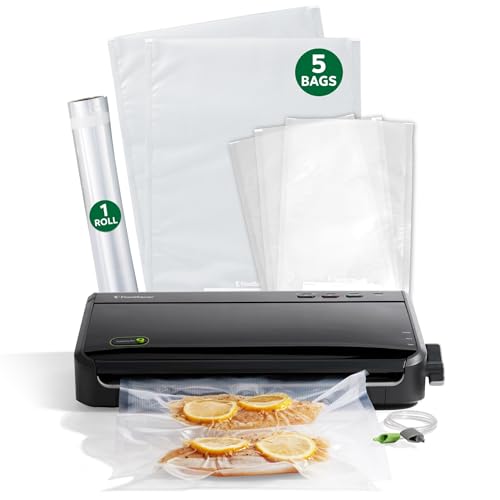
- FoodSaver FM2100 Vacuum Sealer — one-touch sealing. Check on Amazon for the current listing.
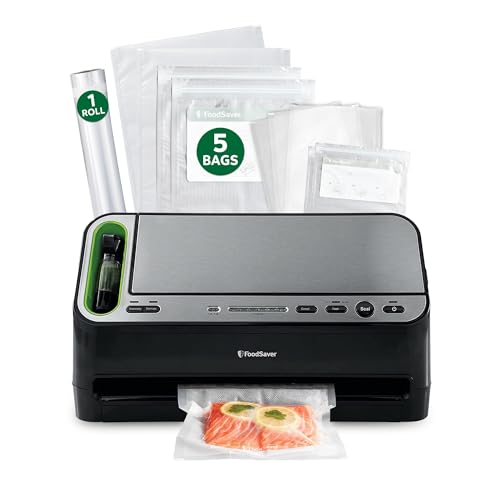
- FoodSaver V4400 2-in-1 Vacuum Sealer — 2-in-1 vacuum sealer machine. Check on Amazon for the current listing.
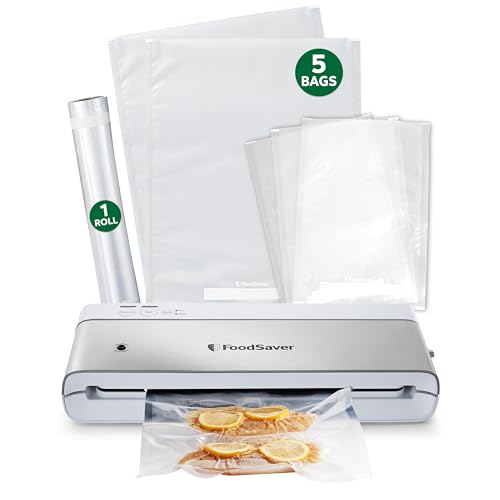
- FoodSaver Compact Vacuum Sealer — compact vacuum sealer machine. Check on Amazon for the current listing.
- FoodSaver PowerVac Compact, VS0150 — compact vacuum sealing machine. Check on Amazon for the current listing.
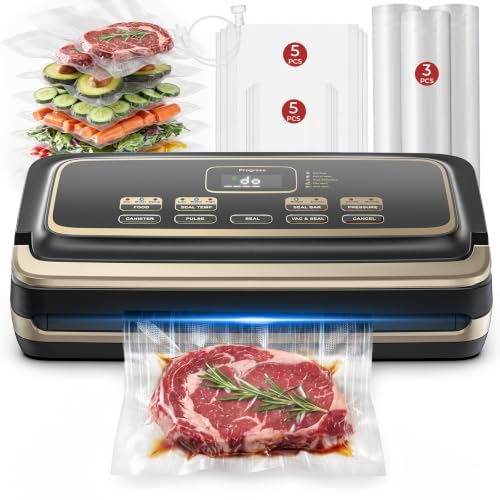
- ROUUO Vacuum Sealer, 95kpa — 95kpa vacuum strength. Check on Amazon for the current listing.
- Bonsenkitchen Vacuum Sealer Machine — compact vacuum sealer, silver. Check on Amazon for the current listing.
Introduction: Finding the Best reviewed small vacuum sealers with reusable bags
Finding the best reviewed small vacuum sealers with reusable bags is a more specific job than it first appears, and this guide treats it that way from the first paragraph. This keyword makes two demands at once — small, and reusable bags — and honesty requires saying how the pool answers them. Every pick here is a genuine household vacuum sealer, and the compact models answer the size demand directly. The reusable-bag demand is answered through systems rather than heat-seal bars: accessory ports, hoses and handheld functions that evacuate reusable zipper bags and containers. The reviews below state, for each machine, exactly which route it offers, so you can build a reusable-first routine on facts instead of hopes.
The method throughout is compact fit plus the reusable route: accessory ports, handheld functions and container sealing that let reusable zipper bags and canisters replace single-use bags for everyday storage. Everything here is research-led guidance built from verified product information and the specifications the makers themselves list; there are no invented prices, no fixed ratings and no hands-on claims we have not made. Where a judgement rests on patterns across owner experience rather than measurement, the wording says so.
Key Takeaways
- Reusable vacuum bags work through valves, not the heat-seal bar: you need an accessory port or a handheld function, and several picks here have one.
- Compact and vertical-storage models answer the small-kitchen half of this keyword without giving up real sealing.
- Heat-seal rolls still matter for freezer marathons and sous vide; the mature routine mixes both systems.
- Pulse mode and moist settings decide whether a small sealer handles real food or only dry staples.
- The reusable habit adds washing and drying of bags to your routine; the saving in waste and bag costs is the return.
In this guide
Quick Picks
| Badge | Pick | Headline spec |
|---|---|---|
| Best Overall System | FoodSaver FM2100 Vacuum Sealer | One-touch sealing; Built-in roll storage and cutter |
| Best for Reusable Storage | FoodSaver V4400 2-in-1 Vacuum Sealer | 2-in-1 vacuum sealer machine; Automatic bag detection |
| Best Compact Pick | FoodSaver Compact Vacuum Sealer | Compact vacuum sealer machine; Airtight bags and roll included |
| Best for Vertical Storage | FoodSaver PowerVac Compact, VS0150 | Compact vacuum sealing machine; Vertical storage design |
| Most Powerful | ROUUO Vacuum Sealer, 95kpa | 95kpa vacuum strength; 230W power |
| Best Compact All-Rounder | Bonsenkitchen Vacuum Sealer Machine | Compact vacuum sealer, silver; Multiple modes for meal prep |
Badges reflect the angle of this guide — compact fit plus the reusable route: accessory ports, handheld functions and container sealing that let reusable zipper bags and canisters replace single-use bags for everyday storage — and the same badges appear in the detailed reviews below so you can track each pick through the guide.
How These Picks Were Chosen
This guide is research-led, and it says so plainly: the picks come from a verified pool checked against the makers’ own listings, not from a test bench claiming scores it cannot show. Each product’s identity, brand and headline specifications were confirmed from its listing data, and only specifications present in that verified data are quoted below — where the pool confirms a product without a long feature sheet, the review says exactly that instead of filling gaps with guesses.
Within the pool, picks were ordered by how well they serve the keyword’s core job: compact fit plus the reusable route: accessory ports, handheld functions and container sealing that let reusable zipper bags and canisters replace single-use bags for everyday storage. Readers who want the wider category picture can compare Best Vacuum Sealers For Energyball alongside this guide.
Finally, honesty about money: no static prices appear anywhere in this guide, because prices change and a printed number would mislead within weeks. Tier language — mainstream, premium-tier, step-up — is used instead, and every linked pick invites you to check the latest price on Amazon at the moment you are actually shopping.
The 6 Best reviewed small vacuum sealers with reusable bags

FoodSaver FM2100 Vacuum Sealer
Badge: Best Overall System
The FoodSaver FM2100 Vacuum Sealer is built for regular sealers, sous vide cooks and bulk buyers who want the complete roll-based workflow in one machine. In the context of best reviewed small vacuum sealers with reusable bags, its confirmed specification supports that job directly: one-touch sealing and built-in roll storage and cutter.
Beyond the headlines, the confirmed specification adds dry and moist food settings, accessory port and hose included, starter bags and roll included, listed for sous vide cooking, and those details shape daily life with the FoodSaver FM2100 Vacuum Sealer more than any single feature does: they decide what it fits, what it handles without fuss, and what routine it asks of its owner. Read them as a set rather than a list, because in use they arrive together, every single time.
Strengths
- Roll storage plus a built-in cutter is the workflow upgrade: custom bag sizes cut at the machine, with less waste than pre-cut bags.
- The accessory port and hose extend it beyond bags to containers and jars, which is also the reusable-storage route.
- Dry and moist settings acknowledge real food; moist mode is what keeps marinated and juicy items sealing properly.
Trade-offs
- A full countertop footprint with roll storage is not the smallest machine here; compact kitchens should measure first.
- One-touch simplicity still depends on correct bag placement; a badly seated bag fails like any sealer’s.
- It is a bag-and-roll system at heart, so its consumables are an ongoing, if modest, commitment.
Key specs (from verified listing data)
- One-touch sealing
- Built-in roll storage and cutter
- Dry and moist food settings
- Accessory port and hose included
- Starter bags and roll included
- Listed for sous vide cooking
Day to day, what separates this pick within the pool is fit, not magic — the honest limitation is that its talents centre on bags and rolls, so jar-and-container households use only part of its range. Households that match the product to the routine rarely shop for its replacement. If it passes your fit test, Check on Amazon to see the current listing for this exact model.
Best for: regular sealers, sous vide cooks and bulk buyers who want the complete roll-based workflow in one machine / Not suited for: anyone whose needs flatly contradict that profile — for them, another pick in this guide fits better.
FoodSaver V4400 2-in-1 Vacuum Sealer
Badge: Best for Reusable Storage
The FoodSaver V4400 2-in-1 Vacuum Sealer is built for batch sealers who want automation, and households mixing bags with reusable containers and zipper bags. In the context of best reviewed small vacuum sealers with reusable bags, its confirmed specification supports that job directly: 2-in-1 vacuum sealer machine and automatic bag detection.
Beyond the headlines, the confirmed specification adds starter kit included, and those details shape daily life with the FoodSaver V4400 2-in-1 Vacuum Sealer more than any single feature does: they decide what it fits, what it handles without fuss, and what routine it asks of its owner. Read them as a set rather than a list, because in use they arrive together, every single time.
Strengths
- Automatic bag detection removes the fiddliest step: insert the bag and the machine starts the cycle, which speeds up batch sealing.
- The 2-in-1 format pairs the countertop sealer with a built-in handheld route for containers and zipper-style reusable bags.
- A starter kit in the box means the first sealing session happens the day it arrives.
Trade-offs
- More automation means more to understand; the first sessions reward reading the manual rather than improvising.
- As a fuller-featured machine it sits at a step-up tier next to the compact picks in this pool.
- Bag detection helps placement, but wet bag edges still defeat seals if you overfill.
Key specs (from verified listing data)
- 2-in-1 vacuum sealer machine
- Automatic bag detection
- Starter kit included
Day to day, what separates this pick within the pool is fit, not magic — the honest limitation is that its extra systems are wasted on the occasional cheese-block sealer, who is better served by a compact pick. If that profile sounds like your household, this pick has earned its place. If it passes your fit test, Check on Amazon to see the current listing for this exact model.
Best for: batch sealers who want automation, and households mixing bags with reusable containers and zipper bags / Not suited for: anyone whose needs flatly contradict that profile — for them, another pick in this guide fits better.
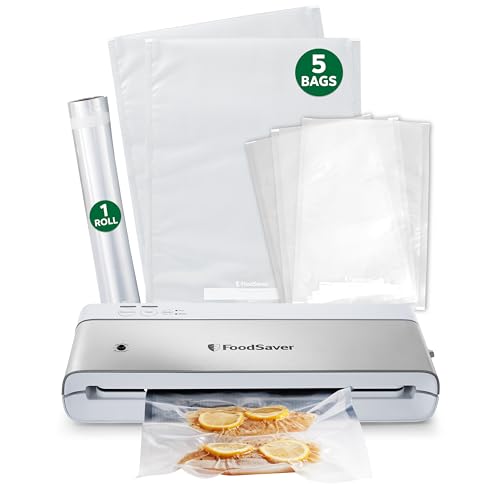
FoodSaver Compact Vacuum Sealer
Badge: Best Compact Pick
The FoodSaver Compact Vacuum Sealer is built for small kitchens, couples and meal preppers who want real vacuum sealing without a full-size appliance. In the context of best reviewed small vacuum sealers with reusable bags, its confirmed specification supports that job directly: compact vacuum sealer machine and airtight bags and roll included.
Beyond the headlines, the confirmed specification adds listed for sous vide and airtight food storage, white finish, and those details shape daily life with the FoodSaver Compact Vacuum Sealer more than any single feature does: they decide what it fits, what it handles without fuss, and what routine it asks of its owner. Read them as a set rather than a list, because in use they arrive together, every single time.
Strengths
- Compact format is the headline: a genuine FoodSaver that stores in the space small kitchens actually have.
- Bags and a roll are included, so it works out of the box for both quick seals and custom sizes.
- Sous vide suitability makes it a meal-prep machine, not just a freezer-defence purchase.
Trade-offs
- Compact machines trade away roll-storage bays and some automation found on the full-size picks.
- White finishes show kitchen splashes and ask for more frequent wiping.
- Heavy daily batch sealing will feel slower than on the step-up models.
Key specs (from verified listing data)
- Compact vacuum sealer machine
- Airtight bags and roll included
- Listed for sous vide and airtight food storage
- White finish
Day to day, what separates this pick within the pool is fit, not magic — the honest limitation is that it is sized for household rhythm, not for processing a whole hunt or a warehouse-club marathon in one sitting. Weigh that fit honestly and the rest of the decision makes itself. If it passes your fit test, Check on Amazon to see the current listing for this exact model.
Best for: small kitchens, couples and meal preppers who want real vacuum sealing without a full-size appliance / Not suited for: anyone whose needs flatly contradict that profile — for them, another pick in this guide fits better.
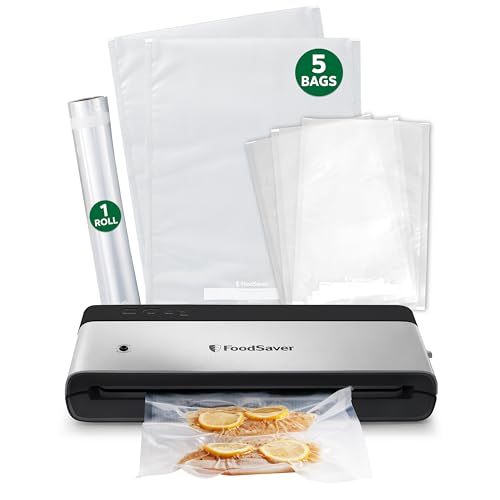
FoodSaver PowerVac Compact, VS0150
Badge: Best for Vertical Storage
The FoodSaver PowerVac Compact, VS0150 is built for space-pressed kitchens that seal often in small amounts and need the machine to store upright. In the context of best reviewed small vacuum sealers with reusable bags, its confirmed specification supports that job directly: compact vacuum sealing machine and vertical storage design.
Beyond the headlines, the confirmed specification adds stainless steel and black finish, for dry and wet food, listed as reducing bag waste, and those details shape daily life with the FoodSaver PowerVac Compact, VS0150 more than any single feature does: they decide what it fits, what it handles without fuss, and what routine it asks of its owner. Read them as a set rather than a list, because in use they arrive together, every single time.
Strengths
- Vertical storage is a genuinely different answer to the sealer-storage problem: it stands in a cupboard or against a wall instead of lying flat.
- Handles dry and wet food, so it covers the marinade-and-leftovers reality of most kitchens.
- The bag-waste-reduction design suits buyers who seal small amounts often rather than in rare marathons.
Trade-offs
- Compact class means modest throughput; very large items and huge batches belong to full-size machines.
- Vertical storage helps only if your cupboards have the height; measure before assuming.
- As with all sealers, the seal quality lives or dies on a clean, dry bag edge.
Key specs (from verified listing data)
- Compact vacuum sealing machine
- Vertical storage design
- Stainless steel and black finish
- For dry and wet food
- Listed as reducing bag waste
Day to day, what separates this pick within the pool is fit, not magic — the honest limitation is that its compact, upright brief is about frequency and storage, not maximum batch power. In daily use, that single fit question matters more than any feature list. If it passes your fit test, Check on Amazon to see the current listing for this exact model.
Best for: space-pressed kitchens that seal often in small amounts and need the machine to store upright / Not suited for: anyone whose needs flatly contradict that profile — for them, another pick in this guide fits better.

ROUUO Vacuum Sealer, 95kpa
Badge: Most Powerful
The ROUUO Vacuum Sealer, 95kpa is built for power-focused sealers, moist-food households and anyone who wants pulse control and easy cleanup. In the context of best reviewed small vacuum sealers with reusable bags, its confirmed specification supports that job directly: 95kpa vacuum strength and 230w power.
Beyond the headlines, the confirmed specification adds built-in bag storage and cutter, dry and moist modes plus pulse mode, removable drip tray, 3 bag rolls and 10 bags included, and those details shape daily life with the ROUUO Vacuum Sealer, 95kpa more than any single feature does: they decide what it fits, what it handles without fuss, and what routine it asks of its owner. Read them as a set rather than a list, because in use they arrive together, every single time.
Strengths
- The strongest stated vacuum figure in this pool, 95kpa, which is the number that matters for firm, complete seals.
- Pulse mode gives manual control for delicate food — berries, baked goods and soft cheeses that full vacuum would crush.
- A removable drip tray is the moist-food feature veterans ask for, because it makes the inevitable spill a rinse instead of a deep clean.
Trade-offs
- High power and a full feature set come in a full-size body; this is not the pool’s storage champion.
- A newer brand means a shorter track record than the category’s founding name, however strong the specification reads.
- Generous included consumables still run out; check roll and bag compatibility before the first big session.
Key specs (from verified listing data)
- 95kpa vacuum strength
- 230W power
- Built-in bag storage and cutter
- Dry and moist modes plus pulse mode
- Removable drip tray
- 3 bag rolls and 10 bags included
Day to day, what separates this pick within the pool is fit, not magic — the honest limitation is that its specification leads the pool, but delicate-food success still depends on the operator using pulse mode patiently. Judge it by your busiest day, not your easiest one, and the verdict is usually clear. If it passes your fit test, Check on Amazon to see the current listing for this exact model.
Best for: power-focused sealers, moist-food households and anyone who wants pulse control and easy cleanup / Not suited for: anyone whose needs flatly contradict that profile — for them, another pick in this guide fits better.
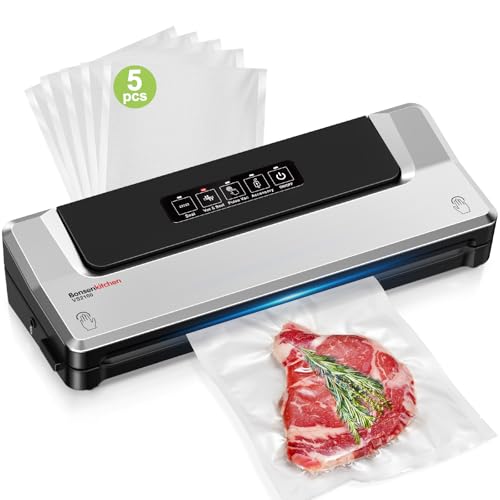
Bonsenkitchen Vacuum Sealer Machine
Badge: Best Compact All-Rounder
The Bonsenkitchen Vacuum Sealer Machine is built for meal preppers and small kitchens wanting modes and container sealing without a full-size machine. In the context of best reviewed small vacuum sealers with reusable bags, its confirmed specification supports that job directly: compact vacuum sealer, silver and multiple modes for meal prep.
Beyond the headlines, the confirmed specification adds external vacuum system, listed for kitchen food storage and sous-vide, 5 vacuum bags included, and those details shape daily life with the Bonsenkitchen Vacuum Sealer Machine more than any single feature does: they decide what it fits, what it handles without fuss, and what routine it asks of its owner. Read them as a set rather than a list, because in use they arrive together, every single time.
Strengths
- Multiple modes in a compact body is the meal-prep formula: dry staples, moist leftovers and sous vide portions from one small machine.
- The external vacuum system extends it to containers, which supports the reusable-storage habit this keyword cares about.
- A compact silver footprint stores and presents well in small kitchens.
Trade-offs
- Five included bags is a starter taste, not a supply; budget for bags or rolls from the first month.
- Compact machines seal more slowly across very large batches than full-size step-up models.
- Mode choice is the user’s job; the wrong mode on wet food still produces a weak seal.
Key specs (from verified listing data)
- Compact vacuum sealer, silver
- Multiple modes for meal prep
- External vacuum system
- Listed for kitchen food storage and sous-vide
- 5 vacuum bags included
Day to day, what separates this pick within the pool is fit, not magic — the honest limitation is that it is a household-rhythm machine, and marathon batch days will expose the compact class ceiling. That is the honest test: not whether it impresses, but whether it disappears into your routine. If it passes your fit test, Check on Amazon to see the current listing for this exact model.
Best for: meal preppers and small kitchens wanting modes and container sealing without a full-size machine / Not suited for: anyone whose needs flatly contradict that profile — for them, another pick in this guide fits better.
Comparison Table
| Pick | Badge | Headline | Also confirmed |
|---|---|---|---|
| FoodSaver FM2100 Vacuum Sealer | Best Overall System | One-touch sealing | Built-in roll storage and cutter |
| FoodSaver V4400 2-in-1 Vacuum Sealer | Best for Reusable Storage | 2-in-1 vacuum sealer machine | Automatic bag detection |
| FoodSaver Compact Vacuum Sealer | Best Compact Pick | Compact vacuum sealer machine | Airtight bags and roll included |
| FoodSaver PowerVac Compact, VS0150 | Best for Vertical Storage | Compact vacuum sealing machine | Vertical storage design |
| ROUUO Vacuum Sealer, 95kpa | Most Powerful | 95kpa vacuum strength | 230W power |
| Bonsenkitchen Vacuum Sealer Machine | Best Compact All-Rounder | Compact vacuum sealer, silver | Multiple modes for meal prep |
Read the table alongside the detailed reviews rather than instead of them: the table compares confirmed specifications, while the reviews carry the fit judgments that decide real purchases. Shoppers cross-shopping the neighbouring ground can set this beside Best Vacuum Sealers For Europe Sous Vide to see how the options divide the work.
How to Choose: Best reviewed small vacuum sealers with reusable bags Decided Properly
Footprint and storage geometry
Sealers divide into flat countertop models, compact models and vertical-storage designs. The best one is the one that lives where you will use it: a sealer exiled to a high cupboard seals nothing. Measure the storage spot first, including roll storage if the model carries it.
Bags, rolls and reusable routes
Pre-cut bags are fastest; rolls with a built-in cutter make custom sizes and less waste. Reusable routes — zipper vacuum bags with valves and rigid containers — run through accessory ports and handheld systems, and they change the running-cost and waste picture completely. Decide which system your household will actually maintain.
Dry, moist and delicate modes
Real food is wet and fragile. A moist mode, a pulse control and a removable drip tray separate sealers that handle marinades, berries and baked goods from sealers that only shine on dry staples.
Vacuum strength and seal quality
Stated vacuum strength matters most for firm, complete seals on bulky items, but technique matters everywhere: a clean, dry, uncreased bag edge seals well on modest machines and fails on powerful ones. Judge the system, not the single number.
Finally, weigh the whole purchase, not the product alone. Consumables, replacement parts, storage space and the routine the product attaches to your week all belong in the decision. A choice that looks slightly more demanding at the shelf and easier across five years is the pattern this guide rewards throughout, and it is the pattern behind the final recommendation below. For a neighbouring perspective, see Best Vacuum Sealers For Fish.
How to Use and Care for Your Vacuum sealer
- Prepare the food first: chill moist items, pat surfaces dry, and freeze very wet foods briefly so liquid stays out of the seal zone.
- Cut rolls to size with the built-in cutter where fitted, leaving generous headroom above the food; for reusable zipper bags, seal the zip fully and clear the valve area.
- Load the bag flat, keep the edge clean and uncreased, and position it exactly as the manual directs for your model.
- Choose the mode honestly: dry for staples, moist for juicy food, pulse for anything crushable, and accessory mode for containers and reusable bags with valves.
- Run the cycle without touching the machine, then check the seal: it should be a clean, even band with no channels or wrinkles crossing it.
- Label with contents and date before freezing, because vacuum-sealed packages are famously anonymous a month later.
- Wipe the seal area and empty the drip tray after moist sessions; residue left today is tomorrow’s failed seal.
Troubleshooting
Problem: The bag will not vacuum or seal → The edge is wet, creased or mis-seated, nine times in ten. Dry the edge, smooth it flat, reposition per the manual, and try a fresh section of bag before suspecting the machine.
Problem: Liquid gets pulled into the seal → The food is too wet for a straight run. Pre-freeze it briefly, choose the moist mode, leave more headroom, or fold a paper towel inside the bag below the seal line as a liquid break.
Problem: Sealed bags lose vacuum in the freezer → A micro-channel crossed the seal, or a sharp bone or edge punctured the film. Double-seal the ends, pad sharp points with a folded section of bag, and check seals a day later before long storage.
For a deeper look at adjacent routines, Best Vacuum Sealers For Home Use is a useful companion read once your own setup is dialled in.
Building a Reusable-First Sealing Routine
A reusable-first kitchen runs on a simple division of labour. Everyday fridge storage — cheese, deli meats, leftovers, opened snacks — lives in reusable zipper vacuum bags and rigid containers, evacuated through an accessory hose or handheld, washed and reused. The freezer marathon and the sous vide bath still use heat-sealed bags and rolls, where the permanent seal earns its plastic. Machines with accessory ports or 2-in-1 handheld designs are the platform for that division, which is why they rank as they do here. The routine also changes shopping: you buy reusable bags and containers once, in sizes matched to your shelves, instead of metering out rolls forever. Small machine, reusable system, modest washing-up — that is the honest shape of this keyword, and this guide builds it pick by pick.
How Small Is Small Enough?
Small in this category is a storage claim before it is a sealing claim. A compact sealer that lives in a drawer or stands vertically in a cupboard gets used for the single cheese block and the two leftover portions — the small, frequent jobs where vacuum sealing quietly saves the most food. A full-size machine with roll storage is better equipment and worse furniture, and in a small kitchen it migrates to a cupboard’s back and seals nothing. Measure the home the machine will live in, not the counter it will pose on for photographs. The best-reviewed small sealers are not the most powerful machines in this pool; they are the ones still in weekly use a year later, because their size never gave their owners an excuse to stop.
That lens also explains several rankings above that might otherwise look surprising, and it is worth holding in mind alongside Best Vacuum Sealers For Hunters if you are comparing across categories before committing.
Sous Vide Is the Second Job
Many sealers in this guide list sous vide suitability, and it changes the value calculation. A water bath needs bags sealed reliably enough to stay submerged for hours, which is precisely a vacuum sealer’s core skill, and the same machine that defends your freezer portions your bath. If sous vide is even a monthly habit, weight seal reliability and moist modes heavily, because bath failures are messier than freezer failures. If it is never on your menu, ignore the badge entirely and buy on storage fit. Features only count when they have an appointment in your kitchen.
Roll Storage and the Custom Bag Habit
Rolls beat pre-cut bags on cost and waste for one reason: the bag is exactly as long as the food. A built-in roll bay and cutter turns that advantage into a one-motion habit, and households that seal varied items — a fish fillet today, a cheese wedge tomorrow — feel the difference weekly. Pre-cut bags remain faster for uniform batch work, where every package is the same size. The mature system uses both: rolls for the irregular, bags for the production line. When comparing picks, notice which system each machine is truly built around, because fighting a machine’s native system is a daily friction tax.
Pulse Mode and the Delicate Majority
Full vacuum is violent. It crushes berries, deforms baked goods, and pulls marinade out of the bag and into the seal. Pulse mode exists for the delicate majority of real food: short, operator-controlled bursts that stop the moment the food says enough. If your sealing list includes anything softer than a steak — bread, cakes, soft cheese, ripe fruit, fresh pasta — pulse control is not a luxury feature; it is the difference between a sealer you use for everything and one you use for meat only. Judge demo videos and listings for genuine manual control, not just a gentle preset.
The Drip Tray Confession
Every experienced sealer owner has a story about liquid in the machine: the marinade that climbed, the juicy roast that wept into the vacuum channel. A removable drip tray is the feature that turns that story into a rinse instead of a repair. If your household seals moist food regularly — and most do, whatever they intended at purchase — weight the tray, the moist mode and pre-freezing discipline as a package. Dry-staple households can honestly skip all three. The mistake is buying for the dry fantasy and living the moist reality.
Sealing for One, Sealing for Six
Batch rhythm decides machine class more than any specification. The bulk buyer processing a market haul needs throughput: wide seals, fast cycles, roll capacity and patience for none of it to feel slow. The couple sealing two salmon fillets needs the opposite: a compact machine that appears from a cupboard in seconds and stores vertically afterwards. Both are vacuum sealing; they are barely the same hobby. This guide’s pool spans both rhythms deliberately, and the reviews name which rhythm each pick serves, because a marathon machine in a minimalist kitchen and a compact in a hunting household are equal and opposite regrets.
Bag Edges: The Five-Second Craft
Ask a butcher, a chef or a hunting-camp veteran what makes vacuum sealing work and the answer is embarrassingly unglamorous: the edge. Clean, dry, flat, uncreased, with headroom above the food. Grease smears, moisture beads and a single fold each create channels that leak air slowly enough to pass a glance and fail a month. The five-second craft — wipe the edge, smooth it, check the finished band against the light — outperforms any specification upgrade. Machines help with guides, clamps and detection, but the habit is the technology. Build it on your first bag and every pick in this guide performs a class better.
What Vacuum Sealing Cannot Do
Honesty about limits protects both food and budgets. Vacuum sealing does not sterilise food, does not make perishable food shelf-stable, and does not stop time — it slows oxidation and freezer burn within a cold chain you still must maintain. Soft cheeses, raw mushrooms and some vegetables need preparation or blanching first, per sound food-safety guidance. Sealed food still gets labelled, dated and rotated. Shoppers who treat the machine as one strong link in a storage system get years of value; shoppers who treat it as magic get a freezer full of mysteries.
Accessory Ports Are a Platform
An accessory port looks like a minor socket and behaves like an expansion slot. Through it, a countertop sealer evacuates reusable containers for salads and leftovers, marinates food under vacuum, seals jars for pantry storage, and drives the reusable zipper bags this keyword centres on. When you compare picks, the port is the difference between a bag machine and a storage system. Households planning a reusable-first routine should treat the port (or a built-in handheld) as a requirement, not a bonus, and confirm the hose is included rather than sold separately into a drawer you will never open.
The Freezer Audit
Before buying any sealer in this guide, perform the audit that predicts its value: open your freezer and count the casualties — the frosted, the dried-out, the unidentified. That number, multiplied across a year, is the machine’s honest business case. Households with a tidy, fast-turning freezer gain little; households whose freezer is a long-term store of proteins, garden produce and batch cooking gain the most. The audit also sets the machine class: heavy losses argue for roll capacity and throughput, light ones for a compact that lives within reach. Five minutes with the freezer door open is the best research this category offers.
Marinating Under Vacuum
Vacuum is a marinade accelerator: with air removed, liquid coats every surface and the flavours you would wait overnight for arrive in a fraction of the time. Containers and reusable bags with valves are the practical vessels, which is another reason accessory routes matter in this pool. The cautions are real — delicate items bruise, and strong marinades intensify — but for the household that plans dinners in hours rather than days, vacuum marinating quietly changes what weeknight cooking can attempt. If that sounds like your kitchen, weight the picks with accessory systems accordingly.
Cheese, Deli and the Fridge Frontier
Freezers get the glory, but the fridge is where vacuum sealing saves food weekly. Hard cheeses keep their edges, deli meats keep their moisture, and opened ingredients stop perfuming everything they touch. This is also the reusable system’s home ground: zipper bags and containers, washed and cycled, carry the fridge load without a stream of single-use plastic. When you assess the picks, imagine the Tuesday fridge round rather than the annual freezer marathon. For many households the machine that wins Tuesdays is the one still loved in December.
Sous Vide Bath Discipline
A vacuum sealer feeding a water bath takes on a second responsibility: the seal must survive hours submerged, at temperature, without a channel or a creep. The habits that guarantee it are the same five-second craft as freezer sealing, applied without exception — dry edges, double seals on long cooks, and a check before the bag goes in. Moist-mode machines earn their badge here, because bath food is often seasoned and juicy by design. If sous vide is on your menu even monthly, let bath reliability steer your choice among these picks; it is the least forgiving job a sealer does.
Storing the Machine Itself
Sealers fail their owners most often by geography: the machine that lives at the back of a high cupboard might as well not exist. Vertical-storage and compact designs in this pool exist precisely to break that pattern, standing in a cupboard’s front row or a drawer’s honest space. Before choosing, walk the route the machine will travel from storage to counter and count the obstacles. The best sealer is the one with the shortest route, because sealing is a small job that only happens when it is easy. Specifications start arguments; storage routes finish them.
Bags, Rolls and the Cost Ledger
Running costs in this category are visible and countable, which makes honest budgeting easy. Rolls cost least per bag and waste least material; pre-cut bags cost most and save the most time; reusable systems cost most upfront and least per use thereafter. Your household’s mix across a year — freezer marathons, fridge rounds, sous vide — sets the blend that pays. The mistake is buying the machine first and discovering its native consumable is the one your routine hates. This guide names each pick’s native system in its review; match it to your ledger before the machine, not after.
The Reusable Bag System, Explained
Reusable vacuum storage comes in two forms, and confusing them wastes money. Zipper vacuum bags are heavy-gauge bags with a resealable top and a one-way air valve; you evacuate them through a sealer’s accessory hose or a handheld unit, wash them, and reuse them. Rigid containers work the same way through a lid valve. Neither is heat-sealed, so the sealer you want is one with an accessory port or a built-in handheld, and the routine you need is washing and fully drying bags between uses. Households that adopt the system cut their single-use bag consumption dramatically, at the price of a little more washing-up — a trade this keyword’s shoppers have usually already decided they want.
Freezer Burn Is an Oxygen Problem
Freezer burn is not cold damage; it is dehydration and oxidation where air touches food. That is why vacuum sealing, which removes most of the air and holds the film tight against the surface, extends freezer quality so dramatically compared with wrapping. The practical corollaries matter more than the chemistry: pad sharp bones that could puncture the film, freeze liquids flat so packages stack, and check seals the next day, because a slow micro-leak announces itself early as a loose bag. A sealer is only as good as the seal-checking habit behind it, and the habit takes five seconds per bag.
Common Buying Mistakes
- Sealing wet bags with liquid at the edge, then blaming the machine for a failed seal.
- Buying a full-size sealer for a kitchen with nowhere to store it, so it never comes out.
- Overfilling bags so food crowds the seal zone and channels form.
- Skipping labels, then playing freezer archaeology with identical clear packages.
Final Recommendation
For most shoppers, the answer to best reviewed small vacuum sealers with reusable bags is the FoodSaver FM2100 Vacuum Sealer: one-touch sealing in a package built for regular sealers, sous vide cooks and bulk buyers who want the complete roll-based workflow in one machine. Choose the FoodSaver V4400 2-in-1 Vacuum Sealer instead if its profile — batch sealers who want automation, and households mixing bags with reusable containers and zipper bags — describes your household more precisely. The FoodSaver Compact Vacuum Sealer is the third route worth pricing live, particularly for small kitchens, couples and meal preppers who want real vacuum sealing without a full-size appliance. Every recommendation here stays inside the verified pool, and every price should be checked live at the moment of decision — fit, honestly assessed, is what makes a purchase beloved instead of merely owned.
Frequently Asked Questions
How long does vacuum-sealed food keep?
Far longer than wrapped food, because the oxygen that drives freezer burn and oxidation is largely removed. Exact times depend on the food and your freezer’s consistency, so treat vacuum sealing as a quality multiplier rather than a promise, label with dates, and rotate stock oldest-first as you would with any storage system.
Can vacuum sealers work with reusable bags?
Many can, through the accessory route: reusable zipper vacuum bags carry a one-way valve that an accessory hose or handheld unit evacuates, and rigid reusable containers work the same way. Check that the model you choose has an accessory port or a handheld function, and follow the bag maker’s valve instructions; the heat-seal bar itself is for single-use heat-seal bags and rolls.
Is a vacuum sealer worth it for a small household?
It depends on buying habits more than household size. Shoppers who buy proteins in bulk, cook sous vide, garden, fish or meal-prep gain the most. Occasional shoppers who buy tonight’s dinner daily gain least. The machine pays for itself in avoided waste, so audit your bin honestly before deciding.
What bags can I reuse with a vacuum sealer?
Reusable zipper vacuum bags with one-way valves, and rigid reusable containers with valve lids. Both are evacuated through an accessory hose or a handheld sealer rather than the heat-seal bar. Wash them in warm soapy water, dry them completely — a damp valve seals badly — and retire bags whose zips or valves stop holding vacuum.
Do I still need rolls if I go reusable?
For most households, a small supply, yes: long freezer storage and sous vide reward the permanent, inspectable heat seal, and rolls make custom sizes for awkward items. The reusable system carries the everyday fridge load, which is where most bag consumption actually happens.
How do I choose between the picks in this guide?
Match the verdict lines to your household first, then the badges, then the specifications. For best reviewed small vacuum sealers with reusable bags, fit matters more than small feature differences: the product whose strengths answer your actual routine will satisfy you longer than the product with the longest list of extras.
Why does this guide not list prices?
Because prices for these products change constantly and differ between sellers, and a figure printed in an article would mislead within weeks. Linked picks carry a check on Amazon prompt so you always see the current figure at the source, and the guide judges value by tier and by cost across years instead.