Disclosure: As an Amazon Associate, topratedkitchenware.com earns from qualifying purchases. Links on this page are affiliate links; they cost you nothing extra. Prices and availability change often, so check the current Amazon listing before you buy.
Short answer first: is an ice maker worth it? For a household that drinks cold drinks every day, entertains regularly or harbours a nugget-ice devotee — yes, comfortably, provided the cleaning rhythm will actually be kept. For a household that ices a drink twice a month, or whose counter is already at war — no, and no tier changes that. The rest of this article earns that answer properly: what you actually get, what it truly costs beyond money, who it pays off for, who should skip it, and the checklist that settles the question for your kitchen.
Key Takeaways
- Worth it if: daily cold drinks, regular entertaining, blending often, or nugget ice is a household passion.
- Not worth it if: ice is a monthly event, counter space is contested, or upkeep will quietly never happen.
- The true costs are space, upkeep minutes and background noise — not the purchase itself.
- Value compounds with frequency; count a honest week of glasses before deciding.
- If you buy, the value is protected by habits: fresh water, clean scoop, freezer storage, periodic descaling.
In this guide
Is an Ice Maker Worth It? Start With What You Actually Get
You get a rhythm, first of all: ice produced steadily through the day, so drinks stop requiring planning. You get texture choice — bullet ice for general duty, nugget ice if you buy into the premium tier for it — that freezer trays cannot offer. You get freezer space back, because production lives on the counter and only surplus visits the cold. You get the end of the mid-party ice run and the tray-twisting ritual alike. And you get control of the input: your water, your cleanliness, your ice tasting of nothing but cold. That bundle — rhythm, texture, space, control — is the entire asset side of the ledger, and for the right household it is a rich bundle indeed.
How a Countertop Ice Maker Actually Works
Inside the box, the process is a tidy loop. Water from the reservoir is pumped over or around a set of chilled metal fingers — or, in nugget machines, into a freezing chamber where an auger scrapes and compresses the forming ice. After a short freeze, a brief warming pulse releases the finished pieces, which tumble into the basket with that familiar clatter. Sensors watch the basket level and the water level, pausing the loop when either demands it.
Two consequences of that loop shape everything else in this guide. First, the storage bin is insulated, not refrigerated: finished ice slowly melts, and the meltwater returns to the reservoir to be frozen again. That is elegant and waste-free, but it means the bin is a staging area, not a freezer. Second, the water is recycled within the machine, which is precisely why fresh water, regular rinsing and scheduled descaling are not fussy extras — the same water meets the same surfaces cycle after cycle, and whatever lives on those surfaces meets your drink.
Batch speed varies with room temperature, water temperature and how cold-soaked the machine already is. A machine started on a hot afternoon with warm water will amble through its early batches and brisk up later; the same machine on a cool morning settles quickly. Judge any countertop unit by its steady-state rhythm across an afternoon, not by its very first batch, and plan party production with that warm-up honestly in mind.
The Real Costs Beyond Money
Counter space, paid daily. The machine and its lid arc and its vents take a permanent plot in the kitchen’s most contested territory. Upkeep minutes, paid forever. Rinsing, washing, wiping and periodic descaling are light but non-negotiable; standing water does not forgive postponement. Attention. Reservoirs need refreshing, baskets need emptying into the freezer, scoops need washing — small taxes on the day. Noise. A hum, a fan and a clatter join the household soundscape. Electricity and eventual replacement complete the honest ledger. None of these costs is large; together they are exactly what ‘worth it’ must outweigh, and for infrequent users they simply do not get outweighed.
Who It Pays Off For
The daily-drinks household — smoothies at breakfast, iced coffee at noon, cold drinks at dinner — collects the dividend three times a day and reaches payback in convenience within weeks. The entertainer collects in lump sums: every gathering without an ice run, every cooler filled from the freezer relay, every guest’s drink properly cold. The texture devotee — the nugget lover, the home bartender — collects in kind: a pleasure no tray or bag reliably delivers, available at home at any hour. For all three profiles the machine moves from appliance to infrastructure, which is the surest sign a purchase was worth it.
Who Should Skip It
The occasional user will pay full rent in space and upkeep for a trickle of ice; a tray and the odd bought bag are the honest tools. The space-poor kitchen will resent the footprint every single day, and resentment outlasts novelty. The upkeep-averse household should skip it on safety’s behalf: a machine whose reservoir stands unrefreshed becomes a home for bacteria and mould, and its ice is worse than no ice. Skipping, for these profiles, is not deprivation — it is the correct purchase decision, made with clear eyes.
Strengths and Trade-Offs of Owning One
Strengths of ownership:
- Ice as a utility — present, fresh and unplanned-for, woven through the day.
- Texture and input control no tray or bag can match.
- Entertaining confidence and freezer space returned to food.
Trade-offs of ownership:
- A permanent counter plot plus lid and vent clearance.
- A permanent, if light, cleaning and descaling rhythm.
- Storage still outsourced to the freezer, because the bin only insulates.
Alternatives to Consider
Before committing, price the rivals honestly. Freezer trays and moulds — including the sphere moulds linked below for slow-melting drinks — cost almost nothing and serve low volumes with a little planning. A fridge with a dispenser is superb if a replacement fridge is already on your horizon. Bought bags remain the flexible answer to rare peaks. And the machines below remain the countertop answer when the rhythm justifies them — each prose-only here, with a PICK SLOT marker awaiting its verified listing at publishing.
If your answer is yes, these are the six sensible shapes that yes can take — compact entry machines for modest rhythms, mid-tier all-rounders for family duty, and the premium nugget specialist for texture devotees.

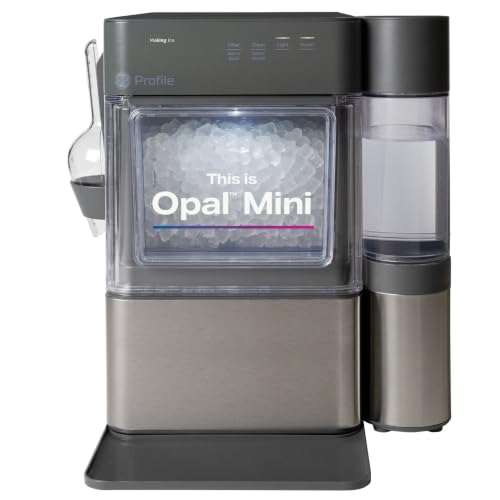
GE Profile Opal Nugget Ice Maker — Best for Nugget Ice Lovers
Tier: premium. Check price on Amazon once the verified listing link is added at publishing.
The GE Profile Opal is the machine that turned nugget ice from a restaurant curiosity into a home countertop category. It makes the soft, chewable, pellet-style ice that absorbs flavour from a drink instead of just chilling it, and that single talent is the whole reason to consider it. In the premium tier, you are paying for the ice style itself, for a more finished design that looks deliberate on a counter, and for a reservoir-fed layout that suits households where the machine runs most of the day.
Living with the Opal is a rhythm rather than an event: fill the reservoir, let it build a bin of nuggets, and top the water up as the level falls. Because nugget ice is porous and melts faster than dense cubes, it suits drinks you sip steadily rather than a cooler that must stay cold for hours outdoors. It asks for the same discipline as every machine in this guide — regular cleaning, regular descaling, and a clean scoop rather than hands in the bin.
Best for: households whose habits match the description above. Not suited for: anyone expecting freezer-style long-term storage from an insulated countertop bin.
Igloo Countertop Ice Maker — Best Simple Entry Point
Tier: entry. Check price on Amazon once the verified listing link is added at publishing.
Igloo is a familiar name in cooling, and its countertop ice maker sits squarely in the entry tier: a compact bullet-ice machine with simple controls, a lift-out basket and a window or indicator layout that tells you when the basket is full or the water is low. Bullet ice — smooth, hollow, rounded pieces — is the workhorse style of this class, kind to blender blades and quick to chill a glass.
The appeal here is the absence of ceremony. There is no plumbing, no installation and very little to learn: fill the reservoir, press start, and collect the first batch once the cycle settles. The trade-offs are the honest ones of the tier — a smaller basket that needs emptying into the freezer during a party, and ice that begins melting back into the reservoir if it sits, because the bin is insulated rather than refrigerated.
Best for: households whose habits match the description above. Not suited for: anyone expecting freezer-style long-term storage from an insulated countertop bin.

Frigidaire Countertop Ice Maker — Best Mid-Tier All-Rounder
Tier: mid. Check price on Amazon once the verified listing link is added at publishing.
Frigidaire brings a refrigeration heritage to the countertop category, and its countertop ice maker is a mid-tier bullet-ice machine aimed at households that want a step up in finish and day-to-day polish without moving into nugget-ice money. Expect the familiar formula executed cleanly: reservoir-fed freezing fingers, a removable basket, ice-size selection on many versions, and styling that sits comfortably beside other kitchen appliances.
In daily use this is the kind of machine that disappears into a routine — morning smoothies, lunch drinks, evening glasses — and only asks for attention when the water runs low or the cleaning cycle comes due. As with every reservoir machine, the ice it makes is only as clean as the water and the tank it came from, so the rinsing and descaling habits in this guide matter more than any badge on the front panel.
Best for: households whose habits match the description above. Not suited for: anyone expecting freezer-style long-term storage from an insulated countertop bin.

Silonn Countertop Ice Maker — Best Compact Footprint
Tier: entry to mid. Check price on Amazon once the verified listing link is added at publishing.
Silonn has become a common sight in the compact end of the category, and its countertop ice maker leans into small footprints and straightforward operation. It produces bullet ice in the usual two sizes on typical versions, with a self-contained reservoir, a lift-out basket and a scoop stored with the machine. For a small kitchen, a dorm-adjacent setup, an office corner or an RV galley, that compactness is the deciding feature.
The honest limits follow from the size: a modest basket, batches that reward patience during a rush, and the same melt-back behaviour as every insulated-bin machine. Treat it as a steady producer rather than a party engine — run it ahead, bag the ice into the freezer, and it will keep a small household supplied without ever asking for a water line or a drain.
Best for: households whose habits match the description above. Not suited for: anyone expecting freezer-style long-term storage from an insulated countertop bin.
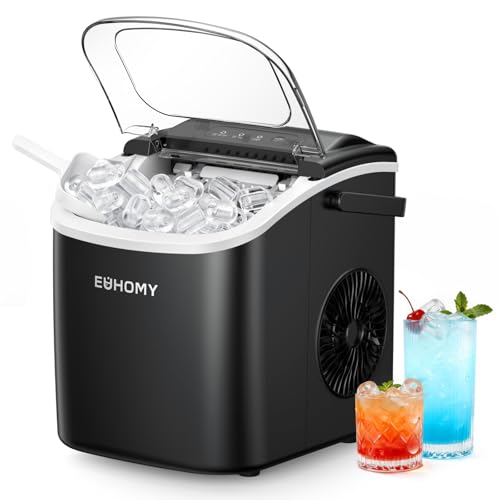
Euhomy Countertop Ice Maker — Best for Easy Upkeep
Tier: mid. Check price on Amazon once the verified listing link is added at publishing.
Euhomy’s countertop ice maker competes in the busy middle of the category, where machines are separated less by the ice they make — bullet ice, in the familiar style — than by how easy they are to live with. Many Euhomy versions include a self-cleaning cycle, which circulates water through the system and takes some of the tedium out of routine upkeep, though it never replaces descaling or a proper hand-clean of the bin and scoop.
For households that know their weakness is maintenance rather than enthusiasm, that emphasis matters: a machine that gets cleaned is worth more than a theoretically better machine that grows slimy in a neglected tank. Pair the self-cleaning habit with fresh water, a dry resting place between heavy-use periods, and the scoop discipline described later, and a mid-tier machine like this one delivers most of what most households actually need.
Best for: households whose habits match the description above. Not suited for: anyone expecting freezer-style long-term storage from an insulated countertop bin.
IKICH Countertop Ice Maker — Best Quiet Companion
Tier: entry to mid. Check price on Amazon once the verified listing link is added at publishing.
IKICH built its name in this category on compact bullet-ice machines that emphasise unobtrusive running — the kind of appliance an open-plan kitchen or a home office can tolerate in the background. The formula is the proven one: freezing fingers, a reservoir you fill by jug, a basket that lifts out for serving, and controls simple enough that a guest can run the machine without a briefing.
Where a machine like this earns its place is in the hours between the obvious moments — the working-from-home afternoon, the slow weekend morning — when a freezer tray is always either empty or forgotten. Its limits are the class limits: insulated rather than refrigerated storage, modest batch storage, and a firm need for the cleaning and descaling routine that keeps reservoir water tasting like water and nothing else.
Best for: households whose habits match the description above. Not suited for: anyone expecting freezer-style long-term storage from an insulated countertop bin.
How to Get the Most Value If You Buy
Start the machine early on big days and run the freezer relay. Refresh the water on a rhythm instead of topping up forever, and wash your hands before handling ice, basket or scoop. Serve only with the clean scoop. Descale periodically, on schedule rather than on symptoms. Place the machine where its noise and footprint cost least — dry, level, ventilated, sensibly plugged into a sound socket, with a GFCI-protected kitchen outlet a prudent choice for an appliance working with water. Rest it clean and dry between seasons. Value in this category is not bought once; it is maintained, cheaply, by exactly these habits.
Safety and Hygiene: The Non-Negotiables
An ice maker is a food appliance, and it deserves the same respect you give a chopping board or a water bottle — more, in some ways, because it holds water still, in the dark, at room temperature, which is exactly the environment where bacteria and mould like to establish themselves. None of the habits in this section are optional extras. They are the difference between ice that improves a drink and ice that quietly undermines it.
Standing Water Is the Enemy
Water that sits in a reservoir, a bin or a drain line becomes a home for bacteria and mould over time, and the slime that forms on submerged surfaces — a slippery film you can feel with a fingertip — is the visible sign of a microbial community you do not want in a glass. The defences are simple and unglamorous: empty and rinse the reservoir regularly rather than endlessly topping it up, leave the lid open to dry when the machine rests, and never let yesterday’s meltwater become tomorrow’s ice without a rinse in between.
Cleaning and Descaling on a Schedule
Clean the machine on a regular cycle — wipe the bin, wash the basket and scoop in warm soapy water, rinse the reservoir — and descale it periodically as well, because mineral scale from tap water coats the freezing surfaces, slows production, flavours the ice and shelters grime in its rough texture. Follow the maker’s instructions for the descaling solution and the rinse cycles afterwards, and run plain-water batches and discard them after any deep clean before ice goes back into drinks.
Clean Water In, Clean Ice Out
Use fresh, clean drinking water every time you fill the machine. Ice faithfully preserves whatever the water carried — chlorine notes, stale jug flavours, and anything growing in a neglected filter jug. If your tap water tastes good and is safe to drink, it makes good ice; if it tastes of the plumbing, filter it first. Never fill the reservoir from a container that has been sitting open, and wash your hands before handling ice, the basket or the scoop.
Serve Ice With a Scoop, Never With Hands
Keep the scoop clean, store it outside the ice or in its holder rather than buried in the bin, and never serve ice with your hands or with the glass itself. Hands carry whatever the day has touched, and a glass dipped into the bin can chip, crack or carry contamination straight into everyone’s drinks. This one habit — scoop, always — is the rule caterers and cafés treat as sacred, and a home bar should too.
Electricity Near Water
An ice maker is an electrical appliance that works with water, so place it sensibly: on a dry, level, ventilated surface, away from the sink’s splash zone, with the cord kept clear of standing water. As a general, common-sense recommendation, plug it into a GFCI-protected outlet — the kind with the test and reset buttons commonly fitted in kitchens — so a fault cuts power quickly. Never run the machine with a damaged cord, never immerse any part of it, and unplug it before cleaning.
Airflow and Placement
Countertop ice makers reject heat as they freeze water, and they need room to breathe. Leave clearance around the vents, keep the machine out of direct blazing sun and away from the oven’s heat plume, and set it somewhere dry and level where a small spill is a nuisance rather than a hazard. A machine suffocated in a tight corner works harder, makes ice more slowly and ages faster than one given a little air.
The Decision Checklist
Answer honestly, yes or no: Do we drink iced drinks most days? Do we entertain at least monthly? Is there a counter plot — with lid and vent clearance — the machine can own without a fight? Will someone here rinse, wash and descale on a rhythm without being nagged? Is there a texture — nugget above all — that we actively crave? Would the freezer relay become our party habit? Five or more yeses: buy with confidence, in the tier your answers point to. Three or fewer: keep the trays, and revisit the question when your household changes.
Going Deeper: Living With the Machine
Children and ice makers get along well under two rules: the scoop is the only tool that touches ice, and the machine is an adult’s appliance to fill, clean and unplug. Within those rules, letting a child fetch ice with the scoop for the table teaches the hygiene habit young and makes the machine a small, safe ceremony of helping. The rules cost nothing and they protect both the child and the ice.
When production seems to fade over months, resist the leap to replacement and work the honest checklist first: vents clear and dusted, room not unusually hot, reservoir rinsed, descale current, basket seating properly, sensor unobstructed by a frozen bridge. The large majority of fading machines recover fully under that list, because the category’s failures are usually accumulations, not breakages. A machine maintained on schedule rarely gets the chance to surprise you.
Consider the machine’s retirement before you need to. A countertop ice maker that has been kept clean and dry stores well as a spare for parties and guests, lends gracefully to family, and resells honestly. One retired damp and sealed carries its neglect into every future use. The last descale and the dry, open-lidded rest are gifts to whoever runs it next — including the future you, rediscovering it before a summer gathering.
Finally, a note on expectations that every section of this guide has been circling: a countertop ice maker is a modest appliance that does one thing, and its worth is measured in hundreds of small, unremarkable successes — the drink that was cold, the guest who never waited, the tray nobody had to twist. Judge it across a season of those moments rather than a first afternoon, and you will judge it the way its happiest owners do.
A small ritual improves every machine’s manners: wipe the counter beneath it weekly. Drips migrate, dust gathers where warm air exits, and a faint ring can mark a painted or wooden surface over a season. The wipe takes a minute, reveals leaks while they are still trivia, and keeps the machine’s home as clean as the ice it makes. Appliances that sit in visible grime get maintained less; keep the stage tidy and the whole routine lifts.
If your household’s rhythm changes — a baby, a new job, a house move — expect the machine’s value to change with it, and do not judge the purchase by its quietest month. Ice makers earn in the busy seasons of a life: the summer of gatherings, the year of the smoothie phase, the winter of a home bar. A machine that rests, cleaned and dry, through a quiet spell is not a failed purchase; it is a tool between jobs, costing nothing but its shelf.
Reading the manual once, properly, is the highest-value ten minutes in this entire category. Every machine hides one or two specifics — the exact descale sequence, the drain plug’s location, the sensor that must not be covered, the resting time it wants after being moved — that generic advice cannot give you. Keep the manual with the machine or photographed on your phone, and the troubleshooting sections of this guide will rarely need to become personal.
There is a hierarchy of water improvements worth knowing. Fresh and clean beats filtered for most households, because staleness and reservoir neglect cause more off flavours than tap minerals do. Filtered beats fresh where chlorine or hardness is pronounced. Distilled, where a maker allows it, minimises scale almost entirely but is rarely necessary. Climb only as far up that ladder as your own tap water asks you to — taste your water from a glass and let it vote.
Guests will operate your machine whether you invite them to or not, so design for it: scoop in its holder, a small note if the controls confuse, and the basket’s trick — lift, do not yank — demonstrated once at the start of the evening. A machine a guest can run is a host freed to cook and talk. A machine only you understand makes you the evening’s ice servant, which is a role nobody buys an appliance to play.
Temperature of the room is the silent specification. A machine rated happily in a temperate kitchen will labour in a sun-baked conservatory or beside a range in full party service, producing slower batches through no fault of its own. If your kitchen runs hot, place the machine in its coolest ventilated corner, start production earlier, and judge it by the standard of its environment rather than the brochure’s laboratory.
Keep a simple covenant with the machine and it will keep one with you: it asks for fresh water, a clean scoop, an occasional descale and room to breathe; in exchange it removes ice from your list of worries entirely. Every failure story in this category is a broken covenant, and every five-year success is the same four kindnesses repeated. There is no fifth secret, and that is genuinely good news for buyers.
For the home bartender, a note on dilution: bullet ice melts faster than dense cubes, which is a flaw in a slow spirit and a feature in a drink that wants softening — a julep, a cobbler, anything built in the glass. Nugget ice goes further in the same direction, becoming almost an ingredient. Match the melt to the drink’s intention and the countertop machine stops being a compromise and starts being a technique.
Storage of the machine’s own accessories matters more than it should: the scoop washed and parked, the basket never used as a general kitchen tub, spare parts and the manual kept together. Cross-contamination begins in small improvisations — the basket that held raw chicken for a barbecue marinade is a story no ice should feature in. The machine’s parts serve the machine alone; that exclusivity is a hygiene rule, not tidiness.
When you lend the machine — and good machines get lent — send the routine with it: a photo of the setup, the scoop rule, the refresh rhythm, the descale note. Most damage and all disgust in borrowed appliances come from innocent ignorance, not carelessness. The two-minute briefing protects the machine, the friendship and the borrower’s drinks in a single conversation.
Energy habits form quietly around a machine that pauses when full. Leaving it running through a heavy-use week is reasonable; leaving it running through a fortnight’s holiday is waste wearing the mask of readiness. The kind routine — empty, rinse, dry, lid ajar, socket off — takes minutes and returns a machine that restarts like new. Readiness is a rhythm, not a permanent state, and the machine is happiest living by one.
A final practical word on placement near children, pets and parties: cords tucked away, the machine back from the counter’s edge, and its home chosen where a knocked basket spills ice rather than water onto electrics. Ice on a floor is a slip hazard at a party — wipe spills as they happen and keep the scoop’s traffic lane short. Small foresight, applied once at setup, quietly governs a thousand safe evenings.
Think of a countertop ice maker as a small, patient factory rather than a storage vault. Its real product is not the basket of ice sitting in front of you but the steady rhythm of batches behind it — freeze, release, freeze again. Households that understand this get the most from the category: they run the machine ahead of need, move finished ice into the freezer in a bag or a lidded container, and let the factory keep working. Households that treat the bin as a freezer are the ones who end up disappointed by melt-back and half-frozen clumps.
The sound of a countertop ice maker becomes part of a kitchen’s background music. There is the hum of the compressor, the fan moving air across the condenser, the soft clatter as a batch releases into the basket, and the occasional gurgle of water finding its level. None of it is loud in isolation, but in a studio flat or a quiet office the pattern matters. Placing the machine on a solid, level surface — never on a wobbling board or a hollow tray — keeps vibration honest and the soundtrack as gentle as the design allows.
Ice quality is mostly water quality wearing a disguise. Cloudy ice usually means dissolved air and minerals freezing outward from the surface, which is normal for bullet ice and harmless in a drink. Off flavours are a different story: they point back at the reservoir, at stale water, at a bin that needs washing or at scale building up on the freezing fingers. When ice starts to taste like the fridge or the cupboard, the machine is not broken — it is asking, clearly, for the cleaning routine in this guide.
There is a quiet economics to making ice at home that goes beyond the price of bags. It is measured in trips not taken, in freezer space not surrendered to a bulky bag, in the drink made properly at ten in the evening instead of settled for. Against that, honestly, stand the costs in counter space, in electricity, in cleaning time and in the discipline of descaling. The households that love these machines are the ones whose daily habits — smoothies, iced coffee, evening drinks, a house that entertains — cash the convenience cheque often enough to cover those costs.
Batch timing shapes how you should plan around the machine. The first batches after switch-on are usually the slowest, because the cabinet and water start at room temperature; once the system is cold-soaked, later batches arrive more briskly. For a party, that means the machine should start well before the first guest, and the freezer should act as the warehouse while the countertop unit acts as the factory. For daily life, it means a machine switched on with breakfast quietly covers lunch without any planning at all.
The basket-full sensor deserves a word of respect. Most countertop machines pause when the basket is full or when an ice bridge fools the sensor into thinking it is. A gentle redistribution of the ice — with the clean scoop, never with hands — restarts production and evens out the pile. If the machine pauses with an empty-looking basket, check for a clump leaning against the sensor before assuming a fault. Half of all ‘broken’ ice makers are simply machines whose ice piled up in the wrong shape.
Freezer discipline completes what the countertop starts. Ice moved into the freezer should go into a clean, food-safe bag or a lidded container, dated in your head if not on a label, and used in a sensible rotation. Ice is a sponge for its surroundings: left open beside strong-smelling foods, it will eventually taste of them. Sealed, it keeps its neutrality for a good while, ready for the evening the machine itself is resting, being cleaned, or simply outpaced by a houseful of guests.
Choosing where the machine lives is a decision about plumbing-free convenience. Because a countertop unit needs no water line and no drain, its address is decided by three things: a socket within sensible reach, a surface that can take the weight of machine plus water, and enough clearance for the vents and the lid. Kitchens are the obvious home, but a utility room, a home bar shelf or an office kitchenette can serve just as well — anywhere dry, ventilated and close enough to the drinks it supplies.
Guests change the mathematics of ice. A household of two sipping one iced drink each can be served by almost anything; a barbecue for ten multiplies demand by the hour, adds cooler duty, and punishes any machine asked to improvise. The seasoned approach is boring and effective: start early, bag ice into the freezer in waves, keep the reservoir topped up with clean water, and let a bought bag be the understudy rather than the headline act. The countertop machine then does what it is genuinely best at — endless, steady, fresh production.
Descaling is the maintenance task owners most often postpone, and the one whose absence is most visible in the glass. Scale is simply the mineral fraction of your water left behind each cycle, and in hard-water areas it accumulates with enthusiasm. The signs are gradual: batches slow, ice shrinks or turns ragged, a white film appears on submerged parts. A periodic descale, done with the maker’s recommended solution and followed by thorough rinsing and a discarded plain-water batch or two, resets the machine to its younger self.
The humble scoop deserves its own paragraph because it is the most-touched, most-neglected tool in the system. Wash it with the dishes, not once a season. Store it in its holder or on a clean hook, not buried in the ice where its handle becomes part of the serving. If the original scoop is lost, replace it with a food-safe one of similar size rather than promoting a mug or a hand to the job. Small tool, large consequences — that is the story of ice hygiene in one sentence.
Seasonal rhythms matter too. A machine that runs daily all summer and then sits forgotten from autumn will greet spring with stale water in its lines and a musty first impression. Before any long rest, empty it, clean it, descale it if the season was long, dry it thoroughly with the lid open, and store the scoop and basket clean. Before it returns to service, rinse, run a cleaning cycle, and discard the first batches. Ten minutes at each end of the season buys a machine that always tastes like nothing — which is exactly what ice should taste like.
There is an underrated pleasure in the ritual itself: the morning fill, the first clatter of a batch landing, the cold weight of a full scoop. Appliances earn their counter space in two currencies — utility and the small satisfactions of using them well. A countertop ice maker, honestly assessed, pays in both when it is matched to the household, placed with a little thought, and kept clean with the unglamorous regularity this guide keeps returning to. That match — machine to household — is what every section here is really about.
If you inherit or are given a machine of unknown history, treat its first week as a recommissioning. Wash everything removable, inspect the reservoir for film or odour, descale, rinse generously, and discard several batches before trusting the ice in a drink. Check the cord and plug for damage, confirm the vents are clear of dust, and run it somewhere you can watch the first cycles. A machine that survives that week making clean, neutral ice has told you most of what you need to know about its condition.
Finally, remember what the machine cannot do. It cannot refrigerate its own bin the way a freezer does, cannot rescue bad water, cannot clean itself out of a neglected month, and cannot multiply its output because guests arrived early. Working inside those honest limits — starting early, storing finished ice in the freezer, keeping the water fresh and the machine clean — turns a modest countertop appliance into one of the most reliable conveniences in the kitchen. Every recommendation in this guide is, in the end, a variation on that theme.
Water temperature going in quietly shapes the day’s production. A reservoir filled from the cold tap on a cool morning gives the machine a head start it keeps for hours, while warm water on a hot afternoon asks the first cycles to spend their effort chilling the supply rather than building your reserve. There is no trick here worth obsessing over — but if a big day is coming, filling with cold water and starting early is the closest thing to a free upgrade the category offers.
The Usage Tally: Let a Month of Evidence Decide
Borrow, rent, or simulate before you commit if you possibly can, and run the ice maker through your real week rather than an imagined improved version of it. Keep a plain tally of uses for a month, on paper on the fridge if necessary, because the honest count of actual uses is the number every value judgement secretly depends on. Note what each use replaced: a purchase, a chore done by hand, another appliance’s time, or nothing at all because the job would simply not have happened. Record the minutes the ice maker saves or costs across a whole session, including setup and cleaning, since value lives in the full cycle and not in the headline moment.
Write down the uses that felt like genuine pleasure rather than mere efficiency, because enjoyment is a legitimate return and pretending otherwise distorts the arithmetic. Ask who else in the household benefits and who merely tolerates the storage, the noise, or the counter space, and count those votes without weighting your own twice. Where a shortlist names specific examples, such as GE Profile Opal Nugget Ice Maker, run these same checks against that listing line by line rather than assuming the general verdict transfers unchanged. Apply the identical test to Igloo Countertop Ice Maker as well, on the same day and under the same conditions, because a fair comparison needs one ruler rather than two moods.
- Tally real uses for one full month
- Log what each use actually replaced
- Count full-cycle minutes including cleaning
- Give the space a vote in the decision
- Imagine a breakdown in year two
- Set a decision deadline with a default
If Frigidaire Countertop Ice Maker is also in contention, give it the same worksheet and let the three sets of answers sit side by side before anyone reaches for a checkout button. Consider the space as a cost with a rent of its own: a ice maker that earns its footprint weekly is a different proposition from one that squats on it monthly. Think about the season ticket question: whether your interest is a durable habit or a project-shaped enthusiasm that will fade when the project ends. Compare against the honest alternative, which is usually doing the job with what you already own, slowly and imperfectly, rather than against doing it not at all.
Imagine the ice maker breaking in year two and ask whether you would replace it immediately, eventually, or never, since that imagined answer is the cleanest verdict available before buying. Factor in the learning period without resenting it, but do not let a promise of future ease excuse a present that your tally says is not working. Notice whether you keep finding new jobs for it or keep finding excuses to use it, because the difference between those two patterns is the difference between value and clutter. Give the decision a deadline and a default: if the tally has not persuaded you by that date, the answer is no for now, and no is a complete decision rather than a failure.
Revisit the question if your household, space, or routine changes materially, because worth is a property of a match between product and life, not of the product alone. Write the sentence that would make it worth it, in advance and in numbers you can check, so the verdict comes from evidence you gathered rather than from mood at the checkout. Count the accessories you would genuinely buy alongside it as part of the commitment, since a product that only works with extras is really the bundle, sized as such. Ask whether the same money and space spent on your current setup, on better ingredients, storage, or a repair, would beat the improvement the ice maker promises.
Talk to your future self at the spring clean: will this be in the used-weekly group, the stored hopefully group, or the why-do-we-own-this group, and what in the tally supports that guess? Accept that a narrow, wholehearted yes for one weekly job is worth more than a broad, lukewarm yes across ten occasional ones. Close the question by deciding what happens to the tool or appliance it replaces, because keeping both forever is often the hidden cost that tips a fair yes into a no. Whatever the category, photograph your intended spot with the neighbouring items in place, because a picture exposes crowding that measurements alone politely ignore.
Keep every measurement, tally, and note from these checks in one place, ideally with the receipt, so the next decision in this category starts from your evidence rather than from scratch. Involve the household early where the product is shared, since a decision everyone helped measure is a decision nobody relitigates at the first inconvenience. Prefer the option that fits your existing routine with the fewest new habits, because each new habit is a small tax collected every single day. Be wary of solving a storage problem by creating a carrying problem, since distance between storage and use is where good equipment goes to be forgotten.
Frequently Asked Questions
Is an ice maker worth it for a family?
Usually yes, if the family’s cold-drinks rhythm is daily — smoothies, iced tea, water bottles, dinners with cold drinks for everyone. Frequency is the multiplier that makes the space and upkeep costs trivial against the convenience collected. A family that ices drinks a few times a month sits on the other side of the line, where trays and the odd bought bag deliver the same result without the counter rent.
How long until an ice maker pays for itself in convenience?
There is no honest universal figure, because the return is mostly convenience rather than cash: drinks made properly at home, shop runs avoided, parties unruffled. Daily users typically feel the purchase justified within the first weeks of rhythm; entertainers feel it at the first big gathering. If you are counting only money against bought bags, the case is slower and weaker — buy for the rhythm, not the arithmetic.
Is a nugget ice maker worth the premium?
Only for households where the texture itself is a daily pleasure. Nugget fans who drink sodas and iced coffee all day describe the premium as the best money in their kitchen; households that bought it speculatively and mostly blend smoothies find bullet ice would have served identically for far less commitment. The premium buys a sensation, not more ice — decide whether the sensation is yours.
What if I only need ice for parties?
Then the countertop machine is probably not worth owning, and the honest kit is freezer space, trays started days ahead, and bought bags on the day. The exception is the frequent entertainer — monthly or more — for whom the start-early, bag-to-freezer routine turns the machine into party infrastructure. Count your gatherings across a year, not across your best summer, before deciding which household you are.
Does an ice maker use a lot of electricity or water?
It uses both modestly, in line with a small kitchen appliance that runs in cycles rather than constantly, and it recycles its meltwater back into production instead of draining it away. The larger resource it consumes is your attention — water refreshing, basket emptying, cleaning and descaling. Households comfortable with that rhythm find the running costs unremarkable; households that resent the rhythm should weigh it as the real price.
Related Guides and Next Steps
Keep exploring the cluster and the neighbouring cold-drinks topics on this site:
- how to choose an ice maker
- how to use an ice maker day to day
- the complete ice maker buying guide
- ice maker pros and cons weighed honestly
- wine chillers for serving temperatures
- sparkling water makers for cocktails
- blenders that handle ice with ease
- blenders built for crushing ice
- iced coffee makers for cold drinks at home