Disclosure: As an Amazon Associate, topratedkitchenware.com earns from qualifying purchases. Links on this page are affiliate links; they cost you nothing extra. Prices and availability change often, so check the current Amazon listing before you buy.
Every kitchen tool makes promises and keeps some of them, and loaf pan pros and cons deserve an airing that flatters neither side. This article lists the genuine advantages of the loaf pan — the shape, the repertoire, the economy, the longevity — and then lists its genuine drawbacks with equal care: the sticking, the sizing traps, the coating fragility, the hot and heavy lift, the single-purpose shape. Loaf pan pros and cons are not evenly matched for every baker, which is the point: by the end, you will know which column weighs more in your kitchen, which drawbacks can be designed away by choosing the right material, and which are simply the price of admission for a tool that has earned its place in baking for centuries.
Loaf Pan Pros and Cons: Quick Verdict and Key Takeaways
The quick verdict: the pros are structural and permanent — a loaf pan gives home baking a shape, a repertoire, and a consistency that no improvised vessel matches, at a small cost and with a lifespan measured in years or decades. The cons are mostly conditional — they bite when the wrong material meets the wrong batter or the wrong household, and they soften dramatically when the pan is chosen well and used with a few simple habits. The loaf pan suits bakers who make, or want to make, breads, quick breads, loaf cakes, and savoury loaves with any regularity. It does not suit households that never bake, kitchens with no storage corner at all, or cooks whose entire loaf life is already served by a bread machine or a beloved bakery. Everyone between those poles should read the two columns closely, because their personal verdict is hiding in the details. Readers in a hurry can take the whole article in one sentence: buy the material whose drawbacks your household will never notice, in the size your recipes already assume, and the pros column will read like your own kitchen within a month.
Key takeaways. The strongest pro is geometry: the deep, narrow form produces slices, and slices are how households actually eat bread and cake. The strongest con is the category’s sensitivity to mismatch — size against recipe, material against batter, coating against washing habits — which means a careless purchase underperforms in ways that feel like the pan’s fault. Release is both a pro and a con depending on material and preparation. Longevity is a pro with an asterisk for coatings. Versatility across sweet and savoury work is real, with small practical cautions. And the hot lift — a full pan is heavy and awkward — is the con that deserves the most respect, because it is the only one with a safety dimension: proper oven gloves, both hands, a landing place prepared in advance, every time. Hold those two poles in mind — geometry gained, mismatch risked — and every detailed pro and con that follows will fall into its proper place without exaggeration in either direction.
In this guide
The Pros
Pro: It Produces the Sliceable Loaf Shape
The loaf pan’s first advantage is the one everything else rests on: it makes loaves. The deep walls force a rising batter or dough upward, building the tall, narrow profile that slices into even pieces — toast that browns uniformly, sandwich bread that holds a filling, cake slices that portion fairly, meatloaf that serves neatly. No other common vessel produces this geometry, and geometry is not a vanity: it is the difference between a bake that fits how a household eats and a bake that must be hacked at. Bakers sometimes describe the loaf shape as traditional, as if it were merely inherited taste, but it survives because it works — in the lunchbox, on the toast rack, and on the tea tray alike.
Pro: It Unlocks a Whole Repertoire at Once
One pan, many categories: sandwich breads and enriched yeast loaves; the quick-bread family from banana to zucchini to spiced fruit; pound cakes, marble cakes, drizzle loaves, and gingerbread; meatloaf, terrines, and pâtés on the savoury side; chilled and frozen loaf desserts beyond that. Few purchases in a kitchen open so many doors simultaneously, and the repertoire matters because it is what keeps the pan in weekly use rather than seasonal storage. A tool used for one recipe is a gadget; a tool used for twenty is infrastructure. The loaf pan’s repertoire also spans skill levels gracefully — a beginner’s first banana bread and an expert’s perfected pullman loaf come out of the same category of vessel — so the pan grows with its baker instead of being outgrown. It also spans the calendar: the same vessel that carries January’s gingerbread carries July’s frozen terrine, which is a kind of versatility that seasonal gadgets, however charming, cannot pretend to.
Pro: Consistency That Makes Bakers Better
Baking the same recipe in the same pan, time after time, removes the container variable that quietly sabotages improvising bakers. Batter depth stays constant, so timing becomes predictable; browning behaviour becomes familiar, so adjustments become skill rather than luck; release becomes a known quantity, so preparation becomes a habit instead of a hope. This repeatability is a genuine educational advantage: bakers improve fastest when only one thing changes at a time, and a dedicated pan holds one of the biggest variables still. Households notice the effect as a mysterious rise in reliability — the banana bread is always good now — and the mystery is simply the pan, doing the same thing every week.
Pro: Economy in Ingredients, Gifts, and Waste
The loaf pan is a small engine of household economy. Its bakes are built from inexpensive staples; its gift loaves carry a perceived value far beyond their ingredient cost; and it rescues ingredients — overripe bananas, surplus vegetables, the ends of bags — that would otherwise be wasted. Frozen in slices, a single bake becomes a week of breakfasts that prevent costlier improvisation. None of this requires premium equipment: the economy belongs to the shape and the habit, and it compounds quietly across years of use. For households watching food budgets or food waste, this pro alone can justify the drawer space, and it is the one most often mentioned by long-term owners asked what the pan really does for them.
Pro: Longevity and Simplicity
A loaf pan has nothing to break. No motor, no electronics, no seals, no software — just a shaped material that either endures or, in the case of coatings, wears with warning. Bare metal and stoneware pans are routinely measured in decades; glass serves for years of sweet and savoury work; even coated pans give long service under kind treatment. This simplicity has a second face: the pan is always ready. It does not need charging, descaling, updating, or counter space, and it asks for nothing between bakes but a clean, dry shelf. In a kitchen increasingly full of appliances that demand attention, a tool that demands none earns a particular affection, and its cost per use falls, year after year, toward zero. There is also a resilience in that simplicity that owners come to value during every kitchen upheaval — moves, renovations, borrowed ovens — because the pan works identically everywhere there is heat.
Pro: Forgiving Baking for Beginners
Loaf bakes are the gentlest branch of baking, and the pan is therefore an unusually kind teacher. Quick breads tolerate imperfect mixing; loaf cakes forgive small timing errors; even yeast loaves in a pan are more sheltered than free-form doughs, because the walls support a rise that a novice’s shaping might not. Success comes early and often, which is how beginners become bakers. For households with a young cook learning the craft, or an adult returning to it, this pro has a value out of proportion to the pan’s modest nature: it manufactures confidence, and confidence is the ingredient every later recipe depends on.
Pro: Compact, Stackable Storage
Among bakeware, the loaf pan is a model citizen of the cupboard: small footprint, nestable shape, no fragile appendages on metal versions. A pair of pans occupies less room than a single casserole, and a standard pan slides into drawers and corners that reject most serious bakeware. For small kitchens weighing the worth-it question — explored fully in is a loaf pan worth it — storage is rarely the deciding con, and the pan’s tidiness is a quiet, daily pro that owners appreciate every time the cupboard closes without a struggle. It is worth adding that the pan stores as happily vertically as horizontally, filed among trays and boards, which makes it one of the few serious baking tools a truly small kitchen can absorb without rearranging its life around it.
The Cons
Con: Sticking, When Preparation or Material Is Wrong
The loaf pan’s most famous failure is the loaf that will not leave. Sugary, sticky batters bond enthusiastically to unprepared metal; a hurried greasing leaves dry islands where the crumb welds itself; and the result — a loaf excavated in pieces — has ended more baking enthusiasms than any other mishap. The con is real but it is also the most solvable on this list: coatings exist precisely for it, parchment slings defeat it in any material, and thorough greasing prevents it in most bakes. It belongs in the cons column because the pan, unlike a lined cake tin used with papers by default, puts the preparation burden on the baker every single time — and bakers who resent that burden should choose coated or glass pans with open eyes. Even its worst case deserves proportion, though: a stuck loaf is a ruined presentation, not a ruined bake, and the pieces of a banana bread that fought its pan still taste, crumbled over ice cream or eaten warm from the wreckage, considerably better than failure usually does.
Con: Size Sensitivity and the Overfill Trap
A loaf pan is unusually sensitive to the match between its size and its recipe. Too large, and the batter spreads thin and dries; too small, and it overflows, mushrooms over the rim, or stays raw in the centre while the crust darkens. The margin for casual substitution that other bakeware allows — a slightly different dish, a roughly similar tin — is narrower here, because loaf batters are deep and their baking is a race between centre and crust that pan volume directly governs. The con expresses itself as a hidden cost: the pan really wants its recipes, or a baker willing to scale thoughtfully, and households that bake from many sources must pay attention to pan sizes in a way muffin bakers never do. The choosing method in how to choose a loaf pan exists largely to disarm this con before purchase.
Con: Coatings Are Mortal
The non-stick coating that makes release effortless is a surface with a lifespan, and it lives under terms: no metal utensils, no abrasive scrubbing, no cutting in the pan, and respect for the maker’s heat guidance, since coated bakeware carries manufacturer limits that should be followed rather than tested. In careful households those terms are painless; in communal or hurried ones they are fiction, and the pan declines accordingly. The honest con is not that coatings fail — it is that their failure is scheduled by your household’s habits from the day of purchase, and a buyer who knows their sink is rough should not pay for a surface their sink will retire early. Bare metal, glass, and stoneware exist as the counter-offer, each trading a little release convenience for a surface that cannot peel.
Con: Dark Pans Can Over-Brown Sweet Batters
Browning behaviour cuts both ways, and the dark coated pan that gives a yeast loaf its handsome crust can push a sugary quick bread’s edges toward scorch before the centre is done. Bakers who switch pan colours without adjusting their bake meet this con as a puzzling decline in a trusted recipe. It is manageable — watch the bake, follow the pan maker’s guidance, consider pale pans for pale bakes — but it is a genuine complexity the category imposes: the pan is an ingredient in the recipe, and changing it changes the result. Pale metal’s gentleness is the mirror-image con for crust lovers, who may find its loaves paler than their taste prefers. There is no neutral pan; there is only the pan whose bias matches your batter.
Con: The Hot, Full Lift Is Awkward and Heavy
Every con so far costs quality or money; this one can cost skin. A loaf pan at the oven door is deep, full, and hot, its weight concentrated and its grip limited to rim or handles, and it is handled with padded gloves that blunt dexterity. Stoneware multiplies the weight; large loaves multiply the mass; a crowded oven multiplies the awkwardness. The mitigation is absolute and simple — dry, proper oven gloves on both hands, never a folded towel; a landing surface cleared and dried before the door opens; a smooth, balanced lift — but the con remains that this pan, more than a flat sheet or a shallow dish, punishes a careless exit from the oven. Bakers with grip or wrist limitations should weigh this con heavily and choose lighter metal designs with generous rims, which is a legitimate, decisive reason to prefer one pan over another.
Con: One Shape Only
A loaf pan makes loaves, and nothing else. It will not bake your layer cake, your pie, your traybake, or your roast vegetables, and a household building bakeware from zero should understand that this purchase, however excellent, covers one shape of the baking map. The con is softened by how central that shape is — bread and loaf cakes are weekly food in a way celebration cakes are not — and by the pan’s savoury second life in meatloaf and terrines. But as a matter of honest accounting, the loaf pan is a specialist, and specialists must earn their place by frequency of use in a way that a general-purpose roasting tin does not.
Con: Washing Corners and Resting Rules
The deep, narrow form that makes the shape also makes the washing: corners collect baked batter, and a pan that is not soaked will be scrubbed, which coatings resent. Glass and stoneware add their own post-bake rules — loaves should be rested briefly and turned out rather than left to steam in retained heat, and the hot dish should be spared sudden cold surfaces and cold water, because thermal shock is their known weakness. None of this is onerous, but all of it is friction, and friction repeated weekly is a real cost. The baker who wants bakeware that can be abandoned in a sink without a thought should choose bare metal and accept its preparation demands as the corresponding price.
Con: Glass and Stoneware Hate Sudden Temperature Change
This deserves its own entry because it is the con most often learned the hard way. A glass or stoneware loaf dish taken from a hot oven to a cold or wet surface, or filled with cold liquid while hot, is being asked to expand and contract unevenly, and these materials answer that request badly. The rule that prevents it is easy — trivets, dry surfaces, a moment’s patience — but it is a rule for life, not for the first careful month, and households that know themselves to be hasty should factor it honestly. Metal’s indifference to thermal drama is one of its least sung pros, and for some kitchens it settles the material question by itself.
What the Trade-Offs Mean for You
For the weekly quick-bread baker, the columns resolve clearly: the repertoire, consistency, and economy pros dominate, the sticking con is designed away by a coated pan or a parchment habit, and the size con is answered by buying the size the favourite recipes name. For the sandwich-bread baker, the shape pro is the whole story — nothing else makes the loaf — and the cons shrink to the lift and the washing, both manageable, with bare metal removing the coating question entirely. For the host and gift baker, presentation joins the pros when stoneware or glass is chosen, and the thermal-shock and weight cons are the accepted price, paid knowingly with trivets and two-handed lifts. For the occasional baker, the honest reading is narrower: the pros are real but infrequently collected, so the right response is a sound entry-tier pan rather than a premium one, letting the small cost match the modest frequency. And for the non-baker, the cons column wins by default, because pros that are never used are not pros at all. The full category survey in the loaf pan buying guide can help you place your own baking in one of these profiles before you spend anything.
Loaf Pans in Context: A Comparison Table
| Option | Where It Wins | Where the Loaf Pan Wins |
|---|---|---|
| Muffin tin | Portions, speed, no slicing | Slices, toast, sandwiches, gift loaves |
| Casserole dish | Already owned, wide savoury bakes | Rise, dome, even loaf baking, bread shape |
| Dutch oven | Crusty round artisan loaves | Sandwich slices, quick breads, loaf cakes |
| Bread machine | Hands-off sandwich loaves | Repertoire, texture control, no counter taken |
Read the table as a map of complements rather than rivals: many serious kitchens own several rows of it, and the loaf pan’s row is the one that covers sliced bread, quick breads, and loaf cakes together. The Dutch oven comparison is the most instructive, since the two tools divide bread itself between them — rounds with crackling crusts to the pot, slices and sandwich loaves to the pan — and bakers who own both, often alongside Dutch ovens for bread baking, rarely feel the lack of a third bread tool.
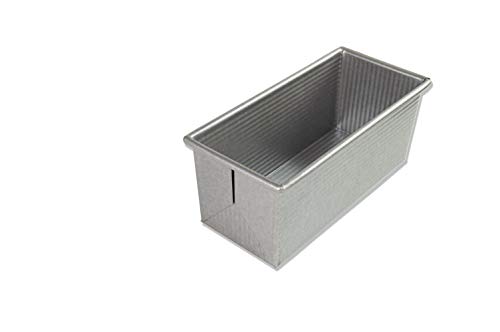
USA Pan Bakeware Loaf Pan — Where the Pros Peak for Quick Breads
Choose this coated mid-tier pan and the sticking con largely leaves your life, while even browning keeps the dark-pan con in check for most batters. Best for: sticky-batter regulars who will wash gently. Not suited for: rough communal kitchens, where its coating con returns in full.

Nordic Ware Natural Aluminum Loaf Pan — Where the Cons Shrink to Preparation
Bare aluminium deletes the coating and thermal cons entirely and keeps the longevity pro at maximum; its price is the greasing and lining habit. Best for: buy-once bakers and yeast loaves. Not suited for: bakers who want zero-preparation release.
Le Creuset Stoneware Loaf Pan — Maximum Presentation, Maximum Weight
Stoneware adds a serving pro no metal can match, and charges for it in lift weight and thermal courtesy. Best for: hosts who bake and serve in one dish. Not suited for: anyone for whom the hot lift is already a concern.

Pyrex Basics Glass Loaf Pan — Versatility Pro, Patience Con
Glass spreads its pros across sweet, savoury, and chilled work at an entry tier, and asks for prompt turning-out and shock-free handling in return. Best for: multi-tasking small kitchens. Not suited for: forgetful bakers who leave loaves sitting in the pan.
How to Buy Smart, Given the Cons
Buying smart in this category means choosing which cons you are willing to live with, because every material keeps some and cancels others. If sticking is your nightmare, buy release — coated metal or glass — and accept the care terms as the corresponding con. If longevity is your religion, buy bare metal or stoneware and accept preparation and weight as yours. If your oven browns fiercely, buy pale and let dark pans be someone else’s bargain. Confirm the size against your recipes, inspect the rim and handles as the safety features they are, and set the tier by your frequency: entry for learners and occasionals, mid for weekly bakers, premium where serving and decades are genuinely in view. The comparisons in loaf pan reviews across the materials show these trade-offs expressed in specific pans, and the single-pan deep dive in our loaf pan review shows how one category balances them.
Setup and Care That Reduce the Cons
Most cons on the list above shrink under a handful of habits. A parchment sling — one strip across the pan’s width, ends overhanging — converts release from a hope into a procedure and protects coatings from portioning knives. A brief rest before turning out, followed by actually turning out, keeps crusts crisp and centres set, especially in heat-holding glass and stoneware. Soaking before scrubbing keeps corners clean without violence to any surface. Drying metal thoroughly keeps it bright; storing pans with a cloth layer between coated surfaces keeps coatings unmarked; lifting always with dry oven gloves to a prepared landing keeps the one safety con theoretical. Respect maker guidance on coated and silicone heat limits as a matter of routine, keep glass and stoneware away from sudden cold, and weigh your batters with the help of kitchen scales for baking if consistency is the pro you most want to protect. None of these habits is a chore in itself; together they are the difference between the pros column as written and the cons column as feared.
Bottom Line
The loaf pan’s pros are about what it makes possible — the sliceable shape, the wide and forgiving repertoire, the consistency, the economy, the decades of uncomplaining service. Its cons are about fit — size against recipe, material against batter, surface against sink, weight against wrists — and fit, unlike possibility, can be chosen. That asymmetry is why the category endures and why this article’s verdict is favourable without being blind: choose the pan whose cons your kitchen can shrug at, and the pros arrive in full, loaf after loaf, for years. Choose carelessly, and the same pan will seem to argue the opposite case. The tool is honest; the match is everything. If you take one practical step from this page, make it the probation bake described in the companion guides: one familiar loaf, baked attentively in the pan you are judging, tells you more about your personal balance of pros and cons than any list — including this one — ever can.
Pros and Cons by Material, in One Place
Because so many of the trade-offs above are really material trade-offs wearing general clothing, it is worth gathering them plainly. Bare metal’s pros are longevity, utensil tolerance, gentle browning, and indifference to thermal shock; its cons are preparation duty on sticky batters and a release that depends on the baker’s greasing hand. Coated metal’s pros are effortless release, assertive browning for crust lovers, and the easiest washing in the category; its cons are a mortal surface, care terms that communal kitchens break, and browning that can bully sweet batters. Glass’s pros are visibility, sweet-to-savoury versatility, and an accessible tier; its cons are retained heat that punishes dawdling, and a strict dislike of sudden temperature change. Stoneware’s pros are steady heat, moist crumbs, and oven-to-table beauty; its cons are weight at the lift and the same thermal courtesy glass requires. Silicone’s pros are release without preparation and feather weight; its cons are soft walls that support rising dough poorly, muted browning, a wobbly full lift that wants a tray beneath, and maker heat limits to be respected. Read across the five and a pattern emerges: every material trades exactly one kind of effort for another, and the baker’s task is not to find the effortless pan — there is none — but to choose the effort their kitchen minds least.
Which Cons Are Real, and Which Are User Error in Disguise
A fair pros-and-cons account should separate the pan’s genuine faults from the failures bakers pin on it. Genuine: coatings wear, glass and stoneware fear thermal shock, dark pans brown hard, a full pan is heavy, and the shape does one job. Not the pan’s fault: the loaf baked in the wrong size and blamed for sinking; the ungreased sticky batter blamed for sticking; the recipe changed in four ways and blamed for inconsistency; the hot pan set on a wet counter and mourned as fragile; the coating portioned with a steak knife and described as defective. This separation matters because it tells you where your money and attention belong. The genuine cons are answered at purchase, by material and size. The disguised ones are answered by habit — parchment, preparation, a trivet, a recipe card with the pan’s name written on it. Bakers who learn to tell the two apart stop replacing pans and start enjoying them, which is why experienced owners’ pros-and-cons lists are so much shorter than beginners’ — experience deletes the second category entirely.
How the Balance Shifts With Experience
The pros and cons of the same pan are not static across a baker’s life, and a complete account should say so. In the first month, the cons loom largest: preparation is a new chore, the pan’s browning personality is unknown, the lift is unfamiliar, and every loaf is partly an experiment. By the sixth month of regular baking, preparation has become reflex, the browning is a known quantity the baker exploits rather than endures, and the lift is a practised motion with gloves and a cleared counter. The pros, meanwhile, compound: the repertoire widens, the freezer fills, the signature loaf emerges, and the consistency that the pan provides starts visibly improving everything else the baker attempts. This is why second-hand verdicts on loaf pans skew so warm — the owners reporting have passed through the con-heavy season into the pro-heavy one. It is also a practical buying hint: judge a pan after a probation month of real use, not after its first bake, and choose habits early that shorten the con season to a few loaves. The guides in this series are written to do exactly that, from the loaf pan buying guide’s first-month plan onward.
The Environmental and Economic Cons, Examined
Two cons are sometimes raised that deserve examination rather than repetition. The first is environmental: that a coated pan is a disposable object in a way bare metal is not. There is truth in the direction of the claim — a coating has a lifespan, and a pan bought for its coating eventually becomes a lesser pan — but the scale matters. A quality coated pan serves for years, its metal body is recyclable at the end, and the baking it enables displaces packaged goods with their own footprints. The honest conclusion is a preference, not a prohibition: buyers who weight longevity and minimal waste most heavily should choose bare metal, glass, or stoneware, and this article’s pros column for those materials already reflects the advantage. The second examined con is economic in the opposite direction — that a premium pan is an indulgence disguised as a tool. For a weekly baker, the arithmetic of decades of use makes even premium tiers inexpensive per bake; for a twice-a-year baker, the same pan is indeed mostly indulgence, which is why every buying recommendation in this series is indexed to frequency. Cons, like pros, are allowed to be conditional; pretending otherwise would make for a tidier article and a worse one.
Pros and Cons for Specific Loaves
Finally, the balance reads differently loaf by loaf, and specific bakers deserve specific answers. For banana bread and its sticky cousins, the pan’s pros are at their height and the sticking con at its most relevant — this is the bake that justifies coatings and parchment slings, and the one where pale pans protect a sugary crumb. For sandwich bread, the shape pro is absolute and the cons nearly vanish, because yeasted dough releases obligingly and asks only for structure and even heat; the pullman variant exists because this loaf’s bakers wanted the last imperfection — the domed top — engineered away. For meatloaf, the pan’s versatility pro shines and its cons change costume: release matters less than easy cleaning and a surface that tolerates juices and firm washing, which is why so many households retire an older metal pan to permanent savoury duty. For pound cake and the dense, buttery family, evenness is the pro that matters and hot spots the con that threatens, favouring substantial, pale pans. A baker who knows their loaf can read this entire article through it — and should, because a pros-and-cons list is only ever as useful as the use case it is weighed against.
A Word on Warping, Dents, and Other Physical Failings
One family of cons belongs to construction rather than material, and it is worth naming separately because it is the family most completely avoidable at purchase. Thin, flimsy pans warp under heat — twisting with a complaint as the oven works — and a warped pan then bakes unevenly forever, rocking on its rack and pooling batter toward one end. Light pans dent when dropped or stacked under weight, and dents become the sticking points and hot spots of every later bake. Handles and rims on the cheapest pans can be sharp enough to make the gloved lift less secure, compounding the category’s one safety con. None of this is mysterious or fated: substantial gauge, rolled or reinforced rims, and smooth construction are visible, describable qualities, present in honest listings and absent in vague ones, and they are available well below the premium tier. The baker who spends two minutes reading for construction buys their way out of this entire family of cons, which is the best return on two minutes in the whole category — a point the bakers browsing Nordic Ware bakeware and similar ranges will see demonstrated across whole product lines built on exactly that substance.
The Cons Nobody Mentions: Opportunity and Expectation
Two final cons are real, rarely listed, and worth an honest paragraph each. The first is opportunity cost in its smallest, truest form: a loaf pan in the cupboard is a standing suggestion. It suggests baking on weekends when the household might have rested, suggests a second loaf when one would do, suggests that the bananas must be rescued tonight. Most owners experience this suggestion as pleasure, but a candid account admits that the pan changes behaviour, and not every household wants its behaviour changed by its bakeware. The second unlisted con is expectation: the first good loaf recalibrates a family’s standards permanently. Bought bread that was perfectly acceptable in spring is quietly judged by autumn; a household member becomes, in the kindest sense, the baker, with a baker’s duties at holidays and gatherings. These are the cons of success, and they belong in the article precisely because the tool usually succeeds — a pan that did nothing would generate no expectations at all. Weigh them lightly, but weigh them: you are not only buying a vessel, you are voting for a household in which loaves happen.
Scoring the Balance, Profile by Profile
If the two columns were scored for the profiles this series returns to, the pattern would be plain. The weekly quick-bread baker scores the pros heavily — repertoire, consistency, economy, and release with the right pan — against cons that preparation habits mostly erase: a clear win. The sandwich-bread baker scores the shape pro as decisive on its own, with the coating question absent and the lift the only con of daily note: the clearest win in the category. The host scores presentation and versatility high, accepts weight and thermal care as the tariff, and wins whenever gatherings are frequent. The occasional baker’s score is the closest call — the pros are genuine but thinly collected — and it resolves, as this article has argued, into a tier decision rather than a yes-or-no one: a sound entry pan makes the small win cheap. The committed non-baker’s score needs no table. Presenting the balance this way is not false precision; it is a reminder that pros and cons are not properties of the pan alone but of the pan in a particular kitchen, and that your verdict should be read off your own profile, not off a stranger’s enthusiasm or complaint.
Loaf Pan: Weighing the Trade-Offs in Daily Use
Start with how the strengths and frustrations of a {p} balance out in a real kitchen. Most coverage of a loaf pan concentrates on the first week of ownership, yet the decisions that matter most tend to surface later, once the loaf pan has to earn its place in an ordinary weekday routine rather than a carefully staged first attempt. Write down the three jobs you expect it to do most often, in the order you actually do them, and judge every claim you read against that short personal list instead of against a generic ideal.
Finally, plan the first fortnight deliberately. Use the loaf pan for one familiar job first, so you have a baseline you trust, then introduce the harder cases one at a time and note what changes. Small adjustments to arrangement, timing, quantity or preparation usually close most of the gap between disappointing first results and the performance the design is capable of. That short learning period is also the fairest test of the trade-offs that only show up after weeks of use: if the routine has not settled by the end of it, the mismatch is real, and it is better to know while returning or exchanging is still straightforward.
When you check listings such as USA Pan Bakeware Loaf Pan, Nordic Ware Natural Aluminum Loaf Pan and Le Creuset Stoneware Loaf Pan, use them as worked examples: run through the same checks below on each one in turn, so the comparison stays honest and like for like rather than based on whichever listing happens to shout loudest.
Measure before you commit. Note the footprint, the clearance above and behind the spot where the loaf pan will live, and the route you will carry it by when it is hot, full or awkward. A loaf pan that technically fits but blocks a cupboard door, crowds a neighbouring appliance or has to be dragged across a worktop every time will quietly fall out of use, whatever its merits on paper. In the Kitchen Cookware category especially, a few centimetres of clearance and a sensible storage plan separate a daily tool from a bulky regret.
Work through a realistic scenario, not a best case. Picture the busiest version of the job: more people to serve, less time than planned, ingredients or materials that are slightly out of the ordinary, and a clean-up waiting at the end. Ask how the loaf pan behaves at that upper edge, because a model that only shines on a small, simple load will disappoint precisely when you need it most. If the honest answer is that you would split the job into batches or fall back on an older method, factor that into the decision now rather than discovering it later.
Edge cases deserve a deliberate pass. Think about the odd shapes, the thicker or thinner than usual loads, the leftovers, the second helping and the guest with different preferences. A well-chosen loaf pan handles the exceptions gracefully, or at least predictably, while a poor match turns every exception into a workaround. List your two or three most common exceptions in advance and check, from the manual or the listing details, that nothing about them is ruled out by size, shape, material or care requirements.
Maintenance decides how long the good results last. Set a simple rhythm: a quick wipe or rinse after each use, a deeper clean on a fixed day, and a periodic check of the parts that move, seal or bear weight. A loaf pan that needs fiddly disassembly for basic care will be cleaned less often, and performance drifts long before anything actually breaks. Prefer designs where the parts that get dirtiest are the parts that are easiest to reach, and be honest with yourself about which cleaning steps you will genuinely keep up.
Troubleshooting is easier when you expect the usual failure points. With any loaf pan, the recurring problems tend to cluster in the same places: uneven results from overloading or poor arrangement, wear showing first on the parts handled most often, and small annoyances with lids, seals, handles, controls or fittings that only appear after repeated use. Before buying, look for whether those wear parts can be cleaned properly, replaced or worked around, and whether the instructions address them directly rather than pretending they never happen.
Use a short decision checklist to finish. One, does it fit the space and the storage you really have. Two, does it handle your three most common jobs without a workaround. Three, do the edge cases you listed stay manageable. Four, can every wear part be cleaned or replaced without drama. Five, would you still choose it if a friend described the same drawbacks in their own kitchen. A loaf pan that passes all five is a sound buy; one that fails two or more is a compromise you are choosing with open eyes, which is a very different thing from being surprised later.
One more check worth doing with any loaf pan is to read the care and safety instructions in full before the first use, not after the first problem. The manual for a loaf pan usually states plainly which materials, loads and cleaning methods are off limits, and most early disappointments trace back to a line in those pages that was skimmed. Five minutes with the instructions is the cheapest performance upgrade available in the whole Kitchen Cookware category.
Frequently Asked Questions
What is the biggest disadvantage of a loaf pan?
For most owners it is the combination of sticking and size sensitivity: a sticky batter in an unprepared pan, or a good batter in the wrong-sized pan, produces the category’s two classic failures. Both are preventable — coatings and parchment slings answer the first, and buying the size your recipes specify answers the second — but they are the cons that demand a baker’s attention rather than merely their money.
Do non-stick loaf pans lose their coating quickly?
Only under treatment the coating was never promised to survive: metal utensils, abrasive scrubbing, cutting in the pan, and disregard for the maker’s guidance. In a household that washes gently and portions loaves after turning them out, a quality coating serves for years. In a rough communal kitchen it will tire early, which is why this article treats coating choice as a household-habits question first and a product question second.
Are glass loaf pans worse than metal ones?
Not worse — different, with a distinct balance of pros and cons. Glass offers visibility, versatility across sweet, savoury, and chilled dishes, and an entry tier, in exchange for slower, heat-retaining baking that requires prompt turning-out and protection from sudden temperature changes. Metal offers responsiveness, crisper crusts, and indifference to thermal shock. Bakers who understand the trade usually enjoy whichever they chose; bakers who expect one material to behave like the other are the ones who complain.
Is a loaf pan hard to clean?
It is a deep pan with corners, so it asks slightly more than a flat sheet: a soak loosens baked-on batter, after which every material in this article washes without heroics. Coated pans clean easiest and demand the gentlest tools; bare metal tolerates the firmest scrubbing; glass and stoneware sit between, easy to clean but heavy in the sink. Baked-on corners are a soaking problem, not a scrubbing problem, once the habit forms.
Can the cons be avoided by buying a premium pan?
Some can be softened — premium construction resists warping, better coatings release longer, stoneware adds a serving role — but the core trade-offs are material physics, not price defects: coatings remain surfaces, glass remains shock-sensitive, full pans remain heavy. Money buys quality within a material; it does not repeal the material’s nature. The smarter spend is the right material at the tier your frequency justifies.
Who should avoid loaf pans altogether?
Households that genuinely never bake, cooks whose loaf needs are fully met by a bread machine or a bakery they love, and kitchens with literally no storage corner to spare. Everyone else — including very occasional bakers, who are well served by a sound entry-tier pan — will find the pros column heavier than the cons, provided the size and material are matched to their recipes and habits.
Related reading: how to choose a loaf pan step by step, the best USA Pan bakeware range, and stand mixers for bread dough.
A last word on fairness, since a pros-and-cons article lives or dies by it. Nothing in the cons column above was softened to protect the category, and nothing in the pros column was inflated to sell it: the sticking is real, the coating mortality is real, the heavy hot lift is real — and so are the slices, the repertoire, the rescued bananas, and the decades. If your kitchen’s verdict differs from this article’s, the likeliest reason is that your profile differs from the profiles scored here, and that is not a disagreement but the method working as intended. Weigh your own columns, choose the pan whose cons you can shrug at, and let the loaves arbitrate the rest.


