This page contains affiliate links, and if you buy through them we may earn an affiliate commission.
Why Choosing a Refrigerator Deserves More Care Than Any Other Appliance
A refrigerator is the only appliance in your home that never rests. It runs through the night, through holidays, through heat waves and power flickers, and it is expected to do that for a decade or longer without drama. When a refrigerator fails, the cost is not just the repair bill or the replacement. It is a freezer full of spoiled food, a week of eating out of a cooler, and the stress of making a large purchase under time pressure. That is why the shoppers who end up happiest with this purchase are rarely the ones who chased the most features. They are the ones who weighed reliability, service support, and honest day-to-day usability first, and treated the glossy extras as a bonus rather than the point.
This guide is built around that order of priorities. Instead of stacking up models by screen size or door gimmicks, we look at six refrigerator lines that owners consistently describe as dependable and pleasant to live with, and we explain the trade-offs of each one in plain language. You will find French door models that dominate the market for good reasons, a premium line built around quiet compressors and tight temperature control, and value-oriented lines that skip the theatre and focus on cold storage that simply works. Along the way we cover the unglamorous details that actually decide whether a refrigerator suits your home: whether it fits through your front door, how loud the compressor is at two in the morning, how the ice maker behaves in year three, and how easy it is to find a technician when something does go wrong.
One thing you will not find here is a list of star scores pinned to each model. Star averages scraped from retailer pages shift constantly, mix together different model years, and say very little about the thing that matters most, which is how a refrigerator performs in its fifth and eighth year. Where owners praise or criticize a line, we describe that reputation in words, because words can carry the nuance that a number cannot. A line can be loved for its quiet running and criticized for its ice maker at the same time, and you deserve to know both halves before you spend this kind of money.
We also want to be upfront about how to use this guide. Read the buying criteria first, especially the sections on measuring your space and on reading reliability claims with a cool head. Then look at the six picks and match them to your household: how many people you feed, how you shop, whether you entertain, and whether your kitchen layout rewards a wide French door cabinet or a slimmer configuration. The comparison table near the end condenses the differences, and the questions and answers cover the mistakes we see buyers make most often. By the end, you should know not only which refrigerator you want, but why it fits your kitchen and your life.
A final note on scope: every pick here is a full-size household refrigerator line sold through mainstream channels, because that is where parts, service, and honest owner history exist in depth. Compact, retro-styled, and garage-specialty units can be charming, and a few are genuinely good, but they live in a different ownership world with thinner support, and they deserve a guide of their own rather than a borrowed place in this one.
In this guide
What to Look for Before You Fall for a Pretty Door
Measure the Whole Journey, Not Just the Kitchen Alcove
The single most common refrigerator disaster has nothing to do with cooling. It is the delivery crew standing in a hallway with a beautiful new appliance that cannot make the turn into the kitchen. Before you compare a single feature, measure three things: the alcove where the refrigerator will live, including height under any overhead cabinet; every doorway, hallway corner, and stairwell turn between the street and that alcove; and the space the doors and drawers need to swing and slide once the unit is in place. Write the numbers down and keep the tightest one in front of you while you shop. A model that fits the alcove but not the front door is not a model that fits.
Pay special attention to depth. Standard-depth refrigerators project well past typical counters, which gives generous capacity but can crowd a narrow kitchen and block a walkway when the doors open. Counter-depth models sit nearly flush with cabinetry, look built-in, and are far kinder to tight floor plans, but you give up several cubic feet, usually in the freezer. Neither choice is wrong. The mistake is choosing by photograph instead of by tape measure. Also check the hinge side and door swing against islands and walls: a French door that opens against a wall may never reach the angle needed to pull out the crisper drawers, which turns a small annoyance into a daily one.
Pick a Configuration That Matches How You Actually Shop
French door models, with two half-width doors over a bottom freezer drawer, dominate because they suit the way most households eat now: fresh food at eye level, wide shelves for platters and pizza boxes, and frozen goods in a drawer you open less often. Side-by-side models split the cabinet vertically, put frozen food at eye level too, and work better in kitchens where a wide door swing is impossible, though the narrow freezer column struggles with wide items like a frozen turkey or a sheet pan. Top-freezer models remain the quiet value champions: simpler, often more efficient, and easier to repair, at the cost of bending for everyday fresh items. Bottom-freezer single-door models split the difference.
Think honestly about your habits. If you cook from fresh ingredients most nights and freeze mainly leftovers and ice cream, French door storage will feel luxurious. If you batch-cook and freeze in bulk, drawer capacity and organization matter more than door bins. Households that buy warehouse-club quantities should look hard at total freezer volume and whether the drawer has dividers that keep small items from vanishing into an icy pile. There is no universal best layout, only the layout that matches your groceries.
How to Read Refrigerator Ratings and Reliability Claims With a Cool Head
Because this guide grew out of the question of which refrigerators are rated best, it is worth slowing down and explaining how to read those ratings like an adult. Retailer star averages are the weakest evidence available. They blend several model years into one score, they over-represent the first ninety days of ownership when almost everything works, and they attract reviews from people at the two emotional extremes. A refrigerator with a slightly lower average but thousands of calm, detailed reviews from owners three and five years in is usually a safer bet than a newer model riding a wave of honeymoon enthusiasm.
Long-term reliability surveys from consumer organizations and repair networks are stronger evidence, because they track failure rates across years and brands. Read them for patterns rather than crowns. The patterns that repeat are instructive: ice makers, especially the through-the-door kind mounted in a refrigerated compartment, are the most repaired component across nearly every brand; complex features add failure points; and brands differ less in whether their machines ever break than in how quickly and affordably they can be fixed when they do. That last point is the one shoppers underweight. A refrigerator from a line with a dense local service network and readily available parts is, in real life, more reliable than a marginally sturdier machine that takes three weeks to get a control board.
So when you read that owners praise a line for dependability, ask three follow-up questions. How large and how old is the pool of owners saying it? Are the complaints about annoyances, like noisy fans or fiddly shelves, or about core failures, like warm compartments and dead compressors? And does the brand have authorized technicians within a reasonable distance of your home? Apply that filter to every pick below and to every review you read elsewhere, and the marketing fog thins considerably. We have applied it for you in the trade-offs under each model, describing reputations in plain words rather than pasting a score that would be out of date before the season changes.
Ice and Water: The Feature Most Likely to Make You Call a Technician
Through-the-door ice and water is the convenience buyers ask for first and the system owners complain about most. Ice makers that live in the refrigerator door sit in a compartment that must be kept below freezing inside a space held just above it, an engineering compromise that explains much of their repair history. Dual ice makers, with a second unit in the freezer, ease the load and suit households that entertain. Craft-style slow-melting spheres and cubed-plus-crushed options are pleasant luxuries, but every variant adds parts. If reliability is your top priority, a freezer-based ice maker with a simple dispenser, or even a humble ice bin, is the configuration with the calmest track record.
Water filtration deserves a clear-eyed look too. In-door dispensers rely on proprietary filters that need replacing roughly twice a year, an ongoing cost and chore that some owners quietly abandon, at which point water quality and flow both suffer. Check how easy the filter is to reach and whether the refrigerator will still dispense with the filter removed. Households with whole-home filtration sometimes prefer models without an internal filter at all. None of this makes dispensers a bad choice; it makes them a choice to enter with open eyes, knowing the convenience is rented, not bought outright.
Noise: The Specification You Will Hear Every Night
Open-plan living has turned refrigerator noise into a genuine quality-of-life issue. Modern inverter compressors, which run continuously at variable speed instead of cycling on and off, are generally quieter and steadier than traditional single-speed designs, and they avoid the temperature swings of stop-start cooling. Fans, ice dropping into a bin, and water valves refilling the maker each add their own sounds, and some of the loudest moments happen at night when the house is silent. If your kitchen opens onto a living room or a bedroom sits nearby, prioritize lines known for hushed operation, and be skeptical of any refrigerator whose owners repeatedly mention humming or buzzing in their accounts, because that is the complaint that never fades with familiarity.
Temperature Control, Shelving, and the Daily Ergonomics
Beyond the headline features, the daily pleasure of a refrigerator lives in small engineering: independent cooling for the fresh and frozen sections that keeps humidity where produce wants it; a wide deli or pantry drawer with its own temperature setting for meats and cheeses; shelves that slide, fold, or split to swallow a tall cake or a stockpot; door bins honest enough to hold a gallon jug without flexing; and interior lighting bright enough to end the archaeology at the back of the bottom shelf. Crisper drawers with real humidity controls keep greens alive noticeably longer, which is money saved every single week. When you read the picks below, weigh these touches heavily. You will use them ten thousand times, long after you have forgotten the door has a screen.
Energy Use and the Real Cost of Cold
A refrigerator’s purchase price is only the down payment. The rest arrives monthly, on your electricity bill, for fifteen years. Modern inverter models sip power compared with machines from two decades ago, and the difference between an efficient unit and a thirsty one can quietly exceed the price gap between two models over their lifetimes. Read the yellow energy guide figures as a comparison tool rather than a promise, since your actual consumption depends on room temperature, how full the cabinet is, and how often children stand in front of it conducting inventory with the doors wide open. Features that add convenience can add draw: through-the-door ice, extra displays, and always-connected smart systems each take a small continuous toll. None of this should scare you away from features you will genuinely use, but it should end the habit of comparing only sticker prices. The cheapest refrigerator to buy is frequently not the cheapest refrigerator to own.
Warranties: Read the Sealed-System Line Twice
Refrigerator warranties come in layers, and the layer that matters most is the one covering the sealed refrigeration system: the compressor, evaporator, condenser, and connecting tubing. Many brands cover parts of that system for five years or longer, and some extend compressor coverage to a decade, while the general warranty on everything else may be as short as a single year. Before you buy, find the actual warranty document for the exact configuration you are considering and read what is covered, what is labor and what is parts only, and what the claim process looks like. A long sealed-system warranty from a brand with local technicians is a meaningful reliability signal, because manufacturers price warranties based on their own failure data. A short one is also a signal, and not a comforting one.
How We Chose These Six Lines
With hundreds of configurations on the market, a shortlist needs rules. Ours were simple. First, each line had to have a multi-year ownership record, not just a launch-season buzz, because refrigerators reveal their character in year four, not month four. Second, each line had to earn its reputation in words owners actually use: quiet, dependable, roomy, easy to live with, rather than merely scoring well in a single snapshot survey. Third, parts and service had to be realistically available, since a wonderful machine that cannot be repaired within a reasonable drive is a gamble, not an appliance. Fourth, each line had to offer something distinct, so the six together span the honest range of good choices: balanced performance, design freedom, freshness engineering, service-backed confidence, uncomplicated value, and proven practicality.
Just as important is what did not make the cut and why. Lines built primarily around enormous door screens were set aside, because the screen is the component most likely to feel dated and least likely to be repairable a decade in. Ultra-budget no-name imports were excluded for thin service networks, whatever their showroom appeal. And several perfectly decent models were passed over simply because they duplicated a pick already here without adding a distinct reason to exist. What remains is not the six most exciting refrigerators in the world. It is the six lines we would calmly recommend to a sibling, which is the only test that matters for an appliance expected to outlast two cars.
The Six Refrigerator Lines Worth Your Shortlist
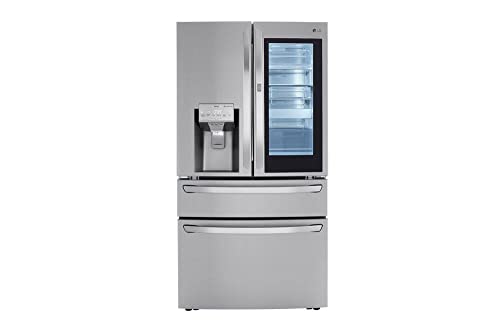
LG French Door Refrigerators, Including the InstaView Line
LG’s French door range is where many shoppers start, and the line has earned that position by balancing capacity, thoughtful storage, and a compressor design the company backs with unusual confidence. The InstaView panel, which lights the interior when you knock twice on the glass, sounds like a gimmick until you live with it: grabbing milk or condiments from the door-in-door compartment without opening the main cabinet genuinely reduces cold-air loss during the dozen small raids a refrigerator endures each day. Inside, the layout is wide and bright, with shelves that accommodate party platters and a full-width deli drawer that keeps cheeses and cold cuts at their own slightly colder setting.
The heart of the line is a linear inverter compressor, a design with fewer moving parts than a conventional reciprocating unit and a reputation among owners for quiet, even running. Temperatures stay steady, produce keeps well in the humidity-controlled crispers, and the freezer drawer glides on proper rails with a tiered organization that keeps small bags from disappearing. Many models offer a second ice maker in the freezer alongside the door dispenser, which makes the line a favorite for households that host often and hate rationing ice.
Strengths
- Quiet, steady inverter compressor performance that owners consistently praise
- Door-in-door access that cuts cold-air loss during quick grabs
- Generous wide shelving and a genuinely useful full-width deli drawer
- Dual ice maker options on many models for entertaining households
- Broad model range, so most kitchen sizes and budgets find a fit
Trade-offs
- The in-door ice maker shares the repair-prone design common to all door-mounted units
- Smart features and thin control panels add electronics some owners would rather skip
- Door bins on some models flex under a full gallon jug
Who it suits: This is the all-rounder of the guide, ideal for families who cook often, entertain regularly, and want a refrigerator that feels modern without demanding attention. If your kitchen is open to your living space, the quiet running is a real daily dividend. Check the current configuration and delivery options for the LG French door line when you check price on Amazon.

Samsung Bespoke French Door Refrigerators
Samsung’s Bespoke line starts from a different premise: a refrigerator is a large piece of furniture you look at all day, so it should look like you chose it. Interchangeable door panels in a range of finishes let the appliance match or deliberately contrast your cabinetry, and that design freedom has made Bespoke the line design-conscious buyers ask about first. Behind the panels, the French door cabinet is well executed, with a beverage center hidden behind the left door on many models, offering a filtered water dispenser inside the compartment and a pitcher that refills itself, a calmer arrangement than a through-the-door dispenser and one that keeps the exterior clean.
Storage flexibility is the other Bespoke strength. Several models include a flex compartment in the lower section that converts between freezer and refrigerator duty at the touch of a control, which is genuinely useful in households whose needs swing between holiday overflow and weekly fresh shopping. The dual ice maker produces both conventional cubes and smaller nugget-style bites that disappear quickly at gatherings. Owners describe the line as spacious and handsome, and the interior layout, with its wide shelves and deep door bins, suits big weekly shops.
Strengths
- Customizable panels that let the refrigerator match your kitchen design
- Internal beverage center keeps the front clean and the water cold
- Convertible flex compartment adapts between fridge and freezer duty
- Two ice styles on many models, including smaller chewable bites
- Wide, bright interior that handles warehouse-club shopping trips
Trade-offs
- Samsung’s service experience is uneven by region, so check local technician coverage before buying
- The smart screen and connected features on flagship models add cost and complexity many households never use
- Panel choices can complicate matching if you replace a single damaged door later
Who it suits: Choose Bespoke if your kitchen renovation deserves an appliance that looks intentional, and your household will use the flexible compartment and dual ice output. It rewards buyers who confirm local service support first. You can compare panel finishes and configurations when you check price on Amazon.

Bosch 800 Series Refrigerators
Bosch builds the 800 Series around restraint. The configuration linked here, the B36CL80SNS, is a 36-inch counter-depth four-door French door refrigerator with 20.5 cubic feet of total capacity in stainless steel, designed to sit flush, speak quietly, and hold temperature with the precision the brand’s German engineering reputation promises. The interior is not the largest in this guide, and Bosch makes no apology for that: the trade is a cabinet that disappears into a run of cabinetry and a freshness system that genuinely extends the life of produce. A dedicated VitaFresh drawer manages humidity and temperature for fruits and vegetables with a care that owners notice in how long greens and berries last.
Dual compressors and dual evaporators, hardware more common in built-in luxury brands, keep the fresh and frozen sections in genuinely separate climates, so freezer air never dries out your leftovers and refrigerator humidity never frosts your frozen goods. The result is food that keeps better and a machine that runs with a hushed, refined character. Stainless finishes resist fingerprints well, the ice maker lives in the freezer where ice makers are happiest, and the whole appliance feels engineered rather than decorated.
Strengths
- Separate compressors and evaporators for truly independent climates
- Counter-depth fit that looks built-in without built-in pricing theatrics
- Produce preservation that owners describe as noticeably better than average
- Quiet, composed operation suited to open-plan homes
- Freezer-based ice maker, the configuration with the calmest repair record
Trade-offs
- Total capacity is smaller than standard-depth rivals, a real limit for large families
- The premium positioning means fewer discounts and a higher entry point in its class
- Interior width will not swallow the very widest platters as easily as bigger cabinets
Who it suits: Bosch suits smaller households, serious home cooks who hate food waste, and anyone whose kitchen rewards a flush fit and quiet manners over raw volume. If freshness per cubic foot matters more than cubic feet, check price on Amazon.
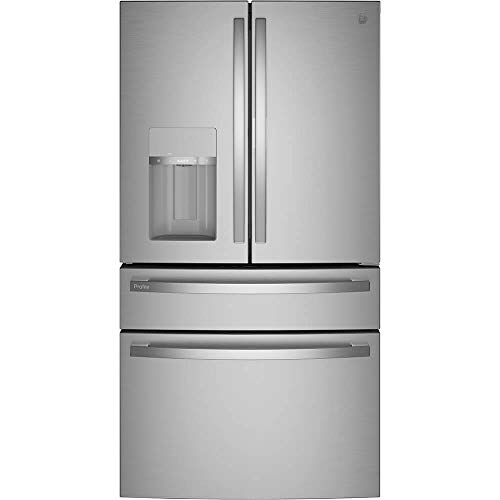
GE Profile French Door Refrigerators
GE Profile is the line American shoppers have trusted for generations, modernized. Its French door models focus on the mechanics of daily use: a hands-free autofill water dispenser that measures and fills a container while you unload groceries, door bins sized for real gallon jugs, and a temperature-controlled drawer that runs from chiller to soft-freeze depending on what you store. The through-door dispenser is one of the better executed examples, with a tall opening that accepts pitchers and a design that owners find straightforward to keep clean.
The strongest argument for GE Profile is not any single feature. It is the service network standing behind it. GE’s parts availability and technician coverage across the United States are as deep as the industry offers, which means that when a fan or a board eventually fails in year seven, the fix is measured in days, not in weeks of waiting on a shipped part. Owners rate the line highly for exactly this dependability of ownership, and for interiors that are easy to reconfigure as family needs change. Twin-chill evaporators keep climates separate, and the overall fit and finish feels a step above the mainstream.
Strengths
- Among the deepest service and parts networks available anywhere
- Hands-free autofill dispenser that genuinely earns its place
- Flexible, family-proof shelving and gallon-capable door bins
- Separate evaporators for fresher produce and less freezer odor transfer
- Wide availability in both standard and counter-depth sizes
Trade-offs
- Styling is handsome but conservative next to design-led rivals
- Door ice makers carry the usual category-wide reliability caveat
- Some advanced features sit behind higher trims, so compare configurations carefully
Who it suits: Pick GE Profile if you plan to keep your refrigerator for the long haul and want the reassurance that help is always nearby. It is the choice of pragmatists who still want their pragmatism to feel premium. Compare the current trims when you check price on Amazon.

Frigidaire Gallery 20 Cu. Ft. French Door Refrigerator
Frigidaire Gallery occupies the sensible middle of the market and serves it well. The model linked here is the Gallery 30-inch, 20 cubic foot standard-depth French door refrigerator in stainless steel with an internal water dispenser, a useful size for households that want French door access without a full-width cabinet. The line’s French door models emphasize fresh-food preservation with a crisper system designed to slow ethylene-driven ripening, adjustable shelving that rearranges without a wrestling match, and smudge-resistant finishes that survive households with children and dogs. The freezer drawer is honestly sized, the ice maker is a straightforward freezer-based design on many models, and the controls are refreshingly free of the tablet-on-a-door theatrics found elsewhere.
What Gallery owners emphasize in their accounts is value delivered without fragility. The machines are comparatively simple, which keeps both the purchase decision and long-term ownership calm: fewer exotic components, widely available parts, and technicians everywhere who know the platform. Interior lighting is bright, door storage is generous for condiments and drinks, and several models add a convertible drawer or a four-door layout for households that want a dedicated zone for snacks and drinks at kid height.
Strengths
- Strong fresh-food storage at a mainstream position in the market
- Simple, proven mechanicals with parts available almost everywhere
- Family-friendly finishes that shrug off fingerprints and smudges
- Bright, flexible interiors with genuinely adjustable shelving
- Four-door and convertible-drawer variants for snack-heavy households
Trade-offs
- Fit and finish feel workmanlike next to premium lines
- Compressor and fan noise is more noticeable than on the quietest rivals
- Fewer counter-depth choices than design-focused brands offer
Who it suits: Gallery is for busy families who want a refrigerator to be an appliance, not a project: big, bright, easy to clean, and easy to fix in ten years. If that brief sounds like your kitchen, check price on Amazon.

Frigidaire Gallery 28.8 Cu. Ft. French Door Refrigerator
The second Frigidaire Gallery model in this guide answers a different household from the compact Gallery pick above. This is the 36-inch, 28.8 cubic foot French door bottom freezer refrigerator in stainless steel, a full-size cabinet for families whose weekly shop fills every shelf and whose freezer drawer has to swallow bulk purchases without a packing puzzle. The extra capacity over the 20 cubic foot model is not a rounding difference: it is the gap between a refrigerator that copes with a big shop and one that welcomes it, with wide French door shelves for platters and pizza boxes and a bottom freezer sized for batch cooking.
What Gallery owners emphasize in their accounts is value delivered without fragility, and the large model keeps that character at scale. The machine stays comparatively simple, which keeps long-term ownership calm: fewer exotic components, widely available parts, and technicians everywhere who know the platform. Interior lighting is bright, door storage is generous for condiments and drinks, and the stainless finish suits a busy family kitchen that needs an appliance to work hard rather than perform. For households choosing between the two Gallery models here, the decision is honestly about width and volume: measure the alcove first, then buy the capacity the household will actually fill.
Strengths
- Generous 28.8 cubic foot capacity for large and bulk-shopping households
- Wide French door shelves that take platters and party trays
- Simple, proven mechanicals with parts available almost everywhere
- Bottom freezer drawer sized for batch cooking and bulk storage
- Mainstream positioning for a full-size French door cabinet
Trade-offs
- Full 36-inch width and standard depth will not suit compact kitchens
- Fit and finish feel workmanlike next to premium lines
- Fewer design flourishes than customizable-panel rivals
Who it suits: Large families, warehouse-club shoppers, and batch cooks who need maximum French door capacity from a mainstream, serviceable line. If the smaller Gallery above is the right idea in too little volume, this is the same idea at full size. See the current configuration when you check price on Amazon.
What Separates These Six Lines in Daily Life
Read together, the six picks divide along a simple axis: how much of the refrigerator’s job is preservation, how much is capacity, and how much is convenience. Bosch concentrates on preservation and quiet, flush-fit manners. LG and Samsung build around flexible, modern French door storage, with Samsung adding design freedom through its Bespoke panels. GE Profile leans on dispenser convenience backed by a deep service network. The two Frigidaire Gallery models make the capacity argument at two sizes: the 20 cubic foot model for households that want French door access in a 30-inch width, and the 28.8 cubic foot model for families whose weekly shop needs a genuinely large cabinet. None of these priorities is wrong; the right pick is the one whose priority matches the way the household actually shops, cooks, and entertains, which is why the matching section later in this guide matters as much as the reviews themselves.
Ownership: The Habits That Decide Whether a Good Refrigerator Stays Good
The difference between a refrigerator that hums along for fifteen years and one that fades at eight is often maintenance measured in minutes per year. Keep the condenser coils clean; dust-choked coils force the compressor to work harder, run hotter, and sound louder, and in homes with shedding pets this single chore matters more than any other. Wipe door gaskets a few times a year and check their seal with a sheet of paper: if the paper slides out easily at several points around the door, warm air is leaking in and the machine is paying for it every hour. Replace water filters on schedule, not when the flow slows to a trickle, because a saturated filter strains the dispenser system and quietly degrades taste.
Loading habits matter too. A reasonably full refrigerator holds its temperature better than a nearly empty one, since cold food itself is thermal ballast, but overpacking that blocks the interior vents creates warm pockets where food spoils early. Leave the vents breathing room, let leftovers cool before they go in but never leave them out long enough to be unsafe, and resist setting temperatures colder than recommended in the belief that colder is safer; it mostly buys compressor wear and frozen lettuce. Finally, know the sound of your machine when it is healthy. Owners who notice a new rattle, a longer run cycle, or a fan that suddenly goes silent catch small problems while they are still small, which is the cheapest reliability strategy ever invented.
Repair or Replace: A Rule of Thumb That Holds Up
When a failure does arrive, decide with arithmetic rather than sentiment. For a refrigerator under eight years old, a repair costing less than about a third of a comparable new machine’s price is usually worth doing, especially on the well-supported lines in this guide where parts are plentiful. Past ten or twelve years, or when the failure involves the sealed system on a machine already showing its age, replacement usually wins, because one major repair often introduces the next. Either way, the service networks behind lines like GE Profile and Frigidaire Gallery make the repair path more viable for longer, which is a quiet part of their value that never appears on a feature list.
Side-by-Side: How the Six Lines Compare
| Line | Best For | Depth Options | Ice Arrangement | Standout Quality | Main Compromise |
|---|---|---|---|---|---|
| LG French Door / InstaView | All-round family use and entertaining | Standard and counter-depth | Door dispenser, optional second maker in freezer | Quiet inverter compressor and door-in-door access | Door ice maker needs the usual care |
| Samsung Bespoke | Design-led kitchens and flexible storage | Standard and counter-depth | Internal beverage center, dual ice styles | Custom panels and a convertible flex compartment | Service quality varies by region |
| Bosch 800 Series | Freshness-focused cooks in smaller households | Counter-depth focus | Freezer-based maker | Dual compressors and outstanding produce keeping | Smaller total capacity |
| GE Profile | Long-term owners who value service support | Standard and counter-depth | Through-door dispenser with autofill | Deep parts and technician network | Conservative styling |
| Frigidaire Gallery 20 Cu. Ft. | Busy families wanting simple, roomy storage | Mostly standard-depth | Freezer-based maker on many models | Proven, easy-to-service platform | Less refined finish and more audible running |
| Frigidaire Gallery 28.8 Cu. Ft. | Large households and bulk shoppers | Standard depth, 36-inch | Bottom freezer drawer | Maximum Gallery capacity and universal serviceability | Few design flourishes |
Read the table as a map of priorities rather than a league ladder. If your kitchen is small and your cooking is produce-driven, the Bosch column will keep pulling your eye, and rightly so. If your household is large, your door opens fifty times a day, and a broken appliance is a logistical emergency, the service networks behind GE Profile and Frigidaire Gallery are worth more than any feature printed on a door. And if the refrigerator is the visual anchor of a renovated kitchen, Bespoke exists precisely for you.
black friday deals on kitchen storage and organization
Matching the Refrigerator to the Household
A few patterns are worth stating plainly. Households of four or more who shop weekly should favor standard-depth French door capacity and a freezer drawer with real dividers; the LG and Frigidaire Gallery lines serve that pattern well. Couples and smaller households cooking seriously from fresh ingredients will get more joy from Bosch’s freshness systems than from extra cubic feet they never fill. Anyone living far from a major city should weight the service question double, which pushes GE Profile and Frigidaire Gallery up the list regardless of feature taste. And households that entertain monthly should take dual ice seriously, because running out of ice is the one refrigerator failure your guests will definitely notice.
Whatever you choose, plan the unglamorous logistics before the delivery day. Confirm the delivery path measurements one final time, decide in advance whether the old unit is being hauled away, relocated to a garage, or sold, and clear the route of furniture and rugs. Keep a cooler and ice packs ready for the transfer, and give the new refrigerator several hours to settle and cool before loading it with a full shop. These small steps are the difference between a smooth upgrade and a stressful weekend.
One more household pattern deserves a mention, because it is increasingly common: the two-refrigerator home. Many families keep a simple, inexpensive second unit in the garage or basement for drinks, bulk storage, and holiday overflow, and that arrangement changes what the main kitchen refrigerator needs to be. With overflow handled elsewhere, a counter-depth model that once seemed too small becomes entirely workable, and the kitchen gains its clean lines back. If you go this route, keep the second unit simple and efficient, since garage temperatures punish compressors in summer and chill them into inefficiency in winter, and choose the main refrigerator for freshness and daily ergonomics rather than sheer volume. Households without that option should be honest about it and buy the capacity they truly use, in the kitchen, the first time.
kitchen measurement conversions cheat sheet
Capacity, Translated Into Grocery Bags
Cubic feet are a slippery unit, because two refrigerators with identical ratings can store very different amounts of actual food depending on shelf layout, bin design, and how much volume the ice system steals. As a rough orientation, a household of two manages comfortably in the high teens of cubic feet, a family of four usually wants the low-to-mid twenties, and bulk-buying households should look above that or plan on a secondary unit in the garage. But treat those bands as a starting question, not an answer. A well-organized smaller cabinet, like the counter-depth Bosch in this guide, can out-store a larger box with clumsy shelving, and a freezer drawer with dividers holds more usable food than a cavernous one where everything avalanches. When comparing, look at shelf count, bin honesty, and door storage rather than worshipping the headline number.
Buying Mistakes That Cost Owners the Most
After the measurement failures covered earlier, the most expensive mistakes are quieter. The first is buying for the household you wish you had: the enormous entertainer’s refrigerator purchased by a couple who host twice a year, running half-empty and half-regretted for a decade. Buy for your ordinary week, and let the exceptional party borrow cooler space. The second is falling for a floor-model discount without asking why the unit is being cleared; outgoing models are fine, but confirm the warranty starts whole and the service network still supports the line, which is another reason the mainstream lines in this guide are safe harbor.
The third mistake is ignoring the water line. Homes with old, corroded shutoff valves or no valve at all turn installation day into a plumbing appointment, and a slow leak behind a refrigerator can damage floors for months before anyone notices. Inspect the connection before delivery, replace a tired valve while access is easy, and consider a leak alarm, a small device that costs little and guards the most expensive square meter in your kitchen. The fourth mistake is forgetting the old refrigerator’s exit: doors often must come off to pass hallways, and a plan made in advance saves the delivery crew, your door frames, and your temper.
The fifth is subtler and returns to this guide’s theme: choosing by a single aggregated score. A refrigerator is not a toaster. Its cost of failure is high, its lifespan is long, and its performance depends on your kitchen, your climate, and your service geography. The buyers who do this well treat ratings as one input among several, read the words owners write, check who will repair the machine locally, and then commit without second-guessing. That is exactly the process the six picks above were filtered through.
Delivery Day and the First Week With a New Refrigerator
When the truck arrives, inspect the unit before signing: photograph any dents, confirm the doors align, and check that shelves, bins, and the ice maker hardware are all present, because resolving a missing crisper is far easier on delivery day than in month two. If the refrigerator traveled on its side, let it stand upright for several hours before switching it on, so compressor oil can settle where it belongs. Once running, give it a full day to reach stable temperatures before loading it heavily, and verify both compartments with an inexpensive appliance thermometer rather than trusting the display, which reports the setting, not always the reality.
During the first week, listen. Learn the normal vocabulary of sounds, the soft fan, the occasional ice drop, the brief hum after a door closes, so that a genuinely new noise later stands out as information rather than anxiety. Register the warranty while the paperwork is in your hand, save the manual somewhere findable, and note the model and serial numbers in your phone. These twenty minutes of administration, done once, are what separate owners who get swift help in year six from owners excavating a drawer for a receipt while their ice cream melts.
Keeping Food Safe: Temperatures, Storage Order, and Power Outages
A refrigerator earns its keep in degrees. The fresh-food section should hold at or just below the widely recommended refrigerator temperature, cold enough to slow bacterial growth without freezing the lettuce, and the freezer should sit at its recommended zero mark so ice cream stays firm and frozen meat keeps its quality for months rather than weeks. Built-in displays are a guide, not a guarantee; an inexpensive thermometer in each compartment tells the truth, and checking it seasonally, especially when summer heat stresses the machine, is a habit worth forming. If a compartment consistently runs warm, check the simple culprits first: blocked vents, overpacked shelves, a gasket leaking at one corner, or coils wearing a blanket of dust.
Storage order matters as well. Ready-to-eat foods belong above raw meats, so nothing can drip downward onto them; raw poultry sits lowest of all, ideally in a tray that catches leaks. The door, the warmest real estate in the cabinet, is fine for condiments, butter, and drinks, but it is the wrong home for milk and eggs despite what molded door shelves suggest; those belong on an interior shelf toward the back where temperatures are steadiest. In the freezer, flat-freezing soups and sauces in bags saves remarkable space and thaws faster than tubs, and labeling with contents and date ends the mystery-meat lottery that every household claims to hate and most households play.
Power outages test both the machine and the household. A closed refrigerator protects food for a few hours and a full, closed freezer for far longer, which is why the golden rule is to keep the doors shut and resist inventory checks by flashlight. When power returns, trust temperature and time rather than optimism: perishables that sat too warm for too long should be discarded even when they look and smell fine, because the bacteria that matter are not the ones you can detect. Owners in outage-prone areas should weight reliability and insulation quality heavily when choosing among the lines in this guide, and a machine that holds temperature calmly through a long night without power is worth more than any screen.
Questions Buyers Ask Most
Which refrigerator configuration is most dependable over the long term?
Simpler configurations have the calmest ownership records, because every added system is another system that can fail. Top-freezer and basic French door models with freezer-based ice makers ask the least of their owners over a decade. That said, a well-made French door model from a line with strong local service, such as GE Profile or Frigidaire Gallery, is a perfectly sound long-term choice. Dependability in real life is the product of decent engineering plus fast, affordable repair when something eventually wears out.
Should I trust the star averages I see on retailer pages?
Treat them as a rough mood indicator, never as a verdict. Those averages blend model years, overweight the first months of ownership, and cannot tell you how a machine behaves in year six. Better evidence comes from long-term reliability surveys, from patterns in detailed owner accounts, and from asking local technicians which lines they can repair quickly with parts on the shelf. When owners praise a refrigerator in words, for quiet running or produce that lasts, that detail is worth more than any single number.
Is counter-depth worth the loss of capacity?
It depends on your floor plan and your shopping rhythm. In a narrow kitchen, the walkway space and the built-in look are worth several cubic feet, and households that shop twice a week rarely miss the volume. Large families who shop once a week or buy in bulk usually feel the loss immediately, especially in the freezer. Measure your current refrigerator’s contents honestly for a week; most households discover they use less space than they fear, but the ones who batch-cook should believe their freezers, not the showroom.
How can I keep a new refrigerator quiet and efficient?
Level the cabinet carefully so doors seal and the compressor sits as designed, leave the clearances the manual specifies around the cabinet, and keep the condenser coils free of dust, especially in homes with pets. Set the fresh section near the manufacturer-recommended middle setting rather than the coldest, which reduces compressor strain and noise alike. Finally, replace the water filter on schedule; a clogged filter makes pumps work harder and is a quiet source of both noise and slow dispensing.
When is the smartest time to replace a working refrigerator?
Replace on your schedule, not the appliance’s. Once a refrigerator passes the decade mark, needs a repair involving the sealed system, or starts struggling to hold temperature in warm weather, begin shopping while it still works. Buying without urgency lets you measure properly, compare configurations, and wait for a delivery slot that suits you, instead of accepting whatever is in stock on the worst weekend of the year. A planned replacement is almost always cheaper and calmer than an emergency one.
The Bottom Line
Every line in this guide earned its place by being good at the things that matter after the delivery crew leaves: holding temperature, treating produce kindly, running quietly, and being fixable by a real human in your town when the years accumulate. Choose LG for balanced modern performance, Samsung Bespoke for design freedom, Bosch for freshness and refinement, GE Profile for service-backed confidence, Frigidaire Gallery for uncomplicated family value, and the larger Frigidaire Gallery for maximum capacity at a mainstream position. Measure twice, read reputations in words rather than numbers, and buy the machine that fits your kitchen, your groceries, and your tolerance for drama.
Measure your doorway before your dreams, because the finest refrigerator ever built is only the right one if it can glide into your kitchen and hum quietly there for the next decade of family dinners.