Disclosure: topratedkitchenware.com is reader-supported. When you buy through links on our site, we may earn an affiliate commission from Amazon and other retailers, at no extra cost to you.
Where to buy
The six best enameld dutch ovens in this guide are all enameled cast iron pots you can order online today. Each name below links to its Amazon listing, and every detailed review further down carries its own link so you can check the latest price on Amazon for the exact pot you are reading about. Enamel colours and included accessories change between listings, so confirm the finish and the bundle on the listing itself before you order.
- Le Creuset Enameled Cast Iron Round Dutch Oven, 5.5 qt., Cerise — Best Overall. Best for cooks who want one premium pot for braises, stews and bread for years.
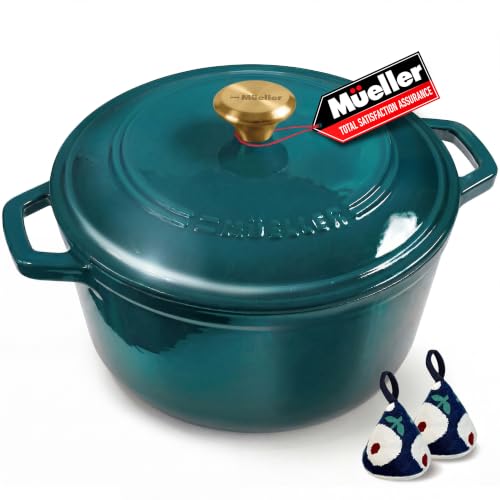
- Umite Chef 7QT Enameled Cast Iron Dutch Oven, Emerald — Best Large Capacity. Best for big families and batch cooking.
- Umite Chef 5QT Enameled Cast Iron Dutch Oven, Cream White — Best Mid-Size for Bread. Best for sourdough bakers and smaller households.
- Umite Chef 5QT Enameled Cast Iron Dutch Oven, Red — Best Classic Colour. Best for cooks who want the same mid-size pot in a traditional red finish.
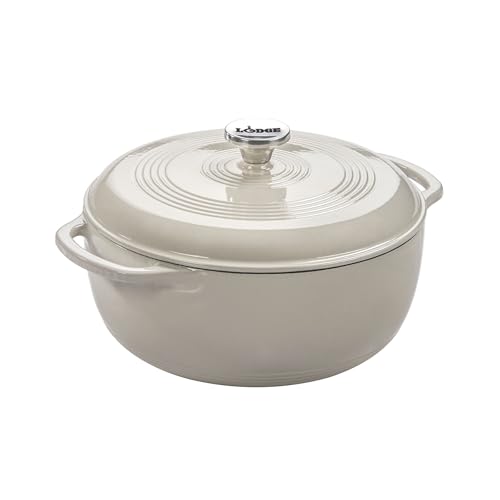
- Lodge Essential Enamel Cast Iron Dutch Oven, 6 Quart, Oyster White — Best Value. Best for buyers who want a trusted name and a moisture-sealing lid at a lower tier.
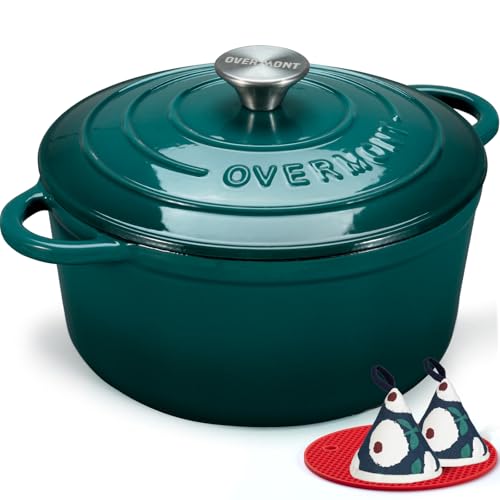
- Overmont Enameled Cast Iron Dutch Oven, 5.5QT, White — Best Bundle. Best for gift buyers and new owners who value a cookbook and potholders in the box.
Read the full guide ↓ for badges, honest trade-offs, a comparison table and the buying advice that helps you choose between them.
If you searched for the best enameld dutch ovens, you almost certainly meant enameled Dutch ovens — the cast iron pots coated inside and out with a smooth layer of enamel. That one missing letter changes nothing about what makes a good pot, so this guide uses the correct spelling from here on while answering exactly the question you asked: which enameled Dutch ovens are worth buying, in which size, and for which kind of cooking. An enameled Dutch oven combines the heat retention of cast iron with a surface that does not need seasoning, does not react with tomatoes or wine, and wipes clean far more easily than bare iron. It is the pot people reach for when a recipe starts on the stove and finishes in the oven, when bread needs a steamy enclosed bake, or when a stew should simmer for hours without anyone hovering over it.
The six pots below span the sizes home cooks actually use, from a handy five-quart format for smaller households to a seven-quart pot that swallows a whole chicken with vegetables around it. Two of them are colour variants of the same mid-size design, and we say so plainly rather than pretending they are different products. One is a long-established premium name, one is a dependable value name, and the rest sit in the busy middle where most buyers now shop. If you are comparing this shortlist with the wider field, our guide to Best Enameled Cast Iron Dutch Ovens looks at the same category through the material itself, while this page focuses on the everyday shortlist most households end up choosing from.
Key Takeaways
- Enameled cast iron needs no seasoning, handles acidic foods like tomatoes and wine without reacting, and moves from stovetop to oven in one pot.
- Size is the first decision: five quarts suits one to four people and most bread loaves, five and a half to six quarts is the versatile middle, and seven quarts is for crowds and batch cooking.
- The Le Creuset 5.5 qt. in Cerise is the premium benchmark here; the Lodge 6 Quart is the value anchor; the Umite Chef 7QT is the capacity pick.
- Included cotton potholders matter more than they sound — enameled cast iron handles get fully hot, and several picks here bundle them.
- Enamel can chip if you bang metal utensils against it or drop the lid, so wood and silicone tools and careful handling protect your investment.
- Colour variants are the same pot underneath: choose the finish you enjoy looking at, because performance does not change with the paint.
In this guide
Quick Picks
Six picks, six distinct jobs. The badges below are repeated in the detailed reviews, so you can follow a favourite from this summary straight to its strengths, trade-offs and verdict.
| Pick | Badge | Who it suits |
|---|---|---|
| Le Creuset Enameled Cast Iron Round Dutch Oven, 5.5 qt., Cerise | Best Overall | Cooks who want one premium pot for braises, stews and bread |
| Umite Chef 7QT Enameled Cast Iron Dutch Oven, Emerald | Best Large Capacity | Big families, batch cooks and whole-chicken roasts |
| Umite Chef 5QT Enameled Cast Iron Dutch Oven, Cream White | Best Mid-Size for Bread | Sourdough bakers and households of one to four |
| Umite Chef 5QT Enameled Cast Iron Dutch Oven, Red | Best Classic Colour | Cooks who want the mid-size pot in a traditional red finish |
| Lodge Essential Enamel Cast Iron Dutch Oven, 6 Quart, Oyster White | Best Value | Buyers who want a trusted name and a moisture-sealing lid |
| Overmont Enameled Cast Iron Dutch Oven, 5.5QT, White | Best Bundle | New owners and gift buyers who value a cookbook and potholders |
How These Picks Were Chosen
This is a research-led guide. We compared manufacturer listings and verified product data for enameled cast iron Dutch ovens currently sold to home cooks, and we shortlisted pots that cover the real decision points: capacity, included accessories, lid design where the listing states it, and the tier the pot sits in. We did not invent specifications. Every capacity, colour and included item mentioned in the reviews below comes from the verified listing title for that product, and where a listing does not state a detail — an oven temperature limit, for example — we leave it out rather than guessing. You should always confirm the current listing before buying, because bundles and finishes change.
We also weighted the things owners live with daily. A Dutch oven is heavy by design, so handles and bundled potholders are practical features, not decoration. A lid that seals in moisture changes how a braise turns out. A five-quart pot that is perfect for a couple becomes a frustration for a family of six, which is why this shortlist deliberately spans sizes instead of crowning one size for everyone. Finally, we were honest about duplication: two picks are the same Umite Chef five-quart pot in different colours, included because buyers genuinely choose between those finishes, and the reviews say exactly what is and is not different between them. Readers who want the British-spelling view of the same shelf will find it in Best Enamelled Dutch Ovens, which weighs the identical pots for a UK-leaning audience.
The 6 Best Enameld Dutch Ovens in Detail

Le Creuset Enameled Cast Iron Round Dutch Oven, 5.5 qt., Cerise
Badge: Best Overall
Strengths
- The benchmark name in enameled cast iron, with a 5.5-quart size that hits the versatile middle for most households.
- Round shape fits standard burners evenly and suits both stovetop braises and round sourdough loaves.
- Cerise is the classic deep red finish that anchors a stove-to-table presentation.
Trade-offs
- It sits in the premium tier of this category, well above the value picks in this guide.
- No potholders or extras are listed in the box — budget for good oven mitts if you do not own them.
- At 5.5 quarts it is generous for most families but not the batch-cooking answer a seven-quart pot is.
Mini spec box
- Material: enameled cast iron
- Capacity: 5.5 qt.
- Shape: round
- Colour: Cerise
Le Creuset is the name most people picture when they picture an enameled Dutch oven, and the 5.5-quart round pot in Cerise is the centre of that reputation. The size is the story as much as the brand: five and a half quarts browns a batch of beef cubes without crowding, holds a chicken with room for potatoes, and bakes a standard round loaf with space for the dough to expand. For a household of three to five, this is the capacity that gets used several times a week rather than saved for holidays. The enamel surface means tomato-based braises, wine reductions and lemony stews are all fair game, and the pot goes from burner to oven to table without a transfer.
Who does it suit? The cook who buys once and expects the pot to anchor the kitchen for a very long time, and who values the way a well-made lid and even cast iron reward low, slow cooking. The honest limitation is the tier: this is a premium purchase, and the listing does not bundle potholders or accessories, so the true cost of ownership includes the mitts and trivets you cook with. If the tier gives you pause, the Lodge below delivers the same category of cooking for considerably less commitment, and our comparison with Best Le Creuset Dutch Ovens Braisers explains where the premium does and does not show up in daily use.
Best for: cooks who want the premium benchmark in the most versatile size / Not suited for: buyers on a tight budget or anyone who needs true batch capacity
Check on Amazon to see the current listing for the Le Creuset 5.5 qt. in Cerise.

Umite Chef 7QT Enameled Cast Iron Dutch Oven, Emerald
Badge: Best Large Capacity
Strengths
- Seven quarts is the largest capacity in this guide — whole chickens, double stew batches and big bread bakes fit comfortably.
- The listing includes cotton potholders, a genuinely useful extra on a pot this heavy when full.
- Emerald is a distinctive deep green finish that stands out from the usual red and white options.
Trade-offs
- Full of stew, this pot is a two-handed, plan-ahead lift — not a casual one-hand move.
- The footprint needs storage room; measure a cupboard or shelf before ordering.
- For a household of one or two, the size is mostly empty space that still needs heating and washing.
Mini spec box
- Material: enameled cast iron
- Capacity: 7QT
- Includes: lid and cotton potholders (per listing title)
- Colour: Emerald
- Listed uses: bread baking, braising, stews, marinating
Capacity changes what you cook. At seven quarts, the Umite Chef stops being a pot you portion around and becomes a pot you plan weekends around: a double batch of chili for the freezer, a whole chicken surrounded by root vegetables, a pork shoulder with room for the braising liquid to circulate, or a large-format loaf for a gathering. The listing describes it as heavy-duty cookware for bread baking, braising, stews and marinating, and the included cotton potholders acknowledge the reality that a full seven-quart cast iron pot is one of the heaviest things in a home kitchen. Treat the potholders as essential equipment, not a freebie.
This pick suits larger households, enthusiastic batch cooks and anyone who regularly feeds a table of six or more. Its honest limitation is everyday ergonomics: for a Tuesday soup for two, you will reach for something smaller, and the pot needs a permanent home in your storage because moving it in and out of a high cupboard gets old quickly. If your cooking leans that big on a regular basis, compare it with the other oversize options in Best Large Dutch Ovens before deciding. For everyone whose gatherings are frequent and generous, this is the capacity pick of the six.
Best for: large families, batch cooking and whole-bird roasts / Not suited for: small households, small kitchens or cooks who struggle with heavy lifts
Check on Amazon to see the current listing for the Umite Chef 7QT in Emerald.

Umite Chef 5QT Enameled Cast Iron Dutch Oven, Cream White
Badge: Best Mid-Size for Bread
Strengths
- Five quarts is a natural fit for standard sourdough boules and everyday soups and stews for one to four people.
- Cotton potholders are included in the listing, as with the larger Umite Chef.
- Cream White is a calm, kitchen-neutral finish that suits lighter interiors.
Trade-offs
- A light interior and exterior show turmeric, tomato and paprika stains more readily than dark finishes.
- It will crowd if you try to brown a large batch of meat in one go — work in two batches instead.
- It is the same pot as the red version below; there is no performance reason to own both.
Mini spec box
- Material: enameled cast iron
- Capacity: 5QT
- Includes: lid and cotton potholders (per listing title)
- Colour: Cream White
- Listed uses: bread baking, braising, stews, roasting
The five-quart Umite Chef in Cream White is the right-sized pot for the way many people actually cook most weeks. A loaf of sourdough sits in it with the lid sealing in steam for a crisp crust. A soup for four fills it without splashing. A weeknight stew browns, simmers and serves from the same vessel, and the pot is noticeably easier to lift, wash and store than its seven-quart sibling. The listing positions it for bread baking, braising, stews and roasting, and that spread matches the size: this is a generalist pot for smaller households rather than a specialist.
It suits couples, small families and bread bakers who want enameled cast iron without the bulk of the big formats. The honest limitation is cosmetic and practical at once: cream enamel shows cooking stains more than dark colours do, and while staining does not affect performance, buyers who want a pristine-looking pot after a year of curries should choose the red or emerald finishes instead. Size is the other boundary — if you regularly cook for six, step up rather than cramming this pot to the rim.
Best for: sourdough bakers and households of one to four / Not suited for: crowd cooking or buyers who dislike visible staining on light enamel
Check on Amazon to see the current listing for the Umite Chef 5QT in Cream White.

Umite Chef 5QT Enameled Cast Iron Dutch Oven, Red
Badge: Best Classic Colour
Strengths
- The same proven five-quart format as the Cream White version, in the traditional red most buyers picture for this category.
- Red enamel hides the staining that light finishes show, keeping the pot looking smart longer.
- Cotton potholders are included in the listing.
Trade-offs
- Identical capacity and design to the Cream White pick — the choice is purely the finish.
- Five quarts still crowds when browning meat for a large group.
- A bold red pot is a visual commitment if your kitchen palette is muted.
Mini spec box
- Material: enameled cast iron
- Capacity: 5QT
- Includes: lid and cotton potholders (per listing title)
- Colour: Red
- Listed uses: bread baking, braising, stews, roasting
We include the red Umite Chef five-quart as its own pick because colour is a real buying decision in this category, and we would rather be transparent about it than dress the same pot up as a different product. Under the enamel, everything said about the Cream White version applies: the same capacity for loaves and weeknight stews, the same included potholders, the same heavy-duty positioning for bread baking, braising, stews and roasting. What changes is how the pot ages visually and how it looks on your stove. Red is the heritage colour for enameled cast iron, it photographs the way cookbooks taught us to expect, and it forgives the marks of tomato sauces and spice-heavy cooking far better than pale finishes.
Choose this version if you like the classic look or know your cooking leans on staining ingredients. Skip it — in favour of its cream sibling — only if the softer finish genuinely suits your kitchen better. The honest limitation is the shared one: five quarts is a mid-size pot, and households that regularly cook double batches should look at the seven-quart Umite Chef or the six-quart Lodge instead of overfilling this one and steaming meat that was supposed to brown.
Best for: cooks who want the mid-size pot in a forgiving, classic finish / Not suited for: anyone expecting a different product from the Cream White version
Check on Amazon to see the current listing for the Umite Chef 5QT in Red.

Lodge Essential Enamel Cast Iron Dutch Oven, 6 Quart, Oyster White
Badge: Best Value
Strengths
- Lodge is a long-established cast iron name, and this six-quart size is the family-friendly middle of the range.
- The listing specifically calls out a moisture-sealing lid and dual handles — both practical details for braises and safe lifting.
- Oyster White is a soft neutral that suits most kitchens and doubles as a serving dish.
Trade-offs
- No potholders are listed as included, despite the dual handles getting hot in use.
- The light finish will show cooking stains over time, like other pale enamels here.
- It sits in a lower tier than the premium pick, and buyers chasing heirloom positioning should look at the Le Creuset instead.
Mini spec box
- Material: enamel cast iron (per listing title)
- Capacity: 6 Quart
- Features named in listing: moisture-sealing lid, dual handles
- Colour: Oyster White
- Listed uses: bread baking, braising, marinating, slow cooking
The Lodge Essential is the value anchor of this guide: six quarts of enameled cast iron from a brand that has made cast iron its whole business for generations, at a tier most households can justify without a special occasion. Six quarts is a genuinely useful family size — a stew for five or six, a chicken with vegetables, a double batch of soup with leftovers planned. The listing’s mention of a moisture-sealing lid matters for braising, because a lid that holds steam in keeps braising liquid where it belongs instead of letting it escape and concentrate too fast, and the dual handles give you two secure grip points on a heavy, full pot.
It suits families who want the category’s benefits — no seasoning, acid-friendly enamel, stove-to-oven cooking — at the sensible end of the market. The honest limitation is the bundle and the finish: no potholders are listed, so plan on your own mitts, and Oyster White, like the Cream White Umite Chef, will carry the evidence of well-loved meals. Neither point affects how dinner turns out. If build heritage at a fair tier is your priority, this is the pick to beat, and readers weighing it against the premium end can see the full contrast in Best Made Dutch Ovens.
Best for: families who want a trusted name, a sealing lid and six useful quarts / Not suited for: buyers who want bundled accessories or a stain-hiding dark finish
Check on Amazon to see the current listing for the Lodge Essential 6 Quart in Oyster White.

Overmont Enameled Cast Iron Dutch Oven, 5.5QT, White
Badge: Best Bundle
Strengths
- The listing includes a cookbook alongside cotton potholders — the most complete starter bundle in this guide.
- At 5.5QT it matches the versatile middle size of the premium pick.
- White finish and included extras make it an easy, self-contained gift.
Trade-offs
- White enamel shows stains readily, like the other pale finishes here.
- The cookbook’s value depends on whether you actually cook from included booklets.
- Buyers who already own potholders and recipes are paying for a bundle they may not need.
Mini spec box
- Material: enameled cast iron
- Capacity: 5.5QT
- Includes: lid, cookbook and cotton potholders (per listing title)
- Colour: White
- Listed uses: braising, stews, roasting, sourdough baking
The Overmont competes on completeness. A 5.5-quart enameled cast iron pot is already the size most households use most; adding a cookbook and cotton potholders to the box turns it into the pick that is ready to cook the day it arrives, with no separate accessory order and no first-use scramble for something to protect your hands. The listing aims it at braising, stews, roasting and sourdough baking, which is exactly the repertoire a pot this size handles best, and the included cookbook gives a new owner a starting repertoire instead of a blank page.
It suits first-time Dutch oven owners, gift buyers, and anyone setting up a kitchen from near zero. The honest limitation is that bundle value is personal: experienced cooks with a shelf of cookbooks and a drawer of mitts gain less from the extras and might prefer to put the whole budget into the pot itself, where the Lodge and Le Creuset make their cases. The white finish carries the usual pale-enamel staining caveat. As a complete, giftable package at the most useful size, though, the Overmont earns its place on this shortlist.
Best for: new owners and gift buyers who want pot, potholders and recipes in one box / Not suited for: experienced cooks who already own the accessories
Check on Amazon to see the current listing for the Overmont 5.5QT in White.
Comparison Table
| Pick | Capacity | Colour | Listed extras | Link |
|---|---|---|---|---|
| Le Creuset Round Dutch Oven | 5.5 qt. | Cerise | None listed | Check on Amazon |
| Umite Chef Dutch Oven | 7QT | Emerald | Cotton potholders | Check on Amazon |
| Umite Chef Dutch Oven | 5QT | Cream White | Cotton potholders | Check on Amazon |
| Umite Chef Dutch Oven | 5QT | Red | Cotton potholders | Check on Amazon |
| Lodge Essential Dutch Oven | 6 Quart | Oyster White | Moisture-sealing lid, dual handles | Check on Amazon |
| Overmont Dutch Oven | 5.5QT | White | Cookbook, cotton potholders | Check on Amazon |
How to Choose the Right Enameled Dutch Oven
Start with capacity, because it is the one choice you cannot undo with technique. Count the people you feed most often, not the biggest gathering of the year. One or two people cooking soups, small stews and single loaves are well served by five quarts. Families of three to five live happily in the five-and-a-half to six-quart middle, which browns a family pack of chicken thighs and still fits a standard loaf. Seven quarts earns its storage space only if you batch cook, host often, or roast whole birds with vegetables around them. Remember that a Dutch oven should rarely be filled past about two-thirds for braises and soups, so the usable volume is always less than the headline number — another reason to size for your real routine and borrow a stockpot for the one annual feast.
Next, think about shape and stove fit. Round pots, like the Le Creuset and the Amazon-format rounds in this category, sit evenly on round burners and suit round loaves. Check the base diameter against your largest burner if you can find it on the listing, because a pot much wider than the burner heats unevenly on electric and induction hobs, while a pot much smaller wastes the burner’s output. Weight deserves a thought too: enameled cast iron is heavy empty and seriously heavy full of stew, so if lifting is a concern, the five-quart formats are kinder than the seven-quart, and dual handles — called out on the Lodge listing — give you a safer two-handed grip.
Then weigh the enamel and the extras. All six picks here are enameled cast iron, so none needs seasoning and all tolerate acidic ingredients. Light finishes look fresh and show browning clearly against a pale interior, but they record stains; dark and saturated finishes hide the evidence. Included cotton potholders, bundled with the Umite Chef and Overmont picks, are worth real money and real safety, because cast iron handles reach oven temperature. A cookbook is a softer benefit — nice for beginners, redundant for veterans. Finally, decide your tier honestly. Premium buys you the benchmark brand and its long track record; the value tier buys you the same cooking methods with a plainer bundle. The food does not know which tier cooked it, but your hands, storage and budget feel the difference daily.
How to Use, Clean and Care for an Enameled Dutch Oven
Using the pot well starts with heat management. Preheat enameled cast iron gradually over low to medium heat with a little oil or liquid in it; blasting an empty enameled pot on maximum heat is the classic way to stress the coating. Brown meat in uncrowded batches so it sears instead of steaming, then deglaze with wine, stock or water and scrape the fond loose with a wooden spoon — that fond is the flavour base of the whole dish. For braises, bring the pot to a bare simmer on the stove before it goes into a moderate oven, lid on, and let time do the work. For bread, preheat the pot with its lid inside the oven, lower the dough in on parchment, bake covered for the steam phase, then uncover to finish the crust.
Cleaning is simpler than bare cast iron but not careless. Let the pot cool before washing — plunging a hot enameled pot into cold water risks thermal shock. Warm water, a soft sponge and ordinary washing-up liquid handle most meals; a short soak loosens the rest. For stubborn browned residue, simmer water with a spoonful of baking soda in the pot for a few minutes, let it cool, and wash again. Use wood, silicone or nylon tools rather than metal, avoid steel wool and harsh scouring powders, and dry the pot before storing it. Store the lid slightly ajar or with a cloth between lid and rim if your kitchen is humid, and never drag the pot across a glass hob.
Troubleshooting, in brief. Problem: meat sticks and tears when you try to turn it → the pot was not hot enough or the meat was not ready to release; give it another minute and it will let go once the crust forms. Problem: a braise tastes thin and watery → the lid sealed too well for reduction; finish the dish with the lid ajar for the last stretch so the sauce can concentrate. Problem: pale, soft bread crust → the pot was not fully preheated or the lid came off too late; preheat longer and uncover for the final part of the bake so the crust can colour and crisp.
Enameled vs Bare Cast Iron: Which Belongs in Your Kitchen?
Because the search spelling that brought many readers here blurs the two, it is worth separating them. Bare cast iron Dutch ovens need seasoning, reward it with a nearly nonstick surface over time, and are the traditional choice over campfires and coals. Enameled cast iron — every pick in this guide — trades the seasoning ritual for a glassy coating that resists rust, ignores acidic sauces, and cleans with soap and water. The enamel is not invulnerable: it can chip from impacts and dislikes sudden temperature shocks, which is why the care steps above matter. For indoor cooking on gas, electric or induction, and for the tomato-and-wine-heavy repertoire of modern braising, enameled is the lower-maintenance choice for most households. If your ambitions are mainly campfire cooking, read Best Outdoor Dutch Ovens with the caveat that enameled pots are patio-and-grill tools rather than coal-top camp ovens.
Sizing in Practice: What Each Capacity Actually Cooks
Quart numbers are abstract until you translate them into meals. A five-quart pot, like the two Umite Chef mid-size picks, comfortably holds a soup built on a litre and a half of stock plus vegetables, a stew from a modest cut of meat with room to stir, or a round loaf from a standard home sourdough recipe. It is the size that fits a couple’s leftovers plan: dinner tonight, lunch tomorrow, nothing wasted and nothing crammed. When a recipe says to brown meat in batches, a five-quart pot usually means two batches for a family-sized stew — a small price in time that buys proper browning instead of grey, steamed meat.
The five-and-a-half to six-quart middle — the Le Creuset, the Overmont and the Lodge in this guide — is where most family recipes are written to land. A whole chicken fits with vegetables tucked around it. A double batch of bolognese simmers without threatening the rim. A pork shoulder has room for its braising liquid to circulate rather than merely cover the meat. If you follow recipes from cookbooks and food sites without wanting to do conversion maths at the stove, this is the band those recipes assume, which is a practical argument for the middle sizes that has nothing to do with brand or tier.
Seven quarts, the big Umite Chef, changes the categories of cooking available to you. Double batches for the freezer become one-pot jobs. A large chicken or a generous pile of short ribs stops being a negotiation. Big loaves for gatherings bake without the dough pressing against the lid. The costs are equally concrete: the pot is heavier to lift when full, slower to bring to temperature, larger to wash, and it needs a storage spot that smaller pots do not. None of that makes it a worse pot — it makes it a pot for households whose cooking regularly fills it. An honest way to decide is to look at your last month of cooking and count how often a bigger pot would have changed the meal. If the answer is most weeks, buy the capacity. If it is twice a year, buy the middle and borrow volume when you need it.
A Week of Cooking in One Enameled Pot
It helps to picture the rhythm a Dutch oven creates, because versatility is the real reason this category endures. Monday might be a lentil soup that starts with onions softened in the pot and finishes at a bare simmer while you do other things. Tuesday, the same pot browns chicken thighs, gives up its fond to a splash of wine, and braises them in stock until the meat relaxes. Wednesday is bread day for many owners: the pot preheats in the oven, the dough drops in on parchment, and the lid traps the steam that gives the loaf its crust. Thursday could be a tomato-based stew — exactly the acidic cooking that enamel handles without complaint and bare metal seasoning does not enjoy. Friday, a slow braise or a pot roast carries the evening, and the leftovers reheat gently in the same vessel over the weekend.
Notice what that week does not require: no seasoning sessions, no separate pan for browning and pot for braising, no transferring between vessels and losing the fond in between. The enamel wipes or soaks clean between meals, the pot lives on the stove or a single shelf, and the cooking techniques repeat until they become habits. That is the ownership experience every pick in this guide offers, at every tier. The differences between the six are size, finish, bundle and brand — the week of cooking is the shared constant, and it is why choosing the right capacity matters more than agonising over small differences between reputable pots.
Common Buying Mistakes
- Buying the biggest pot by default. A seven-quart pot you dread lifting gets used less than a five-quart pot you reach for happily. Size for your weekly routine.
- Paying twice for a colour variant. The two Umite Chef five-quart picks are one pot in two finishes. Choose a colour; do not collect both expecting different performance.
- Forgetting the handles get hot. If your pick does not bundle potholders, add proper mitts to the order instead of discovering the fact mid-braise.
- Using metal utensils and harsh scourers. Enamel chips and scratches under abuse. Wood and silicone tools protect the surface for years.
- Ignoring storage. Measure the cupboard or shelf first. A pot that lives on the stove gets used; a pot exiled to the garage does not.
- Expecting any pot to fix a crowded browning batch. Overfilling steams meat in every brand. Brown in batches regardless of which pick you buy.
Storing and Living With a Heavy Pot
One unglamorous topic decides whether a Dutch oven becomes a daily tool or a cupboard monument: storage. These pots are wide and heavy, and the seven-quart format in particular deserves a measured home before it arrives. A low cupboard shelf near the stove, a sturdy drawer rated for the weight, or a permanent spot on the hob for households that cook in it daily are the workable options. Avoid high shelves — lifting a full or even empty cast iron pot down from above shoulder height is how chips and injuries happen. If you stack other pans inside the pot for storage, line the interior with a cloth or felt protector so rims and bases do not scar the enamel. Keep the lid stored with a small gap or a cloth at the rim if your kitchen runs humid, and your pot will be ready the moment a recipe calls for it, which is most of the point of owning one.
Final Recommendation
For most households, the Le Creuset 5.5 qt. in Cerise is the first choice: the versatile size, the benchmark name and a finish that makes the pot a serving dish as well as a cooking vessel. If the premium tier is more than the purchase deserves, the Lodge Essential 6 Quart delivers the same repertoire with a moisture-sealing lid and an extra half-quart of room at a value tier. Batch cooks and big families should skip straight to the Umite Chef 7QT, while smaller households and bread bakers will be happiest with a five-quart Umite Chef in whichever finish — Cream White or Red — suits their kitchen. The Overmont is the gift-ready bundle.
If you want a fast answer, start with one of these three and read its detailed review above: Le Creuset Enameled Cast Iron Round Dutch Oven, 5.5 qt., Cerise, Lodge Essential Enamel Cast Iron Dutch Oven, 6 Quart, Oyster White, Umite Chef 7QT Enameled Cast Iron Dutch Oven, Emerald. Between them they cover the premium, value and capacity cases most buyers are actually choosing between.
Frequently Asked Questions
What does enameld mean in this search?
It is a common misspelling of enameled. An enameled Dutch oven is a cast iron pot coated with enamel, which gives it a smooth, rust-resistant, non-reactive cooking surface that needs no seasoning. Every pick in this guide is an enameled cast iron pot, so the spelling in your search does not change the shortlist.
What size Dutch oven do most households need?
The five-and-a-half to six-quart middle suits most families of three to five for stews, braises and bread. Five quarts is better for one to four people and standard loaves, while seven quarts is for batch cooking, whole birds and regular entertaining. Buy for your weekly routine rather than your largest annual gathering.
Can an enameled Dutch oven go in the oven and on any stove?
Enameled cast iron is designed for stovetop-to-oven cooking, which is the entire point of the format. Individual listings state their own limits and cooktop compatibility, and knobs and handles vary, so confirm the details on the listing for the pot you choose rather than assuming every model shares identical ratings.
How do I stop enamel from chipping or staining?
Heat gradually, avoid plunging a hot pot into cold water, use wood or silicone tools, and wash with a soft sponge. Light finishes will still pick up stains from spices and tomatoes over time; that is cosmetic, not damage. A baking-soda simmer lifts most discolouration from the interior.
Is the premium pick worth it over the value pick?
Both cook the same recipes by the same methods. The premium tier buys the benchmark brand’s track record and presentation; the value tier buys capacity and a sealing lid for less commitment. Frequent cooks who will use the pot for many years often find the premium easier to justify than occasional cooks do.
Can I use an enameled Dutch oven for deep frying and searing?
Yes, within the pot’s stated listing limits. Cast iron holds heat steadily, which suits searing, and the deep walls contain oil splashes better than a skillet for small-batch frying. Fill conservatively, never leave hot oil unattended, and let the pot cool before cleaning. For very high-heat dry searing, preheat gradually with oil in the pot rather than heating it empty on full power, which protects the enamel.
Do I need potholders if the pot has handles?
Yes. Cast iron handles reach the temperature of the pot itself, on the stove and especially from the oven. Several picks here include cotton potholders for exactly this reason. If yours does not, treat good oven mitts as part of the purchase, not an optional extra.