Disclosure: topratedkitchenware.com is reader-supported. When you buy through links on our site, we may earn an affiliate commission from Amazon and other retailers, at no extra cost to you.
Where to buy
This guide to the best golf cart batteries 12 volt shoppers can build a bank from links four true 12-volt blocks — three lithium iron phosphate batteries and one sealed AGM — and reviews two powerful 24-volt batteries in full as prose-only entries, because a 24-volt block cannot take the place of a 12-volt block inside a cart bank. Golf carts run on series strings of 12-volt batteries, three for a 36-volt cart and four for a 48-volt cart, so voltage class is the first and hardest filter in this category.
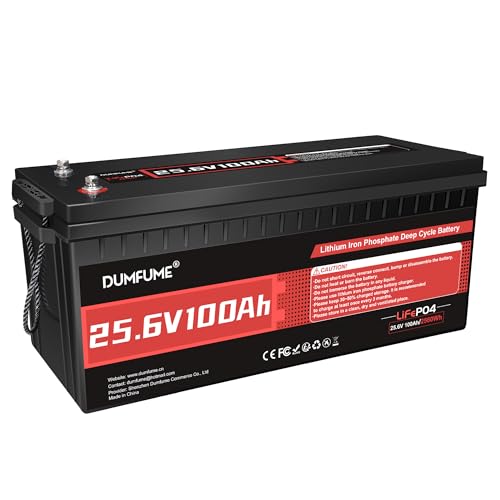
- Dyness 24V 100Ah LiFePO4 Lithium Battery — prose-only, a single 24-volt unit, not a 12-volt bank block
- yeagulch 24V 314Ah LiFePO4 Lithium Battery — prose-only, a single 24-volt unit, not a 12-volt bank block
- SUPER EMPOWER 12V 100Ah LiFePO4 Battery, Group 24
- VEMDIA 12V 100Ah LiFePO4 Battery, Group 31
- VEMDIA 12V 100Ah LiFePO4 Lithium Battery, Group 31 with Smart BMS
- Renogy 12 Volt 100Ah Deep Cycle AGM Battery
Read the full guide ↓ for the detailed reviews, the bank-building maths, and the honest explanation of when a 24-volt battery is the right answer to a different question.
Shopping for the best golf cart batteries 12 volt at a time is really shopping for a system. No golf cart runs on a single 12-volt battery; the battery you are picturing is one quarter of a 48-volt bank or one third of a 36-volt bank, and it will spend its life wired in series with identical siblings, sharing every charge and every hill with them. That is why this guide judges each candidate the way a bank builder does: Is it truly 12 volts? Is it built for deep, repeated discharge? Does its documentation support being stacked in series? And what will it ask of your charger?
It is also why two genuinely impressive batteries in this line-up are reviewed without links. The Dyness and yeagulch 24-volt units are serious deep-cycle batteries with serious capacity, and on a boat or in an off-grid cabin they would be first-choice equipment. In a cart, a single 24V block only makes sense if you are redesigning the whole electrical system around paired 24V units — a legitimate project for some custom builds, but not what a 12-volt bank replacement is. Presenting them honestly, with their strengths intact and their mismatch explained, serves you better than pretending the voltage label is a detail.
What remains is a clean choice among four blocks. Three are lithium iron phosphate, the chemistry that has redefined cart ownership with deep usable capacity, low weight, and long cycle life. One is sealed AGM lead-acid, the traditionalist’s option that keeps your existing charger and your existing habits. All four are linked, all four are reviewed with their limitations stated, and the sections after the reviews walk through bank sizing, wiring, charging, and the mistakes that shorten a bank’s life — because in this category, how you build matters almost as much as what you buy.
Key Takeaways
- A golf cart bank is a series string: three 12V blocks make 36V, four make 48V. Buy blocks, but think in banks.
- Four picks are linked: three 12V LiFePO4 batteries and one 12V AGM. Two 24V batteries are prose-only because a 24V block cannot substitute for a 12V block.
- The SUPER EMPOWER Group 24 pick states 4P4S expansion support in its title — the clearest evidence of series-bank readiness.
- Lithium conversions need a lithium-profile charger; the AGM pick is the one option that keeps a lead-acid charger fully at home.
- Matched blocks of the same model and age are non-negotiable in a series string; the weakest block sets the bank’s performance.
- Capacity is counted once in series: a 48V bank of 100Ah blocks is a 100Ah bank at 48 volts, roughly 4,800Wh nominal.
In this guide
Quick Picks
| Pick | Badge | Why it is here | Link |
|---|---|---|---|
| Dyness 24V 100Ah LiFePO4 | Best for a 24V Rebuild | A true 24V deep-cycle battery for systems designed around 24V units — not a 12V bank block. | Prose-only — 24 volts, not 12 |
| yeagulch 24V 314Ah LiFePO4 | Most Capacity in the Line-Up | Enormous single-unit energy at 24V with a 200A BMS, for 24V systems and big off-grid banks. | Prose-only — 24 volts, not 12 |
| SUPER EMPOWER 12V 100Ah LiFePO4, Group 24 | Best Overall | Stated 4P4S series support, low-temperature cutoff, compact Group 24 case. | Check on Amazon |
| VEMDIA 12V 100Ah LiFePO4, Group 31 | Best for Cycle Life | A stated deep-cycle count in the fifteen-thousand range in a full-size Group 31 case. | Check on Amazon |
| VEMDIA 12V 100Ah LiFePO4, Group 31 Smart BMS | Best Cold-Climate Protection | Smart 100A BMS with low-temperature protection for carts stored through winter. | Check on Amazon |
| Renogy 12V 100Ah Deep Cycle AGM | Best AGM Pick | Sealed lead-acid that keeps your existing charger and skips watering and acid checks. | Check on Amazon |
How These Picks Were Chosen
This guide is research-led. Every candidate was assessed from its verified manufacturer data — full title, stated voltage, capacity, battery-management features, and expansion claims — and the linking rule was applied mechanically: a pick is linked only if its own documentation confirms the keyword’s core requirement, a true 12-volt battery suitable for building a golf cart bank. Voltage is a core attribute, not a preference. A 24-volt battery wired where a 12-volt block belongs would over-volt part of a system and unbalance the rest, so the two 24V picks are prose-only no matter how good they are at their own job.
Within the 12-volt class, the evaluation weighted three things. First, deep-cycle design, because cart duty is deep discharge repeated daily; the companion guide to Best Golf Cart Batteries 12 Volt Deep Cycle applies that filter on its own and is worth reading alongside this one. Second, series evidence: the strongest form is an expansion configuration stated in the title itself, and where a title is silent, the review flags the silence and directs you to the manufacturer rather than assuming. Third, protection features that match cart life — low-temperature charge protection for stored carts, adequate BMS current for strong controllers, and honest capacity figures.
Chemistry was deliberately left open, because the keyword leaves it open and because the right answer depends on your charger, your climate, and how hard the cart works. No prices or fixed ratings appear anywhere in this guide: prices in this category move too quickly for a printed number to stay truthful, and manufacturer cycle claims are reported as claims. What you get instead is the reasoning — so you can re-run it against whatever the market looks like on the day you buy.
The 6 Best Golf Cart Batteries 12 Volt Options, Reviewed
Dyness 24V 100Ah LiFePO4 Lithium Battery
Badge: Best for a 24V Rebuild
Strengths
- A genuine 24V deep-cycle battery with a stated 2560Wh capacity and a smart 100A BMS.
- States a 4P2S connection path up to 20.48kWh, so it is built to be banked within 24V systems.
- Marine, RV, and solar positioning makes it a versatile off-grid block outside the cart world.
Trade-offs
- It is 24 volts. In a bank designed for 12V blocks it simply does not fit the architecture.
- Using two in series for 48V is a custom redesign requiring charger and controller review, not a drop-in replacement.
- Its stated cycle figure is more modest than the highest claims among the 12V lithium picks.
Key specs (from manufacturer title): Voltage: 24V; Capacity: 100Ah; Stated energy: 2560Wh; BMS: smart 100A; Stated deep cycles: 4000+; Connection: 4P2S up to 20.48kWh stated; Stated lifetime: 10-year.
Let us be clear about what this battery is, because it is a good one: a single-unit 24V LiFePO4 deep-cycle battery with a smart BMS, a stated expansion path within 24V systems, and the kind of specification sheet that suits boats, RVs, and solar cabins. If your project is a 24V system — a trolling motor bank built around single 24V units, for instance, of the kind covered in our Best Lithium Battery For 24 Volt Trolling Motor guide — this is exactly the format you want, and its review here is a compliment, not a dismissal.
For a golf cart bank built from 12V blocks, though, it fails the first gate, and no other virtue can compensate. A series string of 12V blocks plus one 24V block is not a clever hybrid; it is a wiring error with a parts list. The only cart scenario where this battery belongs is a deliberate ground-up 48V rebuild using two 24V units in series, undertaken with full knowledge that the charger, controller, and accessories must all be specified for that architecture. That is a real project some custom builders enjoy, and for them this pick is presented in full. For everyone replacing a conventional bank, keep reading — the linked picks below are your shortlist.
Best for: Builders deliberately redesigning a cart or another system around 24V units. / Not suited for: Anyone replacing blocks in a standard 36V or 48V bank built from 12V batteries.
yeagulch 24V 314Ah LiFePO4 Lithium Battery
Badge: Most Capacity in the Line-Up
Strengths
- A stated 8038.4Wh in one unit — the largest energy figure anywhere in this guide.
- 200A BMS and low-temperature protection suit heavy 24V propulsion and off-grid loads.
- Trolling motors, RV, marine, solar, and backup power are all named in its title.
Trade-offs
- 24 volts again: capacity cannot rescue a voltage mismatch in a 12V-block bank.
- A unit of this size and energy is a major packaging commitment even in systems designed for it.
- For most cart-scale jobs its capacity is far beyond the requirement, at a matching commitment level.
Key specs (from manufacturer title): Voltage: 24V; Capacity: 314Ah; Stated energy: 8038.4Wh; BMS: 200A; Stated deep cycles: 15000+; Protection: low-temperature; Certifications stated: UL 1973, UN38.3.
If the Dyness is the reasonable face of 24V, this yeagulch unit is the extravagant one: more than eight kilowatt-hours in a single battery, a 200A management system, and a stated cycle count at the top of the range. In its native habitats — a serious 24V trolling setup, a marine house bank, an off-grid cabin — it replaces what used to be a wall of lead-acid batteries with one heavy, capable block, and it does so with low-temperature protection for real-world storage.
None of that changes the cart maths. A golf cart bank built from 12V blocks needs 12V blocks, and this battery is not one. Two of them in series would make a 48V bank of almost absurd capacity for a cart, but that is a ground-up electrical redesign with charger and controller implications, not a battery replacement, and this guide will not dress it up as one. It is reviewed here, in full and without a link, so that owners who encounter it while shopping understand both its genuine quality and its categorical mismatch. Judge it as a 24V battery and it is impressive; judge it as a 12V cart block and the conversation ends at the voltage line of the spec box.
Best for: Large 24V marine, off-grid, and backup systems that can use eight kilowatt-hours in one unit. / Not suited for: Golf cart banks built from 12V blocks, which is to say nearly all of them.

SUPER EMPOWER 12V 100Ah LiFePO4 Battery, Group 24
Badge: Best Overall
Strengths
- States 4P4S expansion support in the title — series banking is a documented design purpose.
- 100A BMS with low-temperature cutoff protects against frozen-garage charging, the silent lithium killer.
- Compact Group 24 case fits the tightest under-seat trays in the class.
Trade-offs
- 100Ah per block is the class standard; marathon users will want a parallel string or bigger blocks.
- Needs a lithium-profile charger, which is an additional conversion cost to budget honestly.
- Its title speaks to RV and trolling audiences too, so expect no cart-specific brackets or cables in the box.
Key specs (from manufacturer title): Voltage: 12V nominal; Capacity: 100Ah; Stated energy: 1280Wh; Group size: 24; BMS: 100A with low-temperature cutoff; Expansion: 4P4S, up to 20.48kWh stated.
This is the block this guide would build a bank from first, and the reason is documentation. Plenty of 12V lithium batteries are fine products; fewer state, in their own titles, that they support four-in-series expansion. In a golf cart, that statement is the difference between a battery that tolerates your bank and a battery that was designed for it. Add the low-temperature cutoff — essential for carts that winter in unheated storage — and the compact Group 24 footprint, and you have the most completely credentialed 12V block in the line-up.
In service, four of these make a 48V 100Ah bank that transforms a cart’s manners: eager take-off, no late-day fade, a fraction of the old bank’s weight, and charging that finishes in hours rather than overnight-and-then-some. The honest limits are class limits. A single 100Ah string is a full day for most carts, not an endless one, and the conversion is not complete until a lithium-profile charger joins the budget. Owners whose carts double as property vehicles for hours of stop-start work should read the capacity discussion in the buying guide below before deciding between this block, a parallel second string, or a higher-capacity architecture. As a default answer to “which 12V lithium block for my cart,” though, this is the guide’s first name.
Best for: Most 36V and 48V conversions wanting documented series support in a compact case. / Not suited for: Owners determined to keep a lead-acid-only charger.

VEMDIA 12V 100Ah LiFePO4 Battery, Group 31
Badge: Best for Cycle Life
Strengths
- Stated deep-cycle count in the fifteen-thousand range — the longevity headline of the 12V field.
- Full-size Group 31 case with a built-in 100A BMS suits trays built for large blocks.
- Solar, home-energy, RV, and marine positioning means the bank can moonlight as storage.
Trade-offs
- No expansion configuration is stated in the title; confirm series banking with the manufacturer before building.
- Group 31 is larger than Group 24 — tray measurement is mandatory, not optional.
- Headline cycle figures are laboratory-condition manufacturer statements, not guarantees.
Key specs (from manufacturer title): Voltage: 12V nominal; Capacity: 100Ah; Group size: 31; BMS: built-in 100A; Stated deep cycles: 15000.
Where the SUPER EMPOWER wins on documentation, this VEMDIA wins on ambition: it is the 100Ah block aimed at owners who count cost in years. Cart banks live a hard life of daily deep cycles, and a battery engineered and marketed around a very high deep-cycle count is engineered for precisely that life. Even treated with the scepticism all such figures deserve — depth of discharge, temperature, and charge rate in the real world are never the laboratory’s — the design intent points the right way, and the Group 31 case gives the cells a full-size home with a 100A BMS standing guard.
The homework attached to this pick is equally clear. Because the title states no expansion configuration, a bank builder should get the manufacturer’s series guidance before ordering four; that conversation is quick, free, and exactly the sort of diligence a bank purchase rewards. And because Group 31 is the larger footprint, the tape measure comes before the order, not after delivery. Do those two things and this is a compelling long-service bank block, the kind owners of hard-working carts — and readers cross-shopping the Best Marine 12 Volt Battery category, where the same block serves boats — tend to shortlist first.
Best for: High-use carts and owners optimising for service years per bank. / Not suited for: Buyers who require the series configuration to be stated in the title itself.

VEMDIA 12V 100Ah LiFePO4 Lithium Battery, Group 31 with Smart BMS
Badge: Best Cold-Climate Protection
Strengths
- Smart 100A BMS with low-temperature protection stated up front.
- Stated 1280Wh and a deep-cycle count in the fifteen-thousand-plus range.
- Shares the proven 100Ah Group 31 format, simplifying comparison with its sibling.
Trade-offs
- Expansion configuration is not stated in the title; the manufacturer conversation is part of the purchase.
- Protection you never trigger is invisible — mild-climate owners may never see its advantage over the sibling pick.
- Two near-identical VEMDIA listings make careless ordering a real risk; verify the title at checkout.
Key specs (from manufacturer title): Voltage: 12V nominal; Capacity: 100Ah; Stated energy: 1280Wh; Group size: 31; BMS: 100A smart with low-temperature protection; Stated deep cycles: 15000+.
Every lithium bank has an enemy it cannot see: a freezing night followed by an automatic charger doing its job on cold cells. Charging lithium below freezing plates the cells and permanently steals capacity, and carts — stored in barns, sheds, and unheated garages — are the most exposed batteries in this entire category. This VEMDIA’s smart BMS with low-temperature protection exists for that exact scenario: it watches the temperature and refuses a charge that would wound the battery until conditions are safe. For northern owners, that single feature can be worth more than any capacity headline.
The rest of the battery is the solid class formula — 100Ah, Group 31, strong stated cycle ambitions — so the choice between this pick and its sibling is really a climate and diligence question. If your cart winters where water freezes, buy the protection. If it lives in a mild climate and you are disciplined about charging, the sibling’s case rests on its own merits. Either way, the series-confirmation conversation with the manufacturer applies, and the conversion charger discussion applies, and the matched-set rule applies. Protection, in other words, is this battery’s bonus, not its excuse to skip the fundamentals — and owners who also run an RV will find the same cold logic in our Best No Maintenance Rv 12 Volt Battery guide.
Best for: Carts stored or charged through freezing winters. / Not suited for: Mild-climate owners who would rather optimise purely on other criteria.

Renogy 12 Volt 100Ah Deep Cycle AGM Battery
Badge: Best AGM Pick
Strengths
- Sealed AGM construction: no watering, no acid handling, no corrosion-prone maintenance routine.
- Fully compatible with the lead-acid charger your cart already has — the only pick here that is.
- Stated 3 percent self-discharge rate and 1100A maximum discharge current.
Trade-offs
- Plan around roughly half the rated capacity as routine working capacity if you want the bank to last.
- Several times the weight of a comparable lithium bank, with the handling and suspension effects that implies.
- Shorter deep-cycle service life than LiFePO4; the saving repeats on a shorter cycle.
Key specs (from manufacturer title): Voltage: 12 volt; Capacity: 100Ah; Chemistry: deep-cycle AGM lead-acid; Self-discharge: 3 percent stated rate; Max discharge current: 1100A stated.
The Renogy AGM is the pick for the owner who wants the bank replaced, not the cart reimagined. Four of these restore a 48V cart to full health with the charger already hanging on the garage wall, no new charging profile to learn, and none of lithium’s cold-charging caveats — lead-acid is unbothered by a freezing charge in a way lithium is not. The AGM construction quietly removes the worst of old cart ownership: the cells are sealed, so there is no watering schedule, no acid mist corroding terminals, and no spill risk when the cart leans into a slope.
The physics bill arrives in other currencies. The bank will be heavy — noticeably, when you lift the blocks and permanently, in how the cart rides and accelerates. Usable capacity should be planned conservatively, because lead-acid discharged deeply every day ages quickly; treat the top half of the rating as your working range. And the service interval will come sooner than a lithium bank’s would. For a lightly used cart, a seasonal cart, or an owner who values continuity over transformation, those are acceptable terms honestly stated. For a cart that works daily, they are the reason lithium exists. Both readings are respectable; this guide’s job is to make sure you choose with the trade-offs in front of you — the same trade-offs, incidentally, that greet anyone searching the common misspelling Best No Maintenenace 12 Volt Rv Battery for the RV version of this question.
Best for: Light and seasonal use, existing lead-acid chargers, and owners who prize simplicity. / Not suited for: Daily deep-discharge duty where lithium’s usable capacity and cycle life dominate.
Comparison Table
| Pick | Voltage | Capacity | Chemistry | Cart-bank verdict | Link |
|---|---|---|---|---|---|
| Dyness LiFePO4 | 24V | 100Ah | LiFePO4 | Prose-only — wrong voltage class for 12V banks | Prose-only |
| yeagulch LiFePO4 | 24V | 314Ah | LiFePO4 | Prose-only — wrong voltage class for 12V banks | Prose-only |
| SUPER EMPOWER Group 24 | 12V | 100Ah | LiFePO4 | Linked — stated 4P4S series support | Check on Amazon |
| VEMDIA Group 31 | 12V | 100Ah | LiFePO4 | Linked — confirm series guidance with maker | Check on Amazon |
| VEMDIA Group 31 Smart BMS | 12V | 100Ah | LiFePO4 | Linked — low-temperature protection | Check on Amazon |
| Renogy AGM | 12V | 100Ah | AGM lead-acid | Linked — keeps lead-acid charger | Check on Amazon |
How to Choose a 12V Battery Bank for Your Golf Cart
Begin by identifying what your cart actually is. Read the charger label and count the existing batteries: three 12V blocks (or six 6V blocks) means a 36V system; four 12V blocks (or six 8V blocks) means 48V. Every later decision hangs off that number, including the charger you will need if you convert chemistry. Then measure the tray in all three dimensions and note the terminal positions. Group 24 and Group 31 are the two standard footprints in this guide, and the difference between them has stranded more than one delivery on a doorstep.
Size the energy next. In series, voltage adds and amp-hours do not, so a 48V bank of 100Ah blocks holds about 4,800Wh nominal. Lithium lets you use the large majority of that; lead-acid should be planned at about half if longevity matters. Compare that usable figure against your real usage — course rounds, property work, neighbourhood miles, hills, passengers, lift kits — and be honest about the heavy days, not the average ones. If the maths is tight, the correct responses are a parallel second string or a different architecture, not optimism.
Then settle the chemistry question with your circumstances, not with fashion. Lithium rewards daily use, deep discharge, and owners who will buy the matching charger and a state-of-charge gauge. AGM rewards light use, existing chargers, and cold storage. Our dedicated guide to the Best Lithium 12 Volt Battery walks the lithium side of that decision in full. Finally, verify series support for the exact blocks you are buying, order the whole bank as one matched set, and plan the wiring day properly: correct cable gauge, clean terminals, proper torque, and a full first charge before the maiden voyage.
How to Install and Care for a Series Cart Bank
Installation is methodical work. Photograph the old bank’s wiring before touching a terminal, remove the old blocks, and clean the tray. Set the new blocks in place, connect them positive-to-negative in a chain, and land the main cables on the two free end terminals — the bank’s total voltage appears only across those ends. Keep cables as short and equal as the layout allows, torque every terminal to spec, and protect the terminals from accidental shorts. A first full charge with the correct profile completes the job.
- Charge after use; do not store the bank discharged, and let charges finish so balancing can occur.
- Inspect terminals seasonally for tightness and corrosion; a loose series link is the top cause of mysterious power loss.
- Measure individual block voltages a few times a year; divergence is the earliest warning of a failing block.
- For storage, follow the maker’s guidance — typically a partial charge for lithium, and a maintained full charge for AGM.
- Run 12V accessories through a proper voltage reducer across the whole bank, never tapped off one block.
Troubleshooting mirrors the architecture. Problem: the cart is strong after charging but fades fast → test each block under load; one weak block is strangling the string. Problem: the new lithium bank will not take a charge in winter → the low-temperature protection is doing its job; warm the batteries before charging. Problem: the charger clicks off early on a lithium bank → the charger profile is wrong for the chemistry; use a lithium-profile charger matched to the bank voltage.
Why the 24-Volt Batteries Are in This Guide at All
A fair question deserves a straight answer: the 24V picks appear because shoppers meet them while searching this category, and a guide that ignored them would leave the most common confusion in the category unaddressed. High-capacity 24V lithium batteries are marketed hard at exactly the audiences who also own carts — boaters, RVers, off-grid users — and their listings sit one click away from every 12V search. The confusion is understandable and the stakes are real: a mismatched block in a series bank is not a suboptimal purchase, it is a non-functional one. So this guide reviews them honestly, praises what they genuinely offer, and keeps them unlinked for cart duty. If your project is a true 24V system, you now know which units deserve your attention; if it is a cart bank, you know why your shortlist is the four 12V picks.
Weight, Range, and the Way a Cart Feels After Conversion
Owners converting from lead-acid consistently report the same surprise: the cart feels like a different vehicle. Removing the better part of a lead-acid bank’s weight changes acceleration, braking, ride height, and tyre wear all at once, and lithium’s flat voltage curve removes the familiar afternoon fade, so the cart pulls the last hill of the day much as it pulled the first. The trade-off is feedback: lead-acid’s fade was also a fuel gauge, and lithium gives little warning before the end. A shunt-based monitor restores that visibility honestly. Range claims, meanwhile, should always be translated into your terrain: the same bank that coasts through two flat course rounds may labour through one hilly property day with a full load. Buy for your worst regular day, and the average days take care of themselves.
The Full Conversion Budget: Chargers, Reducers, Cables, and Gauges
The batteries are the headline cost of a conversion, but they are not the whole invoice, and owners who budget only for blocks are the ones posting frustrated questions a month later. A lithium bank needs a charger with a lithium profile at the bank’s voltage. A cart with 12V accessories — lights, a horn, a stereo, a USB outlet — needs a voltage reducer that draws from the whole bank evenly, because the old habit of tapping one battery in a lead-acid string becomes a balance-destroying habit in a lithium string. Series cables may need replacing if the old ones are corroded, undersized, or the wrong length for the new tray layout, and terminals deserve fresh hardware rather than the survivors of the old bank. Finally, a shunt-based state-of-charge gauge turns lithium’s invisible fuel level into a number you can trust, and on a vehicle used by family members or staff, that gauge prevents the flat-battery phone call.
None of these items is exotic, and together they are the difference between a conversion that feels finished and one that feels like a science project. The AGM route avoids most of the list — charger, reducer habits, and gauging all carry over from lead-acid practice — which is a genuine part of its value proposition for light-use carts, and a fair line item in the chemistry comparison. When you compare a lithium bank against an AGM bank, compare systems: blocks plus charger plus gauge against blocks alone. The lithium system still wins the long arithmetic for hard-working carts, but it wins it honestly, with its full cost on the table.
Thinking in Cost Per Year Instead of Cost Per Purchase
Cart batteries are one of the clearest cases in consumer hardware where the purchase price is the least informative number available. What matters is cost per year of reliable service, and that figure is built from three things: how deeply you cycle the bank, how many cycles the chemistry tolerates at that depth, and how much of the rated capacity you can actually use each day. Lead-acid asks to be cycled shallowly — plan on about half its rating as working capacity — and tolerates a limited number of even those cycles before capacity fades. Lithium invites deep use, delivers most of its rating as working capacity, and is engineered around cycle counts an order of magnitude higher. Divide each bank’s full system cost by the years those behaviours produce in your usage pattern, and the ranking that emerges is often the reverse of the ranking on the shelf.
Your usage pattern is the variable nobody can sell you. A cart that covers a few flat miles on weekends will take a decade to wear out either chemistry, and for that cart the AGM bank’s lower commitment is simply rational. A cart that works daily — property maintenance, resort shuttles, a neighbourhood vehicle doing real miles — will consume a lead-acid bank’s comfortable life in a few seasons while barely getting started on a lithium bank’s. That is why this guide refuses to crown a chemistry: it crowns matches between chemistry and duty. Read the reviews above with your own calendar in mind, count your heavy days rather than your average ones, and the right bank usually identifies itself.
Series and Parallel, Explained for Cart Owners
Two wiring words govern everything in this category, and five minutes with them will make every other section of this guide clearer. Series wiring connects batteries positive-to-negative in a chain, and it adds voltage: four 12V blocks in series make the 48V your cart’s motor and controller expect, while the amp-hour capacity stays that of a single block. Parallel wiring connects positive-to-positive and negative-to-negative, and it does the opposite: voltage stays the same while capacity adds, so two 100Ah strings in parallel give a 48V bank of 200Ah. A cart bank is therefore described as, for example, 4S for a single series string of four, or 4S2P for two such strings in parallel — the architecture behind the 4P4S expansion figure quoted in the SUPER EMPOWER title, which certifies support for up to four parallel and four series connections.
The practical consequences follow directly. If your cart lacks voltage, no amount of parallel wiring helps; if it lacks range, a parallel string or larger blocks are the honest fixes. Series strings demand matched blocks because every block passes the same current and the weakest sets the pace; parallel strings demand matched strings for the same reason one level up. And every accessory, charger, and gauge must be specified for the bank’s total series voltage, not for the 12V printed on each block — the single most common specification error in home conversions. Understand series and parallel, and the rest of cart battery ownership is mostly hygiene: clean connections, correct charging, and prompt attention to the block that starts behaving differently from its siblings.
Common Buying Mistakes
- Buying one block at a time. Series banks must be matched sets; staggered purchases create staggered ages and early imbalance.
- Confusing 24V units with 12V blocks. The voltage class is the architecture; a great 24V battery is still the wrong part for a 12V bank.
- Reusing a lead-acid charger on lithium. The profile mismatch undercharges and can mishandle protection events; budget the charger.
- Tapping one block for accessories. Uneven discharge unbalances the string; use a reducer across the whole bank.
- Trusting a voltmeter on lithium. The flat curve hides state of charge; fit a shunt-based gauge.
- Skipping the tray measurement. Group 24 and Group 31 are different footprints, and under-seat space forgives nothing.
Final Recommendation
Build your bank around the SUPER EMPOWER 12V 100Ah LiFePO4 Battery, Group 24 if you want the most completely documented 12V block in this guide — stated series support, low-temperature protection, and a compact case. Choose the VEMDIA Group 31 pair of options if cycle-life ambition or smart cold protection matters more, keep the Renogy AGM if your charger and your habits are lead-acid and your use is light, and admire the two 24V batteries from a respectful distance unless you are redesigning a system around them. Above all, buy the bank as a matched set, wire it carefully, and charge it correctly — in this category, the installation is half the product.
Frequently Asked Questions
Can I put a 24V battery in my 48V golf cart bank?
Not as a substitute for a 12V block. A conventional 48V bank is four 12V blocks in series, and every block must be the same voltage, model, and age for the string to balance. Two 24V units in series can make 48V, but that is a ground-up redesign — charger, controller, and accessory supply all have to be specified for it — not a replacement strategy.
How many batteries does my cart need?
Count voltage, not batteries. A 36V cart needs three 12V blocks; a 48V cart needs four. If your cart currently holds six smaller batteries, they are 6V or 8V units adding to the same totals, and the 12V blocks replace the total, not the count — which also means the tray layout and hold-downs may need adjusting.
Will my old charger work with lithium batteries?
Generally you should plan on a charger with a lithium profile matched to your bank voltage. Lead-acid chargers use charging stages lithium does not want and may not fill a lithium bank completely or handle its protection behaviour correctly. The AGM pick in this guide is the exception: it is designed to live happily on the lead-acid charger you already own.
Why does my cart feel faster after a lithium conversion?
Two reasons. The bank weighs far less, so the same motor moves less mass. And lithium holds its voltage nearly flat as it discharges, so the motor receives close to full voltage all day instead of a steadily declining supply. The combination is real, and it is also why a proper state-of-charge gauge matters — the old fade that warned you the day was ending is gone.
How long will a 100Ah bank run my cart?
Think in energy and terrain rather than hours. Four 100Ah blocks at 48V store roughly 4,800Wh nominal, most of it usable with lithium. Flat course and neighbourhood use treats that generously; hills, passengers, and lift kits spend it quickly. If your heaviest regular day threatens the whole budget, the answers are a parallel string or larger blocks — not hope.
Can I add a parallel string later to extend range?
Yes, with discipline. A second series string of the same blocks, wired in parallel with the first, doubles capacity while keeping voltage — the 4S2P architecture. The discipline is matching: the new string should be the same model, and ideally close in age and cycle count to the existing one, and both strings should be charged and rested together so they share work evenly. Adding a string of a different model or a much older bank’s survivors recreates the imbalance problem one level up. If a parallel expansion is likely in your future, choosing blocks with stated parallel support from the start, and keeping notes of purchase dates and usage, makes the later job straightforward.
What is the most common way owners ruin a new bank?
Imbalance, in its several costumes: mixing old and new blocks, tapping accessories off a single battery, letting one connection loosen, or storing the bank discharged. A series bank is a team, and it ages at the pace of its most neglected member. Matched purchase, even discharge, sound connections, and prompt charging prevent nearly all of it.