Disclosure: topratedkitchenware.com is reader-supported. When you buy through links on our site, we may earn an affiliate commission from Amazon and other retailers, at no extra cost to you.
Where to buy
Short on time? If you are comparing the best japanese chopsticks to buy and want the shortlist first, start here. Two of the six sets below are sold specifically as Japanese-style chopsticks in their verified listings, so those two carry purchase links. The other four are well-made stainless steel sets that are reviewed in full further down, but because their listings do not present them as Japanese chopsticks, we describe them without a purchase link rather than pretend they are something they are not.
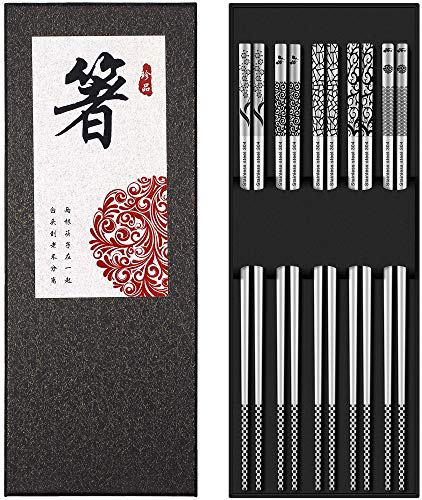
- Greatamzor 18/8 Stainless Steel Chopsticks, 5 Pairs — Best Overall
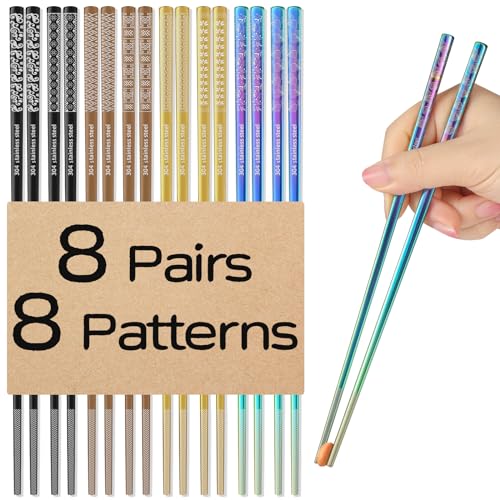
- NEWDRIP 18/8 Stainless Steel Chopsticks, 8 Pairs — Best for Households and Guests
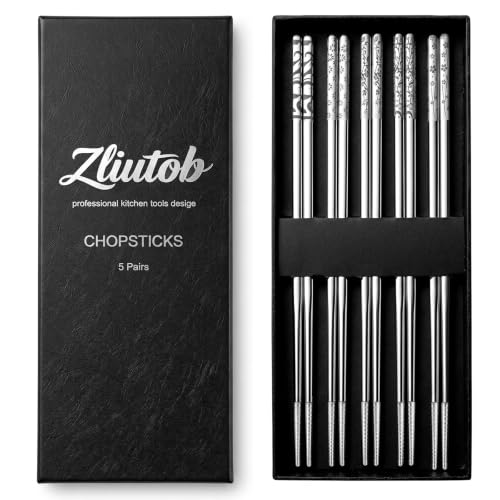
- Zliutob Stainless Steel Chopsticks, 5 Pairs — Best Grip Texture (reviewed below, no purchase link)
- LIXTONGR Dragon & Phoenix Black Stainless Steel Chopsticks, 2 Pairs — Best Gift Presentation (reviewed below, no purchase link)
- MUYOS Stainless Steel Chopsticks, 5 Pairs, Silver — Best Lightweight Feel (reviewed below, no purchase link)
- Greatamzor Multicolor Stainless Steel Chopsticks, 5 Pairs — Best for Telling Pairs Apart (reviewed below, no purchase link)
Read the full guide ↓ for the reasoning behind each pick, the differences between Japanese, Korean and Chinese chopstick shapes, and how to choose the right length and tip for the food you actually eat.
Japanese chopsticks — hashi — are the shortest of the three classic East Asian styles, and that is deliberate. A traditional Japanese meal is served to one person on a tray: small bowls of rice, miso soup, grilled fish and pickles, all within easy reach. The chopsticks do not need to travel far or reach into a shared pot in the middle of the table, so they can be shorter, lighter and finer at the tip. That fine, pointed tip is the second defining feature. Japanese cooking involves a lot of fish, and a precise point lets you tease flesh away from a bone, lift a single edamame bean, or pick a sliver of ginger out of a crowded plate without disturbing everything around it. If you are searching for the best japanese chopsticks to buy, those two traits — shorter length and a pointed, grippy tip — are what you are really shopping for, whether the set is made from bamboo, wood or stainless steel.
This guide focuses on reusable stainless steel sets, because that is where the current verified selection is strongest and because steel solves the two problems that frustrate people who start with wooden hashi: it does not warp, stain or hold odors, and every set here can go in the dishwasher. The trade-off is feel. Steel is smoother and a little heavier in the hand than bamboo, and it conducts heat, so the buying decision comes down to how each maker textures the tip and balances the shaft. We go through six sets in detail, explain exactly why only two of them earn a Japanese label in this guide, and finish with a buying guide, a practical how-to section and answers to the questions readers ask most.
Key Takeaways
- Japanese chopsticks are shorter than Korean or Chinese styles — most of the sets here sit around 9 to 9.25 inches — and they taper to a finer, more pointed tip for precise work like deboning fish.
- Only two sets in this roundup are presented by their makers as Japanese chopsticks: the Greatamzor 18/8 five-pair set and the NEWDRIP 18/8 eight-pair set. Those are the two linked picks.
- On stainless steel, grip comes from texture, not material: laser engraving, textured tips and square shafts are what stop noodles and sashimi sliding off.
- 18/8 stainless steel (the grade named in both linked sets) is the food-industry workhorse grade — a step up in corrosion resistance from basic 304 in everyday kitchen use, and both grades are dishwasher safe.
- Buy the count that matches your household: five pairs suits a couple who eats with chopsticks daily; eight or ten pairs suits families and anyone who hosts.
- If the Japanese label is not essential to you, the four prose-only sets below are still excellent steel chopsticks — they simply are not sold as Japanese, so we do not link them under a Japanese heading.
In this guide
Quick Picks
| Pick | Badge | Pairs | Length | Steel | Link |
|---|---|---|---|---|---|
| Greatamzor 18/8 Stainless Steel Chopsticks | Best Overall | 5 pairs | 9 1/4 inches | 18/8 stainless steel | Check on Amazon |
| NEWDRIP 18/8 Stainless Steel Chopsticks | Best for Households and Guests | 8 pairs | 9.25 inches | 18/8 stainless steel | Check on Amazon |
| Zliutob Stainless Steel Chopsticks | Best Grip Texture | 5 pairs | Not stated in listing | Stainless steel | See review below |
| LIXTONGR Dragon & Phoenix Black Stainless Steel Chopsticks | Best Gift Presentation | 2 pairs | 9 inches | 18/10 stainless steel | See review below |
| MUYOS Stainless Steel Chopsticks | Best Lightweight Feel | 5 pairs | Not stated in listing | Stainless steel | See review below |
| Greatamzor Multicolor Stainless Steel Chopsticks | Best for Telling Pairs Apart | 5 pairs | 9 1/4 inches | Stainless steel | See review below |
A note on the table: lengths, pair counts and steel grades are taken only from each set’s verified listing title. Where a listing does not state a length, we say so instead of guessing — with chopsticks, an inch of length changes how the pair balances in your hand, so it is worth buying from listings that state it plainly. If you want the broader material comparison before you commit to steel, our overview of the Best Kind Of Chopsticks walks through wood, bamboo, fiberglass and metal side by side.
How These Picks Were Chosen
We built this shortlist from verified product data rather than from marketing copy. Every set in this guide was cross-checked against its listing record: the exact product title, the steel grade where one is named, the pair count, the stated length and the stated features such as laser engraving, non-slip tips and dishwasher safety. Only details present in that verified record appear in the spec boxes below. Where a listing is silent — the Zliutob and MUYOS sets do not state a length, for example — the review says so and judges the set on what is actually documented.
The Japanese question was handled strictly. A set earned a purchase link in this guide only if its own listing presents it as Japanese or Japanese Korean style. That is why the two Greatamzor and NEWDRIP 18/8 sets are linked and the other four are not: the Zliutob, LIXTONGR, MUYOS and multicolor Greatamzor sets are genuine, well-specified stainless steel chopsticks, but their listings describe them in general terms — for sushi, ramen and daily meals — without claiming the Japanese style. Rather than drop them from the guide entirely, we review them in full as prose-only entries, because a reader comparing shapes and textures benefits from knowing how they differ, and because some readers will decide the label matters less than the grip or the gift box. What we will not do is attach a Japanese buying link to a product that does not claim to be Japanese.
This is a research-led guide. We compared specifications, listing details and the patterns that show up again and again in owner feedback — comments about tip grip, about weight, about whether engraved patterns fade in the dishwasher — but we do not claim to have run a test kitchen, and we do not quote star ratings or review counts, because those numbers change constantly and would mislead you within months. Prices are not printed for the same reason: use the Check on Amazon links to see the current price of the two linked sets on the day you shop.
Finally, we weighted the criteria that matter specifically for Japanese-style eating: tip fineness and texture for fish and small items, a length near the traditional hashi range rather than the longer Chinese cooking length, balance that suits a light grip, and dishwasher safety, because a set that is annoying to wash quietly stops being used. If your household is still deciding between reusable steel and training sets for younger eaters, the separate guide to Best Kids Chopsticks covers the shorter, helper-style designs that this adult-focused roundup does not.
The 6 Best Japanese Chopsticks to Buy, Reviewed in Detail
Greatamzor 18/8 Stainless Steel Chopsticks, 5 Pairs
Badge: Best Overall
Strengths
- Sold explicitly as Japanese Korean style, at 9 1/4 inches — right in the traditional hashi length range.
- 18/8 stainless steel, the food-grade standard used for quality flatware, with a laser-engraved non-slip pattern.
- Five pairs in one gift-ready set covers a small household without buying twice.
Trade-offs
- Steel tips, even engraved ones, are still smoother than bamboo on very slippery foods like konnyaku.
- The engraved pattern is decorative as well as functional, which will not suit minimalists.
- Five pairs may be too few if you entertain often or run the dishwasher infrequently.
Spec box: Material: 18/8 stainless steel · Pairs: 5 · Length: 9 1/4 inches · Finish detail: laser engraved, non-slip · Care: dishwasher safe · Style as listed: Japanese Korean
This is the set we would hand to someone who asked for Japanese chopsticks without any further qualification. The listing states the two things that matter most for this style — the Japanese designation and a 9 1/4 inch length — and pairs them with the specification that matters most for steel: 18/8 stainless, the grade with enough nickel content to resist the dulling and spotting that cheaper steel picks up after a year of dishwasher cycles. The laser engraving does real work here. On a plain polished steel shaft, a strand of soba or a piece of sashimi can hydroplane straight off the tip; the engraved texture breaks that smooth surface just enough to give the food something to hold on to, without the rough, unfinished feel of cheap stamped metal.
In everyday Japanese-style eating — a bowl of rice, grilled mackerel, a small dish of pickles — the length feels correct. Your hand stays close to the bowl, the tips meet precisely, and picking a fish bone out of a fillet is a one-motion job rather than a chase around the plate. The honest limitation is the one shared by every steel set in this guide: metal conducts heat, so if you leave a pair resting in a steaming bowl of ramen while you answer the door, the ends will be warm when you come back, and the set is not the tool for cooking at the stove. As an eating set for Japanese meals at the table, though, it is the most complete package here, and it is the benchmark the other five are judged against. Readers who already know they want this exact combination of style and steel can also compare it with the dedicated shortlist for Best Japanese Style Chopsticks Stainless Steel, which ranks the steel-first options.
Best for: anyone building a first proper set of Japanese-style eating chopsticks for daily use / Not suited for: cooking at the stove or anyone who strongly prefers the warm feel of wood or bamboo

NEWDRIP 18/8 Stainless Steel Chopsticks, 8 Pairs
Badge: Best for Households and Guests
Strengths
- Eight pairs in one set — enough for a family plus guests without mixing styles at the table.
- Same 18/8 stainless steel and laser-engraved non-slip concept as the top pick, at a stated 9.25 inches.
- Listed for Japanese, Korean and Chinese eating, so one set can cover a mixed-cuisine household.
Trade-offs
- A uniform eight-pair set means every diner gets the same design — no personal pair to call your own.
- Storing eight pairs neatly takes a wider drawer organizer than a five-pair set.
- The all-steel look is more utilitarian than gift-like compared with boxed two-pair sets.
Spec box: Material: 18/8 stainless steel · Pairs: 8 · Length: 9.25 inches · Finish detail: laser engraved, non-slip · Care: dishwasher safe · Style as listed: Japanese Korean Chinese
The NEWDRIP set makes a different bet from the Greatamzor above: instead of five pairs presented as a gift set, you get eight pairs presented as infrastructure. That turns out to be the smarter buy for a lot of households. Chopsticks get lost in lunch bags, left in office kitchens and borrowed by teenagers; a household that eats with them daily can burn through a five-pair set’s spare capacity in a month. With eight identical pairs, there is always a clean pair in the drawer, the table looks consistent when guests come, and nobody has to wash a pair between the appetizer and the main course.
The specification matches the top pick almost line for line — 18/8 steel, laser engraving for grip, a 9.25 inch length the listing associates with Japanese, Korean and Chinese use — so the eating experience is very similar: precise tips, a secure hold on noodles, and no warping or staining over time. Where it falls slightly short of the Greatamzor is presentation. This is a working set, bought to be used hard and washed often, and its plain uniformity reflects that. The honest limitation is that uniformity itself: families who like the Japanese custom of each person having their own recognizable pair will need to add colored rings or a second design. For everyone else — especially anyone feeding four or more people — this is the practical Japanese-style buy, and it pairs well with the portability ideas in our guide to Best Japanese Lunch Chopsticks if some of those pairs will travel to work or school.
Best for: families, frequent hosts and anyone who wants one uniform Japanese-style set for the whole table / Not suited for: gift-giving or households where everyone wants a personally distinct pair
Zliutob Stainless Steel Chopsticks, 5 Pairs
Badge: Best Grip Texture
Strengths
- Textured tips plus a square grip section — the most grip-focused design in this roundup.
- Square shafts do not roll off the table or the bowl rim, a small daily mercy.
- Positioned by its maker for sushi, ramen and daily meals, which matches Japanese-style eating well.
Trade-offs
- Not sold as Japanese chopsticks, so it is reviewed here without a purchase link.
- The listing does not state a length, so you cannot confirm the classic hashi size before buying elsewhere.
- The assertive texture that helps with noodles can feel slightly coarse to diners used to smooth lacquered wood.
Spec box: Material: stainless steel · Pairs: 5 · Length: not stated in listing · Finish detail: textured tips, square grip · Care: dishwasher safe · Suggested use as listed: sushi, ramen and daily meals
On pure grip engineering, the Zliutob set has the strongest story in this guide. Most steel chopsticks texture only the last inch of the tip. This design combines textured tips with a square grip section, and the square profile does two jobs at once: it gives your fingers flat faces to brace against instead of a round shaft that can rotate, and it stops the pair rolling off a sloped bowl rim or a table edge — the single most common way steel chopsticks end up on the floor. For ramen specifically, where you are lifting wet noodle bundles out of broth all meal long, that combination is genuinely useful, and the maker’s own positioning for sushi and ramen shows the set was designed with Japanese dishes in mind.
So why is there no purchase link? Because this guide’s rule is strict: a set is linked as a Japanese chopstick only when its listing says so. The Zliutob listing describes an excellent general stainless steel set for Japanese-style foods, but it does not claim the Japanese style itself, and it does not state a length — the one measurement that defines hashi. We review it in full because readers comparing grip designs deserve to know it exists, and because if you shop for it independently you will be making an informed choice. The honest limitation, beyond the missing length, is that heavy texture is a taste: diners raised on smooth wooden hashi sometimes find a fully textured steel tip distracting for delicate work like lifting a soft piece of tamagoyaki.
Best for: noodle lovers and anyone whose main complaint about steel chopsticks is slipping / Not suited for: buyers who want the Japanese designation and a stated traditional length confirmed in the listing
LIXTONGR Dragon & Phoenix Black Stainless Steel Chopsticks, 2 Pairs
Badge: Best Gift Presentation
Strengths
- 18/10 stainless steel — the premium flatware grade — in a black finish with a dragon and phoenix motif.
- At 9 inches it is the shortest set here, closest to classic hashi proportions.
- Gift box presentation aimed at weddings, housewarmings and travel, per its listing.
Trade-offs
- Only two pairs — a presentation set, not household infrastructure.
- Not sold as Japanese chopsticks, so it is reviewed here without a purchase link.
- The black finish and bold motif are a strong aesthetic commitment that will not match every table.
Spec box: Material: 18/10 stainless steel, black finish · Pairs: 2 · Length: 9 inches · Finish detail: non-slip grip, dragon and phoenix design · Care: dishwasher safe · Presentation: gift box
The LIXTONGR set is the romantic of the group. The dragon and phoenix pairing is a classic symbol of balance and good fortune, the black finish looks striking against white porcelain, and at 9 inches the pair is the closest thing here to the proportions of traditional Japanese hashi — short, light in the hand and precise. The steel is 18/10, the grade used for better flatware, which generally means a slightly richer finish and strong corrosion resistance. As a wedding or housewarming gift, in its box, it makes an impression that a utilitarian eight-pair set simply does not.
It is prose-only in this guide for the same reason as the Zliutob: its listing presents it as a dining, travel and gift set with a Chinese-inspired motif, not as Japanese chopsticks, so linking it under a Japanese heading would mislabel it. Two further honest limitations matter. Two pairs is a couple’s set, not a family’s, so this is an addition to a collection rather than a foundation. And a dark coated finish on steel deserves gentler treatment than bare steel if you want it looking new for years — it is listed as dishwasher safe, but abrasive pads and harsh scouring are not its friends. Buy it, if you find it independently, for the occasion and the look, and let one of the linked sets above do the daily work.
Best for: gifts, couples and anyone who loves the shortest, most traditional proportions / Not suited for: stocking a family drawer or buyers who need the Japanese style confirmed in the listing
MUYOS Stainless Steel Chopsticks, 5 Pairs, Silver
Badge: Best Lightweight Feel
Strengths
- Hollow-core construction keeps the pair light — kind to smaller hands and longer meals.
- Non-slip tips address the main weakness of plain silver-finish steel.
- Five pairs in a clean, plain silver finish that matches any flatware drawer.
Trade-offs
- Not sold as Japanese chopsticks, so it is reviewed here without a purchase link.
- The listing does not state a length, so the classic hashi size cannot be confirmed from the listing.
- Very light chopsticks can feel insubstantial to diners who like a weightier pair.
Spec box: Material: stainless steel, hollow-core design · Pairs: 5 · Length: not stated in listing · Finish detail: non-slip tips · Care: dishwasher safe · Finish color: silver
Weight is the most under-discussed variable in chopstick buying, and the MUYOS set is built around it. A hollow core means the shaft carries far less metal than a solid pair, so the chopsticks sit lightly between the fingers and the hand does not tire across a long, slow meal — a real consideration for older diners, for children transitioning to adult pairs, and for anyone whose grip is not strong. The plain silver finish is deliberately anonymous: it disappears into a normal cutlery drawer and matches whatever else you own, and the non-slip tips compensate for the smoothness that a polished finish would otherwise bring to noodle dishes.
The reason it carries no link here mirrors the two sets above: the listing describes a reusable set for daily meals without claiming the Japanese style, and it leaves the length unstated. That second gap matters more for this keyword than most — a lightweight pair at a longer Chinese-style length eats very differently from one at hashi length, and a careful buyer cannot tell which this is from the listing alone. The honest limitation is feel: some experienced users actively dislike very light steel, finding that a touch of heft steadies the tips when picking up heavy items like a gyoza. Treat this set as a strong general-purpose lightweight option that we document for completeness, and choose one of the two linked sets when the Japanese specification itself is the point of the purchase.
Best for: diners who prefer a feather-light pair and a plain, matches-everything finish / Not suited for: anyone who wants a stated Japanese length or a weightier, more deliberate feel
Greatamzor Multicolor Stainless Steel Chopsticks, 5 Pairs
Badge: Best for Telling Pairs Apart
Strengths
- Multicolor finish across five pairs — each person at the table can claim a color.
- Laser-engraved copper coin pattern on a square, non-slip shaft at 9 1/4 inches.
- From the same maker as the top pick, with the same dishwasher-safe steel construction.
Trade-offs
- Not sold as Japanese chopsticks, so it is reviewed here without a purchase link.
- The copper coin pattern is a Chinese motif, which sits oddly if you are furnishing a strictly Japanese table.
- Bright colors will not suit formal or minimalist settings.
Spec box: Material: stainless steel, multicolor finish · Pairs: 5 · Length: 9 1/4 inches · Finish detail: laser-engraved copper coin pattern, square non-slip shaft · Care: dishwasher safe
The multicolor Greatamzor set solves a domestic problem the uniform sets create: whose pair is whose? Five pairs in different colors end the argument — your color lives at your place setting, guests get assigned a color for the evening, and a pair taken to the office is recognizable at a glance. Technically it is close to the top pick: the same maker, the same 9 1/4 inch length, a square non-slip profile and laser engraving, here in a traditional copper coin pattern that adds texture along the grip. For a family that eats mixed Asian cuisines all week, it is arguably the most livable set in this entire guide.
It is still prose-only here, and the reason is worth stating plainly: the listing does not present this set as Japanese, and its signature motif is Chinese. Under a heading that promises Japanese chopsticks, linking it would blur exactly the distinction this guide exists to clarify. The honest limitation is aesthetic range — the colors are cheerful rather than elegant, and the coin pattern will look out of place in a carefully curated Japanese table setting with lacquered bowls and ceramic rests. If your table is more eclectic, none of that matters, and this set’s combination of length, texture and color-coding makes it one of the strongest general steel sets we reviewed. For a style-first comparison, see how it stacks up in the broader Best Japanese Style Chopsticks roundup, where the shape question gets its own treatment.
Best for: families who want color-coded pairs and a secure square grip / Not suited for: a strictly Japanese table aesthetic or buyers who need the Japanese designation in the listing
Comparison Table
| Pick | Pairs | Length | Steel | Grip approach | Link status |
|---|---|---|---|---|---|
| Greatamzor 18/8 | 5 | 9 1/4 in | 18/8 | Laser engraved | Check on Amazon |
| NEWDRIP 18/8 | 8 | 9.25 in | 18/8 | Laser engraved | Check on Amazon |
| Zliutob | 5 | Not stated | Stainless | Textured tips, square grip | Prose-only — not listed as Japanese |
| LIXTONGR Dragon & Phoenix | 2 | 9 in | 18/10 | Non-slip grip | Prose-only — not listed as Japanese |
| MUYOS | 5 | Not stated | Stainless, hollow-core | Non-slip tips | Prose-only — not listed as Japanese |
| Greatamzor Multicolor | 5 | 9 1/4 in | Stainless | Engraved coin pattern, square | Prose-only — not listed as Japanese |
Read the table by columns, not by rows. If length is your deciding factor, only four of the six listings state one, and all four cluster between 9 and 9.25 inches — a reassuring sign that this whole group lives near hashi proportions even when the style is not labeled Japanese. If grip is your deciding factor, notice that every maker solves it differently: engraving, texture, square profiles or tip treatment. And if the Japanese designation itself is your deciding factor, the link status column is the whole story: two sets claim it, four do not.
How to Choose Japanese Chopsticks
Start with length, because length is the style. Traditional Japanese chopsticks are the shortest of the three classic styles because Japanese meals are served individually, close to the diner. For most adults, a pair between roughly 8.5 and 9.5 inches feels natural for table eating; the linked sets here, at 9.25 and 9 1/4 inches, sit comfortably in that band. Chinese chopsticks run longer because they reach into shared dishes and hot pots, and Korean chopsticks sit in between, usually in metal with a flatter profile. If a listing does not state a length at all, treat that as a genuine gap — you are buying the single most important dimension blind.
Then judge the tip. Japanese food rewards a fine point: separating fish from bone, lifting a single soybean, placing a garnish. Look for a tapered tip with some form of texture — engraving, etching or a matte texture zone — because polished steel on wet fish is a frustrating combination. A square or lightly faceted shaft is a bonus: it resists rolling and gives the fingers a stable reference, which matters more on steel than on grippy bamboo.
Understand the steel grades in plain terms. The numbers describe the alloy recipe. 18/8 and 18/10 both contain chromium for rust resistance and nickel for shine and durability, with 18/10 carrying a little more nickel; 304 is the closely related general-purpose grade you will see on other sets. In daily kitchen life, all three are dishwasher safe and effectively rust-proof when washed and dried normally; the practical difference shows up over years, in how well the finish resists spotting. Do not pay a large premium for the grade alone — tip texture and length matter more to how the pair eats.
Match the count to the household. A couple eating with chopsticks nightly needs at least five pairs so that washing never dictates the menu. A family, or anyone who hosts noodle nights, should think in eights and tens. Two-pair gift sets are additions, not foundations. Finally, decide honestly about material: steel wins on hygiene, durability and dishwasher life; wood and bamboo win on warmth, lightness and natural grip. Many households end up owning both — steel for daily meals, a favorite wooden pair for sushi nights — and our companion piece on the Best Kind Of Chopsticks To Buy explains how to build that small collection without duplicating yourself.
How to Hold, Use and Care for Japanese Chopsticks
Good steel chopsticks reward good technique, and Japanese style assumes a lighter, more precise grip than most beginners use. Work through these steps with an unhurried meal:
- Rest the lower chopstick in the crook between thumb and index finger, braced on the ring finger. This stick barely moves; it is the shelf everything lands on.
- Hold the upper chopstick like a pencil, between thumb, index and middle finger. This is the only stick that moves, opening and closing the tips.
- Keep your grip in the upper third of the pair. Gripping near the tips shortens your reach and makes the pair feel twitchy; gripping at the very end makes it feel vague.
- Practice on forgiving foods first — edamame, chunks of tamagoyaki, pieces of grilled fish — before attempting noodles or anything in broth.
- For fish, use the fine tips to find the seam along the bone and lift in small sections rather than sawing or spearing, which Japanese table manners frown on anyway.
- Rest the pair on a chopstick rest or across the bowl rim between bites, tips together — never stuck upright in rice.
Care is simple, which is the point of steel. Wash in the dishwasher or by hand with ordinary detergent, dry before storing so water spots do not set, and store pairs together in a drawer organizer or standing tips-up in a jar so the engraved tips are not battered by heavier cutlery. Avoid abrasive scouring pads on decorative or dark finishes, and never use eating chopsticks as cooking tongs over high heat — steel conducts heat straight to your fingers, and a separate longer pair exists for the stove.
Troubleshooting. Problem: noodles keep sliding off the tips → what to do: check that you are gripping in the upper third and pinching with the textured tip zone, and lift smaller bundles with a slight twist rather than a straight pull. Problem: the pair keeps rolling off the table → what to do: rest them on a chopstick rest or choose a square-profile set, which cannot roll. Problem: water spots or a dull film after washing → what to do: dry the pairs straight after the wash cycle and, if your water is hard, rinse with a splash of vinegar occasionally; the steel itself is not damaged.
Japanese, Korean and Chinese Chopsticks: What Actually Differs
Readers often ask whether the regional labels are marketing or mechanics. They are mechanics. Japanese chopsticks are short with pointed tips, shaped by a cuisine of individual servings and a great deal of fish. Korean chopsticks are typically medium length, metal and often flat in profile — a shape that suits gripping slippery kimchi and noodles, and a material that survives the heat of tabletop grills and bubbling stews. Chinese chopsticks are the longest, built to reach into shared platters and down into hot pot broth while keeping the hand away from the heat, and they are the style most cooking chopsticks follow. None of this makes one style better; it makes each style better at its own table. If your cooking is mostly Korean barbecue and stews, the roundup of the Best Japanese Lunch Chopsticks will matter less to you than choosing a flatter Korean-profile pair — and if your cooking is mostly Japanese, a long Chinese pair will feel clumsy at a sushi plate no matter how well it is made. Buy for the food you actually cook, and let the labels guide you to the geometry that food evolved.
Etiquette Basics Worth Knowing
A short section, because the best japanese chopsticks to buy deserve to be used well. In Japanese dining, a few habits are considered genuinely rude rather than merely informal: sticking chopsticks upright in a bowl of rice, passing food directly from one pair of chopsticks to another, spearing food, and rubbing disposable wooden chopsticks together to remove splinters, which implies the host’s utensils are cheap. Resting your pair neatly on a rest or across the bowl, tips together, signals you are pausing rather than finished in some settings and simply keeps the table tidy in all of them. None of this requires ceremony at a home table — but if you ever eat in Japan or with Japanese hosts, these small courtesies are noticed and appreciated, and they cost nothing.
Common Buying Mistakes
- Buying by cuisine label without checking the listing. A set photographed next to sushi is not necessarily a Japanese set; check that the listing itself states the style and the length.
- Choosing polished steel with no texture. Beautiful in photos, maddening with noodles. Engraving, texture or a square profile is a functional requirement on steel, not decoration.
- Buying a two-pair gift set as your only set. The first time four people sit down, you are two pairs short. Gift sets complement a working set; they do not replace one.
- Ignoring the unstated length. If the listing does not give a length, you cannot know whether you are buying hashi proportions or something longer. Prefer listings that state it.
- Using eating chopsticks for cooking. Steel eating pairs conduct heat and are too short for wok work. Keep a separate long cooking pair at the stove.
- Assuming more pairs in the box means better value regardless of grade. Count matters, but steel grade and tip finish decide how the set looks and grips after a year of dishwashing.
Final Recommendation
For most readers, the answer is the Greatamzor 18/8 five-pair set: it is the set whose listing actually promises Japanese style, at the right length, in the right steel, with engraved grip — the complete specification in one box. If you are feeding a household or hosting regularly, step up to the NEWDRIP 18/8 eight-pair set, which matches that specification and adds the spare capacity daily use demands. The four prose-only sets each do one thing especially well — the Zliutob’s grip texture, the LIXTONGR’s gift presentation, the MUYOS hollow-core lightness, the multicolor Greatamzor’s color-coding — and any of them can earn a place in a drawer once your core Japanese set is sorted. Buy the labeled Japanese pair first; experiment second.
Frequently Asked Questions
What length are traditional Japanese chopsticks?
Traditional hashi are the shortest of the classic styles, sized for individual place settings rather than shared dishes. For adults, pairs in the region of 9 inches are typical, and the linked sets in this guide state 9.25 and 9 1/4 inches. Smaller hands often prefer the shorter end of the range; the LIXTONGR set reviewed above states 9 inches exactly.
Why are Japanese chopsticks pointed?
The fine point suits a cuisine built around fish and small, precise bites. A pointed tip lets you separate flesh from bone cleanly, pick up a single bean or a sliver of pickled ginger, and place garnishes deliberately. On steel sets, that point is paired with engraving or texture so precision does not come at the cost of grip.
Are stainless steel chopsticks authentic for Japanese food?
Steel is a modern material for hashi — bamboo and wood are the traditional choices — but the style is defined by length and tip shape more than by material. A steel pair at hashi length with a fine, textured tip eats like a Japanese chopstick and adds dishwasher safety and a long service life. Purists may still prefer bamboo for sushi; many households keep both.
What does 18/8 stainless steel mean?
The numbers describe the alloy: roughly 18 percent chromium, which resists rust and staining, and 8 percent nickel, which adds shine and corrosion resistance. 18/10 carries a little more nickel and is common in premium flatware. Both grades are food-safe, dishwasher safe and well suited to daily chopstick use.
How many pairs should I buy?
Enough that washing never decides dinner. Five pairs suit one or two people who use chopsticks most days. Families and hosts should look at eight pairs or more. However many you buy, keep one spare pair sealed for the inevitable day a pair disappears into a lunch bag or a guest’s kitchen by mistake.
Can I put steel chopsticks in the dishwasher?
Yes — every set in this guide is listed as dishwasher safe, which is one of steel’s main advantages over lacquered wood. For dark or decorative finishes, the top rack and a non-abrasive detergent will keep the finish looking new longest. Dry pairs after washing if your water is hard, to avoid spots.
Why do some sets in this guide have no purchase link?
Because their listings do not present them as Japanese chopsticks. This guide links only sets whose own listing claims the Japanese style — the Greatamzor and NEWDRIP 18/8 sets — and reviews the other four honestly without a link, rather than mislabeling a general steel set to complete the table. Each prose-only review explains exactly what that set does well instead.