Disclosure: topratedkitchenware.com is reader-supported. When you buy through links on our site, we may earn an affiliate commission from Amazon and other retailers, at no extra cost to you.
Where to buy
If you are comparing the best mixers for making cookies, the six products below — all sold through Amazon — split into two honest camps. Four are finishes of the same Cuisinart stand mixer platform, a 12-speed machine with a 5.5-quart stainless steel bowl, built for creaming butter and working stiff, chip-heavy doughs hands-free. Two are hand mixers from Hamilton Beach and KitchenAid, for bakers whose cookie batches are smaller, whose kitchens are tighter, or who simply bake less often. Check the latest price on Amazon for the finish and format you choose, because colours and configurations move in and out of stock.
- Cuisinart Stand Mixer SM-50, White Linen — Check on Amazon
- Cuisinart Stand Mixer SM-50, Onyx
- Cuisinart Stand Mixer SM-50, Periwinkle Blue
- Cuisinart Stand Mixer SM-50, Ruby Red
- Hamilton Beach 6-Speed Electric Hand Mixer
- KitchenAid 5 Ultra Power Speed Hand Mixer, Empire Red
Read the full guide ↓
Cookie dough is the test that separates mixers that cope from mixers that excel. It starts deceptively soft — butter and sugar creaming into something pale and fluffy — and ends as one of the stiffest mixtures in home baking, especially once flour, oats, chocolate chips, or nuts join the bowl. A mixer for cookies therefore has two jobs that pull in opposite directions: gentle, thorough creaming at the start, and patient, unfazed power at the end. The best mixers for making cookies handle both halves of that story without walking across the counter, overheating, or leaving a ring of unmixed butter at the bottom of the bowl.
This guide is organised around that reality. The Cuisinart SM-50 stand mixer appears in four finishes — White Linen, Onyx, Periwinkle Blue, and Ruby Red — and because the machine underneath is the same, those four reviews concentrate on what the platform does for cookie dough, with the finish discussed as the genuine difference it is. The two hand mixers serve a different baker: smaller batches, softer doughs, and kitchens where a stand mixer would spend its life in a cupboard. Neither camp is a compromise; a hand mixer used weekly beats a stand mixer used twice a year, and a holiday baker producing batch after batch needs the stand mixer’s bowl, attachments, and hands-free stamina.
Throughout the guide, cookie-specific details lead: how each machine creams, how it behaves when the dough stiffens, what its included attachments actually do for a cookie recipe, and how cleanup feels after the third batch. If your baking leans toward bread and pizza as much as cookies, the neighbouring dough questions in Best Mixers For Making Pizza Dough are worth reading alongside this one, because stiff dough is stiff dough in any bowl.
Key Takeaways
- Stand mixers win for cookies at volume: the Cuisinart SM-50’s 5.5-quart bowl, mixing paddle, and 12 speeds cover creaming through stiff dough hands-free.
- The four SM-50 listings here are one machine in four finishes — choose the colour for your kitchen, and judge the platform on its bowl, speeds, and attachments.
- Hand mixers suit smaller, softer batches: the Hamilton Beach adds a 250-watt motor, QuickBurst, and a storage case; the KitchenAid focuses on light, controlled mixing with Turbo Beaters.
- Creaming is a speed skill, not a power contest — gradual speed changes keep butter and sugar fluffy instead of splattered.
- Chilled dough, room-temperature butter, and scraping the bowl once mid-mix improve cookies more than any single feature.
- Buy for your real batch size: weekly family batches justify a stand mixer; occasional small batches are happier with a hand mixer.
In this guide
Quick Picks
Badges match the detailed reviews. The stand mixer finishes share one platform, so their badges reflect the finish and the baker each listing suits best; the hand mixers carry their own distinct badges. No prices are listed because they change — use the links to check the latest price on Amazon.
| Pick | Badge | Format | Best use | Link |
|---|---|---|---|---|
| Cuisinart SM-50, White Linen | Best Overall | Stand mixer, 12 speed, 5.5-quart stainless steel bowl, whisk, paddle, dough hook, splash guard | Regular cookie baking, classic kitchens | Check on Amazon |
| Cuisinart SM-50, Onyx | Best for Frequent Bakers | Stand mixer, 12 speed, 5.5-quart bowl, full attachment set | Weekly batches, darker kitchens | Check on Amazon |
| Cuisinart SM-50, Periwinkle Blue | Best Gift Pick | Stand mixer, 12 speed, 5.5-quart bowl, full attachment set | A present that gets used weekly | Check on Amazon |
| Cuisinart SM-50, Ruby Red | Best Statement Finish | Stand mixer, 12 speed, 5.5-quart bowl, full attachment set | Countertop bakers who bake often | Check on Amazon |
| Hamilton Beach 6-Speed Hand Mixer | Best Hand Mixer for Value | Hand mixer, 6 speeds, QuickBurst, Bowl Rest, 250-watt motor, storage case | Small and medium batches | Check on Amazon |
| KitchenAid 5-Speed Hand Mixer, Empire Red | Best for Light Doughs and Batters | Hand mixer, 5 speeds, Turbo Beaters, lockable swivel cord | Soft doughs, batters, small kitchens | Check on Amazon |
Read the table as two decisions, not six. First decide stand versus hand, using the batch-size guidance in the buying section. Then, if you land on the stand mixer, simply choose the finish you will enjoy looking at — the cookie performance underneath is the same machine.
How These Picks Were Chosen
This is a research-led guide built from the verified listing data for each product — speeds, bowl size and material, motor information where listed, and the exact attachments included — judged against what cookie recipes actually demand. No hands-on testing is claimed, and no specification appears in the spec boxes unless the verified listing states it. Where the listing is silent, the review says what can honestly be said about the category and the format instead of inventing numbers.
The evaluation ran in the order a cookie recipe runs. Creaming came first: can the machine start slowly enough to keep flour and sugar in the bowl, and build butter and sugar into a light base? The SM-50’s 12 speeds and splash guard with pour spout, and the hand mixers’ low starting speeds, were weighed here. Incorporation came second: the mixing paddle is the cookie attachment, and its ability to work a dough evenly — with one scrape-down from the baker — decided the stand mixer’s ranking. Stiff-dough stamina came third: oatmeal, double-chip, and chilled doughs punish weak machines, so motor information and format honesty mattered, which is why the hand mixers are recommended for small and softer batches rather than everything. Finally, cleanup and storage were scored as bakers actually experience them: bowls and beaters that wash easily, a storage case that keeps attachments together, and a footprint a real kitchen can absorb.
One structural honesty note: this guide was given four finishes of one stand mixer rather than four different stand mixers. Rather than pretend otherwise, the reviews treat the SM-50 as the single platform it is, say so openly, and spend their words on the cookie work itself — creaming, mixing, portioning, and the rhythm of batch baking — where the useful differences between stand and hand formats actually live.
The 6 Best Mixers for Making Cookies
The stand mixer platform is reviewed first in its lead finish, then in its remaining finishes with the focus each finish deserves, and the two hand mixers close the list. Every review carries the same structure: badge, strengths, trade-offs, verified specifications, and a best-for verdict.

Cuisinart Stand Mixer SM-50, White Linen
Badge: Best Overall
Strengths
- 12 speeds give fine control from a gentle flour fold-in to thorough creaming.
- 5.5-quart stainless steel bowl handles family-size and holiday cookie batches.
- Mixing paddle, chef’s whisk, and dough hook cover cookies and well beyond; splash guard with pour spout keeps flour in the bowl.
Trade-offs
- A stand mixer claims permanent counter or cupboard space a small kitchen may resent.
- Very small half-batches can feel lost in a bowl this size.
- The baker still needs one scrape-down mid-mix for a perfectly even dough.
Mini spec box
- Type: stand mixer
- Speeds: 12
- Bowl: 5.5-quart stainless steel
- Included: chef’s whisk, mixing paddle, dough hook, splash guard with pour spout
- Finish: White Linen
- Model in listing: SM-50NAS
White Linen leads the list because it is the classic form of the machine this guide recommends most: a stand mixer that takes cookie dough off your arms and onto a motor. The cookie sequence runs beautifully on it. Butter and sugar cream with the paddle while you measure the dry ingredients — the hands-free advantage no hand mixer can copy. Flour goes in through the splash guard’s pour spout in additions, at a low speed, without the white cloud that teaches every baker to dread this step. Chips, nuts, and oats fold through a dough that the paddle works evenly, and the 5.5-quart bowl gives a full family batch room to move instead of climbing the beater.
The 12 speeds deserve a cookie-specific word. Most cookie recipes live at three moments: low for flour, medium for creaming, and a patient low-medium for the final stiff dough. Twelve speeds means each of those moments has a setting that is actually right, rather than a compromise between too slow and splatter. The included whisk and dough hook extend the machine beyond cookies — whipped creams, frostings, and bread doughs — which matters because a stand mixer earns its counter space across the whole baking year, not one December.
Its limitations are the format’s own. It is a resident appliance, not a drawer tool, and bakers in very small kitchens should measure their space honestly. Tiny test batches can under-fill the bowl, where the hand mixers below are happier. And like every stand mixer, it rewards the baker who pauses once to scrape the bowl’s bottom and sides — thirty seconds that guarantee no pocket of unmixed butter survives into the tray. For regular cookie baking in a kitchen that can house it, this is the guide’s clear first choice.
Best for: regular and holiday cookie bakers who bake full batches / Not suited for: very small kitchens or single small-batch bakers
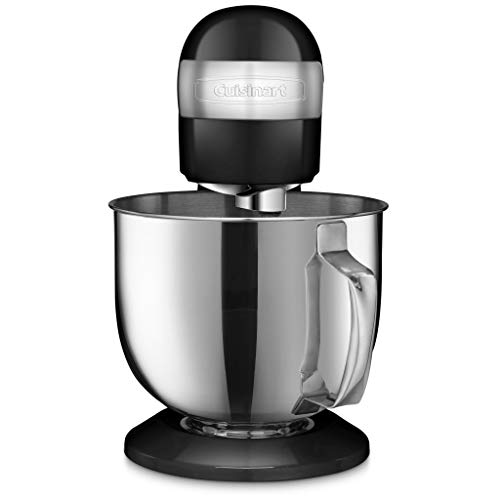
Cuisinart Stand Mixer SM-50, Onyx
Badge: Best for Frequent Bakers
Strengths
- Same 12-speed, 5.5-quart platform as the lead pick, in a finish that hides everyday baking marks gracefully.
- Full attachment set — whisk, paddle, dough hook — plus splash guard with pour spout.
- Stand format suits the rhythm of weekly baking: cream, mix, portion, repeat.
Trade-offs
- Mechanically identical to the other SM-50 finishes; the choice is aesthetic, not performance.
- Counter-space commitment is the same as any stand mixer.
- Frequent bakers will still rotate two trays and a cooling rack around it — it solves mixing, not oven logistics.
Mini spec box
- Type: stand mixer
- Speeds: 12
- Bowl: 5.5-quart stainless steel
- Included: chef’s whisk, mixing paddle, dough hook, splash guard with pour spout
- Finish: Onyx
- Model in listing: SM-50BK
Onyx is the finish for the baker who will use this machine every week and would rather it looked composed while doing so. Dark finishes forgive the visual evidence of a baking habit — the faint flour dusting, the odd smear — between proper cleanings, which is a small but real quality-of-life difference for the most-used appliance on the counter. Underneath, everything said about the platform applies unchanged: the same 12 speeds for controlled creaming, the same 5.5-quart stainless bowl for full batches, the same paddle-led attachment set.
Frequent bakers develop a rhythm, and a stand mixer is what makes that rhythm possible. While the paddle creams the next batch’s butter and sugar, the baker portions the previous dough, rotates trays, and washes the scoop — work that cannot happen while both hands hold a hand mixer over a bowl. Over a holiday weekend of back-to-back batches, that parallelism is the difference between an enjoyable production and an exhausting one. The splash guard earns special mention for frequent use: adding flour in stages through the pour spout, batch after batch, without re-dusting the kitchen each time, keeps the whole operation tidy.
The honest note, stated in its own trade-offs, is that Onyx versus White Linen is a kitchen decision, not a cookie decision. Choose it because your kitchen is darker, your baking is constant, or you simply prefer it — the cookies will be identical, and they will be good. Bakers whose mixing extends to homemade product experiments should note the separate guidance in Best Mixers For Making Hair Product, where hygiene and dedicated equipment matter for non-food work.
Best for: weekly bakers who want the platform in a forgiving dark finish / Not suited for: buyers expecting a performance difference from the colour
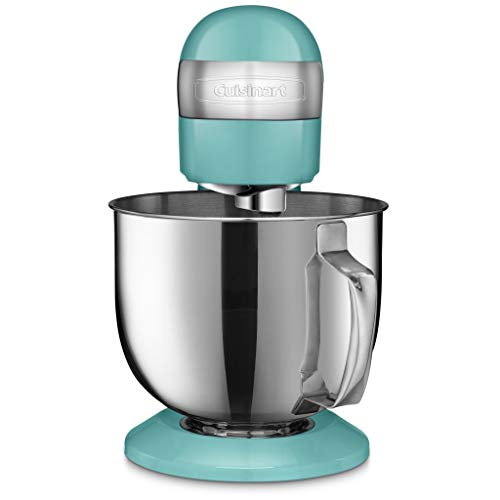
Cuisinart Stand Mixer SM-50, Periwinkle Blue
Badge: Best Gift Pick
Strengths
- A distinctive finish on a genuinely capable machine — a gift that performs, not just decorates.
- 12 speeds and the 5.5-quart bowl cover the recipient’s whole cookie repertoire.
- Whisk, paddle, dough hook, and splash guard included from day one.
Trade-offs
- A colour this personal should match the recipient’s kitchen, not the giver’s taste.
- Same stand-mixer footprint considerations as the other finishes.
- Identical platform to the other SM-50 listings — no hidden upgrades.
Mini spec box
- Type: stand mixer
- Speeds: 12
- Bowl: 5.5-quart stainless steel
- Included: chef’s whisk, mixing paddle, dough hook, splash guard with pour spout
- Finish: Periwinkle Blue
- Model in listing: SM-50TQNAS
Periwinkle Blue takes the gift badge because stand mixers are among the most given — and most kept — of all kitchen presents, and this finish makes the gesture feel chosen rather than defaulted. Crucially, the gift is not a novelty: it is the same cookie-capable platform as the lead pick, with the paddle for doughs, the whisk for the frostings and whipped toppings that accompany them, and the dough hook for the recipient’s bread ambitions. A new baker receiving this machine can bake a confident first batch of chocolate chip cookies the same weekend, creaming hands-free and adding flour through the splash guard like someone who has done it for years.
Gifting a stand mixer does carry two responsibilities worth stating. The first is space: confirm, by observation or by asking, that the recipient’s kitchen can house it, because a beloved machine that lives in its box helps no one. The second is colour confidence — a finish this distinctive should suit their kitchen and their eye. Get those two things right and the gift compounds: every batch of cookies it produces tends to find its way back to the giver, which is the best return on a present in the whole catalogue.
Performance expectations should be set exactly as for the other finishes, because the machine is the same: excellent creaming control across 12 speeds, comfortable full-batch capacity, one scrape-down for perfect evenness, and a bowl that washes up without drama. If the colour delights the baker, they will bake more often — and a mixer that invites use is, in the only sense that matters, the best-performing mixer of all.
Best for: a substantial, lasting gift for a keen home baker / Not suited for: recipients with very limited counter or storage space
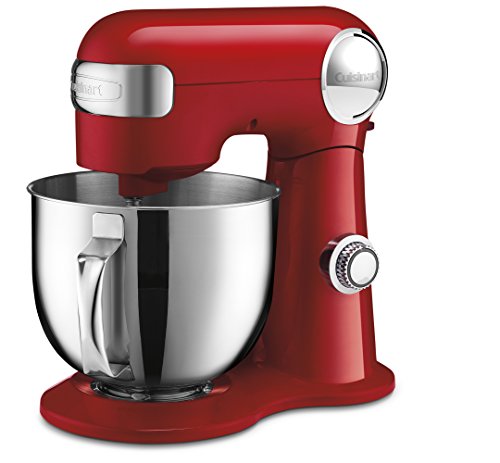
Cuisinart Stand Mixer SM-50, Ruby Red
Badge: Best Statement Finish
Strengths
- The boldest finish of the platform, for bakers who keep the mixer on display.
- Identical cookie credentials: 12 speeds, 5.5-quart stainless bowl, full attachment set.
- Stand format encourages frequent baking — the machine is out, so it gets used.
Trade-offs
- A statement colour dominates a small kitchen’s palette, for better or worse.
- No mechanical difference from the other three finishes.
- Bakers who store appliances away gain nothing from a display finish.
Mini spec box
- Type: stand mixer
- Speeds: 12
- Bowl: 5.5-quart stainless steel
- Included: chef’s whisk, mixing paddle, dough hook, splash guard with pour spout
- Finish: Ruby Red
- Model in listing: SM-50R
Ruby Red is the finish for the baker whose mixer never leaves the counter — and there is a genuine baking argument for that lifestyle. Appliances that live out get used; appliances that live in cupboards get forgotten. A stand mixer in a colour its owner loves looking at quietly increases how often cookies happen, because the friction of starting drops to nearly zero: the machine is there, the bowl is on it, and the butter is already softening beside it. Every performance point from the platform applies — the controlled creaming, the splash-guarded flour additions, the paddle working a stiff, chip-loaded dough while the baker preps the trays.
It is worth pausing on the dough hook’s presence in a cookie guide, because frequent bakers rarely bake only cookies. The same counter-resident machine that handles Saturday’s oatmeal raisin dough handles Sunday’s pizza base and the week’s sandwich loaf, and the whisk covers the frostings, meringues, and whipped creams that orbit a baking habit. A statement finish makes the most sense precisely for this kind of baker: the machine is a fixture, so it may as well be a fixture they enjoy.
The caveats are aesthetic honesty, again: red is a commitment, it will anchor the kitchen’s colour story, and it performs neither better nor worse than White Linen, Onyx, or Periwinkle Blue. Choose it with your eyes open and it will reward you every time you walk into the kitchen — usually by talking you into baking.
Best for: proud countertop bakers who bake several times a week / Not suited for: bakers who store appliances out of sight

Hamilton Beach 6-Speed Electric Hand Mixer
Badge: Best Hand Mixer for Value
Strengths
- 250-watt motor and six speeds, with a QuickBurst boost for the moment a dough thickens.
- Bowl Rest lets the mixer sit on the bowl’s edge between steps, keeping counters cleaner.
- Snap-on storage case keeps the mixer and its traditional beaters together in the drawer.
Trade-offs
- Hand mixing means your arm is the stand — large, stiff batches are real work.
- Best kept to small and medium batches; double batches of stiff dough belong to a stand mixer.
- No hands-free creaming while you prep the next step.
Mini spec box
- Type: electric hand mixer
- Speeds: 6, plus QuickBurst
- Motor: 250 watts (as listed)
- Attachments: traditional beaters
- Features: Bowl Rest, snap-on storage case
- Colour in listing: White (model 62682G)
Not every cookie baker needs — or wants — a stand mixer, and the Hamilton Beach is the strongest argument for the hand format in this guide. Its 250-watt motor and six speeds cover the cookie sequence competently for small and medium batches: cream the butter and sugar, work in the flour in additions, and use the QuickBurst boost for the brief moment when a dough with mix-ins needs one more push to come together. For a baker making a single batch of drop cookies on a weeknight, that is the whole job, done with a tool that lives in a drawer.
Two thoughtful details elevate it. The Bowl Rest lets the mixer perch on the edge of the bowl while you scrape, measure, or answer the door, instead of dripping across the counter. The snap-on storage case ends the universal hand-mixer annoyance of beaters migrating to the back of a drawer; everything arrives together and leaves together. In qualitative terms this is the value tier of the guide — the lowest-commitment way to bake good cookies with electric help — and it wears that position honestly.
Its limits are physical, not hidden. Your arm holds the mixer against a stiffening dough, so batch size discipline matters: halve the holiday recipe rather than doubling it, choose softer doughs on busy days, and let chilled dough warm slightly before mixing in additions. Bakers who respect those boundaries will find this little machine lasts for years of weeknight cookies; bakers who outgrow them have a clear, happy upgrade path to the stand mixer above.
Best for: small-batch and weeknight cookie bakers, compact kitchens / Not suited for: double batches or very stiff doughs in volume
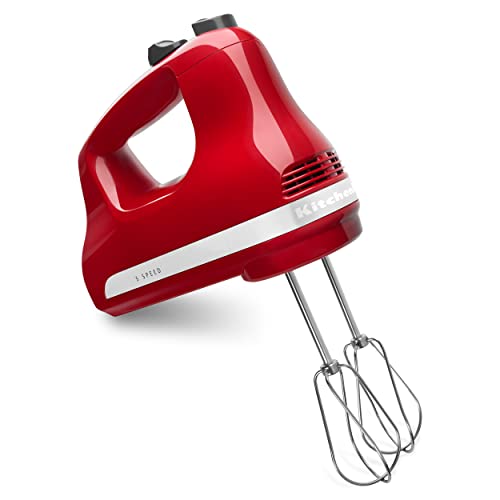
KitchenAid 5 Ultra Power Speed Hand Mixer, Empire Red
Badge: Best for Light Doughs and Batters
Strengths
- Five speeds with Turbo Beaters shaped for efficient mixing without a centre post to clog.
- Lockable swivel cord keeps the cord where the baker wants it, left or right handed.
- Easy-release button and dishwasher-safe beaters make cleanup genuinely quick.
Trade-offs
- Positioned for lighter work — stiff, heavily loaded doughs are stand-mixer territory.
- Five speeds offer less fine gradation than the 6-speed and 12-speed picks.
- Like all hand mixers, it asks the baker to supply the stamina on thicker mixtures.
Mini spec box
- Type: electric hand mixer
- Speeds: 5
- Attachments: Turbo Beaters (dishwasher-safe, as listed)
- Features: lockable swivel cord, easy-release beater button
- Colour in listing: Empire Red
- Model in listing: KHM512
The KitchenAid hand mixer closes the list with a clear speciality: light, controlled mixing done neatly. Its Turbo Beaters are designed to pull mixtures together efficiently, and for the softer half of the cookie world — sugar cookies, soft butter doughs, the batters for whoopie pies and cookie-adjacent bakes — five well-chosen speeds are genuinely enough. Creaming for a small batch feels calm rather than frantic, and the mixer’s tidy manners suit bakers who bake in short, frequent sessions rather than production weekends.
Ergonomics are its quiet strength. The lockable swivel cord can be set to the side that suits the baker’s dominant hand and the kitchen’s outlet, so the cord stops dragging through the bowl — a small frustration every hand-mixer owner knows. When the batch is done, the easy-release button drops the beaters without a wrestling match, and the beaters themselves are listed as dishwasher-safe, which shortens the least-loved part of baking to almost nothing.
Honesty about scope matters most with this pick. It is not the tool for a double batch of chilled, oat-loaded dough, and this guide will not claim otherwise; that work belongs to the SM-50 platform. Within its intended territory — small batches, softer doughs, batters, frostings, and whipped components — it is a refined, durable-feeling choice that many bakers will reach for more often than any other tool they own. Readers mixing for a party drinks station rather than a baking day are, once again, in a different aisle: see Best Mixers For Margaritas for that topic.
Best for: small batches of softer doughs, batters, and frostings / Not suited for: large or very stiff cookie doughs
Comparison Table
| Pick | Type | Speeds | Bowl / attachments | Defining feature | Link |
|---|---|---|---|---|---|
| Cuisinart SM-50, White Linen | Stand | 12 | 5.5-quart stainless bowl; whisk, paddle, dough hook, splash guard | The all-round cookie platform | Check on Amazon |
| Cuisinart SM-50, Onyx | Stand | 12 | 5.5-quart stainless bowl; whisk, paddle, dough hook, splash guard | Same platform, forgiving dark finish | Check on Amazon |
| Cuisinart SM-50, Periwinkle Blue | Stand | 12 | 5.5-quart stainless bowl; whisk, paddle, dough hook, splash guard | Gift-ready distinctive finish | Check on Amazon |
| Cuisinart SM-50, Ruby Red | Stand | 12 | 5.5-quart stainless bowl; whisk, paddle, dough hook, splash guard | Statement countertop finish | Check on Amazon |
| Hamilton Beach 6-Speed | Hand | 6 + QuickBurst | Traditional beaters; snap-on storage case; Bowl Rest | 250-watt value with storage solved | Check on Amazon |
| KitchenAid 5-Speed, Empire Red | Hand | 5 | Turbo Beaters, dishwasher-safe as listed | Neat, controlled light mixing | Check on Amazon |
The table makes the guide’s structure visible at a glance: one stand platform in four finishes, then two hand mixers with different temperaments. If two rows look identical, they are — and the finish is the decision.
How to Choose the Best Mixers for Making Cookies for Your Baking
Decide by batch, not by aspiration. Write down the cookie batch you actually make most often: a single tray for the weekend, a family batch, or a holiday production of several doughs in rotation. Single and small batches are hand-mixer territory, and both hand mixers here will serve them well. Family batches and anything doubled belong to a stand mixer, whose bowl and motor turn the stiff final stage from a wrestling match into a pause for coffee. Holiday producers should think in terms of the whole afternoon: the stand mixer’s hands-free creaming lets you portion, chill, and rotate trays in parallel, which is where its value compounds.
Next, consider your doughs. Soft drop cookies and sugar cookies forgive almost anything. Stiff doughs — oatmeal, chunky chip, shortbread-style mixtures, anything chilled before mixing in additions — demand the stand format’s stability and the paddle’s leverage. Bakers whose repertoire leans stiff should not talk themselves into a hand mixer on price; the qualitative tiers in this guide exist because the work itself differs, and a hand mixer asked to do stand-mixer work daily will frustrate its owner and shorten its own life. Conversely, a stand mixer bought for four small batches a year is counter space spent on a ceremony, and the honest hand-mixer choice will make its owner happier.
Then weigh the supporting details. Storage: a stand mixer needs a home you have measured; a hand mixer with a storage case, like the Hamilton Beach, needs a drawer. Attachments: the SM-50’s whisk and dough hook widen the machine’s year-round usefulness, while the hand mixers keep their kits deliberately simple. Cleanup: stainless bowls and dishwasher-safe beaters (where the listing says so) shorten the distance between baking impulse and baked cookies. Finally, the finish question, which this guide is unusually positioned to answer: with four colours of one machine, choose the one that suits your kitchen’s light and your own eye, and spend exactly zero worry on performance differences that do not exist.
How to Mix Cookie Dough Properly, Step by Step
Good cookies are mostly technique, and the mixer is where the technique happens. Step one: start with butter at cool room temperature — soft enough to dent, never melted — and cream it with the sugars at a medium speed until the mixture looks paler and feels lighter. This step builds the tiny air pockets that give cookies their texture, and rushing it is the most common home-baking error. Step two: add eggs and vanilla at a lower speed, mixing only until combined, so the emulsion stays smooth. Step three: add the dry ingredients in two or three additions at the lowest useful speed — through the splash guard’s pour spout on the stand mixer — and stop the moment no dry streaks remain. Overmixing at this stage develops gluten and turns tender cookies tough.
Step four: fold in the chips, nuts, or oats last, at the lowest speed or by hand with a spatula for the final few turns, so the mix-ins distribute without being smashed. Step five: scrape the bowl properly — bottom and sides — once during the flour stage and once at the end; every mixer in this guide leaves a thin layer that only a spatula can redeem, and that layer is where unmixed butter hides. Step six: chill the dough as the recipe directs. Chilling firms the butter, deepens flavour, and makes portioning cleaner, and portioning with a scoop keeps cookies uniform so they bake evenly. Bake a two-cookie test tray first whenever a dough is new to you; its spread tells you whether the rest of the batch wants a longer chill or a touch more flour, and it costs you four minutes instead of a full tray.
Troubleshooting. Problem: cookies spread into thin puddles → the butter was too warm or the dough under-chilled; chill the portioned dough before baking and cream for less time on the next batch. Problem: dough climbs the beaters or strains the mixer → the batch is too large or too stiff for the format; split it, let chilled dough warm slightly, and add mix-ins by hand. Problem: cookies bake unevenly, some pale and some dark → the dough was not fully mixed or the portions varied; scrape the bowl thoroughly and portion with a scoop so every cookie starts equal.
Batch Planning: Dough Ahead, Freeze Well, Bake on Demand
The best cookie bakers rarely bake on the day they mix. Cookie dough is one of the most freezer-friendly mixtures in the kitchen: portion it into balls, freeze them solid on a tray, then store them in a bag, and fresh cookies become a twelve-minute decision any evening. This rhythm changes what a mixer needs to do — one larger, well-made batch replaces several small ones — which quietly strengthens the stand mixer’s case for anyone who bakes weekly. Its 5.5-quart bowl turns a double batch into a single session, and the freezer does the scheduling from there.
Hand-mixer bakers can use the same system at a smaller scale: mix one batch, portion and freeze, and repeat on a second evening rather than forcing a double batch through a hand format. Either way, label the bag with the dough and the date, bake from frozen with a small time adjustment as the recipe allows, and keep a modest rotation — two or three doughs — so the freezer offers a choice instead of an archaeology project. The mixer you choose should support the rhythm you will actually keep, and for most homes that rhythm is mix once, bake often.
Cookie by Cookie: Matching the Mixer to the Dough
Different cookies stress a mixer in different ways, and walking through the repertoire shows why this guide ranks the formats as it does. Chocolate chip cookies, the universal benchmark, move from easy creaming to a moderately stiff finish once the chips land; both formats here handle a standard batch, with the stand mixer pulling ahead when the recipe doubles. Oatmeal cookies are the quiet overachievers of stiffness — oats absorb moisture and the dough firms up as it stands — so they reward the paddle’s leverage and punish a hand mixer asked to finish a rested, chilled batch. Shortbread and slice-and-bake doughs are dense rather than voluminous; the stand mixer’s low, patient speeds combine them without incorporating unwanted air, which is exactly what those recipes want.
At the other end of the repertoire, soft sugar cookies, snickerdoodles, and crinkle cookies are gentle work that any pick in this guide handles gracefully, and their bakers can choose on storage and cleanup alone. Frosted and sandwiched cookies shift the workload to the second mixture — the frosting — where the stand mixer’s whisk and the KitchenAid hand mixer’s tidy beaters both shine, and where a baker producing several frostings for a cookie box will feel the hands-free advantage most. Meringue-based cookies complete the picture: they are whisk work from start to finish, and the SM-50’s included chef’s whisk turns the same countertop machine into the right tool without a second appliance appearing.
The pattern across the whole repertoire is consistent: the stiffer and larger the baking gets, the more the stand platform earns its space, and the softer and smaller it stays, the more a hand mixer’s simplicity wins the day. Bakers who also take their doughs savoury will recognise the same physics in Best Mixers For Making Pizza Dough, where a lean, elastic dough asks for the dough hook rather than the paddle — a reminder that the attachment, not just the motor, is what adapts one machine to many mixtures. And anyone tempted to repurpose a kitchen mixer for non-food projects should pause at Best Mixers For Malibu Coconut Rum only as a signpost to a wholly different topic: food equipment and drink or cosmetic mixing are separate conversations, with separate hygiene rules, and this guide keeps them that way.
Common Buying Mistakes
The first mistake is buying a hand mixer for stand-mixer work — double batches and stiff doughs — and blaming the tool for a mismatch the buyer chose. The second is the reverse: buying a stand mixer for a tiny kitchen and four batches a year, then resenting its footprint. The third is treating the four SM-50 finishes as different machines and agonising over a performance difference that does not exist; pick the colour and move on. The fourth is ignoring the attachments in the box: a cookie baker needs the paddle above all, and the stand mixer’s included whisk and dough hook are what justify its space across the year. The fifth is skipping the scrape — not a buying mistake but a mixing one — and then blaming the mixer for butter pockets it was never going to reach.
Final Recommendation
For most cookie bakers, the Cuisinart SM-50 stand mixer is the right answer, in whichever finish suits your kitchen: White Linen for the classic look, the Onyx for a hard-working dark kitchen, Periwinkle Blue as a gift, or Ruby Red as a statement. Its 12 speeds, 5.5-quart bowl, and paddle-led attachment set cover cookie baking from creaming to stiff dough with the least effort and the most room to grow. Bakers with small kitchens or small batches should choose a hand mixer instead — the Hamilton Beach 6-Speed for value, motor, and storage, or the KitchenAid 5-Speed for light doughs and the neatest cleanup. Match the format to your real batch size, cream patiently, scrape once, chill the dough — and the cookies will take care of themselves.
Frequently Asked Questions
Is a stand mixer or a hand mixer better for cookies?
It depends on batch size and dough stiffness. A stand mixer is better for full and double batches, stiff doughs with heavy mix-ins, and hands-free creaming. A hand mixer is better for small batches, softer doughs, and small kitchens. Most bakers who bake weekly land on a stand mixer; occasional bakers are happier with a hand mixer they actually use.
Which attachment should I use for cookie dough?
The mixing paddle (flat beater) is the cookie attachment: it creams butter and sugar, incorporates flour, and works the final dough evenly. The whisk is for whipped components and frostings, and the dough hook is for yeast doughs. On hand mixers, the standard beaters — or KitchenAid’s Turbo Beaters — do the cookie work.
Why do my cookies spread too much?
Usually the butter was too warm, the creaming ran long, or the dough went into the oven under-chilled. Cream until the mixture is pale and light rather than glossy, chill portioned dough before baking, and run a two-cookie test tray with any new recipe to check spread before committing the whole batch.
How big a batch can the 5.5-quart bowl handle?
The 5.5-quart stainless bowl is sized for family and holiday baking — full standard batches with room for the dough to move, and comfortable double batches of typical drop-cookie doughs. Extremely stiff or very large bakery-scale mixtures should still be split, because every home mixer works best when the dough can circulate rather than pack solid.
Can a hand mixer handle chocolate chip cookie dough?
Yes, in a single batch of a standard recipe, especially with the Hamilton Beach’s 250-watt motor and QuickBurst for the final thick stage. Add chips at the end, consider folding them in by hand, and avoid doubling the recipe. Bakers who make large or very stiff chip doughs weekly should choose the stand mixer instead.
Do the four Cuisinart finishes perform differently?
No. White Linen, Onyx, Periwinkle Blue, and Ruby Red are finishes of the same SM-50 platform — same 12 speeds, same 5.5-quart bowl, same attachments in the listings. Choose purely on your kitchen and your preference; the cookies will be identical.
How should I store a stand mixer and its attachments?
Store the bowl on the machine, the attachments in a single drawer or container beside it, and the splash guard with them, so a baking impulse never turns into a scavenger hunt. If the mixer lives on the counter, a quick wipe after each session keeps flour dust from becoming permanent décor; if it lives in a cupboard, measure the shelf before buying and lift with two hands from the base. Hand mixers are simpler: the Hamilton Beach’s snap-on case exists precisely so the mixer and beaters travel and store as one object.
How do I stop flour from puffing out of the bowl?
Add flour in two or three additions at the lowest useful speed, and let each addition mostly disappear before adding the next. On the stand mixer, use the splash guard and add through its pour spout. A clean towel draped over a hand mixer’s bowl for the first seconds of each addition achieves a similar rescue in a smaller kitchen.


