Disclosure: topratedkitchenware.com is reader-supported. When you buy through links on our site, we may earn an affiliate commission from Amazon and other retailers, at no extra cost to you.
Where to buy
Every sink below is a stainless steel undermount with a published specification. Together they form our list of the best quality stainless steel undermount kitchen sinks: stated gauge, named sound and drainage systems where offered, and itemized included hardware. Undermount quality is a partnership between the bowl and its installation, so this list favors sinks whose construction supports a clean reveal, a solid set, and years of quiet service. Each pick links to its Amazon listing for a current configuration check.
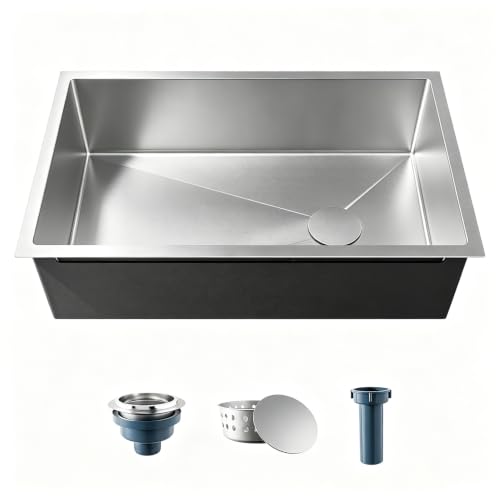
- cozhao 30 Inch Undermount Kitchen Sink, 18 Gauge 304 Stainless Steel
- MAYESAR 28 Inch Undermount Kitchen Sink, 16 Gauge, 9 Inch Deep
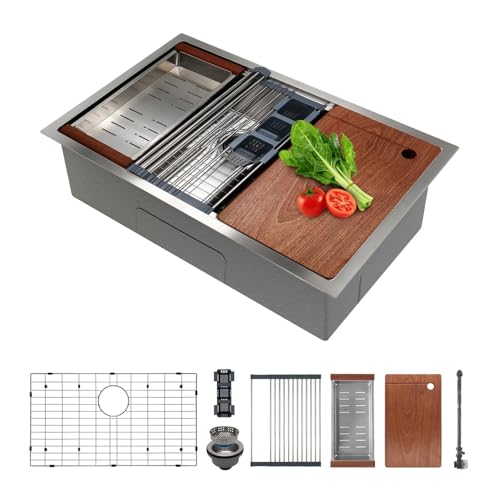
- KRAUS KWU110-32 Stainless Steel 32 Inch Undermount Workstation Sink
- KRAUS KHU100-32 Stainless Steel 32 Inch 16 Gauge Undermount Kitchen Sink
- Oxwiser 30×18 Inch Undermount Sink, 16 Gauge Single Bowl Bundle
- Delironexu 30 Inch Undermount Kitchen Sink, 18 Gauge, Drain Kit Included
Read the full guide ↓
The best quality stainless steel undermount kitchen sinks earn the title twice: once in the factory and once under your countertop. The undermount format is unforgiving in a specific way. The bowl hangs beneath a stone edge, sealed and clipped, carrying the full weight of water and cookware through its rim, while its top edge forms the most-touched junction in the kitchen, the place where crumbs and water get swept off the counter a dozen times a day. A mediocre bowl installed beautifully will disappoint more slowly than a great bowl installed badly, but both will disappoint, and this guide refuses to separate the two halves of the equation.
So the six verified picks here were chosen for undermount life specifically: gauges that keep a suspended bowl rigid, sound systems that matter when a bowl resonates against cabinetry, drainage geometry that works within a level set, and hardware bundles that complete the installation without improvisation. Sizes span 28 to 32 inches, formats span classic bowls and a full workstation, and the buying guide that follows covers reveals, support systems, and countertop compatibility in the detail the format deserves.
Key Takeaways
- Undermount quality is half product, half installation: support, sealing, and level decide how any bowl performs.
- Sixteen gauge steel keeps a suspended bowl rigid and quiet; it is the benchmark for this mount type.
- Sound pads matter even more undermount, where the cabinet can amplify a thin bowl’s drumming.
- Complete bundles, grid, drain assembly, cap, simplify installation and protect the bowl from day one.
- Workstation ledges pair naturally with undermount’s flush counter, extending the work surface over the bowl.
- Countertop compatibility is non-negotiable: undermounts need solid, water-resistant counters with a finished cutout.
In this guide
Quick Picks
| Pick | Badge | Why it stands out | Link |
|---|---|---|---|
| cozhao 30 Inch | Best Straightforward Undermount | 304 stainless, handmade modern bowl, drain assembly included | Check on Amazon |
| MAYESAR 28 Inch | Best Compact Undermount | 16 gauge, 9 inch deep, brushed finish, rounded corners | Check on Amazon |
| KRAUS KWU110-32 Workstation | Best Undermount Workstation | 16 gauge TRU16, ledge, cutting board and roll-up rack included | Check on Amazon |
| KRAUS KHU100-32 | Best Large Undermount | 32 inch 16 gauge TRU16, grooves, rounded corners, NoiseDefend | Check on Amazon |
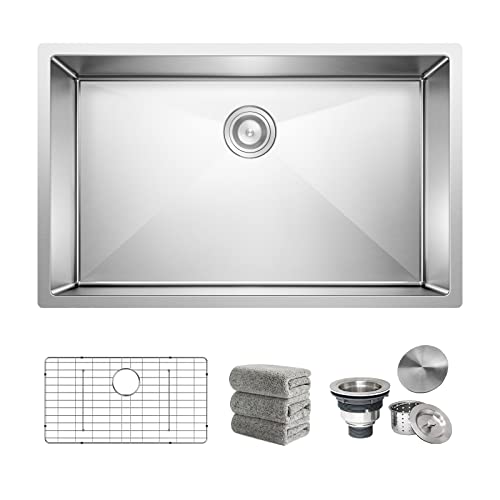
| Oxwiser 30 Inch Bundle | Best Complete Package | 16 gauge with grid, drain assembly, drain cap, and towel included | Check on Amazon |
| Delironexu 30 Inch | Best Handmade Undermount | Handmade bowl, 9 inch depth, brushed finish, drain kit included | Check on Amazon |
How These Picks Were Chosen
We screened for undermount suitability using verified manufacturer data: every pick is a stainless undermount by design, with its gauge published, its included hardware itemized, and its feature systems named where they exist. Sinks that could not document their construction were excluded, because an undermount bowl disappears under stone; you will live with its specification, not its listing photos, and the specification has to be knowable before the countertop is cut.
The six cover the undermount landscape a quality buyer actually shops: a straightforward 304 model with its drain included, a compact deep model at full gauge, a complete workstation system, a large benchmark bowl, a fully bundled classic, and a handmade design-led option. Together they let us discuss the format’s real variables, gauge, sound, ledges, bundles, and bowl geometry, with a concrete product attached to each.
This is research-led guidance from verified specifications, manufacturer documentation, and owner feedback patterns, not laboratory testing, and each review states its sink’s limitation openly. Readers researching the broader composite field can start at Best Quartz Composite Kitchen Sinks, and those who like their research report-flavored will appreciate Best Quality Stainless Steel Undermount Kitchen Sinks Consumer Report.
The 6 Best Quality Stainless Steel Undermount Kitchen Sinks

cozhao 30 Inch Undermount Kitchen Sink, 304 Stainless Steel
Badge: Best Straightforward Undermount
Strengths
- 304 stainless alloy stated plainly by the maker
- Drain assembly included for a complete undermount install set
- Handmade modern single bowl with clean lines
Trade-offs
- 18 gauge steel is lighter in a suspended mount
- A grid is a near-essential companion
- Fewer named feature systems than the Kraus picks
Mini spec box: Size: 30 inches. Mount: undermount. Material: 304 stainless steel, 18 gauge. Bowl: single. Included: drain assembly. Style: handmade, modern.
The cozhao is the undermount for buyers who want the format’s clean sweep-in edge and modern look with the fewest possible complications. Its specification is transparent, 304 stainless, handmade construction, drain assembly included, and that transparency is especially valuable in an undermount, where the hardware set has to be complete and correct before the bowl goes under the stone for good.
At 18 gauge the bowl is the lightest here, which cuts both ways undermount. Installation handling is easier and the support demands are gentler, but the suspended bowl benefits from the full clip or rail support the format allows, and a bottom grid will protect the floor and calm the acoustics. Installed that way, it delivers the essential undermount experience honestly: flush counters, a single open bowl, and a finish that suits any kitchen around it.
Consider it the quality entry point to the format. Buyers who cook heavily and daily should step to the 16 gauge models below for the rigidity a suspended bowl rewards. Buyers refreshing a kitchen to a good standard will find the cozhao’s combination of stated alloy and included drain the most sensible spend in its tier.
Best for: straightforward undermount refreshes / Not suited for: heavy daily cooking without grid and full support

MAYESAR 28 Inch Undermount Kitchen Sink, 16 Gauge
Badge: Best Compact Undermount
Strengths
- 16 gauge rigidity in a compact suspended bowl
- 9 inch depth keeps a small undermount genuinely useful
- Brushed finish and rounded corners for easy care
Trade-offs
- Large pans wash at an angle
- Only fits the brief where cabinet width is limited
- Subtle handmade variation between units
Mini spec box: Size: 28 x 18 inches. Mount: undermount. Material: stainless steel, 16 gauge. Bowl: single, 9 inches deep. Finish: brushed. Corners: rounded.
Compact undermounts carry a double burden: the cabinet is small and the countertop cutout leaves less material around the bowl, so the sink’s own rigidity matters more, not less. The MAYESAR meets that burden with full 16 gauge steel, then uses its 9 inch depth to give the 28 inch footprint a working capacity that shallow compact bowls cannot match. It is the compact undermount specified the way a quality buyer would specify it themselves.
The undermount format flatters small kitchens particularly. With no rim sitting on the counter, every inch of a short counter run stays usable, and the sweep-in edge makes the constant wipe-downs of a small prep area effortless. The brushed finish forgives the visual evidence of that heavy use, and rounded corners keep the bowl itself quick to clean.
Its rule is the same as every compact pick: if the cabinet can host a 30 inch bowl, buy the width. When it cannot, this is the undermount that refuses to make you pay for your kitchen’s dimensions with diluted quality.
Best for: compact kitchens wanting a true undermount at full gauge / Not suited for: wide cabinets

KRAUS KWU110-32 Stainless Steel 32 Inch Undermount Workstation Sink
Badge: Best Undermount Workstation
Strengths
- Integrated ledge extends the flush undermount work surface
- Cutting board and roll-up rack included as a working system
- 16 gauge TRU16 steel with NoiseDefend soundproofing
Trade-offs
- Heaviest system here; support must be planned seriously
- Wide cabinet and cutout required
- Accessories need storage when off the ledge
Mini spec box: Size: 32 inches. Mount: undermount. Material: stainless steel, 16 gauge TRU16. Bowl: single with integrated ledge. Included: cutting board, roll-up rack. Features: NoiseDefend soundproofing.
Undermount and workstation are natural partners. The undermount already erases the rim so the counter flows into the bowl; the KWU110-32’s integrated ledge continues that flow by letting a cutting board and roll-up rack ride level over the sink, turning the whole station into one continuous work surface. Kraus completes the idea properly: TRU16 16 gauge steel underneath, NoiseDefend soundproofing around it, and the board and rack in the box rather than in a follow-up order.
The installation note is weight and planning. A 32 inch workstation bowl, loaded with water and cookware, is the heaviest suspended load on this list, and it deserves the format’s best practice: full mechanical support with rails or a cradle, a meticulous seal, and a countertop with the strength the span assumes. Done that way, the system feels carved from the counter itself, which is the undermount ideal.
For counter-short kitchens that cook daily, no other pick here changes daily life as much. For spacious kitchens, the same money buys the classic KHU100-32 below and a quieter conscience about accessories in drawers. The quartz alternative to this whole material conversation is surveyed in Best Quartz Undermount Kitchen Sinks for readers still choosing a direction.
Best for: counter-short, cook-daily kitchens wanting the full system / Not suited for: light-use kitchens or weak countertop spans

KRAUS KHU100-32 Stainless Steel 32 Inch Undermount Sink
Badge: Best Large Undermount
Strengths
- Benchmark TRU16 16 gauge build at 32 inches
- Channel grooves and rounded corners scale the cleaning systems up
- NoiseDefend pads keep a big suspended bowl quiet
Trade-offs
- No ledge or workstation accessories
- Wide cabinet, cutout, and support required
- Confirm grid configuration at ordering
Mini spec box: Size: 32 inches. Mount: undermount. Material: stainless steel, 16 gauge TRU16. Bowl: single. Features: rounded corners, channel grooves, NoiseDefend pads.
A large undermount lives or dies on rigidity and drainage, because a wide suspended floor has more area to flex and more area to puddle. The KHU100-32 answers with the benchmark formula at scale: TRU16 steel for the structure, channel grooves to walk a big bowl’s water to the drain, rounded corners so the larger perimeter still cleans in single passes, and NoiseDefend padding so the family’s biggest cleanup does not resonate through the cabinet below.
It is the large undermount for buyers who want the format’s purity, an uninterrupted counter, a bowl that takes sheet pans flat, and no system layered on top. In a stone-countered kitchen built around cooking space, that purity is the luxury: everything works, nothing clutters, and the specification can be verified line by line.
Support it like the large bowl it is, with the manufacturer’s full mounting approach rather than a minimal clip set, and confirm whether your chosen configuration includes the grid you will want. With those two disciplines observed, this is the large undermount benchmark against which others in the class are fairly judged.
Best for: large stone-counter kitchens wanting a classic big bowl / Not suited for: narrow cabinets or workstation briefs

Oxwiser 30×18 Inch Undermount Sink Bundle, 16 Gauge
Badge: Best Complete Package
Strengths
- Five item bundle completes the undermount installation set
- 16 gauge single bowl with matched bottom grid
- Drain assembly and cap included and sized by the maker
Trade-offs
- 30 inch bowl angles the largest pans
- No workstation ledge
- Stainless care routine applies as always
Mini spec box: Size: 30 x 18 inches. Mount: undermount. Material: stainless steel, 16 gauge. Bowl: single. Bundle: sink, bottom grid, drain assembly, drain cap, towel.
Undermount installation punishes incomplete hardware sets, because discovering a missing drain component after the bowl is sealed under stone is a special kind of misery. The Oxwiser bundle is the antidote: sink, bottom grid, drain assembly, drain cap, and towel in one box, with the grid and drain made by the same maker for this exact bowl. As an installation proposition, it is the most completely thought-through package on this list.
The bowl itself is the benchmark recipe, 16 gauge steel in the standard 30 inch footprint, and the included grid immediately becomes part of the undermount experience: cookware lands on the grid instead of the steel, dishes drain above the bowl floor, and the whole station feels calmer and better protected from the first wash.
If your project values a single coherent delivery and an installer who opens one box instead of four, this is the undermount to buy. Its only ceiling is the familiar one of its size class, and households that need width have the 32 inch Kraus models above waiting.
Best for: buyers wanting one complete, matched installation package / Not suited for: cooks needing a wider bowl

Delironexu 30 Inch Undermount Kitchen Sink, Handmade
Badge: Best Handmade Undermount
Strengths
- Handmade geometry with crisp, modern lines under the counter
- 9 inch depth for capacity and splash control
- Drain kit included; brushed finish for graceful aging
Trade-offs
- 18 gauge steel, lighter than the benchmark class
- No extra accessories beyond the drain kit as described
- Handmade variation is part of the format
Mini spec box: Size: 30 x 18 x 9 inches. Mount: undermount. Material: stainless steel, 18 gauge. Bowl: single. Included: drain kit. Finish: brushed. Style: handmade.
Handmade undermounts have a visual signature that pressed bowls struggle to copy: tighter corners, flatter walls, and a fabricated precision that reads as custom work when the countertop reveal frames it. The Delironexu brings that signature at a reachable tier, with a 9 inch depth that keeps the bowl practical and a brushed finish that will age evenly in a busy kitchen.
The included drain kit keeps the installation honest, and the undermount format suits the design: with no rim interrupting the counter, the handmade bowl’s clean geometry is the whole show. Pair it with a simple, well-chosen reveal, positive, flush, or a slight negative reveal chosen with your fabricator, and the sink looks deliberately built into the kitchen rather than placed in it.
Its gauge is its concession, and the prescription is the familiar one: full support at installation and a grid in service. Buyers for whom design leads and loads are ordinary will find this the most characterful undermount here; buyers for whom thickness leads have the 16 gauge field above. A candid guide should offer both, and this one closes the list by doing exactly that. Readers comparing how owner ratings treat these trade-offs can continue at Best Ratings For Kitchen Sinks.
Best for: design-led undermount projects with ordinary loads / Not suited for: thickness-first heavy-use briefs
Comparison Table
| Sink | Size | Gauge | Ledge | Included hardware | Link |
|---|---|---|---|---|---|
| cozhao 30 | 30 in | 18 gauge, 304 | No | Drain assembly | Check on Amazon |
| MAYESAR 28 | 28 x 18 in | 16 gauge | No | 9 inch deep bowl | Check on Amazon |
| KRAUS KWU110-32 | 32 in | 16 gauge TRU16 | Yes | Cutting board, roll-up rack | Check on Amazon |
| KRAUS KHU100-32 | 32 in | 16 gauge TRU16 | No | Check configuration | Check on Amazon |
| Oxwiser 30 Bundle | 30 x 18 in | 16 gauge | No | Grid, drain assembly, cap, towel | Check on Amazon |
| Delironexu 30 | 30 x 18 x 9 in | 18 gauge | No | Drain kit | Check on Amazon |
How to Choose an Undermount Sink: Reveal, Support, and Steel
Decide the reveal with your countertop fabricator before anything is cut. A positive reveal shows a slim ledge of the sink’s rim inside the opening and is forgiving to clean around; a flush reveal aligns counter and bowl wall for the sleekest sweep; a negative reveal lets the counter overhang slightly, which looks sharp and demands the most precise cutting. None is universally best, but the choice belongs in the template conversation, not on installation day, and it affects how the finished station feels every time you wipe the counter.
Support is the second decision and the one with structural consequences. An undermount bowl is a suspended load: clips alone are the minimum expression of the idea, while rails or a cradle that carry the bowl’s rim on the cabinet structure are the quality expression, increasingly important as bowls widen, deepen, or gain workstation loads. Ask your installer which system they will use and why; a confident, specific answer is a quality signal about the installation half of your purchase.
Steel selection follows the familiar audit with an undermount emphasis. Sixteen gauge keeps a suspended floor rigid and pairs with sound pads to prevent the cabinet from becoming a resonance box. Verify the alloy or branded standard where stated, confirm the drain hardware is included or ordered, and price a grid into the plan for any gauge. Finally, confirm the countertop itself: undermount requires stone, quartz, or solid surface with a properly sealed, finished cutout edge, and the cabinet must meet the manufacturer’s stated minimum for the model you choose.
Bowl geometry finishes the brief. Interior dimensions against your largest pan, depth against your cooks’ reach, corners you can wipe, and a floor that drains within a level set. The picks here span the sensible answers, from the MAYESAR’s deep compact bowl to the KHU100-32’s wide classic, and the right one is the one whose numbers match your kitchen’s measurements rather than its mood board.
How to Install an Undermount Sink to a Quality Standard
The professional sequence never changes: template, dry fit, seal, support, plumb, cure, test. The fabricator cuts the opening from the manufacturer’s template at the agreed reveal. The installer dry-fits the bowl and checks drain alignment against the existing trap position. A continuous bead of quality silicone seals the flange. The support system, clips at minimum, rails or cradle for larger and workstation bowls, takes the load. Only then do the drain assembly and trap go together, aligned without sideways stress, and the sealant cures for its full stated time before the sink carries water.
Testing is not optional. Run water at full flow, fill the bowl and let it drain, run the disposal if fitted, and inspect every joint below with a dry paper towel, which reveals a slow weep that a fingertip misses. Check the bowl for level behavior as it drains; a properly set undermount empties completely through its grooves or slope, and any persistent puddle is a conversation to have with the installer now, not a trait to live with.
Care thereafter is the standard stainless liturgy with an undermount accent: rinse and wipe along the grain, keep a grid between steel and heavy cookware, and periodically run a fingertip along the seal line under the counter to confirm it remains continuous and dry. That seal is the format’s one vulnerable seam, and a minute of attention twice a year protects the countertop and cabinet that the whole installation depends on.
Troubleshooting mini-guide. Problem: a damp smell in the sink cabinet → inspect the seal line and every plumbing joint immediately; undermount leaks hide above the cabinet floor and reward early detection. Problem: the bowl seems to flex or sound hollow under load → ask the installer to verify the support system is carrying the rim as intended; added support is a fix, not a failure. Problem: water lingers in one corner → confirm the set is level, since drainage geometry assumes it.
Undermount Versus the Alternatives, Briefly and Honestly
Undermount’s case is the counter itself: uninterrupted work surface, sweep-in cleaning, and a built-in look that suits stone counters and modern kitchens. Its costs are installation precision, countertop restrictions, and the fact that the sink and counter become a permanent partnership; replacing one without disturbing the other is rarely simple. Drop-in sinks forgive almost everything and suit laminate counters and light remodels. Farmhouse sinks trade installation effort for presence and a different working posture at an exposed front.
None of that makes undermount a default; it makes it a commitment that pays when the kitchen matches it. If your project already centers on a stone or quartz counter and a clean-lined design, the six sinks here are the quality field to choose from. If your counters are laminate or your remodel is deliberately light, the honest recommendation is a different mount, however good these bowls are. The chrome-and-finish coordination angle for the wider sink station is explored in Best Ratio For Kitchen Sinks Chrome Over Nickel.
The Countertop Partnership: Stone, Quartz, and the Edge That Frames Your Sink
An undermount sink never appears alone; it appears inside a countertop, and the counter’s material and edge treatment co-author the result. Quartz offers consistency and low maintenance around the opening, with the cut edge finished to a clean line that suits a flush reveal. Granite brings natural movement that can either echo the steel’s calm or compete with a busy pattern, which is why fabricators like to see the actual slab before templating. Solid surface materials can achieve the most seamless integration of all, sometimes with the sink area shaped as one continuous run. In every case, the cutout edge is a finished surface in its own right, exposed to water daily, and its sealing and polish deserve the same scrutiny as the sink’s own finish.
Thickness and span matter structurally as well as visually. A wide undermount opening removes material from the counter’s most stressed zone, the strip between sink and cooktop or sink and edge, and long spans in brittle stone may call for reinforcement that your fabricator should raise before cutting, not after. This is another reason the support conversation belongs early: rails or a cradle carrying the bowl reduce the load the counter edge must bear, protecting both halves of the partnership. Quality undermount ownership begins at the template table, with the sink, the slab, and the support plan considered as one design.
Faucet Placement and the Rear Deck: Planning the Space Behind the Bowl
Undermount bowls sit close to the wall line, and the narrow deck of counter behind the sink becomes prime real estate that must be planned rather than discovered. The faucet’s base, its handle swing, a soap dispenser if you want one, and possibly a filtered-water tap or an air switch for the disposal all compete for that strip, and each needs a drilled hole positioned before the counter is finished. Lay the whole arrangement out with the fabricator: faucet centered on the bowl’s working zone, handle clearance checked against the backsplash, and accessories placed where a wet hand can reach them without dripping across the counter.
Reach geometry completes the plan. The faucet’s spout should deliver water near the bowl’s center at working height, clearing tall pots without forcing the user to angle everything under a low arc. On the wide picks here, a pull-down spray extends the water’s reach to the bowl’s corners, which matters for rinsing a 32 inch single bowl clean. None of these decisions appears in a sink listing, yet together they decide whether a quality undermount feels designed or merely installed, and they are all free to make correctly at the planning stage.
Long-Term Ownership: The Undermount at Years One, Five, and Ten
Year one with a quality undermount is mostly about the honeymoon details: the sweep-in edge that still delights, the bowl that drains without a thought, the seal line you checked twice and forgot. The ownership task of year one is simply formation of the care habits, the rinse, the grain-direction wipe, the grid in its place, because habits formed now are the finish you will have later. It is also the year to keep the paperwork: template, model data, and installer details, filed where a future faucet change or seal inspection can find them.
Year five is the audit year. The finish shows whether the care choreography held; the seal line deserves its closest inspection yet; the drain assembly may want a refresh of its wear parts, which is maintenance, not failure. A benchmark-gauge bowl at year five should feel structurally identical to day one, and if it does not, the cause is almost always installation support rather than steel, which is why this guide spent so much of its length under the counter. Year ten, for the picks here, should be unremarkable, and unremarkable is the highest praise an installed fixture can earn: the sink has become part of the kitchen’s furniture, noticed only when a guest compliments the room.
Questions to Ask Your Fabricator and Installer Before Anyone Cuts
Bring a short list to the planning meeting and listen for specific answers. Which reveal do you recommend for this countertop material and this sink, and why? What support system will carry the bowl, and is it sized for a workstation load if that is the model? Who supplies the drain assembly and grid, and are they the sink maker’s own? What is the sealant, and how long is its cure before the sink takes water? How will the set be checked for level, and the installation leak-tested, before you leave? A team that answers these crisply, with product names and numbers, is the installation half of a quality purchase introducing itself. A team that waves them away is telling you, early and cheaply, to keep looking.
Cleaning the Junction: Life at the Seam Between Sink and Stone
The undermount’s defining detail is its seam, the line where steel meets counter, and that seam has its own small care culture. In daily life it is the best feature in the kitchen: crumbs, water, and prep debris sweep straight off the work surface into the bowl with no rim to dam them. In weekly life it deserves one deliberate pass, a cloth run along the junction to lift whatever the sweeps missed, because the seam’s shadow can hide a film that the open bowl never develops. Monthly, in hard-water homes, the same pass with a gentle cleaner keeps mineral buildup from establishing a visible line at the water’s favorite resting place.
Below the counter, the seam’s other half is the seal, and its inspection belongs in the twice-yearly plumbing check this guide recommends: a dry fingertip along the flange line, feeling for any dampness or separation, tells you the installation is holding its bargain. Caught early, a tired seal is an hour’s refresh by a professional. Ignored, it is the one route by which an excellent sink can damage an excellent countertop. The format asks this small vigilance in exchange for its seamless daily grace, and owners who understand the trade describe it, correctly, as no trouble at all.
What a Great Undermount Feels Like at the Sink, Day After Day
Live with a well-chosen, well-installed undermount for a month and its virtues stop announcing themselves, which is precisely their nature. The counter wipes clean in one motion because nothing interrupts it. The bowl takes the evening’s cookware without negotiation and drains while you are putting away ingredients, so the sink is simply ready the next time you turn toward it. The sound of the place is lower: water on padded steel, dishes on a grid, a disposal that hums instead of rattling a thin bowl. None of these moments photographs well, and all of them together are what the word quality was pointing at throughout this guide.
That is the standard to hold your own shortlist against. Not the showroom gleam, not the headline, but the imagined thousandth evening: the seam still clean, the finish still even, the bowl still rigid and quiet under a full load. The six sinks here were chosen because their verified construction supports that evening, and the installation guidance exists because the evening also depends on hands other than the manufacturer’s. Choose both halves well and the undermount disappears into the kitchen’s competence, which is the finest fate a sink can earn.
The Undermount Decision in One Sitting
If the whole guide had to compress into one kitchen-table session, it would go like this. Confirm the countertop can host an undermount at all. Measure the cabinet and the largest pan, and let those two numbers choose the size. Set the gauge floor at sixteen for a primary kitchen and treat any exception as a deliberate, eyes-open trade. Insist the drain hardware is in hand before installation day, and price the grid in from the start. Agree the reveal and the support system with the people who will cut and set the stone, in writing, before either happens. Then pick, from the six verified bowls here, the one whose remaining traits, ledge, bundle, handmade lines, or compact depth, match the way your household actually cooks. Do those things in that order and the undermount question is not merely answered; it is settled, in the way good installations settle, quietly and for years.
Undermount Sinks and Resale: What the Next Owner Inherits
An undermount installation is a long promise, because the sink and countertop will likely change hands together someday. That argues for the choices this guide has favored throughout: standard sizes that suit the widest range of future cooks, benchmark steel that will still feel substantial at the next showing, neutral brushed finishes that flatter any cabinet color the next owner paints, and installation work clean enough that an inspector’s flashlight finds nothing to narrate. The exotic configuration that thrills one household can puzzle the next; the well-executed classic simply reads as quality to everyone who ever leans on it. Buy and install for the kitchen’s whole life, not only for your chapter of it, and the undermount will keep its part of the bargain with each owner in turn.
The Craftsman’s View: Why Installers Have Favorite Sinks
Ask experienced installers which sinks they like to set and a pattern emerges that mirrors this guide’s audit. They favor bowls whose templates are accurate, whose rims are flat and true, whose steel does not oil-can under a clip, and whose drain hardware threads together the way the instructions promise. Those preferences are not brand loyalty; they are the memory of jobs that went smoothly against jobs that fought back. A sink with a quality reputation among the people who install them for a living has usually earned it in the only currency that matters under a countertop: predictability. When your own installer expresses a preference among the verified picks here, weigh it seriously, because they are describing the half of quality that happens after the delivery truck leaves.
The Template Is the Contract
One document deserves more respect than it usually gets: the manufacturer’s template. It defines the cutout, the reveal geometry the sink was designed around, and the clearances the rim and clips require. Insist the fabricator works from the actual template for your exact model rather than a generic size, and keep a copy with your project records. Most undermount regrets trace back to a cut made from an assumption; the template exists precisely so that no one has to assume.
One Sentence to Carry Into the Store
If every section of this guide had to survive as a single sentence, it would be this: buy the undermount whose gauge, support, and seal you can verify, in the size your cabinet and your largest pan agree on, and the rest of the decision is taste. Carry that sentence into the showroom or the listing page, apply it without hurry, and the format will reward you the way it rewards every careful owner, silently, daily, and for years.
Common Buying Mistakes
- Choosing an undermount for a laminate countertop that cannot support or seal the format.
- Letting adhesive or a minimal clip set carry a wide or workstation bowl.
- Deciding the reveal after the countertop is cut instead of before.
- Buying a bowl with no stated gauge for a suspended installation.
- Discovering missing drain hardware after the sink is sealed in place.
- Skipping the level check, then blaming the sink’s grooves for puddles.
- Never inspecting the seal line until a leak has damaged the cabinet.
Final Recommendation
For a complete, worry-free undermount purchase, the Oxwiser bundle is the first recommendation: one box, benchmark steel, matched hardware, at Check on Amazon. For a large classic bowl, the KRAUS KHU100-32 at Check on Amazon is the benchmark scaled up, and for a working workstation station, the KWU110-32 at Check on Amazon is the complete system.
Compact cabinets should take the MAYESAR, design-led projects the Delironexu, and straightforward refreshes the cozhao. Whichever you choose, hire or become an installer who respects template, support, seal, and cure time, because in this format the installation is not the delivery of the quality; it is half of it.
Frequently Asked Questions
What countertops work with undermount stainless sinks?
Stone such as granite, quartz, marble with appropriate care, and solid surface materials are the standard partners, because their cut edges can be finished and sealed against water and they have the strength to work with a support system. Laminate countertops are generally unsuitable, since the cut edge cannot be reliably protected from moisture. Confirm with your fabricator before ordering any undermount model.
How is an undermount sink actually held up?
By a combination of sealant at the flange and mechanical support: clips that engage the countertop underside, rails that span the cabinet, or a cradle that carries the bowl’s rim. Heavier, wider, and workstation bowls deserve the stronger systems. Adhesive alone is never the quality answer for a bowl that will hold water and cookware, and a good installer will explain their support plan unprompted.
What reveal should I choose for my undermount sink?
Positive reveal exposes a small rim ledge and is practical and forgiving. Flush reveal aligns the counter edge with the bowl wall for the cleanest sweep-in feel. Negative reveal overhangs the counter slightly and looks sharpest but needs the most precise fabrication and a little more care at the seam. Choose with your fabricator based on your countertop material and how you clean, and decide before the cut is made.
Is 16 gauge important specifically for undermount sinks?
Yes, arguably more than for other mounts, because the bowl is suspended: rigidity keeps the floor from flexing under load, and thicker steel with sound pads prevents the cabinet from amplifying noise. That is why most picks here are 16 gauge, and why the 18 gauge models come with explicit advice about full support and a protective grid.
Can I replace an undermount sink without replacing the countertop?
Sometimes, if the new sink matches the existing cutout dimensions and reveal closely and the countertop edge is sound. In practice, cutouts are model-specific enough that replacement often means choosing a sink made for the same opening or having the stone modified by a fabricator. Measure the existing opening precisely and compare it with the candidate’s template before assuming a simple swap.
Do undermount sinks need a bottom grid?
It is strongly recommended. The grid protects the suspended bowl’s floor from the dents and scratches of heavy cookware, lets dishes drain above rinse water, and quiets impacts. Bundled models like the Oxwiser include one matched to the bowl; for other picks, order the maker-matched grid with the sink so the fit is exact from the first day.
How do I check an undermount installation was done well?
Look for a continuous, neat seal with no gaps, a bowl that drains completely without corner puddles, solid support you can confirm with the installer, and dry joints after a long test run of water. The reveal should be even all the way around. If any of those fail on day one, raise it immediately; undermount corrections are far easier before the installation has aged into place.