Disclosure: topratedkitchenware.com is reader-supported. When you buy through links on our site, we may earn an affiliate commission from Amazon and other retailers, at no extra cost to you.
Where to buy
This guide to the best ratio for kitchen sinks chrome over nickel starts with the metallurgy most listings skip: what chromium and nickel each do inside stainless steel, why their balance decides how a sink resists rust, staining and dullness, and which verified sinks give you the most checkable information about the steel you are buying. Each name below links to its Amazon listing, so you can read the manufacturer’s own stated specifications and check the latest price on Amazon for the exact model you are considering.
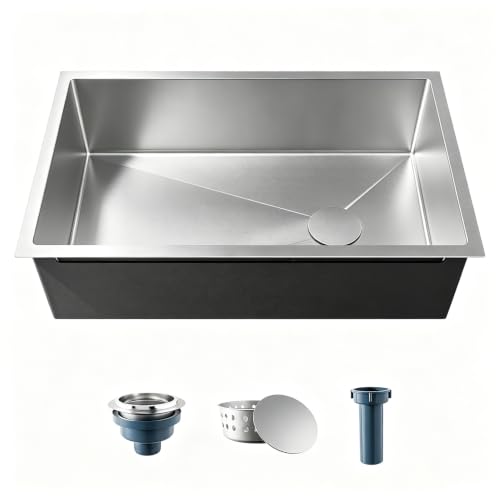
- cozhao 30 Inch Handmade Undermount Sink — Best Stated-Grade Pick. Best for buyers who want the steel grade, 304, printed plainly in the listing.
- MAYESAR 28 Inch Undermount Kitchen Sink — Best Compact 16-Gauge. Best for smaller cabinets that still want thick steel and a deep bowl.
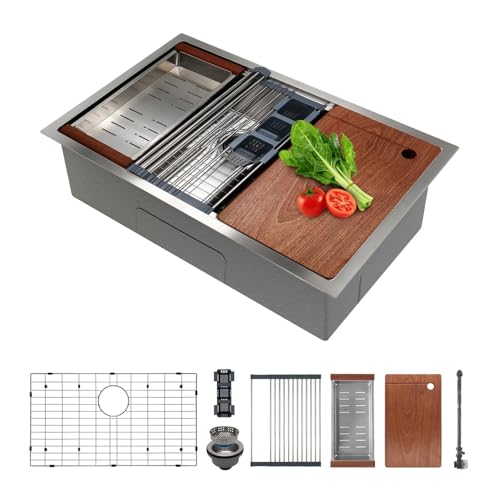
- KRAUS KWU110-32 32 Inch Undermount Workstation Sink — Best Overall. Best for prep-heavy cooks who want TRU16 steel and a workstation ledge.
- KRAUS KHU100-32 32 Inch 16 Gauge Undermount Sink — Best Classic Design. Best for families wanting quiet, rounded-corner, easy-clean steel.
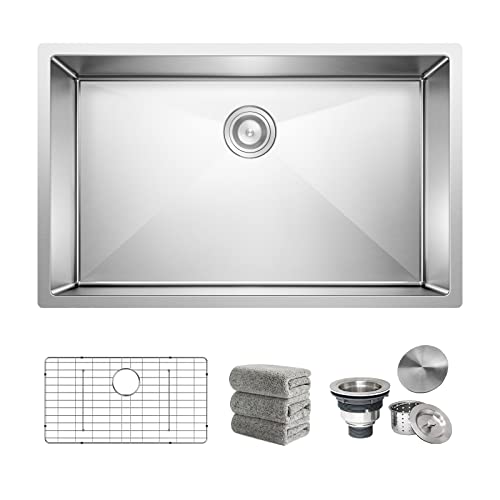
- Oxwiser 30×18 Inch Undermount Sink Bundle — Best Bundle Value. Best for buyers who want the grid, drain and extras in one box.
- Delironexu 30 Inch Handmade Undermount Sink — Best Lower-Tier Handmade. Best for style-led kitchens that accept 18-gauge steel knowingly.
Read the full guide ↓ for the alloy explainer, badges, honest trade-offs, a comparison table and the care routine that keeps any stainless ratio performing at its best.
Introduction: Why the Chrome-over-Nickel Question Is Really a Corrosion Question
Shoppers who search for the best ratio for kitchen sinks chrome over nickel are asking the most scientific question in the sink aisle. Stainless steel is not one material but a family of alloys, and two of its ingredients do most of the work in a kitchen. Chromium is the protector: once steel contains enough of it, the surface reacts with oxygen to form an invisible chromium-oxide film that seals the metal beneath and repairs itself when scratched. Nickel is the stabiliser and the beautifier: it helps the steel keep its tough, formable structure, improves resistance to the acids in food, and gives quality stainless its deep, warm sheen rather than a cold blue-grey cast.
The balance between them is why you will see pairs of numbers attached to good stainless — the first figure describing chromium content, the second nickel — and why the 300-series grades used for quality sinks are discussed the way they are. A higher chromium share strengthens the passive film that fights rust spots and tea staining; adequate nickel keeps the steel ductile enough to be drawn into a deep bowl without cracking and helps it shrug off tomato sauce, citrus and salty soak water. Neither element wins alone. A sink buyer does not need a chemistry degree, but understanding this partnership explains everything from why a magnet test misleads people to why two sinks that look identical can age completely differently over five years of breakfasts.
This guide applies that science honestly. Of the six verified picks below, one listing states its grade outright — 304 stainless — and the reviews say so plainly. The others are sold on construction merits their listings do verify: gauge, soundproofing, drainage, included kit. Where a maker does not state an alloy figure, this guide does not invent one; instead it shows you how to judge the steel you can verify and how to care for any quality stainless so its chromium film keeps doing its quiet work. If you are also weighing a change of sink rather than a first purchase, Best Replacement Kitchen Sinks applies the same verify-don’t-guess discipline to cutouts and cabinets.
Key Takeaways
- Chromium creates stainless steel’s self-repairing protective film; nickel stabilises the structure and deepens corrosion resistance and sheen.
- The familiar paired figures for quality sink steel describe chromium first, nickel second — balance matters more than either number alone.
- Only buy alloy claims a listing actually states: one pick here declares 304 stainless outright, and the rest are judged on verified construction instead.
- Gauge is the alloy’s partner specification — thick steel in a good grade is the combination that ages best.
- The magnet test is unreliable for judging sink steel; many quality austenitic grades are only weakly magnetic, especially after forming.
- Care protects the chemistry: rinse off chlorides and food acids, dry the bowl, and the chromium film keeps renewing itself.
In this guide
Quick Picks
Six picks, six distinct jobs. The badges below are used again in the detailed reviews, so you can track a favourite from this summary straight to its full assessment, its strengths and trade-offs, and its honest limitation.
| Pick | Badge | Who it suits | Listing |
|---|---|---|---|
| cozhao 30 Inch Handmade Sink | Best Stated-Grade Pick | Buyers who want 304 stainless declared in the listing | Check on Amazon |
| MAYESAR 28 Inch Undermount Sink | Best Compact 16-Gauge | Smaller cabinets wanting thick steel and a 9 inch deep bowl | Check on Amazon |
| KRAUS KWU110-32 Workstation Sink | Best Overall | Prep-heavy cooks wanting TRU16 steel and a ledge system | Check on Amazon |
| KRAUS KHU100-32 Undermount Sink | Best Classic Design | Families wanting quiet, easy-clean, grooved-floor steel | Check on Amazon |
| Oxwiser 30×18 Undermount Bundle | Best Bundle Value | Buyers who want grid, drain assembly, cap and towel included | Check on Amazon |
| Delironexu 30 Inch Handmade Sink | Best Lower-Tier Handmade | Style-led kitchens accepting 18-gauge steel for the look | Check on Amazon |
How These Picks Were Chosen
This is a research-led guide built on verified listings. Each candidate’s Amazon listing was checked for the core attributes of this search — a stainless steel undermount kitchen sink in single-bowl format — and every specification quoted in the reviews, from gauge to included accessories, comes from that verified data. Alloy information is handled under a strict rule: a grade or ratio is attributed to a pick only when its own listing states it. General alloy science in the explainer sections is presented as exactly that — general knowledge about how stainless families behave — and is never dressed up as a per-product claim.
Selection then balanced the two halves of sink quality. The metallurgical half favours stated grades and established makers whose steel has a track record. The construction half favours gauge, soundproofing, drainage geometry and corner design, because even perfect alloy in a thin, loud, flat-floored bowl makes a disappointing sink. The six survivors cover the realistic spread of American kitchens — 28 to 32 inches, classic bowls and workstations, complete bundles and bare handmade designs — so that the ratio question can be answered inside a shortlist that is actually buyable.
A note on what was excluded: listings that trumpet alloy adjectives without stating a grade, gauge or any checkable figure were not rewarded for it. In a category where the science is genuinely knowable, vagueness is a choice, and this guide treats it as one. Readers who want to see how owner experience tracks these specification choices will find a companion method in Best Scratch Resistant Kitchen Sinks, where finish behaviour — the visible surface of the alloy story — gets its own full treatment.
The 6 Best Ratio for Kitchen Sinks Chrome Over Nickel Shoppers Can Verify
Each review follows the same honest pattern: what the sink is, its badge, three strengths, three trade-offs, the specifications confirmed in its verified listing, who it suits and who it does not, and a link to check the latest price on Amazon.

cozhao 30 Inch Handmade Undermount Sink
Badge: Best Stated-Grade Pick
Strengths
- The listing states 304 stainless steel outright — the grade whose chromium-nickel balance is the category’s reference point.
- Handmade construction delivers crisp, modern lines.
- Drain assembly is included, so the essential connection is in the box.
Trade-offs
- 18-gauge steel is thinner than the 16-gauge picks in this list.
- No bottom grid or extra accessories are listed as included.
- Handmade corners need deliberate cleaning to stay bright.
Mini spec box
- Size: 30 inch undermount
- Steel: 18-gauge 304 stainless steel (grade as stated in the verified listing)
- Design: handmade, single bowl, modern style
- Included: drain assembly
For a guide built around alloy honesty, the cozhao is the natural lead pick: it is the one sink here whose listing puts its grade in writing. The 304 grade it declares is the workhorse of quality stainless — the grade whose chromium content builds the passive film and whose nickel content keeps the structure tough and formable — and it is the benchmark against which sink steel is usually discussed. A buyer who cares about the chrome-over-nickel question can therefore reason about this sink concretely instead of hopefully, which is worth more than a page of adjectives.
The construction around that steel is handmade and modern: squared lines, a brushed presence, and a drain assembly included so the install does not stall on a missing part. The honest trade-offs are gauge and corners. At 18 gauge the bowl gives back some dent resistance and acoustic solidity to the 16-gauge picks below, and handmade corners ask for a brush in the cleaning kit. Neither flaw touches the alloy story; both are simply the price of the style. Choose this sink when a declared grade matters to you and your cooking is not a nightly cast-iron workout.
Best for: buyers who want a stated 304 grade in a modern handmade bowl / Not suited for: heavy cookware households that need maximum gauge

MAYESAR 28 Inch Undermount Kitchen Sink
Badge: Best Compact 16-Gauge
Strengths
- 16-gauge stainless steel at a compact 28 x 18 inch size.
- A full 9 inch depth keeps a small bowl genuinely useful.
- Brushed finish and rounded corners are the forgiving, easy-care pairing.
Trade-offs
- The listing does not state a specific steel grade, so alloy claims stop at stainless construction.
- The smallest bowl here — big pans with handles will overhang.
- Handmade format means a smaller accessory ecosystem.
Mini spec box
- Size: 28 x 18 inch undermount
- Steel: 16-gauge stainless steel
- Design: single bowl, handmade, brushed finish, round corner
- Depth: 9 inch
The MAYESAR represents the other honest way to sell steel: say nothing you cannot verify about the alloy, and let construction carry the argument. What it verifies is considerable — 16-gauge thickness in a genuinely compact 28 by 18 inch bowl, a full 9 inches of depth, a brushed finish that hides daily marks inside its grain, and rounded corners that wipe clean. For small kitchens, that is the specification set that decides satisfaction, and it is stated completely.
Alloy-wise, the right way to think about a sink like this is behavioural. Any true stainless kitchen sink relies on chromium’s passive film for its rust resistance; what varies between products is how much supporting evidence the maker offers. Here the evidence is thickness and finish rather than a grade number, and the care routine in this guide — rinse acids and chlorides away, dry the bowl, clean with the grain — will keep its film renewing itself for years. Buy it for fit and construction, maintain it by the chemistry, and the unlabelled alloy question becomes a footnote rather than a worry.
Best for: compact kitchens wanting thick steel, depth and an easy-care finish / Not suited for: buyers who require a declared alloy grade before purchasing

KRAUS KWU110-32 32 Inch Undermount Workstation Sink
Badge: Best Overall
Strengths
- 16-gauge TRU16 steel — Kraus’s heavy, quality-first steel specification.
- Integrated ledge with cutting board and roll-up rack included.
- NoiseDefend soundproofing keeps the big bowl quiet.
Trade-offs
- The listing sells the steel by its TRU16 construction rather than a stated grade number.
- Ledge accessories are sized to this sink’s system.
- A premium tier within this list.
Mini spec box
- Size: 32 inch undermount
- Steel: 16-gauge TRU16 stainless steel
- Design: integrated ledge workstation, single bowl
- Included: cutting board and roll-up rack
- Soundproofing: NoiseDefend
Kraus approaches the steel question from the manufacturing end: TRU16 is its designation for true 16-gauge construction, a promise about thickness you can verify with a micrometer rather than an argument about alloy percentages. For most owners that is the half of the steel story they can actually feel — the solidity when a full pot lands, the absence of flex and drum — and Kraus pairs it with the NoiseDefend padding that keeps a 32 inch bowl civilised under a running tap and a working disposal.
Above the steel sits the reason this model leads so many shortlists: the integrated ledge and its included board and rack, which convert the bowl into a prep station and give smaller kitchens counter space they did not have. The alloy-honest summary is that this sink asks you to trust an established maker’s steel programme rather than a printed grade, and repays that trust with the most complete daily experience in the list. If a declared grade is non-negotiable for you, the cozhao above is your pick; if proven construction at full size matters more, this is the one.
Best for: prep-heavy cooks who trust established steel programmes and want a workstation / Not suited for: buyers who insist on a stated alloy grade in the listing

KRAUS KHU100-32 32 Inch 16 Gauge Undermount Sink
Badge: Best Classic Design
Strengths
- 16-gauge TRU16 steel in a classic, proven bowl.
- Rounded corners and channel grooves — the easy-clean, fast-drain combination.
- NoiseDefend pads for a quiet family kitchen.
Trade-offs
- No stated grade number in the listing; steel is specified by gauge and construction.
- No ledge and no bundled accessories.
- Understated styling rather than a design statement.
Mini spec box
- Size: 32 inch undermount
- Steel: 16-gauge TRU16 stainless steel
- Design: single bowl, rounded corners
- Drainage: channel grooves
- Soundproofing: NoiseDefend pads
The KHU100-32 is the classic expression of the same philosophy: heavy TRU16 steel, a floor grooved so water sheets to the drain, corners rounded so the passive film is never challenged by trapped, drying food residue — a detail alloy enthusiasts should appreciate, because standing grime and chloride-rich puddles are exactly what test a stainless surface over years. Good drainage is corrosion care built into the geometry, and this bowl has it by design.
It suits the household that wants the steel fundamentals without a system to manage: no ledge, no included kit, just a quiet, thick, easy-clean bowl at full family size. Its honest limitation is the mirror of the cozhao’s strength — if your buying question begins and ends with a declared alloy ratio, this listing answers a different question, about construction. Most owners, judging by the category’s long satisfaction with this pattern, find construction is the question that mattered.
Best for: families who want proven steel fundamentals and effortless cleaning / Not suited for: grade-first buyers or cooks wanting workstation accessories

Oxwiser 30×18 Inch Undermount Sink Bundle
Badge: Best Bundle Value
Strengths
- 16-gauge stainless steel at a versatile 30 x 18 inch size.
- Five-item bundle: bottom grid, drain assembly, drain cap and towel included.
- The included grid protects the steel floor — and its finish — from day one.
Trade-offs
- No specific alloy grade is stated in the listing.
- Bundle accessories are functional rather than premium in feel.
- Thirty inches is tighter than the 32 inch picks for oversized pans.
Mini spec box
- Size: 30 x 18 inch undermount
- Steel: 16-gauge stainless steel
- Design: single bowl
- Included: bottom grid, drain assembly, drain cap, towel (5-item bundle)
The Oxwiser bundle contributes something to the alloy conversation that pure metallurgy cannot: protection in the box. The bottom grid included in this five-item set suspends cookware above the steel floor, and since most real-world damage to a stainless surface is mechanical — pans dragged, cutlery dumped, grit ground across the grain — the grid preserves the finish and the passive film more effectively than any marginal difference in alloy recipe. Add the drain assembly, cap and towel, and the box answers the whole install in one purchase.
The steel itself is 16-gauge stainless at a friendly 30 by 18 inch size, suitable for a wide range of standard cabinets. The listing does not declare a grade, and this review does not invent one; judge it as a thick, complete, sensibly priced-tier package whose ownership experience is engineered through accessories as much as alloy. For first renovations and rental upgrades, that completeness is often the difference between a sink that stays beautiful and one that collects its first scars in week one.
Best for: first renovations wanting thick steel and full protection included / Not suited for: buyers who want a declared grade or a 32 inch bowl

Delironexu 30 Inch Handmade Undermount Sink
Badge: Best Lower-Tier Handmade
Strengths
- Handmade, brushed design with clearly stated 30 x 18 x 9 inch dimensions.
- Drain kit included, covering the essential plumbing connection.
- The listing is candid that no additional accessories are included.
Trade-offs
- 18-gauge steel — the thinnest in this list, with the flex and noise that implies.
- No alloy grade is stated in the listing.
- Tighter handmade corners need more cleaning attention.
Mini spec box
- Size: 30 x 18 x 9 inch undermount
- Steel: 18-gauge stainless steel
- Design: handmade, single bowl, brushed finish
- Included: drain kit (no additional accessories)
The Delironexu closes the list as the style-first option, and it deserves credit for the same virtue this guide prizes in the cozhao: candour. Its listing states its gauge, states its dimensions to the inch, states that a drain kit is included and states plainly that no additional accessories are. A buyer knows exactly what steel thickness and what box contents they are getting, which is more honesty than many glossier listings manage.
What it does not state is an alloy grade, and its 18-gauge steel is the thinnest here, so the alloy-first buyer should look up-list while the design-first buyer can proceed with eyes open. The brushed handmade profile suits contemporary cabinetry beautifully, the 9 inch depth is practical, and with a separately bought grid and the care routine below, its surface will hold up respectably. It is a sink bought for looks at a lower tier, specified honestly — a legitimate choice, made knowingly.
Best for: design-led kitchens on a lower tier that accept 18-gauge steel / Not suited for: alloy-first buyers or heavy cast-iron households
Comparison Table
One view of all six: size, the steel facts each listing actually verifies, and the feature that defines each pick.
| Pick | Size | Verified steel facts | Defining feature | Badge | Listing |
|---|---|---|---|---|---|
| cozhao Handmade | 30 inch | 18-gauge, 304 grade stated | Declared grade, drain included | Best Stated-Grade Pick | Check on Amazon |
| MAYESAR 28 Inch | 28 x 18 inch | 16-gauge, brushed finish | Compact size, 9 inch depth | Best Compact 16-Gauge | Check on Amazon |
| KRAUS KWU110-32 | 32 inch | 16-gauge TRU16 | Workstation ledge, board and rack | Best Overall | Check on Amazon |
| KRAUS KHU100-32 | 32 inch | 16-gauge TRU16 | Grooves, rounded corners, NoiseDefend | Best Classic Design | Check on Amazon |
| Oxwiser 30×18 Bundle | 30 x 18 inch | 16-gauge | Grid, drain, cap and towel included | Best Bundle Value | Check on Amazon |
| Delironexu 30 Inch | 30 x 18 x 9 inch | 18-gauge, brushed finish | Handmade look, drain kit included | Best Lower-Tier Handmade | Check on Amazon |
How to Choose: Reading Alloy Claims Like a Metallurgist’s Customer
Know what each element does, then ask what the listing proves. Chromium builds the self-repairing oxide film; without enough of it, steel is not stainless in any meaningful kitchen sense. Nickel supports the austenitic structure that makes quality sink steel tough, formable and resistant to food acids, and it warms the metal’s appearance. When a listing states a grade — as the cozhao’s states 304 — you can reason from the grade’s known family behaviour. When it states a construction programme instead — TRU16 on the Kraus picks — you are being offered thickness and manufacturing consistency as the evidence. Both are legitimate; confusing one for the other is the mistake.
Understand the paired-number shorthand without worshipping it. In the wider market, quality sink steel is often described with two figures — chromium first, nickel second — and you will meet combinations described as richer or leaner in nickel. Richer nickel generally supports formability and acid resistance; chromium adequacy is the non-negotiable foundation. But a printed pair of numbers on an unverified listing is worth less than a stated grade from a maker who also publishes gauge, dimensions and inclusions. Evidence hierarchy: stated grade, then stated construction, then adjectives — in that order, always.
Ignore the magnet test as a quality verdict. It circulates endlessly in sink advice, and it misleads: the austenitic structure nickel creates is only weakly magnetic in many quality steels, and cold-working during manufacture can change magnetic response across a single bowl. A magnet that slides off proves nothing bad; a magnet that grips proves nothing good. Judge by stated grade, gauge and maker, not by fridge-magnet physics.
Pair the alloy decision with the construction decision. The best-aged sinks combine respectable steel with 16-gauge thickness, soundproofing, drainage geometry that never leaves chloride-rich water standing, and corners that clean fully. That is why this list mixes one stated-grade pick with heavy-gauge classics and a grid-included bundle: in a real kitchen, chemistry and construction defend the surface together. Shoppers comparing across a whole market rather than a shortlist may find the survey in Best Selection Of Kitchen Sinks a useful map of how these combinations recur at different tiers.
How to Care for Stainless Steel So the Chemistry Keeps Working
The chromium film is self-repairing, but it repairs best in a clean, oxygenated environment — which your habits control. The routine:
- Rinse the bowl after meals, especially after salty, acidic or tomato-based cooking, so chlorides and acids do not sit on the surface overnight.
- Wipe the bowl dry when you finish the evening wash; in hard-water homes this single habit prevents most visible marking, which is mineral film rather than steel damage.
- Clean weekly with a soft cloth or sponge and a mild cleaner, always moving with the grain of the brushed finish, never across it and never with steel wool.
- Keep a bottom grid under heavy cookware — the Oxwiser bundle includes one — so mechanical wear never gets the chance to outpace the film’s repair.
- Store strong chloride cleaners elsewhere; if one is used in the bowl, rinse thoroughly and immediately.
Installation care matters to the chemistry too: an undermount sealed evenly, supported while the sealant cures and plumbed without leaks keeps moisture where it belongs — in the bowl, not in the cabinet — and a five-minute under-sink inspection twice a year protects both the fixture and the furniture around it.
Troubleshooting, in the pattern that solves most calls:
- Problem: small rust-coloured spots appear → they are usually iron particles or deposits sitting on the surface, not the sink rusting through; clean with a baking-soda paste rubbed with the grain, rinse, and dry.
- Problem: a rainbow or blue tint shows after a hot pan → heat tint is a surface oxide effect; it fades with normal cleaning and does not harm the steel beneath.
- Problem: the finish looks cloudy despite cleaning → suspect hard-water mineral film; a diluted vinegar wipe, followed by rinsing and drying, clears it and restores the brushed sheen.
Chromium, Nickel and the Grades You Will Actually Meet
A short field guide to the names in this conversation helps any shopper. The 300-series is the austenitic family — chromium and nickel together — from which quality sinks are drawn, and 304 is its most common sink grade: the one declared by the cozhao in this list and the reference point for the chrome-over-nickel question. You may also meet 316 in marine-flavoured marketing; it adds molybdenum for chloride resistance, a genuine advantage in coastal or commercial settings and usually an unnecessary premium inland. At the other end, 400-series steels use chromium with little or no nickel; they are magnetic, harder, and generally less forgiving of food acids and standing water in a deep bowl — one more reason the magnet test tells you so little about suitability.
Within a grade, manufacturing decides the rest: how evenly the bowl was drawn, how the finish was grained, how completely the underside was padded. That is the deeper answer to the ratio question. The ratio sets the steel’s potential; gauge, geometry and care decide how much of that potential your kitchen actually receives over the next decade. Buy a stated grade when it is offered at a construction level you respect, buy proven construction when it is not, and maintain the surface so the chemistry you paid for keeps renewing itself.
What Happens When the Balance Is Wrong: Reading Steel Failures
Understanding the chromium-nickel partnership is easiest in reverse — by looking at how stainless disappoints when one side of the partnership is weak or the surface is abused. The most common failure owners describe is tea staining: faint brown shadowing, usually near the drain or under a grid’s feet, in kitchens where salty water dries on the surface daily. It is a surface phenomenon, not structural rust, and it points to the chromium film being asked to defend a permanently wet, chloride-loaded environment. The cure is behavioural — rinse, dry, lift the grid when you clean — which is why two households can own the same sink and report opposite experiences of its steel.
The second failure is pitting: tiny, dark pinpoints that do not wipe away. Pitting is the film losing locally, usually where chlorides concentrated — a bleach splash left standing, a salty scouring powder paste dried onto the surface, steel wool fragments rusting in place and seeding spots of their own. Nickel-rich austenitic grades resist this better than leaner alloys, which is one practical reason the nickel side of the ratio matters in a bowl that meets tomato sauce, citrus and dishwasher salt daily. The third failure is not chemical at all: a dull, cross-hatched finish from years of scrubbing across the grain, which scatters light unevenly and makes a sound sink look tired. Every one of these failures is preventable, and none of them is predicted by a photograph — they are predicted by grade honesty, gauge and the care routine, the three things this guide keeps returning to.
The Ratio Question in Different Kitchens
Not every household stresses steel the same way, and the sensible weight to give the alloy question varies with your kitchen. A coastal home, where salt rides the air itself and water can carry more chlorides, should care most: stated grades and disciplined rinsing earn their keep there, and the same logic explains why compact second-home and recreational kitchens — the world surveyed in Best Rv Kitchen Sinks — punish neglected steel quickly, because a bowl left damp and closed up between trips is a chloride chamber with a door.
A hard-water inland kitchen has a different enemy: mineral film that clouds the finish and masquerades as steel failure. There, the drying habit outranks alloy subtleties, and a brushed finish earns its place by hiding the daily evidence. A household that cooks with heavy cast iron and cans its own tomatoes should weight gauge and acid resistance together — the Kraus classics’ combination of thick steel, grooved drainage and easy-clean corners is aimed squarely at that life. And a design-led kitchen choosing a handmade profile, like the cozhao or the Delironexu here, should simply know which side of the trade it is on: the look is real, the corners need a brush, and the care routine matters more, not less, when the steel is thinner.
Regional showrooms and local installers add one more layer of practical evidence, since they see which sinks come back and which never do; readers researching a local purchase, for example through Best Selection Of Kitchen Sinks Portland, will find the same specification themes repeating in person that this guide draws from verified listings. The alloy ratio is a real question with real consequences — it is simply one instrument in an orchestra that also includes thickness, geometry, sound treatment and habit, and the best-rated ownership experiences come from kitchens where all of them were chosen together.
A Buyer’s Checklist for Alloy and Construction Claims
Before any sink in this category earns your money, run it through this five-question checklist, which distils the whole guide into a minute of reading on any listing page. First: does the listing state a steel grade anywhere — in the title, the specification table or the product description? A grade you can find is a claim you can hold the maker to. Second: does it state a gauge, and is that gauge 16 or heavier for a main family sink? Third: does it describe its underside — pads, coating, a named sound system — or is noise left entirely to chance? Fourth: does the floor design promise drainage, through grooves, slope or a named drain system, rather than leaving water to find its own way? Fifth: does the box contents line tell you exactly what arrives — grid, drain, board, towel — or will the install stall on parts you assumed were included?
Score the six picks in this guide against those questions and their characters separate cleanly. The cozhao answers the grade question outright and the drain question with an included assembly, while leaving gauge at 18. The Kraus pair answer gauge, sound and drainage emphatically, and the workstation adds its ledge kit, while leaving the grade expressed as a construction programme. The Oxwiser answers the box question most completely of all, grid included. The MAYESAR answers gauge, depth and finish at a size nobody else here serves. The Delironexu answers dimensions and inclusions with unusual candour at a lower tier. There is no sink that answers everything — there never is — but a buyer who asks the five questions will never be surprised by the sink that arrives, and surprise, in this category, is the true enemy the ratio question was always circling.
Common Buying Mistakes
- Believing alloy adjectives without a stated grade. “Premium stainless” is not a specification; a grade, a gauge and dimensions are.
- Using the magnet test as a verdict. Magnetic response does not map to sink quality in the austenitic family.
- Chasing a ratio while ignoring gauge. Thin steel in a fine alloy still dents, flexes and drums.
- Leaving acids and salt water standing overnight. The passive film defends a rinsed bowl far better than a soaking, chloride-rich one.
- Scrubbing across the grain with harsh pads. You are engraving tomorrow’s visible marks into today’s finish.
- Forgetting drainage geometry. A floor that sheds water is corrosion protection built into the shape of the sink.
Final Recommendation
If the alloy question is what brought you here, the cozhao is your most direct answer: a stated 304 grade in a modern handmade bowl with the drain included. If construction matters more to you than a printed grade, the Kraus pair deliver TRU16 steel with the drainage, corners and soundproofing that protect a surface for years — the KWU110-32 with its workstation ledge for prep-heavy cooks, the KHU100-32 as the classic family bowl. The MAYESAR brings 16-gauge steel to compact cabinets, the Oxwiser bundle protects its steel with an included grid and a complete kit, and the Delironexu serves style-led kitchens honestly at a lower tier. Every route respects the same principle: verify what the listing states, and care for the steel by its chemistry.
If you want a fast answer, start with one of these three and read its detailed review above: cozhao 30 Inch Handmade Sink, KRAUS KWU110-32 Workstation Sink, KRAUS KHU100-32 Undermount Sink. Between them they cover the grade-first, the workstation and the classic routes through this list, and each links to its listing so you can check the latest price on Amazon today.
Carry one sentence out of this guide and the chemistry will never confuse you again: chromium is the shield, nickel is the spine, and thickness is the difference you can feel. A sink that states its grade, or proves its construction, and is then rinsed, dried and cleaned with its grain will repay a decade of daily use — which is all any ratio, however elegant on paper, was ever trying to promise. Verify the listing, respect the chemistry, and choose the bowl your kitchen will thank you for every single day of the next ten years.
Frequently Asked Questions
What does the chrome-over-nickel ratio actually change in a sink?
Chromium content drives the formation of the passive oxide film that makes stainless resist rust and staining. Nickel content supports the steel’s tough, formable structure, improves resistance to food acids and contributes to the metal’s warm sheen. The balance between them — expressed in the market’s paired-number shorthand, chromium first — influences how the bowl handles salty soak water, acidic foods and years of scouring, which is why grade-first shoppers ask about it.
Is 304 stainless a good grade for a kitchen sink?
Yes — it is the category’s reference grade, used widely for quality sinks because its chromium-nickel balance suits food contact, resists everyday corrosion and forms well into deep bowls. The cozhao in this guide states 304 in its listing, which lets you reason from known family behaviour. Other picks here are specified by construction rather than grade, and this guide attributes no grade to them that their listings do not state.
Does a magnet sticking to my sink mean the steel is poor?
No. Magnetic response in stainless is a property of crystal structure and cold-working, not a quality score. Many excellent austenitic sink steels are weakly magnetic or vary across the bowl after forming, while some strongly magnetic steels are less suited to acidic, wet sink duty. Judge a sink by its stated grade, its gauge and its maker — not by a magnet.
Why don’t all listings state the steel grade?
Makers choose different evidence: some publish a grade, others publish a construction programme such as Kraus’s TRU16 designation, and some publish little beyond dimensions. A missing grade is not proof of poor steel, but it does move the burden onto construction signals — gauge, soundproofing, drainage design and brand track record — which is exactly how this guide scored the picks that do not declare one.
How do I stop stainless from showing rust-coloured spots?
Most such spots are surface deposits — iron particles from water, cookware or cleaning tools — sitting on top of the steel rather than corrosion of the bowl itself. A paste of baking soda and water, rubbed gently with the grain and rinsed away, removes them. Prevention is the rinse-and-dry habit: do not let salty or acidic residues stand overnight, and the chromium film will keep renewing the surface beneath.
What is the difference between 18/8 and 18/10 stainless descriptions?
In the market’s paired shorthand, the first number describes chromium content and the second nickel content, so an 18/10 description claims a somewhat richer nickel share than an 18/8 one, with corresponding benefits for formability, acid resistance and sheen. Treat such descriptions as claims to verify rather than facts to assume: a stated grade from the manufacturer — like the 304 declared in the cozhao listing in this guide — is firmer evidence than a ratio printed without a grade behind it, and construction quality still decides how the steel performs in your kitchen day to day.
Does gauge matter as much as the alloy?
In daily ownership, often more. Gauge decides dent resistance, flex and noise — the qualities you perceive at every use — while the alloy quietly governs corrosion behaviour over years. The best-aged sinks combine both: a respectable grade at 16-gauge thickness, with drainage that never leaves water standing. That combination, rather than any single number, is what this guide’s shortlist was built to deliver.