Disclosure: topratedkitchenware.com is reader-supported. When you buy through links on our site, we may earn an affiliate commission from Amazon and other retailers, at no extra cost to you.
Where to buy
This guide to the best scratch resistant kitchen sinks begins with the honest truth of the category: no working sink surface is scratch-proof, but some are genuinely scratch resistant — by glaze, by finish, by thickness or by the protective kit in the box — and they age gracefully while others record every pan. Each name below links to its Amazon listing, where you can confirm the verified specifications and check the latest price on Amazon for the exact model you are reading about.
- Miuara 30 Inch White Fireclay Farmhouse Sink — Best True Scratch-Resistant Surface. Best for cooks who want a fireclay surface the maker rates against scratches outright.
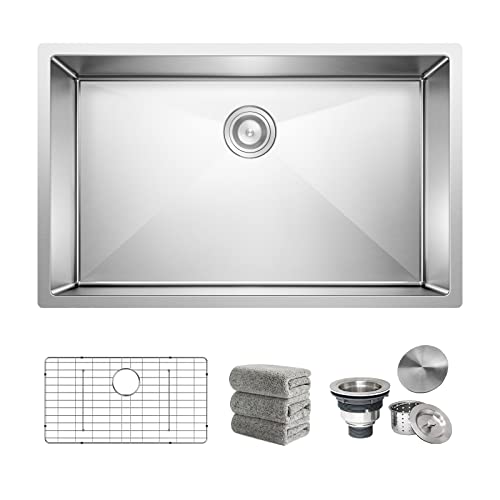
- Oxwiser 32×18 Inch Undermount Sink Bundle — Best Protected Steel. Best for families who want a bottom grid guarding the steel from day one.
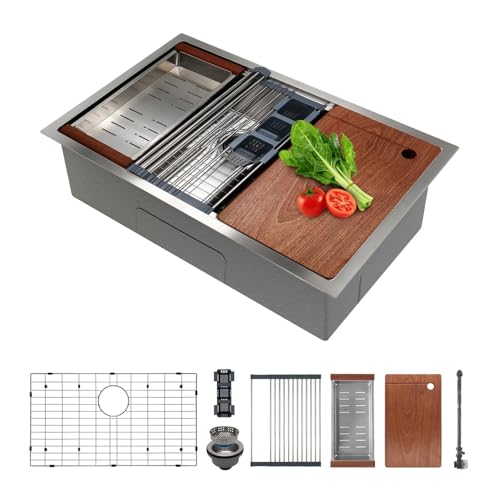
- SANYCASA 30 Inch Undermount Workstation Sink — Best Heavy-Gauge Resistance. Best for heavy cookware households that need steel which shrugs off impacts.
- Miuara 33 Inch White Fireclay Farmhouse Sink — Best Large Scratch-Resistant. Best for wide farmhouse kitchens wanting the resistant surface at full size.
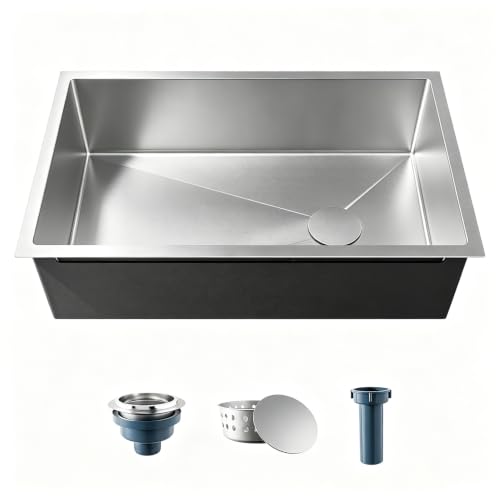
- KRAUS KHU100-30 30 Inch 16 Gauge Undermount Sink — Best Classic Easy-Care. Best for renovators who want brushed, rounded-corner steel that hides daily wear.
- KRAUS KHU640-33 33 Inch Undermount Sink — Best Wide Easy-Care Bowl. Best for big-pan households that need room plus a forgiving, grooved floor.
Read the full guide ↓ for the science of sink scratches, badges, honest trade-offs, a comparison table and the defence routine that keeps any of these surfaces looking right for years.
Introduction: What “Scratch Resistant” Honestly Means in a Working Kitchen
Anyone searching for the best scratch resistant kitchen sinks deserves a straight answer before a shortlist: scratch resistance is a spectrum, not a spell. At one end sit hard, glazed surfaces — the fireclay picks in this guide are explicitly rated by their maker as resistant to scratches, alongside stains, cracks and heat — whose dense fired finish shrugs off the cutlery, grit and pan bases that mark softer materials. In the middle sit the well-engineered stainless sinks: a brushed finish that hides fine lines inside its grain, heavier gauges that resist the dents which masquerade as damage, and — in the smartest packages — a bottom grid that keeps cookware from ever touching the floor it would otherwise engrave. At the far end sit polished, thin, unprotected bowls, which this guide simply does not recommend to anyone who cooks.
The second honest point is that most sink “scratching” is a behaviour story before it is a material story. The classic culprits are grit trapped under a pan base and dragged, ceramic and stoneware edges, cutlery dumped in baskets, and scouring across the grain with abrasive pads. A resistant surface forgives these habits longer; good habits make any of these six picks look cared-for for a decade. This guide therefore scores both halves — the surface you buy and the defence system around it — and every specification quoted, from the fireclay’s rated resistances to the Oxwiser bundle’s included grid, comes from the manufacturer’s verified listing rather than from hopeful adjectives.
All six picks are single bowls in the 30 to 33 inch family band, split between fireclay farmhouse designs and stainless undermounts, so the scratch question can be compared across materials at real kitchen sizes. If your shortlist is really about the broad market rather than this one property, the survey in Best Selection Of Kitchen Sinks maps the field; if the property that keeps you awake is the finish, stay here — this is the guide that treats it as the main event, with the mechanisms named, the trade-offs admitted and the daily routine that turns a resistant surface into a decade of good-looking service spelled out in full.
Key Takeaways
- Scratch-proof does not exist; scratch resistant does — led by hard glazed fireclay rated against scratches by its maker.
- For stainless, the defence is a system: brushed finish to hide fine lines, heavy gauge to resist dents, and a bottom grid to prevent contact damage.
- A grid included in the box, as with the Oxwiser bundle here, is the single most effective scratch-prevention purchase a steel owner can make.
- Most visible damage is behavioural — grit under pans, dumped cutlery, cross-grain scouring — and the routine in this guide defeats it.
- Fireclay trades scratch resistance for different cautions: it is heavy, wants proper support, and dislikes thermal shock and hard point impacts.
- Fine lines on brushed steel settle into an even patina; judge a sink by how gracefully it ages, not by showroom perfection.
- Support is part of resistance for heavy bowls: a fireclay sink or an extra-thick steel workstation only delivers its rated surface life when the cabinet beneath it is built to carry the load without flex, so plan the structure and the surface as one purchase, not two separate decisions made weeks apart by different people working from different assumptions about what the other one has already taken care of.
In this guide
Quick Picks
Six picks, six distinct jobs. The badges below are used again in the detailed reviews, so you can track a favourite from this summary straight to its full assessment, its strengths and trade-offs, and its honest limitation.
| Pick | Badge | Who it suits | Listing |
|---|---|---|---|
| Miuara 30 Inch Fireclay Farmhouse Sink | Best True Scratch-Resistant Surface | Cooks wanting a glazed surface rated against scratches | Check on Amazon |
| Oxwiser 32×18 Undermount Bundle | Best Protected Steel | Families wanting a grid guarding 16-gauge steel from day one | Check on Amazon |
| SANYCASA 30 Inch Workstation Sink | Best Heavy-Gauge Resistance | Heavy-cookware homes needing exceptionally thick steel | Check on Amazon |
| Miuara 33 Inch Fireclay Farmhouse Sink | Best Large Scratch-Resistant | Wide farmhouse kitchens wanting the resistant glaze at 33 inches | Check on Amazon |
| KRAUS KHU100-30 Undermount Sink | Best Classic Easy-Care | Renovators wanting brushed, rounded-corner, grooved steel | Check on Amazon |
| KRAUS KHU640-33 Undermount Sink | Best Wide Easy-Care Bowl | Big-pan households needing room and a forgiving floor | Check on Amazon |
How These Picks Were Chosen
This is a research-led guide built strictly on verified listings. Each candidate’s Amazon listing was checked for the core attributes of this search — a kitchen sink whose surface or system credibly resists scratching — and every claim in the reviews traces to that verified data. The fireclay picks carry their maker’s explicit resistance rating in their titles. The stainless picks earn their places through verifiable defence mechanisms: gauge at the heavy end of the residential range, brushed finishes, rounded corners and grooved floors that clean without scouring, and in one case a protective grid included in the box. No pick was credited with a resistance its listing does not support, and no fixed ratings or scores are printed anywhere in this guide.
The shortlist was then balanced across the two material philosophies, because the scratch question has two legitimate answers. Glazed fireclay answers it at the surface: a hard, fired finish that resists the marking agents of daily cooking and wipes clean without abrasives. Engineered stainless answers it as a system: hide what you cannot prevent, prevent what you can with a grid, and build the bowl thick enough that impacts dent neither the steel nor your confidence. Presenting both lets your kitchen’s style — farmhouse apron or sleek undermount — make the final call between two defensible forms of resistance.
Ownership realities filtered the list last. A resistant surface that needs a cabinet rebuilt around its weight, or a steel bowl whose protection depends on accessories nobody includes, helps fewer households than their headlines suggest; the reviews therefore state support, weight and accessory situations plainly. Readers whose kitchens run to the compact end of the spectrum will find the same surface-first thinking applied at smaller sizes in Best Single Bowl Kitchen Sinks, while this guide stays with the family-size bowls where scratch anxiety is most often voiced.
The 6 Best Scratch Resistant Kitchen Sinks, by Surface and by System
Each review follows the same honest pattern: what the sink is, its badge, three strengths, three trade-offs, the specifications confirmed in its verified listing, who it suits and who it does not, and a link to check the latest price on Amazon.
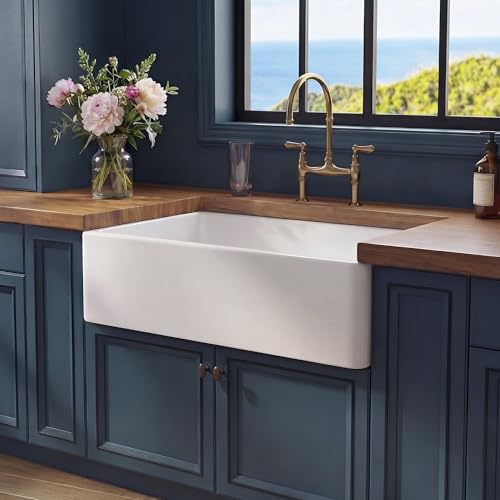
Miuara 30 Inch White Fireclay Farmhouse Sink
Badge: Best True Scratch-Resistant Surface
Strengths
- Fireclay surface rated by the maker as resistant to stain, crack, heat and scratch — the headline property, stated outright.
- Reversible single bowl lets you choose the apron style at installation.
- Flexible fitting: apron front or drop-in (undermount) presentation.
Trade-offs
- Fireclay is heavy — the cabinet and support structure must be planned for it.
- A hard surface trades steel’s forgiveness: a dropped heavy pan can chip glaze rather than dent.
- White shows colourful food staining events until wiped, even though the glaze resists permanent marks.
Mini spec box
- Size: 30 x 18 inch farmhouse
- Material: fireclay, reversible single bowl
- Rated resistances (per listing): stain, crack, heat and scratch
- Installation: apron front or drop-in (undermount)
If the search that brought you here means what it says, this is the most literal answer in the guide: a fireclay sink whose own listing rates its surface against scratches. Fireclay earns that confidence honestly — it is a dense ceramic body fired at high temperature under a hard glaze, and that glaze is the working surface your pans, cutlery and scouring meet. Where steel records fine lines, a quality glaze largely refuses them, and it adds the companion resistances the listing names: stains rinse away rather than setting, heat from pans is tolerated, and the surface does not harbour the micro-scratches in which discolouration loves to live.
The farmhouse format is the other half of its appeal: a 30 by 18 inch reversible bowl, so the apron front can be presented in the style your kitchen prefers, with fitting flexibility the listing describes across apron-front and drop-in (undermount) presentations. The cautions are the material’s own. Fireclay is genuinely heavy, so support is an installation requirement, not a suggestion; and hardness cuts both ways — the surface that resists scratches can chip if a cast-iron pan lands on its edge with real force, where steel would merely dent. Cook with ordinary care rather than fear, support it properly, and this is the sink whose surface will look closest to new in five years.
Best for: farmhouse kitchens that want genuine surface-level scratch resistance / Not suited for: cabinets that cannot be reinforced for a heavy bowl

Oxwiser 32×18 Inch Undermount Sink Bundle
Badge: Best Protected Steel
Strengths
- The five-item bundle includes the bottom grid — the most effective scratch shield steel can have.
- 16-gauge stainless steel resists the dents that accompany surface damage.
- Drain assembly, drain cap and towel complete a one-box defence system.
Trade-offs
- Steel without the grid in place will still record fine lines over time.
- Bundle accessories are functional grade rather than premium grade.
- No workstation ledge for over-bowl prep.
Mini spec box
- Size: 32 x 18 inch undermount
- Steel: 16-gauge stainless steel
- Design: single bowl
- Included: bottom grid, drain assembly, drain cap, towel (5-item bundle)
The Oxwiser bundle is the stainless answer executed intelligently: accept that steel’s floor is where scratches are born, and then make sure cookware never touches it. The included bottom grid suspends pans, dishes and cutlery on a rack above the steel, so the dragging, dumping and stacking of family cooking happens on the grid while water drains beneath it. It is difficult to overstate how much of a steel sink’s visible ageing that one accessory prevents — most floor scratching is not a material failure at all, but a contact habit, and this box redesigns the habit for you.
Around the grid sits a full-size 32 by 18 inch bowl in 16-gauge steel — thick enough to resist the denting that thin bowls suffer alongside their scratches — plus the drain assembly, cap and towel that make the purchase complete. The honest framing is in its badge: this is protected steel, not invulnerable steel, and the walls above the grid will still gather the fine lines any brushed bowl gathers, settling into the even patina described later in this guide. For a family that cooks hard and wants steel’s toughness without steel’s usual cosmetic diary, this is the most practical pick on the page.
Best for: busy families who want steel protected by a grid from day one / Not suited for: buyers who want a glazed surface or a workstation ledge
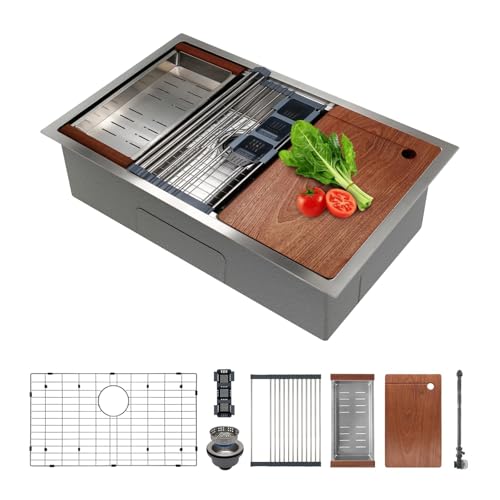
SANYCASA 30 Inch Undermount Workstation Sink
Badge: Best Heavy-Gauge Resistance
Strengths
- Steel listed at 11 gauge (3mm) — exceptional thickness that resists denting and deformation.
- Integrated ledge workstation keeps prep traffic on accessories rather than the bowl’s rim and floor.
- Superior-drain design focus keeps grit-laden water moving out instead of grinding around the floor.
Trade-offs
- Very thick steel means a heavier bowl to support at installation.
- A grid is still the wise companion — thickness resists dents, not surface lines.
- A newer name, so its long-term ownership record is still accumulating.
Mini spec box
- Size: 30 inch undermount
- Steel: 11 gauge (3mm) stainless steel
- Design: single bowl, integrated ledge workstation
- Drainage: superior drain design
The SANYCASA defends its surface with mass. Steel listed at 11 gauge — a full 3mm, far beyond the residential norm — changes the damage equation: the dropped pan that would dent a thin bowl and tear its finish meets a surface that barely acknowledges it, and the flexing that works micro-marks into thinner floors under heavy loads is engineered away. Add the workstation ledge, which routes the busiest traffic — boards, racks, colanders — onto accessories above the bowl rather than across its floor, and a drainage design brief that moves gritty water out promptly instead of letting it swirl, and the sink’s whole geometry conspires against the three main scratch mechanisms.
Honesty still applies: thickness is dent resistance, not line immunity, and this review recommends a grid for owners who want the floor itself preserved as well as the structure. The bowl is also heavy in the literal sense, so installation support deserves respect. But for the household whose scratch anxiety is really impact anxiety — cast iron, stockpots, canning kettles, teenagers — this is the steel pick whose resistance is built into its substance rather than its accessories, and it earns its badge on that basis.
Best for: heavy-cookware households that equate resistance with real thickness / Not suited for: buyers wanting a light bowl or a long-established brand name

Miuara 33 Inch White Fireclay Farmhouse Sink
Badge: Best Large Scratch-Resistant
Strengths
- The same maker-rated resistance to stain, crack, heat and scratch, at a full 33 x 18 inch size.
- Reversible single bowl for apron-style choice at installation.
- A wide, hard-glazed floor takes family-size pans without recording them.
Trade-offs
- The heaviest proposition in this guide — support planning is essential.
- Hard glaze can chip under a severe point impact; steel would dent instead.
- The farmhouse apron defines the kitchen’s style, for better or worse.
Mini spec box
- Size: 33 x 18 inch farmhouse
- Material: fireclay, reversible single bowl
- Rated resistances (per listing): stain, crack, heat and scratch
- Installation: apron front or drop-in (undermount)
Everything said about its 30 inch sibling applies here at family scale: a hard fireclay glaze rated by its maker against scratches, stains, cracks and heat, formed into a reversible single bowl with flexible fitting — now stretched to 33 by 18 inches, where a roasting pan, a baking sheet and the evening’s washing-up can share one resistant surface. For a large farmhouse kitchen, this is the scratch answer without compromise on room: the pans get bigger, the surface’s refusal to record them does not change.
The scaling cautions deserve their sentence. A 33 inch fireclay bowl is a serious object to install — weight, support and cabinet modification belong in the project plan from the first sketch, ideally with the installer who will carry it involved early. And the apron front is a design commitment: it will be the kitchen’s visual anchor, which most buyers of this sink consider the point. Choose it when the farmhouse look is the kitchen’s direction and surface permanence is the priority; it delivers both more completely than anything else in this guide.
Best for: large farmhouse kitchens wanting rated scratch resistance at full size / Not suited for: light-duty cabinets or kitchens avoiding a style anchor

KRAUS KHU100-30 30 Inch 16 Gauge Undermount Sink
Badge: Best Classic Easy-Care
Strengths
- 16-gauge TRU16 steel — the thickness that resists denting in daily family use.
- Rounded corners clean with a wipe instead of a scour, protecting the finish from its owner.
- Channel grooves sweep grit to the drain rather than letting it be ground across the floor.
Trade-offs
- No grid is listed as included — add one to complete the defence.
- Brushed steel will still develop a fine, even patina over the years.
- No ledge or bundled accessories in the listing.
Mini spec box
- Size: 30 inch undermount
- Steel: 16-gauge TRU16 stainless steel
- Design: single bowl, rounded corners
- Drainage: channel grooves
- Soundproofing: NoiseDefend pads
The KHU100-30 makes the case that the most scratch-resistant steel sink is the one that never needs to be scrubbed. Its rounded corners surrender no hiding places to dried food, so cleaning is a wipe rather than an excavation; its channel grooves carry the gritty rinse water — the slurry that does most surface damage when it lingers — straight to the drain; and its 16-gauge TRU16 steel refuses the dents that thin bowls collect. Add NoiseDefend pads keeping the whole performance quiet, and you have the classic Kraus pattern understood correctly: a sink designed so that its finish is defended by geometry every single day.
Its one omission is the grid, which is a separate purchase here — make it, and the defence system matches the Oxwiser’s while keeping Kraus’s drainage and corners. Without it, expect the normal brushed-steel story: fine lines that blend into the grain and read, within a year, as the soft patina of a kitchen that cooks. For renovators who want proven steel at 30 inches and are happy to complete the kit themselves, this is the connoisseur’s route to a surface that ages gracefully. The stainless-specific version of this shortlist continues in Best Single Bowl Stainless Kitchen Sinks, where this classic pattern is compared against its steel siblings.
Best for: renovators who want geometry-defended steel and will add a grid / Not suited for: buyers who want protection included in the box

KRAUS KHU640-33 33 Inch Undermount Sink
Badge: Best Wide Easy-Care Bowl
Strengths
- Thirty-three inches of bowl spreads wear across the largest working floor in this list.
- Rounded corners resist buildup, so cleaning stays gentle on the finish.
- Channel grooves and NoiseDefend pads bring drainage and quiet to the big bowl.
Trade-offs
- 18-gauge steel — a step thinner than the 16-gauge Kraus classic above.
- A grid is a separate purchase, and at this size it matters even more.
- Requires the wide cabinet the bowl’s dimensions demand.
Mini spec box
- Size: 33 inch undermount
- Steel: 18-gauge stainless steel
- Design: single bowl, rounded corners
- Drainage: channel grooves
- Soundproofing: NoiseDefend pads
Size itself is a scratch strategy, and the KHU640-33 is its demonstration. In a smaller bowl, every pan is dragged, turned and negotiated against the walls; in 33 inches, the same pan is lifted, placed and lifted again, with the floor’s working area spread so wide that no single patch of steel takes a career’s worth of contact. The Kraus easy-care geometry rides along — rounded corners that wipe clean, grooves that evacuate grit, pads that keep the big panel quiet — so the wide bowl defends its finish by room, by drainage and by gentle cleaning all at once.
The qualifiers are gauge and grid. At 18 gauge this large panel is the most flexible in the list, and a grid sized to it is close to essential equipment for heavy cookware households; budget for it as part of the purchase rather than an afterthought. The cabinet must also be genuinely wide enough, verified by tape rather than optimism. For the big-pan household that meets those conditions, this is the steel route to a surface that stays presentable by design rather than by vigilance.
Best for: big-pan households wanting room plus easy-care geometry / Not suited for: narrow cabinets or buyers skipping the grid
Comparison Table
One view of all six: size, surface and the defence each pick relies on. Use it to build a shortlist of two, then read those two detailed reviews closely.
| Pick | Size | Surface | Scratch defence | Badge | Listing |
|---|---|---|---|---|---|
| Miuara 30 Fireclay | 30 x 18 inch | Glazed fireclay | Maker-rated resistance to scratch, stain, crack, heat | Best True Scratch-Resistant Surface | Check on Amazon |
| Oxwiser 32×18 Bundle | 32 x 18 inch | 16-gauge stainless | Bottom grid included in the box | Best Protected Steel | Check on Amazon |
| SANYCASA Workstation | 30 inch | 11 gauge (3mm) stainless | Exceptional thickness, ledge routes traffic | Best Heavy-Gauge Resistance | Check on Amazon |
| Miuara 33 Fireclay | 33 x 18 inch | Glazed fireclay | Maker-rated resistances at full size | Best Large Scratch-Resistant | Check on Amazon |
| KRAUS KHU100-30 | 30 inch | 16-gauge TRU16 stainless | Grooves and rounded corners, grid added separately | Best Classic Easy-Care | Check on Amazon |
| KRAUS KHU640-33 | 33 inch | 18-gauge stainless | Room, grooves and rounded corners, grid added separately | Best Wide Easy-Care Bowl | Check on Amazon |
How to Choose a Scratch Resistant Sink: Surface, System or Mass
Decide which philosophy matches your kitchen’s style and habits. If a farmhouse apron suits the room and you want resistance at the surface itself, fireclay is the direct answer — a hard glaze that refuses most marking and wipes clean without abrasives, at the price of weight and installation planning. If your kitchen is an undermount design, the stainless system is the answer: brushed finish, heavy gauge, drainage geometry and a grid, assembled deliberately. If your household’s damage is impact-shaped — cast iron, canning, stockpots — mass is the answer, and the SANYCASA’s listed 11-gauge steel is the extreme expression of it.
Interrogate any resistance claim the way this guide did. A claim printed in a verified listing, attached to a named material or a named included accessory, is evidence. A claim floating in adjectives is weather. Ask what, exactly, resists the scratching: the glaze, the grid, the gauge, the geometry? Each pick above can answer that question in one sentence, and any sink you consider elsewhere should be made to answer it too.
Budget the defence, not just the bowl. For steel picks without an included grid, the grid is part of the purchase price in every honest comparison — the Oxwiser bundle simply admits it upfront. For fireclay, the budget line is support: the cabinet work that carries a heavy bowl safely for decades. Comparing sticker tiers without those lines produces the false economies that fill complaint sections, a pattern visible across the wider market surveyed in Best Selling Kitchen Sinks as clearly as in this shortlist.
Match the surface to your cleaning personality. Glazed fireclay rewards the wipe-and-go household and punishes nobody. Brushed steel rewards the rinse-and-dry household and forgives the rest slowly, through patina. Either surface fails the scouring household — the one that attacks every mark with abrasive pads — because that household eventually damages the defence itself. Choose the surface whose care routine you will actually perform on a tired Tuesday, and resistance stops being a specification and becomes your kitchen’s daily reality.
How to Defend Your Sink’s Surface: Installation and Daily Care
Installation is the first act of surface defence. Support a fireclay bowl exactly as its maker directs — its weight is permanent, and a bowl that flexes its mounting stresses its glaze. Seat a steel undermount evenly, seal it fully, and fit its grid before the first pan ever lands. Then adopt the routine that keeps every surface in this guide at its best:
- Run the grid as permanent infrastructure in steel bowls; lift it to clean beneath weekly, so grit never accumulates under its feet.
- Rinse the bowl after meals and wipe it dry when the day is done — standing gritty water is the enemy of every finish.
- Clean with soft cloths and mild cleaners, moving with the grain on brushed steel and in gentle circles on glaze; retire abrasive pads and steel wool from sink duty entirely.
- Lift heavy pans in and out rather than sliding them, and park cast iron on the grid, a trivet or the ledge — never dragged across any surface.
- Wipe colourful spills on white fireclay promptly; the glaze resists permanent staining, and prompt wiping keeps that resistance effortless.
Troubleshooting, in the pattern that solves most calls:
- Problem: fine lines multiply on a steel floor → the grid is missing, misplaced or being bypassed; reinstate it and switch scouring to a soft sponge — the lines will blend into the patina within weeks.
- Problem: a grey mark appears on fireclay after a pan moves across it → metal transfer, not a glaze scratch; a paste of baking soda and water lifts it without harming the surface.
- Problem: dull patches on steel that no cleaning shifts → suspect mineral film from hard water rather than scratching; a diluted vinegar wipe, rinsed and dried, restores the brushed sheen.
How Sinks Actually Get Scratched: The Four Mechanisms
Knowing the enemy turns resistance from a hope into a plan. The first mechanism is abrasive dragging: microscopic grit — from pan bases, from the counter, from the food itself — trapped between cookware and surface, then pulled across it under weight. Grids and lifting defeat it. The second is point impact: a pan corner or a dropped utensil concentrating force on one spot, which dents thin steel and can chip hard glaze; gauge and care defeat it. The third is chemical dulling disguised as scratching: mineral film and chloride residue clouding a surface until it looks worn, when it is merely coated; rinsing and drying defeat it. The fourth is the owner’s own hand — the scouring pad, the powdered cleanser, the well-meant attack on a stubborn mark — which engraves more visible damage in a minute than a year of cooking manages. Soft tools defeat it.
Read the six picks again through those four mechanisms and their badges explain themselves: fireclay’s glaze refuses the first and shrugs at the third; the Oxwiser’s grid abolishes the first; the SANYCASA’s mass answers the second; the Kraus geometry — grooves evacuating grit, corners refusing residue — starves the first and third together. There is no mystery left, and that is the point: scratch resistance is engineering plus habit, and this list gives you both halves.
Patina Versus Damage: Learning to See a Working Sink Clearly
The final skill this guide can teach is visual honesty. A brushed steel sink that has cooked for a family for three years will not look like its listing photograph, and it is not supposed to: its fine lines will have settled into a uniform, soft sheen that designers call patina and owners, once they understand it, call character. Damage is different — damage is localised, directional and progressive: the deep score where the same pan always lands, the dull crater where abrasive cleaning concentrated, the dent that changed the floor’s drainage. Patina is the surface ageing evenly; damage is the surface ageing in one mistreated place.
Fireclay writes the same distinction in another hand: a well-kept glaze stays glossy and unmarked for years, while its damage — a chip at the rim, a crack from a violent impact or thermal shock — is sudden and specific rather than gradual. In both materials, the ownership goal is identical: keep ageing even, keep it slow, and keep it cosmetic. Every pick and every routine in this guide exists to do exactly that, and households comparing formats for a full renovation will find the single-bowl context for these surfaces in Best Single Basin Kitchen Sinks, where the same defence thinking scales across the category.
Scratch Defence for Rentals, Resales and Houses That Cook Hard
Some kitchens cannot rely on gentle habits, and they deserve a direct word. In a rental, the surface will meet tenants whose care routine is unknowable; the rational defences are the structural ones — fireclay’s rated glaze, which forgives strangers, or a gridded steel bundle whose protection is physical rather than behavioural. Landlords replacing a marked-up bowl before a new tenancy will find the Oxwiser bundle’s logic hard to beat: the next occupant’s pans meet the grid, not the steel, and the bowl that greets the occupant after them still looks intentional.
Pre-sale renovations carry the opposite temptation — a cheap, shiny bowl that photographs beautifully on listing day and begins its visible decline immediately. Buyers walk kitchens slowly and read sinks as evidence of how the whole house was kept; a surface with a credible resistance story, whether glaze or grid, supports the price of the room around it. And in the house that simply cooks hard — the canning, cast-iron, three-meals-from-scratch household — the honest hierarchy in this guide reasserts itself: mass first, grid always, geometry working daily, glaze if the style allows. Resistance is not a personality trait of a sink; it is a match between a surface and the life that will hit it, and matching deliberately is the entire skill this guide has tried to teach.
Common Buying Mistakes
- Believing any sink is scratch-proof. Resistance is real; immunity is marketing. Buy the defence, then keep the habits.
- Buying steel without a grid plan. The floor is where steel ages; protect it from day one, included or added.
- Choosing fireclay without planning its support. A heavy bowl on an unprepared cabinet endangers the very surface you bought it for.
- Scouring across the grain with abrasives. The fastest scratches in any kitchen are owner-inflicted in a single annoyed minute.
- Judging a working sink by showroom standards. Patina is not failure; learn the difference before you blame the material.
- Ignoring drainage geometry. Grooves that evacuate grit are scratch defence built into the bowl’s shape — value them.
Final Recommendation
For resistance at the surface itself, choose fireclay: the Miuara 30 inch for standard farmhouse runs, the 33 inch when the kitchen and the pans scale up — both carry their maker’s rated resistance to scratches, stains, cracks and heat. For resistance as a system in an undermount kitchen, choose the Oxwiser 32×18 bundle and let its included grid do quietly what no finish can do alone. For resistance by mass, choose the SANYCASA and its exceptional listed gauge. And for resistance by geometry from an established maker, choose a Kraus classic — the KHU100-30 at 30 inches, the KHU640-33 at 33 — and complete each with a grid. Whichever philosophy you pick, adopt the care routine on the same day the sink is installed; resistance is a partnership between the surface and the household, and it starts with the very first pan that the new kitchen ever washes, dries and puts away.
If you want a fast answer, start with one of these three and read its detailed review above: Miuara 30 Inch Fireclay Farmhouse Sink, Oxwiser 32×18 Undermount Bundle, SANYCASA 30 Inch Workstation Sink. Between them they cover the glaze, the grid and the gauge routes to a surface that ages gracefully, and each links to its listing so you can check the latest price on Amazon today.
One last perspective is worth the space it takes: a sink is the only kitchen surface that is washed in itself, struck by cookware, flooded, drained and dried several times a day for a decade or more, and judged at eye level every single time. No other fixture works under that scrutiny. Choosing its surface with the seriousness this guide recommends — a rated glaze, a guarded floor, a serious gauge, geometry that cleans gently — is not fussiness; it is simply respecting the hardest job in the room, and giving the thing that does it the best available chance to still look dignified while doing it in year ten and well beyond.
Frequently Asked Questions
Which sink material resists scratches best?
Hard glazed surfaces such as fireclay lead the category — the Miuara picks in this guide are rated by their maker as resistant to scratches, along with stains, cracks and heat — because the fired glaze is harder than the everyday agents that mark sinks. Stainless steel resists differently: it cannot match a glaze for surface hardness, so it relies on brushed finishes that hide fine lines, heavy gauges that resist dents, and grids that prevent contact damage altogether.
Will a stainless steel sink inevitably look scratched?
It will develop fine lines with use — that is the material’s nature — but with a grid in place, soft cleaning tools and a with-the-grain routine, those lines stay fine, even and largely invisible, settling into a soft patina rather than visible damage. The sinks that look genuinely scratched are usually thin, ungridded and scoured; the picks and routines in this guide are chosen to avoid exactly that combination.
Does a bottom grid really make that much difference?
Yes — it is the highest-impact accessory in this entire guide. Most floor scratching comes from cookware contact: dragging, stacking and dumping on the steel itself. A grid moves all of that contact onto a replaceable rack while water drains beneath, which is why the Oxwiser bundle, with the grid included, earns its badge, and why this guide recommends adding a grid to the Kraus picks that do not include one.
Can fireclay sinks be damaged too?
They can — differently. Fireclay’s glaze resists scratching, staining and heat, but the material is hard rather than forgiving: a severe point impact, such as a cast-iron pan landing on the rim, can chip it where steel would dent, and its weight demands properly planned cabinet support. Ordinary cooking care — lifting rather than dropping, prompt wiping — keeps a fireclay surface looking close to new for many years.
How do I remove marks that are already on my sink?
Identify the mark first. Grey streaks on fireclay are usually metal transfer and lift with a baking-soda paste. Cloudiness on steel is usually hard-water mineral film and clears with a diluted vinegar wipe, rinsed and dried. Fine steel lines cannot be removed, but they can be blended: clean the whole floor evenly with the grain and the contrast fades into the patina. Deep scores and chips are permanent — which is why this guide spends its length on prevention.
Are dark or coated stainless finishes more scratch resistant?
Coloured and coated finishes can look striking when new, but their scratch story is usually worse, not better: a coating is a thin layer over steel, and a scratch that breaches it reveals bright metal beneath in high contrast, where plain brushed steel hides its own fine lines inside its grain. None of the picks in this guide relies on a coating — the fireclay pair resist at the glaze, the steel four resist by finish texture, gauge, geometry and grid — and that restraint is deliberate. When a finish’s beauty depends on never being scratched, it is the wrong finish for a working sink.
Does thicker steel scratch less?
Thickness primarily resists denting and flex rather than surface lines, but the two travel together in owners’ minds because impacts cause both. The SANYCASA’s listed 11-gauge steel shrugs off the pan landings that dent and tear at thinner bowls, while its surface still benefits from the same grid and routine as any steel. Think of gauge as structural resistance and finish, glaze or grid as surface resistance — the best-protected sinks, like the shortlist here, arrange for both.