Disclosure: topratedkitchenware.com is reader-supported. When you buy through links on our site, we may earn an affiliate commission from Amazon and other retailers, at no extra cost to you.
Where to buy
If you are choosing the best types of blankets for sleeping outside, start here: every pick below is a fleece, sherpa or faux fur blanket confirmed through the verified pool for this guide, and each one is assessed honestly for outdoor use — where it works, and where it stops working. Follow the links to check the latest price on Amazon, and read the full guide ↓ for the layering method that makes any of them sleep warmer outside.
- Bedsure Soft Throw Blanket (Beige) — Best Overall — Check on Amazon
- Bedsure Soft Fleece Throw Blanket (Grey) — Best for Camping and Travel
- Bedsure GentleSoft Sherpa Throw Blanket (Beige) — Best for Cold Outdoor Nights
- Bedsure GentleSoft Throw Blanket (Off White) — Best for Warm Summer Nights
- blunique Ultra Soft Faux Fur Throw Blanket (Cream White) — Best for Glamping and Porch Beds
- Bedsure Faux Fur Sherpa Blanket (Grey) — Best for Hammock and Cot Layering
Read the full guide ↓
Choosing the best types of blankets for sleeping outside starts with a truth that indoor shopping hides: outside, a blanket is only half the system. Ground cold creeps up from below, breezes strip heat from above, and dew settles on whatever faces the sky. The blanket types that sleep well outdoors are the ones that trap still air, tolerate a shake-out and a wash afterwards, and layer sensibly over a pad, a cot or a porch mattress. That is why fleece, sherpa and faux fur throws dominate this guide — they are the types real people actually sleep under on porches, decks, cots and campsites, and each type behaves differently once the sun goes down.
This guide compares six verified blankets across those types and matches each one to the outdoor job it genuinely does best, from the lightweight fleece that travels to campsites to the thick sherpa that anchors a cold-night porch bed. You will also find the layering method, the ground rules and the mistakes that turn a pleasant night outside into a cold, damp one. If your outdoor sleeping happens in a vehicle too, our guide to Best Van Blankets covers the same fleece family from a bunk-and-storage angle.
A note on scope before the picks: none of these blankets is a waterproof ground blanket or a winter sleeping bag, and this guide will not pretend otherwise. For mild to cool nights, layered correctly, they are comfortable, washable and affordable. For rain, frost or backcountry weight limits, the buying guide section explains exactly where the line sits and what to pair them with.
Key Takeaways
- Fleece is the most versatile outdoor blanket type: it insulates when damp, dries fast and washes clean after dusty nights.
- Sherpa and faux fur builds trap more still air and sleep warmest, but pack bulky and collect leaves and twigs.
- Outside, the layer under you matters as much as the blanket over you — never sleep on a blanket alone over bare or damp ground.
- Throw size (50 x 60 inches) suits porches, cots and hammocks; full bed coverage outdoors needs layering two throws or a larger blanket.
- All six picks here are non-heated, so there is nothing to charge and nothing to fail in the middle of the night.
In this guide
Quick Picks
| Pick | Badge | Size | Material / build |
|---|---|---|---|
| Bedsure Soft Throw Blanket (Beige) | Best Overall | 50″ x 60″ | Soft fluffy fleece throw, machine washable |
| Bedsure Soft Fleece Throw Blanket (Grey) | Best for Camping and Travel | 50″ x 60″ | Lightweight fuzzy fleece, listed for travel and camping |
| Bedsure GentleSoft Sherpa Throw Blanket (Beige) | Best for Cold Outdoor Nights | 50″ x 60″ | GentleSoft fleece with sherpa side, non-heated, thick winter build |
| Bedsure GentleSoft Throw Blanket (Off White) | Best for Warm Summer Nights | 50″ x 60″ | GentleSoft fleece, lighter smooth face |
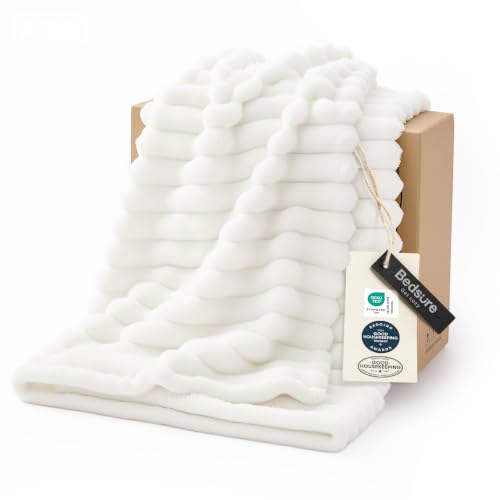
| blunique Ultra Soft Faux Fur Throw Blanket (Cream White) | Best for Glamping and Porch Beds | 50″ x 60″ | Faux fur bubble plush, thick fluffy build |
| Bedsure Faux Fur Sherpa Blanket (Grey) | Best for Hammock and Cot Layering | 50″ x 60″ | Faux fur fleece face with sherpa reverse |
How These Picks Were Chosen
The picks were chosen from a verified product pool for this blanket programme: every ASIN, title and image in this guide was confirmed against the pool data before writing, and only products whose materials and sizes could be stated from that data appear as linked picks. We compared the six on the factors that decide outdoor comfort — pile type and thickness, size, weight in the hand, colour practicality outdoors, and how the surface behaves on cots, hammocks and porch beds.
This is a research-led guide, not a lab test. We do not claim hands-on testing we did not do; instead, each review separates what the product data establishes (size, build, care) from the well-understood behaviour of its material class (how fleece, sherpa and faux fur handle damp, wind and ground cold), and states limitations plainly. Where a blanket type cannot do a job — waterproofing, frost protection — the guide says so rather than stretching the pick to fit.
The 6 Best Types of Blankets for Sleeping Outside, as Specific Picks

Bedsure Soft Throw Blanket (Beige)
Badge: Best Overall
Strengths
- Fluffy fleece face feels warm within minutes of wrapping up outdoors
- Throw size folds small enough to live in a tote or car boot between outings
- Machine washable, so grass dust and campfire smell are not a lasting problem
Trade-offs
- No waterproof backing, so it cannot sit directly on damp ground
- Beige shows outdoor dirt faster than a darker colour would
- Too light on its own for genuinely cold nights below the low fifties
| Spec | Detail |
|---|---|
| Size | 50″ x 60″ |
| Material | Soft fluffy fleece (per API title) |
| Care | Machine washable |
| Colour | Beige |
For a single blanket that handles the widest range of outdoor sleeping, this beige Bedsure throw earns the top spot because it balances three things backyard and porch sleepers actually need: quick warmth, small packed size and painless washing. The fluffy fleece face traps a layer of still air against the body, which is exactly how a blanket keeps you warm outside where breezes keep stealing heat. Draped over a camp cot, a porch daybed or a reclined patio lounger, it covers shoulders to toes for most adults without dragging on the ground and picking up dew.
Used as the top layer over a sleeping pad or an air mattress, it also softens the clammy feel that synthetic sleeping surfaces get on humid nights. It is not a backpacking blanket and it will not replace a sleeping bag when temperatures fall properly, but for the far more common case — sleeping outside at home, at a cabin or at a drive-up campsite in mild weather — it is the layer people end up reaching for first. Its one honest limitation is moisture: fleece over damp grass wicks and chills, so always put something between this blanket and the ground.
Best for: porch, patio and backyard sleeping in mild weather / Not suited for: wet ground, rain or cold-weather camping on its own

Bedsure Soft Fleece Throw Blanket (Grey)
Badge: Best for Camping and Travel
Strengths
- Lightweight fleece is the easiest of the six to roll, strap and carry
- Grey hides trail dust, ash specks and patio grime between washes
- Listing explicitly covers travel and camping use, not just sofa use
Trade-offs
- Lightweight also means least wind resistance of the six picks
- Single-layer fleece flattens under body weight on hard ground
- No stuff sack included, so you supply your own strap or bag
| Spec | Detail |
|---|---|
| Size | 50″ x 60″ |
| Material | Lightweight fuzzy fleece (per API title) |
| Use noted in listing | Sofa, couch, travel, camping |
| Colour | Grey |
This is the pick that most honestly belongs in an outdoor guide, because its own listing names travel and camping among its uses. Lightweight fleece is the classic camp blanket material for good reasons: it keeps insulating when the night air turns damp, it dries far faster than cotton after a dewy morning, and it tolerates being rolled tight, sat on and shaken out without any special care. In grey, it also forgives the reality of outdoor life — dust, ash and leaf litter simply do not show the way they do on cream or white.
Around a campsite it doubles as the evening wrap by the fire and then moves inside the tent or onto the cot as an extra layer over a sleeping bag, where it adds noticeable warmth around the shoulders and feet, the two places bags often feel thin. On its own it suits summer and warm shoulder-season nights rather than frost. Treat it as a flexible layer rather than a complete sleep system and it performs exactly as promised. Its honest limitation is wind: thin fleece alone will not stop a steady breeze, so pair it with a windproof top layer or sleep somewhere sheltered.
Best for: car camping, travel and layering over a sleeping bag / Not suited for: windy ridgelines or freezing nights as the only cover

Bedsure GentleSoft Sherpa Throw Blanket (Beige)
Badge: Best for Cold Outdoor Nights
Strengths
- Sherpa side traps the most still air, giving the warmest feel here
- Thick build resists light evening breezes better than single fleece
- Non-heated design means no cords, batteries or power worries outdoors
Trade-offs
- Bulkiest of the six to pack for anything beyond car camping
- Sherpa pile picks up leaves and twigs that need shaking out
- Can feel too warm indoors in summer after an outdoor evening
| Spec | Detail |
|---|---|
| Size | 50″ x 60″ |
| Material | GentleSoft fleece with sherpa (per API title) |
| Heating | Non-heated |
| Colour | Beige |
When the plan is sleeping outside on a night that will actually get cold — a clear autumn night on a deck, a mountain cabin porch, a late-season campsite — the sherpa build is the strongest tool in this line-up. Sherpa pile works like a field of tiny air pockets, and still air is the real insulator in any blanket. Pulled sherpa-side-in over a base layer, this throw feels warm almost immediately, and its thickness shrugs off the light, shifting breezes that cut straight through thinner fleece.
It earns its keep best in stationary setups: a cot under a tarp, a hammock with an under-layer, a porch swing bed. Because it is non-heated, there is nothing to charge and nothing to fail at two in the morning. The trade-offs are bulk and housekeeping. It packs larger than the other five, and the deep pile will collect leaf bits and pine needles outdoors, so give it a firm shake before it comes back inside. In genuinely freezing weather it remains a layer, not a system — but as the warm blanket in a layered outdoor setup, it is the one to choose.
Best for: cold, clear nights on porches, decks and at drive-up campsites / Not suited for: backpacking or anyone packing light

Bedsure GentleSoft Throw Blanket (Off White)
Badge: Best for Warm Summer Nights
Strengths
- Smooth fleece face feels cool at first contact on humid nights
- Light coverage stops the slight chill of night air without overheating
- Easy to wash after outdoor use, which matters for a pale colour
Trade-offs
- Off white is the least forgiving colour for outdoor dirt
- Not warm enough as the only layer once nights turn properly cool
- Smooth face slides on slick air-mattress surfaces unless tucked in
| Spec | Detail |
|---|---|
| Size | 50″ x 60″ |
| Material | GentleSoft fleece (per API title) |
| Colour | Off white |
| Care | Machine washable class throw (see listing) |
A surprising share of outdoor sleeping happens on nights that are almost too warm for a blanket at all — and then the temperature slides a few degrees at three in the morning and sleep breaks. A light, smooth-faced fleece like this off-white GentleSoft throw is built for exactly that window. It takes the edge off moving night air, covers bare shoulders and legs against mosquitoes landing through a screen porch, and never builds up the heavy heat that a sherpa or faux fur layer would on a humid night.
On a screened porch, a balcony daybed or a tent with the vents open, it is the blanket most likely to stay on all night instead of being kicked off. The obvious caveat is the colour: off white and the outdoors are uneasy partners, and this pick only makes sense where the sleeping surface itself is clean — a porch bed, a cot with a sheet, a glamping platform — rather than grass or bare ground. Kept to those settings and washed without fuss afterwards, it is the most comfortable warm-night option of the six.
Best for: screened porches, balconies and warm humid nights outside / Not suited for: dirty ground setups or cool autumn nights

blunique Ultra Soft Faux Fur Throw Blanket (Cream White)
Badge: Best for Glamping and Porch Beds
Strengths
- Thick bubble plush feels luxurious on a made-up outdoor bed
- Raised texture grips a sheet or mattress better than flat fleece
- Photographs beautifully, which matters for guest-ready glamping setups
Trade-offs
- Heaviest hand-feel here; overkill for rough camping
- Cream white needs a clean sleeping platform, not bare ground
- Thick pile dries slowly if it does get dewy
| Spec | Detail |
|---|---|
| Size | 50″ x 60″ |
| Material | Faux fur bubble plush (per API title) |
| Colour | Cream white |
| Use noted in listing | Couch, sofa, bedroom, living room |
Glamping, guest porches and outdoor movie-night beds are a real category of sleeping outside, and they call for a different blanket than a trail camp does. This blunique faux fur throw is the luxury end of the line-up: a thick bubble-plush surface that feels indulgent against the skin, photographs well on a dressed daybed, and adds genuine warmth once the evening cools. The raised bubble texture has a practical side outdoors, too — it grips the sheet beneath it instead of skating around the way flat fleece can on a smooth mattress.
Use it where the bed is a real bed: a porch daybed, a glamping tent platform, a cabin bunk you are dressing for guests. It will keep a sleeper warm through a mild night and turns an outdoor bed into something people actually look forward to. Its limitations are the honest flip side of plush: it is bulky to carry any distance, the cream colour demands a clean platform, and if dew soaks the deep pile it dries more slowly than thin fleece. In its intended setting, none of that matters much.
Best for: glamping platforms, porch daybeds and guest outdoor beds / Not suited for: backpacking, rough ground or wet-weather camping

Bedsure Faux Fur Sherpa Blanket (Grey)
Badge: Best for Hammock and Cot Layering
Strengths
- Two usable faces: plush faux fur one side, grippy sherpa the other
- Grey colour is the most outdoor-forgiving finish in this line-up
- Thick build works as a cot topper that softens a hard sleeping surface
Trade-offs
- Thick and warm — too much blanket for hot summer nights
- Faux fur face can feel tickly to sleepers who dislike textured fabric
- Still no ground protection; needs a pad or sheet beneath outdoors
| Spec | Detail |
|---|---|
| Size | 50″ x 60″ |
| Material | Faux fur fleece with sherpa reverse (per API title) |
| Colour | Grey |
| Heating | Non-heated |
A reversible blanket earns its place outdoors because the two faces solve two different problems. The sherpa side grips: laid sherpa-down on a camp cot or a hammock bed, it resists the slow slide that ruins sleep on smooth nylon and canvas. The faux fur side glides and feels plush against the skin as the top surface. In a hammock specifically, where insulation underneath you compresses and goes cold, a thick sherpa layer spread along the hammock bed adds a surprising amount of comfort for shoulder-season nights, especially paired with a top layer.
In grey, it is also the most practical colour here for real outdoor use — dust and ash marks that would ruin the cream picks barely register. It is a thick, warm blanket, so it belongs to spring, autumn and cool summer nights rather than heatwaves, and like every pick in this guide it needs a barrier between itself and damp ground. For cot and hammock sleepers who want one blanket that anchors the bed and warms it, this is the strongest fit.
Best for: hammocks, camp cots and cool-weather layered setups / Not suited for: hot nights or ultralight packing lists
Comparison Table
| Pick | Badge | Size | Standout trait | Shop |
|---|---|---|---|---|
| Bedsure Soft Throw Blanket (Beige) | Best Overall | 50″ x 60″ | Even, easy warmth that packs down small for a porch or patio night | Check on Amazon |
| Bedsure Soft Fleece Throw Blanket (Grey) | Best for Camping and Travel | 50″ x 60″ | The only pick whose listing names travel and camping outright | Check on Amazon |
| Bedsure GentleSoft Sherpa Throw Blanket (Beige) | Best for Cold Outdoor Nights | 50″ x 60″ | Thickest warm-air pocket of the six for chilly evenings outside | Check on Amazon |
| Bedsure GentleSoft Throw Blanket (Off White) | Best for Warm Summer Nights | 50″ x 60″ | Smooth, lighter cover for humid nights when heavy blankets overwhelm | Check on Amazon |
| blunique Ultra Soft Faux Fur Throw Blanket (Cream White) | Best for Glamping and Porch Beds | 50″ x 60″ | Plushest hand-feel of the six for dressed outdoor beds | Check on Amazon |
| Bedsure Faux Fur Sherpa Blanket (Grey) | Best for Hammock and Cot Layering | 50″ x 60″ | Two distinct faces let you flip between grip and glide | Check on Amazon |
How to Choose a Blanket for Sleeping Outside
Start with the surface you will sleep on, because it decides more than the blanket does. A porch mattress or glamping platform already blocks ground cold, so a single mid-weight blanket can be enough. A camp cot suspends you in moving air, which steals heat from below, so plan a layer underneath as well as over. A hammock compresses anything beneath you, which is why hammock sleepers pair a grippy sherpa layer inside the hammock with a top blanket. Bare ground is the hardest case: no throw in this guide belongs directly on it, and a foam pad or waterproof ground sheet is non-negotiable.
Next, match the blanket type to the night. Fleece is the default for a reason: synthetic fleece keeps much of its insulating value when the air is damp, shakes clean and dries by morning. Sherpa and faux fur trap more air and feel warmer in still, cold air, but they are bulkier and collect debris. Smooth, lighter fleece suits warm humid nights when the blanket’s job is mostly to break the breeze and cover skin. Think in layers rather than in one heroic blanket — two medium layers trap air between them and let you adjust at 3 a.m. by kicking one off or pulling it back.
Finally, be honest about weather. None of these types is waterproof, and a dew-soaked blanket at dawn is a normal outcome of sleeping uncovered outside; a tarp, a porch roof or a tent fly above you matters as much as the blanket below it. Size is the last check: a 50 x 60 inch throw covers one adult diagonally on a cot or daybed, but two sleepers sharing, or a tall sleeper on a full bed outdoors, should layer two throws or step up in size. Readers comparing indoor layering as well may find Best Under Blankets useful for the layer that goes beneath a main blanket.
How to Sleep Outside Warmly: Setup, Layering and Troubleshooting
Step 1: Block the ground first. Put a pad, a folded spare blanket or at minimum a dry sheet between your body and the cot, hammock or platform. Ground and air cold from below defeats any top blanket. Step 2: Dress the bed before dark. Lay your base layer flat, shake your main blanket out to loft its pile, and keep a second lighter layer folded at the foot for the coldest hour before dawn. Step 3: Seal the edges. Tuck the blanket under your shoulders and along your sides; outside, drafts enter at the neck and hips long before the blanket itself feels thin. Step 4: Keep a dry reserve. If dew is likely, store the top layer under cover until bedtime so it goes on dry.
Troubleshooting, in the pattern that matters at 2 a.m.: Problem: you wake cold from below even under a thick blanket → the surface beneath you is the leak; add a pad or folded layer under your body, not more blanket on top. Problem: the blanket feels damp and clammy by morning → dew has settled on the top face; sleep under a roof, tarp or tree canopy, and air the blanket in the sun before packing it away. Problem: you keep waking too hot, then too cold → your single layer is too heavy for the night; switch to two lighter layers and adjust one at a time. Problem: leaves and grit in the pile → shake the blanket firmly outdoors before washing, and store it indoors between outings. Campers who want a dedicated packable option should also read Best Ultralight Down Blankets For Camping, while anyone weighing where their blankets are made can compare Best Usa Made Blankets.
Fleece vs Sherpa vs Faux Fur: What Each Type Actually Does Outdoors
These three types look similar in a product photo and behave differently at midnight. Fleece is a knitted, brushed synthetic: light for its warmth, tolerant of damp air, quick to dry and indifferent to rough handling. It is the only type here that makes sense for travel, because it compresses and recovers without complaint. Its weakness is wind — moving air passes through fleece more easily than through a dense pile — and it flattens where your body weight presses it against a hard surface.
Sherpa is fleece’s deep-pile relative, made to imitate shearling. The long fibres hold a thicker layer of still air, which is why sherpa throws feel warm the moment they touch you and why they resist light breezes better. The cost is bulk, slower drying and a pile that collects the outdoors — seeds, leaf fragments, twigs — and brings it inside with you. Faux fur is the comfort-first type: the plushest skin feel, real warmth from its thick pile, and a dressed look that suits porch beds and glamping, balanced against weight, slow drying and colours that usually run pale. None of the three is a technical outdoor fabric; all three are excellent when the night is mild, the surface is right and expectations are honest.
Sleeping Outside at Home vs at a Campsite: Different Rules
Most outdoor sleeping is not camping. It is a porch bed in July, a deck lounger during a meteor shower, a backyard tent for the kids, a nap on a cabin veranda. At home, weight and bulk do not matter, washing is easy, and a roof is usually overhead — so the warmer, plusher types (sherpa, faux fur) shine, and pale colours survive because the bed itself is clean. This is also where a blanket can simply live outside-adjacent, folded on the porch, ready every evening.
A campsite adds distance, dirt and weather you cannot walk away from. There, the fleece pick’s light weight, grey colour and fast drying matter more than plushness, and every blanket should be treated as one layer in a system with a pad and a sleeping bag rather than the system itself. If your outdoor nights split between home and camp, one of each type — a sherpa for home, a light fleece for travel — covers both better than any single compromise. Drivers who sleep in their vehicles face a third set of rules, covered in Best Van Blankets.
The Other Blanket Types, and Where They Fit Outside
Fleece, sherpa and faux fur are the types in this guide’s verified pool, but a complete answer to the question of blanket types for sleeping outside has to place them honestly among the alternatives, because each type owns a niche. Wool is the traditional outdoor blanket: it insulates even when wet, resists campfire sparks better than any synthetic and regulates temperature across a wide range, which is why wool blankets have been standard issue in cabins, boats and emergency kits for generations. Its costs are weight, price and care — a good wool blanket is heavy to carry, slow to dry once soaked through and unhappy in a hot machine wash. Readers drawn to that heritage end of the market can browse the classic wool styles, while shoppers who prefer a dressier indoor finish can compare Best Velvet Blankets.
Down is the backpacker’s answer: unmatched warmth for its weight, and it compresses to a fraction of its lofted size, which is why dedicated camping quilts and down blankets exist as their own category. Down’s weakness is water — untreated down loses its loft and insulation when wet and dries slowly — so down belongs inside tents and under tarps, not on open decks in dewy climates. Cotton sits at the opposite pole: breathable, easy to wash and lovely on hot nights, but it absorbs moisture, dries slowly and chills when damp, which limits it to dry, warm, sheltered sleeping. Quilts and woven throws fall between these poles, usually as comfort layers rather than weather tools. The practical conclusion most outdoor sleepers reach is a small wardrobe rather than a single winner: fleece for travel and damp nights, sherpa or faux fur for cold still air at home, wool or down added when the trip turns serious. The six picks in this guide cover the first two roles at throw-blanket prices, which is where the majority of real outdoor sleeping actually happens — on porches, decks, cots and campsites reached by car rather than on trails reached on foot.
Staying Comfortable All Night: Temperature, Airflow and Skin Feel
The blanket is only one variable in a comfortable night outside; the others are airflow, clothing and what is under your head. Moving air is a friend at bedtime and an enemy at 4 a.m., so set the bed where a wall, hedge or vehicle blocks the prevailing breeze without sealing the spot completely — stagnant humid air makes fleece feel clammy, while a light through-flow keeps it fresh. Sleep clothing matters more outdoors than in a bedroom because you cannot reach a thermostat: a dry base layer, socks you put on fresh at bedtime and a hat within reach for the coldest hour do more for comfort than stepping up one blanket weight. Skin feel also changes outside. Indoors, a plush faux fur face is pure pleasure; outdoors, after a day of sunscreen, dust and campfire smoke, many people prefer the smoother fleece face against the skin and save the plush side for the outside of the bed, where it also sheds light debris more easily than it would pressed against a sheet.
Humidity deserves its own word. On muggy nights the air itself carries water, and any blanket will slowly take on that moisture until it feels heavier and cooler than it did at bedtime. The countermeasures are simple: choose the lightest layer that still covers you, leave a vent — an untucked side, a folded-back corner — for air to move, and pick fleece over deep pile, because thin fleece equilibrates with humid air faster and feels less swampy by morning. On dry, cold nights the logic reverses: seal every edge, choose the deepest pile you have, and let the trapped still air do the work. Learning to read which kind of night you are in, and dressing the bed accordingly, is the real skill behind sleeping outside well; the blanket types in this guide are simply the tools that let you act on that reading. If your outdoor bed is a permanent porch fixture, the layering ideas in Best Types Of Blankets For Sleeping Outsode — the companion spelling-variant guide in this series — approach the same bed from a porch-first angle.
Care and Storage for Blankets That Live Outdoors
Outdoor blankets age faster than indoor ones, and nearly all of the ageing is preventable. The routine that works is boring and effective: shake the blanket out after every outdoor night, before it crosses the threshold, so grit never reaches the washing machine or the storage shelf. Wash after any night involving smoke, heavy dew or ground contact, and always dry completely — deep sherpa and faux fur piles can feel dry on the surface while the base of the pile still holds moisture, so give them extra time on the line or in the dryer according to the care label. Store outdoor blankets indoors, loosely folded rather than vacuum-sealed, because long compression flattens pile and the loft is where the warmth lives. Keep one blanket as the designated outdoor blanket rather than rotating the household’s best throws through the fire pit; the picks in this guide are priced and built for exactly that sacrificial, washable, always-ready role. A blanket treated this way will give seasons of porch nights and camping trips; a blanket packed damp and forgotten will smell of mildew within a month, and no amount of washing fully reverses that. Treat the shake-out and the full dry as part of the ritual of sleeping outside, like banking the fire, and the gear quietly takes care of itself.
Matching the Blanket to the Sleeper: Kids, Guests and Restless Sleepers
Different sleepers change the recommendation. Children sleeping outside — the backyard tent, the camping sleepover — need a blanket that is light enough for them to rearrange themselves, washable enough for inevitable spills and grass stains, and cheap enough that nobody mourns it; the lightweight grey fleece is the natural children’s pick here, and its colour hides the evidence between washes. Guests change the equation the other way: a porch or glamping bed made up for visitors should feel generous, so the faux fur and sherpa picks earn their place on presentation as much as warmth, ideally layered over a plain fleece so the guest can adjust. Restless sleepers, who rotate and kick, defeat any single tucked blanket outdoors because every gap admits cold air; for them, two lighter layers work better than one thick one, since the layers slide against each other instead of dragging the whole cover off the bed, and a sherpa layer underneath adds the grip that keeps the stack roughly in place until morning.
Older sleepers and anyone who feels the cold keenly should weight the decision toward the warmest first-contact feel — the sherpa pick — and toward a bed setup that is easy to get into and out of in the dark, because a blanket that requires wrestling at midnight will simply be left folded. Couples sharing an outdoor bed should abandon the single-throw idea entirely: two throws, one per person, end the tug-of-war and let each sleeper manage their own temperature, which is why the affordable end of this category is a feature rather than a compromise. However the household divides, the pattern holds — match the type to the sleeper and the surface first, and the specific pick follows almost automatically from the reviews above.
Common Buying Mistakes
Putting the blanket straight on the ground. Every pick here will wick moisture and chill you. A pad, ground sheet or cot always goes underneath.
Buying for the evening temperature. The coldest moment is just before dawn. Choose and layer for that hour, not for the pleasant 10 p.m. reading.
Expecting a throw to replace a sleeping bag. In frost, wind or rain, these blankets are layers inside a proper sleep system, not substitutes for one.
Choosing white for rough use. Pale faux fur is lovely on a porch bed and miserable after one night near a fire pit. Match the colour to the dirt level of your setting.
Packing a damp blanket away. A dewy blanket sealed in a bag at dawn will smell by the next outing. Air it dry first, every time.
Final Recommendation
For most people sleeping outside, the decision is a layering decision, not a shopping spree. Start with the Bedsure Soft Throw Blanket (Beige) if you want the safest all-round choice, and look at the Bedsure GentleSoft Sherpa Throw Blanket (Beige) if the runner-up profile described in its review fits your situation better.
Choose the sherpa pick if your outdoor nights run cold and stationary, the lightweight fleece if they involve travel, and the smooth light throw if they are warm and humid. Any of the six will serve you well inside its stated limits; the failures happen when a blanket is asked to do a job — waterproofing, frost, bare ground — that no soft throw can do. Set the bed up in layers, keep the top layer dry until bedtime, and the outdoors becomes the best bedroom in the house.
Frequently Asked Questions
What type of blanket is best for sleeping outside?
For most people, fleece. It insulates in damp night air, dries quickly, washes clean after dusty use and layers well. Sherpa and faux fur feel warmer in still cold air but are bulkier; dedicated down or wool camping blankets pack smaller or handle moisture differently, at higher cost and with more careful care.
Can I sleep outside with just a blanket and no sleeping bag?
In mild weather, yes — on a porch bed, cot or pad with the blanket layered and tucked, many people sleep comfortably with a blanket alone through summer and warm shoulder-season nights. As temperatures fall toward the forties or below, or wind and rain arrive, a blanket alone is not enough and a sleeping bag or heated layer becomes the safer choice.
How do I stop a blanket getting damp with dew overnight?
Sleep under something — a porch roof, tarp, tent fly or dense tree canopy — because dew falls from a clear sky onto exposed surfaces. Keep the blanket under cover until bedtime, and if it does get dewy, air it in morning sun before storing it. Fleece tolerates dew best of the types here because it keeps insulating while damp and dries fastest.
What size blanket do I need for a camp cot or hammock?
A 50 x 60 inch throw covers one adult well on a standard cot when laid diagonally or tucked at the shoulders, and it suits a hammock as an inner layer. Tall sleepers, restless sleepers and anyone sharing should layer two throws or choose a larger blanket, because outdoor drafts punish any gap at the edges.
Are heated blankets a good idea for sleeping outside?
Only where you have safe, dry access to power, such as a porch with an outdoor outlet, and never in rain or dew-heavy conditions unless the product is rated for it. Most outdoor sleepers are better served by non-heated layers like the picks here; if powered warmth appeals, Best Usb Heated Blankets looks at the low-voltage end of that category.
How should I wash a blanket after sleeping outside in it?
Shake it firmly outdoors first to remove grit, leaves and ash, then machine wash on a gentle cycle and dry thoroughly before storing. Check the individual product’s care label, and never pack a blanket away damp — that is how outdoor blankets develop the musty smell people blame on the fabric.
Should I keep a separate blanket just for outdoor use?
Yes, and it is one of the cheapest upgrades to outdoor sleeping. A designated outdoor blanket can live folded by the door or in the porch storage box, be shaken out rather than fussed over, and go into the wash without rearranging the household’s bedding. It also protects your indoor throws from the three things that age blankets fastest outside: ground grit worked into the pile, campfire smoke that lingers through several washes, and dew that gets packed away damp by mistake. Any of the fleece picks in this guide suits the role; choose the colour by how dirty your outdoor setting gets, keep the pale plush picks for dressed beds, and the designated blanket will quietly become the most-used blanket you own between May and October.