Disclosure: topratedkitchenware.com is reader-supported. When you buy through links on our site, we may earn an affiliate commission from Amazon and other retailers, at no extra cost to you.
Where to buy
The six best vacuum sealers Consumer Reports-style shoppers shortlist are sold through Amazon, where the current listing — box contents, stated specifications, and all — is the document your purchase is actually based on, so verify it before you check out. Our top recommendation for long-term value is the FoodSaver FM2100 Vacuum Sealer Machine — Check on Amazon — with the full shortlist here:
- UPRUBE Vacuum Sealer, 95kPa, 9-in-1 with Digital Timer
- Chef Preserve Compact Vacuum Sealer with 30 Reusable Bags
- VACLER Vacuum Sealer Machine, 6-in-1 Smart Modes
- FoodSaver Mini Handheld Vacuum Sealer, Cordless
- FoodSaver V4400 2-in-1 Vacuum Sealer Machine
Read the full guide ↓ for the ownership math — what these machines cost to run over years, not just to buy — because that is where this category’s real winners separate.
People who search for the best vacuum sealers consumer reports has evaluated are usually asking the most grown-up question in appliance shopping: not which machine is most exciting, but which one will still be sealing reliably years from now, at a fair total cost, without safety or quality surprises. That consumer-advocacy mindset — independent testing, reliability over seasons, cost of ownership counted in consumables and failures, not just purchase price — is the right lens for this category, because a vacuum sealer is a decade-scale appliance whose running costs quietly exceed its ticket. This guide to the best vacuum sealers consumer reports-style shoppers should shortlist applies that lens rigorously: every machine verified against its current listing, every claim tied to a stated feature, and the ranking weighted toward durability signals, consumable economics, and designs that forgive real-world use.
One clarification, made plainly: we do not reproduce any organization’s test scores or claim its endorsement for any product here. Consumer Reports and similar advocates guard their ratings for their members, and inventing a score would betray the exact values this keyword stands for. What we can do is evaluate like an advocate — skeptically, structurally, and on the record — and show our reasoning for every rank. Readers comparing advocacy approaches with tech-press approaches may find Best Vacuum Sealers For Home Use a useful companion once the shortlist narrows to everyday fit.
Key Takeaways
- Total cost of ownership is the honest metric: over years, bags and rolls cost more than the machine, so the consumable system is a financial decision, not an accessory detail.
- The FoodSaver FM2100 is our top pick for most households: a mature one-touch design, roll storage that cuts waste, dry and moist modes, and an included accessory hose.
- Reliability signals you can verify: simple mechanisms, cleanable vacuum channels and drip paths, established brands with persistent consumable supply.
- The Chef Preserve handheld has the lowest running cost in this guide — thirty reusable bags included, and the format washes and returns to service.
- Features earn their price only when matched to your volume: pulse and timer controls pay for themselves in wet, delicate, high-volume kitchens and sit idle in light ones.
- Verify the current listing before buying; bundles and revisions change, and the listing — not any review, including this one — is what ships to your door.
- The cheapest seal is the one that works the first time: every feature and habit in this guide that prevents a failed bag is quietly a money feature, whatever the brochure calls it.
- Documentation is a feature too: keep the order record, the manual, and a note of which mode sealed which food best, and year three will run on evidence instead of memory.
In this guide
Quick Picks
| Pick | Badge | Standout detail from the listing | Link |
|---|---|---|---|
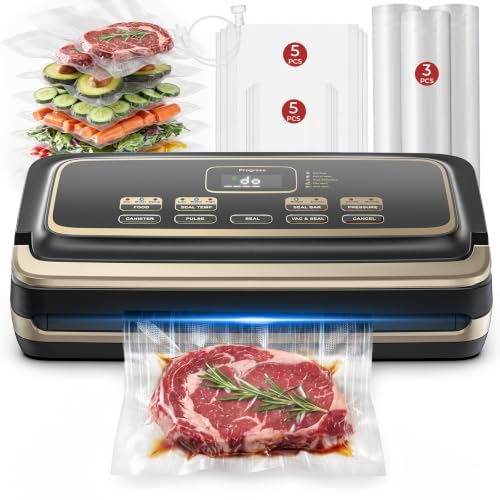
| UPRUBE Vacuum Sealer 95kPa | Best Feature Set | 9-in-1, 12L/min, 135W, digital timer, dry/moist/pulse, cutter and bag storage, 10 ft roll | Check on Amazon |
| Chef Preserve Compact | Lowest Running Cost | Handheld portable sealer with 30 reusable vacuum bags included | Check on Amazon |
| VACLER Vacuum Sealer | Best Mode Variety | 6-in-1 smart modes including Rice, Wet and Dry; bag cutter; 20 bags and vacuum hose included | Check on Amazon |
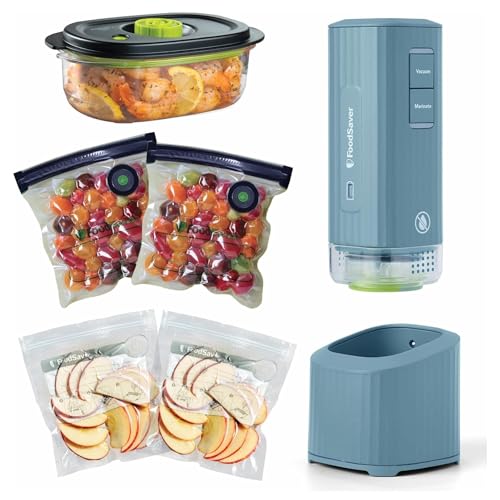
| FoodSaver Mini Handheld | Best for Daily Resealing | Cordless handheld with marinate setting and charging dock | Check on Amazon |
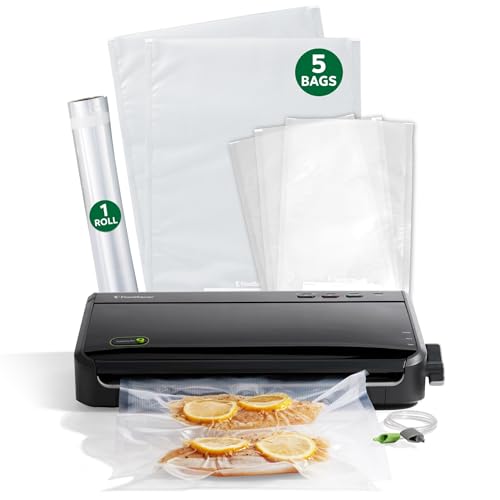
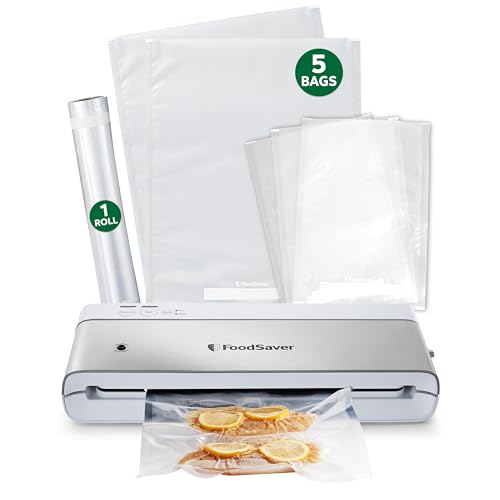
| FoodSaver FM2100 | Best Overall Value | One-touch sealing, roll storage and cutter, dry and moist modes, accessory port and hose, starter bags and roll | Check on Amazon |
| FoodSaver V4400 2-in-1 | Best Premium | 2-in-1 design with automatic bag detection and starter kit | Check on Amazon |
How These Picks Were Chosen
This is a research-led evaluation, conducted the way an advocate would insist: from primary documents. Every machine was verified against its current listing data — exact name, stated figures where the maker provides them, named modes, and complete box contents — and nothing in this article relies on a manufacturer’s advertisement, a retailer blurb, or another review’s summary. Where the listing is silent, we treat the feature as absent rather than assumed. That discipline matters most in this category, where similar model names span years of revisions.
The ranking weights, stated openly: first, seal reliability design (modes for wet food, control over the vacuum, cleanable liquid paths); second, consumable economics (roll-based cutting versus pre-cut bags versus reusable systems, and how much film ships in the box); third, durability and service signals (mechanism simplicity, brand persistence, accessory ecosystems); fourth, fit for real households (footprint, control style, learning curve). Raw vacuum strength matters but is deliberately not the headline criterion — an advocate knows that the machine still sealing in year six beats the machine that won a sprint in week one. Specialized rankings elsewhere on this site re-weight the same field for narrower jobs: Best Vacuum Sealers For Fish puts wet, delicate control first, and Best Vacuum Sealers For Baked Foods puts gentleness above all.
Finally, we scored nothing we could not source. If a claim about these machines circulates widely but appears in no current listing — a wattage here, a dimension there — it does not appear in this article either. Readers deserve a guide whose every number can be re-verified at the moment of purchase, and the small loss of color is a fair price for that trust.
We also excluded nothing for being a handheld. Advocacy testing sometimes under-samples designs that do not fit its standard protocol, but a household’s interest is served by the machine that fits its life — and for small, frequent sealing, the handheld format is not a compromise but the correct engineering answer, with the lowest running cost in the field.
The 6 Best Vacuum Sealers Consumer Reports-Style Shoppers Should Shortlist

UPRUBE Vacuum Sealer, 95kPa, 9-in-1
Badge: Best Feature Set
Strengths
- Stated, checkable specifications: 95kPa vacuum, 12L/min draw speed, 135W power — a maker publishing numbers invites verification.
- Dry, moist, and pulse modes span the full range of home sealing, reducing the failed-bag waste that inflates running costs.
- Digital timer supports repeatable cycles, and the included 10 ft roll plus onboard storage start ownership economically.
Trade-offs
- Nine functions are more system to learn and, long-term, more system to keep clean and understood.
- Value depends on volume: light users pay for control they will rarely touch.
- Brand history is shorter than the legacy names, a fair consideration for decade-scale ownership.
Mini spec box
- Type: external countertop vacuum sealer
- Vacuum: 95kPa (as stated in listing)
- Speed: 12L/min (as stated in listing)
- Power: 135W (as stated in listing)
- Modes: dry / moist / pulse, 9-in-1 functions
- Features: digital timer, easy-tear cutter, bag storage
- Included: 10 ft bag roll
An advocate’s first question of any product is: what, exactly, does the maker claim — and can it be checked? The UPRUBE passes that test better than most of its class, publishing its vacuum strength, draw speed, and power where rivals offer adjectives. Those numbers also happen to be strong: a 95kPa-class pull with the fastest stated draw in this guide, wrapped around the mode trio — dry, moist, pulse — that covers the category’s real work. The ownership angle is subtler but real: pulse control and a repeatable timer reduce failed seals, and every failed seal is a wasted bag plus, sometimes, wasted food. Control features are waste-reduction features, and waste reduction is running-cost reduction.
The cautions are equally concrete. A nine-function machine asks its owner to learn it; households that will not read a manual once should not buy complexity they will operate at random. And while stated specifications invite trust, brand longevity is the one specification no listing can print — the legacy names in this guide have longer public track records, which a decade-horizon buyer may fairly weigh against the UPRUBE’s richer feature sheet. Our judgment: for a high-volume, mixed-diet household that will use the control, the UPRUBE is the most capable value in the list; for a light user, its premium buys little.
Best for: high-volume households that will use pulse and timer control / Not suited for: light users or manual-averse buyers

Chef Preserve Compact Vacuum Sealer
Badge: Lowest Running Cost
Strengths
- Thirty reusable bags included, and the format washes and returns to service — the consumable bill nearly vanishes.
- Handheld simplicity: few moving parts, no seal bar to foul, nothing to descale or align.
- Portable and drawer-sized, so it survives kitchen remodels, moves, and second-home duty.
Trade-offs
- No heat weld: the longest freezer storage still belongs to countertop machines.
- Closed bag format — replacements come from the same system.
- Not a bulk-session tool by any honest measure.
Mini spec box
- Type: handheld vacuum sealer
- Included: 30 reusable vacuum bags
- Format: compact, portable
Run the ten-year math and this modest handheld embarrasses machines costing far more. A countertop sealer’s owner buys film forever — rolls for the economical, pre-cut bags for the hurried — and at family volumes that stream of purchases passes the machine’s own price and keeps going. The Chef Preserve’s owner buys almost nothing: thirty reusable bags arrive in the box, and the system’s whole premise is that those bags wash and work again. For the large share of household sealing that is fridge-and-pantry work — cheese, deli meat, produce, leftovers, portions for the week — that is not a compromise purchase; it is the financially literate one.
Simplicity compounds the case. There is no seal bar to degrade, no roll cutter to jam, no moist-mode logic to misunderstand; the failure modes of the design are few and mostly involve the bags themselves, which are replaceable. The honest limits remain: no welded seal means the deepest long-term freezer storage is better served by a countertop machine, and a bulk processing day is beyond it. An advocate’s verdict is therefore conditional and proud of it — as a household’s only sealer for light duty, or its second sealer for daily duty, the Chef Preserve is arguably the best value in this entire guide.
Best for: light-duty households, running-cost hawks, small kitchens, second sealers / Not suited for: bulk processing or the longest freezer storage

VACLER Vacuum Sealer Machine, 6-in-1 Smart Modes
Badge: Best Mode Variety
Strengths
- Six named smart modes, including Rice, Wet, and Dry — programs matched to food types reduce user error, the top cause of failed seals.
- Twenty bags and a vacuum hose in the box: a deep starter kit that defers the first consumable purchase.
- Automatic compact design: full external sealing with a modest footprint.
Trade-offs
- Programs replace manual control; the most delicate work lacks a pulse-style override.
- Newer brand, so long-horizon parts and ecosystem support are less proven than the legacy names.
- Mode names require initial translation to a household’s actual foods.
Mini spec box
- Type: external countertop vacuum sealer
- Modes: 6-in-1 smart modes (Rice, Wet, Dry named in listing)
- Included: bag cutter, 20 bags, vacuum hose
- Operation: automatic
Consumer research on appliances returns to one finding with metronome regularity: most failures blamed on products are interactions between the product and an undersupported user. The VACLER’s design reads like a direct response — six smart modes that move the expertise into the machine. A household sealing rice and grains, wet leftovers, and dry freezer portions in the same week gets a named program for each instead of a prayer and a single button. Fewer ruined seals means less wasted film and food, which is running-cost control achieved through usability rather than hardware.
The included kit strengthens the value filing: twenty bags is a serious start, and the vacuum hose extends the machine to compatible containers, displacing bags entirely for staples like flour and coffee. The reservations are the standard ones for a newer entrant — the ecosystem and support horizon are less documented than FoodSaver’s — and the absence of manual pulse control caps its delicate-food ceiling. For a mixed household that wants guidance over control, it is a well-judged package; for a decade-certain buyer, the brand question is the one to sit with.
Best for: mixed households wanting guided modes and a deep starter kit / Not suited for: manual-control seekers or brand-history-first buyers
FoodSaver Mini Handheld Vacuum Sealer
Badge: Best for Daily Resealing
Strengths
- Cordless with a charging dock: always ready, which is the entire reliability story for small daily jobs.
- Marinate setting adds a same-day cooking function few sealers of any size offer in handheld form.
- The category’s benchmark brand, with an established accessory and bag ecosystem.
Trade-offs
- Reusable valve-bag format only; no heat sealing, no rolls, no bulk work.
- Reusable bags cost more per unit than roll film, recovered only through actual reuse.
- Battery-powered devices add a battery’s lifespan to the ownership equation.
Mini spec box
- Type: handheld vacuum sealer
- Power: cordless, rechargeable, with charging dock
- Special feature: marinate setting
- Color: blue
Advocacy evaluation asks a question spec sheets cannot: will the household actually use it in month six? The FoodSaver Mini is engineered for an affirmative answer. It lives in a charging dock, works cordlessly at the fridge door, and turns resealing — the highest-frequency sealing job in real kitchens — into a ten-second reflex. A countertop machine with superior test numbers that stays in a cupboard preserves nothing; the Mini preserves lunch meat every single week. That usage reality is a legitimate consumer criterion, and this guide weights it openly.
The marinate setting is the second act: vacuum-assisted marinating compresses an hour of passive soaking into a short active process, giving the Mini a dinner-tonight function that pure storage devices lack. The ownership caveats are format and battery. The reusable-bag system is a commitment — the value only materializes if the bags are genuinely washed and reused — and any rechargeable device eventually faces battery aging, which buyers should factor into a decade plan. Within its intended duty, though, it is the most honestly matched product in this list: a small tool, correctly sized, from the brand that built the category.
Best for: daily resealing, marinating, small kitchens, brand-confidence buyers / Not suited for: bulk or long-storage heat sealing

FoodSaver FM2100 Vacuum Sealer Machine
Badge: Best Overall Value
Strengths
- Roll storage with a built-in cutter: bags cut to size, which is the cheapest film format and the least wasteful.
- Dry and moist modes cover the realistic range of home foods, including the wet jobs where seals fail.
- Accessory port and hose included, extending one purchase across canisters and jars for years.
Trade-offs
- No pulse mode for feathering the most delicate items.
- Full-size footprint needs a real home in the kitchen.
- One-touch automation trades manual control for consistency.
Mini spec box
- Type: external countertop vacuum sealer
- Modes: dry and moist food settings, one-touch sealing
- Storage: built-in roll storage with cutter
- Included: accessory port and hose, starter bags and roll
The FM2100 is what a value analysis looks like when it wins. Start with consumables: roll film is the lowest-cost format per bag, and a machine that stores the roll and cuts it in place produces right-sized bags by default — the waste-minimizing workflow is the workflow of least resistance. Continue with coverage: dry and moist modes address the two conditions that account for nearly all home sealing, with the moist setting aimed squarely at the failure mode — wet seals — that wastes the most food. Add the accessory hose in the box, and the same purchase displaces bags for flour, coffee, and canister storage indefinitely. Every element of the design subtracts from the ten-year cost line.
Then consider the intangibles an advocate prices in: a mature design from the category’s defining brand, a control scheme a household cannot really operate wrongly, and an ecosystem of film and accessories with a long public history. Its sacrifices are visible and bounded — no pulse control for the daintiest work, a full-size footprint, automation instead of manual command. For the median household this guide imagines — mixed foods, weekly sessions, a decade of intended service — no other pick balances the ledger as completely. It is not the most powerful machine here, nor the cheapest to run in the narrowest sense. It is the best overall value, which is a different and more useful crown.
Best for: most households seeking a decade-scale, do-everything sealer / Not suited for: pulse-control seekers or the tightest counters
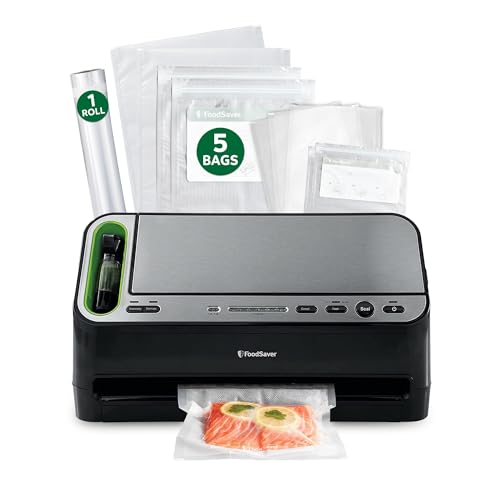
FoodSaver V4400 2-in-1 Vacuum Sealer Machine
Badge: Best Premium
Strengths
- Two systems in one appliance: countertop heat sealing plus an integrated handheld function — one purchase, one footprint, both duties.
- Automatic bag detection attacks the most common user error, mis-seated bags, at the source.
- Starter kit included, and the ecosystem behind it is the category’s deepest.
Trade-offs
- Premium tier: the dual function only pays if both halves are genuinely used.
- More mechanism than any other pick here — more to learn, more to keep clean.
- Substantial counter presence.
Mini spec box
- Type: 2-in-1 external sealer with integrated handheld function
- Automation: automatic vacuum sealer bag detection
- Included: starter kit
The V4400 asks to be judged as a consolidation: instead of a countertop machine plus a handheld plus their separate chargers, docks, and storage negotiations, one appliance covers welded seals for storage and valve-bag resealing for daily life. For households that genuinely do both weekly, consolidation is a real consumer benefit — one learning curve, one footprint, one brand’s consumables to track. The automatic bag detection is the feature an advocate notices most: mis-seated bags are the leading cause of the weak vacuums and failed seals that owners report as product failures, and designing the error out is worth more than designing around it.
The premium logic cuts both ways, and this guide will not pretend otherwise. A household that only heat-seals is paying for a second system it will never switch on, and the combined mechanism is the most complex in the list to keep clean and understood. The V4400 is therefore the best premium pick conditionally: best when both duties are real, wasteful when they are not. That conditional honesty is, in the end, the most consumer-advocacy sentence in this entire article — the right product is the one matched to the household, and no flagship exempts a buyer from knowing their own habits. Non-food duty is the other place a 2-in-1 earns its keep, as Best Vacuum Sealers For Clothes shows with seasonal storage bags run off the accessory function.
Best for: households that heat-seal and reseal weekly and want one appliance / Not suited for: single-duty buyers
Comparison Table
| Pick | Type | Ownership highlight | Included extras | Link |
|---|---|---|---|---|
| UPRUBE | External countertop | 95kPa, 12L/min, pulse + timer reduce failed seals | 10 ft roll | Check on Amazon |
| Chef Preserve | Handheld | Reusable bags — lowest running cost | 30 reusable bags | Check on Amazon |
| VACLER | External countertop | 6-in-1 modes reduce user error; hose displaces bags | 20 bags, vacuum hose | Check on Amazon |
| FoodSaver Mini | Handheld, cordless | Dock-kept readiness; marinate setting | Reusable-bag system | Check on Amazon |
| FoodSaver FM2100 | External countertop | Roll storage + cutter minimize film cost; moist mode | Accessory hose, starter bags & roll | Check on Amazon |
| FoodSaver V4400 | 2-in-1 | Bag detection prevents failed seals; two systems, one footprint | Starter kit | Check on Amazon |
How to Choose With an Ownership Mindset
Estimate your annual bag count first. Multiply a typical week by a year, honestly. That number, more than any specification, decides whether roll economics (FM2100), reusable economics (Chef Preserve), or premium consolidation (V4400) saves you the most. Light users overbuy machines; heavy users underbuy them; the bag count tells you which one you are.
Count failed seals as a cost. Every failed seal spends a bag and risks food. Features that prevent failures — moist modes for wet food, pulse control for delicate food, bag detection for the distracted, drip management for long sessions — are cost controls wearing feature clothing. Match the prevention to your most common failure and the machine pays you back quietly, weekly.
Weigh brand horizon against feature depth. A decade of ownership needs film, accessories, and a maker that persists. Legacy brands offer the deepest ecosystems; newer entrants often offer richer stated specifications and modes. Neither wins automatically — the UPRUBE and VACLER make the innovation case, the FoodSavers make the permanence case — but a buyer should know which case they are accepting.
Decide the machine’s home before it arrives. Ownership satisfaction correlates embarrassingly well with storage. A sealer with a planned home — counter spot measured, cupboard shelf cleared, drawer assigned to a handheld — gets used, cleaned, and kept stocked; a sealer improvising its home migrates toward disuse. The vertical and compact designs in this category exist because manufacturers learned this from return data and owner surveys. Do the measuring in the calm before purchase, and let it veto any machine, however decorated, that your kitchen cannot house within arm’s reach of where food is prepped.
Prefer cleanable designs. Reliability is often just hygiene with a longer fuse. Channels that wipe clean, trays that lift out, seal areas you can see — these keep year five performing like month one. When a listing mentions a removable tray or an accessible channel, read it as a durability feature, because that is what it becomes.
How to Keep a Sealer Reliable for a Decade
- Wipe the seal area after every session. Dried liquid on a gasket or channel is a slow vacuum leak. Thirty seconds of cleaning is the cheapest maintenance in the kitchen.
- Store the lid unlatched if the design allows. Months of compression flatten gaskets; relaxed gaskets keep sealing like new ones.
- Rest the seal bar on long runs. Label and stack between bags. Even pacing prevents the late-session seal fade that owners misread as machine failure.
- Keep film dry and bags flat. Consumables stored badly perform badly; a dry cupboard and uncreased rolls protect every future seal.
- Inspect seals as a habit, not a chore. A weekly glance at one seal band catches gasket wear and technique drift while both are still free to fix.
- Keep one spare roll or bag set sealed. Running out mid-session leads to rushed substitutes and bad seals; a standing spare is reliability insurance.
Troubleshooting. Problem: vacuum seems weaker over months → clean the channel and gaskets first; residue, not motor wear, is the usual cause. Problem: seals fail mainly on wet food → switch to the moist program, pre-freeze until firm, and dry the bag mouth; technique, not the machine, is the usual cause. Problem: bags lose vacuum after weeks in the freezer → inspect for channels across the seal and pinholes from sharp edges; double-seal long-storage items and pad bones.
The Real Cost of Ownership, Worked Through
Consider two households. The first seals eight bags a week — portions, leftovers, a weekly bulk split. Across a year that is hundreds of bags; in roll format, cut to size, the film cost stays modest, and a machine with onboard roll storage like the FM2100 keeps that format effortless. The second household seals three small items a week, mostly resealing. Its annual film count is small, but a countertop machine still demands storage, cleaning, and a minimum of fuss per use — while a reusable-bag handheld’s costs round to zero and its effort per use is seconds. Neither household is wrong; they are simply running different equations, and the “best value” answer flips between them. That is why this guide crowns an overall value pick and a lowest-running-cost pick separately, and why any ranking that refuses to ask about your volume is selling, not advising. The same equation, run for a sous vide household in another market, is worked through in Best Vacuum Sealers For Europe Sous Vide.
Safety and Food-Handling Notes
Vacuum sealing preserves; it does not sterilize, and it does not rescue food that was already past its prime. Seal fresh food, refrigerate and freeze promptly, and remember that removing air changes the environment in ways that make temperature discipline more important, not less — perishable food that needs refrigeration still needs it, sealed or not. Thaw sealed perishables in the refrigerator rather than on the counter. Label everything with contents and date, because a vacuum bag erases the visual cues cooks rely on. Keep the seal area clean for the food’s sake as much as the machine’s: a channel wiped between raw meat and ready-to-eat items is basic kitchen hygiene. Followed plainly, these habits make a sealer what it should be — a tool that extends the life of good food handled well — and they cost nothing but attention.
Reading a Listing Like an Advocate: Signals and Red Flags
An advocate reads a product page the way an auditor reads a ledger — for what is stated, what is vague, and what is missing. Positive signals: numerical specifications the maker is willing to be held to, as the UPRUBE provides; named modes tied to named foods, as the VACLER provides; box contents enumerated item by item, as the FM2100’s starter bags, roll, and hose are; and a brand whose other products and consumables show a continuous public history. Each signal is a small promise that can be checked after purchase, and makers who expect to be checked behave differently from makers who do not.
The red flags are equally learnable. Superlatives without numbers. Mode counts without mode names. Freshness claims stated as multipliers with no test described. Bundles photographed richly but enumerated vaguely, so the “kit” turns out to be two bags and a coupon. None of these prove a bad machine — the Bonsenkitchen class of honest, simply-described value products exists in every category — but they shift the burden of proof onto the buyer’s first week, which is why this guide repeatedly prescribes the same remedy: verify the listing, then run your own ten-bag test while the return window is wide open. A purchase made checkable is a purchase made safely, and that habit, more than any single product choice in this article, is what consumer advocacy exists to teach. The habit transfers intact to adjacent purchases, as readers of Best Vacuum Sealers For Clothes will find when the same listing discipline separates real storage systems from bag-and-hope bundles.
The Environmental Ledger: Bags, Film, and Food Waste
An honest ownership account includes the plastic. Vacuum sealing spends film to save food, and whether that trade favors the environment depends entirely on execution. A household that seals diligently and eats what it seals prevents food waste whose footprint dwarfs the film’s; a household that seals enthusiastically and throws away freezer-burned packages anyway has bought plastic and waste both. The levers are the ones this guide keeps naming: right-sized bags from rolls rather than oversized pre-cuts, accessory canisters displacing bags for staples, reusable valve-bag systems for the daily churn of fridge items, and rotation discipline so sealed food is eaten at its best. The Chef Preserve’s reusable format is the extreme of one lever; the FM2100’s cut-to-size roll workflow is the practical middle. Choose the lever your household will actually pull, because the greenest system, like the best sealer, is the one that gets used correctly for years.
When Something Goes Wrong: Support, Parts, and Returns
Advocacy evaluation prices the bad day in advance. Before buying, a careful shopper can check three things on or near the listing: what support channel the maker publishes, whether consumables and common accessories for the model are currently sold (a live ecosystem is a proxy for a live company), and what the return terms are if the machine disappoints in its first sessions. During ownership, keep the order record and photograph your first seals; if a machine underperforms, that documentation turns a vague complaint into a resolvable case. And know the self-help order of operations, because most “failures” resolve without any company at all: clean the channel and gaskets, try a fresh section of film, test with a dry good to isolate variables, and re-read the seating instructions. Machines returned for what a cloth and two minutes would have fixed are a quiet tax on everyone — the advocate’s final lesson is that the best support case is the one your own maintenance made unnecessary.
Common Buying Mistakes
- Judging by purchase price alone. The machine is the down payment; film is the mortgage. Run the bag-count math before choosing.
- Buying features for a household you do not have. Pulse, timers, and dual systems pay only when the matching work exists weekly.
- Ignoring cleanability. The machine you cannot wipe out is the machine whose seals fade by year two.
- Treating any single ranking as a verdict. Including this one. Rankings weight criteria; your household sets the weights.
- Sealing marginal food and expecting miracles. A sealer extends the life of fresh food; it does not rewind it.
- Forgetting the starter kit’s value. Deep included supplies — rolls, bags, a hose — are real money deferred, and they differ enormously across this list.
A Word on Gifts, Registries, and Second-Hand Machines
Vacuum sealers are popular gifts and common second-hand finds, and both routes deserve an advocate’s caution. As a gift, a sealer succeeds when it matches the recipient’s kitchen rather than the giver’s enthusiasm: the handheld formats are the safest generous choice for small households, while a countertop machine is a commitment of someone else’s counter that should be made only with knowledge of their space and habits. Include film with the gift — a machine without bags is a chore disguised as a present. Second-hand, the calculus is condition: gaskets, seal area, and channel cleanliness decide a used machine’s remaining life, all three are inspectable in a minute, and a used legacy-brand machine with a live consumable ecosystem can be a genuinely shrewd buy. In both cases the rule from the rest of this guide holds — judge the system and its fit, not the badge on the lid.
A closing note on expectations, because advocacy includes managing them: no machine in this guide — or any guide — will make vacuum sealing effortless in the sense of thoughtless. Bags must be sized, mouths wiped, seals inspected, freezers rotated. What a well-chosen machine does is make each of those small acts reliable and quick, so the system holds for years. Buy for that reliability, maintain it with the habits in this article, and the sealer becomes what the best appliances are: unremarkable, indispensable infrastructure in a kitchen that wastes less and eats better.
Final Recommendation
For the household that wants one sealer, bought once and used for years, choose the FoodSaver FM2100 — Check on Amazon. Its roll economy, moist-mode coverage, included hose, and mature design produce the lowest honest total cost for the widest range of kitchens. If your volume is high and your foods are wet or delicate, step up to the UPRUBE’s control. If your sealing is small and daily, let the Chef Preserve or the FoodSaver Mini win on running cost and readiness. That is the advocacy answer: not one machine for everyone, but the right machine, for stated reasons, for your household’s actual life.
Frequently Asked Questions
How long should a vacuum sealer last?
A well-kept countertop sealer should serve for years of regular use; the wear items are gaskets, the seal area’s cleanliness, and the owner’s habits more than the motor. Wipe-downs, unlatched storage where appropriate, and paced sessions are the difference between a machine that fades in year two and one still sealing in year eight.
What is the cheapest way to own a vacuum sealer?
Match the format to your volume. Low volume favors a reusable-bag handheld, whose running cost approaches zero. Steady volume favors roll film cut to size on a machine with storage and a cutter. Pre-cut bags are the convenience format and price accordingly. In all cases, preventing failed seals is the hidden saving.
Are expensive sealers worth it?
When their features map to your work, yes: pulse control for delicate and wet foods, detection systems for error-prone sessions, dual systems for households that truly do both jobs. When the features would sit idle, the premium buys nothing but specification-sheet comfort. Volume and food types — not aspiration — should set the tier.
Can vacuum sealing make food unsafe?
Used correctly, no; used carelessly, it can encourage bad habits. Sealing does not sterilize food or replace refrigeration. Seal fresh food, keep perishables cold, thaw in the refrigerator, label with dates, and treat the bag as preservation, not as permission to ignore time and temperature.
Why do seals fail more as a machine ages?
Usually hygiene and gaskets, not electronics: residue builds in the channel, gaskets compress or dry, and the seal area accumulates micro-contamination. A thorough cleaning and relaxed storage restore most “aging” machines. If performance stays poor after cleaning, check the film — an old, heat-damaged roll fails on any machine.
Is it worth repairing an older sealer?
Often, yes — because the common failures are the cheap ones. Try, in order: a deep clean of the channel and seal area, a fresh roll of film, relaxed unlatched storage to let gaskets recover, and a test with a dry good to confirm the vacuum itself. If the machine then seals well, you have bought years for minutes. If the vacuum is genuinely weak after cleaning, or the seal bar heats unevenly, replacement becomes the rational choice — and your years of bag-count knowledge will make the new purchase a far better-matched one.
What separates a reliable sealer from a fragile one in daily use?
Three things, in our evaluation: tolerance for real-world mess (drip paths, wipeable channels, modes that forgive wet food), tolerance for real-world users (controls that are hard to operate wrongly, detection that catches mis-seated bags), and tolerance for time (gaskets and seal areas that a minute of monthly care keeps at full performance). Fragile machines demand ideal conditions; reliable ones assume Tuesday evening and cope. Every pick in this guide was ranked with that distinction in front of us.
Do vacuum sealers use much electricity?
Very little in household terms: cycles are short and intermittent, and even a heavy session’s total draw is small beside the freezer that runs all day to protect the results. Shoppers optimizing energy should look at the freezer’s habits, not the sealer’s — the sealer’s real resource footprint is film, which is why this guide prices consumables so carefully.
Does a vacuum sealer really save money?
It can, through three channels: buying proteins on sale in bulk without quality loss, wasting less food to spoilage and freezer burn, and replacing some store-bought convenience portions with home-prepped ones. Whether it does depends on the household closing the loop — sealing promptly, rotating stock, and eating the inventory. The machine creates the possibility; the habits create the savings, which is why this guide spends as many words on habits as on hardware.
Should I buy the same brand my friends own?
Only if their household resembles yours. Shared film buying and borrowed experience are real conveniences, but a friend processing game each fall and a friend resealing cheese live in different categories. Borrow their lessons about reliability and support; choose your format from your own bag count.