Disclosure: topratedkitchenware.com is reader-supported. When you buy through links on our site, we may earn an affiliate commission from Amazon and other retailers, at no extra cost to you.
Where to buy
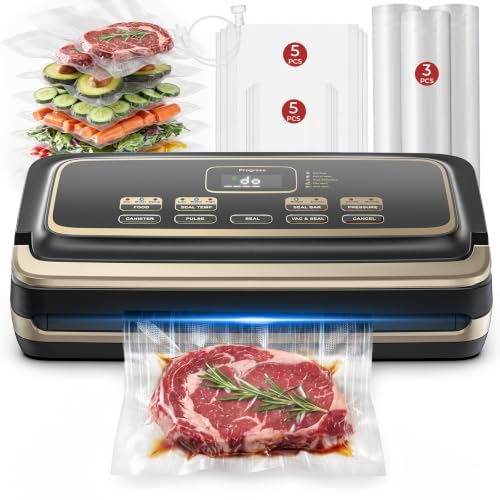
All six of the best vacuum sealers for baked foods below are sold through Amazon, where you can check exactly what each box includes before ordering — for baked goods, the included hose and bags matter as much as the machine. Our top recommendation for bakers is the VACLER Vacuum Sealer Machine, 6-in-1 Smart Modes with Vacuum Hose — Check on Amazon — and here is the full shortlist:
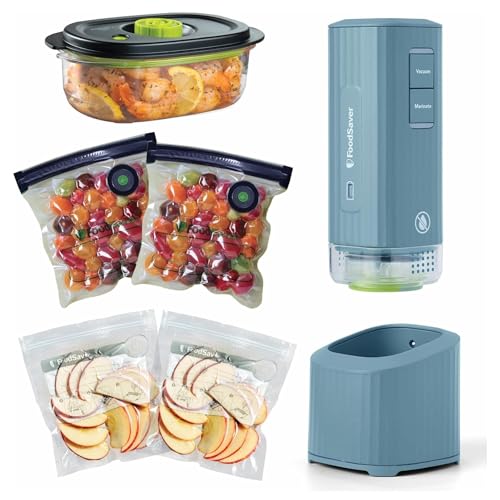
- FoodSaver Mini Handheld Vacuum Sealer, Cordless
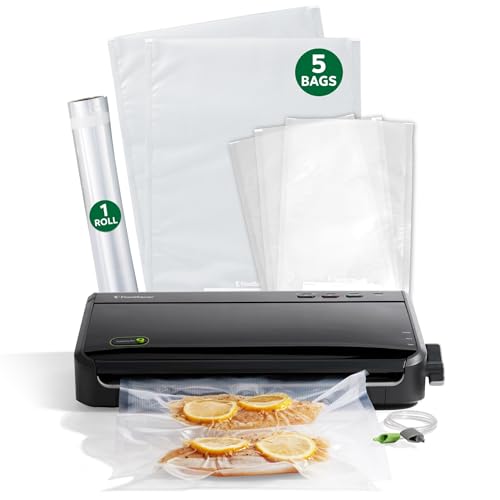
- FoodSaver FM2100 Vacuum Sealer Machine
- FoodSaver V4400 2-in-1 Vacuum Sealer Machine
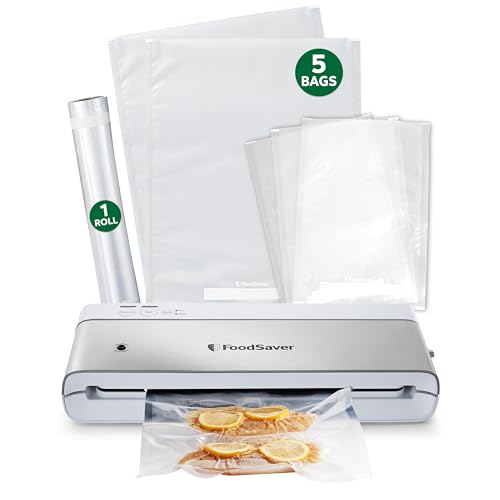
- FoodSaver Compact Vacuum Sealer Machine, White
- FoodSaver PowerVac Compact VS0150, Vertical Storage
Read the full guide ↓ before you seal a single loaf — with baked goods, technique decides more than machinery, and the freeze-first method below will save more cakes than any purchase. One loaf, handled the way this guide describes, will teach your hands the whole system.
The best vacuum sealers for baked foods have to solve a problem the rest of the category barely thinks about: the food is fragile. A vacuum sealer’s whole job is to pull air out until the bag hugs the food — wonderful for a steak, disastrous for a croissant. Bread compresses, cake frosting smears, muffin tops dent, and a fresh loaf sealed at full vacuum emerges as a sad, dense brick. Yet bakers have more reason to seal than almost anyone: bread stales in a day, a celebration cake outlasts its party, holiday baking happens in batches, and the freezer is full of good intentions that freezer burn ruins. The best vacuum sealers for baked foods are therefore not the strongest machines, but the most controllable ones — and, just as much, the machines paired with the right technique, because a gentle hand on a standard machine beats a full-power cycle on any machine.
An honesty note that shapes this whole guide: none of the six verified listings below names a dedicated pulse mode, the feature most associated with delicate work. Rather than pretend otherwise, we ranked these machines on what they verifiably offer a baker — smart modes that soften the cycle, handheld designs whose draw you can stop the instant the food is snug, accessory hoses that move delicate items into rigid containers instead of crushable bags — and we built the guide around the freeze-first technique, which turns even a strong countertop machine into a safe baker’s tool. If your delicate work extends to small, soft snacks, Best Vacuum Sealers For Energyball applies the same philosophy to bite-size portions.
Key Takeaways
- Vacuum pressure is the enemy of soft crumb: the winning strategy is control — gentler modes, handheld draws you can stop early, or freezing the item firm before sealing.
- The VACLER is our top pick for bakers: six smart modes for different food types, plus an included vacuum hose for rigid containers that protect frosted and fragile items completely.
- Freeze-first is the master technique: chill bread, cake, and pastries until firm, then seal — the vacuum cannot crush what is frozen solid.
- Handhelds are the daily-bread heroes: a quick, partial draw on a reusable bag keeps loaves and rolls fresher without any compression drama.
- Slice before you freeze: sealed portions of bread and cake thaw in minutes and prevent the whole-loaf thaw-refreeze cycle that ruins texture.
- For long storage, double protection wins — a sealed bag inside the freezer, away from sharp packages that could puncture it.
- The refrigerator is bread’s worst room: staling accelerates in the cold-but-not-frozen zone, so a sealer’s bread strategy is counter for days or freezer for weeks — never the fridge shelf in between.
- Label with the bake date, not the sealing date, if the two ever differ — what you want to know in month two is how old the bread is, and your future self will thank the habit every single time the freezer door opens.
In this guide
Quick Picks
| Pick | Badge | Standout detail from the listing | Link |
|---|---|---|---|
| VACLER Vacuum Sealer | Best Overall for Baked Goods | 6-in-1 smart modes including Wet and Dry; bag cutter; 20 bags and vacuum hose for containers included | Check on Amazon |
| FoodSaver Mini Handheld | Best for Daily Bread | Cordless handheld with charging dock — quick, stop-anytime draws on reusable valve bags | Check on Amazon |
| FoodSaver FM2100 | Best for Freezer Batches | One-touch sealing, roll storage and cutter for custom loaf-sized bags, dry and moist modes, hose included | Check on Amazon |
| FoodSaver V4400 2-in-1 | Best Premium | Countertop sealing plus integrated handheld function, automatic bag detection, starter kit | Check on Amazon |
| FoodSaver Compact | Best for Small Kitchens | Compact white body, bags and roll included, sous vide and storage duty | Check on Amazon |
| FoodSaver PowerVac VS0150 | Best Vertical Storage | Upright storage, dry and wet food, designed to reduce bag waste | Check on Amazon |
How These Picks Were Chosen
This is a research-led guide. We verified all six machines against their current listing data — names, named modes, included accessories — and invented nothing, which for this keyword means admitting plainly that no listing here claims a pulse mode or a dedicated gentle cycle by that name. The ranking therefore rests on three verifiable pillars. First, programmability: machines with multiple named modes (the VACLER’s six, the FM2100’s dry and moist pair) let a baker choose a softer program instead of accepting the strongest one. Second, format: handhelds draw air through valve bags under the operator’s eye, and the operator can stop the draw the moment a loaf is snug — a manual gentleness no program fully replaces. Third, accessories: a vacuum hose moves the most fragile items into rigid containers, where the vacuum works on the container, not on the cake.
One more filter deserves stating: we did not reward raw vacuum strength anywhere in this ranking, and in several places we actively discounted it. A baker reading general sealer reviews should perform the same inversion — the specification other guides headline is, for this one category, close to a liability, and the features they footnote (modes, hoses, handheld formats) are the headline. Ranking is always relative to a job; this article simply refuses to forget which job it is ranking for.
We also weighed the baker’s calendar. Holiday and weekend baking is batch work — dozens of rolls, several loaves, trays of muffins — which rewards roll storage and session consistency; daily bread keeping is small work, which rewards a dock-kept handheld. Both patterns are served in this list, deliberately. General-purpose shoppers should start from Best Vacuum Sealers For Home Use and return here for the delicate specialization; the machines overlap, but the technique sections do not, and for baked goods the technique is the product.
The 6 Best Vacuum Sealers for Baked Foods

VACLER Vacuum Sealer Machine, 6-in-1 Smart Modes
Badge: Best Overall for Baked Goods
Strengths
- Six smart modes give the baker program choices instead of one full-strength cycle for everything.
- Included vacuum hose enables rigid-container sealing — the only zero-crush method for frosted cakes and delicate pastry.
- Twenty bags included, plus a bag cutter for loaf-sized custom bags.
Trade-offs
- Smart modes are still programs; the softest fresh items still deserve the freeze-first treatment.
- Compact body means standard session pace for very large holiday batches.
- Mode-to-food mapping takes a few experiments to learn.
Mini spec box
- Type: external countertop vacuum sealer
- Modes: 6-in-1 smart modes (Rice, Wet, Dry named in listing)
- Included: bag cutter, 20 bags, vacuum hose
- Operation: automatic
The VACLER wins the baker’s brief on breadth of answers. For sturdy items — a dense fruitcake, a crusty loaf, day-old rolls — its standard dry program with freeze-first preparation seals beautifully for the freezer. For the weekly mix of softer goods, the mode selection lets you step down from the most aggressive cycle rather than improvising around it. And for the items no bag should touch — the frosted layer cake, the glazed pastries, the meringue-topped anything — the included vacuum hose changes the method entirely: the food goes into a compatible rigid container, the hose draws the container’s air out, and the pastry experiences no pressure at all. That container route is the professional answer to delicate sealing, and the VACLER is the pick here that ships ready to use it.
The twenty included bags and the cutter support the batch side of baking, letting you cut bags to a loaf’s actual length instead of folding a standard bag around it — folds at the bag mouth are where seals go to fail. Its honest ceiling is that modes are not manual control: for the very softest fresh items, freeze-first remains mandatory homework, and a baker who refuses all chilling will still dent a warm croissant. Accept that one discipline and the VACLER covers a bakery’s whole range, from pantry staples (its Rice mode’s home turf) to the celebration cake in its container.
Best for: bakers sealing everything from loaves to frosted cakes, container users / Not suited for: anyone unwilling to freeze-first the softest fresh items
FoodSaver Mini Handheld Vacuum Sealer
Badge: Best for Daily Bread
Strengths
- Stop-anytime handheld draw: you watch the loaf and end the vacuum the moment it is snug — true manual gentleness.
- Cordless, dock-kept, and instant: the daily bread routine takes seconds, so it actually happens daily.
- Reusable valve bags match bread’s rhythm — open, slice, reseal, repeat — without spending a bag per day.
Trade-offs
- No heat seal and no rolls: not the tool for a holiday batch of twenty loaves.
- Valve-bag format is a closed system to buy into.
- Long freezer storage of baked goods is better served by a welded seal.
Mini spec box
- Type: handheld vacuum sealer
- Power: cordless, rechargeable, with charging dock
- Special feature: marinate setting
- Color: blue
Most baked goods do not need the freezer; they need tomorrow. A loaf eaten across the week, rolls for dinners, muffins for breakfasts — the enemy is staling and fridge odors over days, and the weapon is a quick, gentle removal of most of the air, repeated every time the bag opens. That is precisely the FoodSaver Mini’s design center. Because a handheld draw is operator-ended, you stop when the bag settles against the crust — before compression begins — giving soft bread the lightest effective vacuum in this guide without any mode menu at all. The reusable bag then reseals after every slicing session, which no heat-seal system can do.
The dock matters more than it sounds: bread keeping is a daily micro-habit, and micro-habits survive only at zero friction. The Mini also moonlights with its marinate setting for the savory side of the kitchen. Its limits are the familiar handheld ones — no welded seals for the deep freezer, no bulk throughput — so the serious holiday baker will pair it with a countertop machine or lean on freeze-first with a friend’s. But for the everyday loaf, the Mini is not the budget alternative in this list. It is the correct tool, and the countertop machines are the specialists.
Best for: daily bread, rolls, and muffins; small households; gentle partial vacuums / Not suited for: bulk freezer baking batches

FoodSaver FM2100 Vacuum Sealer Machine
Badge: Best for Freezer Batches
Strengths
- Roll storage and cutter produce loaf-length and batch-sized bags exactly to measure — fewer folds, better seals.
- Dry mode suits the frozen-then-sealed workflow that protects crumb structure.
- Accessory port and hose included for container work with the most delicate pieces.
Trade-offs
- One-touch full cycles demand freeze-first discipline for anything soft.
- Full countertop footprint.
- No handheld function for the daily reseal rhythm.
Mini spec box
- Type: external countertop vacuum sealer
- Modes: dry and moist food settings, one-touch sealing
- Storage: built-in roll storage with cutter
- Included: accessory port and hose, starter bags and roll
When the baking is done in batches — the December cookie-and-loaf marathon, the weekend sourdough production, the bake-sale prep — the FM2100 is the production tool. Its roll storage turns bag-making into part of the machine’s rhythm: pull, cut to the loaf, seal one end, and the assembly line moves. Baked goods vary in size more than any other food category, and custom-cut bags are the difference between a neat, flat-sealing package and a folded, channel-crossed failure. On the dry program, with items frozen firm first, its seals are exactly what months of freezer storage require.
The included hose gives it the container escape hatch for the batch’s delicate minority — the frosted and filled items ride in rigid containers while the sturdy majority ride in bags. The discipline it demands is real: one-touch automation will happily compress a warm muffin, so the freeze-first step is not optional technique but the price of admission. Bakers who bake to freeze, in quantity, will find that price trivial against the payoff — a freezer that behaves like a bakery’s reserve shelf, releasing loaves and cakes that thaw back to something worth serving. General home-use crossovers are covered in Best Vacuum Sealers For Home Use, where this machine’s all-round case is made in full.
Best for: batch bakers, sourdough producers, freezer-first workflows / Not suited for: fresh-soft sealing without chilling
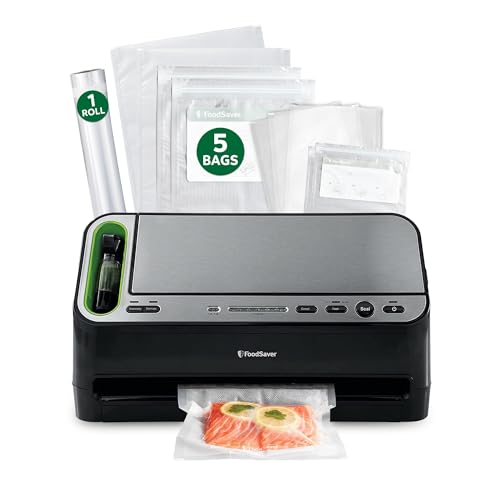
FoodSaver V4400 2-in-1 Vacuum Sealer Machine
Badge: Best Premium
Strengths
- Both rhythms in one machine: countertop welded seals for freezer batches, integrated handheld function for daily bread bags.
- Automatic bag detection keeps batch sessions consistent when attention fades at bag fifteen.
- Starter kit included for both sealing styles.
Trade-offs
- Premium tier — pays only if both functions are used weekly.
- Most complex machine here to learn and keep clean.
- Heat-seal side still requires freeze-first for soft items.
Mini spec box
- Type: 2-in-1 external sealer with integrated handheld function
- Automation: automatic vacuum sealer bag detection
- Included: starter kit
Bakers live the two-rhythm problem more than any other cooks: the daily loaf that wants a gentle reseal, and the seasonal batch that wants welded freezer seals. The V4400 is the one-appliance answer, and for a serious home bakery it is a coherent one. The handheld side handles the bread box economy — open, slice, draw down gently, done — while the countertop side runs the frozen batch work with bag detection keeping each seal honest across a long session. No second gadget, no second charger, no drawer negotiation.
The premium caveat applies with full force: this is the list’s top tier, and a household that bakes monthly rather than weekly will not recover it. The heat-seal side also shares the category’s physics — soft and fresh still means freeze-first — so the V4400 buys convenience and consolidation, not exemption from technique. Buy it as the bakery’s central station when both rhythms are truly weekly, and it will feel less like an appliance purchase and more like fitting out the bake corner properly.
Best for: serious home bakers running daily and batch rhythms / Not suited for: occasional bakers or single-rhythm kitchens
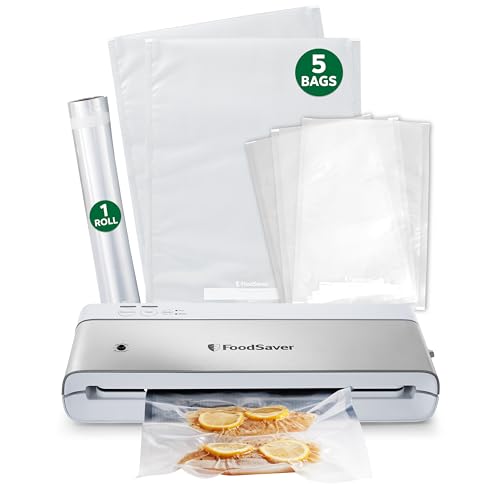
FoodSaver Compact Vacuum Sealer Machine
Badge: Best for Small Kitchens
Strengths
- Compact body for the small kitchens where much home baking actually happens.
- Bags and a roll included — both formats ready for the first bake day.
- A real welded seal for freezer loaves, in the smallest countertop footprint here.
Trade-offs
- Simpler mode set; delicate work leans entirely on freeze-first technique.
- Compact width and pace for the largest batches.
- No hose mentioned in the included items, so container work is not its route.
Mini spec box
- Type: external countertop vacuum sealer, compact format
- Color: white
- Included: airtight bags and roll
- Uses: sous vide and airtight food storage
The Compact is the small-kitchen baker’s honest option: a genuine heat-sealing FoodSaver that fits where baking actually happens — the apartment counter, the galley kitchen — rather than where catalog photography happens. With bags and a roll in the box, the first sourdough surplus or muffin batch can be frozen properly the day it arrives, using exactly the freeze-first method this guide teaches. For the commonest baked-goods jobs — loaves, rolls, sturdy cakes, cookie batches — its seals are the real thing.
Its trade-offs are the compact class’s own. There is no hose in the listed kit, so the container method for frosted showpieces belongs to the VACLER and FM2100; there are fewer modes, so technique carries more weight; and a truly large holiday production will feel its pace. A small household baking weekly will notice none of that. A small household baking for a bake sale might — and should then read this as the starter machine it gracefully is, at a tier that forgives the experiment.
Best for: small kitchens, weekly bakers, first freezer-baking setup / Not suited for: frosted-showpiece container work or marathon batches
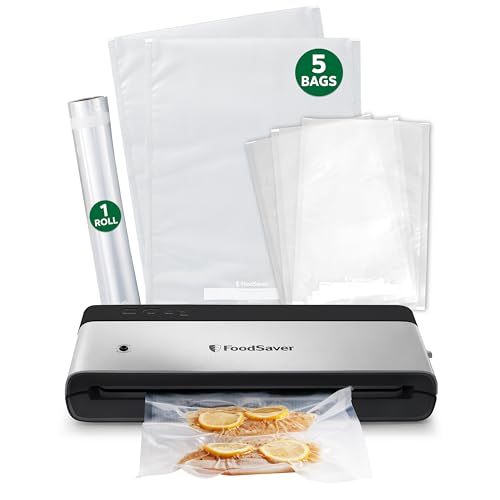
FoodSaver PowerVac Compact Vacuum Sealing Machine VS0150
Badge: Best Vertical Storage
Strengths
- Vertical storage beside the cutting boards — a baker’s counter is precious, and this respects it.
- Designed to reduce bag waste; right-sized bags matter when loaves vary in size daily.
- Dry and wet food coverage handles everything from crusty loaves to filled pastries’ fillings station.
Trade-offs
- Compact session pace and width.
- No delicate-specific mode named; freeze-first is the method.
- Fewer bundled extras named than the FM2100 kit.
Mini spec box
- Type: external countertop vacuum sealer, compact format
- Storage: vertical / upright storage
- Finish: stainless steel and black
- Food types: dry and wet food
Baking consumes counter like no other cooking: flour station, mixer, cooling racks, the loaves themselves. A sealer that stores standing upright, in the sliver of space beside the boards, is a sealer that survives in a baker’s kitchen instead of being exiled after the first crowded weekend. That is the PowerVac’s whole case, and for bakers it is a strong one. Its bag-waste-reducing design also suits the category: loaves and cakes refuse standard sizes, and a workflow built around right-sizing is a workflow with fewer folded mouths and failed seals.
On delicate duty it is a technique machine — dry and wet food coverage for the sturdy range, freeze-first for everything soft — without the hose-based container route of the leaders. Within those terms it is a tidy, brand-backed answer for the weekly baker with a tight counter. If your baking extends to non-food storage in the off-season, the same compact logic appears in Best Vacuum Sealers For Clothes, where upright storage and right-sized bags do the same favors for a wardrobe.
Best for: counter-tight bakers, weekly loaves and sturdy bakes / Not suited for: container-method devotees or the largest batches
Comparison Table
| Pick | Type | Baker-relevant features | Included extras | Link |
|---|---|---|---|---|
| VACLER | External countertop | 6-in-1 smart modes; hose for rigid containers | 20 bags, vacuum hose, cutter | Check on Amazon |
| FoodSaver Mini | Handheld, cordless | Stop-anytime gentle draw; reusable valve bags | Charging dock | Check on Amazon |
| FoodSaver FM2100 | External countertop | Roll storage + cutter for loaf-size bags; dry/moist; hose | Accessory hose, starter bags & roll | Check on Amazon |
| FoodSaver V4400 | 2-in-1 | Countertop + handheld in one; bag detection | Starter kit | Check on Amazon |
| FoodSaver Compact | External countertop, compact | Welded seals in a small footprint | Bags and roll | Check on Amazon |
| FoodSaver PowerVac VS0150 | External countertop, compact | Vertical storage; reduced bag waste; dry & wet | — | Check on Amazon |
How to Choose a Vacuum Sealer for Baked Goods
Sort your baking into three fragility classes. Sturdy (crusty loaves, dense cakes, cookies): any machine here, standard cycle. Soft (sandwich bread, muffins, rolls): gentle handling — handheld stop-anytime draws, softer programs, or freeze-first. Fragile (frosted, glazed, filled, meringue): rigid containers via a hose, or freeze rock-firm before any bag approaches. The machine you need is the one whose features cover your highest class at your real frequency.
Decide your rhythm: daily or batch. Daily bread keeping is a resealing habit and belongs to handhelds and 2-in-1s. Batch freezing is a production habit and belongs to roll-storage countertop machines. Most bakers have a dominant rhythm; buy for it, and let technique cover the minority rhythm.
Value the hose. For bakers, an included vacuum hose is not an accessory footnote — it is the container method, the only zero-pressure storage for showpieces, and it also serves marinades and canisters across the rest of the kitchen. The VACLER and FM2100 include it; weigh that in their favor beyond the bakery.
Think about who bakes and who seals. In many households the baker and the sealer are different people, and the machine should suit the sealer’s patience as much as the baker’s output. If sealing falls to someone who values speed, the one-touch and handheld formats will be used faithfully; if it falls to the baker personally, the mode-rich machines reward the extra knowledge. A mismatch here is how excellent bread ends up in thin grocery bags while a fine sealer watches from the cupboard.
Plan the freezer geometry. Sealed loaves and cake portions freeze flat and stack; round, air-filled bags waste the freezer and crush each other. Slice loaves before sealing portions, freeze muffins on a tray before bagging, and your freezer becomes a shelf system instead of a pile — the unglamorous half of baking preservation.
How to Seal Baked Goods Without Crushing Them
- Cool completely. Warm baked goods steam inside a bag, and steam means soggy crusts and condensation. Room temperature, all the way through, before anything is sealed.
- Freeze-first for anything soft. Place loaves, slices, muffins, or cake portions on a tray in the freezer until firm to the touch. Frozen crumb cannot compress; the vacuum then works only on the bag.
- Choose the gentlest route the item allows. Handheld stop-anytime draw for daily bread; the softest suitable program on a countertop machine; a rigid container via hose for frosted or filled items.
- Leave generous headspace and keep crumbs out of the seal zone. Crumbs are the baker’s seal contaminant — brush the bag mouth clean before every cycle.
- Seal, inspect, and freeze flat. Check the band, then lay packages flat until fully frozen before stacking, so early packages are not crushed by later ones.
- Thaw with the bag cracked open. A slightly opened bag lets condensation escape instead of soaking the crust as the item returns to room temperature.
Troubleshooting. Problem: the loaf still dented → it was not firm enough; extend the pre-freeze, or switch the item to a container. Problem: crust went soggy after thawing → the item was sealed warm or thawed sealed; cool fully and crack the bag for thawing. Problem: seals fail on crumb-heavy items → crumbs crossed the seal; wipe and brush the bag mouth, add headspace, and reseal in a clean section.
Item-by-Item: Bread, Cake, Pastry, and Cookies
Bread. For the freezer, slice first, freeze the slices briefly on a tray, then seal in portioned bags — toast and sandwiches then start from frozen with no whole-loaf thaw. For the counter week, the handheld’s gentle partial vacuum in a reusable bag is the freshness champion. Cake. Unfrosted layers freeze and seal beautifully when firm; frosted cake belongs in a rigid container under hose vacuum, or frozen uncovered until the frosting is hard enough to survive a carefully stopped draw. Pastry. Croissants and laminated doughs are the fragility ceiling: freeze rock-firm, handle minimally, and accept a partial vacuum as the price of intact layers. Cookies. The easy win — sturdy, dry, and batch-friendly; freeze-first is unnecessary for hard cookies, though soft cookies benefit from a tray freeze so they do not fuse or dent. Across all four, the pattern holds: the colder and firmer the item, the stronger the vacuum it can survive — which is why the freezer, not the sealer, is the baker’s real delicate-food feature. The same principle protects the soft snacks in Best Vacuum Sealers For Energyball, where a short freeze turns a crushable bite into a sealable one.
Why Bread Stales — and What a Sealer Can and Cannot Do About It
Bread staling is not drying, exactly; it is starch retrogradation — the starch molecules in the crumb recrystallizing and squeezing out the water they held, which is why a stale loaf feels dry even in a sealed bag and why gentle reheating can briefly reverse it. A vacuum sealer cannot stop retrogradation’s clock, and honesty requires saying so. What sealing does stop is the freezer’s assault: sublimation drying at the surface, oxidation of fats in enriched doughs, and odor absorption from neighboring foods. That is why vacuum-sealed frozen bread thaws back to something close to its fresh self while a loaf in a thin wrap emerges tired and freezer-flavored. In the refrigerator, by contrast, staling accelerates — the fridge is bread’s worst room — so the sealer’s real bread strategy is binary: counter for days, with a gentle handheld draw to slow surface drying and odor pickup, or freezer for weeks, frozen firm and welded shut. Room-temperature sealed storage also guards against mold’s spread by limiting the air exchange that carries spores between items, though it does not sterilize anything, and a moldy slice should retire the whole package, sealed or not.
The practical corollaries are worth the space. Enriched breads — brioche, challah, anything with eggs and butter — freeze and seal better than lean breads because their fats protect texture, and they reward the container method when frosted or glazed. Sourdough’s crust is its glory and its vulnerability: freeze-first keeps the crust from being crushed, and a few minutes in a hot oven after thawing recrispens what the freezer softened. And the heel pieces nobody eats fresh become, sealed and frozen, the household’s breadcrumb and crouton supply — the baker’s version of whole-animal cooking, and a small weekly argument for owning the machine at all.
Planning a Holiday Baking Production Run
The holiday season is when a baker’s sealer earns its year. The production logic runs backwards from the freezer: decide what will be given, served, and kept; bake in an order that moves from sturdy to fragile across the days; and seal each day’s output that evening, when everything has cooled completely. Cookies and dense fruitcakes go first — they seal on standard cycles and forgive scheduling slips. Loaves and rolls follow, sliced and tray-frozen before bagging so the production line never waits on a single loaf’s firmness. Frosted and filled showpieces go last and travel the container route, or wait unsealed in the freezer until their frosting is hard enough for a gentle draw.
Two production habits separate a smooth run from a chaotic one. First, make bags ahead: a stack of cut, one-end-sealed bags in the sizes the day’s bake needs turns sealing into a rhythm instead of a series of interruptions, and on roll-storage machines like the FM2100 it takes minutes. Second, label like a professional — contents, bake date, and intended destination (gift, table, reserve) — because by the third day of production, every sealed loaf looks identical and memory is a liar. The payoff arrives across the following weeks: gifts that taste baked yesterday, a holiday table stocked without a holiday-week baking marathon, and a January freezer containing the good reserves rather than the forgotten ones. That is the return on the machine, the modes, and the discipline, compounded.
Storing the Sealed Bakery: Freezer Geography for Bakers
A baker’s freezer fails by crushing and by chaos, and both are preventable. Sealed baked goods should freeze flat on trays before they are stacked, because a soft-centered package stacked under a frozen chicken will carry the chicken’s opinion of its shape forever. Once frozen, file packages upright like books where the freezer allows — slices and flat portions especially — so the whole inventory can be read at a glance. Keep baked goods in their own zone, away from the sharp, heavy, and strongly flavored: bones puncture bags, and bread absorbs the freezer’s odors through any micro-leak faster than denser foods do. Date everything and run a simple first-in, first-out order, pulling the oldest loaf forward whenever a new one goes in. Finally, thaw with intention — bread at room temperature with the bag cracked, cake in the fridge for slow, even tempering, pastry refreshed briefly in a warm oven — because the last hour of a baked good’s journey deserves the same care as the sealing that protected its previous hundred. Storage, in the end, is not the epilogue to baking; it is the second half of the recipe.
Common Buying Mistakes
- Buying maximum vacuum strength for a bakery. Strength is the problem here, not the solution; control and method win.
- Sealing warm bread. Steam ruins crust and invites sogginess no machine can undo. Cool completely, every time.
- Skipping the freeze-first step to save twenty minutes. Those minutes are the entire difference between a loaf and a brick.
- Ignoring the container route. Frosted and filled showpieces belong in rigid containers; no bag technique fully substitutes.
- Freezing whole loaves for daily use. Slice first — portions thaw fast and the loaf never suffers a thaw-refreeze cycle.
- Letting crumbs cross the seal. The baker’s signature failure, fixed by a brushed-clean bag mouth and honest headspace.
Sourdough, Specifically: A Baker’s Sub-Guide
Sourdough deserves its own paragraph because its bakers are devoted and its structure is distinctive: a thick, crisp crust protecting an open, moist crumb. That crust is armor — a sourdough loaf tolerates a firmer vacuum than a sandwich loaf once frozen — but it is also a hazard, since a hard crust edge can abrade and eventually puncture its own bag in a busy freezer. Freeze the loaf until fully firm, seal it on a standard dry cycle, and if the loaf will live among heavy neighbors, give it the protection of a second bag or a spot in the freezer’s calmest corner. For daily eating, many sourdough bakers skip sealing entirely for the first day — the crust is the storage system — then slice and seal the remainder for the freezer, where the slices toast back to something remarkably close to fresh. The countertop workhorses here, the FM2100 above all, fit that rhythm: a weekly loaf or two, sliced, tray-frozen, and filed. It is the highest-pleasure, lowest-effort routine in this entire guide, and the one most likely to still be running, unchanged, five years from now.
A last calibration for the undecided: if your baking is mostly sturdy and frozen — loaves, rolls, cookie batches — every countertop machine here will serve you, and you should choose on footprint and kit. The delicate specializations in this guide earn their ranking at the fragile end: the frosted, the filled, the laminated, the daily fresh loaf. Know which end of the fragility scale your kitchen lives on, buy for that address, and spend the change on good flour. It is the baker’s version of the oldest advice in this category — the food comes first, and the machine is how the food’s needs get met.
Final Recommendation
For most bakers, buy the VACLER Vacuum Sealer — Check on Amazon. Its mode variety covers the sturdy-to-soft range, and its included hose unlocks the container method that fragile showpieces demand — the most complete baker’s toolkit in this guide. Pair your kitchen differently if your rhythm says so: the FoodSaver Mini for the daily loaf, the FM2100 for freezer batch production. But whichever machine arrives, learn the freeze-first discipline in your first week. In this corner of the category, the cook is the delicate-food feature — the machine is just how the cook’s judgment gets applied.
Frequently Asked Questions
Will vacuum sealing crush fresh bread?
At full vacuum in a bag, yes — soft crumb compresses. Prevent it three ways: use a handheld and stop the draw when the bag is snug, freeze the loaf firm before a countertop cycle, or store the loaf in a rigid container evacuated by hose. With any of the three, bread keeps beautifully without damage.
How long do vacuum-sealed baked goods keep in the freezer?
Far longer than wrapped goods, because the sealed bag blocks the drying and oxidation that produce stale, freezer-burned flavors. The practical limit is texture and the freshness of the bake when sealed. Cool fully, freeze-first, seal promptly, label with the date, and rotate — bread and sturdy cakes reward you for months of good handling.
Should I slice bread before vacuum sealing?
For freezer storage, yes, almost always. Slices freeze flat, seal in neat portions, and thaw or toast in minutes, while a whole frozen loaf forces an all-or-nothing thaw. For a loaf being eaten across the week, keep it whole in a gently drawn reusable bag and slice as you go.
Can I vacuum seal a frosted cake?
Yes — in a rigid container using a machine with a vacuum hose, which removes the container’s air without touching the frosting. The bag alternative is to freeze the cake until the frosting is fully hard, then seal with the gentlest draw you can manage. Never bag a soft-frosted cake at room temperature.
Why did my sealed bread go soggy?
Almost certainly it was sealed warm, trapping steam, or thawed inside a closed bag, where condensation soaks the crust. Cool baked goods completely before sealing, and crack the bag open while thawing so moisture escapes. The machine did its job; the moisture management around it is the fix.
Can I vacuum seal dough or batter for later?
Dough, yes, with care: portion it, chill or freeze it firm, then seal — frozen dough portions thaw and proof predictably, and sealing keeps them from drying or picking up freezer odors. Batter is a liquid and belongs to the freeze-first rule: freeze it solid in a container, then seal the solid block if it needs long storage. Yeast doughs should be sealed after shaping or as a firm chilled portion, not mid-rise in a warm kitchen, where the vacuum and the yeast will argue with each other.
How do I keep muffins from sticking together in the bag?
Freeze them on a tray first, spaced apart, until solid — the same freeze-first step that protects their shape. Once frozen, they can share a bag without fusing, and the bag can be opened and re-frozen between uses if you pull out only what you need and return the rest promptly. A sheet of parchment between layers is a low-tech extra safeguard for sticky, glazed tops.
What is the best way to freeze a whole pie?
Freeze the pie uncovered until it is completely firm — filling set, crust hard — then seal it, or better, keep it in a rigid container evacuated by hose if it is a cream or meringue pie. Fruit pies tolerate a careful bag seal once rock-firm; delicate tops do not. Thaw fruit pies in the fridge and refresh the crust in a warm oven; cream pies thaw in the fridge and never see the oven. The freeze-first hour is what makes the whole thing possible.
Can I reseal a bag of baked goods after opening it?
With a heat-seal bag, only if you left enough length: each reseal consumes a little of the bag’s mouth, which is why experienced bakers cut freezer bags a touch long. With a handheld’s reusable valve bag, resealing is the design’s whole point — open, take a slice, draw the air back down, indefinitely. Choose the format that matches how often the package will be reopened.
Do I need special bags for baked goods?
You need standard vacuum bags in the right sizes — which, for loaves, often means bags cut from a roll to the loaf’s length, a point in favor of roll-storage machines. The one specialty worth having is a set of rigid, vacuum-compatible containers for the frosted and fragile work, used with a hose-equipped machine. Beyond that, crumb discipline — a clean bag mouth — matters more than any specialty film.
Are handheld sealers good for cookies and crackers?
Very good for the pantry rhythm: quick partial draws in reusable bags keep opened packages of cookies and crackers fresher between uses, with no bag spent per opening. For long freezer storage of a big bake batch, a countertop welded seal remains the better tool — which is why the two formats coexist in so many bakers’ kitchens.