Disclosure: topratedkitchenware.com is reader-supported. When you buy through links on our site, we may earn an affiliate commission from Amazon and other retailers, at no extra cost to you.
Where to buy
Shoppers comparing the best wooden chopsticks usually want two things at once: an honest shortlist and a clear view of what each option actually is. The six sets below are the verified options for this guide; because the verified pool for this keyword is stainless steel rather than wood, they are presented prose-only, clearly labeled, with no purchase links.
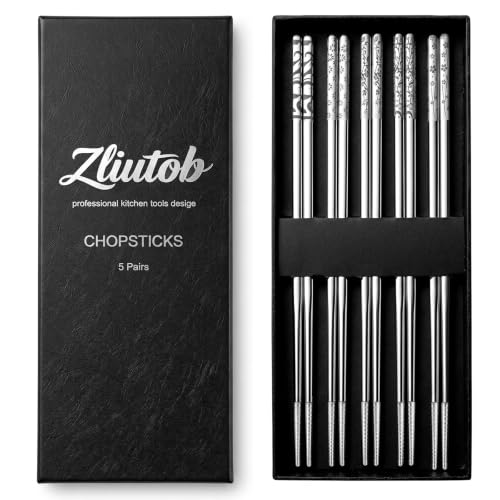
- MUYOS Stainless Steel Chopsticks, 5 Pairs, Silver — Best Lightweight Pick; 5 pairs, stainless steel, hollow-core. Prose-only in this guide (stainless steel, not wood).
- Greatamzor Metal Chopsticks, Multicolor, Laser Engraved Copper Coin Pattern — Best for Color-Coded Families; Multipack (count per listing), stainless steel. Prose-only in this guide (stainless steel, not wood).
- Greatamzor Stainless Steel Chopsticks, Titanium Plated — Best Finish and Style; Multipack (count per listing), stainless steel, titanium plated. Prose-only in this guide (stainless steel, not wood).
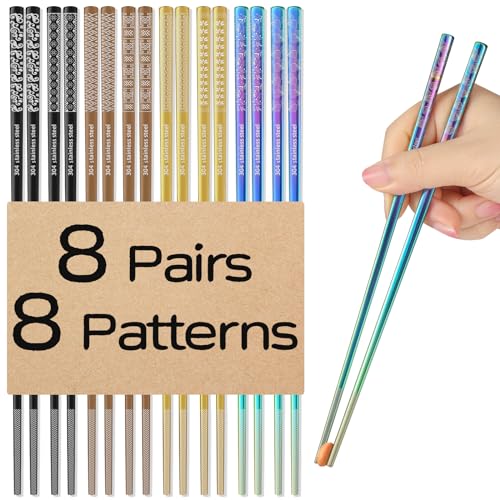
- NEWDRIP 8 Pairs Metal Chopsticks, Multicolor — Best for Big Families; 8 pairs, stainless steel. Prose-only in this guide (stainless steel, not wood).
- Lazycorner 10 Pairs 304 Stainless Steel Chopsticks, Silver — Best Bulk Household Set; 10 pairs, stainless steel (304). Prose-only in this guide (stainless steel, not wood).
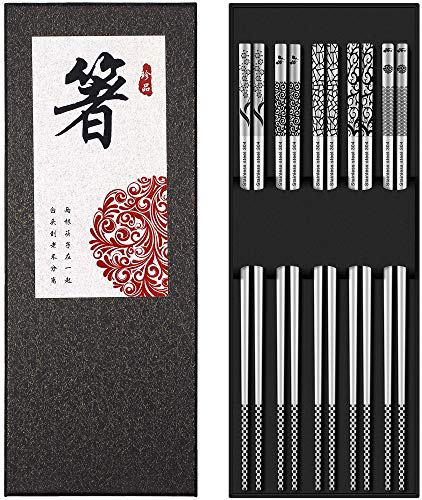
- IQCWOOD 304 Stainless Steel Chopsticks, 5 Pairs, Silver — Best Stated-Spec Value; 5 pairs, stainless steel (304). Prose-only in this guide (stainless steel, not wood).
The guide below treats wooden chopsticks properly: species and finishes first, length and style by cuisine, care that keeps wood smooth for years, and the honest comparison with the metal sets above — which are reviewed in full, prose-only, because they are the verified pool and the alternative most wooden-chopstick buyers cross-shop.
Read the full guide ↓
The best wooden chopsticks share three properties before any question of brand or price: a species matched to the job, a finish matched to your washing routine, and a length matched to your cuisine. Wood is the original chopstick material and still the warmest, lightest and quietest to eat with — but it is also the material that punishes a careless match fastest, which is why this guide is organised around decisions rather than products.
One transparency note: the verified product pool for this guide contains stainless steel chopsticks only, so the six reviewed sets are presented prose-only, without purchase links, as the metal alternative. No wooden set is named as a pick, because none was verified — and inventing one would break the rule this site holds for every guide. The wooden guidance itself, in the sections below, is complete: species, finishes, styles, care and retirement, drawn from established material knowledge.
By the end you will be able to specify a wooden pair the way experienced buyers do — bamboo or birch for the daily rotation, cherry or walnut for keepers, oiled for grip, lacquered for formality, longer for shared dishes, finer for fish — and to decide with open eyes whether your household’s second pair should be wood at all.
Key Takeaways
- Wood’s advantages are feel: lightest in hand, warm, quiet on ceramic, and naturally grippy when unfinished or oiled.
- Species by duty: bamboo and birch for everyday, cherry and maple for balanced keepers, walnut and ebony for premium pairs.
- Finish decides the care contract — oiled pairs are renewable at home; lacquered pairs are formal and moisture-resistant but chip-prone at tips.
- Wood asks for hand-washing, prompt drying and retirement when tips splinter or finishes flake.
- The verified pool for this guide is stainless steel only, so all six reviewed sets are prose-only metal alternatives, not wooden picks.
- Most experienced households run wood at the table and metal for cooking, guests and the dishwasher.
In this guide
Quick Picks
| Pick | Badge | Pairs | Material |
|---|---|---|---|
| MUYOS Stainless Steel Chopsticks, 5 Pairs, Silver | Best Lightweight Pick | 5 pairs | Stainless steel, hollow-core |
| Greatamzor Metal Chopsticks, Multicolor, Laser Engraved Copper Coin Pattern | Best for Color-Coded Families | Multipack (count per listing) | Stainless steel |
| Greatamzor Stainless Steel Chopsticks, Titanium Plated | Best Finish and Style | Multipack (count per listing) | Stainless steel, titanium plated |
| NEWDRIP 8 Pairs Metal Chopsticks, Multicolor | Best for Big Families | 8 pairs | Stainless steel |
| Lazycorner 10 Pairs 304 Stainless Steel Chopsticks, Silver | Best Bulk Household Set | 10 pairs | Stainless steel (304) |
| IQCWOOD 304 Stainless Steel Chopsticks, 5 Pairs, Silver | Best Stated-Spec Value | 5 pairs | Stainless steel (304) |
The Quick Picks table is the verified metal comparison set, prose-only. Your wooden decision is made in the species, finish and style sections below — that is where this guide’s real recommendations live.
How These Picks Were Chosen
Every product in this guide comes from a verified pick pool checked against Amazon’s own catalog data on 2026-11-21. That check produced an honest complication this guide will not hide: the verified pool for this keyword contains stainless steel chopsticks only, and not one verified wooden set. Rather than present metal products as if they were wood, we kept all six verified sets in the guide as clearly labeled prose-only alternatives — full reviews, no purchase links, no product images — and built the buying guidance itself around the wooden chopsticks the keyword actually asks about, described in general terms with no invented products attached.
The comparison method is the same one we use when the pool matches perfectly. We compared the verified sets on the properties a buyer can verify before ordering: steel grade when stated, pairs per set, stated length, tip and grip treatment, and finish. Where a listing title does not state a specification, this guide says so. The wood discussion, meanwhile, sticks to established material knowledge — how bamboo, birch, cherry, maple and other common chopstick woods differ in grain, weight, hardness and care — without attaching those properties to any specific unverified product.
This is research-led guidance, not a hands-on lab test, and it makes no testing claims. If your decision is firmly for wood, treat the prose-only reviews as the comparison set readers most often cross-shop against wood, and use the wood sections to choose species, finish and format with confidence.
Best Wooden Chopsticks: The 6 Verified Metal Alternatives
Each set below is stainless steel, reviewed on stated specifications — grade, count, length, grip, finish — with no purchase links. Use them as the control group for your wood decision: everything wood does differently is visible against these six.
MUYOS Stainless Steel Chopsticks, 5 Pairs, Silver
Badge: Best Lightweight Pick
The MUYOS set is built around weight: the listing describes a hollow-core design, which is why these feel noticeably lighter in the hand than solid metal chopsticks. For eaters who find metal chopsticks fatiguing, or who are transitioning away from wood and bamboo, that lighter balance is the single most helpful property a metal pair can have. The set covers five pairs in a plain silver finish.
Against wood, this hollow-core set is the comfort argument: it concedes that bamboo is lighter than solid steel and closes most of the gap. If your love of wooden pairs is really a love of lightness, this is the one metal set that speaks your language.
Day to day, the MUYOS set’s lightness changes small habits: it is the pair people reach for when eating at a desk, reading, or lingering over a long bowl, because the hand simply forgets it is holding anything. The trade is feedback — some eaters use a pair’s weight to judge pinch pressure, and a hollow pair asks you to judge by sight and feel at the tips instead. After a week of meals most users stop noticing; those who came from bamboo often report they never notice at all, which is the strongest compliment a metal pair can earn.
Strengths
- Hollow-core build keeps the pair light during long meals
- Five pairs covers a small household or a couple with spares
- Plain silver finish matches any table setting
Trade-offs
- Steel grade is not stated in the listing title
- A very light pair gives less of the weighted feedback some experienced users prefer
- No engraved or textured grip feature is stated
| Specification | From listing title |
|---|---|
| Pairs in set | 5 pairs |
| Material | Stainless steel, hollow-core |
| Stated length | Not stated in listing title |
| Finish / grip | Silver, hollow-core build |
| Care | Dishwasher safe per listing title |
Best for: Metal newcomers and anyone who finds solid steel chopsticks heavy / Not suited for: Buyers who want a stated premium steel grade
Greatamzor Metal Chopsticks, Multicolor, Laser Engraved Copper Coin Pattern
Badge: Best for Color-Coded Families
This Greatamzor set leans on two practical ideas: laser engraving and color. The engraved copper coin pattern is not only decorative; engraved texture at the tip and grip zones gives food and fingers something to hold on to, which is where smooth metal chopsticks usually fail. The multicolor finish lets each diner keep the same color at every meal, a small system that households with children tend to adopt quickly.
Wooden pairs identify themselves by species and grain; this engraved multicolor set identifies by color, and adds engraved grip where wood uses natural texture. For households assigning personal pairs, it is the metal system that most closely copies how a wooden drawer already works.
The color system on this Greatamzor set proves itself in the unglamorous moments: the dishwasher cycle, the lunch-bag unpack, the guest who asks which pair is clean. A color per person turns all three into non-events. The engraved pattern also changes the washing routine slightly for the better — a quick rinse straight after the meal keeps the grooves clear, and households that adopt the rinse habit find every engraved set in the drawer easier to live with, not just this one.
Strengths
- Laser engraved pattern adds real grip texture, not just decoration
- Multicolor finish lets each person claim a personal pair
- Square-style profile resists rolling off the table
Trade-offs
- Steel grade is not stated in the listing title
- Bright colors will not suit formal or minimalist tables
- Engraving grooves need a rinse soon after saucy meals
| Specification | From listing title |
|---|---|
| Pairs in set | Multipack (count per listing) |
| Material | Stainless steel |
| Stated length | Not stated in listing title |
| Finish / grip | Multicolor, laser engraved copper coin pattern, square profile |
| Care | Dishwasher safe per listing title |
Best for: Families who want color-coded personal pairs and extra tip grip / Not suited for: Formal dining rooms that call for plain, matching utensils
Greatamzor Stainless Steel Chopsticks, Titanium Plated
Badge: Best Finish and Style
The titanium-plated Greatamzor set is the finish specialist of the pool. Titanium plating is the layer that carries the color on metal chopsticks like these, and the listing pairs it with laser engraving in a Japanese and Korean style format. Buyers choosing this set are usually choosing appearance first, so the honest framing is simple: you get a colored, engraved metal pair whose plating, like all plated finishes, should be treated as a surface that can wear at contact points over time.
Lacquered wood and plated metal share a truth: a beautiful surface with a lifespan. This titanium-plated set is reviewed beside the wooden options so that comparison is explicit — choose a coated finish in either material with your eyes open, or choose bare wood and bare steel.
A plated set asks for one habit in exchange for its looks: separation. Stored loose against other metal, any plated finish wears at the contact points first, and the tips — which meet plates, bowls and other pairs — show age before the handles do. A simple holder or divided insert keeps the color even across the set. Buyers who enjoy objects that develop a personal patina will find this charming; buyers who want day-one looks forever should choose bare steel and skip plating in every material, wood lacquer included.
Strengths
- Titanium-plated finish gives color options plain steel cannot
- Laser engraving adds grip texture at the working end
- Japanese and Korean style proportions suit sushi and noodle dishes
Trade-offs
- Plated finishes can wear at the tips with years of hard use
- Steel grade beneath the plating is not stated in the listing title
- Colored metal is a style commitment some tables will not want
| Specification | From listing title |
|---|---|
| Pairs in set | Multipack (count per listing) |
| Material | Stainless steel, titanium plated |
| Stated length | Not stated in listing title |
| Finish / grip | Titanium-plated color finish, laser engraved |
| Care | Dishwasher safe per listing title |
Best for: Buyers who want colored metal chopsticks with engraved grip / Not suited for: Purists who want bare, uncoated steel only
NEWDRIP 8 Pairs Metal Chopsticks, Multicolor
Badge: Best for Big Families
With eight pairs in the box, the multicolor NEWDRIP set is aimed at households rather than couples. The laser engraved, non-slip design follows the same logic as the other engraved sets in this pool — texture where the food is, texture where the fingers are — while the color spread turns the set into a personal-pair system for up to eight diners, or fewer diners with genuine spares when guests arrive.
Wooden household sets in this count are uncommon; eight pairs of stated-grade steel is the family-scale offer wood rarely makes. For the household that loves wood but feeds eight, this set is the practical half of the two-material drawer.
Eight multicolor pairs change a household’s arithmetic: there is always a clean pair, always a spare for a guest, and always one that can live permanently in a lunch bag without the table missing it. The hidden benefit is rotation — with eight pairs in service, each individual pair is washed and used an eighth as often as a single pair would be, which spreads wear so evenly that the set as a whole ages in slow motion. Large sets are not indulgence; they are a wear-management strategy.
Strengths
- Eight pairs is enough for family meals plus guests
- Laser engraved non-slip tips help with slippery foods
- Multicolor finish supports a one-color-per-person system
Trade-offs
- Steel grade is not stated in the listing title
- Eight near-identical pairs need a storage plan in a small drawer
- Colors may not match an existing plain table setting
| Specification | From listing title |
|---|---|
| Pairs in set | 8 pairs |
| Material | Stainless steel |
| Stated length | Not stated in listing title |
| Finish / grip | Multicolor, laser engraved, non-slip |
| Care | Dishwasher safe per listing title |
Best for: Families and regular hosts who need many pairs at once / Not suited for: Singles or couples who only need two pairs
Lazycorner 10 Pairs 304 Stainless Steel Chopsticks, Silver
Badge: Best Bulk Household Set
Ten pairs is the largest count in this pool, and the Lazycorner set pairs that count with a stated 304 stainless steel grade, a non-slip design and a lightweight build described as food grade and dishwasher safe. This is the set aimed at the drawer that serves a big family, a share house, or anyone who hosts noodle nights often enough that running out of clean pairs is a real problem.
Ten pairs is where wood stops competing entirely — nobody hand-washes ten wooden pairs after a party without reconsidering. The Lazycorner set is the hosting answer, and its plain, stated-spec honesty is a useful contrast to the romance of the wooden options.
Ten pairs sounds like a hosting specification until a household lives with it: the set absorbs sleepovers, noodle nights, sick days when dishes pile up, and the pair that vanishes into a sofa. What it asks in return is drawer honesty — a ten-pair set needs a real home, ideally a holder or tray, or it becomes ten loose pairs in a cutlery drawer. Households that give it the tray tend to describe it as the best-value purchase in the kitchen; households that do not, describe clutter. The set is the same either way.
Strengths
- Ten pairs is the biggest household count in this pool
- Stated 304 grade is the familiar food-grade workhorse steel
- Lightweight, non-slip design suits mixed-ability tables
Trade-offs
- Plain silver finish offers no color coding between diners
- Ten pairs needs drawer space a small kitchen may not spare
- No engraved pattern is stated for extra tip texture
| Specification | From listing title |
|---|---|
| Pairs in set | 10 pairs |
| Material | Stainless steel (304) |
| Stated length | Not stated in listing title |
| Finish / grip | Silver, non-slip, lightweight |
| Care | Dishwasher safe per listing title |
Best for: Big households, share houses and frequent hosts / Not suited for: Buyers who want a small, premium two-pair set
IQCWOOD 304 Stainless Steel Chopsticks, 5 Pairs, Silver
Badge: Best Stated-Spec Value
Despite the brand name, the IQCWOOD set in this pool is a metal set: 304 stainless steel, five pairs, a 9.25 inch length and non-slip tips in a Korean and Japanese style format, described as lightweight and dishwasher safe. It is the plain, specification-complete option — grade, count, length and tip treatment are all stated in the listing title, which makes it the easiest set here to compare honestly against the rest of the pool.
The IQCWOOD set’s stated length, grade and count make it the cleanest specification comparison in the pool — and a reminder to demand the same clarity from wooden listings, where species and finish should be stated just as plainly before you buy.
The IQCWOOD set’s virtue in daily life is that it is exactly what its listing says, meal after meal: the stated length, the stated grade, the stated count, behaving as specified. That predictability makes it the pair households hand to guests without explanation and the pair that travels to rentals and offices. Its plainness is also its honesty test for buyers — if a fully specified, unglamorous set like this one satisfies the brief, the brief was practical all along, and money saved here is better spent on the occasion pair.
Strengths
- Grade, count and length are all stated in the listing title
- Non-slip tips help with smooth and saucy foods
- Lightweight build suits smaller hands and long meals
Trade-offs
- Plain silver finish has no color coding or decoration
- Brand name can confuse buyers expecting a wooden product
- Five pairs is a household set, not a hosting set
| Specification | From listing title |
|---|---|
| Pairs in set | 5 pairs |
| Material | Stainless steel (304) |
| Stated length | 9.25 inches (per listing title) |
| Finish / grip | Silver, non-slip tips, lightweight |
| Care | Dishwasher safe per listing title |
Best for: Buyers who want stated specs and a plain everyday pair / Not suited for: Anyone shopping for actual wooden chopsticks by brand name
Comparison Table
| Pick | Pairs | Steel grade | Stated length | Finish / grip |
|---|---|---|---|---|
| MUYOS Stainless Steel Chopsticks, 5 Pairs, Silver — prose-only | 5 pairs | Stainless steel (grade not stated in listing title) | Not stated in listing title | Silver, hollow-core build |
| Greatamzor Metal Chopsticks, Multicolor, Laser Engraved Copper Coin Pattern — prose-only | Multipack (count per listing) | Stainless steel (grade not stated in listing title) | Not stated in listing title | Multicolor, laser engraved copper coin pattern, square profile |
| Greatamzor Stainless Steel Chopsticks, Titanium Plated — prose-only | Multipack (count per listing) | Stainless steel, titanium plated | Not stated in listing title | Titanium-plated color finish, laser engraved |
| NEWDRIP 8 Pairs Metal Chopsticks, Multicolor — prose-only | 8 pairs | Stainless steel (grade not stated in listing title) | Not stated in listing title | Multicolor, laser engraved, non-slip |
| Lazycorner 10 Pairs 304 Stainless Steel Chopsticks, Silver — prose-only | 10 pairs | 304 stainless steel | Not stated in listing title | Silver, non-slip, lightweight |
| IQCWOOD 304 Stainless Steel Chopsticks, 5 Pairs, Silver — prose-only | 5 pairs | 304 stainless steel | 9.25 inches (per listing title) | Silver, non-slip tips, lightweight |
Read the table by columns: pairs tells you the household size the set serves, grade tells you what the listing commits to, and finish tells you how the pair behaves in the hand. Where a cell says a specification is not stated, that absence is itself information — prefer the set whose stated facts match your priorities.
How to Choose Wooden Chopsticks
Pick the species for the duty. Daily rotation: bamboo or birch — light, smooth, splinter-resistant, painless to replace. Keeper pairs: cherry or maple for warmth and balance, walnut or ebony for weight and ceremony. Cooking pairs: dense hardwood or bamboo, never lacquered. The full species reference sits at Best Wooden Japanese Chopsticks.
Pick the finish for your routine. Bare and oiled wood grips best and can be re-oiled at home indefinitely; it must be hand-washed and dried promptly. Lacquered wood resists moisture and looks formal; it chips at tips, dislikes heat and dishwashers, and cannot be home-repaired. Your washing routine, honestly assessed, chooses the finish — not the photograph.
Pick length and tip for your cuisine. Longer and blunter for Chinese dishes, shared plates and hot pots; shorter and finer for Japanese dishes and fish; medium for Korean dishes and mixed menus. A wooden pair in the wrong proportions will feel wrong at every meal no matter how good the wood is.
Inspect before you commit. Tips should be smooth, pairs should match in length and weight, and the finish should be even with no bare patches or drips. Wood is a natural material; a well-made pair is consistent, and inconsistency at purchase predicts inconsistency in service. Shoppers cross-checking the premium end of the wider cluster will find it organised at Best Titanium Chopsticks.
Budget for the system, not the pair. A household set, a cooking pair and a retirement rhythm cost more than one heroic pair and work far better. Wood rewards systems thinking because its pairs are consumables on a long, graceful cycle.
How to Care for Wooden Chopsticks
Wash by hand, soon after the meal. Mild soap, soft sponge, no soaking. Water is wood’s working environment only in short exposures; long immersion swells grain, lifts finish and starts cracks.
Dry tips-up in moving air. Towel off, then stand the pairs in a ventilated holder. The tips absorb the most water and should dry fastest; flat storage in a closed drawer is how warping and mildew begin.
Re-oil bare and oiled pairs. When the surface looks dry or feels rough, a thin coat of food-safe mineral oil restores it. Lacquered pairs get inspection instead: chips at the tip are the retirement clock starting.
Keep wood out of high heat. Do not leave wooden pairs resting on a hot pan rim or use lacquered pairs in cooking oil. Table wood serves at table temperatures.
Troubleshooting. Problem: fuzzy tips → raised grain from water; dry fully, and on unfinished pairs sand very lightly and re-oil. Problem: warping → uneven drying; store standing and dry, and retire a badly warped pair. Problem: stains at tips → pigment absorption from strong foods; keep a dedicated pair for turmeric and beetroot dishes. Problem: finish flaking → the pair’s service is ending; retire it before flakes reach food. The single-use end of the wooden world follows different rules entirely, covered at Best Wooden Disposable Chopsticks.
Styles of Wooden Chopsticks: Chinese, Japanese, Korean and Cooking
Wooden chopsticks follow the same national styles as every material. Chinese wooden pairs are the longest and bluntest, traditionally bamboo or hardwood, built for shared dishes and for cooking, where wooden pairs are still the default tool over heat. Japanese wooden pairs are the shortest and finest-tipped, often lacquered, built for individual servings and fish — the style where wood craftsmanship reaches its highest finish. Korean pairs are medium and flatter, though Korea’s everyday tradition leans metal, which is why wooden Korean-style pairs are the least common of the three. Layered over the national styles are cooking pairs — the longest wooden format of all — and children’s pairs, shortened with grip-friendly shaping.
Buying by style first and species second is the order experienced buyers use, because style decides every meal’s mechanics while species decides the years. A cherry pair in Japanese proportions and a cherry pair in Chinese proportions are different tools that happen to share a tree.
Wood Versus the Rest: An Honest Material Comparison
Wood’s case is feel and kindness: kind to teeth, to glazes, to the cook’s hand over heat, and quiet in a way that changes the sound of a meal. Bamboo adds a sustainability story no other material matches. The case against wood is maintenance and mortality: it asks for hand-washing, drying discipline and eventual replacement, and it cannot be sanitised as aggressively as steel.
Metal’s case is permanence and hygiene machinery; plastic and melamine’s case is price and dishwasher indifference, at the cost of feel and heat tolerance; fiberglass sits between, durable and light but characterless. The households in the discussion threads at Best Tips For Using Chopsticks tend to land where this guide lands: wood where feel matters, steel where punishment happens, and no apology for owning both.
Wooden Chopsticks for Children and Beginners
Wood is the traditional teaching material for good reasons: it is light, it grips, and an unfinished surface forgives the imperfect pinch that makes smooth metal so discouraging. For children, wooden pairs are shortened and often shaped with a squarer section — the same geometry lesson the metal learner sets in this guide apply — and bamboo or birch are the usual species because replacement is painless when (not if) pairs are lost. For adult beginners, a standard-length wooden pair in a fine-grained hardwood offers the kindest learning curve of any material.
The teaching plan matters as much as the pair: start with large, grippy foods, eat one real meal a day with the wooden pair, and let confidence compound. Households often keep the wooden pair as the permanent personal pair after learning — the material that taught the skill tends to keep the loyalty it earned.
Buying Wooden Chopsticks Online Without Handling Them
Wood is the hardest chopstick material to buy from a photograph, because the properties that matter — tip smoothness, grain straightness, finish evenness, matched weight between the pair — are exactly the ones a photograph hides. Compensate with specification discipline: the listing should name the species, the finish and the length, and a seller who names all three is already in the honest tier. Vague listings for unnamed ‘natural wood’ pairs are where the complaint threads in this category begin.
On arrival, run the inspection this guide describes before the first meal: tips smooth to a fingertip, pair matched in length and weight, finish even with no bare patches. A pair that fails inspection fails cheaply at the door; the same pair discovered across a month of meals fails expensively. Wood rewards buyers who inspect like makers.
A Wooden Pair at Every Price of Effort
Wooden chopsticks ask to be chosen by effort tier rather than by money, because the material’s costs are mostly care. The zero-effort tier is bamboo in rotation: buy several pairs, hand-wash without ceremony, replace without grief — the tier of busy households and student kitchens, and an entirely honorable one. The low-effort tier is birch or maple with an oiled finish: the same routine plus an oiling when the pair looks dry, in exchange for years of service. The committed tier is the dark hardwoods and lacquer: full care discipline, inspection, and storage with intention, in exchange for the finest objects in the category.
Notice that satisfaction in the discussions lives at every tier — and misery lives at every tier too, always where the buyer’s routine belonged to a different tier than the pair. The guide’s whole advice compresses to this: know your tier before you know your species.
One more consideration that experienced buyers raise: consistency across a set matters more than any single specification. Pairs that match in length, weight and tip behavior disappear into the meal, while a mismatched set keeps reminding you it exists. Whatever material and format you choose from this guide, judge the set as a set — pick up two pairs, compare them side by side, and trust the comparison your hands report.
Storage deserves a sentence of its own. Chopsticks live best dry, separated and reachable — a simple holder by the table or a divided drawer insert in the kitchen. Pairs stored loose in a crowded cutlery drawer collect the small knocks that dull tips and wear finishes, whatever they are made of, and pairs stored damp collect worse. The thirty seconds of storage discipline after washing is the cheapest longevity available in this entire category.
Finally, buy for the eater you are becoming, not only the one you are. Households that eat with chopsticks tend to eat with them more over time, not less, as the skill stops being a skill and becomes simply how dinner works. A set chosen with a little headroom — an extra pair, a slightly better grip, a format that covers the next cuisine you plan to cook — tends to be the purchase that still looks wise several years later.
It is also worth deciding, before the first order, what happens when a pair is lost or damaged — because with chopsticks, unlike most cutlery, the pair is the unit and half a pair is nothing. Multi-pair sets absorb the loss silently; single premium pairs turn it into an event. Households that know their own chaos level choose accordingly, and the honest ones tend to keep one humble spare set in reserve regardless of what their best pairs are.
A last word on mixing materials at one table: it is completely normal, and restaurants do it without thinking. A wooden pair at one setting and a metal pair at another bother nobody, because the meal is the event, not the utensil audit. Choose each person’s pair for that person’s hands and habits, and let the table be as mixed as the family is.
Consider also the second-order benefit of choosing well once: a household that settles its chopstick system stops re-deciding it. The drawer simply works — pairs for the family, a pair for cooking, a pair for the learner, spares for guests — and the small nightly frictions of missing, mismatched or slippery pairs disappear from the meal entirely. Most kitchen purchases promise flavour or speed; this one promises the absence of annoyance, which over a thousand meals is worth more.
When you compare any two options in this guide and find them close, let the tie be broken by the meal you cook most, not the meal you admire most. Aspirational buying fills drawers with specialists for cuisines that happen twice a year, while the everyday pair — the one matched to the real Tuesday — quietly determines whether the whole system feels right. Every recommendation in this guide was made in that spirit, and it is the spirit in which the final choice should be made too.
And if the decision still feels larger than the object, remember what a pair of chopsticks actually is: two sticks, refined by centuries into one of the most efficient eating tools ever made, and cheap enough in every material that a household can afford to be honest about its habits. The guides, threads and reviews exist to make the choice considered — but the considered choice, once made, should be lived with lightly and eaten with daily.
There is a small ritual worth adopting with any new set: eat the first meal slowly, on purpose, with food you know well. Familiar food exposes a pair honestly — how it grips, how it balances, where it wants to rest — without the noise of a new recipe competing for attention. By the end of that meal you will know whether the set is right, and you will know it in your hand rather than in your opinion, which is where chopstick knowledge actually lives.
Replacement, when it eventually comes, should be boring: the same decision, repeated. Households churn through chopstick purchases when the first decision was made on a photograph or a whim; households that chose by count, geometry, length and routine tend to re-order the same profile for years. That boredom is the signature of a system that fits, and it is available in every material this guide covers — the second purchase is simply easier than the first.
One more honest note on value: in this category, money buys specification and finish, not magic. A stated higher grade, a better-matched pair, a grip that suits your hand — these are real and worth paying for once. Beyond them, the meal does not improve. Spend where the specification changes the eating, save where it only changes the photograph, and the set you end with will be the set this guide was trying to describe all along.
Common Buying Mistakes
Buying on appearance alone. Engraving, color and gift boxes are easy to judge from a photo; grip geometry, length and tip texture are what decide whether a pair gets used daily or abandoned in a drawer. Decide the practical properties first and let appearance break ties.
Ignoring length. A pair that is too long feels clumsy with small bowls and too short feels cramped with shared dishes and hot pots. Match the stated length to the cuisine you eat most, not to the cuisine you cook twice a year.
Assuming all metal chopsticks are the same. Stated grades differ, hollow and solid builds feel different, and square and round profiles behave differently in the hand. The listing title usually tells you which you are getting; read it before ordering.
Buying one pair when the household needs a system. Chopsticks get lost, left in lunch bags and held back in the wash. Households that eat with chopsticks daily are almost always happier with a multi-pair set and spares than with a single premium pair.
Skipping the care routine. Any reusable pair lasts longer when it is rinsed promptly, dried fully and stored dry. Neglect shortens the life of wood fastest, but engraved and plated metal also reward basic care.
Final Recommendation
Choose wooden chopsticks by specifying three things in order: the style your cuisine needs, the species your duty calls for — bamboo or birch daily, cherry or maple as keepers, walnut or ebony for ceremony — and the finish your washing routine can honour. Inspect the tips, buy the household as a system, and care for the pairs the way the how-to section describes. Specified that way, wooden chopsticks are not a compromise purchase; they are the best-feeling utensils in the kitchen.
Keep the verified metal sets above in mind as the complementary half: cooking, guests and dishwasher duty are jobs wood does reluctantly and steel does forever, and the two-material drawer is the ending most wooden-chopstick households happily reach.
Frequently Asked Questions
What are the best wooden chopsticks for daily use?
Bamboo and birch pairs in your cuisine’s style: light, smooth, splinter-resistant and inexpensive to rotate. For a warmer keeper pair, cherry and maple are the balanced step up, with oiled finishes for the best grip and easiest home maintenance.
How do I stop wooden chopsticks from cracking or warping?
Hand-wash without soaking, dry them standing with tips up in moving air, and re-oil bare or oiled pairs when they look dry. Dishwashers and soaking are the two causes behind most cracking and warping.
Are wooden chopsticks sanitary?
Yes, with condition-based retirement: a smooth, intact, properly dried wooden pair is a hygienic utensil. Retire pairs when tips splinter, finishes flake or cracks appear, because damage is what harbors residue.
Lacquered or oiled finish — which is better?
Oiled for grip, repairability and everyday use; lacquered for formality and moisture resistance at set tables. Lacquer chips at tips and dislikes heat and dishwashers, and unlike oil it cannot be refreshed at home.
How long should wooden chopsticks last?
Years for a hand-washed hardwood keeper; a shorter, honest cycle for everyday bamboo in daily service. Lifespan is set by species, finish and care together — and retirement is by condition, not calendar.
Why does this guide review metal chopsticks?
The verified pool for this keyword contains stainless steel sets only, so they are presented prose-only, without links, as the metal alternative — while the guide’s substance is the complete wooden selection guidance above.