Disclosure: topratedkitchenware.com is reader-supported. When you buy through links on our site, we may earn an affiliate commission from Amazon and other retailers, at no extra cost to you.
Where to buy
Shoppers comparing the best wooden japanese chopsticks usually want two things at once: an honest shortlist and a clear view of what each option actually is. The six sets below are the verified options for this guide; because the verified pool for this keyword is stainless steel rather than wood, they are presented prose-only, clearly labeled, with no purchase links.
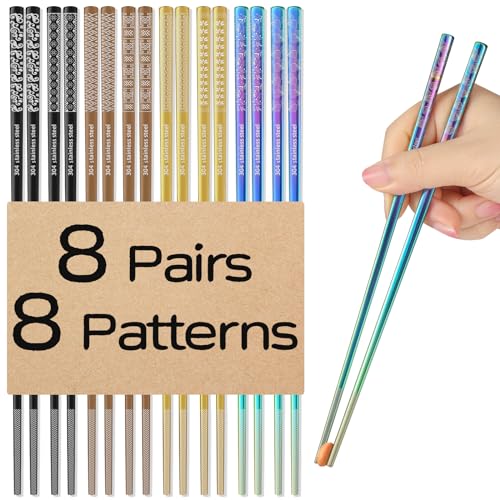
- NEWDRIP 8 Pairs Metal Chopsticks, Multicolor — Best for Big Families; 8 pairs, stainless steel. Prose-only in this guide (stainless steel, not wood).
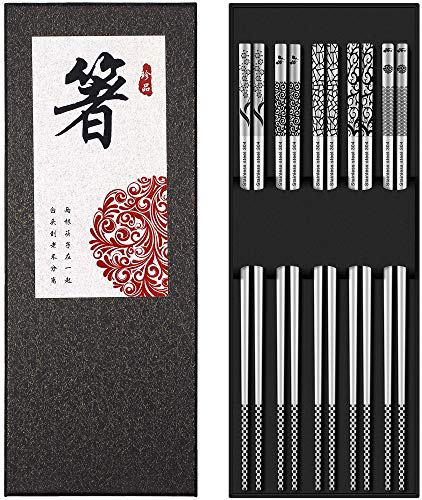
- IQCWOOD 304 Stainless Steel Chopsticks, 5 Pairs, Silver — Best Stated-Spec Value; 5 pairs, stainless steel (304). Prose-only in this guide (stainless steel, not wood).
- Zliutob Metal Chopsticks, Stainless Steel, Non-Slip, 5 Pairs — Best Grip for Beginners; 5 pairs, stainless steel. Prose-only in this guide (stainless steel, not wood).
- LIXTONGR Dragon & Phoenix Black Stainless Steel Chopsticks, 2 Pairs — Best Premium Pick; 2 pairs, stainless steel (18/10). Prose-only in this guide (stainless steel, not wood).
- MUYOS Stainless Steel Chopsticks, 5 Pairs, Silver — Best Lightweight Pick; 5 pairs, stainless steel, hollow-core. Prose-only in this guide (stainless steel, not wood).
- Greatamzor Metal Chopsticks, Multicolor, Laser Engraved Copper Coin Pattern — Best for Color-Coded Families; Multipack (count per listing), stainless steel. Prose-only in this guide (stainless steel, not wood).
The guide below is about the wooden Japanese form itself: why the pairs are shorter and finer, how lacquer and bare-wood finishes differ, what regional craft traditions mean for a buyer, and how to choose and care for a pair — with the six verified sets above reviewed afterwards, prose-only, as the Japanese-style metal alternatives.
Read the full guide ↓
The best wooden japanese chopsticks are recognisable before they touch food: shorter than their Chinese counterparts, tapered to a genuinely fine point, and finished — lacquered or bare — with a care that treats a small object as a craft piece. The form follows the cuisine. Japanese meals are served as individual portions with a great deal of fish, and the pair evolved to work at close range, separating flesh from bone and placing small items with precision rather than reaching across a shared table.
One transparency note: the verified product pool for this guide contains stainless steel chopsticks only. Several are Japanese-style metal pairs, but the keyword asks for wood, so all six are presented prose-only, without purchase links, as the metal alternative — never mislabeled as wooden picks. The wooden guidance below is complete on its own terms: proportions, tips, species, finishes, regional traditions, care and etiquette.
If you are choosing a wooden Japanese pair, the decisions in order are length, tip, finish and species. This guide takes them in that order, and closes with the honest comparison against the metal Japanese-style sets for readers whose routine — dishwashers, travel, guests — argues for steel in Japanese proportions.
Key Takeaways
- Japanese wooden pairs are the shortest national style, with the finest tips — built for individual servings and precise work with fish.
- The fine point is functional, not decorative: it separates flesh from bone and grips small, delicate items cleanly.
- Finishes split the category: lacquered pairs (including traditional urushi work) for formality, bare or oiled wood for grip and home repairability.
- Cherry, bamboo and fine hardwoods dominate quality Japanese pairs; regional lacquer traditions add the premium tier.
- The verified pool here is stainless steel only, so all six reviewed sets are prose-only Japanese-style metal alternatives, not wooden picks.
- Care is hand-washing, prompt drying and tip inspection — lacquer chips and splinters are the retirement signals.
In this guide
Quick Picks
| Pick | Badge | Pairs | Material |
|---|---|---|---|
| NEWDRIP 8 Pairs Metal Chopsticks, Multicolor | Best for Big Families | 8 pairs | Stainless steel |
| IQCWOOD 304 Stainless Steel Chopsticks, 5 Pairs, Silver | Best Stated-Spec Value | 5 pairs | Stainless steel (304) |
| Zliutob Metal Chopsticks, Stainless Steel, Non-Slip, 5 Pairs | Best Grip for Beginners | 5 pairs | Stainless steel |
| LIXTONGR Dragon & Phoenix Black Stainless Steel Chopsticks, 2 Pairs | Best Premium Pick | 2 pairs | Stainless steel (18/10) |
| MUYOS Stainless Steel Chopsticks, 5 Pairs, Silver | Best Lightweight Pick | 5 pairs | Stainless steel, hollow-core |
| Greatamzor Metal Chopsticks, Multicolor, Laser Engraved Copper Coin Pattern | Best for Color-Coded Families | Multipack (count per listing) | Stainless steel |
The Quick Picks table shows the verified metal sets in Japanese and Korean style formats — the prose-only alternative. Your wooden decision is made in the proportion, finish and species sections below.
How These Picks Were Chosen
Every product in this guide comes from a verified pick pool checked against Amazon’s own catalog data on 2026-11-21. That check produced an honest complication this guide will not hide: the verified pool for this keyword contains stainless steel chopsticks only, and not one verified wooden set. Rather than present metal products as if they were wood, we kept all six verified sets in the guide as clearly labeled prose-only alternatives — full reviews, no purchase links, no product images — and built the buying guidance itself around the wooden chopsticks the keyword actually asks about, described in general terms with no invented products attached.
The comparison method is the same one we use when the pool matches perfectly. We compared the verified sets on the properties a buyer can verify before ordering: steel grade when stated, pairs per set, stated length, tip and grip treatment, and finish. Where a listing title does not state a specification, this guide says so. The wood discussion, meanwhile, sticks to established material knowledge — how bamboo, birch, cherry, maple and other common chopstick woods differ in grain, weight, hardness and care — without attaching those properties to any specific unverified product.
This is research-led guidance, not a hands-on lab test, and it makes no testing claims. If your decision is firmly for wood, treat the prose-only reviews as the comparison set readers most often cross-shop against wood, and use the wood sections to choose species, finish and format with confidence.
The 6 Verified Japanese-Style Metal Alternatives
Each set below is stainless steel; several listings describe Japanese and Korean style formats, which is why they are the honest comparison set for this keyword. They are reviewed on stated specifications, without purchase links, and are never presented as wooden products.
NEWDRIP 8 Pairs Metal Chopsticks, Multicolor
Badge: Best for Big Families
With eight pairs in the box, the multicolor NEWDRIP set is aimed at households rather than couples. The laser engraved, non-slip design follows the same logic as the other engraved sets in this pool — texture where the food is, texture where the fingers are — while the color spread turns the set into a personal-pair system for up to eight diners, or fewer diners with genuine spares when guests arrive.
This eight-pair multicolor NEWDRIP set is the family-scale metal offer in a Japanese-Korean style format. Wooden Japanese pairs are usually bought as individual place settings; this set’s proposition is the opposite — a uniform system — and the contrast clarifies what the wooden purchase is really about: the individual pair, chosen per person.
Eight multicolor pairs change a household’s arithmetic: there is always a clean pair, always a spare for a guest, and always one that can live permanently in a lunch bag without the table missing it. The hidden benefit is rotation — with eight pairs in service, each individual pair is washed and used an eighth as often as a single pair would be, which spreads wear so evenly that the set as a whole ages in slow motion. Large sets are not indulgence; they are a wear-management strategy.
Strengths
- Eight pairs is enough for family meals plus guests
- Laser engraved non-slip tips help with slippery foods
- Multicolor finish supports a one-color-per-person system
Trade-offs
- Steel grade is not stated in the listing title
- Eight near-identical pairs need a storage plan in a small drawer
- Colors may not match an existing plain table setting
| Specification | From listing title |
|---|---|
| Pairs in set | 8 pairs |
| Material | Stainless steel |
| Stated length | Not stated in listing title |
| Finish / grip | Multicolor, laser engraved, non-slip |
| Care | Dishwasher safe per listing title |
Best for: Families and regular hosts who need many pairs at once / Not suited for: Singles or couples who only need two pairs
IQCWOOD 304 Stainless Steel Chopsticks, 5 Pairs, Silver
Badge: Best Stated-Spec Value
Despite the brand name, the IQCWOOD set in this pool is a metal set: 304 stainless steel, five pairs, a 9.25 inch length and non-slip tips in a Korean and Japanese style format, described as lightweight and dishwasher safe. It is the plain, specification-complete option — grade, count, length and tip treatment are all stated in the listing title, which makes it the easiest set here to compare honestly against the rest of the pool.
The IQCWOOD set states the most useful reference numbers in this pool for a Japanese-style buyer: 304 steel, five pairs, a 9.25 inch length in Korean-Japanese format. A wooden buyer should note that traditional Japanese pairs run shorter than this — proportion, again, is the first decision.
The IQCWOOD set’s virtue in daily life is that it is exactly what its listing says, meal after meal: the stated length, the stated grade, the stated count, behaving as specified. That predictability makes it the pair households hand to guests without explanation and the pair that travels to rentals and offices. Its plainness is also its honesty test for buyers — if a fully specified, unglamorous set like this one satisfies the brief, the brief was practical all along, and money saved here is better spent on the occasion pair.
Strengths
- Grade, count and length are all stated in the listing title
- Non-slip tips help with smooth and saucy foods
- Lightweight build suits smaller hands and long meals
Trade-offs
- Plain silver finish has no color coding or decoration
- Brand name can confuse buyers expecting a wooden product
- Five pairs is a household set, not a hosting set
| Specification | From listing title |
|---|---|
| Pairs in set | 5 pairs |
| Material | Stainless steel (304) |
| Stated length | 9.25 inches (per listing title) |
| Finish / grip | Silver, non-slip tips, lightweight |
| Care | Dishwasher safe per listing title |
Best for: Buyers who want stated specs and a plain everyday pair / Not suited for: Anyone shopping for actual wooden chopsticks by brand name
Zliutob Metal Chopsticks, Stainless Steel, Non-Slip, 5 Pairs
Badge: Best Grip for Beginners
The Zliutob set is the grip specialist: its listing describes textured tips and a square grip section, the two geometry choices that matter most to anyone still building chopstick confidence. A square profile does not roll off the table, sits still in the fingers instead of rotating, and gives the thumb and index finger flat faces to brace against. For learners, that geometry is worth more than any finish.
The Zliutob square grip is the learner’s bridge into Japanese dining: the fine work Japanese food asks of the tips is easier while the grip end is forgiving. As a metal alternative it serves the reader who loves the cuisine and is still building the hand for it.
The Zliutob set’s square section has a second career after the learning phase: it becomes the pair people grab for slippery food — glossy noodles, dumplings in oil, anything that punishes a smooth round profile. Learners graduate, but the geometry keeps earning its drawer space, which is why this set rarely becomes the abandoned trainer that hinged gadgets become. It also rests on the table without rolling into the soup, a small daily mercy that round-pair owners only appreciate when they visit.
Strengths
- Square grip section stays put in the hand and on the table
- Textured tips grip noodles and slick foods more securely
- Five pairs lets a learner keep the same pair everywhere
Trade-offs
- Steel grade is not stated in the listing title
- Square profile feels unfamiliar to lifelong round-chopstick users
- No stated length in the listing title to compare before buying
| Specification | From listing title |
|---|---|
| Pairs in set | 5 pairs |
| Material | Stainless steel |
| Stated length | Not stated in listing title |
| Finish / grip | Textured tips, square grip section |
| Care | Dishwasher safe per listing title |
Best for: Beginners and anyone whose chopsticks roll or rotate / Not suited for: Experienced users who prefer a traditional round profile
LIXTONGR Dragon & Phoenix Black Stainless Steel Chopsticks, 2 Pairs
Badge: Best Premium Pick
The LIXTONGR pair is the presentation piece of this pool: a black-finished 18/10 stainless steel set of two pairs carrying a Dragon and Phoenix motif, a non-slip grip section and a stated length of 9 inches. The 18/10 grade is the richest nickel blend in this group, which is the spec buyers look at when corrosion resistance and long-term surface stability matter most.
The LIXTONGR occasion set is the metal echo of the lacquered gift pair: two pairs, premium grade, decorative finish, presentation intent. Set beside a fine wooden Japanese gift pair, it frames the buyer’s real choice — craft tradition in wood, or permanence in steel.
Living with the LIXTONGR set means treating it as tableware, not cutlery-drawer filler. The two pairs reward being stored in their presentation format and brought out deliberately; used that way, the black finish stays even and the motif stays crisp. Owners of occasion sets in every material report the same pattern: the pairs that are stored with intention are the pairs that still look ceremonial years later, while pairs that migrate into daily drawer service age like daily utensils. Decide which life this set will live before its first meal, and it will keep that life for a long time.
Strengths
- 18/10 stainless steel is the highest grade stated anywhere in this pool
- Non-slip grip section helps with noodles and other smooth foods
- Black Dragon & Phoenix finish makes it the natural gift or occasion pair
Trade-offs
- Only 2 pairs in the set, so it does not outfit a whole table
- Dark finishes can show wear at the tips over years of daily use
- The decorative motif will not suit buyers who want a plain utensil
| Specification | From listing title |
|---|---|
| Pairs in set | 2 pairs |
| Material | Stainless steel (18/10) |
| Stated length | 9 inches |
| Finish / grip | Black finish with Dragon & Phoenix motif |
| Care | Dishwasher safe per listing title |
Best for: Occasion dining, gifts and buyers who want the highest stated steel grade / Not suited for: Large households that need many matching pairs at once
MUYOS Stainless Steel Chopsticks, 5 Pairs, Silver
Badge: Best Lightweight Pick
The MUYOS set is built around weight: the listing describes a hollow-core design, which is why these feel noticeably lighter in the hand than solid metal chopsticks. For eaters who find metal chopsticks fatiguing, or who are transitioning away from wood and bamboo, that lighter balance is the single most helpful property a metal pair can have. The set covers five pairs in a plain silver finish.
Weight is where wooden Japanese pairs are untouchable — and the hollow-core MUYOS is the metal set that tries hardest to follow them there. For long, slow Japanese meals, this is the alternative that respects what the wooden form is for.
Day to day, the MUYOS set’s lightness changes small habits: it is the pair people reach for when eating at a desk, reading, or lingering over a long bowl, because the hand simply forgets it is holding anything. The trade is feedback — some eaters use a pair’s weight to judge pinch pressure, and a hollow pair asks you to judge by sight and feel at the tips instead. After a week of meals most users stop noticing; those who came from bamboo often report they never notice at all, which is the strongest compliment a metal pair can earn.
Strengths
- Hollow-core build keeps the pair light during long meals
- Five pairs covers a small household or a couple with spares
- Plain silver finish matches any table setting
Trade-offs
- Steel grade is not stated in the listing title
- A very light pair gives less of the weighted feedback some experienced users prefer
- No engraved or textured grip feature is stated
| Specification | From listing title |
|---|---|
| Pairs in set | 5 pairs |
| Material | Stainless steel, hollow-core |
| Stated length | Not stated in listing title |
| Finish / grip | Silver, hollow-core build |
| Care | Dishwasher safe per listing title |
Best for: Metal newcomers and anyone who finds solid steel chopsticks heavy / Not suited for: Buyers who want a stated premium steel grade
Greatamzor Metal Chopsticks, Multicolor, Laser Engraved Copper Coin Pattern
Badge: Best for Color-Coded Families
This Greatamzor set leans on two practical ideas: laser engraving and color. The engraved copper coin pattern is not only decorative; engraved texture at the tip and grip zones gives food and fingers something to hold on to, which is where smooth metal chopsticks usually fail. The multicolor finish lets each diner keep the same color at every meal, a small system that households with children tend to adopt quickly.
Engraving on this Greatamzor set does what the fine wooden tip does by shape: it creates grip on smooth food. The routes differ — texture versus geometry — and a buyer comparing them side by side learns exactly which property their own hands rely on.
The color system on this Greatamzor set proves itself in the unglamorous moments: the dishwasher cycle, the lunch-bag unpack, the guest who asks which pair is clean. A color per person turns all three into non-events. The engraved pattern also changes the washing routine slightly for the better — a quick rinse straight after the meal keeps the grooves clear, and households that adopt the rinse habit find every engraved set in the drawer easier to live with, not just this one.
Strengths
- Laser engraved pattern adds real grip texture, not just decoration
- Multicolor finish lets each person claim a personal pair
- Square-style profile resists rolling off the table
Trade-offs
- Steel grade is not stated in the listing title
- Bright colors will not suit formal or minimalist tables
- Engraving grooves need a rinse soon after saucy meals
| Specification | From listing title |
|---|---|
| Pairs in set | Multipack (count per listing) |
| Material | Stainless steel |
| Stated length | Not stated in listing title |
| Finish / grip | Multicolor, laser engraved copper coin pattern, square profile |
| Care | Dishwasher safe per listing title |
Best for: Families who want color-coded personal pairs and extra tip grip / Not suited for: Formal dining rooms that call for plain, matching utensils
Comparison Table
| Pick | Pairs | Steel grade | Stated length | Finish / grip |
|---|---|---|---|---|
| NEWDRIP 8 Pairs Metal Chopsticks, Multicolor — prose-only | 8 pairs | Stainless steel (grade not stated in listing title) | Not stated in listing title | Multicolor, laser engraved, non-slip |
| IQCWOOD 304 Stainless Steel Chopsticks, 5 Pairs, Silver — prose-only | 5 pairs | 304 stainless steel | 9.25 inches (per listing title) | Silver, non-slip tips, lightweight |
| Zliutob Metal Chopsticks, Stainless Steel, Non-Slip, 5 Pairs — prose-only | 5 pairs | Stainless steel (grade not stated in listing title) | Not stated in listing title | Textured tips, square grip section |
| LIXTONGR Dragon & Phoenix Black Stainless Steel Chopsticks, 2 Pairs — prose-only | 2 pairs | 18/10 stainless steel | 9 inches | Black finish with Dragon & Phoenix motif |
| MUYOS Stainless Steel Chopsticks, 5 Pairs, Silver — prose-only | 5 pairs | Stainless steel (grade not stated in listing title) | Not stated in listing title | Silver, hollow-core build |
| Greatamzor Metal Chopsticks, Multicolor, Laser Engraved Copper Coin Pattern — prose-only | Multipack (count per listing) | Stainless steel (grade not stated in listing title) | Not stated in listing title | Multicolor, laser engraved copper coin pattern, square profile |
Read the table by columns: pairs tells you the household size the set serves, grade tells you what the listing commits to, and finish tells you how the pair behaves in the hand. Where a cell says a specification is not stated, that absence is itself information — prefer the set whose stated facts match your priorities.
How to Choose the Best Wooden Japanese Chopsticks
Length: shorter than you expect. Traditional Japanese pairs are the shortest of the national styles, sized for individual place settings and close work. If a listing’s pair would look at home over a hot pot, it is not in Japanese proportion, whatever its label says. Buyers comparing the wider wooden field can start at Best Wooden Chopsticks and narrow to the Japanese form from there.
Tip: fine, but not fragile. The point should taper smoothly to a small, rounded point — fine enough to separate fish flesh and pick a single sesame-flecked item, sturdy enough not to splinter. Run the fingertip test: smooth along the whole taper, with no fuzz or step where the taper begins.
Finish: lacquer for ceremony, oil for life. Lacquered pairs — including the layered work of Japan’s lacquerware regions — are the formal face of the category: glossy, moisture-resistant, and chippable at the very tip, with no home repair. Bare and oiled pairs grip better, age by deepening, and can be refreshed with food-safe oil indefinitely. Daily pairs lean oiled; gift and ceremony pairs lean lacquered.
Species: cherry, bamboo and fine hardwoods. Cherry for warmth and tradition, bamboo for lightness and the everyday tier, and dense fine-grained hardwoods where weight and ceremony are wanted. The species reference across all wooden pairs is at Best Titanium Chopsticks.
Buy per person, not per table. Japanese place settings are individual, and wooden pairs are often chosen — and inscribed, and gifted — per diner. A household set in this style means a matched set of individual choices, which is part of the form’s pleasure.
How to Use and Care for Wooden Japanese Chopsticks
Use the tip as the tool it is. The fine point is for separating and placing: slide it along a fish bone to lift flesh cleanly, use it to arrange small items rather than spearing them, and let the pair’s precision replace force. Heavy communal lifting belongs to longer styles; the Japanese pair’s work is close and exact.
Observe the basic etiquette the form assumes. Rest the pair on its rest (hashioki) rather than the table or bowl rim; do not stick the pair upright in rice; pass food with the reverse ends or a serving pair, never chopstick-to-chopstick. The form and the manners evolved together, and using both is most of the experience. Grip fundamentals for any style are collected at Best Tips For Using Chopsticks.
Wash by hand, dry tips-up. As with all wooden pairs: mild soap, soft sponge, no soaking, no dishwasher — with lacquered pairs the rule is absolute, since heat and immersion are lacquer’s two enemies. Dry standing so the fine tips, the most absorbent part, dry first.
Inspect the tips monthly. On oiled pairs, refresh with food-safe mineral oil when the surface looks dry. On lacquered pairs, look for chips at the point; a chipped lacquer tip is the retirement signal, since the exposed wood beneath will absorb and degrade.
Troubleshooting. Problem: tip feels rough → raised grain on an oiled pair; dry fully, fine-sand lightly, re-oil. Problem: lacquer flaking → service is ending; retire the pair before flakes meet food. Problem: pair feels too short for shared dishes → it is correctly sized for its style; add a longer serving pair rather than forcing the Japanese pair into Chinese work. Problem: stains at the tip → pigment from strong dishes; keep a dedicated everyday pair for turmeric-heavy meals and reserve the best pair for regular service.
Regional Craft Traditions: What ‘Japanese’ Means Beyond Length
Japan’s chopstick craft is regional in a way buyers can use. Lacquerware regions — Wakasa and Wajima are the names most often attached to fine lacquered pairs — build finishes in layers, producing the deep gloss and durability the premium tier is known for. Other regions are known for bamboo work and for carved hardwood pairs where the wood itself, oiled rather than coated, carries the beauty. None of this requires memorising geography: the buying lesson is that ‘Japanese’ on a quality pair signals a tradition of finish, and the finish — layered lacquer or honest oil — is the property to interrogate before species or price tier.
The disposable end of Japanese production, the waribashi split pair, follows the same national logic of refinement within simplicity, and is covered at Best Wooden Disposable Chopsticks. Between the disposable and the lacquered heirloom sits the everyday wooden pair — cherry or bamboo, oiled, personal — which is where most buyers should start.
Wooden Japanese Versus Metal Japanese-Style: The Honest Comparison
The metal sets reviewed in this guide borrow the Japanese format — several listings state Japanese and Korean styling — and they deliver its proportions with steel’s permanence: dishwasher freedom, no finish to chip, tips that never splinter. What they cannot borrow is the wooden pair’s weight, warmth and silence, or the way an oiled cherry pair improves in the hand across years.
So the comparison resolves by setting, as it does throughout this cluster. A home table set for Japanese meals, eaten at a Japanese pace, is wood’s home ground. A lunch bag, a dishwasher household, a learner’s practice kit — those belong to the steel sets above, bought in Japanese proportions with open eyes. Many readers will end, correctly, with the wooden pair for the meals that matter and a metal Japanese-style set for everything else.
Matching the Pair to the Meal: A Japanese Menu Guide
The Japanese pair’s finesse maps onto the menu dish by dish. For sashimi and sushi, the fine tip places and lifts without tearing; for grilled fish, it works along the bone to lift clean flakes, which is the task the form was perfected for. For noodles, the shorter length trades reach for control in the bowl, and an oiled, slightly textured tip holds a bundle better than a glossy lacquered one — a small, real argument for the everyday finish at noodle meals. For rice, the pair works in small, precise movements that the short format makes natural.
Where the Japanese pair should yield is equally clear: shared hot dishes, communal platters and anything involving distance or heat belong to longer styles. A table that serves both kinds of meal owns both kinds of pair, and the Japanese pair’s specialisation is a feature of the system, not a gap in it.
Gifting Wooden Japanese Chopsticks
Few objects carry a gift as gracefully as a fine pair of wooden Japanese chopsticks: personal by nature, craft-bearing, and used daily by the recipient rather than shelved. The conventions are kind ones — pairs are given per person or as matched couple’s sets, lacquered finishes carry the formal occasions, and presentation in a box with a rest completes the gesture. A handmade-feeling oiled pair in cherry suits the close, warm gift; layered lacquer suits the ceremonial one.
The giver’s one responsibility is the care contract: a lacquered pair given to a dishwasher household is a beautiful object on a countdown. Match the finish to the recipient’s real routine as honestly as you would match it to your own, and the gift will still be in service — and in mind — years later, which is the entire point of giving a tool this personal.
Reading a Japanese Pair’s Quality Without a Label
A fine wooden Japanese pair announces itself to the hand before the eye. The taper should be continuous — no step where shaping began, no sudden needle at the end — and the two sticks should match in weight so closely that swapping hands changes nothing. The finish, lacquered or oiled, should be even into the last millimetre of the tip, because the tip is where finishes fail first and where quality is therefore most honestly displayed. The pair should rest on a flat surface without rocking, and the tips, laid side by side, should meet like twins.
These checks need no Japanese, no brand knowledge and no price tag, which is their virtue: the form is old enough that its quality signals are physical, not commercial. A pair that passes all of them will eat beautifully whatever its origin; a pair that fails two of them will not be rescued by its story. Buy the object, then enjoy the story.
One more consideration that experienced buyers raise: consistency across a set matters more than any single specification. Pairs that match in length, weight and tip behavior disappear into the meal, while a mismatched set keeps reminding you it exists. Whatever material and format you choose from this guide, judge the set as a set — pick up two pairs, compare them side by side, and trust the comparison your hands report.
Storage deserves a sentence of its own. Chopsticks live best dry, separated and reachable — a simple holder by the table or a divided drawer insert in the kitchen. Pairs stored loose in a crowded cutlery drawer collect the small knocks that dull tips and wear finishes, whatever they are made of, and pairs stored damp collect worse. The thirty seconds of storage discipline after washing is the cheapest longevity available in this entire category.
Finally, buy for the eater you are becoming, not only the one you are. Households that eat with chopsticks tend to eat with them more over time, not less, as the skill stops being a skill and becomes simply how dinner works. A set chosen with a little headroom — an extra pair, a slightly better grip, a format that covers the next cuisine you plan to cook — tends to be the purchase that still looks wise several years later.
It is also worth deciding, before the first order, what happens when a pair is lost or damaged — because with chopsticks, unlike most cutlery, the pair is the unit and half a pair is nothing. Multi-pair sets absorb the loss silently; single premium pairs turn it into an event. Households that know their own chaos level choose accordingly, and the honest ones tend to keep one humble spare set in reserve regardless of what their best pairs are.
A last word on mixing materials at one table: it is completely normal, and restaurants do it without thinking. A wooden pair at one setting and a metal pair at another bother nobody, because the meal is the event, not the utensil audit. Choose each person’s pair for that person’s hands and habits, and let the table be as mixed as the family is.
Consider also the second-order benefit of choosing well once: a household that settles its chopstick system stops re-deciding it. The drawer simply works — pairs for the family, a pair for cooking, a pair for the learner, spares for guests — and the small nightly frictions of missing, mismatched or slippery pairs disappear from the meal entirely. Most kitchen purchases promise flavour or speed; this one promises the absence of annoyance, which over a thousand meals is worth more.
When you compare any two options in this guide and find them close, let the tie be broken by the meal you cook most, not the meal you admire most. Aspirational buying fills drawers with specialists for cuisines that happen twice a year, while the everyday pair — the one matched to the real Tuesday — quietly determines whether the whole system feels right. Every recommendation in this guide was made in that spirit, and it is the spirit in which the final choice should be made too.
And if the decision still feels larger than the object, remember what a pair of chopsticks actually is: two sticks, refined by centuries into one of the most efficient eating tools ever made, and cheap enough in every material that a household can afford to be honest about its habits. The guides, threads and reviews exist to make the choice considered — but the considered choice, once made, should be lived with lightly and eaten with daily.
There is a small ritual worth adopting with any new set: eat the first meal slowly, on purpose, with food you know well. Familiar food exposes a pair honestly — how it grips, how it balances, where it wants to rest — without the noise of a new recipe competing for attention. By the end of that meal you will know whether the set is right, and you will know it in your hand rather than in your opinion, which is where chopstick knowledge actually lives.
Replacement, when it eventually comes, should be boring: the same decision, repeated. Households churn through chopstick purchases when the first decision was made on a photograph or a whim; households that chose by count, geometry, length and routine tend to re-order the same profile for years. That boredom is the signature of a system that fits, and it is available in every material this guide covers — the second purchase is simply easier than the first.
One more honest note on value: in this category, money buys specification and finish, not magic. A stated higher grade, a better-matched pair, a grip that suits your hand — these are real and worth paying for once. Beyond them, the meal does not improve. Spend where the specification changes the eating, save where it only changes the photograph, and the set you end with will be the set this guide was trying to describe all along.
Common Buying Mistakes
Buying on appearance alone. Engraving, color and gift boxes are easy to judge from a photo; grip geometry, length and tip texture are what decide whether a pair gets used daily or abandoned in a drawer. Decide the practical properties first and let appearance break ties.
Ignoring length. A pair that is too long feels clumsy with small bowls and too short feels cramped with shared dishes and hot pots. Match the stated length to the cuisine you eat most, not to the cuisine you cook twice a year.
Assuming all metal chopsticks are the same. Stated grades differ, hollow and solid builds feel different, and square and round profiles behave differently in the hand. The listing title usually tells you which you are getting; read it before ordering.
Buying one pair when the household needs a system. Chopsticks get lost, left in lunch bags and held back in the wash. Households that eat with chopsticks daily are almost always happier with a multi-pair set and spares than with a single premium pair.
Skipping the care routine. Any reusable pair lasts longer when it is rinsed promptly, dried fully and stored dry. Neglect shortens the life of wood fastest, but engraved and plated metal also reward basic care.
Final Recommendation
Choose a wooden Japanese pair by proportion first — genuinely short, genuinely fine-tipped — then by finish: oiled cherry or bamboo for daily personal use, lacquered work for ceremony and gifts. Inspect the taper, buy per person, wash by hand, and retire on tip condition. Specified that way, the pair will feel less like a utensil and more like what the tradition intends: a personal instrument for a cuisine of precision.
The verified Japanese-style metal sets above, prose-only in this guide, are the durable understudies — right for dishwashers, travel and practice — and a household that owns both has, by the evidence of this whole cluster, made the complete decision.
Frequently Asked Questions
Why are Japanese chopsticks shorter than Chinese ones?
Because the cuisines differ: Japanese meals are individually portioned with much fish, eaten at close range, so the pair evolved shorter with a fine point for precise work. Chinese pairs are longer for shared dishes, hot pots and reach across the table.
What wood are Japanese chopsticks made from?
Cherry and bamboo are the classic choices, with fine hardwoods for premium pairs. Lacquered finishes — including the layered work of Japan’s lacquerware regions — define the formal tier, while oiled bare wood defines the everyday tier.
Are lacquered Japanese chopsticks better than oiled ones?
They are more formal and more moisture-resistant, but lacquer chips at the tip and cannot be repaired at home. Oiled pairs grip better and can be refreshed indefinitely. Daily pairs usually lean oiled; ceremony and gift pairs lean lacquered.
How do I care for wooden Japanese chopsticks?
Hand-wash with mild soap, never soak, keep them out of the dishwasher, dry standing with tips up, re-oil bare pairs when dry, and inspect lacquered tips for chips — the retirement signal.
Can I use Japanese chopsticks for Chinese dishes?
For individual bowls, yes; for shared platters and hot pots, their shorter length puts hands close to heat and steam. Most mixed households add one longer serving or cooking pair rather than forcing one style into both jobs.
Why does this guide review metal chopsticks?
The verified pool for this keyword contains stainless steel sets only — several in Japanese-style formats. They are presented prose-only, without links, as the metal alternative, while the guide’s substance is the wooden Japanese guidance above.