Disclosure: As an Amazon Associate, topratedkitchenware.com earns from qualifying purchases. Links on this page are affiliate links; they cost you nothing extra. Prices and availability change often, so check the current Amazon listing before you buy.
This flat bottom wok review takes the category seriously as cooking equipment, not as a compromise for people without the right stove. A flat bottom wok keeps the deep bowl, the sloping sides, and the hot-centre cooking system of the traditional pan, and grounds it on a flat base built for induction, electric, glass, and home gas cooktops. Reviewed as a class — with the best-known models on the market as reference points in prose pick slots — it emerges as the most practical wok most households can buy, with specific, knowable strengths and equally specific limits around tossing, seasoning, and burner power. Here is the full assessment: design, real cooking performance, comparisons, and exactly who should and should not buy one.
Flat Bottom Wok Review: Verdict and Key Takeaways
Verdict: the flat bottom wok is the right wok for the modern home kitchen. It sears, tosses, steams, and fries on the hobs people actually own, stays planted while it does so, and asks only for basic technique and, in seasoned materials, a minute of care. Best for: induction and electric households, family stir-fry cooks, and beginners. Not suited for: traditionalists with powerful gas burners who want the one-handed toss, or cooks who refuse any maintenance at all.
Key Takeaways
- Performance: a properly preheated flat base delivers a genuinely hot searing centre on flat cooktops.
- Design: the bowl is unchanged wok geometry; only the base is re-engineered for flat hobs.
- Materials decide character: carbon steel responsive, cast iron retentive, nonstick easy, stainless permanent.
- Technique shifts from tossing to spatula work, with no loss in finished-dish quality at home scale.
- Care is material-dependent: seasoning and dry storage for steel and iron, gentle handling for coatings.
In this guide
What a Flat Bottom Wok Is and Where It Fits
A flat bottom wok keeps the deep, sloping bowl that makes a wok a wok, but replaces the pointed or deeply rounded base with a flattened disc of metal that sits in full contact with the burner. That single change sounds minor and changes almost everything about ownership. The bowl still gives you a hot centre for searing and cooler slopes for parking ingredients, the tall sides still contain a vigorous toss, and the shape still uses less oil than a flat frying pan because oil pools in a small area. What changes is the interface with the stove. Instead of balancing on a ring or rocking on a grate, the pan stands on its own, transfers heat through direct contact, and stays where you put it when you stir with one hand and hold a plate of vegetables with the other.
The traditional round bottom wok was designed for a completely different heat source: an open flame set into a stove top, where the bowl nestles down into the fire and flames climb the sides. On that stove it is superb, responsive in a way few pans match. Moved to a modern flat cooktop, the same shape becomes a compromise. A wok ring can steady it, but the ring lifts the bowl away from the burner, steals contact, and adds a loose piece of hardware that rattles, stores badly, and still leaves the pan tippy when you toss. On induction and glass tops a round bottom barely couples with the element at all. The flat bottom design exists precisely because home stoves changed, and judging it against restaurant burners misses the point of why it was made.
Value in a wok is measured in meals, not in features. A flat bottom wok is a single, durable tool that replaces a surprising amount of other equipment: it stir-fries, sears, deep-fries with less oil than a wide pan, steams with a rack and lid, tosses salads of warm grains, and reheats leftovers better than a microwave manages. Against that usefulness, weigh the real costs, which are mostly not money. It takes storage space, it asks for a prep-first habit, seasoned versions ask for a minute of care after washing, and it will not perform restaurant tricks on a modest burner no matter what you paid. Cooks who stir-fry, steam, or cook one-pan dinners several times a week extract enormous value. Cooks who make a stir-fry twice a year are renting cupboard space to a souvenir, and a good frying pan would serve them better.
Design, Build and Setup
The flat spot itself deserves attention because it quietly sets the pan’s character. A wider flat base gives more direct searing area, more stability, and better contact on induction and glass, but as the flat area grows the bowl behaves more like a deep frying pan and less like a wok, with a smaller scorching-hot centre relative to its slopes. A smaller flat spot keeps the classic wok geometry, concentrates heat, and makes the hot-centre, cool-sides system more pronounced, at the cost of a little stability and a smaller searing footprint. Neither extreme is best in the abstract. Cooks who sear proteins in the centre and park vegetables up the sides want the pronounced geometry; cooks who also fry eggs, pancakes of batter, or tofu steaks in the same pan benefit from the wider base. Look at the base when you shop, not just the rim.
Handles divide flat bottom woks into two camps. Bare metal handles, common on carbon steel, conduct heat from the bowl and become genuinely hot during a long, fierce stir-fry; generations of wok cooks manage this with a dry towel folded over the handle, which works perfectly as long as the towel stays dry, because a wet cloth conducts heat and steam straight to your palm. Stay-cool handles in wood, bamboo, or heat-resistant composite stay comfortable and are kinder to beginners, but they may limit oven use and can loosen over years of heat cycles. A short helper handle opposite the main one is worth more than it looks: a full wok is heavy and awkward, and two grip points make draining, carrying, and storing safer. Whatever the style, assume the helper handle and any metal near the bowl are hot, and build the mitt habit before you need it.
A lid turns a wok from a stir-fry pan into a small kitchen system. With a lid, the same bowl steams vegetables after a sear, finishes thick noodles in their sauce, simmers a curry, and holds a bamboo steamer or a rack for dumplings and fish. Domed lids suit the shape best because they leave headroom for a steamer basket and let condensation run down the sides instead of dripping onto food. Some woks include a lid and many do not, and a lid from another pan that roughly matches the rim is an acceptable stand-in. Glass lids let you watch without lifting, metal lids tolerate higher heat and store flatter. If you steam often, put lid fit on your checklist early; if your wok will only ever stir-fry, the lid is optional equipment you may never miss.
The Reference Models in This Review

Joyce Chen Pro Chef Flat Bottom Wok
The Joyce Chen Pro Chef option sits in the entry-to-mid tier of this category: a widely available carbon steel flat bottom wok in the classic mould, with a stay-cool style handle arrangement that makes it a friendly first seasoned pan. Treat it the way this guide treats every pick — judge it first on base flatness and hob fit, then on handle comfort when the bowl is loaded, then on whether its material matches the care routine you will honestly keep. In prose terms, its job in this line-up is to show what the entry-to-mid tier buys you in feel and upkeep, and what it asks in return. Check price on Amazon for the current listing, and confirm the material and hob compatibility there before you buy, because variants within a brand’s wok range can differ in exactly those details.

Helen Chen’s Asian Kitchen Flat Bottom Wok
The Helen Chen’s Asian Kitchen option sits in the entry tier of this category: a carbon steel flat bottom wok sold as a practical home set, typically presented with the basic accessories a beginner needs to start cooking the same day. Treat it the way this guide treats every pick — judge it first on base flatness and hob fit, then on handle comfort when the bowl is loaded, then on whether its material matches the care routine you will honestly keep. In prose terms, its job in this line-up is to show what the entry tier buys you in feel and upkeep, and what it asks in return. Check price on Amazon for the current listing, and confirm the material and hob compatibility there before you buy, because variants within a brand’s wok range can differ in exactly those details.

Made In Carbon Steel Wok
The Made In option sits in the premium tier of this category: a carbon steel wok from a modern direct cookware brand, positioned as a more finished, design-conscious take on the traditional pan. Treat it the way this guide treats every pick — judge it first on base flatness and hob fit, then on handle comfort when the bowl is loaded, then on whether its material matches the care routine you will honestly keep. In prose terms, its job in this line-up is to show what the premium tier buys you in feel and upkeep, and what it asks in return. Check price on Amazon for the current listing, and confirm the material and hob compatibility there before you buy, because variants within a brand’s wok range can differ in exactly those details.
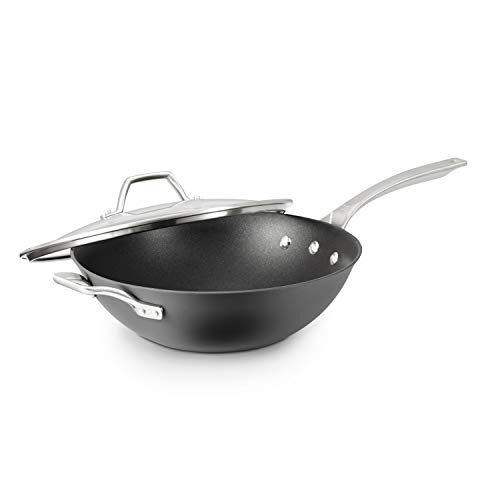
Calphalon Flat Bottom Wok
The Calphalon option sits in the mid tier of this category: a hard-anodised flat bottom wok from a mainstream cookware brand, aimed at cooks who want wok geometry with nonstick-style convenience. Treat it the way this guide treats every pick — judge it first on base flatness and hob fit, then on handle comfort when the bowl is loaded, then on whether its material matches the care routine you will honestly keep. In prose terms, its job in this line-up is to show what the mid tier buys you in feel and upkeep, and what it asks in return. Check price on Amazon for the current listing, and confirm the material and hob compatibility there before you buy, because variants within a brand’s wok range can differ in exactly those details.
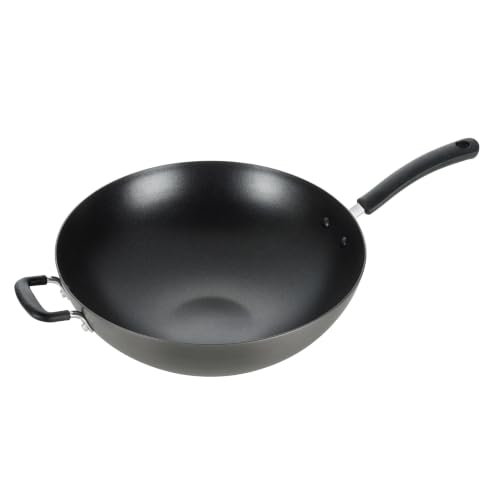
T-fal Flat Bottom Wok
The T-fal option sits in the entry tier of this category: a nonstick flat bottom wok from a mass-market brand, built for easy release and easy washing above high-heat heroics. Treat it the way this guide treats every pick — judge it first on base flatness and hob fit, then on handle comfort when the bowl is loaded, then on whether its material matches the care routine you will honestly keep. In prose terms, its job in this line-up is to show what the entry tier buys you in feel and upkeep, and what it asks in return. Check price on Amazon for the current listing, and confirm the material and hob compatibility there before you buy, because variants within a brand’s wok range can differ in exactly those details.
Lodge Cast Iron Wok
The Lodge option sits in the mid tier of this category: a cast iron wok from the best-known American cast iron maker, bringing heavy, heat-holding metal to the flat bottom format. Treat it the way this guide treats every pick — judge it first on base flatness and hob fit, then on handle comfort when the bowl is loaded, then on whether its material matches the care routine you will honestly keep. In prose terms, its job in this line-up is to show what the mid tier buys you in feel and upkeep, and what it asks in return. Check price on Amazon for the current listing, and confirm the material and hob compatibility there before you buy, because variants within a brand’s wok range can differ in exactly those details.
Performance in Real Use
Stir-Frying Weeknight Dinners
The bowl’s temperature gradient is the wok’s defining tool. The flat base over the burner is the searing zone, fiercely hot and best for proteins and for putting colour on vegetables. The lower slopes are the working zone, hot enough to cook through while tossing. The upper sides are the holding zone, where finished or delicate ingredients wait without burning while the next batch sears below. Cooking a full meal is largely traffic management between these zones: sear the beef, push it up the side, bloom the garlic in the centre, add the peppers, then reunite everything for the sauce. A flat bottom wok preserves this gradient faithfully; the base simply anchors the hottest zone more firmly than a round bowl does. Once you start thinking in zones, recipes read differently, and the pan starts to feel less like a vessel and more like an instrument.
Batch size is the discipline behind almost every wok success story. The pan’s job is to sear, and searing requires that each piece of food touch hot metal with room around it. Overload the bowl and the temperature crashes, juices pool, and the ingredients steam in their own liquid, emerging grey and tired no matter how good the pan is. The fix is unglamorous: cook proteins in a single layer, in rounds if necessary, and give vegetables the same respect, especially watery ones. A flat bottom wok helps here in one specific way, because its wider searing footprint fits a slightly larger single layer than a small-flat-spot design. But no base geometry repeals the physics. Two quick batches will always beat one crowded one, and the resting first batch, kept warm up the sides or on a plate, loses nothing by waiting.
Searing Proteins
Searing protein in a wok is a study in patience disguised as speed. The slices, whether beef, chicken, pork, or tofu, should be dry on the surface, spread in one layer over the hot base, and then left alone. The instinct to stir immediately is the enemy; undisturbed contact is what builds the browned crust and the fond that flavours the whole dish. When the first side has coloured, a single confident fold with the spatula turns the batch, and a few seconds later it leaves the pan to make room for the vegetables. Marinades help flavour but hinder browning if they are wet, so drain marinated meat well and consider adding the marinade liquid later as part of the sauce. Velveting, the classic technique of coating sliced meat in a starch mixture before a brief blanch or fry, is worth learning once the basics feel easy.
Vegetables, Noodles and Rice
Vegetables reward sequencing more than any other wok ingredient. Dense vegetables such as carrots, broccoli stems, and green beans need a head start; tender ones such as leafy greens, bean sprouts, and scallion tops need seconds. Cut size is your main control, since a carrot sliced thin on a diagonal cooks as fast as a pepper cut thick, and matching the cut to the cooking time lets everything finish together. A splash of water and a brief lid-on steam, sometimes called steam-frying, rescues a pan of stubborn vegetables without drowning a finished stir-fry. Garlic, ginger, and chilli, the aromatic base of half the wok repertoire, go in early but not first into a smoking pan, because minced garlic burns in the time it takes to reach for the next bowl; a slightly cooler moment in the oil perfumes the whole dish instead.
Sauce technique is where home stir-fries usually separate from restaurant ones, and the wok’s shape is built for it. A sauce mixed in advance, so its salty, sweet, sour, and aromatic parts arrive together, goes in at the end, around the hot sides of the bowl rather than onto the food. Running down the heated metal, it sizzles, reduces slightly, and loses its raw edge in the seconds before you toss everything through it. A small amount of starch slurry, added in a drizzle while tossing, gives the sauce the glossy cling that coats each piece instead of pooling in the base. The flat bottom helps the final act, because the pooled sauce sits over the burner and thickens evenly while you fold. Keep sauces brief and concentrated; a wok dinner should be glazed, not drowned, and the bowl should come to the table nearly dry.
Beyond the Stir-Fry
Deep-frying is the wok’s quiet superpower, and the flat bottom version keeps it. The bowl’s shape means a modest amount of oil pools deeply in the centre while the sloping sides give fried food room to climb out of the oil and drain as you lift it. Temperature recovers quickly because the oil volume is small relative to the heated surface, and the tall sides contain the bubbling that makes frying in a shallow pan feel risky. The same safety rules apply with extra emphasis: never fill the bowl more than partway, because frying food foams and expands the oil level; lower food in gently, away from you; and let the oil cool completely in the pan, undisturbed, before moving it. A thermometer takes the guesswork out, and a spider strainer, made for exactly this bowl shape, is the one accessory most owners end up loving.
Steaming deserves more attention than it gets in wok discussions, because for many households it becomes the wok’s second career. A simple rack set into the bowl, water below, a lid on top, and the wok steams dumplings, fish fillets with ginger and scallion, custards in small bowls, and vegetables that you want vivid and just tender. Bamboo steamers stack inside larger woks for multi-layer cooking, and the bowl’s depth keeps boiling water safely away from the food. Flat bottom models steam more stably than round ones on home hobs, since the pan cannot rock when you lift the lid to check a dumpling. Remember to check the water level during long steams and top up with hot water, and to lift the lid away from your face, because the first rush of steam is the most common minor burn in wok cooking.
Strengths and Trade-Offs
Strengths
- Full, stable contact with induction, electric, and glass cooktops, with no ring to store or align.
- A genuinely hot searing centre on home burners, helped by preheating and sensible batch sizes.
- The full wok repertoire retained: stir-fry, steam, deep-fry, braise, and reheat in one bowl.
Trade-offs
- The classic one-handed toss is replaced by spatula folding on the planted base.
- Carbon steel and cast iron versions require seasoning discipline and dry storage.
- Restaurant-level wok hei remains out of reach on domestic burners, whatever the pan.
How It Compares
The honest alternatives clarify what a flat bottom wok is for. A round bottom wok with a ring remains the connoisseur’s choice for powerful gas burners and for cooks who toss one-handed, accepting the storage and stability compromises. A large, heavy frying pan or skillet sears beautifully and lives happily on any hob, but its low sides make tossing a mess and its wide base uses more oil for frying. A nonstick wok-style pan offers the shape with none of the seasoning, at the cost of high-heat confidence and longevity. An electric wok plugs in anywhere and holds temperature politely, but rarely gets hot enough for a true sear. Set against these, the flat bottom wok is the generalist champion for modern hobs: not the best at any single trick, and the best compromise across all of them for the stove most homes actually have.
Wok hei, the prized breath of the wok, is partly burner physics and partly technique, and honesty helps here. The smoky, seared edge it describes comes from extreme heat, oil vapour, and ingredients tossed through flame, conditions a restaurant burner creates easily and a home burner approximates. A flat bottom wok on a home stove will not reproduce the full effect, but it gets closer than most pans: the thin centre gets fiercely hot, small batches char at the edges, and a dry, ripping-hot surface gives vegetables that blistered, restaurant-adjacent finish. The levers you control are preheating until the pan just begins to smoke, cooking in batches small enough to sear rather than steam, and resisting the urge to move food too soon. Judge a home wok by whether it helps you use those levers, not by whether it turns your kitchen into a street stall.
Who Should Buy It and Who Should Skip It
Buy it if your hob is flat, your weeknight cooking is fast and vegetable-forward, and you want one pan that covers stir-fries, steaming, and small deep-frying jobs. Buy it if you are learning wok cooking and want stability while you learn. Skip it if you own a powerful gas burner and dream in round-bottom technique, if your household leaves pans soaking, or if your kitchen genuinely has nowhere to put a wide bowl.
Shopping for a flat bottom wok rewards a short physical checklist, whether you are reading a listing or holding the pan. Check the base first: it should sit dead flat with no rocking or spinning, because a wok that wobbles on the shop counter will wobble on your hob and will couple badly with induction. Check the handle joint next, since rivets or welds carry the full weight of a loaded pan thousands of times; any flex or play there only grows. Run a thumb around the rim for sharp edges, weigh the pan in one hand and imagine it full of food, and confirm the material against your hob type rather than trusting a generic compatibility banner. Finally, look for honest signals about seasoning and care: a maker who explains the first wash and the drying routine is telling you the truth about what owning the pan involves.
Setup, Care and Maintenance Essentials
Seasoning is not a coating you apply once but a living surface you build and maintain. Heat and oil bond in thin layers on carbon steel or cast iron, darkening the metal and filling its microscopic texture until food releases cleanly. A new wok often arrives with a protective factory coating that must be scrubbed off first, and the first seasoning sessions, done with a whisper-thin film of high smoke point oil heated until it polymerises, lay the foundation. After that, ordinary cooking does most of the work: every stir-fry with oil adds a little, every gentle wash takes a little less. The surface will look blotchy for weeks and that is normal. Seasoning fails from neglect, not from imperfection, and it recovers from almost any mistake with a scrub, a dry, and another thin layer of oil.
Daily cleaning for a seasoned flat bottom wok is deliberately boring. While the pan is still warm, rinse it with hot water and wipe it with a soft sponge or a bamboo brush, using the heat of the pan to loosen what clings. Stubborn bits yield to a short simmer of plain water and a gentle scrape, not to steel wool heroics. Then comes the step that protects everything: dry the wok completely, on the burner over low heat if you want certainty, and while it is warm wipe in the thinnest possible film of oil with a paper towel. That film is rust insurance, not cooking oil, and it should be thin enough that the surface looks dry. Never leave a carbon steel or cast iron wok soaking in the sink, and never put it away damp, because rust needs only water, air, and time.
Rust on a wok looks alarming and is almost never fatal. It forms when a seasoned surface is left wet, stored in a damp cupboard, or soaked, and it announces itself as orange-brown patches that feel rough under a fingertip. The fix is mechanical, not chemical: scrub the spots away with a scouring pad or a paste of salt and a little oil, wash, dry thoroughly over heat, and re-season the bare patches with a thin film of oil heated until it bonds. Deep pitting after long neglect takes more sessions to smooth out, but the pan is not ruined. Prevention is easier than cure and consists of the same three habits repeated: dry on heat, oil whisper-thin, store dry. A wok treated that way can go years between rust incidents, and most owners have exactly one early scare that teaches the routine permanently.
Final Verdict
As a class, the flat bottom wok passes the only review test that matters: it makes the cooking it promises actually happen, on real stoves, on ordinary weeknights. Its compromises are honest and small, its talents are the wok’s own, and its stability quietly prevents the one accident wok cooking can offer. Recommended without hesitation for flat-cooktop households.
Long-term ownership is where material choice quietly pays out. A carbon steel or cast iron flat bottom wok is effectively a lifetime pan: its surface renews itself through use, it has no coating to fail, and its worst accidents, rust, burnt-on food, a warped moment of carelessness aside, are nearly all recoverable with scrubbing, heat, and oil. A nonstick wok is a consumable by comparison, excellent for a few years and then declining, which may still be the right arithmetic for a cook who values ease today. Whichever you own, small habits compound: dry it after washing, keep the handle joint tight, store it where air moves, and cook in it often, because regular use is the best maintenance a seasoned pan can get. Owners measure wok satisfaction in years, and the pans that earn it are rarely the fanciest, just the ones that fit the stove, the cupboard, and the cook.
Going Deeper: Heat, Patience and the Hot Centre
Glass and ceramic cooktops reward a few protective habits from wok owners. Lift the pan rather than sliding it whenever it is loaded, since grit trapped under any base can scratch the surface, and be doubly careful with cast iron, whose weight and sometimes rougher casting make it the riskiest pairing. Check the base of a new wok for burrs or a rough rim and smooth anything sharp before its first use. Keep the base clean, because burnt-on residue carbonises onto hot glass and is miserable to remove. None of this is a reason to avoid a wok on glass; flat bottom models are precisely the woks designed for these hobs. It is simply the etiquette of a heavy, high-heat pan on a surface that costs far more to replace than the pan itself.
Going Deeper: The Habits Behind Good Wok Cooking
Choose the first cook wisely and a new wok will win you over; choose badly and you will blame the pan for a difficult debut. Forgiving first dishes share three traits: they are oily enough to help the young seasoning, sturdy enough to survive imperfect timing, and flavoured boldly enough to be delicious even if the technique is rough. Fried rice made with day-old rice is the classic opener, followed by stir-fried noodles, garlicky greens with a protein you know well, or a simple pepper and beef. Avoid delicate fish, eggs on an unseasoned surface, and anything involving a long acidic simmer, all of which fight a new pan rather than feeding it. Each early cook leaves the surface a little darker and a little slicker, and by the fifth or sixth meal most owners stop thinking about the seasoning at all, which is exactly the point.
Going Deeper: What Daily Use Teaches You
A wok forgives many things but not disorganisation. Stir-frying moves faster than almost any other cooking method once the pan is hot, and there is no pause in which to chop a forgotten pepper or measure a sauce. Everything, in the French phrase cooks borrow for this, must be in its place before the burner lights: proteins sliced and dried, vegetables cut to sizes that cook in the same time, aromatics minced, sauce mixed in a small bowl. Arrange the bowls in the order you will use them, keep the spatula in hand, and clear a landing zone for finished batches. This discipline is also a safety practice, because a cook who is not rummaging in cupboards is a cook watching the hot oil. The cooks who love their woks are, almost without exception, the cooks who prep first.
Going Deeper: Details That Separate Good From Great
Preheating is where stir-fries are won. A wok should meet its ingredients already hot, because cold metal plus cold oil plus cold food is the recipe for sticking and steaming. The classic sequence is to heat the dry pan until it just begins to wisps of smoke, add the oil and swirl it to coat the bowl, and then add food immediately while the surface is at its slickest. On a flat bottom wok the flat base makes this more forgiving than on a ring-balanced pan, because the whole base heats evenly and you can judge its readiness by the way a flick of water dances and evaporates almost at once. Electric and induction hobs reward a slightly gentler ramp, climbing through medium to high rather than slamming the pan with maximum power from cold, which also protects thin steel from warping over time.
Going Deeper: Making the Pan Work Harder
Fried rice is the dish that tells you the truth about a wok and its owner. Day-old, fridge-cold rice is the correct starting point because its grains have dried and separated; fresh rice steams and clumps no matter what pan it meets. The wok’s contribution is a hot, slick centre where the grains can toast individually, room up the slopes for the egg and vegetables to wait their turn, and enough depth to toss a full batch without launching it across the hob. Work in the order the ingredients demand: aromatics briefly, egg as a quick sheet torn into ribbons, rice pressed lightly against the hot base until it crackles, then everything reunited with soy and a final drizzle of sesame oil off the fiercest heat. A flat bottom wok handles the whole performance planted firmly on the hob, which matters when you are tossing with one hand and seasoning with the other.
Going Deeper: Heat, Patience and the Hot Centre
The one-pan dinner is where a wok quietly outperforms the frying pan it is usually compared with. A chicken and vegetable stir-fry for four, a pad see ew, a curry that starts with frying its paste in oil and finishes simmering in the same bowl — all of these exploit the wok’s depth, its zones, and its tolerance for moving between fierce heat and a gentle simmer without changing vessels. The flat bottom version adds stovetop manners to that repertoire: it sits level while a sauce reduces, does not rock when you stir a full load, and goes to the table as its own serving dish in casual kitchens. For households counting washing-up as a real cost of cooking, the bowl that fries, simmers, steams, and serves is not a luxury. It is the entire value proposition in one object.
Going Deeper: The Habits Behind Good Wok Cooking
Accessories for a wok should be bought in the order your cooking demands them, and the first is not glamorous: a wok spatula, or chuan, whose curved front edge matches the bowl’s curve so it can scoop, fold, and scrape without gouging the seasoning. Second comes a lid if you steam or finish sauces under cover. Third, a spider strainer if you deep-fry, because nothing else lifts food from hot oil in a bowl this shape as gracefully. A bamboo brush earns its place for cleaning seasoned pans, and a steaming rack unlocks the wok’s second career. Everything beyond that list — ring stands you do not need with a flat base, elaborate sets of tools, novelty gadgets — should wait until a recipe you actually cook asks for it. The wok tradition is a one-pan, one-tool tradition, and its restraint is part of its elegance.
Going Deeper: What Daily Use Teaches You
High-heat wok cooking makes smoke, and managing it is part of cooking this way in a modern kitchen. The smoke comes from oil at searing temperatures and from the tiny particles that char on contact with the pan; it is a sign the heat is right, and also a reason to run the extractor before the pan gets hot rather than after the alarm comments. Open a window if your kitchen allows it, keep the oil fresh because old oil smokes earlier and tastes of it, and wipe spills off the hob, since yesterday’s splatter is tomorrow’s smoke. Flat cooktops make one part easier: there are no burner crevices harbouring burnt residue. Cooks in small flats learn to time their fiercest searing for when ventilation is running and doors are arranged, and find that the compromise is minor next to the food.
Going Deeper: Details That Separate Good From Great
Heat recovery is the invisible specification behind half the judgements in this guide. When cold, wet ingredients hit a hot pan, the pan’s temperature falls; how fast it climbs back decides whether the next minute is searing or steaming. Thin carbon steel recovers by responsiveness, drinking heat from the burner and returning to temperature quickly once the load settles. Cast iron recovers by reserves, having stored so much heat in its mass that the load barely dents it. Nonstick aluminium recovers quickly but is capped by the temperatures its coating tolerates. On a home burner, which replaces heat more slowly than a restaurant jet, recovery is why batch size matters so much: a modest load lets any of these pans recover, while an overloaded one defeats all of them. Judge a wok by how it behaves in the thirty seconds after the food lands, and you will rarely judge it wrong.
The First-Week Scorecard: Testing This Flat bottom wok at Home
Use this scorecard during the first week, while changing your mind is still easy, and run the same ordinary jobs you bought the flat bottom wok for rather than showcase tasks chosen to flatter it. Score setup first: how long the box-to-ready journey took, whether the instructions answered the question you actually had, and whether anything needed a tool the box did not mention. Score the core job on a normal weekday portion, with your usual ingredients and timing, and write the result down before you try any advanced mode or accessory. Score consistency by repeating that same job on another day and comparing the two outcomes side by side, since repeatability is the quality that separates a good example from a lucky one.
Score the controls under real conditions, with damp hands, low light, or a timer running elsewhere, because that is the environment the flat bottom wok will actually be judged in. Score cleaning honestly by timing it once, including the drying and reassembly, and by noting any corner, seam, or crevice that needed a second attempt. Where a shortlist names specific examples, such as Joyce Chen Pro Chef Flat Bottom Wok, run these same checks against that listing line by line rather than assuming the general verdict transfers unchanged. Apply the identical test to Helen Chen’s Asian Kitchen Flat Bottom Wok as well, on the same day and under the same conditions, because a fair comparison needs one ruler rather than two moods.
- Time the box-to-ready setup
- Repeat the core job on two separate days
- Time the full clean including drying
- Watch a second user try without coaching
- Deliberately make the common mistake once
- File the scorecard with the receipt
If Made In Carbon Steel Wok is also in contention, give it the same worksheet and let the three sets of answers sit side by side before anyone reaches for a checkout button. Score the storage reality: whether the flat bottom wok and its parts return to their spot without a rearrangement ritual, and whether anything migrates to a counter because it has no home. Score the noise, heat, steam, or vibration against the room it lives in, at the hour you most often use it, and note whether anyone in the household comments unprompted. Score the small parts: lids, seals, trays, attachments, and fasteners, because in long ownership the small parts are where satisfaction quietly leaks away.
Score the documentation by looking up one real question mid-task and timing how long the answer takes to find, in the booklet or on the maker’s support pages. Score the fit against the measurements you took before ordering, and note any surprise, generous or otherwise, while the details are still fresh enough to help another buyer. Score the second user experience by watching someone else in the household use the flat bottom wok without coaching, and noting exactly where they hesitate or guess. Score the worst job, not the best: the largest load, the trickiest ingredient, or the latest tired evening, because that score predicts your feelings in month six.
Score the recovery: deliberately make the common mistake, such as overfilling, mis-seating a part, or choosing the wrong setting, and judge how obvious and forgiving the fix is. Add the scores without weighting them, then read the lowest two again, because those are the entries that decide whether this example stays in your house. If a low score surprises you, repeat that single test once before concluding anything, since first attempts often measure the operator rather than the product. Keep the finished scorecard with the receipt and warranty details, so a future claim, resale, or replacement decision starts from evidence rather than from a fading impression.
Frequently Asked Questions
Will a flat bottom wok work on an induction hob?
Yes, provided the material is magnetic and the base sits flat and still on the cooking zone. Carbon steel and cast iron flat bottom woks are the natural fits, because both metals respond to induction and both are commonly made with a properly flat base. Stainless models depend on their construction, and aluminium or hard-anodised nonstick woks only work when they include a magnetic base layer. Confirm the exact model’s compatibility on its listing, and retire or relegate any wok whose base has warped enough to rock, because poor contact quietly undermines induction performance.
Can I toss food in a flat bottom wok like chefs do?
Not in quite the same way, and that is an acceptable trade for most home cooks. The dramatic one-handed flip relies on a round base rocking over flame. A flat bottom wok stays planted, so you toss by scooping and folding with a wok spatula, whose curved edge matches the bowl and turns food efficiently from the hot centre up the cooler sides. The result mixes, coats, and chars just as well for home cooking, with the bonus that the pan never wobbles while both of your hands are busy.
Why does food stick in my new wok?
Early sticking usually has one of four causes: the pan was not preheated before the oil went in, the ingredients were wet, the pan was crowded so food steamed instead of searing, or the seasoning is still young. Heat the dry pan until it just begins to smoke, add oil and swirl, then add dry ingredients in a single layer and leave them undisturbed until they release. As the seasoning builds over the first weeks, release improves markedly. Persistent sticking on an older pan usually means the seasoning has been scrubbed thin, and a few oily cooks will restore it.
Do I need to season a flat bottom wok?
Only if it is carbon steel or cast iron, the two traditional materials. Seasoning is the thin, heat-bonded oil layer that makes those pans release food and resist rust, and it is built by heating a whisper-thin film of oil on the clean, dry pan, then maintained simply by cooking and by drying the pan after washing. Nonstick and stainless flat bottom woks need no seasoning at all. If you choose a seasoned material, treat the first seasoning session as part of unboxing, and expect the surface to improve noticeably over the first several meals.
Can I put a flat bottom wok in the dishwasher?
For carbon steel and cast iron, no: detergent, prolonged water, and humid drying undo seasoning and invite rust, and hand washing takes only a minute. Stainless models tolerate dishwashers better, and nonstick models vary by maker, but hand washing still extends the life of any wok’s surface and handles. The honest summary is that a wok is one of the fastest pans in the kitchen to wash by hand, especially while it is still warm, so the dishwasher question matters less than it first appears.
How do I clean a burnt or sticky wok without ruining the seasoning?
Start gentle. Simmer plain water in the warm pan for a few minutes to loosen residue, then wipe with a soft sponge or bamboo brush and dry over heat. A paste of coarse salt with a little oil scrubs stubborn patches without harsh chemicals. Reserve scouring pads for rust spots and true emergencies, accepting that a hard scrub means re-seasoning the area afterwards. Avoid long soaks entirely. Most burnt messes come from sauce sugars cooked too long at the end, so a brief water simmer while the pan is still warm, right after serving, prevents almost all of them.
Related Guides
Keep exploring with these companion guides from the same kitchen:


