Disclosure: As an Amazon Associate, topratedkitchenware.com earns from qualifying purchases. Links on this page are affiliate links; they cost you nothing extra. Prices and availability change often, so check the current Amazon listing before you buy.
This flat bottom wok buying guide is written for the stove you actually own. If your kitchen runs on induction, radiant electric, glass-ceramic, or a standard home gas hob, the flat bottom wok is the wok shape designed for you: the same deep, sloping bowl as the traditional pan, finished with a flat base that stands on its own and couples directly with a flat cooktop. This guide explains the types, the materials, and the decisions that matter, walks through the leading models in prose so you can compare their characters honestly, and finishes with the setup and care habits that decide whether a wok becomes a daily tool or a cupboard ornament. No ring stands, no balancing acts, and no pretending a home burner is a restaurant jet — just the pan, your hob, and better stir-fries.
Flat Bottom Wok Buying Guide: Verdict and Key Takeaways
Buy the material before you buy the brand. Carbon steel is the versatile default for keen stir-fry cooks, cast iron suits big batches on weaker burners, nonstick suits convenience-first weeknights, and stainless suits cooks who prize permanence over release. Then match the base to your hob, the size to your household, and the handle to your hands.
In short: a flat bottom wok earns its place when its base sits truly flat, its material matches your care appetite, and its size matches your largest cooking zone.
Key Takeaways
- Flat base first: stability and full hob contact are the entire point of this wok style.
- Carbon steel for responsiveness and seasoning; cast iron for heat retention and weight; nonstick for ease; stainless for durability.
- Induction needs a magnetic material and a genuinely flat base — carbon steel and cast iron qualify naturally.
- Size for weekly meals and your largest cooking zone, not for the biggest dinner you ever host.
- Seasoned pans ask for a one-minute dry-and-oil routine after washing; that habit decides their lifespan.
In this guide
What a Flat Bottom Wok Does and the Main Types
A flat bottom wok keeps the deep, sloping bowl that makes a wok a wok, but replaces the pointed or deeply rounded base with a flattened disc of metal that sits in full contact with the burner. That single change sounds minor and changes almost everything about ownership. The bowl still gives you a hot centre for searing and cooler slopes for parking ingredients, the tall sides still contain a vigorous toss, and the shape still uses less oil than a flat frying pan because oil pools in a small area. What changes is the interface with the stove. Instead of balancing on a ring or rocking on a grate, the pan stands on its own, transfers heat through direct contact, and stays where you put it when you stir with one hand and hold a plate of vegetables with the other.
The traditional round bottom wok was designed for a completely different heat source: an open flame set into a stove top, where the bowl nestles down into the fire and flames climb the sides. On that stove it is superb, responsive in a way few pans match. Moved to a modern flat cooktop, the same shape becomes a compromise. A wok ring can steady it, but the ring lifts the bowl away from the burner, steals contact, and adds a loose piece of hardware that rattles, stores badly, and still leaves the pan tippy when you toss. On induction and glass tops a round bottom barely couples with the element at all. The flat bottom design exists precisely because home stoves changed, and judging it against restaurant burners misses the point of why it was made.
Carbon Steel Flat Bottom Woks
Carbon steel is the classic wok material and the default recommendation for a flat bottom model. It is relatively light for its size, heats quickly, cools quickly when you pull it off the burner, and builds a seasoning layer that becomes genuinely nonstick with use. That responsiveness is what stir-frying asks for: the pan should recover heat fast when cold vegetables land, and back off fast when garlic threatens to scorch. The trade-offs are maintenance and manners. Carbon steel rusts if it is left wet, needs seasoning at the start and small acts of care forever, and its bare handle gets hot, so a towel or mitt becomes part of your technique. For cooks who will actually stir-fry weekly, those habits quickly become automatic, and the material rewards them more than any other.
Cast Iron Flat Bottom Woks
Cast iron takes the flat bottom idea in the opposite direction: instead of responsiveness, you get thermal mass. A cast iron wok takes longer to preheat, but once hot it holds its temperature through a big load of cold ingredients better than thin steel, which helps home cooks who tend to overfill the pan. It is also the heaviest option by a wide margin, and that weight changes technique. Tossing by lifting the pan is off the table for most people; you stir and fold with the spatula instead, or use two hands and a mitt for any move. Seasoning still applies, the surface still dislikes long soaks, and the reward is durability measured in decades and a sear that forgives a modest burner. Choose cast iron when your burner is weak, your batches are big, and your wrists are untroubled.
Nonstick and Stainless Flat Bottom Woks
Nonstick and stainless flat bottom woks serve different cooks than the traditional materials. A hard-anodised or coated nonstick wok asks for no seasoning, releases eggs and delicate fish easily, and washes without ceremony, which makes it the low-friction entry point for weeknight cooking. Its limits are heat and lifespan: coatings dislike the fiercest preheats, prefer wooden or silicone tools, and eventually wear, at which point the pan is done rather than renewable. Stainless steel is the opposite bargain. It never needs seasoning, tolerates the dishwasher in principle, and lasts indefinitely, but food sticks more readily, the pan is often heavier, and it does not develop the slick, seasoned surface that makes tossing fried rice effortless. Neither is a wrong answer. They are answers for cooks who value convenience or permanence over the seasoned-steel experience.
Top Picks at a Glance
Six reference models map the category’s real choices. Each is presented in prose with a pick slot, because the right way to compare them is by material, tier, and temperament rather than by a table of numbers that changes nothing about how they cook.

Joyce Chen Pro Chef Flat Bottom Wok
The Joyce Chen Pro Chef option sits in the entry-to-mid tier of this category: a widely available carbon steel flat bottom wok in the classic mould, with a stay-cool style handle arrangement that makes it a friendly first seasoned pan. Treat it the way this guide treats every pick — judge it first on base flatness and hob fit, then on handle comfort when the bowl is loaded, then on whether its material matches the care routine you will honestly keep. In prose terms, its job in this line-up is to show what the entry-to-mid tier buys you in feel and upkeep, and what it asks in return. Check price on Amazon for the current listing, and confirm the material and hob compatibility there before you buy, because variants within a brand’s wok range can differ in exactly those details.

Helen Chen’s Asian Kitchen Flat Bottom Wok
The Helen Chen’s Asian Kitchen option sits in the entry tier of this category: a carbon steel flat bottom wok sold as a practical home set, typically presented with the basic accessories a beginner needs to start cooking the same day. Treat it the way this guide treats every pick — judge it first on base flatness and hob fit, then on handle comfort when the bowl is loaded, then on whether its material matches the care routine you will honestly keep. In prose terms, its job in this line-up is to show what the entry tier buys you in feel and upkeep, and what it asks in return. Check price on Amazon for the current listing, and confirm the material and hob compatibility there before you buy, because variants within a brand’s wok range can differ in exactly those details.

Made In Carbon Steel Wok
The Made In option sits in the premium tier of this category: a carbon steel wok from a modern direct cookware brand, positioned as a more finished, design-conscious take on the traditional pan. Treat it the way this guide treats every pick — judge it first on base flatness and hob fit, then on handle comfort when the bowl is loaded, then on whether its material matches the care routine you will honestly keep. In prose terms, its job in this line-up is to show what the premium tier buys you in feel and upkeep, and what it asks in return. Check price on Amazon for the current listing, and confirm the material and hob compatibility there before you buy, because variants within a brand’s wok range can differ in exactly those details.
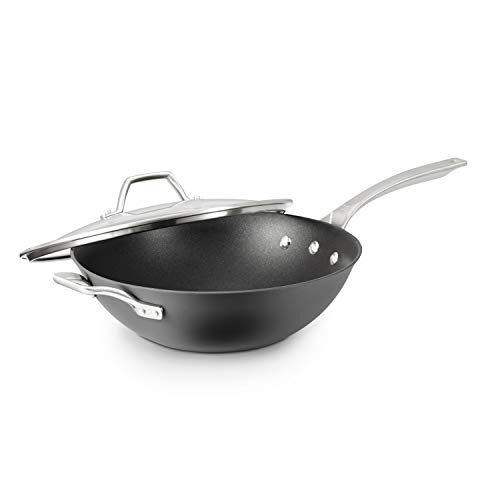
Calphalon Flat Bottom Wok
The Calphalon option sits in the mid tier of this category: a hard-anodised flat bottom wok from a mainstream cookware brand, aimed at cooks who want wok geometry with nonstick-style convenience. Treat it the way this guide treats every pick — judge it first on base flatness and hob fit, then on handle comfort when the bowl is loaded, then on whether its material matches the care routine you will honestly keep. In prose terms, its job in this line-up is to show what the mid tier buys you in feel and upkeep, and what it asks in return. Check price on Amazon for the current listing, and confirm the material and hob compatibility there before you buy, because variants within a brand’s wok range can differ in exactly those details.
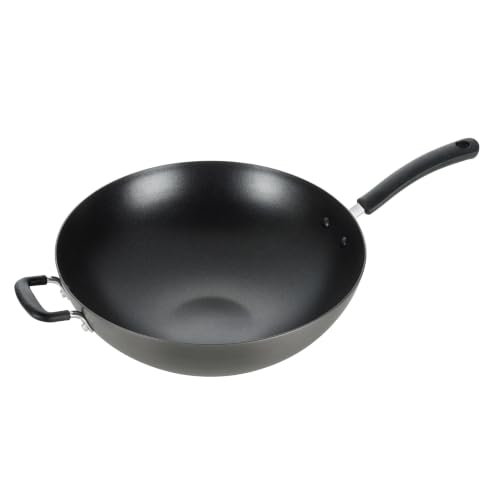
T-fal Flat Bottom Wok
The T-fal option sits in the entry tier of this category: a nonstick flat bottom wok from a mass-market brand, built for easy release and easy washing above high-heat heroics. Treat it the way this guide treats every pick — judge it first on base flatness and hob fit, then on handle comfort when the bowl is loaded, then on whether its material matches the care routine you will honestly keep. In prose terms, its job in this line-up is to show what the entry tier buys you in feel and upkeep, and what it asks in return. Check price on Amazon for the current listing, and confirm the material and hob compatibility there before you buy, because variants within a brand’s wok range can differ in exactly those details.
Lodge Cast Iron Wok
The Lodge option sits in the mid tier of this category: a cast iron wok from the best-known American cast iron maker, bringing heavy, heat-holding metal to the flat bottom format. Treat it the way this guide treats every pick — judge it first on base flatness and hob fit, then on handle comfort when the bowl is loaded, then on whether its material matches the care routine you will honestly keep. In prose terms, its job in this line-up is to show what the mid tier buys you in feel and upkeep, and what it asks in return. Check price on Amazon for the current listing, and confirm the material and hob compatibility there before you buy, because variants within a brand’s wok range can differ in exactly those details.
Will It Work on Your Hob?
Induction compatibility is a materials question before it is a shape question, and the flat bottom is what lets the material do its work. An induction hob heats the pan itself through a magnetic field, so the base must be flat enough to sit close and still across the cooking zone, and the metal must be magnetic. Carbon steel and cast iron qualify naturally, which is why flat bottom woks in those metals are the usual recommendation for induction owners. Stainless steel depends on its construction, and aluminium or hard-anodised nonstick models only work on induction when they carry a magnetic base plate, which some do and many do not. Whatever the material, treat any induction claim as a listing detail to confirm for the exact model, and remember that a warped base that rocks or spins has effectively broken the connection even when the metal is right.
On radiant electric and glass-ceramic tops, contact is the whole game. The element heats the glass, the glass heats the pan, and any gap between base and surface is wasted energy and lost responsiveness. A flat bottom wok sits flush, so the centre of the bowl reaches searing heat far more reliably than a ring-supported round wok hovering above the element. Glass tops add two cautions. First, slide rather than drag a heavy wok, especially cast iron, to protect the surface from scratches. Second, match the flat base roughly to the size of the cooking zone: a base much wider than the zone heats unevenly at the edges, while a very small base on a large zone wastes the hob’s output and can confuse some touch controls. Used with those habits, a flat bottom wok is one of the most natural pans for an electric kitchen.
Home gas burners sit somewhere between the restaurant jet and the electric element, and a flat bottom wok handles them gracefully. The pan stands securely on the grate without a ring, the flame heats the flat base directly, and the sloping sides still catch enough licking flame to feel wok-like when you toss. What a home burner cannot do is match the raw output of a commercial wok station, so technique adjusts: preheat properly, cook in smaller batches, and let ingredients sit undisturbed long enough to sear instead of stirring constantly. The flat base also removes a small daily annoyance of ring cooking, which is the ring itself walking across the grate as the pan moves. For gas owners the choice between flat and round is genuinely open, but flat wins on stability and loses nothing that a home burner could have delivered to a round bowl.
How Much Capacity Do You Need?
Size is the specification that most changes daily cooking, and it should be chosen by household and burner, not by ambition. A wok that is too small crowds ingredients into a steaming pile, which is the single most common cause of disappointing stir-fries. A wok that is too large for its burner heats unevenly, feels clumsy, and stores badly. As a working rule, a couple who stir-fries side dishes can live with a smaller bowl, while a family cooking full one-pan dinners wants the generous end of the range, provided the flat base still sits within the cooking zone of the hob. Diameter is measured across the top, but the working capacity lives in the bowl’s depth and the size of the flat base, so two woks with the same headline size can cook very differently. When in doubt, size for the meals you cook weekly, not the banquet you cook yearly.
The flat spot itself deserves attention because it quietly sets the pan’s character. A wider flat base gives more direct searing area, more stability, and better contact on induction and glass, but as the flat area grows the bowl behaves more like a deep frying pan and less like a wok, with a smaller scorching-hot centre relative to its slopes. A smaller flat spot keeps the classic wok geometry, concentrates heat, and makes the hot-centre, cool-sides system more pronounced, at the cost of a little stability and a smaller searing footprint. Neither extreme is best in the abstract. Cooks who sear proteins in the centre and park vegetables up the sides want the pronounced geometry; cooks who also fry eggs, pancakes of batter, or tofu steaks in the same pan benefit from the wider base. Look at the base when you shop, not just the rim.
How Should the Handle Feel?
Handles divide flat bottom woks into two camps. Bare metal handles, common on carbon steel, conduct heat from the bowl and become genuinely hot during a long, fierce stir-fry; generations of wok cooks manage this with a dry towel folded over the handle, which works perfectly as long as the towel stays dry, because a wet cloth conducts heat and steam straight to your palm. Stay-cool handles in wood, bamboo, or heat-resistant composite stay comfortable and are kinder to beginners, but they may limit oven use and can loosen over years of heat cycles. A short helper handle opposite the main one is worth more than it looks: a full wok is heavy and awkward, and two grip points make draining, carrying, and storing safer. Whatever the style, assume the helper handle and any metal near the bowl are hot, and build the mitt habit before you need it.
Storage is the unglamorous specification that decides whether a wok gets used. A wide bowl with a long handle does not slide into a standard cupboard the way a frying pan does, and a wok exiled to a high shelf or a garage box is a wok that stops cooking weeknight dinners. Measure your intended space before you buy, including the handle, and consider the alternatives cooks actually use: hanging from a rail by the handle hole, nesting inside a larger pot, or living permanently on a back burner if your kitchen allows it. Seasoned steel also dislikes being stored in damp stacks with other pans grinding against its surface; a cloth or paper layer between nested pans protects the seasoning you worked to build. The best wok is the one within arm’s reach on a tired Tuesday.
How to Prioritise by Use Case
The induction household should filter by magnetic material first and treat everything else as secondary, because a wok that cannot couple with the hob is not a wok, it is a bowl. The family stir-fry cook should prioritise capacity and a helper handle. The beginner should prioritise a stay-cool handle and forgiving weight. The small-kitchen cook should prioritise storage, even at the cost of size.
Value in a wok is measured in meals, not in features. A flat bottom wok is a single, durable tool that replaces a surprising amount of other equipment: it stir-fries, sears, deep-fries with less oil than a wide pan, steams with a rack and lid, tosses salads of warm grains, and reheats leftovers better than a microwave manages. Against that usefulness, weigh the real costs, which are mostly not money. It takes storage space, it asks for a prep-first habit, seasoned versions ask for a minute of care after washing, and it will not perform restaurant tricks on a modest burner no matter what you paid. Cooks who stir-fry, steam, or cook one-pan dinners several times a week extract enormous value. Cooks who make a stir-fry twice a year are renting cupboard space to a souvenir, and a good frying pan would serve them better.
First Setup and Care Essentials
Seasoning is not a coating you apply once but a living surface you build and maintain. Heat and oil bond in thin layers on carbon steel or cast iron, darkening the metal and filling its microscopic texture until food releases cleanly. A new wok often arrives with a protective factory coating that must be scrubbed off first, and the first seasoning sessions, done with a whisper-thin film of high smoke point oil heated until it polymerises, lay the foundation. After that, ordinary cooking does most of the work: every stir-fry with oil adds a little, every gentle wash takes a little less. The surface will look blotchy for weeks and that is normal. Seasoning fails from neglect, not from imperfection, and it recovers from almost any mistake with a scrub, a dry, and another thin layer of oil.
Daily cleaning for a seasoned flat bottom wok is deliberately boring. While the pan is still warm, rinse it with hot water and wipe it with a soft sponge or a bamboo brush, using the heat of the pan to loosen what clings. Stubborn bits yield to a short simmer of plain water and a gentle scrape, not to steel wool heroics. Then comes the step that protects everything: dry the wok completely, on the burner over low heat if you want certainty, and while it is warm wipe in the thinnest possible film of oil with a paper towel. That film is rust insurance, not cooking oil, and it should be thin enough that the surface looks dry. Never leave a carbon steel or cast iron wok soaking in the sink, and never put it away damp, because rust needs only water, air, and time.
Mistakes to Avoid
The same handful of mistakes accounts for most wok disappointment, and all of them are fixable. The first is crowding, already covered, because it converts searing into steaming. The second is timid heat: a wok added to a lukewarm pan sticks, sulks, and never colours anything. The third is wet ingredients, which splatter dangerously and crash the temperature. The fourth is neglecting the dry-and-oil routine after washing, which invites the rust that owners then blame on the material. The fifth is judging the pan after one meal, when its seasoning is newborn and its owner is still learning its heat. Notice that none of these is a defect in any particular model. They are the learning curve of a cooking method, and a flat bottom wok, stable and forgiving, is the easiest version of that curve to climb.
Shopping for a flat bottom wok rewards a short physical checklist, whether you are reading a listing or holding the pan. Check the base first: it should sit dead flat with no rocking or spinning, because a wok that wobbles on the shop counter will wobble on your hob and will couple badly with induction. Check the handle joint next, since rivets or welds carry the full weight of a loaded pan thousands of times; any flex or play there only grows. Run a thumb around the rim for sharp edges, weigh the pan in one hand and imagine it full of food, and confirm the material against your hob type rather than trusting a generic compatibility banner. Finally, look for honest signals about seasoning and care: a maker who explains the first wash and the drying routine is telling you the truth about what owning the pan involves.
Going Deeper: Heat, Patience and the Hot Centre
Deep-frying is the wok’s quiet superpower, and the flat bottom version keeps it. The bowl’s shape means a modest amount of oil pools deeply in the centre while the sloping sides give fried food room to climb out of the oil and drain as you lift it. Temperature recovers quickly because the oil volume is small relative to the heated surface, and the tall sides contain the bubbling that makes frying in a shallow pan feel risky. The same safety rules apply with extra emphasis: never fill the bowl more than partway, because frying food foams and expands the oil level; lower food in gently, away from you; and let the oil cool completely in the pan, undisturbed, before moving it. A thermometer takes the guesswork out, and a spider strainer, made for exactly this bowl shape, is the one accessory most owners end up loving.
Going Deeper: The Habits Behind Good Wok Cooking
Steaming deserves more attention than it gets in wok discussions, because for many households it becomes the wok’s second career. A simple rack set into the bowl, water below, a lid on top, and the wok steams dumplings, fish fillets with ginger and scallion, custards in small bowls, and vegetables that you want vivid and just tender. Bamboo steamers stack inside larger woks for multi-layer cooking, and the bowl’s depth keeps boiling water safely away from the food. Flat bottom models steam more stably than round ones on home hobs, since the pan cannot rock when you lift the lid to check a dumpling. Remember to check the water level during long steams and top up with hot water, and to lift the lid away from your face, because the first rush of steam is the most common minor burn in wok cooking.
Going Deeper: What Daily Use Teaches You
Sauce technique is where home stir-fries usually separate from restaurant ones, and the wok’s shape is built for it. A sauce mixed in advance, so its salty, sweet, sour, and aromatic parts arrive together, goes in at the end, around the hot sides of the bowl rather than onto the food. Running down the heated metal, it sizzles, reduces slightly, and loses its raw edge in the seconds before you toss everything through it. A small amount of starch slurry, added in a drizzle while tossing, gives the sauce the glossy cling that coats each piece instead of pooling in the base. The flat bottom helps the final act, because the pooled sauce sits over the burner and thickens evenly while you fold. Keep sauces brief and concentrated; a wok dinner should be glazed, not drowned, and the bowl should come to the table nearly dry.
Going Deeper: Details That Separate Good From Great
Searing protein in a wok is a study in patience disguised as speed. The slices, whether beef, chicken, pork, or tofu, should be dry on the surface, spread in one layer over the hot base, and then left alone. The instinct to stir immediately is the enemy; undisturbed contact is what builds the browned crust and the fond that flavours the whole dish. When the first side has coloured, a single confident fold with the spatula turns the batch, and a few seconds later it leaves the pan to make room for the vegetables. Marinades help flavour but hinder browning if they are wet, so drain marinated meat well and consider adding the marinade liquid later as part of the sauce. Velveting, the classic technique of coating sliced meat in a starch mixture before a brief blanch or fry, is worth learning once the basics feel easy.
Going Deeper: Making the Pan Work Harder
Vegetables reward sequencing more than any other wok ingredient. Dense vegetables such as carrots, broccoli stems, and green beans need a head start; tender ones such as leafy greens, bean sprouts, and scallion tops need seconds. Cut size is your main control, since a carrot sliced thin on a diagonal cooks as fast as a pepper cut thick, and matching the cut to the cooking time lets everything finish together. A splash of water and a brief lid-on steam, sometimes called steam-frying, rescues a pan of stubborn vegetables without drowning a finished stir-fry. Garlic, ginger, and chilli, the aromatic base of half the wok repertoire, go in early but not first into a smoking pan, because minced garlic burns in the time it takes to reach for the next bowl; a slightly cooler moment in the oil perfumes the whole dish instead.
Going Deeper: Heat, Patience and the Hot Centre
Long-term ownership is where material choice quietly pays out. A carbon steel or cast iron flat bottom wok is effectively a lifetime pan: its surface renews itself through use, it has no coating to fail, and its worst accidents, rust, burnt-on food, a warped moment of carelessness aside, are nearly all recoverable with scrubbing, heat, and oil. A nonstick wok is a consumable by comparison, excellent for a few years and then declining, which may still be the right arithmetic for a cook who values ease today. Whichever you own, small habits compound: dry it after washing, keep the handle joint tight, store it where air moves, and cook in it often, because regular use is the best maintenance a seasoned pan can get. Owners measure wok satisfaction in years, and the pans that earn it are rarely the fanciest, just the ones that fit the stove, the cupboard, and the cook.
Going Deeper: The Habits Behind Good Wok Cooking
Glass and ceramic cooktops reward a few protective habits from wok owners. Lift the pan rather than sliding it whenever it is loaded, since grit trapped under any base can scratch the surface, and be doubly careful with cast iron, whose weight and sometimes rougher casting make it the riskiest pairing. Check the base of a new wok for burrs or a rough rim and smooth anything sharp before its first use. Keep the base clean, because burnt-on residue carbonises onto hot glass and is miserable to remove. None of this is a reason to avoid a wok on glass; flat bottom models are precisely the woks designed for these hobs. It is simply the etiquette of a heavy, high-heat pan on a surface that costs far more to replace than the pan itself.
Going Deeper: What Daily Use Teaches You
Choose the first cook wisely and a new wok will win you over; choose badly and you will blame the pan for a difficult debut. Forgiving first dishes share three traits: they are oily enough to help the young seasoning, sturdy enough to survive imperfect timing, and flavoured boldly enough to be delicious even if the technique is rough. Fried rice made with day-old rice is the classic opener, followed by stir-fried noodles, garlicky greens with a protein you know well, or a simple pepper and beef. Avoid delicate fish, eggs on an unseasoned surface, and anything involving a long acidic simmer, all of which fight a new pan rather than feeding it. Each early cook leaves the surface a little darker and a little slicker, and by the fifth or sixth meal most owners stop thinking about the seasoning at all, which is exactly the point.
Going Deeper: Details That Separate Good From Great
The bowl’s temperature gradient is the wok’s defining tool. The flat base over the burner is the searing zone, fiercely hot and best for proteins and for putting colour on vegetables. The lower slopes are the working zone, hot enough to cook through while tossing. The upper sides are the holding zone, where finished or delicate ingredients wait without burning while the next batch sears below. Cooking a full meal is largely traffic management between these zones: sear the beef, push it up the side, bloom the garlic in the centre, add the peppers, then reunite everything for the sauce. A flat bottom wok preserves this gradient faithfully; the base simply anchors the hottest zone more firmly than a round bowl does. Once you start thinking in zones, recipes read differently, and the pan starts to feel less like a vessel and more like an instrument.
Going Deeper: Making the Pan Work Harder
Batch size is the discipline behind almost every wok success story. The pan’s job is to sear, and searing requires that each piece of food touch hot metal with room around it. Overload the bowl and the temperature crashes, juices pool, and the ingredients steam in their own liquid, emerging grey and tired no matter how good the pan is. The fix is unglamorous: cook proteins in a single layer, in rounds if necessary, and give vegetables the same respect, especially watery ones. A flat bottom wok helps here in one specific way, because its wider searing footprint fits a slightly larger single layer than a small-flat-spot design. But no base geometry repeals the physics. Two quick batches will always beat one crowded one, and the resting first batch, kept warm up the sides or on a plate, loses nothing by waiting.
Going Deeper: Heat, Patience and the Hot Centre
A wok forgives many things but not disorganisation. Stir-frying moves faster than almost any other cooking method once the pan is hot, and there is no pause in which to chop a forgotten pepper or measure a sauce. Everything, in the French phrase cooks borrow for this, must be in its place before the burner lights: proteins sliced and dried, vegetables cut to sizes that cook in the same time, aromatics minced, sauce mixed in a small bowl. Arrange the bowls in the order you will use them, keep the spatula in hand, and clear a landing zone for finished batches. This discipline is also a safety practice, because a cook who is not rummaging in cupboards is a cook watching the hot oil. The cooks who love their woks are, almost without exception, the cooks who prep first.
Going Deeper: The Habits Behind Good Wok Cooking
Preheating is where stir-fries are won. A wok should meet its ingredients already hot, because cold metal plus cold oil plus cold food is the recipe for sticking and steaming. The classic sequence is to heat the dry pan until it just begins to wisps of smoke, add the oil and swirl it to coat the bowl, and then add food immediately while the surface is at its slickest. On a flat bottom wok the flat base makes this more forgiving than on a ring-balanced pan, because the whole base heats evenly and you can judge its readiness by the way a flick of water dances and evaporates almost at once. Electric and induction hobs reward a slightly gentler ramp, climbing through medium to high rather than slamming the pan with maximum power from cold, which also protects thin steel from warping over time.
Going Deeper: What Daily Use Teaches You
Fried rice is the dish that tells you the truth about a wok and its owner. Day-old, fridge-cold rice is the correct starting point because its grains have dried and separated; fresh rice steams and clumps no matter what pan it meets. The wok’s contribution is a hot, slick centre where the grains can toast individually, room up the slopes for the egg and vegetables to wait their turn, and enough depth to toss a full batch without launching it across the hob. Work in the order the ingredients demand: aromatics briefly, egg as a quick sheet torn into ribbons, rice pressed lightly against the hot base until it crackles, then everything reunited with soy and a final drizzle of sesame oil off the fiercest heat. A flat bottom wok handles the whole performance planted firmly on the hob, which matters when you are tossing with one hand and seasoning with the other.
Before You Order: A Fit-and-Routine Worksheet for the Flat bottom wok
Start this worksheet with the space, not the product page: measure the exact spot where the flat bottom wok will live, including the clearance above it, the swing or reach you need in front of it, and the route you will take to move it for cleaning. Write down the largest item you realistically expect to use with it, because that single measurement settles more sizing arguments than any capacity figure printed in a listing headline. Check the nearest outlet and be honest about whether a cord will cross a walkway, a sink edge, or another appliance that also needs that socket on busy mornings. Count the people the flat bottom wok must serve on an ordinary weekday, then count again for the busiest gathering you host in a typical year, and notice whether those two numbers point to the same size.
List the three jobs you will ask of it every week and the one job you will ask only a few times a year, because the weekly jobs should drive the decision and the rare job should not. Decide where the accessories, attachments, and spare parts will be stored before you order, since a flat bottom wok whose extras live in a distant cupboard quietly becomes a flat bottom wok with fewer features. Where a shortlist names specific examples, such as Joyce Chen Pro Chef Flat Bottom Wok, run these same checks against that listing line by line rather than assuming the general verdict transfers unchanged. Apply the identical test to Helen Chen’s Asian Kitchen Flat Bottom Wok as well, on the same day and under the same conditions, because a fair comparison needs one ruler rather than two moods.
- Measure the working spot and the clearance around it
- Count weekday servings and the biggest gathering
- List the three weekly jobs in writing
- Decide storage for every accessory in advance
- Name the one compromise you accept knowingly
- Set the return deadline in your calendar
If Made In Carbon Steel Wok is also in contention, give it the same worksheet and let the three sets of answers sit side by side before anyone reaches for a checkout button. Think about who else in the household will use it, including anyone shorter, anyone with less grip strength, and anyone who will clean it without reading the manual first. Note the surfaces it will touch in normal use and whether heat, moisture, weight, or vibration from the flat bottom wok could mark, stain, or stress those surfaces over months of daily contact. Plan the cleaning position as carefully as the working position, because a flat bottom wok that is awkward to carry to the sink or to open fully will be cleaned less often than it should be.
Write the three questions you still cannot answer from listings and guides, and treat those unanswered questions as your shortlist filter rather than as details to discover after delivery. Compare the footprint against the appliance or tool it replaces, and decide in advance what leaves the room if the new arrival is larger than the old one. Consider the noise, steam, heat, or light it produces in use and whether that output lands in a room where someone sleeps, works, or studies at the same hours. Check how it behaves at the smallest task, not only the largest, because many households abandon oversized gear that feels clumsy for the quick everyday job.
Frequently Asked Questions
Will a flat bottom wok work on an induction hob?
Yes, provided the material is magnetic and the base sits flat and still on the cooking zone. Carbon steel and cast iron flat bottom woks are the natural fits, because both metals respond to induction and both are commonly made with a properly flat base. Stainless models depend on their construction, and aluminium or hard-anodised nonstick woks only work when they include a magnetic base layer. Confirm the exact model’s compatibility on its listing, and retire or relegate any wok whose base has warped enough to rock, because poor contact quietly undermines induction performance.
What is the difference between a flat bottom and a round bottom wok?
The bowl above the base is broadly the same; the difference is how the pan meets the stove. A round bottom wok needs open flame or a supporting ring, excels at one-handed tossing, and suits powerful gas burners. A flat bottom wok stands on its own flat base, couples directly with induction, electric, and glass hobs, and stays stable when you stir with a spatula. On a modern flat cooktop the flat bottom is usually the practical choice, while the round bottom remains the specialist’s choice for the right burner.
Do I need to season a flat bottom wok?
Only if it is carbon steel or cast iron, the two traditional materials. Seasoning is the thin, heat-bonded oil layer that makes those pans release food and resist rust, and it is built by heating a whisper-thin film of oil on the clean, dry pan, then maintained simply by cooking and by drying the pan after washing. Nonstick and stainless flat bottom woks need no seasoning at all. If you choose a seasoned material, treat the first seasoning session as part of unboxing, and expect the surface to improve noticeably over the first several meals.
What size flat bottom wok should a family buy?
Choose by the meals you cook most, and by your largest cooking zone. A family cooking full one-pan dinners wants the generous end of the common size range, because crowding is the enemy of a good stir-fry, while a couple cooking side dishes can choose smaller and lighter. Whatever the headline diameter, the flat base must sit within the hob’s cooking zone for even heating, especially on induction and glass. When torn between two sizes, the larger bowl is usually the happier long-term choice, provided you have the storage space for it.
Is a flat bottom wok safe on a glass cooktop?
Yes — it is the wok style designed for flat cooktops — with a few protective habits. Lift the loaded pan instead of sliding it, keep the base clean and check it for burrs, and take extra care with cast iron, whose weight makes it the most likely to scratch glass if dragged. Match the base roughly to the cooking zone so heat stays even. Used that way, a flat bottom wok and a glass top are a routine, durable pairing found in a great many kitchens.
What oil should I use for stir-frying and seasoning?
Choose a neutral oil with a high smoke point, because wok cooking runs hot and delicate oils burn and turn bitter. Common kitchen choices in that category include peanut, grapeseed, avocado, and refined vegetable oils. For seasoning, the same oils work, applied in a film so thin it looks almost dry before heating. Flavoured oils, especially toasted sesame, belong at the end of cooking as a finishing drizzle rather than in the hot pan, where their flavour compounds scorch. Fresh oil for each cook and a thin film for storage will cover nearly everything a wok asks of your oil shelf.
Related Guides
Keep exploring with these companion guides from the same kitchen:


