Disclosure: As an Amazon Associate, topratedkitchenware.com earns from qualifying purchases. Links on this page are affiliate links; they cost you nothing extra. Prices and availability change often, so check the current Amazon listing before you buy.
Learning how to choose an espresso grinder is mostly learning which questions matter, because the market will happily sell you answers to questions that do not. Burr diameter, wattage, and feature lists fill product pages; mornings are actually decided by adjustment precision, workflow fit, retention, noise, and whether the manufacturer will still sell you burrs in five years. This guide walks through the decision in the order it should be made: the foundations first, then a step-by-step method you can apply to any model, then the shortlist that the method produces, the mistakes that undo good intentions, and three worked examples of real households choosing well. By the end, you will not merely have a recommendation — you will have the test itself, usable on any grinder, including the ones not yet released. That is deliberate: models change every season, but the questions that sort them have been stable for as long as home espresso has existed, and a buyer armed with the questions is never again dependent on any single shortlist, including this one.
How to Choose an Espresso Grinder: Key Takeaways
- The deciding criterion is adjustment in the espresso range: dedicated fine steps, micrometric, or stepless — everything else is secondary.
- Choose the workflow before the model: hopper-fed for queues and convenience, single-dose for rotation and freshness.
- Match burr geometry to your palate: conical for sweetness and forgiveness, flat for clarity and light roasts.
- Treat noise, retention, and footprint as specifications, not afterthoughts — you will meet them every day.
- Buy the manufacturer’s support as part of the product: burrs, spares, and a manual that respects owners.
- The short answer: for most households, start with a proven entry specialist; climb only for a named reason.
- The method in one line: confirm the need, fix the workflow, test the adjustment, match the burrs to your palate, price the realities, interview the maker, and let the tier name its friction.
In this guide
What You Need to Know Before Comparing
Three foundations, briefly, because the steps below assume them. First, what an espresso grinder is: a burr grinder — never a blade — engineered for the extreme fine end of grinding, where a tamped puck of powder must resist pressurised water evenly. Its grounds are far finer and must be far more uniform than filter coffee requires, which is why the specialist category exists at all, a distinction demonstrated head-on in espresso grinder vs coffee grinder. Second, what dialling in means: the daily practice of moving the grind in tiny increments until a shot runs and tastes right, then nudging it as beans age. A grinder is chosen, in large part, for how pleasantly it supports this loop. Third, what the tiers mean: entry specialists deliver the essential capability whole; higher tiers remove frictions — noise, retention, workflow steps — and refine clarity, rather than unlocking a different category of drink. A buyer who holds those three ideas can walk past a great deal of marketing without missing anything.
It is also worth knowing what you are not choosing. You are not choosing the last grinder you will ever own — palates calibrate upward and households change — so resale value and a second life as a filter grinder are legitimate criteria. You are not choosing for your guests, your social feed, or the person you were last year; you are choosing for the household’s actual mornings, which the worked examples at the end of this guide take seriously. And you are not choosing in a vacuum of one: the grinder joins a machine, a basket, a kettle’s worth of habits, and its fit with that existing system — especially whether your machine uses a standard or pressurised basket — belongs in the decision from the first step.
Finally, know the order of evidence. Your household’s facts outrank reviewers’ verdicts, which outrank manufacturers’ claims, which outrank the loudest voice in any forum. This guide is structured to keep handing the decision back to the top of that order: the steps ask about your mornings, your house, your palate, and your budget’s named frictions, and treat every external claim — including this guide’s own shortlist — as a candidate to be tested against those facts. A reader who finishes the method with a different model from the shortlist, chosen for reasons the steps produced, has used the guide exactly as intended.
Reading a Product Page Like an Engineer
Since most choosing happens on product pages, the method includes a translation guide for their language. When a page leads with burr diameter, translate: “we would rather discuss size than alignment” — interesting, not decisive. When it leads with motor wattage, translate similarly: torque under load and gearing are what hold a setting, and neither is a wattage figure. When it says “espresso” among a dozen pictured brew methods on a stepped dial, apply Step 3 literally and look for the sentence about fine adjustment; its absence is the loudest statement on the page. When it advertises a dozen or more settings as a virtue, ask how many of them live in the espresso range — a grinder with a hundred filter steps and two espresso steps is a filter grinder with a long dial. When it mentions anti-static design, dosing by weight, or a straight-through path, pay attention: those are ownership features, the kind owners praise in year two, and their presence signals a maker who has listened to kitchens. And when the page is silent about replacement burrs, hear that silence as Step 6 failing in advance. None of this requires engineering training — only the discipline of asking, for every claim, which morning it improves.
The same translation applies to photographs. Look at the adjustment control and imagine your fingers on it at dawn: is it knurled, positive, readable? Look at the path grounds take and count the ledges where they can lodge. Look at the hopper’s lid and the bin’s fit, because you will handle both daily. A product page is a portrait the maker chose; the method’s job is to read it for the things the maker did not choose to emphasise, which are usually the things ownership is made of.
How to Choose an Espresso Grinder in 7 Steps
Step 1: Confirm You Need the Specialist at All
The method begins with an exit ramp. If your home coffee is filter-based and content, a general burr grinder is the correct purchase and this guide’s remaining steps are for a later chapter of your coffee life. If your espresso machine uses only a pressurised basket and you are satisfied with its output on fresh pre-ground coffee, the specialist’s case is weaker — real, but weaker. Proceed when espresso with a standard basket is your present or your near-future plan, and when you drink it often enough that consistency matters: several times a week is the honest threshold below which the investment’s returns thin out. This step exists because the most expensive grinder is the excellent one a household did not need, and the method’s credibility depends on saying so before it sells you anything.
Be suspicious of your own answer if it arrives too quickly in either direction. Households talk themselves into specialists for an espresso habit they intend to start, and out of them for a habit they already have but feel they should apologise for. The evidence that settles Step 1 is behavioural, not aspirational: the café receipts, the machine’s actual usage, the beans actually bought in the last quarter. Choose for the coffee life you demonstrably live, with one deliberate exception — if a machine upgrade to a standard basket is already decided and merely awaiting its moment, the grinder may be bought for that near future, because buying it twice is the only outcome worse than buying it early.
Step 2: Fix Your Workflow Before Looking at Models
Now the fork that decides daily happiness. Hopper-fed grinding stores beans in the machine and doses by time or weight at a button’s press: fast, calm, ideal for queues and for households with a house coffee. Single-dose grinding weighs each portion, grinds it through, and leaves the chamber empty: slower by seconds, exact by construction, ideal for rotating coffees and for freshness absolutists. Write down which morning is yours — count the drinks, name the coffees, note who is awake — and let the answer eliminate half the market before you read a single specification. Owners who reverse this step, choosing a model and then discovering its workflow, supply the second-hand market with nearly-new grinders; the workflow is not a feature of the machine, it is the shape of your mornings for years.
Two refinements keep this step honest. First, count the worst morning, not the average one: the Sunday with guests, the weekday with a train to catch — a workflow that survives your worst morning will feel luxurious on your average one, while the reverse choice frays exactly when the household is least forgiving. Second, if two drinkers in the house want different workflows, believe them both and look hard at the middle formats — hopper machines with low retention, or compact all-rounders that single-dose gracefully — rather than awarding the decision to the louder preference. Workflow peace inside the household is a specification too, and it outranks burr geometry in every post-purchase account this method has absorbed.
Step 3: Interrogate the Adjustment System
With the workflow fixed, examine the one mechanism that decides whether espresso is learnable: adjustment in the fine range. Three systems pass the test. Stepped systems with a dedicated fine zone — numbered clicks spaced for espresso — pass with honours for beginners, because settings are returnable facts. Micrometric and stepless systems pass with honours for perfectionists, because the perfect setting always exists on a continuum. Macro-plus-micro hybrids pass by combining both virtues. What fails: a dial whose espresso zone is two wide clicks, a control described only by pictures of brew methods, and any product page that cannot explain its fine adjustment in words. Apply the test literally — find the sentence about adjustment in the espresso range, and if the sentence is not there, neither is the capability. This single step, honestly applied, is most of how to choose an espresso grinder.
A refinement for shoppers comparing two passing systems: ask how the adjustment behaves under load and over time. Quality mechanisms move with a damped, deliberate resistance and stay where they are put, through vibration and through the burrs’ daily work; lesser ones develop play, and play at the burr gap is inconsistency manufactured into every dose. You cannot test this from a photograph, but you can read for it — metal threads and carriers, a locking feel described by owners, a maker who specifies the mechanism rather than merely naming it. The adjustment is the grinder’s steering and its memory in one part; choose the one that feels, on paper and in hand, like it was built by people who knew that.
Step 4: Match Burr Geometry to Your Palate
Only now do burrs enter, and they enter as flavour accent rather than as ranking. Conical burrs, the majority in home machines, tend toward a rounded, sweet, forgiving cup — the right accent for blends, medium and dark roasts, and milk drinks, and for owners still building dialling skill. Flat burrs tend toward separation and clarity — the right accent for light roasts and straight espresso, and for owners who want to taste a coffee’s individual notes distinctly. Neither is a quality tier; both appear at every level of the market. If your coffee buying already has a centre of gravity, let it choose the geometry. If it does not, choose conical for its forgiveness and revisit geometry when your palate files a more specific request — by which time you will know exactly what you are shopping for, which is the natural order of this hobby.
A caution against over-weighting this step: geometry differences are real but modest beside the differences made by freshness, dose accuracy, and a setting correctly found. Owners routinely prefer the shot from the geometry they own, because they have learned to dial it — skill expresses itself through whichever burr set is in front of it. So treat Step 4 as a tiebreaker with a palate accent, not as the decision itself; the households that reverse that priority, choosing geometry first and workflow second, are choosing the flavour of a drink they may not enjoy making.
Step 5: Budget the Ownership Realities — Retention, Noise, Space
Specifications describe a grinder’s best day; this step prices its ordinary ones. Retention: ask how much ground coffee the design holds inside, because retained grounds blur setting changes and stale in place — straight-through and single-dose designs minimise it, traditional hopper designs ask you to purge, and either answer is acceptable if it matches your coffee-changing habits. Noise: place the candidate honestly in your house — who sleeps nearby, what the walls are made of, whether a mat and a corner will soften it — and if the house is quiet and early, promote insulated designs to the top of the list. Space: measure the counter corner including the clearance to fill the hopper or load the inlet, and the working room beside it for scale and tamper. None of these criteria appears in a star display, and all three appear in every owner’s account by month two; the method insists on meeting them now, on paper, rather than later, in person.
Put rough numbers beside each reality before you shop. Retention becomes “we change coffee twice a week, so purging costs us this much coffee a month — acceptable, or not?” Noise becomes “the grinder will run at six, a short distance from a sleeping child, through one door — which designs respect that?” Space becomes three measurements on paper, not a hope. Buyers are often surprised that this arithmetic, and not any taste test, eliminates their early favourite; that is the step working as designed, because a grinder eliminated on paper costs nothing, while the same grinder eliminated in the kitchen costs a return, a resale, or a year of low-grade resentment.
Step 6: Check the Manufacturer Like a Reference
An espresso grinder is a ten-year relationship, so interview the other party. Does the maker sell replacement burrs openly, and the small spares — hoppers, lids, switches — that a decade consumes? Is the manual written for owners, with cleaning and burr access treated as normal work rather than as service secrets? How long has the model, or its line, been on the market, and does the maker’s reputation rest on supporting machines or on replacing them? Baratza’s parts culture and Eureka’s café lineage are the visible examples of the two healthy patterns; the unhealthy pattern is a product page with no parts channel behind it. This step takes ten minutes and predicts year four better than any other research you will do.
Extend the interview to the model’s community, because in this category the owners are part of the support system. A grinder with years of accumulated owner knowledge — documented cleaning routines, known quirks with known remedies, burr options tested in public — is a safer purchase than a marginally better machine whose owners are still discovering it. Longevity of the conversation around a model is evidence about the model: machines that disappoint do not accumulate patient, detailed, affectionate documentation. Machines that endure do, and the method counts that documentation as part of the product being bought.
Step 7: Decide the Tier by Naming Your Friction
The final step converts everything above into a tier. The entry tier of true specialists buys the essential capability whole — buy there unless you can name the specific friction a higher tier removes for you. Nameable frictions that justify climbing: a sleeping household (buy quiet), a multi-drink queue (buy speed or programmed dosing), a rotating coffee collection (buy single-dose or low retention), a light-roast palate (buy burr and motor quality). An unnamed urge to buy “the better one” is not a friction; it is marketing working as designed. The discipline of naming keeps the budget where your mornings will feel it, and it is the step that separates households who love their tier from households who merely own it — a distinction the value analysis in is an espresso grinder worth it prices out in full.
Write the named friction down, literally, before you pay. “We are buying the insulated model because the nursery shares the kitchen wall” is a sentence that will still make sense in year three, when the grinder’s quiet has been enjoyed a thousand times. “We bought the bigger one” is a sentence that explains nothing, and purchases that cannot be explained to the household tend to be re-litigated by it. The method’s last gift is that sentence: a reason, in plain words, that survives the honeymoon and organises every later judgement about whether the choice was right.
The Budget Conversation, in Tiers
The method deliberately leaves money until late, but it cannot leave it out. Read the tiers by what they remove. The entry tier of true specialists removes the fundamental barrier — it buys genuine espresso adjustment and honest burrs, and nothing about its shots is a rough draft. Households should start here by default, because every higher tier is a refinement of an experience this tier already delivers whole. The mid tier removes workflow frictions: programmed dosing, speed, low retention, the small daily taxes that compound across a year of mornings. It is the right tier for households whose Step 2 and Step 7 answers named a friction precisely. The premium tier removes atmosphere and adds nuance: noise falls, materials turn permanent, clarity at the extremes of roast sharpens. It is the right tier for households who have already lived with the category and can recite what they want changed. The discipline the method asks is simply that the tier be chosen by a named removal rather than by a general sense that more is safer — because in this category, more buys specific things, and buying unspecified things is how budgets evaporate without mornings improving.
One more budget truth, learned from the resale market: money spent on the correct workflow at the entry tier is recoverable, because a supported specialist holds value; money spent on the wrong workflow at any tier is a tuition fee. If the choice is between the right format a tier down and the wrong format a tier up, the method chooses the format every time — a conclusion the head-to-head evidence in the espresso grinder reviews roundup supports model by model.
Gear for This Guide: The Shortlist the Method Produces
Applied honestly, the seven steps keep returning to the same small set of machines — the reference points below, each the method’s answer to a different household. They are presented in prose with marked slots where their verified listings belong; tiers are described in words, because the method judges capability, not a day’s price.
Baratza Encore ESP — The Method’s Default Answer
Stepped fine adjustment a beginner can learn from, conical forgiveness, a compact footprint, and a manufacturer that aces Step 6 — the Encore ESP is what the method produces when the household’s facts are “first espresso setup, ordinary mornings, sensible budget.” Best for: beginners and small kitchens. Not suited for: queues and clarity-first light-roast drinkers. Check price on Amazon where its verified listing appears.

Breville Smart Grinder Pro — The Queue’s Answer
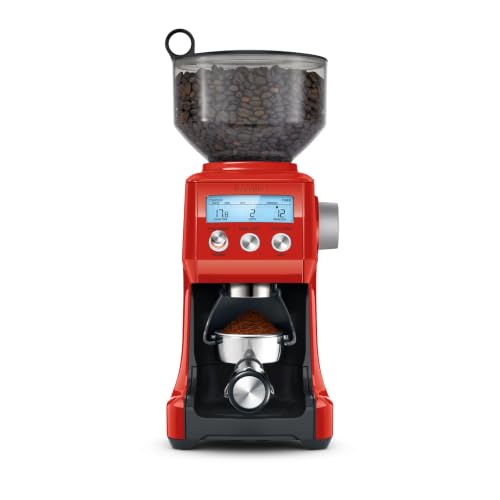
When Step 2’s morning count is high and Step 7’s named friction is time, the method lands here: programmed timed dosing, a portafilter cradle, an extendable fine range, and an interface a half-awake household can operate. Best for: milk-drink households. Not suited for: single-dose explorers. Its retention is the known tax, paid with an occasional scale check.

Eureka Mignon — The Quiet House’s Answer
When Step 5’s noise audit is decisive and the household keeps a house coffee, the method lands on the Mignon: stepless micrometric precision inside a sound-insulated, compact metal body, with flat-burr clarity as a dividend. Best for: settled, quiet households. Not suited for: weekly coffee rotation. Its settings are kept by hand and memory, which its owners come to prefer.

Turin DF64 — The Explorer’s Answer
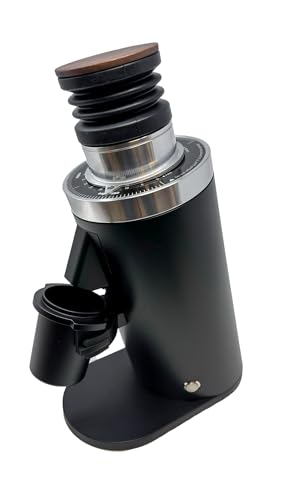
When Step 2’s workflow is single-dose and Step 4’s palate runs light and curious, the method lands on the DF64: flat burrs, stepless control, an empty chamber between coffees, and clarity that makes rotation worthwhile. Best for: single-origin explorers. Not suited for: anyone whose mornings cannot spare the ritual’s seconds. It asks the most and, for its household, returns the most.
Common Mistakes
The method exists because the mistakes are so consistent. Mistake one: choosing by burr diameter or wattage, the two numbers that predict the least about your mornings. Mistake two: buying a general coffee grinder for espresso because its dial shows a fine icon — the failure dissected in the vs comparison linked earlier. Mistake three: choosing the workflow by admiration rather than by morning count, and joining the nearly-new resale market within the year. Mistake four: ignoring the sleeping house until the first dawn. Mistake five: spending the whole budget on the grinder and nothing on the scale that makes its precision usable — the scale is not an accessory to the method but a step within it. Mistake six: treating the first month’s tuition shots as evidence of a wrong purchase, when they are the universal cost of the craft, itemised honestly in espresso grinder pros and cons. Every one of these mistakes is a skipped step; the method is short enough that skipping is never necessary.
There is a seventh mistake, quieter than the six: choosing against a deadline the coffee did not set. Sales events, gift occasions, and a machine’s arrival date all pressure the decision into a weekend, and rushed choosing defaults to the loudest specification rather than the household’s facts. The method’s steps take an unhurried hour in total; a household that cannot find that hour this week will find the grinder waiting next week, unchanged, while a wrong choice made in haste will be sitting on the counter for years. Espresso rewards patience in the cup and in the purchase alike — which is, in the end, the temperament the whole hobby is quietly selecting for.
Pro Tips
Four habits of buyers who choose well. First, shop with your last seven mornings written down — drinks, coffees, wake times — because memory flatters and paper does not. Second, read the manual before the reviews: five minutes with a model’s own instructions on adjustment and cleaning teaches more about living with it than an hour of opinions. Third, email the manufacturer’s support with a parts question before buying; the speed and substance of the reply is Step 6 conducted live. Fourth, decide your return-window test in advance — the specific drinks, on specific mornings, by which the grinder will be judged — so that the first fortnight is an evaluation rather than an anxiety. A buyer who does these four things is not merely choosing an espresso grinder; they are rehearsing the attentiveness that makes any grinder perform, which is why their outcomes are better than the market’s average even on identical machines.
A fifth habit deserves promotion from the worked examples: involve the household before the purchase, not after it. The partner who will hear the grinder at dawn, the flatmate whose counter it shares, the teenager who will be taught to use it — their facts belong in Steps 2 and 5 while the choosing is still free. Grinders are returned for household reasons more often than for coffee reasons, and a ten-minute conversation at the kitchen table is the cheapest research in this entire guide.
Choosing for the Machine You Already Own
The method so far has chosen in the abstract; this section grounds it in the partner already on your counter. If your machine uses a pressurised, dual-wall basket, know that it forgives grind — which tempts buyers to under-buy the grinder and then meet its ceiling the day a standard basket arrives. The method’s counsel is to buy for the basket you will own within the grinder’s first years, not only the one in the box today, because the grinder will outlast several machines’ worth of ambition. If your machine is a manual lever, its feedback is immediate and its demands are the category’s purest: it will show you exactly what your grinder did, shot by shot, and it rewards the finest adjustment you can give it. If your machine is a convenience-led appliance with strong steam and a family queue attached, the grinder should match its temperament — programmed, calm, quick — because a fussy grinder behind an easy machine makes the whole station feel fussy. And if there is no machine yet, reverse the usual shopping order without hesitation: choose the grinder first, by this method, and let the machine be bought to match it. The partnership works best when its senior member is chosen first, and every article in this series is built on that ordering.
Special Cases the Method Handles
The Decaf Household
If decaf is a daily second coffee rather than an occasional guest, retention jumps from a Step 5 consideration to a Step 2 decider: single-dose and straight-through designs change coffees at the cost of one weighed dose, while a loaded hopper makes every switch a negotiation. Decaf’s brittleness also means it often wants a finer setting than the house coffee, so the adjustment test in Step 3 should be applied with decaf in mind — a grinder whose fine range is merely adequate for regular beans may have nothing left for decaf’s demands.
The Tiny Counter
Where the corner is genuinely small, the method’s answer is not a lesser grinder but a narrower one: compact conical specialists exist precisely for this constraint, and a hand grinder in a drawer is the honourable extreme of the same logic. What the method forbids is the hopeful purchase of a full-size machine against unmeasured space — the one choosing error that no amount of cup quality can redeem, because it is re-committed every time something needs chopping.
The Gift Purchase
Choosing for another household inverts the method’s evidence: you know their kitchen better than their palate, so weight Steps 2 and 5 — workflow and realities — above Steps 4 and 7. Forgiveness is the gift-appropriate virtue: a stepped, teachable, compact specialist with its scale included is a working system handed over whole, while an enthusiast instrument handed to a convenience household is a project wearing a bow.
Worked Examples: Three Households Choose
Household One: First Machine, Small Flat, Early Starts
A couple buys their first espresso machine for a small flat; both leave early; a neighbour’s bedroom shares the kitchen wall. Step 1 passes — espresso is the plan, several mornings a week. Step 2 counts two drinks, one coffee at a time: either workflow survives, with a lean toward whichever is tidier. Step 3 eliminates every dial without a true fine range. Step 4, with a taste for classic blends, chooses conical forgiveness. Step 5 is decisive: the neighbour promotes quiet and compactness from preferences to requirements, and the counter measurement eliminates full-size hopper machines. Step 6 favours supported brands. The method’s answer: a compact conical specialist with a fine stepped range — the Encore ESP’s profile, with the Fellow Opus as the design-led alternative the couple also weighed. Note that price never appeared as a step; the household’s facts did the choosing, and the tier followed.
Household Two: Family Lattes, One House Blend
A family of four drinks milk coffee every morning from one beloved house blend, bought in quantity. Step 2 dominates instantly: four drinks, one coffee, no rotation — hopper-fed, and the more automatic the dosing, the better the mornings. Step 3 requires genuine fine adjustment but forgives stepped control, since the setting, once found, will barely move. Step 4 is nearly indifferent — milk forgives geometry — so Step 5’s audit takes over: speed across a queue, a footprint the family kitchen can spare, noise moderated by the fact that the whole house is awake anyway. Step 7 names the friction as time, and the method answers with programmed dosing: the Smart Grinder Pro’s profile, with the Sette 270 as the alternative if a second coffee — a decaf for the evening — enters the picture and low retention starts to matter. The example’s lesson is that for settled households, the choosing is mostly logistics, and logistics honestly faced is not a lesser form of connoisseurship.
Household Three: The Rotating Collection
A solo drinker buys small bags from three roasters, keeps a decaf for evenings, and drinks espresso straight. Step 2 is the whole story: rotation plus decaf plus solo drinking is the single-dose profile in its purest form, and every hopper machine is eliminated before its virtues are even heard. Step 3 wants stepless or fine-hybrid control for the constant re-dialling rotation demands. Step 4, with a palate running to light single origins, chooses flat clarity. Step 5 notes that retention is this household’s mortal enemy and noise barely matters in a house of one. The method’s answer is the DF64’s profile, with the discipline to weigh every dose accepted as the price of freedom. The lesson mirrors Household Two’s: the method does not find the best grinder, it finds the household’s grinder — and for this household, the enthusiast machine is not an indulgence but the only honest fit.
After You Choose: The First Fortnight Plan
Choosing well ends at the checkout only in the sense that a wedding ends at the ceremony; the fortnight after decides whether the choice becomes a success. Plan it before the box arrives. Buy two bags of the same coffee — one to learn on, one to enjoy once you have — because changing coffees while learning the machine doubles every variable. Set the station up completely on day one: grinder unplugged while you inspect and assemble, scale charged and placed, brush at hand, a notebook or phone note open for settings. Season the burrs with a small amount of the learning bag and discard those grounds without tasting them; factories and fresh burr edges are not flavours you need an opinion on. Then dial in by the one-variable rule — grind only, dose fixed by the scale — and write down every setting that produces a drinkable shot, because that notebook is your return ticket for every future bag. Expect the middle of the fortnight to contain the purchase’s emotional low point, a morning of sour shots and static, and know in advance that it is the universal curriculum rather than your machine’s verdict. By the second bag, the settings will have narrowed, the routine will have shortened, and the grinder will have begun its long transformation from purchase to furniture of the mind. Households that plan the fortnight cross it; households that improvise it sometimes return excellent grinders — the final, saddest entry in the catalogue of choosing mistakes.
The One-Page Checklist
Everything in this guide, compressed for the shop floor or the checkout page. Work down it; a candidate that fails an early line does not get to plead its later virtues.
- It is a burr grinder whose maker describes espresso as its purpose, not as one icon among many.
- Its adjustment in the espresso range is dedicated-fine stepped, micrometric, stepless, or macro-plus-micro — and the product page can say which, in words.
- Its workflow — hopper-fed or single-dose — matches the morning count you wrote down in Step 2.
- Its burr geometry matches your palate’s centre of gravity: conical for blends and forgiveness, flat for clarity and light roasts.
- Its retention behaviour matches your coffee-changing habits, and you know how you will purge or clear it.
- Its noise, honestly imagined in your house at your hour, is acceptable to everyone who will hear it.
- It fits its measured corner, with clearance to load and room beside it to work.
- Its maker sells burrs and spares, and its manual treats cleaning as owner work.
- Its tier answers a friction you can name in one sentence.
- The scale is in the basket too — the grinder’s precision is only usable if you can weigh what it does.
Print it, screenshot it, or simply hold it in mind: ten lines that contain the whole method. A grinder that passes all ten is not guaranteed to delight you — taste retains its mysteries — but in the long record of this category’s purchases, it is as close to a guarantee as choosing gets, and it is achievable at every tier the method recognises. Keep the checklist with the grinder’s manual when it arrives; the day a future upgrade tempts you, the same ten lines will tell you, in minutes, whether the temptation is a friction being answered or merely a season changing.
The Espresso grinder Worksheet: Measurements, Counts, and Honest Answers
Start this worksheet with the space, not the product page: measure the exact spot where the espresso grinder will live, including the clearance above it, the swing or reach you need in front of it, and the route you will take to move it for cleaning. Write down the largest item you realistically expect to use with it, because that single measurement settles more sizing arguments than any capacity figure printed in a listing headline. Check the nearest outlet and be honest about whether a cord will cross a walkway, a sink edge, or another appliance that also needs that socket on busy mornings. Count the people the espresso grinder must serve on an ordinary weekday, then count again for the busiest gathering you host in a typical year, and notice whether those two numbers point to the same size.
List the three jobs you will ask of it every week and the one job you will ask only a few times a year, because the weekly jobs should drive the decision and the rare job should not. Decide where the accessories, attachments, and spare parts will be stored before you order, since a espresso grinder whose extras live in a distant cupboard quietly becomes a espresso grinder with fewer features. Where a shortlist names specific examples, such as Baratza Encore ESP, run these same checks against that listing line by line rather than assuming the general verdict transfers unchanged. Apply the identical test to Breville Smart Grinder Pro as well, on the same day and under the same conditions, because a fair comparison needs one ruler rather than two moods.
- Measure the working spot and the clearance around it
- Count weekday servings and the biggest gathering
- List the three weekly jobs in writing
- Decide storage for every accessory in advance
- Name the one compromise you accept knowingly
- Set the return deadline in your calendar
If Eureka Mignon is also in contention, give it the same worksheet and let the three sets of answers sit side by side before anyone reaches for a checkout button. Think about who else in the household will use it, including anyone shorter, anyone with less grip strength, and anyone who will clean it without reading the manual first. Note the surfaces it will touch in normal use and whether heat, moisture, weight, or vibration from the espresso grinder could mark, stain, or stress those surfaces over months of daily contact. Plan the cleaning position as carefully as the working position, because a espresso grinder that is awkward to carry to the sink or to open fully will be cleaned less often than it should be.
Write the three questions you still cannot answer from listings and guides, and treat those unanswered questions as your shortlist filter rather than as details to discover after delivery. Compare the footprint against the appliance or tool it replaces, and decide in advance what leaves the room if the new arrival is larger than the old one. Consider the noise, steam, heat, or light it produces in use and whether that output lands in a room where someone sleeps, works, or studies at the same hours. Check how it behaves at the smallest task, not only the largest, because many households abandon oversized gear that feels clumsy for the quick everyday job.
Think through the second week of ownership, when the novelty has faded, and ask which features you will still touch daily and which were only interesting in the showroom sense. Decide what good enough looks like in writing: the result you would accept without complaint, the result that would delight you, and the result that would send the box back. Look at the controls with fresh eyes and imagine using them with wet hands, greasy hands, or gloves, depending on the work, because small controls punish exactly those moments. Ask how the espresso grinder fails gracefully: whether a worn part, a lost attachment, or a single broken control ends its usefulness or merely removes one mode you rarely used.
Check whether replacement parts and consumables are ordinary, widely stocked items or proprietary pieces tied to one maker, since that difference compounds over years of ownership. Measure the storage shelf, drawer, or cupboard you intend to use with the door closed and other contents in place, not the optimistic empty version of that space. Think about guests and helpers who will meet the espresso grinder without your habits, and whether its safe, correct use is obvious to a newcomer within a minute of looking at it. Write down the one compromise you are consciously accepting, so that when it shows up in daily use it reads as a chosen trade rather than a nasty surprise.
Revisit your shortlist after the worksheet is done and delete any option that fails a measurement, because a tape measure is a cheaper teacher than a returns process. Whatever the category, photograph your intended spot with the neighbouring items in place, because a picture exposes crowding that measurements alone politely ignore. Keep every measurement, tally, and note from these checks in one place, ideally with the receipt, so the next decision in this category starts from your evidence rather than from scratch. Involve the household early where the product is shared, since a decision everyone helped measure is a decision nobody relitigates at the first inconvenience.
Frequently Asked Questions
What is the single most important factor when choosing an espresso grinder?
Adjustment resolution in the espresso range. Espresso extraction lives in a narrow window that moves as beans age, and only a grinder that can move in increments small enough to track it — dedicated fine steps, micrometric, or stepless — can keep a household inside that window. Burr size, motor power, and feature lists all matter less, because none of them can substitute for a setting the machine cannot express. Apply Step 3 of this guide first and the rest of the choice becomes refinement.
Should a beginner choose stepped or stepless adjustment?
Stepped with a dedicated fine range, in most cases. Numbered, returnable settings turn dialling in into a learnable procedure — move a click, taste, write it down — and let a beginner return to a coffee’s setting after changing beans. Stepless systems offer finer ultimate control and reward experienced hands, but their positions live in memory and feel, which is a second skill stacked on top of the first. Beginners who know they love precision instruments can start stepless happily; everyone else learns faster with clicks, and nothing prevents a later move to stepless once the palate starts asking questions clicks cannot answer.
How do I choose between hopper-fed and single-dose?
Count your mornings. Several drinks in a row, one house coffee, a household schedule to keep: hopper-fed, with timed dosing doing the remembering. One or two drinks, several coffees in rotation, a decaf in the evenings, freshness prized above seconds: single-dose, with a scale as part of the appliance. The mistake is choosing by which workflow sounds more serious; both are serious, and each is miserable in the other’s household. Step 2 of this guide exists because this fork, more than any specification, predicts whether a grinder is kept or resold.
Does burr size matter when choosing?
Less than its prominence on product pages suggests. Larger burrs generally grind faster and run cooler, which matters for queues and back-to-back drinks, but burr quality, alignment, and the rigidity of the mounting predict consistency better than diameter does. Treat size as a tiebreaker between otherwise equal candidates, and never as a substitute for the adjustment test: a modest burr set behind micrometric control will out-dial a large burr set behind coarse steps every morning of the year.
What should I check about a manufacturer before buying?
Whether they sell the future: replacement burrs, small spares, and a manual that treats cleaning and burr access as normal owner work. Then, how long the model line has existed and whether the maker’s reputation rests on support. An espresso grinder’s burrs are wear parts by design, so a maker without a parts channel is selling a machine with an expiry date it has not printed. Ten minutes in the parts catalogue is the highest-value research in this entire guide after the adjustment test itself — and unlike a taste test, it can be done from the sofa, before any money has moved.
Can I choose one grinder for both espresso and filter coffee?
Yes, with eyes open about the ceremony. Capable all-rounders exist, and if filter brewing is an occasional guest, one machine commuting between ranges is entirely sensible. The costs are operational — purging between distant settings and re-finding your espresso point — and they are charged every time the machine changes jobs. Households brewing both ways daily usually end with two specialists parked in their own ranges, not because the all-rounder failed, but because specialisation is pleasanter than commuting, a conclusion the side-by-side in our espresso grinder review reaches as well.
Related Guides
espresso grinder buying guide · espresso grinder reviews · best espresso machines for beginners · best coffee scales with timers