Disclosure: As an Amazon Associate, topratedkitchenware.com earns from qualifying purchases. Links on this page are affiliate links; they cost you nothing extra. Prices and availability change often, so check the current Amazon listing before you buy.
Asking is an espresso grinder worth it is really asking whether your household’s coffee life justifies a dedicated, precision instrument — because that is what an espresso grinder is, and its value is measured in years of mornings rather than in any single spectacular shot. The short answer: worth it, decisively, if you drink espresso at home most days and want it to taste like the café’s; not worth it if home espresso is an occasional novelty, if your machine’s pressurised basket and fresh pre-ground coffee already satisfy you, or if the daily ritual of weighing and dialling sounds like a chore rather than a pleasure. Everything between those poles — and most households live between them — is decided by the evidence in the middle of this article, so read the poles as the easy cases and the middle as the real work. The long answer — what you actually get, what it really costs beyond money, who it pays off for, and the checklist that settles it — is the rest of this article.
A word about how to read the verdicts that follow: they are stated for households, not for products, because the same grinder is a bargain in one kitchen and a burden in the next, and any article that prices worth without naming the household is selling something. As you read the profiles, locate your own kitchen among them honestly — including its least flattering facts, the monthly habit dressed as weekly, the corner that is not really free. The checklist at the end will only ever be as truthful as the reading that precedes it, and the households that get this decision right are not the ones with the best information but the ones with the most accurate self-knowledge.
Is an Espresso Grinder Worth It: Key Takeaways
- Worth it if: espresso or milk drinks are a near-daily home habit, you own or will own a machine with a standard basket, and you enjoy small, improvable crafts.
- Not worth it if: home espresso is monthly, counter space is genuinely unavailable, or the household’s coffee happiness already lives in filter brewing.
- What you get is not a better gadget but a capability: consistent, dial-able extraction that no machine upgrade can substitute for.
- The real costs are attention, space, noise, and upkeep — recurring, modest, and honestly listed below.
- The value compounds: a supported grinder serves for years, across machines, and its cost per drink falls every single week.
- The decision rule: if you would buy it again after a month of mornings, it was worth it — and this article helps you simulate that month before spending.
- The deepest return is the least advertised: a palate and a skill that appreciate for life, bought once, in the form of a kitchen appliance.
In this guide
What You Actually Get
Strip away the marketing and an espresso grinder buys four concrete things. The first is capability: grounds at the fineness and uniformity espresso physically requires, which neither a general coffee grinder’s coarse-stepped range nor any blade can produce — the gap demonstrated mechanically in espresso grinder vs coffee grinder. Without this capability, a home espresso machine is a hot-water appliance waiting for its other half; with it, the machine’s own quality finally becomes visible in the cup. The second purchase is consistency: the ability to find the setting a coffee loves and return to it tomorrow, converting espresso from a lottery with occasional jackpots into a routine with occasional experiments. Consistency is the benefit owners cite most, because it changes the emotional character of the hobby — mornings become reliable, and experimentation becomes informative instead of random.
The third thing you get is freedom across coffee itself. A grinder unhooks you from the small world of pre-ground coffee — one fineness, chosen by a roaster for an average machine, staling from the day the bag opens — and admits you to the whole world of whole beans: the local roaster’s new lot, the classic blend, the decaf that is actually fresh, the gift bag from a travelling friend. Every one of those coffees can be dialled to its own setting, and the skill of doing so, once learned, is yours permanently and transfers to every future setup. The fourth purchase is time-proofing: the grinder is the half of the espresso partnership that survives upgrades, because machines change with features and fashion while grind physics does not. Owners routinely carry one good grinder across two or three machines, which reframes its price entirely — it is not an accessory to this year’s machine but the senior asset of a decade’s coffee.
There is a fifth return, harder to price and consistently reported: the grinder makes the household better at coffee in ways that outlast any single drink. You learn what extraction tastes like at its edges, how roast and freshness move the target, how a small physical change becomes a large flavour change — and that literacy improves every cup you make or buy thereafter, filter and espresso alike. Appliances that teach are rare in a kitchen; most merely perform. A grinder apprentices its owner, and the apprenticeship is part of the worth, particularly for households that suspect — usually correctly — that the hobby itself, and not just the beverage, is what they are buying.
The Real Costs Beyond Money
The honest ledger has a second column, and this article’s credibility depends on filling it in. Space: an espresso grinder is a permanent counter resident with a working station around it — scale, tamper, brush, knock box — and in a small kitchen that territory is taken from food preparation, every day, whether coffee is made or not. Attention: dialling in is a small daily discipline, and while devotees call it a ritual, it is fair to record that it is a ritual you cannot skip on the mornings you are late, ill, or simply not in the mood — the grinder does not make coffee by itself, and it never will. Noise: grinding at espresso fineness is loud for its seconds, at the household’s least sociable hour, and while models differ — the insulated designs genuinely help — no electric espresso grinder is a silent one. Upkeep: burrs coat with oil, grounds compact in chutes, and the cleaning rhythm in how to clean an espresso grinder is a recurring appointment, always kept unplugged and dry-handed, that cannot be delegated to the appliance. Learning: the first month includes wasted beans and humbling shots, a tuition every owner pays in coffee and in patience. None of these costs is large. All of them are permanent. The worth-it question is precisely whether your household’s coffee life is rich enough to pay them gladly — which is why the profiles come next.
Two of the costs deserve quantification in kind, because they surprise new owners most. The first is bean waste: dialling in consumes coffee — a few shots per new bag while the setting is found, a small purge after adjustments on hopper-fed machines, the tuition bags of the first month. Skilled, note-keeping owners shrink this to a minor line item; it never reaches zero, because coffee is a moving target and the grinder’s precision is precisely the tool for chasing it. The second is the companion effect: a grinder reveals the weaknesses of everything around it — the scale you now need, the basket that now limits you, the beans that were never as good as their bag claimed. Owners call this the hobby’s gravity, and it is a real cost in money and in innocence. Against both, set the discipline that the checklist imposes: a household that has counted its drinks and its corners has already agreed to these costs in advance, which is most of what separates them from disappointments.
The Money, Spelled Out in Words
Since this series quotes no prices, the financial case must be made in structure rather than figures — and the structure is simple enough to state plainly. A café espresso drink costs what a café must charge for rent, labour, and craft. The same drink at home costs the beans in the basket, the milk if it takes milk, and a whisper of electricity. The gap between those two numbers, multiplied by a household’s drinks per week, is the engine of the payback: for a daily household it closes the grinder’s purchase price in a span best described as months rather than years, and thereafter the grinder is effectively paying the household to own it, one morning at a time. For a weekly household the same engine runs four times slower, and for a monthly one it barely turns over — which is why frequency, stated in the checklist, is the master variable of this entire article. Two refinements keep the arithmetic honest. Home drinkers buy better beans once they can taste them, so the home drink’s cost rises slightly with the grinder’s arrival — a tax every owner pays gladly and a sign the investment is working. And the grinder’s own costs do not end at purchase: burrs eventually, cleaning supplies trivially, and the tuition beans of the first month. Counted whole, the case remains what the profiles said: overwhelming for daily drinkers, arguable for weekly ones, and absent for monthly ones.
There is also the counterfactual ledger, the money spent by not buying. The household that wants café-standard espresso without a grinder pays for it by the cup, forever, at café prices and café hours. The household that buys a machine and starves it of a grinder pays in disappointing drinks from expensive equipment — the worst cell in the whole table, capital spent and quality withheld. And the household that buys a cheap imitation of an espresso grinder pays twice: once for the imitation, once for the real thing it replaces it with, usually within the year. Against those ledgers, the genuine article at a sensible tier is not the expensive option in this category. It is, for the households in the profiles above, the only option that ever stops costing.
Who It Pays Off For
The Daily Drinker With a Standard Basket
The clearest case in this article. If espresso or milk drinks happen at home most days, and the machine’s basket is a standard one that exposes grind quality honestly, the grinder pays off in the only currency that matters — every drink, every day, measurably better and repeatably so. Against café prices, the arithmetic of a daily habit justifies the purchase in a modest span of months; against pre-ground coffee, the justification is quality rather than money, and it arrives with the first dialled-in shot. For this profile, the question is not whether but which, and the choosing method in how to choose an espresso grinder is the sequel to this article.
The Home Barista in the Making
Some households can feel the hobby arriving before it lands: the machine is being researched, the local roaster knows their name, the filter setup is quietly excellent. For them the grinder is worth it ahead of schedule, because it is the instrument the whole future hobby runs on, and because learning it alongside a first machine concentrates the tuition into one honest month rather than spreading it across years of compromised shots. Buy the grinder for the drinker you are demonstrably becoming — this is the one profile licensed to buy aspirationally, because the aspiration is already visible in behaviour.
The Household Entertainer
For the household whose table fills on weekends, the grinder pays off socially as well as privately: after-dinner espresso made properly, to order, is a course in itself, and a capable grinder is what separates that flourish from a apologetic pot of something. The payoff calculation here should count guests as drinks — a household that serves six espressos every Sunday is a high-volume household wearing a low-volume disguise, and it should buy, and judge worth, accordingly.
The Drinker Whose Café Closed the Gap Analysis
One more profile is increasingly common: the drinker whose local café sets a standard they have started, consciously, to chase at home — who has tasted what their favourite beans do in skilled hands and wants that result from their own kitchen on the days the café is closed, distant, or simply not the plan. For this drinker the worth-it question answers itself the first time the home shot lands where the café’s does, because the comparison they cared about was never money. It was sovereignty over a daily pleasure — and a grinder is precisely the instrument that transfers that sovereignty from a business’s counter to their own.
Who Should Skip It
The Occasional Drinker
If home espresso is a monthly pleasure, the ledger inverts: the costs — space, upkeep, the learning curve that never quite gets climbed at that frequency — run continuously, while the benefits arrive twelve times a year. Worse, an infrequently used grinder is a stale grinder, its retained grounds ageing between sessions. This household is better served by excellent beans bought small and pre-ground fresh for a pressurised basket, or by the café itself — and by revisiting this article if the habit ever thickens.
The Filter-First Household
If the household’s coffee soul lives in pour over, drip, and press, an espresso grinder is a specialist bought for a method nobody loves, and its considerable virtues will sit in the corner being admired past. The money serves this household better in a superb filter grinder, better beans, and a kettle with manners. Espresso’s grinder earns its worth only in espresso’s service; there is no honour lost in declining it, and the balance sheet in espresso grinder pros and cons will confirm the decision from the other side.
The Zero-Maintenance Kitchen
Some households run, by deliberate philosophy, a kitchen of appliances that ask nothing. An espresso grinder asks something every day — a wipe, a weigh, a nudge, a rhythm of cleaning — and a household that knows it will resent the asking should believe itself. The grinder will not reform its nature to suit the kitchen; the mismatch will simply be re-experienced daily at dawn, which is the worst possible terms on which to own a precision instrument.
The Short-Horizon Household
Finally, the household in transit — renting briefly, expecting a move, a renovation, or a change of country within the year — should discount the grinder’s worth by its own horizon, because so much of the value is compounding: the learning invested in one kitchen’s setup, the routine built around one corner, the years over which the purchase divides itself. A hand grinder travels; a countertop specialist anchors. Households that know their anchor is temporary are not failing the checklist by waiting — they are applying its last question, about years rather than seasons, with exactly the honesty this article has been asking for throughout.
The Strengths and Trade-Offs of Owning One
Strengths of ownership
- Every espresso drink at home rises to the standard your machine was always capable of — the single largest quality jump available to a home setup.
- Consistency turns mornings into a routine and experiments into knowledge; you stop gambling and start cooking.
- The asset endures: supported, repairable, and portable across machine upgrades, with a resale market that respects it.
- Hospitality rises with it: drinks made to order, at café standard, turn an ordinary evening at home into an occasion guests remember.
Trade-offs of ownership
- A permanent counter territory and a daily discipline of weighing, dialling, and wiping that the household must genuinely accept.
- Noise at dawn and a cleaning rhythm that recurs for the life of the machine.
- An upward recalibration of taste that quietly taxes coffee everywhere else — cafés included.
- A small, permanent tuition in attention: the grinder rewards households that notice, and declines, politely but completely, to be ignored.
Alternatives to Consider
Worth-it is a comparative judgement, so the alternatives deserve honest presentation. The first is the status quo refined: keep a pressurised basket, buy small bags of coffee ground fresh by a good roaster, and accept the ceiling — a legitimate, inexpensive strategy whose quality is better than its reputation, and the right answer for the occasional drinker profile above. The second is the machine with a built-in grinder: one footprint, one purchase, real convenience, paid for with coarser adjustment and a grinder whose lifespan is married to the machine’s — the right answer for convenience-first households that value simplicity over trajectory. The third is the premium hand grinder, which delivers genuine espresso capability in silence and a drawer, at the price of physical effort per drink. The fourth is the café, which should never be embarrassed to appear in this list: for low-frequency drinkers, someone else’s grinder, machine, and skill, bought by the cup, is the economically literate choice, and no article about worth should pretend otherwise.
Judge each alternative by the same standard as the grinder itself — not its best day but its hundredth. The pressurised basket’s ceiling is invisible until the day it is not, and households should know in advance that the day usually arrives. The built-in grinder’s convenience is real every single morning, and households should weigh that repetition as heavily as the adjustment they are giving up. The hand grinder’s effort is charming at one drink and arithmetic at four. The café’s cost is painless per visit and substantial per year. Worth lives in the hundredth repetition of everything, which is why this article keeps returning to frequency: it is the exponent in every equation the alternatives offer.
1Zpresso J-Ultra — The Hand-Grinder Alternative
For the solo drinker weighing the worth-it question, a top-tier hand grinder like the J-Ultra reframes it: espresso-capable burrs and fine adjustment, no counter territory, no noise, no electricity — and effort as the entire price of admission. If your volume is one or two drinks and your mornings are quiet ones, it may be worth more to you than any electric machine in this series. Best for: solo drinkers, travellers, quiet houses. Check price on Amazon where its verified listing appears.
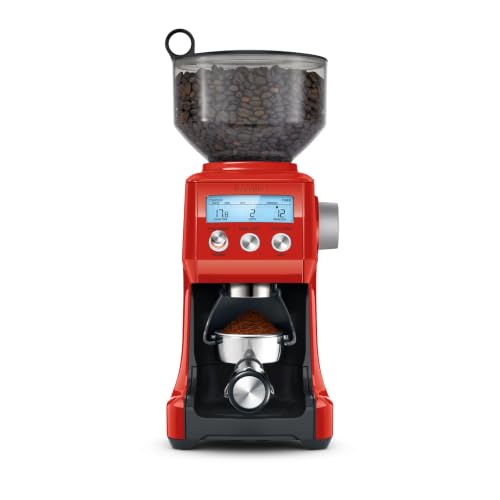
Baratza Encore ESP — The “Buy Once” Answer
If the alternatives have clarified that you do want the electric specialist, the worth-it logic points at the sensible end of it: the Encore ESP buys the essential capability whole, from a maker whose parts support protects the investment for years, without paying premiums for refinements you have not yet learned to want. It is the model this series returns to whenever the question is value, because value is precisely its design brief. Best for: first-time buyers who intend to keep what they buy.
Three Households, Three Verdicts
The Couple Who Counted
Two adults, two cappuccinos every weekday, a café habit on weekends that they added up one evening and stared at. They bought an entry specialist and a scale, spent a month of mornings learning it — the tuition this article promises — and by the second month the routine ran itself: settings known, dose weighed without thought, the café demoted to a treat rather than a supplier. Their verdict, a year in, is the daily drinker’s verdict in its purest form: the grinder was worth it by spring, and everything since has been dividend. Note what their story does not contain — no premium tier, no enthusiast ritual — because worth, for them, was arithmetic plus reliability, and both were delivered at the sensible end of the market.
The Explorer Who Waited
A solo drinker bought a good machine and, sceptical of articles like this one, spent a year pulling shots through a general grinder and a pressurised basket, telling himself the difference was exaggerated. A friend’s visit — the same beans through a borrowed single-dose grinder — ended the argument in one cup. His verdict is the convert’s: worth it, and worth it earlier, with the year’s tuition-in-frustration counted as the real waste. His story matters because it is the most common route to ownership in this category: not persuasion, but a single comparison tasted side by side. If you are this reader, the article’s advice is to arrange the comparison before the year, not after it.
The Household That Correctly Said No
A family drank espresso at home on Sundays, loved their filter coffee on weekdays, and had a kitchen where every corner already had a job. They read the checklist, answered honestly — frequency low, space contested, ritual unwanted — and spent the money on a superb filter grinder and a year of excellent beans instead. Their Sunday espresso comes from a small bag ground fresh at the roaster for their pressurised basket, and it is, by their account, exactly good enough. Their verdict completes this article’s honesty: the espresso grinder was not worth it for them, and the decision not to buy it was a successful use of the same analysis that tells the couple above to buy without hesitation. Worth is a property of households, not of products.

Fellow Opus — The Lower-Commitment Electric
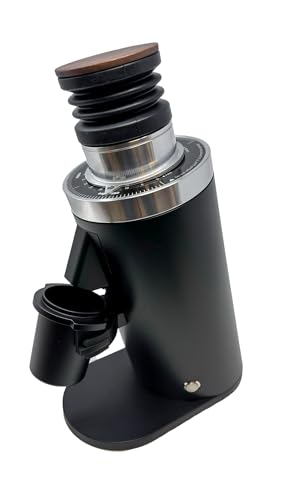
For households whose verdict is “probably, but gently,” the Opus represents the electric specialist at its least imposing: compact, tidy, quiet-mannered, and broad enough in range to serve filter coffee on the side, which hedges the purchase against a change of heart. A hedge is not a failure of conviction; for the undecided-but-drinking household, it is the rational shape of a first yes. Best for: small kitchens and mixed-method households testing the espresso life.
How to Get the Most Value If You Buy
Owners who extract the most worth from an espresso grinder share five habits. They buy the workflow, not the specification — the format their mornings actually fit, chosen by the method this series repeats. They buy the scale with the grinder, because precision you cannot measure is precision you cannot use, and the scale is what converts the grinder’s capability into repeatable drinks. They learn on one coffee, changing one variable at a time and keeping notes, so the tuition month teaches permanently instead of merely passing. They keep the machine clean on rhythm — unplugged, dry, brief, and often — because a clean grinder is a consistent grinder and consistency is the entire return on the purchase. And they let the grinder be the senior partner: when upgrade money appears, they spend it on beans and burrs before machines, trusting the physics that the grinder, not the gleaming appliance beside it, decides what the cup can be. None of these habits costs much. Together they are the difference between a grinder that was worth it and a grinder that was merely bought — the same machine, in two different households, returning two different verdicts on this article’s question.
One more habit belongs on the list because it protects all the others: revisit the verdict at six months, deliberately. Ask the checklist’s questions again with a season of evidence behind the answers — frequency as lived, noise as heard, ritual as felt. Households that do this either confirm the purchase with a confidence that ends all second-guessing, or they learn, while the machine’s resale value is at its peak and the lesson is fresh, exactly which format should replace it. Worth, treated as a verdict to be audited rather than a hope to be defended, has a way of staying true — and a grinder audited honestly at six months is a grinder whose tenth year is already being looked after.
The Durability Ledger: Worth Measured in Years
A final dimension of worth that purchase-day thinking misses: what the grinder is, physically, across time. The category’s best machines are built like small industrial tools — metal where stress lives, burrs designed as replaceable wear parts, motors specified for decades of domestic duty — and they are supported like it, with parts catalogues that treat a ten-year-old machine as a current customer. The consequence for worth is compounding in the literal sense: every year of service divides the purchase further while the capability stays whole, refreshed by a burr change that costs a fraction of replacement. Compare the trajectory of the disposable alternative — a cheap grinder whose sealed burrs dull in a few years, whose maker sells no parts, whose failure is total and whose replacement is a second purchase of the same disappointment — and the premium for durability resolves into what it actually is: the cheaper way to own grinding across any horizon longer than a couple of years. There is an environmental line in the same ledger, worth stating without piety: one repairable machine kept for a decade is a smaller material story than three sealed ones landfilled in sequence, and the households that keep their grinders longest are, not coincidentally, the ones whose worth-it verdicts read most emphatically. Durability is not a separate virtue from value in this category. It is value, expressed in years.
Trying Before You Commit: The Middle Answers
Between buying and declining sits a set of honest experiments for the genuinely undecided, and a worth-it article should name them. Borrow the experience: a friend’s setup, a roaster’s brew bar, a café that will pull your own beans on their grinder — one side-by-side tasting teaches more than a month of reading, as the explorer’s story above shows. Buy used: a supported brand’s grinder, cleaned thoroughly and inspected as this series describes, delivers the capability at a fraction of the commitment, and its resale value means the experiment can be nearly free if the verdict is no. Buy the hand grinder first: for a solo drinker it is not a compromise but a complete answer, and even in households that later electrify, it remains as the quiet-hours and travel instrument, so its purchase is never wasted. Or set a trial by calendar: commit to the café-comparison for a month — track what the household actually spends and drinks — and let the record, rather than the mood, answer the frequency question on which everything else depends. The undecided household’s enemy is not a wrong answer but an unexamined one; any of these experiments replaces examination-by-imagination with evidence, and evidence is what the checklist at the end of this article runs on.
What “Worth It” Looks Like After a Year
Project the purchase forward, because that is where its verdict is actually delivered. After a year, the daily household’s grinder has produced hundreds of drinks at a standard the household now takes for granted — which is the deepest form the worth takes: not delight, but a raised baseline that no longer feels like an event. The settings for the house coffees are reflexes. The cleaning rhythm is a habit measured in seconds. The machine beside the grinder, whatever its tier, is finally performing in public what its specification always promised. And the household’s palate has quietly become the best coffee instrument it owns, calibrated by a year of honest feedback — an asset that survives even the grinder itself. Set against that the year of the household that bought wrongly: the single-dose instrument in the queue household, resented by October and replaced by spring, its cost doubled by its successor. And the year of the household that needed one and never bought: twelve months of almost-espresso from a good machine, a low, constant dissatisfaction that no single cup ever quite justifies fixing. The worth-it question, seen from a year out, is rarely about the money. It is about which of those three years the household would rather have lived — and that question, fortunately, can be answered in advance by the checklist below with unusual reliability.
Worth It, Tier by Tier
The worth-it question has a second axis the profiles only imply: not just whether to buy, but how far up the ladder the worth extends. At the entry tier, the worth is easiest to defend, because what it buys — the capability itself, whole and genuine — is the thing the entire article has been valuing. A household that stops there has captured the great majority of the available quality, and its remaining frictions are the known, priced ones. The mid tier’s worth is conditional in a specific way: it buys the removal of named frictions — queue time, purging, dosing drift — and it is worth it exactly when the household can name the friction from experience, ideally from a season spent at the entry tier feeling it. Bought in advance, on speculation, mid-tier refinements are the category’s most common overpayment; bought in response, they are among its most satisfying. The premium tier’s worth is real but personal in a way the others are not: quiet, materials, and clarity at the extremes are worth their price to the households that feel them daily and nearly invisible to those that do not, and no review can feel them on your behalf. The ladder’s lesson mirrors the choosing method’s: climb for reasons with names, and every tier will be worth it; climb for reassurance, and no tier will be. The households in the stories above illustrate both halves — the couple’s entry-tier contentment, and the explorer’s discovery that his missing worth was never a tier at all, but the category itself, one rung of which would have served him from the start.
The Decision Checklist
Answer honestly; the rule follows the list.
- Do you drink espresso or milk drinks at home at least four days a week?
- Does your machine have a standard basket — or will your next one?
- Can the kitchen give the grinder a permanent corner without resentment?
- Is anyone in the house dangerously sensitive to brief morning noise?
- Do you already buy, or genuinely want to buy, whole beans?
- Does a small daily ritual of weighing and adjusting sound like pleasure rather than tax?
- Will you keep a simple cleaning rhythm — and enjoy a machine that rewards it?
- Do you expect this setup to live for years rather than seasons?
- When you imagine the hundredth morning with it — not the first — does the picture please you?
Score it plainly. Yes to the first two and most of the rest, with a no on the noise question: buy, and buy the workflow that fits — it will be worth it, and the only remaining task is choosing well. Yes to the first two but a household that fails on space, noise, or ritual: buy smaller, quieter, or by hand — the hand-grinder alternative exists precisely for your arithmetic. No to either of the first two: do not buy yet. Spend the money on beans and the café, keep this article, and let a changed habit reopen the question — because the grinder will still be there, unchanged and excellent, on the day your mornings actually need it.
That is the whole argument, and it is worth noticing how little of it was about the grinder. The machines are known quantities — their capabilities, costs, and characters fill the rest of this series — and they do not change from kitchen to kitchen. What changes is the household: its frequency, its space, its ears, its appetite for ritual, its horizon. “Is an espresso grinder worth it” is therefore a question a household answers about itself, with the grinder merely as the occasion. Answer it with the evidence of your own mornings and the answer will hold — in the cup, at dawn, for years — which is the only place worth was ever going to be measured anyway.
Worth It, Counted: A Practical Trial Before You Decide
Borrow, rent, or simulate before you commit if you possibly can, and run the espresso grinder through your real week rather than an imagined improved version of it. Keep a plain tally of uses for a month, on paper on the fridge if necessary, because the honest count of actual uses is the number every value judgement secretly depends on. Note what each use replaced: a purchase, a chore done by hand, another appliance’s time, or nothing at all because the job would simply not have happened. Record the minutes the espresso grinder saves or costs across a whole session, including setup and cleaning, since value lives in the full cycle and not in the headline moment.
Write down the uses that felt like genuine pleasure rather than mere efficiency, because enjoyment is a legitimate return and pretending otherwise distorts the arithmetic. Ask who else in the household benefits and who merely tolerates the storage, the noise, or the counter space, and count those votes without weighting your own twice. Where a shortlist names specific examples, such as 1Zpresso J-Ultra Hand Grinder, run these same checks against that listing line by line rather than assuming the general verdict transfers unchanged. Apply the identical test to Baratza Encore ESP as well, on the same day and under the same conditions, because a fair comparison needs one ruler rather than two moods.
- Tally real uses for one full month
- Log what each use actually replaced
- Count full-cycle minutes including cleaning
- Give the space a vote in the decision
- Imagine a breakdown in year two
- Set a decision deadline with a default
If Fellow Opus is also in contention, give it the same worksheet and let the three sets of answers sit side by side before anyone reaches for a checkout button. Consider the space as a cost with a rent of its own: a espresso grinder that earns its footprint weekly is a different proposition from one that squats on it monthly. Think about the season ticket question: whether your interest is a durable habit or a project-shaped enthusiasm that will fade when the project ends. Compare against the honest alternative, which is usually doing the job with what you already own, slowly and imperfectly, rather than against doing it not at all.
Imagine the espresso grinder breaking in year two and ask whether you would replace it immediately, eventually, or never, since that imagined answer is the cleanest verdict available before buying. Factor in the learning period without resenting it, but do not let a promise of future ease excuse a present that your tally says is not working. Notice whether you keep finding new jobs for it or keep finding excuses to use it, because the difference between those two patterns is the difference between value and clutter. Give the decision a deadline and a default: if the tally has not persuaded you by that date, the answer is no for now, and no is a complete decision rather than a failure.
Revisit the question if your household, space, or routine changes materially, because worth is a property of a match between product and life, not of the product alone. Write the sentence that would make it worth it, in advance and in numbers you can check, so the verdict comes from evidence you gathered rather than from mood at the checkout. Count the accessories you would genuinely buy alongside it as part of the commitment, since a product that only works with extras is really the bundle, sized as such. Ask whether the same money and space spent on your current setup, on better ingredients, storage, or a repair, would beat the improvement the espresso grinder promises.
Talk to your future self at the spring clean: will this be in the used-weekly group, the stored hopefully group, or the why-do-we-own-this group, and what in the tally supports that guess? Accept that a narrow, wholehearted yes for one weekly job is worth more than a broad, lukewarm yes across ten occasional ones. Close the question by deciding what happens to the tool or appliance it replaces, because keeping both forever is often the hidden cost that tips a fair yes into a no. Whatever the category, photograph your intended spot with the neighbouring items in place, because a picture exposes crowding that measurements alone politely ignore.
Keep every measurement, tally, and note from these checks in one place, ideally with the receipt, so the next decision in this category starts from your evidence rather than from scratch. Involve the household early where the product is shared, since a decision everyone helped measure is a decision nobody relitigates at the first inconvenience. Prefer the option that fits your existing routine with the fewest new habits, because each new habit is a small tax collected every single day. Be wary of solving a storage problem by creating a carrying problem, since distance between storage and use is where good equipment goes to be forgotten.
Frequently Asked Questions
Is an espresso grinder worth it for beginners?
Yes — arguably it is worth most to beginners, because it removes the variable that makes learning impossible. A new drinker fighting an under-capable grinder cannot tell their own errors from the equipment’s, and learns slowly and discouragingly. A beginner on a true espresso grinder gets honest feedback from the first week: change the setting, taste the change, improve. The forgiving entry models exist for exactly this reader, and the tuition month they require is shorter and cheaper than the semesters spent compensating for the wrong grinder. There is a corollary worth stating to the beginner’s household: the grinder’s worth includes the drinks of everyone who learns on it, and a machine that teaches one drinker well tends, at a busy counter, to teach the whole household — a return that never appears in the per-drink arithmetic and is nonetheless among the largest the purchase makes.
How long does an espresso grinder take to pay for itself?
Against café prices, a daily home habit typically justifies the purchase within a modest span of months, because the per-drink cost at home — good beans included — is a small fraction of a café’s, and the grinder is a one-time cost divided by every drink thereafter. Against pre-ground coffee at home, there is no payback in money at all, and pretending otherwise would be dishonest: the return there is quality, consistency, and freedom, which daily drinkers consistently report as the better bargain. Either way, the grinder’s long service life means the calculation improves with every month of ownership. The honest way to run your own numbers is with your household’s actual drink count from the last month — not the count you intend, the count you can prove — multiplied out over a conservative two or three years of the machine’s decade-scale life.
Is it worth upgrading from a general burr grinder?
If you make espresso with a standard basket, it is the single most valuable upgrade available to you — larger, in the cup, than upgrading the machine itself. The general grinder’s limitation is not quality but geometry: its steps are sized for filter brewing, so espresso’s correct setting falls between them, and no technique can select a setting the dial does not contain. Owners making this upgrade describe it uniformly as the moment home espresso started working. Keep the general grinder for filter duties, where it remains excellent, and the pair will serve both methods properly. Judged strictly as worth, this upgrade has the shortest road to yes in the entire article: the household already owns the machine, already buys the beans, already drinks the drinks — the grinder is the one missing term in an equation everything else has already been paid for.
Can I skip the grinder and buy a better espresso machine instead?
You can, and the shots will mostly not improve — which is the expensive way to learn this article’s thesis. Machines deliver hot water at pressure with reasonable consistency across a wide span of prices; extraction is decided by the coffee bed, and the bed is built by the grinder. A fine machine behind a weak grinder produces the weak grinder’s espresso with better steam. If the budget forces a sequence, grinder first is the order that improves drinks at every step, as the hands-on findings in our espresso grinder review set out. The sequence matters financially as well as gastronomically: a grinder bought first starts its payback immediately, on the machine you already own, while a machine bought first waits — gleaming, expensive, and throttled — for the partner that makes it worth its own price.
Is a hand grinder a worthwhile alternative?
For the right drinker, entirely. A premium hand grinder delivers genuine espresso capability — real burrs, fine adjustment — with no noise, no counter territory, and no electricity, and its grind quality embarrasses electric models at higher prices. Its cost is effort, multiplied by drinks per day: a pleasure for a solo ritual, a workout for a household queue. Judge it by your volume and your mornings, and it will either be the smartest purchase in this article or an honourable near-miss. Note, too, its role as the experiment that settles the question cheaply: a season with a hand grinder teaches a household its true frequency and its true appetite for ritual, after which the electric decision — in either direction — makes itself.
What if I buy one and my habits change?
Then the grinder’s durability protects you twice. A supported brand holds resale value in a healthy second-hand market, because its burrs are replaceable and its wear is honest; and a household that drifts from espresso to filter will find most espresso grinders perfectly competent at filter range, so the machine retires sideways rather than into a cupboard. The purchase is unusually forgiving of changed minds — one more reason the worth-it answer, for households anywhere near the daily-drinking line, tilts yes. The same is true in the other direction: a household that declines today and converts next year has lost nothing but a year of café visits it presumably enjoyed, and will find this article’s analysis waiting, unchanged, because households change faster than grind physics does.
Related Guides
espresso grinder buying guide · espresso grinder reviews · best espresso machines for home baristas · best coffee makers with a grinder