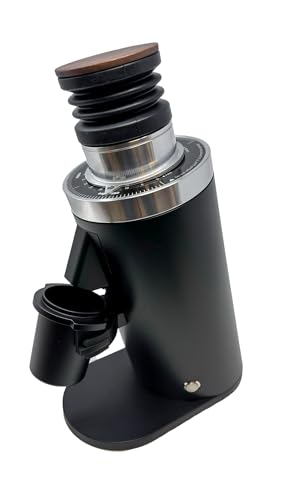
Disclosure: As an Amazon Associate, topratedkitchenware.com earns from qualifying purchases. Links on this page are affiliate links; they cost you nothing extra. Prices and availability change often, so check the current Amazon listing before you buy.
Weighing espresso grinder pros and cons honestly matters because an espresso grinder is not a small appliance purchase — it is a daily instrument that will either become the quiet centre of a satisfying ritual or the loud, messy reason a beautiful espresso machine gathers dust. The pros are substantial and real: nothing else you can buy transforms home espresso as completely. The cons are equally real: cost, noise, mess, counter space, and a learning curve that humbles almost everyone in the first month. This article lays out both sides in full, explains what the trade-offs mean for different kinds of drinkers, and shows how the right setup and care habits shrink the cons considerably — so you can decide with your eyes open rather than discovering the balance after the box is opened.
Espresso Grinder Pros and Cons: The Quick Verdict
The short verdict: for anyone who drinks espresso at home more than occasionally, the pros of owning a proper espresso grinder outweigh the cons decisively, because grind quality is the ceiling on everything an espresso machine can do. The cons concentrate in the first month — money spent, skills not yet learned, a routine not yet formed — while the pros compound for years. The balance flips only for genuinely occasional drinkers, for households where counter space is already contested, and for anyone who knows honestly that a weighing-and-dialling ritual will feel like homework rather than pleasure.
One clarification before the lists: this article judges the category, not a single model. Every espresso grinder shares the category’s core pros — consistency, freshness, control — because they arise from burr grinding at espresso fineness itself. The cons vary more by model: noise, retention, and footprint are design choices, and a well-chosen model can soften the specific cons you care about while accepting the ones you do not. Read the pros as promises the category keeps, and the cons as a shopping list of what to check, model by model, before you buy.
Key Takeaways
- Pro: a dedicated espresso grinder unlocks consistency — the same shot, repeatably — which no machine upgrade can substitute for.
- Pro: fresh grinding at the moment of brewing preserves aromatics that pre-ground coffee loses within days.
- Con: the category demands real money, real counter space, and a real learning curve; none of the three can be wished away.
- Con: noise, static mess, and retained stale grounds are daily management tasks, not one-time setup issues.
- The trade-offs are not fixed: workflow choice (hopper-fed versus single-dose) and cleaning habits move several cons substantially.
- Best for: daily and near-daily espresso drinkers. Not suited for: occasional drinkers well served by a café or by pre-ground coffee in a pressurised basket.
In this guide
The Pros
Pro: Consistency You Can Taste
The headline advantage of a dedicated espresso grinder is repeatability at espresso fineness. Its burrs are cut for the fine end of grinding, its adjustment moves in increments small enough to change a shot’s timing by seconds, and its motor and burr mounting hold that setting under load. The practical result is that once you find the setting a coffee loves, you can return to it tomorrow and next week and pull recognisably the same shot. Without that, home espresso is a lottery in which good shots happen to you occasionally; with it, good shots are a routine you own. Every other pro in this list is downstream of this one, because consistency is what turns experimentation into learning: change one thing, taste the difference, and know the difference was real.
Pro: Freshness at the Moment It Matters
Whole beans protect their aromatics inside a hard shell; the moment coffee is ground, its enormous new surface area begins surrendering those aromatics to the air, and ground coffee stale-dates in days rather than weeks. An espresso grinder on the counter means every shot is ground seconds before water touches it, at the exact fineness your machine needs — something no bag of pre-ground coffee can offer, since pre-ground must compromise on a single fineness chosen by the roaster for an average machine. Owners consistently describe the first fresh-ground shot from a new grinder as the single largest taste jump in their home coffee journey, larger than any machine change, and the chemistry of surface area and oxidation explains why.
Pro: Control Over Every Coffee You Meet
A proper espresso grinder turns the entire world of whole-bean coffee into your menu. Without one, you are limited to coffees available pre-ground, ground for someone else’s machine. With one, a dense light roast from a local roaster, a classic dark Italian-style blend, and a decaf for the evening are all equally available, each dialled to its own setting. That freedom compounds: you can buy small bags, chase seasons, accept gifts of beans, and rescue a disappointing coffee by adjusting the grind rather than blaming the bag. The grinder is, in this sense, less an appliance than a passport — and the control extends to other brew methods too, since most espresso grinders cover the filter range competently when asked, a versatility weighed further in espresso grinder vs coffee grinder.
Pro: It Makes the Machine You Own Better
An espresso machine’s job is comparatively simple: deliver hot water at stable pressure. Extraction quality — the flavour actually dissolved into the cup — is governed by the coffee bed the grinder built. This is why experienced home baristas insist the grinder is the senior partner, and why upgrading a grinder transforms shots from a modest machine while upgrading a machine behind a poor grinder changes surprisingly little. Owning a real espresso grinder therefore raises the value of equipment you already have, and it future-proofs you: the grinder you buy today will still be the right grinder behind the machine you buy in five years, a durability of relevance few kitchen purchases offer.
Pro: A Ritual Many People Genuinely Love
Counted honestly among the pros is the pleasure of the process itself. Weighing beans, hearing the burrs spin up, watching fresh grounds mound in the basket, smelling the aromatics bloom — for many owners this is a small daily ceremony that anchors the morning, closer to cooking than to operating an appliance. The ritual is also social: guests are fascinated, partners get recruited, and the kitchen gains a centre of craft. Not everyone will feel this, and the cons section will speak for those who do not, but dismissing the ritual as mere friction misses why so many owners describe their grinder, unprompted, as their favourite thing in the kitchen.
Pro: Long Service Life and Repairability
Compared with most countertop appliances, espresso grinders from established makers are built to be kept. Burrs are consumables with replacements sold openly; motors, switches, and hoppers are serviceable; brands like Baratza have built reputations on parts availability and repair guidance. A grinder bought well is therefore a decade-scale purchase whose cost spreads across thousands of drinks, and whose environmental footprint compares kindly with a sequence of disposable appliances. This longevity also underpins a healthy second-hand market: a used espresso grinder from a supported brand is a rational buy in a way a used blade grinder never is, which returns real value to owners who eventually upgrade.
Pro: It Teaches You Coffee
An underreported pro is educational. Owning an espresso grinder forces an apprenticeship in extraction: you learn what a coffee tastes like under-extracted and over-extracted, how roast level and freshness move the target, and how small physical changes produce large flavour changes. That knowledge transfers everywhere — to cafés, where you begin to taste what the barista did; to other brew methods, where your filter coffee quietly improves; and to buying beans, where you develop preferences grounded in experience rather than packaging. Few kitchen tools repay their owner with a genuine skill, but a grinder does, and the skill does not depreciate when the appliance eventually does.
The Cons
Con: The Real Cost of Entry
There is no honest way around the first con: a true espresso grinder costs meaningful money, and the very cheap end of the category is populated by machines that claim espresso capability their adjustment systems cannot deliver. The entry tier of genuine espresso grinders — machines like the Baratza Encore ESP and Fellow Opus — is a considered purchase, and the enthusiast tier is a major one. Owners also discover accessory gravity: a scale, a dosing funnel, a distribution tool, better baskets. None is strictly required on day one, but the hobby has a way of presenting them. Budget for the grinder as the centrepiece it is, and be wary of any product whose price seems to exempt it from the physics of motors, burrs, and machining — that exemption is always paid in the cup instead.
The cost con also has a time shape worth understanding. Unlike a subscription or a consumable, the grinder’s cost is front-loaded and then nearly stops: beans and the occasional cleaning supply are the running expenses, and burrs last a home user a long while before replacement. This is why the per-drink arithmetic improves relentlessly — every month of ownership divides the same purchase across more drinks — and why short ownership is the expensive way to own one. A grinder bought, struggled with for six weeks, and abandoned in a cupboard is the worst financial outcome in the category; a grinder bought thoughtfully and kept is among the best-value appliances in the kitchen. The difference is rarely the machine. It is whether the buyer weighed the cons in this article before, rather than after, the purchase.
Con: The Learning Curve Is Real
Dialling in is a skill, and the first weeks include sour shots, bitter shots, choked shots, and the suspicion that the machine is broken. It is not broken; espresso simply has a narrow window of correctness, and finding it requires changing one variable at a time and tasting honestly — a discipline nobody is born with. The learning curve is steepest for owners whose grinder has coarse adjustment, because the right setting may not exist on their dial, but even with excellent equipment expect the first bag of beans to be partly tuition. Households should buy a grinder with this month in mind: forgiving adjustment and consistent dosing shorten the curve considerably, which is why beginner-suitable models earn their place in our espresso grinder buying guide despite modest specifications on paper.
Con: Noise, Especially in the Morning
Grinding dense beans to powder is mechanical work, and it sounds like it. Espresso grinders run loud for the seconds a dose takes — longer than filter grinding, because fine grinding is slower — and they do it at the least sociable hour of the day. Models differ: sound-insulated designs like the Eureka Mignon range are markedly more civilised, and low-speed conical designs have a softer character than high-speed ones, but no electric espresso grinder is quiet in any absolute sense. In apartments with thin walls, sleeping children, or shift-working partners, this con is not trivial; it shapes when coffee can be made and can genuinely limit the appliance’s usefulness in the homes that need it most.
Con: Mess, Static, and Retention
Fine grounds cling. Static electricity generated during grinding scatters coffee onto the counter, the grinder’s own surfaces, and the floor, with dark roasts and dry winter air making it worse. Inside the machine, retained grounds from the last session mix into the next dose, blurring setting changes and, if the grinder sits unused, going stale where they lie. Managing all this — dosing cups, funnels, a brush kept nearby, purging a little coffee after adjustments, a drop of water on beans for single-dose users where the maker permits — is a set of small habits rather than a single fix. Owners who expected a sealed, self-cleaning appliance find this the most wearing con of all, because it never fully goes away; it is only ever managed well or managed badly.
Con: Counter Space and Presence
An espresso grinder is a permanent resident, not a cupboard appliance: it is too heavy and too used to put away, it needs clearance above for its hopper, and it anchors a small workstation of scale, tamper, and knock box around itself. In a small kitchen, that footprint competes with food preparation in a way a kettle never does. Compact models soften the problem — the Fellow Opus was plainly designed by people who measured small counters — but the category as a whole asks for a dedicated corner, and kitchens without one will feel the imposition daily. Measure honestly before buying, including the space your hands need to work, not just the machine’s base.
Con: Maintenance Is Ongoing
Coffee is oily, and at espresso fineness those oils coat burrs and chambers, eventually seasoning every shot with the ghost of old coffee. An espresso grinder therefore needs regular brushing, periodic deeper cleaning, and eventual burr replacement — none of it difficult, all of it recurring. The full routine is laid out in how to clean an espresso grinder, and it is genuinely simple; the con is not complexity but the fact that skipping it has a taste. Owners who want appliances that ask nothing will find the grinder’s modest but non-negotiable upkeep a standing irritation, and should weigh it honestly alongside the purchase price.
How the Balance Shifts by Grinder Type
Hopper-Fed Grinders: Convenience Forward
The hopper-fed format — the Breville Smart Grinder Pro and Eureka Mignon pattern — pushes the effort and learning cons down and the retention con up. Dosing is a button press, the morning queue moves quickly, and a settled household coffee makes dialling-in a rare event rather than a daily one. In exchange, beans sit in the hopper ageing slowly, grounds retained inside blur every adjustment until purged, and changing coffees means finishing or wasting what is loaded. For households with a house blend and a schedule, that is an excellent trade; for explorers, it inverts the category’s main pro — freedom across coffees — into a mild imprisonment.
Single-Dose Grinders: Freshness Forward
The single-dose format — the Turin DF64 pattern, and the Fellow Opus used in weigh-in mode — pushes the freshness and freedom pros to their maximum and the effort con up with them. Nothing is retained to stale or blur; every coffee in the cupboard is equally available; the dose is exact because you weighed it. The costs are measured in seconds and steps per drink, plus a dependence on accessories — scale, dosing cup, bellows — that become part of the appliance whether the box included them or not. Solo drinkers and explorers find the trade obviously right; households making four drinks before a school run often find it obviously wrong, and both are correct.
Hand Grinders: Silence and Space, Paid in Effort
The hand grinder deserves its place in any honest accounting of espresso grinder pros and cons because it deletes two cons entirely — noise and footprint — and the cost con substantially, while delivering grind quality that embarrasses electric models at multiples of its price. Its single dominant con is physical: espresso fineness through a hand crank is slow, effortful work, and the charm fades with the second consecutive drink. As a primary grinder it suits the deliberate solo drinker; as a travel and backup instrument it suits almost everyone; as a household queue machine it suits almost no one.
How the Balance Changes Over Time
New owners and veteran owners are effectively reviewing different appliances, because the pros and cons move. In month one, the cons lead: money just spent, shots misfiring, static everywhere, a routine not yet formed, and a partner wondering about the noise. By month three, the learning curve has flattened, the settings for your regular coffees are known, the brush lives where your hand expects it, and the pros — consistency, freshness, the ritual itself — have become the texture of ownership. By year two, the remaining cons are mostly the honest physical ones: it is still loud, it still wants cleaning, it still owns its corner. This trajectory matters for how you read any owner’s opinion, including the collected verdicts in the reviews article of this series: a two-week review of an espresso grinder is a review of the learning curve, not of the grinder. It also matters for buying: choose the machine whose year-two profile you like, not the one whose week-one marketing dazzles, because year two is where the appliance will spend almost all of its life with you.
One more shift deserves naming: palates calibrate upward. Coffee that delighted you in month one becomes the baseline by month six, and small inconsistencies you once could not taste become visible. This is sometimes described as a con — the grinder makes you pickier — but it is better understood as the education pro compounding. It does mean the upgrade path is real: owners who begin with an entry grinder and a growing palate often step up within a few years, which is a further argument for buying a supported brand whose first machine retains resale value, softening the cost of the second.
What the Trade-Offs Mean for You
The Daily Straight-Espresso Drinker
For you, the pros are at maximum strength and the cons at their weakest. Consistency and control are the entire point of your drink — there is no milk to forgive a wandering grind — and the ritual is likely a pleasure rather than a tax. Your real decision is not whether but which: a grinder whose adjustment and clarity serve straight shots, in the mould of the flat-burr single-dose machines, will repay you daily. Noise and mess are the price of admission you will grumble about least, because the cup keeps justifying them.
The Milk-Drink Household
Your balance tilts towards workflow. Milk forgives small grind imperfections, so the premium pros of ultimate clarity buy you less, while the cons of noise, queue-time, and mess multiply across several drinks and several people. A hopper-fed grinder with timed dosing converts the category’s biggest con — friction — into near-automatic routine, and a quieter model protects household peace at dawn. Judge candidates by the morning queue test: how many drinks, how fast, how awake is the operator?
The Occasional Weekend Drinker
Your arithmetic is the hardest. The pros still apply to every shot you pull, but they amortise across few drinks, while the cons of cost, counter space, and upkeep run at full rate — and a grinder used rarely suffers retention and staleness problems more, not less, because old grounds sit in the chamber between weekends. If your machine has a pressurised basket, good pre-ground coffee bought in small quantities may honestly serve you better, and the money is better spent on the coffee itself. This is the profile for whom the verdict in is an espresso grinder worth it most often lands on “not yet.”
The Small-Kitchen Apartment Dweller
Space and noise dominate your ledger. The pros are undiminished — apartment espresso is still espresso — but a full-size hopper-fed machine may cost you prep space you cannot spare, and dawn grinding may be a neighbour-relations issue. Compact, quieter-leaning models and single-dose workflows that let the grinder live slightly out of the way are your mitigations; a hand grinder is the radical one, trading the noise and space cons for effort. Do not let anyone tell you the category is not for small kitchens; let them tell you which corner of it is.
The Host Who Entertains
If your espresso life peaks when friends are at the table, your ledger has a distinctive shape. The pros scale with an audience: fresh-ground drinks made to order are a genuine event, and a capable grinder turns after-dinner coffee from an apology into a course. The cons scale too — the bottleneck problem is yours most of all, since a queue of six drinks through one burr set, each dialled and tamped, is a performance with an intermission. Speed, dosing consistency, and a hopper you can load for the evening matter more to you than ultimate clarity, and a forgiving medium roast as your house coffee will make you look more skilled than a temperamental light roast will. Choose for the dinner party, and weekday mornings will take care of themselves.
How the Alternatives Frame the Choice
An espresso grinder is not bought in a vacuum; it is bought instead of something. The table below sets the dedicated grinder against its two realistic rivals — a general burr coffee grinder and pre-ground coffee — on the criteria that decide satisfaction. A blade grinder is excluded deliberately: it cannot produce espresso grounds at all, so it is not an alternative but a misunderstanding.
| Criterion | Dedicated espresso grinder | General burr coffee grinder | Pre-ground coffee |
|---|---|---|---|
| Espresso fineness and adjustment | Designed for it; fine, precise control | Usually too coarse-stepped at the fine end | One fixed fineness, chosen by the roaster |
| Freshness | Ground seconds before brewing | Ground seconds before brewing | Stales within days of opening |
| Consistency shot to shot | High, once dialled in | Variable at espresso settings | Consistent but not adjustable |
| Daily effort | Dialling, dosing, cleaning habits | Similar habits, more frustration | Almost none |
| Counter footprint | A dedicated corner | A dedicated corner | None |
| Long-term value | Repairable, decade-scale | Good for filter, limited for espresso | Nothing to maintain or resell |
Read across the espresso row and the argument makes itself: the dedicated grinder is the only option that treats espresso as its purpose. The general grinder’s honest role is as a partner — keep it for filter coffee, where it excels, and let the espresso grinder specialise. Pre-ground coffee’s honest role is as a stopgap and a baseline: it shows you what your machine does with no control at all, and many owners keep a small bag for houseguests and emergencies even after the grinder arrives.
A Day With an Espresso Grinder: The Balance in Practice
Abstract lists become clearer against a real day. At dawn, the cons speak first: the grinder is loud in a quiet house, the counter collects a dusting of grounds no matter how careful the routine, and the first shot after a new bag opens may run fast and taste sharp while you find the setting again. None of this takes long — the noise is seconds, the wipe is a breath, the adjustment is one small turn — but it is friction, and it arrives before caffeine, which is when friction feels largest. By mid-morning the pros have taken over the story: the second drink is exactly the drink you intended, because the setting held; a partner’s cappuccino and your espresso come from the same beans at two settings you both know; the kitchen smells like a café for the right reasons. In the afternoon, the freedom pro appears — a decaf, ground fresh at its own setting, for a guest who assumed decaf meant compromise. In the evening there is a small maintenance moment, brush across the chute, grounds bin emptied, a note of tomorrow’s setting if the bag is new. Total active effort across the day: a few minutes. Total return: every coffee drink in the house made at a standard most cafés would respect. That ratio — minutes of managed cons against a day of pros — is the lived summary of this entire article, and it is why owners who pass the first month so rarely go back.
The same day without a grinder is instructive. The morning is quieter and cleaner, certainly. It is also fixed: the coffee is whatever fineness the bag was ground to, ageing a little more each day, extracted through a pressurised basket that forgives because it cannot do otherwise. There is no setting to find because there is no setting; no improvement to make because there is no lever to pull. For some households that simplicity is the right choice, and this article has tried to honour it. But it is a choice to cap the quality of a daily pleasure at the level a stranger’s grinder chose — and once that is seen clearly, most daily drinkers choose the noise, the mess, and the learning curve instead.
How to Buy Smart
If the pros have won, buy in a way that minimises the cons. First, choose the workflow before the model: hopper-fed convenience or single-dose freshness is the fork that decides daily happiness, and it is explored step by step in how to choose an espresso grinder. Second, interrogate the adjustment system in the espresso range specifically — stepped with a dedicated fine zone, micrometric, or stepless — and treat vagueness as disqualification. Third, match the machine to your dominant roast: light-roast drinkers need burr and motor quality; dark-roast households need easy cleaning and static management. Fourth, buy from a maker that sells burrs and spares. Fifth, read the warranty and the parts catalogue as part of the product, because the grinder you are buying is really a ten-year service relationship with a manufacturer, and the companies that expect to support you for a decade design, document, and price accordingly — a signal worth more than any single feature on the box. The four reference points below cover the sensible shapes of the category.
Baratza Encore ESP — The Beginner’s Balance
The Encore ESP concentrates its pros exactly where a first grinder should: a dedicated fine adjustment range that makes dialling in learnable, a compact footprint, and manufacturer support that treats owners as keepers. Its cons are the honest ones of its tier — stepped rather than stepless control, some retention to purge — and they are the right cons for a beginner to have. Best for: first dedicated grinder. Not suited for: large households or clarity-first light-roast specialists.

Breville Smart Grinder Pro — The Convenience Balance
The Smart Grinder Pro trades a little ultimate precision for a great deal of daily ease: timed dosing, a clear display, and a portafilter cradle that make the morning queue nearly automatic. Its cons — retention to manage, a timer that drifts as beans age — are workflow cons, answerable with a scale check every few days. Best for: milk-drink households. Not suited for: daily coffee-swappers and single-dose purists.

Eureka Mignon — The Quiet Precision Balance
The Mignon range spends its money on the two cons owners feel most — noise and adjustment frustration — answering with sound insulation and stepless micrometric control, while its flat burrs deliver clean, structured shots. Its own con is the stepless flip side: settings are harder to note and revisit after cleaning. Best for: settled households with a house coffee. Not suited for: explorers rotating several coffees a week.

Turin DF64 — The Enthusiast’s Balance
The DF64 maximises the freshness and clarity pros and accepts the effort cons in full: every dose weighed, every chamber cleared, every shot a small procedure. For the owner who enjoys that procedure it is not a con at all — which is precisely the point of this article. Best for: single-origin explorers. Not suited for: anyone in a hurry before work.
Setup and Care That Reduce the Cons
Several cons shrink dramatically under good habits. Noise: place the grinder on a mat, away from a tiled corner that reflects sound, and keep the hopper lid seated — a loose lid is a rattle you can fix in a second. Mess: dose into a cup or through a funnel rather than directly where possible, keep a small brush at the station, and wipe the counter as part of the ritual rather than as a separate chore. Retention: after any setting change, grind and discard a small purge so the next real dose is entirely at the new setting; single-dose owners should use the bellows or taps the design intends. Staleness: store the bulk of your beans sealed away from the hopper if you single-dose, and if you hopper-feed, load a few days’ worth rather than a month. Learning curve: change one variable at a time, keep a note of settings per coffee, and always set up and clean with the grinder unplugged — never reach into the throat or burr area of a machine connected to power, and keep water and wet cloths away from the motor housing and electrical parts. These habits are expanded into a full routine in the cleaning guide linked above, and together they convert the cons from surprises into known, managed quantities.
Bottom Line
The pros of an espresso grinder are about the coffee: consistency, freshness, control, and a machine partnership that raises everything you already own. The cons are about the household: money, space, noise, mess, and upkeep. Households that drink espresso daily will find the first list decisive and the second list manageable, especially with the mitigations above. Households that drink it rarely may find the reverse — and knowing which household you are is the entire purpose of weighing espresso grinder pros and cons before the purchase rather than after. If you are still on the fence, the hands-on findings in our espresso grinder review and the collected verdicts in espresso grinder reviews will help you place yourself.
Finally, a word about regret, since it runs in both directions. Owners who bought a true espresso grinder rarely regret the category; when they regret anything, it is a workflow mismatch — a single-dose instrument in a hopper household — which the sections above exist to prevent. Owners who bought a general grinder for espresso regret the category error itself, usually within the first month, and end up buying twice. If this article has a single practical sentence, it is that one: the expensive espresso grinder is the one you buy second.
The Pros and Cons Nobody Mentions
Hidden Pro: It Disciplines Your Bean Buying
Owning a grinder changes how you shop for coffee in ways owners rarely predict. Because you can grind anything, you start buying by roast date instead of by brand, choosing smaller bags more often, and noticing which roasters’ beans your grinder handles gracefully. The feedback loop — buy, dial in, taste, adjust — turns an unexamined grocery habit into a preference you can articulate. Over a year, most owners find their bean spending becomes more deliberate even when it does not become smaller: fewer disappointing bags, less coffee thrown away, and a short list of trusted roasters earned through evidence.
Hidden Pro: Guests and Gifts Get Easier
A working espresso station quietly upgrades a household’s hospitality. Offering a guest a real espresso or cappuccino made to order is a different gesture from offering the kettle, and it costs little once the equipment exists. The grinder also solves a perennial gifting problem in both directions: beans become the obvious, welcome gift to give you, and your own gifts of coffee to others come with the authority of someone who demonstrably knows. These are soft benefits, but they recur for the whole life of the appliance, and owners mention them with surprising warmth.
Hidden Con: It Becomes the Kitchen’s Bottleneck
Once a household calibrates to fresh-ground espresso, the grinder becomes a single point of failure and a queue. Two people cannot grind at once; a visiting crowd waits on one burr set; a breakdown does not just pause espresso, it demotes the whole household to whatever backup exists. Households with serious entertaining habits sometimes solve this with capacity — a faster grinder, or a second inexpensive grinder for decaf — but the bottleneck is real, and it is the reason cafés own grinders in pairs. Plan for your busiest realistic morning, not your average one, when you judge whether a model’s speed and dosing suit you.
Hidden Con: Your Standards Become a Complaint Elsewhere
The education pro has a shadow: coffee elsewhere starts to disappoint. Office coffee, hotel coffee, and the average café shot are all tasted against your home baseline, and many owners find their tolerance permanently lowered. Some count this a genuine con — a small, ongoing tax on travel and workplace life — while others count it the finest compliment the hobby can pay. Either way it is a predictable consequence of owning the means of consistency, and it belongs in an honest ledger even if most owners, offered the choice again, would pay the tax gladly.
A Simple Way to Score Your Own Balance
If the lists above leave you undecided, score yourself rather than the grinder. Give yourself one point for each statement that is true: you drink espresso or milk drinks at home at least four days a week; you already buy whole beans or would enjoy choosing them; you have a counter corner that can be permanently given over; nobody in the home is dangerously noise-sensitive at coffee o’clock; you enjoy at least some kitchen processes for their own sake; your machine has, or will have, a standard unpressurised basket; you expect to keep the setup for years rather than months. Five or more points and the pros will almost certainly govern your experience — buy with confidence and spend your deliberation on workflow. Three or four and the balance is genuinely personal: borrow time on a friend’s setup if you can, or begin with an entry model whose resale value protects the experiment. Two or fewer and the honest answer is to let the cons govern for now — enjoy café espresso, keep the counter clear, and revisit the question if your habits change. The scoring is crude by design; its purpose is to force the questions that actually predict satisfaction, which are about your household and not about any specification.
Putting the Ledger to Work: A Week With the Espresso grinder
Treat this diary as the practical sequel to the ledger above: for one ordinary week, note each time the espresso grinder delights you and each time it irritates you, in the moment rather than from memory at the end. Record the jobs where the advantages felt largest, because a strength that only appears on tasks you rarely do is worth less than the summary tables suggest. Record the irritations with equal honesty, and mark whether each one came from the product itself, from your space, or from a habit you could change once and forget. Pay attention to the setup and put-away minutes, since trade-offs that look trivial on paper become the deciding factor when they repeat twice a day for years.
Note who else used the espresso grinder during the week and what they struggled with, because a drawback that only affects the most patient person in the house is easy to underestimate. Watch for the workaround you invent by day three, and judge it fairly: a painless workaround retires a con, while a fiddly one confirms it. Where a shortlist names specific examples, such as Baratza Encore ESP, run these same checks against that listing line by line rather than assuming the general verdict transfers unchanged. Apply the identical test to Breville Smart Grinder Pro as well, on the same day and under the same conditions, because a fair comparison needs one ruler rather than two moods.
- Log delights and irritations as they happen
- Time the setup and the put-away honestly
- Test the worst job, not the easiest one
- Note the workaround you invent by day three
- Ask a second user for their verdict
- Write the sentence you would tell a friend
If Eureka Mignon is also in contention, give it the same worksheet and let the three sets of answers sit side by side before anyone reaches for a checkout button. Test the loudest, messiest, or slowest mode at the time of day you would actually use it, not at a forgiving hour chosen to make the product look good. Check the cleaning burden after the worst realistic job rather than the easiest one, since the honest version of that chore is the one you will live with. Notice whether the headline strength survives ordinary ingredients, ordinary timing, and an ordinary tired evening, because strengths that need perfect conditions are narrower than they appear.
Write down any benefit you had not expected, since unlisted advantages discovered in use are often the ones that keep a product in the house for a decade. Write down any drawback that no review mentioned, and consider whether it is specific to your space, your water, your power supply, or your household size. Compare the week against the tool or appliance the espresso grinder replaced, task by task, instead of against an idealised version of what ownership would feel like. Ask whether the cons cluster at the start of each session, in the middle of the work, or in the cleanup, because that pattern tells you whether habit can fix them.
Decide which single con you would pay to remove and which single pro you would refuse to give up, since that pair of answers is the real verdict of the week. If the diary shows the balance tilting on one recurring job, re-read the sections above with that job in mind rather than averaging your impressions across everything. Finish the week by writing the sentence you would say to a friend who asked about the espresso grinder, and check whether it sounds like the summary you believed before the diary began. Keep the diary somewhere you will find it before a future replacement decision, because your own recorded week outweighs any general verdict, including the ones in this guide.
Notice, too, whether your standards moved during the week: some apparent cons are simply the feeling of a new routine replacing an old one, and they fade on their own. Mark the moment you stopped thinking about the trade-offs and just got on with the task at hand, because that moment is when the balance quietly settled itself. If no such moment arrived, that absence is data as well, and it usually points at one specific friction worth naming precisely rather than blaming the whole product. Whatever the category, photograph your intended spot with the neighbouring items in place, because a picture exposes crowding that measurements alone politely ignore.
Keep every measurement, tally, and note from these checks in one place, ideally with the receipt, so the next decision in this category starts from your evidence rather than from scratch. Involve the household early where the product is shared, since a decision everyone helped measure is a decision nobody relitigates at the first inconvenience. Prefer the option that fits your existing routine with the fewest new habits, because each new habit is a small tax collected every single day. Be wary of solving a storage problem by creating a carrying problem, since distance between storage and use is where good equipment goes to be forgotten.
Frequently Asked Questions
What is the single biggest pro of an espresso grinder?
Consistency at espresso fineness. A dedicated grinder’s burrs, motor, and fine adjustment let you find a setting a coffee loves and return to it reliably, turning espresso from a lottery into a routine. Freshness runs a close second — grinding seconds before brewing preserves aromatics pre-ground coffee loses — but freshness without the ability to hit and hold the right fineness cannot produce a balanced shot, which is why consistency takes the headline.
What is the most underestimated con?
The daily management of mess and retention. Buyers anticipate cost and noise, but the static scatter, the purge after each adjustment, and the brushing routine are forever-tasks that surprise people. They are small — a minute here, a wipe there — yet they are the difference between owners who describe their setup as a pleasure and owners who describe it as a chore. Choosing a workflow whose mess profile suits you matters more than most specification differences.
Can the cons be avoided by buying a machine with a built-in grinder?
Partly, and at a price. Built-in grinders save counter space and simplify the purchase, but they typically offer coarser adjustment than a dedicated espresso grinder, tie the grinder’s lifespan to the machine’s, and make upgrading either half impossible without replacing both. For convenience-first households the trade can be worth it; for anyone who expects their espresso to keep improving, the separate grinder’s pros — precision, repairability, independent upgrade — usually win the argument within a year.
Do the pros apply if I only drink milk-based coffee?
Yes, though the emphasis shifts. Milk forgives small extraction errors, so the clarity pro matters less, but consistency and freshness matter just as much — a channelling, under-extracted shot tastes thin and sour even under milk, and stale pre-ground coffee tastes flat in a latte. Milk-drink households benefit most from the workflow pros: a hopper-fed grinder with reliable timed dosing turns a multi-drink morning into a routine instead of a project.
How long before the pros outweigh the purchase cost?
It depends on what you compare against. Against café prices, a daily home espresso habit typically justifies the grinder within a modest span of months, because the per-drink cost at home is a fraction of a café’s even with excellent beans. Against pre-ground coffee at home, the return is measured in quality rather than money. Either way, the grinder’s long, repairable service life means the calculation keeps improving the longer you own it — the opposite of a disposable appliance.
Are hand grinders a way to dodge the cons?
They dodge specific cons elegantly: no noise beyond a gentle crunch, no counter footprint, no electricity, and excellent grind quality from the best models. In exchange they add the con of physical effort, which espresso fineness multiplies — a daily shot is a pleasant ritual, a queue of drinks is exercise. For solo drinkers and travellers the trade is often worth it; for households, an electric grinder’s cons are usually the lesser burden.
Related Guides
best burr coffee grinders · best espresso machines for beginners · best coffee scales with timers