Disclosure: As an Amazon Associate, topratedkitchenware.com earns from qualifying purchases. Links on this page are affiliate links; they cost you nothing extra. Prices and availability change often, so check the current Amazon listing before you buy.
This electric kettle buying guide is for the ordinary, everyday kettle: the countertop appliance whose whole job is to boil water fast, pour it safely, and switch itself off without being watched. It is not about gooseneck kettles for slow pour-over coffee rituals, which are a specialist tool covered elsewhere. Here the question is simpler and more practical. If your household boils water for tea, coffee, instant noodles, oatmeal, baby bottles warmed in a bowl, or a hot water bottle on a cold night, which kind of electric kettle deserves the counter space, and which features are worth paying a little more for in qualitative terms?
The short answer is that most households are best served by a mid-tier, family-size kettle in stainless steel or glass, with a concealed heating element, a clear water gauge, an automatic shut-off, and a base that lets the jug lift off and set back down from any angle. Temperature presets, keep-warm functions, and designer finishes are genuine conveniences for particular drinkers, but they are refinements on top of those basics, not substitutes for them. Get the basics right and almost any reputable kettle will serve you well for years. Get them wrong and you will notice the annoyance every single morning.
Key Takeaways
- An everyday electric kettle is a speed and safety appliance first; judge it on boil behaviour, pouring, and shut-off before finishes and extras.
- Stainless steel, glass, and plastic bodies each trade durability, visibility, weight, and taste neutrality differently, and none is best for everyone.
- Temperature presets matter mainly for green tea, white tea, and delicate drinks; coffee and black tea drinkers can happily use a simple boil-only model.
- Never fill past the maximum mark, keep the powered base away from water, and descale on a regular rhythm to keep both taste and boil speed where they should be.
- Treat boiling water with the respect you give a pan on the stove: steam and a full jug of just-boiled water can scald quickly.
What an Electric Kettle Does and the Main Types
An electric kettle heats water with an element built into its base or hidden beneath its floor, brings that water to a rolling boil far faster than a stovetop pan usually manages, and cuts its own power when the boil is reached. That is the entire core promise, and everything else in the category is a variation on how the water is held, how the heat is controlled, and how the result is poured. Understanding the main types first makes the rest of this guide much easier, because most buying mistakes come from choosing the wrong type for the household rather than choosing a bad example of the right type.
Stainless Steel Jug Kettles
The stainless steel jug is the default shape of the modern electric kettle, and for good reason. The body is light, tough, resistant to knocks, and does not shatter if it slides off a crowded counter. Steel does not hold flavours from previous boils, it tolerates hard water reasonably well, and it suits kitchens where the kettle is used many times a day by different people. The trade-offs are that you cannot see the water level from across the room unless the gauge window is well designed, the outside can become hot to the touch during a boil, and cheaper thin steel can feel tinny and sound louder as the water heats. For busy family kitchens, shared houses, and anyone who values durability over display, steel is usually the sensible starting point.
Glass Kettles
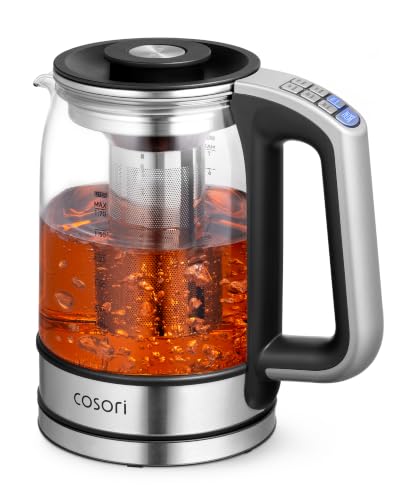
Glass kettles, usually made from borosilicate glass with a steel or plastic base and lid fittings, sell on visibility. You can watch the water level at a glance, see the boil build, and spot limescale forming long before it affects taste. Many people simply enjoy the look, especially with a subtle light that glows while the water heats. The honest costs are weight and fragility. A full glass jug is heavier in the hand than a steel one of similar capacity, it asks for more care around hard worktops and sink edges, and fingerprints and scale show on it more readily, so it rewards owners who wipe and descale as a habit. A glass model such as the Ovente glass kettle suits tea drinkers who boil often and like to see exactly what is happening.
Plastic Kettles
Plastic kettles sit at the entry tier of the category and remain popular because they are light, cool to the touch, and forgiving of rough handling. For a first flat, a dorm room, a workshop, or a spare kettle for guests, those are real virtues. The concerns are equally real. Some drinkers detect a taste in the first boils of a new plastic kettle, the material can stain and age less gracefully than steel or glass, and very cheap models sometimes pair the light body with a flimsy lid or a vague water gauge. If you choose plastic, choose it from a reputable maker, run a few throwaway boils before first drinking use, and treat it as a practical appliance rather than a lifetime purchase.
Temperature-Control and Gooseneck Neighbours
Two neighbouring types deserve a mention so you can rule them in or out deliberately. Temperature-control kettles, such as the Cuisinart PerfecTemp style of design, add preset buttons for different drinks and sometimes a keep-warm hold, which matters if your household drinks green tea or other drinks that scorch at a full boil. Gooseneck kettles are a different tool altogether: a long, narrow spout for slow, precise pouring over coffee grounds. They are wonderful for pour-over coffee and unnecessary for almost everything else. This guide is about the everyday jug; if your real interest is pour-over, the gooseneck cluster on this site is the right read, and the models compared in our guide to the best electric kettles with temperature control show how far the control-focused designs go.
In this guide
Top Picks at a Glance
The six kettles below are the reference points used throughout this guide. They are presented prose-only here, in qualitative tiers rather than with prices, so you can match a type to your household before checking any listing. Each one represents a distinct buying idea: a balanced glass all-rounder, a temperature-control specialist, a big-household workhorse, an entry-tier starter, a display-friendly glass design, and a compact steel value pick.
| Pick | Badge | Tier | Best for |
|---|---|---|---|
| COSORI electric kettle | Best Overall | Mid | Households wanting a glass jug with a wide opening for cleaning |
| Cuisinart PerfecTemp kettle | Best for Tea Variety | Premium | Drinkers who use preset temperatures for different teas |
| Hamilton Beach electric kettle | Best Workhorse | Mid | Busy kitchens that boil large amounts all day |
| Amazon Basics kettle | Best Budget Starter | Entry | First flats, dorms, and spare-kettle duty |
| Ovente glass kettle | Best-Looking Glass | Entry to mid | Tea drinkers who like watching the boil and the water level |
| Mueller electric kettle | Best Compact Steel | Entry to mid | Smaller kitchens wanting steel durability without bulk |
Read the table as a map, not a ranking carved in stone. A household of one that drinks a single mug of tea each morning gains little from the biggest jug, while a family filling flasks and pans will curse a small kettle daily. The mini-reviews later in this guide give each pick a plain verdict, and the criteria sections explain the thinking so you can re-rank the list for your own kitchen with confidence.
How Much Capacity Do You Really Need?
Capacity is the first question to settle, because it decides the size of everything else: the footprint on the counter, the weight in your hand when full, and how often you refill. Think in drinks, not in abstract volume. A mug of tea, a cafetière for two, a pot of instant noodles, and a pan started with boiling water to save stove time all draw different amounts. A compact kettle suits one or two people who boil a mug or two at a time and value a small footprint. A family-size jug suits households that boil back-to-back for breakfast drinks, cooking shortcuts, and evening rounds of tea.
Bigger is not automatically better. A large kettle boiled with only a little water in it still works, but you are lifting and storing a bigger appliance for no benefit, and very large jugs become genuinely heavy when full, which matters for anyone with weaker wrists or grip. Smaller is not automatically smarter either. If you regularly fill a big teapot or start pasta water in the kettle, an undersized model means double boils that erase the speed advantage the appliance exists to provide. Match the jug to your largest regular job, then check that the minimum fill mark is low enough for your smallest regular job, because boiling below the minimum mark is hard on the element and can trip the safety cut-out.
Households that entertain should think about the guest scenario honestly. Six visitors wanting tea at once is the classic case where a modest kettle suddenly feels tiny. If that happens weekly, size up. If it happens twice a year, the kettle you use happily every day matters more than the one that would be perfect at Christmas. The Hamilton Beach electric kettle style of large, straightforward jug exists precisely for the high-throughput kitchen, while compact steel designs like the Mueller electric kettle make the opposite trade deliberately.
Which Body Material Suits Your Kitchen?
Material decides taste neutrality, weight, visibility, and how the kettle ages. Stainless steel is the all-rounder: neutral taste, strong body, moderate weight, and a finish that hides daily wear. Its weakness is that the wall is opaque and often hot, so look for a clear gauge and a handle that keeps fingers away from the body. Glass is the communicator: you see level, boil, and scale at a glance, and the taste is as neutral as steel, but the jug is heavier and asks for gentler handling. Plastic is the lightweight: cool walls and easy lifting, balanced against faster visible ageing and the need to choose a reputable maker for taste and build quality.
There is also a cleaning dimension. Wide openings matter more than material for day-to-day happiness, because a kettle you can fit a hand or a brush into is a kettle that actually gets descaled. Glass shows scale earliest, which is a hidden virtue: it nags you into the descale routine described in how to clean an electric kettle properly before the scale thickens enough to slow the boil and roughen the taste. Steel hides scale until it is advanced, so steel owners should descale by the calendar rather than by appearance, a habit the advice in how to descale an electric kettle covers in detail.
Finally, consider who else uses the kettle. In a house with children tall enough to reach the counter, a cool-touch plastic body or a double-wall steel design lowers the consequence of a brushed hand, though no kettle full of boiling water is ever child-safe and placement matters more than material. In a house with an enthusiastic grandparent, a light jug and an easy, positive lid button matter more than any finish. Material is a household decision, not a spec-sheet contest.
Do You Need Temperature Presets or Keep-Warm?
A plain kettle boils and stops. A temperature-control kettle lets you choose a lower target for drinks that suffer at a full boil, and may hold that temperature for a while so a second cup does not need a second heating. The honest dividing line is what you drink. Black tea, coffee in a cafetière, instant drinks, and cooking water all want water at or near boiling, so presets add cost and buttons without changing a single cup. Green tea, white tea, and some delicate herbal infusions genuinely taste better made with cooler water, and households that drink them daily will use the presets constantly.
The Cuisinart PerfecTemp kettle is the reference design here: one-touch presets arranged around common drink types, with a keep-warm hold for the second round. If that sentence describes your kitchen, the premium tier earns its place. If it does not, the same money buys a better-built simple kettle or stays in your pocket. Be wary of a middle trap: presets you use twice and then ignore, on a kettle whose basic pouring and lid design are worse than a simpler rival. Controls should be judged after the jug, never before it. Readers weighing this question specifically may also enjoy the best smart kettles with temperature control for the connected end of the category.
Keep-warm deserves a separate, cooler look. Holding water hot sounds convenient, and for a household making drinks in waves across an hour it can be. But reboiled and long-held water is a taste compromise some tea drinkers dislike, and a kettle that holds heat uses power the whole time it holds. Many households find that a fast kettle reheats so quickly that keep-warm solves a problem they do not have. Decide by your rhythm: staggered drinkers benefit, synchronized drinkers do not.
How Fast, How Loud, and How Does It Pour?
Speed is the category’s headline promise, and within this class the differences between models are smaller than the difference between any electric kettle and a stovetop pan. Higher-powered designs boil a full jug sooner, and concealed elements under a flat floor tend to be easy to live with. But judge speed alongside noise. A kettle approaching the boil is loud by nature; thin bodies and some glass designs carry that sound more than insulated steel. In an open-plan home where someone sleeps nearby during early starts, a quieter, double-wall design may be worth more than a slightly faster boil.
Pouring is the underrated test. A good spout starts the stream cleanly, stops it without a dribble down the jug, and lets you pour slowly for a cafetière or quickly into a pan without the lid rattling or steam washing over your knuckles. A balanced handle and a jug that is not nose-heavy when full matter every day. When you read any listing or handle a kettle in a shop, mime the pour with the jug imagined full; that is the weight and angle you will live with. The COSORI electric kettle earns its all-rounder badge in this guide largely on these unglamorous virtues: an easy pour, a wide mouth for cleaning, and controls that stay out of the way.
Also check the base. A cordless jug lifting off a powered base is now standard and should be non-negotiable: it makes filling, pouring, and carrying safer and easier. The base should let the jug sit down from any direction, the cord should have somewhere tidy to wrap underneath, and the whole arrangement should sit flat and stable on the counter, because a kettle that rocks on its base is a kettle that will one day be knocked at the wrong moment.
How to Prioritise by Use Case
The Family Breakfast Kitchen
Your mornings are a production line: tea, coffee, porridge water, flasks, and a pan to start. Prioritise capacity, a robust steel body, a fast and simple boil, and a lid that opens wide for quick refills under the tap. Skip presets. The Hamilton Beach electric kettle profile fits this kitchen, and durability of the switch and lid hinge matters more to you than any other single thing, because this kettle will cycle more times in a year than a quiet household’s kettle manages in five.
The Tea-Loving Household
You drink several kinds of tea and you can taste when green tea has been scalded. Prioritise temperature presets, a visible water level, and a gentle, controlled pour. Glass or steel both work; choose by whether you like to watch the level and the leaf-friendly water come up to heat. The Cuisinart PerfecTemp kettle and the Ovente glass kettle represent the two routes into this kitchen, one through control and one through visibility, and the comparison in our electric kettle reviews walks through both in more depth.
The Small Flat or Solo Drinker
You boil a mug or two at a time, counter space is precious, and the kettle may share a socket with other appliances. Prioritise a compact footprint, a low minimum fill, light weight, and a price tier that does not sting if you move house and leave it behind. The Amazon Basics kettle and the Mueller electric kettle are the natural reference points here, one plastic-light and simple, one compact steel. Do not buy capacity you will never use; it costs you space every day to save you a second boil almost never.
The Home Office Desk-Side Setup
You boil through the working day, one drink at a time, often while on calls. Prioritise quieter boiling, a jug that pours one-handed without drama, and a base that sits stably on a side counter or utility trolley rather than in the main kitchen. A keep-warm function tempts this buyer most and satisfies this buyer least, because a fast reboil between calls is simpler. What you are really buying is a kettle that never interrupts your day with a fault, a leak, or a lid that needs two hands and your full attention.
The Six Picks in More Detail

COSORI Electric Kettle
The COSORI electric kettle is the glass all-rounder of this guide: a clear jug that shows level and boil, a wide opening that makes descaling a simple job instead of a fiddle, and a straightforward boil-and-stop control scheme that anyone in the house can use without instruction. It suits households that want one kettle to do everything reasonably well rather than one thing brilliantly.
Best for: mixed tea and coffee households that value easy cleaning. Not suited for: anyone who knows they are rough with glassware, or who wants preset temperatures. Tier: mid. Check price on Amazon when you are ready to compare listings, and confirm the current version’s details there, since designs in this class are revised quietly over time.
Cuisinart PerfecTemp Kettle
The Cuisinart PerfecTemp kettle is the control specialist: preset buttons for the main drink families, a keep-warm hold, and a steel jug built for a kitchen that takes its tea seriously. It is the pick that turns this guide’s temperature section from theory into a daily habit, and it rewards drinkers who actually rotate between green, white, black tea, and coffee.
Best for: multi-tea households and anyone who has tasted scalded green tea and sworn off it. Not suited for: boil-only drinkers, who would be paying a premium tier for buttons they never press. Tier: premium. Check price on Amazon, and weigh the preset layout on the current listing against the drinks you genuinely make.

Hamilton Beach Electric Kettle
The Hamilton Beach electric kettle is the workhorse pattern: a generous steel jug, simple controls, and a design aimed at kitchens that boil constantly and think about the kettle rarely. It is the kind of appliance that disappears into the routine, which is the highest praise a kettle can earn in a busy house.
Best for: families, shared houses, and anyone filling pots and flasks daily. Not suited for: solo drinkers, for whom its capacity is mostly air, or temperature-preset seekers. Tier: mid. Check price on Amazon and pay attention to the gauge and lid design on the current version, the two details this class of kettle lives or dies by.

Amazon Basics Kettle
The Amazon Basics kettle is the honest starter: a light, simple, boil-and-stop appliance at the entry tier, aimed at first kitchens, dorm rooms, offices, and spare-kettle duty. It makes no claim to refinement, and judged on its own terms — hot water, quickly, without fuss or a frightening bill — it does its job.
Best for: first flats, students, guest rooms, and anyone who needs a second kettle. Not suited for: buyers wanting a decade-long appliance or temperature control. Tier: entry. Check price on Amazon, run the recommended throwaway boils before first use as you should with any new kettle, and descale it on schedule to keep it tasting clean.
Ovente Glass Kettle
The Ovente glass kettle leans into everything glass does well: a clear view of the water, an attractive presence on the counter, and an easy read on when scale is starting to form. It is a kettle for people who make drinks as small rituals through the day and enjoy seeing the water come up to the boil.
Best for: tea drinkers in calmer kitchens who descale as a habit. Not suited for: crowded, knock-prone counters or anyone who finds a full glass jug heavy. Tier: entry to mid. Check price on Amazon, and think honestly about your worktop edges and sink habits before choosing glass, as this guide’s material section explains.

Mueller Electric Kettle
The Mueller electric kettle represents the compact steel route: durable body, modest footprint, and a simple boil for kitchens where space is the scarcest resource. It is the pick for the small kitchen that still wants steel’s toughness and neutral taste rather than a light plastic jug.
Best for: small flats, couples, and tidy counters. Not suited for: big households or entertainers, who will feel its size at every gathering. Tier: entry to mid. Check price on Amazon, and check the minimum fill behaviour in the listing details if your habit is a single mug at a time.
First Setup and Care Essentials
Setting up any electric kettle follows the same safe pattern. Place the powered base on a flat, dry surface away from the sink’s splash zone, because the base is an electrical part and should be kept away from water at all times. Fill the jug at the tap with the jug off the base, respect the maximum mark without exception — water expands and boils violently, and an overfilled kettle can spit boiling water from the spout — and run two or three full boils, discarding the water, before the first drink. That first-use ritual clears manufacturing residue and any new-appliance taste.
Daily safety is mostly habit. Pour soon after the boil with the lid closed, keep your free hand and face clear of the spout, and remember that steam escaping as you open the lid can scald as surely as the water itself, so open the lid away from you and let the first rush of steam pass. Never switch the kettle on empty, never immerse the jug or the base in water to wash them, and wipe the outside with a damp cloth only. Set the jug back on its base gently and squarely, and teach younger household members that a kettle is a stove-level hazard, not a toy and not a jug of ordinary water.
Care is dominated by one word: descale. Mineral scale from hard water coats the floor and element, slows the boil, adds noise, and eventually roughens the taste of delicate drinks. A regular descale with a simple vinegar or citric-acid routine, followed by a rinse boil, restores both speed and flavour, and the full step-by-step lives in how to clean an electric kettle. How often depends on your water: hard-water areas may need it monthly, soft-water areas only occasionally, but the calendar reminder matters more than the exact interval. The balanced verdict on whether the appliance earns its place at all is in is an electric kettle worth it, and the trade-offs are laid out in electric kettle pros and cons.
Mistakes to Avoid
The most common buying mistake is choosing by looks alone and discovering the pour dribbles, the lid needs two hands, or the gauge hides behind the handle. The second is overfilling in daily use, which risks boiling water spitting from the spout and is the easiest scald to prevent: the maximum mark is a safety line, not a serving suggestion. The third is ignoring the minimum mark and repeatedly boiling a splash of water, which stresses the element and can trigger the dry-boil cut-out. The fourth is never descaling, then blaming the kettle for slow boils and odd tastes that a simple descale would have fixed. The fifth is placing the base where it gets splashed at the sink or, worse, rinsing the whole appliance under the tap; the base and the jug’s electrical contacts must stay dry. Buy for your real drinks, fill between the marks, descale on schedule, and keep the electrics dry, and an everyday kettle will repay you with years of unremarkable, perfect service. For a broader shortlist view, see the best electric kettle picks for everyday kitchens and how to choose an electric kettle step by step.
Safety Features Worth Checking Before Anything Else
Because a kettle’s entire purpose is to bring water to the most dangerous temperature in the kitchen and then move it around in a handheld jug, its safety design deserves a section of its own. The first feature is automatic shut-off: the kettle must cut its power reliably when the boil is reached, every time, without being watched. This is standard on any reputable model, but it is worth confirming on the listing rather than assuming, especially at the entry tier. The second is boil-dry protection, which cuts power if the kettle is switched on empty or boils dry, protecting both the element and your counter from a frightening and entirely preventable incident.
The third is a lid that stays shut. A lid that pops open mid-pour, or a spout that lets steam wash back over the pouring hand, turns a routine drink into a scald risk. Look for a positive lid action — a button that opens it decisively for filling and a firm close you can feel — and a spout geometry that keeps the steam path away from the handle. The fourth is stability: the jug should sit squarely on its powered base with no wobble, and the base should grip the counter rather than skate on it. The fifth is a handle that stays cool and keeps knuckles clear of a hot steel or glass wall even when the jug is full and heavy.
Household habits complete the picture, because no feature list can compensate for careless placement. Keep the kettle back from the counter edge where a passing elbow or an exploring child can reach it, route the cord so it cannot be caught and pull the jug down, and never carry a just-boiled kettle further than you need to. Fill at the sink, boil on the base, pour at the counter, and return the jug to its base: a short, fixed route through the kitchen is a safety feature you build yourself. Treat steam with particular respect. The water announces itself; the steam above the spout and under a freshly opened lid is invisible in its hottest part and scalds just as effectively.
What the Tiers Actually Buy You
Since this guide deliberately avoids prices, it is worth explaining what moving up a tier buys in kind rather than in currency. At the entry tier, represented here by the Amazon Basics kettle, you get the core promise intact: fast boiling water, automatic shut-off, and a cordless jug. What you give up is refinement — thinner materials, a plainer lid and gauge, fewer courtesies in the pour, and a design life measured in busy years rather than in a decade. For many buyers that is a perfectly rational trade, and an entry kettle that is replaced once can still be the right purchase for a first home.
At the mid tier, where the COSORI electric kettle, the Hamilton Beach electric kettle, and the Mueller electric kettle sit in this guide, the money buys build and behaviour: better steel or glass, a wider mouth for cleaning, a gauge you can read at a glance, a lid that feels engineered rather than attached, and a pour that starts and stops cleanly. This is the tier most households should aim at, because the improvements are the ones you feel at every single use, several times a day, for years.
At the premium tier, the Cuisinart PerfecTemp kettle shows what the extra buys: control. Preset temperatures, a keep-warm hold, and a more finished control panel. Control is worth its tier only to households whose drinks use it, which is why this guide keeps returning to the same question — what do you actually drink? — rather than pushing every reader uphill. The most expensive kettle in this category is not the best kettle for a black-tea-and-coffee household; the best kettle is the one whose strengths match your mornings. If you are still torn between the tiers, the plain-language balance sheet in electric kettle pros and cons and the verdict in is an electric kettle worth it will help you decide without spending a tier too much.
Reading a Kettle Listing Like an Engineer
Product listings in this category are written to sell, but the useful facts are present if you read for design rather than adjectives. Look first for the construction of the interior: a concealed element under a flat floor is easier to descale than an exposed coil, and a seamless or near-seamless interior has fewer crevices where scale and stale water can lodge. Look next for the lid mechanism and the size of the opening; a listing that shows the kettle open, with a hand or a brush able to reach inside, is telling you something good about cleaning, while a narrow mouth on a family kettle is a daily frustration in waiting. Then read the gauge: is it a real window with markings you can read from the side you actually stand on, and does it show the minimum as clearly as the maximum?
After that, interrogate the controls. On a simple kettle there should be almost nothing to interrogate — a switch, a light, an automatic cut-off — and that emptiness is a virtue. On a temperature-control model, read for how the presets are chosen and whether the kettle remembers anything between uses, and be honest about whether the panel will still be pleasant at half past six on a dark morning. Finally, read the care instructions the maker publishes. A maker who explains descaling plainly, warns against immersing the base, and describes the first-use rinse is a maker who expects the kettle to be lived with; a listing long on lifestyle adjectives and silent on care deserves a slower decision. Cross-check anything that matters against the roundup in electric kettle reviews, where the same models are compared side by side in prose.
A Short Decision Checklist Before You Buy
Run through these questions in order and the right kettle usually names itself. First, what do you boil for, and how much at once? That answer fixes capacity and rules the family jug in or out. Second, what do you drink? If everything you make wants a full boil, stop at a simple model and spend the difference on build quality; if green or white tea is a daily pleasure, put temperature presets on the required list and look at the PerfecTemp pattern seriously. Third, where will it live? Measure the spot, check the socket, and be honest about splash zones and small hands. Fourth, how hard is your water? Hard water argues for a wide opening and an easy descale, and for glass if you want the scale to announce itself. Fifth, who else will use it? A kettle shared with grandparents, teenagers, or guests should have the simplest controls and the clearest gauge in its class. Sixth, how do you feel about noise and weight on a dark early morning? Those two sensations, repeated daily, decide long-term satisfaction more than any feature list. Answer all six and compare your answers against the six picks above and the verdicts in our electric kettle review; the overlap between your answers and one pick’s strengths is your kettle.
Electric Kettle Buying Guide for Hard-Water Areas: A Special Case
If your taps crust and your shower head clogs, your kettle choice deserves one extra filter. Hard water does not change which type of kettle is right for your drinks, but it changes which example of that type you should buy, because your descale life will be busier than most. Favour a wide mouth you can reach into without tools, a concealed element under a flat floor where scale lifts cleanly, and — if you want the deposit to announce itself — a glass wall. Be wary of narrow spouts and intricate lid mechanisms that give scale awkward places to lodge, and treat the spout filter as a part to check on the listing: removable and rinsable is a genuine advantage in a hard-water post code. Finally, buy with the descale already planned: the kettle, the citric acid or vinegar, and the calendar reminder are one purchase, and households that accept that from day one report the fewest disappointments in this entire category.
One last buying consideration deserves a sentence of its own: buy the kettle your household will still be pleased to use on a wet Tuesday in February, not the one that photographs best in the listing. Everyday appliances are judged by accumulated mornings, and the kettle that pours cleanly, fills easily, and descaled without a fight will win that long judgement against any amount of showroom shine. When in doubt between two finalists, choose the one with the wider mouth and the clearer gauge; those two details forgive more daily sins than any other pair in the category.
The Measurement Worksheet: Sizing the Electric kettle to Your Own Space
Start this worksheet with the space, not the product page: measure the exact spot where the electric kettle will live, including the clearance above it, the swing or reach you need in front of it, and the route you will take to move it for cleaning. Write down the largest item you realistically expect to use with it, because that single measurement settles more sizing arguments than any capacity figure printed in a listing headline. Check the nearest outlet and be honest about whether a cord will cross a walkway, a sink edge, or another appliance that also needs that socket on busy mornings. Count the people the electric kettle must serve on an ordinary weekday, then count again for the busiest gathering you host in a typical year, and notice whether those two numbers point to the same size.
List the three jobs you will ask of it every week and the one job you will ask only a few times a year, because the weekly jobs should drive the decision and the rare job should not. Decide where the accessories, attachments, and spare parts will be stored before you order, since a electric kettle whose extras live in a distant cupboard quietly becomes a electric kettle with fewer features. Where a shortlist names specific examples, such as COSORI Electric Kettle, run these same checks against that listing line by line rather than assuming the general verdict transfers unchanged. Apply the identical test to Cuisinart PerfecTemp Kettle as well, on the same day and under the same conditions, because a fair comparison needs one ruler rather than two moods.
- Measure the working spot and the clearance around it
- Count weekday servings and the biggest gathering
- List the three weekly jobs in writing
- Decide storage for every accessory in advance
- Name the one compromise you accept knowingly
- Set the return deadline in your calendar
If Hamilton Beach Electric Kettle is also in contention, give it the same worksheet and let the three sets of answers sit side by side before anyone reaches for a checkout button. Think about who else in the household will use it, including anyone shorter, anyone with less grip strength, and anyone who will clean it without reading the manual first. Note the surfaces it will touch in normal use and whether heat, moisture, weight, or vibration from the electric kettle could mark, stain, or stress those surfaces over months of daily contact. Plan the cleaning position as carefully as the working position, because a electric kettle that is awkward to carry to the sink or to open fully will be cleaned less often than it should be.
Write the three questions you still cannot answer from listings and guides, and treat those unanswered questions as your shortlist filter rather than as details to discover after delivery. Compare the footprint against the appliance or tool it replaces, and decide in advance what leaves the room if the new arrival is larger than the old one. Consider the noise, steam, heat, or light it produces in use and whether that output lands in a room where someone sleeps, works, or studies at the same hours. Check how it behaves at the smallest task, not only the largest, because many households abandon oversized gear that feels clumsy for the quick everyday job.
Think through the second week of ownership, when the novelty has faded, and ask which features you will still touch daily and which were only interesting in the showroom sense. Decide what good enough looks like in writing: the result you would accept without complaint, the result that would delight you, and the result that would send the box back. Look at the controls with fresh eyes and imagine using them with wet hands, greasy hands, or gloves, depending on the work, because small controls punish exactly those moments. Ask how the electric kettle fails gracefully: whether a worn part, a lost attachment, or a single broken control ends its usefulness or merely removes one mode you rarely used.
Check whether replacement parts and consumables are ordinary, widely stocked items or proprietary pieces tied to one maker, since that difference compounds over years of ownership. Measure the storage shelf, drawer, or cupboard you intend to use with the door closed and other contents in place, not the optimistic empty version of that space. Think about guests and helpers who will meet the electric kettle without your habits, and whether its safe, correct use is obvious to a newcomer within a minute of looking at it. Write down the one compromise you are consciously accepting, so that when it shows up in daily use it reads as a chosen trade rather than a nasty surprise.
Frequently Asked Questions
Is an electric kettle faster than a stovetop kettle?
For most households, yes, noticeably. An electric kettle puts its heating power directly into a small, purpose-built vessel and switches itself off at the boil, while a stovetop kettle shares its heat with the hob and the room and needs you to notice when it is ready. The practical difference is not just minutes saved but attention saved: you can fill an electric kettle, walk away, and return to boiled water waiting safely. That walk-away convenience is the real reason the appliance has become a kitchen standard.
Which material is best for an electric kettle?
There is no single best material, only a best fit. Stainless steel is the durable all-rounder with a neutral taste. Glass adds visibility of level, boil, and scale at the cost of weight and fragility. Plastic is the lightest and coolest to touch, suited to entry budgets and gentle duty, provided you choose a reputable maker. Match the material to your household’s handling habits, water hardness, and who uses the kettle, rather than chasing a universal winner that does not exist.
Do I need temperature presets on a kettle?
Only if your drinks need them. Coffee, black tea, instant drinks, and cooking water all want water at or near a full boil, so a simple boil-and-stop kettle serves those households completely. Green tea, white tea, and delicate infusions taste better with cooler water, and if you drink those daily, presets like those on the Cuisinart PerfecTemp pattern of kettle earn their premium tier. Occasional green tea drinkers can simply let a boiled kettle stand with the lid open briefly before pouring.
How often should I descale my electric kettle?
Descale by your water, not by a universal rule. In hard-water areas, a monthly descale keeps the boil fast and the taste clean; in soft-water areas, every few months may be plenty. Glass kettles show you the scale building, which makes the decision easy. Steel and plastic kettles hide it, so put a recurring reminder in place. If the boil grows louder and slower and drinks start to taste dull, you have waited too long, and a descale will usually restore the kettle completely.
Is it safe to leave water in the kettle between boils?
Leaving some water in the jug is normal and safe, but fresh water tastes better, especially for tea. Many drinkers empty and refill for the first drink of the day and top up through the day. What matters for safety is different: never leave the kettle switched on empty, never overfill past the maximum mark, and keep the powered base dry. If water will sit for days, as in a holiday home, empty the jug so it does not go stale or add to scale.
Can an electric kettle be used for anything besides drinks?
Yes, and this is where it quietly earns its counter space. Boiling water in the kettle first speeds up pasta, rice, and vegetable pans on the stove, fills hot water bottles, supplies water for instant soups, noodles, and oatmeal, and provides hot water for warming bottles in a bowl or loosening a stubborn jar lid under the tap’s hotter alternative. It remains a water-only appliance, though: never heat milk, soup, or anything else directly in the jug, which can foul the element and void the maker’s instructions.
Related Reading
Continue with our in-depth electric kettle review, the head-to-head verdicts in electric kettle pros and cons, and the tea-focused shortlist in the best electric kettles for tea.