Disclosure: As an Amazon Associate, topratedkitchenware.com earns from qualifying purchases. Links on this page are affiliate links; they cost you nothing extra. Prices and availability change often, so check the current Amazon listing before you buy.
Ask ten bakers is a stand mixer worth it and you will hear two confident answers, because the honest verdict depends entirely on how you bake. A stand mixer is worth it if you bake weekly, make yeast doughs, whip and cream in quantity, or cook for a crowd; it is not worth it if your baking is a monthly pan of brownies and your counters are already full. This article works through what the machine actually returns — time, consistency, capability, and effort saved — against its real costs in money, space, and upkeep, so you can place yourself on the right side of that line before spending anything.
The short version: the value of a stand mixer is repetition. Every benefit it offers multiplies with use, and every cost is paid once or paid in space every day. Occasional bakers pay the costs and rarely collect the benefits; regular bakers collect the benefits so often that the costs fade into the background. The sections below break that equation into parts, and the companion stand mixer pros and cons gives the balanced feature-by-feature view, while our stand mixer buying guide covers what to buy if the verdict lands on yes.
Key Takeaways
- Worth it if you bake most weeks, knead yeast dough, or regularly cook for groups.
- Not worth it if baking is rare, batches are small, and counter or storage space is tight.
- The real costs are space, weight, and upkeep — not just the purchase itself.
- A hand mixer plus a strong arm covers small, occasional baking at a fraction of the commitment.
- Value rises sharply if you use attachments beyond the bowl: pasta, grinding, and more.
What You Actually Get When You Buy a Stand Mixer
The first thing you get is hands-free power. A stand mixer holds a steady speed under load while your hands are free to add ingredients gradually, scrape the bowl, grease a pan, or read the next step. That freedom changes recipes from a sequence of interruptions into a flow, and it is the benefit owners mention most — not raw speed, but the ability to do two things at once in a kitchen where timing matters. Creaming butter while you measure flour is a small thing that happens dozens of times per bake.
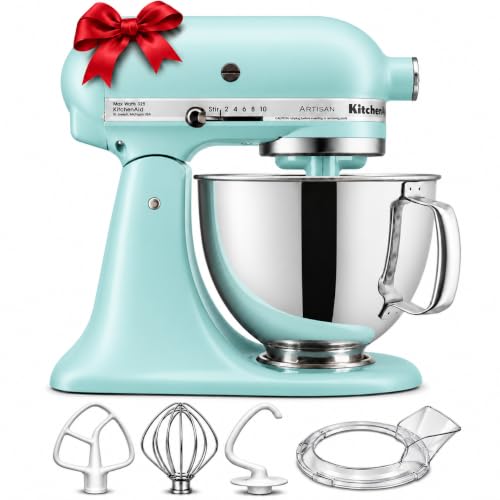
The second thing is capability you simply do not have without one. Kneading a stiff bread dough by hand for ten minutes is a workout many people quietly stop doing, which means the bread stops getting made. A stand mixer kneads tirelessly and consistently, whips a bowl of egg whites to glossy peaks without an aching shoulder, and creams large batches of cookie dough that would defeat a hand mixer outright. Whole categories of baking — enriched doughs, big celebration cakes, meringues, double batches for the freezer — move from aspirational to routine.
The third thing is consistency. A machine mixes the same way every time, at the same speeds, for the same durations, which removes the largest variable in home baking: you. Recipes start behaving repeatably, and when something goes wrong you can actually diagnose it, because the mixing was not different this time. For anyone who sells bakes, bakes for events, or simply hates mystery failures, that repeatability alone can justify the machine. It also teaches faster: with mixing held constant, your judgement of doughs and batters sharpens quickly.
Finally, there is longevity. A well-built stand mixer is one of the few kitchen purchases measured in decades rather than seasons; the category’s leading designs have been in production for generations, parts and attachments remain available, and the machines are repairable in a way most modern appliances are not. Spread over a long service life, even a premium-tier machine’s cost per bake becomes trivial for a regular baker — which is precisely why the worth-it question is really a frequency question in disguise.
In this guide
The Real Costs Beyond Money
Space is the cost owners underestimate. A stand mixer is tall, deep, and heavy, and it wants either permanent counter residence — a significant claim in a small kitchen — or a cupboard it must be lifted in and out of. That lift matters: these are heavy machines, and moving one safely means two hands under the base and a stable counter to receive it. If the friction of retrieving the machine means you reach for it less, the value equation collapses, because an unused stand mixer is just expensive sculpture. Measure your counter height under the cabinets before anything else; a mixer that cannot open its head under your cupboards is a daily annoyance.
There is also a learning curve, smaller than people fear but real. Speeds, attachments, and dough judgement take a few bakes to internalise: the flour cloud teaches you to start low, the first over-whipped cream teaches you to watch peaks, and the first under-kneaded loaf teaches you what elastic dough feels like. Our step-by-step how to use a stand mixer shortens that curve considerably, but expect your first month to include a couple of instructive failures. Budget counter space in your routine, too: bowls, attachments, and ingredients in progress occupy a working arc around the machine.
Upkeep is light but not zero. Bowls and attachments need prompt washing — dried dough sets hard — and the machine needs a wipe-down after flour work, sensible storage, and occasional checks of beater clearance and latch fit. Attachments multiply both the value and the clutter: each specialty tool you add is another thing to store, wash, and justify. None of this is burdensome for a regular baker; all of it is pure overhead for someone who bakes twice a year.
Who It Pays Off For
The weekly home baker
If baking is a standing part of your week — a loaf, a batch of cookies, a cake for the weekend — the stand mixer pays for itself in effort and reliability faster than any other appliance category. You will use the dough hook, the beater, and the whisk in rotation, your results will stabilise, and the machine’s cost per use drops every single week. This profile is the clearest yes in the entire analysis: buy a good mid-tier or premium machine, give it permanent counter space, and never think about the decision again.
The bread enthusiast
For anyone serious about bread, the question is not really whether but which. Hand-kneading is a genuine skill and a genuine pleasure, but it is also the bottleneck that limits how often most people bake loaves, especially enriched or high-hydration doughs. A stand mixer removes the bottleneck and adds consistency, which is why bread bakers are the most satisfied owners in survey after survey of kitchen regrets — the machine gets used, heavily, for years. Bowl-lift models with strong low-speed torque suit this profile best, as the stand mixer review explores in depth.
The crowd cook and batch baker
Doubling and tripling recipes is where smaller tools tap out. A stand mixer’s bowl capacity and sustained power make holiday baking, bake-sale production, and freezer stocking sessions practical: double cookie dough, big meringue batches, and mashed potatoes for a table of twelve all happen without drama. If your baking spikes around events, judge the machine by those peaks — equipment that turns a dreaded marathon into an organised afternoon earns its counter space in a handful of weekends a year.
Who Should Skip It
The occasional small-batch baker
If your baking life is a boxed brownie mix, the odd banana bread, and pancakes on Sundays, a stand mixer solves problems you do not have. Small batches can actually mix worse in a large bowl, where a cup of cream barely reaches the whisk. A hand mixer — compared directly in stand mixer vs hand mixer — handles everything in this profile, stores in a drawer, and leaves the counter free. Spend the difference on ingredients and a good pan.
The space-starved kitchen
In a genuinely small kitchen, every appliance must defend its footprint daily. A stand mixer that lives in a hard-to-reach cupboard will be used less and less, and one that monopolises the only work surface makes every other meal harder to cook. If you cannot give it permanent, accessible counter space with headroom to open, the honest answer is to wait until the kitchen changes. Renting, sharing a kitchen, or planning a move are all good reasons to defer a purchase this bulky.
The single-task cook
Some people want a mixer for exactly one job — whipping cream, say, or the occasional meringue. A dedicated smaller tool, or a hand mixer with a whisk attachment, does that job for a fraction of the space and commitment. The stand mixer earns its keep through breadth and frequency; a single occasional task cannot carry its costs. Be honest about the gap between the baking life you imagine and the one your calendar shows, and buy for the calendar.
The Strengths and Trade-Offs of Owning One
- Strength: hands-free, sustained power. The machine holds speed under load while you add, scrape, and prep.
- Strength: unlocks dough. Kneading stops being a workout, so bread actually gets baked.
- Strength: consistency and longevity. Repeatable results from a machine built to serve for decades.
- Trade-off: permanent space claim. Counter or cupboard, it occupies real kitchen territory every day.
- Trade-off: weight and handling. Moving it is a two-hand lift, every time, which discourages casual use.
- Trade-off: small batches suffer. Tiny quantities can underperform in a large bowl built for volume.
Notice the pattern: every strength scales with use, and every trade-off is fixed. That asymmetry is the whole worth-it question in one paragraph. A baker who uses the machine forty times a year amortises the space and weight across forty easier bakes; a baker who uses it four times a year pays the same space for almost nothing. There is no universal answer because there is no universal baker — but there is a very predictable one once you count your own bakes honestly.
Alternatives to Consider
The hand mixer is the strongest alternative: inexpensive in tier terms, drawer-stored, and entirely adequate for batters, soft doughs, whipped cream, and mashed potatoes in family quantities. Its ceiling is stiff dough and large batches, which is exactly the stand mixer’s home ground — the full comparison is in stand mixer vs hand mixer. For many households, a hand mixer now and a stand mixer when baking frequency rises is the rational sequence, and nothing about the first purchase is wasted when the second arrives.
A food processor covers a different slice of the territory — pastry doughs, quick breads, and small stiff mixtures — with a speed that can even overtake a stand mixer for pie crust, though it kneads small quantities only and whips poorly. Bakers whose interest is mainly pastry sometimes find a processor plus a hand mixer covers everything they actually make. And for bread specifically, a bread machine automates the whole loaf, mixing included, at the cost of flexibility and crust control. Each alternative is examined against the stand mixer in our stand mixer reviews roundup.
There is also the borrow-or-wait alternative, which deserves respect. Bake with a friend’s machine for a month of weekends, or buy a modest entry-tier model — the Hamilton Beach class of machine discussed in the buying guide — and let your actual usage cast the deciding vote. If the entry machine is straining weekly, upgrade with evidence. If it gathers dust, you have learned an expensive lesson at the lowest possible price, and the machine can be passed on.
How to Get the Most Value If You Buy
Value is extracted through habits. Give the machine a permanent, accessible home so using it is never a logistics exercise. Learn the core techniques properly — the low-speed flour start, the scrape-down rhythm, judging dough by feel — using a structured walkthrough like how to use a stand mixer; a mixer used skilfully delivers twice the value of the same machine used carelessly. Keep a simple log for your first dozen bakes: recipe, speed, time, and result. That notebook converts the learning curve from a fog into a reference.
Use the attachment ecosystem deliberately rather than impulsively. The pasta roller and the meat grinder are the two expansions owners consistently rate as genuinely useful; novelty attachments bought in a burst of enthusiasm mostly become drawer residents. Add one at a time, only when a real cooking habit calls for it. And maintain the machine as the long-term asset it is: prompt washing, a cover if it lives out, and the annual clearance and latch check. A stand mixer treated this way is very likely the last one you buy.
Finally, bake to the machine’s strengths on purpose. Schedule the doughs, the double batches, and the meringue projects you used to avoid; that is where the return lives. Owners who report the highest satisfaction are not the ones with the most expensive machines — they are the ones whose baking expanded to meet the tool. If three months after buying you are baking exactly what you baked before, the machine was a purchase, not an investment, and the fix is in your recipe queue rather than your appliance cupboard.
The Decision Checklist
Answer honestly, counting actual behaviour rather than intentions. Do you bake at least twice a month? Do you make, or genuinely want to make, yeast doughs? Do you regularly double recipes or bake for groups? Do you have permanent counter space with headroom, or storage you can lift the machine from comfortably? Would hands-free mixing change recipes you currently avoid? Do you expect your baking to continue at this pace for years?
Four or more yes answers: a stand mixer is worth it for you, and a mid-tier or premium model will repay the step up. Two or three: start with an entry-tier machine or a good hand mixer and let a year of usage decide. Fewer than two: skip it without regret and revisit if your baking life changes. Live shortlists for the yes branch are gathered at best stand mixers and best stand mixers for home bakers.
The Arithmetic of Cost Per Bake
Strip the question down to arithmetic and it becomes much less mysterious. A stand mixer’s cost per bake is its purchase tier divided by the number of times it is used, and both halves of that fraction are knowable before you buy. A mid-tier machine used weekly crosses into trivial cost-per-bake territory within a couple of years and keeps improving for a decade or more after that. The same machine used monthly takes most of a decade to reach the same figure, and used a few times a year it never does — the arithmetic of the purchase never closes, however good the machine is. This is why two owners can describe the identical product as the best and worst purchase in their kitchens and both be reporting the truth.
Run the honest version of the calculation for your own kitchen. Count last year’s bakes — actual ones, from memory or photos or the state of your flour tin — and divide. Then ask whether a stand mixer would have increased that count, which for dough-averse bakers it genuinely does: many owners bake more after buying one, because the labour barrier that quietly suppressed the habit is gone. That uplift is real but should be discounted heavily in your planning; buy for the baker you are, and let any growth be a pleasant surprise rather than the load-bearing assumption of the purchase.
What Changes After a Year of Ownership
Ask owners what surprised them and a pattern emerges. The first surprise is which jobs migrate to the machine: not just cakes and bread, but pizza dough on a Friday, whipped cream that stops being a decision, meringue that stops being an event, meatballs and meatloaf mixed without cold hands, and buttercream in quantities that make layer cakes relaxing. The second surprise is that the machine changes recipe selection itself — owners browse differently, because the question ‘can I be bothered to knead that?’ stops filtering the cookbook. The third surprise, reported almost sheepishly, is that the hand mixer does not get thrown away: it retreats to small, quick jobs and becomes more appreciated, not less.
The negative surprises are equally consistent, and they are the ones this article has flagged throughout: the machine is heavier in the cupboard than it looked in the shop, the bowl is bigger than a cup of cream deserves, and the learning curve includes one flour cloud and one batch of over-whipped cream that no warning quite prevents. Notice that none of the negative surprises is about mixing quality. Owners do not report that the machine mixes badly; they report friction around the mixing. That is the signature of a mature product whose value question is purely about fit, and it is why the decision checklist at the end of this article weighs space and frequency so heavily.
The Second-Hand and Hand-Me-Down Factor
Stand mixers occupy an unusual position in the appliance world: they circulate. Because the leading designs are durable, repairable, and essentially unchanged for decades, used machines are common, functional, and often excellent value in tier terms — a route into ownership that dramatically improves the worth-it arithmetic for the undecided. A used machine from a long-running design, with its attachments present and its motor sounding steady under a test dough, can serve a second owner for years. The checks are the same ones you would apply to any used motorised tool: run every speed, listen for grinding or surging, confirm the bowl locks and the attachments seat, and inspect the cord.
Hand-me-downs carry the same logic further: stand mixers are among the few appliances routinely passed between generations, still working, still supported with parts. That longevity cuts both ways in the worth-it analysis. It strengthens the case for buying a good machine new, because the purchase is closer to a lifetime tool than to a gadget cycle. And it weakens the case for buying a cheaply built one, because the category’s whole economic magic lies in decades of service — a machine that fails in five years has spent the stand mixer’s space and money without collecting its longevity dividend.
Time Saved, Honestly Counted
Vendors love time-saving claims, so let us count honestly. A stand mixer does not make a cake dramatically faster from start to finish: measuring, baking, and cooling dominate the clock, and they are unchanged. What it saves is active effort at specific bottlenecks — ten minutes of kneading becomes ten minutes of doing something else, creaming happens while you prepare the tin, whipping happens while you clear the bench. In a single bake that is a modest convenience. Across a year of weekly baking it is hours of labour returned, and — harder to quantify but consistently reported — a reduction in the physical tiredness that makes evening baking feel impossible after a working day.
There is also a subtler time effect: parallelism changes what one baker can attempt. A celebration cake with a meringue, a curd, and a buttercream is a scheduling puzzle with one pair of hands and a hand mixer; with a stand mixer working unattended through its stages, the same cake becomes a sequence. Projects that were two-person jobs or two-day jobs become one-person, one-afternoon jobs. If your ambitions include that kind of baking even a few times a year, the time argument deserves more weight than the weekly-loaf arithmetic alone would give it — which is why the decision checklist asks about peaks as well as routines.
The Trial Routes: Borrow, Rent, and Start Small
If the checklist leaves you genuinely undecided, the category offers unusually good trial routes. Borrowing is the best: a month with a friend’s or relative’s machine, baking your actual repertoire, answers the frequency question with evidence instead of imagination. Some owners discover the machine transforms their weekends; others discover they used it twice and felt nothing. Both discoveries are valuable, and both are free. Kitchen rental and library-of-things schemes, where they exist, offer the same evidence at small cost.
Starting small is the other honest route. An entry-tier machine — the Hamilton Beach class examined in the stand mixer buying guide — delivers the format’s core experience: hands-free mixing, a dough hook, a locked bowl. If it becomes the hardest-working appliance you own, upgrade with confidence and pass it on; the category’s durability means it will find a second home easily. If it gathers dust, your total tuition was the lowest the category offers. What does not work as a trial is buying the premium machine first and hoping commitment follows the spending; commitment follows baking, not billing.
The Counter-Space Negotiation, Kitchen by Kitchen
Because space is the cost that decides so many purchases, it deserves a practical treatment rather than a warning. Walk into your kitchen and find the machine’s home before you shop: a stretch of counter with headroom to open a tilt-head fully or to lift a bowl clear on a bowl-lift model, near an outlet, on a surface stable enough for a working motor. If that spot exists and currently holds something evictable — a knife block that could move, a fruit bowl, the toaster oven you use monthly — the space question is answered and the stand mixer’s biggest con is neutralised. If the only candidate spot is the one where you chop every evening, the con is real and should be weighed at full strength, because the machine will tax your cooking daily, not just your baking.
Storage engineering can rescue borderline cases. A low cupboard with a pull-out shelf converts the dreaded lift into a slide; an appliance garage keeps the machine plugged in, hidden, and instantly available; a sturdy rolling cart in a pantry or utility space gives the machine a home with a commute of seconds. What does not work is optimism: the high shelf, the deep cupboard behind the slow cooker, the garage. Every owner whose machine fell out of use tells some version of the same storage story, and every owner whose machine thrived can point to the spot it lives. The worth-it question is often, in the end, a question about a specific forty centimetres of counter — which is excellent news, because that question can be answered today, for free, with a tape measure.
What the Money Buys at Each Tier, in Plain Terms
Tier language can feel evasive, so here is what stepping up actually purchases. The entry tier buys the format: a locking bowl, planetary action, the core attachments, and honest competence across batters, cookies, whipping, and light doughs. The mid tier buys refinement and insurance: stronger low-speed manners, better build density, the deep attachment ecosystems, spare parts on shelves, and service networks — the things that matter in year eight rather than week one. The premium tier buys specialisation: rigid bowl-lift frames and drives that treat large, stiff dough batches as routine, and capacities that serve batch bakers without strain. Notice what no tier buys: better cakes from the same recipe at the same skill. The tiers buy duty, durability, and headroom — which is why frequency and dough, not ambition, should set the tier you choose.
That framing also explains the category’s most common purchasing regrets, which come in mirror image. The first is the premium machine bought for monthly muffins: flawless, idle, and quietly resented every time its counter space is needed. The second is the entry machine bought for a weekly sourdough practice: willing, straining, and replaced within two years at a total cost above the mid-tier machine that should have been bought first. Both regrets are the same error — a tier chosen by hope or by thrift rather than by evidence — and both are avoidable with the honest bake-count this article keeps recommending. The stand mixer market, unusually, rewards buyers who know themselves.
A Note on Gifts, Registries and Household Politics
Stand mixers are famous gifts and registry items, which introduces a wrinkle into the worth-it analysis: the recipient’s baking life, not the giver’s enthusiasm, determines the outcome. A stand mixer given to a genuine weekly baker is among the most successful gifts in the kitchen category — used for decades, remembered at every loaf. The same gift to an occasional baker becomes a beautiful obligation occupying their best counter. If you are the giver, gift the machine only where the habit is proven, or pair it with the honest alternative of a high-quality hand mixer and a generous ingredients budget. If you are the recipient of an unrequested machine, the analysis in this article still applies: find it a real home, bake the trial month deliberately, and let evidence — not guilt — decide whether it stays on the counter or passes to a baker who will use it weekly.
When the Answer Changes: Revisiting the Decision
A worth-it verdict is a snapshot, not a sentence, and the bakers who fare best with this purchase treat it as revisable. Kitchens change: a move trades the galley for a farmhouse counter, children arrive and multiply batch sizes, a bread course ignites a habit that did not exist when the question was last asked, or an injury makes hand-kneading impossible and converts the machine from luxury to enabler overnight. Each of these is a legitimate trigger to rerun the checklist, and the category’s stability means the rerun is easy — the machines will be recognisably the same, the tiers will mean the same things, and the analysis in this article will still apply line by line.
The reverse journey deserves the same honesty. A machine that earned its place for a decade of family baking may genuinely stop earning it when the household shrinks and the baking slows, and passing it on — to a younger baker, a community kitchen, a new household forming — is not an admission of error but the final stage of a successful purchase. Stand mixers are unusually pass-on-able: durable, desirable, and supported. Judged across a whole life rather than a single kitchen, the worth-it question often resolves even more favourably than the first owner calculated, because the machine’s value keeps being collected by someone. Buy it for your decade, use it fully, and let its next decade go where the baking is.
The One-Question Summary
If this entire analysis had to collapse into a single question, it would be this: in the last three months, how many times did mixing — its labour, its mess, its limits — stop you from baking something you wanted to bake, or make you bake it worse than you could have? If the answer is a number you can count past on one hand, the machine is worth it, because it removes a recurring obstacle between you and your own kitchen. If the honest answer is zero — mixing never stopped you, because you rarely bake, or because your hand mixer and your hands have never yet been the limiting factor — then the machine is not worth it yet, whatever its virtues, and the money and the counter are better kept for the obstacle that actually stands in your way. Every section of this article is, in the end, an elaboration of that one question; ask it honestly and the verdict follows.
Two Households, Two Correct Answers
Consider two real-shaped households. The first bakes a loaf most weekends, pizzas on Fridays, a cake a month, and a storm of cookies every December; its current bottleneck is a hand mixer that strains at dough and a baker whose enthusiasm is rationed by effort. For that household the stand mixer is not a luxury but the removal of the ceiling on an existing habit: within a month the loaf is easier, the pizza dough is routine, the December production is organised rather than heroic, and the machine’s cost per bake is falling weekly toward the trivial. Every trade-off in this article — the counter space, the lift, the learning curve — is paid gladly and mostly forgotten, because the benefits arrive on the same schedule as the baking itself. The verdict is yes, at the mid tier or above, and it is not close.
The second household bakes brownies from a box mix most months, pancakes on Sundays, and a birthday cake in the spring; its kitchen is small, its counters carry the daily load of a family that cooks savoury food with enthusiasm, and its baker enjoys the baking that happens without wishing for more of it. For that household the same machine would sit where the chopping boards live, emerge a dozen times a year, mix small batches indifferently in its large bowl, and be moved — heavily, two-handed — every time the counter was needed for the cooking the household actually does. Its cost per bake would remain bleak indefinitely, and its presence would tax meals that have nothing to do with baking. The verdict is no, equally not close, and the household loses nothing by it: a hand mixer, a good whisk, and the counter left free serve its real life better. The machine did not change between the two verdicts. The baking did. That is the entire worth-it question, and it is why this article has refused from its first paragraph to answer it in the abstract.
The Regret Audit: What Owners Actually Regret
Regret, in this category, has a remarkably narrow vocabulary, and cataloguing it is the fastest way to avoid it. Owners regret buying the wrong size — almost always too large for a small household’s daily batches, occasionally too small for a bread habit that grew. They regret the storage improvisation: the machine exiled to a shelf that turned retrieval into a chore and use into an event. They regret the speculative attachment bundle, bought at a discount in the first flush of enthusiasm and opened, in some cases, never. And a smaller number regret the opposite thrift: the entry machine asked to perform a premium workload until its limits became a weekly irritation and a second purchase became unavoidable.
Now notice what is absent from the catalogue. Owners do not regret the mixing. They do not report that creaming was worse, that dough was underdeveloped, that the machine failed at the jobs on the box. The category’s engineering is not where regret lives; regret lives entirely in the matching — size to household, storage to kitchen, tier to frequency, attachments to habits. That is genuinely good news for a prospective buyer, because matching is the one variable fully within the buyer’s control before any money moves. Every item in the regret catalogue was knowable in advance with a tape measure, a bake count, and ten honest minutes. The purpose of this article, and of the checklist it ends with, is to make sure your purchase story is told in the other vocabulary: the one about loaves, and cakes, and a machine that earned its place so thoroughly that the place stopped being a question.
Is a Stand Mixer Worth It? The Answer, One Last Time, by Baker
For the weekly baker: worth it, clearly, and the only remaining question is which tier — the analysis in the buying guide will settle it in ten minutes. For the bread baker: worth it almost by definition, because the machine removes the single largest obstacle between intention and loaf. For the batch and celebration baker: worth it if the peaks of your year matter to you, because the machine converts those peaks from ordeals into projects. For the occasional baker: not worth it today, and worth revisiting the season your habits change, with no penalty for the wait. For the small-kitchen baker: worth it only behind a solved floor plan — a real home, measured and kept. Five bakers, five answers, one machine. If you have recognised yourself in one of those sentences, you have your verdict, and it will still be the right verdict when the machine — or the hand mixer you chose instead — has been in your kitchen a year. That durability of the answer, more than any feature of any model, is what a good decision feels like.
One closing observation from the owners who have lived the longest with their answer. Almost none of them describe the purchase in financial language after the first year. They describe it in baking language: the loaves that became weekly, the cakes that became possible, the holidays that became calm. That is the final shape of a worth-it purchase — it stops being a purchase at all and becomes part of how a kitchen works. Aim for that outcome, with the honesty about frequency and space that this article has asked for throughout, and whichever side of the line you land on, you will have decided the way the satisfied owners on both sides decided: by their real baking, in their real kitchen, with their eyes open.
And if you land on yes, land completely: give the machine its home the day it arrives, bake the deliberate first month this article described, and keep the simple log that turns ownership into knowledge. The difference between a worth-it purchase and a merely expensive one is rarely the machine — it is whether the first month was used to build the habits that let the machine pay you back for years.
Stand Mixer: The Break-Even Test: When the Purchase Pays Off
Start with how often a {p} must actually be used before it earns its counter or cupboard space. Most coverage of a stand mixer concentrates on the first week of ownership, yet the decisions that matter most tend to surface later, once the stand mixer has to earn its place in an ordinary weekday routine rather than a carefully staged first attempt. Write down the three jobs you expect it to do most often, in the order you actually do them, and judge every claim you read against that short personal list instead of against a generic ideal.
Work through a realistic scenario, not a best case. Picture the busiest version of the job: more people to serve, less time than planned, ingredients or materials that are slightly out of the ordinary, and a clean-up waiting at the end. Ask how the stand mixer behaves at that upper edge, because a model that only shines on a small, simple load will disappoint precisely when you need it most. If the honest answer is that you would split the job into batches or fall back on an older method, factor that into the decision now rather than discovering it later.
Finally, plan the first fortnight deliberately. Use the stand mixer for one familiar job first, so you have a baseline you trust, then introduce the harder cases one at a time and note what changes. Small adjustments to arrangement, timing, quantity or preparation usually close most of the gap between disappointing first results and the performance the design is capable of. That short learning period is also the fairest test of the break-even calculation: if the routine has not settled by the end of it, the mismatch is real, and it is better to know while returning or exchanging is still straightforward.
Use a short decision checklist to finish. One, does it fit the space and the storage you really have. Two, does it handle your three most common jobs without a workaround. Three, do the edge cases you listed stay manageable. Four, can every wear part be cleaned or replaced without drama. Five, would you still choose it if a friend described the same drawbacks in their own kitchen. A stand mixer that passes all five is a sound buy; one that fails two or more is a compromise you are choosing with open eyes, which is a very different thing from being surprised later.
Maintenance decides how long the good results last. Set a simple rhythm: a quick wipe or rinse after each use, a deeper clean on a fixed day, and a periodic check of the parts that move, seal or bear weight. A stand mixer that needs fiddly disassembly for basic care will be cleaned less often, and performance drifts long before anything actually breaks. Prefer designs where the parts that get dirtiest are the parts that are easiest to reach, and be honest with yourself about which cleaning steps you will genuinely keep up.
Edge cases deserve a deliberate pass. Think about the odd shapes, the thicker or thinner than usual loads, the leftovers, the second helping and the guest with different preferences. A well-chosen stand mixer handles the exceptions gracefully, or at least predictably, while a poor match turns every exception into a workaround. List your two or three most common exceptions in advance and check, from the manual or the listing details, that nothing about them is ruled out by size, shape, material or care requirements.
Troubleshooting is easier when you expect the usual failure points. With any stand mixer, the recurring problems tend to cluster in the same places: uneven results from overloading or poor arrangement, wear showing first on the parts handled most often, and small annoyances with lids, seals, handles, controls or fittings that only appear after repeated use. Before buying, look for whether those wear parts can be cleaned properly, replaced or worked around, and whether the instructions address them directly rather than pretending they never happen.
Measure before you commit. Note the footprint, the clearance above and behind the spot where the stand mixer will live, and the route you will carry it by when it is hot, full or awkward. A stand mixer that technically fits but blocks a cupboard door, crowds a neighbouring appliance or has to be dragged across a worktop every time will quietly fall out of use, whatever its merits on paper. In the Kitchen Appliances category especially, a few centimetres of clearance and a sensible storage plan separate a daily tool from a bulky regret.
Frequently Asked Questions
Is a stand mixer worth it for a beginner baker?
It depends on trajectory. A beginner who is baking weekly and learning fast will grow into the machine within months and benefit from its consistency while learning. A beginner who bakes occasionally is better served by a hand mixer until the habit proves itself. The machine does not create the habit; it rewards it. If you are unsure, an entry-tier model is a low-regret way to find out which beginner you are.
How long does a stand mixer typically last?
Quality stand mixers are among the longest-lived kitchen appliances, commonly serving for decades with basic care, and the leading designs are repairable with parts available long after purchase. That longevity is central to the value case: a machine used weekly for fifteen years costs very little per bake, even at a premium tier. Cheaply built models are the exception, which is one reason the mid-tier is usually the value sweet spot.
Can a stand mixer replace a hand mixer entirely?
For most bakers, yes — with one caveat about very small quantities, which can sit below the whisk’s reach in a large bowl. Many owners keep an inexpensive hand mixer for a cup of whipped cream or a quick mash and use the stand mixer for everything substantial. The overlap is large enough that buying both is a luxury, not a necessity, and the stand mixer alone covers the great majority of home baking tasks comfortably.
Is a stand mixer worth it just for bread?
For regular bread baking, it is arguably the strongest single-use case of all. Kneading is the most labour-intensive step in bread making, and the machine does it consistently, at volume, without fatigue. Weekly loaf bakers almost never regret the purchase. If bread is an occasional experiment, though, hand-kneading a few loaves first is the honest test — if you love the bread but dread the kneading, the machine has made its case.
What is the biggest hidden cost of owning one?
Space, followed by the friction of the lift. The machine claims counter or cupboard territory permanently, and its weight means retrieving it is a deliberate, two-handed job. Owners who plan the space before buying report almost no regret; owners who improvise storage tend to use the machine less each year. Measure first, including the headroom needed to tilt the head or raise the bowl beneath your cabinets.
Do attachments make a stand mixer more worth it?
They can, if they match real habits. The pasta roller and grinder attachments convert the mixer into a platform and are the expansions owners use most. Attachments bought speculatively tend to sit unused, adding cost and clutter without value. The disciplined approach is to buy the machine for mixing, live with it, and add attachments one at a time as genuine needs appear.
Related Guides
Read the balanced ledger in stand mixer pros and cons, the model-level detail in stand mixer review, and the selection framework in stand mixer buying guide. For the handheld alternative, start with best hand mixers for bread dough and best stand mixer attachments.