Disclosure: As an Amazon Associate, topratedkitchenware.com earns from qualifying purchases. Links on this page are affiliate links; they cost you nothing extra. Prices and availability change often, so check the current Amazon listing before you buy.
This stand mixer review takes the category as a whole — the modern countertop machine in its tilt-head and bowl-lift forms — and judges it the way a home baker experiences it: across months of doughs, batters, and whipped creams rather than across a spec sheet. The stand mixer is one of the oldest powered appliances in the kitchen and one of the least changed, which turns out to be evidence rather than stagnation: the design persists because it solves its problem completely. What follows is a deep assessment of design, performance across real jobs, strengths and honest trade-offs, and how the leading models compare, ending with who should buy one and who should not.
Our verdict in brief: as a product class, the stand mixer earns its counter space for anyone who bakes regularly, and the best current models — the KitchenAid Artisan class at the centre of the market, bowl-lift machines above it, and capable mid-tier alternatives beside it — are mature, repairable, and remarkably consistent. The weaknesses are equally consistent: small batches, weight, and a learning curve at the dough hook. Model-by-model notes continue in stand mixer reviews, and selection help lives in the stand mixer buying guide.
Key Takeaways
- Verdict: the stand mixer remains the definitive baking appliance for regular home bakers.
- Best at: dough kneading, creaming at volume, whipping, and hands-free batch work.
- Weakest at: very small batches, portability, and kitchens without a permanent home for it.
- Buy the class with confidence; choose the model by head design, capacity, and dough habits.
- Suits: weekly bakers, bread makers, batch cooks. Skip: rare, small-batch bakers.
What a Stand Mixer Is and Where It Fits
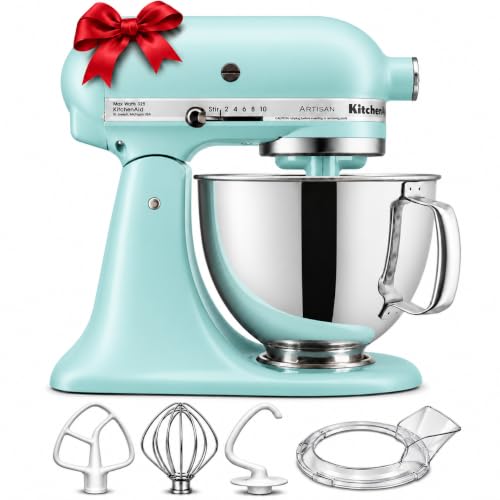
A stand mixer is a fixed mixing station: a heavy base and head carrying interchangeable tools — flat beater, wire whisk, dough hook — above a bowl that locks to the machine. The tool moves in a planetary action, rotating while orbiting the bowl, so a single pass covers most of the mixture and the machine works hands-free at a set speed. That architecture separates it from every handheld alternative: the power is sustained, the capacity is real, and the baker’s hands are free for the rest of the recipe. It is, in essence, the bakery’s planetary mixer shrunk honestly for a home counter.
The category segments into three broad tiers. Entry-tier machines bring the core action and attachments to accessible positioning, with lighter construction and modest dough composure. The mid tier — where the KitchenAid Artisan and Cuisinart Precision Master sit — adds build quality, better low-speed manners, deeper support, and the attachment ecosystems. The premium tier, home to bowl-lift KitchenAid Professional models and specialty designs like the Ankarsrum Assistent, buys rigidity, capacity, and dough authority. Nothing in the category is disposable in intent; even entry machines are built as long-term appliances, which shapes the whole ownership proposition.
Where it fits in a kitchen’s division of labour is equally clear. The stand mixer owns mixing at volume: doughs, batters, creams, and meringues in quantities from family-size upward. It does not chop, blend, or process, and it shares its borders with the hand mixer below it and the food processor beside it. Kitchens that bake find it central; kitchens that do not bake find it inexplicable. That polarity runs through every section of this review, and it is why the class inspires unusual loyalty among owners who match it — they are not loyal to a brand so much as to a capability they use constantly.
In this guide
Design, Build and Setup
Two head designs organise the category. Tilt-head machines hinge the motor head backward for open bowl access: attachment changes are quick, scraping is easy, and the machines are the lighter and more compact of the two families. Bowl-lift machines hold the head rigid and raise the bowl on a lever arm; the fixed frame is visibly and audibly more composed under heavy loads, at the cost of height, weight, and a slower bowl routine. Neither is a compromise version of the other — they are optimisations for different dominant jobs, and handling both in a shop makes the distinction physical rather than theoretical.
Build quality in this class is judged in the joints and controls. A good machine’s bowl locks with a firm, positive stop; its head latch or lift lever engages without play; its speed control moves in deliberate steps and holds a genuinely gentle lowest setting; its attachments seat on the shaft with a click you can feel. Metal gearing and housings in the upper tiers add a sense of density that lighter machines do not imitate, but the more practical markers are support markers: spare bowls, replacement beaters, and service availability years after purchase, all of which the established names in this cluster provide and newcomers must prove.
Setup is a five-minute affair with a few points that matter. The machine wants a stable counter with headroom to open fully and a two-hand lift whenever it moves — never carry one by its head. The bowl must be locked before the first run, and beater-to-bowl clearance should be checked with an early batter: a persistent unmixed pocket at the bottom is a clearance or seating issue, not a character flaw. Safety setup is part of the design brief: the machine should sit where its cord is not a trip line, where hair, sleeves, and jewellery will not drift toward the bowl, and where you can unplug it without reaching across it — because unplugging before attachment changes and before any hand enters the bowl is the class’s cardinal rule.
Controls deserve a word of praise across the category: the dominant designs use a simple speed lever or dial, operable with floury hands, with no menus, touchscreens, or firmware between the baker and the motor. In an era of appliances that beep for attention, the stand mixer’s mechanical directness is a design virtue that owners rarely list and would immediately miss. The pouring shield remains the one divisive accessory — genuinely useful for flour-heavy bakers, a fiddle for everyone else — and most machines sensibly treat it as optional.
Performance in Real Use
Dough: the defining test
Kneading separates the class from everything else on the counter. A stand mixer develops dough steadily and completely: the hook stretches and folds as the bowl turns, the dough clears the sides as gluten forms, and the baker watches texture rather than supplying force. Mid-tier tilt-heads handle standard loaves with composure; bowl-lift machines extend that composure to larger, stiffer, whole-grain batches where lighter frames begin to knock and flex. The Ankarsrum’s rotating-bowl approach develops big doughs with a gentleness its owners describe in almost affectionate terms. Across designs, the discipline is the same — low designated dough speed, batches within stated flour capacity, and patience through the sticky early minutes before adding flour.
Creaming, batters, and everyday mixing
For cakes and cookies, the class is close to flawless when used with ordinary technique. Creaming butter and sugar to pale fluffiness is exactly the sustained, medium-speed work the flat beater exists for, and planetary action keeps the mixture homogeneous with only a couple of scrape-downs. Batters come together quickly — quickly enough that overmixing, not undermixing, is the standing risk, and the reviewer’s recurring note across models is to stop at smooth rather than at the recipe’s stated minute. A flex-edge beater, where available, narrows the unmixed margin at the bowl wall and is the upgrade we would fit first to any machine in the class.
Whipping and aeration
The wire whisk at volume is a quiet triumph: egg whites reach glossy, stable peaks in quantity, cream whips evenly, and the hands-free action allows sugar to be added gradually for meringues without the juggling a hand mixer imposes. The class’s whipping manners are good across tiers, with the caveat that defines the whole category in miniature — volume. A generous batch whips beautifully; a very small one may sit beneath the whisk’s effective reach in a large bowl. Within its intended quantities, though, aeration is as strong a suit as kneading, and the two together explain the machine’s grip on serious bakers.
Sustained and batch work
Back-to-back batches are where build quality stops being abstract. Holiday production — successive cookie doughs, a cake, a meringue — asks for a drive that does not fade, a frame that does not loosen its composure, and controls that stay precise with tired, floury hands. The established mid and premium machines handle this duty with the unremarkable reliability that is the highest compliment available to a tool. Entry-tier machines complete the same sessions more slowly and with more supervision around stiff loads, which is a fair trade at their tier and only becomes a problem when buyers expect it to be otherwise.
Strengths and Trade-Offs
- Strength: complete dough capability. Kneading at volume, consistently, without labour — the class’s signature.
- Strength: hands-free consistency. Identical mixing every batch makes results repeatable and skill transferable.
- Strength: longevity and support. Decades-long service lives, available parts, repairable construction.
- Trade-off: small-batch awkwardness. Tiny quantities underperform in bowls built for volume.
- Trade-off: size and weight. A permanent space claim and a two-hand lift are the price of stability.
- Trade-off: supervision required. Under load the machine can rock or walk; it is not a set-and-forget appliance.
Weighed together, the strengths are functional and the trade-offs are logistical, which is the profile of a mature tool: it does its job superbly and asks for room and attention in return. The full two-sided ledger, argued point by point, is in stand mixer pros and cons; this review’s narrower conclusion is that none of the trade-offs reflects a design failure. They are the visible costs of the physics that makes the strengths possible — mass for stability, bowl volume for capacity, torque that demands supervision.
How It Compares
| Model | Position | Design | Standout quality |
|---|---|---|---|
| KitchenAid Artisan Series 5 | Mid tier | Tilt-head | Balance of versatility, ecosystem, and support |
| KitchenAid Professional 600 | Premium tier | Bowl-lift | Composure under large, stiff dough loads |
| Cuisinart Precision Master | Mid tier | Tilt-head | Core capability at a keener position |
| Hamilton Beach Electric Stand Mixer | Entry tier | Tilt-head | Planetary action at the lowest commitment |
| Ankarsrum Assistent Original | Premium tier | Bowl-rotation | Gentle, high-volume dough development |
Against its handheld sibling, the stand mixer wins every contest of power, capacity, and dough, and loses the contests of storage, small batches, and price tier — a comparison argued fairly, criterion by criterion, in stand mixer vs hand mixer. Against the food processor, it trades chopping versatility for mixing depth. Within its own class, the Artisan remains the reference all-rounder, the Professional the dough specialist’s default, and the Cuisinart and Hamilton Beach the value poles of the mid and entry tiers respectively, with the Ankarsrum standing apart as the specialist’s specialist. Live shortlists reflecting this ordering sit at best stand mixers and best kitchenaid stand mixers.

KitchenAid Artisan Series 5 — the reference model
Reviewed as the class’s centre, the Artisan does everything in this article’s performance sections well and nothing badly: composed creaming, honest low speeds for flour work, dough capability that covers the standard home repertoire, and the deepest attachment and parts ecosystem in the category. It is the machine against which alternatives must argue, and most arguments reduce to price tier or dough specialisation. Best for: the broad majority of regular bakers. Not suited for: high-volume stiff-dough production.
KitchenAid Professional 600 — the heavy-duty option
The Professional trades the Artisan’s convenience for frame rigidity and drive strength, and the trade pays exactly where intended: large and stiff doughs stay composed, and batch sessions feel unhurried. Its costs are height, weight, and a bowl routine that asks slightly more of the user. As a premium-tier specialist it is easy to recommend to its audience and easy to steer everyone else away from. Best for: bread and batch bakers. Not suited for: compact kitchens and casual use.
Who Should Buy It, and Who Should Skip It
Buy a stand mixer if baking is a recurring part of your kitchen life: weekly bakers, bread makers, batch and event cooks, and anyone whose recipe ambitions are currently rationed by mixing labour. Within the class, let dough decide the design — tilt-head for generalists, bowl-lift for dough-led bakers — and let frequency decide the tier. The pre-purchase checklist is short: confirm the machine’s home and headroom, confirm its stated flour capacity covers your real batches with margin, confirm a gentle lowest speed, and confirm the two or three attachments you foresee are available for the platform.
Skip it — for now — if your baking is rare and small, if your kitchen cannot give the machine an accessible permanent home, or if a single narrow task is all you need mixed. Those profiles are served better and more cheaply by a hand mixer, and the stand mixer will still be there, essentially unchanged, if your baking life grows into it. The category’s maturity is a buyer’s luxury: there is no generation to wait for and no risk in deferring. The value argument in full is at is a stand mixer worth it.
Setup, Care and Maintenance Essentials
Ownership basics are brief and mostly habitual. Seat and lock the bowl before every start; unplug the machine before changing attachments or reaching into the bowl; keep hands, utensils, hair, and jewellery clear while it runs; and start flour mixtures at the lowest speed to avoid the flour cloud and spare the vents. Lift the machine only with two hands under the base onto a stable counter. Wash bowls and attachments promptly — dough allowed to dry becomes a chiselling job — wipe the body after flour sessions, and store the machine latched with the whisk protected.
Periodically, check the beater-to-bowl clearance and the latch or lift mechanism for developing play, and consult the manual’s adjustment procedure rather than improvising. Treat unusual sounds as information: chattering usually means seating, surging means overload, and either means stop and correct rather than mix on. A machine maintained at this light standard is precisely the appliance that earns the category’s decades-long reputation; the detailed routine is in how to use a stand mixer.
Final Verdict
The stand mixer is a solved problem in the best sense: a mature, durable appliance class whose leading designs do difficult work — kneading, creaming, whipping at volume, hands-free — with a consistency no handheld tool matches. Its trade-offs are physical and predictable rather than hidden, and its best models justify their tiers through years of service rather than novelty. For the regular baker, this review’s verdict is uncomplicated: buy the class, choose the model by dough and geometry, and expect it to outlast every other appliance on the counter.
Testing Notes: Sound, Heat and Stability
Three behaviours separate satisfying machines from tiresome ones in extended use, and none appears on a spec sheet. The first is sound: a good stand mixer under load produces an even, purposeful note that rises and falls with the dough’s resistance, while a poor one adds rattles from the bowl, chatter from the head, or a strained whine at speeds it claims to offer. The second is heat: sustained dough work warms any motor, but well-designed machines shed that heat without the housing becoming hot to the touch or the machine imposing rest periods on a batch session. The third is stability: at correct batch sizes a good machine stays where it was put, while an under-framed one begins the slow migration across the counter that ends, in the worst stories, at the edge.
Across the models in this cluster, the bowl-lift designs lead on stability for the structural reasons already discussed, and the better tilt-heads are entirely respectable within their intended loads — the failures begin when any machine is asked to knead beyond its stated flour capacity, which is user error wearing the disguise of product criticism. Sound follows a similar pattern: the category’s established machines are honest-sounding tools, and the noises that should concern an owner are changes — new grinding, new knocking — rather than volume itself. A reviewer’s notebook fills with these behavioural notes because they, not the brochure numbers, are what a decade of Saturdays actually feels like.
Controls and Ergonomics in Daily Use
Ergonomics in this category are admirably unfashionable: levers and dials that can be operated with the back of a floury hand, speed settings that stay where they are put, and mechanisms — head latches, lift levers, bowl locks — that give tactile confirmation. We rate this as a significant, underreported strength of the class as a whole. The machines are used mid-recipe, with messy hands and divided attention, and their controls are designed by people who clearly understood that. The few experiments with touch panels in adjacent appliance categories stand as a warning of what this class has wisely avoided.
The ergonomic debits are the known ones. Bowl removal on lift models is a two-stage motion that never becomes as casual as lifting a bowl off a tilt-head’s plate. Attachment changes on all models require the machine to be off and, by this cluster’s safety standard, unplugged — a small friction that is also a genuine protection. Reaching the back of a deep bowl to scrape tests shorter arms. And the two-hand lift rule, essential as it is, means repositioning the machine is always a small event rather than an afterthought. None of these is a design failure; together they describe a workstation’s terms of use, which a buyer should accept knowingly rather than discover resentfully.
Bowls, Attachments and the Details That Age Well
Long ownership is lived in the accessories. Bowls in this class are well made across the established brands — steel that resists denting in normal service, handles that stay tight, bases that keep locking crisply after thousands of cycles. The attachment trio is similarly mature, with two details worth a buyer’s attention: the dough hook’s shape, which varies between designs and affects how dough is gathered from the bowl’s base, and the whisk’s wire count and flexibility, which affect both whipping speed and how forgiving the tool is of accidental contact with the bowl. Flex-edge beaters, where offered, remain the highest-value upgrade in the class.
What ages well, above all, is standardisation. Because the leading designs change slowly, a bowl bought in five years will fit, a replacement beater will match, and advice written a decade ago still applies to a machine bought today. That continuity is a hidden feature of the entire category and a real component of its value: the stand mixer is one of the few purchases where the knowledge you accumulate — speeds, timings, judgements — is guaranteed to remain valid for the life of the tool. In a kitchen increasingly filled with products that revise themselves annually, that stability has become a luxury worth naming in a review.
Value Across the Tiers
Judged as a class, the stand mixer offers an unusually honest value curve. The entry tier genuinely works: planetary action and the core attachments deliver the format’s essence, and its compromises — dough composure, construction weight, support depth — are the predictable ones. The mid tier is where most buyers should land, because it converts those compromises into strengths without buying specialisation: better low-speed manners, deeper ecosystems, and the full support apparatus of the established names. The premium tier is specialised value — rigidity, capacity, and dough authority — that is excellent value for the bakers who need it and poor value for everyone else, a distinction this review has drawn at every opportunity.
The class’s value is protected by two structural facts. First, the designs’ longevity means resale and hand-me-down markets function properly, so a purchase is never fully sunk. Second, the category’s maturity means today’s buyer is not funding anyone’s experimentation: the research and development was amortised decades ago, and what the tiers buy is materials, manufacturing quality, and support. Few appliance categories let a reviewer say that with a straight face. The stand mixer, on the evidence of its performance across every job in this article, earns it.
Reliability and Service: What the Record Shows
A review of this class would be incomplete without addressing longevity with specifics of behaviour rather than legend. The established stand mixer designs fail, when they fail, in patterned and mostly repairable ways: wear items in the drive after years of heavy dough work, speed controls that grow imprecise, latches and lift mechanisms that loosen, attachments that bend under misuse. Catastrophic, unrepairable failure is the exception, and it is the exception because the machines are built to be opened — housings that unfasten, internals a technician can reach, parts catalogues that persist. That serviceability is a design philosophy the rest of the appliance industry has largely abandoned, and it is a substantive part of what the mid and premium tiers purchase.
Ownership behaviour matters to the record as much as engineering. The machines that reach their second and third decades share owners who observed the simple disciplines: batches within stated capacity, dough at its designated speed, prompt washing, dry storage of attachments, and attention to new sounds. The machines that die young disproportionately show the opposite pattern — chronic overloading being the single most destructive habit, because it taxes the drive on every bake rather than once. A reviewer can therefore make a confident statement rarely available for appliances: how long this product lasts is substantially up to you, and the behaviours that extend its life are neither obscure nor burdensome.
The Competition from Adjacent Appliances
No review exists in a vacuum, and the stand mixer’s modern context includes capable rivals for slices of its territory. High-end food processors knead small doughs startlingly fast and own pastry work outright. Bread machines automate the loaf end-to-end for households that want the result without the process. Powerful hand mixers have narrowed the gap on everyday batters to the point of irrelevance. Each rival takes a slice; none takes the centre, because the stand mixer’s proposition was never any single task — it is the combination of dough authority, capacity, whipping, and hands-free consistency in one durable station, and combinations are harder to disrupt than features.
The more interesting pressure is internal: the category’s own entry tier keeps improving, compressing the distance between a starter machine and the mid tier’s all-rounders. That is good news for buyers and a sharpening question for the premium end, which must justify itself on rigidity and capacity alone — which, for its intended bakers, it does. Our assessment of the class’s health, reviewing the whole field, is that it remains the most stable and predictable purchase in the kitchen: the designs are known, the failure modes are known, the support is known, and the baker who matches machine to profile is as close to guaranteed satisfaction as appliances ever allow.
Stand Mixer Review Scores by Category
Summarising this review’s judgements in the conventional way, with the caveat that the class is being scored rather than a single model: dough performance, excellent — the defining strength, limited only by respecting capacity. Creaming and batter work, excellent, with overmixing as the user’s standing temptation. Whipping, excellent at volume, weak at the smallest quantities. Build and longevity, excellent for the established designs, and the basis of the class’s value case. Ease of use, very good — simple controls and honest mechanisms, discounted by weight and the supervision the power demands. Small-batch performance, the one below-average mark, and the clearest reason some kitchens should choose otherwise. A class profile with a single, predictable weakness is a mature product indeed.
How This Review Judged the Class
A note on method, because a class review owes its readers one. The judgements here rest on the accumulated evidence of the category rather than on a single test unit: the performance patterns that repeat across the leading designs and across years of owner experience — dough behaviour at stated capacities, low-speed manners, whipping at volume, the failure and wear patterns that service networks actually see, and the satisfaction patterns that owners report when machines are matched or mismatched to their baking. Where designs differ, the review says so and names the difference; where the class speaks with one voice, as it does on longevity and small-batch awkwardness, the review reports that consensus rather than manufacturing distinctions.
Two biases were guarded against deliberately. The first is specification bias: the temptation to rank by numbers that are easy to print — wattage, speed counts, bowl volume — rather than by behaviours that are harder to describe but decisive in use. The second is novelty bias: a mature category will always look static beside categories that reinvent themselves annually, and a reviewer must not mistake that stability for stagnation when the stability is, in fact, the accumulated result of a design being right. Judged on behaviour over time, which is the only judgement a decade-long appliance deserves, the stand mixer class remains what this review has found it to be: the finished article.
The Class in the Kitchen’s Longer Story
It is worth placing the stand mixer in the longer arc of kitchen technology, because its position there explains both its design conservatism and its owners’ loyalty. Most kitchen appliances of the last half-century have chased novelty cycles — new functions, new interfaces, new form factors — and have been replaced on the rhythm those cycles impose. The stand mixer belongs to the older tradition of the definitive tool: the knife, the cast-iron pan, the wooden spoon, objects whose forms settled because the problem they solve stopped changing. Dough has not changed. Cream has not changed. The physics of a beater moving through a bowl has not changed. A design that answers settled physics settles too, and its manufacturers’ energy goes into materials, manufacturing consistency, and support rather than reinvention — which is precisely the allocation a buyer of a decades-long appliance should want.
That perspective also disciplines the reviewer’s expectations of the category’s future, and therefore of a purchase made today. There will be refinements — quieter drives, incremental conveniences, new finishes — and there may be genuine niche innovations at the edges. There will not be a revolution that strands today’s machine, because revolutions require an unsolved problem and this problem is solved. A buyer can therefore purchase the current generation with a confidence available almost nowhere else in the modern kitchen: the confidence that the tool’s design, parts, attachments, accumulated knowledge, and community of owners will all still be there, essentially intact, for the whole of the machine’s long working life. In this review’s judgement, that confidence is itself one of the product’s core features, and it belongs in the verdict alongside dough, capacity, and craft.
Second Opinions: Where This Review Agrees and Parts with the Crowd
A class review gains credibility by marking where it stands with the consensus and where it steps aside from it. With the crowd: the Artisan-class all-rounder is the correct default recommendation for most bakers; bowl-lift rigidity is the correct answer to serious dough; and the category’s longevity reputation is earned rather than marketed. On those points the evidence from owners, service networks, and long-term testing all points one way, and this review points with it. Where this review parts from common practice is in emphasis. It declines to rank machines by power figures it considers meaningless across drive types. It treats small-batch performance as a first-order criterion rather than a footnote, because for a large minority of households it is the most frequent experience of the machine. And it weighs parts support and repairability as heavily as any performance metric, on the grounds that a review of a twenty-year appliance that ignores years five through twenty has reviewed the honeymoon and called it the marriage.
It also parts from the crowd on the question of who the category’s best machine is for, by refusing the premise. The review’s consistent finding is that the stand mixer class contains several excellent machines whose rankings invert depending on the baker — the dough specialist and the generalist can read the same evidence and correctly crown different winners. Publications that insist on a single champion for all kitchens are answering an easier question than the real one. The real question — which of these mature, capable machines matches your dough, your batches, your cabinets, and your frequency — has been this review’s subject from its first section, and its verdict stands: the class is excellent, the matching is everything, and a baker who matches well will not need another review for a very long time.
Who This Class Is Quietly Perfect For
Reviews usually end with who should buy and who should skip, and this one has done so — but there is a quieter category worth naming before the verdict: the bakers for whom the stand mixer is not merely suitable but transformative in a way they cannot fully predict at purchase. They are the bakers whose ambitions have been edited by effort for years without their noticing: the ones who stopped making bread when a shoulder began to complain, who make the small cake because the large one’s buttercream is a production, who read meringue recipes the way other people read travel writing. For those bakers the machine does not improve a routine; it restores a territory. No specification captures that, and no reviewer can identify those readers with certainty — but they tend to identify themselves, somewhere around the dough section of a review like this one, with a small shock of recognition. If that was you, the class verdict applies to you at full strength, and the matching questions in the buying guide are the only thing standing between you and a considerably larger repertoire.
For everyone else, the review’s closing counsel is the counsel of the whole cluster: respect the matching. The stand mixer is a finished, excellent, durable answer to a specific set of kitchen questions. Ask those questions honestly, buy the machine that answers them, keep it safely and cleanly, and it will take its place among the small set of objects in a kitchen that simply work — this year, and in the decades of baking that follow.
The Review in a Single Breath
If this entire assessment were compressed to the length of a breath, it would say: the stand mixer is the rare appliance that finished evolving because it finished solving its problem, and what remains for the buyer is not finding a good one — the established field is good — but matching one to a kitchen. Match it to dough and it will knead for you for decades; match it to batches and it will carry your holidays; match it to frequency and its price will dissolve into pennies per bake; mismatch it on any of those axes and it will sit, excellent and idle, as a monument to a baking life that exists somewhere other than your counter. The class earns this review’s strongest recommendation. The matching, as ever, is yours.
A note on the class’s quiet secondary market in knowledge deserves a place in this verdict. Few appliances accumulate as deep a public record as the stand mixer: decades of owner forums, service documentation, technique writing, and repair guidance surround the leading designs, so that almost any question a new owner can ask — a sound, a dough behaviour, a worn part — has been asked and answered, often many times, by people with the identical machine. That knowledge commons is an unlisted feature of the established models and a real component of their value; buying into it is buying into twenty years of other people’s Saturdays, distilled and searchable.
It also means the class punishes obscurity. A technically interesting machine from an unsupported maker asks its owner to be its entire knowledge base and parts department. In a category where the mainstream offers this depth of shared experience, that is a heavy ask at any price — and it is the final reason this review’s recommendations stay with the established field, where the product being bought is not just a machine but a machine plus its literature, its spares, its service network, and its crowd of experienced owners.
One further evidence stream deserves mention before the verdict hardens: returns and exchanges. In a category with genuine quality problems, return counters tell the story quickly. Stand mixers, by contrast, are returned overwhelmingly for fit reasons — too tall for the cabinets, too heavy for the shelf, too large for the batches — rather than for failures of mixing. That pattern corroborates everything this review has found by other routes: the engineering is settled and sound, the failure mode is mismatch, and the buyer’s research time is therefore best spent exactly where this cluster spends it, on geometry, frequency, and dough. A product whose returns are about tape measures rather than motors is a product whose review can afford to be this confident.
There is also the matter of what the class does to a kitchen’s centre of gravity. Kitchens organise themselves around their most capable fixed tools, and a stand mixer — permanent, ready, and equal to almost any mixing task — quietly becomes the station where baking happens, the way a good hob becomes the station where cooking happens. That gravitational effect is part of the product’s value and part of its demand: it deserves the best-lit, most accessible stretch of counter you can give it, near the flour, near the oven, with room to work around it. Reviewers notice that owners who grant the machine that place use it most and praise it longest, which closes the loop this review opened with: the stand mixer is a workstation, and workstations reward the kitchens that treat them as such.
Stand Mixer: What Long-Term Use Reveals That a First Test Misses
Start with how a {p} holds up once the novelty wears off and routines settle in. Most coverage of a stand mixer concentrates on the first week of ownership, yet the decisions that matter most tend to surface later, once the stand mixer has to earn its place in an ordinary weekday routine rather than a carefully staged first attempt. Write down the three jobs you expect it to do most often, in the order you actually do them, and judge every claim you read against that short personal list instead of against a generic ideal.
Measure before you commit. Note the footprint, the clearance above and behind the spot where the stand mixer will live, and the route you will carry it by when it is hot, full or awkward. A stand mixer that technically fits but blocks a cupboard door, crowds a neighbouring appliance or has to be dragged across a worktop every time will quietly fall out of use, whatever its merits on paper. In the Kitchen Appliances category especially, a few centimetres of clearance and a sensible storage plan separate a daily tool from a bulky regret.
Work through a realistic scenario, not a best case. Picture the busiest version of the job: more people to serve, less time than planned, ingredients or materials that are slightly out of the ordinary, and a clean-up waiting at the end. Ask how the stand mixer behaves at that upper edge, because a model that only shines on a small, simple load will disappoint precisely when you need it most. If the honest answer is that you would split the job into batches or fall back on an older method, factor that into the decision now rather than discovering it later.
Edge cases deserve a deliberate pass. Think about the odd shapes, the thicker or thinner than usual loads, the leftovers, the second helping and the guest with different preferences. A well-chosen stand mixer handles the exceptions gracefully, or at least predictably, while a poor match turns every exception into a workaround. List your two or three most common exceptions in advance and check, from the manual or the listing details, that nothing about them is ruled out by size, shape, material or care requirements.
Troubleshooting is easier when you expect the usual failure points. With any stand mixer, the recurring problems tend to cluster in the same places: uneven results from overloading or poor arrangement, wear showing first on the parts handled most often, and small annoyances with lids, seals, handles, controls or fittings that only appear after repeated use. Before buying, look for whether those wear parts can be cleaned properly, replaced or worked around, and whether the instructions address them directly rather than pretending they never happen.
Finally, plan the first fortnight deliberately. Use the stand mixer for one familiar job first, so you have a baseline you trust, then introduce the harder cases one at a time and note what changes. Small adjustments to arrangement, timing, quantity or preparation usually close most of the gap between disappointing first results and the performance the design is capable of. That short learning period is also the fairest test of long-term ownership: if the routine has not settled by the end of it, the mismatch is real, and it is better to know while returning or exchanging is still straightforward.
Use a short decision checklist to finish. One, does it fit the space and the storage you really have. Two, does it handle your three most common jobs without a workaround. Three, do the edge cases you listed stay manageable. Four, can every wear part be cleaned or replaced without drama. Five, would you still choose it if a friend described the same drawbacks in their own kitchen. A stand mixer that passes all five is a sound buy; one that fails two or more is a compromise you are choosing with open eyes, which is a very different thing from being surprised later.
Maintenance decides how long the good results last. Set a simple rhythm: a quick wipe or rinse after each use, a deeper clean on a fixed day, and a periodic check of the parts that move, seal or bear weight. A stand mixer that needs fiddly disassembly for basic care will be cleaned less often, and performance drifts long before anything actually breaks. Prefer designs where the parts that get dirtiest are the parts that are easiest to reach, and be honest with yourself about which cleaning steps you will genuinely keep up.
Frequently Asked Questions
Are stand mixers still worth buying in a modern kitchen?
Yes — for bakers, they remain the definitive mixing appliance, because the work they do has not changed: dough still needs kneading, cream still needs whipping, and volume still defeats handheld tools. The category’s designs are mature rather than outdated, with long service lives and strong parts support. The only kitchens where the case fails are those that rarely bake, where the machine’s considerable strengths simply never get used.
What is the best stand mixer for most people?
The mid-tier tilt-head class, exemplified by the KitchenAid Artisan, fits most regular bakers: versatile across doughs, batters, and whipping, with the deepest attachment ecosystem and support network. Bakers centred on large, stiff doughs should look at bowl-lift models such as the KitchenAid Professional instead. The right answer is a profile match, not a single crowned model, which is why this cluster pairs the review with a full buying guide.
How long should a stand mixer last?
A quality stand mixer should be bought as a decades-long appliance. The leading designs have long production histories, replaceable wear parts, and construction a service shop can open — a combination that supports very long service with basic care: prompt washing, sensible storage, and occasional clearance and latch checks. Longevity is one of the class’s core strengths and a central reason its mid and premium tiers represent sound value for regular bakers.
Can a stand mixer overmix?
Yes, and it is the class’s most common user error precisely because mixing is effortless. Batters beaten past smooth develop excess gluten and bake up tough; cream passes firm peaks into graininess in seconds. The defence is to judge by appearance rather than by the clock, stop the moment a mixture looks finished, and remember that a machine this capable reaches the finish line sooner than recipes written for hand mixing assume.
Is a stand mixer safe to use?
Yes, with a short list of non-negotiable habits. Unplug the machine before changing attachments or reaching into the bowl; keep hands, utensils, hair, and jewellery clear while it runs; lock the bowl before starting; lift it with two hands under the base; and start flour mixtures at low speed. Followed consistently, those rules reduce the risks of a powerful motor to a very ordinary level, and they take seconds each.
Stand mixer or food processor — which mixes better?
For mixing as bakers mean it — doughs, batters, creams, meringues — the stand mixer is decisively better: sustained action, real capacity, and attachments shaped for each job. A food processor kneads small dough quantities quickly and excels at pastry and chopping, but it whips poorly and its bowl limits batch size. The two are complements more than rivals; a baking-led kitchen chooses the stand mixer first.
Related Guides
Compare models head-to-head in stand mixer reviews, weigh ownership in stand mixer pros and cons, and master the technique in how to use a stand mixer. Live category lists include best stand mixers for bread dough and best mixers for baking.