Disclosure: As an Amazon Associate, topratedkitchenware.com earns from qualifying purchases. Links on this page are affiliate links; they cost you nothing extra. Prices and availability change often, so check the current Amazon listing before you buy.
Stand mixer pros and cons are unusually predictable: the same machine that transforms one baker’s weekends becomes another baker’s expensive counter ornament, and the difference is rarely the machine itself. The advantages — hands-free power, dough capability, consistency, longevity — are real and substantial. So are the disadvantages: size, weight, noise, small-batch awkwardness, and a purchase tier that demands genuine use to justify. This article lays both sides out in full, with the reasoning behind each point, then translates the ledger into what it means for different kinds of bakers, so you can weigh the trade-offs against your own kitchen rather than against an average that does not exist.
The verdict in advance: for regular bakers the pros dominate decisively, and for occasional bakers the cons do. Everything between those poles is decided by batch size, dough habits, and counter space. The companion pieces complete the picture — is a stand mixer worth it argues the value case, and the stand mixer buying guide turns a yes into a specific model.
Key Takeaways
- Biggest pro: hands-free, sustained power that makes dough and large batches routine.
- Biggest con: a permanent claim on counter or storage space, plus a two-hand lift whenever it moves.
- Stand mixers are at their worst with very small batches and at their best with repeated, larger ones.
- Longevity is a genuine pro — good machines serve for decades and stay repairable.
- The pros scale with how often you bake; the cons are fixed from day one.
The Pros
Pro: Hands-free power that changes how you bake
The defining advantage is not speed but freedom. A stand mixer holds its pace under load while both of your hands do something else — trickling in flour so it incorporates without a cloud, scraping the bowl at the right moment, buttering a pan during a knead. Recipes stop being a sequence of stops and starts. Tasks that demand gradual addition, like emulsions and meringues with sugar added spoon by spoon, become controlled rather than frantic. Owners consistently rate this, not any specification, as the benefit they would not give back.
Pro: Dough stops being a barrier
Kneading is the most physical step in baking, and the one most likely to quietly end a bread habit. A stand mixer kneads stiff doughs tirelessly, at consistent effort, for as long as the dough requires — which means bread, pizza, enriched doughs, and pasta dough move from occasional projects to weeknight possibilities. The machine does not get bored at minute six, does not under-knead because a shoulder aches, and does not vary from batch to batch. For anyone whose baking ambitions include yeast, this pro alone often settles the question.
Pro: Consistency you can build skill on
Because the machine mixes identically every time — same action, same speeds, same reach — it removes the noisiest variable from your baking. Recipes become repeatable, failures become diagnosable, and your own judgement develops faster because you are finally changing one thing at a time. Bakers who sell, teach, or bake for events value this professional steadiness most, but any home baker who has chased an inconsistent recipe will recognise the worth of a mixing step that simply stops being a suspect.
Pro: Capacity for real batches
A stand mixer handles quantities that defeat handheld tools: double cookie batches, big celebration cakes, meringue by the bowlful, mashed potatoes for a crowd. That capacity changes what occasions you can cook for without borrowing equipment or splitting every recipe into serial runs. Batch bakers and holiday cooks feel this pro at full strength several times a year, and for them it outweighs almost every con on the other side of the ledger.
Pro: Built to last, and to be repaired
The leading stand mixer designs are among the most durable products in the modern kitchen, with service lives commonly measured in decades, spare parts and attachments supported for years, and construction that a repair shop can actually open. In a category landscape of sealed, disposable appliances, a machine that can be maintained rather than replaced is a genuine and increasingly rare advantage — economically over its life, and practically whenever a worn part can be swapped instead of a whole machine landfilled.
Pro: An attachment platform, not a single tool
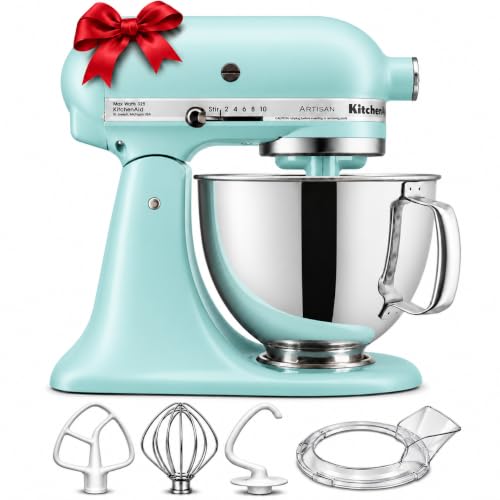
The powered hub turns one motor into several appliances: pasta rollers, food grinders, grain mills, and more, all driven by a drive you already own and stored without extra motors. For cooks whose interests genuinely span those tasks, the platform effect compounds the original purchase’s value year after year. The honest caveat belongs here too: the pro is real only when the attachments are used, which is why this article counts the platform as a strong but conditional advantage.
In this guide
The Cons
Con: It claims serious space, permanently
A stand mixer is a large object in the roomiest kitchens and a dominating one in small ones. It needs counter space with headroom to open, or storage space it can be retrieved from without a struggle, and it needs that space every day whether it bakes or not. In kitchens where counter area is the binding constraint on all cooking, the mixer’s footprint taxes every meal, not just baking days. This is the con that most often converts a wanted purchase into a regretted one, and it is entirely predictable before buying — which makes measuring first the cheapest wisdom in this article.
Con: It is heavy, and the lift never gets lighter
These are heavy machines by design — mass is part of their stability — and moving one means a deliberate two-hand lift under the base onto a stable counter, never a casual one-handed swing by the head. For anyone with limited strength, a bad back, or high storage shelves, that lift is a genuine barrier that grows more relevant every year of ownership. Counter-resident storage solves it, but that loops back to the space con. Treat the weight as a permanent characteristic to plan around, not a detail.
Con: Small batches mix badly
The geometry that gives a stand mixer its capacity works against tiny quantities: a small amount of cream can sit below the whisk’s reach, a half-batch of batter smears around a big bowl’s walls, and a single egg white may whip unevenly. Bakers cooking mostly for one or two will hit this con weekly. Workarounds exist — smaller accessory bowls, finishing small jobs by hand — but a tool that needs workarounds for your most common batch size is the wrong tool for your kitchen, however excellent it is at other sizes.
Con: Noise and drama under load
A stand mixer working hard is not a quiet appliance, and under stiff dough some models rock, knock, or walk slightly on smooth counters. Early-morning baking in a sleeping household, or an open-plan space where someone is on a call, turns that noise into a real scheduling constraint. The drama is usually harmless — it is the sound of torque meeting resistance — but it startles new owners and it does mean the machine asks for supervision rather than set-and-forget operation, as the safety guidance in how to use a stand mixer makes clear.
Con: The tier only pays back with use
Even an entry-tier stand mixer is a considered purchase, and mid and premium tiers are significant ones. Unlike a knife, which earns its keep daily in almost any kitchen, a stand mixer’s return is entirely usage-dependent: the cost per bake is wonderful at weekly use and bleak at quarterly use. That maths is unforgiving and entirely personal. The con is not that the machines are poor value — for regular bakers they are excellent value — but that the value is conditional in a way buyers routinely misjudge by imagining a baking life they do not lead.
Con: A learning curve with real failure modes
The machine is simple, but it is not foolproof. Flour clouds, over-whipped cream, over-mixed batters, and dough climbing the hook are the standard tuition, and each maps to a habit — start low, watch the finish, scrape deliberately — that takes a few bakes to internalise. None of the failure modes is dangerous when the basic safety rules are followed, but new owners should expect a short apprenticeship rather than instant mastery, and should budget a couple of imperfect bakes into the purchase decision.
What the Trade-Offs Mean for You
For the weekly baker, the ledger is not close: the pros fire on every bake, the space and weight cons are paid once and forgotten, and the machine’s consistency compounds into skill. For the bread baker, the dough pro is so central that the cons reduce to logistics — find the space, choose the rigid machine, and the question closes. Both profiles should read the stand mixer review and buy with confidence at the tier their frequency justifies.
For the occasional and small-batch baker, the same ledger inverts. The capacity pro rarely fires, the dough pro may never fire, and the small-batch con fires constantly. The space con, meanwhile, is paid daily. This profile is better served by a hand mixer — the direct comparison is in stand mixer vs hand mixer — and by revisiting the stand mixer only if the baking habit genuinely changes. There is no shame in that verdict; it is the analysis working as intended.
For the small-kitchen baker, the deciding variable is neither pro nor con in the abstract but geometry: a machine with a permanent, accessible home behaves like a different product from the same machine exiled to a high cupboard. If the honest floor plan gives it a home, the pros are available; if it does not, no specification on the box will rescue the purchase. Measure, decide where it lives, and only then weigh the rest of the ledger.
How the Stand Mixer Compares with the Alternatives
| Criterion | Stand mixer | Hand mixer | Food processor |
|---|---|---|---|
| Dough kneading | Excellent, sustained | Light doughs only | Small batches only |
| Large batches | Excellent | Limited | Limited |
| Small batches | Awkward | Excellent | Good |
| Storage | Counter or large cupboard | A drawer | Cupboard |
| Hands-free work | Yes | No | Mostly |
| Whipping | Excellent at volume | Good | Poor |
The table compresses the story: the stand mixer wins wherever volume, dough, and hands-free operation matter, and loses wherever smallness and storage matter. Neither rival is a lesser product — they are answers to different kitchens. Many settled households eventually own a stand mixer for the heavy work and keep an inexpensive hand mixer for the small, quick jobs, which is less duplication than it appears once you have watched a cup of cream fail to reach a big whisk.
How to Buy Smart If the Pros Win
Measure first: height with the head open or the bowl raised, counter depth, and the storage lift if it will not live out. Then choose the design by dominant job — tilt-head for general baking convenience, bowl-lift for dough rigidity — and the tier by honest frequency: entry for testing the habit, mid for regular baking, premium for heavy dough and batch work. Check the stated flour capacity against your real dough batches, prioritise a gentle lowest speed over headline power, and confirm the attachments you genuinely foresee exist for the platform. The step-by-step selection framework is in the stand mixer buying guide, and current shortlists live at best stand mixers.
At the point of purchase, inspect the practical details: that the bowl locks firmly, the head latch or lift mechanism feels positive, the attachment shaft seats without play, and the controls move with intent rather than slop. Register the warranty, keep the manual’s clearance-adjustment page, and plan the machine’s home before it arrives. Buying smart is mostly deciding soberly — the sober version of you, measuring a cupboard on a weekday, is a better purchasing agent than the inspired version browsing after a baking show.
Setup and Care That Reduce the Cons
Several cons shrink with technique. The flour cloud disappears with low-speed starts and staged flour addition. Small-batch awkwardness eases with a smaller accessory bowl and by finishing tiny jobs with a hand whisk without guilt. Noise and walking reduce when the machine sits fully on a stable counter — a non-slip mat helps on slick stone — and when dough batch sizes respect the stated capacity instead of testing it. The safety habits double as care habits: unplug before changing attachments or reaching into the bowl, keep hands, utensils, hair, and jewellery clear of the moving beater, lock the bowl before starting, and lift the machine only with two hands under the base.
Longevity care is equally simple: wash bowls and attachments promptly so dough never sets hard, wipe the body after flour sessions before dust reaches the vents, store the machine latched with the whisk protected from crushing, and check beater clearance and latch fit occasionally. Owners who do these things report the pro side of the ledger for decades; the cons, properly managed, mostly reduce to the space the machine fairly earns. The full routine is laid out in how to use a stand mixer.
Bottom Line
A stand mixer’s pros are about capability and time; its cons are about space, weight, and honest self-knowledge. If you bake regularly, make dough, or cook in quantity, the pros are not marginal — they reorganise what your kitchen can do, and the cons become the ordinary logistics of a tool you rely on. If you bake rarely and small, the cons are the whole story and a hand mixer is the smarter appliance. Count your bakes, measure your counter, and the ledger will reach its own verdict.
Stand Mixer Pros and Cons by Task
For bread and pizza dough
The balance here is the most one-sided in this entire article. Pro: the machine kneads completely, consistently, and without labour, turning dough from a physical event into a supervised process, and it does so at batch sizes that make weekly bread realistic. Con: dough is also where the machine’s demands peak — batches must respect the stated flour capacity, speeds must stay at the designated low setting, and the machine needs supervision because a stiff load can rock or walk it. Net assessment: strongly positive. No other task converts as many sceptics, and no other task better justifies the premium bowl-lift tier for those who pursue it seriously.
For cakes, cookies and everyday baking
Pro: creaming, beating, and combining are exactly the sustained medium-speed work the flat beater was designed for, and the results — pale, fluffy creamed butter, homogeneous batters, evenly mixed cookie doughs with mix-ins folded at stir speed — are consistently a notch above hand-mixed equivalents. Con: the machine’s efficiency invites overmixing, and its bowl is oversized for the smallest jobs, so a half-batch of muffins can paradoxically mix worse than it would by hand. Net assessment: positive for standard and large batches, neutral for small ones, with the caveat that the baker must learn to stop at smooth rather than at the recipe’s clock time.
For whipping and meringues
Pro: at volume, the whisk is superb — stable whites, glossy meringue with sugar added gradually while the machine works, cream whipped evenly while your hands prepare the dessert it will crown. The hands-free element matters most here, because aeration recipes are precisely the ones that ask for additions mid-whip. Con: the same bowl that swallows a dozen whites can leave two whites stranded below the whisk’s reach, and the speed that whips so efficiently also overshoots — firm peaks to grainy in seconds. Net assessment: strongly positive at family quantities and above, genuinely poor at the smallest quantities, where a hand whisk remains the professional’s choice.
For mashing, shredding and savoury work
Pro: the flat beater mashes potatoes for a crowd to an even texture, shreds cooked meats in seconds, and mixes meatballs, meatloaf, and fillings without cold hands in raw ingredients — savoury uses that owners discover gradually and then rely on. Con: these jobs are where bowl capacity and cleanup argue back; mashing in the mixer’s bowl means the bowl is committed, and small savoury quantities suffer the same small-batch geometry as small sweet ones. Net assessment: a genuine secondary strength that broadens the machine’s weekly usefulness well beyond baking, provided quantities are family-sized or larger.
Long-Term Ownership: The Ledger After Five Years
Time rearranges the pros and cons in instructive ways. The space con, so prominent in month one, fades into the kitchen’s furniture — the machine’s spot becomes simply where the mixer lives, defended unthinkingly. The weight con does not fade; if anything it sharpens, as the lift is performed by a baker five years older, which is why the permanent-home decision made at purchase echoes for so long. The learning-curve con disappears entirely, replaced by its opposite: the machine becomes the most predictable tool in the kitchen, the one whose behaviour the baker knows to the sound.
Meanwhile the pros compound. Consistency, pleasant in year one, becomes the foundation of a repertoire by year five — recipes the baker trusts absolutely because the mixing variable vanished years ago. The attachment platform, if cultivated sensibly, quietly absorbs tasks from other appliances. And the longevity pro stops being theoretical: at five years a quality stand mixer is not halfway through its life but barely started, while many lesser appliances bought the same year have already been replaced. Owners evaluating the purchase at this horizon almost always reframe it: the question was never the price, it was whether the baking habit would show up — and by year five, the habit has given its evidence.
The Environmental and Repairability Angle
It is worth stating plainly, because few appliance categories can claim it: a durable, repairable stand mixer is one of the most environmentally defensible purchases in the kitchen. The greenest appliance is the one that is not replaced, and a machine designed to serve for decades — with replaceable beaters, bowls, and wear parts, and construction a technician can open — displaces a procession of lesser tools that would otherwise be manufactured, shipped, and landfilled in its place. The second-hand circulation of these machines extends the argument: a stand mixer commonly serves two or three households across its life.
The honest counterweight is that this virtue belongs only to machines actually built and supported that way, and only when they are used. A premium machine bought and abandoned in a cupboard is embodied energy serving no one, and a cheaply built stand mixer that fails early combines the category’s large footprint with a gadget’s lifespan — the worst cell in the matrix. The environmental case therefore lands in the same place as the economic one: buy a good machine if your baking justifies it, maintain it lightly, keep it for decades, and pass it on when you are done. Few purchases in a modern kitchen make that full journey available; this one does.
The Pros and Cons Nobody Puts on the Box
Pro: it makes you a more ambitious baker
An advantage that rarely appears in specifications: owning the machine changes what you attempt. Recipes are no longer filtered by the question of whether the mixing is worth the effort, so enriched doughs, laminated projects, big celebration cakes, and proper meringues enter the repertoire of bakers who previously admired them from a distance. Skill follows ambition — the baker who attempts more, learns more — and owners consistently date their improvement as bakers from the machine’s arrival. This pro is real but conditional in the familiar way: it fires only in kitchens where the ambition was waiting for the tool, which is why it cannot rescue a purchase made for a baker who never wanted to bake those things in the first place.
Con: it can deskills the hands it frees
The mirror disadvantage deserves honest space. A baker who delegates all kneading may never learn dough by hand — its feel at each stage, its response to flour and weather — and that knowledge is genuinely useful, both when the machine is unavailable and when judging the machine’s own work. Similarly, creaming and whipping by hand teach the eye what the finished states look like in slow motion. The mitigation is easy and even enjoyable: knead an occasional loaf by hand on purpose, whip a small cream with a whisk now and then, and treat the machine as the default rather than the only method. But the con is real enough to name, particularly for young bakers forming their instincts: the tool that makes baking easier can also make the baker’s education shallower, if it is allowed to do every job every time.
Pro: one motor, maintained, beats five gadgets
Consolidation is an underrated advantage. A household that routes its mixing, and selectively its pasta rolling, grinding, and milling, through one maintained motor owns less clutter, fewer cords, fewer orphaned chargers and manuals, and fewer devices aging toward failure in drawers. When something does wear, there is one parts shelf to consult and one service relationship to use. Against the modern pattern of single-task appliances each with its own short life, the stand mixer’s platform model looks less like nostalgia and more like a quietly superior system — provided, as always, that the attachments consolidated onto it are ones the household genuinely uses.
Con: the ecosystem can become a collection
The platform’s shadow side is acquisition creep. Attachments are marketed as a family, finishes invite matching, and bowls multiply in materials and sizes — each purchase individually reasonable, the accumulation quietly expensive in money and storage, and largely unused beyond the first enthusiasm. Owners who fall into the collector pattern end up with the category’s costs multiplied and its benefits unchanged, since the fifth bowl mixes no better than the first. The defence is the discipline this cluster recommends everywhere: one addition at a time, nominated by a demonstrated habit, and a standing rule that a new attachment must displace something or justify its shelf in writing. It sounds severe; the owners who apply it are the ones whose ecosystems stay tools rather than becoming displays.
How the Balance Shifts with Age, Household and Habit
The pros and cons are not static across a life. In a household of young children, the capacity and hands-free pros peak — batch baking, birthday cakes, dough for family pizza nights — while the supervision con sharpens, because a powerful machine and small, curious hands require the unplugging discipline to be absolute rather than habitual. In a household of one, the small-batch con moves to centre stage and the capacity pro retreats, unless that one is a serious bread baker, in which case the dough pro carries the whole case alone and comfortably. For older bakers, the calculus often turns on the lift: the machine’s mixing removes the physical labour of baking, which is a profound pro, while its weight threatens the very independence that makes it valuable — a tension resolved, where it can be, by permanent counter residence arranged once, with help, rather than by daily hoisting.
Habit changes move the balance too, and in both directions. The baker who takes up sourdough mid-ownership watches the dough pro appreciate like property. The baker whose household shrinks, or whose interests migrate to cooking over baking, watches the same machine depreciate into an obstacle. Neither shift reflects on the machine; both reflect the truth this article began with, that a stand mixer’s pros and cons are a relationship between a tool and a life, not properties of the tool alone. The practical consequence is permission to revisit the verdict without embarrassment: the right answer at thirty-five may be wrong at sixty, and the category’s strong second-hand market exists precisely so that machines can move to the kitchens where their pros currently live.
Weighing the Ledger: A Scoring Exercise
Readers who like the decision made explicit can score the ledger directly. Give yourself one point for each statement that is plainly true of your kitchen: I bake at least twice a month. Yeast dough is a regular part of my baking. I regularly make double batches or bake for groups. I have counter space with headroom, or storage I can lift from comfortably, that the machine can claim permanently. I expect to keep baking at this pace for years. I would use at least one hub attachment beyond mixing. Then subtract one point for each of these: most of my batches are for one or two people. My counter space is already contested by daily cooking. Lifting a heavy machine would be genuinely difficult for me. My baking comes in rare bursts separated by months.
Read the total plainly. Four or more: the pros dominate for you, and the remaining task is choosing the machine well. One to three: the balance is genuinely fine, and the deciding evidence should be a trial — a borrowed machine, an entry-tier start — rather than more deliberation. Zero or below: the cons dominate, and the hand mixer route will serve you better and cheaper. The exercise is crude, deliberately: its purpose is not precision but honesty, forcing each factor to be answered as a fact about your kitchen rather than as a hope about your future self. Most readers find the total unsurprising, which is the point — the ledger was never hiding the answer, it was waiting for the questions to be asked in order.
What Would Have to Change to Flip the Verdict
It clarifies any pros-and-cons analysis to ask what would have to be different for the verdict to reverse. For the stand mixer’s cons to truly fall away, the machine would need to fold, lighten, or shrink without losing the mass and volume that its pros are made of — a physical contradiction, which is why the category has looked the same for generations and why buyers should expect it to keep looking that way. The realistic flips are all on the baker’s side: more space, more frequency, more dough. Conversely, the pros would collapse if motors became unreliable or parts support vanished — which is why this cluster insists on established designs, where the support record is a fact rather than a promise.
That stability cuts in the buyer’s favour in one final way: there is no penalty for waiting, and no reward for rushing. The machine you decline today will be available, essentially unchanged and fully supported, on the day your kitchen or your habits make its pros your pros. Few major purchases offer that patience for free. Use it if you need it — and if you do not need it, because the ledger already balances clearly in favour, then buy with the confidence that you are joining one of the most reliably satisfied groups of owners in the entire appliance world.
The Verdicts of the People Who Live With One
Step back from the itemised ledger and listen to the aggregate voice of ownership, because it has a distinctive shape. Owners of stand mixers are, as a group, strikingly loyal — not in the performative way of gadget enthusiasts, but in the settled way of people describing a tool that has quietly reorganised their competence. They replace worn beaters without resentment, they defend the machine’s counter space against all challengers including new partners and new kitchens, and when the machine finally retires they describe the replacement purchase as a formality. Dissent exists and clusters exactly where this article’s cons predict: in kitchens where the machine never found a home, in households whose baking never materialised, and among small-batch cooks wrestling a large bowl. The loyalty and the dissent are the same evidence read from two sides, and both confirm the ledger’s central claim — that fit, not quality, is the variable. Quality in this category is a constant. Fit is the buyer’s contribution, and it is decisive.
There is one more owner pattern worth recording, because it is the strongest practical endorsement the category can offer: the inheritance pattern. Stand mixers are handed down — from parents to adult children setting up kitchens, between siblings, to friends beginning to bake — in a way that almost no other powered appliance is, because they are still working, still supported, and still recognisably the same excellent tool at twenty years old as at two. A product whose cons were fundamental would not circulate like that; it would be discarded. The second and third lives of these machines are the market’s own pros-and-cons analysis, conducted over decades, with real kitchens as the sample. Its verdict matches this article’s: a superb tool for the kitchens it fits, circulating steadily toward the kitchens it fits, whenever a mismatch sets it free.
Children, Guests and the Social Life of the Machine
A stand mixer’s ledger has a social column that specifications ignore. In family kitchens the machine becomes a small institution: children who grew up watching dough rise in its bowl associate baking with its sound, and baking together — with the machine doing the heavy work while small hands measure, pour at the safe moments, and watch through the bowl’s side — is one of the genuinely reliable ways cooking gets transmitted between generations. The safety discipline this cluster insists on is part of that picture rather than a contradiction of it: the machine is unplugged when small hands are near, attachments are changed by adults, and the running bowl is a look-don’t-touch spectacle until age and judgement say otherwise. Managed that way, the mixer is a teaching instrument as much as a tool.
Guests register the machine too, in both directions. For households that entertain, the capacity pro becomes hospitality: desserts at dinner-party scale, bread for a table of ten, whipped cream without a production meeting. The machine’s presence on the counter signals a baking household, which hosts find either delightful or faintly intimidating depending on their own kitchens — a social effect worth a smile and no weight in the decision. What does deserve weight is the noise con in open-plan entertaining: a dough kneading through a dinner party’s conversation is a real, if minor, scheduling fact, and owners learn to run the loud stages before guests arrive. None of these social entries decides a purchase alone; together they remind the buyer that an appliance this large and this durable joins the household, and its pros and cons will be lived socially as well as culinarily.
The Shortest Honest Version
Compress this entire article into the version you could give a friend in an elevator, and it runs like this. A stand mixer is a powerful, durable, genuinely transformative tool for people who bake often, make dough, or cook in quantity — for them its advantages are large, weekly, and compounding, and its disadvantages shrink to a patch of counter and a lift they stop noticing. For people who bake rarely and small, the same machine is a heavy, space-hungry solution to problems they do not have, and its disadvantages are the whole experience. The tool does not change between those two kitchens; the baking does. So the pros and cons were never really a property of the product to be discovered by research — they are a property of the match, to be discovered by self-knowledge. Count your bakes, measure your counter, weigh your dough habit, and the ledger that fills the rest of this article will already have reached its verdict before you finish reading it. That is not a weakness of the analysis. That is the analysis, working exactly as it should.
A Note on Bias, From Both Directions
Two biases distort most discussions of this product, and a balanced article should disarm both. The first is owner’s pride: people who have spent significantly on a machine are motivated to praise it, and their enthusiasm — while usually genuine — should be discounted for the small batches they have quietly stopped attempting and the cupboard gymnastics they have quietly normalised. The second is the mirror bias of the non-owner, who sees only the counter space and the price tier, and none of the weekly reality inside a baking household. This article has tried to correct for both by returning, at every step, to countable things: bakes per month, batches per bake, centimetres of counter, and the presence or absence of dough. A reader who answers those countable questions for their own kitchen holds a verdict that neither bias can move — which is, in the end, the only kind of verdict worth the money this purchase involves.
A last practical note for readers whose score landed in the fine middle band: the tie is usually broken by dough. If any part of your baking future — even an unproven, hoped-for part — involves regular bread, lean toward the pros and buy the machine that makes that future easy to start; dough ambition is the one aspiration this tool reliably converts into habit. If your baking future is dough-free as far as you can honestly see, lean toward the cons and keep the counter. The middle band is not indecision; it is the ledger accurately reporting that your next year of baking, whichever way it breaks, will supply the missing evidence.
Keep the ledger beside you as you shop, and let it do what ledgers do: replace a vague feeling with a set of answered questions. The stand mixer’s pros are among the largest in the appliance world, and so are its cons — which is precisely why this product rewards clear-eyed buyers and punishes vague ones more than most. Be a clear-eyed buyer, and whichever side of the ledger wins in your kitchen, it will have won honestly.
Stand Mixer: Weighing the Trade-Offs in Daily Use
Start with how the strengths and frustrations of a {p} balance out in a real kitchen. Most coverage of a stand mixer concentrates on the first week of ownership, yet the decisions that matter most tend to surface later, once the stand mixer has to earn its place in an ordinary weekday routine rather than a carefully staged first attempt. Write down the three jobs you expect it to do most often, in the order you actually do them, and judge every claim you read against that short personal list instead of against a generic ideal.
Troubleshooting is easier when you expect the usual failure points. With any stand mixer, the recurring problems tend to cluster in the same places: uneven results from overloading or poor arrangement, wear showing first on the parts handled most often, and small annoyances with lids, seals, handles, controls or fittings that only appear after repeated use. Before buying, look for whether those wear parts can be cleaned properly, replaced or worked around, and whether the instructions address them directly rather than pretending they never happen.
Edge cases deserve a deliberate pass. Think about the odd shapes, the thicker or thinner than usual loads, the leftovers, the second helping and the guest with different preferences. A well-chosen stand mixer handles the exceptions gracefully, or at least predictably, while a poor match turns every exception into a workaround. List your two or three most common exceptions in advance and check, from the manual or the listing details, that nothing about them is ruled out by size, shape, material or care requirements.
Work through a realistic scenario, not a best case. Picture the busiest version of the job: more people to serve, less time than planned, ingredients or materials that are slightly out of the ordinary, and a clean-up waiting at the end. Ask how the stand mixer behaves at that upper edge, because a model that only shines on a small, simple load will disappoint precisely when you need it most. If the honest answer is that you would split the job into batches or fall back on an older method, factor that into the decision now rather than discovering it later.
Measure before you commit. Note the footprint, the clearance above and behind the spot where the stand mixer will live, and the route you will carry it by when it is hot, full or awkward. A stand mixer that technically fits but blocks a cupboard door, crowds a neighbouring appliance or has to be dragged across a worktop every time will quietly fall out of use, whatever its merits on paper. In the Kitchen Appliances category especially, a few centimetres of clearance and a sensible storage plan separate a daily tool from a bulky regret.
Use a short decision checklist to finish. One, does it fit the space and the storage you really have. Two, does it handle your three most common jobs without a workaround. Three, do the edge cases you listed stay manageable. Four, can every wear part be cleaned or replaced without drama. Five, would you still choose it if a friend described the same drawbacks in their own kitchen. A stand mixer that passes all five is a sound buy; one that fails two or more is a compromise you are choosing with open eyes, which is a very different thing from being surprised later.
Finally, plan the first fortnight deliberately. Use the stand mixer for one familiar job first, so you have a baseline you trust, then introduce the harder cases one at a time and note what changes. Small adjustments to arrangement, timing, quantity or preparation usually close most of the gap between disappointing first results and the performance the design is capable of. That short learning period is also the fairest test of the trade-offs that only show up after weeks of use: if the routine has not settled by the end of it, the mismatch is real, and it is better to know while returning or exchanging is still straightforward.
Maintenance decides how long the good results last. Set a simple rhythm: a quick wipe or rinse after each use, a deeper clean on a fixed day, and a periodic check of the parts that move, seal or bear weight. A stand mixer that needs fiddly disassembly for basic care will be cleaned less often, and performance drifts long before anything actually breaks. Prefer designs where the parts that get dirtiest are the parts that are easiest to reach, and be honest with yourself about which cleaning steps you will genuinely keep up.
Frequently Asked Questions
What is the biggest advantage of a stand mixer?
Hands-free, sustained power. The machine holds speed under load while you add ingredients gradually, scrape, and prepare the next stage, which changes both the results and the experience of baking. Closely behind it is dough capability: kneading stops being physical labour, so yeast baking becomes a routine rather than a project. For regular bakers those two advantages together outweigh every disadvantage on the other side of the ledger.
What is the biggest disadvantage of a stand mixer?
The permanent space claim, compounded by weight. A stand mixer occupies counter or storage territory every day and requires a two-hand lift whenever it moves, so a kitchen that cannot give it an accessible home will use it less and resent it more. Unlike most appliance drawbacks, this one is fully predictable before purchase: measure the space, plan the home, and you will know whether the disadvantage applies to you.
Are stand mixers good for small batches?
They are at their weakest there. Small quantities can sit below the whisk’s reach or smear around a large bowl without mixing evenly. A smaller accessory bowl helps considerably, and many owners keep an inexpensive hand mixer for single-cup jobs. If the great majority of your baking is small-batch, that weakness should weigh heavily in your decision — it will be your most frequent experience of the machine.
Do stand mixers last long enough to justify the cost?
Quality models are among the longest-lived appliances in the kitchen, commonly serving for decades, with parts and attachments supported long after purchase and construction that can be repaired rather than replaced. Spread across weekly use, even a premium-tier machine becomes inexpensive per bake. The justification collapses only when use is rare — longevity cannot rescue a machine that sits idle, however many decades it idles for.
Is a stand mixer too loud for an apartment?
It is audible, especially under dough loads, but rarely unreasonable for daytime use. The practical constraints are early-morning baking in a sleeping household and open-plan spaces during calls. Placing the machine fully on a stable counter, using a non-slip mat on slick surfaces, and keeping batch sizes within the stated capacity all reduce both noise and movement noticeably.
Can a stand mixer replace other appliances?
Partially. With hub attachments it can take over pasta rolling, grinding, and similar tasks, and it replaces a hand mixer for most jobs except the very smallest. It does not replace a food processor’s chopping and pastry work or a blender’s core functions. The realistic picture is consolidation at the margins: one strong motor retiring a few single-task tools, provided the attachments match cooking you actually do.
Related Guides
Continue with the value argument in is a stand mixer worth it, the model assessments in stand mixer reviews, and the technique guide at how to use a stand mixer. Live lists that extend this ledger include best stand mixers for home bakers and best stand mixer attachments.