Disclosure: As an Amazon Associate, topratedkitchenware.com earns from qualifying purchases. Links on this page are affiliate links; they cost you nothing extra. Prices and availability change often, so check the current Amazon listing before you buy.
A stand mixer buying guide has one job: to match a machine to the way you actually bake, because the stand mixer category spans entry-tier helpers and premium-tier workhorses that share a silhouette but not a purpose. Buy too little machine and stiff dough will expose it within a month; buy too much and you have paid a premium for capacity that sits idle while claiming your best counter space. This guide works through the types, the criteria that genuinely matter — capacity, drive, head design, speeds, and attachments — and a shortlist of real models, so the machine you bring home is the one your baking would have chosen.
Two principles run through everything below. First, specs only matter translated into your recipes: bowl size means little until it is expressed in loaves and cookie batches. Second, a stand mixer is a decades-long purchase, so repairability, attachment support, and honest low-speed control outrank fashionable extras. If you want the ownership case argued first, read is a stand mixer worth it; for model-level testing notes, see our stand mixer review.
Key Takeaways
- Choose the head design first: tilt-head for compact kitchens and easy bowl access, bowl-lift for heavy dough work.
- Match bowl capacity to your largest regular batch, not your largest imaginable one.
- Low-speed control matters more than top speed — dough and flour starts live at the gentle end.
- Buy into an attachment ecosystem only if you will actually use it; the mixer itself is the purchase.
- Judge tiers qualitatively — entry, mid, premium — and buy the tier your baking frequency justifies.
What a Stand Mixer Does and the Main Types
A stand mixer is a motorised mixing station: a fixed head carrying a beater, whisk, or dough hook above a locked bowl, with the attachment moving in a planetary pattern — spinning on its own axis while travelling around the bowl — so it reaches most of the mixture without you rotating anything by hand. It creams, beats, whips, mixes, and kneads at sustained speeds, hands-free, which is the entire proposition. Everything else in this guide is about how the variations on that theme suit different kitchens.
Tilt-head stand mixers
The tilt-head design hinges the motor head back, giving open access to the bowl for adding ingredients, swapping attachments, and scraping. These machines are generally the more compact and lighter option, fit more easily under cabinets when closed, and dominate the entry and mid tiers. Their limit is stability under very heavy loads: a hinged head can flex and knock under stiff dough, which is why serious bread bakers often graduate beyond them. For the majority of home baking — cakes, cookies, moderate doughs, whipping — the tilt-head is the natural default and the design most first-time buyers should start from.
Bowl-lift stand mixers
The bowl-lift design fixes the head rigidly and raises the bowl to it on a lever-operated arm. The rigid frame is the point: under heavy, stiff loads the machine stays composed, which is why bowl-lift models anchor the premium tier and the bread-focused end of the market. The costs are height — these are tall machines that may not slide under standard cabinets — weight, and a slightly slower routine for bowl removal. If your baking centres on large or stiff dough batches, the bowl-lift’s composure is worth more than any feature on a spec sheet.
Compact and specialty stand mixers
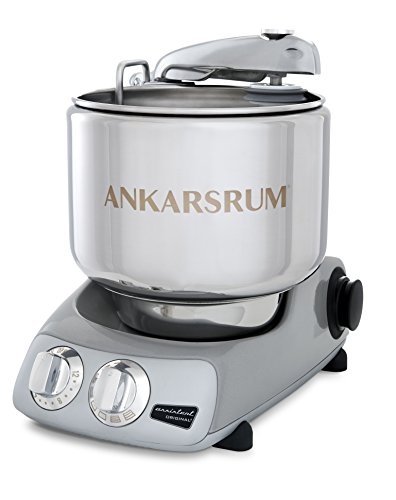
A smaller class of compact machines serves small households and tight counters, with reduced bowl capacity and lighter drives; they handle batters, whipping, and light doughs gracefully and store where full-size machines cannot. At the other extreme sit specialty designs such as the Ankarsrum Assistent, which rotates the bowl itself rather than the attachment and has a devoted following among high-volume bread bakers. Specialty machines reward research: their technique differs, their ecosystems are narrower, and their resale and parts situations differ from the mainstream brands. Buy them deliberately, for a known reason.
In this guide
Top Picks at a Glance
The shortlist below reflects the models examined across this cluster; each is presented prose-only while verification is completed, with qualitative tiers rather than prices. The fuller assessments live in stand mixer reviews.
| Model | Badge | Tier | Design |
|---|---|---|---|
| KitchenAid Artisan Series 5 | Best Overall | Mid | Tilt-head |
| KitchenAid Professional 600 | Best for Bread Dough | Premium | Bowl-lift |
| Cuisinart Precision Master | Best Mid-Tier Alternative | Mid | Tilt-head |
| Hamilton Beach Electric Stand Mixer | Best Budget Starter | Entry | Tilt-head |
| Ankarsrum Assistent Original | Best for High-Volume Bread | Premium | Bowl-rotation specialty |
How Much Capacity Do You Need?
Capacity is the criterion to size from your largest regular batch. Think in working terms: how many loaves of bread, how many dozen cookies, how large a celebration cake. A mid-size bowl handles a single loaf, a standard cake, and family cookie batches with room to spare, and it is the right answer for most households. Step up in capacity when you routinely double recipes, bake for events, or work with doughs that expand aggressively during kneading — dough needs headroom to climb and fold without escaping the hook’s working zone.
Oversizing has real costs that brochures omit. In a large bowl, small quantities spread thin: a small amount of cream may sit below the whisk’s effective reach, and a half-batch of batter can smear around the walls rather than mixing. Bakers who cook mostly for one or two should weigh a compact machine, or a mid-size model with a smaller accessory bowl, more seriously than raw capacity. The honest question is not what is the biggest batch you can imagine, but what is the batch you make twice a month — size for that, and let rare feasts be made in two runs.
Tilt-Head or Bowl-Lift: Which Design Fits Your Kitchen?
Start with the physical facts. Measure the vertical space where the machine will live, including the clearance needed to tilt a head fully back or to raise and remove a bowl on a lift model; then measure the counter depth and the lift you face if the machine will be stored in a cupboard. A bowl-lift machine that must be dragged out and hoisted for every use will quietly stop being used. A tilt-head that cannot open beneath your cabinets is a daily friction of a different kind. The right design is partly about dough, but first it is about geometry.
Then weigh the workload. Predominantly cakes, cookies, and gentle doughs point to tilt-head convenience: faster attachment changes, easier scraping access, lighter weight. A practice centred on bread — especially double loaves, whole-grain, and low-hydration doughs — points to the bowl-lift’s rigidity. There is no wrong answer, only mismatches, and the mismatch stories are remarkably consistent: bread bakers who bought tilt-heads complain about knock and flex, and occasional bakers who bought bowl-lifts complain about height and heft. Match the design to the dominant job.
How Much Power and Speed Control Do You Need?
Ignore headline wattage as a comparison tool; it measures consumption more than capability and is not standardised across drive designs. What matters is how the machine behaves at the two ends of real work: whether it holds a steady low speed under a stiff dough without surging or stalling, and whether its gentle settings are genuinely gentle. The most-used control in stand mixing is the lowest one — it starts every flour mixture without a flour cloud, folds delicate ingredients, and runs the dough hook. A machine with a mushy, too-fast lowest speed will annoy you every single bake.
Look instead for a speed range with a true stir setting, smooth transitions rather than jumps, and a soft-start behaviour that ramps up instead of lurching. For dough, the manufacturer’s stated flour capacity is the most honest power figure available — it reflects what the drive and frame can sustain, batch after batch. Treat it as a ceiling with margin: if your regular dough sits near the limit, step up a class. Technique matters as much as machinery here, which is why this guide pairs with the method walkthrough in how to use a stand mixer.
Which Attachments and Ecosystem Matter?
Every machine in this guide ships with the core trio — flat beater, wire whisk, dough hook — and those three cover the overwhelming majority of home baking. Judge upgrades by material and fit: metal attachments outlast coated ones, a flex-edge beater that scrapes the bowl as it turns is the single most useful upgrade most bakers ever buy, and a second bowl transforms staged baking. Pouring shields help flour-heavy bakers; splatter discipline at low speed helps everyone else for free.
The powered attachment hub is where ecosystems diverge. KitchenAid’s front hub supports the category’s deepest catalogue — pasta rollers, grinders, grain mills, ice cream makers — which is a genuine long-term asset if your cooking will use them, and an irrelevance if it will not. Other brands offer narrower ranges. The disciplined approach: buy the mixer for mixing, confirm the two or three attachments you truly foresee are available and well-reviewed for that platform, and ignore the rest of the catalogue until a real habit demands it. Ecosystem breadth is insurance, not a feature to pay a premium for on speculation alone.
How to Prioritise by Use Case
The cake and cookie baker
Prioritise a tilt-head design, a mid-size bowl, excellent low-to-medium speed control for creaming, and a flex-edge beater. Dough demands are light, so drive strength can yield to convenience and price tier. The Artisan class of machine is the reference point here, and most bakers in this profile will never outgrow it.
The bread baker
Prioritise rigidity and low-speed torque: a bowl-lift frame, a dough hook designed for sustained work, and a flour capacity comfortably above your regular batch. Bowl size should fit your double-loaf ambitions. This profile justifies the premium tier more clearly than any other, because the machine’s hardest job is also its most frequent one. The live specialist lists at best stand mixers for bread dough narrow the field further.
The small-kitchen baker
Prioritise footprint, height, and weight above all — a machine that fits is a machine that gets used. Compact tilt-heads and entry-tier models earn serious consideration here, and honest reflection about batch sizes usually shows that capacity was never the constraint. If storage means lifting, weigh the machine in the shop if you can; the two-hand lift to a stable counter should feel manageable, not heroic.
The batch and event baker
Prioritise bowl capacity, sustained-duty strength, and a second bowl. Your peaks define the purchase: holiday production and bake-sale runs reward the largest sensible bowl and a drive that does not fade across back-to-back batches. Bowl-lift models dominate this profile for the same composure reasons as bread, and the Ankarsrum’s large-capacity approach deserves a look if bread dominates the batch work.
The Shortlist, Pick by Pick

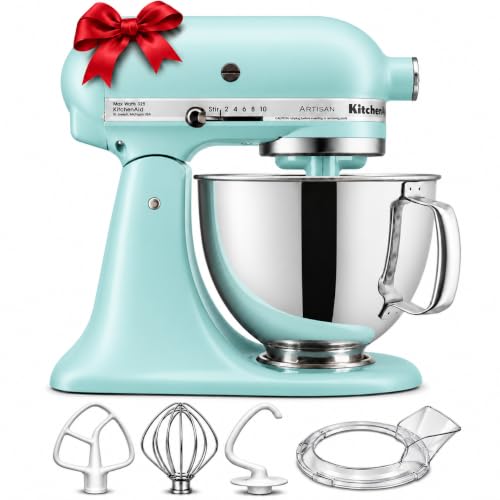
KitchenAid Artisan Series 5 — Best Overall
The Artisan is the category’s centre of gravity: a tilt-head machine with a mid-size bowl, a gentle and usable low end, and the deepest attachment ecosystem in the class. It creams, whips, and kneads moderate doughs with equal composure, and its decades-long production run means parts, bowls, and advice are everywhere. Strengths: versatility, ecosystem, resale and repair support. Trade-offs: head flex under very stiff dough, and a premium within the mid tier. Best for: the majority of home bakers. Not suited for: high-volume stiff-dough specialists.
KitchenAid Professional 600 — Best for Bread Dough
The Professional pairs a bowl-lift frame with a drive built for sustained, heavy work, and it shows most clearly in dough: large, stiff batches stay composed instead of rocking the machine. Strengths: rigidity, capacity, dough authority. Trade-offs: height, weight, and a slower bowl routine that casual bakers may find overbuilt for their needs. Best for: committed bread bakers and batch bakers. Not suited for: low cabinets, small kitchens, or occasional use.

Cuisinart Precision Master — Best Mid-Tier Alternative
Cuisinart’s entry in the class covers the core brief — tilt-head access, the full attachment trio, and a speed range with an honest gentle end — at a mid-tier position that undercuts the category leader. Strengths: value positioning, straightforward controls, competent all-round mixing. Trade-offs: a shallower attachment ecosystem and less long-run parts depth than the market leader. Best for: bakers who want the full stand mixer experience without paying for ecosystem breadth. Not suited for: collectors of specialty attachments.
Hamilton Beach Electric Stand Mixer — Best Budget Starter
The Hamilton Beach brings planetary mixing action and the core attachment set to the entry tier, handling batters, cookies, whipping, and light doughs with more competence than its position suggests. Strengths: accessibility, simple operation, a sensible first-machine brief. Trade-offs: composure and capacity at the stiff-dough end, and lighter construction throughout. Best for: beginners testing the habit and light-duty bakers. Not suited for: weekly bread production or large batches.
Ankarsrum Assistent Original — Best for High-Volume Bread
The Ankarsrum inverts the category’s design: the bowl rotates against a fixed roller and scraper, an arrangement bread bakers prize for developing large doughs gently and thoroughly. Strengths: exceptional dough handling at volume, a long service reputation, and a broad multi-function accessory system. Trade-offs: a real technique learning curve, a premium tier position, and handling that differs enough from conventional mixers that skills do not transfer directly. Best for: dedicated, high-volume bread bakers. Not suited for: buyers wanting a familiar, general-purpose first machine.
First Setup and Care Essentials
On arrival, wash the bowl and attachments, seat the bowl until it locks, and run the machine empty through its speeds to learn its sounds before food is involved. Check beater-to-bowl clearance with a test batch — a simple cake batter reveals unmixed pockets immediately — and adjust if your model provides the adjustment. From the first bake, build the safety habits that this cluster treats as non-negotiable: unplug before changing attachments or reaching into the bowl, keep hands, utensils, hair, and jewellery clear while the machine runs, lock the bowl before starting, and begin flour mixtures at the lowest speed.
Ongoing care is brief: wipe the body after flour work, wash attachments promptly before dough can set, store the machine latched with attachments protected, and lift it only with two hands under the base onto a stable counter — never carry it by the head. A cover keeps counter-resident machines free of cooking grease. These small disciplines are the difference between a machine that serves for decades and one that ages in five years, and they cost almost nothing.
Mistakes to Avoid When Buying
The classic error is buying capacity for imaginary batches while ignoring the geometry of a real kitchen — measure height, depth, and storage before falling for a model. The second error is chasing headline wattage or top speed, neither of which predicts dough performance; low-speed control and stated flour capacity do. The third is paying an ecosystem premium for attachments you will never fit. And the fourth is skipping the tier question: an entry machine bought for premium-tier work disappoints quickly, while a premium machine bought for monthly muffins is money parked on a counter. The balanced ledger in stand mixer pros and cons helps calibrate the final call, and the brand shortlist at best kitchenaid stand mixers is useful if your search narrows there.
Bowl Materials and Sizes, Explained Plainly
Most stand mixers centre on a stainless steel bowl, and for good reason: steel is light for its strength, does not chip, tolerates hot and cold ingredients, and can be chilled for whipping or warmed gently for dough work. Glass bowls look beautiful and let you watch a mixture’s base, but they are heavier — a real consideration when the bowl is full of dough and you are lifting it one-handed — and they can chip at the rim. Ceramic bowls, offered as accessories by some brands, suit bakers who value presentation from mixer to table and accept the weight and fragility as the price. For a first machine, steel is the pragmatic default; treat alternative bowls as later accessories chosen for a reason.
Size interacts with material in ways brochures underplay. A large steel bowl remains manageable when full; a large glass bowl full of dough is a genuine two-hand object. Whatever the material, check the handle: a sturdy, well-placed handle matters every time you scrape, pour, or carry, and it is one of the first things to evaluate in a shop. Also confirm how the bowl locks — twist-lock bases and pin-and-snap systems both work well, but you should be able to seat and release the bowl with one confident motion, because you will perform it thousands of times and often with floury hands.
Drive Types and Why Wattage Misleads
Stand mixers reach their beaters through different drive designs — direct drives, belt drives, and gear combinations, in both AC and DC motor variants — and each has honest virtues. DC motors, found in some premium machines, deliver strong low-speed torque and run quietly at the gentle end where dough work lives. Well-built AC machines are simpler, proven over decades, and entirely adequate for the home repertoire. Belt-driven designs can act as a mechanical fuse, sacrificing a replaceable belt rather than internal gearing under extreme overload. The practical lesson is that the drive type is a means, not a merit badge: judge the machine by observed behaviour at low speed under load and by its stated flour capacity, not by the motor technology on the box.
Wattage deserves its reputation as the category’s most misleading number. It describes electrical consumption under particular test conditions, varies in meaning between drive types, and correlates weakly with the torque that actually kneads your dough. A lower-wattage DC machine can out-knead a higher-wattage rival while running cooler and quieter. Reviewers who test with real dough consistently find the same ordering: frame rigidity first, low-speed control second, stated flour capacity third — and wattage nowhere. Buyers who internalise that ordering rarely regret their machines.
Noise, Vibration and Counter Behaviour
No stand mixer is silent, but the character of the noise varies and matters in real homes. Gear-driven machines under dough load produce a purposeful mechanical sound that rises and falls with the bowl’s resistance; that is normal and not a defect. What should concern a buyer is new or changing noise — grinding, rattling from a loose bowl, or a head knocking because it was not latched — all of which indicate seating or adjustment issues rather than character. In a shop, you cannot knead dough, but you can run the speeds, listen for evenness, and check that the machine sits flat and still on a hard surface at its highest setting with an empty bowl.
Vibration behaviour at home depends as much on your counter as on the machine. Stone and composite counters transmit a machine’s working rhythm audibly; wooden surfaces damp it. A non-slip mat under the base both quiets the machine and prevents the slow walking that slick surfaces allow under dough loads. Plan the machine’s position with this in mind: a stable counter, away from the edge, with the cord routed so it cannot be dragged by the machine’s small movements. These are thirty-second decisions that shape years of use, and they belong in a buying guide precisely because they are so often discovered afterwards.
Warranty, Parts and Service: The Decade Test
Apply the decade test to any machine you are considering: if a beater bends in year six, can you buy another? If the bowl dents, is a replacement on a shelf somewhere? If a gear wears in year nine, does a service network exist that will open the machine? The established names in this category pass that test easily, which is a large part of what their mid and premium tiers are actually buying. Newer or obscure brands may offer attractive specifications, but the buyer carries the support risk personally. For an appliance category defined by longevity, the parts shelf is not an afterthought — it is a core feature, and it deserves a line in your comparison next to capacity and design.
Warranty terms should be read for what they cover rather than how long they sound: motor and drive coverage matters most, with attachments and bowls typically treated as consumables. Register the purchase, keep the manual — particularly the clearance adjustment and care pages — and note the model and serial information somewhere durable. Owners who treat the machine as a maintained asset, with an annual check of latch, clearance, and cord, are the ones whose mixers become the hand-me-downs discussed elsewhere in this cluster. The machine rewards that mindset more reliably than almost any other appliance in the kitchen.
Buying Used or Refurbished
Because the category’s leading designs are durable and long-running, the used and refurbished market is unusually rational. A used machine from an established design, complete with its bowl and core attachments, can deliver most of the new-machine experience at an entry-tier outlay — an attractive route for bakers whose frequency does not yet justify the mid tier. Inspect as you would any motorised tool: run every speed and listen for evenness, test with a stiff dough if the seller allows, confirm the bowl locks firmly and the attachments seat without play, check the head latch or lift mechanism for slop, and inspect the cord along its full length.
Manufacturer-refurbished machines add a warranty to that logic and are often the value sweet spot of the entire category. Whichever route you take, budget for the possibility of one replacement attachment and a new bowl gasket or shield if needed, and confirm that spares for that exact model are still listed before paying. The one used purchase to avoid is the incomplete orphan: a machine missing its bowl or attachments from a discontinued line, where the missing parts cost more than the machine did. Completeness, in the used market, is worth more than cosmetic condition.
Accessories Worth Budgeting For — and Those to Skip
Two accessories earn their place for most buyers. A flex-edge beater, which scrapes the bowl wall as it turns, reduces scrape-down stops and improves creaming and batter homogeneity in every session — it is the rare accessory that pays off daily. A second bowl transforms staged baking, letting whites whip while a batter waits, and turns back-to-back batches into a flow rather than a washing queue. A fitted cover is a modest third for counter-resident machines in busy kitchens, keeping grease film and dust off a machine that lives in the open.
The skip list is longer and more personal. Pouring shields divide opinion — flour-disciplined bakers who start low rarely need one. Splash-prone specialty tools, novelty attachments, and duplicate bowls in decorative materials mostly serve the catalogue rather than the kitchen. The governing rule from the main guide applies with full force here: buy the mixer for mixing, live with it for a season, and let demonstrated habits — not launch-day enthusiasm — nominate each accessory. A stand mixer’s ecosystem is a garden to cultivate over years, not a set to complete on day one.
Colour, Finish and the Kitchen You Actually Have
It is unfashionable to discuss appearance in a buying guide, and a mistake: this machine will sit visibly in your kitchen for decades, and its finish is part of its ownership cost or pleasure every single day. The leading brands offer wide colour ranges, which tempts buyers toward the shade that delights them in the showroom. The experienced advice is duller and better: choose the finish that suits the kitchen you have and the cleaning you will actually do. Dark, glossy finishes show flour dust beautifully — every session writes itself across them — while lighter and matte finishes forgive a busy baking life. Stainless and neutral tones disappear into most kitchens; statement colours earn their place only in kitchens designed around them. None of this affects mixing by one iota, and all of it affects whether the machine’s permanent residence feels like furniture or like clutter.
There is a second, subtler point: because the leading designs change so slowly, a stand mixer is one of the few appliances that will not date your kitchen. The silhouette a buyer chooses today will look current in fifteen years, because it looked current fifteen years ago. That stability is worth something real to anyone who has watched a kitchen fill with appliances styled for a single season. Buy the colour as if you will look at it for twenty years, because — if you choose the machine well — you will.
Delivery, Unboxing and the First-Week Checklist
Plan the arrival of a heavy machine. It will come in a box that is awkward as well as heavy, so clear the route from door to counter in advance and lift with two hands under the base once it is out — never by the head, which is not a handle and was never designed to carry the machine’s weight. Unpack on the counter or a sturdy table rather than the floor, keep the packaging until the machine has run through its speeds and completed a first bake satisfactorily, and photograph the serial plate for your records before the paperwork migrates to a drawer. Wash the bowl and all attachments before first use, run the empty machine briefly through its range to learn its normal sounds, and check the beater-to-bowl clearance with your first real batter.
In the first week, deliberately bake across the machine’s range rather than repeating one success: a creamed cake to learn the beater, a whipped item to learn the whisk and its final-seconds judgement, and a modest dough to learn the hook and the low-speed discipline. Note speeds and times in a notebook as you go. That first-week curriculum, which takes three ordinary bakes, converts the machine from an appliance you own into a tool you know — and buyers who do it report the confidence that makes the purchase feel justified within the month, which is the fastest honest route to answering the worth-it question for yourself.
Questions to Ask in the Shop
A good retailer demonstration answers questions that specifications cannot, so arrive with a list. Ask to lift the machine as you would at home and to open the head or work the lift mechanism yourself. Ask how the bowl locks and releases, and do it twice. Ask what the stated flour capacity is, and what happens to the warranty if it is exceeded. Ask which attachments are stocked for this exact model — not the brand, the model — and what a replacement bowl costs in commitment terms: is it on the shelf, orderable, or effectively unavailable? Ask about the service route if the drive fails in year seven. The answers separate platforms built for decades from products built for a season more reliably than any feature comparison, and a seller who answers them fluently is telling you something about the machine’s maker as well.
A Final Decision Procedure You Can Run in Ten Minutes
Gather the decision into one short procedure. Minute one: measure the machine’s prospective home — height with headroom, depth, and the storage lift if it will not live out — and eliminate any design the geometry forbids. Minutes two and three: write down your last ten bakes from memory and mark each as dough, batter, whipping, or small work; the proportions choose your head design and capacity more truthfully than any aspiration. Minutes four and five: set your tier by frequency — entry for monthly and learning, mid for weekly, premium for dough-led or batch-led — and refuse to let a promotion move you between tiers. Minutes six to eight: take the surviving model or two and check the decade questions — spare bowls listed, attachments stocked, service route clear. Minutes nine and ten: read the ownership verdicts one more time in stand mixer pros and cons and confirm the trade-offs are ones your kitchen accepts. A decision made this way is rarely regretted, because every later surprise was considered while it could still change the outcome.
And if the procedure ends in a tie between two good machines, break it with the bowl: choose the one whose bowl you would rather wash, carry full, and scrape a thousand times, because that object — not the motor, not the badge — is the part of the machine your hands will know best. It is a fittingly unglamorous final criterion for a category whose excellence has always been practical rather than theatrical.
Stand Mixer Buying Guide: Reading a Specification Sheet Like a Baker
Translate every specification into a bake before letting it influence you. Bowl capacity becomes: my largest regular dough, doubled, with room to climb — does it fit with margin, or does it merely fit? The stated flour capacity becomes: my heaviest regular recipe, weighed honestly, sits at what fraction of that ceiling — two-thirds is comfortable, nine-tenths is a warning. The speed range becomes: is the lowest setting slow enough to start flour without a cloud and to run a dough hook at the pace dough wants, and does the control reach it in one confident movement? Weight becomes: the lift from my storage to my counter, performed by the person who will actually perform it, twice a week, for years — manageable, or a reason the machine will be skipped on tired evenings? Height becomes: my cabinets, measured, with the head open or the bowl raised, not the closed silhouette in the brochure photograph.
Worked through this way, a specification sheet stops being marketing and becomes a fitting session, and most buyers find the field narrows itself: one design eliminated by a cabinet, one capacity eliminated by a dough habit, one tier eliminated by an honest frequency count, until the surviving machine is less a choice than a conclusion. That is the experience this guide has been designed to produce. The stand mixer market rewards this method more than most, because its products are stable, its differences are physical, and its regrets are almost perfectly predictable — which means they are almost perfectly avoidable by ten minutes of translation before the purchase rather than ten months of discovery after it.
How the Pieces Fit Together: A Worked Purchase
Watch the criteria combine in a single realistic decision. A baker who makes a loaf most weekends, cakes monthly, and doubles recipes at holidays measures the kitchen first: the counter spot allows a tilt-head to open fully but a tall bowl-lift would crowd the cabinets and could not slide beneath them. Geometry has already eliminated the premium frame — not on merit, but on fit. The bake audit says dough is regular but not extreme: single loaves, standard hydration, occasional enrichment. Capacity therefore settles at the mid-size bowl with a flour ceiling comfortably above the regular loaf. Frequency is weekly, so the tier settles at mid, where build, support, and ecosystem live. Two machines survive the filters, and the final choice between them turns on the platform question — attachments foreseen, parts on shelves — which is exactly the kind of question a buying decision should end on: specific, personal, and answerable.
Run the same procedure for the opposite baker — monthly muffins, small household, tiny kitchen — and it eliminates just as efficiently in the other direction: compact or entry tier, tilt-head, smallest sensible bowl, or the honest conclusion that a hand mixer serves this kitchen better today. A buying guide that only ever concludes ‘buy the flagship’ is a sales document; a real one is a filter that sometimes concludes ‘not yet, and not that one.’ The framework in this article is deliberately built to produce both answers with equal confidence, because the category is mature enough, and stable enough, to reward whichever answer your kitchen gives.
One Last Filter: The Five-Year Question
End the selection with the question that outlasts every specification: which of these machines will I be glad to own in five years? Project each candidate forward honestly. The entry machine, in the kitchen of a baker whose habit grew, is the one being replaced — gladly, perhaps, but replaced. The mid-tier all-rounder, in the kitchen it was matched to, is simply there: bowl scarred lightly by service, beater replaced once, still the first tool reached for on a baking morning. The premium specialist, in the dough-led kitchen, has become infrastructure; in the wrong kitchen it has become the most elegant storage problem its owner has ever had. Five-year gladness is not a mystical criterion — it is frequency, fit, and support, compounded — but asking it as a single question has a way of cutting through the noise of a showroom. Ask it of your shortlist, trust the answer that survives the projection, and buy that machine.
If you take one sentence from this guide into the shop, take this one: buy the machine your last twenty bakes would choose, in the size your cabinets measured for, at the tier your frequency earned. Every criterion in the preceding sections — capacity, design, drive, ecosystem, support — is a servant of that sentence, and every regret in the category’s long history is a small departure from it. The machines are good. The method works. The rest is baking.
One practical footnote for buyers ordering sight unseen: the measurements in this guide matter more, not less, when you cannot handle the machine first. Verify the open-head height and the bowl-removal clearance against your own cabinets from the manufacturer’s dimension sheet, confirm the return terms before ordering a machine this heavy, and treat any listing that will not state the flour capacity as a listing that has answered the question.
Stand Mixer: A Hands-On Fit Check Before You Commit
Start with the space, storage and everyday routine this {p} has to fit into. Most coverage of a stand mixer concentrates on the first week of ownership, yet the decisions that matter most tend to surface later, once the stand mixer has to earn its place in an ordinary weekday routine rather than a carefully staged first attempt. Write down the three jobs you expect it to do most often, in the order you actually do them, and judge every claim you read against that short personal list instead of against a generic ideal.
When you check listings such as KitchenAid Artisan Series 5, KitchenAid Professional 600 and Cuisinart Precision Master, use them as worked examples: run through the same checks below on each one in turn, so the comparison stays honest and like for like rather than based on whichever listing happens to shout loudest.
Measure before you commit. Note the footprint, the clearance above and behind the spot where the stand mixer will live, and the route you will carry it by when it is hot, full or awkward. A stand mixer that technically fits but blocks a cupboard door, crowds a neighbouring appliance or has to be dragged across a worktop every time will quietly fall out of use, whatever its merits on paper. In the Kitchen Appliances category especially, a few centimetres of clearance and a sensible storage plan separate a daily tool from a bulky regret.
Troubleshooting is easier when you expect the usual failure points. With any stand mixer, the recurring problems tend to cluster in the same places: uneven results from overloading or poor arrangement, wear showing first on the parts handled most often, and small annoyances with lids, seals, handles, controls or fittings that only appear after repeated use. Before buying, look for whether those wear parts can be cleaned properly, replaced or worked around, and whether the instructions address them directly rather than pretending they never happen.
Work through a realistic scenario, not a best case. Picture the busiest version of the job: more people to serve, less time than planned, ingredients or materials that are slightly out of the ordinary, and a clean-up waiting at the end. Ask how the stand mixer behaves at that upper edge, because a model that only shines on a small, simple load will disappoint precisely when you need it most. If the honest answer is that you would split the job into batches or fall back on an older method, factor that into the decision now rather than discovering it later.
Maintenance decides how long the good results last. Set a simple rhythm: a quick wipe or rinse after each use, a deeper clean on a fixed day, and a periodic check of the parts that move, seal or bear weight. A stand mixer that needs fiddly disassembly for basic care will be cleaned less often, and performance drifts long before anything actually breaks. Prefer designs where the parts that get dirtiest are the parts that are easiest to reach, and be honest with yourself about which cleaning steps you will genuinely keep up.
Finally, plan the first fortnight deliberately. Use the stand mixer for one familiar job first, so you have a baseline you trust, then introduce the harder cases one at a time and note what changes. Small adjustments to arrangement, timing, quantity or preparation usually close most of the gap between disappointing first results and the performance the design is capable of. That short learning period is also the fairest test of measurement and fit: if the routine has not settled by the end of it, the mismatch is real, and it is better to know while returning or exchanging is still straightforward.
Edge cases deserve a deliberate pass. Think about the odd shapes, the thicker or thinner than usual loads, the leftovers, the second helping and the guest with different preferences. A well-chosen stand mixer handles the exceptions gracefully, or at least predictably, while a poor match turns every exception into a workaround. List your two or three most common exceptions in advance and check, from the manual or the listing details, that nothing about them is ruled out by size, shape, material or care requirements.
Use a short decision checklist to finish. One, does it fit the space and the storage you really have. Two, does it handle your three most common jobs without a workaround. Three, do the edge cases you listed stay manageable. Four, can every wear part be cleaned or replaced without drama. Five, would you still choose it if a friend described the same drawbacks in their own kitchen. A stand mixer that passes all five is a sound buy; one that fails two or more is a compromise you are choosing with open eyes, which is a very different thing from being surprised later.
Frequently Asked Questions
What size stand mixer should I buy?
Size for your largest regular batch, not your largest imaginable one. A mid-size bowl covers single loaves, standard cakes, and family cookie batches for most households. Step up if you routinely double recipes or bake for events; step down or choose compact if you mostly cook for one or two, since small quantities mix poorly in an oversized bowl. A second, smaller accessory bowl can bridge the gap for mid-size machines.
Is a tilt-head or bowl-lift stand mixer better?
Neither is better in the abstract. Tilt-head models offer easier bowl access, lighter weight, and a smaller footprint, suiting general baking in most kitchens. Bowl-lift models offer a rigid frame that stays composed under large, stiff dough loads, suiting committed bread and batch bakers. Choose by your dominant job and your cabinet geometry, in that order, and the decision usually makes itself.
How much should I spend on a stand mixer?
Think in tiers rather than amounts. Entry-tier machines suit beginners and light baking; the mid tier is the value sweet spot for regular bakers, adding build quality, support, and ecosystem; the premium tier buys rigidity, capacity, and specialised dough performance. Because a good machine serves for decades, regular bakers usually find the mid tier the cheapest option per year of service, while occasional bakers should resist overspending entirely.
Do I need attachments beyond the beater, whisk, and hook?
Not at purchase. The core trio covers nearly all home baking. The most useful later additions for most owners are a flex-edge beater and a second bowl; powered hub attachments such as pasta rollers and grinders are worthwhile only when a genuine cooking habit calls for them. Buy the mixer for mixing first, live with it, and expand deliberately — speculative attachments mostly become expensive drawer residents.
Can a stand mixer handle all my bread dough?
It depends on the machine class and your batch size. Mid and premium machines knead standard loaves comfortably within their stated flour capacity; very large, stiff, or whole-grain batches at volume are bowl-lift and specialty-machine territory. Respect the flour capacity as a ceiling with margin, knead at the designated low speed, and divide oversized batches rather than forcing one load — the dough and the motor both prefer it.
What should I check before buying a stand mixer for a small kitchen?
Measure three things: the height where the machine will live, including room to open the head or remove the bowl; the counter depth; and the weight you would lift if it is stored away. Then be honest about batch sizes, which in small households rarely require large capacity. A compact tilt-head that fits permanently on the counter will serve a small kitchen far better than a flagship that lives in an inaccessible cupboard.
Related Guides
Put this guide to work with the stand mixer reviews roundup, the technique walkthrough in how to use a stand mixer, and the ownership verdict in is a stand mixer worth it. Live lists that extend the shortlist include best stand mixers and best stand mixers for small kitchens.