Disclosure: As an Amazon Associate, topratedkitchenware.com earns from qualifying purchases. Links on this page are affiliate links; they cost you nothing extra. Prices and availability change often, so check the current Amazon listing before you buy.
Ask is a toaster oven worth it in a room of home cooks and you will hear two confident, opposite answers, because is a toaster oven worth it depends entirely on what your full-size oven currently does badly in your life: slow preheats for small jobs, a hot kitchen in summer, toast that a pop-up toaster cannot broaden into melts and reheats. For households cooking small portions daily, the answer is an easy yes. For households that batch-cook for crowds or rarely cook at all, it can be an honest no. This guide prices the value in time, energy, counter space and habits rather than hype, profile by profile, so you can place yourself on the right side of the line.
Short answer: Worth it if you cook or reheat small portions most days, live in a household of one to four, hate heating a full oven for a tray of anything, and have the counter space and the cleaning habit to support it. Not worth it if your cooking is mostly large-format, your counter is already a negotiation, or a pop-up toaster plus a full oven already covers your real routine without friction.
Key Takeaways
- The value is frequency: daily small jobs repay the purchase; occasional use does not.
- It replaces full-oven preheats for small portions, saving time and kitchen heat.
- Counter space and cleaning are the real ongoing costs, not the purchase.
- Households of one to four gain most; large-batch cooks gain least.
- Air fry capability widens the value case but is not required for it.
- The honest test is your last two weeks of actual cooking, not your ambitions.
Is a Toaster Oven Worth It? What You Actually Get
What you actually get is a second, smaller oven that is ready in minutes and sized to real weeknight portions. Toast and bagels in the morning without a single-purpose appliance’s limits. Frozen snacks, small pizzas, roasted vegetables for two, a pair of chicken thighs, a tray of cookies, reheated leftovers that come back crisp instead of steamed, which is the microwave’s great failure. The full-size oven stays off for all of it, which means a cooler kitchen, a shorter wait, and less reluctance to cook small amounts properly. That last effect is the quiet one: people cook better food more often when the barrier is a countertop box that preheats while they chop, rather than a cavern that feels like an event.
You also get redundancy and flexibility. Two ovens at different temperatures during holiday cooking. A backup when the main oven is occupied, broken or busy with a long braise. A starter appliance for a first apartment, a dorm-adjacent setup, a caravan or an office kitchen where a full oven does not exist. And for households trying to use a large oven less, a toaster oven makes the small-load default the easy default, which is how habits actually change: not by resolve, but by the path of least resistance moving to the better tool.
What you do not get is capacity or miracles. A toaster oven will not roast a large turkey, bake multiple loaves at once, or match a full oven’s thermal steadiness for delicate, long bakes. It will not crisp like a dedicated basket air fryer at its most intense, though air fry models come respectably close. And it will not stay clean by itself. The value case rests on the small, frequent jobs, and it is strong there; stretching it beyond that is how buyers end up disappointed with a perfectly good appliance.
In this guide
Safety Comes First: Fire, Heat and Clearance
A toaster oven is a small box of exposed heating elements, and it deserves the same respect you would give a stovetop burner. The single most important habit is cleaning: crumbs and grease are fuel. Empty the crumb tray often, wipe grease splatter from the interior walls before it bakes into a hard, smoky film, and never let drippings pool under the elements. A clean oven is not just tidier, it is measurably safer, because the material most likely to catch or smoke is simply not there anymore.
Never leave a toaster oven running unattended. Toast can go from golden to smoking in well under a minute once it passes its peak, and fatty foods can flare when drippings meet a hot element. Stay in the kitchen while it runs, keep an eye on dark or sugary foods in their final minute, and treat any smoke as a signal to switch the unit off and let it cool with the door closed rather than fanning it open.
Keep the area around the unit clear. Paper, paper towels, dishcloths, wooden utensils, cookbooks and plastic containers should never sit on top of the oven or pressed against its sides, because the exterior gets genuinely hot and vents need room to breathe. Follow the clearance guidance in the manual for your model, leave space behind and above the unit, and never run it tucked under a low cabinet overhang with towels draped nearby. Before any cleaning, unplug the oven and let it cool fully; a warm oven is a burn risk and a shock risk once water enters the picture. Finally, use oven mitts whenever you reach in or pull a tray out. The door, the rack edges and the top of the cavity stay hot long after the timer ends, and most toaster oven burns happen in the thirty seconds after cooking, not during it.
Food choice matters too, at the principle level. Never put oversized items in the cavity, never cook food sealed under tight covers or in closed containers that can build pressure or touch the elements, and keep anything flammable well away from the heating elements themselves. If a dish does not fit with clear space around it on every side, it belongs in the full-size oven instead. That one judgment call prevents most of the scorch marks, smoke alarms and ruined dinners associated with this appliance.
The Real Costs Beyond Money
The purchase is the smallest cost. The first real cost is counter space, paid every day whether you cook or not. A toaster oven claims a wide, permanent footprint plus clearance on every side, and in a small kitchen that space comes out of prep room, which is the scarcest resource in cooking. Measure honestly, including the clearance the maker specifies and the room to open the door and pull a hot tray toward you. If the footprint forces you to store the oven in a cupboard, the value case collapses, because an appliance that must be fetched and plugged in for every use will simply not be used.
The second cost is maintenance. Crumbs and grease accumulate in a small cavity quickly, and the cleaning routine, while short, is non-negotiable for safety and for smoke-free cooking. The third cost is a learning curve: smaller cavities cook faster and brown more aggressively near the elements, so the first weeks include some over-browned toast and recalibrated timings. The fourth is duplication: if you already own a good pop-up toaster and a basket air fryer and use both happily, a toaster oven overlaps both without clearly beating either at its speciality. Value lives in replaced habits, not in added gadgets.
Who It Pays Off For
The small household that cooks daily. One or two people making real dinners in small portions are the textbook winners. The toaster oven handles the protein and the vegetables while the stovetop handles the rest, the full oven stays off all week, and preheat time stops dictating the menu. For this household the appliance often becomes the most-used oven in the home within a month.
The reheat perfectionist. Anyone who believes leftover pizza, fries and fried chicken deserve crispness rather than microwave sorrow gains daily. A toaster oven reheats with dry heat and restores texture in a way no microwave can imitate, and that single talent justifies the counter for many owners all by itself.
The snack-and-small-meal household. Families with children old enough to use an appliance with supervision, flat-sharers on different schedules, and grazers who eat small meals at odd hours all benefit from a fast, portion-sized oven that does not require planning. Add the holiday second-oven effect and the value compounds a few times a year in a way everyone notices.
Who Should Skip It
The large-batch cook. If your normal unit is a full sheet pan, a big casserole or a Sunday roast feeding six, a toaster oven is a spectator. You will use the full oven anyway, and the countertop box becomes storage with a door. The counter-poor kitchen. If every surface is already contested, the honest answer is to protect your prep space and improve your full-oven habits instead. The rare cook. If you cook twice a week and mostly on the stovetop, the appliance will not reach the frequency where its value lives, and a better knife or pan will serve you more.
Strengths and Trade-Offs of Owning One
Strengths: fast preheats for small loads; a cooler kitchen and lower fuss than a full oven for portions; versatility across toast, bake, broil, roast and reheat in one footprint. Trade-offs: permanent counter claim with clearance; a cleaning routine that cannot be skipped safely; capacity limits that exclude large-format cooking. Neither list is surprising, which is the point: the worth-it question is decided by which list describes your actual week.
Alternatives to Consider
A pop-up toaster plus disciplined full-oven use covers toast-led households cheaply, though reheats and melts suffer. A basket air fryer covers crisping-led households brilliantly, though tray-shaped foods, toast and gentle baking suffer. A microwave covers speed, though texture suffers everywhere. The toaster oven’s claim is breadth: it is the only one of the four that can plausibly be a household’s second oven rather than a single-trick tool. If breadth is what your routine lacks, the alternatives are not really alternatives; if a single trick is what you lack, buy the specialist instead and save the counter.
Models Through the Worth-It Lens
Judge them by fit, not by feature lists.

Breville Smart Oven Air Fryer Pro
The strongest worth-it case at the premium tier for households that will genuinely use its breadth daily: a large cavity that swallows family-sized small meals, air fry capability that retires a separate basket for many cooks, and controls that reward regular use. It earns its counter in busy kitchens and wastes it in occasional ones, because no feature list survives a fetch-from-the-cupboard routine.
Best for: cooks whose priorities match the strengths described above. Not suited for: kitchens where its size, tier or control style fights the space or the cook. Tier: premium positioning in its class; check price on Amazon when you are ready to compare current listings.
Panasonic FlashXpress Toaster Oven
The compact case for worth it: a small footprint that small kitchens can actually surrender, and a talent for fast, even toast and reheats that makes it the daily driver of breakfast-led households. If your use is toast, melts and reheating rather than roasting, its narrower breadth is not a compromise at all; it is the correct specialisation, and its modest counter claim makes the value maths easy.
Best for: cooks whose priorities match the strengths described above. Not suited for: kitchens where its size, tier or control style fights the space or the cook. Tier: mid positioning in its class; check price on Amazon when you are ready to compare current listings.
BLACK+DECKER 4-Slice Toaster Oven
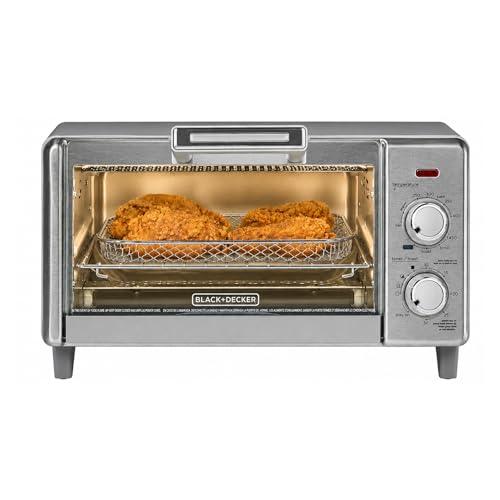
The low-commitment way to test the category: an entry-tier machine that covers toast, small bakes and reheats honestly, letting a household discover its true frequency of use before spending more. Many owners learn they are daily users and upgrade later with real knowledge; others learn they are not, at the smallest possible cost. As a diagnostic purchase, it may be the smartest money in this entire guide.
Best for: cooks whose priorities match the strengths described above. Not suited for: kitchens where its size, tier or control style fights the space or the cook. Tier: entry positioning in its class; check price on Amazon when you are ready to compare current listings.

Ninja Prestige Smart XL Countertop Oven
The family-scale answer, sized for bigger small meals and households whose portions strain standard toaster ovens. Its worth-it case rests on volume: if your small jobs are not that small, this class keeps them out of the full oven. Measure the counter twice, because at this size the footprint is the decision, and a machine this capable that fits is worth it while one that crowds the kitchen is not.
Best for: cooks whose priorities match the strengths described above. Not suited for: kitchens where its size, tier or control style fights the space or the cook. Tier: premium positioning in its class; check price on Amazon when you are ready to compare current listings.
How to Get the Most Value If You Buy
Give it the good counter spot, permanently plugged in and clear, because accessibility is usage. Learn its hot spots with cheap experiments: toast a full rack of bread slices and read the browning map, then place food accordingly forever after. Keep the crumb tray habit from day one so smoke never teaches you the lesson the hard way. Build a small repertoire of portion-sized meals it excels at, and let the full oven go quiet on weeknights without guilt. Finally, review honestly at three months: if it runs daily, you bought well; if it does not, the lesson about your habits is the value, and it transfers to every future appliance decision.
Keeping It Clean So It Keeps Cooking Well
Routine care is short and unglamorous: slide the crumb tray out after toasting sessions and empty it before crumbs mound up, wash the rack and pan in warm soapy water when grease appears, and wipe the interior walls with a damp cloth once the oven is unplugged and fully cool. Melted cheese and sauce splatter come off far more easily the same day than a week later, when they have been reheated into varnish. A paste of baking soda and water, applied gently and left to sit, loosens baked-on film without scratching; avoid abrasive pads on coated interiors and never spray cleaner directly onto heating elements.
The glass door deserves its own pass, because a clear door is a cooking tool: you judge toast and browning by eye, and a fogged door leads to guesswork and burnt edges. Wipe the inside of the glass once it is cool, and clean the exterior with a soft cloth so fingerprints and steam marks do not bake on. Check the door seal and hinges as you go; a door that no longer closes squarely leaks heat and cooks unevenly, and catching that early tells you whether the oven needs attention or replacement.
For the full method, including deep-clean steps for stubborn grease and safe ways to deal with smoke smells, follow how to clean a toaster oven, step by step rather than improvising with harsh chemicals. The principle is always the same: unplugged, fully cool, gentle tools, patience over force. Ten unhurried minutes once in a while beats an hour of scrubbing a neglected oven, and a clean cavity cooks more evenly, smells neutral, and removes the fuel that fire safety rules worry about in the first place.
Keep exploring with these related guides from this series: how to clean a toaster oven, step by step, our toaster oven buying guide, toaster oven pros and cons in full, our in-depth toaster oven review, our roundup of toaster oven reviews.
The Decision Checklist
Answer yes or no, honestly, about the last two weeks rather than your intentions. Did you heat the full oven for a portion of four or fewer at least three times? Did you reheat something and wish it were crisp? Did you skip cooking something small because the oven felt like too much ceremony? Do you have a permanent counter spot with clearance that you can surrender without pain? Will you empty a crumb tray weekly without resentment? Does your household eat toast, melts or small bakes most days? Four or more yes answers: buy with confidence. Two or three: buy at the entry tier and learn. Fewer: skip it and spend the counter and the money elsewhere.
For more depth before you decide, see also toaster oven vs countertop oven, compared, related guide, related guide, related guide, related guide.
The Two-Week Test: Finding Your Real Answer
Opinions about this appliance are cheap; data about your own kitchen is not. For two ordinary weeks, keep a tally on the fridge door: every time you heat the full oven for four portions or fewer, every reheat you wish had been crisp, every small cooking job you skipped because the oven felt like too much ceremony, and every time you used a pop-up toaster and wished it could melt, bake or hold more. At the end of the fortnight the tally is your answer, and it will be more persuasive than any review, because it describes the life the appliance would actually enter rather than the life in a catalogue photograph.
Run the same honesty over space. Photograph your counter at its busiest dinner moment, then mark the footprint a toaster oven would claim, clearance included, and live with the photograph for the same two weeks. If the marked zone is where ingredients land, boards rest and plates queue, the space cost is real and high. If it is a dead corner currently holding a fruit bowl and good intentions, the space cost is close to zero and the worth-it equation tilts hard toward yes. Most households discover their answer in the photograph before the tally is even finished.
Value Over Time: The Ownership Curve
Owners tend to follow a curve. The first month is experimentation: toast maps learned, a few edges over-browned, timings recalibrated for the smaller cavity’s enthusiasm. Months two to six are the golden stretch, when the repertoire forms and the full oven goes quiet on weeknights. After that, households settle into one of two stable states: the oven as daily infrastructure, used without thought like a kettle, or the oven as occasional guest, used for holidays and odd jobs. The worth-it verdict is decided by which state you land in, and the predictors are boringly reliable: permanent placement, matched size, and a cooking life that was already small and frequent before the box arrived.
Notice what is absent from those predictors: features. Nobody’s long-term satisfaction in this category tracks the number of functions on the panel. It tracks whether the machine was in the right place, at the right size, in front of the right cooking life. That is oddly liberating for buyers, because it means the mid-tier machine correctly matched beats the flagship incorrectly matched every time, and the money saved by honest matching is real money kept.
The Household Variations
For renters and first apartments, the case strengthens: a toaster oven can be the only oven, or the rescue for a landlord’s oven that heats unevenly and preheats like a glacier, and it travels to the next home when you do. For families with older children, it offers a supervised, counter-height way for young cooks to make their own snacks and small meals without the full oven’s scale and stooping. For older cooks, the same counter height and eye-level visibility are accessibility features in disguise: no deep bending, no reaching into a dark cavern, food watched from a chair’s distance rather than a crouch.
For keen bakers, the verdict splits by ambition. Portion bakers, the tray of cookies, the small loaf, the gratin for two, gain a fast, willing tool. Project bakers, layered cakes, multiple loaves, delicate work that needs thermal mass and distance from elements, gain a helper for warming and small jobs while the full oven keeps the crown. Neither is a failure of the appliance; both are the same matching logic wearing different aprons, and naming your baking style honestly is worth more than any specification sheet.
When the Answer Changes
Worth is not a lifetime sentence. Households grow and shrink; a couple becomes a family, a family becomes a couple again, a small kitchen becomes a large one. The toaster oven that was marginal for a batch-cooking family of six can become essential for the same cooks as empty-nesters portioning for two, and the compact oven that served a single cook perfectly can be outgrown by a household that starts cooking for five. This is an argument for buying at the tier your current life justifies rather than insuring against hypothetical futures: appliances are cheap to replace relative to years of daily mismatch, and the second-hand market happily recycles the outgrown.
It is also an argument for the entry tier as a probe. If your tally is ambiguous, the cheapest honest machine converts guesswork into knowledge within a season, and the knowledge transfers: you will know your frequency, your portion sizes and your cleaning tolerance with a precision no guide can give you. Some probes end in an upgrade, some in a donation, and both endings are successes, because both replace an opinion with a fact about your own kitchen.
The Cost Conversation, Without Prices
Because this guide avoids fixed numbers, the cost question must be answered in structure rather than currency, and structurally it is simple: the category spans an entry tier that costs about as much as a modest family takeaway habit, a mid tier that anchors most satisfied owners, and a premium tier that buys evenness, build and breadth for daily cooks. The worth-it threshold is lowest at the entry tier, where a few uses a week repay the outlay in convenience quickly, and highest at the premium tier, where daily use is the honest requirement. That is why the decision checklist in this guide asks about frequency before anything else: frequency is the exchange rate between any tier and its value.
There is a second, quieter cost curve: the cost of not buying, paid by households that heat a full oven nightly for portions, reheat leftovers into sadness, and skip small cooking because the ceremony is too large. That cost never appears on a receipt, which makes it easy to ignore and expensive to keep paying. When the two-week tally shows those moments stacking up, the question inverts: not whether the toaster oven is worth its price, but whether the current arrangement is worth its daily tax in time, heat and food enjoyed less than it could be.
Renting, Borrowing and Other Low-Risk Trials
Before committing, the uncertain can borrow certainty. A friend’s unused toaster oven, and every social circle contains one, offers a month of real data at no cost beyond a thank-you and a thorough clean before its return. Some households buy the entry tier explicitly as the trial, with the understanding that success means either keeping it happily or upgrading with knowledge, and failure means a small, bounded lesson. Even a week of deliberately cooking every small job in a borrowed or basic machine teaches more than a month of reading, including the two facts that decide everything: how often you reach for it when it is simply there, and whether the crumb tray rhythm annoys you or disappears into routine.
What trials cannot teach is the premium tier’s difference, because evenness and build declare themselves over months rather than days. That asymmetry is fine. The trial’s job is to validate the category for your life; the tier decision can then be made on the guide’s simpler rule, that daily cooks feel premium differences and weekly cooks rarely do. Households that run the trial honestly almost never regret the purchase that follows, whichever tier it lands on, because the purchase is no longer a bet. It is a conclusion.
Stories From the Four Households
Consider the couple in a small flat whose oven took half an hour to preheat and heated the whole kitchen in the process. Their tally showed eleven small full-oven jobs in two weeks. The toaster oven they bought now runs daily, the big oven rests except for Sunday, and their verdict, a year on, is that they were not really asking whether the appliance was worth it; they were asking whether their old routine was, and it was not. Consider, in contrast, the keen host whose signature is a table of eight and a centrepiece that needs the full cavity. Her borrowed trial oven was used twice in a month, both times out of politeness to the experiment. Her no was as correct as the couple’s yes, and cheaper for having been tested rather than assumed.
Consider the parent reheating portions at staggered hours for children on different schedules, for whom the worth-it question was answered by texture alone: food the children actually ate instead of food pushed around a plate is a metric no specification sheet carries. And consider the single cook in a studio whose entire oven history was a landlord’s unreliable range; for him the toaster oven was not an accessory but the arrival of reliable baking in his home, and worth it is too weak a phrase for what changed. Four households, four different questions wearing the same words, which is why this guide refuses to answer the title globally and insists on the tally, the photograph and the honest fortnight instead.
The Regret Audit: What Owners Actually Regret
When owners regret this purchase, the regrets cluster with almost comic consistency. They regret the size, too big for the counter or too small for the dish, far more than the model. They regret buying for a job they do not do, the air fry enthusiast who lives on toast, the toast lover who bought a family roaster. They regret the spot, the cupboard exile that guaranteed disuse. And they regret, in a quieter voice, not starting the crumb tray habit until the first smoky month taught it rudely. Notice that none of these regrets is about brand, features or tier in themselves. Every one was knowable in advance with a tape measure, a tally and a moment of honesty, which is the most encouraging finding in this entire guide: the worth-it question fails only when it is asked lazily, and succeeds, in either direction, when it is asked properly.
The Upgrade Question: When a Second Purchase Is Worth It
Owners of a basic model eventually face the sequel question, and it has a cleaner answer than the first purchase did, because it is asked with data. Upgrade when the current oven is used daily and its specific limits are the friction: unevenness you have mapped and still fight, a cavity your portions have outgrown, controls that irritate every single morning. Those are diagnosed problems with named solutions, and the premium tier exists to solve exactly them. Do not upgrade for repertoire you have not missed, for a finish that photographs better, or because a newer model exists; the used market is full of upgrades bought on those grounds and quietly regretted. The worth-it logic does not change the second time. It just gets easier to apply, because the household answering it is no longer guessing about its own habits.
There is a graceful middle path for the daily user whose basic oven still works: keep it as the second machine in a larger kitchen, a holiday overflow or a gift to the next first apartment in the family, and let the upgrade take the prime counter spot with the prime jobs. Appliances with honest work left in them deserve redeployment rather than disposal, and the entry machine that taught a household its habits has earned its onward journey. Worth, in the end, is not a property of the box at all. It is a relationship between a box and a life, and relationships, unlike specifications, can be re-evaluated kindly as both sides change.
The Counterfactual Kitchen: Life Without It, Priced Honestly
Run the experiment in imagination before running it in money. It is a wet Tuesday, you are cooking for two, and the protein and vegetables would take twenty minutes in a small oven that preheats in three. Without the toaster oven, the full oven preheats for a quarter of an hour and heats the kitchen like a sauna’s apprentice, or the stovetop absorbs the whole meal in pans that crowd and steam where they should roast, or the microwave produces the evening’s saddest approximation. Multiply that Tuesday by the number of Tuesdays in a year of small cooking, and the worth-it question stops being about an appliance and becomes about which version of an ordinary evening you would like to keep having. Households that run this counterfactual vividly usually find their answer waiting at the end of it, and it is the same answer the tally gives, reached by a warmer road: the machine is worth it precisely to the extent that your ordinary evenings are small, frequent and worth cooking properly, which is to say, to the extent that they resemble most people’s.
Worth It, by the Numbers You Can Count Yourself
Strip the question to countable things and count them for a month. Count the evenings the big oven heated for four portions or fewer. Count the reheats that disappointed. Count the small dishes you did not cook because the ceremony outweighed the appetite. Count, on the other side, the centimetres of counter you can truly spare and the minutes of cleaning you will truly give. When the first set of counts towers over the second, the appliance is worth it in the only currency that survives contact with real life, which is repeated small satisfactions rather than occasional large ones. When the counts run the other way, no review, including every favourable one ever written about this category, should move you, because the reviewers were counting their own evenings, and yours are the ones on trial. That is the deepest answer this guide can give to its title: worth is a count, not a quality, and the counting is yours to do.
The Answer, Given One Final Way
Every framework in this guide, the tally, the photograph, the checklist, the counterfactual Tuesday, the regret audit, is the same question wearing different clothes: does your actual life contain a daily vacancy shaped exactly like this appliance? Where it does, the purchase is not a risk but a recognition, and the years of fast preheats, rescued leftovers and small dinners cooked properly are simply the vacancy filled. Where it does not, the wisest purchase is the one not made, and the counter stays free for the appliance, the board space or the simple emptiness your life actually needs. Either outcome is a success of the same kind, because both come from looking at your own kitchen clearly. The toaster oven will be there, in its tiers and sizes, whenever a household’s life grows the vacancy. Until then, or from now on, the verdict is yours, and it is correct precisely to the extent that it was counted rather than guessed.
The Small Print of the Yes
A yes deserves its conditions printed as clearly as its enthusiasm. The yes in this guide assumes a permanent spot, because a fetched appliance is an unused one. It assumes the size was measured against a real dish, because capacity guessed is capacity regretted. It assumes the cleaning rhythm is accepted before the first crumb falls, because the rhythm is the rent and surprises about rent sour any tenancy. And it assumes the household’s cooking was audited rather than imagined, because the appliance serves the life that exists, not the one in the brochure the buyer wrote for themselves. Meet those four conditions and the yes has, in this guide’s experience of the category, an almost unfair success rate. Skip them and even the finest machine in the reviews becomes a story told at dinner parties about the oven in the cupboard. The conditions are not fine print designed to excuse the verdict. They are the verdict, stated in its working clothes.
The Fridge-Door Tally: Testing the Case Before You Buy
Borrow, rent, or simulate before you commit if you possibly can, and run the toaster oven through your real week rather than an imagined improved version of it. Keep a plain tally of uses for a month, on paper on the fridge if necessary, because the honest count of actual uses is the number every value judgement secretly depends on. Note what each use replaced: a purchase, a chore done by hand, another appliance’s time, or nothing at all because the job would simply not have happened. Record the minutes the toaster oven saves or costs across a whole session, including setup and cleaning, since value lives in the full cycle and not in the headline moment.
Write down the uses that felt like genuine pleasure rather than mere efficiency, because enjoyment is a legitimate return and pretending otherwise distorts the arithmetic. Ask who else in the household benefits and who merely tolerates the storage, the noise, or the counter space, and count those votes without weighting your own twice. Where a shortlist names specific examples, such as Breville Smart Oven Air Fryer Pro, run these same checks against that listing line by line rather than assuming the general verdict transfers unchanged. Apply the identical test to Panasonic FlashXpress Toaster Oven as well, on the same day and under the same conditions, because a fair comparison needs one ruler rather than two moods.
- Tally real uses for one full month
- Log what each use actually replaced
- Count full-cycle minutes including cleaning
- Give the space a vote in the decision
- Imagine a breakdown in year two
- Set a decision deadline with a default
If BLACK+DECKER 4-Slice Toaster Oven is also in contention, give it the same worksheet and let the three sets of answers sit side by side before anyone reaches for a checkout button. Consider the space as a cost with a rent of its own: a toaster oven that earns its footprint weekly is a different proposition from one that squats on it monthly. Think about the season ticket question: whether your interest is a durable habit or a project-shaped enthusiasm that will fade when the project ends. Compare against the honest alternative, which is usually doing the job with what you already own, slowly and imperfectly, rather than against doing it not at all.
Imagine the toaster oven breaking in year two and ask whether you would replace it immediately, eventually, or never, since that imagined answer is the cleanest verdict available before buying. Factor in the learning period without resenting it, but do not let a promise of future ease excuse a present that your tally says is not working. Notice whether you keep finding new jobs for it or keep finding excuses to use it, because the difference between those two patterns is the difference between value and clutter. Give the decision a deadline and a default: if the tally has not persuaded you by that date, the answer is no for now, and no is a complete decision rather than a failure.
Revisit the question if your household, space, or routine changes materially, because worth is a property of a match between product and life, not of the product alone. Write the sentence that would make it worth it, in advance and in numbers you can check, so the verdict comes from evidence you gathered rather than from mood at the checkout. Count the accessories you would genuinely buy alongside it as part of the commitment, since a product that only works with extras is really the bundle, sized as such. Ask whether the same money and space spent on your current setup, on better ingredients, storage, or a repair, would beat the improvement the toaster oven promises.
Talk to your future self at the spring clean: will this be in the used-weekly group, the stored hopefully group, or the why-do-we-own-this group, and what in the tally supports that guess? Accept that a narrow, wholehearted yes for one weekly job is worth more than a broad, lukewarm yes across ten occasional ones. Close the question by deciding what happens to the tool or appliance it replaces, because keeping both forever is often the hidden cost that tips a fair yes into a no. Whatever the category, photograph your intended spot with the neighbouring items in place, because a picture exposes crowding that measurements alone politely ignore.
Keep every measurement, tally, and note from these checks in one place, ideally with the receipt, so the next decision in this category starts from your evidence rather than from scratch. Involve the household early where the product is shared, since a decision everyone helped measure is a decision nobody relitigates at the first inconvenience. Prefer the option that fits your existing routine with the fewest new habits, because each new habit is a small tax collected every single day. Be wary of solving a storage problem by creating a carrying problem, since distance between storage and use is where good equipment goes to be forgotten.
Check the return conditions before the trial period begins, and calendar the last safe decision day, so the deadline works for you instead of surprising you. Judge the packaging and unboxing only once, briefly, and then ignore them, because they are the one part of ownership guaranteed never to repeat. Let the second week arbitrate disputes from the first, since novelty inflates both delight and irritation beyond their durable values. When two options remain tied after honest testing, choose the one whose weaknesses fall on your rarest jobs rather than your commonest ones.
Frequently Asked Questions
Is a toaster oven worth it for a single person?
Usually yes, and singles are often the happiest owners. Cooking for one in a full-size oven means heating a large cavity for a small portion, waiting through a long preheat, and washing big trays for small meals. A toaster oven matches the portion, preheats while you prepare ingredients, and turns solo cooking from a production into a routine. The conditions are the usual ones: a permanent counter spot you can spare, and the crumb tray habit. Meet those, and a single-person household is close to the ideal use case.
Does a toaster oven save energy compared with a full oven?
For small loads, the logic is strongly in its favour: a smaller cavity with less air and metal to heat reaches temperature faster and cycles less mass, so a portion-sized job generally uses less energy than the same job in a full-size oven. The saving shrinks as loads grow, and cooking two batches in a toaster oven to avoid one full-oven batch can erase it entirely. Treat energy as a supporting argument for the small-load habit, not as the headline reason to buy.
Can a toaster oven replace a microwave or an air fryer?
It replaces some of each and neither completely. Against the microwave it wins every texture contest and loses every speed contest for soups, drinks and steaming. Against a basket air fryer it wins on shape, toast and gentle baking, and loses slightly on maximum crisping intensity for small frozen loads. Many households find a toaster oven with air fry capability covers enough of the air fryer’s work to skip owning both, while the microwave usually keeps its job regardless.
How long does a toaster oven typically last?
Longevity tracks build tier and care more than brand promises. A well-kept machine used daily should serve for years; neglected grease, blocked vents and rough handling of elements and doors shorten any oven’s life. The practical signs of an oven nearing retirement are uneven browning that cleaning does not fix, a door that no longer closes squarely, controls that behave erratically, or an element that glows patchily. Until those appear, routine cleaning and gentle use are the whole longevity programme.
What size toaster oven is worth buying?
The size that fits your largest regular small job with room to spare, and no larger. Undersizing forces double batches that erase the convenience; oversizing wastes counter every day for capacity you use twice a year. Think in meals: toast and reheats for one or two need the compact class; family small meals and small pizzas need the larger class. Measure the intended counter spot first, including clearance and door swing, because the best size on paper that does not fit your kitchen is the wrong size.
Is an air fry feature worth it in a toaster oven?
Worth it if crisping is a weekly habit in your kitchen: frozen foods, wings, roasted vegetables and reheats all benefit, and the feature can retire a separate basket appliance, returning counter space that offsets the oven’s claim. Less worth it if your cooking is toast, gentle bakes and casseroles, where convection alone serves well and the air fry premium buys a talent you rarely call. Decide by your last month of cooking, not by the appeal of having every function in one box.
The Final Verdict on Value
A toaster oven is worth it when your cooking is small, frequent and varied, and not worth it when it is large, rare or already well served. That sentence survives every model year and every feature cycle, because the value was never in the appliance. It is in the match between the appliance and the week you actually live.