Disclosure: topratedkitchenware.com is reader-supported. When you buy through links on our site, we may earn an affiliate commission from Amazon and other retailers, at no extra cost to you.
Where to buy
For the best electric smoothtop cooktops in portable form, the four linked induction models below are the picks that deliver a genuinely smooth, flat, electric cooking surface. Two built-in gas units that dominate the raw search results are reviewed afterwards in prose only — raised grates and open flame are the opposite of a smoothtop, and we will not pretend otherwise.
- VEVOR 30-Inch 5-Burner Gas Cooktop — Gas Alternative — Prose-Only (reviewed in full below; no purchase link — see the review for why)
- ThermoMate 36-Inch 5-Burner Gas Cooktop — Gas Alternative — Prose-Only (reviewed in full below; no purchase link — see the review for why)
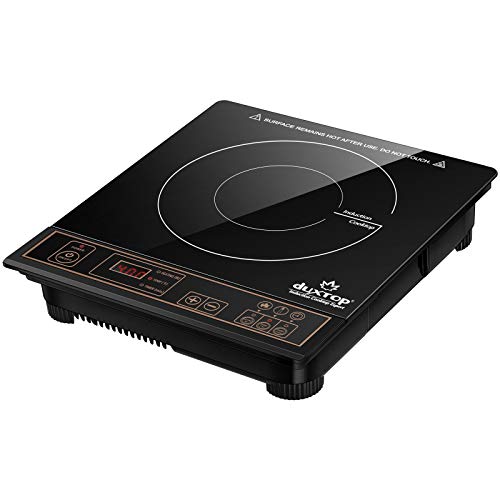
- Duxtop 8100MC Gold Portable Induction Cooktop — Best Overall
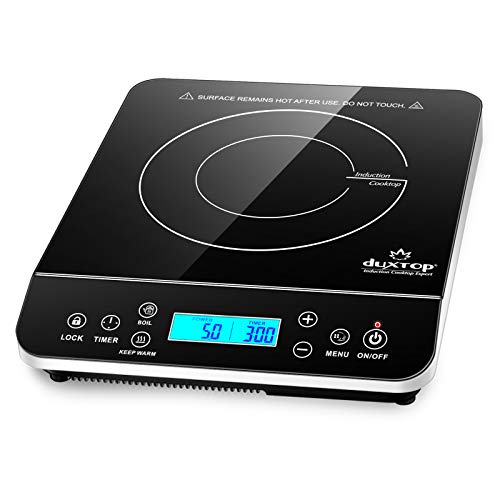
- Duxtop 9600LS Silver Portable Induction Cooktop — Best Touch Controls
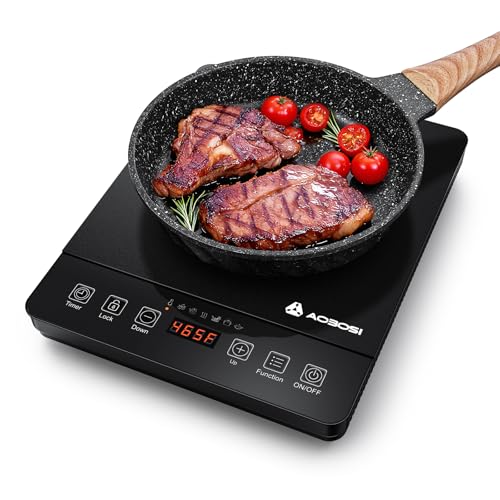
- AAOBOSI Portable Induction Cooktop — Best for Small Spaces and Travel
- OneSetNuf Portable Induction Cooker — Best for Long Sessions
Read the full guide ↓
A smoothtop is a promise: one flat sheet of glass-ceramic from edge to edge, nothing raised, nothing to unscrew, nothing for last night’s pasta water to hide under. The best electric smoothtop cooktops keep that promise in two technologies. Radiant models hide a glowing element under the glass; induction models hide a magnetic coil there instead, heating the pan directly and leaving the surface itself far cooler. In portable form — the format that dominates what you can actually buy today without a renovation — induction has effectively taken over the category, and the four linked picks in this guide are all portable induction burners with smooth glass-class surfaces.
We need to be equally clear about what is not a smoothtop. The two built-in gas units reviewed later in this guide wear their burners on raised grates above open flame. They can be excellent cooktops, but calling them smoothtops would be a lie of category, so they appear here as prose-only comparisons — full reviews, no links, no images — for the readers whose search mixed the two projects together. If your heart is set on the flat glass experience, the four electrics are your shortlist; this guide explains how they differ and how to live with a smooth surface without scratching it. For the wider European-style glass category, see also Best Europian Induction Cooktops.
Key Takeaways
- A true smoothtop is one flat glass-ceramic sheet — all four linked picks qualify; the two gas built-ins reviewed later do not, and are prose-only for exactly that reason.
- Portable smoothtops today are induction: faster, cooler-surfaced, and more responsive than radiant glass, at the cost of needing magnetic pans.
- Touch-control models give the purest smoothtop experience — even the controls are flush — while push-button models trade a little purity for gloved-hand friendliness.
- Every linked pick is 1800W; choose on controls, coil, timer, and build instead of power.
- Glass care is simple but non-negotiable: wipe before cooking, lift pans, never drag cast iron across the surface.
- The OneSetNuf’s 10-hour timer and the AAOBOSI’s compact travel-ready format cover the two ends of portable smoothtop life.
In this guide
Quick Picks
Four genuine smoothtop electrics, ranked, followed by two gas built-ins included transparently — and only — as prose-only context for cross-shoppers.
| Pick | Badge | Why it stands out | Link |
|---|---|---|---|
| VEVOR 30-Inch 5-Burner Gas Cooktop | Gas Alternative — Prose-Only | A 30-inch, 5-burner built-in gas cooktop. Capable — and the structural opposite of a smoothtop, which is why it carries no link here. | Prose-only pick |
| ThermoMate 36-Inch 5-Burner Gas Cooktop | Gas Alternative — Prose-Only | A wide 36-inch built-in gas hob with Italy Sabaf burners — premium gas hardware that is still, definitionally, not a smoothtop. | Prose-only pick |
| Duxtop 8100MC Gold Portable Induction Cooktop | Best Overall | Duxtop’s 8100MC in gold: a full-power 1800W smoothtop portable from the category’s best-known specialist, in a finish that lifts a counter. | See review below |
| Duxtop 9600LS Silver Portable Induction Cooktop | Best Touch Controls | The 9600LS in silver: LCD sensor touch on a flush panel — the purest portable expression of the smoothtop idea. | See review below |
| AAOBOSI Portable Induction Cooktop | Best for Small Spaces and Travel | A compact 1800W burner with 20 temperature and power levels, 4 preset modes, and a 4-hour timer — specced for apartments, RVs, and outdoor cooking. | See review below |
| OneSetNuf Portable Induction Cooker | Best for Long Sessions | A stainless, commercial-grade build with dual IGBT power control, 18 temperature settings, push-buttons, and a 10-hour timer. | See review below |
How These Picks Were Chosen
Candidates were verified against their manufacturer listings and then held to this keyword’s literal test: electric power and a smooth, flat cooking surface. Four portable induction burners passed. Two prominent built-in gas cooktops failed both halves of the test — wrong fuel, and a raised-grate surface that is the structural opposite of smooth — so they are reviewed in full as prose-only entries rather than linked picks. We consider that labelling a service, not a snub: readers mid-renovation deserve to see capable gas products described honestly, and readers seeking a smoothtop deserve not to be sold one by accident.
Within the qualifying four, we compared the attributes that define life with a portable smoothtop: control style (flush touch versus physical push-button), temperature and power level counts, timer ceilings, coil size, body material, and portability. The surface itself is a shared given; the daily experience is not, and the reviews are organised around that daily experience.
Method, honestly stated: this is a research-led guide built from verified listing data and manufacturer documentation. We did not cook on every unit in a test kitchen, and no specification appears here unless the listing states it. Prices and ratings drift too quickly to print responsibly, so check current figures through the links — the same policy we follow in Best Elegant Cooktops For Luxury Kitchens.
Our 6 picks for best electric smoothtop cooktops, reviewed one by one
Because the ranking mixes formats, read the badges as jobs: the gold Duxtop for all-round smoothtop duty, the silver for touch purists, the AAOBOSI for small and mobile kitchens, and the OneSetNuf for long, commercial-style sessions. The gas pair closes the section, clearly flagged.
VEVOR 30-Inch 5-Burner Gas Cooktop
Badge: Gas Alternative — Prose-Only
Strengths
- Five burners in a 30-inch built-in footprint for renovation projects
- NG/LPG convertible for mains or bottled gas
- Thermocouple flame-failure protection stated in the listing
Trade-offs
- Gas fuel and raised grates fail both halves of the smoothtop brief
- Permanent built-in installation with a gas connection
- Cleaning around grates and caps is the chore smoothtop buyers are fleeing
Key specs (from the manufacturer listing)
- Fuel: gas, NG/LPG convertible
- Size: 30 inch, built-in
- Burners: 5, 12250 BTU (per listing title)
- Body: stainless steel
- Safety: thermocouple protection
Let us be direct about why this review has no purchase link: the VEVOR 30-inch gas cooktop is not electric and not smooth. Its five burners sit on raised supports above open flame, in a stainless built-in body, convertible between natural gas and LPG, with thermocouple protection. As a gas hob for a kitchen being rebuilt around flame, it is a coherent, generously specified product. As a “smoothtop,” it is a category error that search engines keep making and that this guide declines to repeat.
The contrast is still useful. Everything a smoothtop buyer wants — the single wipeable plane, the flush controls, the surface that never hides burnt-on spills under a grate — is what this design deliberately trades away for flame’s instant visual feedback and universal pan compatibility. If reading that trade makes you want the gas unit more, your project is a gas renovation, and Best Five Burner Gas Cooktops is your guide. If it makes you grateful for glass, continue down this page.
Best for: gas renovation projects, assessed in our gas coverage / Not suited for: anyone seeking an electric smoothtop — wrong fuel, wrong surface
ThermoMate 36-Inch 5-Burner Gas Cooktop
Badge: Gas Alternative — Prose-Only
Strengths
- 36-inch width gives five burners genuine elbow room
- Italy Sabaf burners and 304 stainless steel indicate a serious build
- CSA certification and thermocouple protection stated in the listing
Trade-offs
- Gas, raised-grate design — the antithesis of this keyword
- Demands a 36-inch counter cut-out and professional gas fitting
- Most involved cleaning routine of anything on this page
Key specs (from the manufacturer listing)
- Fuel: gas, NG/LPG convertible
- Size: 36 inch, built-in
- Burners: 5 Italy Sabaf power burners
- Body: 304 stainless steel
- Safety: thermocouple protection, CSA certified (per listing title)
The ThermoMate 36-inch gas cooktop receives the same treatment as its VEVOR counterpart: a fair review and no link, because honesty about categories matters more than filling a grid. Its credentials within the gas world are strong — five Italy Sabaf burners, a 304 stainless steel body, thermocouple protection, CSA certification noted in the listing, and a width that lets big pans coexist without handle wars. Chefs who cook by eye and ear, watching a flame rather than a number, are its natural audience.
But a smoothtop guide that linked it would be misleading every reader who arrived wanting flat glass. The raised burners that define this product are precisely what smoothtop shoppers are eliminating from their kitchens. We include the review so the distinction is informed rather than assumed — and so readers whose renovation genuinely points at gas can move to the right coverage, while smoothtop seekers can proceed to the four electrics below with the contrast fully understood.
Best for: large flame-cooking renovations, assessed in our gas guides / Not suited for: the smoothtop brief in any respect
Duxtop 8100MC Gold Portable Induction Cooktop
Badge: Best Overall
Strengths
- Trusted Duxtop induction platform in a compact single-zone body
- Full 1800W output — no power penalty for the portable format
- Gold finish turns a utility burner into a deliberate design choice
Trade-offs
- Listing is spare on control detail — expect a straightforward feature set
- Single cooking zone
- Light finishes show scorch marks and spills more honestly than black glass
Key specs (from the manufacturer listing)
- Power: 1800W
- Model: 8100MC (BT-180G3)
- Finish: gold
- Format: portable countertop burner
The Duxtop 8100MC in gold takes the top smoothtop badge by being the most complete expression of what this format is for: a flat, full-power induction surface you can put anywhere, from a name that has specialised in portable induction longer than most rivals have existed. The 1800W output matches the ceiling of the class, the body is compact enough to store in a deep drawer, and the gold finish — a small thing that is not a small thing — makes the unit look chosen rather than tolerated on a nice counter.
Read the listing’s brevity honestly: this is a proven platform rather than a feature showcase, without the fine-step temperature theatre of a Nuwave Pro Chef or a 10-hour timer headline. For the smoothtop mainstream — boiling, frying, sautéing, simmering on a surface that wipes clean in seconds — that is the right balance of priorities, and the platform’s long owner history means few surprises. Buyers who want the same philosophy with a touch interface should look one pick down; buyers who want the classic in a classic finish have found it.
Best for: most portable smoothtop buyers — proven platform, full power, easy-clean surface / Not suited for: cooks who need fine temperature steps or marathon timers
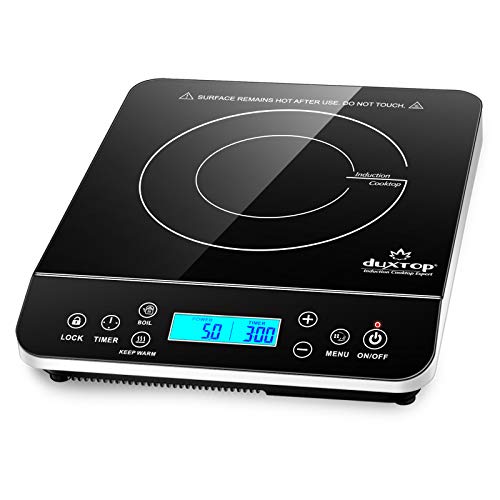
Duxtop 9600LS Silver Portable Induction Cooktop
Badge: Best Touch Controls
Strengths
- Flush LCD sensor-touch panel — no raised control of any kind
- 1800W single-zone performance
- Silver finish brightens darker kitchens and hides dust better than black
Trade-offs
- Touch controls prefer dry fingers; mid-cook adjustments can take a second touch
- Single zone
- Feature story is the interface, not timers or presets
Key specs (from the manufacturer listing)
- Power: 1800W
- Model: 9600LS (BT-200DZ)
- Controls: LCD sensor touch
- Finish: silver
- Format: portable countertop burner
If the smoothtop idea has a purest portable form, this is it: the Duxtop 9600LS carries its LCD sensor-touch controls on the same flush plane as the cooking surface, so the entire unit is one uninterrupted sheet. There is no knob to remove for cleaning, no seam for sauce to find, no raised anything. In silver, it also solves the black-glass problem — the constant visibility of dust and dried droplets — better than any dark finish can.
Performance is the class standard done properly: 1800W, a single responsive induction zone, and the immediate control response that makes induction feel like a smoothtop upgrade rather than a compromise. The caveat is the standing one for touch interfaces: they reward dry, deliberate fingers, and a cook with wet hands and a boiling-over pan may need two touches where a button needs one press. If that trade irritates you in theory, it will irritate you in practice — choose the push-button OneSetNuf below. If you have happily used a touch-controlled range for years, the 9600LS will feel like home, a comparison we explore further in Best Elevtric Cooktops.
Best for: smoothtop purists and modern kitchens that prize the flush, wipe-clean plane / Not suited for: button-and-knob loyalists

AAOBOSI Portable Induction Cooktop
Badge: Best for Small Spaces and Travel
Strengths
- 20 combined temperature and power levels give finer control than the 10-level class norm
- 4 preset modes speed up repeat jobs
- Compact, travel-ready format explicitly aimed at apartments, RVs, and outdoor use
Trade-offs
- 4-hour timer is shorter than the 10-hour commercial class
- Compact body means standard coil coverage; the widest pans will overhang
- Preset-led design will not satisfy fine-step purists
Key specs (from the manufacturer listing)
- Power: 1800W
- Control levels: 20 temperature and power levels
- Preset modes: 4
- Timer: up to 4 hours
- Format: compact portable countertop burner
- Stated uses: apartments, RVs and outdoor cooking
The AAOBOSI portable induction cooktop is the smoothtop for kitchens that are not really kitchens: the studio corner, the RV galley, the office kitchenette, the balcony where summer cooking happens. Its listing is unusually explicit about that life — compact and portable, easy to clean, aimed at apartments, RVs, and outdoor cooking — and the specification backs the positioning with 20 temperature and power levels, four preset modes, and a four-hour timer under an 1800W ceiling.
Twenty levels is a meaningful step above the ten-level norm in this class: simmer control gets noticeably less binary, and the presets convert the common jobs into single touches, which in a small space — where the cook, the counter, and the pan are all within arm’s reach — is a genuine ergonomic win. The compromises are scale ones. The timer stops at four hours where commercial units run ten, and a compact body cannot pretend to a wide coil’s evenness under a very large pan. For its intended homes, those are the right compromises, made in the right places.
Best for: apartments, RVs, dorms, and anyone whose smoothtop must travel or store small / Not suited for: marathon unattended cooking beyond four hours

OneSetNuf Portable Induction Cooker
Badge: Best for Long Sessions
Strengths
- 10-hour timer — the marathon ceiling in this guide
- Dual IGBT power control and 18 temperature settings for steady output
- Push-button controls work with wet hands, gloves, and haste
Trade-offs
- Commercial stainless styling is functional rather than decorative
- Buttons break the perfectly flush smoothtop plane
- Single zone on an 8-inch coil
Key specs (from the manufacturer listing)
- Power: 1800W
- Heating coil: 8-inch
- Body: stainless steel, commercial-grade build
- Power control: dual IGBT
- Temperature settings: 18
- Controls: push-button
- Timer: up to 10 hours
The OneSetNuf portable induction cooker is the smoothtop for people whose cooking runs long: stock-makers, braisers, canners, and anyone running a burner as semi-commercial equipment. Its listing stacks the relevant credentials — a stainless steel commercial-grade body, dual IGBT power control for steady delivery, 18 temperature settings, push-button controls, an 8-inch coil, and a 10-hour timer that doubles the AAOBOSI’s ceiling and matches the longest in the portable class.
The push-buttons deserve a paragraph of their own, because they make this the contrarian smoothtop: the cooking surface is flat glass-class, but the controls deliberately break the flush plane. In exchange you get adjustments that work with wet hands, floury hands, and gloves — the actual hand states of a long cooking session. If your smoothtop dream is aesthetic purity, the silver Duxtop above is your pick. If your dream is a burner still holding a gentle braise at hour seven while you press a real button with a real thumb, this is the one, and the comparison with other electric formats continues in Best Eolectric Cooktops.
Best for: long simmers, stocks, canning days, and cooks who prefer physical buttons / Not suited for: buyers whose top priority is a perfectly flush control surface
Comparison Table
Read the table’s first column carefully: four portable electrics with flat surfaces, and two built-in gas units whose presence here is educational. The smoothtop brief admits only the first kind.
| Pick | Type | Power / Output | Controls & standout feature | Link |
|---|---|---|---|---|
| VEVOR 30-Inch 5-Burner Gas Cooktop | Built-in GAS cooktop, 5 burners | 30 inch, NG/LPG | Thermocouple protection, stainless steel | Prose-only pick |
| ThermoMate 36-Inch 5-Burner Gas Cooktop | Built-in GAS cooktop, 5 burners | 36 inch, NG/LPG | Italy Sabaf burners, CSA certified in listing | Prose-only pick |
| Duxtop 8100MC Gold Portable Induction Cooktop | Portable induction, single zone | 1800W | Duxtop 8100MC platform, gold finish | Check on Amazon |
| Duxtop 9600LS Silver Portable Induction Cooktop | Portable induction, single zone | 1800W | LCD sensor-touch panel, silver finish | Check on Amazon |
| AAOBOSI Portable Induction Cooktop | Portable induction, single zone | 1800W | 20 levels, 4 presets, 4-hour timer | Check on Amazon |
| OneSetNuf Portable Induction Cooker | Portable induction, single zone | 1800W | Dual IGBT, 18 settings, 10-hour timer, push-button | Check on Amazon |
How to Choose the Best Electric Smoothtop Cooktops Without Regretting the Surface
What “smoothtop” does and does not guarantee
Smoothtop describes a surface, not a heating method. Under the same flat glass you may find a radiant element, which heats the glass itself, or an induction coil, which heats the pan. The ownership experience diverges sharply: radiant glass runs hot, cools slowly, and accepts every pan; induction glass stays comparatively cool, responds instantly, and demands magnetic cookware. Every portable in this guide is induction, which is typical of the current market — if your pan collection is aluminium-heavy and non-negotiable, a built-in radiant smoothtop, not a portable, is your format; the portable world’s long-session discipline is treated in Best Fan Cooling On Portable Induction Cooktops.
Also beware the word used loosely in listings. A flat-looking electric hotplate with a raised coil ring is not a smoothtop; a glass panel with a prominent raised burner outline usually is cosmetic rather than functional. Judge by the cooking plane: if a straightedge would sit flat across it, it is a smoothtop.
Controls on a flat surface: touch versus buttons
The smoothtop format forces a control decision that other cooktops do not. Flush touch panels preserve the single-plane ideal and clean in one pass, but they ask for dry fingers and a moment’s attention. Physical buttons interrupt the plane slightly yet work in any hand state and give tactile confirmation. Neither is objectively better; they serve different cooks. Our ranking reflects that split deliberately — the silver Duxtop for purists, the OneSetNuf for session cooks — and the worst outcome is buying the one your hands will argue with daily.
A related detail: look for a control lock if children can reach the counter. A flat, interesting, button-covered surface at exactly small-hand height is an invitation, and a lock turns the invitation down politely.
Coil size and the flat-pan rule
Portable smoothtop coils cluster around eight inches, and the heated area — not the glass size — decides how evenly a pan cooks. Match your most-used pan’s base to the coil and keep overhang modest. Flatness matters as much as diameter: induction couples through contact, so a warped base or a pan with a pronounced rim ring heats unevenly and can buzz. Heavy cast iron is welcome — glass tops carry it happily — but it must arrive and leave by lifting, never by sliding.
If your signature pan is a very wide skillet, be honest about the physics: no portable in this class will heat its rim like its centre, and a double-zone or built-in format is the truthful upgrade path.
Timers and session length
Timer ceilings quietly sort this category into weeknight tools and project tools. Four hours covers every ordinary meal and most sauces; ten hours covers stocks, long braises, and canning days. The price of the long ceiling is usually a more commercial design language. Decide which cook you are most months of the year, not on your most ambitious Sunday, and the right tier chooses itself.
When radiant is the right smoothtop after all
This guide’s linked picks are induction because the portable market is, but intellectual honesty requires the radiant case in full. A radiant smoothtop — glowing element, hot glass — accepts every pan you own, including the aluminium workhorse and the copper jam pan; it costs less to build; and its residual heat, a hazard to respect, is also a free keep-warm zone after switch-off. If your cookware collection is non-magnetic, beloved, and non-negotiable, a built-in radiant smoothtop is not the consolation prize; it is the correct appliance, and no portable induction burner will make you happier.
The portable world simply offers radiant in fewer, weaker forms — mostly small hotplates that concede the smoothtop aesthetic this keyword is about. That market fact, not a verdict on the technology, is why the linked picks here are induction. Choose the technology your pans vote for; then choose the format your kitchen votes for; the model is the easy third decision.
How to Keep a Smoothtop Surface Looking New
The two-minute daily routine
Most smoothtop damage is really a routine failure, not a product failure. Before cooking: wipe the surface with a dry cloth so grit cannot grind beneath a pan. During cooking: lift pans, and wipe spills as soon as the surface is cool enough to touch safely — on induction that moment arrives quickly, which is one of the format’s hidden luxuries. After cooking: a soft cloth, warm water, a drop of washing-up liquid, and a dry buff. That is the whole religion; everything else is repair.
Keep a suitable flat-edged scraper in the drawer for the one true emergency — a sugary spill. Sugar can pit glass as it cools and hardens, so it comes off promptly, at a low angle, once the surface is safe to approach.
Cooking technique that protects the glass
Bring pans up to temperature progressively rather than slamming an empty pan onto maximum power — thermal shock and warping are partners, and a warped pan then rocks, scratches, and heats unevenly forever after. Match pan base to coil so edges of the glass are not asked to carry concentrated heat through a small contact patch under a huge pan. Use lids: they cut the splatter that becomes tomorrow’s baked-on archaeology, on any cooktop but doubly on one whose whole appeal is a clean plane.
Step by step for the fussiest job, a pale roux or béchamel: low-to-mid temperature setting, a flat-based heavy pan, constant stirring with a flat-edged spoon that cannot gouge, and immediate transfer off the burner when the sauce lands — residual heat is low on induction, which forgives a pause that radiant glass would not.
Deep cleaning without dulling the finish
For cooked-on rings, a paste of bicarbonate of soda and water on a soft cloth, worked gently and rinsed, lifts most marks without abrasives. Commercial glass-ceramic creams exist for stubborn cases; follow their instructions and keep scouring powders and abrasive pads off the surface permanently, because micro-scratches accumulate into a permanent haze that no cleaning can reverse. Dry the surface fully after washing — water spots are the smoothtop’s confetti, harmless but visible, especially on darker finishes.
Troubleshooting: three common problems
Problem: a white haze or rainbow sheen appears → it is usually mineral deposit from boiled-over water or the ghost of an overheated empty pan. The bicarbonate paste routine handles minerals; heat discolouration of the glass itself is cosmetic and does not affect cooking.
Problem: the burner buzzes or clicks under a pan → the pan’s base is likely thin, layered, or slightly warped, and the magnetic field is making it vibrate. Heavier, flatter pans run quieter; the noise is annoying, not dangerous.
Problem: fine scratches have appeared → audit the routine, not the product. Grit under pans and dragged cast iron cause nearly all of them. The scratches are permanent but performance-neutral; prevention from today forward keeps them a closed chapter.
Smoothtop Versus Everything Else on Your Counter
It helps to place the smoothtop among its rivals honestly. Against exposed-coil electrics, it wins on cleaning and looks, and ties on pan freedom only in radiant form. Against gas, it wins on wipe-down, indoor air, and plug-in simplicity, and loses on universal pans and flame theatre. Against a second full range, it wins on cost, space, and storage by an enormous margin. The portable smoothtop’s real rival is doing nothing — the three-burner juggle on a four-burner stove — and against that rival it wins every holiday, every canning day, and every two-pan Tuesday.
That is why this category keeps growing even though its wattage never changes: the product being sold is not power, it is a calm, clean extra zone exactly where you put it.
Built-In Dreams, Portable Reality: Choosing Your Renovation Timeline
Many readers of this keyword are really planning a built-in smoothtop and browsing portables as research. That is a legitimate strategy — a season with a portable teaches you whether induction’s pan rules suit your cooking, whether touch controls suit your hands, and how much zone you actually use — for a small fraction of an installation’s cost and none of its permanence. If the portable experiment delights you, the built-in decision is de-risked; if it irritates you, you have learned so at drawer-storage prices.
The reverse migration is just as common: households with an ageing built-in smoothtop add a portable for the big-pan jobs and find the portable quietly becoming the daily driver. Either way, the four electrics above are honest representatives of the technology, and the two gas units stand as the reminder that “flat and electric” is a specific commitment, not a default.
Where a Portable Smoothtop Earns Its Keep, Room by Room
In the main kitchen, the portable smoothtop is the fifth zone and the precision station — the burner that comes out for the sauce while the hob runs the meal, then vanishes so the counter returns to calm. In the annex, the studio, and the in-law suite, it is promoted to the stovetop itself, and the buying logic promotes with it: durability and timer ceilings matter more than storage size, because the unit will work daily and live in the open. In the RV and the holiday home, its virtues compress to three: it plugs into whatever the site offers, it wipes clean in seconds, and it stores flat in a shallow drawer that a gas ring would never fit.
There are two less obvious postings where it outperforms every alternative. The first is the outdoor-adjacent one — the terrace table and the garden kitchen — where a flameless, cool-surfaced electric zone is simply safer company for paper, linen, and children than any flame. The second is the teaching kitchen: a child learning to cook at a surface that heats the pan, cools quickly, and switches off when the pan lifts is learning on the most forgiving technology available. A format that serves the feast day, the flat, the road trip, and the first omelette is not a compromise product; it is a platform.
If the Glass Breaks: Damage, Expectations, and Sensible Insurance
Glass tops rarely break, and when they do the cause is almost never cooking — it is a heavy object dropped from a shelf, a pan swung by its handle, a unit stored under something that shifted. Set expectations accordingly: the surface is durable against heat, weight in normal use, and daily cleaning for years; it is not armour against impacts, and no listing in our verified pool claims otherwise. “Shatter-proof” language, where it appears, describes reinforced resistance to cracking under thermal stress — the realistic failure mode of cheap glass — not immunity to a falling casserole.
Practically: register the product if the maker offers it, keep the receipt with your appliance papers, and store the unit upright in its own slot rather than beneath the pans that might one day avenge themselves on it. If the worst happens to a portable, the replacement economics are at least gentle — the whole format costs a fraction of re-glazing a built-in hob, which is one more unglamorous reason the portable smoothtop has become the category’s centre of gravity.
Reading Owner Reviews of Glass Tops Without Being Misled
Owner reviews of smoothtops follow patterns a careful reader can decode. Complaints about scratches cluster, on inspection, around households that slide pans and skip the pre-cook wipe — behaviour reports wearing a product report’s clothes. Complaints about “weak power” usually trace to a non-magnetic or warped pan coupling badly, or to a very large pan on a standard coil. Complaints about touch controls divide cleanly by the reviewer’s prior hob: converts from knobs grumble for a month; converts from touch ranges rarely mention controls at all.
The praise patterns are equally legible. Cleaning delight is the most consistent theme across the category — it is the smoothtop’s core promise, kept. Speed praise concentrates among owners who magnet-tested their pans before buying, which is to say owners whose expectations were set by physics rather than by hope. Read reviews for the reviewer’s situation, not their verdict, and this category’s entire review corpus becomes a reliable instrument.
The Smoothtop Beyond the Kitchen: Studios, Offices, and Workshops
A flat, flameless, wipe-clean cooking surface has a second career outside kitchens proper. Office kitchenettes use portables like these for the soup-and-sandwich economy of working lunches, where a glass top that cleans in seconds keeps a shared space civilised. Workshops, studios, and site cabins — places with a kettle’s worth of infrastructure and a crew’s worth of appetite — gain a real cooking station that stores flat and asks for no installation, no flame, and no ventilation project.
In each of these postings the smoothtop’s virtues reorder themselves: durability of the surface and simplicity of cleaning outrank control fineness, and the commercial builds in this guide — stainless, certified, timer-rich — tend to be the right tier. It is one more sign of a mature format when its second career is as sensible as its first.
The Two-Smoothtop Household: Pairing Portable With Built-In
The most satisfied smoothtop households in our research pattern own the surface twice: a built-in as the kitchen’s fixed fleet, and a portable as its special forces. The pairing works because the two formats’ weaknesses are mirror images. The built-in cannot travel, cannot be lent to the annex, and offers the zones it offers; the portable cannot match its capacity or permanence. Together they cover the feast, the weekday, the garden, and the day one of them is out of action — a redundancy no single appliance at any price provides.
If you are sequencing the purchases, the portable usually goes first: it teaches the household induction’s rules, proves the smoothtop life suits its hands and pans, and then either becomes the built-in’s partner or reveals that the built-in was never needed. Buyers who reverse the order spend installation money to learn lessons a drawer-sized appliance teaches for the price of a good dinner out.
A Word on Weight: What a Glass Top Can Carry
New smoothtop owners often worry in the wrong direction — imagining the glass fragile under a full stockpot while dragging a skillet across it without a thought. The realistic picture: a quality glass top carries the ordinary weights of cooking — full pots, Dutch ovens, canners within the maker’s guidance — without complaint, because the load spreads through the pan’s flat base into the body beneath. What it does not forgive is concentrated impact: the corner of a heavy pan dropped from a few inches, or a weight placed half-on and half-off the unit’s edge.
Work within two habits and weight stops being a topic: set pans down flat and fully supported, and keep the very heaviest vessels — the full-to-the-brim canner is the usual suspect — for the sessions where you can give them your full attention. The commercial builds in this guide exist partly for this peace of mind; their bodies are the insurance under the glass.
Common Buying Mistakes
Calling any flat-looking cooker a smoothtop. Raised grates, exposed coils, and ringed hotplates are not smoothtops whatever the listing implies. Check that the cooking plane is one flat sheet.
Letting a gas built-in sneak into an electric shortlist. Search results blend fuels shamelessly. If the product burns gas, it belongs to a different project — as our two prose-only reviews demonstrate.
Dragging the cast iron. The single most common cause of scratched glass. Wipe, lift, set down — the two-second discipline that keeps the surface new.
Choosing controls by photograph. Touch panels photograph beautifully and annoy wet-handed cooks daily. Buy for your hands at minute forty of a recipe, not for the product shot.
Scrubbing with abrasives. Scouring pads and powders trade one afternoon’s stain for a permanent haze. Soft cloths, bicarbonate paste, and patience win every time.
Final Recommendation
Make the Duxtop 8100MC in gold your default portable smoothtop: proven platform, full power, and a finish that earns its counter space. Choose the silver 9600LS if the flush touch panel is the whole point of the exercise, the AAOBOSI if your kitchen is small, mobile, or both, and the OneSetNuf if your cooking runs in hours and your hands run wet. Read the two gas reviews as the category lesson they are — excellent cooktops, wrong brief — and let them sharpen, rather than blur, what you actually set out to buy.
Tonight’s homework is three minutes long: straightedge across your current cooker to feel what flat really promises, a magnet across your pan bases, and a decision about touch versus buttons. Then the choice above makes itself.
Frequently Asked Questions
What exactly makes a cooktop a “smoothtop”?
One continuous flat glass-ceramic cooking surface with the heating elements concealed beneath it — no raised burners, coils, or grates. Both radiant and induction technologies come in smoothtop form; in portable models, induction is now the norm.
Why are gas cooktops reviewed in this guide at all?
Because they dominate the search results for this keyword family and readers keep meeting them mid-shop. They are reviewed honestly — as gas built-ins — with no links, because presenting them as electric smoothtop recommendations would mislead. Their presence teaches the category boundary better than their absence would.
Will a smoothtop scratch if I use cast iron?
Cast iron itself is fine; grit trapped under it, dragged, is what scratches. Wipe the surface before cooking and lift the pan rather than sliding it, and cast iron and glass coexist for years.
Are touch controls or buttons better on a portable smoothtop?
Touch preserves the flush plane and cleans fastest; buttons work with any hand state and give tactile feedback. Match the control to your cooking reality — our ranking includes a leading example of each for that reason.
Can a portable smoothtop handle a big stockpot?
Within reason: the pot’s base should roughly match the coil, and total weight should stay sensible for a glass surface. For regular marathon stock sessions, the commercial-style OneSetNuf pattern — stainless body, 10-hour timer — is the appropriate tier.
How do I remove a burnt sugar spill?
Act promptly once the surface is safe to touch: hold a suitable scraper flat and low, lift the softened sugar away, then clean normally. Sugar left to harden can pit glass, which is why it outranks every other spill in urgency.