Disclosure: topratedkitchenware.com is reader-supported. When you buy through links on our site, we may earn an affiliate commission from Amazon and other retailers, at no extra cost to you.
Where to buy
This guide to the best hand held can openers uses “hand held” in its plain sense: a tool you hold in your hand and place on the can, which then travels with the can instead of standing on the counter waiting for cans to come to it. Two picks in the verified pool are genuinely hand held designs — both battery powered, both hands free once seated — and they are linked below. The other four are standing countertop appliances; they are profiled in prose as station alternatives, because a countertop machine is many good things, but hand held is not one of them.
- KORSKR Electric Can Opener, Battery Powered, Hands Free, Smooth Edge — Check on Amazon
- Famawo Electric Can Opener, USB-C Rechargeable, Smooth Edge, Magnetic Lid Hold
- Cuisinart CCO-55 Deluxe Chrome Electric Can Opener — profiled in prose below (countertop appliance, not hand held)
- bella Electric Can Opener, Automatic One-Touch, Oatmilk — profiled in prose below (countertop appliance, not hand held)
- Amazon Basics 3-In-1 Electric Can Opener — profiled in prose below (corded countertop appliance, not hand held)
- Cuisinart Deluxe Electric CCO-50BKN — profiled in prose below (countertop appliance, not hand held)
Read the full guide ↓ for the honest case for each format, the technique that makes hand held openers feel effortless, and the situations where the countertop stations honestly win.
The best hand held can openers earn their name in the first second of use: you pick the tool up, set it on the can wherever the can happens to be, and press. There is no station to walk to, no outlet to be near, no can to lift and seat under a standing cutter. The tool is in your hand, then it is on the rim, then it is walking the rim by itself while your hand rests. That small change in where the work happens turns out to matter more than any motor specification, because cans do not all live beside the countertop opener. They live in pantries, in pet-feeding corners, in campers and cabins, in the kitchens of relatives whose counters are already full. A hand held opener goes to the can; a countertop opener makes the can come to it, and households feel that difference every single day.
This guide compares the two verified hand held electric openers in the pool — the battery powered KORSKR and the USB-C rechargeable Famawo — and profiles the four countertop models in prose so the format choice is made with full information. You will find a buying guide on what actually separates hand held designs, a how-to section on seating and technique, and straight answers about batteries, edges, and dented cans. Readers deciding between hand power and motor power entirely can widen the frame with Best Hand Operated Can Openers, and those shopping mainly on price will find the value angle in Best Inexpensive Battery Operated Can Openers.
Key Takeaways
- Hand held means the tool travels: it is picked up, placed on the can, and works wherever the can is. In this pool, only the KORSKR (battery powered, hands free) and the Famawo (USB-C rechargeable) are built that way; the other four picks are standing countertop appliances and are profiled in prose.
- Both linked picks state a smooth edge, so the hand held format and the finger-safe lid arrive together in this shortlist.
- Hand held openers live in drawers, not on counters — the format’s hidden benefit is a clear worktop.
- The format’s costs are power routines: replaceable batteries for the KORSKR, USB-C charging for the Famawo. Neither is hard; both must be habits.
- Countertop stations still win for long batch runs and for cooks who want a tool that is always plugged in and always ready.
In this guide
Quick Picks
| Pick | Badge | Hand held? | Link |
|---|---|---|---|
| KORSKR Electric Can Opener | Best Hand Held Overall | Yes — battery powered, hands free, smooth edge, stated for any size cans | Check on Amazon |
| Famawo Electric Can Opener | Best Rechargeable Hand Held | Yes — USB-C rechargeable, smooth edge, magnetic lid hold, fits most can sizes | Check on Amazon |
| Cuisinart CCO-55 Deluxe, Chrome | Prose-Only: Chrome Station Alternative | No — standing countertop appliance, one-touch press and release | Profiled in prose |
| bella Electric Can Opener, Oatmilk | Prose-Only: One-Touch Station Alternative | No — standing countertop appliance, automatic one-touch | Profiled in prose |
| Amazon Basics 3-In-1 Electric Can Opener | Prose-Only: Multi-Tool Station Alternative | No — corded 50W countertop appliance with bottle opener and knife sharpener | Profiled in prose |
| Cuisinart Deluxe CCO-50BKN | Prose-Only: Washable-Lever Station Alternative | No — standing countertop appliance, removable activation lever | Profiled in prose |
Two linked picks may look like a short list until you notice what the table is really saying: format is a binary property, not a spectrum. A countertop opener with a small footprint is still a countertop opener. The four prose profiles are not rejections — two of them are arguably the strongest general openers in this pool — they are simply answers to a different question, and this guide keeps the questions separate so you can pick the one you actually asked.
How These Picks Were Chosen
This is a research-led guide built from verified listing data, not a hands-on lab test. Each candidate’s Amazon listing title was checked for the properties that define the hand held format: a battery or rechargeable power source (a cord is a confession that the tool stays home), hands free or rim-riding operation, and a compact body with no standing base. The KORSKR states battery power and hands free operation; the Famawo states USB-C recharging, one-touch operation, and a magnetic lid hold in a compact rechargeable format. The other four listings describe standing appliances — one of them states its corded wattage outright — and no honest reading of their titles makes them hand held, so they are profiled in prose without links or images.
Ranking between the two linked picks weighs the daily ritual: how the tool seats, what its stated edge does to the lid, how its power routine fits a household, and what its stated fit claims cover. Specifications in the mini spec boxes come only from the listing titles; where a title is silent, the review says so rather than guessing. No prices or fixed ratings appear in this guide, because both change constantly and the listing is the only honest place for today’s figure.
The Best Hand Held Can Openers — and the Countertop Stations Worth Considering Instead

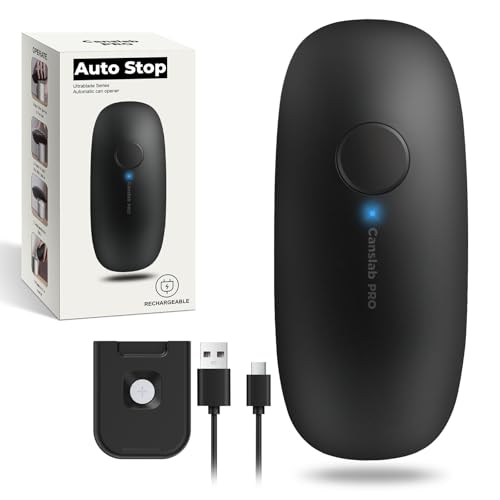
KORSKR Electric Can Opener, Battery Powered, Hands Free, Smooth Edge
Badge: Best Hand Held Overall
Strengths
- Battery powered and hands free per the listing: place it on the can, press, and it travels the rim on its own.
- Smooth edge stated, so the lid lifts away blunt and the can rim stays finger-safe.
- Listing states it suits any size cans, and positions it for seniors, women, and left handed users — an unusually inclusive brief.
Trade-offs
- Replaceable batteries are a consumable; keep a spare set in the drawer or the tool fades at the wrong moment.
- No auto stop or magnetic lid hold is stated in the listing title, so stay nearby and lift the lid by hand.
- Like every rim-riding design, it reads the rim and can struggle on badly crushed cans.
Mini spec box
- Type: Electric can opener, hand held format
- Power: Battery powered
- Edge: Smooth edge
- Operation: Automatic, hands free
- Fit: Suitable for any size cans
- Colour: Black
The KORSKR is the purest expression of the hand held idea in this pool. It is a compact battery unit that you carry to the can, seat on the rim, and start; from there the listing’s hands free claim takes over and the tool walks the circuit itself, leaving a smooth edge behind it. The stated fit — any size cans — matters for a hand held tool in particular, because the whole point of the format is that it is the only opener you reach for: the paste tin at breakfast, the soup can at lunch, the family tin at dinner, all opened by the same drawer-sized device without a second thought about which machine suits which can.
The left handed note in its listing deserves attention, because hand held rim-riders are naturally ambidextrous in a way that crank-handled manual openers and fixed countertop levers often are not: the tool sits on top of the can, the button is on top, and neither hand is assigned the cranking role. Who it suits: households that want one portable opener for every can and every location, left handed cooks underserved by kitchen tools generally, and seniors who want hands free operation without a countertop installation. The honest limitation is the battery routine in consumable form — the tool’s strength fades with its batteries, and a cut that starts strong on tired cells can stall on the far side of the rim. Fresh spares in the drawer are the whole fix. Readers comparing effort profiles across the whole category will find this same design praised from the accessibility side in Best Handicap Can Openers.
Best for: one portable opener for any can, anywhere, either hand / Not suited for: households that will not keep spare batteries

Famawo Electric Can Opener, USB-C Rechargeable, Smooth Edge
Badge: Best Rechargeable Hand Held
Strengths
- USB-C rechargeable: the same cable that charges a phone keeps it ready, with no battery drawer at all.
- Smooth edge plus a stated magnetic lid hold — the lid leaves with the tool instead of dropping into the food.
- Listing states it fits most can sizes and is positioned as an easy gadget for seniors.
Trade-offs
- A forgotten charge is a dead tool until the cable has had its turn; the routine has to be a habit.
- No auto stop is stated in the listing title, so supervise the short walk around the rim.
- Rim condition still rules: dented rims can stall any rim-riding design.
Mini spec box
- Type: Electric can opener, hand held format
- Power: USB-C rechargeable
- Edge: Smooth edge
- Operation: One-touch, automatic
- Lid: Magnetic lid hold
- Fit: Fits most can sizes
The Famawo answers the one objection the KORSKR leaves open: consumables. A USB-C rechargeable hand held opener turns the power routine into the most familiar ritual in modern life — plug it in where the phones charge, top it up now and then, and never think about battery sizes again. Its stated details are the thoughtful ones for this format: one-touch operation, so the hand that carried the tool to the can does only one more thing; a smooth edge, so the lid it removes is safe in the fingers; and a magnetic lid hold, so that lid is still attached to the tool when the walk finishes instead of floating in the soup. That magnet, on a hand held unit, is worth more than on a countertop machine, because the whole scene is mobile — you may be opening the can over a bowl, a pet dish, or a saucepan, and a lid that stays with the tool never falls into any of them.
Who it suits: drawer-storage kitchens, cooks who open cans in more than one place, and anyone whose battery drawer is already a junk drawer. The honest limitation is the mirror image of its strength: rechargeable tools reward foresight and punish forgetfulness completely, with no spare-set rescue at 6pm. If your household runs on routines, this is the tidier tool; if it runs on improvisation, the KORSKR’s swappable batteries forgive more. The two philosophies are compared from the budget side in Best Inexpensive Can Openers, where running costs get the attention they deserve.
Best for: cable-routine households, magnetic lid control, drawer storage / Not suited for: forgetful chargers or crushed-rim cans
Cuisinart CCO-55 Deluxe, Chrome Electric Can Opener — Profiled in Prose
Badge: Prose-Only: Chrome Station Alternative
Strengths
- One-touch press and release operation stated in the listing, with a magnetic lid holder.
- Removable lever stated, so the cutting head lifts away for proper washing.
- A chrome-finished standing body that stays planted and always ready at its station.
Trade-offs
- It is a countertop appliance: it does not travel to the can, and it is not held in the hand.
- No smooth-edge claim is stated in the listing title.
- It needs a permanent counter spot and a nearby outlet.
Mini spec box
- Type: Electric can opener, countertop format
- Operation: One-touch press and release
- Lid: Magnetic lid holder
- Lever: Removable
- Finish: Chrome, silver
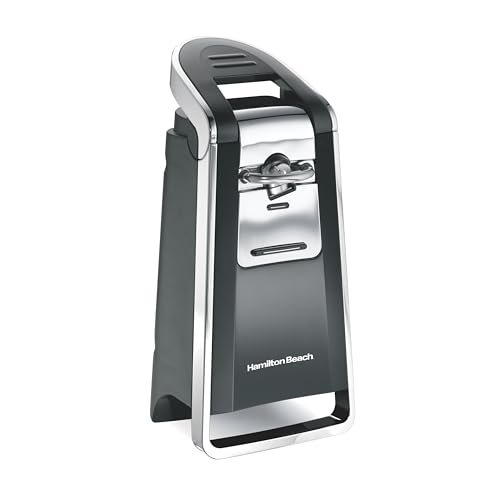
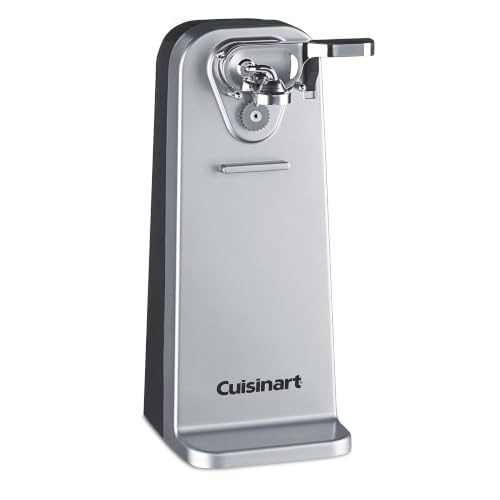
The CCO-55 is what the hand held format gives up, shown at its most polished: a standing Cuisinart in chrome whose one-touch press and release action, magnetic lid holder, and removable washable lever make it a genuinely refined station. Parked beside the hob, it opens the evening’s cans with a consistency the portable tools match only can by can, and its lever comes off for the sink, which keeps the cutting head cleaner than most. None of that makes it hand held. It opens cans where it stands, and the cook, the can, and the bowl all come to it. For a single-station kitchen that is not a flaw at all — it is a workflow. This profile exists so you can choose that workflow knowingly instead of discovering the format after the purchase.
Who it suits: one-station cooks who value washable parts and an always-ready appliance. The effort comparison between a press-and-release station like this and the portable class is the subject of Best Handheld Can Openers, where the same pool is ranked on portability first.
Best for: a fixed, washable, always-ready opening station / Not suited for: the hand held brief itself
bella Electric Can Opener, Automatic One-Touch, Oatmilk — Profiled in Prose
Badge: Prose-Only: One-Touch Station Alternative
Strengths
- Automatic one-touch operation stated: the simplest control scheme a station can offer.
- A standing format that is always in the same place, ready for the daily tin.
- The Oatmilk finish suits open shelving better than the usual appliance colours.
Trade-offs
- A countertop appliance, not a hand held tool; the can comes to it.
- No magnetic lid holder and no smooth-edge claim are stated in the listing title.
- Light cans benefit from a steadying fingertip at the start of the cut.
Mini spec box
- Type: Electric can opener, countertop format
- Operation: Automatic, one-touch
- Finish: Oatmilk
The bella is the gentle station: automatic one-touch operation in a soft Oatmilk finish, designed to sit on a counter and make the daily can a non-event. Its case against the hand held picks is routine — if your cans are all opened in one place, at one counter, a parked tool with one button is arguably less fuss than a portable tool that must be fetched, seated, and put away. Its case against itself, within this brief, is simply the format, compounded by two silences in its listing: no stated lid magnet and no stated smooth edge, so its small lids are retrieved by hand and treated as sharp. Choose it for the station life, not for the road.
Best for: a calm one-button station on an open counter / Not suited for: the hand held brief itself
Amazon Basics 3-In-1 Electric Can Opener — Profiled in Prose
Badge: Prose-Only: Multi-Tool Station Alternative
Strengths
- Three stated tools in one body: electric can opener, bottle opener, and knife sharpener.
- Magnetic lid holder and stainless steel blade stated in the listing.
- Stated 50W corded power: full strength on the first can and the fifteenth alike.
Trade-offs
- Corded and countertop-bound; the least portable design in this pool by construction.
- No smooth-edge claim is stated in the listing title.
- The multi-tool body is the bulkiest here, and it earns counter space or nothing.
Mini spec box
- Type: 3-in-1 electric can opener, bottle opener, knife sharpener
- Blade: Stainless steel
- Lid: Magnetic lid holder
- Power: 50W, corded
- Colour: Black
If the hand held format is about going to the can, the Amazon Basics 3-In-1 is about never moving at all — and making the stillness worthwhile by doing three jobs. Its corded motor is the batch worker of the pool, the one whose fifteenth can opens exactly like its first, and its magnetic lid holder handles the lid problem that the bella leaves open. In a kitchen that cans, bottles, and dulls knives in one prep zone, it is a rational appliance. It is profiled here, unlinked, because a guide to hand held openers that linked a corded countertop block would be lying about the category — and because its real strengths need no exaggeration to be worth your consideration if the station format is your actual life.
Best for: corded batch work at a fixed prep station / Not suited for: the hand held brief itself
Cuisinart Deluxe Electric Automatic Can Opener, CCO-50BKN — Profiled in Prose
Badge: Prose-Only: Washable-Lever Station Alternative
Strengths
- Single-touch automatic operation with a stated magnetic lid holder.
- Removable activation lever stated: the cutting head washes properly, unlike fixed heads.
- Listing positions it for seniors, reflecting genuinely low-effort operation.
Trade-offs
- A standing countertop appliance; not held in the hand and not portable.
- No smooth-edge claim is stated in the listing title.
- Very light cans still want a steadying hand at the start.
Mini spec box
- Type: Electric automatic can opener, countertop format
- Operation: Single-touch
- Lid: Magnetic lid holder
- Lever: Removable activation lever
- Colour: Black
The second Cuisinart in this pool repeats the family’s virtues in black: single-touch operation, a magnet for the lid, and the removable lever that makes it the easiest station here to keep clean. For a senior user whose kitchen routine is settled and whose cans are opened at one counter, it may honestly be a better daily tool than either linked pick — portability is only a virtue if you move. But this guide’s question was which openers are hand held, and the CCO-50BKN’s answer is that it is not, by design and by listing. It closes the prose profiles as the strongest reminder that format is a choice, not a ranking: the best opener is the one whose format matches the kitchen it will live in.
Best for: a washable, low-effort fixed station, including for seniors / Not suited for: the hand held brief itself
Comparison Table
| Pick | Format | Power | Edge stated | Status here | Link |
|---|---|---|---|---|---|
| KORSKR Electric Can Opener | Hand held rim-rider | Battery powered | Smooth edge | Linked | Check on Amazon |
| Famawo Electric Can Opener | Hand held rim-rider | USB-C rechargeable | Smooth edge | Linked | Check on Amazon |
| Cuisinart CCO-55 Deluxe | Countertop | Electric, one-touch | Not stated | Prose only | — |
| bella Electric Can Opener | Countertop | Electric, one-touch automatic | Not stated | Prose only | — |
| Amazon Basics 3-In-1 | Countertop | 50W corded | Not stated | Prose only | — |
| Cuisinart CCO-50BKN | Countertop | Electric, single-touch | Not stated | Prose only | — |
The format column is the whole story of this guide. Everything else — edge, power, lid control — is a refinement within a format. Decide the format from your kitchen’s geography first, and the refinements will choose themselves.
How to Choose a Hand Held Can Opener
Start with geography. List the places you actually open cans: the main counter, the pantry, the feeding corner, the camper, a parent’s kitchen. If the list has one entry, a station is a perfectly good answer and the prose profiles above are your shortlist. If it has two or more, hand held stops being a novelty and becomes the format that fits your life, because the tool stops dictating where dinner prep happens.
Next, choose the power routine you will actually keep. The KORSKR’s replaceable batteries forgive forgetfulness — a fresh set rescues the tool in seconds — but they are a consumable to stock. The Famawo’s USB-C charging eliminates consumables and plugs into the household’s existing charging corner, but it punishes a forgotten week completely. Neither routine is more virtuous; the right one is the one your household already performs for other devices. A household of phone-chargers should buy rechargeable; a household of battery-drawer people should buy swappable.
Then check the stated fit against your cans. The KORSKR states any size cans; the Famawo states most can sizes. Both cover ordinary kitchens entirely. What neither promises — what no rim-rider promises — is grace on crushed rims, so if dented cans are a weekly reality in your shopping, keep a top-cut station or a manual opener as the household backup and let the hand held tool do the ninety percent of cans that arrive round. Finally, weigh the lid: the Famawo’s stated magnetic hold keeps the lid with the tool, which matters most when you open cans over bowls and pans; the KORSKR leaves the smooth lid resting on the can, which is fine when the can is on a counter and merely one more thing to manage when it is not.
How to Use a Hand Held Can Opener: Technique, Cleaning, and Troubleshooting
Hand held technique is a short ritual with one important moment. Set the can on a flat, dry surface — or hold it over the bowl it will be emptied into, once you are confident. Wipe the rim if it is wet or oily. Seat the unit squarely on the rim so its guide meets the metal evenly all the way around its contact patch; this seating, done calmly, is the difference between a clean circuit and a wandering one. Press the control once. Then do the hardest thing in the whole process: nothing. Let the tool walk. Cup the can loosely if it is light, keep fingers clear of the lid’s path, and when the circuit completes, lift the tool — with the lid, if the model holds it magnetically, or lift the lid by its face if it is resting in place.
- Dry the rim and give the can a flat, stable place to stand.
- Seat the unit squarely; a tilted start is the root of most ragged cuts.
- Press once and let the tool travel without steering, pushing, or lifting.
- Support light cans loosely from the side so they do not rotate with the tool.
- Lift the lid by its face, and wipe the cutting wheel before you put the tool away.
- Store the tool dry, with its power routine in mind: spares nearby, or a charging spot it returns to.
One more choice hides inside the format: how the tool behaves at the end of the cut. Some hand held designs stop and wait to be lifted; the lid, if it is not held magnetically, rests on the can. Build the end of the cut into your picture of the routine. If you open cans while holding a bowl, a baby, or a conversation, a stated magnetic hold earns its keep every time. If your cans are opened on a clear counter with both hands free, the resting lid is a non-event and should not steer the purchase. Judge features against your actual posture at the counter, not against an idealised one.
Cleaning a hand held unit is wheel care, done little and often. The cutting and traction wheels grip the rim under pressure, and dried food residue changes that grip, which is how a good tool starts cutting badly. A damp cloth and a soft brush after messy cans — tuna and tomato are the usual culprits — and a weekly wipe in daily use keeps the walk true. Never run a powered unit under the tap; wipe the body, clean the wheels, and let everything dry before the drawer. Battery contacts appreciate a glance now and then, and a rechargeable unit appreciates being stored with some charge rather than none.
Troubleshooting, in the pattern that covers most hand held problems:
- Problem: the tool walks but does not cut → it was seated tilted, so the wheel rode above the seam. Lift it off, reseat squarely on a clean arc, and start a fresh circuit instead of retracing the failed one.
- Problem: the cut stalls partway around → usually a dented rim section or tired power. Rotate the can so the dent falls at the end of the cut, fit fresh batteries or a charge, and restart just past the trouble spot.
- Problem: the can rotates with the tool instead of staying put → the surface is wet or the can is very light. Dry the base, set the can on a cloth for grip, and cup it loosely as the tool starts.
Where Hand Held Openers Earn Their Keep
Three households discover this format fastest. The first is the small kitchen, where counter space is the scarcest resource and every standing appliance is a negotiation; a hand held opener costs a drawer slot and returns a whole corner of worktop. The second is the multi-station home: pet food at the utility sink, baking at the island, soup at the hob. A tool that travels ends the carrying of cans to a single sanctioned spot, and with it the drips on the floor between stations. The third is the away-from-home cook — the camper, the cabin, the holiday rental, the relative’s kitchen you cook in every Sunday — where a battery tool in the bag guarantees a familiar, low-effort routine in an unfamiliar kitchen. If none of those is you, the station profiles above are not a consolation prize; they are the main event, and formats should follow lives rather than trends. The same portability logic, weighed for buyers who need minimum effort above all, runs through Best Handicap Can Openers.
Hand Held Electric vs Manual: An Honest Word
Some readers arrive at “hand held” expecting the manual crank openers they grew up with, and it is worth being plain: this guide’s linked picks are electric tools in a hand held format, not manual tools. A manual opener costs nothing to run, never needs a battery, and works on a crushed rim with patience; it also asks for grip strength and a turning wrist on every can, forever. The electric hand held removes exactly that effort and adds exactly two dependencies: power and a readable rim. Which trade is right depends on the hands involved, and the manual side of the family is covered in its own right in Best Hand Operated Can Openers and Best Inexpensive Can Openers for the budget view. What this guide can promise is that within the electric hand held format, the two linked picks are the genuine article — held in the hand, placed on the can, and free of the counter.
Hand Held in Small Spaces, Shared Kitchens, and Second Homes
The format’s advantages compound in kitchens that are small, shared, or only sometimes yours. In a studio or a first flat, the counter is also the desk, the chopping board, and the landing strip for everything; a standing opener claims a permanent share of the scarcest surface in the home, while a hand held tool asks for a few inches of drawer and gives the surface back. In shared houses, the calculus is social as much as spatial: a portable opener is personal property in a way a plugged-in appliance never quite is, it can live in your drawer rather than in the communal negotiation, and it travels with you when you move, which in a shared house is a matter of when, not if.
Second homes, cabins, boats, and caravans make the case even more plainly. These are kitchens used in bursts, often with limited outlets and counters that double as everything else. A battery hand held opener asks nothing of the building: no outlet, no installation, no counter claim, and it works the same on the first can of the season as on the last, provided its batteries are fresh or its charge is topped up on arrival. It is also the opener you can lend. Nobody lends a countertop appliance; a hand held tool goes next door, to the barbecue, to the neighbour’s stubborn can, and comes back in a coat pocket. Portability sounds like a minor spec until the first time the tool is needed somewhere other than its station — and then it becomes the entire point.
There is also a cleaning geography to the format. A standing opener lives in the splash zone permanently and accumulates the kitchen’s airborne grease on every surface, all week, whether it opens a can or not. A drawer-kept hand held tool lives in the dark, in the clean, and only comes out for the minutes it works. Its wheels still need the wipe described in the how-to section — that discipline is about the cut, not the storage — but the body of the tool simply ages more slowly when it is not sitting in steam and splatter seven days a week.
That is also why this format keeps winning converts among people who were perfectly satisfied with a station for years: nothing about the station got worse — the household’s geography changed, with a move, a smaller kitchen, a feeding routine in another room, or a second home, and the tool that travels suddenly fits the life the station no longer does. Format follows life, in both directions, and there is no embarrassment in switching either way.
Reading a Hand Held Listing Like an Engineer
Because “hand held” is a format rather than a feature, listings describe it indirectly, and it is worth learning to read the indirect evidence. The power source is the first tell: battery operated, battery powered, or rechargeable in the title means the tool can leave the counter; a stated wattage or a cord means it cannot. The second tell is the verb set. Listings for rim-riding hand held tools talk about placing, seating, and hands free travel, because the tool’s whole action happens on the can. Listings for stations talk about levers, activation arms, and press-and-release actions, because the action happens at the machine. The third tell is what the listing does not mention: no base, no footprint talk, no countertop styling claims. Apply those three tells to any listing, including the six in this guide, and the format sorts itself before you ever see the product.
The same reading skill protects you from the format’s one common exaggeration: the compact station wearing portable language. A small countertop opener is still a station — it has a base, it wants an outlet, and it opens cans where it stands. There is nothing wrong with it, and two of the prose profiles above are exactly that kind of machine at its best. The mistake is only in the matching: buying the station for a travelling life, or the traveller for a batch-cooking station life. Read the tells, match the format to the geography of your cooking, and the tool will feel right from the first can — which is the whole ambition of this guide.
Common Buying Mistakes
- Buying a countertop appliance for a hand held brief. A small footprint does not make a standing machine portable; check the format, not the dimensions.
- Ignoring the power routine. Rechargeable tools stored flat and battery tools without spares both fail at dinnertime; choose the routine your household already keeps.
- Steering the tool. Rim-riders walk alone by design; guiding hands cause the ragged cuts they are trying to prevent.
- Expecting grace on crushed rims. Every rim-riding design reads the rim; keep a top-cut or manual backup for the casualties.
- Forgetting the lid plan. A stated magnetic hold keeps the lid with the tool; without one, the lid rests on the can — fine, but know which you are buying.
- Storing the tool dirty. Residue on the wheels is the hidden cause of wandering cuts; a ten-second wipe prevents it.
Final Recommendation
For the hand held brief itself, start with the KORSKR Electric Can Opener (Check on Amazon): battery powered, hands free, smooth edged, and stated for any size cans, it is the most complete expression of the format in this pool, and its swappable batteries forgive a forgetful household. If your household runs on charging cables rather than battery drawers, choose the Famawo Electric Can Opener (Check on Amazon) for its USB-C recharging and the magnetic lid hold that keeps mobile opening tidy. And if the profiles above have convinced you that your kitchen is a one-station kitchen, buy one of the countertop models with a clear conscience — the Cuisinarts for their washable levers, the Amazon Basics for batch strength, the bella for one-button calm — knowing they answer a different question than the one this guide’s title asks.
Frequently Asked Questions
What makes a can opener “hand held”?
The tool is held in the hand and placed on the can, and it works wherever the can is — no standing base, no counter station, no cord tying it to an outlet. In practice that means a battery or rechargeable power source and a body that rides the rim. A compact countertop appliance, however small, is a different format with a different daily life.
Are hand held electric openers strong enough for big cans?
Size is less about strength than about fit and rim condition. The KORSKR in this guide states it suits any size cans, and the Famawo states most can sizes; ordinary family tins sit comfortably inside those claims. Very tall cans are no problem for a rim-rider at all, since the tool never has to accommodate the can’s height — one of the format’s quiet advantages over standing machines.
How long do the batteries or charges last?
Listings vary and this guide does not invent figures; what can be said honestly is that can opening is light work, and either power routine covers ordinary household use for a good stretch when it starts fresh. The failures people report are almost never about capacity — they are about starting a session on tired batteries or an uncharged unit. Keep the routine and the problem mostly vanishes.
Do hand held openers leave sharp edges?
Both linked picks in this guide state a smooth edge, so the lids they remove and the rims they leave are blunt enough to handle by the edge. That is a property of these models’ stated cut, not of the hand held format in general — always check the listing for the smooth-edge claim itself rather than assuming the format provides it.
Can a hand held opener handle a dented can?
A small dent on an otherwise round rim is usually fine if you start the cut on a clean arc and let the dent fall at the end of the circuit. A crushed or folded rim gives the tool nothing true to read, and those cans belong to a top-cut countertop machine or a patient manual opener. Most households find dented cans are the rare exception, not the rule worth buying around.
Is a hand held electric opener a good gift?
It is one of the safer kitchen gifts, because it asks nothing of the recipient’s kitchen: no counter space, no outlet, no installation, and no change to their setup beyond a drawer slot. For a parent whose grip is not what it was, the hands free designs in this guide remove effort without announcing themselves as medical equipment, which is exactly the tone a good gift strikes. Include the batteries or charge it before wrapping, and the gift works the moment it is opened.
Where should I store a hand held opener?
In the drawer nearest where cans get opened, clean and dry, with its power routine attached to the spot: spare batteries in the same drawer for a battery model, or a habitual return to the charging corner for a rechargeable one. Wall storage suits some designs in other categories, but the drawer is the hand held format’s natural home — out of sight, in reach, and off the counter entirely.