Disclosure: topratedkitchenware.com is reader-supported. When you buy through links on our site, we may earn an affiliate commission from Amazon and other retailers, at no extra cost to you.
Where to buy
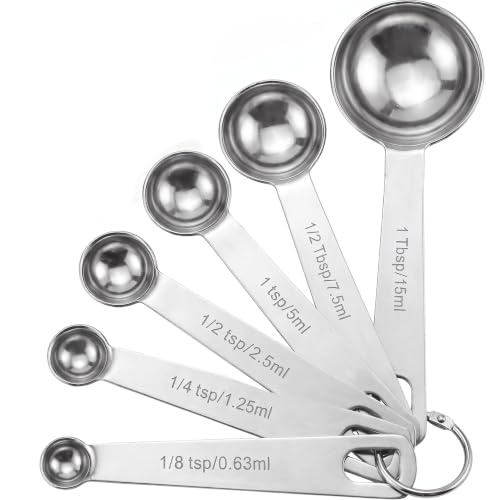
Looking for the best mini measuring spoons for tiny quantities, small jars, and compact drawers? The six sets below are the ones this guide recommends, in review order. Each name links to its Amazon listing, where you can check the latest price on Amazon and confirm the stated sizes before ordering.
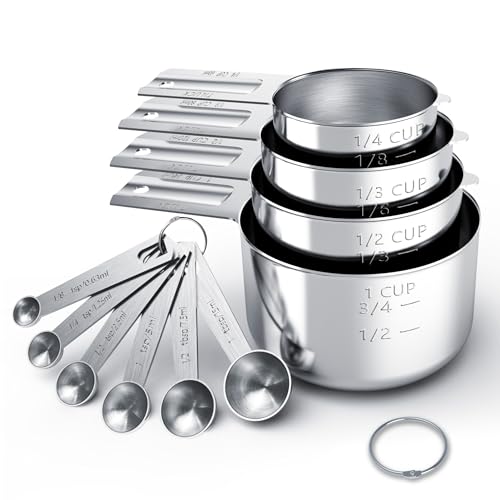
- Spring Chef Stainless Steel Measuring Cups and Spoons Set of 14 with Leveler — Check on Amazon
- Hudson Essentials Stainless Steel Measuring Spoons Set of 7
- U-Taste 18/8 Stainless Steel Measuring Spoons Set of 9
- THLHKD 13-Piece Stainless Steel Measuring Cups and Spoons Set with Funnel
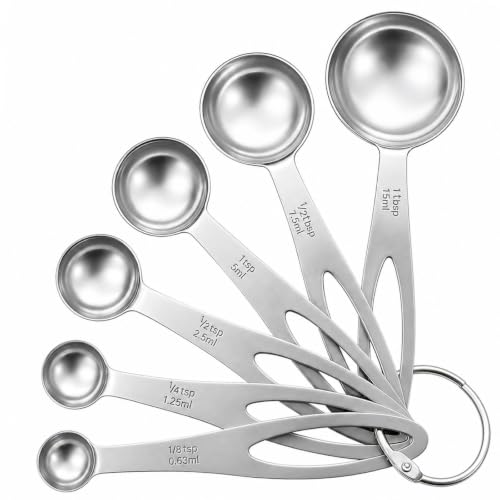
- Rena Chris 6-Piece Heavy Duty Stainless Steel Measuring Spoons Set
- Spring Chef Stainless Steel Magnetic Measuring Spoons Set of 8, Black
Read the full guide ↓ to see which sets actually reach the smallest sizes, which ones disappear into a small drawer, and which are complete kits whose spoon ends do the mini work.
Mini measuring spoons earn their place in the smallest moments of cooking: a sixteenth of a teaspoon of cayenne that seasons without scorching, an eighth of a teaspoon of salt in a single-serving bake, a careful dose of spice in a baby-food portion or a single mug cake. Standard sets often stop at a quarter teaspoon and leave those moments to guesswork, pinches, and the tip of a knife. The best mini measuring spoons solve two problems at once. They reach genuinely small sizes, and they do it in compact formats that fit small jars, small containers, and small kitchens where a sprawling fourteen-piece tower may not be welcome. This guide compares six stainless steel sets through that mini lens: which ones state the tiniest sizes, which ones fit into spice jars and narrow canisters, which ones nest or stack down to almost nothing, and where each set’s honest limits sit. Two of the six are complete cup-and-spoon kits; they are included because their spoons cover the small end well, and the reviews say plainly when the cups make a set less mini than its spoons are. Every set here is stainless steel, because at small sizes a rigid bowl and a true rim matter even more than they do at tablespoon scale, and every claim about sizes or storage comes from the manufacturer’s own listing rather than from marketing language about smallness.
Key Takeaways
- True mini measuring starts below a quarter teaspoon: look for stated 1/8 and ideally 1/16 teaspoon sizes if you season, scale, or dose in small amounts.
- The U-Taste set states the finest range in this guide, down to 1/16 teaspoon, with 1/3 and 3/4 teaspoon in between for clean scaling.
- Compact storage matters in small kitchens: magnetic nesting and stackable designs keep a full set in a fraction of a drawer.
- Slim, jar-fitting heads are the mini feature you will use daily, because small quantities usually live in small jars.
- Complete cup-and-spoon kits can still serve mini work through their spoons, but the cups add bulk; buy them when you need both, not for the spoons alone.
- For tiny amounts, technique is everything: level the spoon, tap out sticky spices fully, and store the smallest spoons where they cannot vanish into a drawer corner.
In this guide
Quick Picks
| Pick | Badge | Set size | Mini-relevant feature from the listing | Link |
|---|---|---|---|---|
| Spring Chef Cups and Spoons Set of 14 | Best Complete Kit | 14 pieces, cups and spoons | Rectangular spoons plus leveler in a nesting kit | Check on Amazon |
| Hudson Essentials Spoons Set of 7 | Best for Spice Jars | 7 spoons | Slim profile made to fit in spice jars | Check on Amazon |
| U-Taste Spoons Set of 9 | Best for Tiny Measures | 9 spoons | Finest stated size: 1/16 teaspoon | Check on Amazon |
| THLHKD 13-Piece Set with Funnel | Best Stackable Kit | 13 pieces plus funnel | Stackable storage; funnel suits refilling small jars | Check on Amazon |
| Rena Chris Spoons Set of 6 | Best Compact Core Set | 6 spoons | Small tablespoon design with metric and US measurements | Check on Amazon |
| Spring Chef Magnetic Spoons Set of 8 | Best Nesting Storage | 8 spoons plus leveler | Magnetic nesting, dual sided for dry and liquid | Check on Amazon |
How These Picks Were Chosen
This guide is research-led rather than a hands-on lab test, and it evaluates every set against the mini brief specifically. The listings were compared on the smallest sizes each manufacturer states, because a set that never goes below a quarter teaspoon cannot do mini work no matter how it is marketed; on head profile, because small quantities are stored in small jars; on storage format, because mini buyers usually have mini kitchens; and on stated extras such as levelers and dual-sided designs that help with small, precise amounts. Only specifications stated in the listings are used in the spec boxes. Where a listing does not state its smallest size, the review says so instead of assuming. Prices are not printed since they change; use the links to check the latest price on Amazon. Readers whose main concern is repeatability across all sizes should also see the guide to Best Most Accurate Measuring Spoons, and those focused on jar access above all else should see Best Narrow Measuring Spoons.
The 6 Best Mini Measuring Spoons

Spring Chef Stainless Steel Measuring Cups and Spoons Set of 14 with Leveler
Badge: Best Complete Kit
Strengths
- Rectangular spoon heads fit into spice jars, which is where mini quantities are usually measured from.
- The included leveler standardizes small dry measures, where a heaped spoon is proportionally a much bigger error.
- Nesting storage keeps a large kit compact relative to its piece count.
Trade-offs
- It is a complete kit, not a dedicated mini set: the cups serve baking, not tiny measures, and they take space.
- The listing does not state the spoons’ smallest size, so confirm the size list on the listing if a 1/8 teaspoon is essential.
- Fourteen pieces is the most to wash and store in this guide.
Mini spec box
- Material: stainless steel
- Pieces: 14, measuring cups and spoons
- Spoon head shape: rectangular
- Storage: nesting
- Included accessory: leveler
- Use: dry and liquid ingredients
This set leads the guide because many mini-measuring shoppers are really small-kitchen shoppers: they need the small spoons and the cups, but they need all of it to store small too. The nesting design delivers that, stacking a full measuring kit into one footprint. On the spoon side, the rectangular heads are the mini-relevant feature, slipping into spice jars and narrow canisters where round spoons jam, and the leveler earns its keep at small sizes because a heaped eighth of a teaspoon can be nearly double a level one. The honest caveat is scope: this is not a minimalist mini set, and the manufacturer does not state the smallest spoon size in the listing summarized here, so buyers who need a guaranteed 1/16 or 1/8 teaspoon should verify the size list on the product page or choose the U-Taste set below, which states its sizes outright. For a small kitchen being equipped in one purchase, though, this kit covers the mini jobs through its spoons and everything else through its cups.
Best for: small kitchens that need one complete, compactly stored measuring kit / Not suited for: buyers who want only a tiny dedicated spoon set

Hudson Essentials Stainless Steel Measuring Spoons Set of 7
Badge: Best for Spice Jars
Strengths
- The listing states the set fits in spice jars, the defining mini use case, so small quantities can be measured at the source.
- Seven spoons keep the set light and simple for small-batch cooking.
- Stainless steel construction for both dry and liquid ingredients.
Trade-offs
- The smallest stated detail is the set count, not the size list; check the listing if you need a specific tiny size.
- No leveler is included, so leveling tiny spoons depends on a knife edge.
- Spoons only, with no cups for cooks who need both.
Mini spec box
- Material: stainless steel
- Pieces: 7
- Design note: fits in spice jars
- Use: dry or liquid ingredients
Mini measuring usually happens at a jar, not at a mixing bowl. You open a small jar of a potent spice, and you need a small amount, measured where you stand. Hudson Essentials built this set around that moment: the listing’s promise is a profile that fits in spice jars, in stainless steel, across seven spoons. For cooks who season small pots, single portions, and small-batch bakes, that jar access is worth more than extra novelty sizes. The set’s simplicity is also its limit. Without a stated fine size list in the summary or an included leveler, the buyer who needs a guaranteed 1/16 teaspoon should look at the U-Taste set, and the buyer who levels everything should consider the Spring Chef options. But as a compact, jar-friendly everyday set for small-quantity cooking, this is a clean answer, and its slim profile is also why it appears in discussions of Best Narrow Measuring Spoons for tight containers.
Best for: spice-jar measuring and small-batch everyday cooking / Not suited for: buyers who need a stated 1/16 teaspoon size
U-Taste 18/8 Stainless Steel Measuring Spoons Set of 9
Badge: Best for Tiny Measures
Strengths
- States a 1/16 teaspoon, the smallest size in this guide, plus 1/8 teaspoon for the next step up.
- Intermediate 1/3 and 3/4 teaspoon sizes make small-batch scaling exact instead of estimated.
- 18/8 stainless steel is stated in the listing, a concrete material detail.
Trade-offs
- The tiniest spoons are the easiest to lose in a sink or drawer; they need a ring or a dedicated spot.
- Nine spoons require reading the handle each time, since several look similar at a glance.
- No leveler or cups are included.
Mini spec box
- Material: 18/8 stainless steel
- Pieces: 9
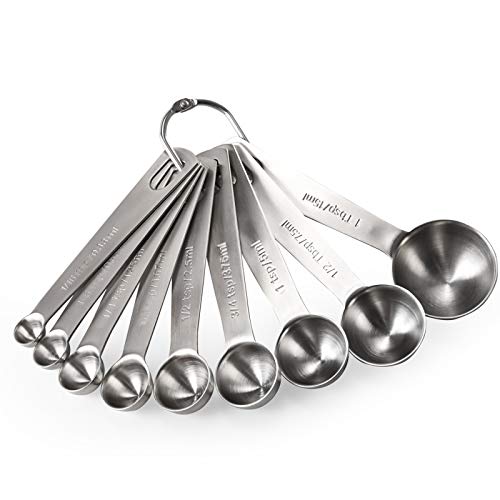
- Sizes stated: 1/16 tsp, 1/8 tsp, 1/4 tsp, 1/3 tsp, 1/2 tsp, 3/4 tsp, 1 tsp, 1/2 tbsp, 1 tbsp
- Use: dry and liquid ingredients
If mini means one thing, it means this set’s smallest spoon. A 1/16 teaspoon is the size older recipes call a pinch, and having it as a real, levelable measure turns vague instructions into repeatable ones. It is the right tool for curing blends, potent ground spices, concentrated flavorings, and adjusting a small sauce without crossing the line from seasoned to overwhelmed. The rest of the size list supports the same philosophy: 1/8 teaspoon for the next increment, then the scaling-friendly 1/3 and 3/4 teaspoon sizes that most sets skip. In a mini guide, this is the specialist pick, the set bought for the sizes nobody else states. Its limitations are practical rather than conceptual. Tiny spoons vanish; keep the set together. And with nine pieces, you will read handles constantly, which is the price of range. For cooks whose recipes live at the small end, no other set here competes on stated sizes, and material-conscious readers can cross-check the steel discussion in the guide to Best Non Toxic Measuring Spoons.
Best for: tiny quantities, spice blending, curing, and small-batch scaling / Not suited for: cooks who find nine similar spoons fussy

THLHKD 13-Piece Stainless Steel Measuring Cups and Spoons Set with Funnel
Badge: Best Stackable Kit
Strengths
- Stackable storage collapses cups and spoons into one tower, a genuine small-kitchen advantage.
- The included funnel is made for refilling small spice jars and bottles, the other half of mini pantry work.
- Dishwasher safe construction is stated, suiting busy small households.
Trade-offs
- Like the other complete kit, the cups are not mini tools; the spoons carry the small-measure work.
- The listing does not state the spoons’ smallest size.
- Stacking only saves space when the full set is stored together.
Mini spec box
- Material: stainless steel
- Pieces: 13, measuring cups and spoons, plus funnel
- Storage: stackable
- Care: dishwasher safe
- Use: dry and liquid ingredients; baking and cooking
THLHKD’s kit earns its mini-guide place on storage and on one underrated accessory. The funnel is the tool that makes small jars practical: refilling a narrow spice jar from a bulk bag with a spoon is a spill ritual, while a funnel turns it into a ten-second job, and a kitchen that keeps small jars filled is a kitchen that can measure small amounts from them. The stackable design answers the small-kitchen constraint directly, storing thirteen pieces as one unit rather than a drawer layer. The spoons themselves handle the dry and liquid small measures of daily cooking, in dishwasher-safe stainless steel. The honest limits mirror the Spring Chef kit: this is a complete set, not a dedicated mini set, and the listing summary does not state the smallest spoon size, so the tiny-measure specialist should still choose U-Taste. Buy this kit when your mini problem is really a storage-and-pantry problem, and it solves both halves at once.
Best for: small kitchens that refill spice jars and want stackable storage / Not suited for: buyers seeking a guaranteed 1/16 teaspoon

Rena Chris 6-Piece Heavy Duty Stainless Steel Measuring Spoons Set
Badge: Best Compact Core Set
Strengths
- The listing describes a small tablespoon design, a compact profile suited to small containers and single-serve measuring.
- Both metric and US measurements are stated, ideal for small international recipes where quantities come in milliliters.
- Heavy duty stainless steel in a focused six-piece set with nothing extra to store.
Trade-offs
- Six pieces is the smallest set here, so unusual sizes may need doubling or estimating.
- No leveler, funnel, or cups are included.
- The listing summary does not enumerate each spoon size, so check the product page for the exact list.
Mini spec box
- Material: stainless steel, heavy duty
- Pieces: 6
- Design note: small tablespoon
- Measurements: metric and US
- Use: dry and liquid ingredients
Rena Chris takes the minimalist route: six heavy duty spoons, a compact small-tablespoon design, and dual measurement systems. For mini work, the metric markings are quietly valuable, because small-quantity recipes from outside the United States specify milliliters, and at small scales a conversion error is proportionally large. Five milliliters measured as a guess is a different sauce; five milliliters read off the handle is the recipe. The heavy duty description also matters at the small end, where thin spoons bend when they pry into packed jars of spice paste or dense powders. What you give up is range: six spoons cannot cover every increment, and this set asks you to combine or estimate for in-between amounts. As a compact core set for a small kitchen, a dorm, or a single cook who measures small and cooks smaller, it is a tidy, durable answer. Shoppers comparing retail routes for compact sets can also consult Best Place To Get Measuring Spoons.
Best for: compact kitchens, metric-recipe cooks, and single-serve measuring / Not suited for: bakers who need many fine increments

Spring Chef Stainless Steel Magnetic Measuring Spoons Set of 8, Black
Badge: Best Nesting Storage
Strengths
- Magnetic nesting keeps all eight spoons together as one compact unit, so the smallest spoons cannot scatter and disappear.
- Dual-sided design gives each spoon a second end for a different ingredient type, doubling function without doubling storage.
- Includes a leveler for repeatable small dry measures, and the set is dishwasher safe per the listing.
Trade-offs
- The black finish is a style choice not everyone wants in a measuring drawer.
- Magnets keep the set together, which is slightly slower when you only want one spoon mid-recipe.
- The listing summary does not state the smallest size, so verify on the product page if 1/8 teaspoon is a must.
Mini spec box
- Material: stainless steel
- Pieces: 8, dual sided, plus leveler
- Finish: black
- Storage: magnetic nesting
- Care: dishwasher safe
- Use: dry and liquid ingredients
The mini problem nobody advertises is loss. The smallest spoon in any set is the one that slides under the drawer liner, hides in the sink, or migrates to a junk drawer, and then the set’s small end is gone. Magnetic nesting attacks that problem directly: the eight spoons hold together as a single stack, so the set you put away is the set you take out. Dual-sided spoons add a second mini advantage, giving a separate end for a second ingredient, which keeps flavors from crossing when you measure two spices back to back. Add the included leveler and stated dishwasher-safe care, and this is the most storage-conscious spoons-only set in the guide. Its caveats are minor: the black finish is a matter of taste, and un-nesting one spoon takes a second longer than grabbing from a loose pile. For small drawers and tidy minds, those are easy trades. It also complements the storage-first approach of the kits in Best Nesting Measuring Cups Spoons Mixing Bowl Set for readers organizing a whole prep drawer.
Best for: tiny drawers, tidy storage, and cooks who lose small spoons / Not suited for: buyers who dislike a black finish
Comparison Table
| Set | Pieces | Smallest size stated | Storage format | Mini strength | Link |
|---|---|---|---|---|---|
| Spring Chef 14-Piece Kit | 14 | Not stated in listing summary | Nesting | Rectangular jar-fit spoons plus leveler | Check on Amazon |
| Hudson Essentials 7 | 7 | Not stated in listing summary | Standard ring or drawer | Fits in spice jars | Check on Amazon |
| U-Taste 9 | 9 | 1/16 tsp | Standard ring or drawer | Finest stated increments | Check on Amazon |
| THLHKD 13-Piece Kit | 13 plus funnel | Not stated in listing summary | Stackable | Funnel for small-jar refills | Check on Amazon |
| Rena Chris 6 | 6 | Not stated in listing summary | Standard ring or drawer | Small tablespoon, metric and US | Check on Amazon |
| Spring Chef Magnetic 8 | 8 plus leveler | Not stated in listing summary | Magnetic nesting | Dual sided, stays together | Check on Amazon |
How to Choose Mini Measuring Spoons
Decide first which mini problem you actually have. If it is size range, the stated smallest spoon is the whole decision: only the U-Taste set here states a 1/16 teaspoon, and it is the automatic choice for pinches, cures, and micro-seasoning. If it is access, because your small quantities live in small jars, prioritize head profile: jar-fit and rectangular designs measure at the source instead of forcing you to shake spices into a spoon and hope. If it is storage, because your kitchen is small, look at format before piece count: magnetic nesting and stackable kits keep many pieces in little space, while a loose ring of spoons sprawls. If it is recipe geography, with metric quantities in your cookbooks, dual-marked handles like the Rena Chris set remove conversion errors at exactly the scale where errors matter most. Finally, be honest about completeness: the two cup-and-spoon kits in this guide serve mini measuring through their spoons, but they are kits, and a buyer who only wants tiny spoons should buy the spoons-only sets and save the drawer space. Price tiers in this category track piece count and accessories more than exotic materials, so spend on the feature that matches your mini problem rather than the longest feature list.
How to Measure Tiny Quantities Well
Tiny measuring magnifies every habit, good and bad. Work over a small plate or the mixing bowl so a spill is recoverable. Dip the small spoon into the ingredient, lift, and level with a straight edge in one sweep; at 1/16 teaspoon, a heaped spoon is not a rounding error, it is a different recipe. For ground spices that cling, tap the spoon’s handle lightly to settle the contents before leveling, and tap again to release the spice fully into the dish, since a fraction left clinging to the bowl is a large share of a tiny measure. For liquids at small sizes, such as a quarter teaspoon of vanilla, fill slowly and watch the meniscus at eye level; the difference between almost full and brim full is proportionally large. For sticky liquids, dip the spoon in hot water first so the ingredient releases cleanly. Store the smallest spoons on their ring or nested, never loose, and wash them in a utensil basket or by hand so they cannot slip through a dishwasher rack or down a drain. Rinse between strong spices when measuring several in a row, and dry the spoon fully, because a wet spoon grabs dry spice and changes the next measure.
Troubleshooting
Problem: the dish tastes far spicier than intended → the tiny spoon was probably heaped or the spice was shaken in directly; switch to level mini spoons for potent ingredients and treat a 1/16 teaspoon as a real dose, not a garnish.
Problem: the smallest spoon keeps disappearing → it is being stored loose; keep the set nested, magnetically stacked, or on its ring, and give it one fixed home in the drawer.
Problem: half the tiny measure stays stuck in the spoon → the ingredient is clinging; tap the handle to release it, and for sticky liquids, warm the spoon first so the contents pour out completely.
Where Mini Spoons Earn Their Keep: Five Everyday Uses
First, spice blends and rubs, where small ratios define the flavor and a quarter teaspoon too much of one element unbalances the batch. Second, small-batch baking: single mug cakes, half recipes, and test bakes all live at eighth and sixteenth scale. Third, coffee and tea, where a small spoon doses sweetener, matcha, or spice into a single cup and consistency changes the drink. Fourth, baby and toddler food, where salt and spice are added in genuinely tiny, deliberate amounts. Fifth, supplements and protein powders at home, where small scoops repeat daily and a rigid, readable spoon keeps the routine consistent. In each case the pattern is the same: the quantity is small, the margin for error is smaller, and a real mini measure replaces a guess. That is the entire case for owning a set whose small end is taken seriously, and it is why this guide weighted stated tiny sizes and jar access over raw piece counts.
Mini Spoons vs a Pinch: Why Bother Measuring Small Amounts
The traditional pinch is charming and completely unrepeatable. Pinch size varies with finger size, ingredient grind, and haste, which is fine for a finishing touch of flaky salt and wrong for anything structural: leavening in a small bake, curing salt in a blend, heat in a rub. A mini spoon converts those moments into numbers you can write down, repeat, and adjust deliberately. Once a recipe works at small scale, the mini set is what lets it work again next month. There is also a safety-adjacent angle with potent ingredients: concentrated spices and extracts are easy to overdose by hand, and a measured 1/16 teaspoon is a controlled decision rather than an accident. None of this banishes the pinch from cooking; it simply reserves it for garnish, where variation is harmless, and gives the consequential small amounts to a tool built for them.
Scaling Recipes Down: The Arithmetic Mini Spoons Make Easy
Most recipes are written for four to eight servings, and most interesting cooking problems happen when you cut them down. Halving is manageable with standard spoons, because half of a teaspoon is a quarter teaspoon and most sets include one. Thirding is where standard sets fail. A third of a tablespoon is a teaspoon, which works, but a third of a teaspoon is not a spoon most sets own, and a third of three-quarters of a teaspoon is a small arithmetic project that ends in an estimate. This is the practical case for the intermediate sizes in the U-Taste set: a stated 1/3 teaspoon turns thirding into a single motion, and the 3/4 teaspoon turns halving a tablespoon-and-a-half into one spoon instead of two. Small-batch cooking is increasingly how people actually cook: one or two portions, a test run of a new recipe before committing ingredients, a sauce made for a single dish rather than a week’s meal prep. Each of those situations multiplies the number of fractional measures, and each fractional measure done by estimation compounds the error. A cake scaled to a third with three estimated fractions is not the recipe at a smaller size; it is a nearby recipe that may or may not work. Mini spoons with honest increments are what keep the small version faithful to the original, and they cost less than the ingredients of one failed test bake.
There is a second scaling direction worth noting: scaling up from a small base. Spice blends, rubs, and seasoning mixes are often developed in teaspoon quantities and then multiplied for a batch. Fine increments at the development stage, recorded accurately, are what make the multiplied batch taste like the test version. A blend built on an estimated quarter teaspoon of a potent spice, multiplied by eight, carries eight times the estimation error. Developing with real mini measures and writing the numbers down is the unglamorous habit that separates repeatable home blends from one-time successes, and it is only possible when the small end of the spoon set is as trustworthy as the large end.
Mini Measuring for Coffee, Tea, and Daily Supplements
The morning routine is the highest-frequency measuring most households do, and it is almost all mini measuring. Sweetener in a single coffee, spice in a chai, matcha for one bowl, a small spoon of seeds or powder in a smoothie: these are eighth-to-one-teaspoon decisions repeated daily, where consistency is the difference between a routine that tastes right and one that drifts. A dedicated small set near the coffee station, rather than the baking set across the kitchen, is a legitimate setup, and compact sets like the Rena Chris six-piece suit it well because they ask little space and state both metric and US measurements for the imported teas and coffees that specify grams’ liquid cousins in milliliters. Supplements raise the stakes slightly: powdered additions to drinks are dosed deliberately, and a rigid metal spoon that levels the same way every morning supports that deliberateness better than a flexible plastic scoop. Whatever set serves the morning station should be the one with the clearest markings, because it will be read at the least alert hour of the day, and it should be stored assembled, since nobody wants to hunt for a quarter teaspoon before coffee. These are small considerations, but mini measuring is a category made of small considerations, and getting them right is the entire point.
Organizing Small Spoons So They Survive Small Kitchens
Small kitchens lose small tools. The countermeasure is a storage system chosen with the set, not after it. Magnetic nesting, as on the Spring Chef eight-piece, makes the set a single object that occupies a slot rather than a layer. Stackable kits, like the THLHKD thirteen-piece, turn cups and spoons into one tower that can live in a cabinet instead of a drawer. Ring-kept sets should hang on a hook inside a cabinet door or live in a narrow tray that prevents sprawl; a loose spoon in a general utensil drawer will migrate under everything heavier within a week. Label the home if you must: a strip of tape marking the measuring spoons’ tray sounds excessive until the first morning a housemate files the teaspoon with the eating spoons and the small end of the set begins its slow disappearance. Washing routines matter too. Tiny spoons should be washed in a closed basket or by hand and dried immediately, both to protect any finish and because a spoon left in a sink of cloudy water is a spoon halfway to the disposal. None of this requires buying accessories beyond what the sets here already include; it requires deciding the system once, which is exactly what the storage column of the comparison table is for.
What Counts as Mini? A Practical Definition Before You Buy
Mini is not a regulated term, so shoppers need their own definition, and this guide uses three tests. The first is size reach: does the set state a spoon smaller than a quarter teaspoon? By that test, sets stating 1/8 or 1/16 teaspoon sizes are genuinely mini-capable, while sets that stop at a quarter teaspoon are standard sets in small packaging. The second test is access: can the smallest spoons physically reach the ingredient where it lives? A tiny spoon with a wide head that cannot enter a spice jar fails the mini job even though its volume is small, which is why jar-fit designs recur throughout this guide. The third test is footprint: does the set store at the scale of the kitchen it serves? Nesting, stacking, and magnetic formats pass; sprawling rings of loosely connected spoons technically fit anywhere but practically colonize a drawer. A set does not need to ace all three tests to be worth buying, and the reviews above score each set against them in plain language: U-Taste aces size reach, Hudson aces access, the magnetic Spring Chef aces footprint, and the two kits trade footprint for completeness. Knowing which test matters to you converts a vague search for mini spoons into a decision you can defend, and it protects you from the most common disappointment in this category, which is buying a set that is mini in name and standard in every dimension that matters.
It is also worth saying what mini is not. Mini is not novelty. Cocktail-sized spoons, dollhouse-scale sets, and souvenir spoons are made for appearance, not for level, repeatable measuring, and their volumes are often unmarked or nonstandard. The sets in this guide are full measuring tools that extend to small sizes or store at small scale, with stated materials and, where the manufacturer provides them, stated size lists. If a listing cannot tell you its smallest size, treat its mini claim as a storage claim at best, and check the size list on the product page before assuming it can dose a sixteenth of anything. That single habit, reading for the smallest stated size, will sort the entire category faster than any other.
A Week of Mini Measuring: Where the Small Spoons Actually Get Used
To see whether a mini set will earn its drawer space, walk through an ordinary week. Monday’s coffee takes a measured small spoon of sugar or spice, repeated identically because the spoon, not memory, decides. Tuesday’s weeknight curry blend is built at teaspoon scale and adjusted at eighth-teaspoon scale when the heat needs nudging rather than rebuilding. Wednesday’s half-batch of muffins, baked because two people do not need twelve, uses the quarter and eighth spoons for leavening and salt, the exact quantities where a full-size guess would leave the crumb salty or flat. Thursday’s salad dressing for two is a small bowl of oil, acid, mustard, and seasoning, each at mini scale, and it emulsifies like the full recipe because the ratios survived the scaling. Friday’s homemade rub for a single steak draws on three mini spoons and a written ratio that will work again next month. The weekend brings a test bake, a new recipe at a third of its printed size, where the intermediate spoons prove their worth, and a refill of the spice jars, where the funnel from a stackable kit quietly prevents the usual countertop spill. None of these moments is dramatic, and that is the point: mini measuring is infrastructure. It appears wherever cooking is scaled to real life rather than to the serving counts printed in cookbooks, which is to say, in most home kitchens, most days of the week.
Common Buying Mistakes
- Assuming every set reaches tiny sizes: many stop at a quarter teaspoon, so check the stated size list if 1/8 or 1/16 matters to you.
- Buying a big complete kit when you only need small spoons, and then resenting the storage it demands.
- Ignoring jar fit: a mini spoon that cannot enter the spice jar will be bypassed for shaking and guessing.
- Storing the smallest spoons loose, which is how they are lost within the first month.
- Heaping tiny spoons: at mini scale, a heap can nearly double the dose.
- Skipping metric markings when your recipes are metric, inviting conversion errors at the least forgiving scale.
Final Recommendation
If your mini need is true tiny measuring, choose the U-Taste Set of 9: it is the only set here that states a 1/16 teaspoon, and its intermediate sizes make small-batch scaling exact. If your mini need is storage, the Spring Chef Magnetic Set of 8 keeps a full set in almost no space and keeps the smallest spoons from vanishing. Small kitchens needing everything should take one of the kits: Spring Chef’s 14-piece for its leveler and nesting, or THLHKD’s 13-piece for stacking and the jar-refilling funnel. And for simple jar-side measuring, Hudson Essentials and Rena Chris cover the compact basics well. Match the set to your mini problem, and the smallest measures in your kitchen become the most reliable ones. One last suggestion for new owners: during the first week, keep a small notebook or phone note of the tiny quantities that worked, a sixteenth here, an eighth there, in your regular recipes. Within a few cooks you will have converted your own kitchen’s pinches and dashes into written numbers, and from then on the mini set is not an occasional specialty tool but the quiet system behind your most repeated flavors.
Frequently Asked Questions
What is the smallest measuring spoon size?
The smallest size in this guide is 1/16 teaspoon, stated in the U-Taste set’s size list. Older recipes sometimes call this amount a pinch. Below that, cooks typically rely on literal pinches or on diluting a larger measure, which is why a stated 1/16 spoon is prized by spice blenders and small-batch bakers.
Do I really need a 1/8 teaspoon?
If you halve recipes, season single servings, or make small spice blends, yes: an eighth teaspoon is the workhorse mini size. Without it, you end up estimating half of a quarter teaspoon, which is exactly the kind of guess mini spoons exist to eliminate.
Are dual-sided spoons good for mini measuring?
They help in a specific way: one end can measure a dry spice and the other a liquid without washing in between, and the second end is often a different profile for jars. The Spring Chef magnetic set in this guide uses the design. The trade-off is that both ends must be washed before the set goes away.
How do I stop losing the smallest spoons?
Keep the set together: on its ring, nested, or magnetically stacked, and store it in one fixed place. Wash tiny spoons by hand or in a closed utensil basket so they cannot fall through racks or slip toward the drain. Most lost mini spoons are a storage problem, not a quality problem.
Can mini spoons measure liquids accurately?
Yes, with care: fill to the brim at eye level and pour steadily. At tiny volumes the surface of the liquid is a large share of the total, so slowness matters more than equipment. All six sets here are listed for both dry and liquid ingredients.
Can I use mini spoons for medicine-style dosing at home?
Kitchen mini spoons are cooking tools, and for anything where the dose genuinely matters for health, a purpose-made dosing syringe or spoon is the right instrument. For ordinary kitchen purposes, though, such as adding a consistent small amount of a supplement powder to a smoothie or measuring a child’s portion of a spice in home cooking, a stainless steel mini spoon that levels repeatably is a reasonable and consistent choice. The key distinction is consistency versus clinical precision: mini measuring spoons deliver the first, and this guide recommends them for the kitchen jobs where the first is what counts.
Should a small kitchen buy a kit or just mini spoons?
Buy just the spoons if cups are already covered; buy a nesting or stackable kit if you need both and storage is tight. The kits in this guide were chosen because their storage formats respect small spaces, but a spoons-only set will always be the smaller object in the drawer.