Disclosure: topratedkitchenware.com is reader-supported. When you buy through links on our site, we may earn an affiliate commission from Amazon and other retailers, at no extra cost to you.
Where to buy
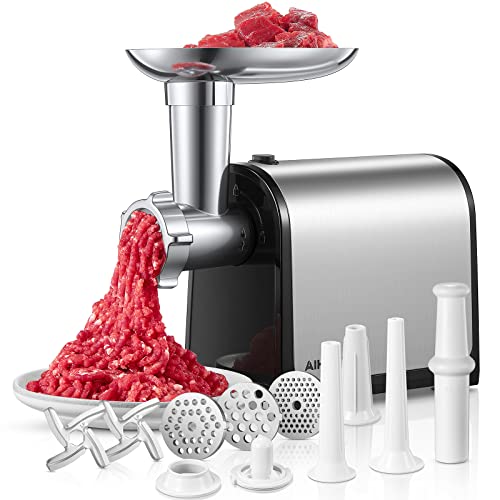
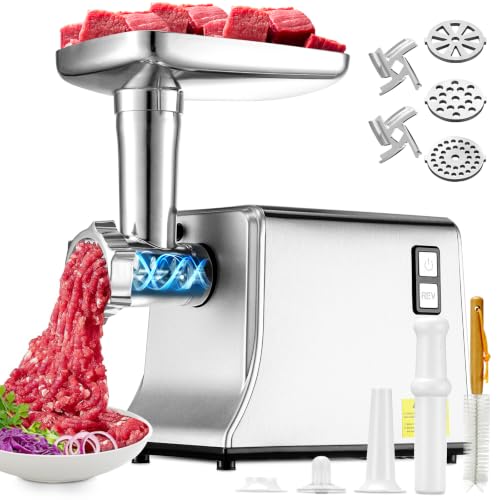
The six best meat grinders Canada shoppers ask about most are proven home and light-commercial models whose listings state their construction, kits and certifications in writing. Because these are US-market Amazon listings, the Canada-specific guidance wrapped around them matters as much as the machines: check delivery to your Canadian address and any import or shipping terms on the product page, confirm the certification mark’s Canadian acceptance, and think through warranty service across the border before you order. Every product fact here comes from the manufacturer’s own listing title, checked on 2026-11-20.
- CHEFFANO Meat Grinder, ETL Approved — Check on Amazon
- Sinyder Electric Meat Grinder, Stainless Steel
- CHEFFANO Life Electric Meat Grinder
- LEM Products BigBite #8 Meat Grinder, 0.5 HP
- RVGMBO 5.0 Upgrade Electric Meat Grinder
- FOHERE Electric Meat Grinder, #12 Head, 1 HP
Read the full guide ↓ for the reviews, the Canada buying checklist, metric conversions for US-stated specifications, and a complete grinding walkthrough.
Canadian shoppers searching for the best meat grinders canada-wide are usually doing one of three very Canadian jobs. The first is hunting season: a moose, deer or elk in the fall turns a household into a processing crew for a weekend, and the rental-and-borrowing scramble convinces another family every year to own a machine. The second is the grocery arithmetic of a big country — bulk buying, farm shares and side-of-beef purchases make economic sense where distances are long, and a grinder is what turns a freezer full of primals into a winter of meals. The third is the quiet mainstream one: burgers, sausage and pet food made at home, in a Canadian kitchen, by someone who has discovered that the US-market listings carry the widest selection and the most detailed specifications, if you know how to read them across the border.
That cross-border reading is this guide’s special work. The good news is foundational: Canada and the United States share the same household electrical standard, so a grinder built for US kitchens plugs into Canadian outlets without conversion — the homework is elsewhere. It is in certification marks, which have Canadian variants worth confirming; in shipping and returns, which change character at the border; in warranty service, which may route through the US; and in specifications stated in pounds and inches that Canadian cooks must translate into the kilograms and centimetres of their recipes and freezers. The six picks below were chosen first as grinders — construction, kit, stated performance — and then annotated for that Canadian homework, with the heaviest machines matched to the hunting workload our Best Meat Grinders For Deer and Best Meat Grinders For Elk guides cover in depth.
Key Takeaways
- Canada and the US share the same household voltage standard, so these US-market grinders need no converter — your homework is certification, shipping and warranty, not plugs.
- The CHEFFANO’s stated ETL approval is the most relevant certification story here; confirm on the product page that the mark shown is the Canadian-accepted variant before ordering.
- For hunting-season volume, the FOHERE’s #12 head and stated 8.8 lbs/min and the LEM BigBite #8’s specialist pedigree are the two formats to study first.
- The Sinyder states the strongest construction in writing — pure copper motor, metal gears, stainless body — valuable for households processing a side of beef or a moose in long sessions.
- US listings state rates in pounds: 8.8 lbs/min is about 4 kg/min, and the VEVOR-class 552 lbs/H figure seen in wider research is roughly 250 kg/H. Convert before you compare with Canadian-market listings stated in metric.
- Cross-border returns are slower and costlier than domestic ones, so buy the kit-complete machine first: plates, blades and tubes in the box beat a second international order.
- Standard head formats (#8 and #12) are the Canadian owner’s friend: replacement plates in standard sizes can be sourced across North America instead of from one maker’s channel alone.
In this guide
Quick Picks
| Pick | Badge | What its listing states | Link |
|---|---|---|---|
| CHEFFANO Meat Grinder | Best Overall for Canada | 2800W Max, ETL approved, 2 blades, 3 plates, sausage tubes, kubbe kit | Check on Amazon |
| Sinyder Electric | Best Construction | 3000W Max, pure copper motor, metal gears, stainless body, 2 blades, 3 plates | Check on Amazon |
| CHEFFANO Life Electric | Best for Small Households | 2000W Max, stainless steel, 2 blades, 3 plates, sausage tube, kubbe kit | Check on Amazon |
| LEM BigBite #8 | Best for Hunters | #8 head, 0.5 HP, stainless steel, grinding and sausage stuffing | Check on Amazon |
| RVGMBO 5.0 Upgrade | Best Cutting-Set Supply | 3500W motor class, 3 sets of 304 stainless blades and plates, kubbe and sausage kit | Check on Amazon |
| FOHERE #12 | Best Throughput | 1 HP, #12 head, 600W all-copper motor (3600W peak), stated 8.8 lbs/min (about 4 kg/min) | Check on Amazon |
How These Picks Were Chosen
The six were chosen in two passes. The first pass was the ordinary grinder judgement used across our research: what does the listing state about motor, materials, kit and certification, and how complete is the package for a home that cannot casually order a missing plate? That pass favoured the Sinyder’s written construction, the CHEFFANO’s stated ETL approval, the RVGMBO’s three cutting sets, and the two format picks — the #8 LEM and the #12 FOHERE — whose head sizes follow established standards, a genuine advantage in Canada, where a standard-size replacement plate is easier to source through the wider North American market than a proprietary one.
The second pass applied the Canadian filters. Machines whose ownership story survives a border — complete kits, standard formats, stated certifications, brands with a North American footprint — ranked ahead of machines that would leave a Canadian owner improvising. This is a research-led guide based on manufacturer listings, not a hands-on test, and it does not track live cross-border pricing or stock, both of which move; use the product pages for the current delivery picture to your province. What does not move is the reasoning: buy the machine whose specifications are stated, whose kit is complete, and whose service story you have read before the box crosses the border. Readers who feed dogs raw will find the same machines assessed for that routine in Best Meat Grinders For Dog Food, and those whose autumn includes a harvest should keep Best Meat Grinders For Bones open beside this guide for the heavy-work discussion.
The 6 Best Meat Grinders Canada Shoppers Can Buy
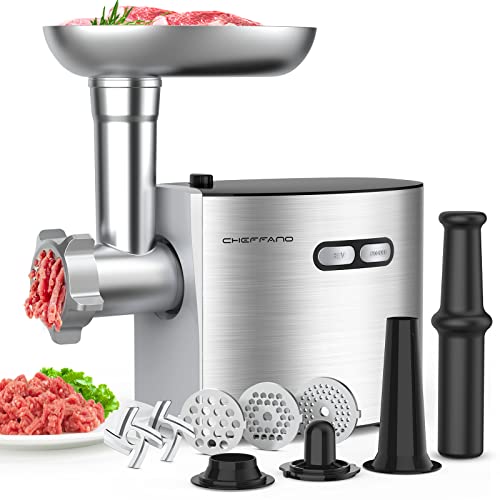
CHEFFANO Meat Grinder, ETL Approved Heavy Duty Meat Mincer
Badge: Best Overall for Canada
Strengths
- ETL approval stated in the listing — the certification conversation a Canadian buyer most needs to have, started by the maker.
- Complete kit in one box: 2 blades, 3 plates, sausage stuffer tubes and a kubbe kit — no second cross-border order for basics.
- 2800W Max mainstream home class suits the weekly Canadian grocery rhythm as well as occasional big batches.
Trade-offs
- The listing does not specify the mark’s variant; confirm the Canadian-accepted (cETLus-style) mark on the product page before ordering.
- No throughput rate, reverse or storage feature is stated.
- Gear material is not stated.
Mini spec box (from the listing): Type: electric · Rating: 2800W Max · Certification stated: ETL approved · Blades: 2 · Plates: 3 · Kit: sausage stuffer tubes, kubbe kit · Use: home kitchen.
Electrical certification is where cross-border appliance shopping deserves its one moment of care. Canada recognises certification marks from accredited bodies, and ETL is one of the major North American testing marks — but the mark that matters for a Canadian installation is the variant indicating evaluation to Canadian standards, typically shown with a “C” alongside the US mark. The CHEFFANO’s listing states ETL approval outright, which puts it ahead of every uncertified rival for a Canadian buyer; your remaining job is a thirty-second check of the product page and photos for the Canadian variant of the mark before you order. That is a fair trade for the widest selection in North America.
Beyond the paperwork, this is the complete mainstream package: three plates for texture range, two blades so a pair can be dedicated, tubes and a kubbe kit for the stuffed-food projects. Who it suits: most Canadian households, from condo kitchens in Toronto to farm kitchens in the Prairies, grinding weekly with an occasional hunting-season assist. The honest limitation is feature depth — no reverse, no stated rate — so your trimming discipline does the work electronics do elsewhere. For a first cross-border grinder purchase, its combination of completeness and stated certification is the safest shape of answer this list offers.
Best for: most Canadian homes wanting a certified, complete kit / Not suited for: buyers wanting presets, reverse or maximum throughput

Sinyder Electric Meat Grinder, Stainless Steel Mincer
Badge: Best Construction
Strengths
- Only listing here stating metal gears — the durability specification that matters most in long, cold, heavy sessions.
- Pure copper motor and stainless steel body also stated, a complete written construction story.
- Full kit: 2 blades, 3 plates, sausage stuffer tubes and kubbe kit.
Trade-offs
- No certification is stated in the listing title — a point Canadian buyers should weigh and query.
- No rate or reverse function is stated.
- Materials are the manufacturer’s own claims.
Mini spec box (from the listing): Type: electric · Rating: 3000W Max · Motor: pure copper · Gears: metal · Body: stainless steel · Blades: 2 · Plates: 3 · Kit: sausage stuffer tubes, kubbe kit.
Canadian processing days are long. A moose does not arrive in convenient five-pound lots, and a side of beef broken down in a cold garage in November is measured in hours, not minutes. That workload is exactly where the Sinyder’s written construction earns attention: metal gears to absorb the shock of sinew and cold, dense meat; a pure copper motor winding for sustained torque without the heat sensitivity of cheaper windings; a stainless body indifferent to the wet, salty environment. Of the six listings here, it is the only one that puts all three in writing.
Who it suits: rural and northern households, hunters who grind their own trim into burger and sausage blends, and anyone whose grinder works hardest precisely when a replacement would be slowest to arrive — a Canadian consideration if ever there was one. The honest limitation is the mirror of the CHEFFANO’s strength: no certification is stated in the title, so a Canadian buyer should ask the seller directly about the mark on the unit and weigh the answer. Construction this well documented deserves the question, and the answer completes the file. Shoppers who cross-check seller claims as a habit will find kindred method in Best Meat Grinders Consumer Reports.
Best for: long, heavy Canadian processing sessions / Not suited for: buyers who need a stated certification in the listing

CHEFFANO Life Electric Meat Grinder, Stainless Steel Sausage Stuffer Maker
Badge: Best for Small Households
Strengths
- Stainless steel construction with the full starter kit: 2 blades, 3 plates, sausage tube and kubbe kit.
- A 2000W Max class matched to small, frequent batches — the realistic rhythm of a one- or two-person home.
- Heavy-duty home positioning without commercial bulk or storage demands.
Trade-offs
- The lightest power class here; a full hunting harvest would be slow work.
- One sausage tube is named in the listing, versus three on some rivals.
- No certification, reverse or rate is stated in the listing title.
Mini spec box (from the listing): Type: electric · Rating: 2000W Max · Body: stainless steel · Blades: 2 · Plates: 3 · Kit: sausage tube, kubbe kit · Use: home use.
Not every Canadian kitchen is a farmhouse, and not every grinder needs to survive moose season. The CHEFFANO Life is the urban answer in this list: a stainless, completely kitted home machine in the lightest power class, sized for the couple who buy a pork shoulder on special and make a month’s sausage, or grind a few pounds of chuck for Friday burgers. Its listing leads with its role — a stainless steel sausage stuffer maker for home use — and the kit honours the promise, kubbe kit included.
Who it suits: apartment and condo households, first-time grinders, and anyone whose cross-border order should be small, complete and final. The honest limitation is headroom, stated plainly: if your life later adds a hunting licence or a beef share, this machine will feel its pace, and you will be reading the top of this list again. Bought with clear eyes for the workload it matches, it is the sensible end of the range — and in a country where winter storage space competes with tires, skis and preserves, a machine that fits a cupboard has a real claim. Review-sceptical shoppers can apply the checks in Best Meat Grinders Fakespot to this or any listing before ordering across the border.
Best for: small Canadian households and first-time grinders / Not suited for: hunting harvests and bulk processing days

LEM Products BigBite #8 Meat Grinder, 0.5 HP
Badge: Best for Hunters
Strengths
- A specialist meat-processing brand’s #8 grinder — a standard head size with a deep North American parts ecosystem.
- Motor stated plainly at 0.5 HP; stainless steel construction.
- Brief built around exactly the hunter’s two jobs: grinding and sausage stuffing.
Trade-offs
- The listing title does not itemise the included plates, blades or tubes — confirm the kit on the product page before a cross-border order.
- A #8 is a serious home format, not a #12 production format.
- No smart features are part of the proposition.
Mini spec box (from the listing): Type: electric · Head: #8 · Motor: 0.5 HP · Body: stainless steel · Roles: grinding, sausage stuffing · Use: home use, heavy-duty.
LEM’s name carries weight in the hunting world because the brand’s catalogue is built around processing as a discipline — the world of trim tubs, stuffer tubes and seasoning by the batch. The BigBite #8 speaks that language in its listing: a defined #8 head, a plainly stated half-horsepower motor instead of a peak-wattage flourish, stainless construction, and a two-job brief. For a Canadian hunter, the format argument compounds: #8 plates and blades are a long-standardised size across North America, so a replacement plate in November — the worst month to need one — is a realistic errand rather than an international incident.
Who it suits: deer, moose and elk hunters who process at home and expect to grow — more sausage, more blends, maybe a dedicated stuffer later — inside a brand ecosystem that speaks their language. The honest limitation is informational: the title does not enumerate the kit, so the product-page check matters doubly before a border crossing, and the machine offers no presets or reverse. What it offers instead is the format and the pedigree, and for the hunting household those have always been the point.
Best for: Canadian hunters wanting a standard #8 from a specialist brand / Not suited for: buyers wanting a fully itemised kit in the title or smart features

RVGMBO 5.0 Upgrade Electric Meat Grinder
Badge: Best Cutting-Set Supply
Strengths
- Three complete sets of 304 stainless steel blades and plates — spare cutting sets in the box, a cross-border owner’s insurance policy.
- A 3500W-class motor brief, the largest power class in this list.
- Kubbe and sausage kit included.
Trade-offs
- No head size, rate or certification is stated in the listing title.
- The listing’s speed phrasing is a marketing claim; judge pace by format and routine, not slogans.
- No stated brand service footprint for Canadian owners to lean on.
Mini spec box (from the listing): Type: electric, home use · Motor class: 3500W · Blades and plates: 3 sets, 304 stainless steel · Kit: kubbe and sausage kit.
Every Canadian who has ordered parts across the border in a hurry understands this pick instantly. Blades and plates are the consumables of grinding; they dull, they nick, and they do it on their own schedule — usually mid-harvest. The RVGMBO ships with three complete sets of 304 stainless steel blades and plates, which converts the most common grinder emergency from an international order into a walk to the drawer. Rotate sets, keep one rested and sharp, and the machine’s working life stops depending on a parcel’s itinerary.
The motor class is the largest in this list, aimed by its maker at fast home grinding, and the kubbe and sausage kit rounds out a self-sufficient package. Who it suits: remote and rural Canadian households — the ones for whom “order a part” means a week on a good run — and high-frequency grinders who wear edges quickly. The honest limitation is documentation: no stated head size means replacement plates beyond the included sets are a maker question, and no certification is stated. Within the box, though, no pick here is better insured against the ordinary accidents of a grinding life.
Best for: rural and remote Canadian owners who value spares in the box / Not suited for: buyers wanting stated head size or certification

FOHERE Electric Meat Grinder, #12 Head, 1 HP
Badge: Best Throughput
Strengths
- #12 head — the largest format in this list — with a stated 8.8 lbs/min rate, roughly 4 kg/min in the units Canadian recipes use.
- Motor stated as 600W all-copper and 1 HP (with a 3600W peak figure), the copper detail suiting long sessions.
- Stainless plates, sausage nozzle and kubbe kit included.
Trade-offs
- Read the motor figures carefully: the sustained story is the 600W all-copper / 1 HP figure, not the peak.
- No certification or cutting-set count is stated in the listing title.
- Largest machine here; it wants a permanent home in the kitchen or processing space.
Mini spec box (from the listing): Type: electric, home use · Head: #12 · Motor: 600W all-copper, 1 HP (3600W peak stated) · Stated rate: 8.8 lbs/min (about 4 kg/min) · Plates: stainless · Kit: sausage nozzle, kubbe kit.
When a Canadian household’s grinding is measured in animals rather than pounds, throughput stops being a luxury. The FOHERE’s #12 head and stated rate — 8.8 lbs/min, which converts to roughly 4 kg/min for the metric-minded — describe a machine that compresses the grinding stage of a moose or a beef quarter into a fraction of the day, keeping meat cold, people fresh and the rest of the processing line moving. The all-copper motor statement supports the same story: sustained work is what copper windings are for.
Who it suits: high-volume households, hunting camps processing for a group, and farm kitchens with a permanent processing corner. The honest limitations are the discipline items: no stated certification for the Canadian checklist, kit counts to confirm on the product page, and a footprint that assumes you have the space its workload implies. If your autumn genuinely looks like that, no other pick in this list is built to the same stated scale — and the #12 format’s standardised plates are, once again, the cross-border-friendly choice for a machine expected to work for many seasons.
Best for: high-volume Canadian processing, including hunting camps / Not suited for: small kitchens or buyers needing a stated certification
Comparison Table
| Pick | Stated format / rating | Canada-relevant point | Kit stated | Link |
|---|---|---|---|---|
| CHEFFANO | 2800W Max | ETL approval stated — confirm Canadian variant of the mark | 2 blades, 3 plates, kubbe kit | Check on Amazon |
| Sinyder | 3000W Max | Metal gears, copper motor for long northern processing days | 2 blades, 3 plates, kubbe kit | Check on Amazon |
| CHEFFANO Life | 2000W Max | Compact, complete — the simple cross-border order | 2 blades, 3 plates, kubbe kit | Check on Amazon |
| LEM BigBite #8 | #8, 0.5 HP | Standard #8 parts ecosystem across North America | Grinding and sausage stuffing roles | Check on Amazon |
| RVGMBO | 3500W class | 3 cutting sets in the box — spares without a border crossing | Kubbe and sausage kit | Check on Amazon |
| FOHERE | #12, 1 HP, stated 8.8 lbs/min (≈4 kg/min) | Standard #12 format; highest stated home throughput | Sausage nozzle, kubbe kit | Check on Amazon |
The Canada Buying Checklist
Five checks, in order, before any of these machines crosses the border. Certification: appliances sold for Canadian use should carry a mark from an accredited certification body, in its Canadian variant — the CHEFFANO states ETL approval, so confirm the cETLus-style mark on the product page; for picks stating no certification, ask the seller what mark the unit carries and weigh the answer seriously. Delivery: confirm the listing ships to your province, and read the delivery estimate and any import-fee language on the product page rather than assuming domestic-style checkout. Warranty: find where warranty service is performed and who pays the shipping to get the machine there; a two-year warranty serviced only from a US address is a different promise in Yellowknife than in Buffalo. Parts: standard formats (#8, #12) and in-box spares (the RVGMBO’s three sets) are your insurance; proprietary parts mean future cross-border orders. Returns: cross-border returns are slower and sometimes costlier — one more reason the kit-complete, specification-clear machine is the right first purchase. None of this is a reason to avoid US listings; the selection and specification depth are real advantages. It is a reason to spend ten minutes as an importer, once, instead of a month as a pen pal.
How to Choose a Meat Grinder in Canada
Start with your season, not your week. Canadian grinding demand is famously spiky: modest through the year, enormous for a few autumn weekends. If the spike defines you — a harvest, a beef share, a camp to feed — choose from the top of the capability range: the FOHERE’s #12 throughput, the LEM’s hunter-focused #8, or the Sinyder’s construction for long sessions. If your year is level — weekly burgers, monthly sausage, steady pet food — the CHEFFANO pair brackets the sensible range, certified and complete at 2800W Max, or lighter and simpler at 2000W Max. Then apply the format rule that matters more in Canada than anywhere: standardised heads and deep kits reduce your lifetime dependence on cross-border parcels. Finally, convert the numbers. US listings speak in pounds per minute and per hour; your recipes, your butcher and your freezer labels speak in kilograms. A stated 8.8 lbs/min is about 4 kg/min; a stated 552 lbs/H class figure is roughly 250 kg/H. Do the arithmetic once, in the buying guide stage, and you will compare Canadian-market and US-market machines on honest terms.
How to Grind: A Cold-Climate Walkthrough
- Use the Canadian advantage — cold. In much of the country, much of the year, your garage or porch is a walk-in chiller during processing season. Keep meat cold in it between stages, and freeze the grinder head parts before assembly.
- Cube and trim. Feed-tube-sized pieces, heavy sinew and silverskin removed — wild game trim especially rewards careful trimming, as silver skin is the enemy of both texture and the machine.
- Season game blends deliberately. Lean wild meat usually wants added fat for burgers and sausage; add it cold, cubed with the meat, so the auger takes a mixed feed.
- Assemble and check. Auger in, blade’s cutting face against the plate, plate seated, ring snug. A reversed blade is the classic first-day failure everywhere on Earth, Canada included.
- Grind coarse first. First pass through the coarse plate; re-chill; second pass through medium or fine where the recipe wants it.
- Portion in kilograms, label in both languages of your kitchen. Weigh portions to your household’s standard — 500 g and 1 kg packs are the freezer-friendly units — and label with cut, blend and date.
- Wash, dry completely, store dry. In humid coastal and lakeside homes especially, plates go away with the lightest film of food-safe oil, or rust will introduce itself by spring.
Troubleshooting. Problem: wild game grind tastes strong and texture is tough → trim more aggressively; silverskin and heavy connective tissue carry both problems, and no grinder can trim for you. Problem: the machine labours on a big batch in a warm room → move the operation to the cold space, re-chill the head, and shorten sub-batches. Problem: sausage casings burst during stuffing → the mix warmed or was stuffed too fast; chill the mix, slow the pace, and keep a bowl of the ground meat on ice as you work.
Hunting Season: Anatomy of a Canadian Processing Weekend
To see why format and construction dominate this guide’s Canadian judgements, walk through the weekend these machines are bought for. The animal is hung, skinned and broken into primals; roasts and steaks are cut and wrapped first, while the day is young; and then comes the trim — the honest, unglamorous mountain of meat that becomes burger, sausage and chili grind, and that decides whether the harvest feeds the household well or merely fills the freezer. Trim work is grinder work at its most concentrated: hours of steady feeding, meat moving from cold room to tray to auger, plates changed as the plan moves from coarse grind to sausage mix. A machine that is merely adequate in April is exposed in October, because there is no pausing a harvest for a part, a repair or a cooler motor than the one you own.
The practical lessons write themselves. Stage the work so the grinder is never the reason meat waits warm: one person trimming, one grinding, one wrapping, with the cold space doing the holding. Keep a second plate-and-blade pair clean and ready, because swapping a fresh pair is faster than sharpening mid-run — the RVGMBO’s spare sets and the multi-plate kits elsewhere exist for exactly this hour. And plan the sausage for the second day, when the grind has rested cold overnight and flavours can be judged with a small test fry before casings are committed. Households that process this way once will never go back to renting, borrowing or paying by the pound — which is the entire economic story of owning a serious grinder in this country.
Freezer Strategy: Portioning for a Long Winter
A grinder’s output is only as good as the system that receives it, and Canadian freezers work harder than most. Portion ground meat in the units your household actually cooks — 500 g packs for two, 1 kg for family meals, flat-frozen in bags with the air pressed out so they stack like books and thaw in cold water in minutes rather than hours. Label with content, blend, fat source if you added any, and date; in February, “burger, Nov” is a memory test nobody passes, while “deer/pork 80/20, Nov 12” is a recipe. Keep a running inventory on the freezer door and cook oldest-first — a chest freezer is a savings account, and the inventory is how you avoid finding a two-year-old pack during spring cleaning and calling it a loss.
Two Canadian specifics deserve note. First, power: rural outages and winter storms argue for a full freezer (which holds temperature far longer than an empty one), a thermometer you actually check, and a household rule about what gets eaten first when the power company is having a weekend. Second, space discipline in hunting households: the harvest arrives in a day and the eating takes a year, so portioning decisions made on processing weekend — pack sizes, the ratio of plain grind to finished sausage — quietly determine a year of weeknight cooking. Grind with the February version of your family in mind, not just the triumphant November one.
Warranty and Service North of the Border
The last Canadian homework item deserves its own short section because it is the one buyers most often skip. A warranty has three geographies: where you must send the machine, who pays for that journey, and whether parts — not just whole-unit replacement — are available to Canadians at all. For established North American brands with processing pedigrees, the answers are usually workable; for marketplace-native brands, they may route through the seller’s messaging system, which can be perfectly responsive and still leave you funding an international parcel. Neither is an automatic disqualifier. What matters is reading the position before you need it, keeping your order records and the listing’s own specification claims (they are your evidence of what was promised), and — the theme of this entire guide — choosing formats and kits that minimise how much of your ownership experience depends on any of it. The best warranty in a remote Canadian kitchen is a standard-size plate you can source domestically and a spare set already in the drawer.
A Note on Manuals, Labelling and Support Language
One small cross-border difference surprises buyers every year: products sold through Canadian retail channels carry bilingual English-French labelling and manuals by federal requirement, while a unit ordered from a US listing may arrive with English-only documentation. For a meat grinder — a machine whose safe use depends on assembly order, blade orientation and cleaning instructions — a manual you can read fluently is a safety feature, not a courtesy. Before ordering, check the product page for a downloadable manual, and if your household works in French, confirm a French version exists from the manufacturer or keep the key pages translated and printed with the machine. The same logic applies to support: note the seller’s support channel and hours before you need them, because the day a plate cracks in November is the wrong day to discover how a brand talks to its Canadian customers. None of this diminishes the value of the US selection; it simply completes the picture of what ordering across the border actually involves, which is this guide’s whole approach to the Canadian question.
Common Buying Mistakes
- Skipping the certification check. The mark and its Canadian variant are a thirty-second product-page check — do it before, not after, the border.
- Comparing pounds to kilograms by eye. US-stated rates and Canadian-stated rates differ by a factor of 2.2; convert, then compare.
- Buying a proprietary format for a remote home. Standard #8 and #12 parts are findable across North America; a unique head makes every dull plate an expedition.
- Ignoring the warranty’s geography. Where service happens matters as much as how long it lasts when a border is involved.
- Sizing for the average week. In Canada the spike is the story — if hunting season is yours, buy for the spike and enjoy the headroom all year.
- Forgetting the second order. Casings, spare plates, a stuffer — if the project list is long, consolidate it into the first purchase where you can.
Final Recommendation
For most Canadian households, the CHEFFANO is the balanced cross-border buy: a complete kit and the only stated ETL approval in this list, pending your quick check of the mark’s Canadian variant — Check on Amazon. Hunters should start with the LEM BigBite #8 for its specialist pedigree and standard format, or step to the FOHERE #12 if the harvest is measured in camps rather than animals — Check on Amazon. The Sinyder is the construction pick for long northern processing days, the RVGMBO the remote owner’s insurance policy with its three cutting sets, and the CHEFFANO Life the right small machine for small urban homes. Do the five checklist items, convert the units, and the border becomes what it should be: a formality between you and a very good grinder. Canadian kitchens have always been processing kitchens — canning, curing, freezing, preserving against the long winter — and a well-chosen grinder is simply the modern electric chapter of that old, sensible tradition.
Frequently Asked Questions
Will a US-market meat grinder work in a Canadian home?
Electrically, yes — Canada and the United States share the same household voltage and plug standard, so no converter or adapter is involved. The homework is administrative, not electrical: confirm the certification mark’s Canadian variant, the delivery terms to your province, and where warranty service is performed. Those checks are covered in the Canada Buying Checklist above.
What certification should a meat grinder have in Canada?
Appliances for the Canadian market should carry a certification mark from a body accredited for Canada, shown in its Canadian variant — commonly a “C” element alongside the US mark, as in cETLus or CSA marks. In this list, the CHEFFANO states ETL approval; verify the Canadian variant on the product page. For models whose listings state no certification, ask the seller directly what mark the unit bears.
How do I compare a US listing’s lbs/min rate with Canadian metric listings?
Multiply kilograms by 2.2 to get pounds, or divide pounds by 2.2 to get kilograms. The FOHERE’s stated 8.8 lbs/min is about 4.0 kg/min. Do the same for total capacity thinking: a 10 lb batch is roughly 4.5 kg. Converting once, on paper, prevents the classic error of comparing two machines whose numbers were never in the same units.
Which pick is best for moose and elk season?
For the grinding itself, the FOHERE’s #12 head and stated throughput suit the largest volumes, and the LEM BigBite #8 is the specialist hunter’s format with the deepest parts culture. The Sinyder’s stated construction suits long sessions. Note that none of these listings states a bone capacity — game processing here means meat and trim, with bones handled separately, as they should be.
Are spare parts a problem for Canadian owners?
Less so if you choose with parts in mind. Standard head formats (#8 and #12) draw on a North America-wide parts market, and the RVGMBO sidesteps the question for years by including three full cutting sets. Proprietary formats depend on the maker’s own channel. Before ordering, spend two minutes confirming that spare plates and blades for your chosen model are listed and shippable to Canada.
Should I buy on the US or Canadian Amazon site?
Compare the total delivered picture for the specific model: availability, delivery estimate to your province, any import charges shown at checkout, and the returns path. Selection and specification detail are often deeper on US listings — which is why this guide is built from them — but the right answer is per-model and per-week, and the product page for your address is the only authority. The links in this guide take you to the US listings researched here.
Is a bigger grinder worth it for a single deer a year?
It depends on how the rest of your year looks. A single deer, processed unhurriedly over a weekend with help, is within the honest capacity of the mainstream picks here — the CHEFFANO class or the LEM #8 — especially if some trim goes to a coarse grind and the sausage is a second-day project. The case for stepping up to the FOHERE’s #12 format strengthens when the calendar adds a moose, a beef share, a second hunter in the family or a camp that processes together. Buy for the pattern of your years, not the single biggest day in them.
Can I use these grinders for fish and poultry as well?
Meat grinders in this class handle poultry readily — it is softer than red meat and grinds cleanly when very cold — and poultry is a staple of home sausage and pet food routines. Fish is possible for products like fish cakes when the fish is firm and semi-frozen, though many cooks prefer a food processor for delicate fish. Whatever the protein, the same disciplines apply: cold material, clean equipment, and complete washing between species, especially before and after poultry.
How should I store a grinder through a Canadian winter?
The same way you store it any season, with extra respect for moisture: washed, dried completely, plates and blades lightly oiled, and the cutting set stored together in a dry place. Unheated garages and sheds cycle temperature and humidity in ways that invite condensation on steel; a cupboard indoors is kinder. A machine stored dry in November is a machine ready for the next season without a restoration project.