Disclosure: topratedkitchenware.com is reader-supported. When you buy through links on our site, we may earn an affiliate commission from Amazon and other retailers, at no extra cost to you.
Where to buy
The six best meat grinders consumer reports readers most often ask about are assessed below the way an independent testing organisation would assess them: on stated specifications that can be verified, standardised formats, complete kits and construction claims that survive scrutiny. One boundary is stated up front, because this keyword demands it: this guide is not Consumer Reports, it does not reproduce or invent that organisation’s test scores or rankings, and none of the picks below is presented as a Consumer Reports winner. What it does is apply the consumer-reports mindset — measure what matters, distrust adjectives, read the fine print — to six current grinders, using only what their manufacturers’ listings actually state, checked on 2026-11-20.
- CHEFFANO Life Electric Meat Grinder — Check on Amazon
- LEM Products BigBite #8 Meat Grinder, 0.5 HP
- RVGMBO 5.0 Upgrade Electric Meat Grinder
- FOHERE Electric Meat Grinder, #12 Head, 1 HP
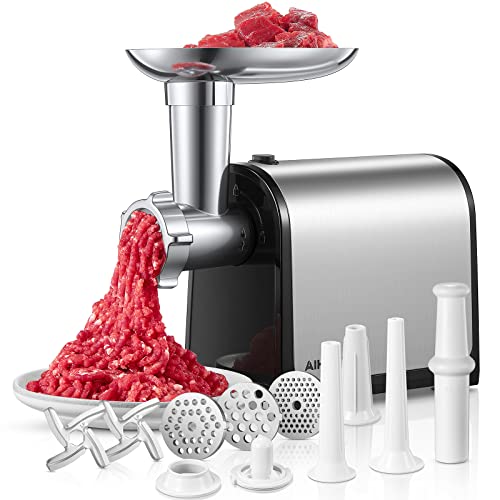
- Aiheal Electric Meat Grinder (Black)
- AAOBOSI Electric Meat Grinder with 3-Speed Touch Screen
Read the full guide ↓ for the test-method breakdown, the six assessments, and a plain explanation of how independent labs evaluate grinders — and how to use their work alongside this one.
People who search for the best meat grinders consumer reports have usually made a decision about trust. They have read enough breathless roundups to know that “best” is often just “advertised,” and they want the other thing: an evaluation where the tester bought the product anonymously, ran the same meat through every machine, timed it, weighed it, measured the temperature rise, scored the texture, counted the parts that need washing, and published what the numbers said. That instinct is exactly right, and this guide honours it in the only way a listing-based guide honestly can: by being explicit about method, by using only verifiable claims, and by telling you plainly where its evidence ends and a laboratory’s begins.
So consider this article a companion to independent testing rather than a substitute for it. If you have access to a testing organisation’s current grinder ratings, use them — they reflect standardised, hands-on measurement that no amount of careful listing-reading can replicate. Then use this guide for what labs rarely provide: a deep read of what each current model’s listing actually commits to, how the kits compare piece by piece, which specifications are stated in meaningful units and which are marketing weather, and how each machine fits the specific jobs — hunting trim, weekly burgers, raw pet food — that a single lab score must compress into one number. The six picks were chosen because their listings give a test-minded reader the most to work with.
Key Takeaways
- This guide invents no test scores. It applies consumer-reports-style scrutiny to manufacturer listings: stated motor figures in meaningful terms, standard head formats, itemised kits, certifications, and materials claims that can be checked.
- On stated evidence, the LEM BigBite #8 and the FOHERE #12 present their power most honestly — a plain 0.5 HP, and a 600W all-copper / 1 HP figure with the peak number also shown — while “Max” wattage badges elsewhere are maximums, not measurements of sustained work.
- The AAOBOSI touch model states the most checkable facts in one listing: a throughput rate, an LFGB approval, a storage design and named roles including raw pet food.
- The RVGMBO’s three included cutting sets are the kind of unglamorous, verifiable value a lab’s cost-of-ownership column would reward.
- Independent labs measure with standardised loads; your kitchen will not match their numbers exactly, but their rankings of relative performance travel well. Use lab results for shortlisting, listing evidence for final selection.
- Two picks state an actual throughput figure — the FOHERE at 8.8 lbs/min and the AAOBOSI at 4 lbs/min — and a stated figure, even a modest one, is more useful evidence than a superlative.
- Certification and warranty terms are part of a test-minded purchase, not fine print: in this list only the AAOBOSI states an approval (LFGB) in its title, so for the other five the certification question goes to the product page and the seller.
In this guide
Quick Picks
| Pick | Badge | Stated evidence a tester would note | Link |
|---|---|---|---|
| CHEFFANO Life Electric | Best for Small Households | 2000W Max, stainless steel, itemised kit: 2 blades, 3 plates, sausage tube, kubbe kit | Check on Amazon |
| LEM BigBite #8 | Most Honestly Specified | #8 standard head, motor stated as 0.5 HP, stainless steel, specialist brand | Check on Amazon |
| RVGMBO 5.0 Upgrade | Best Cutting-Set Supply | 3500W class, 3 sets of 304 stainless blades and plates itemised in the listing | Check on Amazon |
| FOHERE #12 | Best Stated Throughput | #12 head, 600W all-copper / 1 HP (3600W peak also stated), stated 8.8 lbs/min, stainless plates | Check on Amazon |
| Aiheal Electric | Best Overall | 3200W Max, stainless steel, itemised kit: 2 blades, 3 plates, 3 sausage tubes | Check on Amazon |
| AAOBOSI Touch Screen | Most Documented Listing | 3000W Max, stated 4 lbs/min, LFGB approval stated, built-in storage, raw pet food role named | Check on Amazon |
How These Picks Were Chosen
The method mirrors what a test programme can verify without a laboratory: documentary evidence. Each listing was read for the claims a tester could check — motor figures and the terms they are stated in, head format, materials, kit contents counted piece by piece, certifications named, throughput stated or absent. Picks rose when their listings stated more, in checkable units, and fell when a listing offered adjectives instead of facts. Two judgements deserve daylight. First, peak wattage was treated as the weakest evidence in any listing, because “Max” figures are not produced by a standardised test and cannot be compared across brands; continuous-style figures (horsepower, a stated copper-motor wattage) were weighted as the stronger signal. Second, no pick was credited with performance — speed, texture quality, durability — that only a physical test could establish. Where this guide says a machine is suited to a job, it is matching stated format and kit to that job’s demands, and saying so.
What this method cannot do should be equally clear. It cannot tell you which of these six produced the most uniform grind in a blind test, which ran coolest after ten pounds, or which will still be running in a decade; those are empirical questions, and they are precisely the questions independent laboratories exist to answer. The honest division of labour is: labs for measured performance, this guide for documentary due diligence and fit. A shopper who uses both — and who reads owner reviews with the scepticism our Best Meat Grinders Fakespot guide teaches — is about as well defended against a bad purchase as this category allows.
The 6 Best Meat Grinders Consumer Reports Readers Should Shortlist

CHEFFANO Life Electric Meat Grinder, Stainless Steel Sausage Stuffer Maker
Badge: Best for Small Households
Strengths
- Fully itemised kit in the listing — 2 blades, 3 plates, sausage tube, kubbe kit — the documentary completeness testers reward.
- Stainless steel construction stated; heavy-duty home positioning.
- A modest 2000W Max class honestly matched to small-batch home use.
Trade-offs
- No certification, throughput rate or head size is stated in the listing title — three cells a lab’s spec table would leave blank.
- The lightest power class here limits it to small, patient batches.
- One sausage tube is named, versus three on the Aiheal.
Mini spec box (from the listing): Type: electric · Rating: 2000W Max · Body: stainless steel · Blades: 2 · Plates: 3 · Kit: sausage tube, kubbe kit · Use: home use.
A test programme would find this listing easy to work with and easy to bound. What the CHEFFANO Life claims, it claims in countable things — blades, plates, a tube, a kit, a material — and a modest power class that does not pretend to commercial ambitions. That is the documentary profile of a small-household machine, and its assessment writes itself: for a couple grinding a few pounds at a time, the specification is complete and the expectations are honestly set. The blanks matter too, and a test-minded reader should register them in the same pass: no stated certification, no stated rate, no stated head size. None of those makes it a bad grinder; together they mean its file is thinner than the leaders’ below, and a cautious buyer will fill the certification cell from the product page before ordering.
Who it suits: small households that value an itemised, stainless, sensibly sized package over headline numbers. The honest limitation is headroom — this is the machine a lab would place in the light-duty class, and a household that grows into sausage days or hunting help will outgrow its pace. Bought at the right scale, it is exactly the kind of unglamorous, fully documented product that testing culture exists to surface.
Best for: small households wanting a fully itemised, modest machine / Not suited for: volume work or buyers needing stated certification and rate

LEM Products BigBite #8 Meat Grinder, 0.5 HP
Badge: Most Honestly Specified
Strengths
- Motor stated as 0.5 HP — a continuous-duty unit a tester can compare, instead of a peak-wattage badge.
- #8 head: a standardised format with a long accessory history, from a specialist meat-processing brand.
- Stainless steel construction stated; brief limited to grinding and sausage stuffing, without feature inflation.
Trade-offs
- The listing title does not itemise included plates, blades or tubes — the one documentary gap in an otherwise plain-spoken listing.
- No throughput rate or certification is stated in the title.
- No presets, reverse or storage features are claimed.
Mini spec box (from the listing): Type: electric · Head: #8 · Motor: 0.5 HP · Body: stainless steel · Roles: grinding, sausage stuffing · Use: home use, heavy-duty.
If a testing organisation wrote listings, they would read like this one. A defined head size. A motor in horsepower — the unit that describes sustained work rather than a momentary peak. A material. Two jobs, named plainly. The LEM’s restraint is itself evidence: brands that expect to be measured tend to specify like it, and brands embedded in a practitioner community — hunters and sausage makers who compare notes across seasons — cannot afford specification games for long. The #8 format deepens the file: it is a long-standing standard, so the replacement and accessory ecosystem a lab’s ownership-cost analysis would probe is as deep as this category offers.
The gaps are real and should be recorded with the same neutrality: the included kit is not itemised in the title, and no rate or certification is stated there, so the product page must complete the file before purchase. Who it suits: the buyer whose instincts brought them to this keyword — evidence first, adjectives last — and who plans to keep and feed a grinder for years, including during Best Meat Grinders For Deer season, where this format is in its element. It is the pick a tester would shortlist on paperwork alone.
Best for: evidence-minded buyers and long-term owners / Not suited for: buyers who want the kit itemised in the title or smart features

RVGMBO 5.0 Upgrade Electric Meat Grinder
Badge: Best Cutting-Set Supply
Strengths
- Three sets of 304 stainless steel blades and plates, itemised — a verifiable inclusion with real ownership value.
- The material grade (304 stainless) is specified for the cutting set, a level of detail most listings skip.
- Kubbe and sausage kit included; 3500W-class motor brief.
Trade-offs
- The listing’s speed phrasing is an unverifiable marketing claim of exactly the kind testing exists to check — treat it as unproven.
- No head size, throughput rate or certification is stated.
- Brand documentation beyond the listing is thin, so the file rests on the listing itself.
Mini spec box (from the listing): Type: electric, home use · Motor class: 3500W · Blades and plates: 3 sets, 304 stainless steel · Kit: kubbe and sausage kit.
The RVGMBO is this list’s lesson in reading a listing in two columns. In the verifiable column: three complete cutting sets, in a named grade of stainless steel, plus a kubbe and sausage kit — inclusions a buyer can count on delivery day and whose value compounds across years of ownership, because plates and blades are where grinders spend their lives. In the unverifiable column: a speed slogan in the title that no standardised test is cited to support. A consumer-reports mindset does not reject the product for the slogan; it simply declines to pay for it, and prices the machine on the countable column alone.
On that basis the machine earns its place: the cutting-set supply is the deepest in this list, and for a frequent grinder — the raw-feeding household of Best Meat Grinders For Dog Food, for instance — rested, rotating sharp sets are a measurable quality-of-output advantage, because dull plates are the leading cause of smeared grind. Who it suits: high-frequency users who will actually rotate three sets. The honest limitation is the rest of the file: no stated head size complicates buying additional plates beyond the sets included, and no certification is stated. Count what is countable, discount what is not, and the RVGMBO is a rational buy.
Best for: frequent grinders who rotate cutting sets / Not suited for: buyers who need stated head size or certification

FOHERE Electric Meat Grinder, #12 Head, 1 HP
Badge: Best Stated Throughput
Strengths
- A stated throughput — 8.8 lbs/min — the only home pick here that commits to a checkable rate.
- Motor stated in continuous terms (600W all-copper, 1 HP) with the peak figure (3600W) also shown, letting readers see both numbers and judge.
- #12 standard head format; stainless plates; sausage nozzle and kubbe kit included.
Trade-offs
- A stated rate is still the maker’s figure, produced under unknown conditions — a lab’s standardised rate could differ.
- No certification or cutting-set count is stated in the listing title.
- Largest format here; oversized for small households.
Mini spec box (from the listing): Type: electric, home use · Head: #12 · Motor: 600W all-copper, 1 HP (3600W peak stated) · Stated rate: 8.8 lbs/min · Plates: stainless · Kit: sausage nozzle, kubbe kit.
Throughput is the specification this category most often hides, because it is the one a test can falsify. The FOHERE states one — 8.8 lbs/min through a #12 head — and pairs it with the most transparent motor presentation in the list: the sustained figures (600W all-copper, 1 HP) printed alongside the peak figure, rather than the peak alone. A test-minded reader knows how to hold such claims: as commitments, not measurements. The maker has told you what to hold them to, which is more than the “Max”-only listings offer, and the all-copper winding is the right material story for the sustained work the rate implies.
Who it suits: the volume household — bulk buyers, large-dog raw feeders, hunting camps — whose first question is legitimately “how fast, sustained, in writing?” The honest limitations are the standing ones: the rate is maker-stated under unstated conditions, no certification appears in the title, and a #12 machine is a commitment of counter space. But as a documentary file, this is how a confident listing reads, and testing culture would rather have a falsifiable claim than a safe adjective every time.
Best for: volume buyers who want throughput and motor figures in writing / Not suited for: small kitchens or buyers needing stated certification

Aiheal Electric Meat Grinder, Stainless Steel (Black)
Badge: Best Overall
Strengths
- Fully itemised kit — 2 blades, 3 plates, 3 sausage tubes — covering the widest tube range in this list.
- Stainless steel construction stated, in the largest home power class here at 3200W Max.
- Heavy-duty home positioning with no feature inflation in the listing.
Trade-offs
- Power stated only as a peak (“Max”) figure — the weakest form of the motor evidence, as this guide keeps noting.
- No throughput rate, head size or certification is stated in the title.
- Gear material is unstated, leaving the drivetrain cell blank.
Mini spec box (from the listing): Type: electric, home kitchen use · Rating: 3200W Max · Blades: 2 · Plates: 3 · Sausage tubes: 3 · Body: stainless steel, black finish.
The Aiheal is the balanced file: nothing in its listing is the best-documented in its category, and nothing important is missing except the items this whole list struggles with — a rate, a certification, an internals statement. Its kit is the most complete for sausage work (three tube sizes is a real, countable advantage), its construction material is stated, and its power class is the largest of the home-format picks, read with the standing caution that “Max” is a ceiling, not a measurement. A lab-style summary would call it the well-rounded contender whose scores would likely cluster near the top without a single headline win — which, in actual kitchens, is what “best overall” usually means.
Who it suits: the household that wants one complete machine and no specialisation — burgers, sausage in several sizes, steady weekly use. The honest limitation is documentary depth: a buyer who wants the motor and drivetrain story in writing will find the file thinner here than at the LEM or FOHERE, and should weigh how much that matters against the kit’s completeness. For most readers of this keyword — evidence first, but a whole purchase to make — the balance lands here.
Best for: most households wanting the most complete kit / Not suited for: buyers who need motor and drivetrain figures in continuous terms

AAOBOSI Electric Meat Grinder with 3-Speed Touch Screen Control
Badge: Most Documented Listing
Strengths
- The fullest factual listing here: a stated rate (4 lbs/min), a named approval (LFGB), named roles (sausage, burger, raw pet food) and a storage design.
- 3-speed control is a functional specification, not a slogan — it defines how the machine handles delicate and dense work.
- Built-in storage addresses the parts-loss problem that ownership surveys consistently surface.
Trade-offs
- LFGB is a food-contact approval framework, not an electrical safety certification — a distinction a careful reader should keep.
- The stated rate is the most modest here; this is a household machine by its own numbers.
- Touch controls and gear material are, respectively, a usability question and an unstated cell.
Mini spec box (from the listing): Type: electric · Rating: 3000W Max · Controls: 3-speed touch screen · Stated rate: 4 lbs/min · Storage: built-in · Approval stated: LFGB · Roles: sausage, burger, raw pet food.
Read as a document, this is the listing a tester would reach for first, because it behaves like a spec sheet: a rate you can check, an approval you can look up, roles you can test the machine against, and a design feature — built-in storage — whose benefit is concrete rather than atmospheric. Even its modesty is informative: a stated 4 lbs/min tells you the maker is describing a household machine, and a household machine honestly described is worth more than a production machine dishonestly implied. The one correction a careful reader must apply is categorical: LFGB approval concerns food-contact materials, and should not be silently upgraded in your mind into an electrical safety certification — the listing does not claim the latter, and neither does this guide.
Who it suits: methodical buyers, raw-pet-food households (the role is named in the listing, uniquely here), and anyone whose review process starts with “show me the numbers.” It is also a natural cross-check companion to Best Meat Grinders For Falafel and other specialty uses, where a controlled low speed matters. The honest limitation is scale: by its own stated rate, this is not the machine for a moose, and its file does not pretend otherwise — which is, in the end, the most consumer-reports quality a listing can have.
Best for: evidence-first buyers and raw pet food routines / Not suited for: high-volume processing
Comparison Table
| Pick | Motor as stated | Rate stated? | Documentary strength | Link |
|---|---|---|---|---|
| CHEFFANO Life | 2000W Max | No | Fully itemised kit; stainless stated | Check on Amazon |
| LEM BigBite #8 | 0.5 HP | No | Standard #8 format; plain continuous-unit motor | Check on Amazon |
| RVGMBO | 3500W class | No | 3 cutting sets in named 304 stainless | Check on Amazon |
| FOHERE #12 | 600W all-copper / 1 HP (3600W peak) | Yes — 8.8 lbs/min | Rate + continuous motor figures + #12 format | Check on Amazon |
| Aiheal | 3200W Max | No | Most complete sausage kit (3 tubes) | Check on Amazon |
| AAOBOSI Touch | 3000W Max | Yes — 4 lbs/min | Rate, LFGB approval, roles and storage all stated | Check on Amazon |
What Independent Testing Actually Measures in a Meat Grinder
Understanding a lab’s method tells you how far to trust its conclusions — and how to run a fair home trial of your own. A serious grinder test typically standardises the input: the same cut, the same fat proportion, the same temperature, the same cube size, fed at a controlled pace. Against that standard load it measures throughput over a sustained run rather than a sprint, because motors and gears behave differently in minute ten than in minute one. It measures the grind itself — consistency of particle size, how much is smeared versus cut — because texture is the product. It tracks temperature rise in the meat, since grinding that warms its load is grinding that damages it. It scores the stuffing function separately, times the cleanup and counts the parts that need washing, and it repeats loads to surface early durability signals. Noise, cord and storage practicalities, and the clarity of the manual round out a complete report.
Two implications follow for readers of this guide. First, a single overall score compresses all of that into one number weighted by the lab’s priorities, which may not be yours — a hunter and a raw feeder should read the sub-scores, not the headline. Second, maker-stated figures in listings are produced under no standard at all, which is why this guide treats them as claims to weigh rather than results to rank. When a lab has tested a model you are considering, its measured rate outranks any listing’s stated rate, including the two stated in this list. When it has not, the documentary method used here — complete kits, continuous-unit motors, standard formats, named certifications — is the best available proxy, applied with its limits in plain view.
How to Choose a Meat Grinder, Test-Minded
Convert every claim you meet into one of three buckets: measured (by an independent lab, under a stated method), stated (by the maker, in checkable units), or decorative (adjectives and peak numbers). Buy on the first two buckets and let the third entertain you. In practice that means preferring a motor in horsepower or continuous wattage over a “Max” badge; a stated throughput over an implied one; an itemised kit over a photographed one; a named certification over a shield-shaped logo with no organisation behind it; and a standard head format over a proprietary one, because parts ecosystems are where long-term test scores are actually earned. Then match format to workload with the arithmetic of your real life — pounds per session, sessions per month — and let the lab results you can access arbitrate between the finalists that survive. Finally, run your own acceptance test in the first week: the same meat, the same chill, a timer, and your honest notes on texture, temperature and cleanup. A machine that passes your kitchen’s standardised test is, for your purposes, tested.
How to Grind Meat: The Standardised Home Method
- Standardise your inputs. Same cut, same cube size, meat at the same near-frozen firmness every time. Consistency of input is what makes your results comparable batch to batch — the home version of a lab protocol.
- Freeze the hardware. Head, auger, blade and plate chilled before assembly; a cold head is a controlled variable, not a ritual.
- Assemble in the documented order. Auger, blade with its cutting face to the plate, plate seated, ring snug. Verify against the manual once; a reversed blade invalidates every conclusion you draw afterward.
- Time the run. Note how long a known weight takes and how the machine sounds at the start versus the end. A fading pace is data: heat, dullness or overload announcing itself.
- Judge the output coldly. Distinct particles, visible fat definition, no smearing on the tray. Photograph it if you are comparing plates — your future self is also a tester.
- Second pass only with a reason. Re-chill, change plate, and record what the finer texture actually bought the dish.
- Time the cleanup. Count the parts, note what traps residue, and dry everything completely. Cleanup time is a specification your household will pay weekly.
- Log it. Cut, plate, time, texture, cleanup. Five lines per batch turn a year of grinding into your own longitudinal study.
Troubleshooting. Problem: results vary wildly between identical-looking batches → an input was not standard: usually meat temperature or cube size; tighten the protocol before blaming the machine. Problem: the grind smears despite cold meat → inspect the blade’s orientation and edge and the plate’s face; a dull or reversed blade is the measurable cause far more often than motor power. Problem: the machine slows across a long run → heat and load accumulation; shorten sub-batches, rest the motor, and record the weight at which it happens — that number is your machine’s honest working rate.
Reading Sub-Scores: Which Numbers Matter for Which Cook
When a testing organisation publishes grinder results, the overall score is the least useful number on the page for a buyer with a specific life. Learn instead to read by sub-score, matched to your workload. Throughput under load is the hunter’s and bulk buyer’s number: it predicts whether processing day is two hours or six, and it is where format — head size — shows its value. Grind consistency is the burger cook’s number: uniform particles cook evenly and bind predictably, and it is mostly a story of blade sharpness, plate fit and feed discipline, which is why deep cutting-set kits like the RVGMBO’s matter in practice. Temperature rise is the quality guardian’s number, because every degree the meat gains in the head is texture and shelf life spent. Stuffing performance belongs to the sausage maker, and it often inverts the grinding ranking — a machine that grinds brilliantly but stuffs at one awkward speed will lose to a calmer all-rounder in that kitchen. Cleanup time is the number everyone under-reads and everyone pays weekly; a two-minute difference per session is hours per year, and it predicts whether the machine gets used or quietly avoided.
Durability prediction is the sub-score to hold most gently. Labs can cycle motors and inspect wear, but a decade of household service involves storage habits, cleaning discipline and luck that no accelerated test fully captures. Treat durability scores as a screen for the fragile, not a prophecy about the strong — and weight the documentary proxies this guide uses (standard formats, stated gear and motor materials, parts availability) alongside them, because those are the mechanisms by which durability actually happens.
The Fine Print: Warranties, Parts Lists and Manuals
Testing culture reads documents most shoppers skip, and three of them deserve your ten minutes. The warranty first: its length is the headline, but its coverage is the story — does it include the motor only, or the gear train and cutting parts too, and is service replacement or repair? A grinder is a repairable category of machine, and a maker whose parts list is published and priced is telling you they expect to support repairs; that expectation is itself a quality signal no advertisement can fake cheaply. The parts list second: confirm that plates, blades, rings and tubes for your exact model are listed and orderable before you buy, and note whether the format is standard (#8, #12) or proprietary. The manual third — read it before the machine arrives if it is posted online. A manual that specifies assembly order, cleaning agents to avoid, duty-cycle guidance and troubleshooting is evidence of an engineering culture; a manual that is four pages of warnings and a diagram is evidence of the opposite. None of these documents will ever trend on a review site, and all three will matter more to your ownership than the difference between adjacent places in anyone’s ranking.
Where Listings and Laboratories Agree — and Where They Cannot
It is worth being precise about the relationship between the two kinds of evidence this guide keeps separating. Listings and labs agree on facts: a #12 head is bigger than a #8, three cutting sets are more than one, a horsepower figure describes sustained work better than a peak badge. They cannot agree — because the listing cannot know — about outcomes: the uniformity of a grind, the temperature of a tenth pound, the sound of a gear train in its third year. A mature buying process uses each source inside its competence. Let listings eliminate the undocumented and the inflated. Let laboratories, where they have tested your finalists, rank the survivors on measured performance. Let owner reports, read in aggregate and with the scepticism the fakespot guide teaches, flag the lived annoyances — the tray that tips, the ring that cross-threads, the storage that almost fits. And let your own first-week standardised batch have the final word, because your meat, your chill and your recipes are the test conditions that will actually govern the machine’s life. That layered process is slower than clicking the first roundup’s top pick. It is also, not coincidentally, exactly how the organisation in this keyword’s name would tell you to buy.
Common Buying Mistakes
- Treating a roundup as a test. A listicle (including, structurally, this one) is documentary research. A test is a protocol with measurements. Know which you are reading.
- Believing any single score settles it. Overall scores embed the lab’s weightings; read sub-scores against your own workload.
- Paying for peak wattage. “Max” is the least standardised number in the category. Continuous-unit motors and stated rates are the evidence.
- Skipping the kit count. Plates, blades and tubes are countable today and costly tomorrow; itemised listings are a measurable advantage.
- Ignoring the certification cell. If a listing states no approval, that is a finding, not an oversight — follow it up on the product page.
- Assuming a stated rate was measured your way. Maker rates come from unknown conditions; treat them as claims to verify in your first-week acceptance test.
Final Recommendation
On documentary evidence, two picks lead this list for the test-minded buyer. The LEM BigBite #8 presents the plainest specification in the category — a standard head and a horsepower figure — and suits the long-term owner — Check on Amazon. The FOHERE #12 commits to the most checkable performance file — a stated rate and continuous motor figures in a standard format — Check on Amazon. The Aiheal is the best all-round kit, the AAOBOSI the fullest single listing, the RVGMBO the cutting-set value, and the CHEFFANO Life the honest small-household option. Cross-check any of them against current independent lab results where those exist, run your own first-week acceptance test, and you will have bought the way this keyword’s namesake would want you to: on evidence. Keep the notes from that first test with the manual and the warranty; a year from now, when you are the experienced owner another shopper wishes they could interview, that page is your data — and data, patiently kept, is the whole point.
Frequently Asked Questions
Does Consumer Reports recommend one of these grinders?
This guide cannot tell you that, and you should distrust any page that answers casually. Consumer Reports publishes its ratings through its own channels, they change as new models are tested, and they are based on the organisation’s own laboratory work. Check their current ratings directly if you have access. What this guide offers instead is a transparent, listing-based assessment of six current models, with its method and limits stated — a complement to lab ratings, not a copy of them.
What is the most important specification a lab would look at first?
Sustained performance under a standard load — which is why the honest motor figures matter: horsepower or a continuous wattage describes the machine that exists in minute ten, while a peak “Max” figure describes a moment. After that, a lab looks at grind consistency, temperature rise, and how the machine stuffs and cleans. The listings that state continuous-style figures and rates, like the LEM and FOHERE here, are speaking that language.
Why do maker-stated grinding rates differ from tested rates?
Because the conditions differ. A maker can choose the friendliest meat, temperature, plate and feed pace, and measure a short run; a lab standardises all of those and sustains the run. Neither number is necessarily fabricated — they are answers to different questions. For comparisons between machines, only the standardised number is meaningful, which is why stated rates in this guide are reported as claims.
Are more expensive grinders always better in testing?
Testing organisations exist largely because that assumption fails often enough to matter. Construction, format and kit completeness predict performance better than price tier does, and mid-priced machines with standard formats and honest specifications regularly embarrass feature-laden flagships in lab-style assessments. Judge the file — motor terms, format, kit, certification — before the tier.
What should I check in the first week to “test” my own grinder?
Run a standardised batch: a known weight of one cut, properly chilled, through your most-used plate, timed. Judge the texture for smearing, note any slowdown, feel the head’s warmth, then time the full cleanup and count the parts. Write it down. That single page of notes is your baseline; every future batch, blade change or new plate can be compared against it, which is the entire spirit of consumer testing scaled to one kitchen.
Does an LFGB or ETL mention mean a grinder is “approved” overall?
No — each mark covers a defined scope. LFGB relates to food-contact materials; ETL is an electrical safety certification programme. A listing that names one has told you something specific and checkable, which is valuable, but it has not certified everything about the machine. In this list only the AAOBOSI names an approval (LFGB) in its title; for the other picks, treat certification as a product-page question.
Do testing organisations test meat grinders the same way they test cars or phones?
The philosophy is the same — buy anonymously, test identically, publish without advertiser influence — but the protocols are humbler and, in a way, more honest about their limits. A grinder test is a standardised load, a timer, a scale, a thermometer and a panel judging texture; the equipment is simple, so the discipline is everything. That is also why the method transfers to your kitchen so well: your own standardised batch, logged over time, is methodologically the same instrument, aimed at the one household whose results you actually care about.
What is the single most misleading claim in grinder listings?
The peak wattage badge, because it wears the costume of a measurement while being neither standardised nor sustained. A “3000W Max” figure and a “0.5 HP” figure look like rivals on a spec sheet and are not even the same species of statement. The test-minded habit is to translate every motor claim into its unit’s meaning — peak, continuous, or horsepower — before allowing it into a comparison, and to give your attention to the listings, like the LEM and FOHERE in this guide, that state the meaningful version unprompted.
How much should I trust owner reviews alongside lab-style evidence?
Use them for what they are good at — surfacing recurring practical themes like cleanup annoyances, storage fit and parts availability — and discount individual verdicts, which mix machine, meat and technique inseparably. Patterns across many owners are data; any single glowing or furious account is an anecdote. Read them last, after the specifications and any lab results, so they colour a decision they did not make.