Disclosure: topratedkitchenware.com is reader-supported. When you buy through links on our site, we may earn an affiliate commission from Amazon and other retailers, at no extra cost to you.
Where to buy
All six machines in this guide to the best vacuum sealers 2heat shoppers can buy are sold through Amazon, where the listing spells out exactly what is in the box — bags, rolls, trays, and hoses — so check the bundle before you compare anything else. If seal strength is your priority, start with our top recommendation for heavy sealing work, the ROUUO Vacuum Sealer, 95kpa with Pulse Mode and Removable Drip Tray — Check on Amazon — or browse the full shortlist:
- FoodSaver FM2100 Vacuum Sealer Machine
- FoodSaver V4400 2-in-1 Vacuum Sealer Machine
- FoodSaver Compact Vacuum Sealer Machine, White
- FoodSaver PowerVac Compact VS0150, Vertical Storage
- Bonsenkitchen Vacuum Sealer Machine, Silver
Read the full guide ↓ before you buy — especially the section on what “2heat” shoppers are really asking for, because no listing uses that word and the honest answer shapes which machine you should pick.
People searching for the best vacuum sealers 2heat are usually chasing one thing: a stronger, more dependable heat seal. The phrase shows up in listings and forums as shorthand for dual-heat or double-seal performance — a seal bar that lays down a wider or doubled sealing line, and a machine that can seal bag after bag in a long session without the weak, half-melted seals you get when a light-duty sealer overheats or rushes. Here is the honest starting point for this guide: none of the six verified listings below uses the term “2heat,” and none of them states a dual heating element in its product data. So instead of pretending otherwise, we judged these machines on the things that actually deliver what 2heat shoppers want — seal consistency, moist-food seal modes that extend sealing for wet bags, vacuum strength that pulls the bag tight so the seal is not fighting air pockets, pulse control for back-to-back work, and drip management that keeps the seal area clean across a long session.
That framing matters because a vacuum sealer fails at the seal, not at the vacuum. A bag that loses its seal in week three of freezer storage wastes the food, the bag, and the session that packed it. In this guide to the best vacuum sealers 2heat shoppers can buy with their eyes open, we rank six external countertop machines on seal-first criteria, explain the double-seal technique that gives any machine a “second heat line” in practice, and show how to run long sessions without seal quality fading. If your research is comparing review outlets as well as machines, our companion notes on Best Vacuum Sealers Consumer Reports explain how standardized testing weighs seal performance differently from home use.
Key Takeaways
- No verified listing here claims a “2heat” or dual-element seal bar — buy on demonstrated seal features instead: moist modes, pulse control, strong vacuum, and a cleanable seal area.
- A second seal line is a technique, not just a feature: sealing twice, a few millimeters apart, gives any of these machines a doubled barrier.
- The ROUUO leads this list for seal-focused buyers: 95kpa vacuum, 230W power, pulse mode, and a removable drip tray that keeps the seal zone clean.
- Moist-food modes exist because liquid at the seal bar is the number one cause of failed seals; they adjust the cycle so wet bags actually weld shut.
- Long sessions punish light machines: let the seal bar rest briefly between bags on marathon runs to keep every seal as strong as the first.
- Bag quality matters as much as machine quality — a strong seal on thin, poor film still fails in the freezer.
- Judge a session by its last bag, not its first: pace, wiping, and the tug test keep seal number forty as honest as seal number one, which is the real performance this keyword’s shoppers are hunting for when they go looking for stronger heat.
In this guide
Quick Picks
| Pick | Badge | Standout detail from the listing | Link |
|---|---|---|---|
| FoodSaver FM2100 | Best for Most Homes | One-touch sealing, roll storage and cutter, dry and moist modes, accessory port and hose | Check on Amazon |
| FoodSaver V4400 2-in-1 | Best Premium | 2-in-1 design with automatic bag detection and starter kit | Check on Amazon |
| FoodSaver Compact | Best for Small Kitchens | Compact body in white, with airtight bags and a roll included | Check on Amazon |
| FoodSaver PowerVac VS0150 | Best Vertical Storage | Upright storage, stainless and black finish, designed to reduce bag waste, dry and wet food | Check on Amazon |
| ROUUO Vacuum Sealer 95kpa | Best Overall for Seal Strength | 95kpa vacuum, 230W, built-in bag storage and cutter, pulse mode, removable drip tray | Check on Amazon |
| Bonsenkitchen Vacuum Sealer | Best Compact Value | Multiple modes, external vacuum system, silver compact body, 5 vacuum bags included | Check on Amazon |
How These Picks Were Chosen
This is a research-led guide. We verified every machine against its current listing data — name, stated power or vacuum figures where the listing gives them, named modes, and included accessories — and we did not import claims from other models or older versions. For this particular keyword we then re-ranked the field through a seal-first lens: which machines give the user control over the seal (a moist mode that changes seal behavior, a pulse mode that lets you stop the vacuum exactly where you want it), which keep the seal area clean across a session (a removable drip tray is a seal feature, not just a cleaning feature, because a contaminated seal bar welds badly), and which pull a strong enough vacuum that the film sits flat and wrinkle-free across the seal bar.
We also weighted the realities of long sessions, because the 2heat question is usually asked by people sealing in volume — hunters after a trip, gardeners at harvest, bulk buyers after a warehouse run. Session endurance is about heat management and workflow: bag storage at the machine, a cutter that keeps bags uniform, and controls that do not force a menu dive between bags. Shoppers sealing for a household in another market will find the availability angle covered in Best Vacuum Sealers Canada, and readers whose priority is delicate rather than heavy work should cross-check Best Vacuum Sealers For Baked Foods, where the ranking logic reverses in favor of gentleness.
One boundary we will not cross: we will not tell you a machine has two heating elements when its listing does not say so. Where a model earns a seal-strength recommendation, the reason given is a stated feature you can verify on its listing in one click.
The 6 Best Vacuum Sealers 2heat Shoppers Should Consider

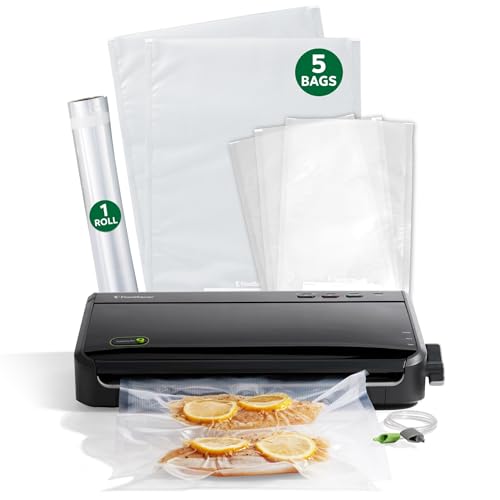
FoodSaver FM2100 Vacuum Sealer Machine
Badge: Best for Most Homes
Strengths
- Dry and moist modes: the moist setting adjusts the seal cycle for wet bags, the hardest seal job there is.
- Roll storage and a built-in cutter produce uniform bags, and uniform bags seal uniformly.
- Accessory port and hose included for canisters and jars between bag sessions.
Trade-offs
- No pulse mode named in the listing, so delicate work relies on mode choice and timing.
- One-touch automation means the machine, not you, decides when vacuum stops.
- Full-size countertop footprint.
Mini spec box
- Type: external countertop vacuum sealer
- Modes: dry and moist food settings, one-touch sealing
- Storage: built-in roll storage with cutter
- Included: accessory port and hose, starter bags and roll
The FM2100 earns its place in a seal-focused guide through its moist mode. Most failed seals in home kitchens are wet seals: juice or marinade reaches the seal area, the bar heats, the moisture steams instead of welding, and the bag looks sealed until the freezer proves otherwise. A dedicated moist setting exists to counter exactly that, extending and adjusting the seal portion of the cycle for damp bags. Paired with sensible technique — headspace, a wiped seal zone, pre-chilling very wet food — it turns the most failure-prone job into a routine one.
The workflow supports session quality too. Bags cut from the in-machine roll are consistent in size and edge, and consistent edges sit flatter across the seal bar than scissor-cut bags with wavy mouths. For the double-seal technique described later in this guide, that flatness is half the battle. The FM2100’s honest limit for this lens is control: with one-touch automation and no named pulse mode, the seal-obsessed user gets an excellent programmed cycle rather than manual command. For most homes that is the right trade; for the cook who wants to feather every vacuum by hand, the ROUUO below is the better fit.
Best for: most households, especially anyone whose failed seals have been wet-food seals / Not suited for: users who want manual pulse control over every cycle
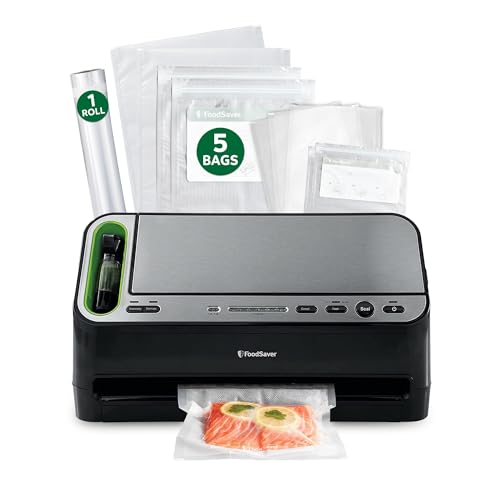
FoodSaver V4400 2-in-1 Vacuum Sealer Machine
Badge: Best Premium
Strengths
- Automatic bag detection starts the cycle only when the bag is seated — mis-seated bags are a hidden cause of weak seals.
- 2-in-1 design adds an integrated handheld function for zipper bags and containers.
- Starter kit included for both sealing styles.
Trade-offs
- Premium tier positioning; the dual function costs more whether or not both halves get used.
- More to learn than a basic one-touch machine.
- Substantial countertop presence.
Mini spec box
- Type: 2-in-1 external sealer with integrated handheld function
- Automation: automatic vacuum sealer bag detection
- Included: starter kit
The V4400’s contribution to seal quality is upstream of the seal itself: bag detection. Watch a new user seal ten bags and you will see the pattern — bags one through three are carefully seated, bags four through ten are fed in a little crooked, a little rushed, and the vacuum channel catches the bag edge imperfectly. The result is a weak vacuum and a seal formed over a wrinkled, air-pocketed film. A machine that detects correct bag placement and starts automatically removes that drift, which is why the V4400 suits long sessions run by humans whose attention fades: the machine keeps insisting on correct seating when the user stops insisting.
The 2-in-1 design also matters for seal discipline in a subtle way. Because the integrated handheld function handles the quick reseal jobs — the cheese bag, the container of leftovers — the heat-seal station gets reserved for work that deserves a welded seal, instead of being dragged out, rushed, and blamed for every small job. The cost is complexity and tier: this is the premium option in the list, and a household that only ever welds roll bags will not recover the difference. Buy it when both sealing styles are genuinely weekly habits.
Best for: high-volume households that also reseal daily, and anyone whose seals fail from sloppy bag seating / Not suited for: single-purpose buyers who only seal roll bags
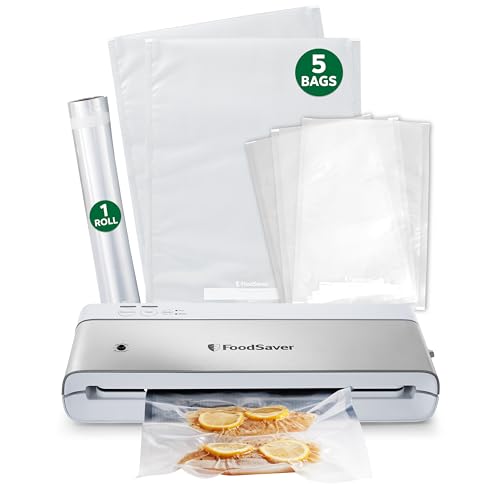
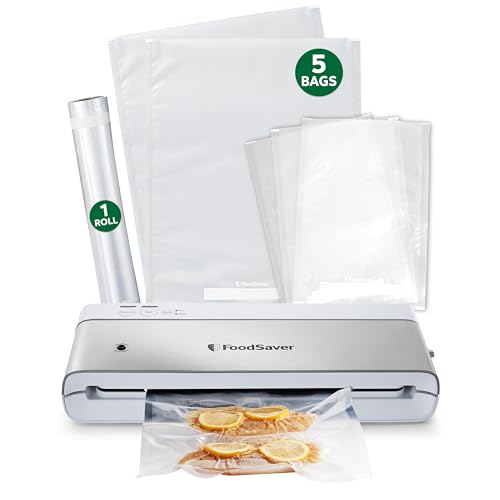
FoodSaver Compact Vacuum Sealer Machine
Badge: Best for Small Kitchens
Strengths
- Compact body that stays on the counter, and a sealer within reach gets used with care instead of in a rush.
- Includes airtight bags and a roll, so seal practice starts on proper materials from day one.
- Suited to sous vide as well as storage — seals face hot-water duty, not just freezer duty.
Trade-offs
- Fewer named modes than the seal-focused leaders here.
- Compact working area is tighter for very wide bags.
- Better for steady household volume than for marathon bulk sessions.
Mini spec box
- Type: external countertop vacuum sealer, compact format
- Color: white
- Included: airtight bags and roll
- Uses: sous vide and airtight food storage
The Compact’s seal argument is behavioral. Seal quality is mostly technique — clean seal zone, flat bag mouth, correct mode — and technique survives only when the machine is convenient enough to use unhurriedly. A compact sealer that lives on the counter gets that unhurried use; a big machine hauled from a closet invites rushing. For apartments, small households, and first-time owners, the Compact delivers genuine FoodSaver heat-seal performance in a body that respects the space, with bags and a roll in the box so the first seals happen on the right film.
Its sous vide suitability is also a seal credential: a bag that spends an extended cook in hot water is a bag whose seal is being audited the whole time. Where the Compact concedes ground in this particular guide is session scale and mode depth — it does not offer the pulse control or the drip management of the ROUUO, and a harvest-weekend marathon will feel its compact limits. Within its intended volume, though, its seals are the real thing, and the double-seal technique in this guide applies to it exactly as it does to the flagships.
Best for: small kitchens and moderate volumes where the machine will live on the counter / Not suited for: marathon bulk sessions or buyers wanting pulse control
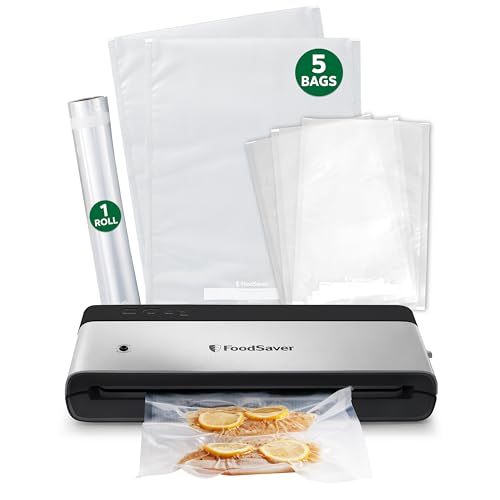
FoodSaver PowerVac Compact Vacuum Sealing Machine VS0150
Badge: Best Vertical Storage
Strengths
- Vertical storage keeps the machine accessible in narrow spaces — accessible machines get used properly.
- Designed to reduce bag waste, which also means bags sized right, and right-sized bags seal better.
- Handles dry and wet food, covering the seal jobs that defeat dry-only machines.
Trade-offs
- Compact format limits very wide work.
- Fewer bundled extras named in the listing than some rivals.
- No pulse mode named for delicate control.
Mini spec box
- Type: external countertop vacuum sealer, compact format
- Storage: vertical / upright storage
- Finish: stainless steel and black
- Food types: dry and wet food
The PowerVac approaches the seal question through bag discipline. Its design brief — preserve freshness while reducing bag waste — pushes the user toward bags cut to the food instead of oversized bags with slack, folded mouths. Slack at the bag mouth is a seal enemy: folds become channels, channels become leaks. A machine and workflow that keep bags trim quietly produces stronger seals than a more powerful machine fed sloppy bags. Add upright storage, which keeps the VS0150 in the kitchen’s working zone rather than exiled to storage, and its real-world seal record benefits twice.
It covers both dry and wet food, which keeps it honest for mixed household work, and the stainless-and-black finish suits kitchens where the appliance stays visible. Its limits in this lens are the compact-class limits: no named pulse control for feathering delicate items, and less room for the widest bags. Seal shoppers whose sessions are moderate and whose counters are tight will find it a rational, tidy answer; volume sealers should step up to the ROUUO or FM2100. Non-food storage is the other place trim sealing pays off, as Best Vacuum Sealers For Clothes shows when the same machines compress seasonal clothing bags.
Best for: tight counters, tidy workflows, and moderate mixed sealing / Not suited for: very wide bags or pulse-control seekers

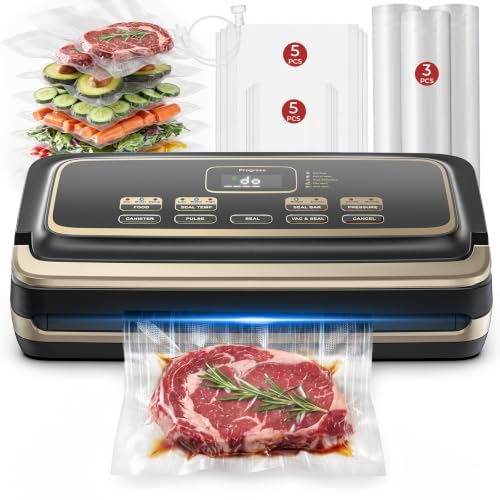
ROUUO Vacuum Sealer 95kpa with Pulse Mode
Badge: Best Overall for Seal Strength
Strengths
- 95kpa vacuum rating with 230W power pulls bags tight and flat, so the seal bar welds film, not wrinkles.
- Pulse mode gives manual control of vacuum stop-point — the key to sealing delicate or wet items without crushing or flooding the seal.
- Removable drip tray keeps liquid out of the seal zone across a session, protecting every seal after the first wet one.
Trade-offs
- Manual pulse control rewards attention; fully automatic rivals are more hands-off.
- Power-focused design is more machine than a light user needs.
- Brand ecosystem for accessories is smaller than FoodSaver’s.
Mini spec box
- Type: external countertop vacuum sealer
- Vacuum: 95kpa (as stated in listing)
- Power: 230W (as stated in listing)
- Modes: dry/moist, pulse mode
- Features: built-in bag storage and cutter, removable drip tray
- Included: 3 bag rolls and 10 bags
The ROUUO tops this particular list because every stated feature points at seal integrity. Start with vacuum strength: a 95kpa pull evacuates the bag thoroughly and draws the film snug against the food and flat across the seal bar. Flat film welds; wrinkled film leaks. Then the pulse mode: instead of accepting a program’s decision, you control the vacuum moment by moment, stopping exactly when a delicate item is snug or just before liquid reaches the seal zone — the two situations where programmed cycles most often ruin a seal. Then the removable drip tray: in any real session, the second wet bag is sealed by a machine the first wet bag already visited. A tray that catches that liquid and lifts out for rinsing keeps the seal environment clean from bag two to bag forty, which is precisely the “seal after seal, same strength” performance that 2heat shoppers describe wanting.
The bundle supports the workflow: built-in bag storage and cutter for uniform bags, three rolls and ten bags included so the machine starts earning immediately. The honest limitation is that control demands a driver. Pulse mode in careless hands stops too early and leaves air, or runs too long and floods the seal. Spend your first session learning its rhythm on forgiving foods and the ROUUO becomes the most capable sealing tool in this guide — the machine we would choose for game processing, harvest packing, and any freezer that absolutely must not contain failed seals. For small-batch delicate snacks, the same pulse discipline is what Best Vacuum Sealers For Energyball relies on to seal without crushing.
Best for: volume sealers, wet-food sealers, and anyone who wants manual control over the seal moment / Not suited for: set-and-forget users who prefer one-touch automation
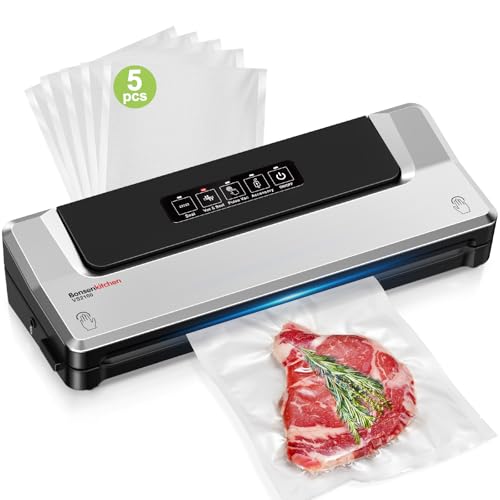
Bonsenkitchen Vacuum Sealer Machine
Badge: Best Compact Value
Strengths
- Multiple modes for meal prep in a compact silver body that suits smaller counters.
- External vacuum system design aimed at keeping food fresh far longer than open storage.
- Five vacuum bags included to start sealing immediately.
Trade-offs
- Smaller starter supply than the ROUUO or FM2100 bundles.
- Compact class limits for the widest bags and longest sessions.
- Listing names modes generally rather than a dedicated moist-seal program.
Mini spec box
- Type: external vacuum system, compact countertop
- Modes: multiple modes for meal prep
- Finish: silver
- Included: 5 vacuum bags
- Uses: kitchen food storage and sous vide
The Bonsenkitchen is the value route into genuine heat sealing for meal preppers. Its pitch is a compact external vacuum system with multiple modes, positioned around the weekly rhythm of portioning cooked or prepped ingredients so they keep their freshness deep into the week. For that rhythm — a dozen bags on a Sunday, a few more midweek — a compact machine with straightforward modes is not a compromise at all; it is the correct size of tool, and its lower tier positioning leaves budget for the rolls and bags that ongoing prepping consumes.
In a seal-focused ranking it sits below the leaders for stated features: the listing speaks of multiple modes without naming a moist-seal program or pulse control, and the starter bundle is five bags rather than a full kit. Technique therefore carries more of the load — wipe the seal zone, use headspace, double-seal the bags destined for long storage using the method below. Do that and the Bonsenkitchen’s seals are perfectly serviceable for its intended work. Ask it to run a forty-bag game session and you are outside its brief; ask it to run a household’s weekly prep and it is a sensible, compact answer, as cross-shopping in Best Vacuum Sealers Cnet style roundups tends to confirm for this class.
Best for: meal preppers and value buyers sealing moderate weekly volumes / Not suited for: marathon sessions or users wanting named pulse/moist programs
Comparison Table
| Pick | Seal-relevant features | Control style | Included extras | Link |
|---|---|---|---|---|
| FoodSaver FM2100 | Dry & moist modes, roll storage + cutter | One-touch automatic | Accessory hose, starter bags & roll | Check on Amazon |
| FoodSaver V4400 | Automatic bag detection, 2-in-1 | Automatic with detection | Starter kit | Check on Amazon |
| FoodSaver Compact | Standard heat seal, sous vide rated use | Simple automatic | Bags and roll | Check on Amazon |
| FoodSaver PowerVac VS0150 | Dry & wet food, reduced bag waste design | Simple automatic | Vertical storage design | Check on Amazon |
| ROUUO 95kpa | 95kpa vacuum, 230W, pulse mode, removable drip tray | Manual pulse + programmed modes | Bag storage & cutter, 3 rolls & 10 bags | Check on Amazon |
| Bonsenkitchen | Multiple modes, external vacuum system | Mode-based automatic | 5 vacuum bags | Check on Amazon |
How to Choose a Vacuum Sealer When Seal Strength Is the Priority
Look for control over the wet seal. The seal that fails is almost always a wet one. A named moist or wet mode (FM2100), a pulse mode that lets you halt the vacuum before liquid arrives (ROUUO), or both, are the features that translate directly into seals that survive the freezer. If your sealing is mostly dry goods, this matters less; if marinades and juicy cuts are weekly work, it matters more than any other specification.
Value vacuum strength for what it does to the seal. A stronger vacuum is not about bragging rights; it pulls the film flat and tight so the seal bar welds a smooth band instead of bridging wrinkles. Where a listing states its vacuum and power figures, as the ROUUO’s does, treat them as seal-quality information, not just speed information.
Protect the seal area across the session. Drip management, an easy-wipe channel, and a few seconds of cleaning between wet bags preserve seal number thirty as surely as seal number one. Machines that acknowledge liquid with a removable tray are designed by people who have run long sessions.
Think about where the machine lives during a session. Seal quality is also ergonomics. A machine at comfortable counter height, with room to lay bags flat on both sides — unsealed on one side, finished on the other — keeps bag mouths flat and operators careful. A machine balanced on a crowded counter corner produces crooked bags and rushed seals no specification can overcome. The vertical-storage PowerVac and the compact Bonsenkitchen exist for kitchens where that working room is scarce; the full-size machines reward kitchens that can give them a proper station. Choose for the counter you actually have, and set the station up before the food comes out, not while it warms on the board.
Respect duty cycle. Seal bars need brief recovery between cycles on long runs. Build micro-pauses into your workflow — label the previous bag while the next waits — and the last seal of the day will match the first. If your typical session is five bags, ignore this entirely; if it is fifty, it is the difference between a freezer full of welds and a freezer full of maybes.
How to Get a Double Seal From Any Machine in This Guide
- Start with extra headspace. Cut the bag a little longer than usual; a double seal consumes a little more room at the mouth.
- Run the normal vacuum and seal cycle. Let the machine complete its full program — dry or moist as the food demands.
- Inspect the first seal. It should be a clear, even band. If it is wrinkled or contaminated, cut it off and start again rather than doubling a bad seal.
- Shift the bag slightly and seal again. Move the bag a few millimeters so the second seal line sits just inside the first, then run a seal-only cycle if your machine offers one, or a second full cycle on an empty-draw setting per your manual.
- Check both lines. Two clean, parallel bands with no channels crossing them is the strongest closure an external sealer can give you — the practical equivalent of the doubled heat line 2heat shoppers go looking for.
Troubleshooting. Problem: seals look milky or incomplete on wet food → liquid reached the bar; pre-freeze the item until firm, switch to the moist setting, and wipe the seal zone dry before the cycle. Problem: seals weaken as a long session goes on → the bar needs rest and the channel needs a wipe; pause, clean, and resume at a steadier pace. Problem: the bag puffs up in the freezer days later → a channel crossed the seal or the film was pinholed by a sharp edge; double-seal the next batch and pad sharp points with a fold of bag material.
Heat, Film, and Time: Why Seals Actually Hold
A heat seal is a weld. The seal bar presses the two layers of film together and heats them until the plastic at the interface softens and fuses; when it cools under pressure, the two layers have become one. Three variables govern that weld — temperature, pressure, and time — and every feature discussed in this guide is really a way of controlling one of them. A moist mode extends time, because moisture at the interface steals heat and the weld needs longer to form through it. A strong vacuum improves the weld’s conditions by removing air pockets that would otherwise insulate spots of the interface and leave them unwelded. A clean, flat bag mouth ensures even pressure; a wrinkle is a spot where pressure and contact both fail at once.
This is also why doubling a seal works without any special hardware. Two independent welds, each formed under good conditions, must both fail at the same crossing point for air to enter — and the odds of two separate weld lines sharing the same defect are far lower than the odds of one weld having one. It is the same redundancy logic as a double-stitched seam. Conversely, it explains the classic failure of sealing twice in exactly the same spot: reheating the same line adds heat stress without adding an independent barrier, and over-heated film can thin and become brittle. Shift the bag; make the second line its own weld.
Finally, respect the cooling moment. A seal is at its weakest in the seconds right after the cycle, while the weld is still setting. Machines that hold pressure briefly before releasing are protecting that moment; users protect it by not yanking the bag away the instant the light changes. Lay finished bags flat for a minute before stacking them in a pile, especially on wet seals, and you will have done everything the physics asks of you. None of this requires a special machine — it requires a machine whose stated features support the variables, which is exactly the standard this guide’s six picks were chosen against, and a user who understands that a seal is a weld, not a sticker.
What “2heat” Listings Are Really Promising — and How to Read Them
Because the term is informal, it gets attached to several different ideas: a wider seal bar, a seal bar with two heating lines, a machine rated for rapid back-to-back sealing, or simply marketing language for “strong seal.” When you meet the word in the wild, translate it into questions the listing can actually answer. Does the maker state the vacuum strength and power? Does it name a moist mode or a pulse mode? Is there drip management? Are rolls and bags included so you can judge the film quality you will be sealing? A listing that answers those questions with specifics is making a checkable promise; a listing that leans on the word “2heat” alone is making a mood. The six machines in this guide were chosen because their listings answer with specifics — which is also why none of them needed the word.
Anatomy of a Good Seal: What to Look For on Every Bag
Since seal quality is the whole subject of this guide, learn to read a seal the way a roofer reads a roofline. A good seal is a continuous band across the full width of the bag, even in tone, with the film’s texture visibly melted into a smooth, slightly glossy strip. You should not be able to find a channel — a thin unmelted line running across the band — anywhere along it, because a channel is a leak with a head start. The film on either side of the band should lie flat, not puckered; puckering means the bag was stretched or wrinkled as it sealed, and puckers concentrate stress in the freezer until one becomes a tear. Test a fresh seal with a gentle tug: a weld holds as one piece of film, while a weak seal peels apart with a soft, separable feel, like opening a resealable zipper. That peel test, done on the first bag of a session and spot-checked every dozen bags after, catches fading seal performance long before the freezer does.
Bag film plays a bigger role than most buyers realize. Vacuum bags are textured — one side carries an embossed pattern that creates air channels so the machine can draw air out along the full length of the bag. That texture is also why generic smooth bags fail in external sealers: with no channels, the film collapses against itself and traps air. Use proper vacuum film, store rolls away from heat, and treat the last crumpled section of a roll as scrap rather than sealing your best food in damaged material. When a session’s seals suddenly degrade, change one variable at a time — wipe the bar, try a fresh section of roll, slow the pace — and the cause usually identifies itself within two bags.
Running a Bulk Session Without Losing Seal Quality
The 2heat question most often comes from people facing a mountain of food and a finite afternoon, so here is the workflow that keeps seal quality flat from the first bag to the last. Set up in stations: cutting and bag-making first, filling second, sealing third, labeling and stacking last. Making all the bags first means the sealer runs in a steady rhythm instead of stop-start bursts, and steady rhythm is kind to seal bars. Keep a dry cloth and a damp cloth at the sealing station — damp for wiping the channel after wet bags, dry for the bag mouths themselves — and use them religiously; thirty seconds of wiping spread across a session saves whole bags later. Rotate your own attention as deliberately as your pace: check a seal with the tug test every dozen bags, glance at the drip area after every wet item, and if two seals in a row look doubtful, stop and diagnose rather than producing a freezer shelf of doubtful seals at speed.
Order the work from dry to wet. Pantry goods and plain cuts first, while the machine and your technique are fresh and clean; marinated and juicy items last, so their mess cannot contaminate the easy bags. Freeze flat as you go, stacking sealed packages on trays that go straight into the freezer, because a sealed bag left warm on the counter is a bag whose contents are aging while you work. And plan the session’s size honestly: two focused hours with pauses beats a four-hour grind in which the final hour’s seals are made by a tired operator on an overheated bar. The machines in this guide can all run a serious home session; the workflow decides whether the session’s output deserves the freezer space it is about to occupy.
Common Buying Mistakes
- Chasing a buzzword instead of features. “2heat” is not a standard. Moist modes, pulse control, stated vacuum strength, and drip trays are the verifiable version of the same desire.
- Blaming the machine for wet-seal failures. Mode choice, headspace, and a dry seal zone fix most failures on any machine here.
- Running fifty bags with no pauses. Seal bars fade when rushed; a labeling pause between bags protects the whole batch.
- Buying the thinnest bags available. A perfect weld in weak film still tears. Quality bags are part of the sealing system.
- Skipping the double seal on long-storage items. It costs seconds per bag and insures the food you most cannot replace.
- Ignoring the drip path. One wet bag sealed carelessly contaminates the channel for every bag after it in that session.
One last calibration before the verdict: if your sealing is five bags a week of leftovers and cheese, every machine in this guide will seal those bags well, and you should buy on size and simplicity — the Bonsenkitchen or the Compact. The seal-strength hierarchy in this guide matters in proportion to volume, wetness, and storage time. The longer food will live in the freezer and the wetter it goes into the bag, the more the ROUUO’s control and the FM2100’s moist program earn their ranking. Judge your own sessions honestly and the right tier chooses itself.
Final Recommendation
If seal strength brought you here, buy the ROUUO 95kpa Vacuum Sealer — Check on Amazon. Its stated vacuum strength and power, pulse control, and removable drip tray are the most complete seal-integrity package in this guide, and its included rolls and bags start you on a real session the day it arrives. If you prefer automation to manual control, the FM2100’s moist mode and roll-storage workflow are the set-and-forget answer, and the V4400 adds bag detection for households whose seals fail at the seating step. Whichever you choose, add the double-seal habit for long-storage bags — it is the honest, free version of the 2heat promise.
Frequently Asked Questions
What does “2heat” mean on a vacuum sealer?
It is an informal term, not an industry standard. Shoppers and some listings use it to suggest a dual or doubled heating seal — a wider or double seal line and strong back-to-back sealing. No machine in this guide claims it in its verified listing data, so we ranked on the features that deliver the underlying benefit instead.
Can I make a double seal with a normal sealer?
Yes. Complete a normal cycle, inspect the seal, shift the bag a few millimeters, and run a second seal so the two lines sit parallel. Two clean bands are a stronger barrier than one and are cheap insurance for long freezer storage.
Why do my seals fail on marinated meat?
Liquid at the seal bar turns to steam instead of letting the film weld. Use a moist or wet mode, leave generous headspace, wipe the inside of the bag mouth dry, and for very wet items pre-freeze until the surface firms. A pulse mode also lets you stop the vacuum before liquid arrives.
Does stronger vacuum make a stronger seal?
Indirectly, yes. A stronger vacuum pulls the film flat and tight across the seal bar, and flat film welds into an even band. Wrinkled, loosely drawn film is where channels and leaks form, which is why stated vacuum strength is relevant to seal quality.
How many bags can I seal in a row?
It depends on the machine’s duty cycle, and listings rarely state it plainly. The safe practice for any home external sealer is brief pauses during long sessions — label, stack, and organize between bags — and a quick wipe of the seal area after wet items. Seal quality that stays even is the sign your pace is right.
Should I seal twice on every bag?
Not on every bag — on the bags whose failure would hurt. Tonight’s chicken portion that will be cooked this week gains little from a second line. The holiday roast, the game meat you cannot replace, and anything headed for long storage deserve the doubled weld. Match the insurance to the value and the storage time, and the habit will stick because it stays quick.
Does the bag brand change how well the seal holds?
Yes, within reason. The seal welds the film you give it, so film quality — thickness, texture, and consistency — is part of seal quality. Bags and rolls made for vacuum sealing, including the ones bundled with these machines, are textured so air can be drawn out fully before the weld forms. If seals degrade suddenly after switching to a bargain roll, suspect the film before the machine and test with a known-good bag.
Are wider seals always better?
A wider, even seal band gives more barrier and more tolerance for a tiny imperfection, which is why the double-seal technique helps. But an even, clean standard seal beats a wide, wrinkled one every time. Film flatness and a clean seal zone come first; width is the bonus.