Where to buy
Check the latest price, availability and delivery on Amazon. We may earn a commission from qualifying purchases.
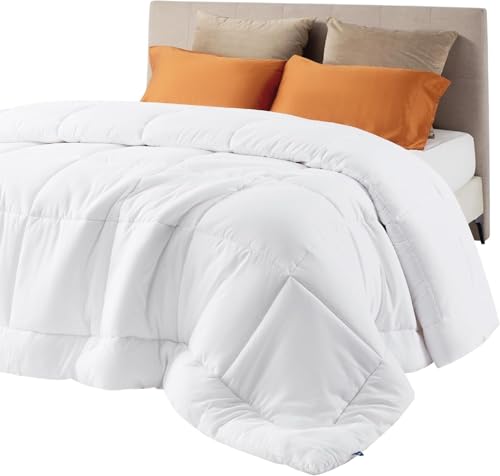
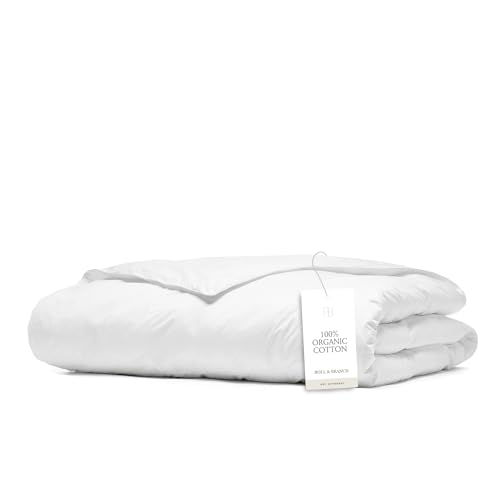
- Best overall: Boll & Branch Down Duvet Insert, Full/Queen, All Season — Check on Amazon
- puredown Goose Down Comforter, 800 Fill Power, Winter Oversized — Check on Amazon
- Continental Bedding Siberian Goose Down Comforter, Queen, 800 Fill Power — Check on Amazon
- Boll & Branch Down Alternative Duvet Insert, Full/Queen, All Season — Check on Amazon
See 2 more Amazon options
- CUDDLE DREAMS Classic Wool Comforter, Midweight, Queen — Check on Amazon
- Globon Winter White Goose Down Comforter, Queen — Check on Amazon
Disclosure: As an Amazon Associate, topratedkitchenware.com earns from qualifying purchases. Links to Amazon on this page are affiliate links; they cost you nothing extra. Listing details such as price and availability change often, so check the current Amazon listing before you buy.
A guest room changes the maths of every bedding purchase. Start with the honest headline from our under-$700 research: no single duvet insert on Amazon sits at the very top of this budget in a queen size — the Boll & Branch down insert is the premium end of the verified queen market, and anything positioned higher tends to be a king size or a luxury-house duvet sold only direct. Then add the guest-room complication: a bed that is slept in perhaps eight to twenty-four nights a year does not amortize a premium insert the way your own bed does. A premium insert on your own bed spreads its cost across nightly use over ten years. The same insert in a quiet guest room carries that cost across only a handful of nights. The product is the same; only the calendar changes.
So this guide does two things. It rounds up the six best premium inserts that genuinely sell at or under this budget — judged as inserts, on the hardware that makes an insert work inside a cover: corner loops and ties, baffle-box construction, and dimensions that match real duvet covers — and it re-judges every one through the guest-room questions that decide satisfaction: What does it cost per guest-night? Will it suit a sleeper whose warmth preferences you do not know? Can it be freshened between guests, or is it dry-clean-only? And how does it spend the other 340-odd days of the year, stored in a room nobody uses? For most hosts we would begin with the Boll & Branch down insert, because it sits at the premium end of this market — check the current price on Amazon — and it is the one insert here a visiting parent will register as a genuinely good bed. If your guest room is a quiet one, though, the honest recommendation may be the cheapest pick in this guide — and we will show you the arithmetic rather than ask you to take that on faith.
In this guide
Quick Picks
Short on time? Each row below names a hosting situation and the product that suits it, with a link to the listing.
| Hosting situation | Pick | Why it stands out | Link |
|---|---|---|---|
| Best overall for guests | Boll & Branch Down Duvet Insert, Full/Queen, All Season | The premium end of the verified queen insert market — check price on Amazon — with corner loops, an organic cotton baffle-box shell, and brand care guidance that allows machine washing | Check on Amazon |
| Best for cold guest rooms | puredown Goose Down Comforter, 800 Fill Power, Winter Oversized | 93% goose down and a maker-rated 800 fill power — check price on Amazon — the warmest pick here, for rooms that run cold and guests who feel it | Check on Amazon |
| Best on a price dip | Continental Bedding Siberian Goose Down Comforter, Queen | 800 fill power class down whose price can dip well below its usual level — check the current price on Amazon — and a guest room, with no deadline, is the one bed that can wait for the dip | Check on Amazon |
| Best between guests | Boll & Branch Down Alternative Duvet Insert, Full/Queen, All Season | PrimaLoft-brand recycled fiber in the same organic cotton insert shell — check price on Amazon — no dry cleaning, no down in the house, easy resets between visits | Check on Amazon |
| Best for unknown sleepers | CUDDLE DREAMS Classic Wool Comforter, Midweight, Queen | Wool buffers warmth in both directions for guests who run hot or cold, with eight ties — the most insert hardware in this guide — at the accessible end of this guide’s range; check price on Amazon | Check on Amazon |
| Best value per guest-night | Globon Winter White Goose Down Comforter, Queen | Maker-rated 800 fill power, corner tabs and a home-washable rating at the value end of this guide — check price on Amazon — real down at a cost per guest-night a quiet room can justify | Check on Amazon |
How These Picks Were Chosen
The first filter was verification, inherited from our under-$700 base research. Every product below is a real Amazon listing whose queen or full/queen configuration could be tied to its ASIN through a listing record or dated coverage. Where a well-known premium insert could not be verified that way, it is named without a link and the reason is stated: the Brooklinen down comforter is widely covered as an Amazon option, but the exact full/queen all-season ASIN could not be isolated from its lightweight and king siblings, so it appears in this guide as a named alternative — the first swap-in if it verifies — not a link.
The second filter was the budget itself, applied honestly. A $700 ceiling does not mean hunting for a product priced exactly at the ceiling; it means premium picks plus sensible combinations, and the allocation plans later in this guide pair picks qualitatively within the budget, with room deliberately left for covers and other bedding. One pick, the Continental Siberian, is a deliberate straddle: its price has at times crossed the $700 budget, so it is included with a plain instruction to check the current price on Amazon and buy it only on a low reading.
The third filter was the guest test, which separates this guide from the base version. A guest-room insert is judged on four things an owner’s insert is not. Cost per guest-night: how the purchase spreads across the nights the bed is actually used, discussed below at busy-room (24 nights a year) and quiet-room (8 nights a year) rates over a ten-year life. Unknown-sleeper fit: guests arrive with warmth preferences you cannot interview them about, so midweight builds and temperature-buffering fills score better than a winter-weight specialist. The between-guests reset: the cover is the wash layer, but an insert that tolerates machine washing — or at least airing and shaking back to loft — beats a dry-clean-only insert. And the idle months: an insert spends most of its life stored or sitting made-up on an unused bed, so storage behavior and resistance to going flat and stale are real criteria.
Finally, fill honesty. Down products were separated into three classes and never blurred: cluster down (the lofty kind, stated as a down percentage), down and feather blends with a published ratio, and feather/down fiber — processed, chopped fill that sleeps flatter and is not a down comforter in any meaningful sense. No fiber product appears among this tier’s picks. Makers’ fill-power figures are printed as maker claims. And when a maker does not publish a fill power at all, as with our hero, that absence is treated as a fact about the product — the 650 figure attached to it around the web is a reviewer’s number, printed here with that attribution, never as the maker’s.
The 6 Best Duvet Inserts for Guest Rooms Under $700
Boll & Branch Down Duvet Insert, Full/Queen, All Season
Who it suits: Hosts whose guest room earns its keep — frequent visitors, a parent who stays for weeks — and who want the one insert a guest will actually notice as a good bed.
This sits at the premium end of the verified market for the full/queen all-season configuration — check the current price on Amazon. The fill is responsibly sourced, triple-washed US down; the shell is certified organic long-staple cotton, down-proof, built as true baffle boxes that keep the fill distributed instead of letting it migrate to the foot of the bed; the product is Fair Trade Certified. As an insert it is properly fitted out: the brand confirms four corner loops that tie to the interior ties of a duvet cover, and reviewers who tested it specifically noted the loops made setup inside a cover easy. For a guest bed, its care guidance matters as much as its fill: unusually for down, the brand advises machine wash cold, alone, once a season, and tumble dry low — so the insert itself can be genuinely freshened on a hosting rhythm.
The guest-room case for it is diplomacy. This is the insert that makes a spare room feel like a hotel bed: even warmth, no cold corners where fill has pooled, a quiet organic shell. If the guest is a parent who has slept on your sofa bed for years, or a friend whose opinion of your hosting you care about, the premium is buying exactly that impression. What it is not buying is nightly value: in a busy room at 24 guest-nights a year the cost spreads across enough use over ten years to feel defensible, but in a quiet room at 8 nights a year it becomes the most expensive sleep in this guide, purchased mostly for a bed that sits empty. The lightweight full/queen is listed at 6.6 lb and there are three weights; the all-season is the right default for guests, whose preferences you cannot tune the way you tune your own bed.
- At the premium end of the verified queen insert market for full/queen all season — check price on Amazon.
- Four corner loops and a baffle-box, down-proof organic cotton shell — real insert hardware, not a comforter afterthought.
- Machine-washable per the brand’s own care guidance — the only premium down pick here that can be washed on a between-guests rhythm.
Honest limitation: Boll & Branch does not publish this insert’s fill power anywhere on its own product page. The 650 figure you will see quoted around the web comes from a reviewer’s coverage (Sleep Foundation, as tracked by read-vault), not from the maker — so the single number that usually justifies a premium down price is one you have to take on trust and reputation. The brand’s published limited warranty also covers mattresses and foundations, not bedding, its 30-night bedding trial is a brand-direct term (Amazon purchases follow Amazon’s terms), and its Amazon review record is still thin.
Choose it if your guest room is busy, your guests are people you want to sleep well, and certified sourcing matters more than a printed fill-power figure. Skip it if the room hosts a handful of nights a year — the per-night maths below will talk you out of it, correctly.
puredown Goose Down Comforter, Full/Queen, 800 Fill Power, Winter Oversized (98 x 90 Inch)
Who it suits: Hosts with a genuinely cold guest room — a basement room, a north-facing spare, an older house — and guests who feel the cold, provided an oversized cover joins the order.
Where the hero asks for trust, the puredown publishes: 93% white goose down, a maker-rated 800 fill power, a 100% cotton shell at a stated 700 thread count, and a 40 oz fill weight for the full/queen, with RDS and OEKO-TEX certifications claimed by the maker. Check the current price on Amazon for the current listing. Roundup coverage describes a 3D baffle-box construction, which at this loft is the right build — sewn-through quilting would pinch the down and waste the fill power you paid for. Forty ounces of high-loft down is a genuinely warm winter fill: a spare room that is never quite heated properly is the one room where a winter-weight insert is not overkill.
The guest-room charges against it are equally specific. First, size: at 98 x 90 inches it is oversized against the standard queen duvet cover, which is typically cut around 88–92 inches. Guest rooms are where the older, standard covers live — the set that was demoted from your own bed — and in a standard cover this insert will bunch and feel lumpy no matter how good the down is. It needs an oversized queen cover, decided before you order. Second, warmth cuts both ways for unknown sleepers: a guest who runs hot cannot remove half the fill, and a winter insert on a mild night is a complaint nobody voices until the drive home. Third, care: coverage reports dry clean only, so between guests the cover does all the washing work and the insert gets aired, not cleaned. At 24 guest-nights a year its cost spreads reasonably across a decade of use; at 8 nights a year, that same premium is carried by far fewer sleeps.
- The guide’s strongest published spec: 93% goose down, maker-rated 800 fill power, 40 oz fill, stated on the listing.
- Premium down positioned well inside the nominal budget — check price on Amazon.
- The warmest pick here: the right answer for an under-heated guest room and cold-sleeping guests.
Honest limitation: The oversized 98-inch length is a real insert problem in the standard covers guest rooms usually have, the fill-power figure is the maker’s rating rather than an independent lab result, and dry-clean-only care means the insert itself never joins the between-guests laundry. A winter-weight fill is also a bet on your guests running cold.
Choose it if the guest room is cold, your regular guests sleep cold, and you will buy the oversized cover it needs. Skip it if your covers are standard queen, your guests vary, or the room is warm — an all-season pick forgives more.
Continental Bedding Siberian Goose Down Comforter, Queen, 800 Fill Power
Who it suits: Patient hosts furnishing a guest room with no deadline — the one buying situation in this guide where a volatile price is an advantage instead of a risk.
The maker rates it at 800 fill power in a queen Siberian goose down build, positioned above this guide’s ceiling at its higher readings. Its price history tells the real story: it swings widely, sometimes sitting well inside this budget and sometimes moving above it. In other words, this is an in-budget insert only on its good days, a genuine bargain on its best days, and an over-budget listing the rest of the time. On a low reading it may be the best down value in this entire guide — check the current price on Amazon — flagship warmth at a much more accessible level when the timing is right.
A guest room usually has no deadline. The spare bed will sit made-up and empty while you watch this listing, which converts the Continental’s flaw into an opportunity — set an alert, wait for the dip, and furnish the room at the low. The brand’s tier is corroborated off Amazon: Continental’s Serenity line, a 700 fill power Hungarian white goose down queen, is sold through a Target retail listing, which is context for the brand’s premium positioning. What we cannot do is promise which Continental you will find when you click, and insert hardware (loops) was not verified in the inherited research, so check the live listing for attachment points before relying on them.
- Maker-rated 800 fill power Siberian goose down in a queen build from a specialist down house.
- A widely swinging price history — worth buying only on a low reading; check the current price on Amazon.
- The guest room’s no-deadline purchase: bought at its low, it undercuts every premium pick here on cost per guest-night.
Honest limitation: This is a deliberate straddle. It has sold above the $700 ceiling, and if the live price is above $700 when you check, it does not belong in your cart at this budget — wait, keep the alert running, or take the puredown. Never buy it at a high reading, and never buy it the week before guests arrive, when the deadline hands the pricing power back to the listing.
Choose it if the guest room has no deadline and the live queen price is sitting at a low reading when you check. Skip it if guests are coming this month and the price is sitting near its higher readings.
Boll & Branch Down Alternative Duvet Insert, Full/Queen, All Season
Who it suits: Hosts who reset the guest bed often and want that reset to be simple — no dry cleaning, no down in the house, no special handling between one guest and the next.
The down-alternative sibling of our hero is a genuine insert by name and design: check the current price on Amazon for the full/queen all-season configuration. The fill is PrimaLoft-brand recycled synthetic fiber — a named, branded fiber rather than anonymous “down alternative” stuffing — inside the same style of certified organic cotton shell with baffle-box construction, in the same three weights, with the brand’s corner-loop insert design. The maker describes the fill with its own “hypoallergenic” label; we repeat that only as the maker’s label, not as a health claim. The honest comfort case is simpler: it lofts like a mid-grade down, it does not need dry cleaning, and nobody has to be comfortable with feather products — a real consideration when the sleeper is a guest whose preferences you may not know.
Through the guest-room lens, this is the between-guests pick. The wash rotation for a spare bed is cover off, cover washed, bed remade; an insert that tolerates machine care joins that rhythm instead of standing outside it with a dry-clean-only label. It also shares dimensions and fittings with the down hero, so the same covers serve it. At 24 guest-nights a year its cost spreads across enough use to sit close to the puredown’s value without the dry-cleaning. Judged coldly, you are still paying a premium for the shell and the brand: competent synthetic fills exist in our lower-tier guides, and in a quiet room even this pick is hard to defend against the wool and Globon below.
- A true duvet insert (not a rebadged comforter) for full/queen all season — check price on Amazon.
- Branded PrimaLoft recycled fiber in an organic cotton baffle-box shell; three weights; corner-loop design.
- The easiest premium reset between guests: machine-care-friendly, and no down for guests who avoid it.
Honest limitation: Synthetic fiber does not match cluster down for loft-per-weight or lifespan, and at its premium positioning this is the most expensive way in the guide to not buy down. The fill is a maker-described “hypoallergenic” fiber — a label, not a medical property — so do not buy it as a health measure for a guest; buy it for care and preference.
Choose it if your guest turnover is frequent, your household avoids down, or the between-guests reset has to be a one-person laundry job. Skip it if the room is quiet and the budget is real — the same money buys real down, and less money buys the wool.
CUDDLE DREAMS Classic Wool Comforter, Midweight for All Season, Queen (88 x 88 Inch)
Who it suits: Hosts dressing a bed for sleepers they cannot predict — the wool insert is the diplomat of this guide, and at its price it is also the easiest premium decision here.
Wool buffers temperature swings in both directions, handles moisture vapor better than down, and does not rely on loft alone for warmth. For a guest bed, that buffering is the whole argument: you do not know whether Friday’s guest runs hot or cold, and a midweight wool insert is the fill least likely to be wrong for either — warm without the sealed-in heat of a winter down fill, substantial without the flatness of a summer blanket. This queen carries 240 GSM of Australian wool (the line also offers a 120 GSM summer weight and a heavier winter version) inside a jacquard cotton shell the maker describes as noiseless, with OEKO-TEX Standard 100 certification and an inspection zipper so you can actually see the fill you paid for. Check the current price on Amazon.
As an insert, it is the best-fitted product in this guide: eight ties, double the hero’s attachment points, which is what stops the nightly migration of insert to the foot of the cover — a migration guests, sleeping in a strange bed, are least equipped to fix at 3 a.m. At 88 x 88 inches it matches standard queen covers exactly, including the demoted covers guest rooms usually have. And its value case is the gentlest in the guide: its accessible positioning holds up in both a busy room and a quiet one. The charges are care and first impressions: wool is dry clean only per roundup coverage, so between guests it is aired and shaken rather than washed; some owners notice a mild wool scent on first opening, so air it well before the first guest arrives; and a wool insert feels denser and flatter than down, which reads as quality to some guests and as a blanket to others.
- Eight ties — the most attachment hardware in this guide — and an exact 88 x 88 standard queen fit.
- 240 GSM Australian wool in a cotton jacquard shell, OEKO-TEX certified, with an inspection zipper.
- At the accessible end of this guide — check price on Amazon; among the easiest costs per guest-night of any premium pick here.
Honest limitation: Wool is dry clean only per roundup coverage of this model, a mild wool scent on opening is reported (air it before guests arrive), and the feel is dense rather than cloud-like — if your guest-room fantasy is a puffy hotel down loft, this will read as a different product.
Choose it if your guests vary, your room is quiet-to-moderate, or you want the rotation partner that covers warm months. Skip it if the room needs a washable insert above all, or your guests expect visible down loft.
Globon Winter White Goose Down Comforter, Queen (90 x 90 Inch)
Who it suits: Hosts with a quiet guest room who still want real goose down in it — the pick whose cost per guest-night survives the honest arithmetic.
Globon is the puzzle of this guide: a winter-weight queen, maker-rated at 800+ fill power, with corner tabs for cover use, at the value end of this guide — check price on Amazon — well below the puredown’s premium positioning for a similar headline number. The published construction details are respectable: a 420 thread count shell (a 68% cotton / 32% polyester blend, per roundup spec reads — not pure cotton, and we print that rather than letting “420 TC” imply otherwise), 3D baffle boxes reported in coverage, a maker-claimed moisture treatment on the fill, and roughly 37 oz of fill for the queen per a comparison table. Per maker and roundup material it is also rated home-washable — which, for a guest bed, is a headline feature: the insert itself can go through a home wash between guests, a claim neither the puredown nor the wool pick can make.
Run the guest-room logic and this is where a quiet room lands. The Globon stays easy to justify in both a busy room and a quiet one — real down, washed at home, at a level that does not require the room to be busy to make sense. The catch is what is not published. Across the listing and its coverage, Globon does not state its down-to-feather ratio. An “800 fill power goose down” headline with no ratio can describe a mostly-down fill or a feather-heavy blend; those are very different products at the same headline. The brand has sold this line since 2017 and the winter queen is its long-running configuration — and in a guest room, slept in a dozen nights a year, the practical stakes of the blank ratio are lower than on your own bed. The honest summary: a strong headline, decent hardware, a long track record, and the single most important ratio left blank.
- Maker-rated 800+ fill power with corner tabs, at the value end of this guide for the winter queen — check price on Amazon.
- Home-washable rating per maker and roundup material — the easiest between-guests care of any down pick here.
- Roughly 37 oz fill per comparison-table reads; a line sold since 2017; the quiet room’s rational down buy.
Honest limitation: The down/feather ratio is not published anywhere we could verify, and its value positioning rests on secondary spec coverage rather than a first-party tracker record — check the current price on Amazon and confirm a featured offer before relying on it.
Choose it if the guest room is quiet, the budget is honest, and you want real down you can wash at home. Skip it if unpublished specs bother you even at guest-room stakes — that is exactly what the puredown’s premium pays to avoid.
Comparison Table
| Product | Fill (as published) | Between-guests care | Price (queen) | Link |
|---|---|---|---|---|
| Boll & Branch Down Duvet Insert, Full/Queen | Responsibly sourced down; fill power not published by maker | Machine wash cold per brand guidance, once a season | Check price on Amazon | Check on Amazon |
| puredown Goose Down, Winter Oversized | 93% goose down, maker-rated 800 FP, 40 oz | Dry clean only per coverage; oversized 98 x 90 in | Check price on Amazon | Check on Amazon |
| Continental Bedding Siberian, Queen | Maker-rated 800 FP Siberian goose down | Check listing; loops not verified | Check the current price on Amazon — buy only on a low reading | Check on Amazon |
| Boll & Branch Down Alternative Insert, Full/Queen | PrimaLoft recycled fiber (maker-labeled hypoallergenic) | Machine-care-friendly; corner loops; baffle box | Check price on Amazon | Check on Amazon |
| CUDDLE DREAMS Wool, Midweight Queen | 240 GSM Australian wool | Dry clean only per coverage; air and shake between guests | Check price on Amazon | Check on Amazon |
| Globon Winter, Queen | Maker-rated 800+ FP; down/feather ratio not published | Home-washable rated per maker/roundups; corner tabs | Check price on Amazon | Check on Amazon |
How to Choose a Duvet Insert for a Guest Room Under $700
- Count your guest-nights first. Count how many nights the bed was slept in last year. Under a dozen, the premium picks in this guide are hard to justify on a per-night basis and the value picks win; over thirty, the flagship’s per-night cost spreads much more thinly and the diplomacy argument takes over. The calendar, not the catalogue, decides this purchase.
- Accept the ceiling. No queen insert sits at the very top of the $700 budget on Amazon; the verified premium end sits well inside it. Treat the rest of the budget as a second insert, a better cover, or money kept — not as a reason to buy a king size or a spike price.
- Default to all-season weight. You cannot interview your guests about their warmth preferences. A midweight or all-season insert, plus a folded throw at the foot of the bed for cold sleepers, covers more guests than any winter specialist.
- Match dimensions to the cover you already own. Guest rooms run on standard covers, usually 88–92 inches. An oversized insert (98 inches) in a standard cover bunches; measure the cover, then shop.
- Count the attachment points. Four corner loops are the minimum; eight loops or ties are better, and guests — restless in a strange bed, unable to fix a migrated insert in the dark — benefit most from hardware that holds. Check that your cover’s interior ties roughly match the insert’s loop positions.
- Decide the between-guests regime now. The cover is the wash layer after every guest. The insert’s own care label decides the rest: machine-washable picks can be freshened at home; dry-clean-only picks are aired, shaken and spot-cleaned, with a professional clean on a season’s rhythm, not a guest’s.
- Read fill claims in three parts. Down percentage, fill power and fill weight must all be present to judge a down insert. If one is missing — a ratio, a fill power — treat the headline as marketing and judge the product accordingly.
- Never confuse fiber with clusters. Feather and down fiber is processed fill: flatter, heavier, cheaper. No pick in this guide is fiber; listings elsewhere that headline “down” and footnote “fiber” are selling the footnote.
- Use the room’s lack of deadline. A guest bed is the one purchase that can wait for a tracker dip. The Continental’s wide price swings on one listing reward the host who buys in a quiet month instead of the week before a visit.
- Plan the idle months. Buy the breathable storage bag with the insert, air the insert before the first guest and after the last, and never leave down sealed in plastic or vacuum-compressed for a season — storage is most of a guest insert’s life.
The Cost-Per-Guest-Night Problem
Here is the logic this whole guide turns on, set out so you can check it against your own calendar. Assume a ten-year working life for a premium insert, and weigh the purchase against the nights the bed is actually used. A busy guest room — family most months, friends between — might see 24 guest-nights a year, or 240 in a decade. A quiet one sees 8 a year, or 80. Your own bed sees roughly 3,650.
At the busy rate, the premium tier survives the logic: the Boll & Branch down insert, the puredown, the down-alternative Boll & Branch, and the Continental — bought on a low reading, never at a high one — all spread their cost across enough nights to feel defensible for a bed that hosts two dozen nights a year, spent on someone’s actual comfort. At the quiet rate, the same inserts collapse: the hero and the puredown are carried by only a handful of nights each year. Meanwhile the two value picks barely move — the wool insert and the Globon stay easy to justify whether the room is busy or quiet. And for calibration, the hero on your own bed, used nightly, spreads its cost far more thinly than any guest-room use can. The product did not change. The calendar did.
If your guest room is genuinely busy — or if one particular guest matters enough that their sleep is the point of the purchase — buy the flagship and stop apologizing for it. If the room is quiet, the premium is not buying comfort; it is buying a feeling of readiness, at a steep per-night cost, for a bed that mostly holds a made-up duvet cover. The grown-up allocation for a quiet room is the value end of this guide plus a genuinely good cover, because the cover is the layer your guest sees, touches and judges.
The combinations that make sense, paired qualitatively within the budget: Plan 1 — one diplomatic bed, two seasons. The Boll & Branch down insert — check price on Amazon — for most of the year plus the CUDDLE DREAMS wool midweight for warm months and hot sleepers — the flagship for guests you want to impress, the buffer for guests you cannot predict. Plan 2 — two rooms, no dry cleaning. The Boll & Branch down alternative in the main guest room, where its machine-care reset earns its keep, plus the wool insert in the second room or on the sofa bed’s upgrade path. Plan 3 — the quiet-room spread. The Globon plus the wool insert: real down and a temperature buffer, both fitted with real hardware, for well under the nominal budget — leaving room in the budget for the covers, sheets and pillows your guests will actually form their opinion on. What none of these plans does is chase the number $700: the gap between the premium end of the queen market and the budget is the market telling you queen inserts top out where they top out.
Outfitting a Bed for a Sleeper You Have Never Met
Your own bed is tuned: you know your warmth and weight preference. A guest bed is a hypothesis. The guest might be your father, who has slept cold since 1987 and will never say so; your college friend, who runs hot and will open the window in November; a teenager who sleeps under whatever is heaviest; or nobody at all until the holidays. Every choice in this guide was re-judged against that uncertainty, and three principles survived it.
First, choose the middle of every range. All-season or midweight fills forgive in both directions; winter-weight specialists (the puredown is the honest example here) are a bet that your guests resemble the coldest sleeper you know. Second, build adjustability out of layers, not fill. A midweight insert inside its cover, plus a folded blanket or throw across the foot of the bed, gives a cold guest a second layer to pull up and a hot guest nothing to fight — the guest adjusts the bed quietly, without a hosting conversation at midnight. Wool’s two-direction buffering is the fill-level version of the same principle, which is why it punches so far above its tier in this guide. Third, remember what the guest actually experiences: not the insert, which they will never see, but the cover over it. A premium insert inside a tired, pilled cover reads as a tired bed; a mid-tier insert inside a crisp, good cover reads as a hotel. If the budget forces a choice — and at $700 for the whole guest bed it genuinely might — the cover is where the diplomacy lives, and the insert is where the sleep lives, and a wise host funds both in that order of visibility.
There is one guest for whom this logic inverts: the visiting parent, or the one friend whose comfort is the unspoken point of the room. For that guest, the flagship stops being an amortization problem. The Boll & Branch’s even, quiet, hotel-grade warmth is a message — you are not an afterthought in this house — sent precisely because it is more than the room strictly needed. Buy it with your eyes open, as a gift that happens to be bedding, and the per-night logic in the previous section simply does not apply. What we would not do is spend flagship money on a hypothetical guest: buy the hero for a person, or buy the value picks for a room.
Between Guests: Washing, Airing and Storing an Insert That Mostly Waits
A guest-room insert lives two lives: a few nights of use, and long stretches of waiting. Managing the waiting is most of the job. The working layer between guests is the duvet cover — it comes off after every visit, goes through your normal wash, and goes back on a bed that sits made-up and ready. The insert underneath is not washed on that rhythm, and should not be: every pick here is either dry-clean-only (the puredown and the wool, per their coverage), wash-once-a-season by brand guidance (the Boll & Branch down), machine-care-friendly (its down-alternative sibling), or home-washable rated (the Globon). Build the reset around your pick’s regime: cover washed every time; insert shaken out, aired for a few hours near an open window, and checked before the bed is remade.
Storage is where guest inserts quietly die. Down and wool both need to breathe and to stay lofted: a large breathable cotton storage bag, in a dry cupboard, is the correct home for an insert that is off the bed — never a sealed plastic bin, and never vacuum-compressed for months, which crushes down clusters and can set synthetic fills into a permanent flattening. If the insert lives on the made-up bed instead, the risks are dust and staleness: a cover washed between guests handles most of it, and a monthly shake-and-rotate keeps the fill distributed instead of pooled at the foot. Air any insert, especially the wool with its reported opening scent, well before the first guest arrives; a spare room closed up for three months smells like it, and the insert will be blamed for the room.
One discipline ties the system together: tie every loop, every time the cover goes back on. Guests are the worst-case sleepers for insert migration — unfamiliar bed, unfamiliar weight, more tossing — and an untied insert that has crept to the foot of the cover is the difference between a guest who slept well and one who did not. Eight attachment points beat four for exactly this sleeper, which is part of why the wool pick keeps earning its place.
Common Buying Mistakes
- Amortizing like an owner. Dividing a premium price by nightly use when the bed sees eight nights a year. Run the guest-night maths before the flagship, not after.
- Shopping for a $700 insert. It does not verifiably exist in a queen size on Amazon. Shoppers who insist on spending the full figure end up buying a king size for a queen bed, or paying a spike price on a volatile listing.
- Buying the winter specialist for unknown guests. A 40 oz winter fill is a bet on your guests running cold. All-season weight plus a folded throw covers more sleepers.
- Buying the oversized insert for the demoted cover. Guest rooms run on standard covers. A 98-inch insert in a 90-inch cover bunches no matter how premium the down is. Measure the cover first.
- Ignoring the tracker — against a deadline. Buying the Continental Siberian near a high reading because guests arrive Friday, when the same listing has also sold at much lower readings. The guest room’s advantage is patience; a deadline throws it away.
- Judging by fill power alone. Fill power without fill weight and down percentage is one leg of a three-legged stool. Two of this guide’s six picks withhold one of the numbers — judge them accordingly.
- Washing the insert like the cover. Dry-clean-only down in a home machine, or a season of guests with no airing at all. The cover is the wash layer; the insert has its own regime — follow its label.
- Storing it sealed. Months in a vacuum bag or plastic bin will flatten and stale any fill in this guide. Breathable bag, dry cupboard, or on the bed under a washed cover.
- Skipping the ties. Loops only work if they are tied, every wash. An untied premium insert migrates for a restless guest exactly like a cheap one.
- Spending on the insert, skimping on the cover. The guest never sees the insert. A mid-priced insert in a good cover out-hosts a flagship in a tired one.
Final Recommendation
- Most hosts with a busy guest room: Boll & Branch Down Duvet Insert, Full/Queen — Check on Amazon
- Cold rooms and cold-sleeping guests: puredown Goose Down Comforter, 800 Fill Power, Winter Oversized — Check on Amazon
- Patient price-watchers: Continental Bedding Siberian — only on a low price reading; check the current price on Amazon.
- Frequent turnovers and down-free households: Boll & Branch Down Alternative Duvet Insert, Full/Queen.
- Unknown sleepers and warm months: CUDDLE DREAMS Classic Wool Comforter, Midweight.
- Quiet rooms and honest budgets: Globon Winter White Goose Down Comforter, Queen.
Our top two are the Boll & Branch down insert for hosts whose guest room works for its living — it is the verified ceiling of this market, properly looped, baffle-boxed and organically shelled, machine-washable on a seasonal rhythm, with the single honest asterisk that its maker will not publish a fill power — and the CUDDLE DREAMS wool insert for everyone else, because with eight ties and two-direction temperature buffering, at the accessible end of this guide, it is the pick whose cost per guest-night and whose unknown-sleeper forgiveness survive every calendar we ran. If the budget is firm at $700 and the room is busy, spend it as Plan 1: the Boll & Branch plus the wool, and keep the remainder for the cover. The most expensive mistake at this tier is buying an owner’s insert for a guest’s calendar — flagship money for a bed that mostly waits.
Frequently Asked Questions
Is it worth spending $700 on a guest room duvet insert?
It depends entirely on the room’s calendar. In a busy guest room (around 24 nights a year), a premium flagship spreads its cost across enough nights over ten years to be defensible, especially for a guest you care about. In a quiet room (around 8 nights a year), the same insert carries a steep per-night cost, and the honest buy is the wool or Globon end of this guide plus a better cover. Also note that no single queen insert sits at the full $700 level on Amazon at all: the premium end sits well inside the budget, so “$700 for the guest room” always means a combination or a remainder, never one product.
How warm should a guest room insert be?
All-season or midweight, for almost every host. You cannot know a guest’s warmth preference, and a midweight insert forgives in both directions — especially paired with a folded throw at the foot of the bed that a cold guest can pull up. Winter-weight inserts like the puredown are for rooms that genuinely run cold and guests you know sleep cold; as a default for unknown sleepers, they are the most common over-buy in this category.
Can I wash the insert between guests?
The cover, yes — every time; it is the designed wash layer. The insert depends on the pick: the Boll & Branch down insert carries brand guidance for machine washing cold, alone, roughly once a season; its down-alternative sibling is machine-care-friendly; the Globon is rated home-washable per maker and roundup material; the puredown and the wool are dry clean only per their coverage, so between guests they are aired and shaken, not washed. Never machine-wash a dry-clean-only insert to meet a deadline — air it, remake the bed with a fresh cover, and schedule the clean for a quiet week.
How should I store a guest room insert between visits?
Lofted and breathing: a large breathable cotton storage bag in a dry cupboard, or left on the made-up bed under its cover. Avoid sealed plastic and long-term vacuum compression, which crush down clusters and can flatten synthetic fill. Air the insert for a few hours before the first guest of a stretch — and if it is the wool pick, air it well before its first use, as a mild wool scent on opening is reported.
What is the difference between a duvet insert and a comforter?
On Amazon, usually nothing but the label — the same products are listed under both names. Functionally, an insert is the filled panel that goes inside a duvet cover, and what makes one good at that job is hardware: corner loops or ties that fasten to the cover, baffle-box construction that keeps fill distributed, and dimensions that match the cover. A comforter used without a cover can ignore all three; an insert cannot — and a guest is the sleeper least able to compensate when the insert has migrated.
How many corner loops or ties should an insert have?
Four corner loops are the standard minimum and work when tied consistently. Eight attachment points — corners plus mid-edges, as on the wool pick — hold noticeably better, especially for restless sleepers. What matters most is the match with your cover: count its interior ties and compare positions before you buy.
Why doesn’t Boll & Branch publish a fill power?
The maker does not state it on its product page; the 650 figure in circulation comes from a reviewer’s coverage (Sleep Foundation, as tracked by read-vault). The brand sells the insert on sourcing, certifications and construction instead. Whether that trade — audited provenance instead of a published spec — is acceptable at a premium price is a legitimate judgment call, and this guide flags it as the hero’s honest limitation.
What if the Continental Siberian is over $700 when I check?
Then at this budget you do not buy it that day — and a guest room, uniquely, can afford that patience. Its price swings widely, so the same listing will very likely be at a different level in a few weeks — check the current price on Amazon. Set an alert, furnish the room when the dip comes, and if guests arrive before it does, the wool and Globon picks will host them well in the meantime.