Where to buy
Check the latest price, availability and delivery on Amazon. Orders are placed on Amazon. We may earn a commission from qualifying purchases.
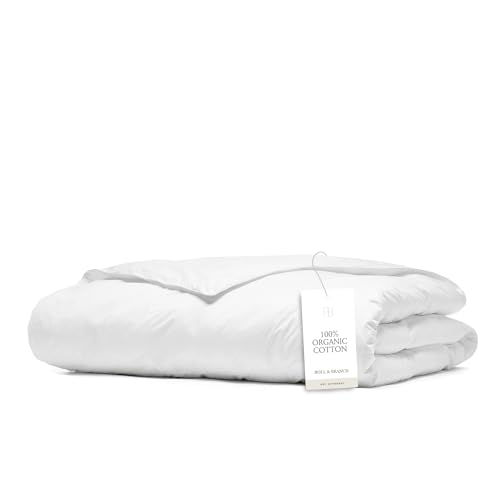
- Best overall: Boll & Branch Down Duvet Insert, Full/Queen, All Season — Check on Amazon
- puredown Goose Down Duvet Insert, Full/Queen, 800 Fill Power — Check on Amazon
- Brooklinen All Season Down Alternative Comforter, Full/Queen — Check on Amazon
- Buffy Cloud Comforter, Full/Queen — Check on Amazon
See 2 more Amazon options
- Buffy Breeze Comforter, Full/Queen — Check on Amazon
- Egyptian Bedding Siberian Goose Down Comforter, Queen — Check on Amazon
Read the full guide ↓
Disclosure: As an Amazon Associate, topratedkitchenware.com earns from qualifying purchases. Links to Amazon on this page are affiliate links; they cost you nothing extra. Listing details such as price and availability change often, so check the current Amazon listing before you buy.
Here is the honest headline before anything else: no single queen duvet insert on Amazon verifiably costs anywhere near $1,000. We went looking for one — through listings, price trackers and premium-brand storefronts — and the most expensive queen insert we could tie to a real Amazon offer is the Boll & Branch Down Duvet Insert — check price on Amazon. Below that, the verified premium tier steps down through several lower tiers. The $500-to-$1,000 single-insert band on Amazon is, as far as verifiable offers go, empty. Genuine four-figure duvets exist — Sferra, Matouk, 900-fill-power Hungarian goose down, eiderdown — but they sell direct or through boutiques, not through an Amazon listing we could verify, and we name them below without links rather than pretend otherwise.
So this guide does two things. First, it ranks the six best premium duvet inserts you can actually buy on Amazon under $1,000, judged the way inserts should be judged: on the attachment hardware (corner loops and tabs that keep an insert from bunching inside its cover), on shell construction (baffle box versus sewn-through), on fill honesty, and on whether the size on the label matches the cover you own. Second, it shows you how $1,000 is honestly spent in this category — as a system. A flagship all-season insert, a summer-weight insert and a guest-bed insert together sit well inside the budget, with part of the $1,000 deliberately left unspent, because spending it would mean inventing a product that does not exist. Every pick below is shown in the queen / full-queen size, you can check the current price on Amazon for each one, and every warmth, loft and fill-power figure is a maker claim, flagged as such.
In this guide
Quick Picks
Short on time, or comparing several options at once? Each row below names a buyer type and the insert that suits it, with a link to the listing.
| Buyer type | Pick | Why it stands out | Link |
|---|---|---|---|
| Best overall | Boll & Branch Down Duvet Insert, Full/Queen, All Season | The highest verifiable insert on Amazon: responsibly sourced down, organic cotton baffle box, corner loops | Check on Amazon |
| Best fill specification | puredown Goose Down Duvet Insert, Full/Queen | Maker-stated 800 fill power, 93% goose down, 3D baffle box and corner tabs — check price on Amazon | Check on Amazon |
| Best down alternative | Brooklinen All Season Down Alternative, Full/Queen | Baffle-box recycled-fiber fill in a cotton sateen shell from a bedding specialist | Check on Amazon |
| Best washable all-rounder | Buffy Cloud Comforter, Full/Queen | Machine washable, corner tabs, lyocell shell — the easy-care premium pick | Check on Amazon |
| Best for hot sleepers | Buffy Breeze Comforter, Full/Queen | All-eucalyptus summer weight for warm rooms and warm sleepers | Check on Amazon |
| Best value in real down | Egyptian Bedding Siberian Goose Down, Queen | 60 oz of down in a baffle box, in the lowest tier of this guide — check price on Amazon | Check on Amazon |
How These Picks Were Chosen
The first filter was verification, and at this budget it is the filter that does most of the work. Every linked product below is a real Amazon listing whose ASIN we could tie to the exact product and size — check the current price on Amazon on the live listing. Where a famous premium product could not meet that bar — Brooklinen’s All Season Down comforter, seen on Amazon’s own Brooklinen storefront in the upper premium tier but with no isolable full/queen ASIN — it is named in the ceiling section below, unlinked, with the reason stated. We would rather show you verified listings and one honest explanation than a link and a guess.
The second filter was insert fitness, because an insert is not just a comforter with a higher price. An insert lives inside a duvet cover, so we graded the hardware and construction that decide whether it behaves there: corner loops or tabs for tying to the cover’s inner ties, baffle-box construction (internal fabric walls that let down loft fully and stop it migrating) versus plain sewn-through quilting, shell thread count and down-proofing, and the insert’s actual dimensions against standard queen covers. An oversized 98×90 insert is a feature in a matching oversized cover and a bunching problem in a standard 90×90 one, and the reviews say which is which.
The third filter was fill honesty. Fill power, warmth ratings and loft figures are maker claims — there is no mandatory audit of an Amazon listing — so we print them attributed, and we distinguish carefully between down clusters, which insulate, and feather or down fiber, which mostly adds weight. None of the six picks below is a fiber product wearing a down name; where a pick’s specification rests on reviewer measurement rather than the maker’s own page (the Boll & Branch fill-power figure is the notable case), the review says so openly. Comfort claims only, throughout: no insert treats allergies, night sweats or any condition, and the one “hypoallergenic” label in this guide is printed as what it is — a maker’s label on a synthetic fill.
Finally, the budget itself. Because no single insert verifiably reaches anywhere near the $1,000 budget, we did not pad this guide with a token near-budget product. The six picks span the premium range from the flagship tier down to the lowest tier in this guide, and the allocation section further down shows three complete ways to use a budget of up to $1,000 across beds and seasons, with part of the budget deliberately left unspent in each plan.
The 6 Best Duvet Inserts Under $1,000
Boll & Branch Down Duvet Insert, Full/Queen, All Season
Who it suits: The buyer who wants the single best insert Amazon verifiably sells, with sourcing paperwork to match its premium position.
This is the ceiling of the verifiable Amazon insert market, and it earns the position on construction rather than marketing. The fill is responsibly sourced down (Responsible Down Standard certified, per the maker) inside a baffle-box shell of certified organic long-staple cotton — baffle boxes being the construction that lets down expand to its full loft instead of being pinched flat at every stitch line. It carries Fair Trade certification and OEKO-TEX Standard 100 screening, comes in three weights (Lightweight, All Season and Ultraweight — this guide prices the All Season, the midweight), and, critically for an insert, it has corner loops that tie to your cover’s internal ties so the insert stays spread to the corners instead of migrating into a lump at the foot of the bed. This guide covers the full/queen All Season — check price on Amazon for the current price of that configuration; the brand’s other weights and sizes sit in different tiers.
- The highest verifiable queen insert on Amazon, at the top of the premium tier — and the construction justifies the top slot: baffle box, organic cotton, certified down.
- Corner loops for cover ties, the single most important insert-specific feature.
- Three warmth weights under one listing family, so the summer and winter versions match in shell and sizing.
Honest limitation: Boll & Branch does not publish a fill-power figure for this insert. The 650 fill-power number you will see in coverage of it comes from reviewers (Sleep Foundation), not from the maker — at this flagship tier, the one specification that best predicts warmth-per-ounce is the one the brand leaves unstated. The Amazon review record is also thin (the brand sells mainly direct), so you are leaning on the maker’s reputation more than on a deep base of Amazon buyer reports.
Choose it if you want one flagship insert, ethically sourced, that will live inside good covers for a decade. Skip it if you need a published fill-power figure to justify the spend, or if your cover has no internal ties to use its loops with.
puredown Goose Down Duvet Insert, Full/Queen, 800 Fill Power
Who it suits: The specification-led buyer who wants the strongest published numbers in the guide.
Where Boll & Branch withholds its fill-power figure, puredown leads with its own: a maker-stated 800 fill power, 93% white goose down, 40 ounces of fill in the full/queen, wrapped in a 700-thread-count cotton shell with 3D baffle-box construction and a pinch-pleat finish. It is oversized at 98×90 inches — eight inches wider than a standard queen insert — which drapes generously over the mattress sides and fills an oversized cover properly. Corner tabs are fitted for tying into a cover. The maker claims RDS and OEKO-TEX Standard 100 certification. Check the current price on Amazon — this sits in the second-highest tier among the verifiable inserts in this guide and, on paper, offers the most warmth for its weight at the top of the market: 800 fill power is the grade where down gets genuinely light for its warmth.
- Maker-stated 800 fill power and 93% down content — the strongest published specification in this guide.
- 3D baffle box, 700 TC cotton shell and corner tabs: the full insert construction checklist.
- Oversized 98×90 dimensions suit deep mattresses and oversized covers.
Honest limitation: Two practical catches. First, the care label: coverage of this comforter lists it as dry clean only, which at this size means professional laundering bills across its life. Second, the oversizing cuts both ways — inside a standard 90×90 queen cover, the extra eight inches of width have nowhere to go and will fold and bunch; measure your cover before ordering, not after.
Choose it if your covers are oversized or you will buy one to match, and you want the maximum published specification in this guide. Skip it if your covers are standard 90×90 and you do not want to replace them, or if dry-clean-only care is a deal-breaker.
Brooklinen All Season Down Alternative Comforter, Full/Queen
Who it suits: The buyer who wants a premium insert without animal fill — for preference, household rules or a partner’s sensitivities.
Brooklinen’s down-alternative is the synthetic pick that behaves most like a designed bedding product rather than a commodity one. The fill is recycled microfiber (RPET spun from recycled bottles) distributed through a baffle-box construction — the baffles matter even more for fiber than for down, because fiber has no natural cluster structure to redistribute itself — inside a 100% cotton sateen shell. The maker labels it hypoallergenic, which we print as a maker’s label: a synthetic fill does not support dust-mite food the way untreated natural fill can, but no insert is a medical product. For the full/queen All Season, check price on Amazon — it sits in the mid-premium tier, below the flagship down picks, and the live listing is the place to confirm the current price.
- Baffle-box construction keeps the recycled fill evenly spread inside a cover — no cold corners.
- Cotton sateen shell feels like bedding, not like a sleeping bag.
- The premium down-alternative benchmark, from a specialist bedding brand.
Honest limitation: Brooklinen does not recommend machine washing this comforter, which is a real inconvenience in a product category whose whole point is living inside a washable cover system — spot cleaning and professional laundering are the maker’s route. Its Amazon review record is also thin because the brand sells mainly through its own site; and attachment hardware is not a headline feature of this listing, so confirm the corner-loop arrangement on the live listing before relying on it with a tie-less cover.
Choose it if you want the best-regarded down-alternative insert and your laundry routine can live with spot cleaning. Skip it if you wash everything at home on principle, or if you need verified corner loops confirmed before purchase.
Buffy Cloud Comforter, Full/Queen
Who it suits: The buyer who wants premium feel with none of the premium care burden — the insert that goes in the home washing machine.
The Cloud is built from eucalyptus lyocell in the shell and layers of recycled-fiber fill (the maker puts it at roughly fifty recycled bottles per comforter). At 90×90 inches it is a true standard queen size, it has corner tabs for tying into a cover, and unlike the two down picks above it, it is machine washable at home — which, across a ten-year life, quietly offsets much of its premium position against the dry-clean-only puredown. For the full/queen, check price on Amazon — it sits in a lower tier than the down picks above. As an insert it is the pragmatist’s premium: soft, even, washable, and sized to fit the covers people already own.
- Machine washable at home — the lowest lifetime care cost in this guide.
- Corner tabs and a true 90×90 queen size that matches standard covers.
- Lyocell shell is smooth and cool-handled compared with cotton at this tier.
Honest limitation: Recycled-fiber fill does not loft or recover like down clusters; expect a flatter, more even drape and a gradual loss of puff across years of washing that a good down insert would shrug off. It is also a midweight warmth — cold sleepers in cold houses will want it as one layer of a system, not the whole system.
Choose it if washability and standard sizing matter more than maximum loft. Skip it if you are chasing the cloud-like height of real 800-fill down — this is a different, flatter kind of comfortable.
Buffy Breeze Comforter, Full/Queen
Who it suits: Hot sleepers and warm-climate households building the summer half of an insert system.
The Breeze is the Cloud’s warm-weather sibling: eucalyptus lyocell in both shell and fill, a lightweight build of about five pounds, corner tabs, and a 90×90 queen footprint. In an allocation, this is the insert that makes the flagship down picks usable year-round — the down comes off the bed in June, the Breeze goes in the same cover, and nobody sleeps under a winter duvet in August out of laziness. It sits in a lower tier than the flagship down picks — check the current price on Amazon before you plan around it, as the live price for this pick can vary, and the allocation plans below are best costed from the live listings at the time you buy.
- All-eucalyptus construction — the coolest-handling insert in the guide.
- Corner tabs and standard 90×90 sizing; swaps into the same cover as your winter insert.
- Lightweight at roughly five pounds — easy to wash, store and swap seasonally.
Honest limitation: It is a summer weight, full stop: as a household’s only insert it will leave cold sleepers cold by November. And check the live listing carefully when you buy — if its current price has moved up a tier when you check, the value case weakens and the plan totals in this guide will shift accordingly.
Choose it if you are building a two-insert seasonal system or sleep hot in a warm room. Skip it if you want one insert that must handle January on its own.
Egyptian Bedding Siberian Goose Down Comforter, Queen
Who it suits: The value hunter who wants genuine down and baffle-box construction in the lowest tier of this guide.
On specification, this is the most surprising product in the guide: 60 ounces of Siberian goose down — half again the puredown’s fill weight — inside a 600-thread-count Egyptian cotton shell with baffle-box construction, positioned in the lowest tier of this guide — check price on Amazon. Review coverage lists its fill power at 750, a maker figure we print as such. Sixty ounces is a lot of down; this is a warm, heavy-draping insert, the opposite philosophy from the high-fill-power lightweights above it. The honesty requirement runs the other way here: position it by its tier rather than by any fixed figure, and cost it in any plan below from the live listing at the time you buy.
- 60 oz of real goose down in a baffle box — the most fill weight in the guide, in the lowest tier here.
- 600 TC Egyptian cotton shell, a specification usually found a tier up.
- The guest-bed or second-bed route to genuine down inside a $1,000 system.
Honest limitation: Check the current price on Amazon before anything else — if the live queen price has moved up a tier, the value story and Plan 3’s costing both change. Fill weight is also not fill quality: a heavier insert is warmer and weightier on the body, which some sleepers love and others find oppressive, and brand-level coverage of this maker’s range includes buyer reports of specification variance on a sibling variant, so check the received product against the listing.
Choose it if you want real down on a second bed, or maximum warmth weight on the main bed, in this guide’s lowest tier. Skip it if you want the strongest published fill-power specification instead — take the puredown instead.
Comparison Table
| Product | Fill | Construction / attachment | Price | Link |
|---|---|---|---|---|
| Boll & Branch Down Duvet Insert, All Season | Responsibly sourced down | Baffle box, organic cotton; corner loops | Check price on Amazon | Check on Amazon |
| puredown Goose Down, 800 Fill Power | 93% goose down, 40 oz | 3D baffle box, 700 TC cotton; corner tabs | Check price on Amazon | Check on Amazon |
| Brooklinen Down Alternative, All Season | Recycled microfiber (RPET) | Baffle box, cotton sateen shell | Check price on Amazon | Check on Amazon |
| Buffy Cloud | Recycled fiber, lyocell shell | Quilted; corner tabs; machine washable | Check price on Amazon | Check on Amazon |
| Buffy Breeze | Eucalyptus lyocell shell and fill | Quilted; corner tabs; lightweight | Check price on Amazon | Check on Amazon |
| Egyptian Bedding Siberian Goose Down | Goose down, 60 oz | Baffle box, 600 TC Egyptian cotton | Check price on Amazon | Check on Amazon |
How to Choose a Duvet Insert Under $1,000
- Start from the ceiling, not the budget. Since no verifiable Amazon insert reaches anywhere near the $1,000 budget, a $1,000 budget is a system budget. Decide first whether you are buying one flagship or a flagship plus seasonal and guest inserts — the allocation section below lays out both approaches, to be costed from the live listings.
- Match the insert size to your cover, exactly. Measure the cover’s inside dimensions. A standard queen cover is about 90×90; the puredown is 98×90 and will bunch in one. Oversized inserts need oversized covers.
- Check the attachment hardware. Corner loops or tabs on the insert, ties inside the cover. Both halves present means the insert stays spread; either half missing means weekly re-shaking and corner fishing.
- Prefer baffle box for down. Internal fabric walls let down loft and stop migration. Sewn-through quilting pinches fill at every seam and suits fiber fills and summer weights better.
- Read fill power and fill weight together. Fill power (a maker claim) is warmth per ounce; fill weight is how many ounces you get. 800 fill power at 40 oz and 750 at 60 oz are different philosophies — light versus heavy warmth — not a simple ranking.
- Discount any fill-power figure the maker won’t print. If the number comes only from reviewers, as with the Boll & Branch, treat it as informed estimation, not specification.
- Price the care, not just the product. Dry-clean-only down at queen size costs real money across a decade. A machine-washable insert in a lower tier can be the cheaper ten-year purchase than a higher-tier one that needs professional cleaning.
- Check the size selector twice. Premium listings bundle twin, queen and king under one page, and the headline price is rarely the queen. Prices differ by size on the same listing — select Full/Queen before comparing anything, and check the current price on Amazon for that size.
- Treat warmth labels as unstandardized. “All season” means different things at different brands; three-weight systems like Boll & Branch’s are more informative than a single label.
- Keep the receipt discipline. Brand trials and warranties are usually direct-purchase terms; an Amazon purchase follows Amazon’s return terms. Judge a down insert after it has fully lofted for 24–48 hours out of its packaging.
The $1,000 Question: What the Top of Amazon Actually Looks Like
It is worth understanding why the $500-to-$1,000 band is empty, because the reason tells you where the money in a premium insert actually goes. Down pricing is driven by fill power and down purity, and the genuinely scarce grades — 900 fill power Hungarian goose down, Canadian Hutterite down, eiderdown, of which the world yields only a few thousand kilograms a year — are produced in quantities too small and at wholesale prices too high for Amazon’s fee structure and price-competition dynamics. Those products sell where their buyers already are: Sferra’s Cardigan heavyweight sits well above this guide’s budget direct, a comparable Matouk sits above the budget as well, Plumeria Bay sells its 900-fill-power Hungarian line from its own store, and heritage makers like Scandia Down price above this guide’s budget entirely. None of them is one click away, and any Amazon listing that appears to offer their specifications well inside this guide’s budget should be read as a claims problem, not a bargain — fill-power figures on listings are maker-stated and unaudited, which is why this guide leans on brands whose claims can be cross-checked against independent coverage.
Two more near-misses deserve naming, because they are the products a reader is most likely to ask about. Brooklinen’s All Season Down Comforter was seen on Amazon’s own Brooklinen storefront, positioned in the same upper premium tier as the puredown — but Brooklinen issues separate ASINs per size and warmth, and the exact full/queen All Season ASIN could not be isolated, so it is named here unlinked as the first swap-in: if it verifies with a live featured offer when you read this, it belongs in this guide’s top two. (Do not substitute a king-size or lightweight listing for it — they are different products wearing the same name.) Casper’s Down Duvet was seen on an Amazon-fulfilled mirror in the mid-premium tier, but no ASIN could be verified, and the listing’s own reviews include a buyer alleging the product arrived unbranded — so it stays unlinked too. And for readers who like the Boll & Branch but not down: the same maker’s down-alternative insert is available on Amazon in the upper-mid premium tier, a legitimate sibling option that simply lost its slot here to the Brooklinen on shell and brand-specialist grounds.
One Insert or a System? Spending $1,000 as a System
Because the flagship sits well below the $1,000 budget, the interesting question at this budget is what the rest of the budget does. Here are the three plans this guide stands behind — cost each one from the live listings when you buy, by checking the current price on Amazon for every pick in the plan.
Plan 1 — one bed, three seasons. The Boll & Branch All Season — check price on Amazon — covers autumn through spring. The Buffy Breeze — check price on Amazon — takes the same cover for summer. The Buffy Cloud — check price on Amazon — covers the guest bed or the shoulder-season weeks when the down feels like too much and the Breeze like too little. Together they sit well inside the $1,000 budget, with part of the budget left unspent. One caution attaches to this plan: cost the Breeze from its live listing when you buy, as its current price can vary and will move the plan’s total.
Plan 2 — two beds, both genuine down. The Boll & Branch — check price on Amazon — on the main bed, the puredown — check price on Amazon — on the second bed — two baffle-box down inserts, two covers, no fiber anywhere, and part of the $1,000 budget left unspent. This is the plan for a household that has already decided down is the point and wants the second bed to stop feeling like the demoted one.
Plan 3 — main bed, guest bed, mixed fills. The puredown — check price on Amazon — on the main bed, the Brooklinen Down Alternative — check price on Amazon — where a washable-adjacent, animal-free insert suits the household, and the Egyptian Bedding — check price on Amazon — as the heavy, warm spare, with part of the $1,000 budget left unspent. Cost the Egyptian from its live listing when you buy, as its current price will move this plan’s total.
What none of the plans does is spend the remainder for its own sake. The unspent part of the budget in each plan is not a failure of ambition; it is the honest shape of this market. It buys excellent covers, which — as the next section argues — do as much for how an insert performs as the insert itself.
Loops, Tabs and Baffle Boxes: Judging an Insert Like an Insert
A comforter is judged on how it sleeps. An insert must also be judged on how it stays — because inside a cover, an insert has one job beyond warmth, which is to remain spread evenly from corner to corner while being slept under, washed around and shaken out. Three construction details decide that, and they are worth more of your attention than any warmth label.
First, attachment. Corner loops (fabric loops sewn at the insert’s corners) and corner tabs (short fabric flaps) exist to be tied to the corresponding ties inside a duvet cover. With all four corners tied, the insert cannot rotate, slide or bunch; without them, gravity and sleep movement walk the insert toward the foot of the cover within nights. The Boll & Branch has loops; both Buffys and the puredown have tabs. If your cover has no internal ties, add clip-style duvet fasteners to your basket instead — but know that a premium insert without hardware, in a cover without ties, is a recurring annoyance purchased at a premium price.
Second, the box. Baffle-box construction sews vertical fabric walls between the shell layers, creating true three-dimensional cells the down can expand into. Sewn-through construction stitches shell directly to shell, pinching the fill to nothing at every seam — cheaper, lighter, and perfectly reasonable for summer weights and fiber fills, which is why the Buffys wear it without apology. For down at flagship prices, baffle box is the correct expectation, and all three down picks in this guide meet it.
Third, the shell itself. An insert’s shell is hidden inside a cover, so its job is not beauty but containment: a down-proof weave tight enough that quills do not migrate through it and wake you with pinpricks, at a thread count high enough to resist years of friction against the cover. The cotton shells in this guide run from 600 to 700 thread count on the down picks — figures that are also maker-stated, but consistent with the price tier and with the absence of leakage complaints in coverage of these specific products. The lyocell shells on the Buffys take the opposite approach: a smoother, slicker surface that sheds fiber less and slides into a cover more easily, at some cost to the crisp structure a cotton shell gives a baffle box. Neither is a flaw; they are different engineering answers to the same hidden job, and both beat the thin, rustly shells that give budget inserts their telltale crinkle.
Fourth, dimensions. Inserts and covers are nominally sized and actually variable: queen inserts in this guide alone run 90×90 (both Buffys, the Egyptian) and 98×90 (the puredown). A two-inch mismatch is invisible; an eight-inch mismatch is a folded ridge down one side of your bed. Measure the cover you own — inside seam to inside seam — before choosing, and if you are buying both, buy the cover to the insert, not the other way round.
Common Buying Mistakes
- Assuming a $1,000 insert exists on Amazon and paying flagship money for a mid-tier listing dressed in luxury language. No verifiable insert reaches anywhere near the $1,000 budget.
- Comparing headline prices across a listing’s sizes — the price shown is often the twin’s. Select Full/Queen first, then compare.
- Buying an oversized 98×90 insert for a standard 90×90 cover and blaming the insert for bunching that was really a sizing error.
- Ignoring attachment hardware entirely: no loops or tabs on the insert, no ties in the cover, and a nightly migration problem.
- Judging down by fill weight alone, or by fill power alone. Warmth is the two numbers multiplied by construction — and all of them are maker claims until independently tested.
- Believing a fill-power figure the maker itself does not publish, without noticing it came from a review roundup.
- Forgetting the care label until the first cleaning: dry-clean-only at queen size is a recurring cost, not a footnote.
- Buying one heavyweight insert for all seasons instead of a midweight plus a summer insert — the system costs less than the flagship mistake and sleeps better in July.
- Expecting a synthetic fill labeled “hypoallergenic” (a maker’s label) to manage a diagnosed allergy. It is a comfort product; manage conditions with a clinician’s advice and encasements designed for the purpose.
- Judging a down insert in its first hour out of the vacuum packaging. Give it 24–48 hours to loft before deciding anything.
Final Recommendation
- Most buyers: Boll & Branch Down Duvet Insert, Full/Queen, All Season.
- Specification-first buyers: puredown Goose Down Duvet Insert, 800 Fill Power.
- Animal-free households: Brooklinen All Season Down Alternative.
- Washability-first buyers: Buffy Cloud.
- Hot sleepers: Buffy Breeze, as the summer half of a system.
- Second-bed value in real down: Egyptian Bedding Siberian Goose Down.
Our top two are the Boll & Branch for the main bed — the most expensive insert Amazon verifiably sells, and the one whose construction, sourcing and attachment hardware are all at the level its price implies — and the puredown for anyone who would rather have the strongest published specification (800 fill power, 93% down, 3D baffle box) in a lower tier than the flagship, with oversized covers to match. If your budget really is $1,000, do not spend it hunting for a single insert that does not exist: take Plan 1’s system — flagship, summer insert, guest insert, well inside the budget — and put the remainder toward the covers those inserts will live in. That is what $1,000 honestly buys in this category, and it buys it well.
Frequently Asked Questions
Can you actually buy a $1,000 duvet insert on Amazon?
Not that we could verify. The most expensive queen insert tied to a real Amazon offer was the Boll & Branch Down Duvet Insert, which sits well below a $1,000 budget — check price on Amazon. Genuine $1,000-plus duvets — Sferra, Matouk, 900-fill-power Hungarian down, eiderdown — sell direct or through boutiques. A $1,000 budget on Amazon is best spent as a system of inserts across seasons and beds, as the allocation plans in this guide show.
What is the difference between a duvet insert and a comforter?
Often nothing but the name — many products, including several in this guide, are sold under both words. Functionally, an insert is designed to live inside a duvet cover, which is why the insert-specific features in this guide are attachment hardware (corner loops and tabs), baffle-box construction and dimensions matched to your cover. A comforter used without a cover is judged more on its shell fabric and looks.
Do I need corner loops or tabs on an insert?
If your duvet cover has internal ties, yes — tying all four corners is what keeps an insert spread evenly instead of migrating toward the foot of the bed. If your cover has no ties, either choose an insert whose friction and fit are good in your cover’s exact size, or add clip fasteners. Hardware on only one side of the pairing does nothing.
Is 800 fill power worth paying for?
Fill power is warmth per ounce, and it is a maker claim on a listing. At 800, down is genuinely lighter for the same warmth, which drapes better and stores smaller — worth it if you notice weight on the bed or swap inserts seasonally. It is not worth it as a bare number: an 800-fill insert with less fill weight can be cooler than a well-filled 700. Read fill power, fill weight and construction together.
Down or down alternative at this price?
Down wins on loft, drape, longevity and warmth-per-weight, and the top of this guide is down for those reasons. Down alternative wins on washability (the Buffy Cloud goes in a home machine; the puredown is dry clean only), on household preference, and on tier — the Brooklinen delivers baffle-box construction in a lower tier than the flagship down picks. Neither is a medical product; “hypoallergenic” on a synthetic fill is a maker’s label, not a treatment.
How long should a premium insert last?
A good down insert, protected by a cover and cleaned as directed, is commonly a ten-year-plus purchase — which is why this guide weights construction and care costs so heavily. Fiber fills flatten sooner, typically losing noticeable loft across three to five years of regular washing. Spread over a decade of use, a flagship insert is best judged on years of service rather than on the figure at checkout.
What size insert should I buy for a queen duvet cover?
Measure the cover’s inside dimensions and match them. Most queen covers are about 90×90 inches, which suits the Buffy and Egyptian inserts in this guide exactly. The puredown is oversized at 98×90 and needs an oversized cover; in a standard cover it will fold and bunch. When buying both together, choose the insert first and the cover to fit it.
