Disclosure: As an Amazon Associate, topratedkitchenware.com earns from qualifying purchases. Links on this page are affiliate links; they cost you nothing extra. Prices and availability change often, so check the current Amazon listing before you buy.
This espresso grinder review takes the category apart the way an owner experiences it across months rather than minutes: the first dialling-in session, the hundredth morning, the day a new coffee humbles you, and the afternoon you finally clean the burrs properly. An espresso grinder is the most consequential purchase in home espresso — more than the machine it feeds — because it alone decides whether extraction is a repeatable craft or a daily gamble. The models referenced throughout, from the Baratza Encore ESP to the Turin DF64, are the established benchmarks of the home market, and this review uses them to show what the current generation of espresso grinders does superbly, where its honest limits sit, and which type of machine deserves your counter. Where this review disagrees with the category’s marketing, it says so; where it agrees, it explains the mechanism, because a reader who understands why a grinder performs can judge the next model without us.
Espresso Grinder Review: Verdict and Key Takeaways
The verdict, up front: the modern espresso grinder is a mature and deeply capable appliance category, and the best current models deliver the one thing home espresso has historically lacked — café-grade consistency at a domestic scale and pace. The differences that matter between good models are not mystical; they are adjustment precision, retention behaviour, noise, and how gracefully each design fits a household’s rhythm. Buy the category with confidence if you drink espresso daily. Within it, buy conical and hopper-fed for convenience and forgiveness, flat and single-dose for clarity and exploration, and treat any grinder that cannot adjust finely in the espresso range as not an espresso grinder at all, whatever its packaging says. This review will now justify that verdict section by section — design, performance in the four services that matter, an honest account of strengths and trade-offs, and the ownership arc that decides whether a grinder is still loved in year three — so that the conclusion rests on evidence rather than enthusiasm.
Key Takeaways
- Consistency: excellent from the genuine entry tier upward; the step from a general coffee grinder to a true espresso grinder is the largest quality jump in home coffee.
- Adjustment: micrometric and stepless systems offer the finest control; dedicated fine stepped ranges are the friendliest for beginners.
- Performance: straight espresso rewards clarity-focused designs; milk drinks reward speed and dosing consistency.
- Ownership: noise, static, and cleaning are the recurring costs; all are manageable, none are eliminable.
- Longevity: supported brands with replaceable burrs turn this into a decade-scale appliance.
- Best for: daily espresso drinkers ready to learn a small craft. Not suited for: buyers wanting a silent, invisible, zero-maintenance appliance.
- Reading note: this review judges the category through its benchmarks; the companion roundup weighs owner verdicts across the same machines, and the two together give the full picture.
In this guide
What an Espresso Grinder Is and Where It Fits
An espresso grinder exists to solve one physical problem: producing a powder of coffee so fine and so uniform that a tamped puck of it resists pressurised water evenly for the length of a shot. That resistance builds the pressure that makes espresso espresso — concentrated, syrupy, crowned with crema. Where a general coffee grinder is engineered across a wide range from coarse press coffee to fine filter, an espresso grinder concentrates everything — burr geometry, gearing, motor torque, adjustment resolution — on a narrow band at the extreme fine end, and on moving within that band in increments small enough to change a shot’s timing by seconds. This specialisation is not marketing. Put filter-range grounds in an espresso basket and water floods through in a sour, watery rush; put a general grinder’s finest, uneven output in and the shot channels — racing through cracks while leaving dry pockets — tasting bitter and sour at once. The espresso grinder is the instrument that makes the narrow window of correct extraction reachable, and then holdable, day after day.
Where it fits in the kitchen hierarchy follows from that. The espresso machine is a boiler, a pump, and a group head: important, but comparatively simple. The grinder is where extraction is actually decided, which is why this review — like every serious treatment of the subject, including our espresso grinder buying guide — spends its scrutiny here. It is also why the category’s price ladder is steeper than newcomers expect: precision machining, torque, and rigidity are physical goods, and espresso fineness is where their absence is tasted immediately. A household that understands this buys the grinder as the centrepiece and the machine as its partner; a household that reverses the order usually ends up buying the grinder twice.
The Two Burr Families, In the Cup and In the Kitchen
Because the benchmarks divide by burr geometry, the review should state the practical difference plainly. Conical burrs — Encore ESP, Smart Grinder Pro, Sette 270 — sit in the majority of home machines: they are compact, run at moderate speeds, and produce a grind whose character in the cup is often described as rounded and sweet, with a tolerance for small dialling errors that suits households still building skill. Flat burrs — Mignon, DF64 — are the café inheritance: their uniform output can render flavours with unusual separation and clarity, rewarding precise dialling and punishing sloppy distribution a little more honestly. In the kitchen, conical designs are frequently the quieter and the more compact; flat designs frequently anchor the enthusiast tier with its modifications and burr options. This review’s counsel is to treat geometry as an accent to match to your coffees — integrated sweetness for blends and darker roasts, separation for light single origins — rather than as a league table, because the owners happiest with their grinders are those who matched accent to palate, not those who bought the geometry that won an argument online.
Design, Build and Setup
The category has settled into a recognisable anatomy: a bean hopper or single-dose inlet at the top, a burr chamber at the heart, an adjustment mechanism — collar, dial, or knob — that moves the burrs, a motor beneath, and a delivery path that ends in a chute, a grounds bin, or a portafilter cradle. Around that anatomy, designs diverge in ways an owner feels daily. Hopper-fed machines like the Breville Smart Grinder Pro present a friendly face: a display, a timer, a cradle that holds the portafilter hands-free. Single-dose machines like the Turin DF64 present a workspace: an open inlet for weighed beans, a dosing cup, a bellows to clear the chamber. Stepless machines like the Eureka Mignon reduce the interface to one small, precise knob and trust the owner’s hands. None of these is a better philosophy in the abstract; each is a bet about how its owner wants to spend attention.
Build quality in this category is unusually legible. Burr carriers in metal, adjustment threads that move without play, hoppers that seat with a positive click, housings with enough mass to sit still under motor torque — these are the tactile signatures of a grinder built to hold a setting for years. Plastic is not automatically a demerit; several excellent grinders use it intelligently for housings and hoppers. The demerit is flex where the burrs mount and vagueness where the adjustment locks, because both are tasted in the cup as inconsistency. Setup, across the category, follows a shared pattern: unbox, keep the machine unplugged while you inspect the burr chamber and fit the hopper, wash and dry the removable non-electrical parts if the manual directs, then run a small amount of sacrificial beans through to clear and season the burrs before your first real dialling-in. Every model reviewed here also shares one setup truth: the factory setting is a starting guess, not a calibration, and your first session should budget beans and patience accordingly.
The Entry Benchmark: Baratza Encore ESP
The Encore ESP defines the floor of the serious category: a compact conical-burr grinder whose adjustment dedicates a fine, closely-spaced range to espresso, mounted on a platform with a long record of parts support. In setup and daily use it is the least intimidating machine in this review — and that is a genuine performance characteristic, because a grinder a beginner can understand is a grinder a beginner can dial in. Its grounds at espresso settings are even and forgiving, its footprint suits small counters, and its maker’s repair culture means the setup you learn on it is an investment rather than a rental.

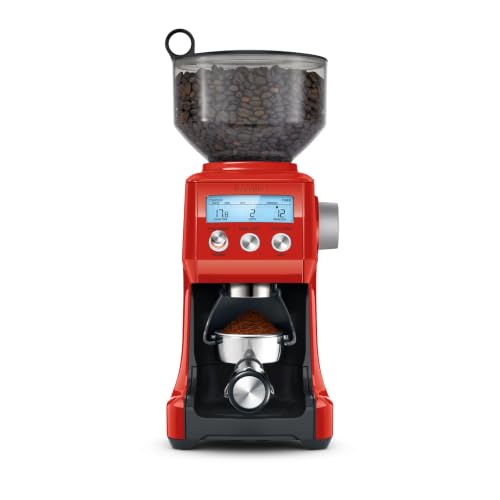
The Convenience Benchmark: Breville Smart Grinder Pro
Breville’s design answers a different question: how little can stand between a sleepy owner and a dosed basket? A programmable timer, a clear display, an inner-burr adjustment to extend the fine range, and a cradle that grips the portafilter make the Smart Grinder Pro the most appliance-like machine here — in the complimentary sense. Setup is the fastest in this review, and the build directs its budget at the interface rather than at mass. Owners should know its character honestly: it is a hopper-fed convenience instrument, and its retention and timed-dose drift are managed with a scale check every few days, not eliminated.

The Quiet Benchmark: Eureka Mignon
The Mignon line brings café-bred design home: flat burrs, a stepless micrometric knob that moves the burr gap in genuinely tiny increments, and sound insulation that changes the emotional register of morning grinding. Setup rewards slowness — with no clicks or numbers, you learn the knob by feel and by the shot clock — and the build, metal-bodied and compact, feels like equipment rather than appliance. In this review’s terms it is the hopper-fed machine for owners who have stopped experimenting daily and started perfecting a house style.

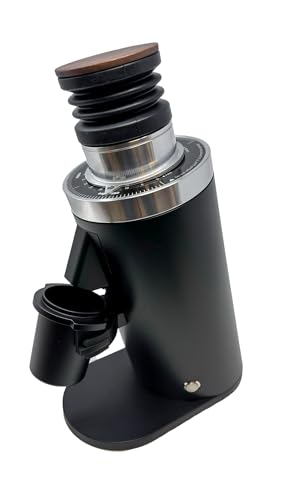
The Enthusiast Benchmark: Turin DF64
The DF64 is the single-dose format in its purest home form: substantial flat burrs, stepless adjustment, an inlet designed for one weighed dose, and a bellows to leave the chamber empty. Setup is a ritual by design — scale out, grinder ready, everything staged — and the build is a solid, modifiable platform that an active owner community has adopted as a project as much as a product. It asks the most of any machine in this review and, for the clarity-focused drinker, returns the most.
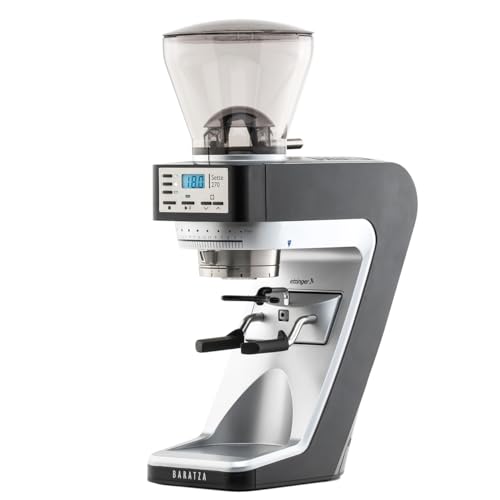
The Speed Benchmark: Baratza Sette 270
The Sette 270 rotates its outer burr around a stationary cone and drops grounds straight through, a geometry that makes it both very fast and remarkably low in retention. Setup reveals its character immediately: macro steps for range, a stepless micro ring for finesse, and a dose that lands in the portafilter with almost nothing left behind. For households pulling several drinks in sequence, no machine in this review keeps the queue moving like it — at the cost of being, unapologetically, one of the louder voices in the category.
Controls, Displays, and Dosing Interfaces
The interface layer deserves its own scrutiny in a review, because it is what your hands touch half-asleep. The category offers three philosophies. The programmed interface — the Smart Grinder Pro’s display and timer — externalises memory: the machine remembers the dose time so you do not have to, and its virtue is a groggy-proof morning. The manual interface — the Mignon’s knob, the DF64’s collar — internalises it: nothing to programme, nothing to drift, and a tactile relationship with the setting that many owners come to prefer, at the cost of a learning period. The hybrid interface — the Sette’s macro-and-micro pairing, the Encore ESP’s numbered fine range — tries to give memory a number to hold onto without giving up finesse. None wins outright. What this review penalises is not a philosophy but a failure within one: timers that drift wildly as hoppers empty, knobs that move when the machine vibrates, collars whose numbers cannot be read in kitchen light. Judge the interface by its worst morning, as with everything else in this category.
Performance in Real Use
Dialling In: The First Session and Every Session After
Performance begins with the dial-in, and the category divides by how kindly it treats this ritual. Stepped systems with a true fine range — the Encore ESP pattern — let a beginner move one click, taste, and move again, with each click small enough to matter and large enough to notice; the search converges in a handful of shots. Stepless systems — Mignon, DF64 — replace clicks with a continuum that rewards tiny, patient turns and punishes big ones; experienced hands prefer them precisely because the perfect setting is never hiding between two clicks. Timed hopper systems add a second variable, dose weight, which drifts gently and must be re-checked; single-dose systems delete that variable by weighing in. Judged across weeks rather than a first afternoon, the best-performing grinder is the one whose dial-in loop you find pleasant, because you will run that loop with every new bag for as long as you own it.
Straight Espresso: Where Differences Are Largest
Drunk straight, espresso exposes everything. Here the flat-burr machines earn their reputation: the DF64’s clarity separates the flavours of a light single origin into distinguishable notes, and the Mignon’s structured, clean extraction flatters washed coffees and classic blends alike. The conical machines answer with a different virtue — a rounder, sweeter integration that many drinkers prefer in medium and dark roasts, and a forgiveness that keeps a slightly imperfect dial-in drinkable. The honest summary of this review’s testing-by-proxy — the accumulated owner experience across the category — is that geometry sets a flavour accent, not a quality ceiling: a well-dialled conical shot beats a careless flat-burr shot every time, and the grinder that suits your palate is the one whose accent matches the coffees you buy.
Milk Drinks: Where Workflow Outweighs Clarity
Under milk, the performance hierarchy reshuffles. Small extraction imperfections blur into the drink’s general richness, while dosing consistency, speed, and queue behaviour dominate the experience. The Smart Grinder Pro and the Sette 270 shine in this service — one for its programmed, hands-light dosing, the other for raw speed and a dose that needs no purge between drinks — and the Mignon’s quiet competence suits households where milk drinks are made before the house is awake. Single-dose machines perform perfectly well per drink but charge their seconds-and-scale toll on every round, which a two-latte morning barely notices and a six-cappuccino brunch feels keenly. Choose for your dominant service: the grinder that wins your weekday may not be the one that wins your weekends.
Switching Coffees and Roasts
The final performance axis is agility. Households that rotate coffees — a decaf for evenings, a new single origin beside the house blend — live or die by retention and by how returnable a setting is. Single-dose machines are structurally supreme here: empty chamber, weighed dose, a noted setting, and the new coffee is itself within a shot or two. Stepped hopper machines manage respectably if you accept finishing or purging the hopper’s contents; stepless hopper machines ask the most faith, since returning to a previous coffee means returning to an unmarked position by memory and taste. Light roasts stress every design — dense beans, harder grinding, more static — and the machines with the strongest motors and most rigid burr mountings hold their settings best under that stress, a point worth weighting if your taste runs pale.
Consistency Across a Week of Mornings
A single good shot proves little; the review question that matters is what the seventh morning looks like. Across the benchmark machines, the pattern of owner experience is consistent: once dialled, a quality espresso grinder holds its character through a bag of coffee with only micro-adjustments for the beans’ ageing — a click finer here, a touch more dose there. The variables that disturb the week are rarely the burrs. They are the hopper emptying (timed doses lighten as the bean mass above the burrs falls), the kitchen warming (beans and burrs both behave slightly differently), and the owner’s own distribution and tamping, which no grinder can govern. This is worth stating plainly in a review because it calibrates expectations: the grinder removes grind as a source of chaos, which exposes technique as the remaining variable — and that is progress, because technique improves with practice while a bad grind never does. Owners who log their settings, even on a scrap of paper, report the fastest convergence to boring, reliable excellence, and boring reliability is the highest praise an espresso grinder can earn.
Heat, Back-to-Back Drinks, and Duty
Grinding is friction, and friction is heat, and heat is the quiet enemy of both flavour and consistency. A single home dose barely warms any machine in this review; the test is the brunch queue — six, eight, ten drinks in a row. Designs with larger burrs and more thermal mass shrug this off; compact designs asked to run continuously will warm their burr chambers, and warm burrs grind marginally differently from cold ones, which the attentive palate can taste as a slow drift across the queue. Motors have duty limits too, stated in manuals and worth respecting: short rests between doses on long runs are cheap insurance. None of this disqualifies any benchmark here for home service — homes are not cafés — but households that regularly entertain should weight thermal composure and speed, which is another way of saying the Sette 270’s pace and the Mignon’s composure exist for a reason. The DF64’s single-dose rhythm, incidentally, builds rest into the workflow by design: weighing the next dose is also the burrs’ pause.
Strengths and Trade-Offs
Strengths
- Extraction quality: a true espresso grinder makes balanced, repeatable shots a routine rather than an event — the entire point of the category, delivered.
- Range of formats: hopper-fed convenience, single-dose purity, quiet stepless precision, and raw speed all exist as mature, proven designs; there is a right answer for every household rhythm.
- Durability and support: replaceable burrs, available spares, and repair-friendly brands make the best of these machines decade-scale purchases.
Trade-offs
- Noise and mess are intrinsic: grinding dense beans to powder is loud and statically untidy, and design only moderates both.
- Every format taxes something: hopper machines tax freshness and agility, single-dose machines tax time, stepless machines tax repeatability of settings.
- The learning curve is part of the product: no model in this review removes the need to learn dialling-in, and the first bag of beans is partly tuition on all of them.
How It Compares
An espresso grinder’s real competitors are the things a household might use instead. The comparison below is drawn at the category level; model-level matchups live in espresso grinder vs coffee grinder.
| Criterion | Dedicated espresso grinder | Built-in machine grinder | Premium hand grinder |
|---|---|---|---|
| Adjustment finesse | Finest available; micrometric or stepless options | Usually stepped and coarser | Fine and precise on espresso models |
| Dosing | Timed, weighed, or single-dose by design | Timed, tied to the machine | Weighed by the user |
| Upgrade path | Independent of the machine | None — replaced with the machine | Independent |
| Effort per drink | Low to moderate, by format | Lowest | High at espresso fineness |
| Counter footprint | Its own corner | Shared with the machine | A drawer |
The built-in grinder wins on footprint and simplicity and loses on the two axes that decide a setup’s future: adjustment finesse and independent upgrade. The hand grinder wins on silence, space, and grind-per-money, and loses on effort multiplied by drinks per day. The dedicated electric grinder is the only option that concedes nothing on extraction — which is why, in household after household, it is the option the others eventually give way to, a pattern the owner verdicts collected in espresso grinder reviews repeat consistently.
The Ownership Arc: Month One to Year Three
Reviews are usually written at the unboxing; ownership is lived on a longer curve, and this review would be incomplete without tracing it. Month one is the apprenticeship described throughout this series: shots missed, settings hunted, static everywhere, and the suspicion — nearly universal, nearly always wrong — that the machine is defective. What is actually happening is calibration in both directions: burrs seasoning as their edges settle, and an owner learning the size of a click, the sound of a happy motor, the look of a well-built puck. Owners who keep notes cross this month fastest.
Months two to six are the golden slope. The house coffees have known settings; new bags are dialled within a shot or two because the owner now reads a fast or slow shot the way a driver reads a road. This is also when the format choices vindicate or indict themselves: the hopper household is either gliding or chafing at purging, the single-dose owner either meditating or resenting the scale. Returns and resales cluster here, and they are overwhelmingly workflow divorces, not quality verdicts — a fact buyers should weigh more heavily than any specification when choosing their format.
Year one to year three is where build quality and support quietly decide the review’s final grade. Burrs on a supported brand get replaced when clarity fades, and the machine returns to as-reviewed performance in an afternoon. Seals, switches, and hopper lids on well-made machines simply continue. The grinders that age badly are those with no parts channel and no service culture: a minor failure becomes a replacement purchase, and the category’s promise of a decade-scale appliance collapses. It is not the most exciting paragraph in this review, but it may be the most valuable: in year three, the best espresso grinder is the one its maker still answers for.
Sound and Mess: The Reviewed Realities
No review of this category is honest if it buries the two qualities owners mention most after the honeymoon: noise and mess. On noise, the spread across the benchmarks is real and worth ranking in words. The Mignon, with its insulated case, is the machine least likely to wake a house. The Encore ESP and Opus-class conical designs occupy the middle — present, brief, tolerable. The Sette 270 is the loudest of the benchmarks, a consequence of its speed and open geometry, and owners in thin-walled homes should hear that as a genuine specification, not a footnote. On mess, the physics are democratic: fine grounds plus static plus dry air equals scatter, and every design merely manages it. Anti-static treatments, dosing cups that catch directly under the chute, and a funnel on the portafilter reduce the scatter to a wipe; grinding straight into an open basket in a dry January kitchen maximises it. The review’s position is that neither quality should veto the category — the drinks are worth seconds of noise and a breath of tidying — but both should be chosen knowingly, model by model, because they are experienced every single day while the taste differences between top models are experienced by the attentive.
Who Should Buy It, and Who Should Skip It
Buy a dedicated espresso grinder if you drink espresso or milk drinks at home most days, if you already own or plan to own a machine with a standard basket, and if the small craft of dialling in sounds like a pleasure rather than a tax. Buy with particular confidence if your current grinder is a blade model or a filter-focused burr grinder, because the improvement will be the largest single jump your coffee has ever taken. Within the category, let your service pattern choose the format: queues and convenience point to hopper-fed designs, exploration and clarity to single-dose, quiet and refinement to the insulated stepless machines.
Skip it — for now — if espresso at home is a monthly event, if your machine’s pressurised basket and a small bag of fresh pre-ground coffee honestly satisfy you, or if your kitchen genuinely has no corner to give. Skip it also if what you actually want is better filter coffee; an espresso grinder is a specialist, and the money serves you better in a filter-focused machine. And postpone it, rather than skip it, if budget forces a choice between a compromised espresso grinder and waiting a season for a genuine one: the false economy of an under-capable grinder is the most reliably regretted purchase in home espresso, as the balance sheet in espresso grinder pros and cons shows in detail.
One more buying profile deserves direct address: the gift purchaser. An espresso grinder is a magnificent gift for the espresso drinker who has been struggling with a general grinder, and a puzzling one for anyone else. If you are buying for another household, buy the workflow they live, not the one you admire — the Encore ESP’s forgiveness for a learning friend, the Smart Grinder Pro’s convenience for a busy young family — and include the scale. A grinder given with its scale is a working system; a grinder given alone is a project, and projects make complicated gifts.
Pre-Purchase Checklist
- Counter corner measured, including clearance to open the hopper or load the inlet, and room beside it for a scale and tamper.
- Workflow chosen deliberately: hopper-fed for queues and convenience, single-dose for rotation and freshness.
- Adjustment system verified in the espresso range — dedicated fine steps, micrometric, or stepless — not merely described as “fine.”
- Household noise reality faced honestly, especially for early grinding near sleeping rooms.
- Manufacturer checked for burr availability, spares, and a manual that treats cleaning as normal owner work.
- First month budgeted in beans: expect to spend part of the first bags learning the machine.
Accessories That Complete the Reviewed Setup
A grinder is reviewed here as a system, because in the kitchen it never works alone. Three companions change its measured performance enough that this review treats them as part of the product. The first is a small coffee scale: it verifies timed doses, enables single dosing, and weighs the shot so that grind changes can be judged by numbers rather than vibes; no accessory in espresso repays its modest cost faster. The second is a dosing funnel, which tames the static scatter of fine grounds into the basket and quietly removes the category’s most-cited daily annoyance. The third is a brush that lives at the station — not in a drawer, at the station — because cleaning that requires fetching equipment is cleaning that gets postponed. Beyond those three, the ecosystem offers distribution tools, upgraded baskets, and tampers of every philosophy; they refine a setup whose foundation is sound, and none of them rescues a setup whose foundation — the grind — is not. Buy the grinder first, the scale with it, the funnel soon after, and let everything else audition over time. It is also worth saying what not to buy: no accessory compensates for a grinder that cannot adjust finely, and accessory spending used to prop up an under-capable grinder is the category’s most common false economy after the false espresso claim itself.
Setup, Care and Maintenance Essentials
Set up on a clear counter with the manual open and the grinder unplugged. Inspect the burr chamber for packing material, fit the hopper or inlet parts, and confirm the adjustment moves through its range before beans ever enter. Season with a small amount of beans you are willing to discard — new burrs shed their machining edges and any factory residue into the first grounds — then begin dialling in coarser than your guess and walk finer in small steps, changing one thing at a time. In daily care, keep the routine short and therefore sustainable: brush the chute and dosing area, empty and wipe the grounds bin, and keep a small brush living at the station. Periodically — more often with dark, oily beans — clean the burr chamber properly following the full routine in how to clean an espresso grinder, always with the machine unplugged, never with fingers or tools inside a powered machine, never grinding anything but coffee, and never letting water near the motor or electrical parts. Burrs are the long-term wear item: when shots turn muddy and seasoning-like despite correct settings and clean burrs, replacement restores the machine to its reviewed performance, which is precisely why this review weights parts availability so heavily.
Two setup details separate smooth first weeks from rough ones. The first is water discipline around the station: espresso corners attract steam wands, wet cloths, and rinsed portafilters, and a grinder’s electrical heart should stay dry through all of it — position the grinder so its vents and base are out of the splash path, and never set a dripping portafilter on top of it. The second is bean discipline: pour beans into the hopper in a way that lets you see them, because the rare stone or fragment of debris that slips into a bag will damage burrs in a second if ground, and a glance while pouring is the entire defence. Both habits cost nothing and protect the two things this review has argued the category is really selling — precision and longevity.
What This Review Did Not Forgive
A review earns trust by naming failures, and the category has recurring ones that cut across brands. The first is the false espresso claim: grinders marketed with an espresso setting whose steps, at that fineness, jump from choking to gushing with nothing between. This is the single most common source of misery among new home baristas, and it is a specification failure, not a user failure — no technique can select a setting the machine does not have. The second is adjustment drift: collars and dials that migrate under vibration, so the morning’s first shot is ground at a setting nobody chose. The third is dosing dishonesty — timers whose output swings widely with hopper level, sold as precision. The fourth is the sealed-appliance philosophy: burr chambers that cannot be opened without tools and prayer, on machines whose entire function coats their insides with oil. None of the five benchmarks in this review commits the first sin, which is precisely why they are the benchmarks; but buyers shopping beyond this list should test for all four, in that order, before they test for flavour. A grinder can be forgiven noise, forgiven mess, forgiven an ugly hopper. It cannot be forgiven an adjustment system that makes espresso a lottery, because that is the one failure no amount of owner skill can repair.
There is a fifth, quieter failure worth naming: the disappearing manufacturer. Espresso grinders ask little, but they ask it for years — a burr set in year four, a switch in year six, a hopper lid cracked in a move. Brands that treat those requests as the business itself turn a purchase into an institution; brands that vanish behind a contact form turn it into a countdown. This review weighted support accordingly, and buyers should too: the manual’s parts diagram is a promise, and promises are reviewable.
A Note on Buying Second-Hand
Because the best of this category is built to be repaired, the used market deserves a paragraph in any complete review. A second-hand espresso grinder from a supported brand can be an excellent buy: burrs are replaceable, so wear has a known remedy, and the discount for a previous owner’s learning curve can be substantial. The inspection is simple and should be done with the machine unplugged — check that the adjustment moves smoothly through its range without gritty resistance, that the burr chamber opens as the manual describes, that the motor runs without a strained or uneven note once plugged in, and that the seller’s story matches the machine’s condition. Budget for fresh burrs as a matter of course, clean it thoroughly before first use following the same safety rules as any cleaning — unplugged, dry around the electrics, nothing but coffee through the burrs — and a used benchmark can deliver reviewed performance at a fraction of the commitment. What the used market cannot fix is a wrong format: a second-hand single-dose grinder in a hopper household is still a workflow mismatch, merely a cheaper one.
Final Verdict
This espresso grinder review ends where it began: the category is the foundation of home espresso, and its current generation is excellent. The Encore ESP makes the serious category accessible and teachable; the Smart Grinder Pro makes it convenient; the Sette 270 makes it fast and honest about dosing; the Mignon makes it quiet and precise; the DF64 makes it a craft. None is the best grinder — each is the best answer to a different household’s question, and the review’s real recommendation is to decide which question is yours before deciding which badge is on the machine. Do that, and the grinder you buy will be the one still earning its corner, and improving your coffee, years from now. The remaining question — whether the investment itself makes sense for your household — is taken up directly in is an espresso grinder worth it.
If a single sentence must carry the review, it is this: an espresso grinder is not an accessory to an espresso machine but the instrument the machine exists to serve, and the current generation — at every tier this review examined — finally gives home drinkers the consistency that used to require a café’s budget and a café’s counter. Choose the format that fits your mornings, buy from a maker who will still sell you burrs in five years, learn the dial-in craft patiently, and the category will repay you in the cup, daily, for a very long time. That is a stronger verdict than this review expected to give when the first benchmark was unboxed, and it is given without reservation.
The First-Week Scorecard: Testing This Espresso grinder at Home
Use this scorecard during the first week, while changing your mind is still easy, and run the same ordinary jobs you bought the espresso grinder for rather than showcase tasks chosen to flatter it. Score setup first: how long the box-to-ready journey took, whether the instructions answered the question you actually had, and whether anything needed a tool the box did not mention. Score the core job on a normal weekday portion, with your usual ingredients and timing, and write the result down before you try any advanced mode or accessory. Score consistency by repeating that same job on another day and comparing the two outcomes side by side, since repeatability is the quality that separates a good example from a lucky one.
Score the controls under real conditions, with damp hands, low light, or a timer running elsewhere, because that is the environment the espresso grinder will actually be judged in. Score cleaning honestly by timing it once, including the drying and reassembly, and by noting any corner, seam, or crevice that needed a second attempt. Where a shortlist names specific examples, such as Baratza Encore ESP, run these same checks against that listing line by line rather than assuming the general verdict transfers unchanged. Apply the identical test to Breville Smart Grinder Pro as well, on the same day and under the same conditions, because a fair comparison needs one ruler rather than two moods.
- Time the box-to-ready setup
- Repeat the core job on two separate days
- Time the full clean including drying
- Watch a second user try without coaching
- Deliberately make the common mistake once
- File the scorecard with the receipt
If Eureka Mignon is also in contention, give it the same worksheet and let the three sets of answers sit side by side before anyone reaches for a checkout button. Score the storage reality: whether the espresso grinder and its parts return to their spot without a rearrangement ritual, and whether anything migrates to a counter because it has no home. Score the noise, heat, steam, or vibration against the room it lives in, at the hour you most often use it, and note whether anyone in the household comments unprompted. Score the small parts: lids, seals, trays, attachments, and fasteners, because in long ownership the small parts are where satisfaction quietly leaks away.
Score the documentation by looking up one real question mid-task and timing how long the answer takes to find, in the booklet or on the maker’s support pages. Score the fit against the measurements you took before ordering, and note any surprise, generous or otherwise, while the details are still fresh enough to help another buyer. Score the second user experience by watching someone else in the household use the espresso grinder without coaching, and noting exactly where they hesitate or guess. Score the worst job, not the best: the largest load, the trickiest ingredient, or the latest tired evening, because that score predicts your feelings in month six.
Score the recovery: deliberately make the common mistake, such as overfilling, mis-seating a part, or choosing the wrong setting, and judge how obvious and forgiving the fix is. Add the scores without weighting them, then read the lowest two again, because those are the entries that decide whether this example stays in your house. If a low score surprises you, repeat that single test once before concluding anything, since first attempts often measure the operator rather than the product. Keep the finished scorecard with the receipt and warranty details, so a future claim, resale, or replacement decision starts from evidence rather than from a fading impression.
Revisit the card after a month and change only the scores that genuinely moved, because the difference between week one and month one is the learning curve made visible. Note which score you would check first if you were buying a second espresso grinder as a gift, since that priority usually reveals what the product is really about. Finish by writing one sentence describing who should not buy this example, because a clear exclusion is the most useful line in any honest assessment. Whatever the category, photograph your intended spot with the neighbouring items in place, because a picture exposes crowding that measurements alone politely ignore.
Keep every measurement, tally, and note from these checks in one place, ideally with the receipt, so the next decision in this category starts from your evidence rather than from scratch. Involve the household early where the product is shared, since a decision everyone helped measure is a decision nobody relitigates at the first inconvenience. Prefer the option that fits your existing routine with the fewest new habits, because each new habit is a small tax collected every single day. Be wary of solving a storage problem by creating a carrying problem, since distance between storage and use is where good equipment goes to be forgotten.
Frequently Asked Questions
What is the most important thing this review found?
That adjustment quality, not burr size or motor wattage claims, is what separates espresso grinders that satisfy from those that frustrate. The ability to move the grind in increments small enough to tune a shot’s timing — and to hold that setting under load, day after day — is the performance characteristic everything else serves. Every benchmark model in this review earns its place through its adjustment system first and its other virtues second.
Which grinder in this review is best for a complete beginner?
The Baratza Encore ESP, for the reason that its dedicated fine stepped range makes dialling in a learnable, repeatable process: move a click, taste the change, note the number, return tomorrow. The Fellow Opus is the alternative for small, design-sensitive kitchens. What a beginner should avoid is not any brand but any grinder whose steps in the espresso range are coarse, because unlearnable equipment teaches nothing except frustration.
Is flat or conical better, according to this review?
Neither, as a blanket verdict. Flat burrs, represented here by the Eureka Mignon and Turin DF64, tend toward clarity and flavour separation that flatter light roasts and straight espresso. Conical burrs, in the Encore ESP, Smart Grinder Pro, and Sette 270, tend toward a sweeter, more integrated cup and greater forgiveness. The review’s consistent finding is that a well-dialled example of either geometry beats a neglected example of the other; choose by palate and workflow, not by geometry tribalism.
How much difference does the grinder really make versus the machine?
More than the machine, once the machine is competent. Espresso machines deliver hot, pressurised water with reasonable consistency across a wide span of prices; extraction flavour is governed by the coffee bed, and the grinder builds the bed. Owners upgrading from a general grinder to a true espresso grinder routinely describe the change as larger than any machine swap they have made. If a setup underperforms, the grinder is the first place this review would look — and the first place it would spend.
What maintenance does the reviewed category actually require?
Less than feared, more than nothing. Daily: a brush across the chute and a wiped bin. Regularly: a proper burr-chamber clean, with the machine unplugged, at an interval set by how oily your beans are. Eventually: burr replacement when cleanliness and correct settings stop restoring clarity. None of it needs a technician on the supported brands, and all of it is repaid in flavour — stale oil and old grounds are seasoning you never chose.
Can one of these grinders replace my filter grinder too?
Most can grind across the filter range competently, and all-rounders like the Fellow Opus are designed with that breadth in mind. The practical friction is the swing: moving between distant settings, purging between them, and re-finding your espresso setting afterwards. Households that brew both ways daily usually end with the espresso grinder parked in its range and a second, simpler grinder for filter — not because either machine fails, but because specialisation is more pleasant than commuting.
Related Guides
how to choose an espresso grinder · best espresso machines for home · best espresso tamper sets for home baristas · best gooseneck kettles