Disclosure: As an Amazon Associate, topratedkitchenware.com earns from qualifying purchases. Links on this page are affiliate links; they cost you nothing extra. Prices and availability change often, so check the current Amazon listing before you buy.
These espresso grinder reviews gather the home market’s proven models into one place and judge them the way owners actually live with them: by the mornings they make easier, the shots they make repeatable, and the frustrations they either spare you or schedule for you daily. An espresso grinder is the purchase that decides whether a home espresso machine ever performs to its potential, because extraction is governed by the fineness and uniformity of the grind — and only a grinder built for espresso, with burrs cut for the fine end and adjustment fine enough to tune a shot by seconds, can deliver it. Below you will find the shortlist that matters, each model reviewed on its own merits with its ideal owner named plainly, followed by the comparisons, the ownership realities, and the guidance to choose among them without regret. If you read nothing else, read the verdict line at the end of each model’s entry: six sentences that, between them, contain the whole argument of this page.
Espresso Grinder Reviews: The Shortlist and Key Takeaways
- Best for beginners: Baratza Encore ESP — a dedicated fine adjustment range makes dialling in learnable from day one.
- Best compact all-rounder: Fellow Opus — small, tidy, genuinely espresso-capable, with a two-part adjustment that also covers filter brewing.
- Best for milk-drink households: Breville Smart Grinder Pro — timed dosing and a portafilter cradle make the morning queue nearly automatic.
- Best for speed and freshness of dose: Baratza Sette 270 — a straight-through grind path keeps retention very low and the pace high.
- Best quiet precision: Eureka Mignon — stepless micrometric adjustment and sound insulation in a compact metal body.
- Best for single-dose explorers: Turin DF64 — flat-burr clarity and a weigh-in, grind-through workflow with nothing left behind.
- Across all six: buy the workflow first and the badge second; every regret in this category traces to a workflow mismatch, not a burr.
- Across all six, equally: the grinder is a ten-year decision, so the maker’s parts and burr support belong in the verdict alongside anything that happens in the cup.
In this guide
How These Reviews Were Compiled
A word on method, because roundups deserve scrutiny. These espresso grinder reviews synthesise the accumulated, long-term owner experience of each model — the patterns that repeat across households and years — with the engineering facts of each design: burr geometry, adjustment system, dosing method, retention behaviour, and the manufacturer’s support record. Models earned their place by being the reference points their tier is judged against, not by novelty; several have been on the market for years precisely because they solved their brief well. Where a model’s reputation and its specification disagree, these reviews side with the reputation earned in kitchens, and say why. Prices are deliberately described in tiers rather than figures, because figures expire and tiers do not. The companion deep-dive, our espresso grinder review, examines the category’s mechanics in full; this roundup’s job is the comparative verdict — which machine, for whom, and why.
Two biases are declared so readers can correct for them. These reviews favour repairability and manufacturer support more heavily than a pure taste test would, because a grinder is a decade-scale relationship and the support record is the best available predictor of its later years. They also favour honesty about workflow over generosity about specifications: a model whose numbers dazzle but whose routine grates will be marked down here, because owners live with routines and merely visit specifications. Readers who weight things differently — who would trade support for novelty, or routine for a specification they prize — should adjust the verdicts accordingly; the evidence for doing so is laid out in each model’s entry rather than hidden inside a score.
Baratza Encore ESP — Best for Beginners
The Encore ESP begins from a beloved entry platform and re-engineers the one thing that platform lacked for espresso: adjustment resolution at the fine end. Its stepped system dedicates a closely-spaced range to espresso settings, so a beginner can move one click, watch the shot change by a meaningful but survivable amount, note the number, and return tomorrow. That teachability is the review headline, because the first month of espresso ownership is an education and this is the grinder that teaches best. The conical burrs produce a sweet, forgiving cup that flatters medium roasts and milk drinks while a new owner’s technique catches up.
In daily life it is compact, straightforward, and honest about its tier: the hopper-fed workflow retains some grounds, so setting changes want a small purge, and the experience is functional rather than luxurious. What elevates it beyond its specification is Baratza’s support culture — parts, burrs, and repair guidance sold and published openly — which converts a first grinder from a consumable into an appliance with a future, possibly as the household’s filter grinder if an upgrade ever arrives. Best for: first-time espresso owners and small kitchens. Not suited for: high-volume households or owners certain they want flat-burr clarity. Verdict: the correct first answer for most people, most of the time.
A practical note for ESP shoppers: because its fine range is stepped and numbered, it pairs beautifully with the note-keeping habit this series recommends — write the setting on the bag, and a returning coffee starts one click from home. Owners upgrading later consistently report that the ESP taught them what to want from its successor, which is the highest service a first grinder can perform.

Fellow Opus — Best Compact All-Rounder
The Opus is what happens when industrial designers take espresso grinding seriously at an entry tier. A compact conical-burr machine with a two-part adjustment — outer steps for range, an inner ring for fine work — it covers espresso through cold brew in a body that looks at home in a designed kitchen and behaves tidily in a small one. Anti-static treatment keeps the counter cleaner than most, the catch cup suits a weigh-and-grind single-dose habit, and the whole machine has a quiet-mannered, deliberate feel that larger, louder rivals do not attempt.
The trade-offs are the honest ones of its size: capacity suits small households, the two-part adjustment takes an afternoon to internalise, and owners wanting a big hopper and push-button dosing for a queue should look at the Breville below instead. For the solo drinker or couple in a compact kitchen who brew espresso on weekdays and pour over on Sundays, no model in these reviews fits the brief more completely. Best for: small kitchens, design-conscious buyers, mixed-method brewers. Not suited for: morning queues and hopper-fed convenience seekers. Verdict: the all-rounder that does not feel like a compromise.
Fellow’s design language extends to the details owners touch: the lid that doubles as a measuring aid, the catch cup that seats with a magnet’s certainty, the single-dose workflow the layout quietly assumes. None of these appears on a specification sheet, and all of them appear in owner accounts — a useful reminder, when comparing this roundup’s models, that daily satisfaction is manufactured in exactly these small decisions.

Breville Smart Grinder Pro — Best for Milk-Drink Households
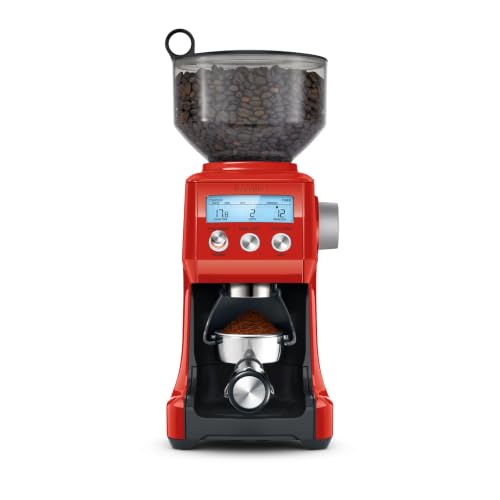
Breville’s grinder is the appliance-thinking entry in this roundup: a clear display, programmable timed dosing, a cradle that holds the portafilter while it grinds, and an adjustment range whose fine end can be extended further by an inner-burr setting. Set it up once, check the dose on a scale every few days as beans age, and the morning becomes a sequence of button presses — which, for a household producing lattes for several people before work and school, is not a small virtue but the entire point. The conical burrs deliver a consistent, crowd-pleasing extraction that sits comfortably under milk.
Its compromises are structural and manageable: hopper-fed retention means the first dose after a setting change is partly the old setting, timed output drifts gently and rewards the occasional scale check, and the stepped control, while genuinely espresso-capable, is not the last word in finesse. None of that diminishes its fit for its brief. Best for: milk-drink households, Breville machine owners, convenience-first buyers. Not suited for: single-dose purists and daily coffee-swappers. Verdict: the easiest espresso grinder to live with at its tier, and the one your household will thank you for.
Its inner-burr adjustment deserves a sentence of its own, because it is the feature owners discover latest and value most: when the outer range no longer reaches fine enough for a dense light roast, the inner setting extends the machine’s fine end and restores headroom. Read the manual before using it, move it only as directed, and the Smart Grinder Pro’s useful range grows well beyond what its dial first suggests.
Baratza Sette 270 — Best for Speed and Low Retention
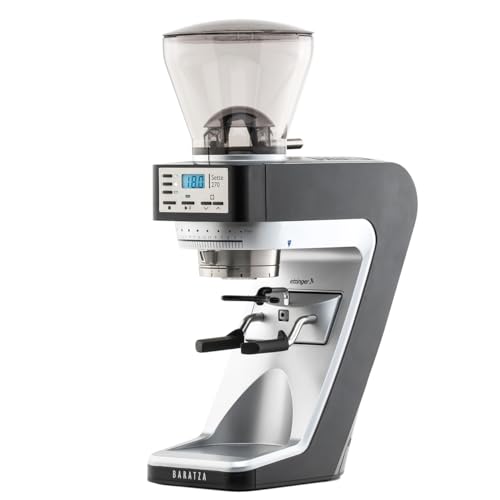
The Sette 270 is engineered around a single insight: grounds should fall straight down. Its rotating outer burr and stationary cone pass coffee through with almost nowhere to lodge, so retention is remarkably low and the dose you dial is the dose you pull — no purging tax when you change settings, no stale fraction haunting the first shot of the day. It is also very fast, and its macro-plus-micro adjustment pairs honest range with genuine finesse. For households pulling several drinks in sequence, and for owners who change coffees often, these are not specifications; they are daily mercies.
The costs are audible and visible: it is among the louder grinders in these reviews, and its open, fast delivery can scatter grounds without a funnel. The design will not win a beauty contest against the Opus or the Mignon. Owners who accept those terms describe a machine that disappears into the routine precisely because it never makes them wait or waste. Best for: multi-drink households, frequent coffee-changers, the impatient. Not suited for: noise-sensitive homes and minimalists of mess. Verdict: the pragmatist’s performance pick.
The Sette also carries Baratza’s support culture, which matters more for it than for most: a fast, highly-strung mechanism deserves a maker who sells its parts and publishes its service guides, and this one does. Buy it as a long-term instrument rather than a gadget and its field record makes sense — the owners who keep it serviced keep it for years, and say so in exactly those terms.

Eureka Mignon — Best Quiet Precision
The Mignon family — several variants sharing one philosophy — is the hopper-fed format refined: flat burrs, a stepless micrometric knob that moves the grind in increments too small to click, and sound insulation that makes dawn grinding a civilised act. The cup character is clean and structured, the body is compact metal, and the whole machine feels made rather than assembled. Owners settle into it the way drivers settle into a good manual gearbox: the absence of numbered settings, which beginners fear, becomes a non-issue once the house coffee’s position is learned by hand and eye.
Its demands are the stepless flip side — returning to an exact setting after a deep clean or a coffee change is an act of memory — and its talents are wasted on households that swap coffees daily, for whom the DF64 below exists. As a settled household’s instrument, bought once and used for years, it has few peers in this roundup. Best for: settled households, quiet kitchens, precision lovers who keep a house coffee. Not suited for: explorers rotating bags weekly. Verdict: the connoisseur’s convenience grinder.
Within the family, variants trade display, dosing style, and trim; the shared essentials — flat burrs, stepless knob, insulation — are present throughout, so the choice among them is a matter of interface taste rather than of cup quality. That consistency across the range is itself a review finding: Eureka knows what this grinder is, and every version is it.

Turin DF64 — Best for Single-Dose Enthusiasts
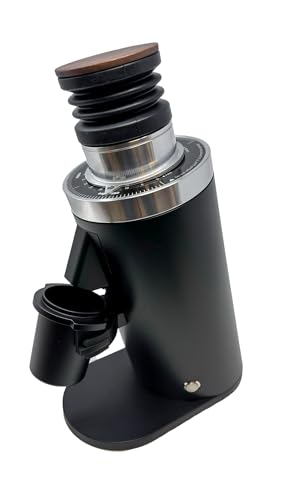
The DF64 distils the enthusiast format: substantial flat burrs, stepless adjustment, and a body designed around one weighed dose at a time, cleared with a bellows so nothing carries over. What it returns for that ritual is the clearest window on coffee in this roundup — light roasts especially separate into distinct, legible flavours — and total freedom across a cupboard of open bags, since the grinder holds no allegiance to any of them. A lively ecosystem of burr options and small refinements surrounds it for owners who enjoy improving their tools.
It is also the most demanding machine here: every drink is a procedure of weighing, grinding, clearing, and its static management is a habit to learn rather than a problem solved. Households in a hurry will feel every second of that; explorers will feel none of them as cost. Best for: single-origin drinkers, tinkerers, clarity seekers. Not suited for: queues, convenience seekers, and the scale-averse. Verdict: the enthusiast’s instrument, and the ceiling of what home grinding currently tastes like at its tier.
One further note belongs to the DF64’s review because it applies to the whole enthusiast tier: these machines reward a small amount of owner involvement in setup — learning the bellows’ rhythm, keeping the chamber clean, treating the first week as calibration — and they return that involvement with interest. Buyers who want an appliance that asks nothing should read that sentence as this review’s gentle steering toward the hopper-fed models above, which ask less and give a different, equally honourable kind of satisfaction.
Head to Head: The Comparisons That Decide
| Question | Choose | Because |
|---|---|---|
| Encore ESP or Opus? | Encore ESP for pure espresso learning; Opus for mixed methods and small, design-led kitchens | Both teach well; the Opus adds breadth and tidiness, the ESP adds simplicity and support depth |
| Smart Grinder Pro or Sette 270? | Smart Grinder Pro for programmed calm; Sette 270 for speed and near-zero purge | Convenience philosophies differ: memory in the machine versus honesty in the dose |
| Mignon or DF64? | Mignon for a settled house coffee, quietly; DF64 for rotation and clarity | The hopper-versus-single-dose fork in its purest form |
| Conical or flat? | Conical for forgiveness and sweetness; flat for separation and light roasts | Geometry is an accent matched to palate, not a ranking |
| Entry tier or straight to premium? | Entry, unless your workflow is already certain | Premium buys refinement of a known brief, not discovery of one |
Notice what the table never says: it never recommends by burr diameter, by wattage, or by the length of a feature list. Every row is decided by workflow, palate, or household rhythm — the same axes the full espresso grinder buying guide uses to interrogate any model beyond this shortlist. That is the durable lesson of these espresso grinder reviews: the machines are all good enough that the deciding variables are yours, not theirs. Bring your household’s facts to the table — how many drinks, how early, how quiet, how curious — and the table will do the rest.
What Ownership Actually Feels Like
Roundups that stop at specifications miss the texture owners report most. Across these six models, three themes recur. The first is the sound of the house changing: every electric grinder here is audible, the Mignon least and the Sette most, and households adapt by placement, by mats, and by choosing their moment — but none adapts by not hearing it. The second is the small liturgy of care: a brush at the station, a purge after adjustments, a proper clean on the rhythm your beans demand, always unplugged and always dry around the electrics, as detailed in how to clean an espresso grinder. Owners who build the liturgy into the ritual report it as seconds; owners who treat it as an interruption report it as the category’s main flaw, which says more about framing than about brushes. The third theme is the upward calibration of taste: within months, owners taste their own earlier shots in memory and wince pleasantly. The grinder did that — it made them better at coffee — and it is the benefit no specification sheet can list.
A fourth theme deserves recording because it surprises buyers pleasantly: the grinder becomes the kitchen’s social centre. Guests ask about it; partners develop opinions about settings; the household’s coffee vocabulary grows words it did not have — dose, yield, dial in — and with them a small shared expertise. Appliances rarely create culture, but a good espresso grinder, used daily and in the open, reliably does. Against that, the honest counterweight from the same owner accounts: the grinder also becomes the household’s bottleneck and its loudest morning voice, and the families who thrive with one are those who chose its format with the whole household’s rhythm in mind, not one drinker’s palate alone. Ownership, in other words, is a household decision wearing a product’s clothes — which is the final reason these reviews keep returning to mornings, queues, and sleeping houses rather than to burr diameters.
Adjustment Systems, Compared Honestly
Since adjustment is the soul of an espresso grinder, these reviews owe the reader a direct comparison of the three systems on the shortlist. Stepped adjustment with a dedicated fine range — the Encore ESP pattern — divides the espresso zone into small, numbered, returnable clicks. Its virtue is memory: a setting is a fact you can write down. Its limit is granularity: the perfect point occasionally lives between clicks, and the owner chooses the nearer one. Stepless adjustment — Mignon and DF64 — removes the clicks entirely and replaces them with a continuum turned by knob or collar. Its virtue is that the perfect point always exists; its cost is that positions must be remembered by mark, count, or feel, and a deep clean that disturbs the burrs means a short re-calibration ritual. Macro-plus-micro systems — the Sette 270’s pairing, and in a different form the Opus’s outer steps with inner fine ring — attempt the synthesis: coarse clicks for range, a fine vernier for the espresso end. They are genuinely effective and slightly more complex to teach your hands. None of the three is a defect in a well-made machine; all three appear on this shortlist because all three work. Choose by temperament: the note-taker thrives on steps, the perfectionist on stepless, the pragmatist on the hybrid.
Reviews by Coffee Style
Light Roasts and Single Origins
Pale, dense, expensive beans are the strictest examiners in these reviews. They demand torque, punish burr wobble, and reward clarity above all. The DF64 is the natural first choice — its flat burrs render separation that makes a light roast’s individual notes legible — with the Mignon as the hopper-fed alternative for households that want the same clarity inside a quieter, more automatic routine. Conical entry models can absolutely brew light roasts well, but they ask more dialling patience and return a more integrated, less separated cup. If your coffee spending already runs to distinctive light beans, let that fact promote clarity to the top of your criteria; you are buying the grinder your beans deserve.
Classic Medium Roasts and Blends
The centre of the coffee world is also the centre of these reviews’ competence: every model on the shortlist handles a good medium roast or espresso blend beautifully, because this is the service the category was built around. Differences narrow to workflow and temperament. The Smart Grinder Pro’s programmed consistency and the Sette’s pace serve blend households that drink in milk; the Encore ESP serves those learning; the Mignon serves those refining. If medium roasts are your home, buy by morning routine with a clear conscience — the cup will follow any of these machines home.
Dark Roasts
Dark, oily beans invert several judgements. They grind easily and forgive dialling, so entry models lose their disadvantage; they coat burrs and chambers with oil, so cleaning access becomes a first-order criterion; and they generate the most static, so anti-static design and dosing funnels earn their keep. The Opus’s tidiness and the Baratza machines’ open, serviceable burr access score well here. Dark-roast households should also shorten their cleaning interval whatever they buy, because rancid oil on burrs is the fastest route to a great grinder producing tired coffee.
Decaf Drinkers
Decaf deserves its own paragraph because its drinkers are so often an afterthought in grinder reviews. Decaf beans are more brittle after processing and frequently need a finer setting than their caffeinated counterparts; they also tend to be a second coffee in the house, which makes them the strongest argument for single-dose workflows or a low-retention design like the Sette’s — formats where switching to decaf for the evening costs one weighed dose, not a hopper negotiation. Households where decaf is the main event should simply buy for decaf’s fineness needs and ignore the assumption that they are a secondary use case.
What the Current Generation Fixed
It is worth recording what these six models collectively say about where the category has arrived. A generation ago, home espresso grinding meant choosing between café hand-me-downs and appliances that promised espresso and delivered approximations. The current generation — the one this roundup reviews — closed that gap from both ends: entry machines gained genuine fine adjustment, and enthusiast machines gained domestic manners. Anti-static treatment, once a forum modification, is now designed in. Single dosing, once a workaround, is now a product category with its own benchmarks. Parts and burr support, once the exception, is now a competitive axis that the best brands advertise. The practical meaning for a buyer is reassuring: there has rarely been a safer moment to buy into this category, because the known failure modes of the past — coarse steps sold as espresso, sealed burr chambers, orphaned products — are exactly what the current benchmarks were designed against. The remaining work for a buyer is not avoiding junk; it is the happier task of matching six good answers to one household’s question. Future models will refine the answers further, but the questions — the five axes used throughout this roundup — are settled, and a buyer who learns them now owns a framework that will outlast several product cycles.
Pairing These Grinders With Machines and Baskets
A grinder review that ignores the other half of the partnership misleads, so a pairing note. Every model on this shortlist is capable of feeding a standard, unpressurised basket — the basket type that rewards real grind quality — and that is the pairing in which their reviews were earned. Owners of starter machines with pressurised, dual-wall baskets will still benefit from any of them — freshness and consistency improve immediately — but part of each grinder’s talent stays masked until the basket stops doing the pressure work artificially. That is an argument for buying the grinder ahead of the machine upgrade, not against buying it at all: the grinder is the half of the partnership that survives the upgrade unchanged. Pairing by temperament matters too. A fast, precise machine behind a slow, deliberate grinder ritual is a coherent setup if the drinker is deliberate; a convenience machine behind a fussy grinder is a daily contradiction. The households in these reviews that report the deepest satisfaction describe the pairing as a single personality — the Breville-style appliance partnership, the Mignon-style quiet craft partnership, the DF64-style laboratory partnership — and that coherence, more than any individual specification, is what a buyer is really shopping for.
Steam and milk deserve the same coherence check in reverse: a household whose drinks are mostly milk-based should let the machine’s steam performance and the grinder’s dosing convenience be chosen together, because the morning will be paced by whichever is slower. These reviews cannot make that whole decision for you, but they can insist it be made as one decision — grinder and machine as a duet, not as two soloists who happen to share a counter.
Choosing by Tier, Without Prices
Because these reviews refuse static prices, tiers are described by what the money buys. At the entry tier — Encore ESP, Opus — the money buys the essential thing whole: genuine espresso adjustment, honest burrs, and a workflow you can learn on. Nothing about the tier is a compromise on the shot itself; the compromises are capacity, luxury, and ultimate finesse. At the mid tier — Smart Grinder Pro, Sette 270 — the money buys the removal of specific frictions: programming and cradle convenience from one, speed and near-zero retention from the other. Neither tastes categorically better than the entry tier on day one; both feel better by month six in the households they suit. At the premium end of this roundup — the Mignon range, the DF64 — the money buys refinement of experience and of cup: quiet, stepless precision, flat-burr clarity, materials that feel permanent. The correct way to read the ladder is as a sequence of frictions removed, and the correct tier is the one whose remaining frictions you mind least. That is also why the worth-it analysis in is an espresso grinder worth it lands differently by household: the same tier jump is essential to a daily light-roast drinker and invisible to a weekend latte household.
A last tier observation, because buyers consistently get it backwards: the entry tier is not where quality is compromised but where luxury is. The shots from a dialled-in Encore ESP or Opus are not rough drafts of the Mignon’s or DF64’s shots; they are finished drinks with a slightly different accent and a slightly wider margin of error. What the upper tiers refine is the experience around the shot — the quiet, the speed, the precision of return, the clarity at the extremes of roast — and those refinements are worth real money to the households that feel them daily. Read the tiers as a menu of experiences, not a ladder of worth, and you will spend exactly where your own mornings tell you to.
Field Notes: Six Small Verdicts
Encore ESP, After the First Bag
The pattern with the Encore ESP is a learning curve that visibly shortens: shots that wandered across the first bag settle into a narrow band of settings the owner can recite. Its most praised quality in long-term accounts is not any single shot but the absence of drama — it does what yesterday it did. For a first grinder, that predictability is the product.
Opus, In a Small Kitchen
Opus owners speak about placement the way other owners speak about taste: it fits where nothing else would, looks like it belongs there, and leaves the counter calmer than it found it. The inner-ring adjustment, doubted on paper, becomes second nature within a week. Its field note is simple — this is the grinder that makes small-kitchen espresso feel designed rather than squeezed in.
Smart Grinder Pro, On a School Morning
The Smart Grinder Pro’s field reputation is built at 7 a.m.: two adults, two drinks, one timer, no weighing, no debate. Owners who check its dose weekly describe a machine that behaves like staff. Its detractors are never its morning users; they are the explorers who outgrew a hopper. Both accounts are true, and the model should be bought by the first household and admired from afar by the second.
Sette 270, With a New Coffee Every Week
Frequent changers give the Sette its distinctive field note: the purge that other hopper machines demand — grind, discard, then dial — shrinks to almost nothing, so a new bag costs a shot of tuition instead of three. Its noise is forgiven in these accounts the way a sports car’s is: as the sound of the thing it is good at. Households that change coffee rarely, by contrast, are paying for a virtue they seldom use.
Mignon, In a Quiet House
Mignon field notes are about other people: the partner still asleep, the baby who stays asleep, the flatmate who never mentions the grinder at all. Layered under the quiet is a second note — the stepless knob becomes a craft object, its positions learned like the gears of a bicycle. Owners who feared the absence of numbers report, almost uniformly, that they stopped fearing it within a fortnight.
DF64, With a Cupboard of Open Bags
The DF64’s field note is freedom, stated as logistics: three bags open, a decaf besides, and no decision costlier than weighing a dose. Owners describe the bellows’ puff and the empty chamber as the visible form of a principle — nothing stale, nothing mixed, nothing owed to yesterday’s coffee. Its effort is real and its constituency is the constituency that finds that effort indistinguishable from the pleasure of the hobby itself.
Buying Heuristics From These Reviews
Distilled from all six verdicts, five heuristics will steer almost any buyer correctly. First, the rental test: ask which grinder you would choose if you had to live with it for a month in a rented kitchen — the answer is usually the workflow you actually want, stripped of showroom dazzle. Second, the second-coffee test: if your household drinks a second coffee — decaf, a partner’s different roast — weight retention and switching cost double, because you will pay them daily. Third, the sleeping-house test: if anyone sleeps within earshot of the kitchen at grinding time, promote quiet from a preference to a requirement and let the Mignon class lead your list. Fourth, the five-year test: open the maker’s parts page before the product page; the grinder is a relationship, and its terms are written there. Fifth, the one-variable rule for your first month: change grind or dose, never both, and keep notes — the cheapest heuristic in this article and the one that most shortens the road from tuition shots to routine excellence. None of these requires expertise to apply, which is the point: the buyers who choose well in this category are not the most knowledgeable but the most honest about their households.
Common Regrets, and How These Reviews Prevent Them
The regrets in this category are so patterned they can be listed. First, the workflow divorce: a single-dose instrument bought for a five-drink household, or a hopper machine bought for a rotating collection of small bags — prevented by choosing workflow before model, the discipline of how to choose an espresso grinder. Second, the false start: a general coffee grinder bought for espresso because a dial suggested fineness, discovered within a month to lack the adjustment the task requires — prevented by the head-to-head in espresso grinder vs coffee grinder. Third, the noise surprise: a fast, open grinder installed beside a nursery — prevented by treating sound as a specification, as these reviews do. Fourth, the support orphan: a capable machine from a maker who sells no burrs, discovered in year four — prevented by reading the parts catalogue as part of the product. Every model in this roundup is proof against the second and fourth regrets by construction; the first and third are yours to avoid, and this page exists to help you avoid them.
How to Read Any Espresso Grinder Review, Including This One
A roundup should teach its own scepticism, so here is how to read this page and every page like it. Distrust any review that ranks grinders by a single score: the category’s honest output is a match, not a league table, and a review that cannot name the owner a model is wrong for has not finished its work. Distrust superlatives about taste unaccompanied by workflow detail, because taste in espresso is downstream of dosing and dialling habits the reviewer may or may not share with you. Weight longevity evidence — parts, burrs, service culture, years on the market — more heavily than launch-day impressions, because you are buying year three, not week one. Note what a review treats as a flaw: one household’s deal-breaking noise is another’s unnoticed seconds, and a reviewer’s household is not yours. Finally, notice what is absent. A review of espresso grinders that never mentions retention, never mentions the sleeping house, never mentions cleaning, is reviewing a photograph. These espresso grinder reviews have tried to mention everything an owner mentions by month six — and where they have still missed the thing you care about, the axes are here for you to apply yourself: adjustment, retention, dosing, noise, support. Five questions, honestly answered, will sort any grinder ever made into the right place on your shortlist.
The Bottom Line of These Reviews
Six machines, six correct answers, one for each shape of espresso life. The beginner and the small kitchen are served by the Encore ESP and the Opus; the busy milk-drink household by the Smart Grinder Pro; the impatient and the coffee-changer by the Sette 270; the settled and the quiet by the Mignon; the explorer by the DF64. What unites them is more important than what divides them: each is a true espresso grinder, with burrs and adjustment honestly engineered for the fine end, from a maker who expects to support it for years. Choose among them by your mornings, and you will have chosen well. The balance of advantages and drawbacks that sits behind every one of these verdicts is laid out in full in espresso grinder pros and cons.
If this roundup has a single sentence to be remembered by, it is that the best espresso grinder is the one whose daily behaviour you will still be glad of in year three — its sound in your kitchen, its routine in your morning, its support behind you — and that by that measure, every machine on this shortlist is somebody’s best. Find out which somebody you are, and the reviews above become a formality: the pleasant confirmation of a decision your household had already made.
The Home Scorecard: How to Judge This Espresso grinder in Week One
Use this scorecard during the first week, while changing your mind is still easy, and run the same ordinary jobs you bought the espresso grinder for rather than showcase tasks chosen to flatter it. Score setup first: how long the box-to-ready journey took, whether the instructions answered the question you actually had, and whether anything needed a tool the box did not mention. Score the core job on a normal weekday portion, with your usual ingredients and timing, and write the result down before you try any advanced mode or accessory. Score consistency by repeating that same job on another day and comparing the two outcomes side by side, since repeatability is the quality that separates a good example from a lucky one.
Score the controls under real conditions, with damp hands, low light, or a timer running elsewhere, because that is the environment the espresso grinder will actually be judged in. Score cleaning honestly by timing it once, including the drying and reassembly, and by noting any corner, seam, or crevice that needed a second attempt. Where a shortlist names specific examples, such as Baratza Encore ESP, run these same checks against that listing line by line rather than assuming the general verdict transfers unchanged. Apply the identical test to Fellow Opus as well, on the same day and under the same conditions, because a fair comparison needs one ruler rather than two moods.
- Time the box-to-ready setup
- Repeat the core job on two separate days
- Time the full clean including drying
- Watch a second user try without coaching
- Deliberately make the common mistake once
- File the scorecard with the receipt
If Breville Smart Grinder Pro is also in contention, give it the same worksheet and let the three sets of answers sit side by side before anyone reaches for a checkout button. Score the storage reality: whether the espresso grinder and its parts return to their spot without a rearrangement ritual, and whether anything migrates to a counter because it has no home. Score the noise, heat, steam, or vibration against the room it lives in, at the hour you most often use it, and note whether anyone in the household comments unprompted. Score the small parts: lids, seals, trays, attachments, and fasteners, because in long ownership the small parts are where satisfaction quietly leaks away.
Score the documentation by looking up one real question mid-task and timing how long the answer takes to find, in the booklet or on the maker’s support pages. Score the fit against the measurements you took before ordering, and note any surprise, generous or otherwise, while the details are still fresh enough to help another buyer. Score the second user experience by watching someone else in the household use the espresso grinder without coaching, and noting exactly where they hesitate or guess. Score the worst job, not the best: the largest load, the trickiest ingredient, or the latest tired evening, because that score predicts your feelings in month six.
Score the recovery: deliberately make the common mistake, such as overfilling, mis-seating a part, or choosing the wrong setting, and judge how obvious and forgiving the fix is. Add the scores without weighting them, then read the lowest two again, because those are the entries that decide whether this example stays in your house. If a low score surprises you, repeat that single test once before concluding anything, since first attempts often measure the operator rather than the product. Keep the finished scorecard with the receipt and warranty details, so a future claim, resale, or replacement decision starts from evidence rather than from a fading impression.
Revisit the card after a month and change only the scores that genuinely moved, because the difference between week one and month one is the learning curve made visible. Note which score you would check first if you were buying a second espresso grinder as a gift, since that priority usually reveals what the product is really about. Finish by writing one sentence describing who should not buy this example, because a clear exclusion is the most useful line in any honest assessment. Whatever the category, photograph your intended spot with the neighbouring items in place, because a picture exposes crowding that measurements alone politely ignore.
Keep every measurement, tally, and note from these checks in one place, ideally with the receipt, so the next decision in this category starts from your evidence rather than from scratch. Involve the household early where the product is shared, since a decision everyone helped measure is a decision nobody relitigates at the first inconvenience. Prefer the option that fits your existing routine with the fewest new habits, because each new habit is a small tax collected every single day. Be wary of solving a storage problem by creating a carrying problem, since distance between storage and use is where good equipment goes to be forgotten.
Frequently Asked Questions
Which espresso grinder do these reviews recommend overall?
There is no single overall winner, and roundups that crown one are hiding the real variable: your workflow. Forced to name the safest first purchase for the largest number of households, these reviews name the Baratza Encore ESP, because its teachable adjustment, forgiving cup, and manufacturer support minimise every beginner risk at once. Households with a defined brief — queues, quiet, exploration — will each find a better answer in the model matched to that brief above.
Are expensive espresso grinders actually better in the cup?
Better in specific, nameable ways rather than in a general glow: flatter burrs and finer adjustment can add clarity and separation, especially in light roasts drunk straight; insulation adds quiet; build adds years. What premium money does not buy is a different category of shot — a dialled-in entry grinder produces genuinely excellent espresso. Spend up for the frictions you personally feel, and let other households spend up for theirs. The one exception to that calm advice is the drinker of very light roasts, for whom burr quality and motor strength are not refinements but requirements, and who should read “premium” as “appropriate” rather than as “indulgent.”
How do these reviews treat models not on the shortlist?
As unproven rather than as failures. The shortlist is the set of models whose long-term owner record is deep enough to judge; a newer or niche model may be excellent, but its year-three story is unwritten. If you are considering one, interrogate it with this roundup’s axes — adjustment in the espresso range, retention behaviour, dosing method, noise, and the maker’s parts catalogue — and it will sort itself honestly against the benchmarks here.
Should I buy the grinder or upgrade my espresso machine first?
The grinder, on the evidence of every review in this series. Extraction is governed by the grind; a better grinder transforms a modest machine, while a better machine behind a weak grinder mostly produces the same shots with better steam. The exception is a machine so limited it cannot hold temperature or pressure at all — but for the broad middle of home machines, grinder first is the closest thing home espresso has to a law.
Do I need different grinders for espresso and filter coffee?
Need is too strong; prefer is accurate. Several models here, the Opus most deliberately, cover both ranges well. The friction is operational — swinging between distant settings, purging between them, and re-finding your espresso point — and households brewing both ways daily often end with two machines parked in their own ranges. Households brewing filter occasionally can absolutely let one good grinder commute, accepting a little ceremony when it changes jobs.
How long will the grinders in these reviews last?
With ordinary care — brushing, periodic cleaning with the machine unplugged, burrs replaced when clarity fades — the supported brands in this roundup are decade-scale appliances. Their motors and housings are not the limit; burr wear is, and burrs are sold as spares by exactly the makers featured here. Longevity is therefore less a hope than a purchasing criterion: it can be checked, before you buy, in the parts catalogue.
Related Guides
best burr coffee grinders · best espresso machines for beginners · best coffee makers with a burr grinder