Disclosure: As an Amazon Associate, topratedkitchenware.com earns from qualifying purchases. Links on this page are affiliate links; they cost you nothing extra. Prices and availability change often, so check the current Amazon listing before you buy.
This loaf pan review takes the category seriously as a designed object: not a commodity rectangle, but a mature piece of baking engineering whose details decide whether your bread slices cleanly, your quick breads release whole, and your cakes brown the way their recipes promised. A useful loaf pan review has to go beyond one unboxing, so this one examines the loaf pan as a class — how the current generation is designed and built, how it performs across the bakes home kitchens actually ask of it, where its honest limitations lie, and which specific pans embody the class at its best. If you finish it knowing exactly what a loaf pan will and will not do in your oven, and which version of it belongs in your cupboard, the review has done its work.
Loaf Pan Review: Verdict and Key Takeaways
The verdict, up front: the modern loaf pan is one of the most successful mature designs in the kitchen, and the current generation — in substantial metal, honest glass, and handsome stoneware — is excellent. Its failures are concentrated at the flimsy end of the market and in mismatched purchases: the wrong size for the recipe, the wrong material for the batter, the coating condemned to a rough sink. Bought well, a loaf pan is close to a perfect tool: inexpensive, nearly indestructible in its uncoated forms, and capable of an entire repertoire from sandwich bread to terrines. It suits any household that bakes loaf-shaped food with any regularity. It does not suit non-baking households, and it will not rescue a recipe that was wrong before it met the pan. If this review has a bias, it is toward substance over novelty: the pans it praises are not the newest or the most decorated, but the ones whose weight, finish, and honesty of description promised good baking and then, bake after bake, delivered it.
Key takeaways from this review. Design maturity is the story: the form was settled by generations of bakers, and today’s pans differ in execution rather than concept, so construction quality is where value hides. Material behaviour is predictable and choosable — pale metal gentle, dark coated metal assertive, glass retentive, stoneware steady — and matching material to batter is the single biggest performance decision a buyer makes. Performance in real use is strong across the repertoire, with release and centre-baking the two areas where technique and pan choice interact most. The category’s trade-offs are honest ones: coatings trade lifespan for convenience, heavy materials trade lift weight for steadiness, and every pan trades versatility for its one perfect shape. Buy the category with confidence; be selective about the specimen. That selectivity, this review will argue throughout, is not fussiness but the whole game: in a mature category, the difference between a pan that delights for decades and one that disappoints by spring is rarely the badge, and almost always the match.
In this guide
What a Loaf Pan Is and Where It Fits
A loaf pan is a deep, narrow, rectangular vessel whose proportions are a piece of quiet engineering. The narrow width means a batter’s easiest direction of expansion is up, producing the domed crown on quick breads and the tall, sliceable profile on yeast loaves. The depth means the bake is a long, inward journey for heat, which is why loaves take time and why their centres are the last to set — and why the pan’s material, which governs how that heat arrives, matters more for this shape than for almost any other in bakeware. The straight or gently sloped walls shape slices that stack, toast, and sandwich evenly. Around that core design, the category arranges itself into material families, each with a distinct baking personality, and into a small set of sizes anchored by the standard pan that most published recipes assume.
Where it fits in a kitchen is broader than its name suggests. The loaf pan is, obviously, bread infrastructure: the vessel of the weekly sandwich loaf, the enriched tea bread, the pullman experiment. It is equally the home of the quick-bread repertoire that fills lunchboxes and rescues ripe fruit, and of the loaf-cake family — pound, marble, drizzle, gingerbread — that occupies the beloved ground between cake and bread. Then there is its second, savoury life: meatloaf shaped and cooked evenly, terrines and pâtés for the ambitious, layered chilled and frozen desserts for the organised. A review of the category that stopped at bread would understate the object; in real kitchens, the loaf pan is a general-purpose forming and baking vessel whose speciality happens to be the shape households use most. It also fits, unusually, into every stage of a cooking life: the first pan of a student kitchen and the considered pan of a retirement cottage are recognisably the same tool, which is a continuity few categories can claim.
The competitive context clarifies its position. Against the muffin tin, the loaf pan trades portioning for sliceability. Against the casserole, it trades width for rise and structure. Against the Dutch oven — the other great bread vessel, surveyed in Dutch ovens for bread baking — it trades the crusty round boule for the sliced loaf and the entire quick-bread repertoire. Against the bread machine, it trades automation for control, texture, and range. In each contest the loaf pan’s claim is the same: it is the only vessel that covers sliced breads, quick breads, and loaf cakes together, in a form that stores in a drawer and lasts for years. That is a strong claim, and the performance sections below test it bake by bake.
Design, Build and Setup
Pick up a well-made loaf pan and the design intelligence is in your hands before it is in your oven. The walls are straight enough to shape clean slices yet release a finished loaf without a fight. The rim is rolled or reinforced, stiffening the structure against warping and giving gloved hands a confident edge at the lift. The corners are smooth or gently radiused, because sharp interior corners bake batter into concrete and defeat washing. The base is flat and stays flat, because a pan that rocks on its rack bakes its loaf at a tilt and browns it in a gradient. In metal pans, the gauge announces itself immediately: a substantial pan feels calm and dense, where a flimsy one feels like packaging. In stoneware, the glaze is even and the walls are reassuringly thick; in glass, the clarity lets you inspect the very thing you will later watch browning through it. None of these qualities requires a premium badge; all of them are visible to a buyer who knows to look, which is why this review spends time on build before performance.
The material families deserve their design notes. Bare aluminium pans are the traditional form: light, responsive, and pale, with a surface that asks for grease or parchment and repays it for decades. Aluminised steel adds stiffness and warp resistance to a similar brief. Coated pans build their design around a surface system — the coating is the product, in a sense — and the best of them pair it with corrugated or textured bases that help release and browning along. Glass pans are moulded rather than fabricated, with integrated handles that are part of the dish itself. Stoneware is thrown or moulded thick, glazed for release and cleaning, and designed as much for the table as for the oven. Silicone pans invert every assumption: flexible, light, and reliant on an external tray for a confident lift, with manufacturer heat limits that form part of their design specification and should be respected as such. Setup, across all families, is mercifully identical: wash before first use, dry thoroughly, grease or line according to batter, and bake one familiar loaf as a calibration before trusting the pan with anything that matters.
A word on the two design variants that most affect daily use. Handles — or their absence — shape the safety and confidence of every bake, because the defining moment of loaf pan ownership is the lift: a full pan, at oven heat, carried in padded gloves. Extended grips and generous rims are not styling; they are the interface between the baker and the category’s one real hazard, and this review scores them accordingly. The second variant is the pullman lid, a sliding cover that converts the pan into a mould for perfectly square sandwich loaves. As a piece of design it is elegant and, for its one purpose, unmatched; as a purchase it belongs after the standard pan, in kitchens where sandwich bread is a weekly institution rather than an occasional pleasure.
Performance in Real Use
Yeast Breads and Sandwich Loaves
With yeasted doughs, the loaf pan performs its oldest job, and performs it with a reliability that explains the design’s longevity. The walls support the rise, converting oven spring into height rather than spread; the crumb sets evenly from the sides inward; the crust forms in the pan’s image — pale and tender from pale metal, deeper and firmer from dark coated pans, steady and handsome from stoneware. Release, the category’s famous anxiety, barely applies here: yeasted doughs are the most obliging tenants a pan can host, leaving a greased surface cleanly and forgiving minor preparation lapses. Slicing is where the performance completes itself: a pan loaf cuts into even slices that toast uniformly and hold a sandwich together, which is the entire reason the shape exists. In testing terms used throughout this series, the yeast loaf is the loaf pan’s home fixture, and it wins it comfortably in every material, with pale sturdy metal the connoisseur’s choice and the pullman the specialist’s refinement.
Quick Breads: Banana, Zucchini, and the Sticky Family
Quick breads are the sterner examination, because their batters are sweet, moist, and chemically leavened — a combination that browns fast, sticks enthusiastically, and sets a crumb that shows every hot spot. Here the material differences stop being theory. Pale metal gives the gentlest, most even result and the widest margin for error. Dark coated pans brown assertively, flattering the crust while threatening the sugary edges if the bake runs long — a trade the attentive baker manages and the distracted one tastes. Coatings and parchment slings divide the release honours between them: a quality coating releases a banana bread whole with minimal preparation, while a sling in bare metal achieves nearly the same with a little more ceremony. Glass rewards the observant with visible browning and punishes the forgetful, since a loaf left resting in hot glass keeps cooking and steams its crust soft. Across the family, the verdict of this review is that quick breads are where pan choice most visibly changes outcomes — and therefore where the buying guidance in the loaf pan buying guide earns its reading.
Loaf Cakes: Pound, Marble, and Drizzle
Loaf cakes test evenness above all. A pound batter is dense and rich; it asks the pan to deliver heat steadily to a thick centre without darkening the exterior into bitterness, and it exposes thin, hot-spotting pans mercilessly. Substantial pale metal and stoneware are the strongest performers here, their steadiness producing the fine, even crumb the style is judged by. Marble and drizzle loaves add a release test — their batters are sticky with sugar and, in the drizzle’s case, destined to be soaked in syrup — which coated pans and slings pass most gracefully. The category performs this repertoire well as a whole, and the failures encountered in ordinary kitchens trace, in this review’s judgement, far more often to size mismatch — a batter crowded into a small pan, staying gummy at the centre — than to any material’s inherent limits.
Savoury and Chilled: Meatloaf, Terrines, Frozen Loaves
The savoury examination changes the marking scheme: release still matters, but cleaning, durability under juices and firm washing, and tolerance for portioning now count too. Glass and stoneware perform with distinction, moving from oven to table to fridge in one dish and washing clean without a coating to protect. Metal pans bake meatloaf beautifully — even cooking, well-shaped slices — and many households dedicate an older metal pan to the role precisely because its surface has nothing left to prove. Terrines and chilled loaves are glass’s showcase, the transparency aiding assembly and the dish doubling as the mould and the server. The performance conclusion is that the loaf pan’s second life is not a bonus feature but a genuine second competence, and kitchens that use it rate the pan’s value substantially higher than bread-only households do.
Strengths and Trade-Offs
Strengths. The design is mature and proven, with no learning curve beyond a few habits of preparation and timing. Performance across the repertoire — breads, quick breads, cakes, savoury loaves — is strong in every material family, provided the material is matched to the batter. Longevity is exceptional in the uncoated families and respectable in the coated ones, making cost per use tiny for regular bakers. Storage is compact, readiness is total, and the sliceable geometry the pan produces is available from no other single vessel.
Trade-offs. The pan does one shape, and its performance is unusually sensitive to size matching between pan and recipe. Release is a managed behaviour, not a guaranteed one, and coatings — the easiest management — are mortal surfaces with care terms. Heavy materials make the hot lift a genuine consideration, and glass and stoneware impose thermal-shock rules for life. Dark pans require judgement with sweet batters. These are the honest costs, and the rest of this review treats them as design parameters rather than defects.
How It Compares
| Rival | Its Advantage | Loaf Pan’s Answer |
|---|---|---|
| Muffin tin | Portions and speed | Slices, structure, the whole loaf repertoire |
| Dutch oven | Crusty artisan rounds | Sandwich loaves, quick breads, loaf cakes |
| Bread machine | Automation | Texture, range, no counter space, no fixed loaf |
| Casserole dish | Width and familiarity | Rise, dome, even deep baking |
Within the category, the comparisons that matter are material to material, and this review’s ordering is consistent: coated metal leads on release, bare metal on lifespan and gentle browning, stoneware on serving and steadiness, glass on versatility and visibility, silicone on specialist release. The picks below embody those leads, and the head-to-head treatment in loaf pan reviews across the range extends the comparison pan by pan.
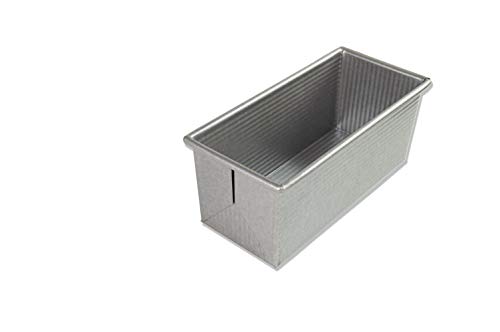
USA Pan Bakeware Loaf Pan — The Category’s Centre of Gravity
If the review had to nominate the pan that represents the modern category to a new buyer, this coated, corrugated design is it: release engineered for the sticky mainstream repertoire, browning even enough for cakes, construction substantial enough for weekly work. Its trade-off is the coating’s care contract, accepted knowingly. Best for: the weekly all-rounder. Not suited for: rough communal sinks.

Nordic Ware Natural Aluminum Loaf Pan — The Traditionalist Benchmark
Bare aluminium is how the category performed for most of its history, and this pan shows why the tradition persists: gentle, even heat, a surface with no expiry, and results that reward good preparation with decades of identical bakes. Best for: yeast bakers and minimalists. Not suited for: zero-preparation expectations.
Le Creuset Stoneware Loaf Pan — The Premium Expression
Stoneware is the category dressed for the table: steady baking, moist crumbs, and a vessel that serves and stores as handsomely as it bakes, at the price of weight and thermal courtesy. Best for: hosts and bake-and-serve households. Not suited for: batch bakers wanting speed and lightness.
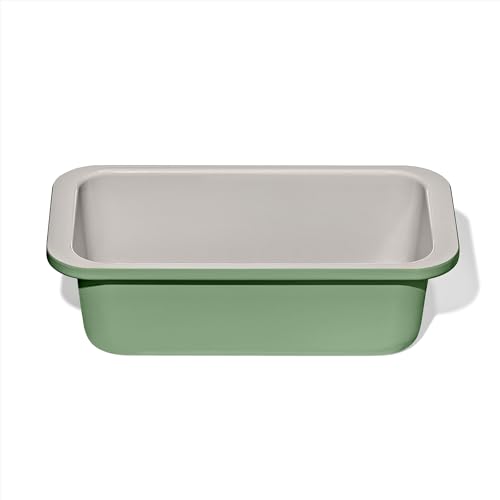
OXO Good Grips Non-Stick Pro Loaf Pan — The Handling Specialist
Design attention to grip and finish makes this coated pan the one reviewers reach for when the repertoire runs sticky and frequent and the lift matters. Best for: quick-bread regulars who treat coatings well. Not suited for: metal-utensil households.

Pyrex Basics Glass Loaf Pan — The Versatility Pick
Glass remains the category’s great generalist, and this entry-tier dish covers more kinds of loaf-shaped cooking than any rival at its level, provided its owner turns loaves out promptly and keeps it from sudden cold. Best for: small, multi-tasking kitchens. Not suited for: crisp-crust absolutists.
Who Should Buy It, and Who Should Skip It
Buy a loaf pan if your baking — actual or honestly intended — includes sliced bread, quick breads, or loaf cakes more than a few times a year; if you cook meatloaf or entertain with terrines; if you are building a baking practice and want its most forgiving instrument; or if your household eats loaves and would enjoy choosing what goes into them. Choose the material by your dominant bake and your washing habits, the size by your recipes, and the tier by your frequency, following the method in how to choose a loaf pan. Skip it if you never bake and feel no pull to start, if a bread machine already covers your sandwich loaf and quick breads hold no appeal, or if storage is so contested that a new pan must evict a weekly tool. The fuller balance sheet lives in loaf pan pros and cons, and the value audit in is a loaf pan worth it. One further group deserves a direct word: bakers who already own a loaf pan they merely tolerate. The review’s findings apply to upgrades as much as to first purchases, and the commonest successful upgrade is not a grander pan but a better-matched one — the size the recipes actually wanted, the material the batter actually needed. If your current pan fights your favourite loaf in a way you can name, replacing it is not indulgence; it is the correction of a mismatch this review has spent its length teaching you to diagnose, and few small kitchen corrections pay back as reliably.
Setup, Care and Maintenance Essentials
Ownership, in this review’s experience, is where good pans are kept and average reviews are written. Wash and dry a new pan before its first bake; run one familiar loaf as calibration and note the pan’s browning personality on the recipe card. Grease thoroughly for bare surfaces, line sticky batters with a parchment sling, and rest every loaf briefly before turning it out — then turn it out, rather than letting retained heat steam the crust, a rule that matters most in glass and stoneware. Lift hot pans with dry oven gloves on both hands to a surface cleared in advance; never use a damp or folded towel, and never set glass or stoneware onto a cold or wet counter. Wash coated pans softly and keep metal tools for other jobs; soak any pan before scrubbing its corners; dry metal completely. Store with a protective layer between coated surfaces, and respect maker guidance on coated and silicone heat limits as routine. Bakers who keep these habits — and who weigh ingredients with tools like kitchen scales for baking — will find their pan’s performance in year five indistinguishable from its performance in week one, which is the highest compliment a review can pay a kitchen tool. Maintenance also includes an occasional honest audit: a pan that has begun to rock, a coating that has begun to hesitate with batters it once released, a rim that has taken a bend — each is information, and acting on it early, whether by reassigning the pan to gentler duty or by replacing it with a better-matched successor, keeps the category’s performance in your kitchen at the level this review describes rather than the level worn equipment quietly settles for.
Final Verdict
The loaf pan earns this review’s unqualified recommendation as a category, and a qualified one as a purchase: qualified by size, by material, and by the honesty of the buyer’s self-knowledge. It is a mature design performing at a high level across a wide repertoire, priced accessibly at every tier, and built — in its best forms — to outlast the kitchens it serves. Few objects in the modern kitchen offer that combination. Buy the right one, bake the probation loaf, and let the slices make the closing argument. If the argument needs a second witness, bake the loaf at the opposite end of your repertoire — the sticky one if the first was lean, the lean one if the first was sticky — because a pan that serves both ends of a baker’s range has passed the only examination that finally counts, and a pan that serves only one end has told you, usefully and early, exactly what it is for.
Long-Term Notes: How the Category Ages
A review that only describes new pans misleads, because bakeware is bought for years. So here is how the families age under real weekly use. Bare aluminium mellows: it darkens slightly in patches, takes on the patina of its bakes, and bakes, if anything, more kindly than when new, because a seasoned bare pan releases better than a factory-fresh one. Its failure mode is essentially limited to physical damage — the dropped corner, the bent rim — and even dented examples usually bake on honourably. Aluminised steel ages similarly with better warp manners. Coated pans age on a curve: a long plateau of excellent release, then a gradual decline that the owner notices first with the stickiest batters, at which point the pan can retire to yeast duty, where release hardly matters, and give further years there. Glass ages invisibly until it does not — its risks are events, not wear: the chip, the thermal incident — which is why its lifespan is best predicted by its household’s carefulness. Stoneware ages like the crockery it is, gaining character, vulnerable mainly to chips and shocks. Silicone ages by slowly losing its snap and, eventually, its easy release. The practical conclusion for buyers is comforting: every family offers a long service life when matched to its household, and the replacement cycle in this category is driven more by changing bakers than by failing pans.
The Browning Question, Examined Closely
Because browning is where loaf pan materials most visibly differ, this review gives it a section of its own. Browning is heat made visible, and pan surfaces manage heat differently: dark surfaces absorb and deliver it assertively, pale metal moderates it, glass transmits and then hoards it, stoneware smooths it into steadiness. The same batter, divided across the families, produces a spectrum of crusts from tender gold to deep mahogany, and none of those crusts is the correct one in the abstract — correctness lives in the recipe and the eater. A sandwich loaf for children wants the pale end of the spectrum; a spiced fruit loaf wears the dark end beautifully; banana bread, the category’s most baked citizen, sits in the middle and punishes both extremes mildly. The reviewer’s practical finding is that bakers adapt to a pan’s browning within two or three bakes, adjusting timing and position by instinct, provided the pan browns evenly. Unevenness, not intensity, is the true defect — the pan that scorches one end and pales the other cannot be adapted to, only replaced — and unevenness is a construction fault, found in flimsy pans of every material and in none of the picks in this review.
Slicing, Serving, and the Last Ten Percent
Reviews tend to stop at the oven door, but a loaf’s life includes its slicing and serving, and the pan influences both more than it is credited with. A loaf baked in a true, straight-walled pan slices evenly from heel to heel; a loaf from a warped or sloped pan yields a gradient of thick and thin that no knife skill fully corrects — and the knife matters too, a serrated blade sawing gently where a straight edge would crush, as the options in knives for slicing sourdough and crusty loaves demonstrate for the crusty end of the repertoire. Serving splits by material in the way this review has noted throughout: stoneware and glass present the loaf in its baking dish with a ceremony metal cannot offer, while metal’s loaves are turned out, rested, and presented whole on a board, which has its own rustic authority. Even storage is pan-adjacent: a loaf cooled properly — out of the pan, on a rack, fully — keeps its crust and crumb into the next day, while a loaf left to steam in its vessel wakes up diminished. The last ten percent of loaf quality is decided after the bake, and the pan, its habits, and its owner share the credit or the blame.
Value Assessment
Value in this category is unusually easy to assess because the variables are so stable: the pans are inexpensive at every tier, the service lives are long, and the performance differences between tiers are matters of degree rather than kind. The entry tier delivers the essential category — the shape, the repertoire, competent baking — and for occasional bakers it is the rational summit. The mid tier buys construction substance and coating quality that weekly bakers feel in every bake, and it is where this review places the category’s value centre of gravity. The premium tier buys materials that double as serving ware and construction that becomes heirloom, justified by frequency and affection rather than by loaf quality alone. What no tier buys is immunity from mismatch: the most expensive pan in the wrong size loses to a modest pan in the right one, every single week. That is the review’s closing economic observation, and it is why the buying guidance across this series is organised by fit first and price last.
Testing Notes: What Repeated Baking Reveals
Certain truths about this category only surface across repeated bakes, and a long-form review should record them. The first is that consistency compounds: by the fifth bake in the same pan, most bakers have unconsciously calibrated their oven position, their preparation, and their timing to that pan, and their results tighten noticeably — a phenomenon that flatters every pan slightly and should make readers a little sceptical of any review, including this one, based on a single bake. The second is that corners tell the truth about construction: pans with smooth, well-finished interiors release and wash identically in month six as in week one, while creased or roughly finished interiors accumulate baked-on history that slowly degrades both. The third is that the lift never stops mattering: across hundreds of bakes, the pans reviewers and owners reach for are disproportionately the ones whose rims and handles make the hot carry feel safe, a preference that has nothing to do with baking performance and everything to do with human hands. The fourth is that size discipline pays compound interest — bakers who match pan to recipe stop experiencing the category’s two classic failures, the sunken centre and the dry shallow loaf, and thereafter describe loaf baking as easy, which, with the variables controlled, it genuinely is.
The Category’s Place in a Modern Kitchen
It is worth asking, in a review of this length, why a vessel essentially unchanged for generations still earns a place among modern equipment that promises transformation. The answer the evidence supports is that the loaf pan solves a permanent problem — how to give a wet, rising mass of batter or dough a useful, sliceable shape — with a permanent simplicity that technology has not improved upon, only decorated. Air fryers and smart ovens change where heat comes from; the loaf still needs its walls. Meal kits change where ingredients come from; the bananas still blacken on the counter. The pan’s endurance is not nostalgia but fit, and its modern generation — better coatings, better construction, handsome stoneware — represents refinement of a solved problem rather than a search for a solution. Reviews of solved problems have a particular duty: to distinguish the refinements that matter from the decorations that do not. In this category, substance matters, coating quality matters, size honesty matters; almost everything else is decoration, and a buyer guided by those three will own a pan that performs like the best in this review regardless of the badge it carries.
What This Review Could Not Forgive
Balance requires naming the specimens and habits that failed this review’s standards outright. The tissue-thin promotional pan — the kind bundled free or sold at a price that invites suspicion — failed on every axis: it warped audibly in a hot oven, browned in patches, stuck despite preparation, and made two reliable recipes look unreliable, which is the worst thing a pan can do to a baker’s confidence. It is the only corner of the category this review condemns without qualification, and it condemns it precisely because its failures are misattributed by their owners to their own skill. At the other end of behaviour, the review could not forgive the treatment, occasionally seen, of glass and stoneware as if they were metal — the cold counter, the cold water, the shocked dish — not because the materials are fragile but because their one rule is so easily kept. And it could not forgive the sizing shrug, the purchase made by photograph against a recipe card’s plain instruction, because that single inattention manufactures more disappointing loaves than every material flaw in this article combined. Forgiveness, elsewhere, is plentiful: the category is strong, its mid-range is excellent, and its mistakes are nearly all made before the oven is even lit — which means they are nearly all avoidable by the reader who has come this far.
Reviewer’s Notebook: Small Observations That Matter
A notebook section, for the observations too small for chapters and too useful to lose. Pans with slightly sloped walls release marginally more easily and slice marginally less squarely than straight-walled ones, and bakers of sandwich loaves should care while bakers of quick breads should not. A pan’s behaviour in a fan oven differs from its behaviour in a conventional one chiefly in browning speed, and the first bake in a new oven deserves the same probation as the first bake in a new pan. Batter residue baked onto a rim is not merely cosmetic — it is tomorrow’s sticking point and tonight’s argument for a soak. The centre of a loaf continues to set after the oven, which is why the rested loaf slices cleaner than the loaf cut in triumph at the door. Freezing a loaf sliced, with paper between the slices, converts one bake into a week of instant toast and is the single habit that most increases the value owners extract from any pan in this review. And the humblest observation of all: the pan you own and know outperforms, in your kitchen, the theoretically superior pan you do not own yet — a truth that should moderate upgrade fever in every reader who has found their loaf pan already working.
Scores in Words, Not Numbers
This review declines to score pans with figures, because a loaf pan’s excellence is too profile-dependent for a single scale to be honest — the best pan for a sticky-batter household is a middling pan for a sandwich-bread household, and a number would hide exactly the information a buyer needs. In words, then: for design and build, the category’s established makers are uniformly strong, with substance the dividing line between the serious and the promotional. For performance, every material family earns high marks inside its competence and ordinary marks outside it, which is why the review keeps returning to matching. For longevity, the uncoated families stand alone at the top, with coated pans a clear and honourable second. For value, the mid tier is the summit for weekly bakers, flanked by a rational entry tier and a justifiable premium one. And for the intangibles — readiness, simplicity, the pleasure of a tool that asks nothing — the whole category scores as highly as anything in the modern kitchen. A buyer who reads those five sentences as their scorecard will choose as well as any number could guide them, and considerably better than most numbers would.
Loaf Pan: What Long-Term Use Reveals That a First Test Misses
Start with how a {p} holds up once the novelty wears off and routines settle in. Most coverage of a loaf pan concentrates on the first week of ownership, yet the decisions that matter most tend to surface later, once the loaf pan has to earn its place in an ordinary weekday routine rather than a carefully staged first attempt. Write down the three jobs you expect it to do most often, in the order you actually do them, and judge every claim you read against that short personal list instead of against a generic ideal.
Use a short decision checklist to finish. One, does it fit the space and the storage you really have. Two, does it handle your three most common jobs without a workaround. Three, do the edge cases you listed stay manageable. Four, can every wear part be cleaned or replaced without drama. Five, would you still choose it if a friend described the same drawbacks in their own kitchen. A loaf pan that passes all five is a sound buy; one that fails two or more is a compromise you are choosing with open eyes, which is a very different thing from being surprised later.
Troubleshooting is easier when you expect the usual failure points. With any loaf pan, the recurring problems tend to cluster in the same places: uneven results from overloading or poor arrangement, wear showing first on the parts handled most often, and small annoyances with lids, seals, handles, controls or fittings that only appear after repeated use. Before buying, look for whether those wear parts can be cleaned properly, replaced or worked around, and whether the instructions address them directly rather than pretending they never happen.
Maintenance decides how long the good results last. Set a simple rhythm: a quick wipe or rinse after each use, a deeper clean on a fixed day, and a periodic check of the parts that move, seal or bear weight. A loaf pan that needs fiddly disassembly for basic care will be cleaned less often, and performance drifts long before anything actually breaks. Prefer designs where the parts that get dirtiest are the parts that are easiest to reach, and be honest with yourself about which cleaning steps you will genuinely keep up.
Measure before you commit. Note the footprint, the clearance above and behind the spot where the loaf pan will live, and the route you will carry it by when it is hot, full or awkward. A loaf pan that technically fits but blocks a cupboard door, crowds a neighbouring appliance or has to be dragged across a worktop every time will quietly fall out of use, whatever its merits on paper. In the Kitchen Cookware category especially, a few centimetres of clearance and a sensible storage plan separate a daily tool from a bulky regret.
Edge cases deserve a deliberate pass. Think about the odd shapes, the thicker or thinner than usual loads, the leftovers, the second helping and the guest with different preferences. A well-chosen loaf pan handles the exceptions gracefully, or at least predictably, while a poor match turns every exception into a workaround. List your two or three most common exceptions in advance and check, from the manual or the listing details, that nothing about them is ruled out by size, shape, material or care requirements.
When you check listings such as USA Pan Bakeware Loaf Pan, Nordic Ware Natural Aluminum Loaf Pan and Le Creuset Stoneware Loaf Pan, use them as worked examples: run through the same checks below on each one in turn, so the comparison stays honest and like for like rather than based on whichever listing happens to shout loudest.
Finally, plan the first fortnight deliberately. Use the loaf pan for one familiar job first, so you have a baseline you trust, then introduce the harder cases one at a time and note what changes. Small adjustments to arrangement, timing, quantity or preparation usually close most of the gap between disappointing first results and the performance the design is capable of. That short learning period is also the fairest test of long-term ownership: if the routine has not settled by the end of it, the mismatch is real, and it is better to know while returning or exchanging is still straightforward.
Work through a realistic scenario, not a best case. Picture the busiest version of the job: more people to serve, less time than planned, ingredients or materials that are slightly out of the ordinary, and a clean-up waiting at the end. Ask how the loaf pan behaves at that upper edge, because a model that only shines on a small, simple load will disappoint precisely when you need it most. If the honest answer is that you would split the job into batches or fall back on an older method, factor that into the decision now rather than discovering it later.
One more check worth doing with any loaf pan is to read the care and safety instructions in full before the first use, not after the first problem. The manual for a loaf pan usually states plainly which materials, loads and cleaning methods are off limits, and most early disappointments trace back to a line in those pages that was skimmed. Five minutes with the instructions is the cheapest performance upgrade available in the whole Kitchen Cookware category.
Frequently Asked Questions
What does this review rate as the most important loaf pan quality?
Construction substance matched to the right material — in that order of thinking. A substantial pan in the material your batter wants will out-bake a premium badge in the wrong material every week of its life. Gauge, rim, and interior finish decide how the pan ages and how evenly it heats; material decides how it browns and releases. Get those two decisions right and the category’s performance follows almost automatically.
Which loaf pan performed best for banana bread?
Banana bread rewards release and browning control in equal measure, so quality coated pans lead for convenience, with pale bare metal and a parchment sling a very close second and the longevity winner. Dark pans need watching at the edges, and glass needs prompt turning-out. The recipe’s sweetness is the variable: the stickier and darker your banana bread, the more release help you should buy.
Is a heavier loaf pan always better?
Heavier usually signals substance — flatter baking, better warp resistance, steadier heat — and within metal pans this review consistently preferred substantial construction. But weight is also the lift, and a stoneware pan that is magnificent in the oven is a genuine armful at the door. The right weight is the most your hands, in gloves, can carry with complete confidence, filled with the largest loaf you bake.
How long should a reviewed loaf pan be expected to last?
Bare metal and stoneware, sensibly kept, are effectively lifetime purchases; glass serves for many years of varied work; quality coatings give long service under gentle treatment before release gradually declines. In every family the pan is more likely to be replaced from changing needs — a second size, a serving upgrade — than from failure, which is part of why the category reviews so well on value.
Does this review recommend a pullman pan?
As a second pan, for committed sandwich-bread households, enthusiastically: the square, fine-crumbed loaf it produces is a genuine speciality that no standard pan replicates. As a first or only pan, no — its gift is narrow, its lid superfluous for quick breads and cakes, and the standard pan covers the repertoire that most households actually bake. Sequence is the whole recommendation: standard first, pullman when the habit proves itself.
What is the most common reason a good loaf pan gets a bad review?
Mismatch, in one of its three costumes: a pan bought in the wrong size for the owner’s recipes, a material chosen against the owner’s dominant batter, or a coating placed in a household whose washing habits retire it early. The pan is then blamed for arithmetic it never controlled. This review’s consistent advice — recipes first, batter second, household third — exists because nearly every disappointed owner, interviewed honestly, describes one of those three.
Related reading: the best USA Pan bakeware range, Nordic Ware bakeware favourites, and stand mixers for home bakers.
One closing reflection, offered because a review of this length should end with proportion. The loaf pan will never be the most exciting object in a kitchen, and it does not need to be: its excellence is of the quiet kind, measured in loaves that rose where they should, released when they should, and sliced as they should, week after week, in kitchens that stopped thinking about the pan years ago. That is the deepest finding of this review — that the category’s best specimens disappear into the baking they enable. Choose yours by the standards set out here, give it its probation loaf, and then enjoy the particular satisfaction of equipment that has nothing left to prove.


