Where to buy
Check the latest price, availability and delivery on Amazon. Orders are placed on Amazon. We may earn a commission from qualifying purchases.
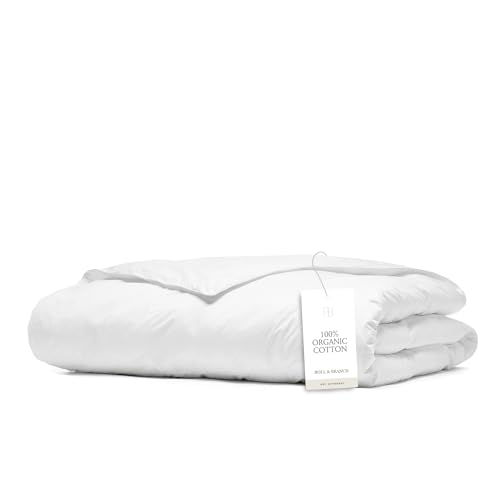
- Best overall: Boll & Branch Down Duvet Insert, Full/Queen, All Season — Check on Amazon
- puredown Goose Down Comforter, 800 Fill Power, Winter Oversized — Check on Amazon
- Continental Bedding Siberian Goose Down Comforter, Queen, 800 Fill Power — Check on Amazon
- Boll & Branch Down Alternative Duvet Insert, Full/Queen, All Season — Check on Amazon
See 2 more Amazon options
- CUDDLE DREAMS Classic Wool Comforter, Midweight, Queen — Check on Amazon
- Globon Winter White Goose Down Comforter, Queen — Check on Amazon
Read the full guide ↓
Disclosure: As an Amazon Associate, topratedkitchenware.com earns from qualifying purchases. Links to Amazon on this page are affiliate links; they cost you nothing extra. Listing details such as price and availability change often, so check the current Amazon listing before you buy.
Here is the honest headline for this budget, and it matters even more in a rental: no single duvet insert on Amazon verifiably costs $700 in a queen size. We checked listings, price trackers and deal records, and the most expensive queen insert we could verify is the Boll & Branch down insert — check price on Amazon. Everything above that line on Amazon is either a king size, a price-history spike on a volatile listing, or a luxury-house duvet sold only direct. So a renter with $700 to spend is not really shopping for one $700 product. You are deciding how much of that money should live in a single premium insert that moves with you from lease to lease, how much should become a rotation, and how much should simply stay in your pocket — because in an apartment, the case for and against tying up premium money in bedding is genuinely different from the homeowner’s case.
What makes this an apartment guide rather than our general under-$700 guide is the filter the picks were re-judged through. An insert is one of the few bedroom upgrades that is entirely yours: nothing is installed, nothing needs a landlord’s permission, and it leaves when you do. But renting adds three tests a homeowner never faces. The insert has to survive moves — which means compressibility and storage matter, because a queen insert in a small apartment competes for the same closet as everything else you own. It has to survive your laundry reality — most building laundry rooms have machines too small for a queen insert, so care labels stop being fine print and become the product. And it has to make sense against a lease horizon: a flagship insert considered over three renewed leases is a different purchase from the same insert bought four months before a move you already know is coming.
One vocabulary note before the picks. On Amazon, “duvet insert” and “comforter” are the same products wearing two names; most listings carry both words. What makes a product a good insert rather than a standalone comforter is not the label but the fittings: loops or tabs at the corners (ideally eight attachment points, not four) that tie to the inside of your duvet cover, a baffle-box shell that keeps fill from pooling at one end, and a stated size that matches your cover within an inch or two. Every pick below was graded on those fittings as well as its fill. Fill claims are treated with suspicion throughout: fill power, warmth and loft figures are maker claims unless a reviewer measured them, and feather and down fiber is not the same thing as down clusters.
In this guide
Quick Picks
Short on time, or comparing several options at once? Each row below names a renter situation and the product that suits it, with a link to the listing.
| Buyer type | Pick | Why it stands out | Link |
|---|---|---|---|
| Best overall for a long lease | Boll & Branch Down Duvet Insert, Full/Queen, All Season | The priciest verifiable queen insert on Amazon — check price on Amazon — and, unusually for down, machine-washable per the brand | Check on Amazon |
| Best published spec | puredown Goose Down Comforter, 800 Fill Power, Winter Oversized | 93% goose down and a maker-rated 800 fill power — check price on Amazon — but oversized and dry-clean-only | Check on Amazon |
| Best on a price dip | Continental Bedding Siberian Goose Down Comforter, Queen | 800 fill power class down whose price moves widely over time — check the current price on Amazon — so timing is everything | Check on Amazon |
| Best for shared laundry | Boll & Branch Down Alternative Duvet Insert, Full/Queen, All Season | PrimaLoft-brand recycled fiber in the same certified organic cotton insert shell — check price on Amazon — with machine-friendly care | Check on Amazon |
| Best rotation partner | CUDDLE DREAMS Classic Wool Comforter, Midweight, Queen | Australian wool with eight ties — the most insert hardware in this guide — check price on Amazon | Check on Amazon |
| Best low-risk down | Globon Winter White Goose Down Comforter, Queen | Maker-rated 800 fill power, corner tabs and a home-washable rating at a lower-band position in this guide — check price on Amazon | Check on Amazon |
How These Picks Were Chosen
The first filter was verification. Every product below is a real Amazon listing whose queen or full/queen listing we could tie to its ASIN through a listing record, a price tracker or coverage. Where a well-known premium insert could not be verified that way, it is named without a link and the reason is stated: the Brooklinen down comforter, for example, is widely covered as an Amazon option, but the exact full/queen all-season ASIN could not be isolated from its lightweight and king siblings, so it appears in this guide as a named alternative, not a link. We would rather lose a pick than guess an ASIN.
The second filter was the budget itself, applied honestly. A $700 ceiling does not mean hunting for a $700 product that does not exist; it means premium picks plus sensible combinations. The allocation plans later in this guide are built only from the picks reviewed below, and the remainders are left deliberately unspent rather than padded with accessories nobody asked for. One pick, the Continental Siberian, is a deliberate straddle: its price history crosses $700, so it is included with its volatility flagged plainly and a plain instruction to buy it only on a low reading.
The third filter was insert fitness. A premium comforter with no corner loops is a mediocre insert: it will bunch, slide and pool inside a cover no matter how good its down is. So each pick was graded on attachment hardware (loops, tabs or ties, and how many), shell construction (true baffle boxes hold fill in place better than sewn-through quilting at high lofts), and dimensions against standard queen duvet covers, which are usually cut around 88–92 inches square. Two picks earn their place largely on hardware — the wool insert’s eight ties and the hero’s corner loops — and one pick, the oversized puredown, carries a size warning for exactly the opposite reason.
The fourth filter is the one this variant exists for: the renter test. Each pick was re-judged on four questions a homeowner never has to ask. Does it move well — does the fill compress for a car boot or a storage bag, and how much closet does it eat between leases? Does its care label survive a shared laundry room, where the machines are small, the dry cleaner is a trip, and the duvet cover has to do most of the washing work? Does its price make sense against a lease — is this a three-lease purchase or a one-lease indulgence? And does it need anything from the apartment itself — permission, installation, a specific cover size you do not already own? No pick here needs anything from your landlord.
Finally, fill honesty. Down products were separated into three classes and never blurred: cluster down (the expensive, lofty kind, stated as a down percentage), down and feather blends with a published ratio, and feather/down fiber — processed, chopped fill that sleeps flatter and cheaper and is not a down comforter in any meaningful sense, whatever the listing headline says. Makers’ fill-power figures are printed as maker claims. And when a maker does not publish a fill power at all, as with our hero, that absence is treated as a fact about the product, not a gap for us to fill in from a reviewer’s estimate without labeling it.
The 6 Best Duvet Inserts for Apartments Under $700
Boll & Branch Down Duvet Insert, Full/Queen, All Season
Who it suits: Renters on a long or renewable lease who want one premium insert as the core of a system that moves with them — and who value sourcing, shell quality and washable care over a published fill-power number.
This is the ceiling of the verified market: check the current price on Amazon for the full/queen all-season configuration. The listing offers three weights, and the brand’s own site sells a comparable configuration direct. The fill is responsibly sourced, triple-washed US down; the shell is certified organic long-staple cotton, down-proof, built as true baffle boxes that keep the fill distributed instead of letting it migrate to the foot of the bed; the product is Fair Trade Certified. As an insert it is properly fitted out: the brand confirms four corner loops that tie to the interior ties of a duvet cover, and reviewers who tested it specifically noted the loops made setup inside a cover easy.
For a renter, two details lift this pick above its rivals. The first is care: unusually for down, the brand’s guidance is machine wash cold, alone, once a season, and tumble dry low. A queen insert still will not fit a small building machine — plan on a laundromat’s large drum — but “washable at the laundromat twice a year” is a fundamentally different ownership proposition from “dry clean only” when you do not have a machine of your own. The second is portability: down compresses further than any other fill here, so the most expensive insert in this guide is also one of the easiest to pack down for a move. The lightweight full/queen is listed at 6.6 lb, and there are three weights, so renters in unheated or overheated buildings should check the midweight or ultraweight configurations and confirm which configuration is linked.
- The highest verifiable queen insert position on Amazon: check price on Amazon for full/queen all season.
- Four corner loops and a baffle-box, down-proof organic cotton shell — real insert hardware, not a comforter afterthought.
- Responsibly sourced, triple-washed down; Fair Trade Certified; machine-washable per the brand’s own care guidance — the renter-friendly care label in this guide.
Honest limitation: Boll & Branch does not publish this insert’s fill power anywhere on its own product page. The 650 figure you will see quoted around the web comes from a reviewer’s coverage (Sleep Foundation, as tracked by read-vault), not from the maker — so the single number that usually justifies a premium down price is one you have to take on trust and reputation. The brand’s published limited warranty also covers mattresses and foundations, not bedding, its 30-night bedding trial is a brand-direct term (Amazon purchases follow Amazon’s terms), and its Amazon review record is still thin. For a renter there is one more honest charge: a flagship-priced insert is a lot of money to have sitting in bedding if your lease situation is unstable.
Choose it if you expect to stay put or renew for a few years, certified sourcing and an organic shell matter to you, and you want the one-insert system this guide is built around. Skip it if your lease is short or uncertain, or you buy down by the numbers — the puredown below publishes the spec this one withholds.
puredown Goose Down Comforter, Full/Queen, 800 Fill Power, Winter Oversized (98 x 90 Inch)
Who it suits: Spec-led renters in cold buildings who want the strongest published numbers in this guide — and who already own, or will buy, an oversized cover.
Where the hero asks for trust, the puredown publishes: the listing states 93% white goose down, a maker-rated 800 fill power, a 100% cotton shell at a stated 700 thread count, and a 40 oz fill weight for the full/queen, with RDS and OEKO-TEX certifications claimed by the maker. Check the current price on Amazon for this Amazon-fulfilled listing. Roundup coverage describes a 3D baffle-box construction, which at this loft is the right build — sewn-through quilting would pinch the down and waste the fill power you paid for. Forty ounces of high-loft down is a genuinely warm winter fill; this is the pick for cold bedrooms and cold sleepers, and it will be too much for a warm apartment most of the year.
The renter re-judgment cuts both ways. In its favor: high-loft down is the most compressible fill in this guide relative to its warmth, so on moving day this winter-weight insert packs down smaller than a synthetic of half its warmth. Against it: the two frictions of rental life land on this pick hardest. Its size — 98 x 90 inches — is oversized against the standard queen duvet cover (typically cut around 88–92 inches), and renters are the buyers least likely to own an oversized cover or want to buy a second cover system for one insert; in a standard cover it will bunch and feel lumpy no matter how good the down is. And its care is dry clean only per coverage of this model, which in a building with shared laundry means the cover is not optional protection — it is the only washable layer you have, and the insert itself means periodic paid cleaning for as long as you own it.
- The guide’s strongest published spec: 93% goose down, maker-rated 800 fill power, 40 oz fill, stated on the listing.
- Premium down positioned below the flagship tier — check price on Amazon.
- The most compressible warmth here: high-loft down packs smallest on moving day.
Honest limitation: The oversized 98-inch length is a real insert problem in standard queen covers, the fill-power figure is the maker’s rating rather than an independent lab result, and dry-clean-only care is the most expensive care regime in this guide for someone without their own machines.
Choose it if you sleep cold, your building runs cold, you buy on published specs, and an oversized cover is part of the plan. Skip it if your covers are standard queen, your apartment runs warm, or a dry-clean-only label is a non-starter.
Continental Bedding Siberian Goose Down Comforter, Queen, 800 Fill Power
Who it suits: Patient, price-watching renters who want 800-fill-power-class down, are not shopping against a move date, and are willing to let a tracker decide when they buy.
This is the most instructive listing in the guide. The maker rates it at 800 fill power in a queen Siberian goose down build, and its list positioning sits above this guide’s ceiling. But its price-tracker record tells the real story: it has moved from well below the ceiling to well above it, and spends much of its time in between. In other words, this is a $700-class insert only on its good days, a bargain on its best days, and an over-budget listing the rest of the time. We include it because on a low reading it may be the best down value in this entire guide — and because its record proves the guide’s central point, that Amazon’s premium insert prices are set by volatility, not by a stable $700 tier.
The renter angle sharpens both sides of that. Renters who are settled — lease renewed, no move on the calendar — are exactly the buyers who can afford to wait for the dip, and at a low reading this pick leaves more of the budget unspent than any other premium route here. But renters also face the trap in its purest form: moving dates do not negotiate with price trackers. If you need an insert because you are moving into a cold apartment next month, the Continental’s price that month is whatever it is, and at its average or list it is the wrong purchase. The brand’s tier is corroborated off Amazon: Continental’s Serenity line, a 700 fill power Hungarian white goose down queen, was listed through a Target retail listing, which is context for the brand’s tier, not an Amazon price. What we cannot do is promise which Continental you will find when you click.
- Maker-rated 800 fill power Siberian goose down in a queen build from a specialist down house.
- Verified tracker record shows wide swings, from well below the ceiling to above it, with list positioning above the ceiling.
- At a low reading it undercuts the puredown’s spec-led value; at an average reading it nearly fills this budget alone.
Honest limitation: This is a deliberate straddle. It has sold above the $700 ceiling within the last year, and if the live price is above $700 when you check, it does not belong in your cart at this budget — wait, set a price alert, or take the puredown. Never buy it at list, and doubly never buy it at list because a move is forcing your timing.
Choose it if the live queen price is sitting at a low reading, well under the ceiling, when you check and you have no deadline. Skip it if you need to buy today, at whatever price is showing, for a specific move-in date.
Boll & Branch Down Alternative Duvet Insert, Full/Queen, All Season
Who it suits: Renters who want the hero’s shell, certifications and insert fittings but not down itself — and who rank easy care in a shared-laundry life above maximum loft.
The down-alternative sibling of our hero is a genuine insert by name and design: check the current price on Amazon for the full/queen all-season configuration. The fill is PrimaLoft-brand recycled synthetic fiber — a named, branded fiber rather than anonymous “down alternative” stuffing — inside the same style of certified organic cotton shell with baffle-box construction, in the same three weights, with the brand’s corner-loop insert design. The maker describes the fill with its own “hypoallergenic” label; we repeat that only as the maker’s label, not as a health claim, and the honest comfort case for this pick is simpler: it lofts like a mid-grade down, it does not need dry cleaning, and nobody in the house has to be comfortable with feather products.
Through the apartment lens, this is arguably the most renter-shaped premium pick in the guide. Its care is the machine-friendly kind, which in practice means the insert itself can go through a laundromat’s big drum on the rare occasions it needs a full wash, instead of starting a dry-cleaning relationship. It shares dimensions and fittings with the down hero, so the same covers serve both. The honest charges are two. Synthetic fiber compresses less willingly than cluster down and springs back against the storage bag, so it is the bulkier premium pick on moving day. And synthetic fill flattens sooner than down across years of use, which matters when the whole point of spending premium money as a renter is a purchase that outlasts several leases. Judged coldly, you are also paying a premium for the shell and the brand: competent synthetic fills exist at lower prices in our lower-tier guides. What the extra money buys is the organic cotton shell instead of microfiber, baffle boxes instead of sewn-through quilting, Fair Trade certification, and an insert built to be one.
- A true duvet insert (not a rebadged comforter) — check price on Amazon for full/queen all season.
- Branded PrimaLoft recycled fiber in an organic cotton baffle-box shell; three weights; corner-loop design.
- The easiest premium care here for shared-laundry life — no dry-clean-only label.
Honest limitation: Synthetic fiber does not match cluster down for loft-per-weight, compressibility or lifespan, and at a premium price this is an expensive way in the guide to not buy down. The fill is a maker-described “hypoallergenic” fiber — a label, not a medical property.
Choose it if your household avoids down, your laundry situation rules out dry-clean-only bedding, or you want the premium insert that asks the least of a renter. Skip it if you are indifferent to fill type — a similar premium budget buys real down in the puredown.
CUDDLE DREAMS Classic Wool Comforter, Midweight for All Season, Queen (88 x 88 Inch)
Who it suits: Hot-and-cold sleepers in drafty or unevenly heated rentals, and anyone building a rotation, who wants the best insert hardware in this guide at the lowest price in it.
Wool is the connoisseur’s insert fill: it buffers temperature swings in both directions, handles moisture vapor better than down, and does not rely on loft alone for warmth — a genuinely useful profile in rental housing, where heating is often landlord-controlled, uneven, or off entirely overnight. This midweight queen carries 240 GSM of Australian wool (the line also offers a 120 GSM summer weight and a heavier winter version) inside a jacquard cotton shell the maker describes as noiseless, with OEKO-TEX Standard 100 certification and an inspection zipper so you can actually see the fill you paid for — a transparency feature we wish more makers offered. Check the current price on Amazon.
As an insert, it is the best-fitted product in this guide: eight ties, double the hero’s attachment points, which is what actually stops the nightly migration of insert to the foot of the cover. At 88 x 88 inches it matches standard queen covers exactly — the covers a renter most likely already owns. In the allocation plans below it is the hardest-working product here: the warm-month half of a rotation, and the pick whose loss in a bad move would sting least. The renter-specific charge is weight and density: wool does not compress like down, so this is the heaviest, bulkiest pick to store in a small closet and to carry on moving day, and per roundup coverage of this model it is dry clean only.
- Eight ties — the most attachment hardware in this guide — and an exact 88 x 88 standard queen fit for the covers you already own.
- 240 GSM Australian wool in a cotton jacquard shell, OEKO-TEX certified, with an inspection zipper.
- The rotation enabler at the lower end of this guide’s pricing — check price on Amazon.
Honest limitation: Wool is dry clean only per roundup coverage of this model, some owners notice a mild wool scent on first opening, and a wool insert feels denser and less cloud-like than down. For renters specifically, it is also the least compressible fill here — the worst traveler in the guide.
Choose it if your building’s heating is unreliable, you are building a two-insert rotation, or your cover’s ties outnumber standard loops. Skip it if closet space and moving weight are your binding constraints, or you want maximum loft.
Globon Winter White Goose Down Comforter, Queen (90 x 90 Inch)
Who it suits: Renters on shorter or less certain leases who want real goose down with insert fittings at a price that does not hurt if the living situation changes.
Globon is the puzzle of this guide: a winter-weight queen, maker-rated at 800+ fill power, with corner tabs for cover use, positioned in a lower band than the puredown for a similar headline number — check the current price on Amazon. The construction details that are published are respectable: a 420 thread count shell (a 68% cotton / 32% polyester blend, per roundup spec reads — not pure cotton, and we print that rather than letting “420 TC” imply otherwise), 3D baffle boxes reported in coverage, a maker-claimed moisture treatment on the fill, and roughly 37 oz of fill for the queen per a detailed comparison table. It is also rated home-washable per maker and roundup material.
The apartment case for it is financial as much as thermal. At a lower-band price well below the hero’s tier, this is the pick that respects lease uncertainty: if you move in eight months, give it away, or discover your new place has different heating, you have lost very little, and meanwhile you slept under real down with real insert tabs that is rated washable at home — which, in a laundromat-based life, means a big drum and a long dry rather than a dry cleaner’s ticket. The catch is what is not published. Across the listing and its coverage, Globon does not state its down-to-feather ratio. An “800 fill power goose down” headline with no ratio can describe a mostly-down fill or a feather-heavy blend whose best clusters rate highly; those are very different products at the same headline. The brand has sold this line since 2017, which counts for something — but you are buying a strong headline and decent hardware with the single most important ratio left blank.
- Maker-rated 800+ fill power with corner tabs — check price on Amazon for the winter queen.
- Baffle-box construction and a home-washable rating — the easiest-care real-down pick here.
- Roughly 37 oz fill per comparison-table reads; a line sold since 2017, at a value position that forgives a short lease.
Honest limitation: The down/feather ratio is not published anywhere we could verify, and its pricing indication rested on a single secondary spec source rather than a first-party tracker record — confirm the live queen price on Amazon and a featured offer before relying on its positioning.
Choose it if your lease is short or uncertain and you want real down and insert tabs at a value price. Skip it if unpublished specs bother you — that is exactly what the puredown’s premium pays to avoid.
Comparison Table
| Product | Fill (as published) | Insert hardware | Price basis (queen) | Link |
|---|---|---|---|---|
| Boll & Branch Down Duvet Insert, Full/Queen | Responsibly sourced down; fill power not published by maker | 4 corner loops; baffle box | Check price on Amazon | Check on Amazon |
| puredown Goose Down, Winter Oversized | 93% goose down, maker-rated 800 FP, 40 oz | Baffle box reported; oversized 98 x 90 in | Check price on Amazon | Check on Amazon |
| Continental Bedding Siberian, Queen | Maker-rated 800 FP Siberian goose down | Standard comforter build; check listing for loops | Highly variable — check the current price on Amazon; can sit above the $700 ceiling | Check on Amazon |
| Boll & Branch Down Alternative Insert, Full/Queen | PrimaLoft recycled fiber (maker-labeled hypoallergenic) | Corner loops; baffle box | Check price on Amazon | Check on Amazon |
| CUDDLE DREAMS Wool, Midweight Queen | 240 GSM Australian wool | 8 ties; inspection zipper | Check price on Amazon | Check on Amazon |
| Globon Winter, Queen | Maker-rated 800+ FP; down/feather ratio not published | Corner tabs; baffle box reported | Check price on Amazon | Check on Amazon |
How to Choose a Duvet Insert for an Apartment Under $700
- Start with the lease, not the listings. Two-plus years or a likely renewal justifies flagship money; a lease ending within the year argues for the Globon or the wool and a healthy remainder. The same insert is a good buy on one horizon and a poor one on another.
- Accept the ceiling first. No queen insert verifiably costs $700 on Amazon; the verified top is the Boll & Branch down insert — check price on Amazon. Treat the rest of the budget as a second insert, a better cover, or money kept — not as a reason to buy a king size or a spike price.
- Build one insert and a cover system, not a pile of inserts. In a small apartment, one premium insert plus two good covers beats two inserts: covers wash easily in shared laundry, store flat, and are the layer you actually see and touch. The off-season insert you cannot store is a liability, not a rotation.
- Audit your laundry before your fill. Building machines rarely fit a queen insert. If the insert must be washable, your realistic routes are a laundromat’s large drum (the Boll & Branch picks and the Globon) or a cover doing all the work over a dry-clean-only insert (the puredown, the wool). Decide which life you are signing up for.
- Match dimensions to the covers you already own. Renters rarely want to replace a cover wardrobe for one insert. Standard queen covers run about 88–92 inches; an oversized insert (98 inches) in a standard cover bunches. Measure first.
- Weigh the move, literally. Down compresses to a fraction of its lofted size and travels light; synthetic fiber springs back against the bag; wool is dense and heavy. If you move often, fill choice is a logistics decision as much as a comfort one.
- Count the attachment points. Four corner loops are the minimum; eight loops or ties are better. Then check your cover: its interior ties must roughly match the insert’s loop positions, or the insert will still drift.
- Prefer baffle boxes at high loft. Sewn-through quilting pinches fill at every seam. Above roughly 600 fill power, baffle-box construction is what lets the down actually loft.
- Read fill claims in three parts. Down percentage, fill power and fill weight must all be present to judge a down insert. If any one is missing — a ratio, a fill power — treat the headline number as marketing and price the product accordingly.
- Never confuse fiber with clusters. Feather and down fiber is processed fill: flatter, heavier, cheaper. Listings that headline “down” and footnote “fiber” are selling the footnote.
- Use trackers, but not against a deadline. The Continental’s record — swinging from well below to above the ceiling on one listing — rewards patience. If a move-in date is fixed, buy the pick whose current price sits comfortably under the ceiling instead, and let the dip go.
A Premium Insert in a Rented Bedroom: The Honest Case For and Against
The case for starts with a fact renters underrate: bedding is one of the only upgrades to a rented bedroom that is entirely, unambiguously yours. A duvet insert requires no permission, no installation, no holes in anything, and no negotiation with a landlord — and unlike paint, flooring or built-in storage, it leaves with you at full value. Spread across the leases it will actually serve, a flagship insert feels gentler than the sticker suggests: it is the layer of the bed you spend a third of your life in, and quality down inserts routinely outlast a multi-lease horizon. If your housing is stable-ish — a renewed lease, a city you are staying in — a premium insert is not an indulgence; it is one of the few durable goods a renter can buy without subsidizing a landlord’s property.
The case against is just as real, and this guide will not soften it. Lease uncertainty is the tax on every durable purchase: if there is a meaningful chance you will move somewhere furnished, move abroad, move in with a partner whose bedding you will merge with, or downsize to a twin or full bed, a flagship queen insert can become expensive storage. Premium inserts also concentrate risk — one spill, one bad move, one storage unit flood — in a way two mid-priced inserts do not. And there is an opportunity cost specific to renting: flagship money is most of a deposit top-up, a month of buffer, or the moving van itself. The honest rule we would give a friend is this: buy flagship-tier only if you can name the bed it will sleep on for the next two to three years. If you cannot, the Globon and the wool insert in this guide deliver most of the sleep for a far smaller commitment, and the remainder stays liquid for the life you actually have.
Between those poles sits the pattern this budget is really for, and it is the one the allocations below formalize: one premium insert as the core, one inexpensive natural-fill insert as the rotation partner, two covers, and the discipline to leave the rest of the $700 unspent. That system survives moves, shared laundry and lease changes — the most homeowner-like outcome a renter can buy.
Spending $700 on Inserts: The Allocations That Actually Make Sense
Because no single queen insert verifiably reaches $700, the grown-up question at this budget is not “which one?” but “which combination?” The plans below use only the picks reviewed above, and each leaves its remainder deliberately unspent — a good duvet cover, or nothing, is a better use of the leftover than a third insert nobody has closet space for.
Plan 1 — the flagship rotation. The Boll & Branch down insert as the main event, plus the CUDDLE DREAMS wool midweight for warm months and hot spells. You get the certified flagship for most of the year, a temperature-buffering wool layer when down is too much, and eight-tie hardware on the insert you will swap most often. For a renter on a long lease, this is the plan we would hand you first — with the warning that the wool is the bulky half of the pair when moving day comes.
Plan 2 — the shared-laundry system. The Boll & Branch down alternative insert plus the same wool insert. No dry-clean-only labels anywhere in the system, dimensions and fittings that share one set of covers, and a meaningful remainder deliberately left over — which in a rental is best understood as your cover budget: two good covers turn either insert into a complete, washable system. This is the plan for renters whose laundry reality rules the decision.
Plan 3 — the spec-led rotation. The puredown for deep winter — the strongest published spec in the guide — plus the wool insert for the shoulder seasons. It demands an oversized cover for the puredown and dry-cleaning discipline, and in exchange it leaves a meaningful remainder unspent while covering the full year. If the Continental Siberian is sitting at a low tracker reading when you shop, it can substitute for the puredown in this plan and lower the total commitment — but only on that reading, never at a high reading, and never against a move deadline.
What none of these plans does is chase the number $700. The gap between the verified ceiling pick and the budget is not a failure of the market to take your money; it is the market telling you that queen inserts top out where they top out, and that the remaining dollars work harder as a second insert, a linen cover, moving costs, or savings.
Moving Day, Storage and the Shared-Laundry Problem
Three practical systems decide whether a premium insert is a pleasure or a burden in an apartment, and none of them appear on a listing page. The first is compression. Cluster down — especially high-loft down like the puredown’s — squeezes down to a small fraction of its lofted volume, which is why down has been the traveler’s fill for a century: the most expensive insert in this guide is among the easiest to fit in a car. Synthetic fiber resists compression and springs back, so the down-alternative pick travels bulkier than its price suggests. Wool barely compresses at all and is dense to carry; it is the fill you choose when you are staying, not when you are going. Compress an insert for the move, not for the season: store the off-season insert loosely in a breathable bag.
The second system is storage geometry. A queen insert at rest is a large, soft cuboid competing with everything else a small apartment holds. The rotation plans in this guide are deliberately built so that only one insert is ever in storage at a time, and the stored one is, ideally, the wool — flat-ish, tolerant of being folded, and cheap enough not to worry about. If your closet cannot hold even one stored queen insert, the correct purchase is a single all-season insert and two covers.
The third system is laundry, and it is the one renters get wrong most often. A queen insert does not fit in a standard building laundry machine, and forcing it in washes nothing and can damage both the insert and the machine. Your realistic options are a laundromat’s large-capacity drum (which is why the machine-washable Boll & Branch picks and the home-washable-rated Globon matter), professional cleaning (the puredown’s and the wool’s regime — budget for it as an annual cost, not a surprise), or the system most renters actually live with: the duvet cover as the wash layer. The cover comes off weekly and goes through the building machines with the sheets; the insert underneath is shaken, aired and spot-cleaned, and fully washed rarely. That system only works if the insert is always used inside a cover. Tie every loop, every time: an untied insert migrates and bunches.
Common Buying Mistakes
- Shopping for a $700 insert. It does not verifiably exist in a queen size on Amazon. Shoppers who insist on spending the full figure end up buying a king size for a queen bed, or paying a spike price on a volatile listing.
- Buying flagship bedding against a short lease. A flagship-priced insert bought four months before a known move is a storage problem with a price tag. Match the spend to the horizon you can actually name.
- Ignoring the tracker — or obeying it against a deadline. Buying the Continental Siberian at a high reading when the same listing has sold far lower is the classic error; the mirror-image error is waiting for a dip while your move-in date arrives without an insert.
- Buying the oversized insert for standard rental covers. A 98-inch insert in a 90-inch cover bunches no matter how premium the down is. Measure the covers you already own first.
- Assuming the building laundry can wash it. A queen insert in a standard shared machine washes badly and can damage the machine. Know your route — laundromat drum, professional cleaning, or cover-only system — before you choose a dry-clean-only fill.
- Storing the off-season insert vacuum-sealed for months. Hard compression is for moving week. Season-long storage should be loose and breathable, or the loft you paid for is the thing you are slowly spending.
- Judging by fill power alone. Fill power without fill weight and down percentage is one leg of a three-legged stool. Two of this guide’s six picks withhold one of the numbers — judge them accordingly.
- Confusing fiber with down. “Down fiber” and “feather fiber” fills are processed fill, not clusters; at this budget there is no reason to accept them in a product headlined as down.
- Skipping the ties. Loops only work if they are tied, every wash. An untied premium insert migrates exactly like a cheap one — and in a rental, a bunched insert is usually blamed on the bed.
Final Recommendation
- Most renters on a stable lease: Boll & Branch Down Duvet Insert, Full/Queen — Check on Amazon
- Spec-led buyers in cold buildings: puredown Goose Down Comforter, 800 Fill Power, Winter Oversized — Check on Amazon
- Patient price-watchers with no deadline: Continental Bedding Siberian — only on a low tracker reading.
- Shared-laundry households and down-free homes: Boll & Branch Down Alternative Duvet Insert, Full/Queen.
- Rotation builders and the heating-unreliable: CUDDLE DREAMS Classic Wool Comforter, Midweight.
- Short or uncertain leases: Globon Winter White Goose Down Comforter, Queen.
Our top two are the Boll & Branch down insert for renters who can name the next two or three years of their bed — it is the verified ceiling of this market, properly looped, baffle-boxed and organically shelled, machine-washable by rental standards, with the single honest asterisk that its maker will not publish a fill power — and the puredown for buyers who want the numbers printed and the deepest winter warmth, provided an oversized cover and a dry-cleaning budget are part of the plan. If your lease is short, skip both without regret and take the Globon or the wool. If the budget is firm at $700 and the lease is long, spend it as Plan 1: the Boll & Branch plus the wool insert, and keep the remainder unspent. The most expensive mistake at this tier is not buying the wrong insert; it is buying a three-lease insert on a one-lease horizon, or paying spike prices to reach a number the queen market never asked for.
Frequently Asked Questions
Can you really buy a $700 duvet insert on Amazon?
Not as a single queen purchase, on the evidence we could verify. The highest verified Amazon queen pick is the Boll & Branch down insert — check price on Amazon; the only listing whose history crosses $700, the Continental Siberian, spends much of its life far below that line. Genuine above-budget duvets — heritage European makers, 900-fill-power builds, boutique silk — are sold direct or through department stores, not in verifiable Amazon queen listings. This guide therefore treats $700 as a budget for premium picks and combinations, not as a single product’s price.
Is a premium duvet insert worth it if I rent?
It depends on the horizon, not the housing type. An insert needs no permission and no installation, and it moves with you at full value — unlike most things you could spend the money on in a rental. Over a two-to-three-year horizon, quality down outlasts that easily. On a short or uncertain lease, the same purchase is mostly storage risk, and the Globon or wool picks deliver most of the sleep for a far smaller commitment.
Can I wash a queen duvet insert in a building laundry room?
Usually not in the standard machines — a queen insert is too bulky to wash properly in them and can strain the machine. The workable routes are a laundromat’s large-capacity drum for the machine-washable picks (both Boll & Branch inserts per their brand guidance, and the home-washable-rated Globon), professional cleaning for the dry-clean-only picks (the puredown and the wool), or the cover-as-wash-layer system: the cover goes through your building machines weekly, and the insert is shaken, aired and only occasionally washed. Always follow the maker’s label over habit.
Which insert is easiest to move with?
Cluster down, and the higher the loft the better it compresses relative to its warmth — the puredown and the Boll & Branch down insert pack down smallest on moving day. Synthetic fiber (the down alternative) springs back and travels bulkier; wool is the densest and least compressible fill here. Whichever you own, compress it for the move itself, then store it loose and breathable once you arrive — season-long vacuum storage is hard on any fill.
What is the difference between a duvet insert and a comforter?
On Amazon, usually nothing but the label — the same products are listed under both names. Functionally, an insert is the filled panel that goes inside a duvet cover, and what makes one good at that job is hardware: corner loops or ties that fasten to the cover, baffle-box construction that keeps fill distributed, and dimensions that match the cover. A comforter used without a cover can ignore all three; an insert cannot.
How many corner loops or ties should an insert have?
Four corner loops are the standard minimum and work when tied consistently. Eight attachment points — corners plus mid-edges, as on the wool pick in this guide — hold noticeably better, especially for restless sleepers. What matters most is the match with your cover: count its interior ties and compare positions before you buy.
Why doesn’t Boll & Branch publish a fill power?
The maker simply does not state it on its product page; the 650 figure in circulation comes from a reviewer’s coverage (Sleep Foundation). The brand sells the insert on sourcing, certifications and construction instead. Whether that trade — audited provenance instead of a published spec — is acceptable at a flagship price is a legitimate judgment call, and this guide flags it as the hero’s honest limitation rather than resolving it for you.
What if the Continental Siberian is over $700 when I check?
Then at this budget you do not buy it that day. Its verified record swings widely, so the same listing will very likely be a different price in a few weeks. Set a tracker alert, or take the puredown — the spec-led pick; check its current price on Amazon — and revisit the Continental when its price comes back under the line. If a move-in date is forcing the decision, that settles it: buy the pick whose current price sits comfortably under the ceiling.
