Disclosure: topratedkitchenware.com is reader-supported. When you buy through links on our site, we may earn an affiliate commission from Amazon and other retailers, at no extra cost to you.
Where to buy
All six of the best low sugar mixers for vodka below are Fever-Tree tonics sold on Amazon, where you can check the latest price on Amazon and confirm the current pack before ordering. This guide is strictly about drink mixers for vodka serves. If your mixer question was about audio consoles, that shelf lives at Best Low Cost Dj Mixers — nothing there will improve a vodka tonic.
- Fever-Tree Tonic Water, 5.1 Fl Oz Cans (24 Pack) — Best Overall
- Fever-Tree Light Tonic Water, 5.1 Fl Oz Cans (24 Pack) — Best Light Pick
- Fever-Tree Tonic Water, 6.8 Fl Oz Bottles (24 Pack) — Best Classic Serve
- Fever-Tree Premium Indian Tonic Water, 16.9 Fl Oz (Pack of 8) — Best Premium
- Fever-Tree Mediterranean Tonic, 6.8 Fl Oz Bottles (24 Pack) — Most Distinctive
- Fever-Tree Light Tonic Water, 5.07 Fl Oz Cans (8 Pack) — Best Small Pack
Read the full guide ↓ for the detailed review, strengths and trade-offs, and best-for verdict on every pick.
The search for the best low sugar mixers for vodka narrows quickly once you understand the spirit. Vodka contributes almost no flavour of its own, so the mixer is not supporting the drink — it is the drink, and a lower-sugar vodka serve stands or falls on whether that mixer brings its own structure. That is why this guide is a tonic guide: six Fever-Tree tonics, standard and light, canned and bottled, classic and herbaceous, each giving vodka the bitterness, citrus and carbonation that let a lean pour taste complete.
Fever-Tree earns the sweep honestly. It is the mainstream line that pairs a real-quinine standard tonic — its listings name the vodka and tonic outright — with a specifically light formulation whose own product text states its per-serving figure. Around those two poles sit the formats a vodka drinker actually cycles through: the classic glass-bottle serve, a premium flagship for the best bottle in the house, a Mediterranean variant that flavours the drink from the mixer side, and a small-pack light option for trying the lean life without buying a case of it.
Everything here is non-alcoholic as sold and built for one serve: the vodka tonic, made carefully. The method matters as much as the bottle — cold ingredients, generous ice, a gentle pour, a garnish treated as an ingredient — and the how-to section gives that method in full. Readers stocking a wider bar beyond vodka will find the same shelf organised by drink family at Best Low Sugar Mixers.
Key Takeaways
- With vodka, the mixer is the flavour — choose tonics for structure: quinine bitterness, citrus, botanicals and strong carbonation.
- The Light tonic cans are the leanest pours here; their own listings state 30 calories per can or serving.
- Single-serve cans automate portion control and guarantee full carbonation in a one-glass drink.
- The Mediterranean tonic flavours a vodka serve herbaceously from the mixer side — no flavoured, sweetened spirit required.
- Bottled and premium formats are for occasions and rounds; cans are for the everyday default.
In this guide
Quick Picks
One brand, six tonics, every vodka occasion: the everyday can, the light default, the classic bottle, the flagship, the distinctive twist and the trial pack. Badges match the detailed reviews.
| Badge | Pick | Why it earns its place |
|---|---|---|
| Best Overall | Fever-Tree Tonic Water, 5.1 Fl Oz Cans (24 Pack) | Explicitly listed for vodka and tonic, with real-quinine bitterness that gives a neutral spirit something to stand on. |
| Best Light Pick | Fever-Tree Light Tonic Water, 5.1 Fl Oz Cans (24 Pack) | The leanest vodka tonic in this guide — the listing itself states 30 calories per can, with bitter orange keeping it crisp. |
| Best Classic Serve | Fever-Tree Tonic Water, 6.8 Fl Oz Bottles (24 Pack) | The glass-bottle classic: a fuller single pour for a long, slow vodka tonic built the traditional way. |
| Best Premium | Fever-Tree Premium Indian Tonic Water, 16.9 Fl Oz (Pack of 8) | The flagship tonic with a stated clean-label stance — for the best vodka in the house and for rounds built at once. |
| Most Distinctive | Fever-Tree Mediterranean Tonic, 6.8 Fl Oz Bottles (24 Pack) | Rosemary essential oils and quinine make a herbaceous tonic that gives plain vodka a garden-party accent. |
| Best Small Pack | Fever-Tree Light Tonic Water, 5.07 Fl Oz Cans (8 Pack) | The light formulation in an 8-can trial size — the low-commitment way to make the lean vodka tonic your default. |
How These Picks Were Chosen
This shortlist was built by verifying each product against its published listing — brand, format, pack size and the claims the product makes about itself — and then mapping the Fever-Tree tonic range onto the real occasions of a vodka drinker’s week. A single-brand guide is justified only when one line genuinely covers the brief, and here it does: standard and light formulations, cans and bottles, classic and flavoured profiles, trial and case quantities. Introducing a second brand would have added variety of label rather than variety of use.
Nutrition discipline follows the rule used across this programme: a figure appears only where the product states it about itself. The light tonics’ listings state their per-can and per-serving figures, so those figures are quoted, attached to those products only. No figure is inferred for the standard, premium or Mediterranean tonics, and their roles are described in the qualitative terms — formulation intent, flavour structure, format — that a buyer can verify on the current product page, where the label remains the final authority.
The guidance is research-led, grounded in the listings and in established drink-building practice, and it is general information rather than health advice. Ordering runs from the most useful everyday pours to the occasion bottles, with the small trial pack closing the list as the lowest-commitment entry. The general low-sugar shelf, including the margarita family that vodka drinkers often stock alongside, is covered at Best Low Sugar Mixers, and the brand-family audio confusion that sometimes lands readers here is sorted at Best Mackie Mixers.
The 6 Best Low Sugar Mixers for Vodka, Reviewed in Detail

Fever-Tree Tonic Water, 5.1 Fl Oz Cans (24 Pack)
Badge: Best Overall
Strengths
- The listing names the vodka and tonic directly — this tonic was positioned for exactly your drink
- Real quinine bitterness supplies the structure a neutral spirit does not bring itself
- Single-serve cans keep portions and carbonation consistent from the first glass to the twenty-fourth
Trade-offs
- The standard formulation rather than the line’s light version; the next pick covers the strictest brief
- A 24-can case asks for storage space and a household that actually drinks tonic
- Flavour is deliberately subtle, so garnish and citrus choices carry real weight in the glass
At a glance: 24 pack; 5.1 fl oz cans; Real quinine; Listed for gin and tonic or vodka and tonic; Flavour notes listed as subtle citrus and fruit balanced by quinine bitterness.
Vodka is the honest spirit: it brings alcohol, texture and very little flavour of its own, which means the mixer is the drink. That is why the best overall pick for vodka is a tonic with genuine structure. Fever-Tree’s standard tonic is built on real quinine, and its listing names the vodka and tonic outright alongside the gin serve. The bitterness gives the glass a spine, the subtle citrus and fruit notes give it a direction, and the vodka gives it presence — a division of labour that lets the serve stay lean without tasting empty.
The can format suits vodka’s weeknight reality. A vodka tonic is usually a one-glass decision, made quickly, and the 5.1 fl oz can matches it exactly: spirit over ice, one can poured gently, a wedge of lime or a strip of lemon, done at full carbonation with no flat bottle haunting the fridge. Consistency matters more in a two-ingredient drink than anywhere else in the bar, because there is nowhere for an off night to hide; the can removes the two most common variables, portion and fizz.
Choose it as the default and understand its one honest limit: it is the standard formulation, not the light line. Drinkers whose priority is the leanest possible pour should start with the next pick and keep this one for guests and for the nights when the classic profile is the point. Every bar needs a house standard; for vodka, this is the strongest candidate in the Fever-Tree range — a judgement the wider shelf at Best Low Sugar Mixers reaches from the general angle as well.
Best for: Most vodka drinkers: the default house tonic for a clean, bitter-balanced vodka tonic / Not suited for: Anyone whose brief is the leanest possible formulation above all else

Fever-Tree Light Tonic Water, 5.1 Fl Oz Cans (24 Pack)
Badge: Best Light Pick
Strengths
- The light formulation is the strictest pour here, with the per-can figure stated on the product’s own listing
- Mexican bitter orange gives vodka a citrus direction without a flavoured spirit
- Smooth, crisp and botanical-balanced, so the serve reads dry and refreshing rather than reduced
Trade-offs
- A deliberately leaner body than the standard tonic, noticeable to classic-tonic loyalists
- Botanical subtlety rewards a light hand with garnish; heavy flavours will swamp it
- Same case-format storage commitment as the standard cans
At a glance: 24 pack; 5.1 fl oz cans; Light tonic formulation; Real quinine; Listing notes 30 calories per can; Flavour notes listed as Mexican bitter orange with balanced botanicals.
For the vodka drinker who typed this keyword, this is the can the search was for. Fever-Tree’s Light tonic keeps the real-quinine foundation and trims the formulation lean — its own listing states 30 calories per can, the one such figure this guide quotes, because it is the one the product states about itself. A hint of Mexican bitter orange does disproportionate work in a vodka serve: vodka brings no citrus of its own, so the tonic’s orange edge becomes the drink’s aromatic signature, the thing a garnish then amplifies rather than invents.
Build the serve to flatter it. Plenty of fresh ice, everything cold, the tonic poured gently to protect its carbonation, and a garnish chosen with intent — orange peel for warmth, lime for snap, a cucumber ribbon for coolness. In a lean drink each of those decisions is a larger share of the total pleasure, which is why vodka drinkers who switch to a light tonic often become more attentive bartenders in the process. The drink gets simpler and better at the same time.
The difference from the standard can is body, not character: bitterness, carbonation and botanical balance are all present, in a crisper, drier frame. If your household drinks vodka tonic several times a week, this is the case that should live in the fridge. If it drinks one on a Friday, either tonic serves you well — but this one serves the keyword best, and it is the natural first recommendation of this guide for its stated purpose.
Best for: Vodka drinkers who want the leanest tonic serve as their everyday default / Not suited for: Anyone who prefers the fuller body of the standard tonic profile

Fever-Tree Tonic Water, 6.8 Fl Oz Bottles (24 Pack)
Badge: Best Classic Serve
Strengths
- Glass-bottle format preserves the ritual and presentation of the classic highball serve
- The 6.8 fl oz pour suits a generously iced long glass without opening a second container
- The listing names the vodka and tonic explicitly, with the line’s signature quinine balance
Trade-offs
- A more generous pour than the cans, so the portion discipline is yours to supply
- Glass cases are heavy to ship, store and chill
- Standard formulation; the Light cans remain the stricter choice
At a glance: 24 pack; 6.8 fl oz bottles; Real quinine; Listed as perfect in a gin and tonic or vodka and tonic; Flavour notes listed as subtle citrus and fruit balanced by quinine bitterness.
There are two vodka tonics in most drinkers’ lives: the quick weeknight glass and the proper one. The bottled Fever-Tree tonic is for the proper one. The 6.8 fl oz glass bottle pours a full, generously iced highball in a single motion, the carbonation arrives pristine, and the tonic itself — real quinine, subtle citrus and fruit notes against clean bitterness, listed expressly for the vodka and tonic — gives the neutral spirit a classic frame. Presentation is not vanity here; a drink built with ceremony is a drink sipped slowly, and pace is its own form of moderation.
The longer pour also changes the drink’s architecture in a way worth understanding. More tonic over more ice means more dilution across the serve, which softens the spirit’s edge and stretches the bitter-citrus profile — the traditional highball effect. Vodka drinkers who find canned serves a touch intense often discover the bottled serve is the balance they actually wanted, achieved by format rather than by recipe.
Accept the format’s terms: glass is heavy, a case wants real storage, and a fuller pour means the discipline the cans automate becomes a habit you keep yourself. For the drinker whose vodka tonic is an occasion — Friday, guests, the good glassware — those terms are easily met, and this remains the classic serve of the range. Nightly lean drinkers should keep the Light cans as the default and these bottles for the ceremony.
Best for: Vodka drinkers who build long, slow highballs and serve them properly / Not suited for: Small households watching portions and fridge space closely

Fever-Tree Premium Indian Tonic Water, 16.9 Fl Oz (Pack of 8)
Badge: Best Premium
Strengths
- No artificial sweeteners, flavourings or preservatives, as stated on the listing itself
- The 16.9 fl oz bottle builds a full round of vodka tonics at one carbonation peak
- Premium Indian tonic positioning suits pairing with a favourite top-shelf vodka
Trade-offs
- Carbonation fades after opening, so the format rewards groups and occasions over solo glasses
- Premium positioning makes it the considered purchase of this guide
- A standard formulation — ingredient quality is its claim, not lightness
At a glance: Pack of 8; 16.9 fl oz bottles; Premium Indian tonic water; No artificial sweeteners, flavourings or preservatives per the listing.
Premium is an overworked word, so let this pick’s own listing define it: Fever-Tree’s Premium Indian tonic states that it is made with no artificial sweeteners, no artificial flavourings and no preservatives. For the vodka drinker whose low-sugar interest is part of a wider ingredient awareness, that stated stance — checkable on the product page — is the substance behind the flagship label. The 16.9 fl oz format completes the positioning: this is a tonic for building a round, at one moment, for people whose glasses you care about.
Vodka rewards the pairing logic. A neutral spirit exposes its mixer completely, so the occasions when the vodka itself is the good bottle — the gift, the favourite, the top shelf — are exactly when the tonic should rise to meet it. Build the round in one pass: bottles thoroughly chilled, glasses iced, tonic poured last and gently, garnishes matched to the mood. Served that way, the flagship earns its place without a word of hype from anyone.
Its limits are format limits. A large bottle opened for one glass will greet the second glass with less life, so solo nightly drinkers should let the cans be their default and keep this for company. And its claim is quality, not lightness — the Light tonic remains the leanest pour in the guide. Held for the right occasions, the premium bottle completes the vodka shelf: everyday cans, a classic bottled serve, the light default, and this, for when the evening deserves it.
Best for: Hosts building rounds and drinkers pairing a flagship tonic with a prized vodka / Not suited for: A solo drinker opening a large bottle for a single nightly glass
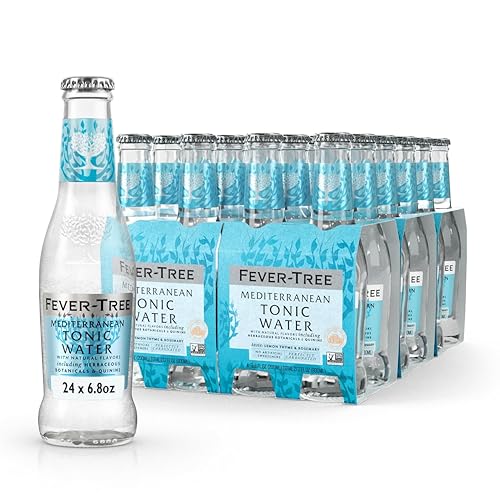
Fever-Tree Mediterranean Tonic, 6.8 Fl Oz Bottles (24 Pack)
Badge: Most Distinctive
Strengths
- A genuinely distinctive herbaceous profile from rosemary essential oils, per the listing
- Turns a plain vodka tonic into a flavoured serve without a flavoured, sweetened spirit
- The bottled format suits the aperitif-style occasions this flavour was made for
Trade-offs
- Herbaceous character is a taste some drinkers love and others decline — buy a case with your palate in mind
- Less neutral than the classic tonics, so it will steer strongly flavoured garnishes into competition
- Standard tonic family formulation; the Light pick remains the strictest pour
At a glance: 24 pack; 6.8 fl oz bottles; Essential oils of rosemary per the listing; African quinine per the listing; Flavour described in the listing as subtly herbaceous and refreshing.
The most interesting answer to a neutral spirit is a mixer with a point of view, and the Mediterranean tonic has the clearest one in this guide. Its listing describes essential oils of rosemary combined with African quinine, producing a subtly herbaceous, refreshing flavour — a tonic that turns a vodka serve toward the garden: green, aromatic, aperitif-like. For the drinker whose low-sugar strategy includes getting flavour from aromatics rather than sweetness, this bottle is the strategy in its purest form.
Serve it with a light editorial hand. The rosemary note wants one supporting garnish at most — a lemon twist, an olive, a sprig if the garden provides — because the tonic is already the flavour event and vodka, obligingly, gets out of its way. Built tall over ice, it is the serve to hand a guest who claims tonic drinks are boring, and the bottle to reach for in warm weather, when herbaceous and cold is exactly the register a long drink should speak in.
Distinctiveness is a commitment, though: a 24-bottle case of a tonic some palates will find perfumed is a purchase to make knowingly, ideally after a single bottle has been tried wherever singles are sold. Purists building the canonical vodka tonic should stay with the classic picks above. Drinkers who want their mixer to bring the flavour — while the formulation stays in the standard tonic family — will find this the most memorable glass in the guide, and a natural companion piece to the broader shelf at Best Low Sugar Mixers.
Best for: Vodka drinkers who want the tonic itself to bring an aromatic, herbaceous twist / Not suited for: Purists who want the classic quinine-and-citrus profile untouched

Fever-Tree Light Tonic Water, 5.07 Fl Oz Cans (8 Pack)
Badge: Best Small Pack
Strengths
- The same light direction as the 24-pack in a trial-friendly 8-can commitment
- The listing states only 30 calories per serving, printed by the product itself
- Mexican bitter orange and balanced botanicals keep a vodka serve crisp and aromatic
Trade-offs
- A small pack runs out fast if the household converts — the 24-pack becomes the economical habit
- Per-can convenience of a small pack suits singles and couples better than entertainers
- As with all light tonics, expect a leaner body than the standard profile
At a glance: 8 pack; 5.07 fl oz cans; Light tonic formulation; Real quinine; Listing states only 30 calories per serving; Flavour notes listed as Mexican bitter orange with balanced botanicals.
Commitment size is a real buying factor, and this 8-pack is the guide’s answer to it. It carries the light formulation — real quinine, a touch of Mexican bitter orange, balanced botanicals, and the listing’s own statement of only 30 calories per serving — in a quantity a single drinker or a couple can finish while it is fresh, and a sceptic can trial without dedicating a shelf to the experiment. If the lean vodka tonic is going to become a household default, this is how most households will find out.
In the glass it behaves exactly as the light serve should: spirit over fresh ice, the can poured gently, citrus expressed over the top. Vodka’s neutrality lets the bitter orange register clearly, and the serve reads crisp and dry — a drink that tastes like a choice. Many drinkers use this pack as the comparison test against their usual tonic, built side by side on the same evening; the guide’s how-to section suggests exactly that experiment, because palates believe glasses, not arguments.
The pack’s virtue is also its limit: eight cans is a beginning, not a stock. Households that convert — and the conversion rate on a well-built light serve is high — should move to the 24-can Light pack as the standing order and keep this format for travel, picnics and the second fridge. As an entry point to the leanest vodka tonic in this guide, though, nothing here is easier to say yes to. Readers arriving from the stage rather than the bar should note the audio shelf is elsewhere entirely, at Best Mackie Audio Mixers.
Best for: Singles, couples and first-time light-tonic buyers who want the lean serve without a case commitment / Not suited for: Households already certain they drink light tonic nightly
Comparison Table
Six tonics, one spirit. The columns that decide your pick are formulation (standard or light), format (can or bottle, single serve or round) and flavour direction (classic, citrus-light or herbaceous).
| Pick | Badge | Key attributes | Availability |
|---|---|---|---|
| Fever-Tree Tonic Water, 5.1 Fl Oz Cans (24 Pack) | Best Overall | Standard tonic; 24 x 5.1 fl oz cans; listed for vodka tonic | Check on Amazon |
| Fever-Tree Light Tonic Water, 5.1 Fl Oz Cans (24 Pack) | Best Light Pick | Light tonic; 24 x 5.1 fl oz cans; listing notes 30 cal/can | Check on Amazon |
| Fever-Tree Tonic Water, 6.8 Fl Oz Bottles (24 Pack) | Best Classic Serve | Standard tonic; 24 x 6.8 fl oz glass bottles; classic serve | Check on Amazon |
| Fever-Tree Premium Indian Tonic Water, 16.9 Fl Oz (Pack of 8) | Best Premium | Premium Indian tonic; 8 x 16.9 fl oz; clean-label listing | Check on Amazon |
| Fever-Tree Mediterranean Tonic, 6.8 Fl Oz Bottles (24 Pack) | Most Distinctive | Mediterranean tonic; rosemary oils; 24 x 6.8 fl oz bottles | Check on Amazon |
| Fever-Tree Light Tonic Water, 5.07 Fl Oz Cans (8 Pack) | Best Small Pack | Light tonic; 8 x 5.07 fl oz cans; trial-size pack | Check on Amazon |
How to Choose the Right Low Sugar Mixer for Vodka
Decide your default formulation first. If vodka tonic is a several-times-a-week drink, the light formulation should be the default and the standard tonic the variation; the cumulative difference is the whole point of the keyword. If it is a weekly treat, choose on flavour alone — many drinkers keep the standard can as the house pour and the light can for weeknights. There is no wrong answer, only an unexamined one.
Match format to occasion. Cans are the architecture of the everyday: one can, one glass, full carbonation, no waste. Bottles are the architecture of the occasion: the classic long serve, the table presentation, the round built from a flagship bottle. Households that buy only one format usually end up serving the wrong drink half the time — cans dressed up for guests, or large bottles flattening through the week. A small stock of each, turning over, is the genuinely economical arrangement.
Use flavour direction as your variety. Because vodka is neutral, variety in a vodka bar comes from the mixer shelf, not the spirit shelf. The classic tonic is the reference serve; the light tonic’s bitter orange tilts citrus; the Mediterranean tilts herbaceous. Three tonics give a one-spirit bar more range than three vodkas under one tonic ever will — and two of the three directions in this guide come without any flavoured-spirit sweetness at all.
Taste before you case. Tonic loyalty is personal and palate-specific, and cases are commitments. Use the small light pack and single bottles, where you find them, to run the side-by-side test described in the how-to section: same vodka, same ice, same garnish, two tonics. The glass that wins that evening is your default, whatever any guide — including this one — ranked first. Preference verified at home beats recommendation every time.
How to Mix Balanced Low-Sugar Vodka Drinks
Step 1 — Set up cold and tall. Chill the tonic, use a tall glass, and fill it properly with fresh ice. In a two-ingredient drink, temperature and dilution are half the recipe: a packed glass of ice keeps the serve cold and dilutes slowly, while a few cubes in a warm glass produce a drink that is somehow both watery and harsh. Add the vodka over the ice and let it chill for a moment before the tonic arrives.
Step 2 — Pour for carbonation. Open the tonic at the last second and pour it gently down the inside of the glass or along a bar spoon. Carbonation is a flavour in a vodka tonic — it lifts aroma, sharpens bitterness and makes a lean serve taste alive — and violent pouring throws it away. One slow stir, no more, to marry the ingredients without flattening them.
Step 3 — Garnish as an ingredient. Express a strip of citrus peel over the surface so its oils land on the drink, or wedge lime with a genuine squeeze rather than a decorative drop-in. Match the garnish to the tonic: citrus with the classic and light cans, a Mediterranean serve wants restraint — one herb or an olive — because the tonic is already aromatic. In lean drinks the garnish is not decoration; it is a measurable share of the flavour.
Step 4 — Lengthen and vary without sweetening. For a longer, lighter serve, top with soda water and an extra squeeze of citrus rather than more tonic. For variety across a week, rotate the tonic direction — classic, light citrus, herbaceous — and the garnish with it. The drink stays recognisably itself while never becoming monotonous, which is what makes a lower-sugar default sustainable.
Troubleshooting. Problem: the drink tastes flat → the tonic was warm, old or poured hard; chill everything, open at the last moment, pour gently. Problem: the drink tastes harsh → it is under-diluted or under-iced; rebuild taller with more ice rather than adding sweetness. Problem: the light tonic tastes thin to a guest → serve the standard can to guests without commentary and keep the light default for your own glass; palates convert at their own pace.
Run the side-by-side test once and your bar is set: two glasses, one vodka, your current tonic against a light challenger, identical ice and garnish. Taste blind if someone will pour for you. Whichever wins becomes the standing order — and the method, not any single can, is the real low-sugar skill this guide exists to teach. The same serve-design thinking scales to the full bar at Best Low Sugar Mixers.
Vodka Tonic or Vodka Soda: Choosing Your Lean Serve
The vodka soda is the lean serve’s folk hero — spirit, soda water, lime — and it deserves respect: it is crisp, dry and almost mixer-free. Its weakness is the same as its strength. Soda brings carbonation and nothing else, so the drink leans entirely on the lime and the vodka’s texture, and many drinkers find it austere by the second glass. A light tonic keeps the same lean architecture and adds the structure soda lacks: quinine bitterness, a citrus direction, botanical balance.
The practical answer for most households is both, used knowingly. Vodka soda for the hottest days and the most minimal mood; light tonic as the default with actual flavour; standard tonic when the classic serve is the occasion. What the comparison really teaches is the guide’s thesis — leanness succeeds when structure replaces sweetness — and tonic, even in its light form, is structure soda cannot offer.
Garnish Strategy for Lean Vodka Serves
In a full-sugar drink the garnish is a hat. In a lean vodka serve it is a load-bearing wall. Citrus peel expressed over the glass lays aromatic oils across the surface, so the first impression of every sip is fragrance; a squeezed wedge adds the acidity that brightens bitterness; herbs and cucumber contribute cool, green notes that read as flavour while adding nothing the label needs to declare. Choosing a garnish is choosing a significant fraction of the drink.
Build a tiny garnish discipline: keep one citrus you love, one herb or cool option, and salt for rims when margaritas visit from the neighbouring shelf. Rotate them against the tonic directions in this guide — peel with classic, orange with light, restraint with Mediterranean — and a one-spirit, three-tonic bar produces a month of distinct glasses. That variety, not willpower, is what makes the lower-sugar default the one a household keeps.
The Vodka Shelf Behind the Tonic Shelf
A word about the spirit itself, because mixer choice and vodka choice interact. Vodka’s styles are subtler than other spirits’ but real: grain-based vodkas tend toward a clean, lightly sweet neutrality; rye-based examples often carry a spicier edge; potato-based bottlings are known for a fuller, creamier texture. In a tonic serve, those differences survive — the mixer frames rather than buries them — which is why the side-by-side method in this guide works with your actual house vodka rather than an abstract one.
The practical conclusion is liberating: one vodka you genuinely like, chosen once, outperforms a rotating cast of bottles under a mediocre mixer. Spend the variety budget on the tonic shelf, where this guide shows the differences are larger, cheaper to explore and — in the light formulations — aligned with the reason you searched. A single good spirit, three tonic directions, fresh citrus and proper ice is a complete vodka bar by any honest measure.
Zero-Proof Vodka-Style Serves from the Same Shelf
Every tonic in this guide is non-alcoholic as sold, which makes the vodka shelf unusually good at the alcohol-free serve. Build it with the same ceremony as the original: tall glass, packed ice, tonic poured gently, citrus expressed over the surface, garnish chosen rather than defaulted. The structure that carries a vodka tonic — bitterness, carbonation, aroma, cold — is entirely present in the mixer, so the zero-proof glass is a variation, not an apology.
Hosts can go one step further and build both versions side by side from the same mise en place, so the alcohol-free guest watches their drink made with identical care. In practice this is where a tonic-led bar quietly outperforms juice-led ones: the mixer was always the flavour, so removing the spirit removes the least interesting part. Keep the light cans stocked and the garnish fresh, and no guest at your table drinks a lesser drink.
Batching Vodka Tonics Without Losing the Plot
A vodka tonic is a single-glass drink by nature, but gatherings create pressure to batch — and batching a carbonated serve badly is how good tonic goes to die. The workable method is a partial batch: combine the vodka and citrus elements in a chilled pitcher, keep the tonic sealed and cold, and build each glass to order over fresh ice with the tonic poured last, gently, at the moment of serving. The pitcher saves the measuring; the glass keeps its carbonation. Guests experience a proper drink, and the host experiences a survivable party.
For a seated dinner where even that is too much ceremony, pre-chill everything, set the bottles in ice at the table, and let the first round be built for guests and the rest self-built with the method visible — ice packed, tonic gentle, garnish squeezed. People imitate a good example happily. What never works is tonic mixed into a pitcher an hour ahead: carbonation is the soul of the serve, and it does not wait. Batch the still elements, never the sparkling ones, and a lean vodka bar scales from two glasses to twenty without changing its character.
Keeping the Habit: Stocking Rhythm for a Vodka Bar
Defaults survive on logistics. Keep the light cans where the hand lands first — the fridge door, not the back of a cupboard — and let the standard and occasion bottles live one step further away, so the lean choice is also the lazy choice on an ordinary evening. Restock citrus weekly with the groceries, ice before any weekend that might include guests, and cases when the standing stock falls to its last row rather than its last can. A bar that never runs out of its default never has to improvise with whatever sweet bottle happens to be open. Small systems, kept stocked, are how intentions become habits — and a habit, in the end, is what every search for a better mixer is really shopping for.
Common Buying Mistakes
- Pouring tonic over a nearly empty glass of ice, then blaming the mixer for a warm, harsh drink.
- Stirring or pouring aggressively and throwing away the carbonation a lean serve depends on.
- Treating garnish as decoration in a drink where it carries a real share of the flavour.
- Buying a case of any tonic — especially the distinctive Mediterranean — before a single-serve trial.
- Opening large premium bottles for solo glasses and drinking the rest flat across the week.
- Assuming flavoured vodka is the route to variety, when the tonic shelf offers it without the sweetness.
Final Recommendation
Make Fever-Tree Tonic Water, 5.1 Fl Oz Cans (24 Pack) the house standard and the vodka tonic takes care of itself: real-quinine structure, a portion-controlled can, and a profile that flatters a neutral spirit. When the brief is the leanest everyday pour, Fever-Tree Light Tonic Water, 5.1 Fl Oz Cans (24 Pack) is the guide’s true north — the light formulation in the same convenient can. And for the classic long serve built slowly and properly, Fever-Tree Premium Indian Tonic Water, 16.9 Fl Oz (Pack of 8) brings the glass-bottle ritual to the same spirit. Stock the default, keep an occasion bottle, run the side-by-side test once — and the low-sugar vodka bar stops being a project and becomes a habit.
Related guides
- Best Vodka Mixers At Home
- Best Vodka Mixers Mildly Sweet
- Best Vodka Mixers To Lose Weight
- Best Mixers For Tito S Vodka
Frequently Asked Questions
What is the best low-sugar mixer for vodka?
A light tonic water, for most drinkers: it keeps the quinine bitterness and carbonation that give a vodka serve its structure, in a leaner formulation whose own listing states its per-serving figure. The Fever-Tree Light cans are this guide’s first recommendation for the everyday pour.
Is vodka and tonic lower in sugar than other vodka drinks?
It can be, depending on the tonic and the pour. Juice-based and sweetened-mix vodka drinks build sweetness into the recipe itself, while a tonic serve lets you choose the formulation — light or standard — and control the portion with single-serve cans and soda lengthening.
What does light tonic taste like with vodka?
Crisp, dry and citrus-edged. In the Fever-Tree light picks here, a touch of Mexican bitter orange gives the neutral spirit a clear direction, and balanced botanicals keep the serve aromatic. Expect a leaner body than standard tonic, with bitterness and carbonation fully present.
Can I use these tonics for a vodka soda drinker?
Yes — a light tonic is the natural next step for a vodka soda drinker who wants more flavour without returning to sweetened mixers. It keeps the tall, cold, carbonated architecture and adds bitterness and botanical structure that soda water alone cannot provide.
Which garnish suits a low-sugar vodka tonic?
Citrus is the workhorse: a squeezed lime wedge for snap, or expressed lemon or orange peel for aroma without juice. With the Mediterranean tonic, garnish sparingly — an olive or a single herb — because the tonic itself is already herbaceous.
Should I buy cans or bottles for vodka tonics?
Cans for the everyday default: single serves, guaranteed carbonation, automatic portions. Bottles for the classic long serve and for occasions, and the large premium format for building a round at once. Most settled vodka bars keep cans as the standing stock and bottles for guests.
Are these mixers alcoholic?
No. Every pick in this guide is a non-alcoholic tonic as sold; the alcohol enters only through the vodka you add. The same tonics therefore build a complete zero-proof serve with citrus, ice and garnish when a guest is not drinking.


